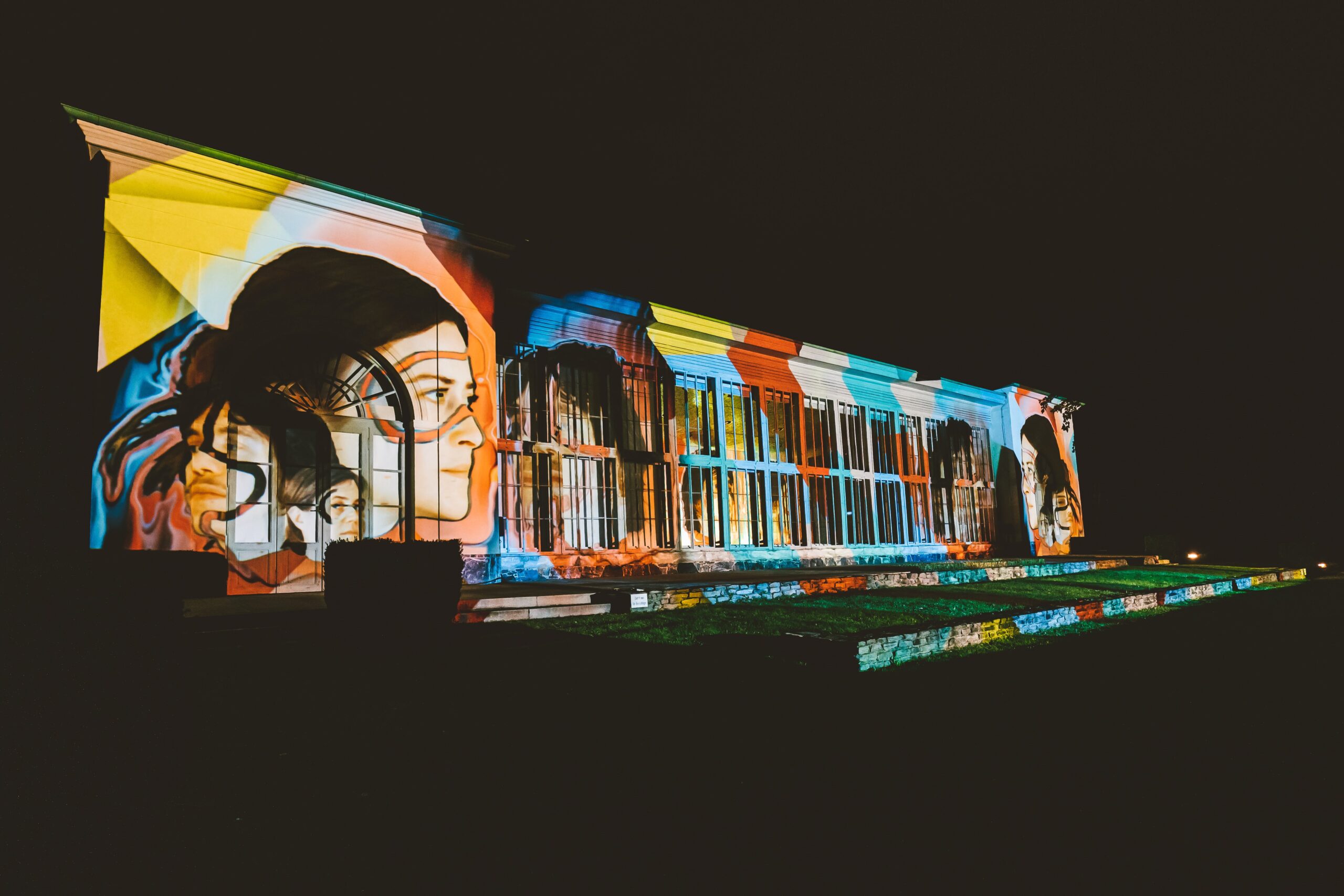
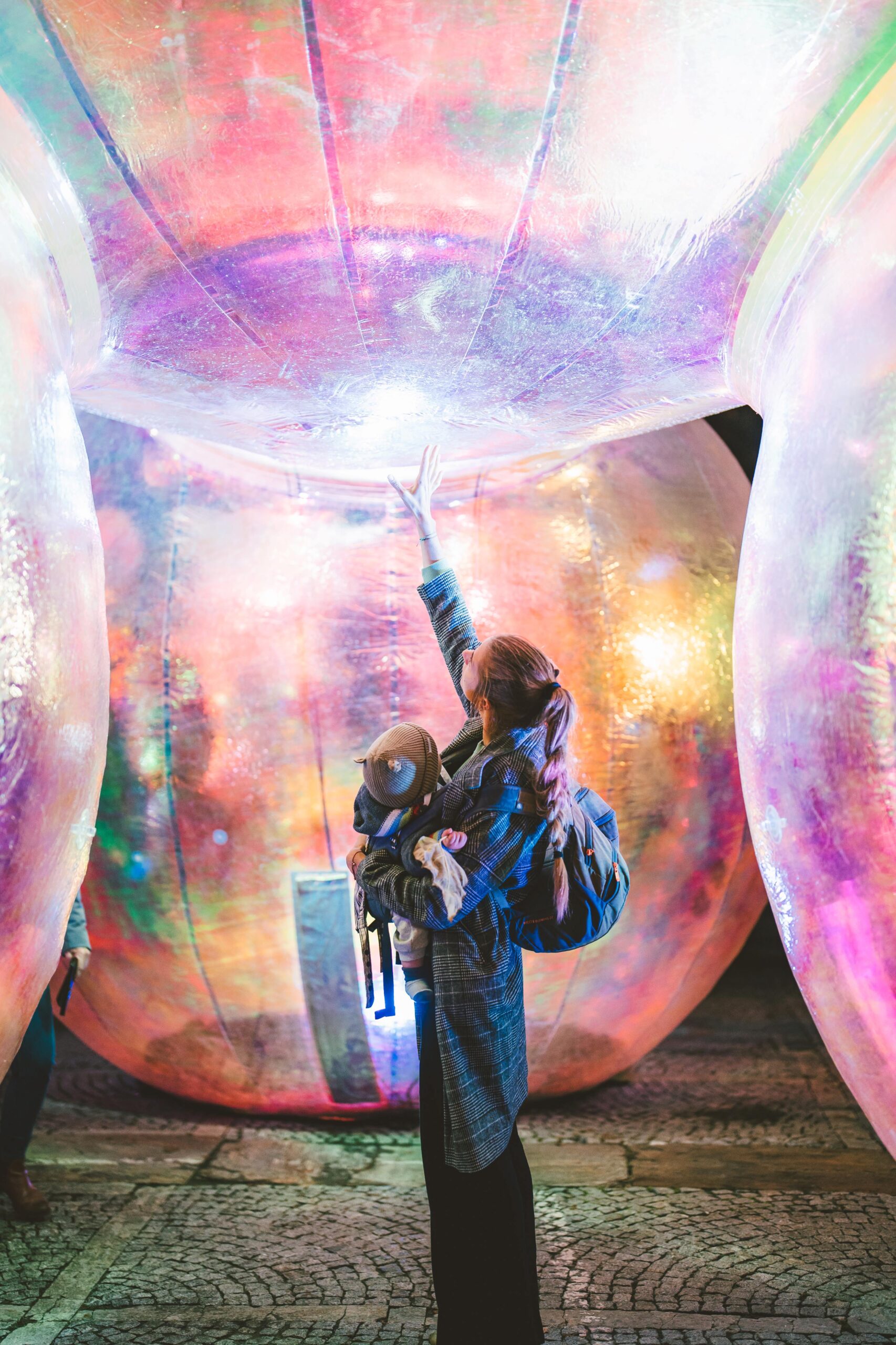
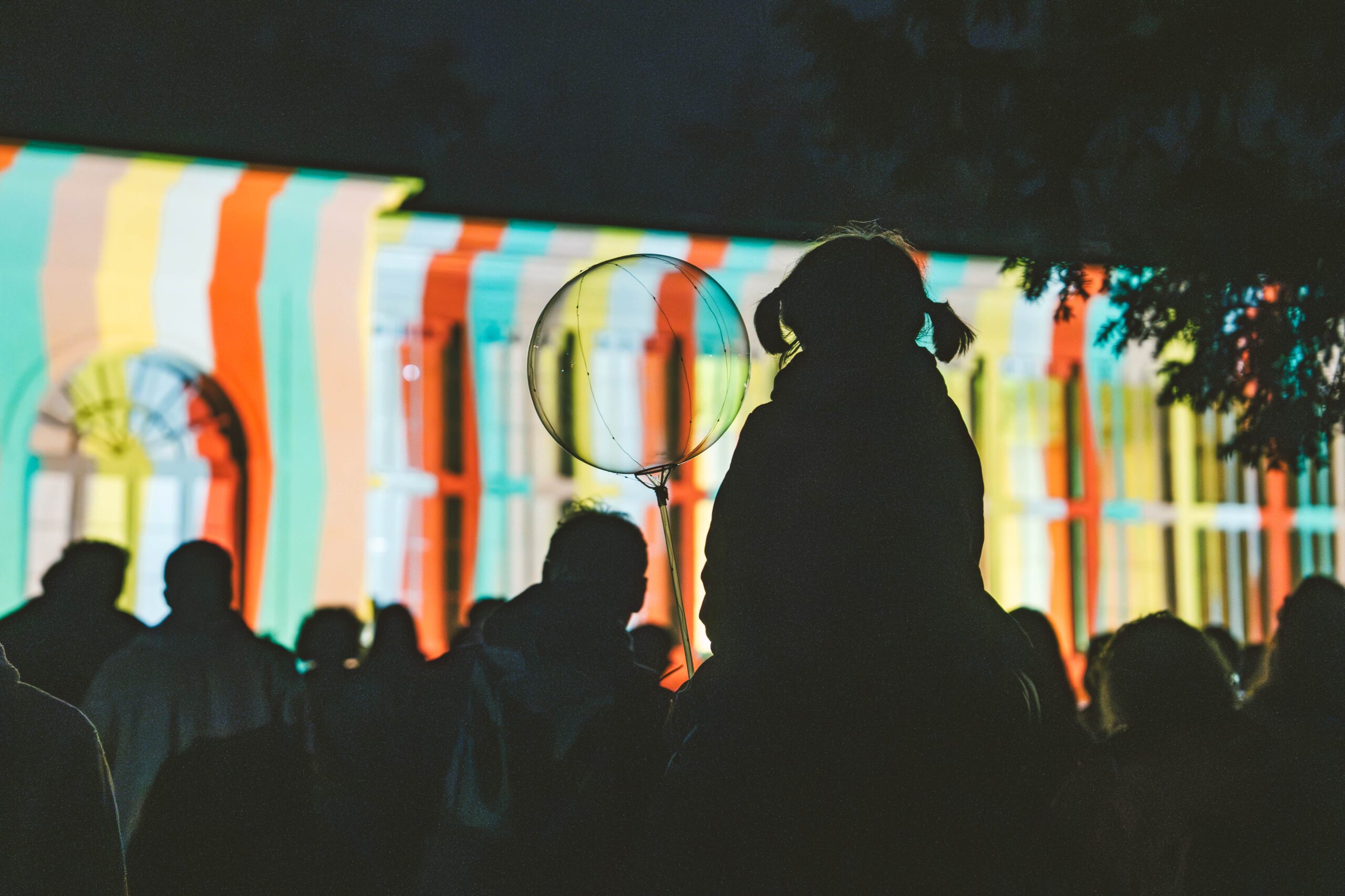
Every year, KLANGLICHT, the Festival of Sound and Vision, transforms the Styrian capital into a world of art and music, colour and light. What began as a project has developed into Austria’s largest festival of light and sound, thrilling and moving thousands of people over three days. KLANGLICHT is organised on behalf of Bühnen Graz and, since 2015, has been bringing the magic of two central elements of theatre into the public space. Light and sound are used to stir emotions and create moments of wonder. Together with artists from all over the world, KLANGLICHT brings public spaces, squares and buildings to life with light and sound.
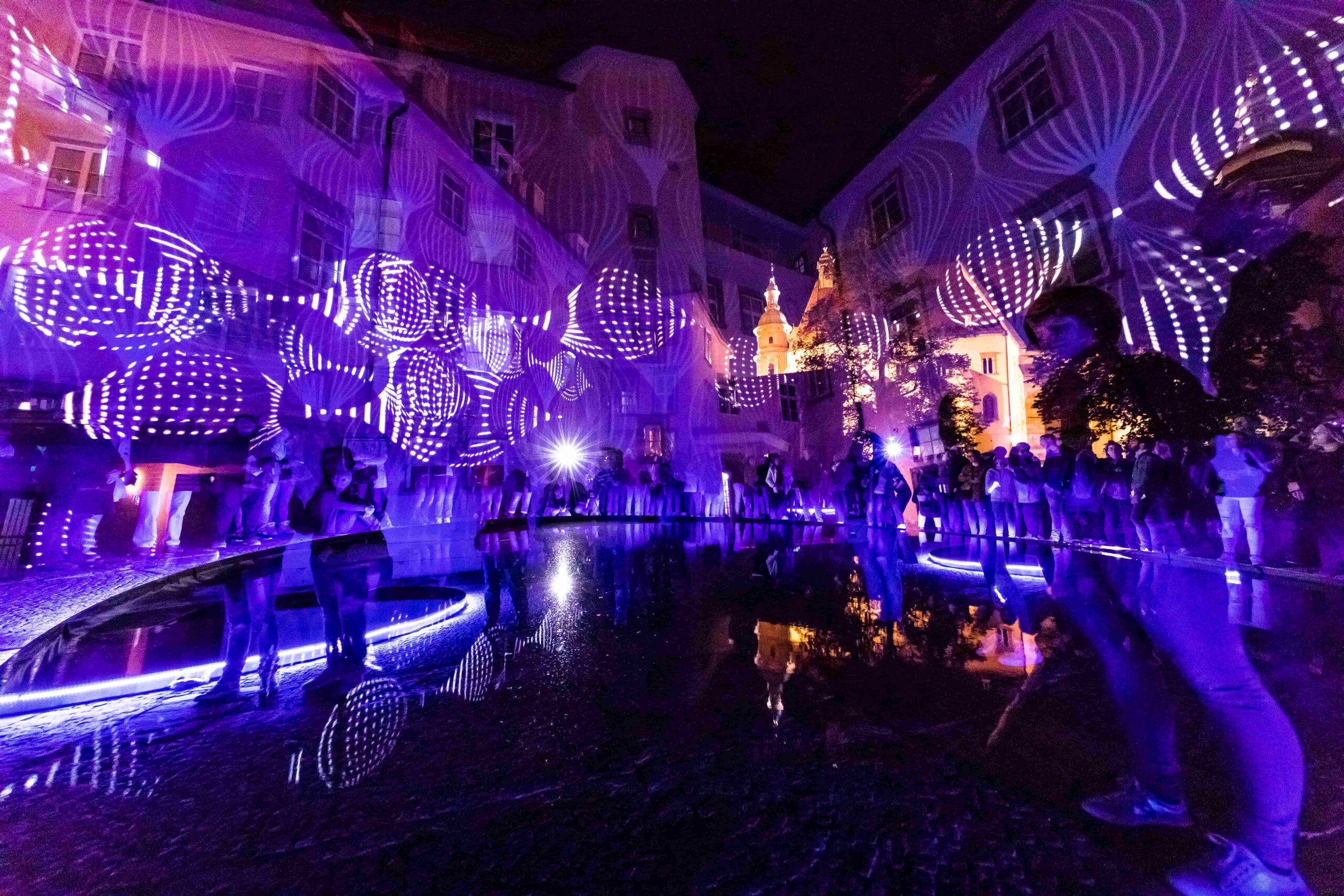
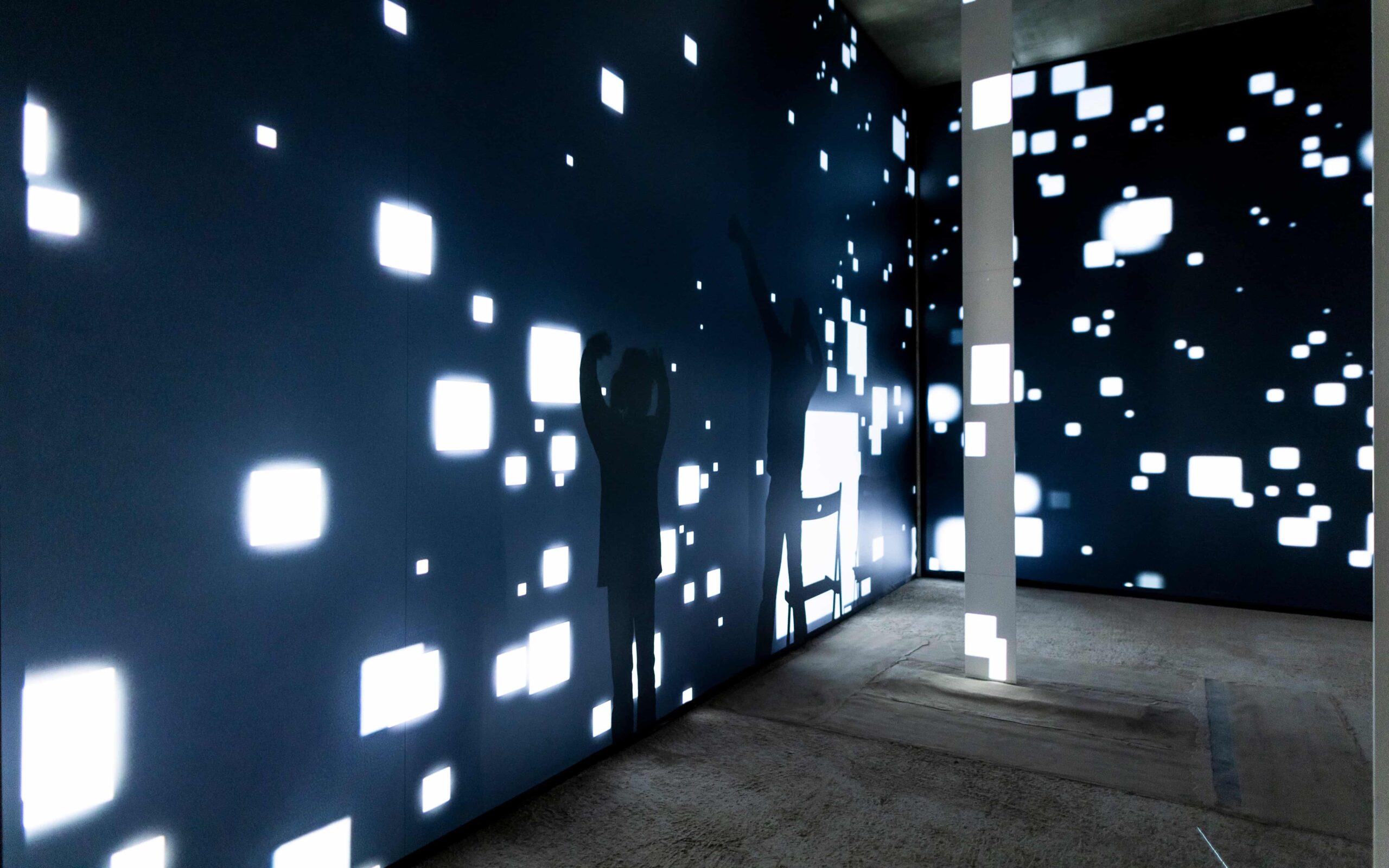
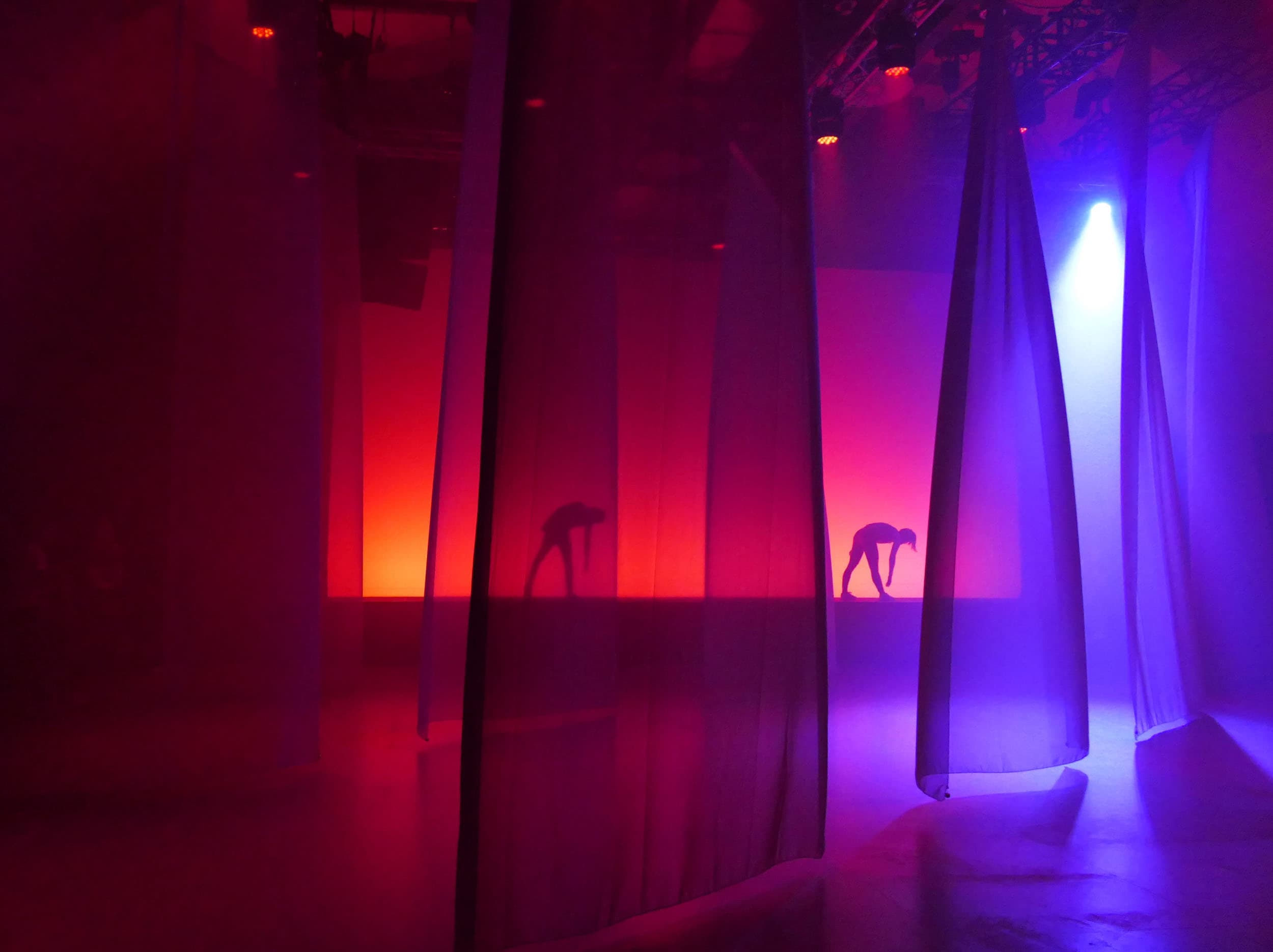
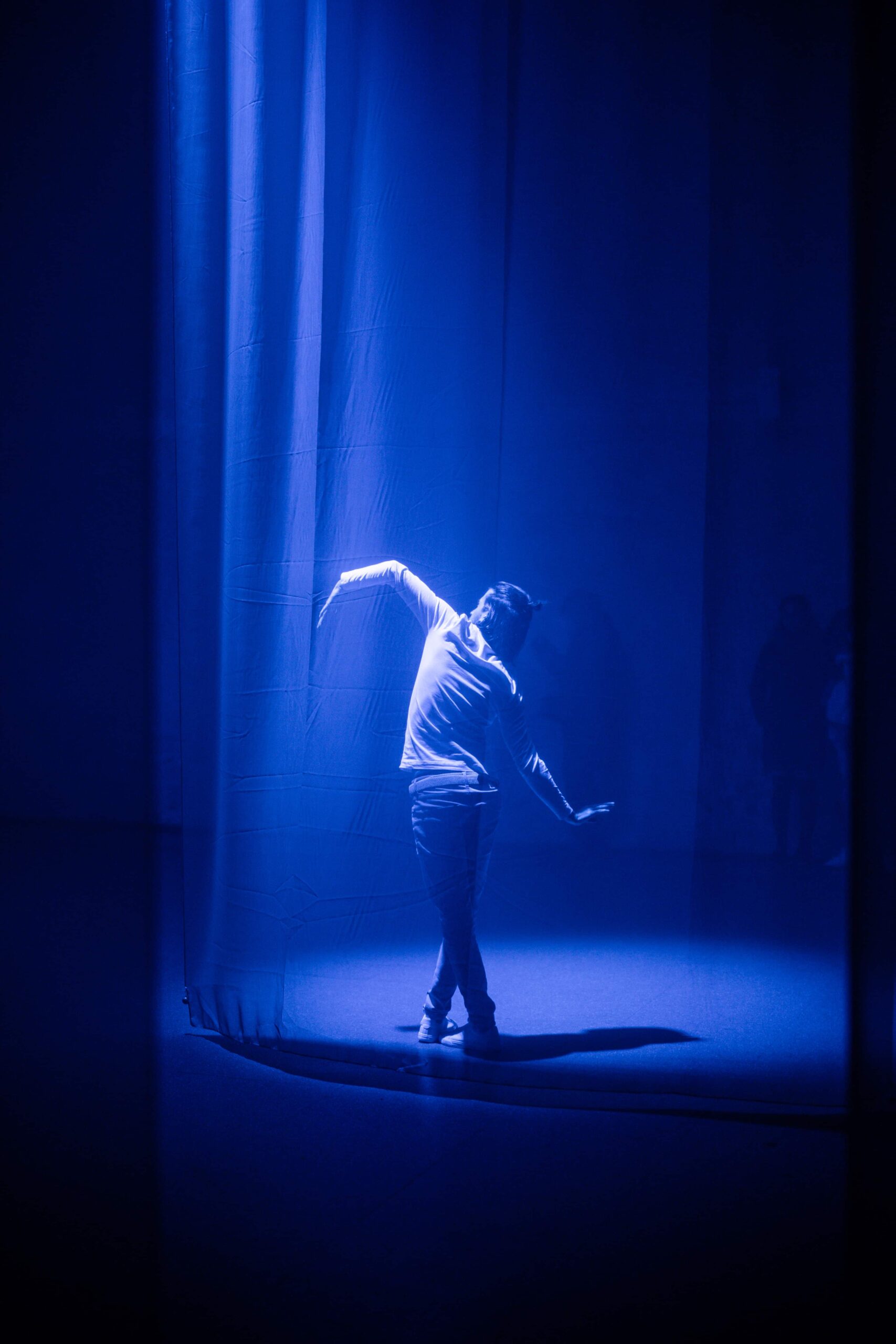
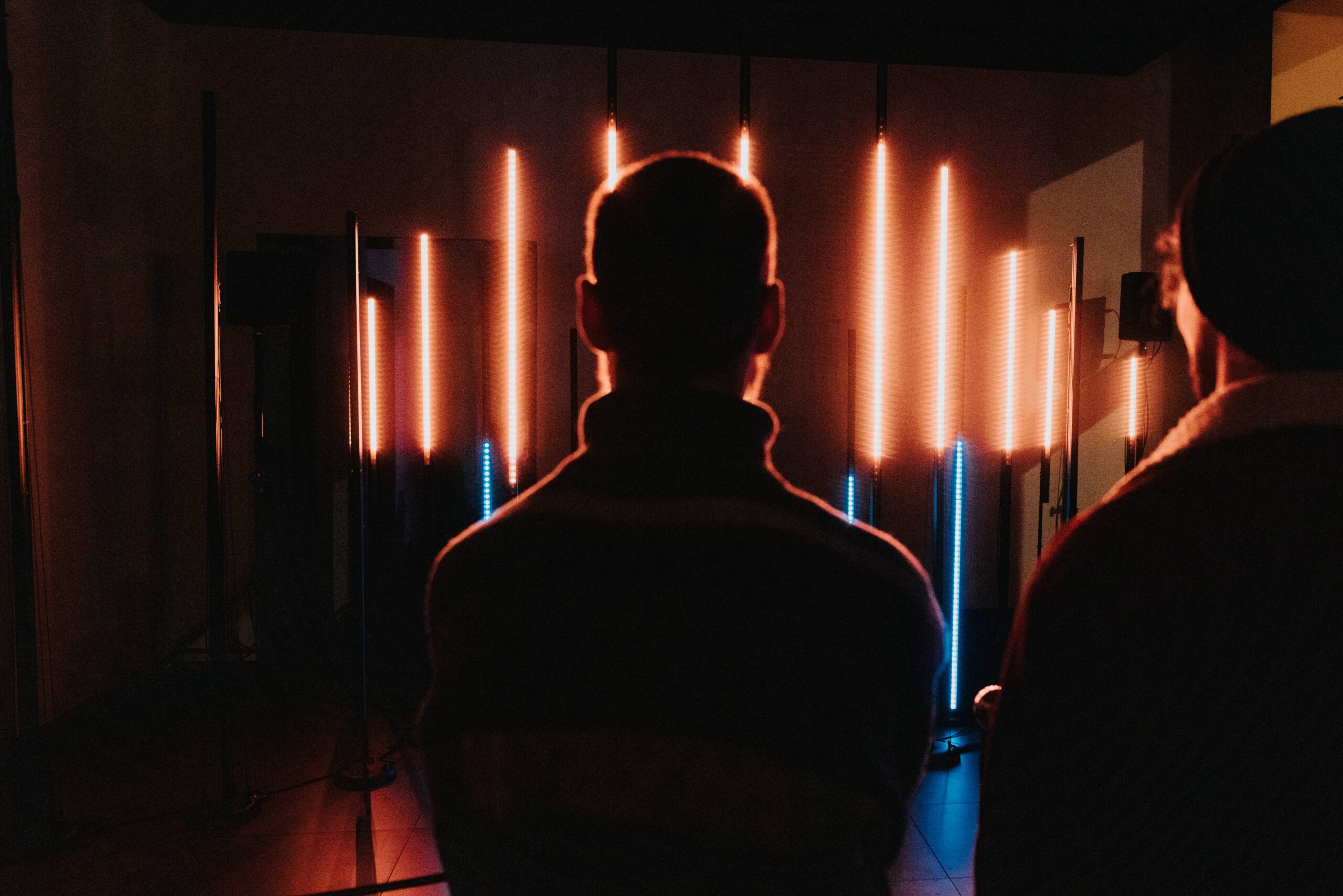
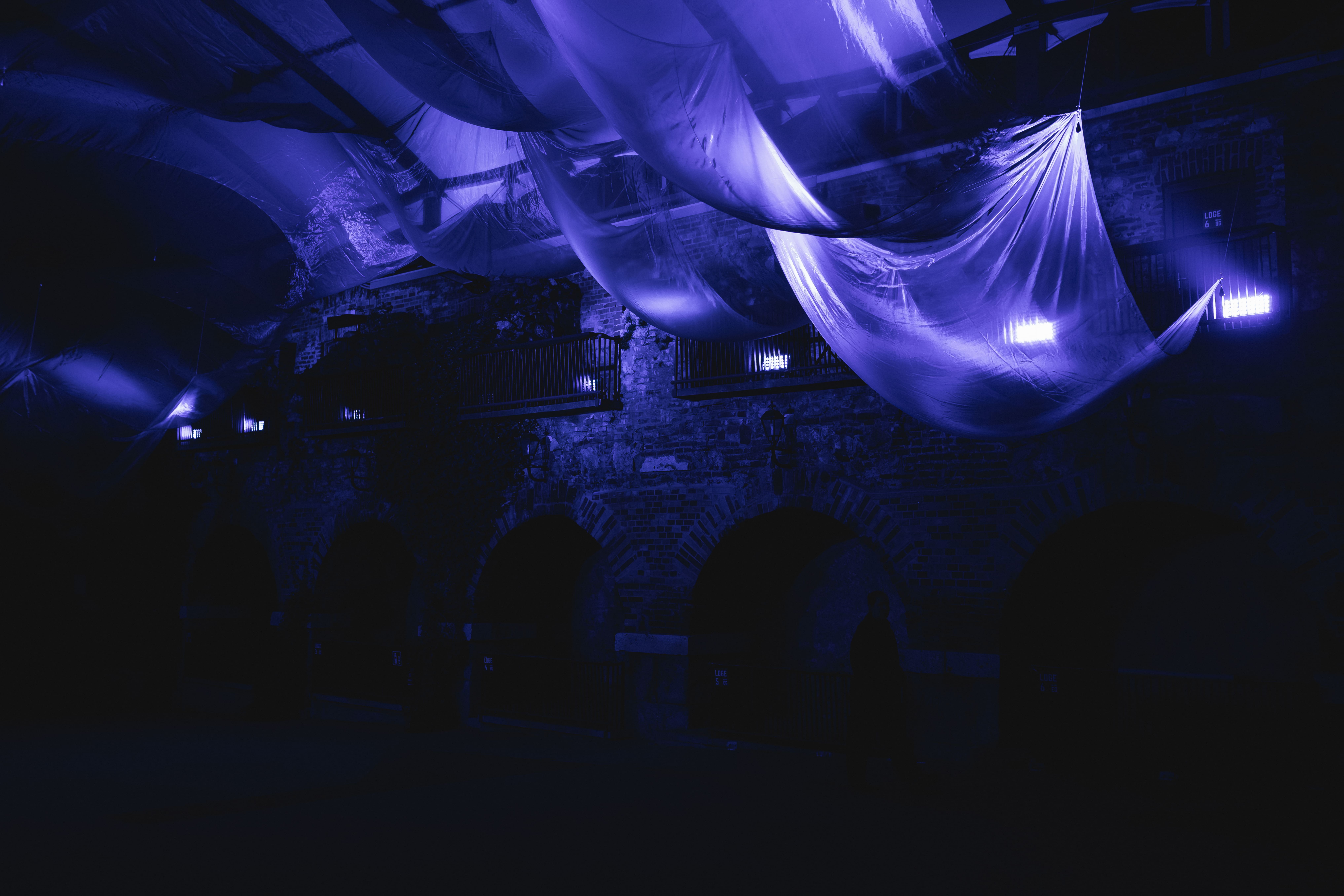
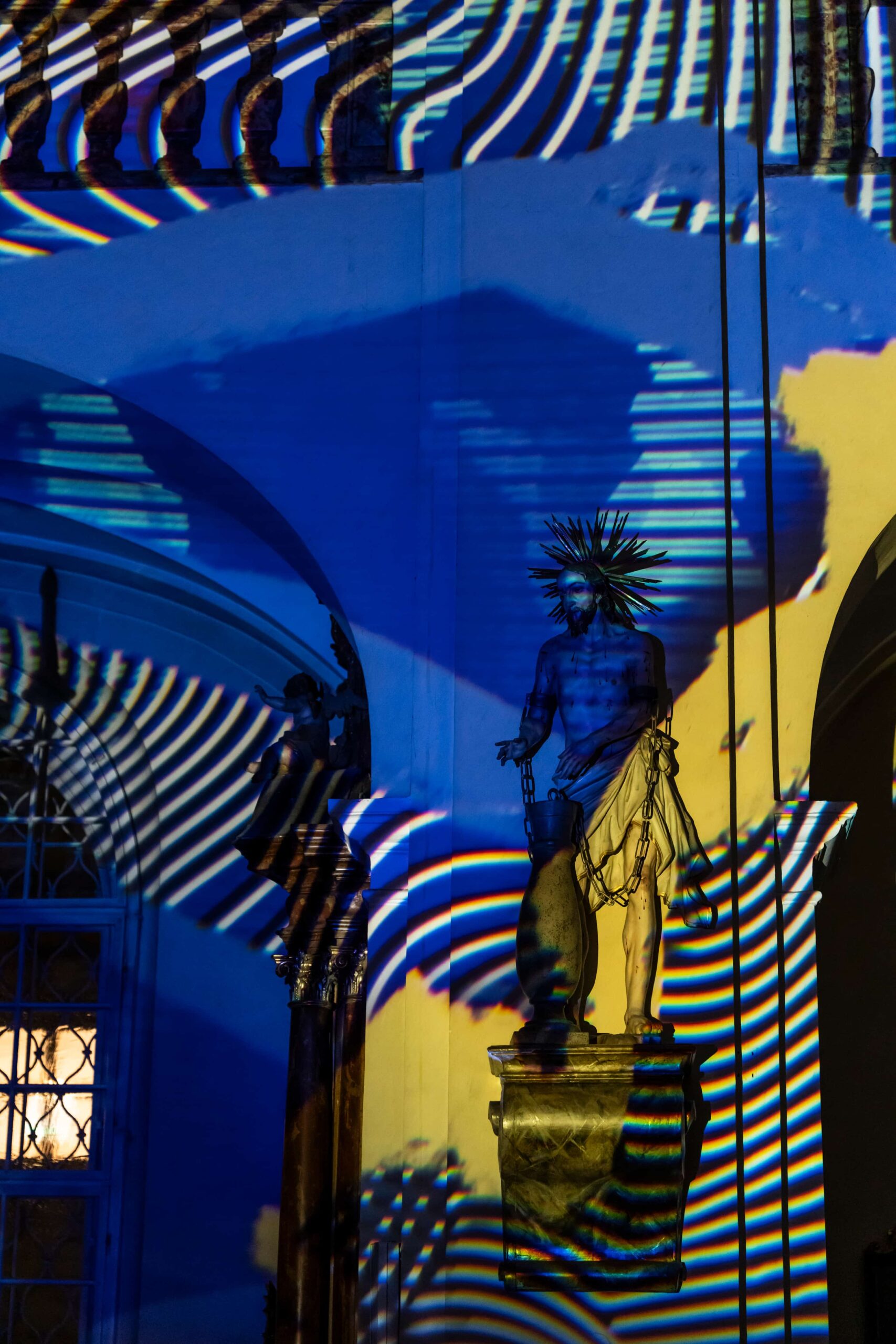
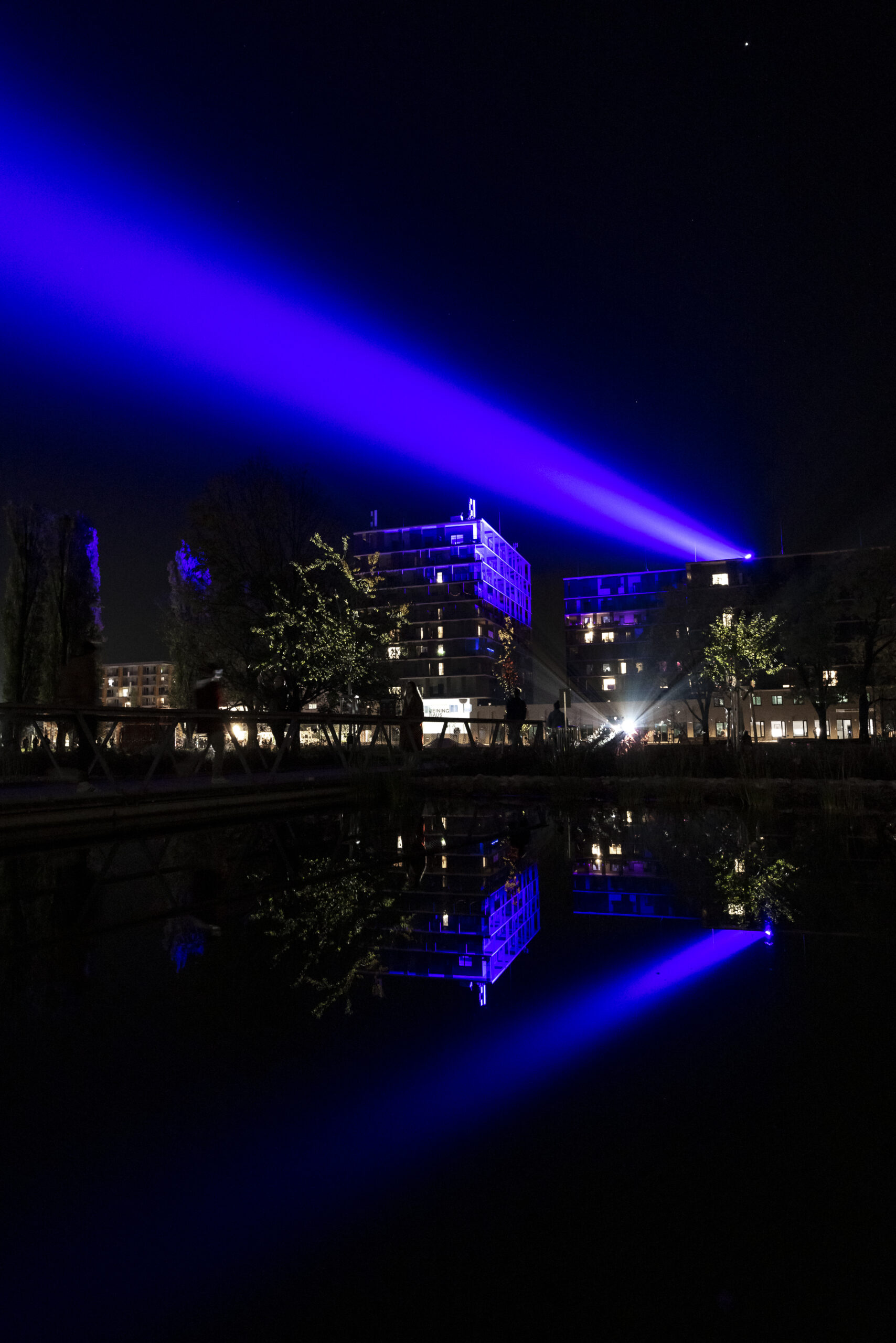
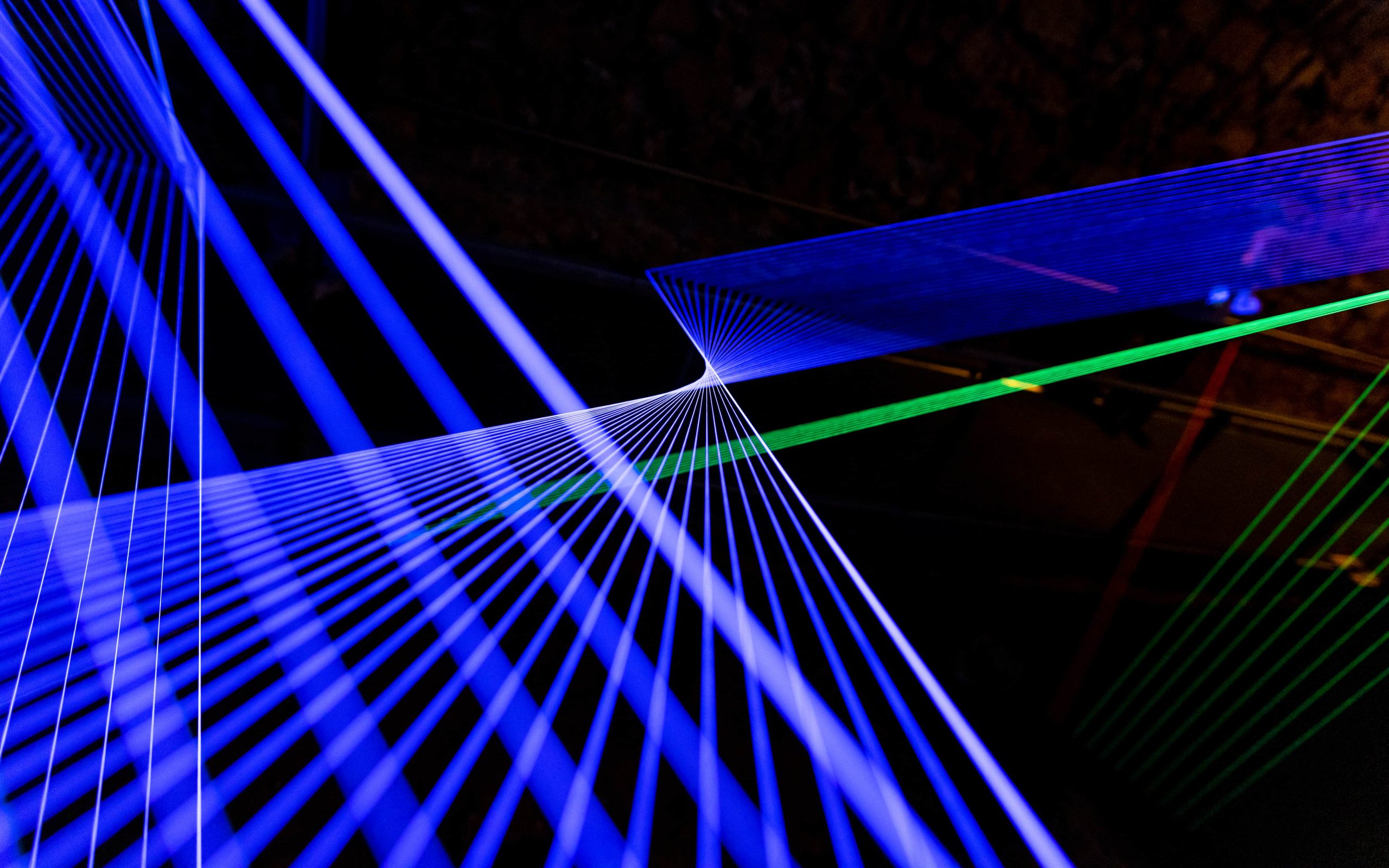
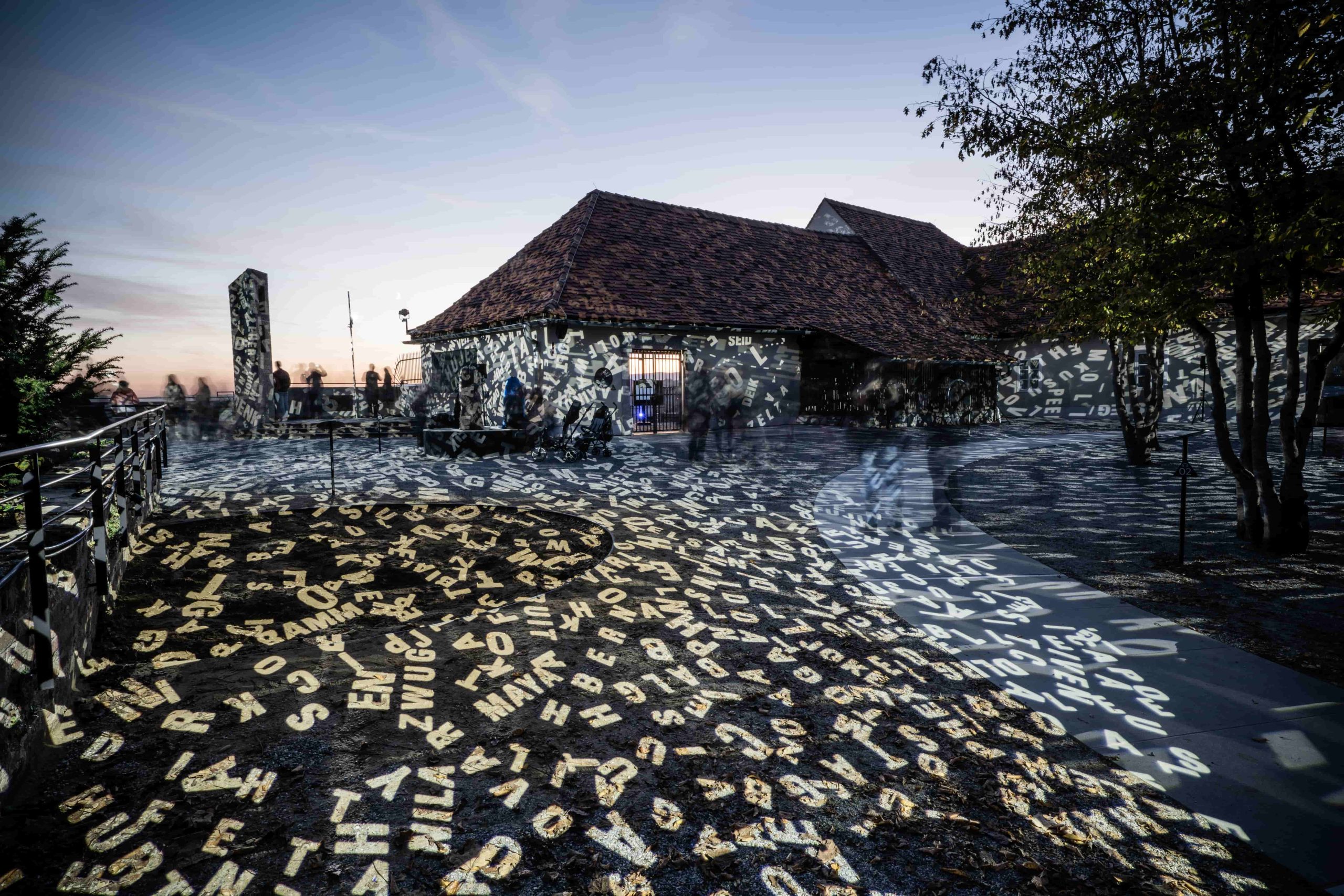
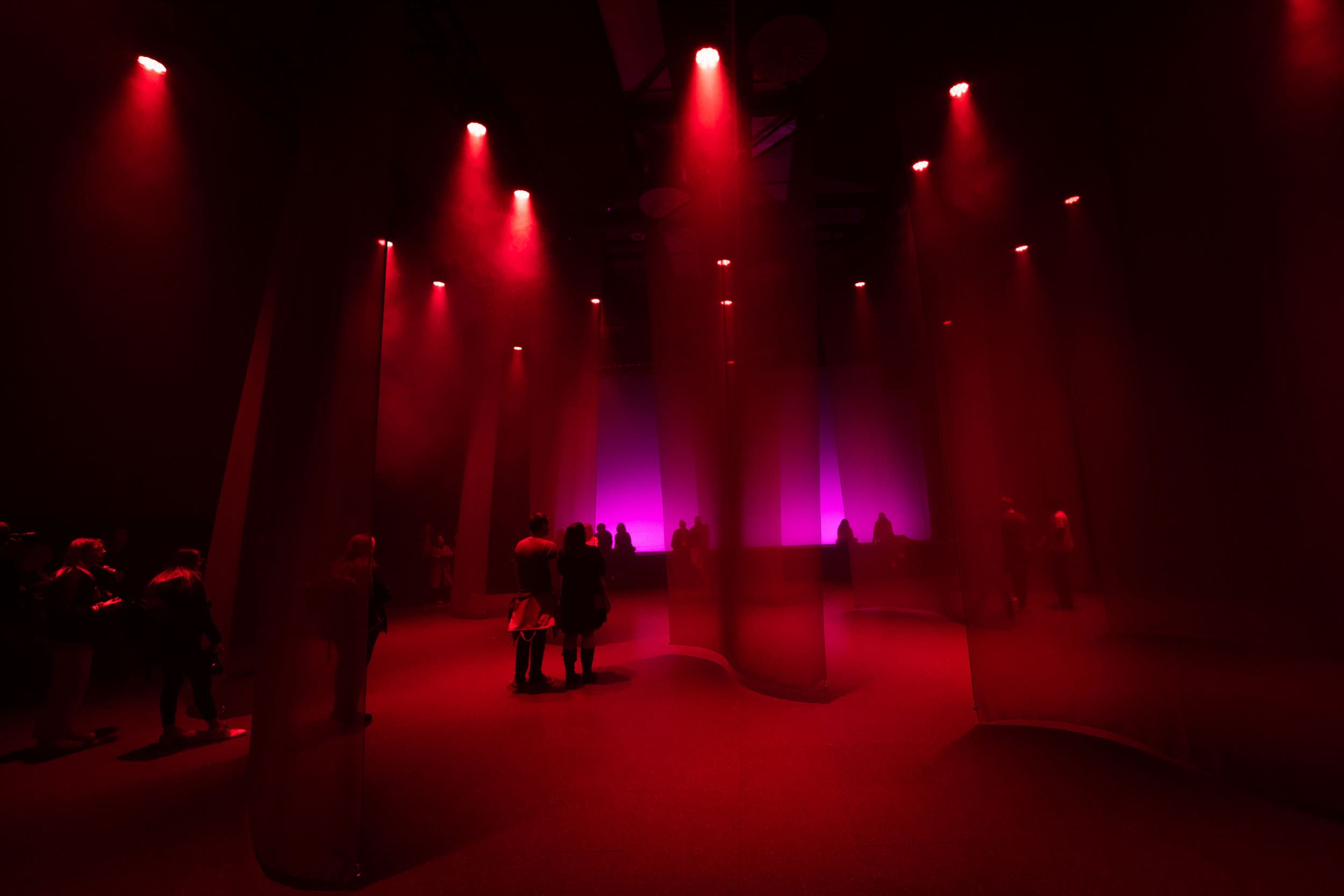
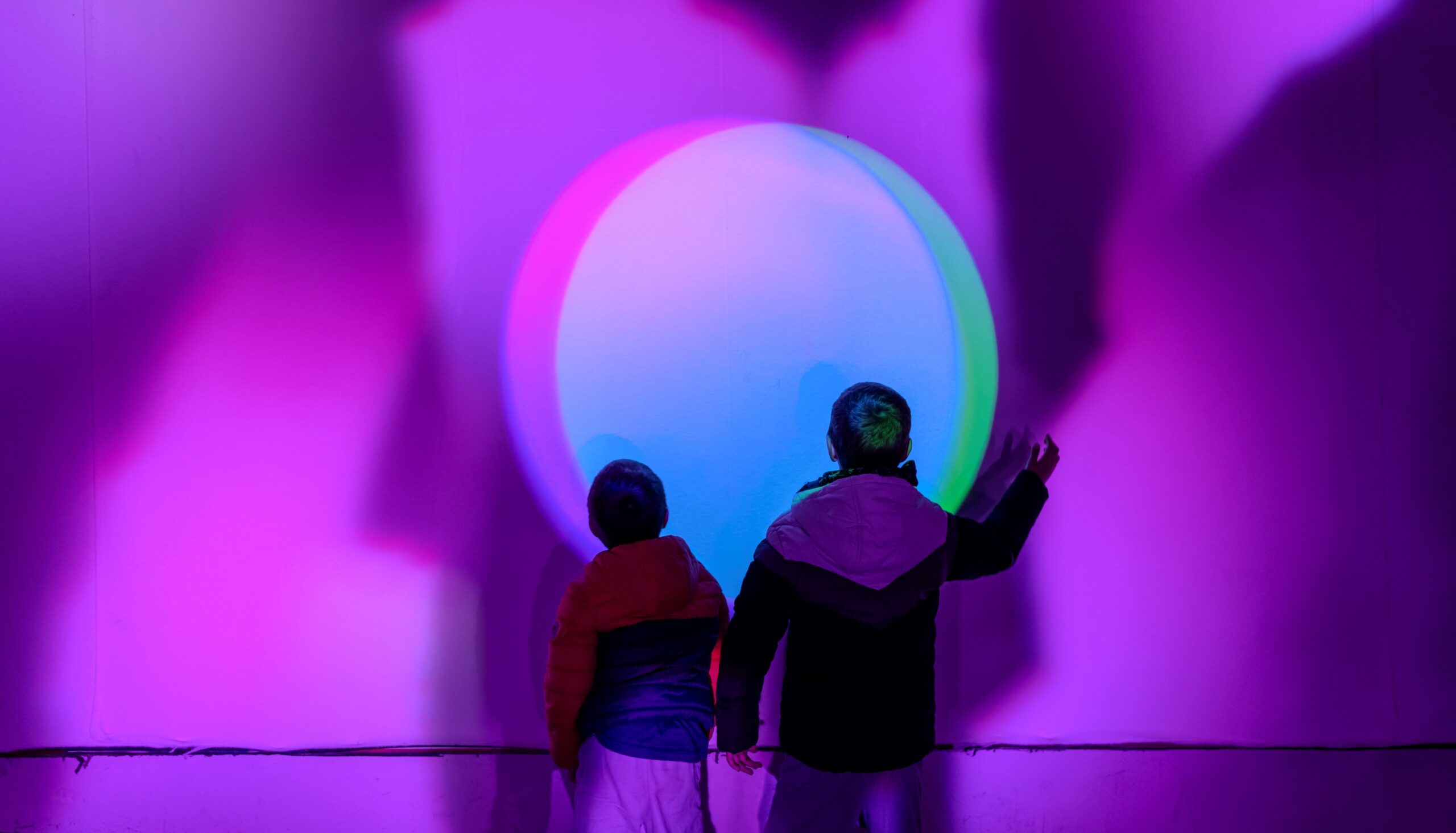
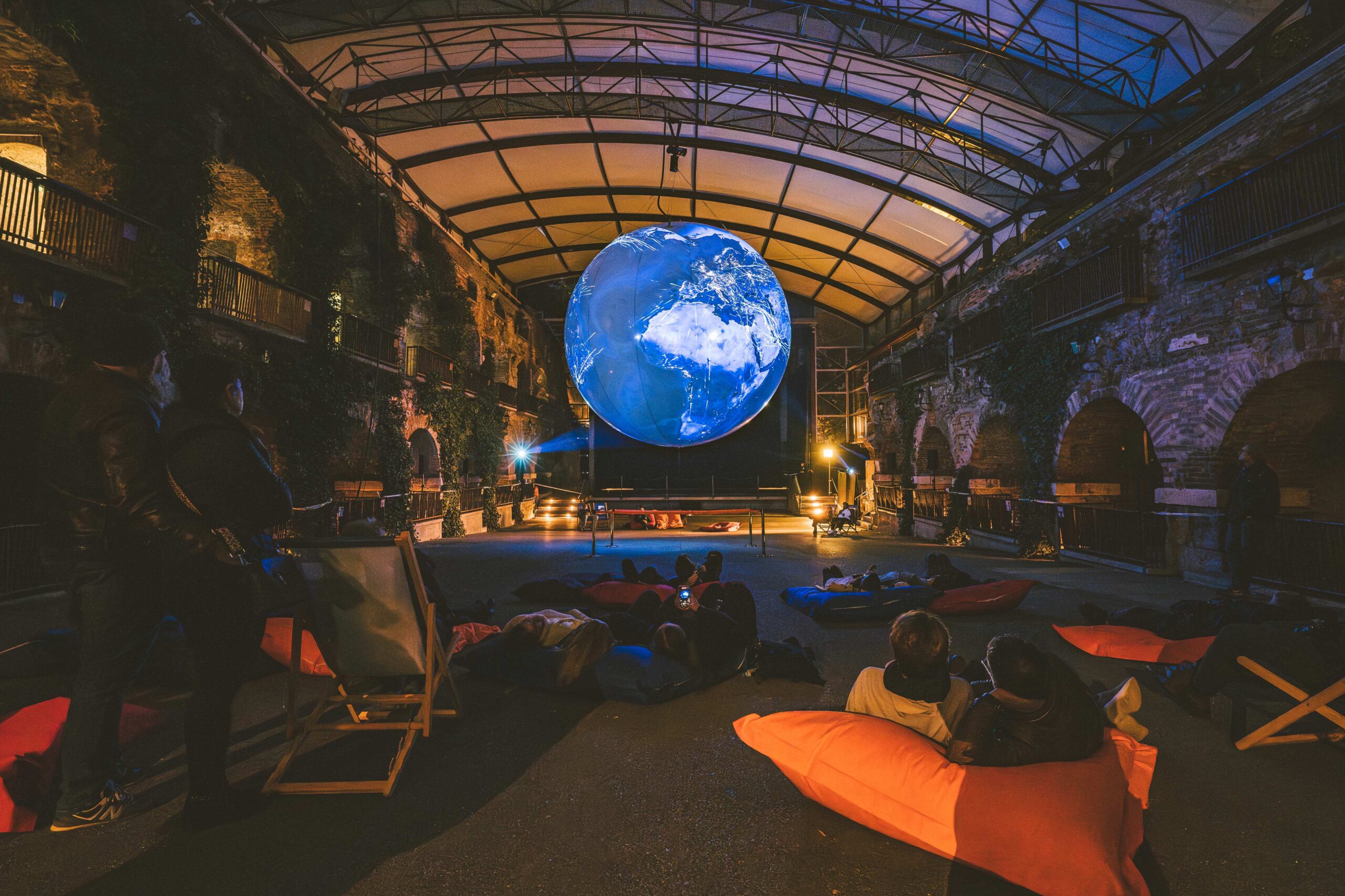
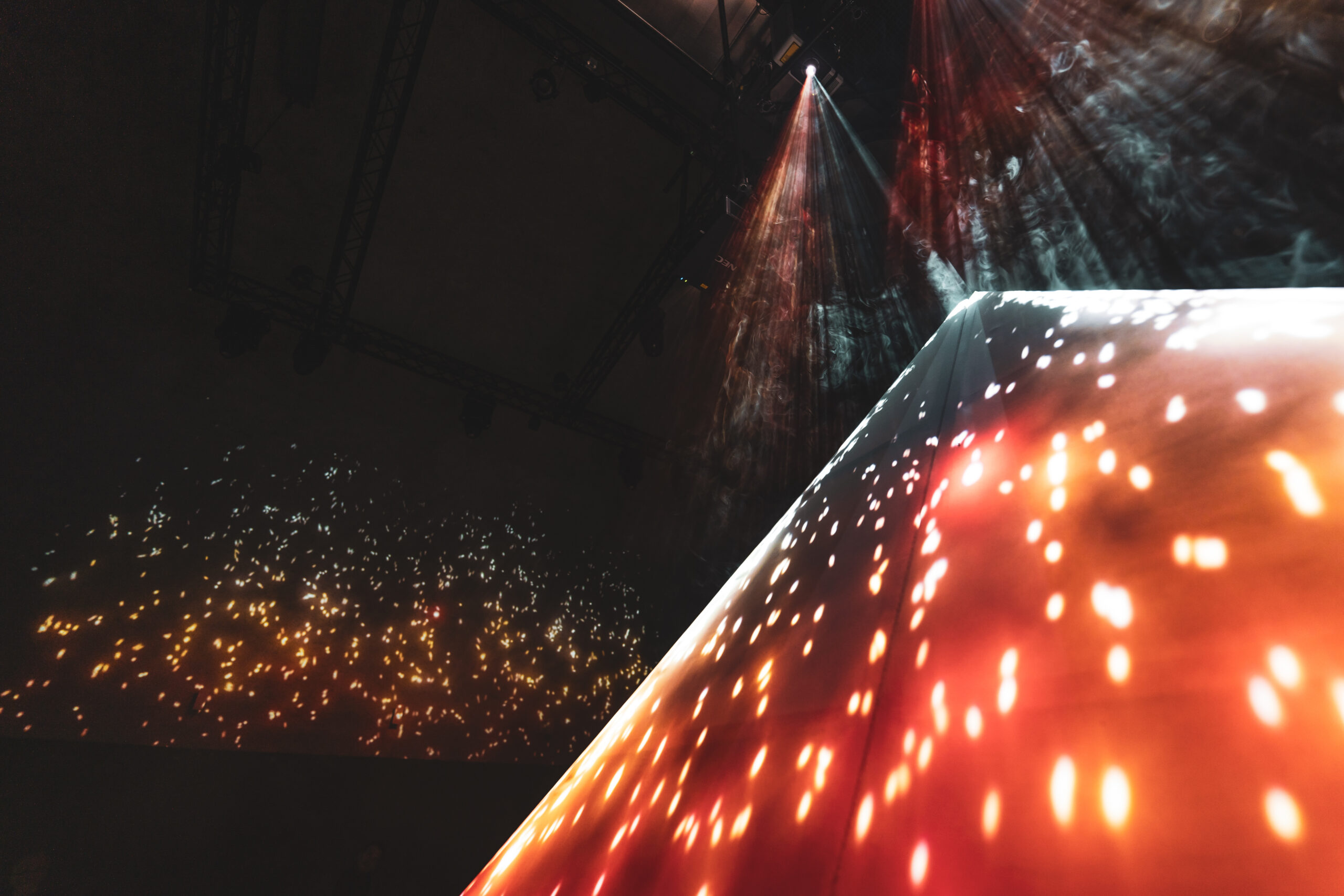
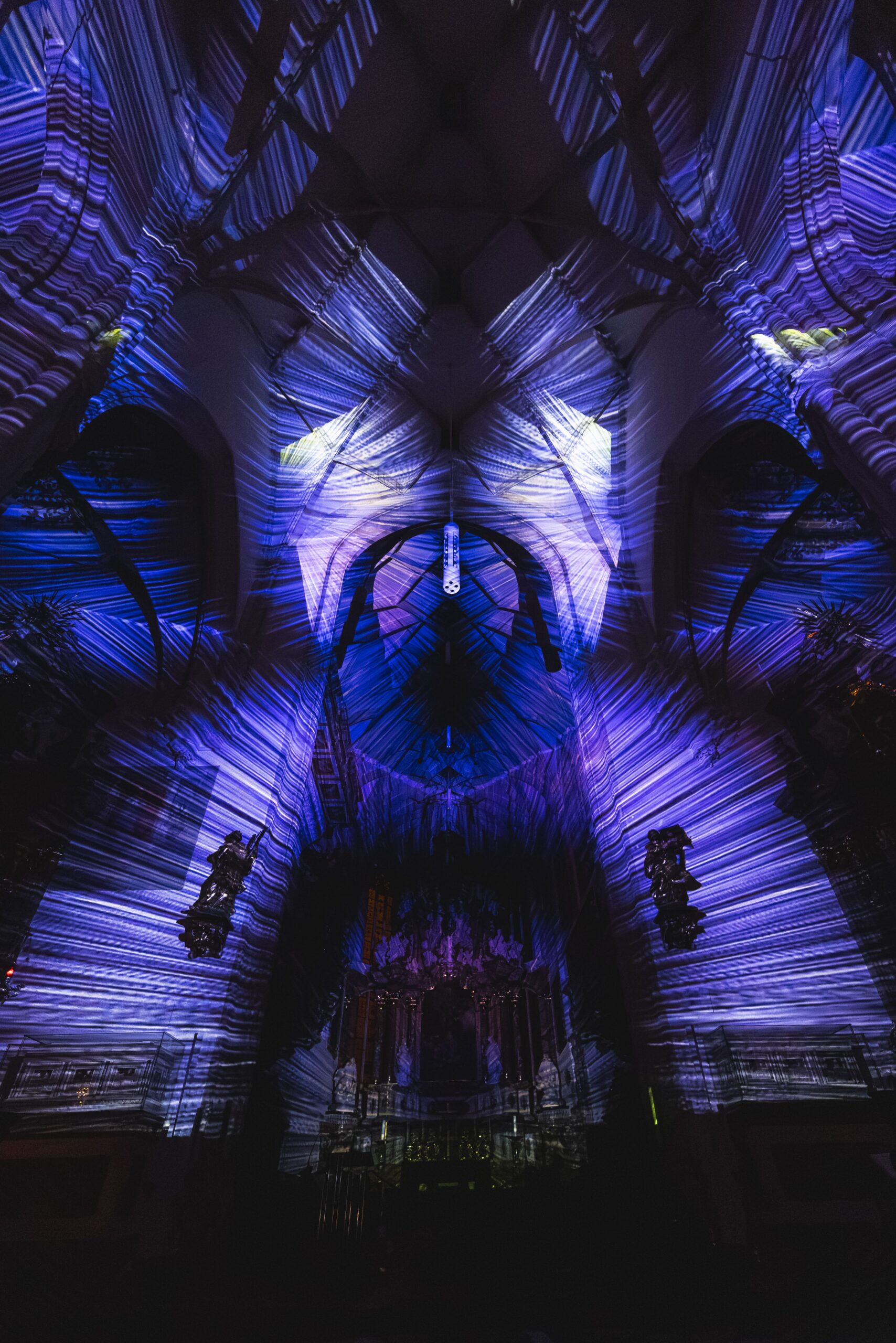
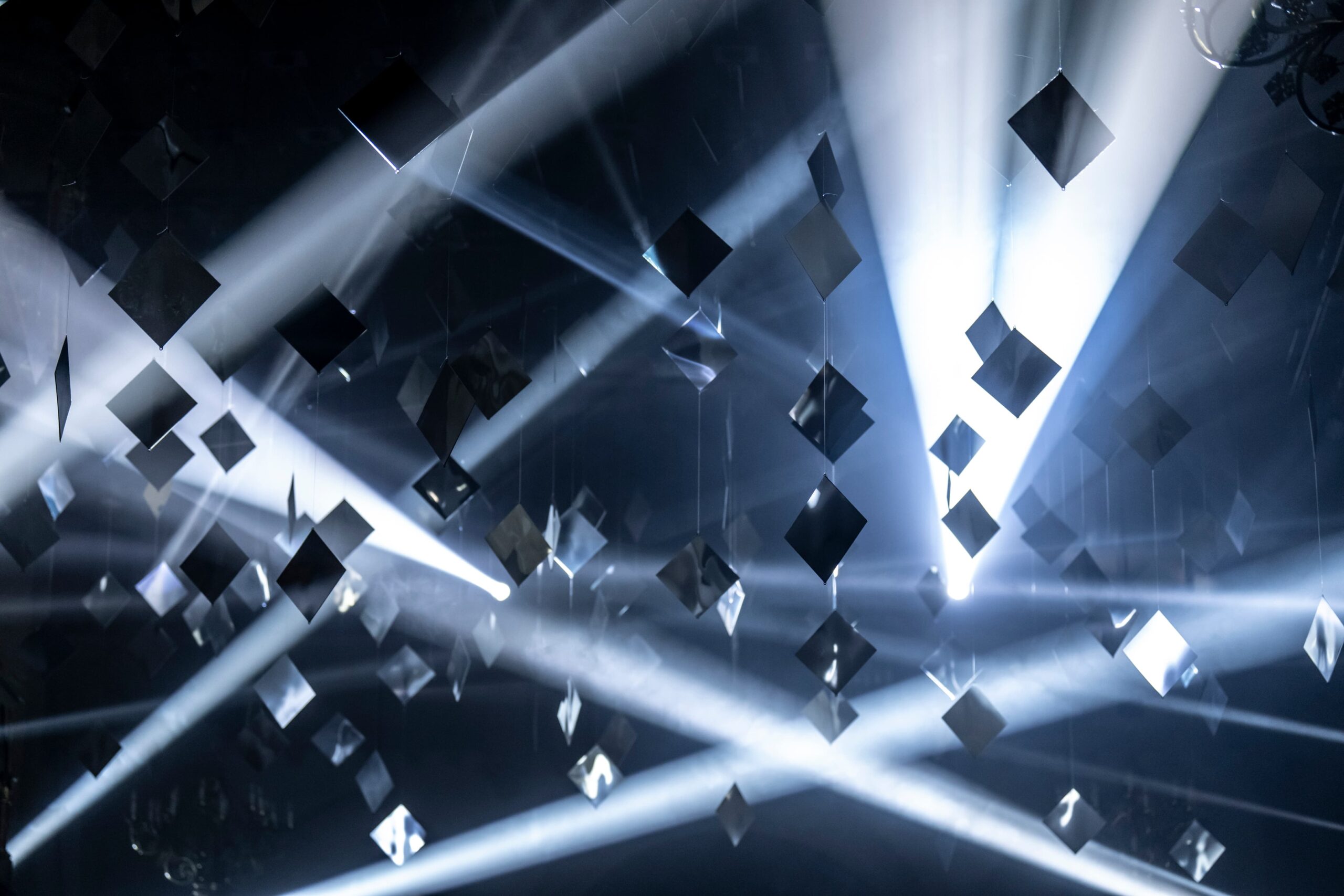
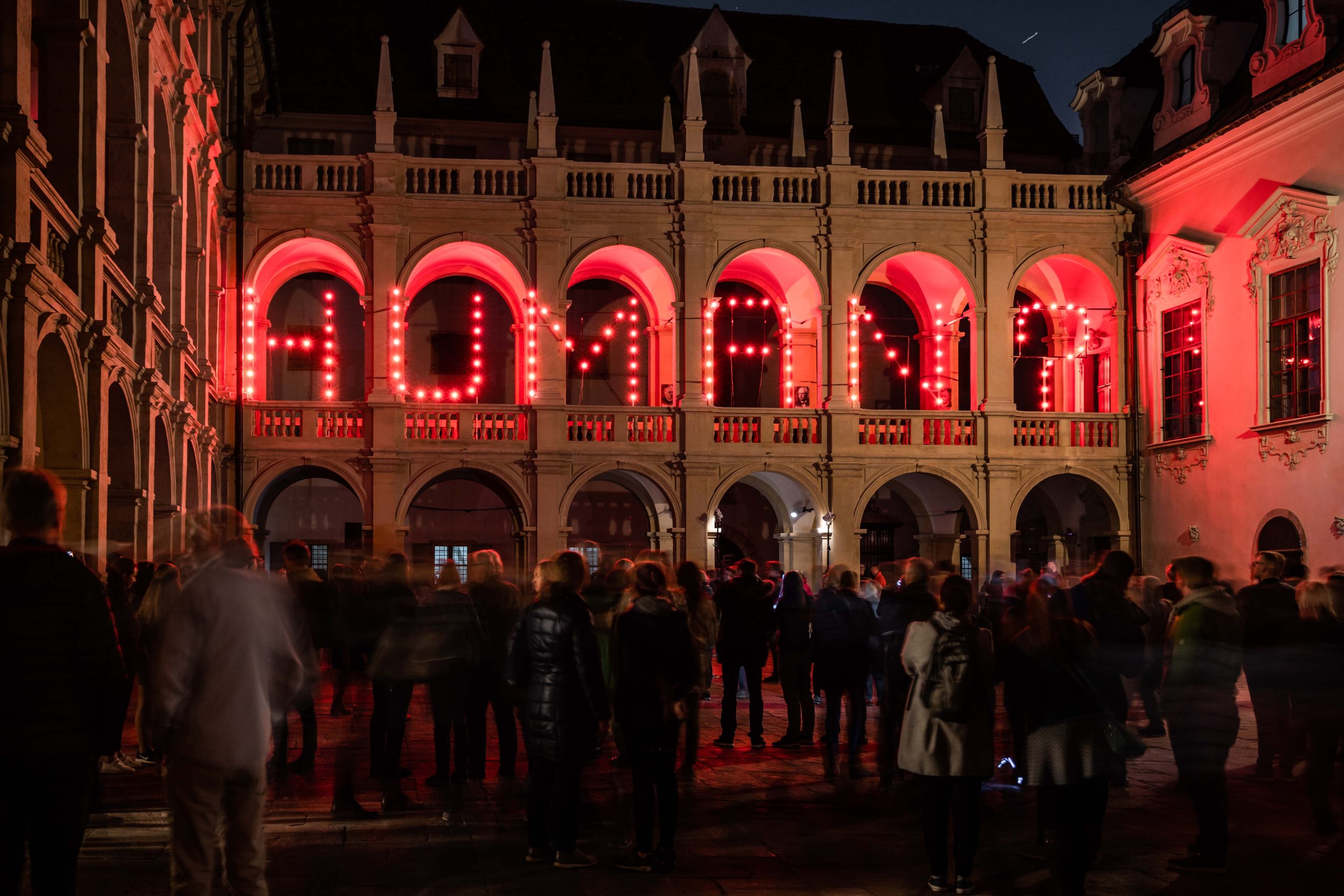
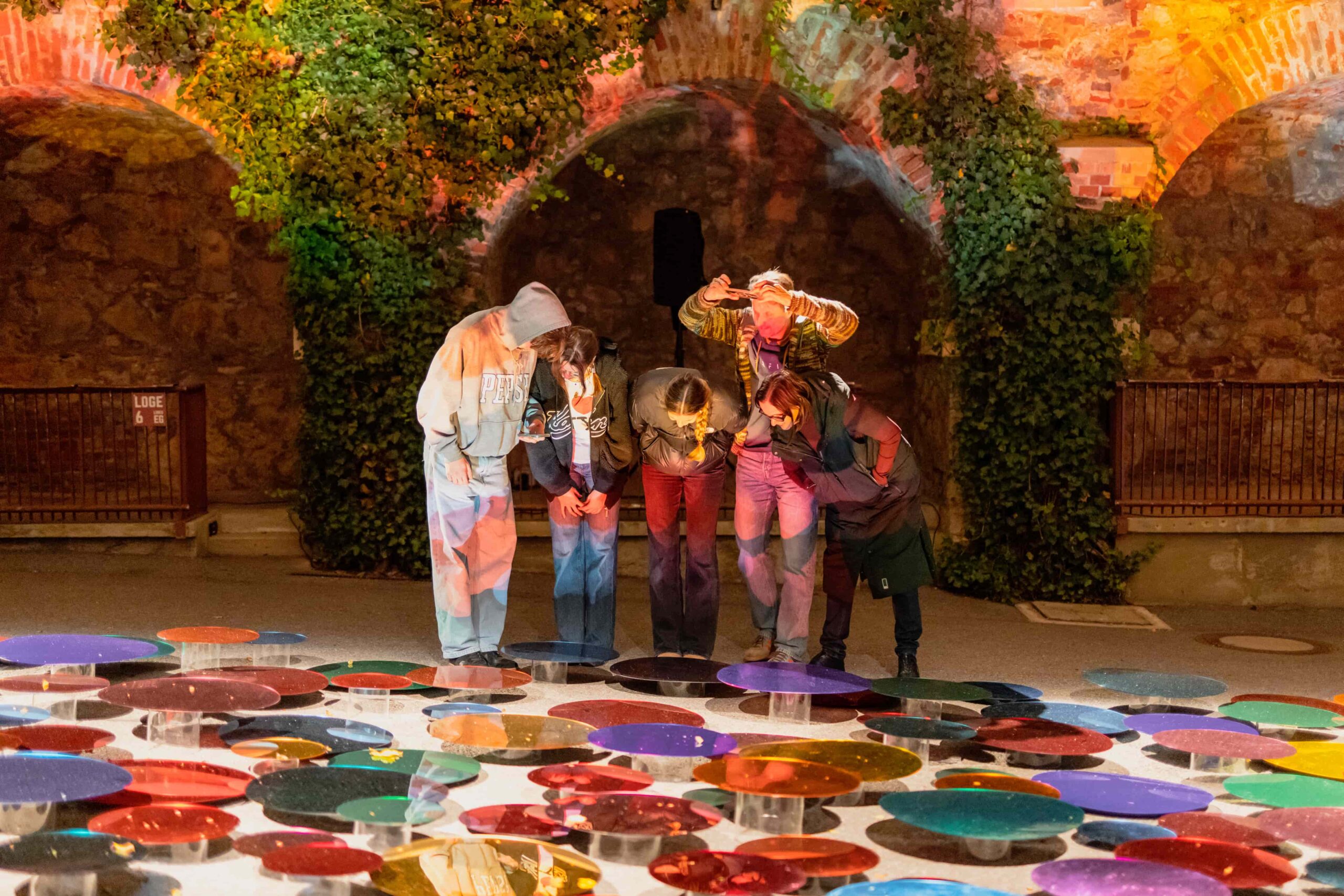
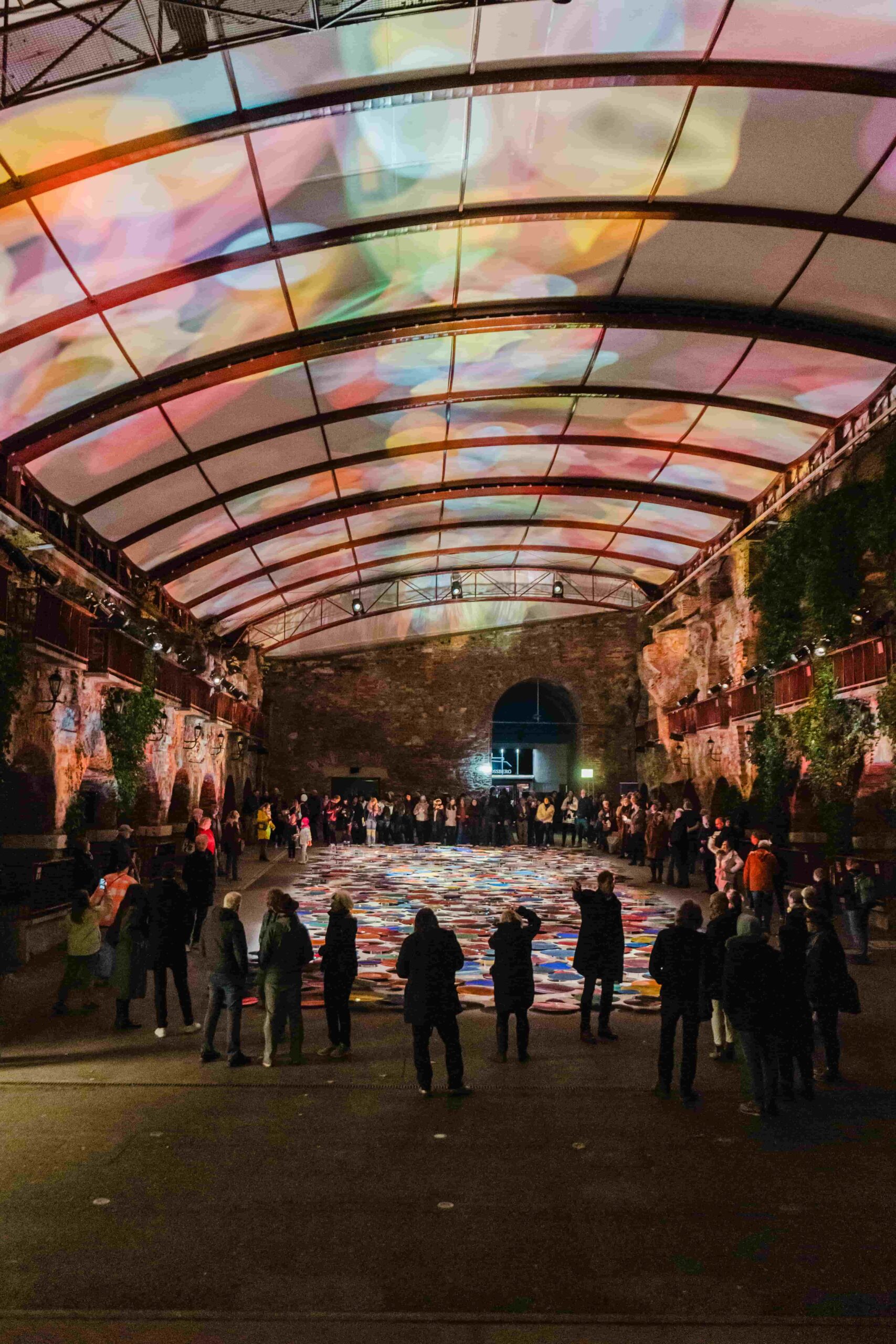
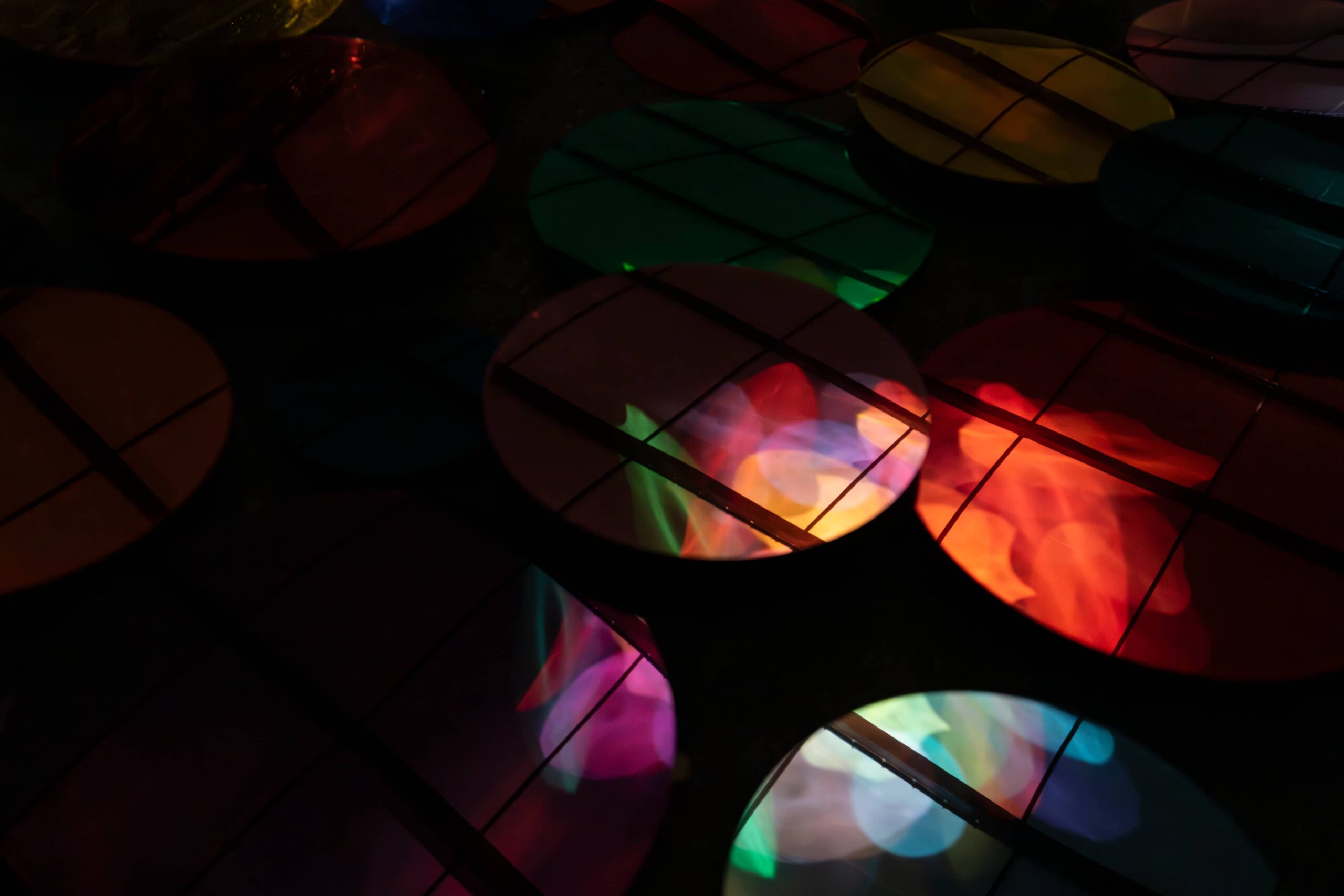
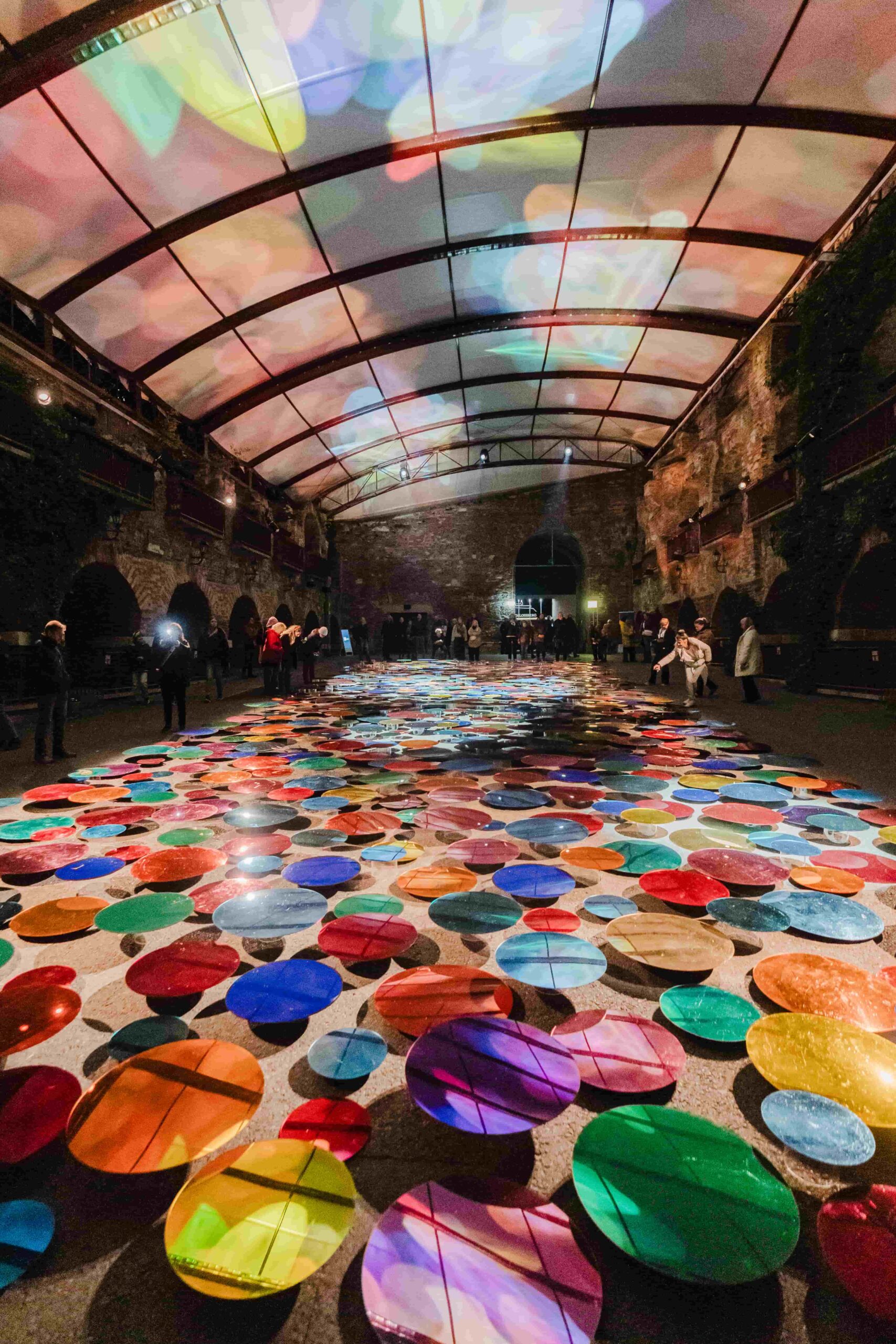
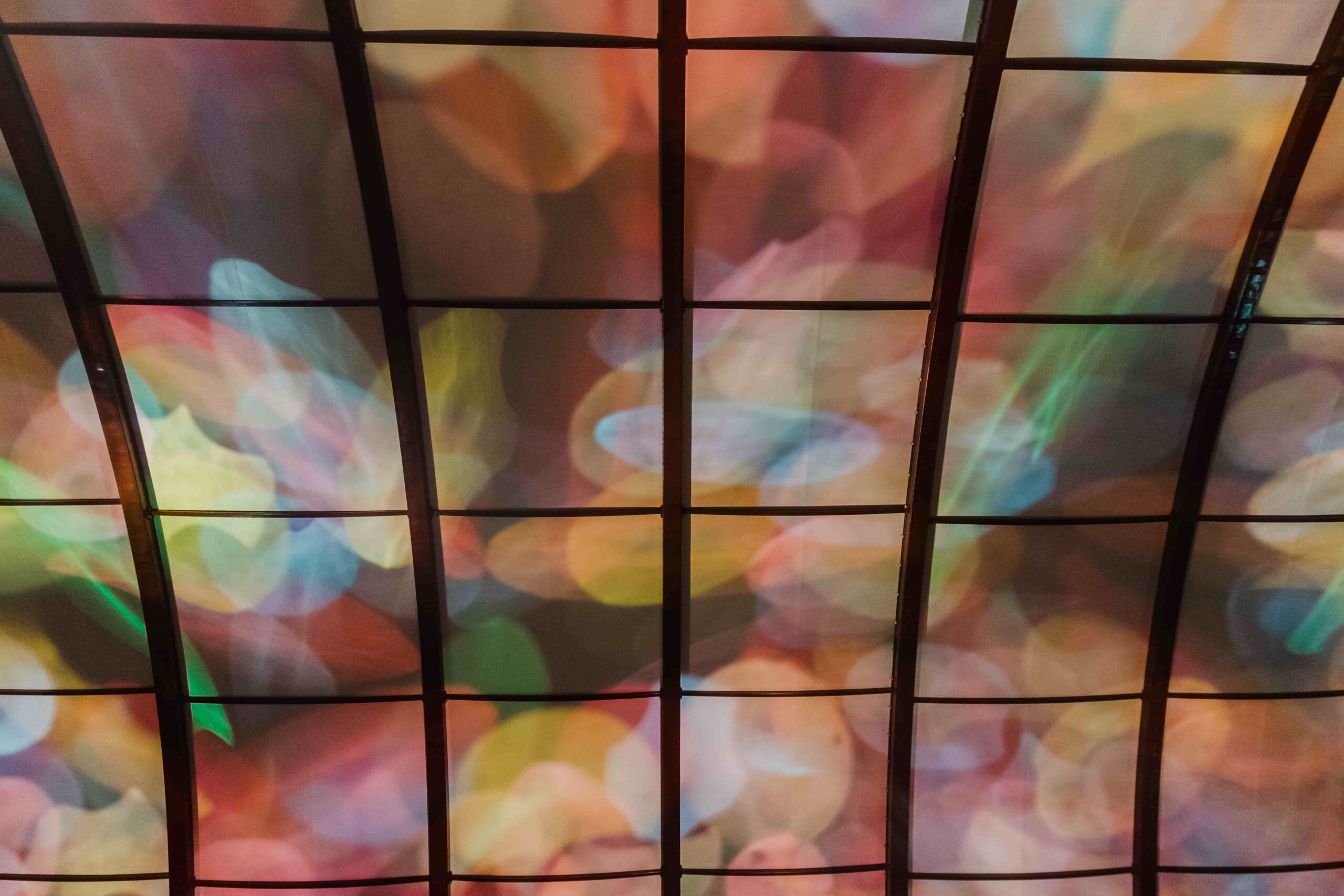
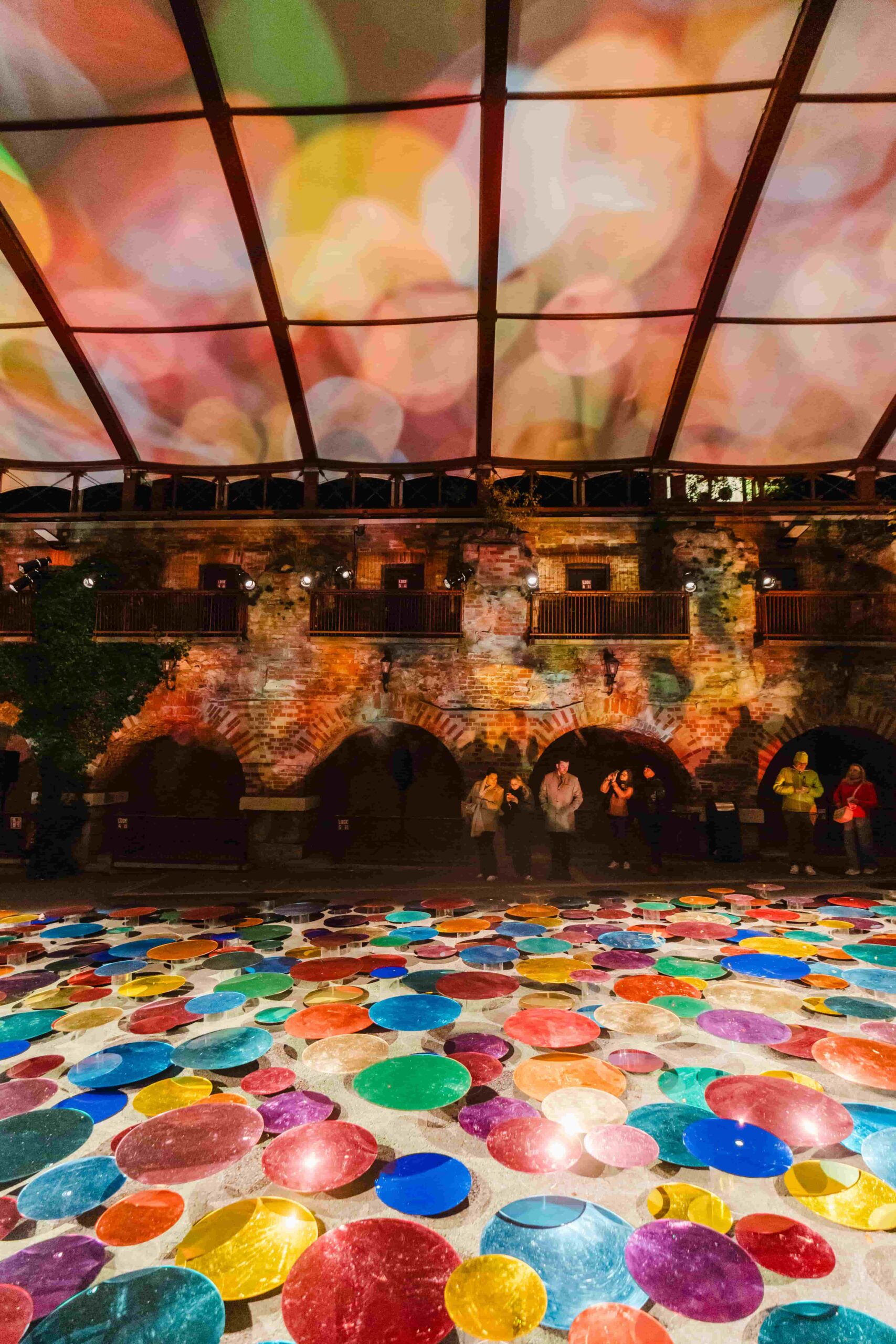
“Our Colour Reflection” resembles a rush of colour: more than 700 coloured mirrors cover the floor of the Schlossberg casemates in Graz. In varying diameters and heights, the mirrors reflect both the architecture and people. Colours and shapes are projected into the room. A playful and colourful, yet elegant world opens up, one that is subject to constant changes: influenced by movements of the audience, new moments and perspectives arise, again and again. Thus, Liz West’s artwork becomes a flowing exchange between viewers and their surroundings, between their own perspectives and the expansive installation.
Location: Schlossbergbühne Kasematten
This installation is made possible with the kind support of E-Werk Franz.
Biography
Liz West (b. 1985) is a British artist known for her wide-ranging works that range from the intimate to the monumental. Using a variety of materials, she explores the use of light and colour to create environments that provoke a heightened sensory awareness in the viewer, often in close engagement with the given site. Her work has been exhibited worldwide, including at St Albans Museum + Gallery, Chester Cathedral, Compton Verney, Musée Nissim de Camondo in Paris, Kraftwerk Berlin, Tripostal Lille and Bangalore International Centre.
Credits
Lichtdesign: Paul Matyschok
Soundinstallation: Cherry Seraph (alias: Sophie Russell)
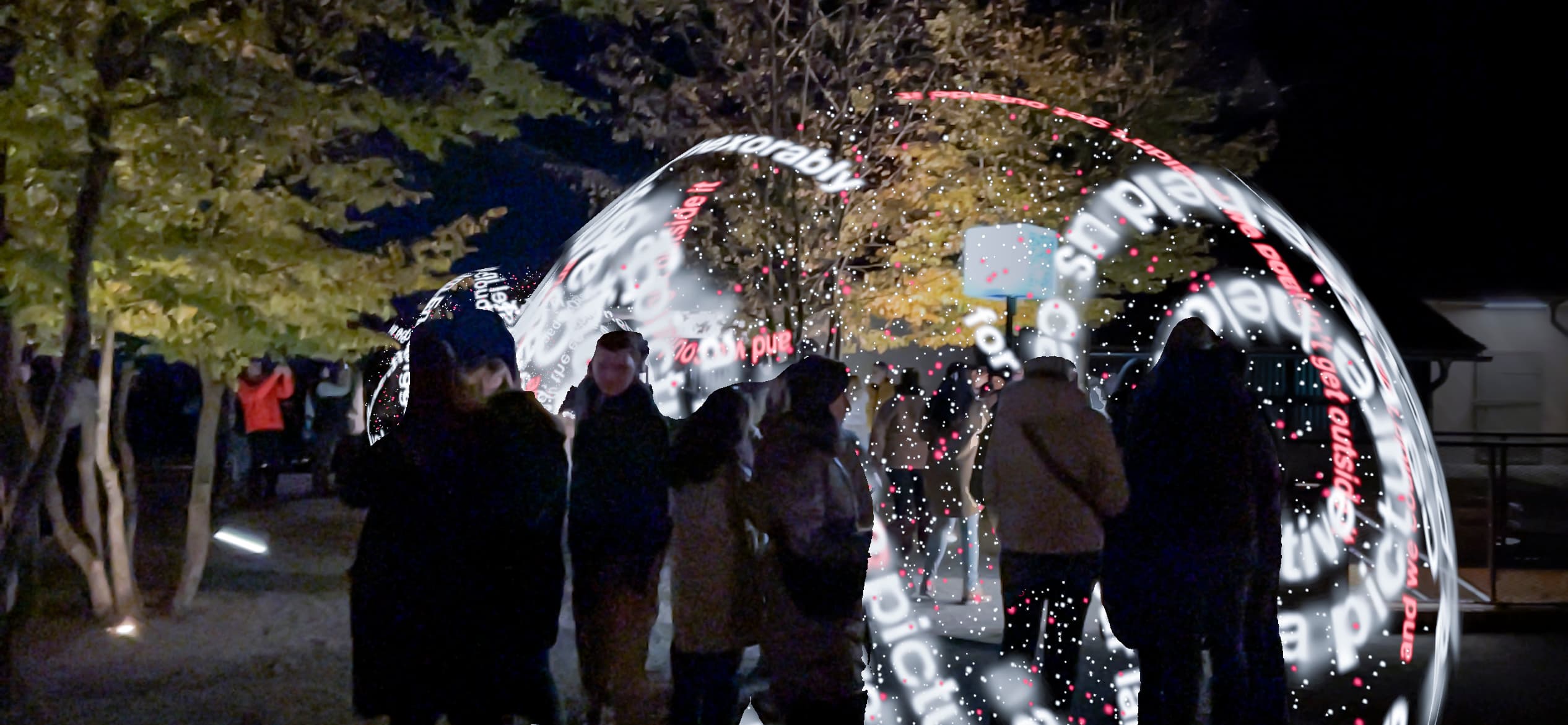
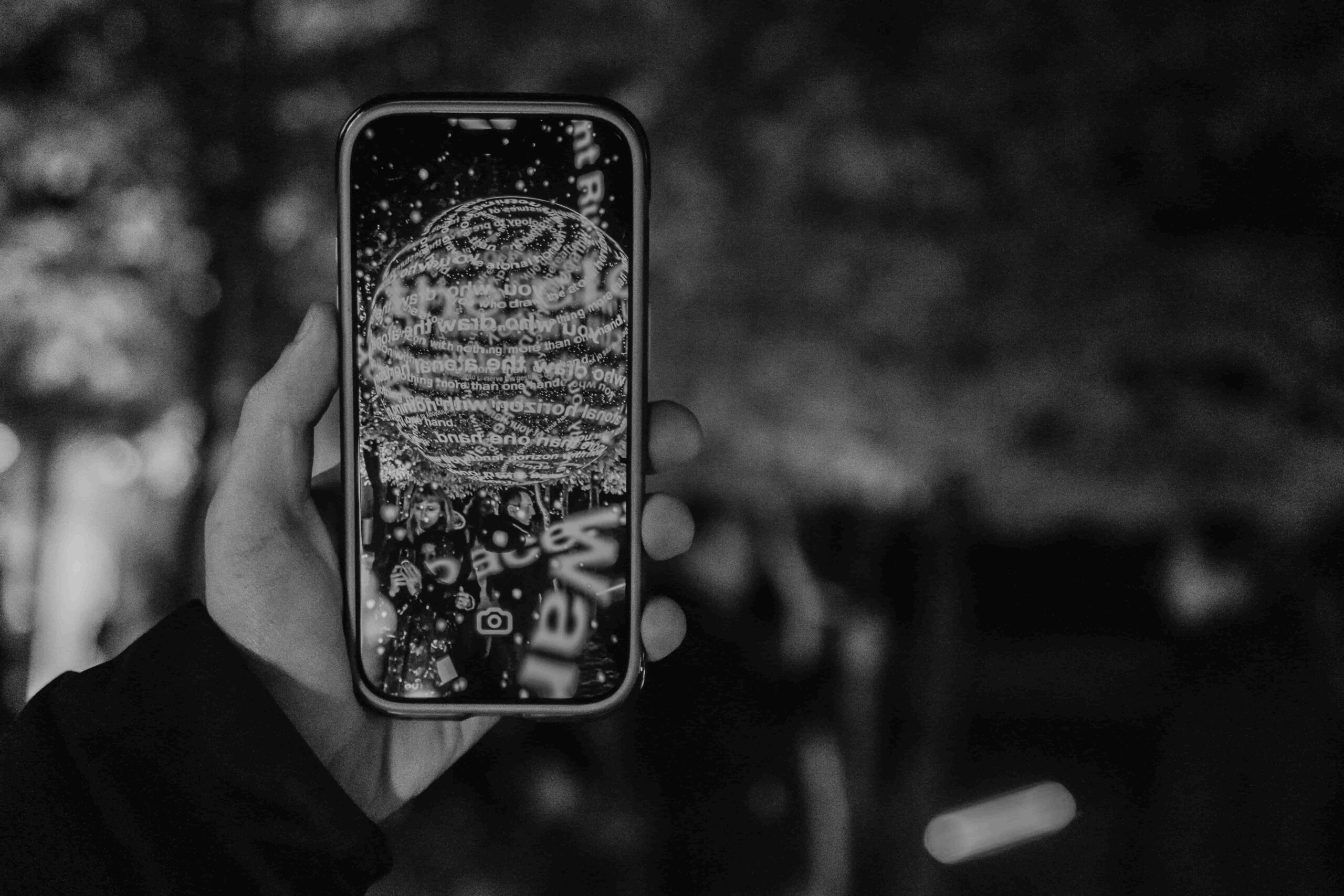
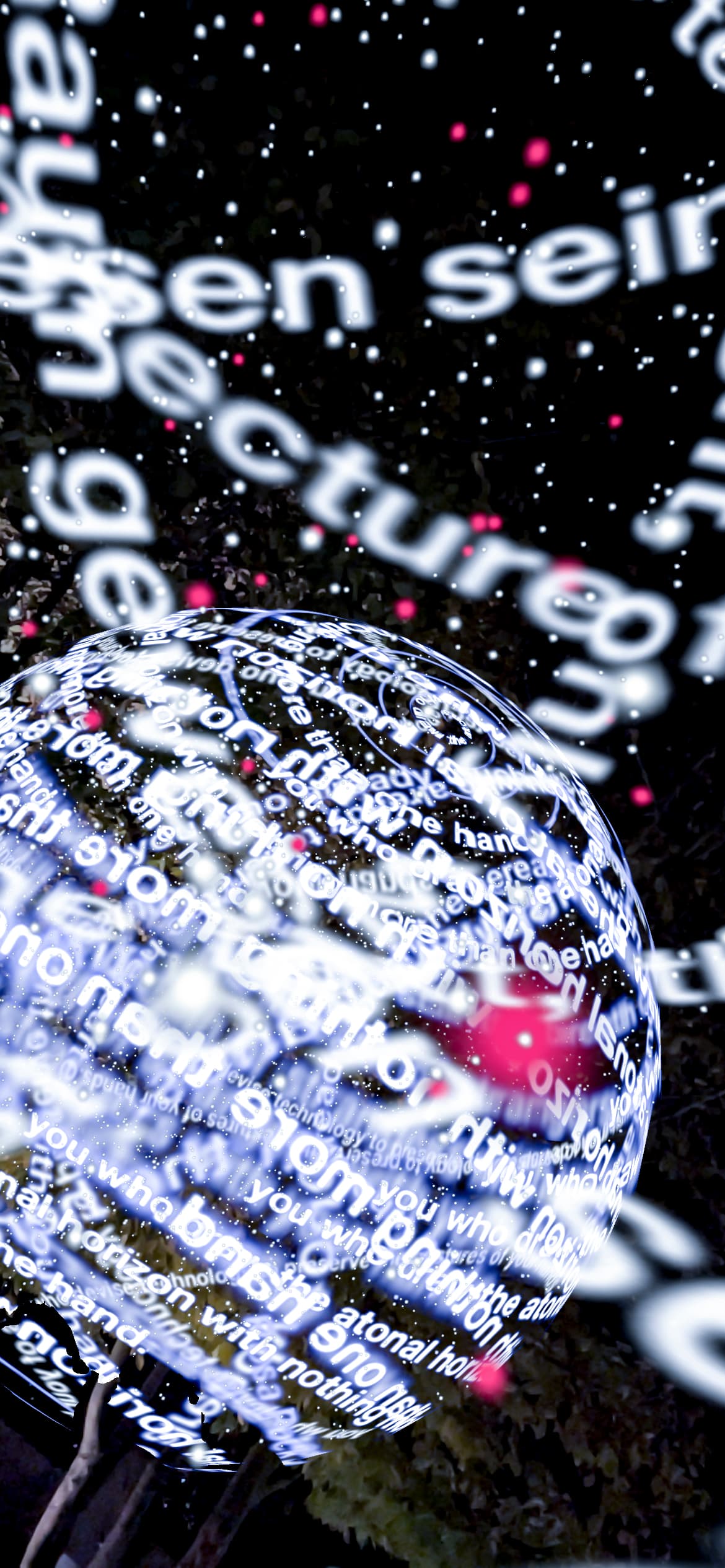
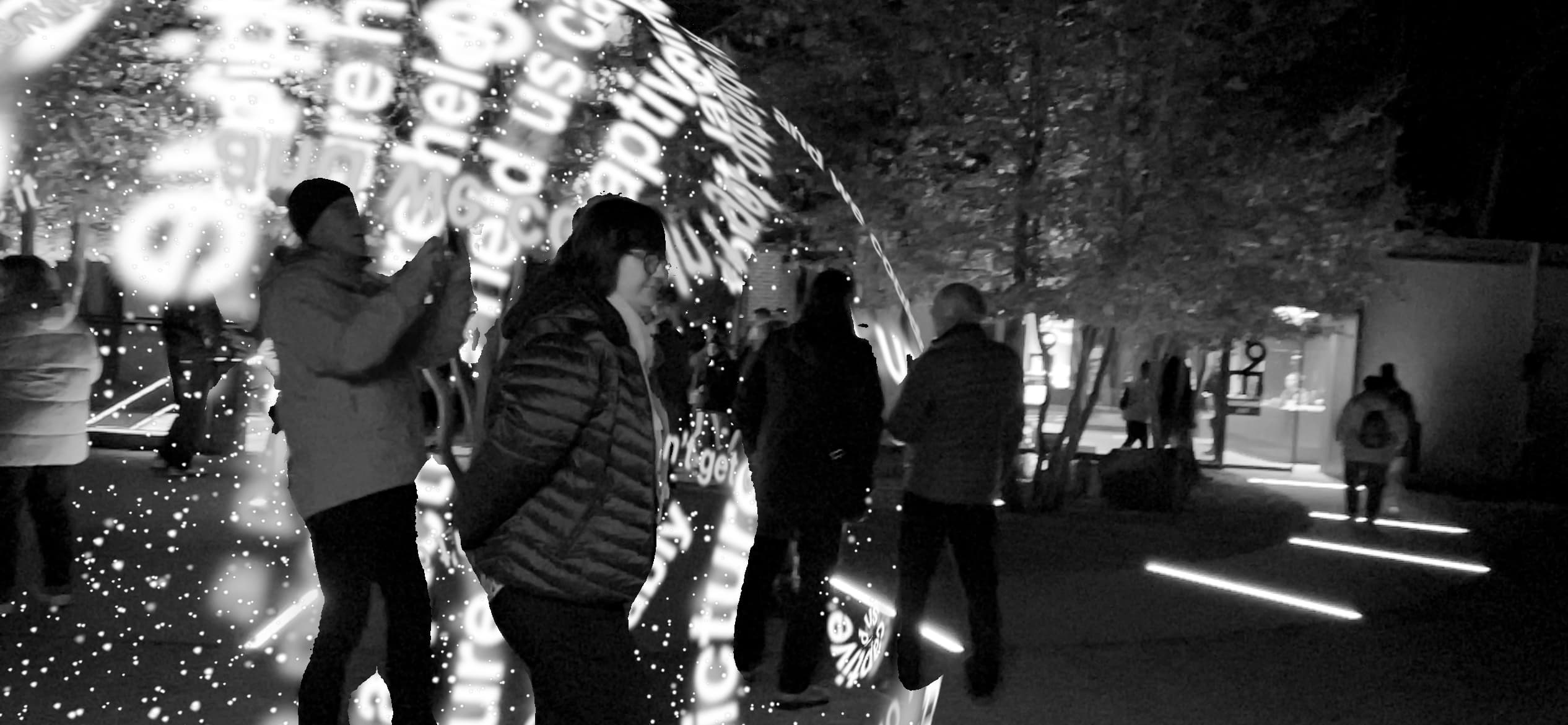
Three spheres, accessible to visitors, have appeared in the courtyard of the Graz Museum Schlossberg. They are enormous three-dimensional spheres defined by blurred yet legible texts. The glowing lines circle around invisible centres, whilst the spheres float up and down. Each sphere has its own thematic focus; the first displays texts by the Styrian writer Rosa Pock, who writes about writing and the versatility of the hand – a hand that also ‘already touches the hereafter’, thereby narratively expanding the space. The second sphere quotes Ludwig Wittgenstein, who explored image, description, language and perception. The third sphere explores space and spatiality, the scope for action, and infinity. The ‘Iony’ app is required to view this digital artwork.
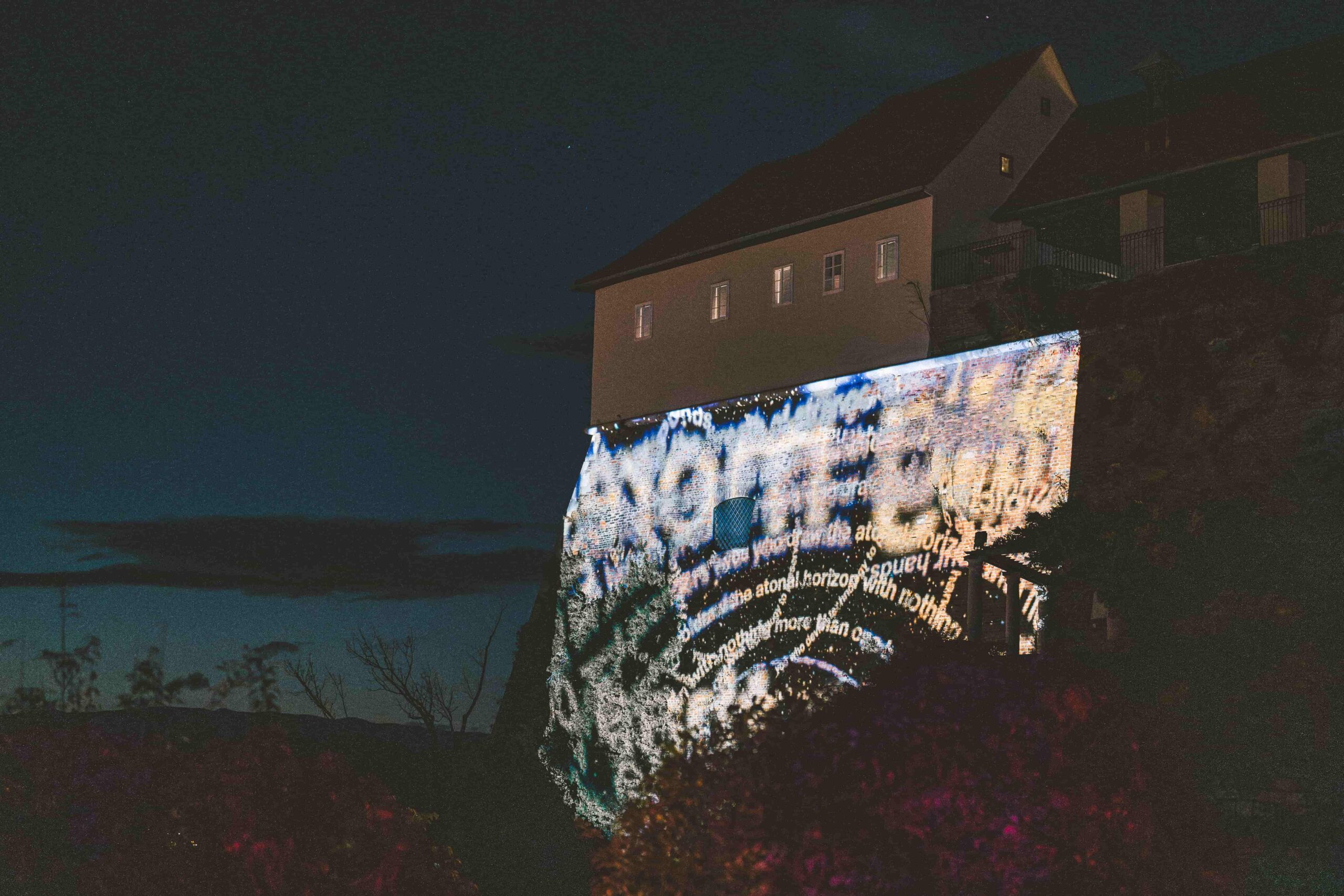
A projection on the fortress wall ties these augmented reality sculptures together in the courtyard and also opens up a seemingly three-dimensional space. As in other works, Eva Schlegel, Valerie Messini and Damjan Minovski also deal with the concept of space, the immaterial and the relationship between images and language in ‘Spheres’. The collaboratively developed AR sculptures in ‘Spheres’ expand the exploration of space, perception and the connection between humans and objects.
A project visiting Graz Museum Schlossberg.
This installation was realized with the kind support of the Kronen Zeitung realized.
Biography Eva Schlegel
Eva Schlegel lives and works in Vienna. From 1997 to 2006, she was professor of art and photography at the Academy of Fine Arts in Vienna. In 2011, she was curator of the Austrian Pavilion at the 54th Venice Biennale.
In 1988 and 1992, she participated in the Sydney Biennale, in 1990 in Aperto Venice, in 1995 she designed the Austrian Pavilion at the Venice Biennale together with Coop Himmelblau, and in 2017 she participated in the Kochin Biennale in India. Solo exhibitions and exhibition participations in long-standing collaboration with the galleries Krinzinger (Vienna), Wendi Norris (San Francisco) and Bo Bjerggard (Copenhagen), as well as in numerous Austrian and international galleries, museums and institutions, including MAK (Vienna), Brooklyn Museum (New York), LACMA (Los Angeles) and Oklahoma Contemporary (Oklahoma City).
She has realised numerous permanent site-specific projects, including in Basel, Copenhagen, Stockholm, Mumbai and San Francisco. Her works are represented in the collections of the Albertina and Belvedere in Vienna, LACMA in Los Angeles, the Museum of Contemporary Art in Chicago and the Carlsberg Foundation in Denmark, among others. Several publications on her work are available, and in 2025 the book Eva Schlegel was published by Schlebrügge.Editor.
www.evaschlegel.com
Biography Valerie Messini
Valerie Messini is an architect, digital artist and postdoctoral senior scientist at the Peter Weibel Research Institute for Digital Cultures. In her research, she uses digital technologies to explore space, identity, perception and interaction. Her dissertation, ‘void set – on emptiness in virtual space,’ was begun under Peter Weibel and supervised by Clemens Apprich after Weibel’s death. She publishes in international journals and presents her work at numerous conferences.
Since 2022, she has been teaching the interdisciplinary seminar ‘OTHER MATTER – Exploring Spatial and Curatorial Strategies with Augmented Reality’ at the University of Applied Arts Vienna, and since 2024, she has also been teaching ‘Encyclopaedia of Media’. Previously, she supervised design studios at the Institute of Art and Architecture at the Academy of Fine Arts Vienna (2022–23). From 2013 to 2019, she was a senior lecturer at ./studio3 – Institute for Experimental Architecture, University of Innsbruck, where she supervised VR seminars, digital strategies, design courses and master’s theses.
She completed her architecture studies at the University of Applied Arts Vienna (Studio Prix) with honours in 2011. She has worked for international architecture firms (including Coop Himmelb(l)au [AUT], Snøhetta [NO], Flying Elephant Studio [IN]) and has realised several large-scale installations with Eva Schlegel. She has been a civil engineer since 2017. In 2018, she founded Studio 2MVD with Damjan Minovski, which is dedicated to combining architecture with digital art and technology practices.
Biography Damjan Minovski
Damjan Minovski studied architecture at the University of Applied Arts in Vienna and graduated in 2011. Since then, he has been working as a freelance artist and researcher in the fields of architecture, visual and digital art. He was a university assistant at the University of Innsbruck and at the University of Applied Arts in Vienna. Since 2017, he has been working with Valerie Messini under the name 2MVD, focusing on the connection between architecture and innovations and advances in the field of digital art and technology. He currently teaches at the Academy of Fine Arts in Vienna.
Spherical sound comes from Stefan Rigger, who transforms the Schlossbergraum into a sound space in four individual tracks. At irregular intervals, the spheres are energised by fast beats.
The perception of the walk-in spheres is altered and influenced by the sound installation.
Stefan Rigger Gelato, sound artist, born in Italy, lives and works in Vienna.
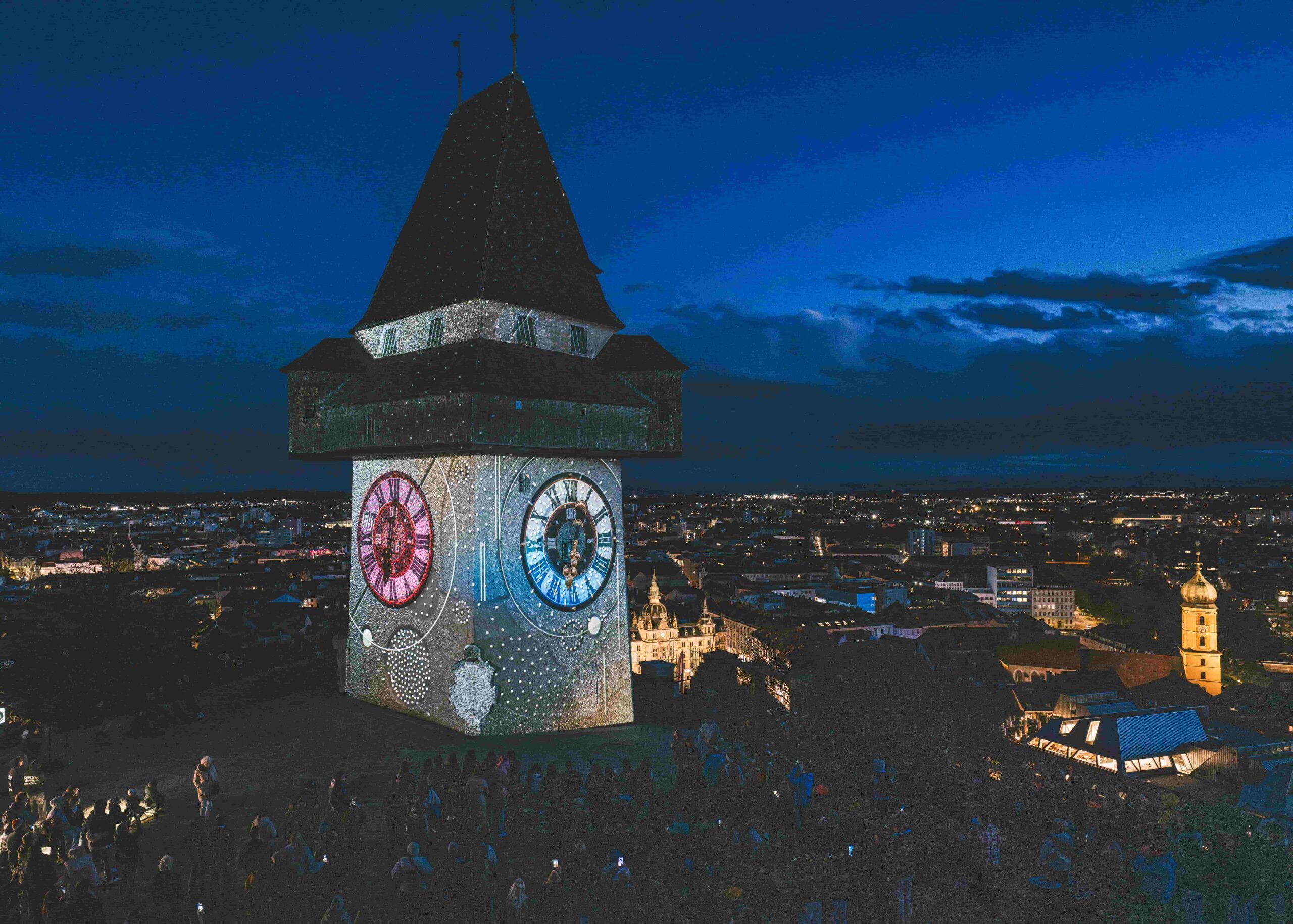
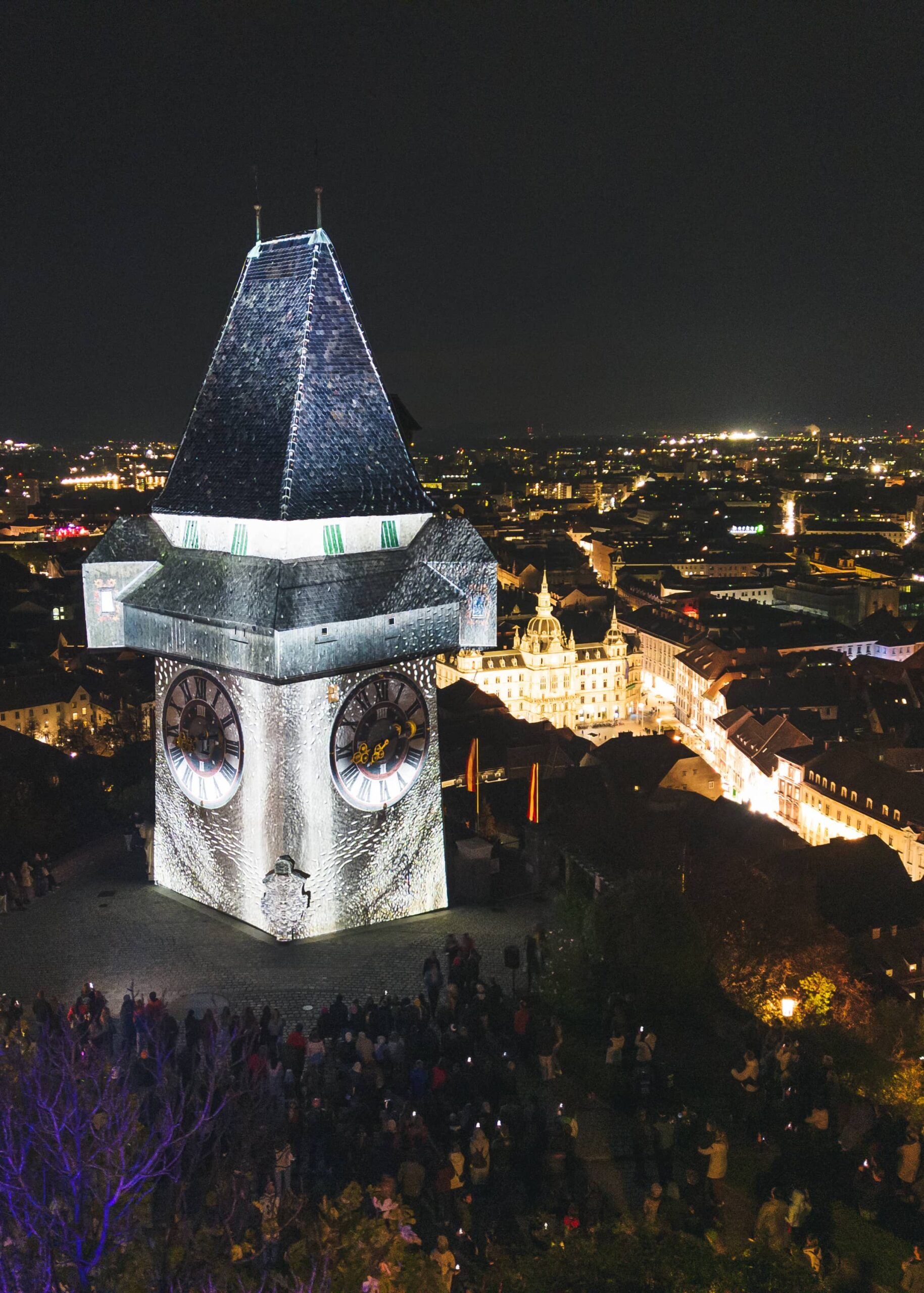
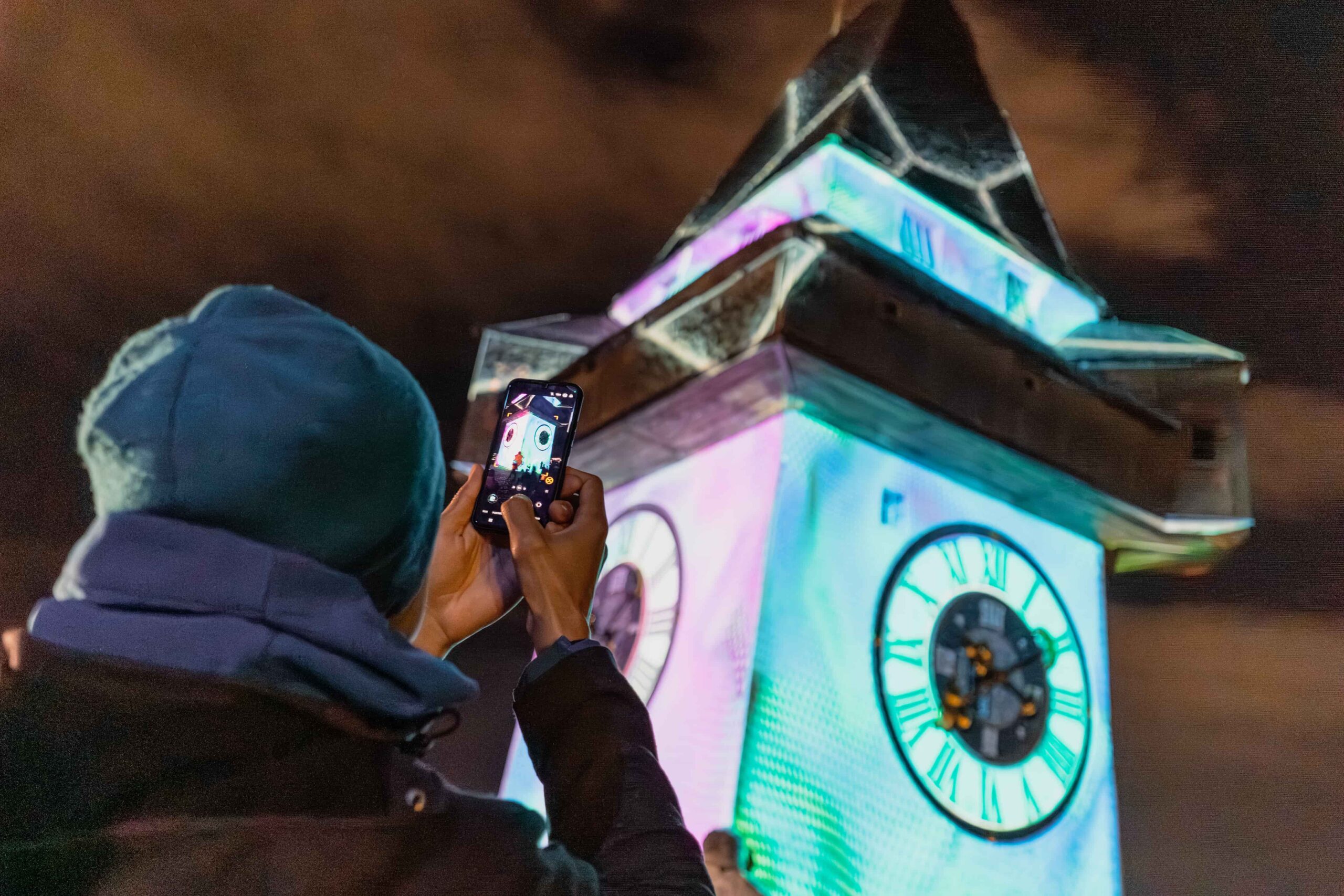
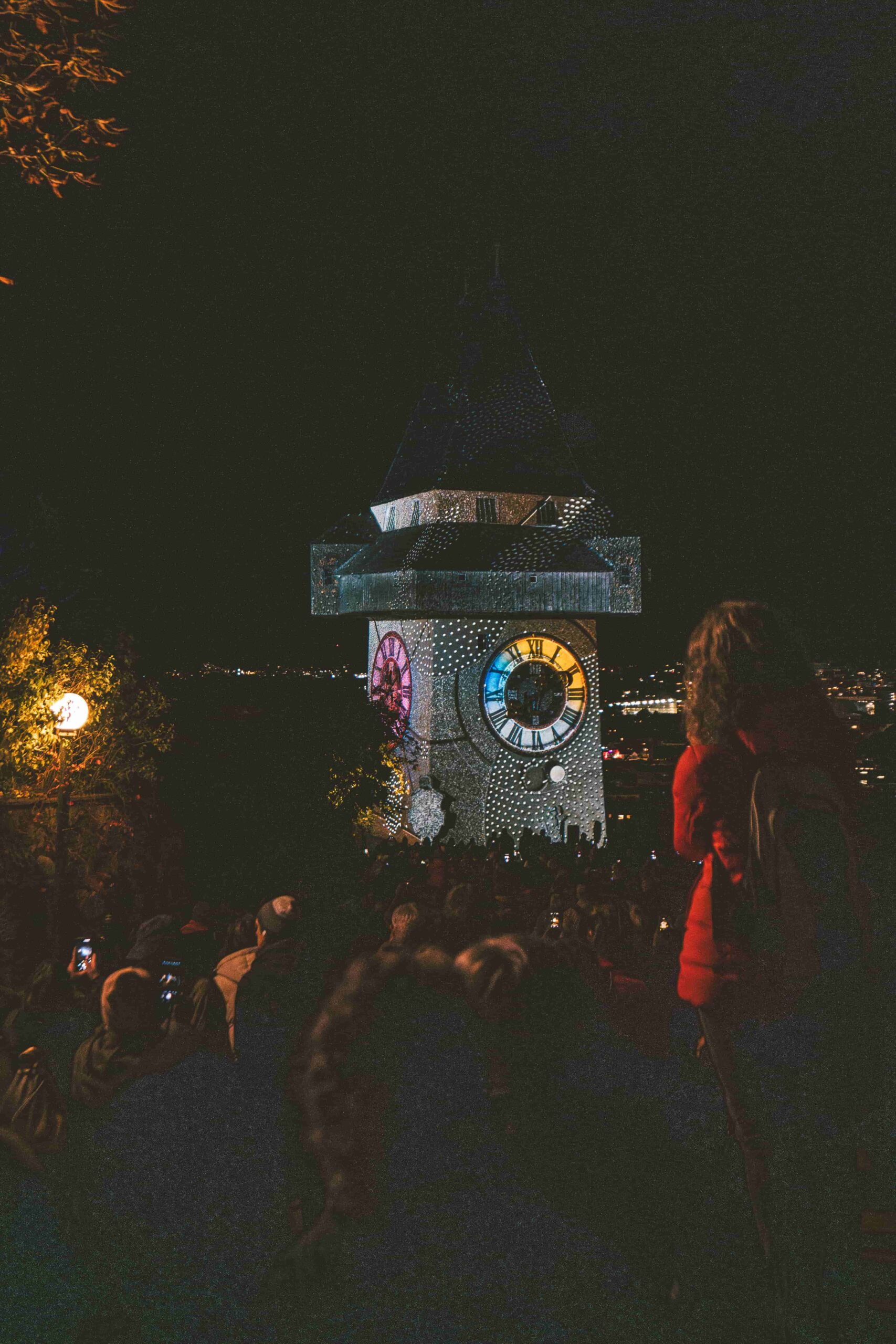
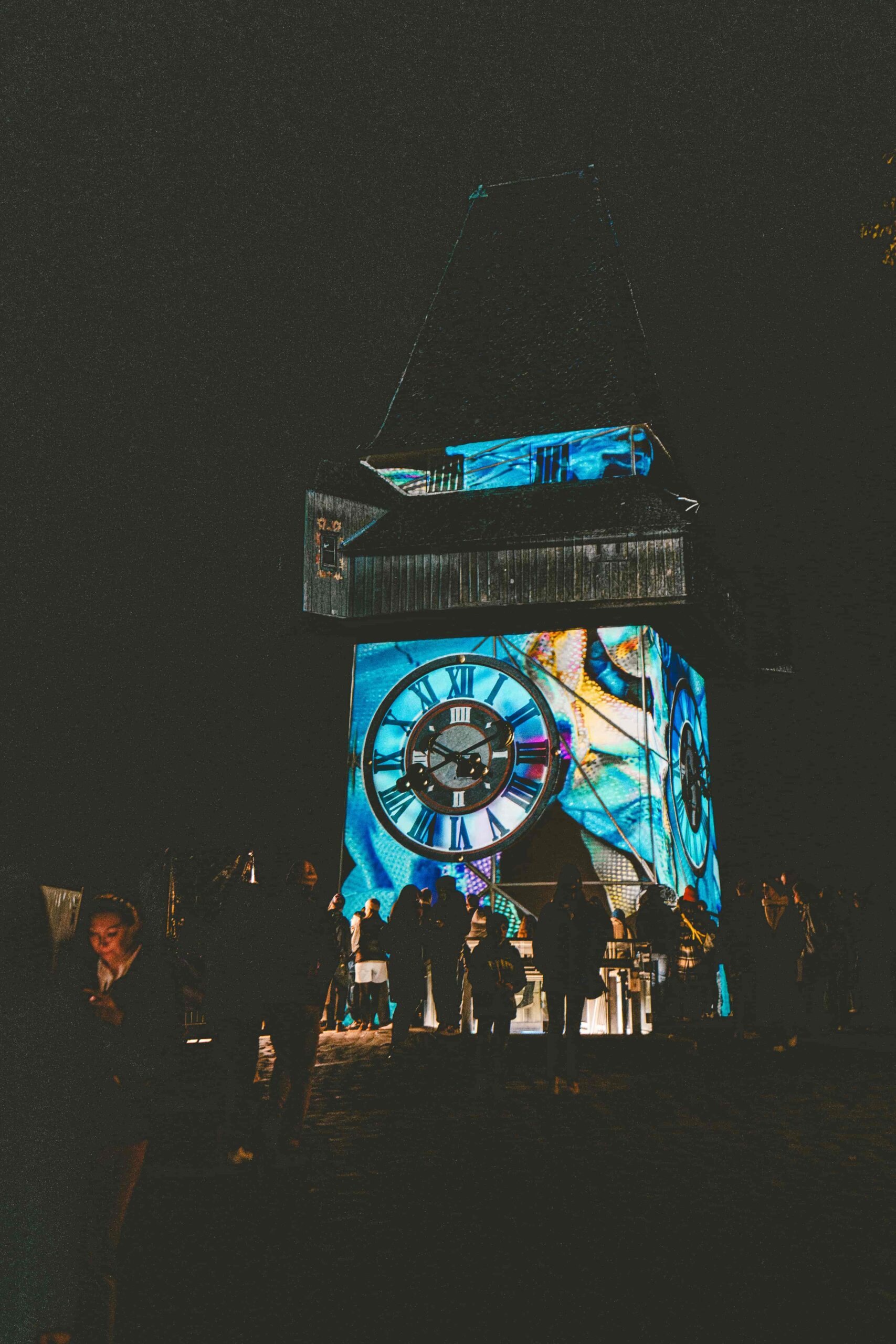
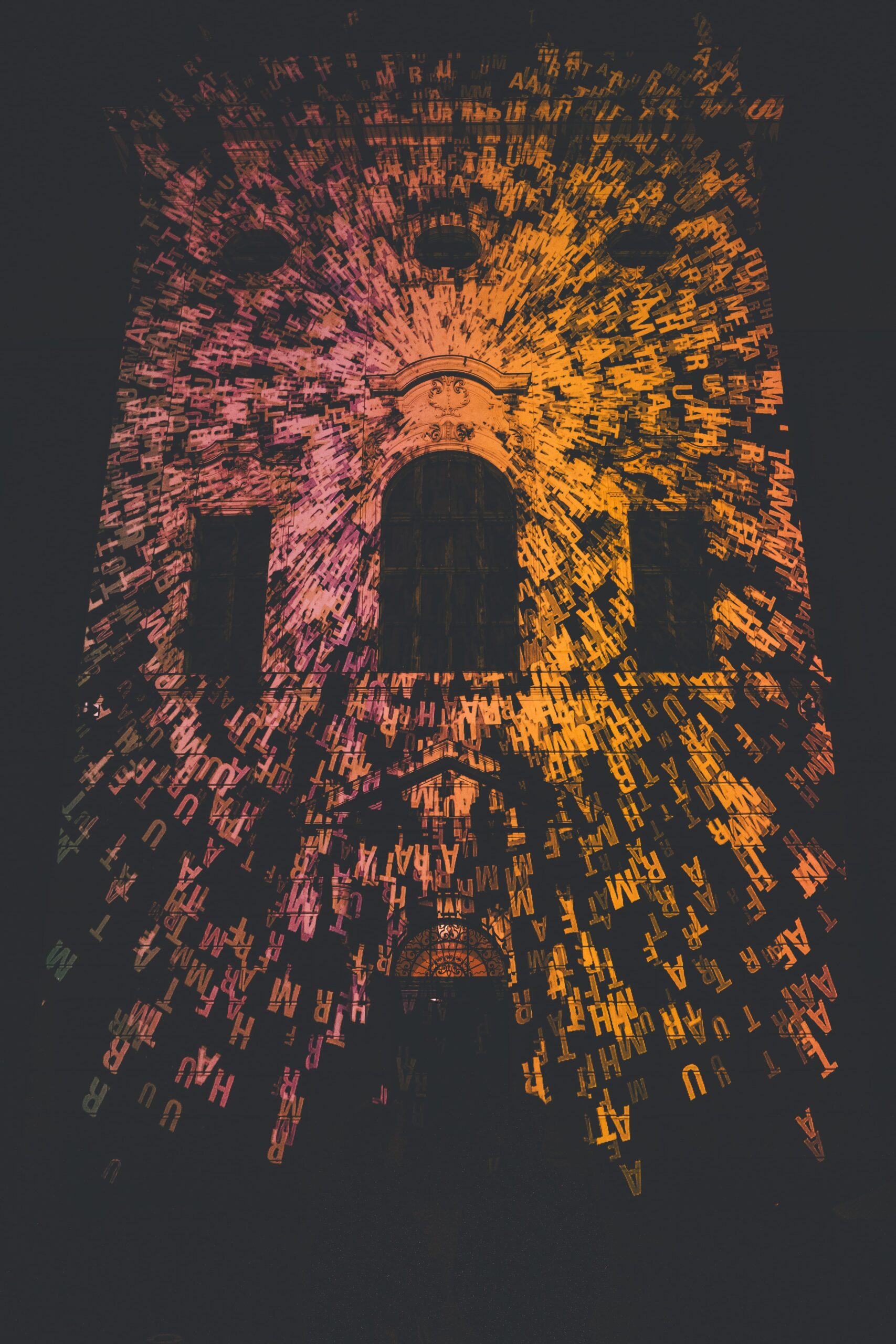
In Julian Hölscher’s architectural projections, analogue reality always merges with digital imagery: it is an interplay between the real and the projected—embedded in a narrative context. In the case of “Pochen” on the Graz clock tower, it is a multi-layered, ambiguous narrative. The abstract work oscillates between speed and slowness, between clear sound and apparent noise, between tension and relaxation. The projection blurs the contours of the landmark, making it appear vague and thus becoming a visual challenge for the audience.
The sound design for “Pochen” was created by Thomas Werner. Warm soundscapes evoke different emotions and add an extra dimension to the work.
Location: Uhrturm
This installation is made possible with the kind support of XAL.
From graphic design to 3D projection mapping: Julian Hölscher develops location and theme-specific concepts for venues and companies. His architectural projections are always based on the interplay between the existing architecture, its digital equivalents, and contextual narratives. He develops visual works in which analogue reality merges with digital imagery.
Credits
conspetion & image: Julian Hölscher
sounddesign: Thomas Werner
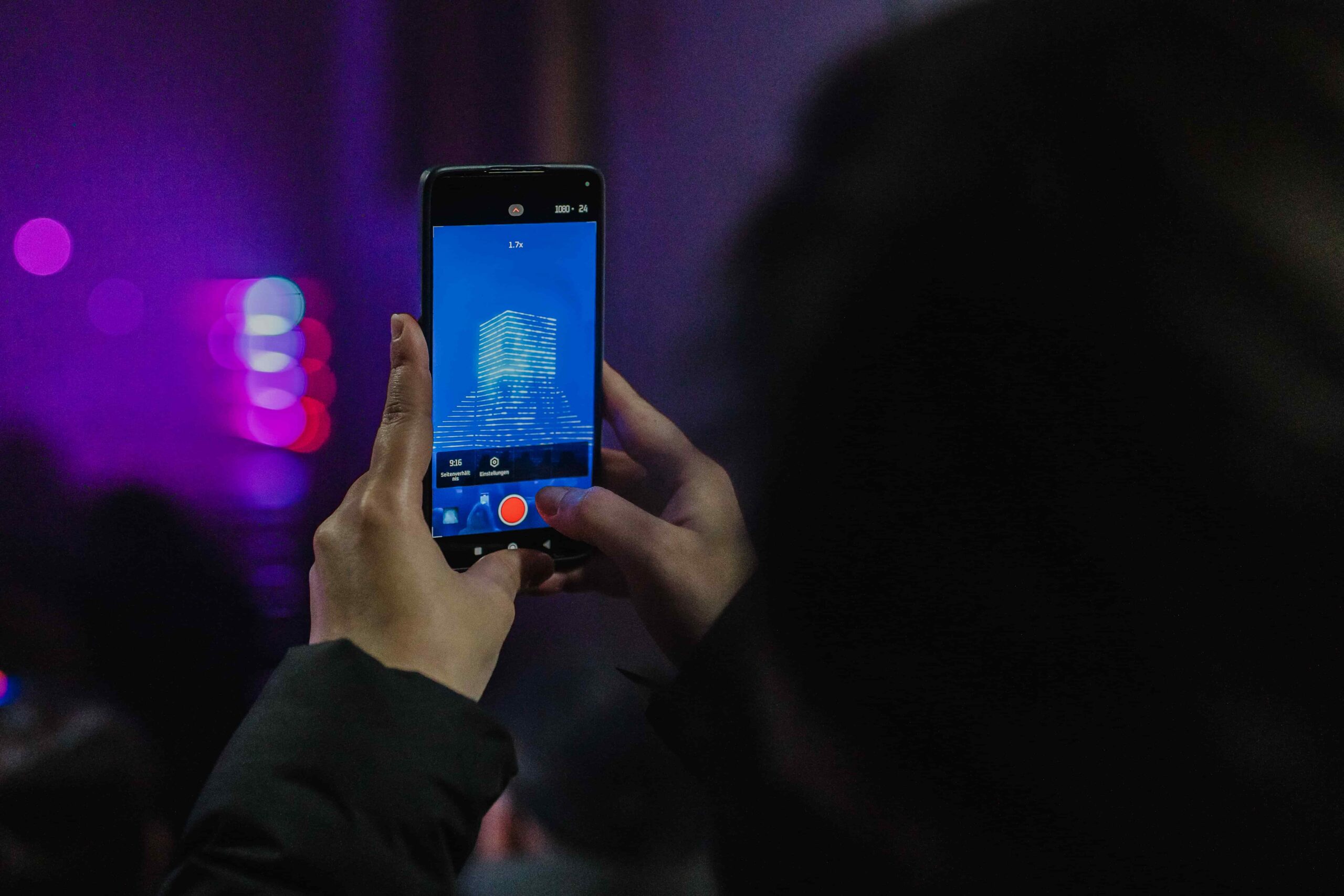
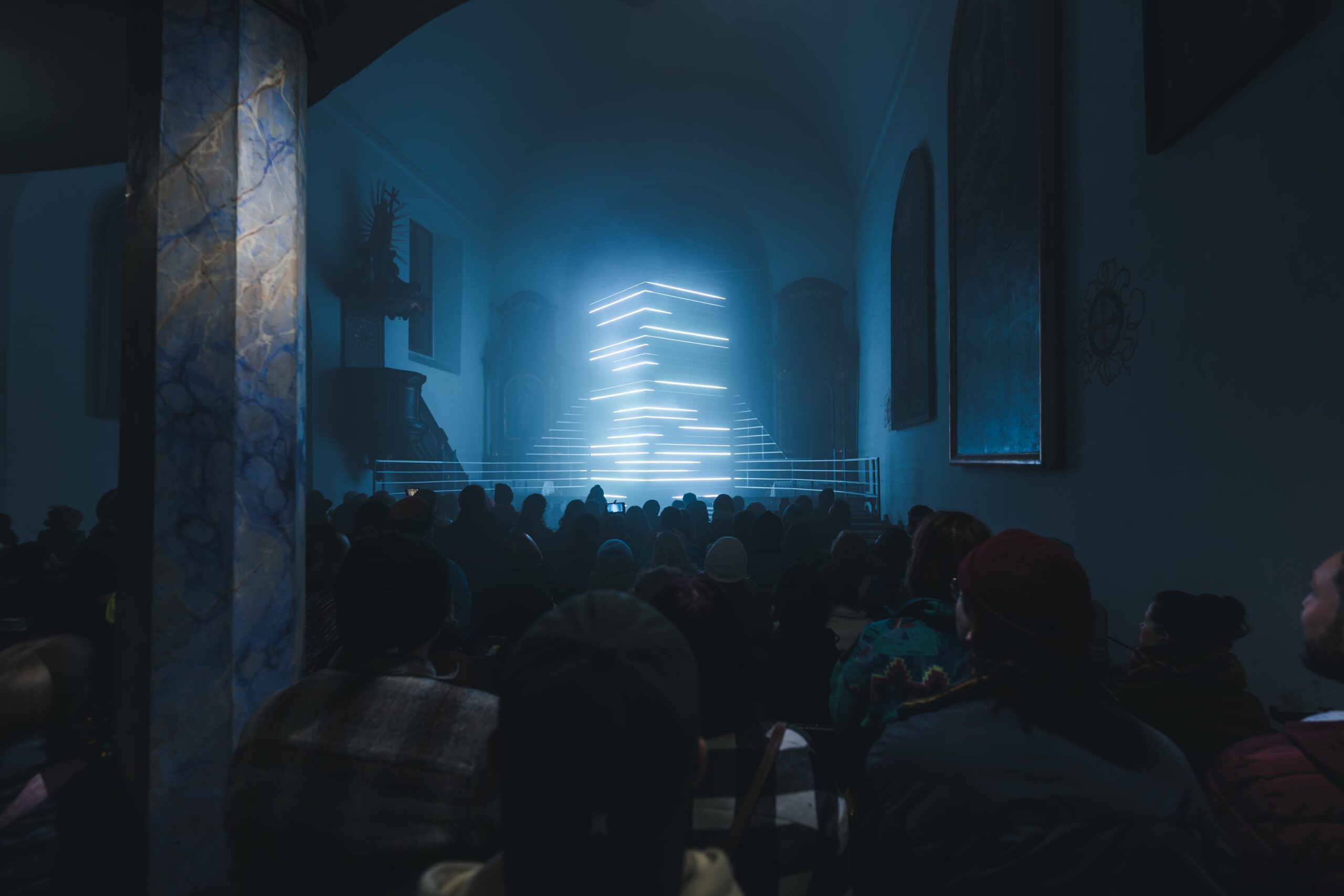
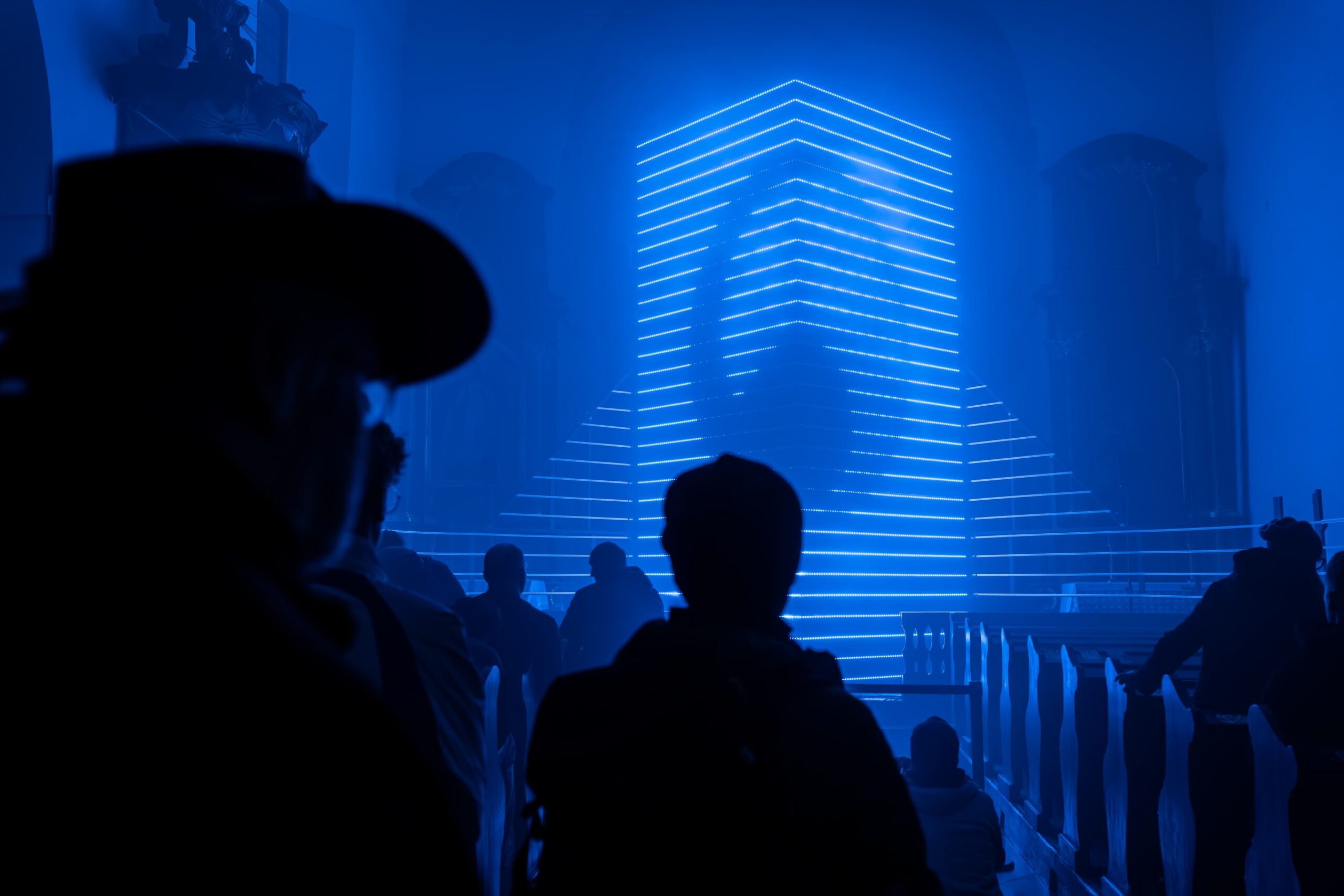
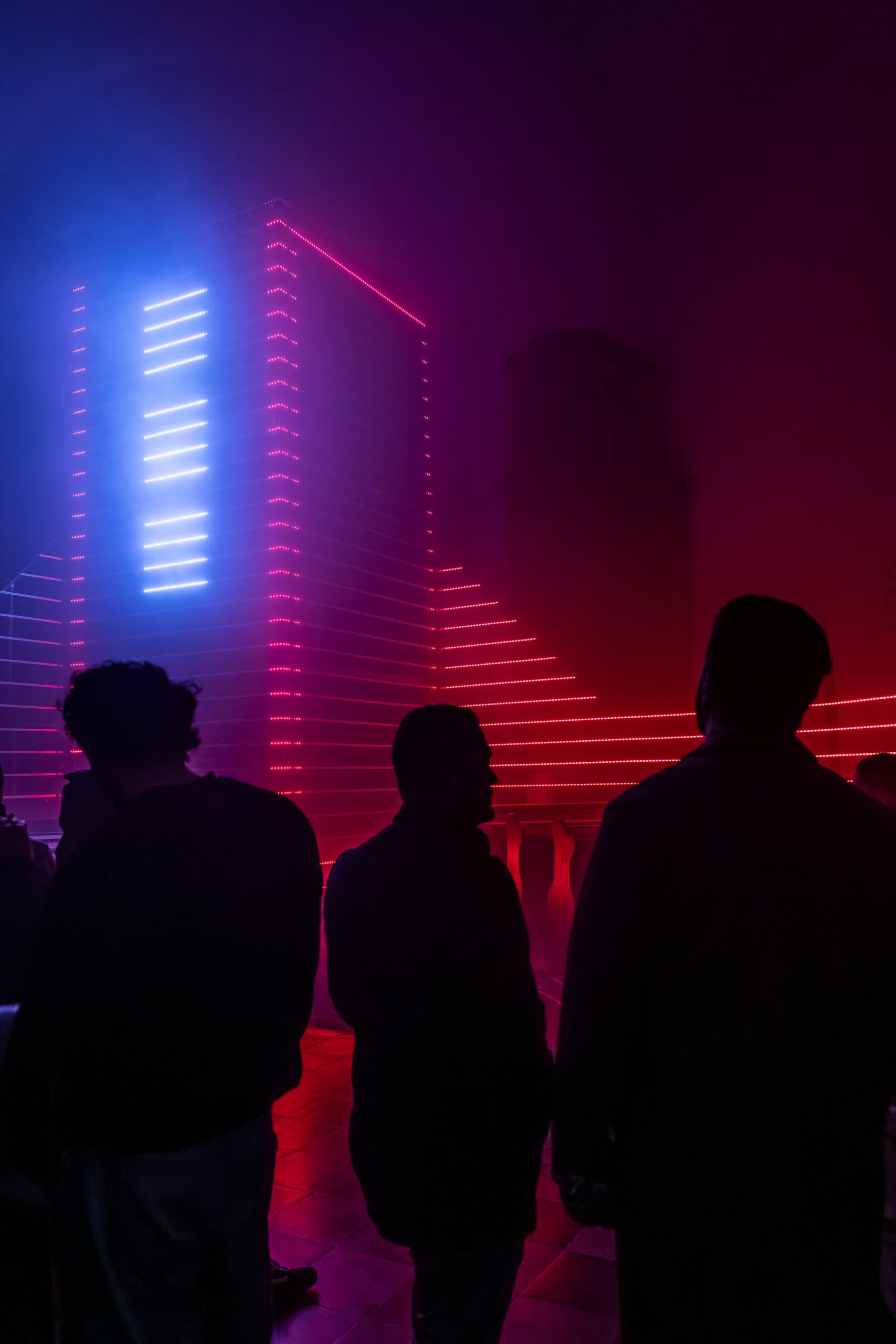
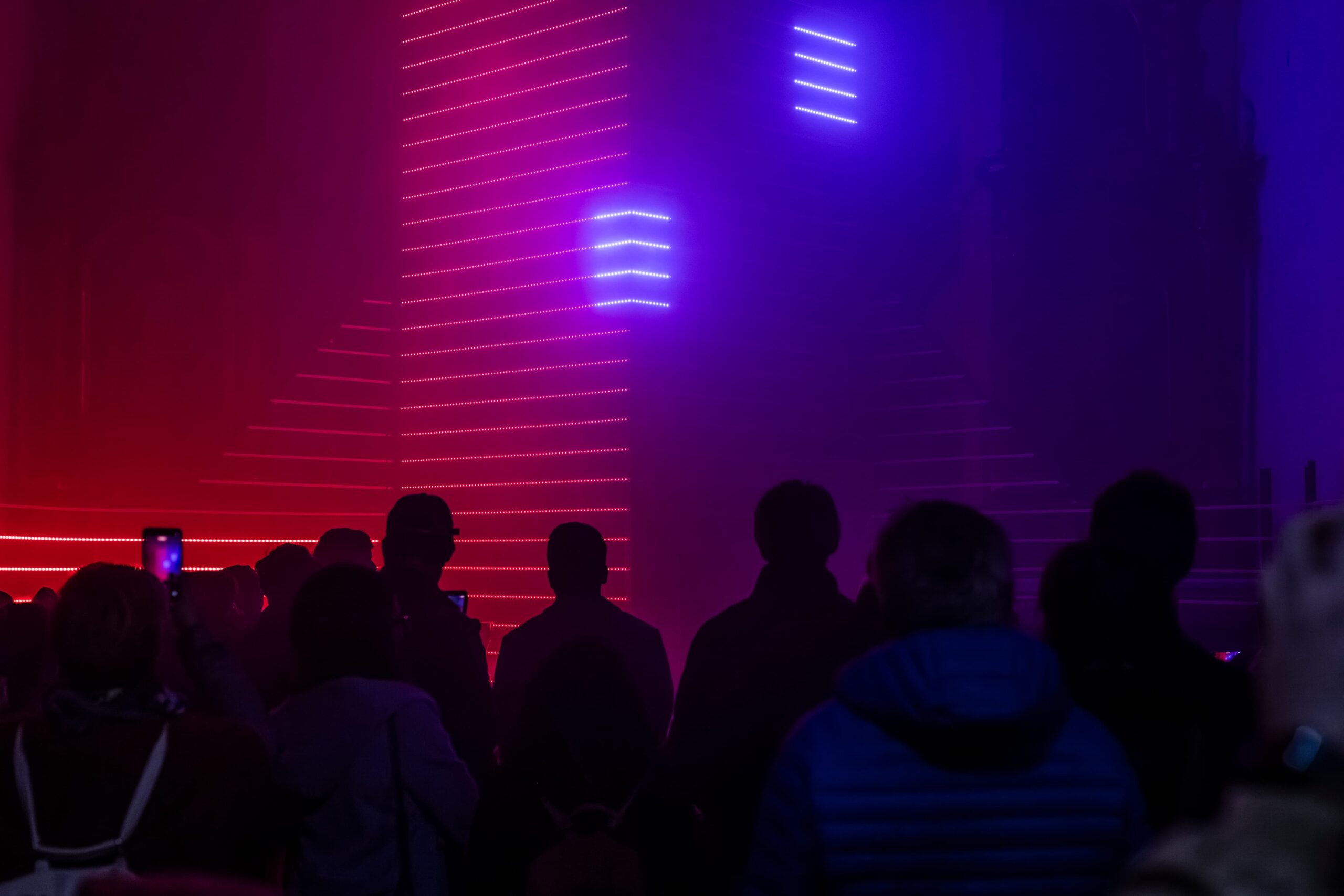
For their “Vertigo” project, design students at FH JOANNEUM intensively explored this year’s festival theme: intoxication. The resulting works transform the nave of Graz’s Antoniuskirche into an immersive media experience that presents different artistic interpretations, ranging from the intoxication of love to loss of control, from the struggle between nature and machines, to threatening currents. Light and sound are not only used as creative tools in these works, but are also employed specifically by students from the Media, Sound, and Interaction Design departments to create multi-layered narratives. The project was supervised by Astrid Drechsler, Daniel Fabry, Michael Kernbichler, Didi Mosbacher, and Roman Pürcher.
Location: Antoniuskirche
A project visiting Gast im Volkskundemuseum.
Master’s degree students at the Institute of Design & Communication at FH JOANNEUM can specialize in various areas, including communication, media, sound, and interaction design. Light and sound also play a key role in these courses as means of working and expression, which has led to several years of cooperation with KLANGLICHT. In 2024, design students will not only be participating in the festival with their “Vertigo” project—sound designers will also be producing the KLANGLICHT audio guide, which provides information about the individual projects on site.
Betreut wurde das Projekt von Astrid Drechsler, Daniel Fabry, Michael Kernbichler, Didi Mosbacher und Roman Pürcher.
Credits:
Media, Sound und Interaction Design Studierende der FH JOANNEUM & Kunst-Universität Graz:
Ackerl Magdalena, Adlberger David, Allerstorfer Selina, Archilia Sopio, Blümel Dominik, Bonevie Noah, Bremer Victoria, Dorzhieva Elina, Hohenbrink Joschua, Huft Alina, Ioseb Ioseliani, Jakubiak Franciszek, Karkheck Jessica, Kobler Tanja, Mammadov Seymur, Marzouki Tarek, Onyebuchi Arinze, Orynbayeva Leila, Poštrak Veronika, Prassé Florian, Prinz Felix, Rieder Lukas, Schittenkopf Tobias, Schneider Verena, Schnurrer Jakob, Schmitz Gregor, Schwarz Valerie, Steigerwald Désirée, Thausing Florian, Verhounik Peter, Volkova Alina, Waldenberger Sara, Zourkou Genovefa
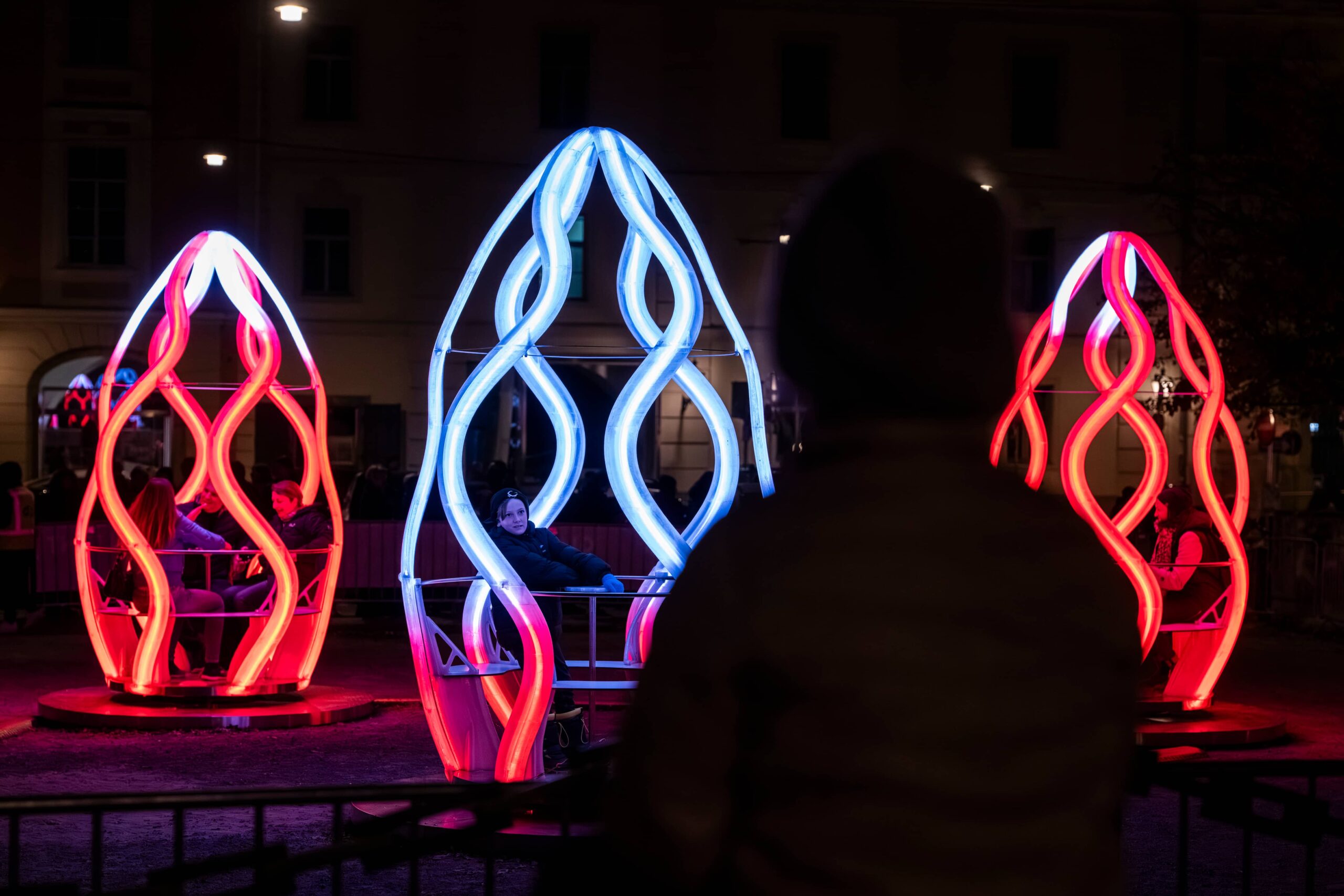
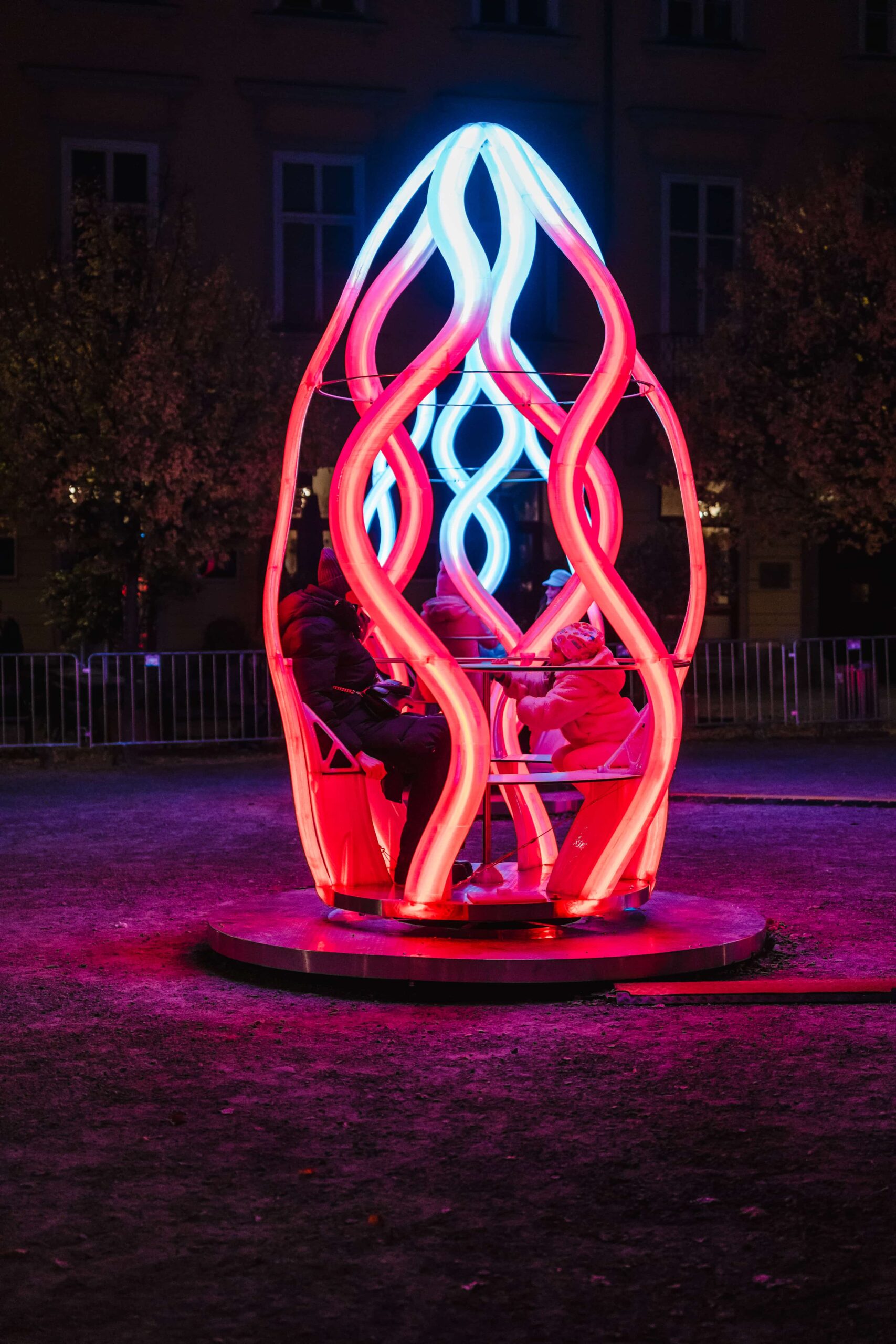
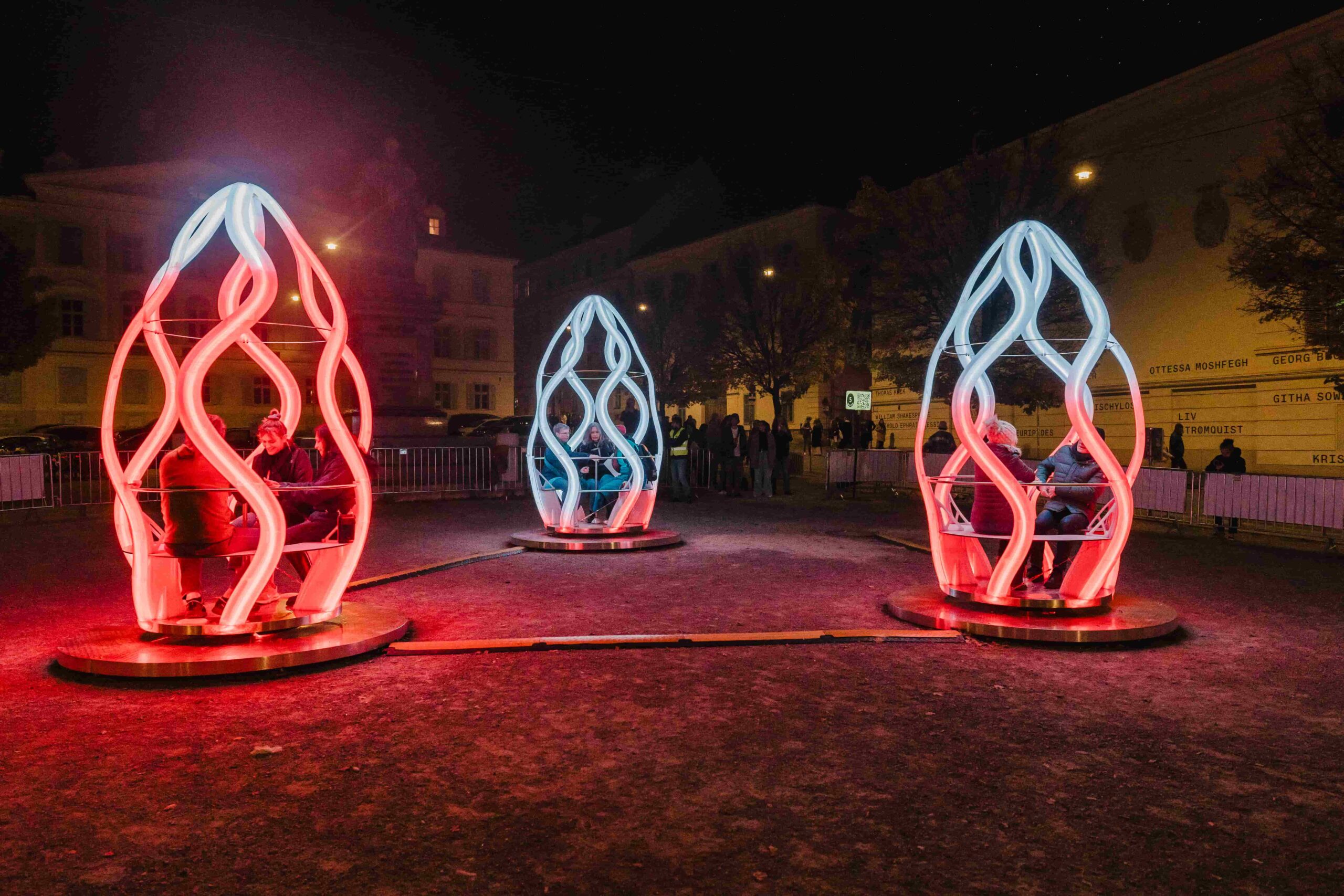
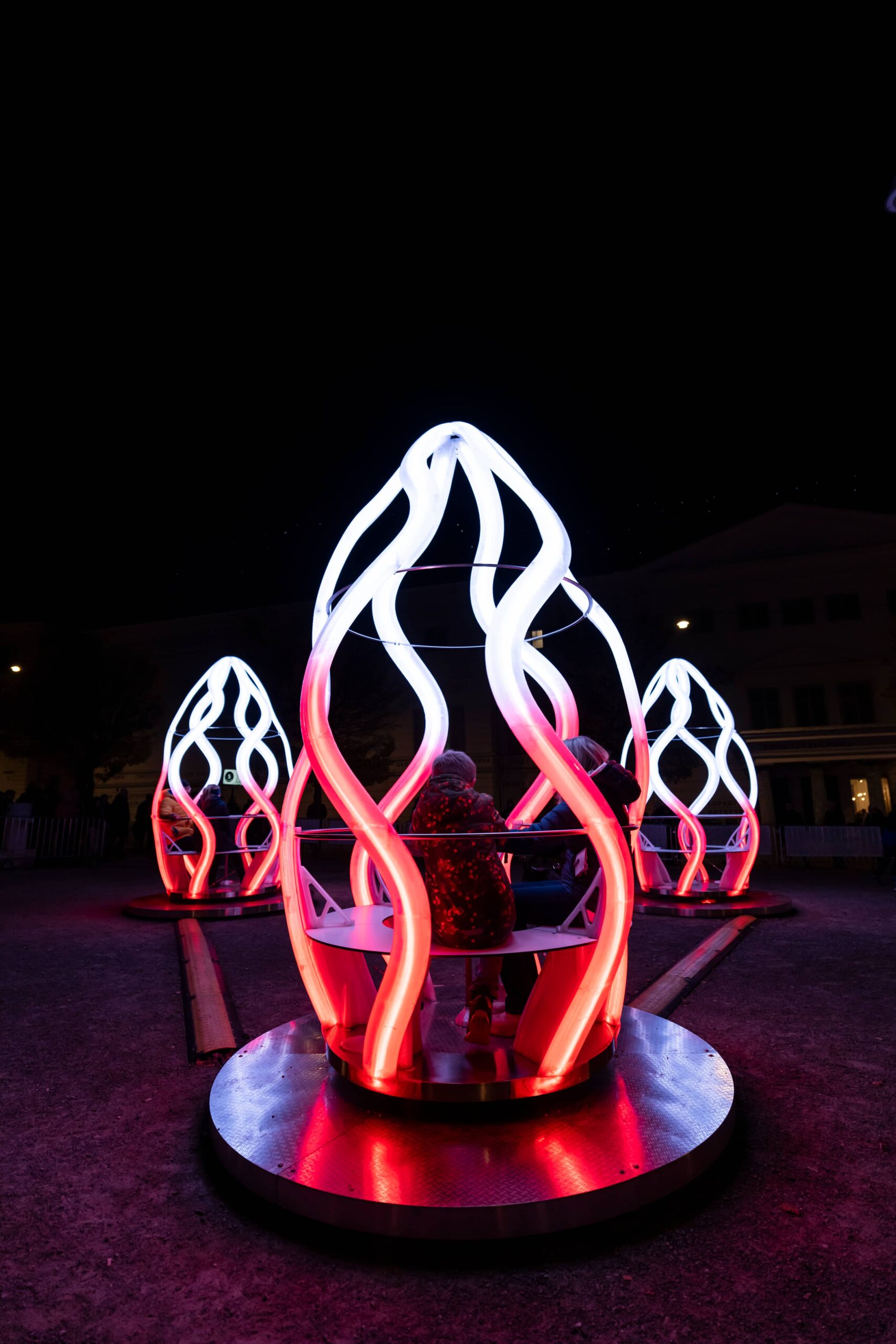
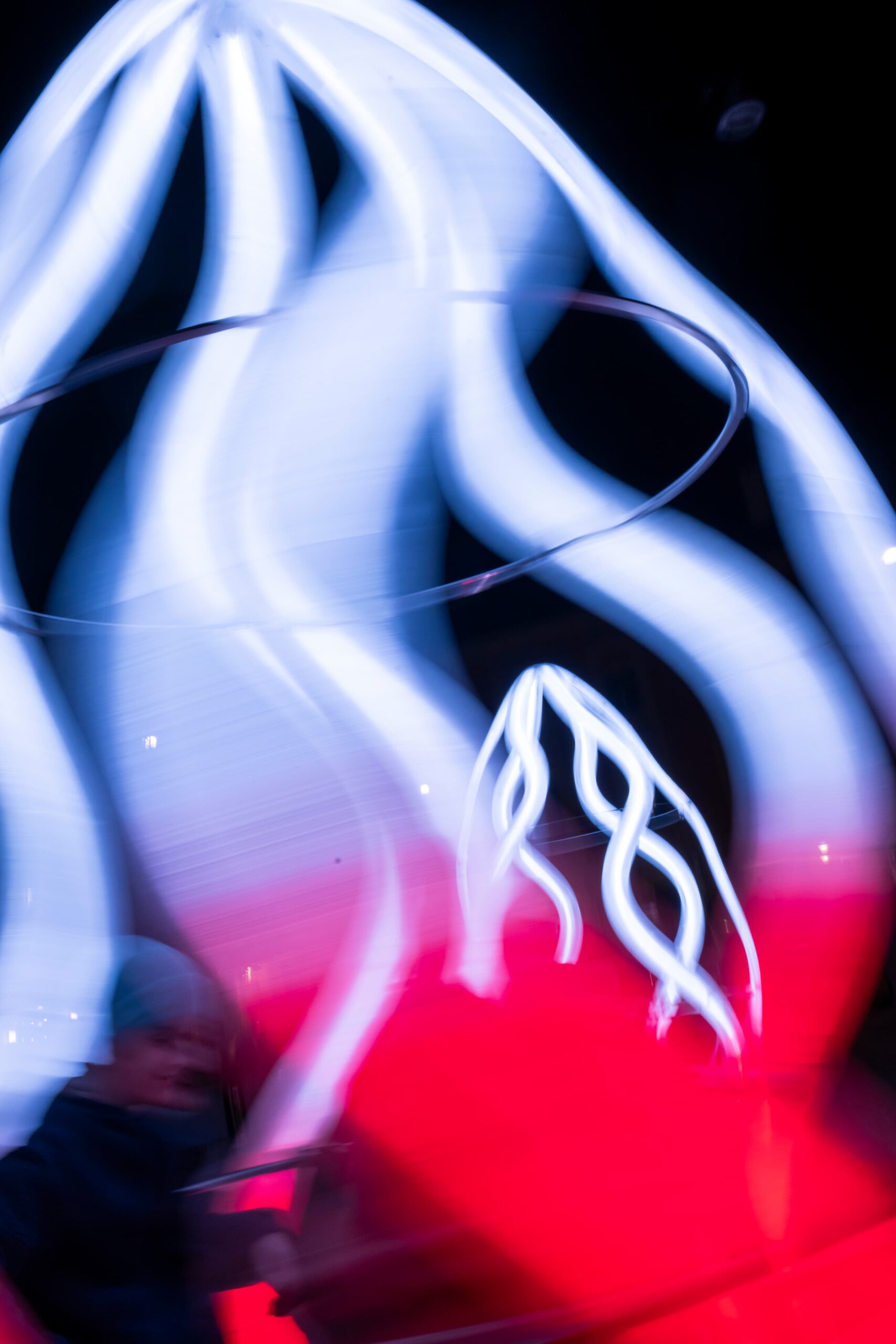
These are tall capsules, scattered in large numbers across Graz’s Freiheitsplatz as if by chance. What could their purpose be? A closer look reveals that they are intertwined lines of light that form a shell. And there is more: these “Lotus Pods” by artist David Ram are by no means static. Instead, they begin to rotate when touched, i.e., through the interaction between a viewer and the sculpture. The faster they rotate, the brighter the light. The result is a visual power, that captivates playfully—out of the world and into this intense moment. When a capsule loses its momentum again, darkness fills the void left by the light. However, it is only a brief stillness and a fleeting pause before the dance begins anew.
Location: Freiheitsplatz
Credits
Text: Seppo Gründler
Sounddesign: Seppo Gründler
Interactive Media Design: Georg Kettele
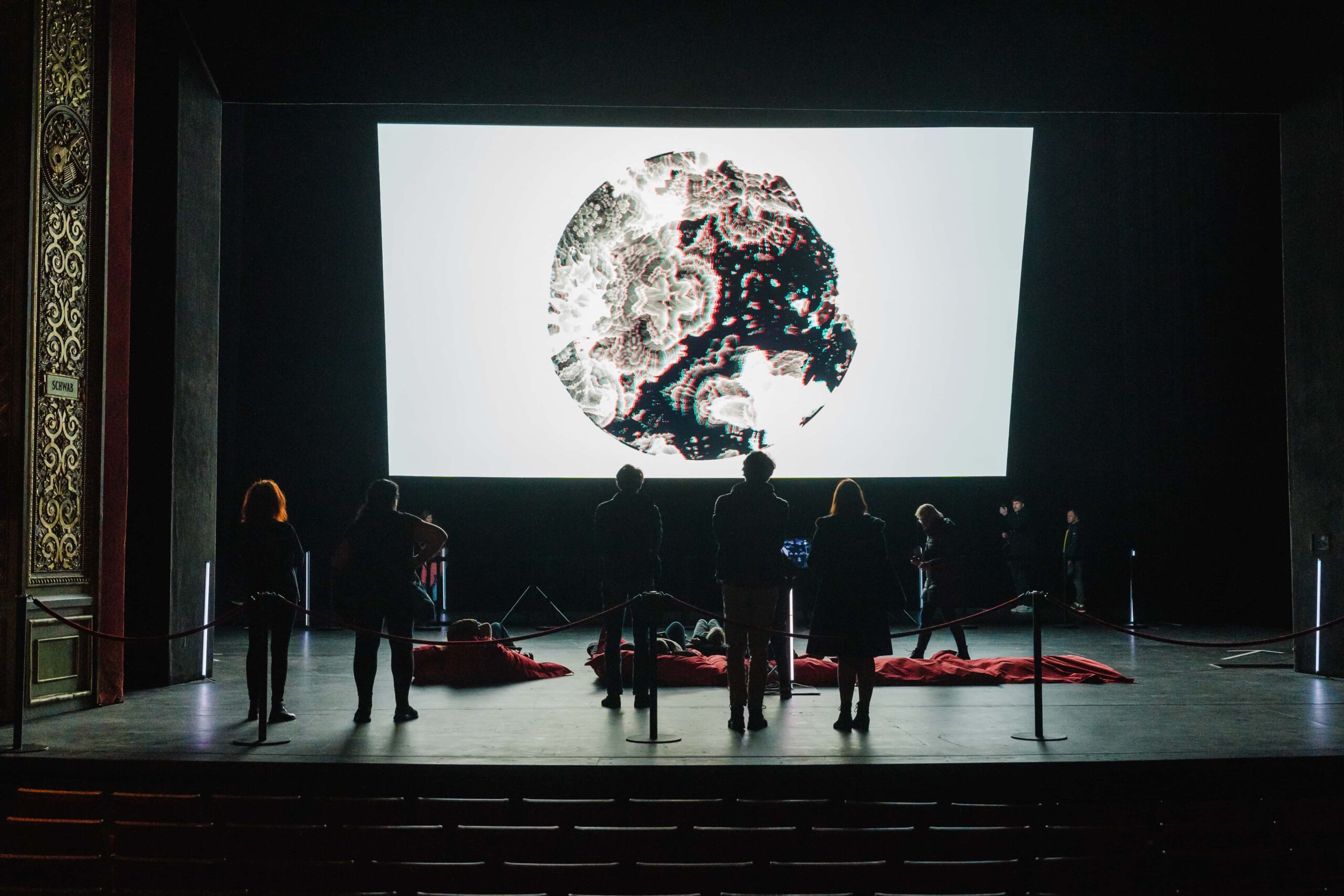
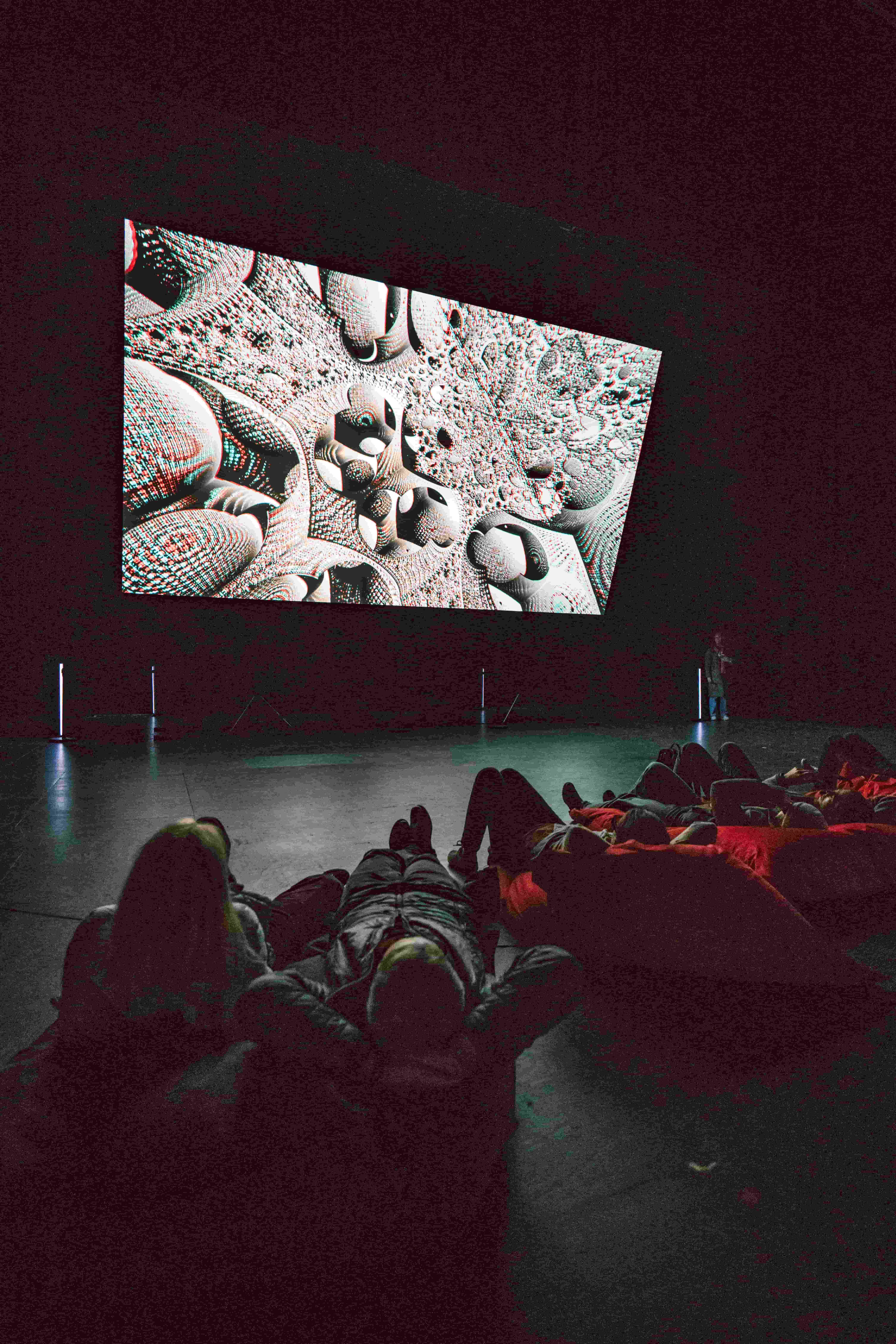
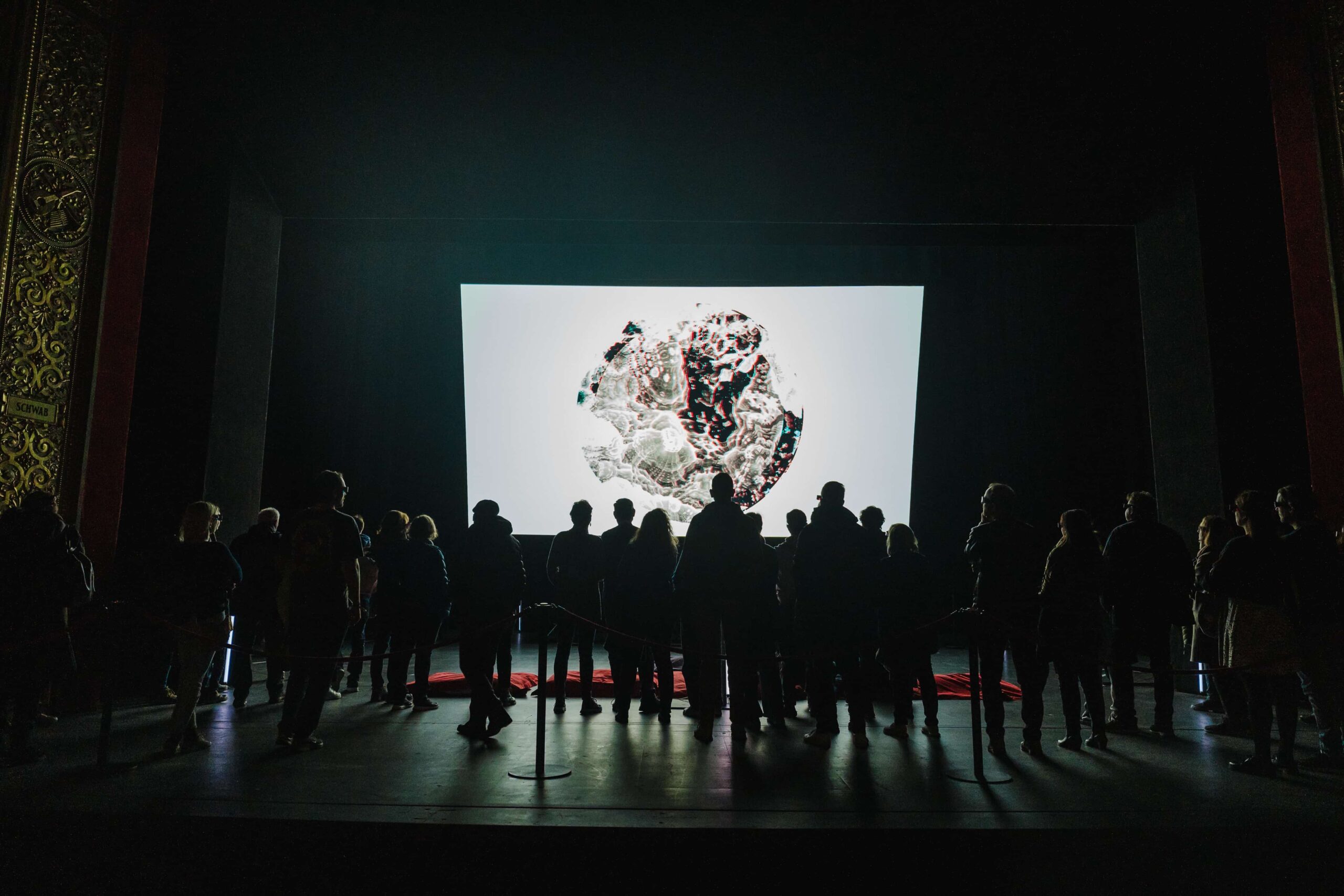
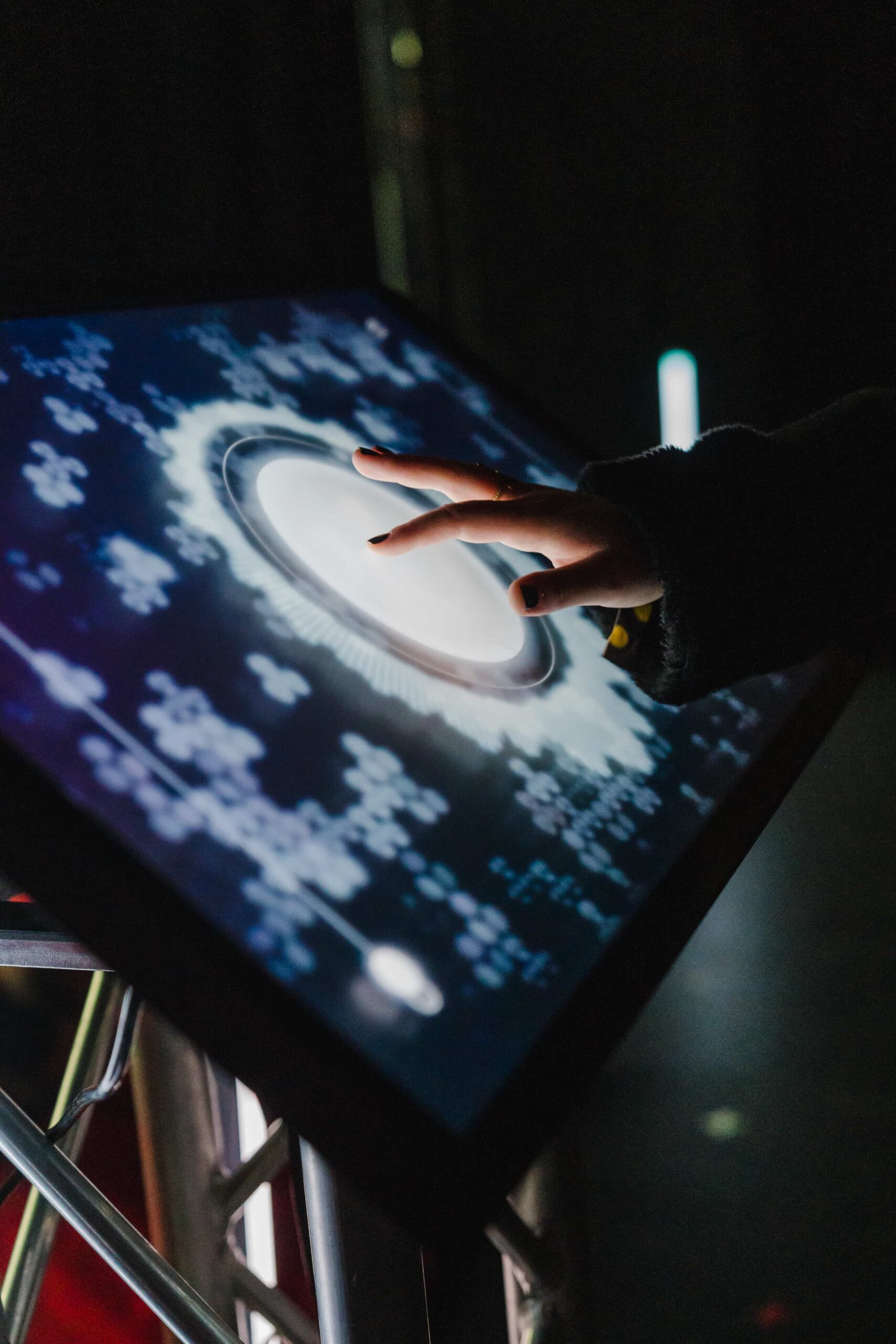
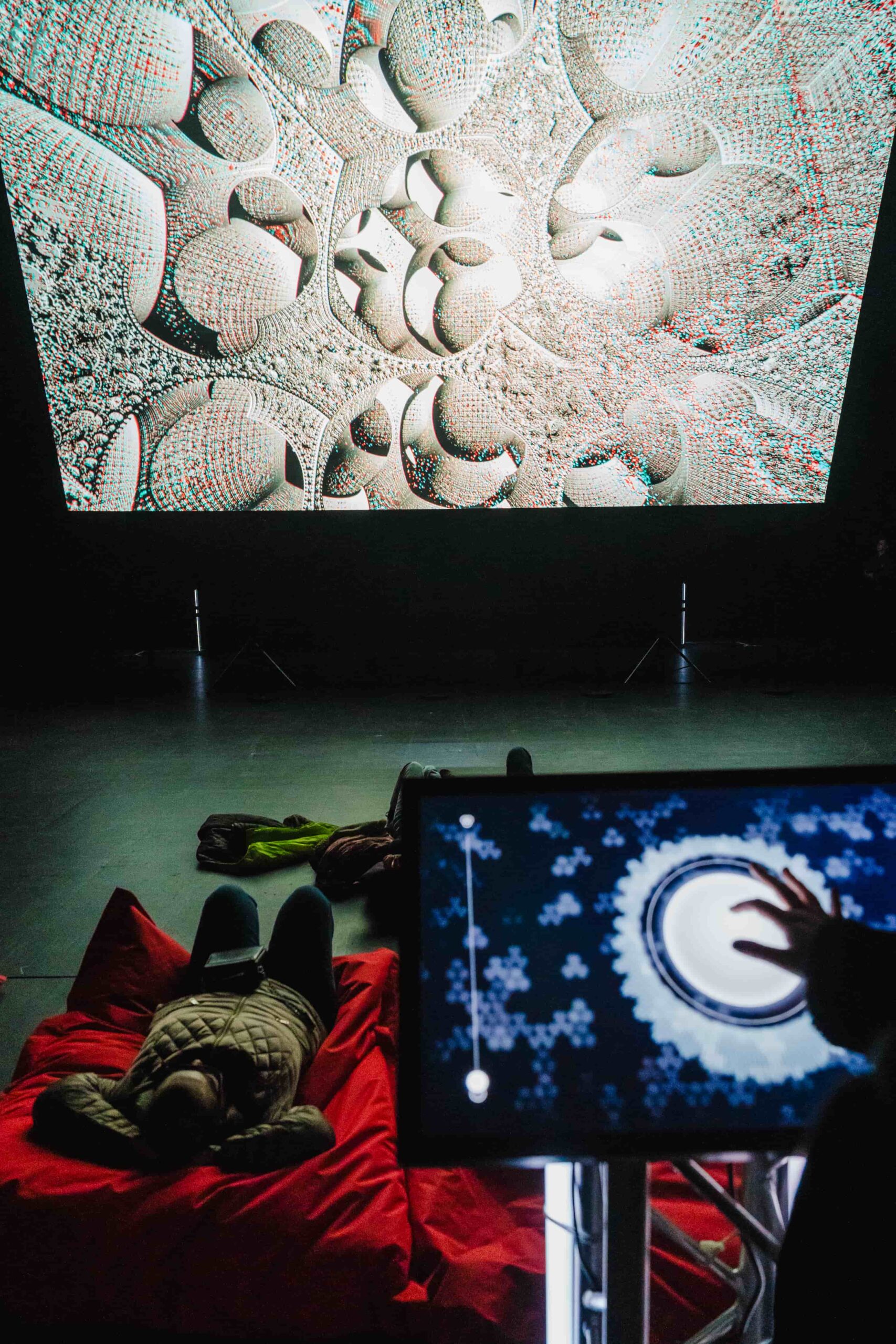
‘Mantra Modulation’ connects the past and the present: on the stage of the theatre, a virtual kinetic sculpture comes to life through 3D glasses. In harmony with the visual movements, a generative soundscape unfolds. The audience is not only invited to immerse themselves in this space of illusion, but also to participate: at an interactive console, the visual and auditory elements of the work can be modulated: each touch shapes the world that opens up before the visitors’ eyes and tells them their own, completely individual story. This type of co-creation blurs the boundaries between art and the audience, and so creates a personal connection to the installation.
ATTENTION:
Note on the website: 3D glasses required!!! (Included in the festival pass)
Location: Schauspielhaus Graz
Inspired by Karlheinz Stockhausen’s ‘MANTRA’ (1970), which unfolds a musical cosmos from a single core motif, and through multiplying sound and perception levels, ‘MANTRA MODULATION’ translates this concept into an audiovisual dimension. The historical technique of stereoscopic projection or anaglyphic images, paired with modern technology, additionally creates a bridge between the past and the present.
Biography
Studio MO:YA is the studio of Roland Mariacher and Werner Huber. Since 2011, the two Austrian designers and media artists have been creating experiences that merge physical and digital worlds with their immersive spatial installations. The work has been recognised with awards including the State Prize for Design in the category ‘Design Concepts’ and the Shenzhen Global Design Award. As lecturers at the Institute of Design and Communication at FH Joanneum, they pass on their knowledge to young designers.
Credits
conception, images & sounddesign: Studio MO:YA
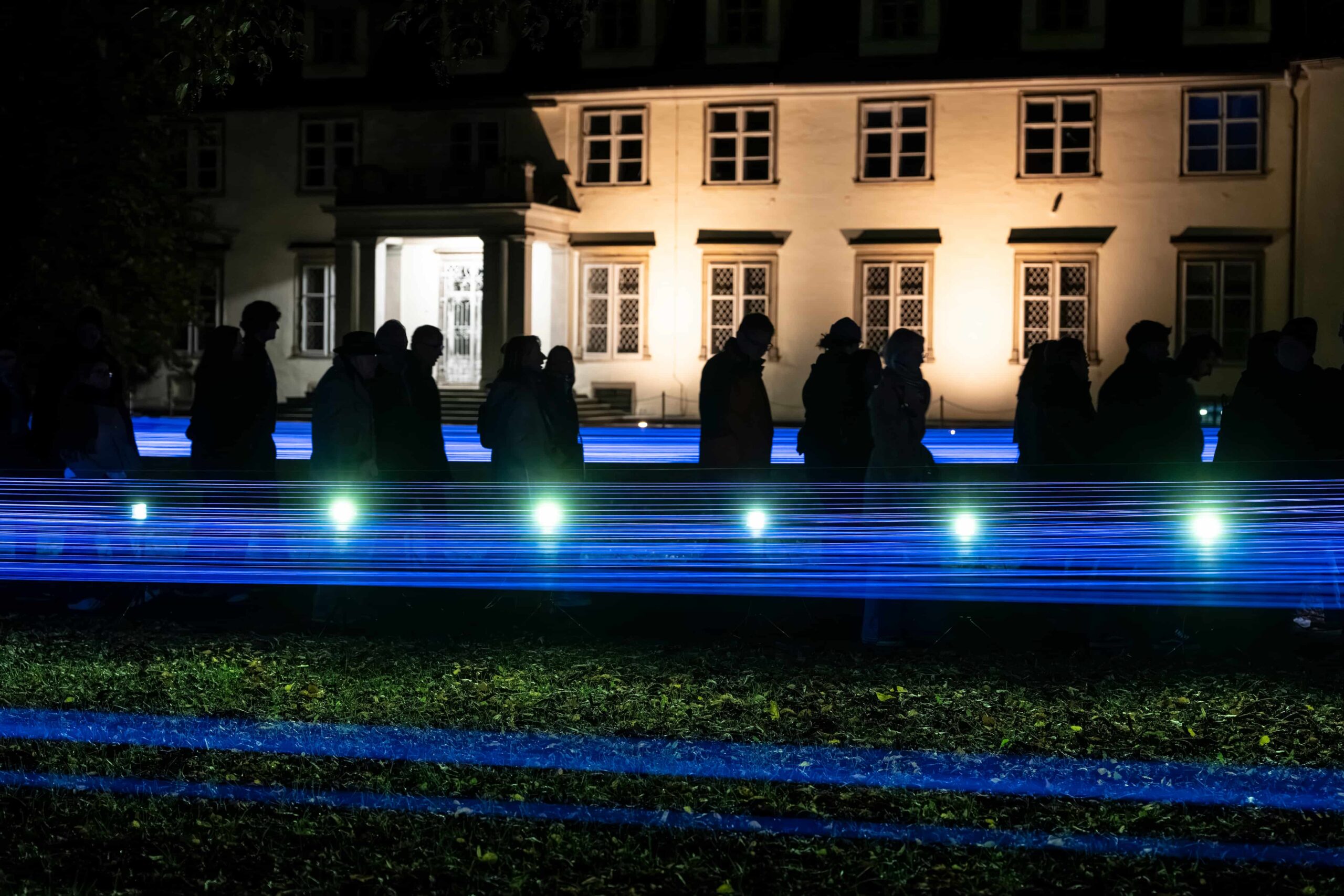
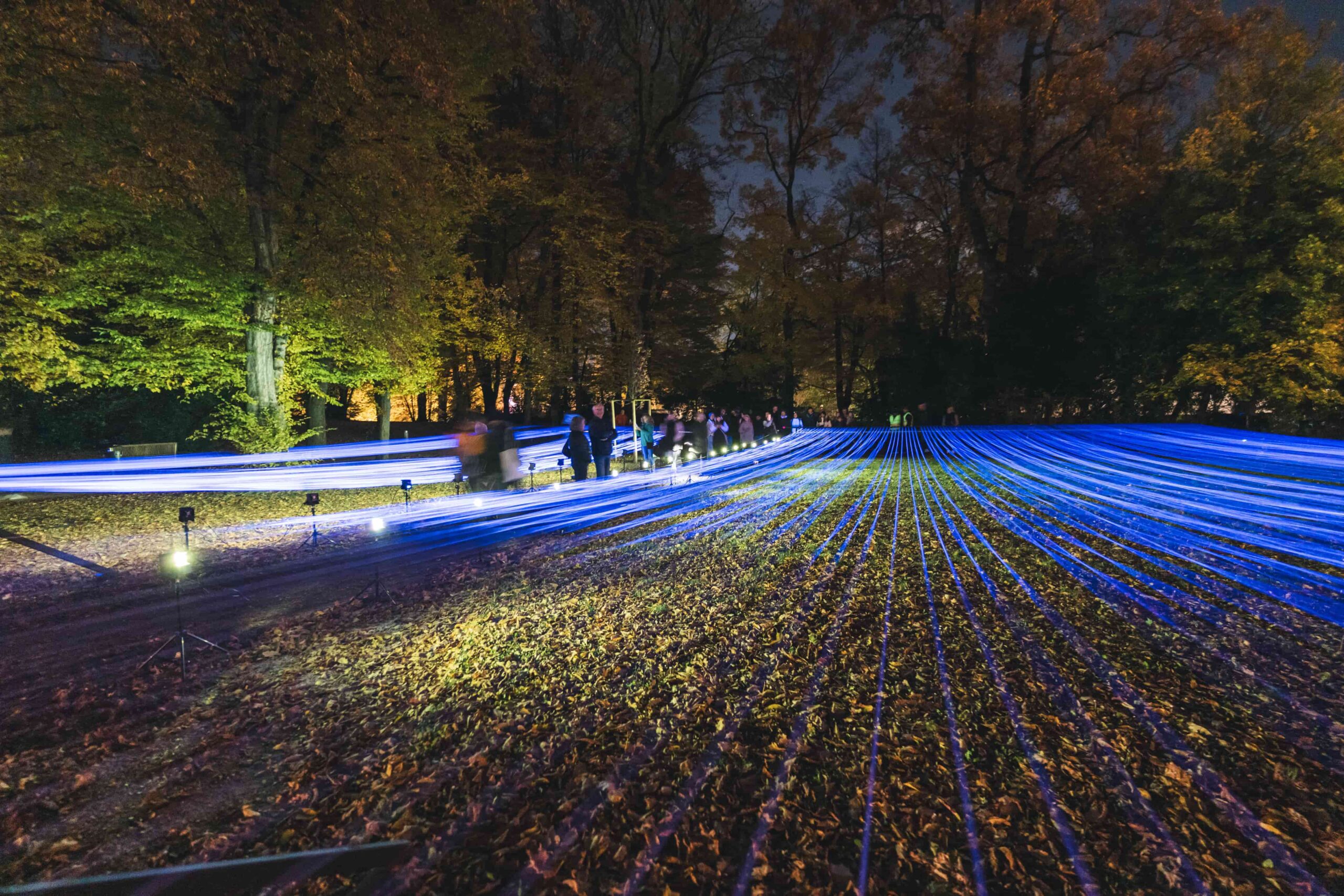
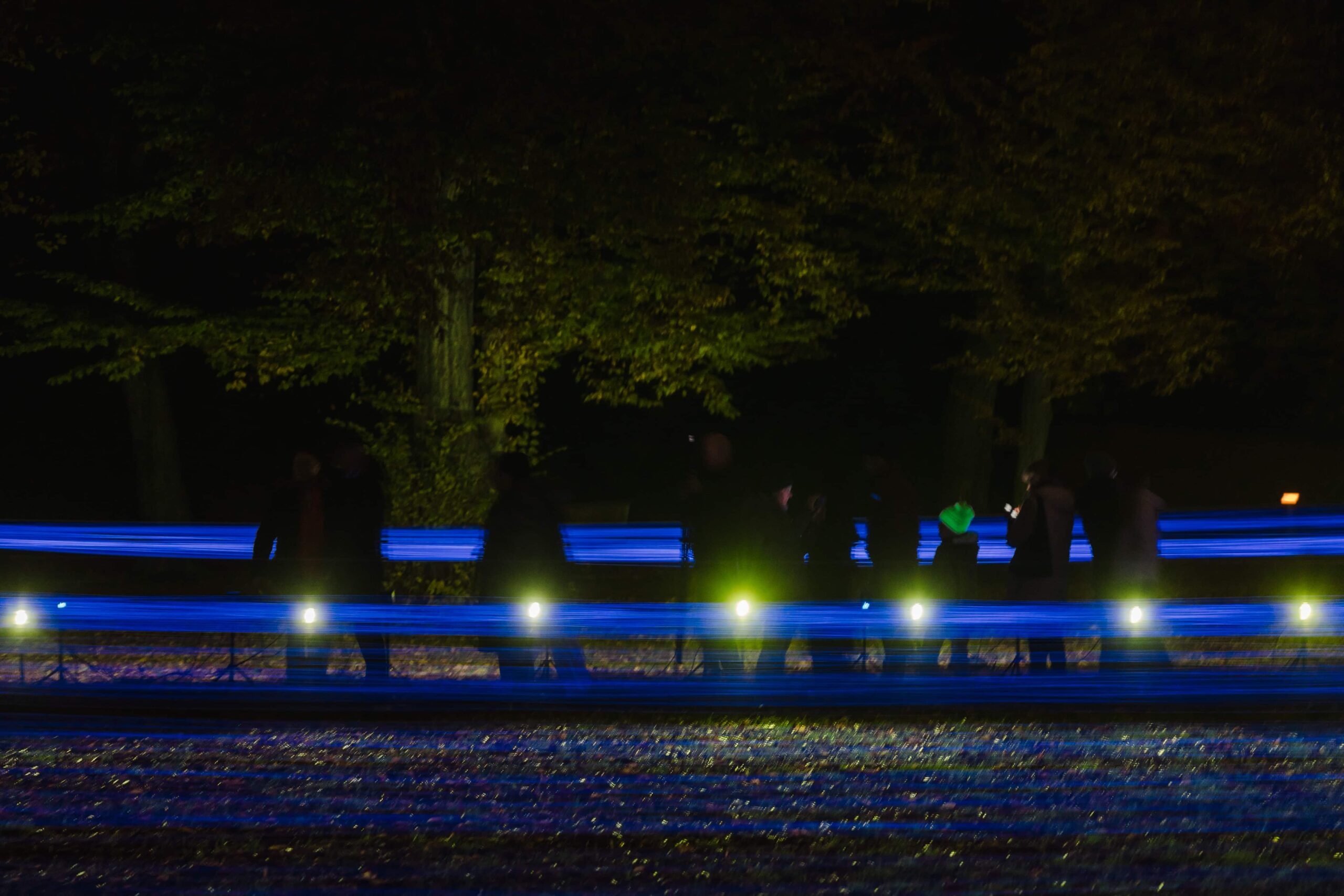
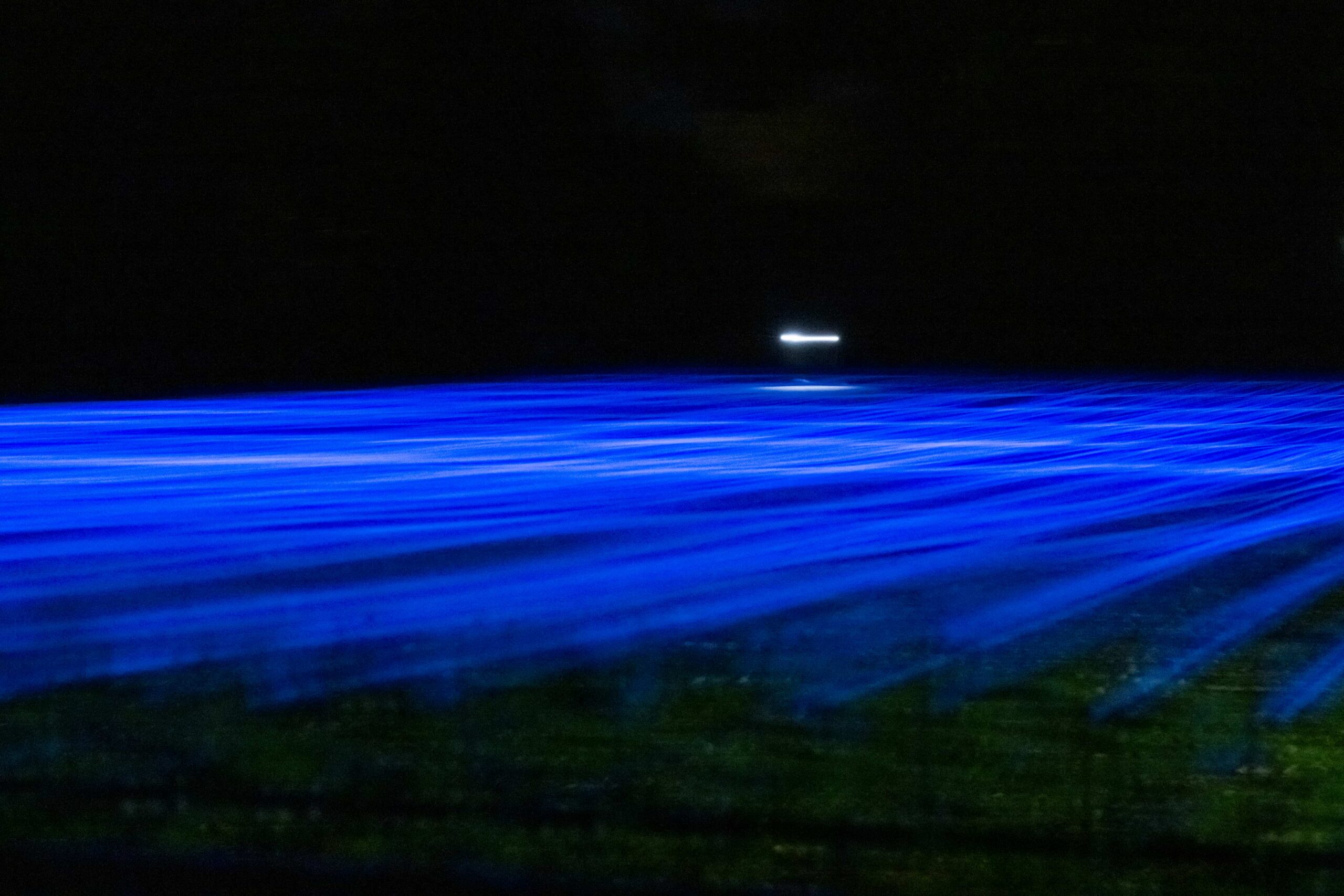
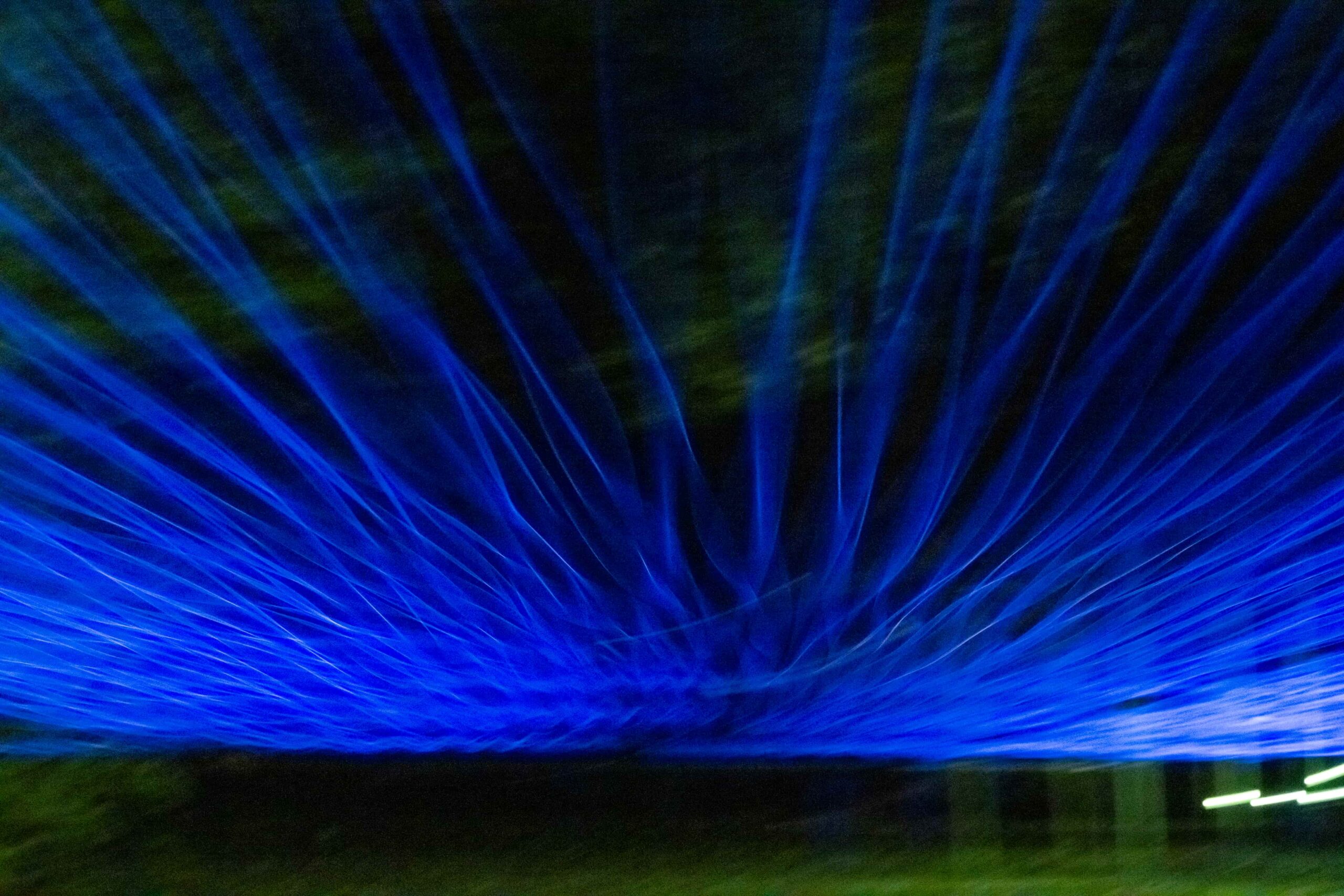
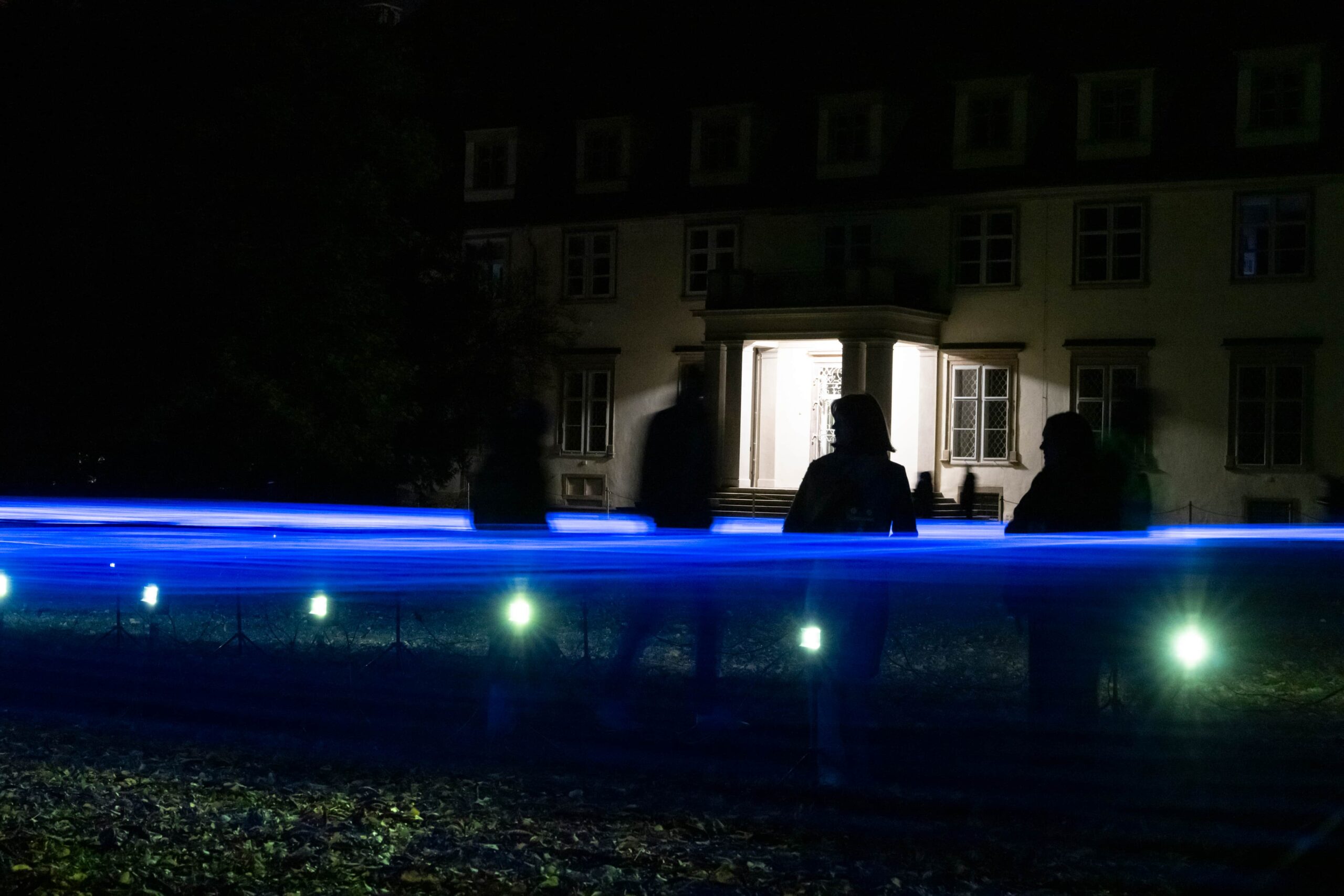
Es ist der magisch anmutenden Effekt von Wunderkerzen, dem Zeichnen mit Licht in der Luft, an die „Aftereal“ erinnert. Das Bild eines leuchtenden Funkens wird für den Bruchteil einer Sekunde im Gehirn festgehalten und sogleich von einem neuen Bild ersetzt. Bild an Bild entsteht so eine leuchtende Zeichnung, die eigentlich gar nicht da ist.
Für sein Projekt im Grazer Burggarten verwendete Yasuhiro Chida Hunderte von elastischen, sich bewegenden und durch UV-Licht leuchtende Drähte. Ihre wellenförmigen Bewegungen ergeben ein Leuchtbild, das Betrachtenden ebenso im Gedächtnis bleibt wie das Bild einer Wunderkerze. Ganz dem Stil des japanischen Künstlers entsprechend ist auch „Aftereal“ ein Werk, das trotz der Einfachheit seiner Mittel ein tief berührendes Erlebnis schafft. Seine Botschaft: Das, was wir als Realität wahrnehmen ist ein Konstrukt unserer Augen und unseres Gehirns. Trotz dieser Illusion sind unsere Augen das wichtigste Medium zur visuellen Erkundung der Welt; kein Smartphone, keine Kamera, keine VR-Brille könnte sie ersetzen.
Location: Burggarten
This installation is made possible with the kind support of Industriellenvereinigung Steiermark.
Biography
Yasuhiro Chida is a light artist from Japan. He studied architecture at Musashino Art University in Tokyo. Influenced by his personal experiences in mountaineering, ice climbing, and caving, he explores this special awareness of space in nature, as well as the impressive bodily-sense impressions in his immersive installations. The artist often uses very simple means to create impressive experiences in public spaces. In 2019, Yasuhiro Chida was awarded the audience prize at the International Light Art Award 2019 in Unna. He is also creating his own art museum, the Museum of Spatial Art in Tatsuno, Nagano, Japan.
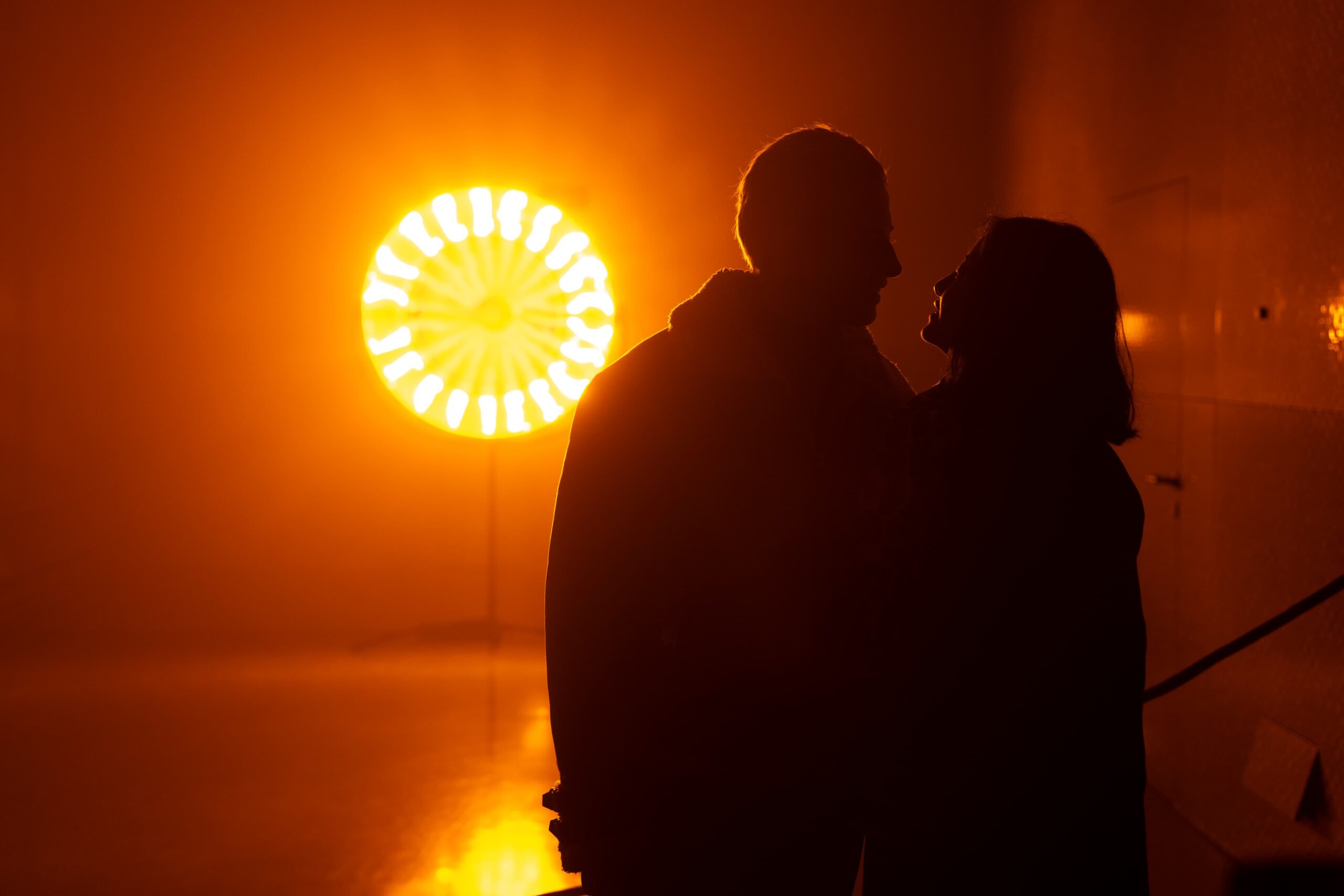
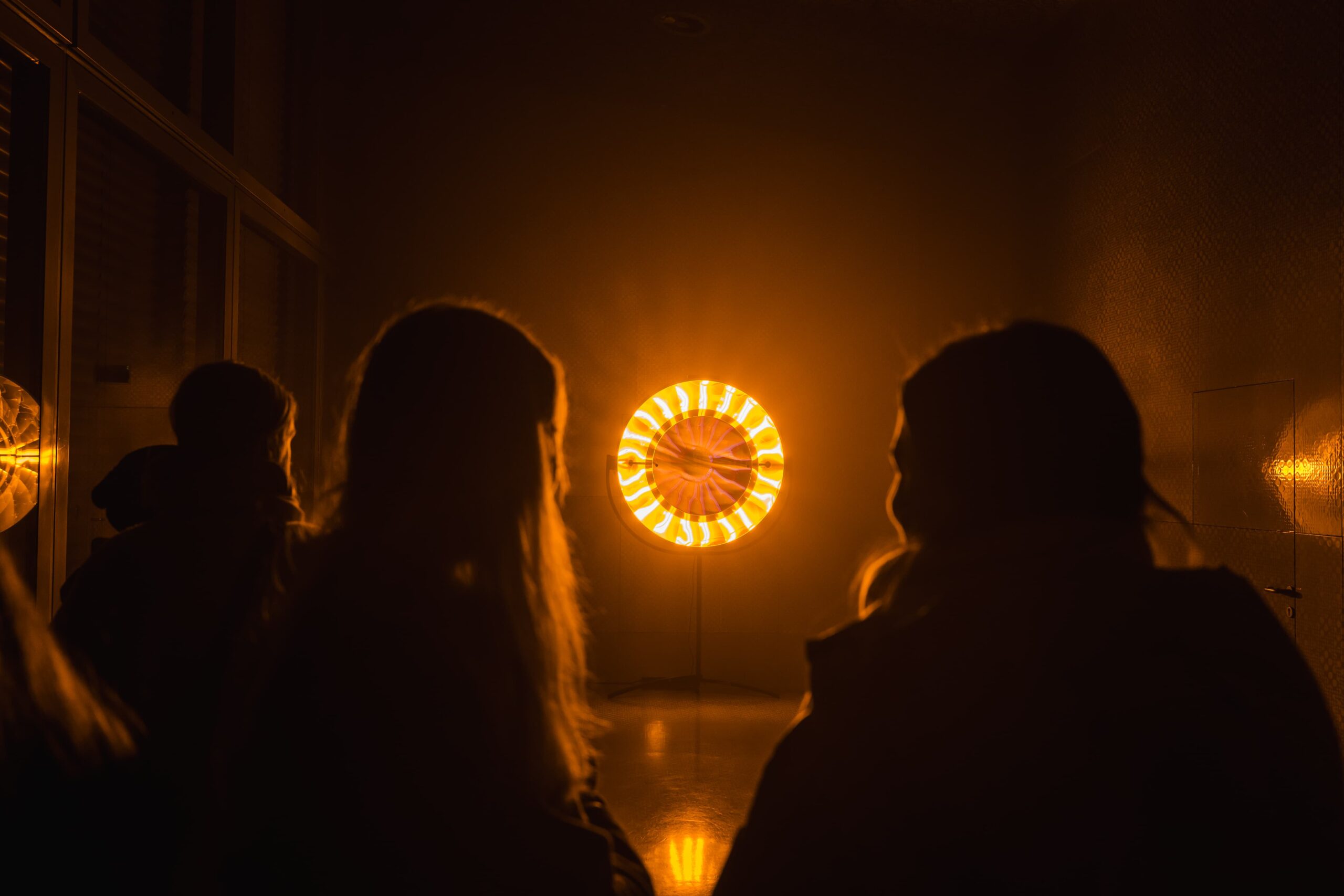
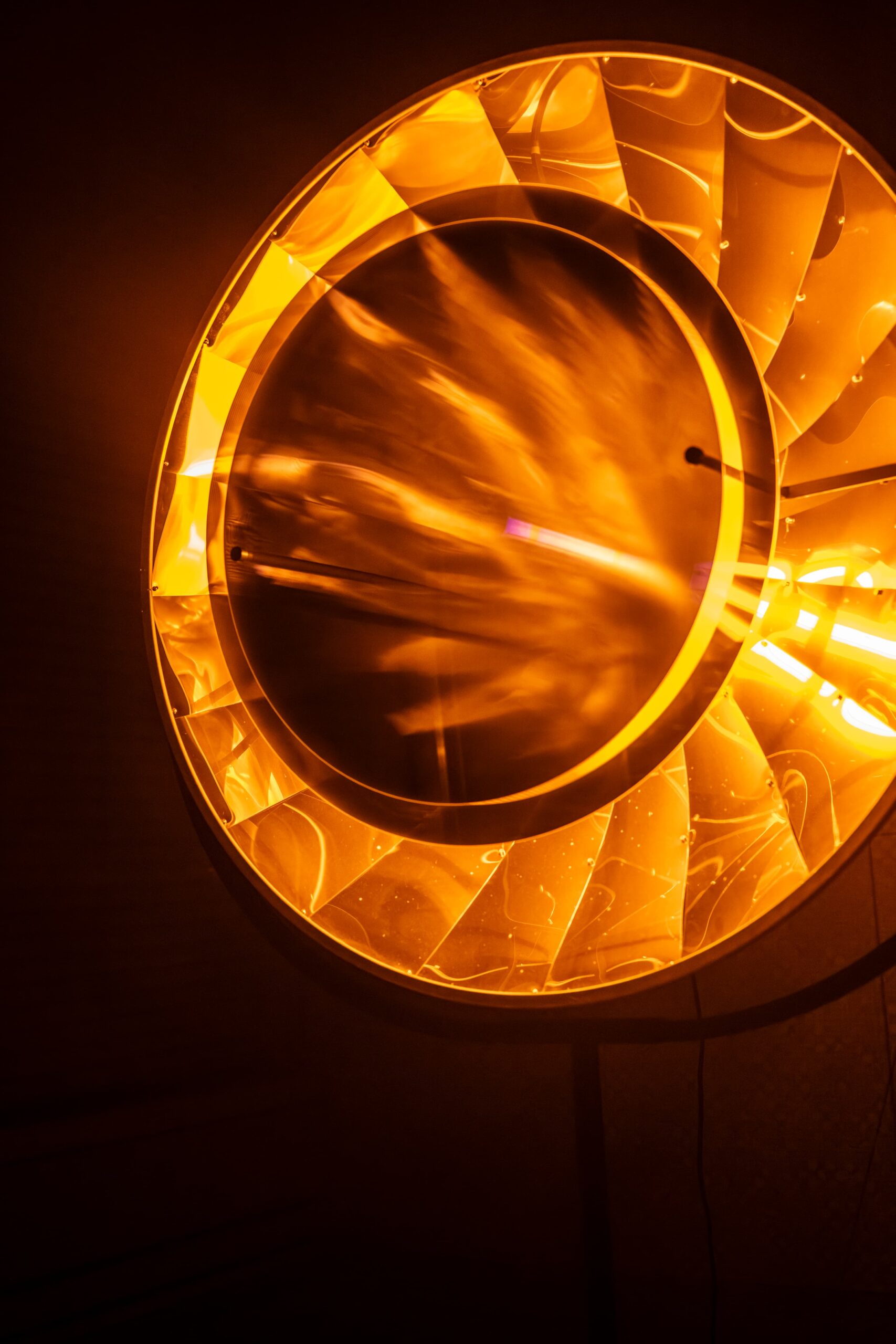
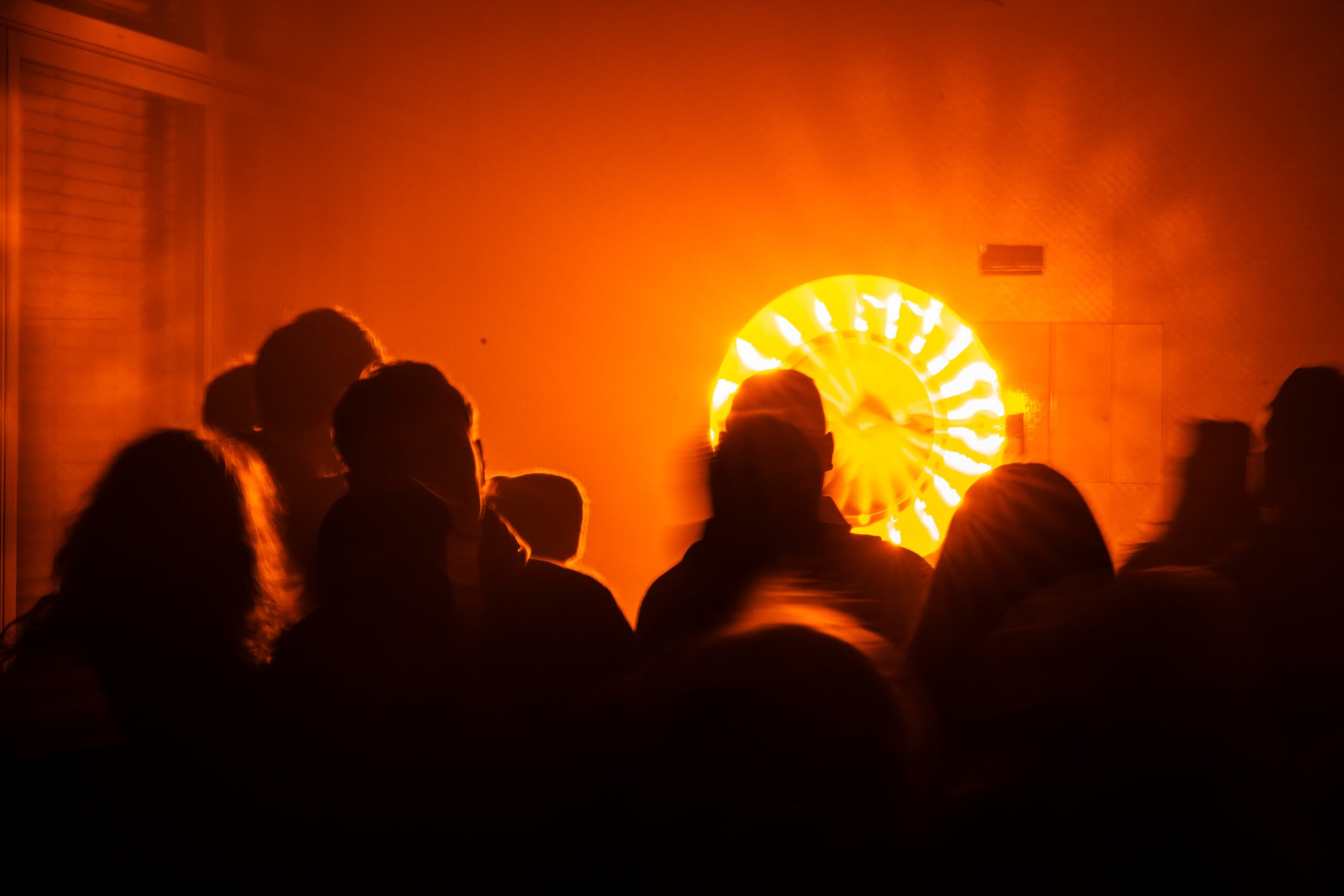
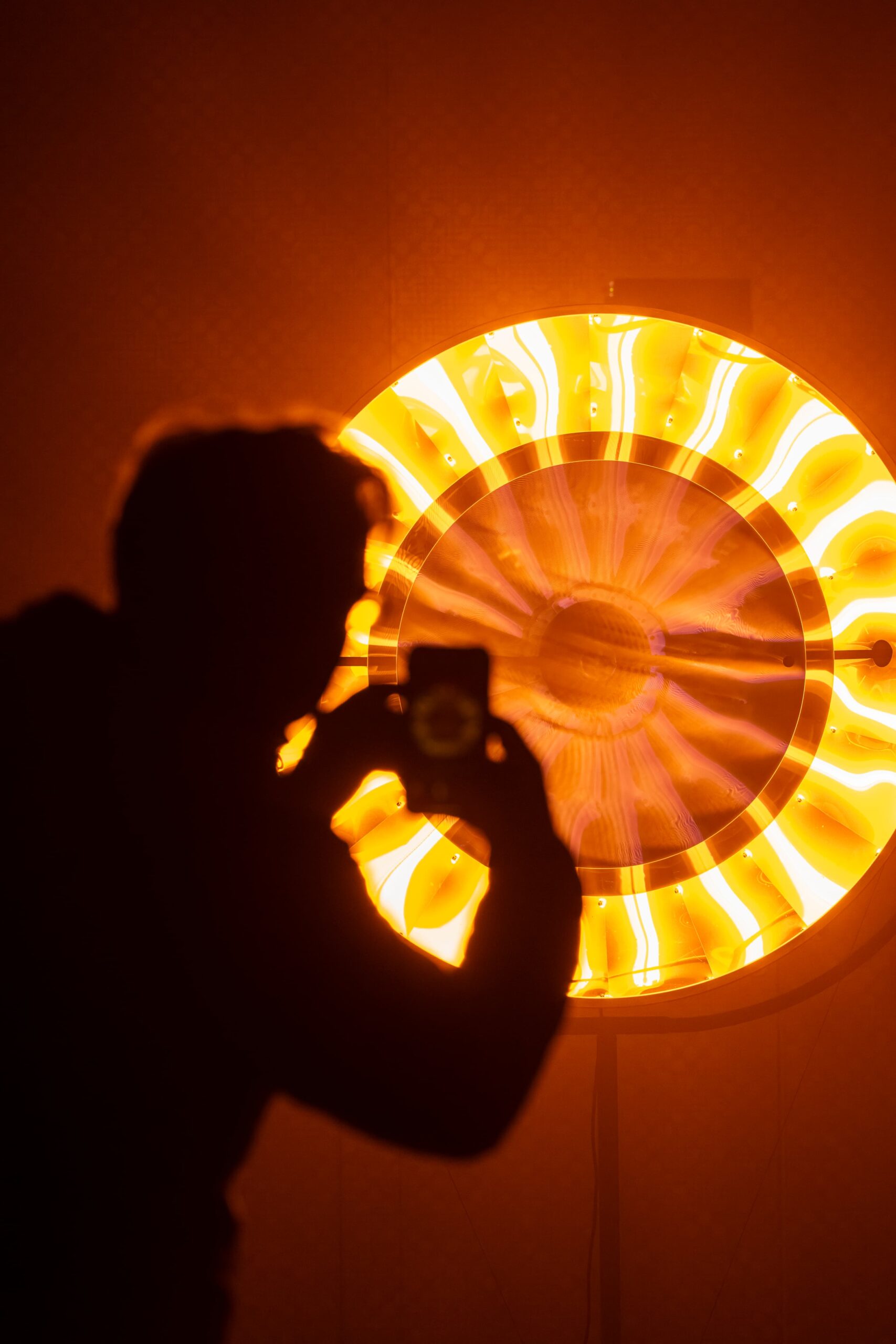
Olafur Eliasson’s light sculpture ‘Eye see you’ is coming to the Orangerie. There, it invites visitors to see themselves in relation to the oldest force that keeps us alive: the sun. It gives us energy, but in times of climate change it also poses a threat. This duality in content corresponds to Eliasson’s approach of creating works that, on the one hand, are ‘only’ seen, but on the other hand question how they can be seen.
‘Eye see you’ is both simple and complex. It consists of a bowl on a tripod, a lamp with a single light frequency and two glass panes that change colour depending on the position and movement of the viewer. The resulting work allows for different interpretations: do we recognise a one-eyed and thus seeing subject or – reduced entirely to its materiality – a purely technological object? Or perhaps the centre of an entire universe?
Location: Orangerie im Burggarten
Biography
Olafur Eliasson (born 1967 in Copenhagen, Denmark) is an internationally renowned artist who works with installations, sculptures, and architectural projects. His works often deal with natural phenomena such as light, water, fog, or movement, enabling physical and social processes to be experienced.
Among his best-known projects are the monumental installation “The Weather Project” (2003) at the Tate Modern in London, which staged a giant sun in the Turbine Hall, and “Waterfalls” (2008), artificial waterfalls in public spaces in New York. His social projects, such as “Little Sun” (2012), a solar-powered lamp designed to improve access to light in regions without electricity, are also influential.
Eliasson’s works can be seen in major museums and public spaces around the world. He also teaches as professor of architecture and art at the Berlin University of the Arts. His work combines art, science, architecture, and society, and he is now one of the most influential artists of his generation.
Credits
Commissioned by Luis Vuitton Malletier
TBA21 Thyssen-Bornemisza Art Contemporary Collection
Sound: Gregor Schmitz, Franzciszek Jakubiak, Joschua Hohenbrink
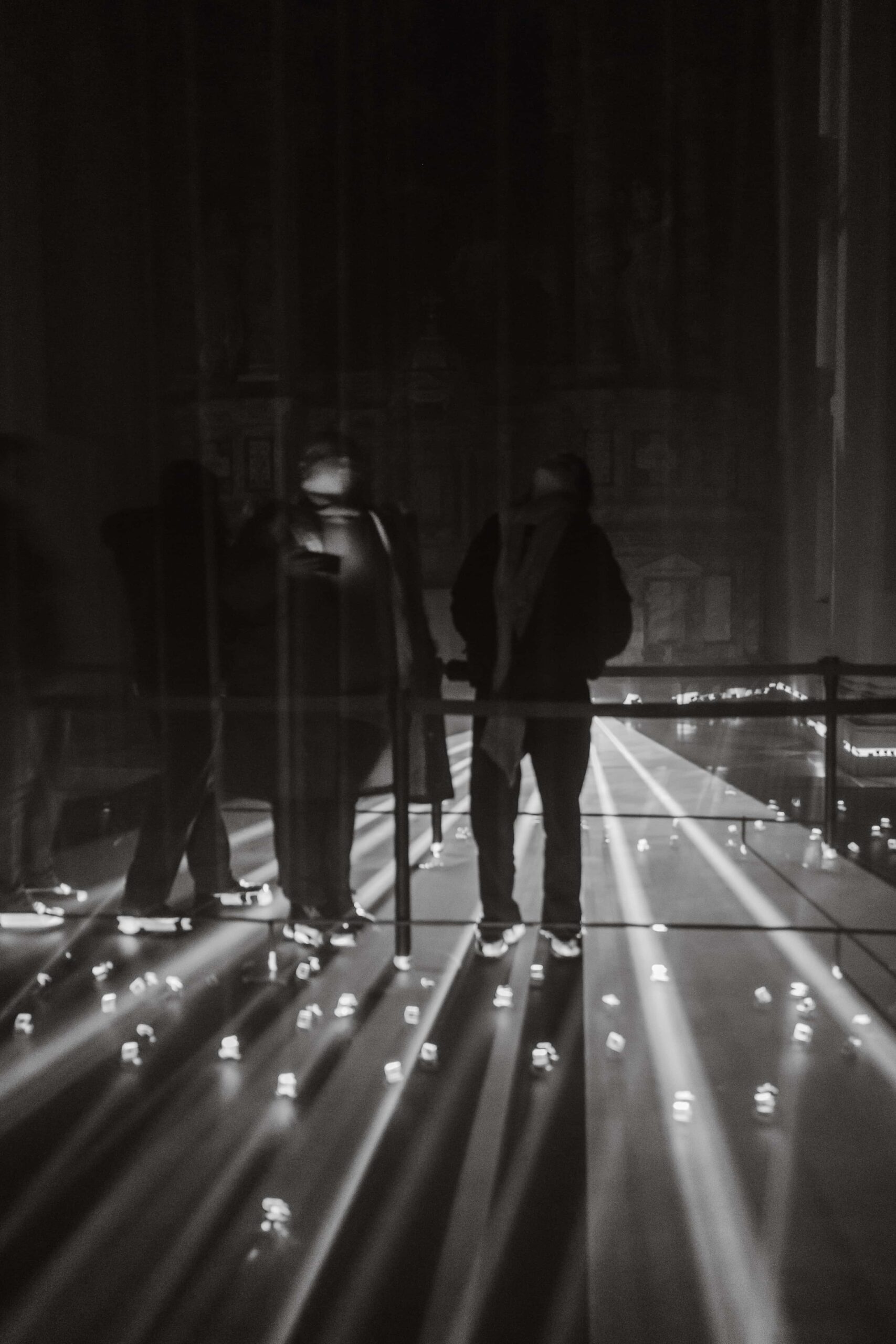
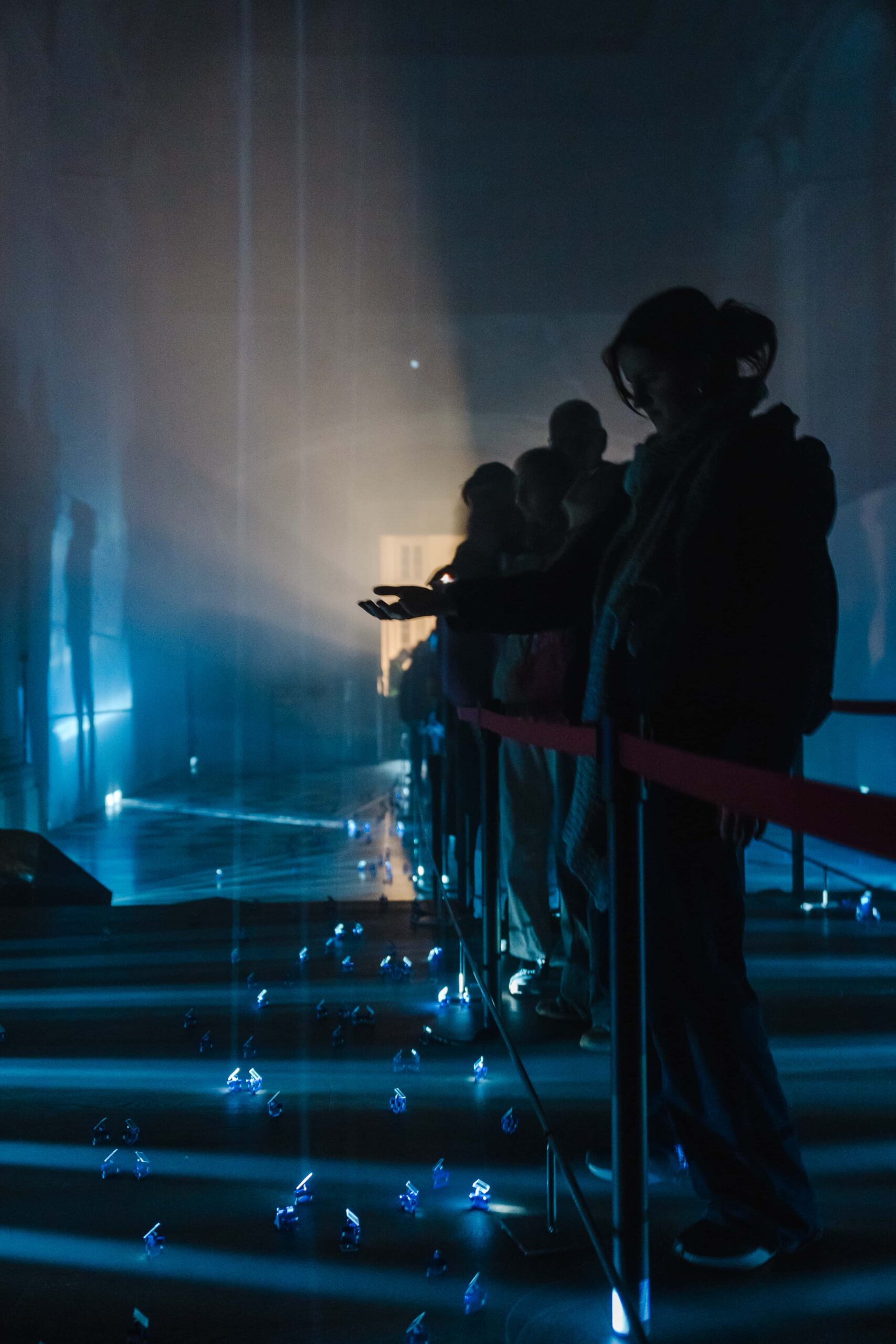
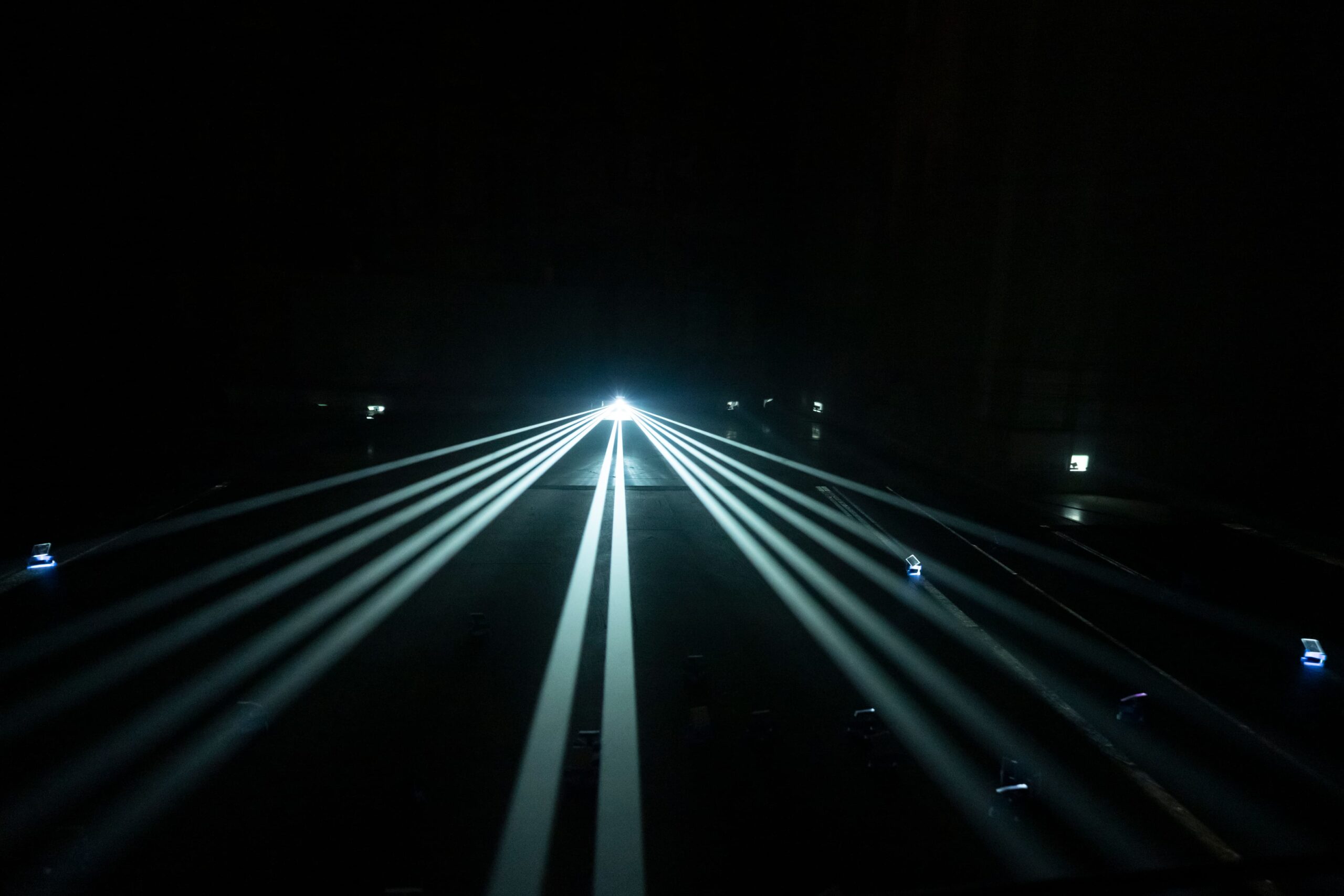
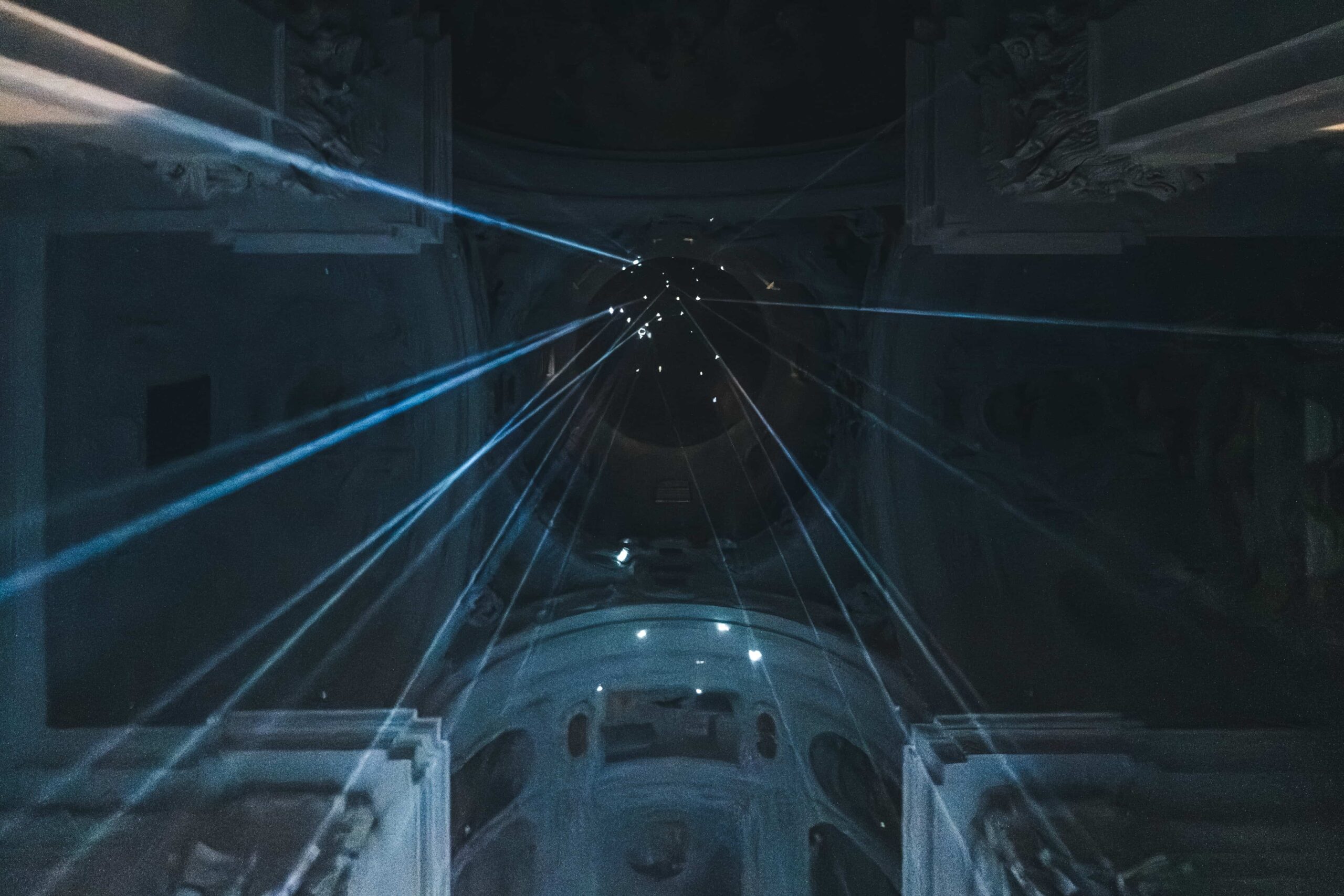
Hundreds of small mirrors are placed on the floor. They reflect the light that falls on them and cast it vertically upwards. This creates countless columns of light in the area under the dome of the mausoleum. For the brief moment in which they illuminate their surroundings, they make the space measurable, tangible and comprehensible to the human senses. The presence of light, both its column-like appearance and its upward effect, is so strong that it can still be felt even in the darkness. Gentle, sensual music accompanies the experience. It is a mysterious, moving experience of space that the audience is treated to in Yasuhiro Chida’s project ‘Fresnel’.
Location: Mausoleum
Biography
Yasuhiro Chida is a light artist from Japan. He studied architecture at Musashino Art University in Tokyo. Influenced by his personal experiences in mountaineering, ice climbing, and caving, he explores this special awareness of space in nature, as well as the impressive bodily-sense impressions in his immersive installations. The artist often uses very simple means to create impressive experiences in public spaces. In 2019, Yasuhiro Chida was awarded the audience prize at the International Light Art Award 2019 in Unna. He is also creating his own art museum, the Museum of Spatial Art in Tatsuno, Nagano, Japan.
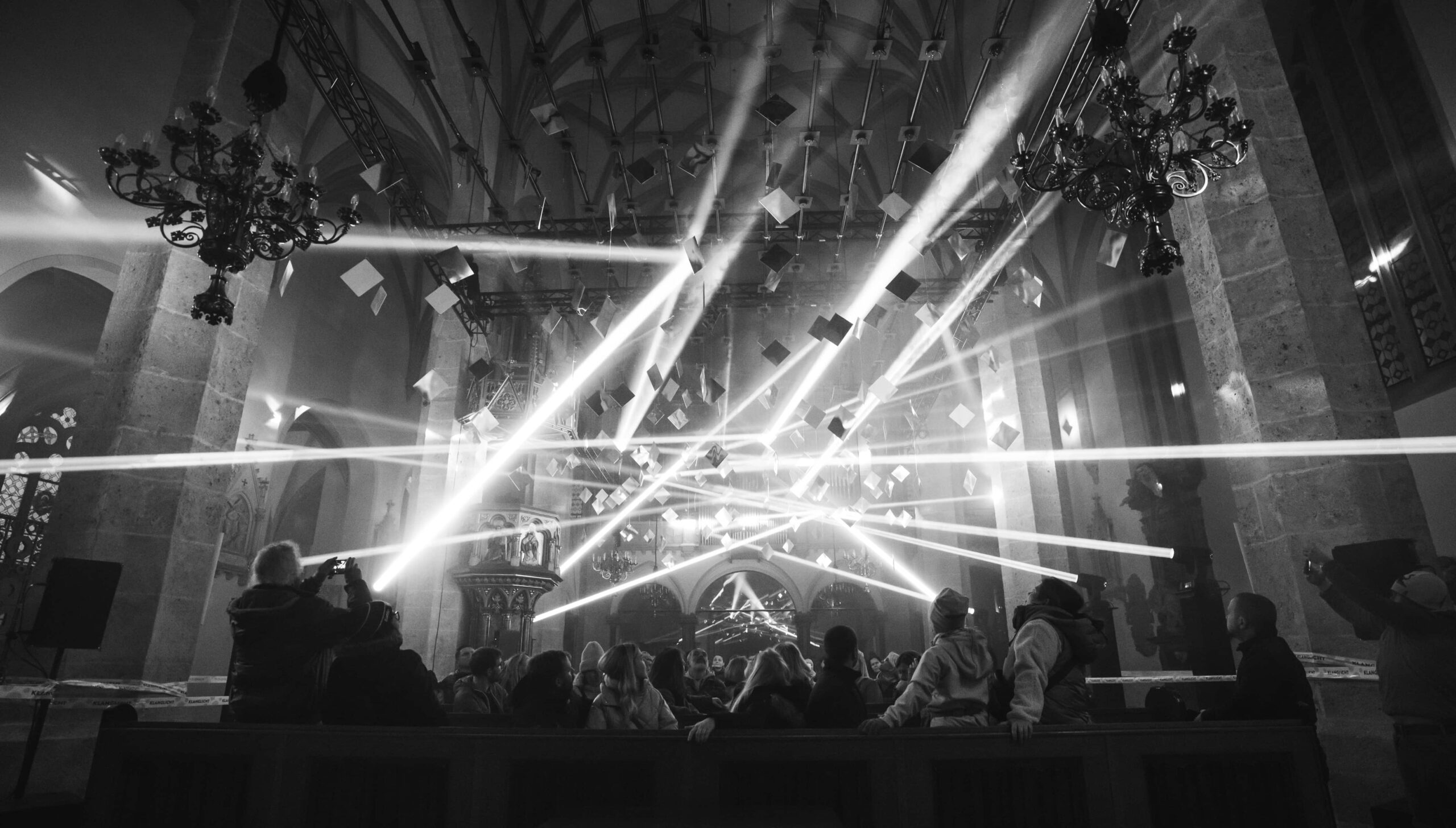
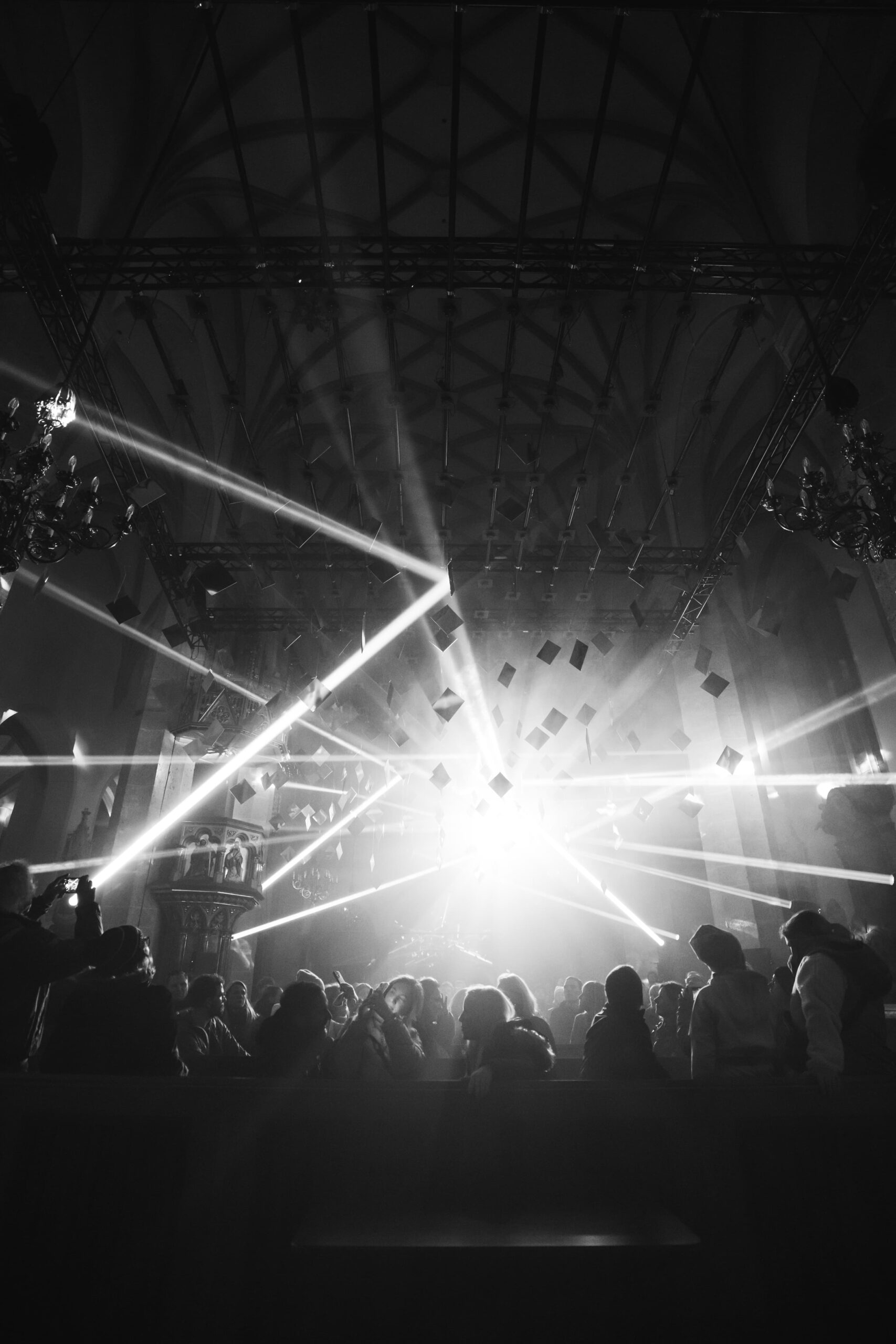
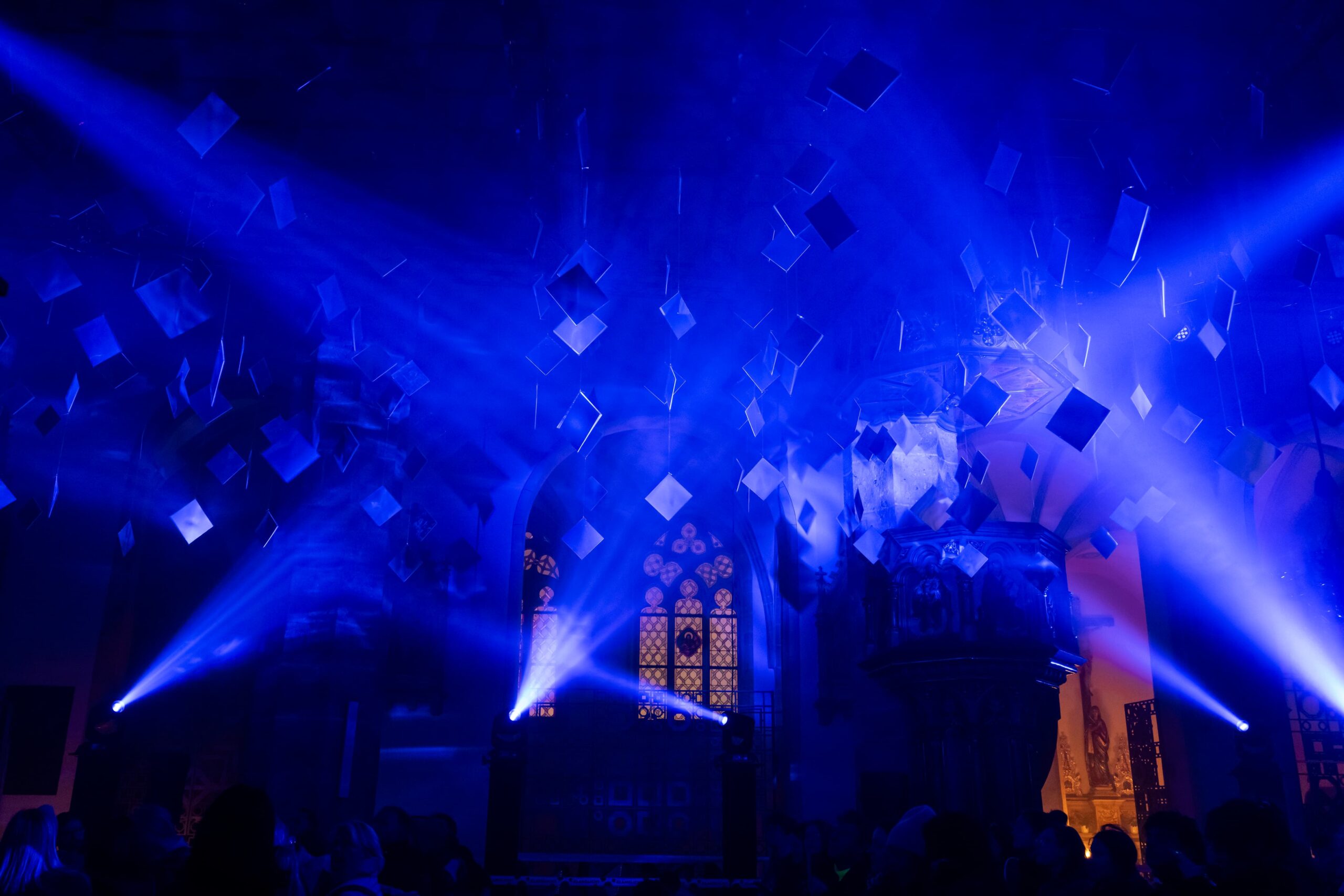
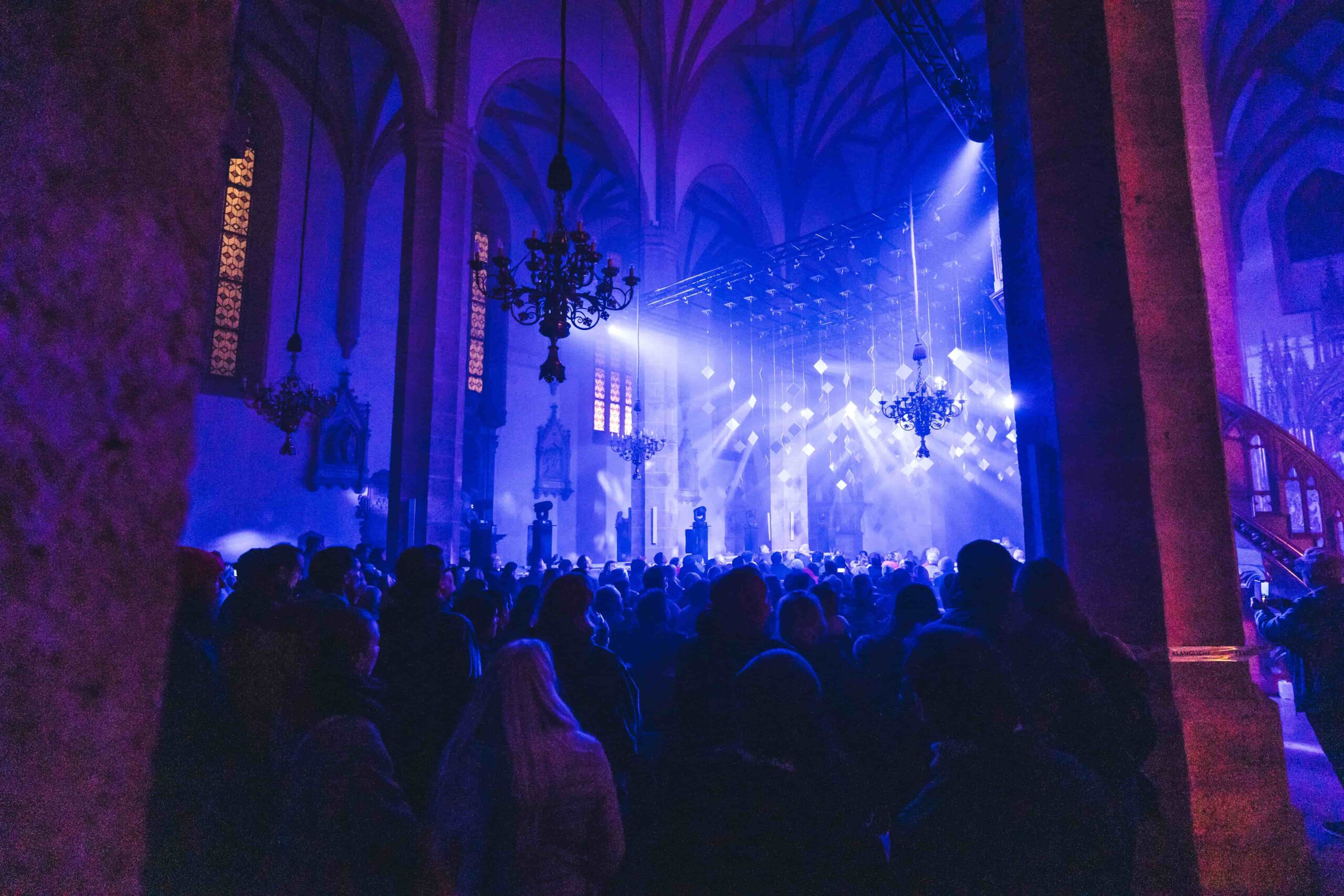
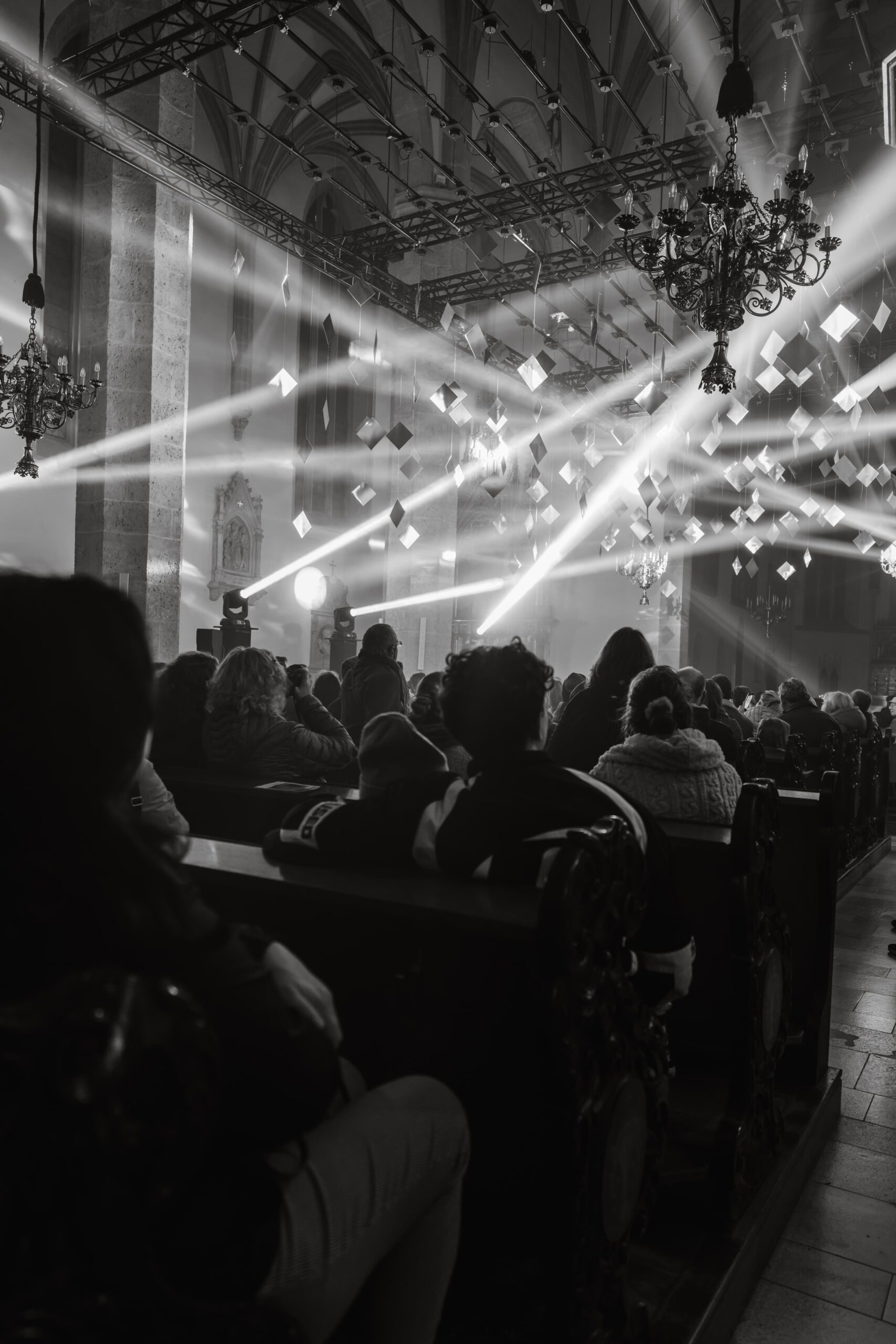
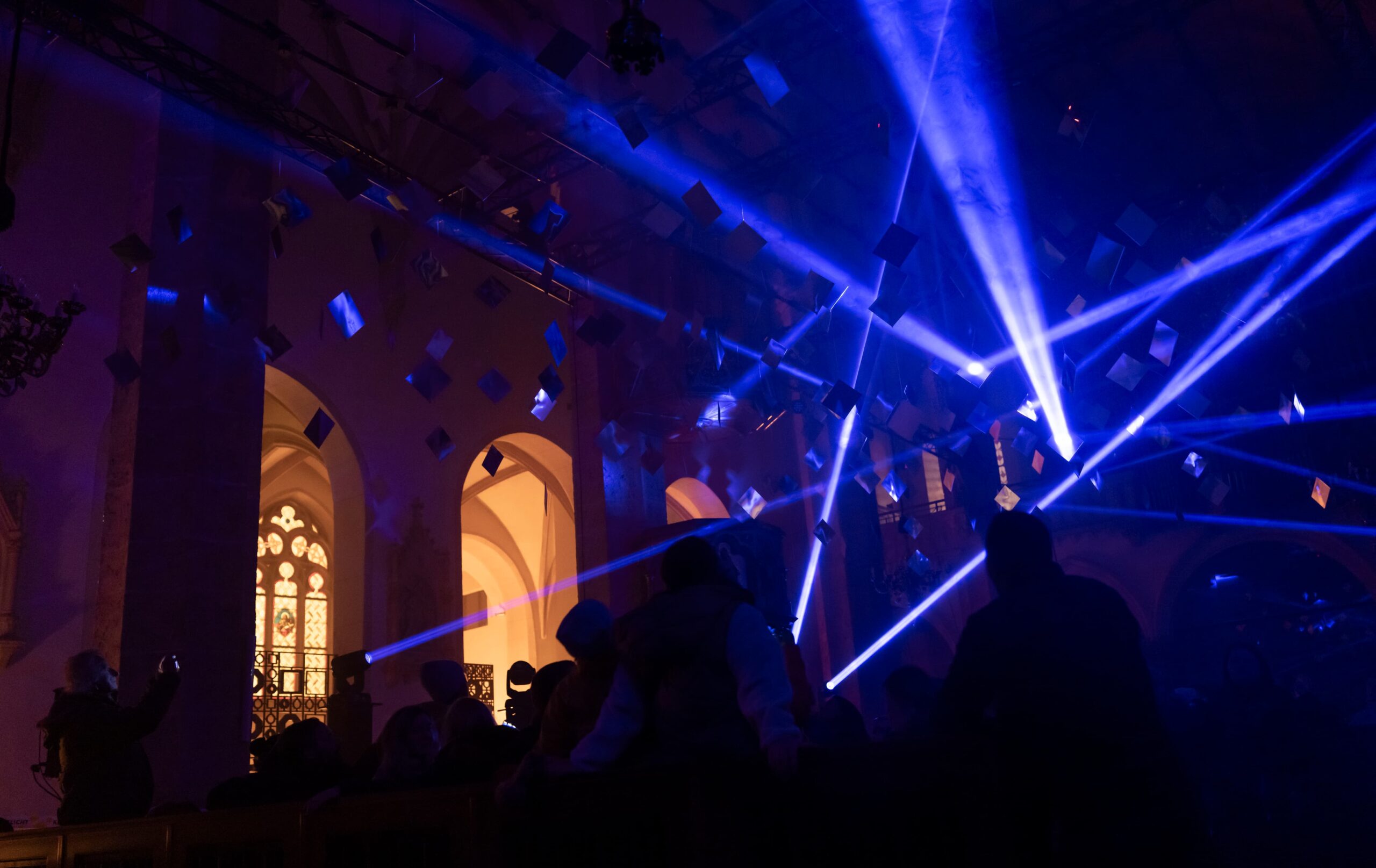
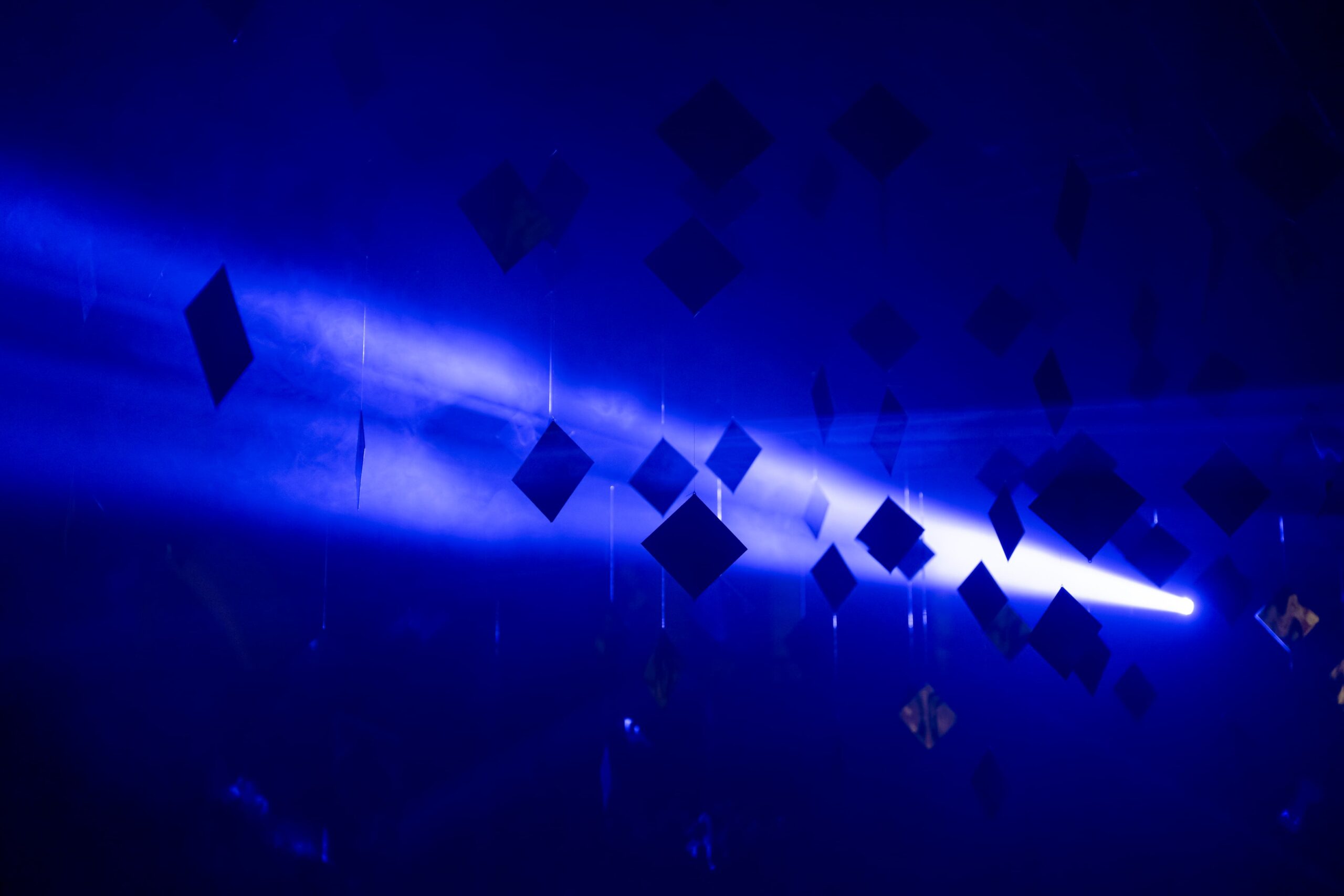
Our identity is like a mirror image, consisting of individual parts and constantly changing through relationships and interaction: this is the theme of the installation ‘Echoes of Light’ in Graz’s Stadtpfarrkirche. In several phases, the audience experiences a journey between fragmentation and connection. Individual reflections move through the space, their flow corresponding to the fluid nature of our own existence. Then, for just a few moments, the reflections align with each other, interact with each other, merge and suddenly no longer appear distorted, but clear and distinct.
Together with sound artist Shinji Wakasa, the Spanish artist collective Onionlab worked with inclined mirrors and interactive technologies for this project. Sensors capture not only the movements of the audience, but also their emotions, translating them in real time into an artistic landscape of light and sound. Both the physical and emotional presence of those present leaves a visual and acoustic trace that contributes to the overall experience.
Location: Stadtpfarrkirche
This installation is made possible with the kind support of Ramon Llull Institut.
Biography
Onionlab is a multidisciplinary studio that stages and produces audiovisual installations and exhibitions. Their work creates intersections between technology, design, and art. Onionlab is based in Barcelona and has more than 15 years of experience working worldwide.
Credits
Director: Jordi Pont,
Art Director: Berta González
Producers: Juan Pablo Rocha, Eric Rubio
3D Artists: Santiago Morrison, Federico Morrison
Sound Design: Shinji Wakasa
Technical Direction: Antoni Esteban Martret
Technical Advisor: Oliver Kern
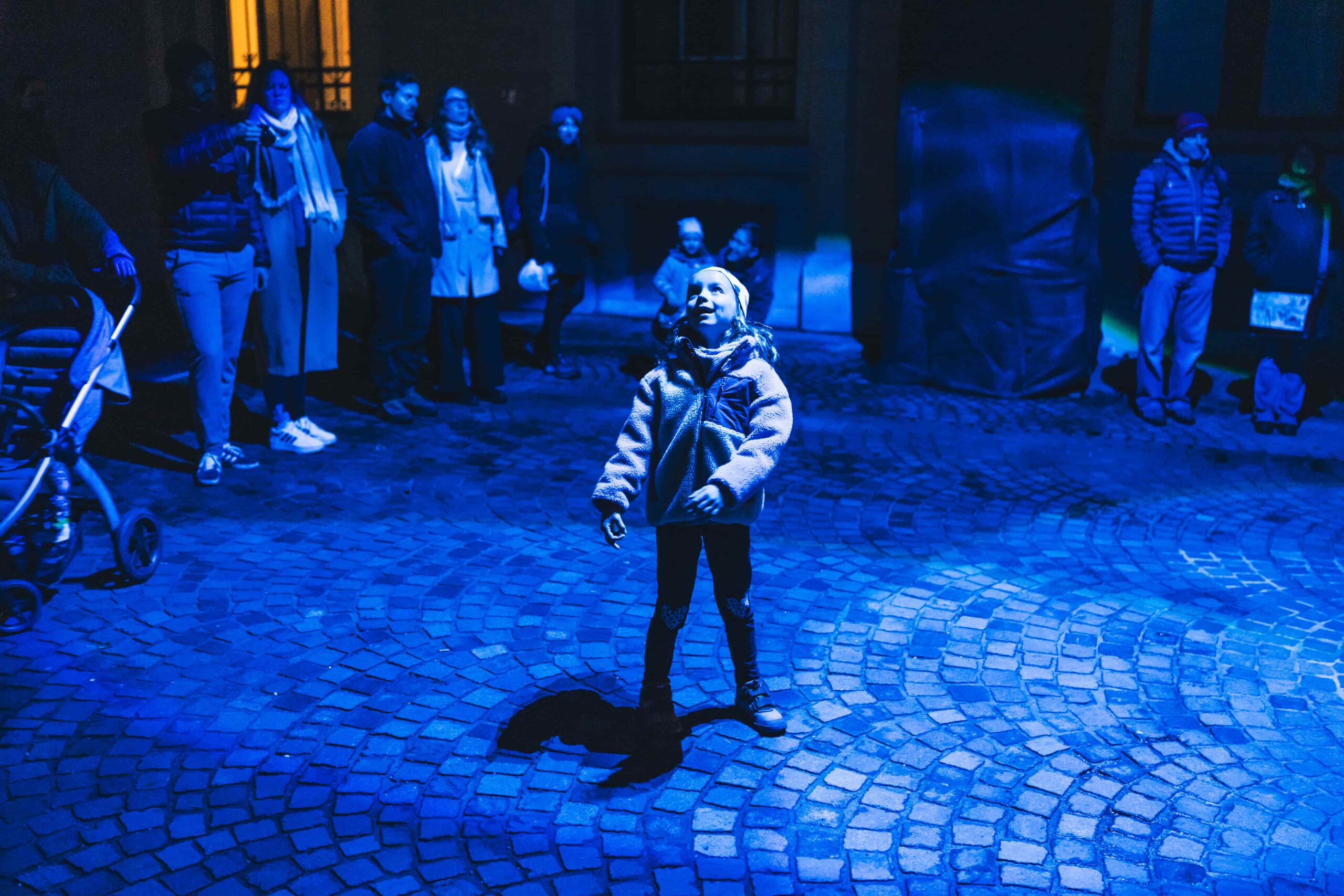
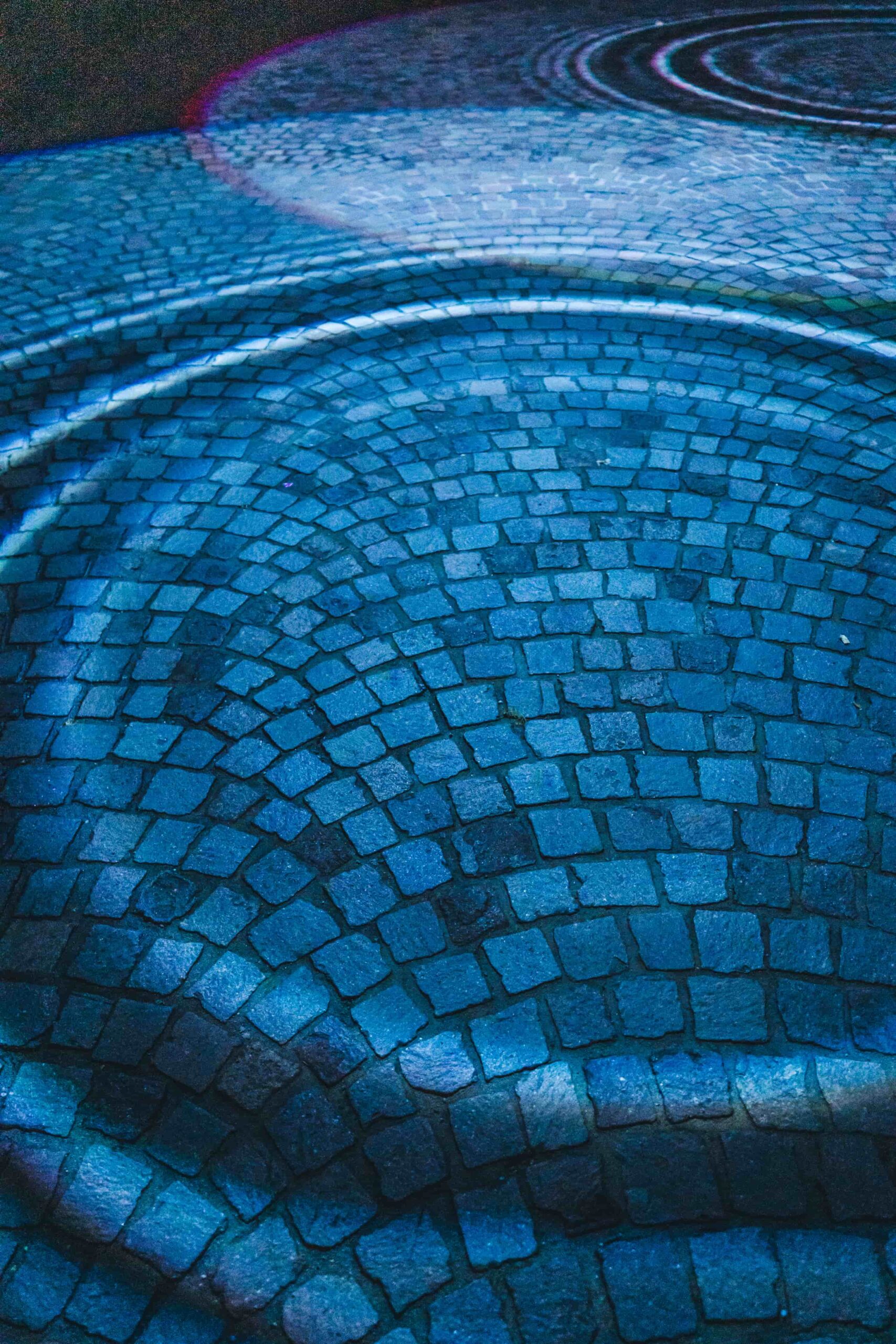
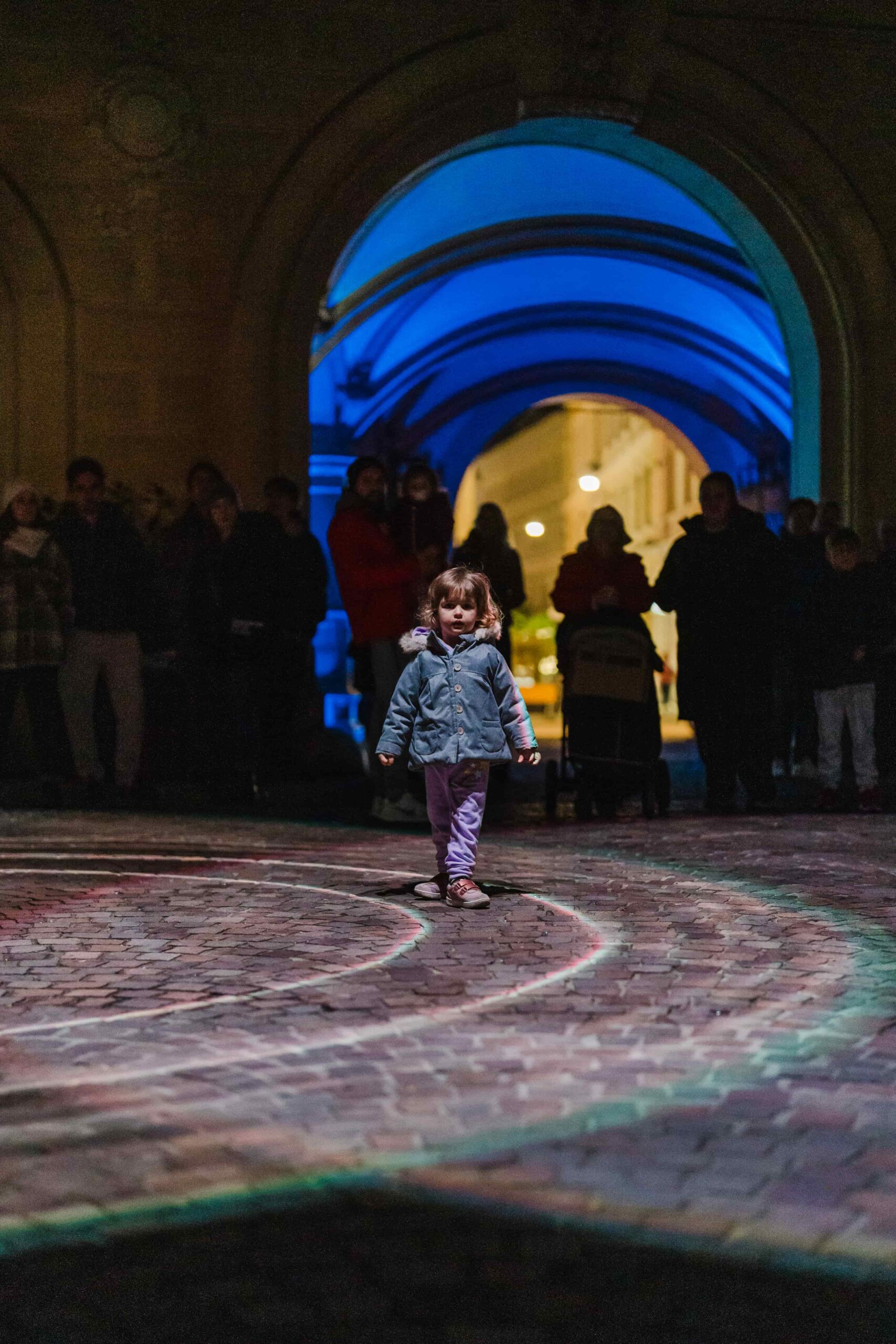
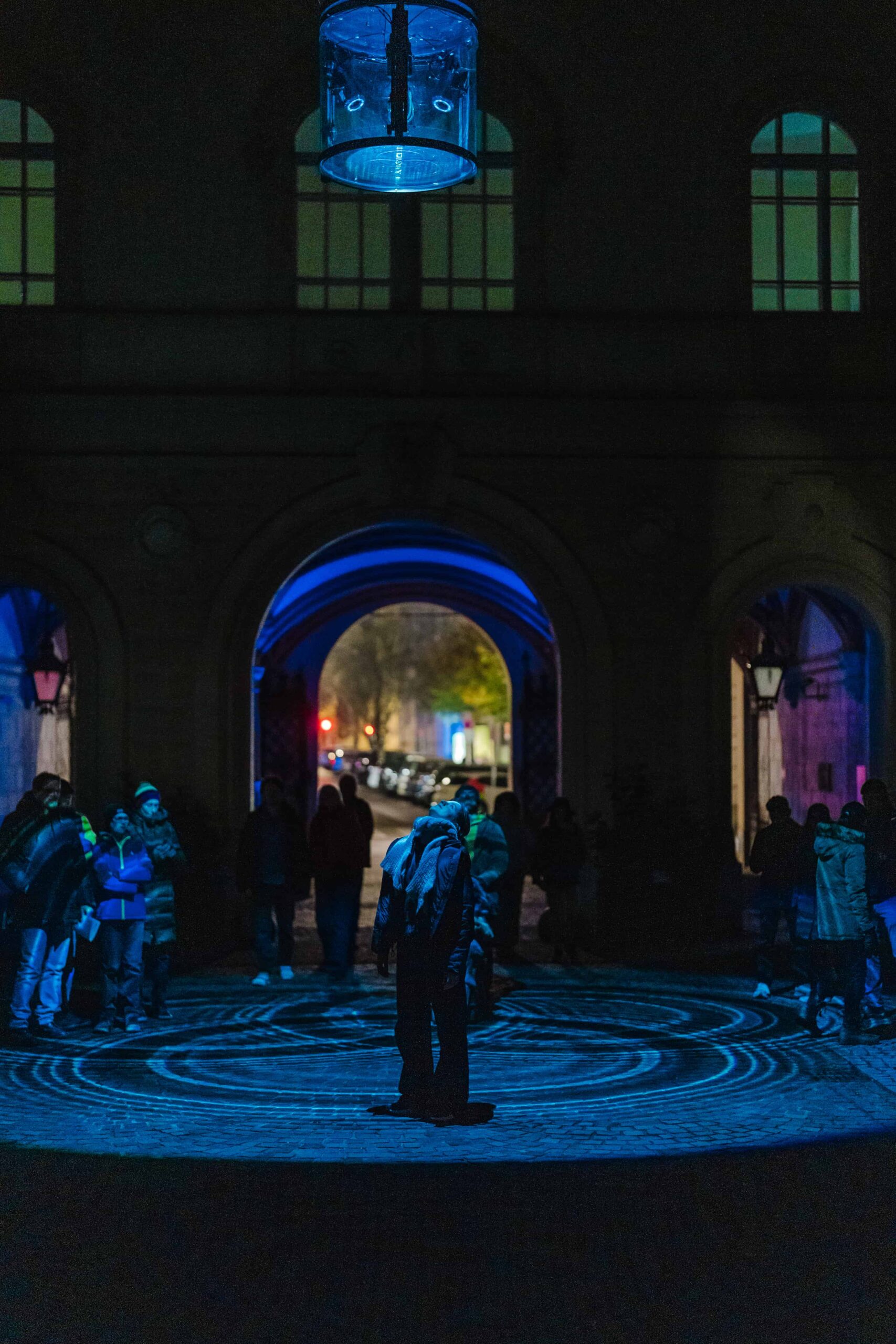
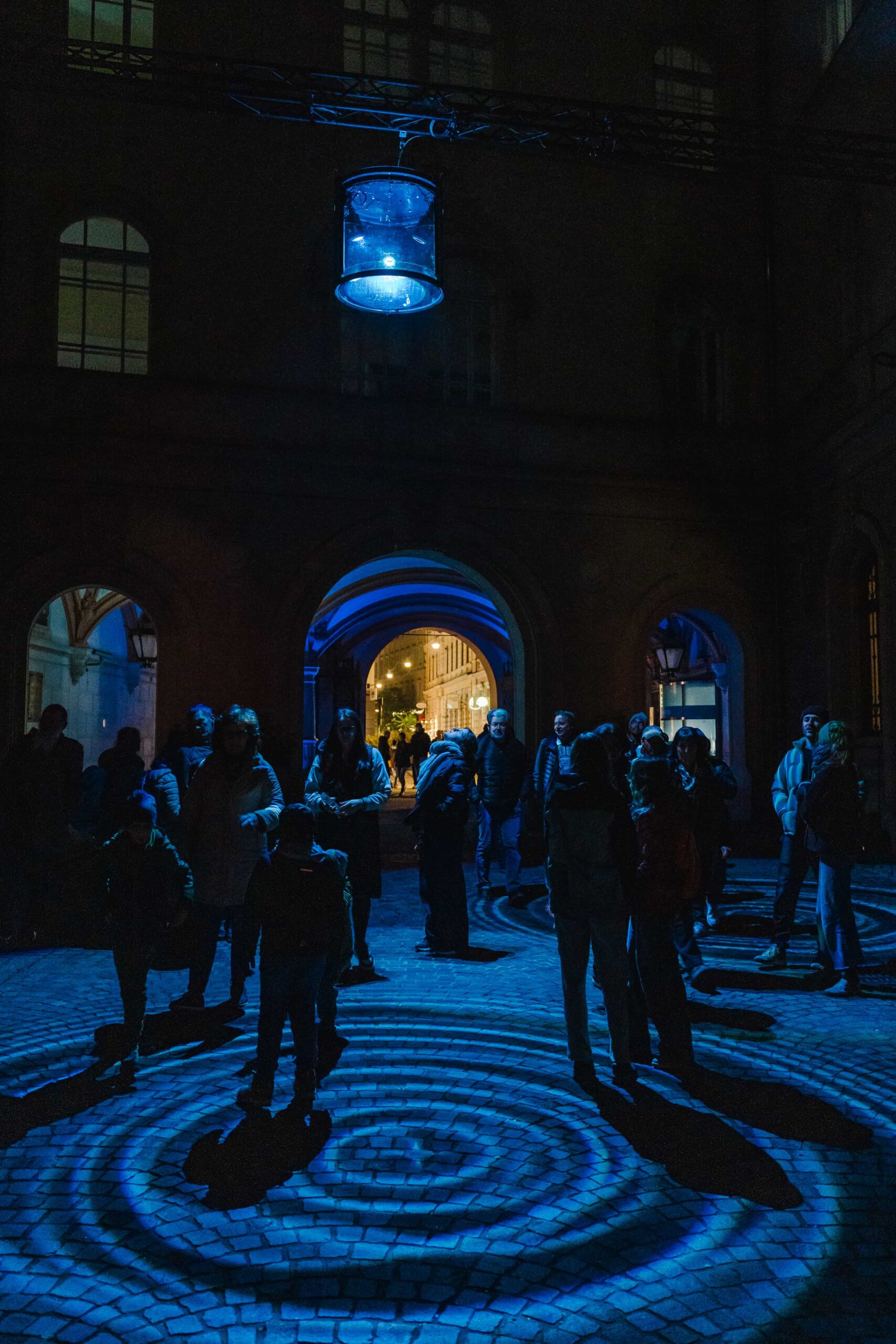
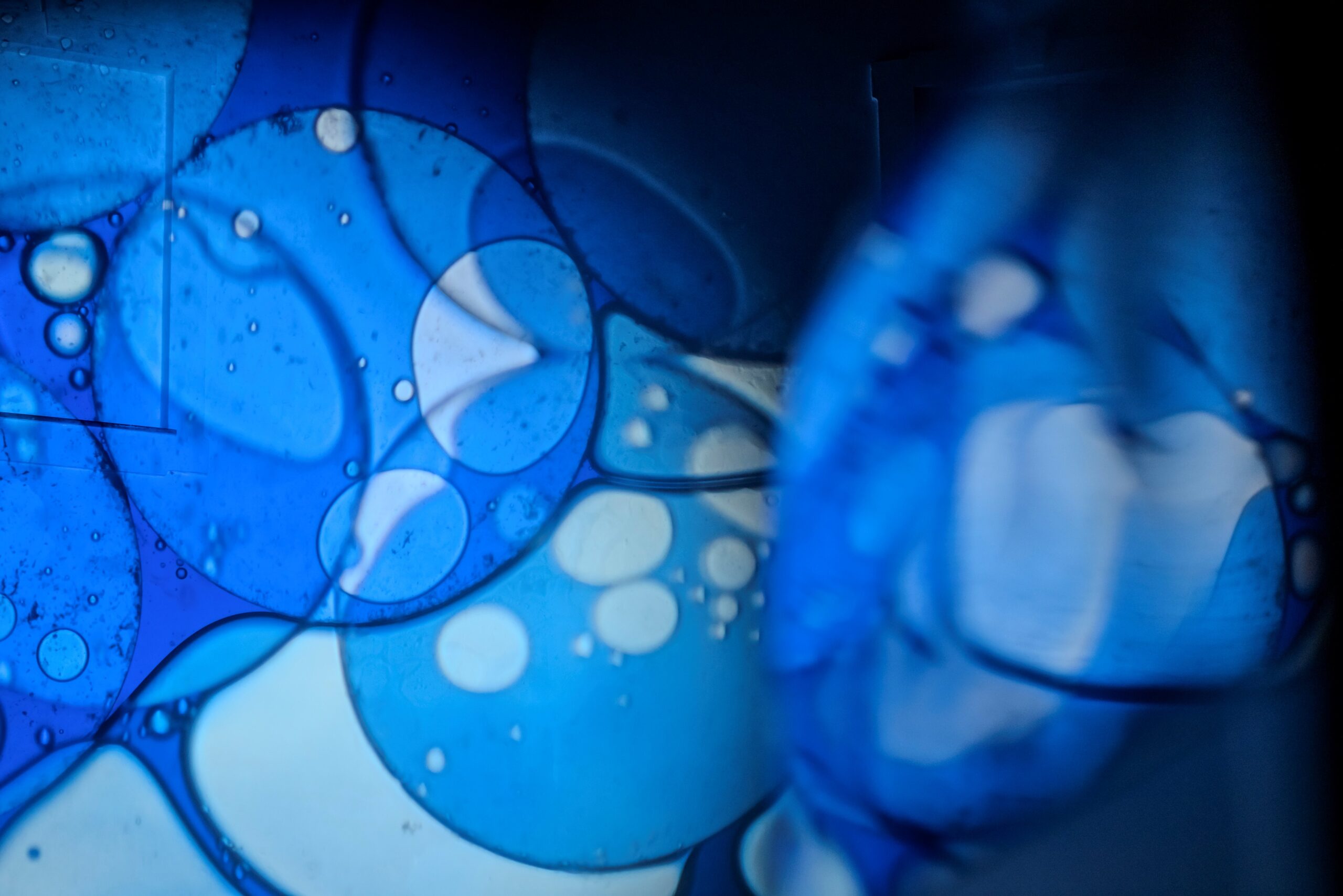
In Alessandro Lupi’s installation ‘Liquid Lense’, a water surface is transformed into a kind of liquid lens. Drops fall at different rhythms, waves are created, light is refracted. This results in complex shapes, waves, colours and interference fringes that spread throughout the inner courtyard of Graz City Hall. The seemingly simple observation of these visual effects becomes an almost hypnotic exercise in perception for the audience. The calm, contemplative atmosphere invites complete immersion, letting go, and even a little bit of losing oneself.
Location: Innenhof Bürger:innenamt
Biography
Alessandro Lupi was born in Genoa, Italy. He now lives and works in Berlin, Germany.
He studied at the Accademia Ligustica di Belle Arti in Genoa.
His work has been exhibited at the Venice Architecture Biennale, the Uffizi Gallery in Florence, the Avesta Museum in Sweden and the Kunsthaus Tacheles in Berlin, among others.
In 2008, he created an installation for the Havana Biennial, which is now on permanent display at the National School of Fine Arts San Alejandro. In 2010, the City of Ljubljana commissioned him to create a sculpture to celebrate Ljubljana’s status as the UNESCO World Book Capital.
Lupi’s work focuses on light and its fusion with colour, space, and time. Each piece appears to create its own world, focusing on the concept of ‘inversion’, offering the viewer an unexpected perspective. In his works, dichotomies such as exterior-interior, freedom-prison, and life-death are cancelled out by the contemporary perception of these two aspects, without favouring any perceptive or hierarchical prevalence.
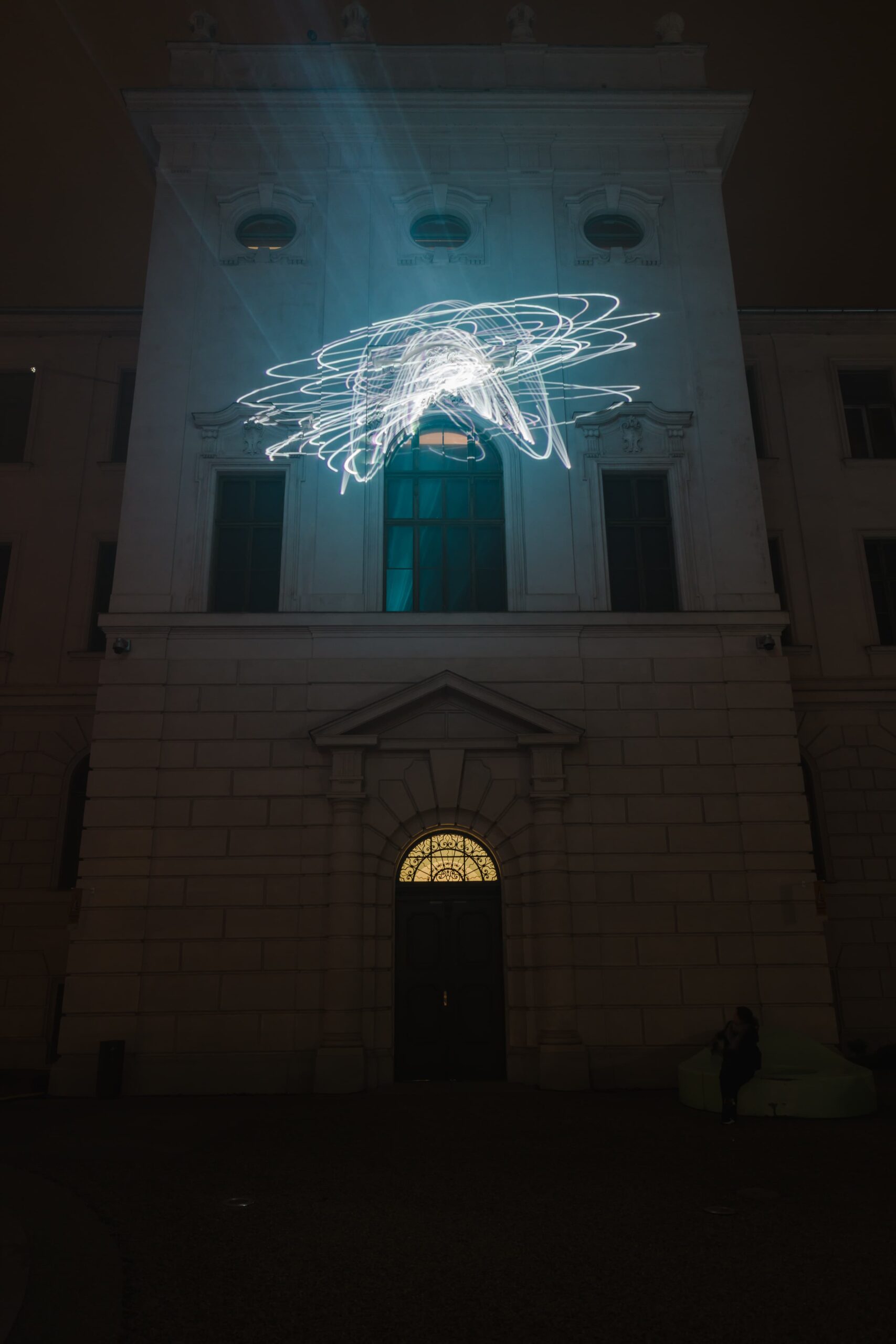
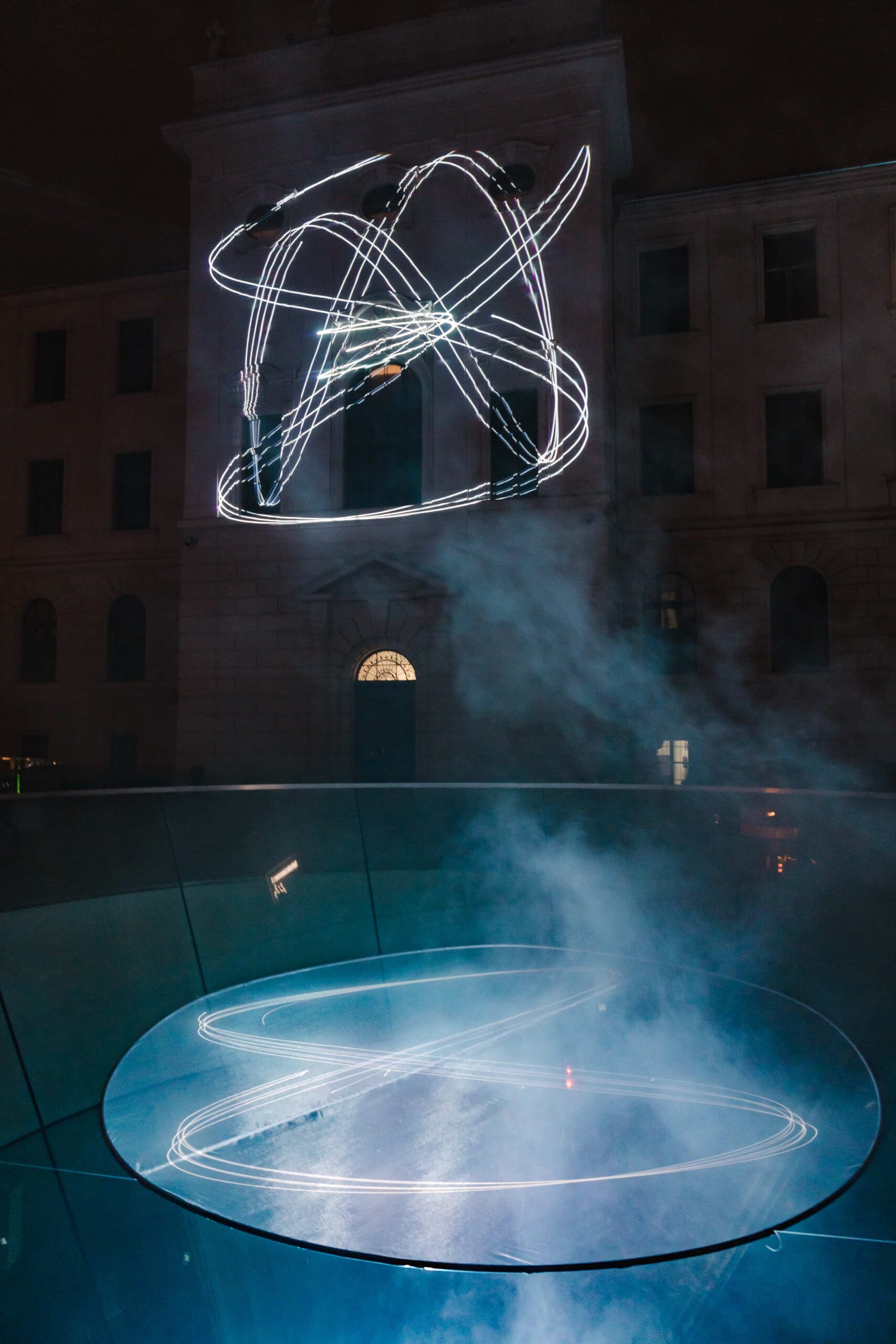
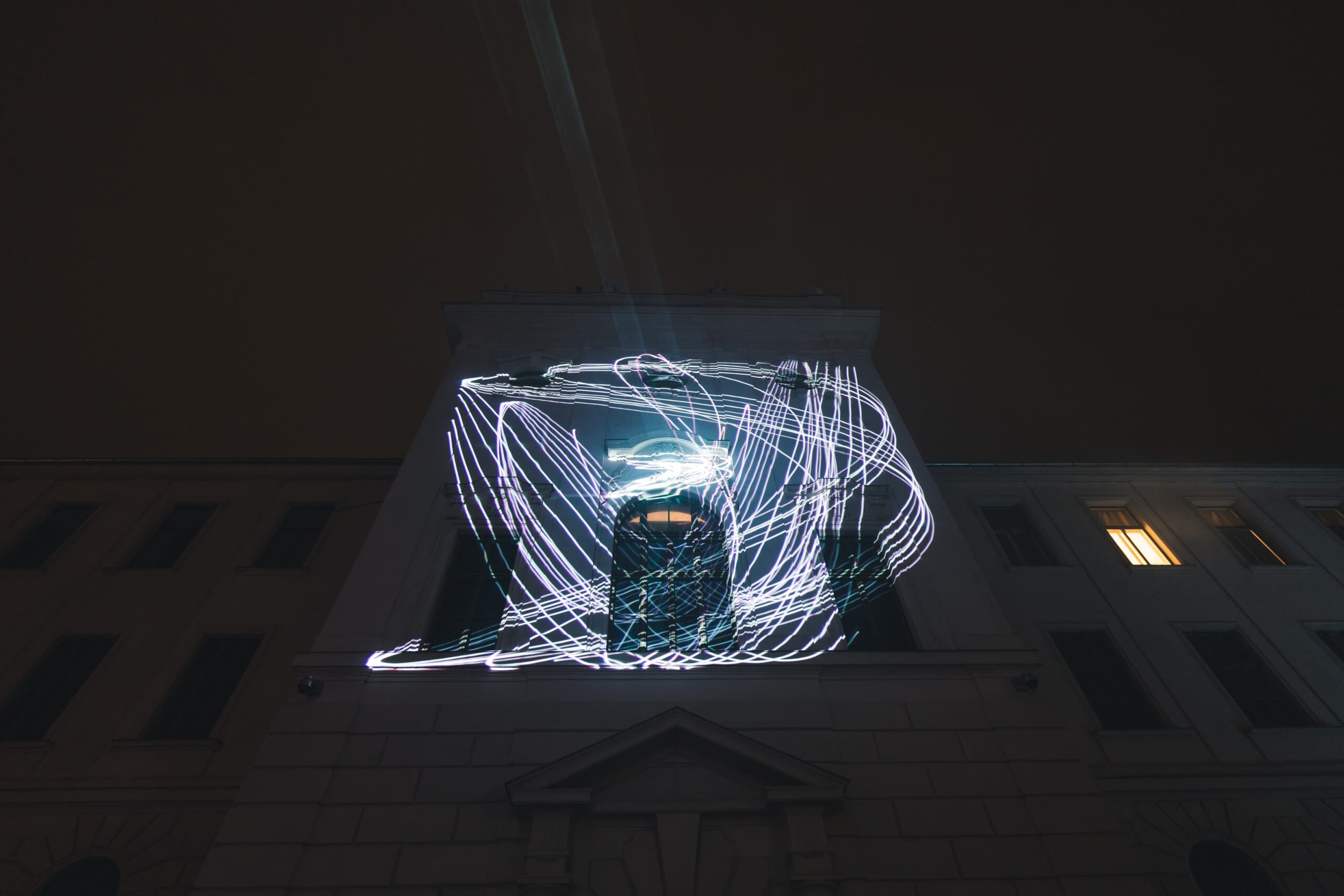
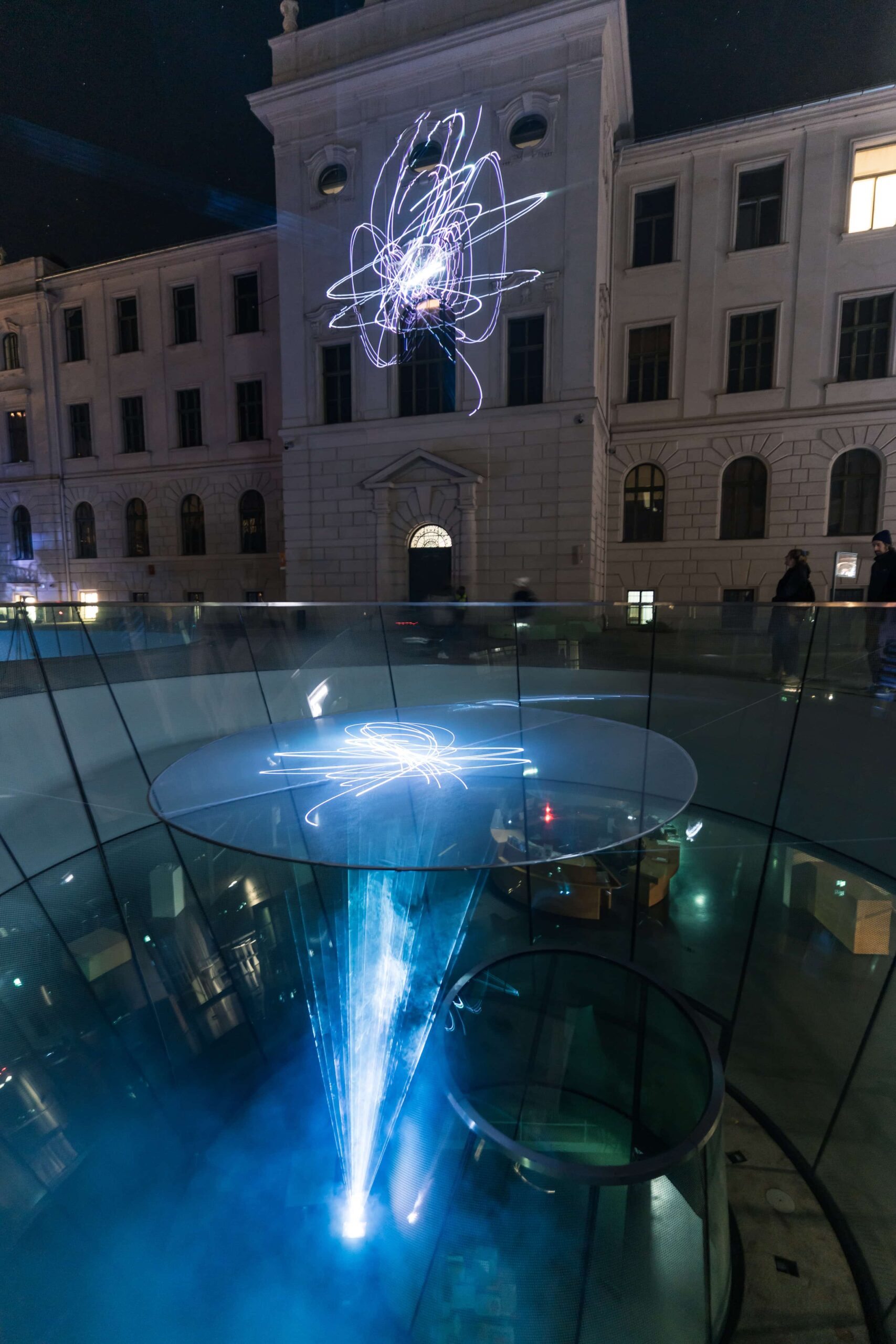
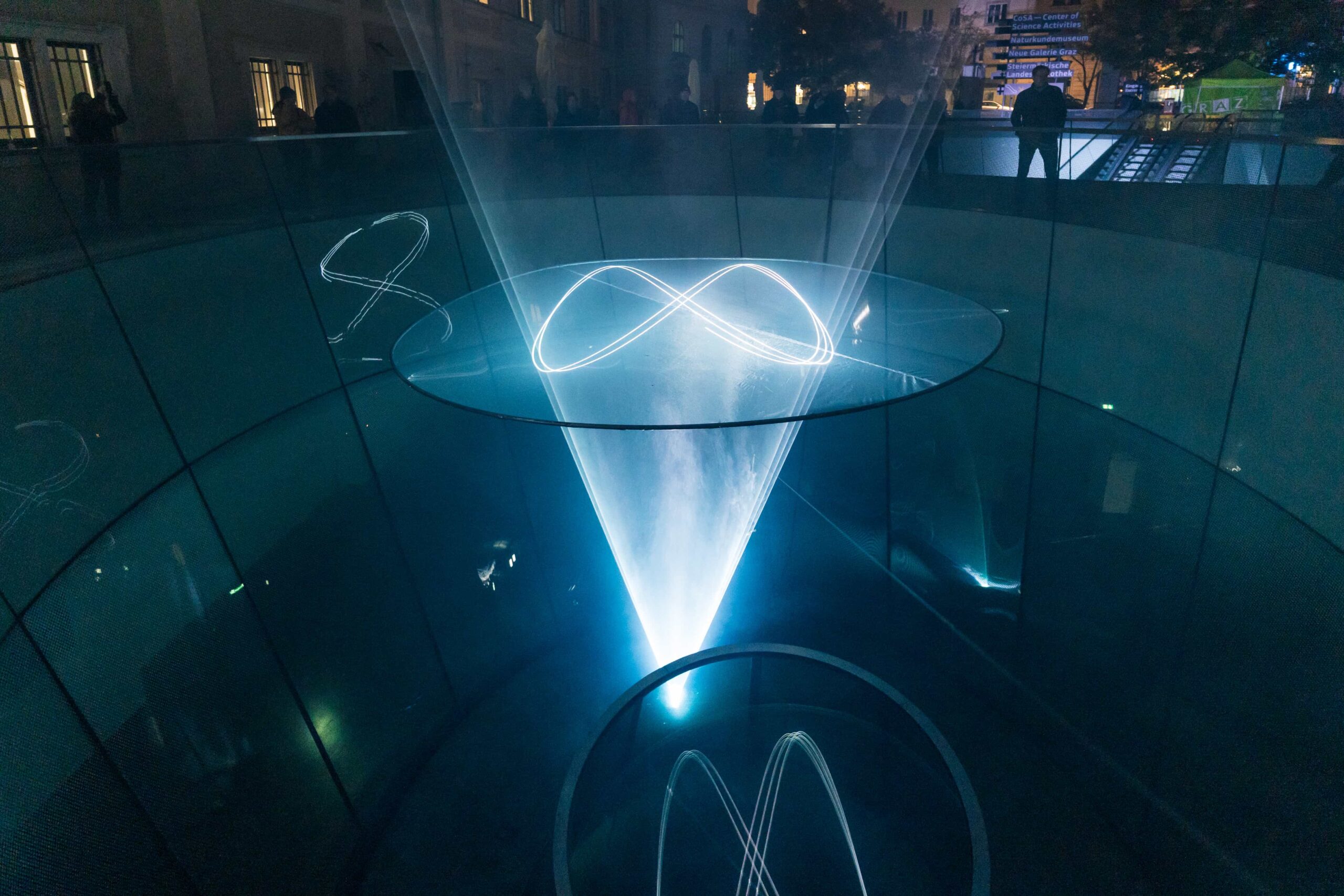
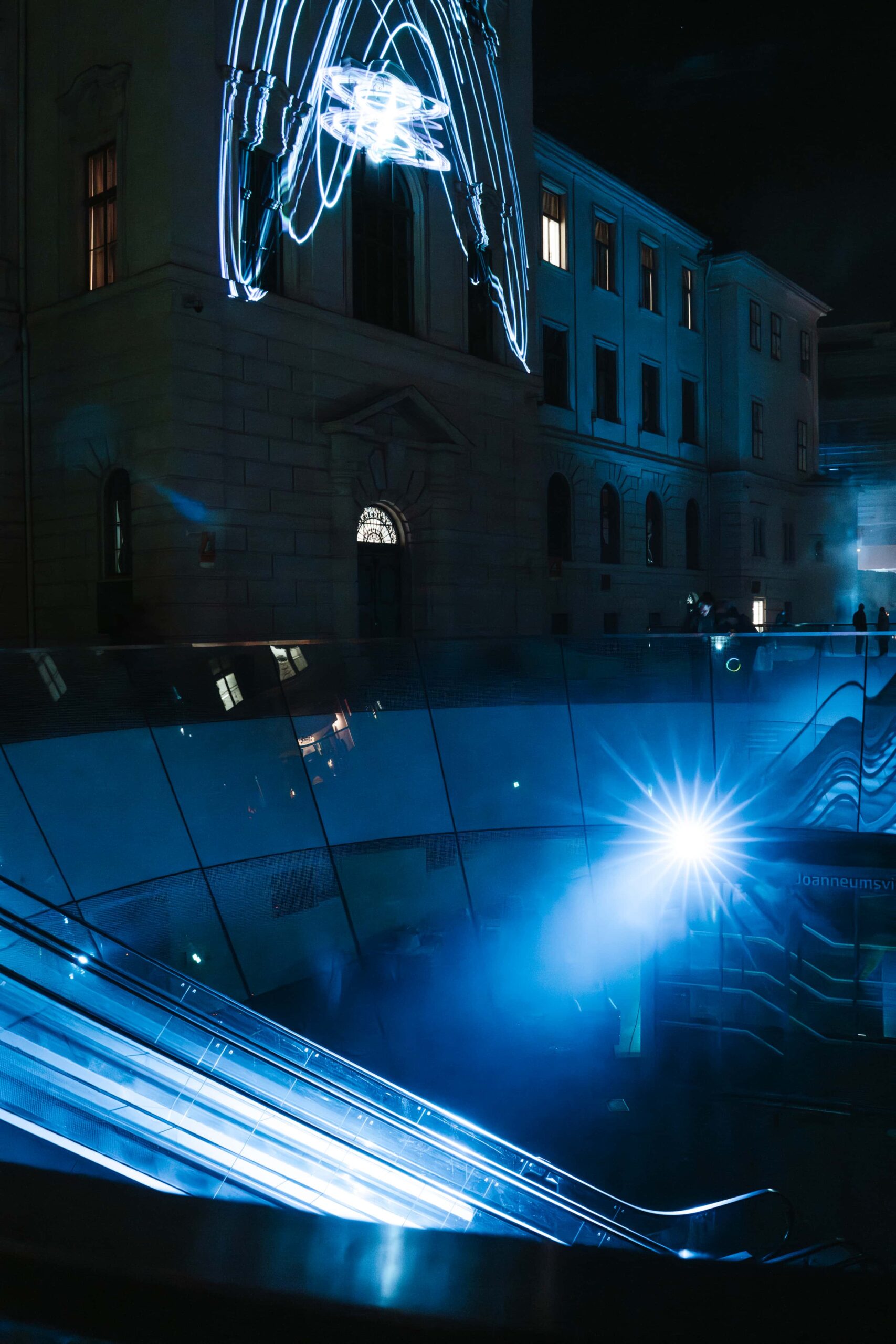
David Reumüller zeigt zum zehnjährigen Jubiläum eine Arbeit, in der die zentralen Elemente des Festivalnamens – Klang und Licht – direkt ineinandergreifen: Eine Komposition, die in Kooperation mit seiner Musikformation EXIT VOID entstand, wird über Membranen in eine präzise Laserzeichnung übertragen. So wird im Joanneumsviertel Klang zu Licht, Hörbares zu Sichtbarem – und der Eindruck entsteht, als hebe „Frequenzen“ die Grenzen zwischen diesen beiden künstlerischen Dimensionen auf.
A project visiting Joanneumsviertel.
This installation is made possible with the kind support of Holding Graz.
Biography
David Reumüller (born 1979 in Gaal, lives in Graz/Vienna) is an interdisciplinary artist who interweaves music, light, space and perception into his installations, paintings, films and projects. His works – from galleries to festivals – question identity and reality. Winner of the Graz Art Promotion Award (2021) and scholarship holder 2024.
Credits
Konzeption: David Reumüller
Komposition: Exit Void
feat.: Manfred Engelmayr,, Katrin Euller (aka Rent), Alex Kranabetter, Wolfgang Lehmann, Anja Plaschg (aka Soap&Skin), David Reumüller
Audioedit: Wolfgang Lehmann
Lasertechnik: GLS Laser
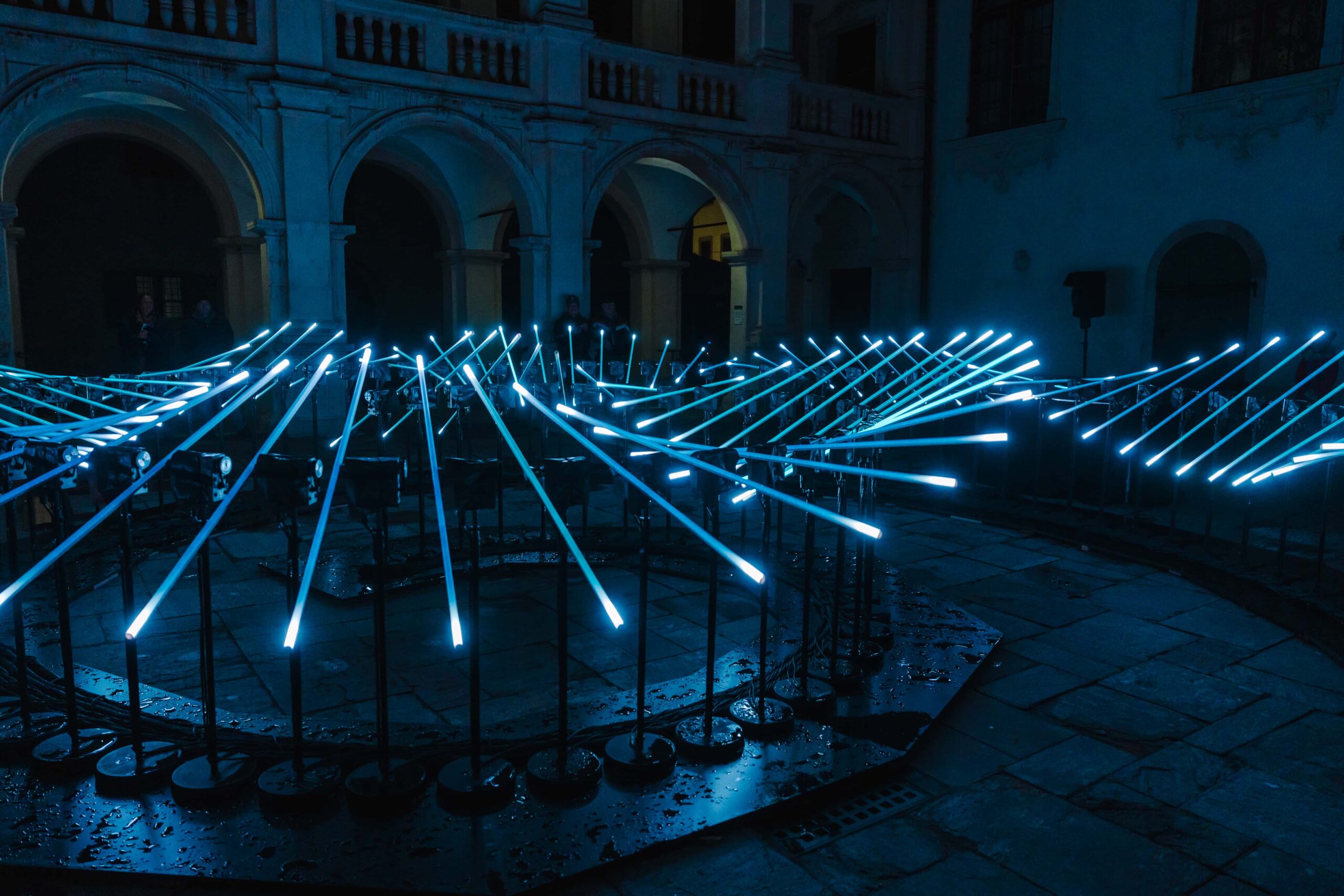
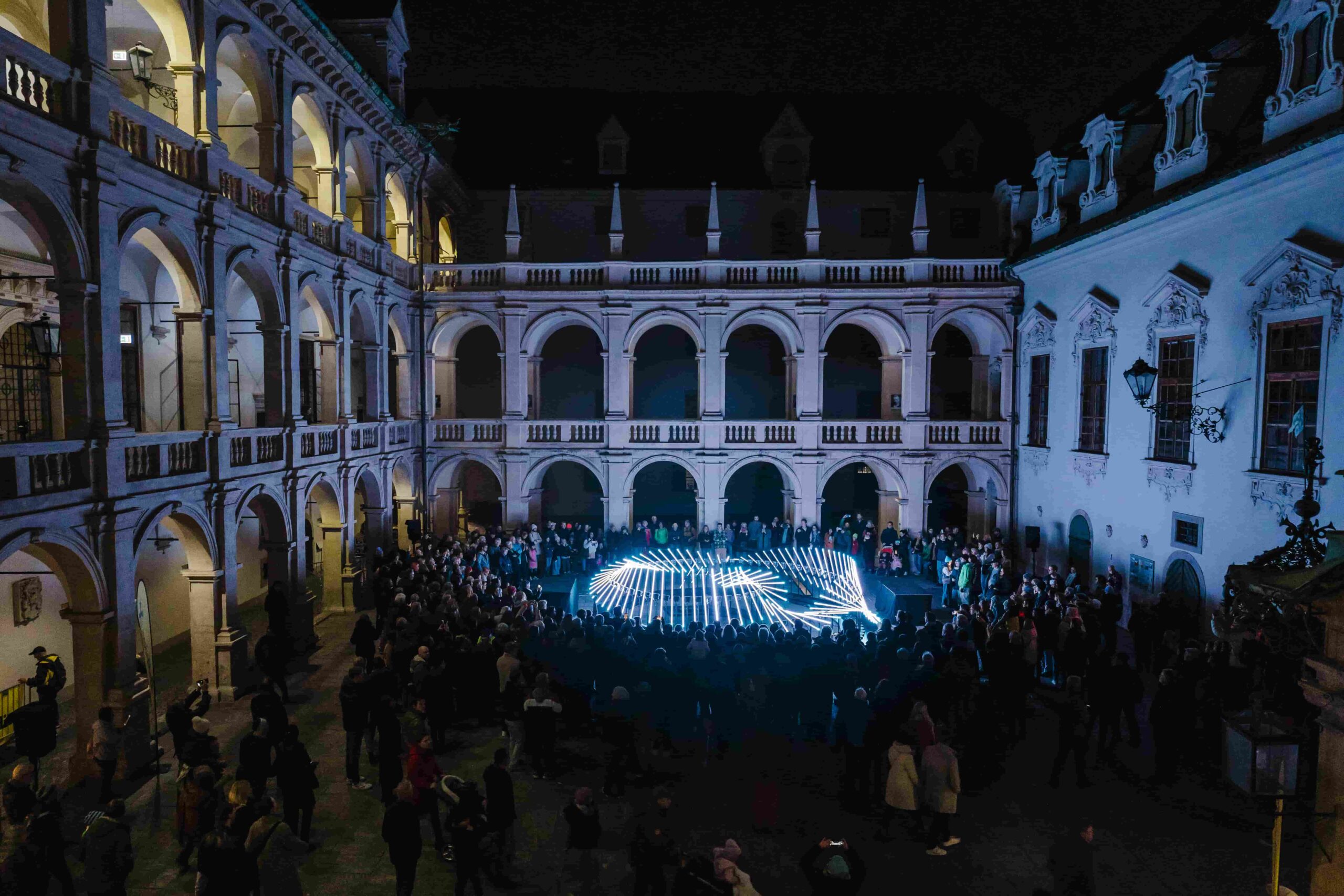
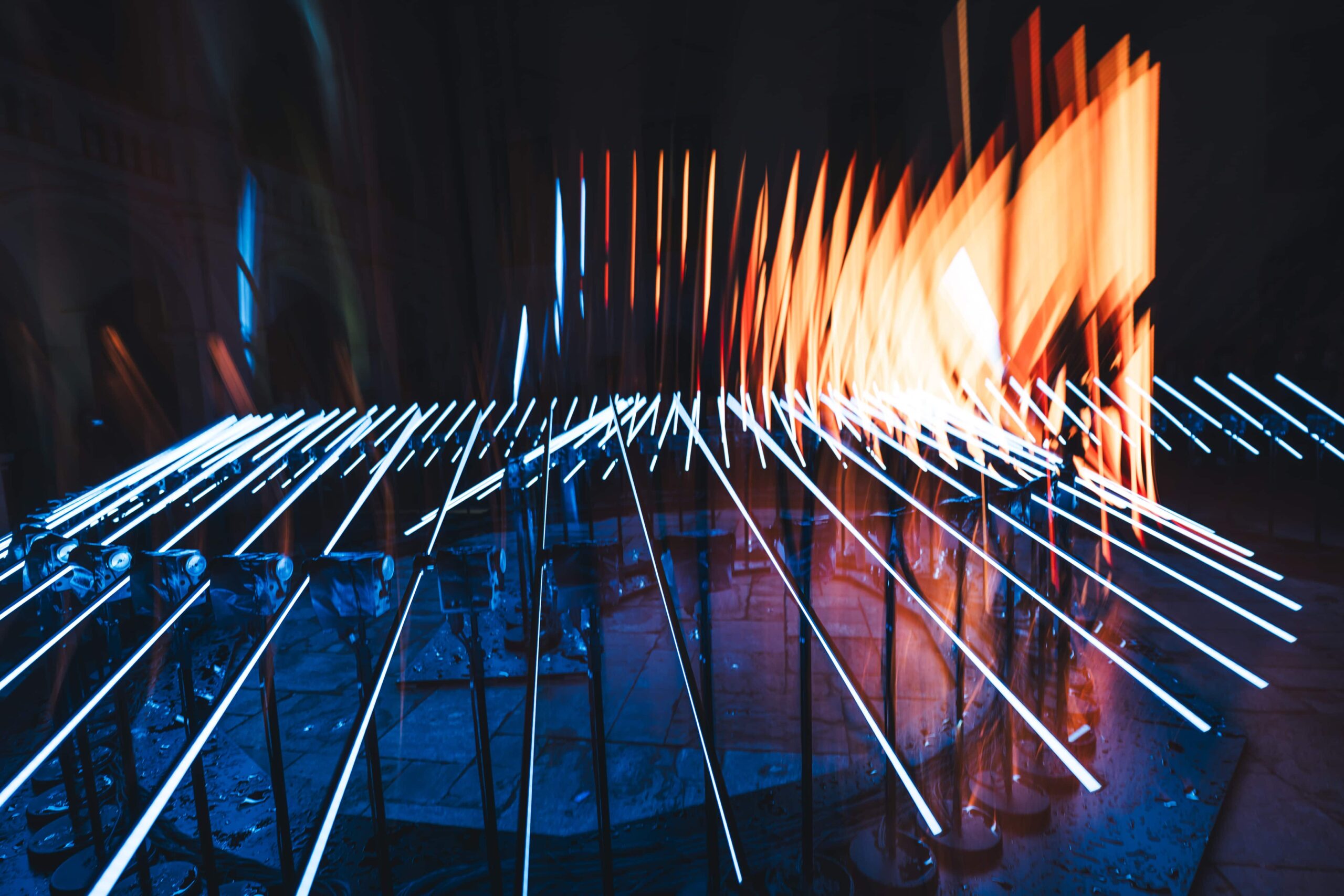
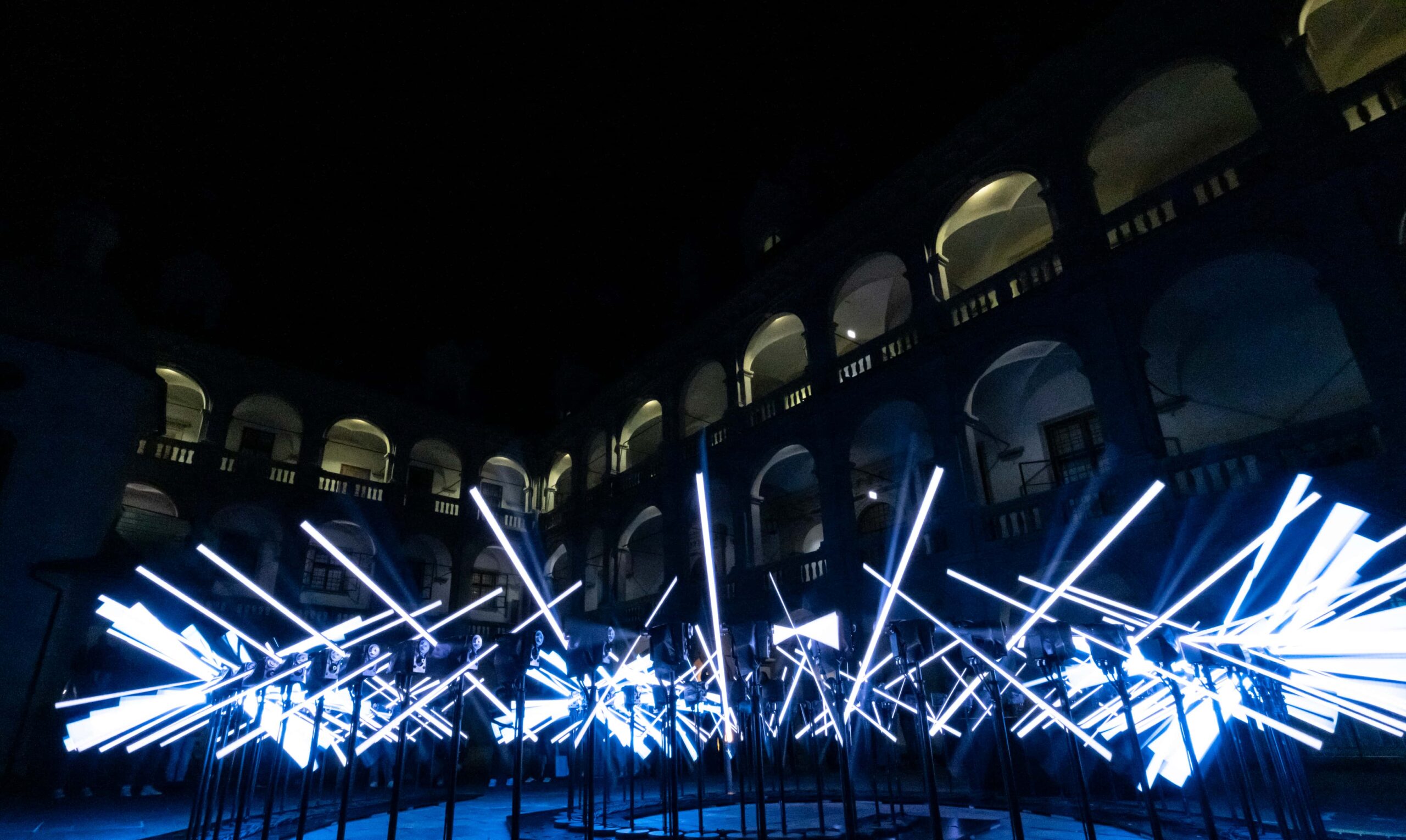
„Flux“ von Collectif Scale entstand 2021 im Rahmen des Constellations Festivals in Metz, Frankreich, reist seither durch die ganze Welt und macht bei KLANGLICHT 2025 im Grazer Landhaushof Station. Die sich bewegende, modulare Form und ihre Leuchtkraft zieht Menschen allerorts in ihren Bann. Die Vervielfachung des einfachen Lichtkörpers, die Dynamik der Installation sowie die Variationen zeitlicher Phasen und Geschwindigkeit erschaffen den Eindruck eines scheinbar organischen Objekts, das den Betrachtenden einmal in poetischen, ein andermal in frenetischen Wellen begegnet.
As with other works, the artist collective’s sensual and playful installation ‘Flux’ questions the connection between light and architecture, entertainment and art, nature, humans and machines.
Location: Landhaushof
This installation was realized with the kind support of Raiffeisen-Landesbank Steiermark.
Credits
Installation: Collectif Scale
Music: Grégory Sémah
Instagram/collectifscale
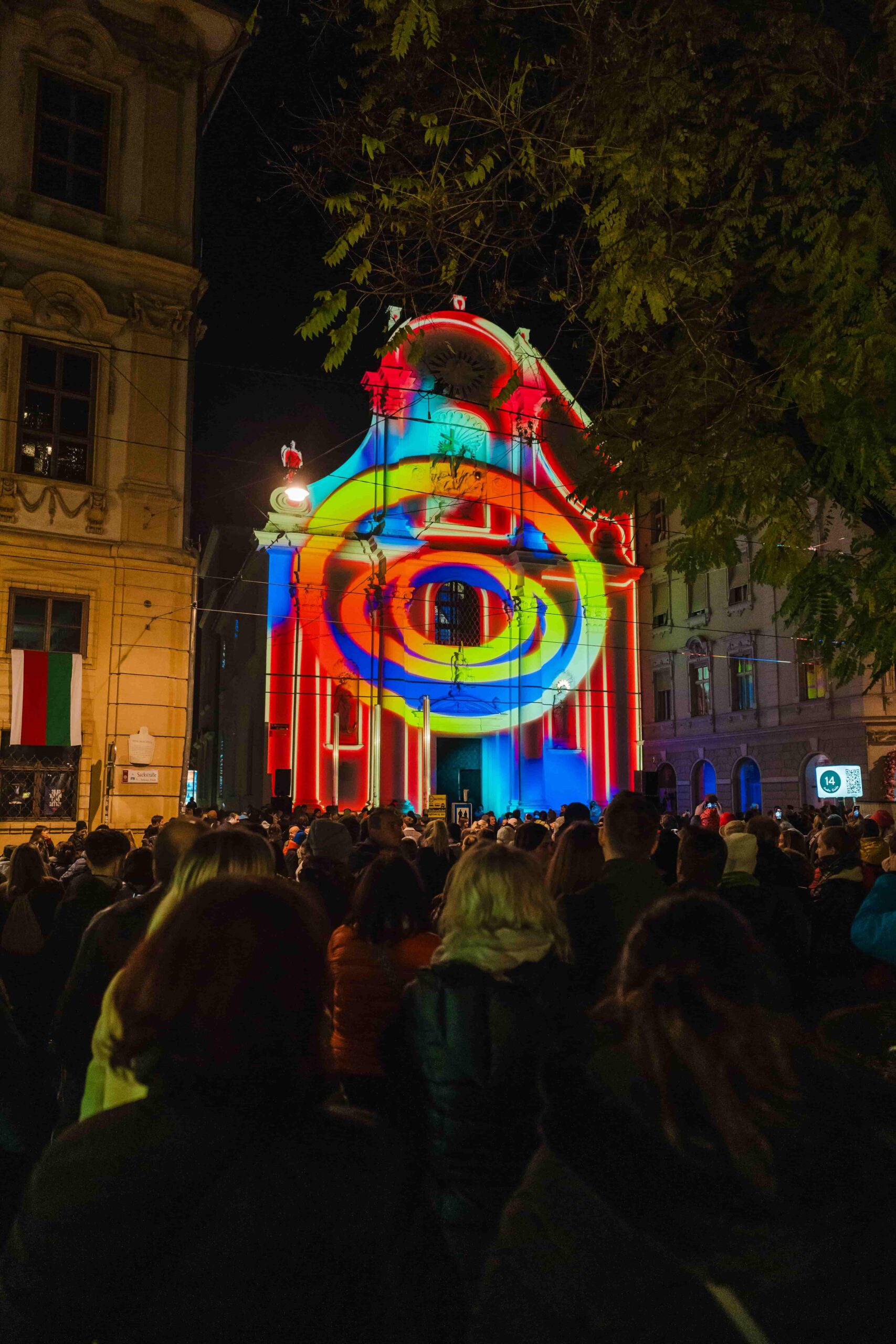
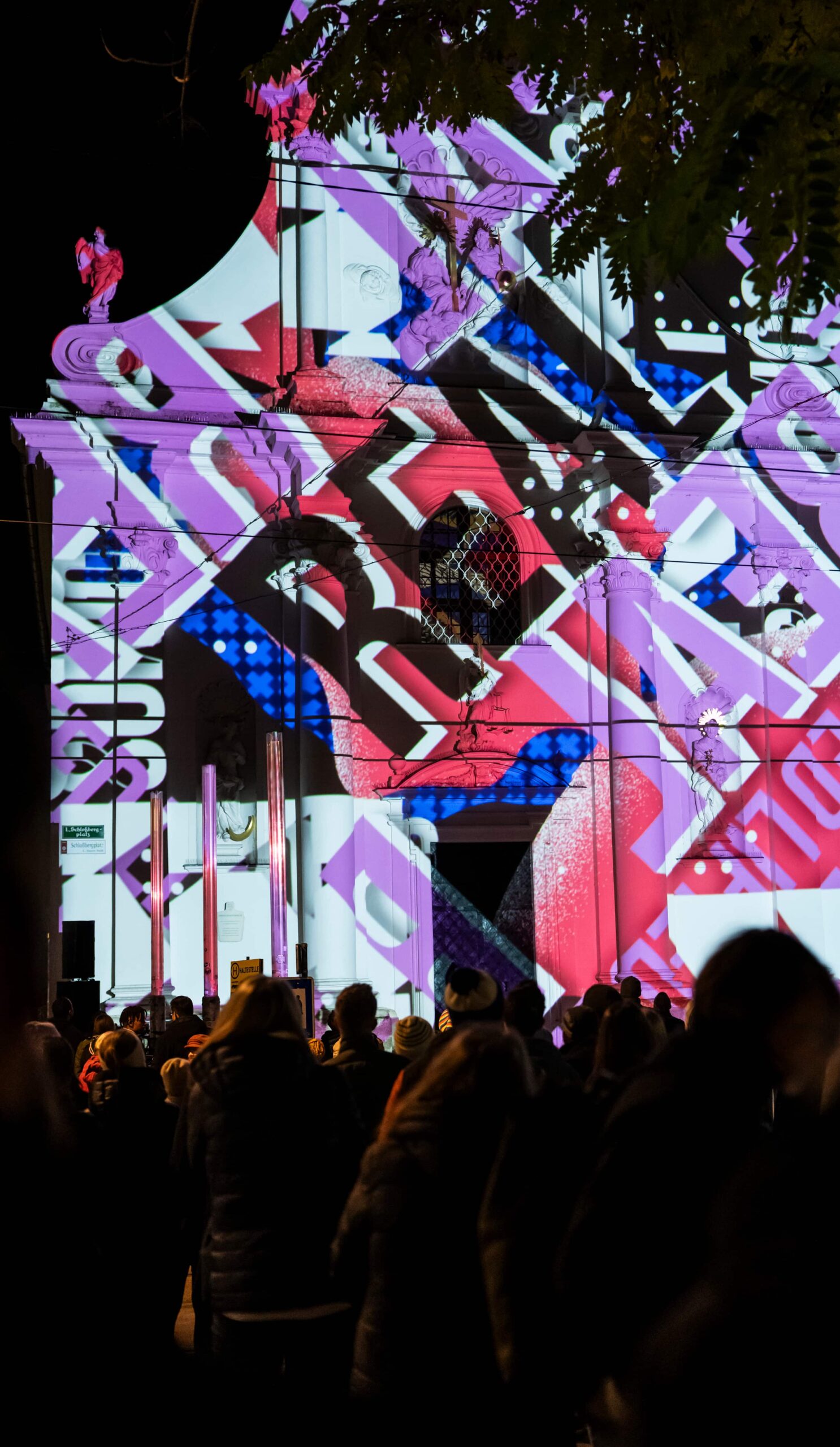
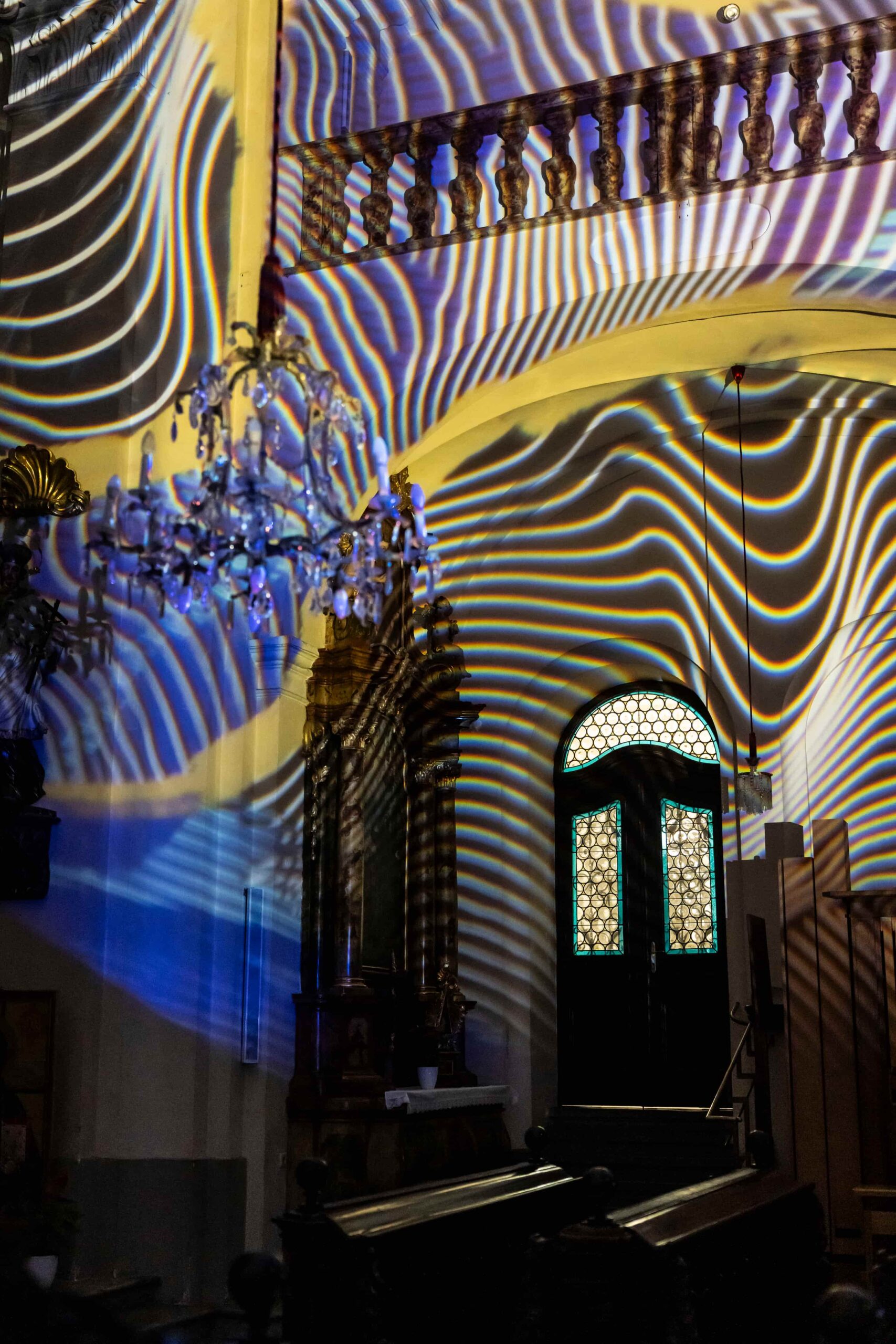
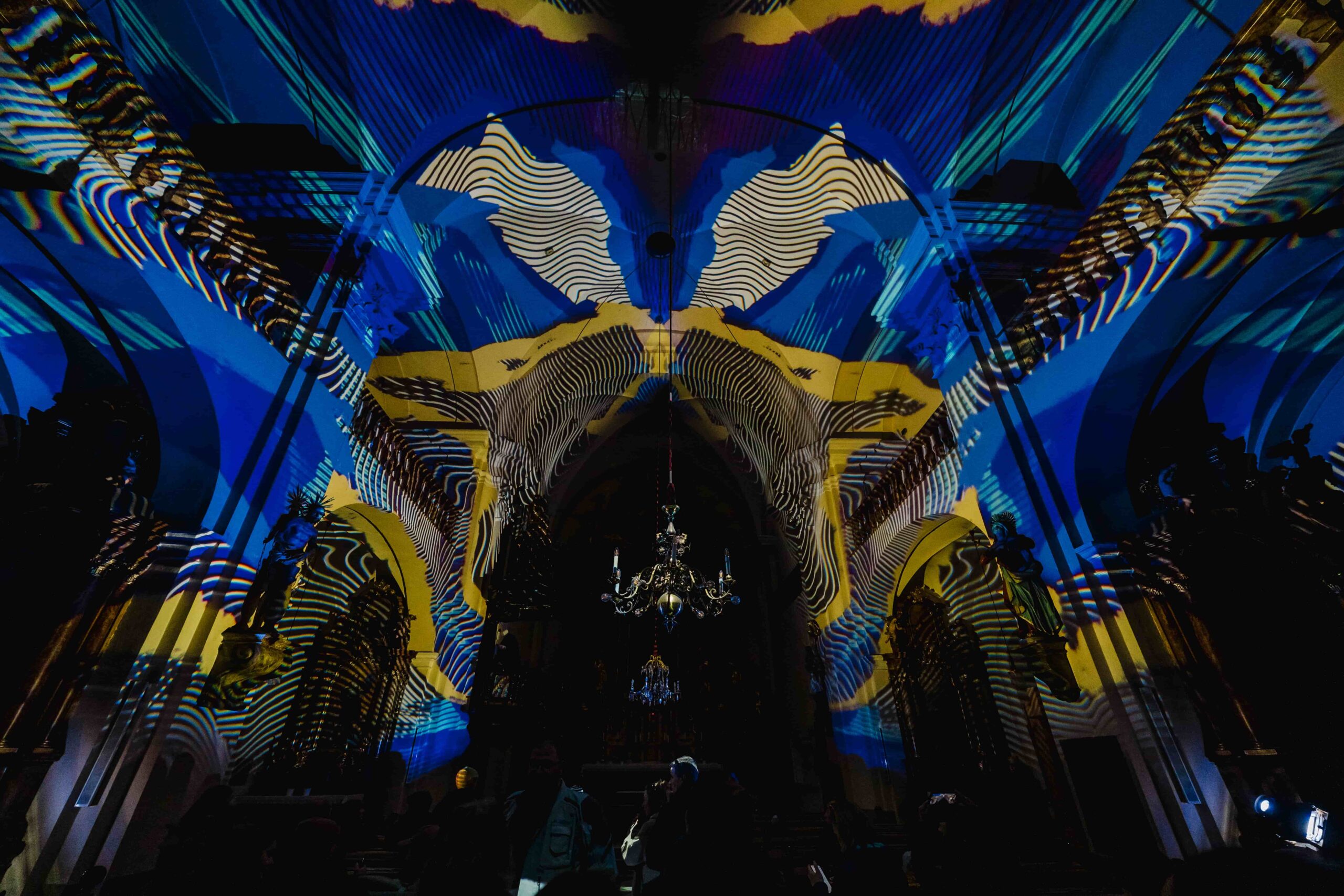
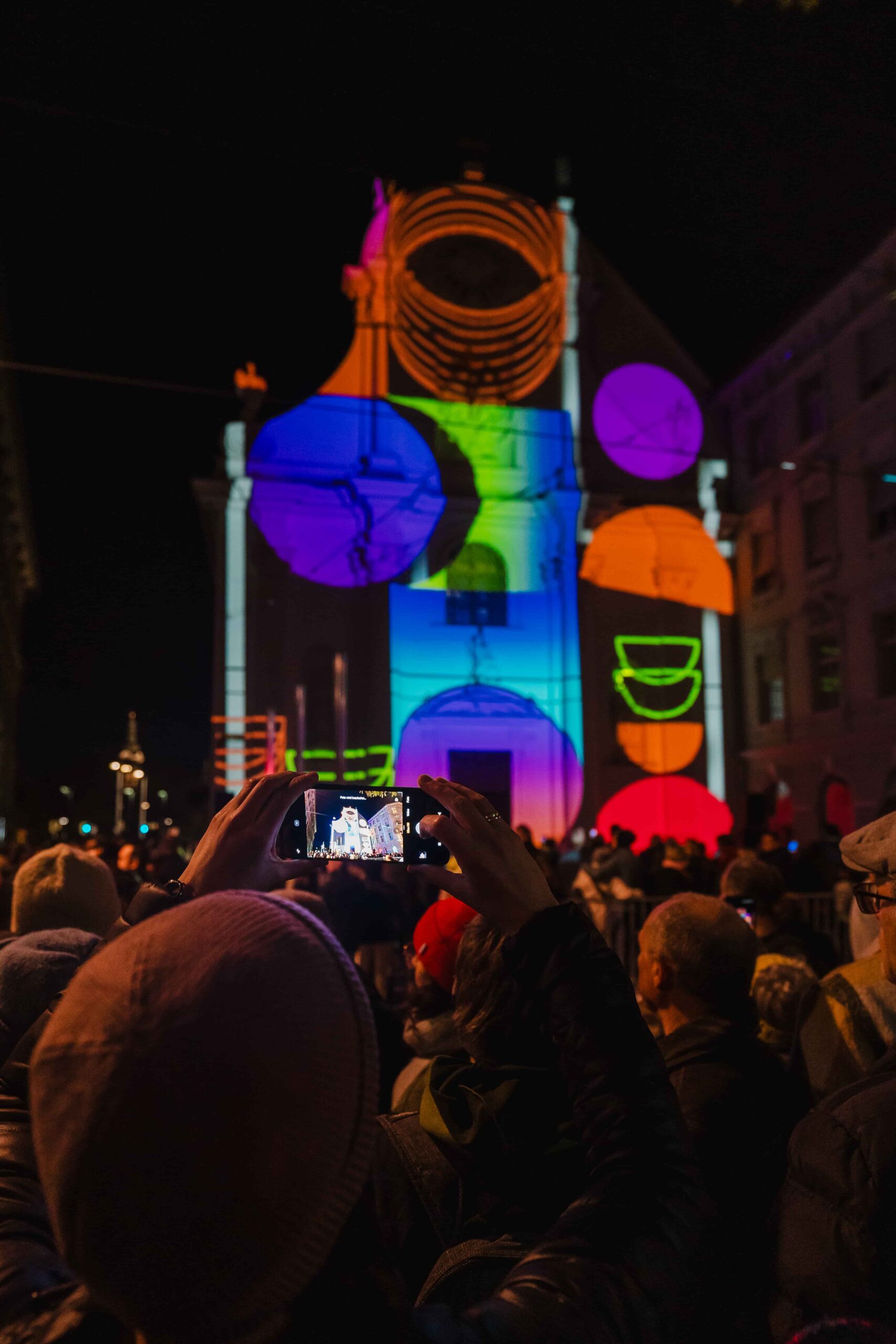
„Arkestra of Light – Lifted“ verwandelt die Fassade der Dreifaltigkeitskirche in einen lebendigen Körper, in dem Licht, Klang und Emotion verschmelzen. Sowohl durch analoge als auch digitale Animationstechniken lässt das Künstlerkollektiv OchoReSotto bewegte Muster entstehen, die ein Wechselspiel aus Ruhe und Intimität, Freude und Energie vermitteln. Vor dem Publikum tut sich so eine poetische visuelle Symphonie auf – präzise abgestimmt auf die dazu erklingende Musik. Wie im Rausch verschwimmen die Eindrücke der sinnlichen Erfahrung: Farben pulsieren mit Klängen, Texturen hallen mit Erinnerungen wider und Bewegungen transportieren Stimmungen. Es ist eine Welt, in der Logik vage wird, die sich auf das Sehen und das Hören, auf Intuition und Gefühl verlässt.
Location: Dreifaltigkeitskirche
This installation is made possible with the kind support of Grazer Wechselseitigen Versicherung.
Biography
Volker Sernetz, Stefan Sobotka-Grünewald and Lia Rädler from Graz have been working as film and projection artists for more than 20 years. In addition to video and film productions, they are also successful nationally and internationally with their large-format projections. OchoReSotto create light and sound installations on facades or literally allow rooms to appear in a different light. The trio also uses their projection art for permanent installations in museums and showrooms, or in combination with architecture and in public spaces.
They are the founders of ‘strictly analogue – a studio for experimental progress’ (Graz / Trieste / Tokyo) – a network for the promotion of alternative/experimental work and communication processes.
They are founders of “strictly analog – studio for experimental progress” (Graz / Trieste / Tokyo) – a network for the promotion of alternative/experimental work and communication processes.
Credits
Musik: Wolfgang Lehmann
Videotechnik: Peter Venus
Technik: Noise Gate
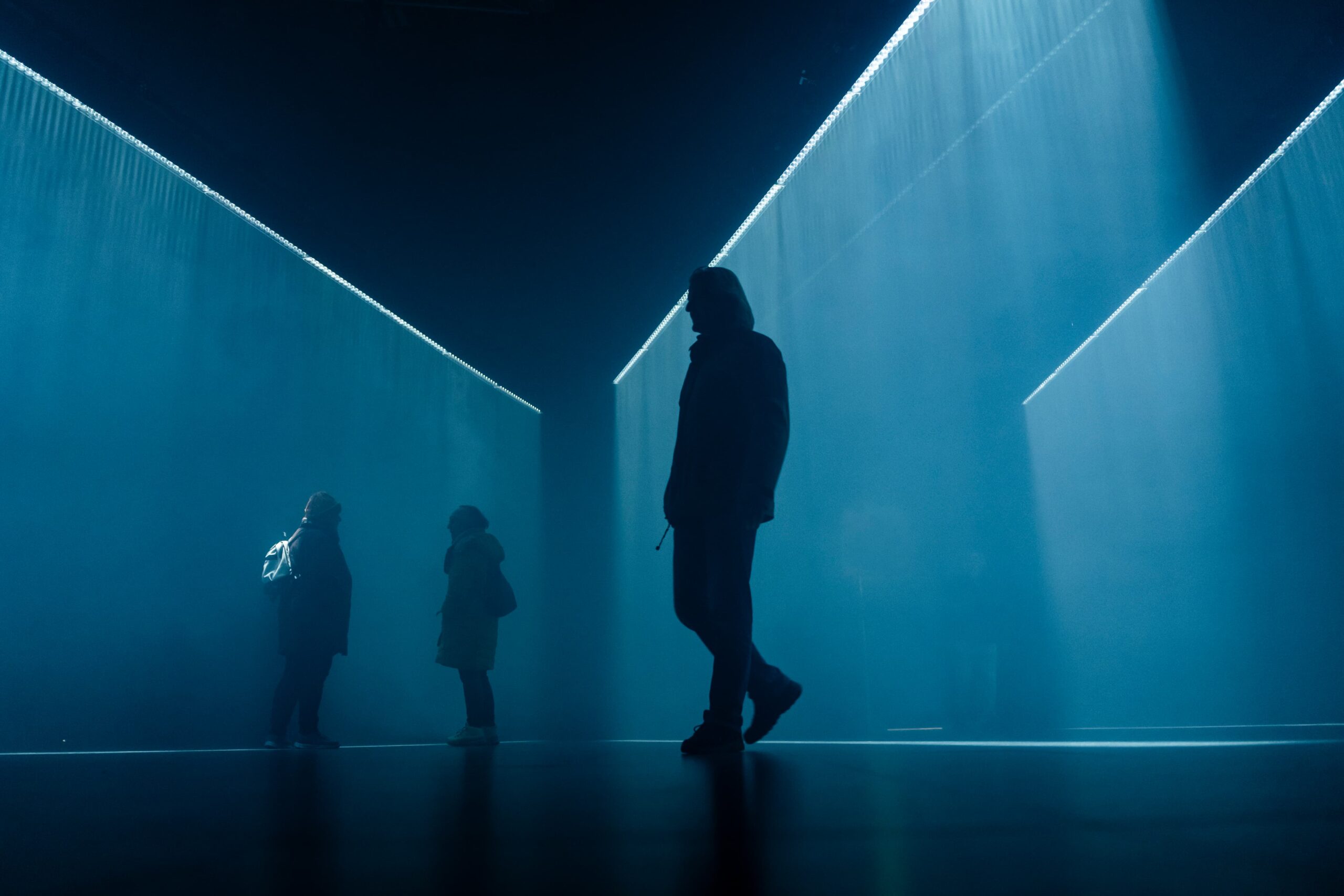
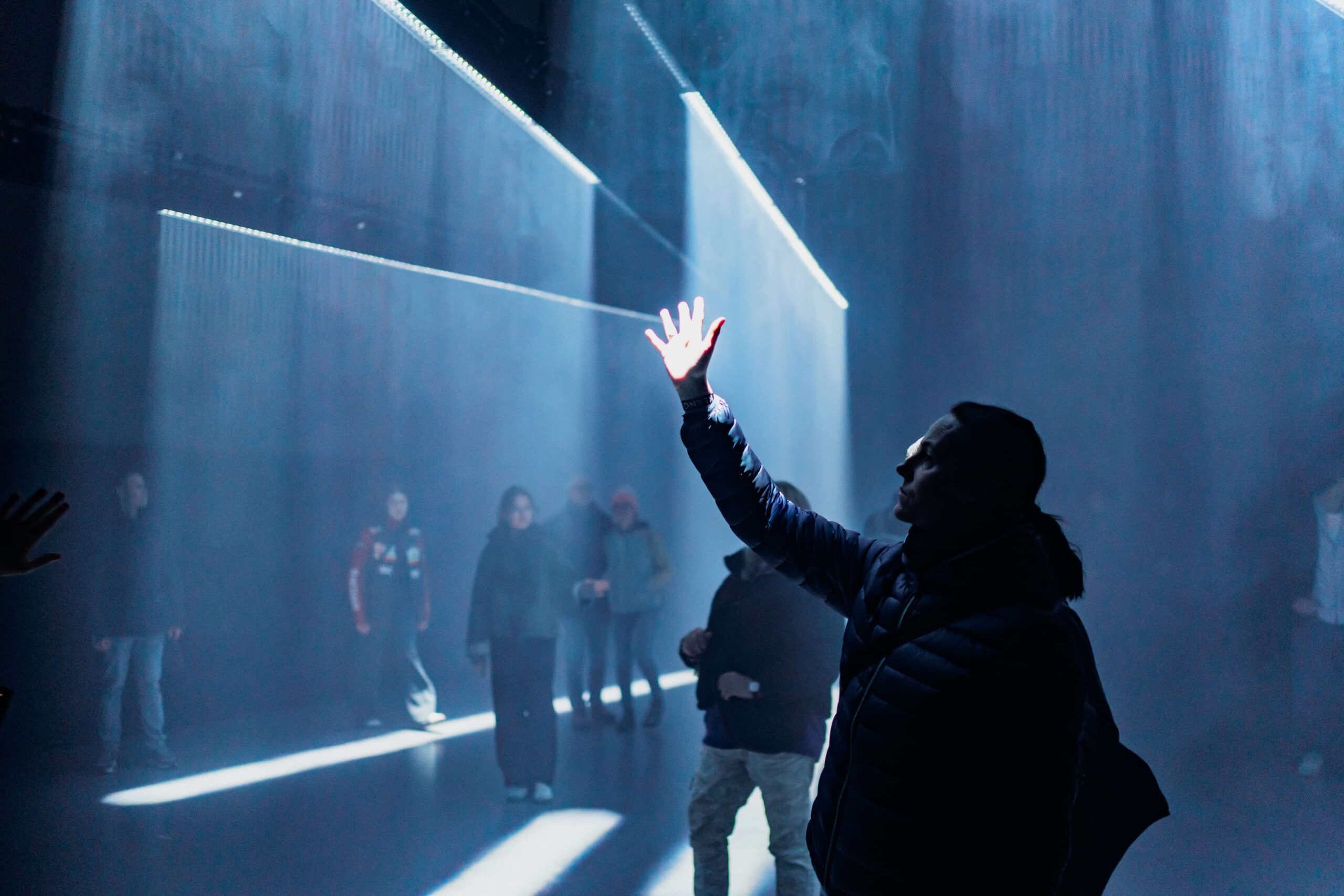
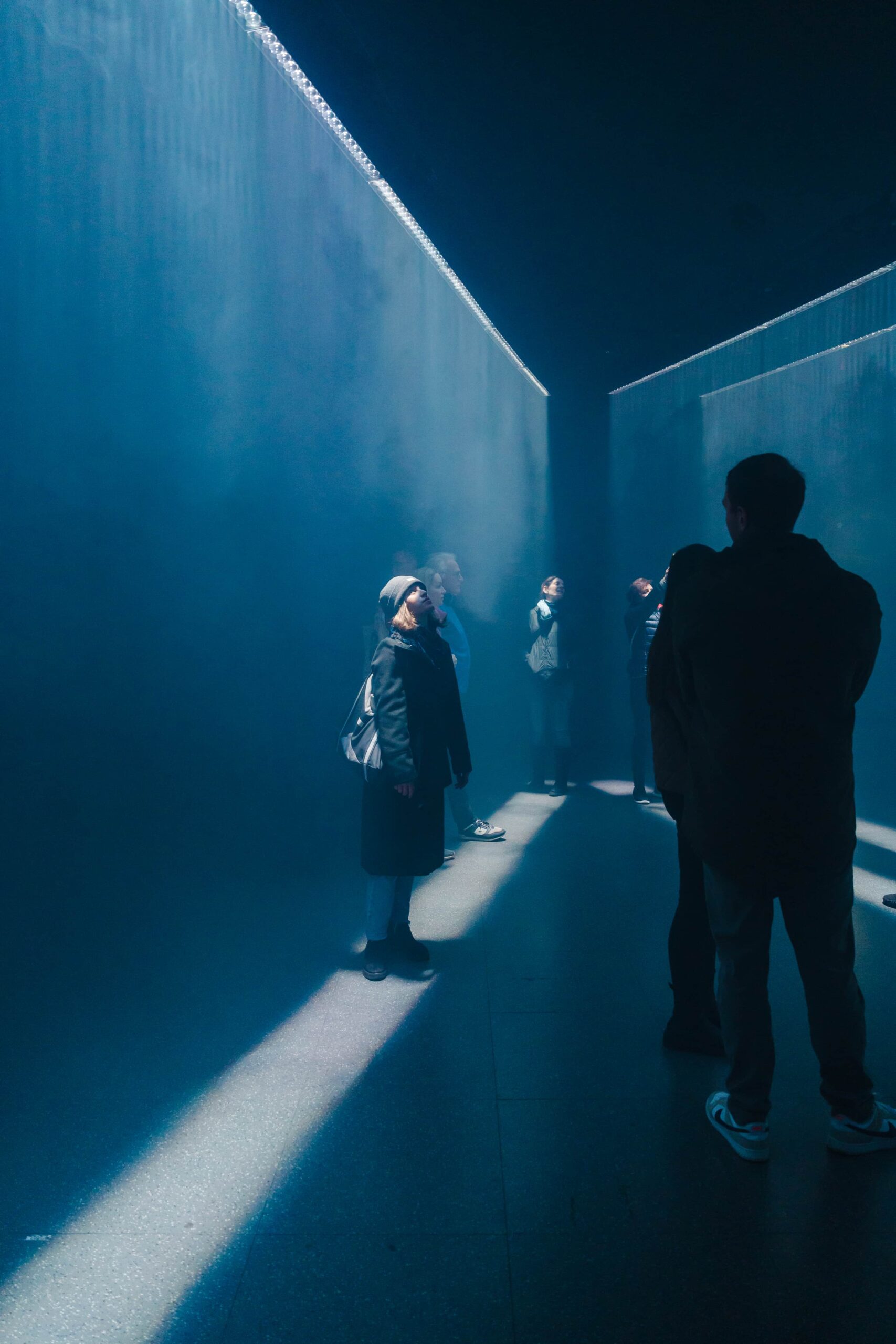
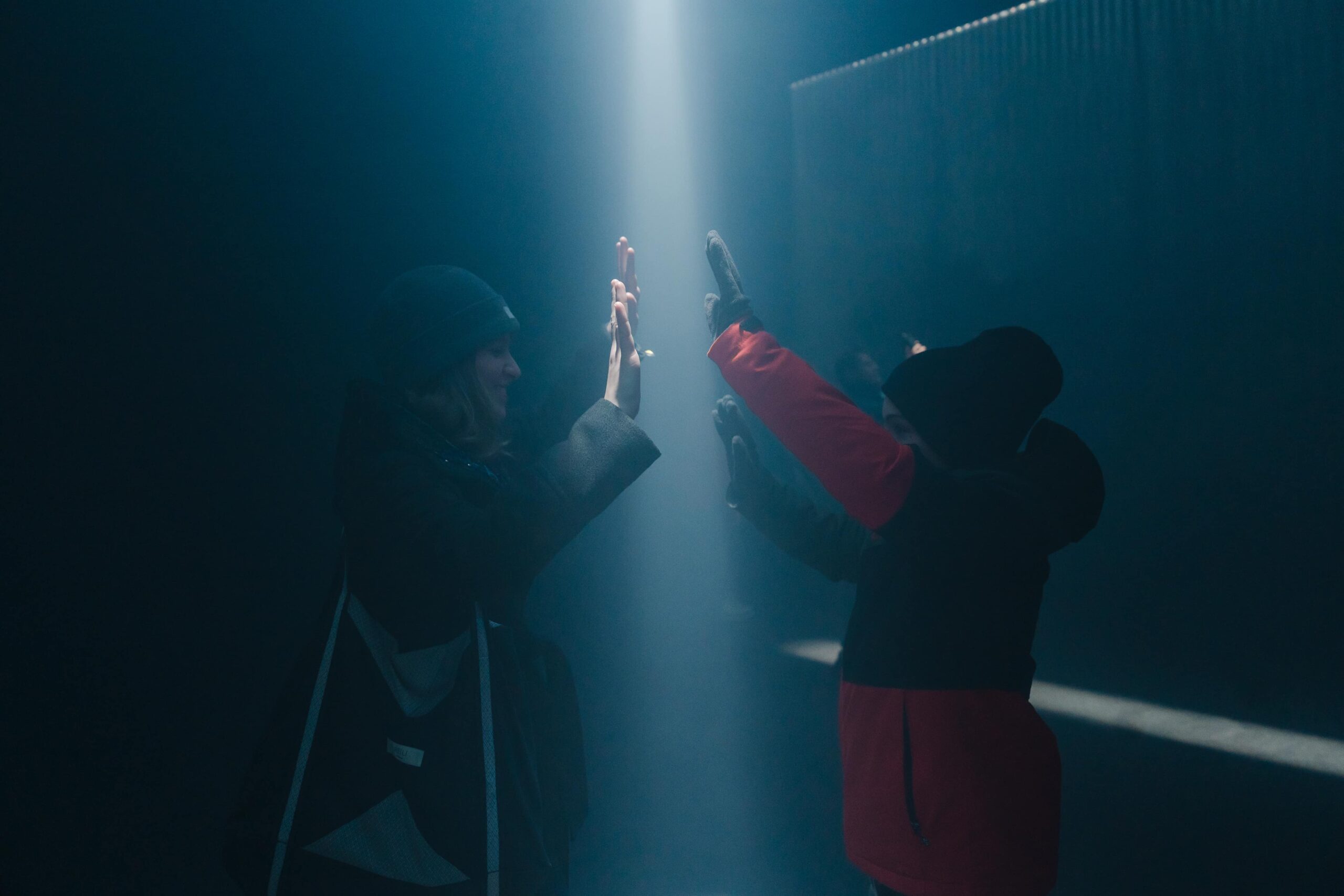
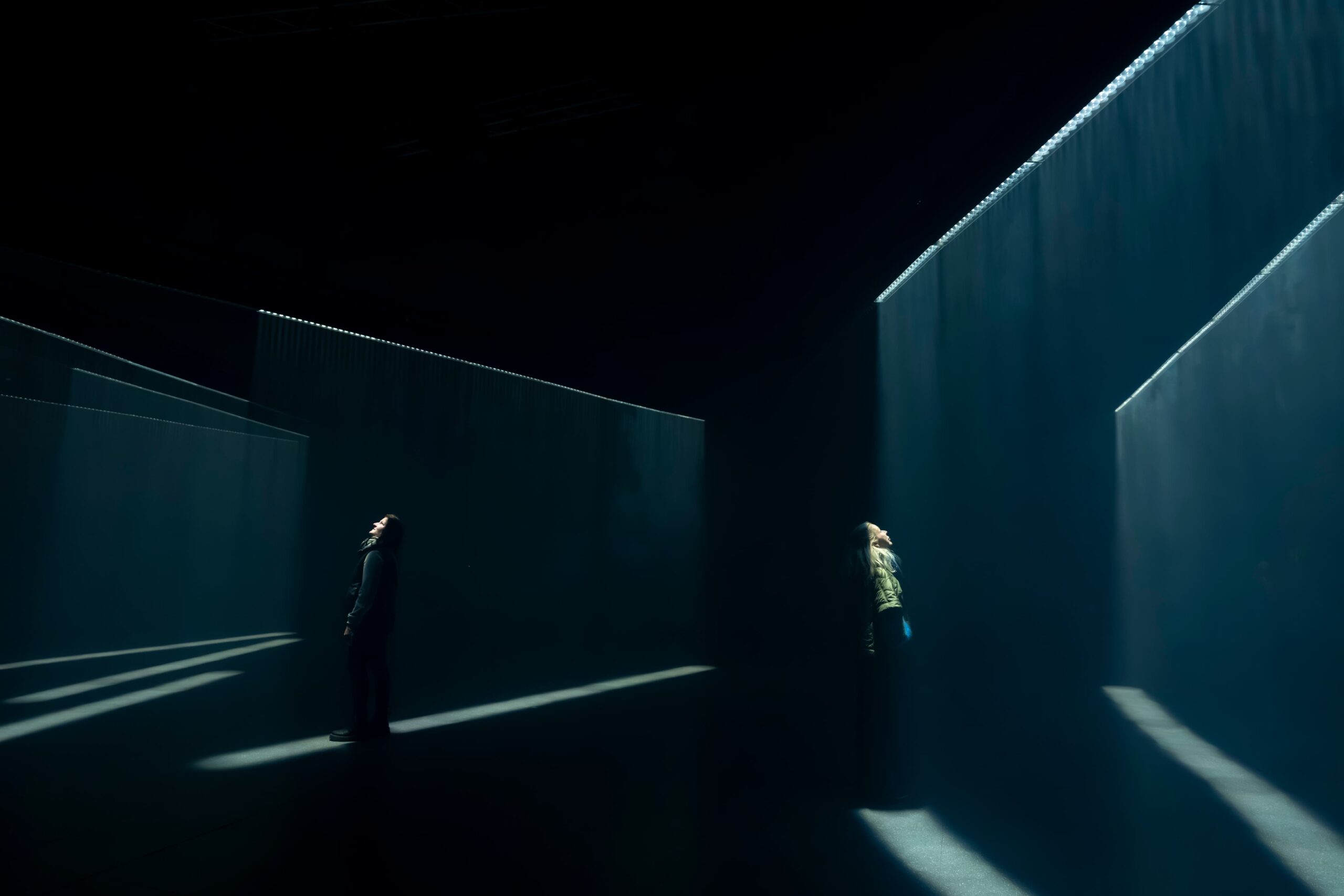
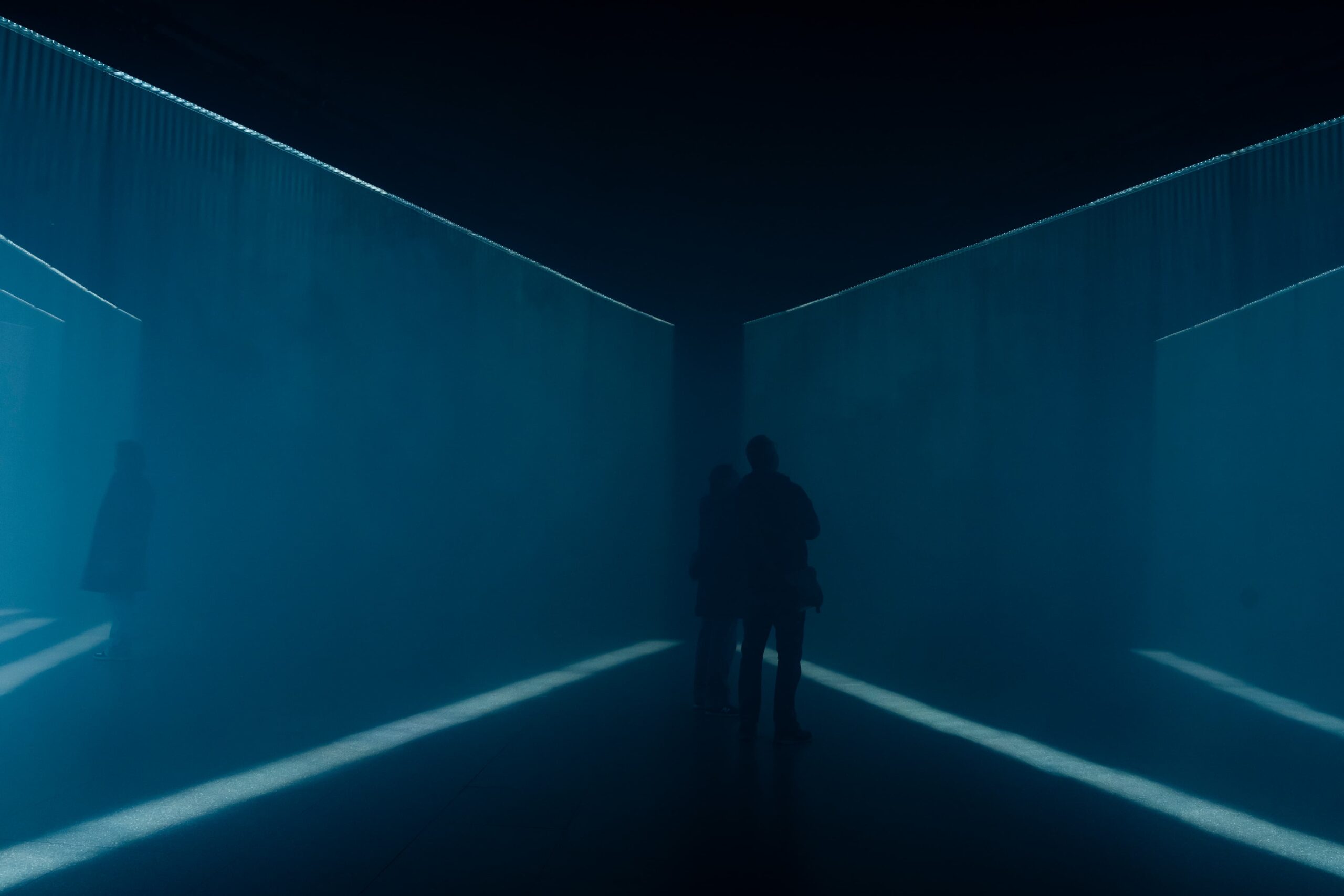
The installation ‘Topia’ resembles a modern version of a cinema screen: a digital window that also has a sculptural dimension. The light installation reworks the surface as an architectural element and invents a new concept for it that moves away from the material object. To achieve this, surfaces are opened and closed, different atmospheres and moods are interwoven, and new worlds are constructed within existing ones. In this way, ‘Topia’ creates a wall of light in the real space of the Dom im Berg venue that is clearly visible but intangible, inviting the audience to imagine and explore in a very special way.
Location: Dom im Berg
Biography
Zalán Szakács is an artist who brings together immersive art, scenography and media theory research. Through his work, Szakács explores the relationship between space, body and technology, resulting in multi-sensory experiences that include elements such as light, sound, smell, tactility and movement.
Szakács’ art installations invite the viewer on a mystical journey where reality and fiction intertwine. Attuned to both the individual and collective experience, it evokes a deeper awareness of the body in space and is capable of transporting the viewer to another place and time.
He has been exhibiting, performing, and screening at CTM Festival (DE), MUTEK MX (MX), Ars Electronica Festival (AUT), International Film Festival Rotterdam (NL), Stedelijk Museum Amsterdam (NL), Het Nieuwe Instituut (NL), V2_ Lab for the Unstable Media (NL), Kunsthaus Graz (AUT), MU Hybrid Art House (NL), Instrument Inventors Initiative (NL), TENT Rotterdam (NL), W139 (NL), Netherlands Film Festival (NL), Recontres Internationales Loods6/Amsterdam (NL), Zsolnay Light Festival (HU), and Light Art Museum Budapest (HU), among other places. Szakács is a core teacher at Utrecht University of Arts.
Credits
Research, concept, light composition: Zalán Szakács
Sound composition: Pandelis Diamantides
Light programming: Loden Rietveld
Technical production: Studio Den Haan, Franz Kauffmann
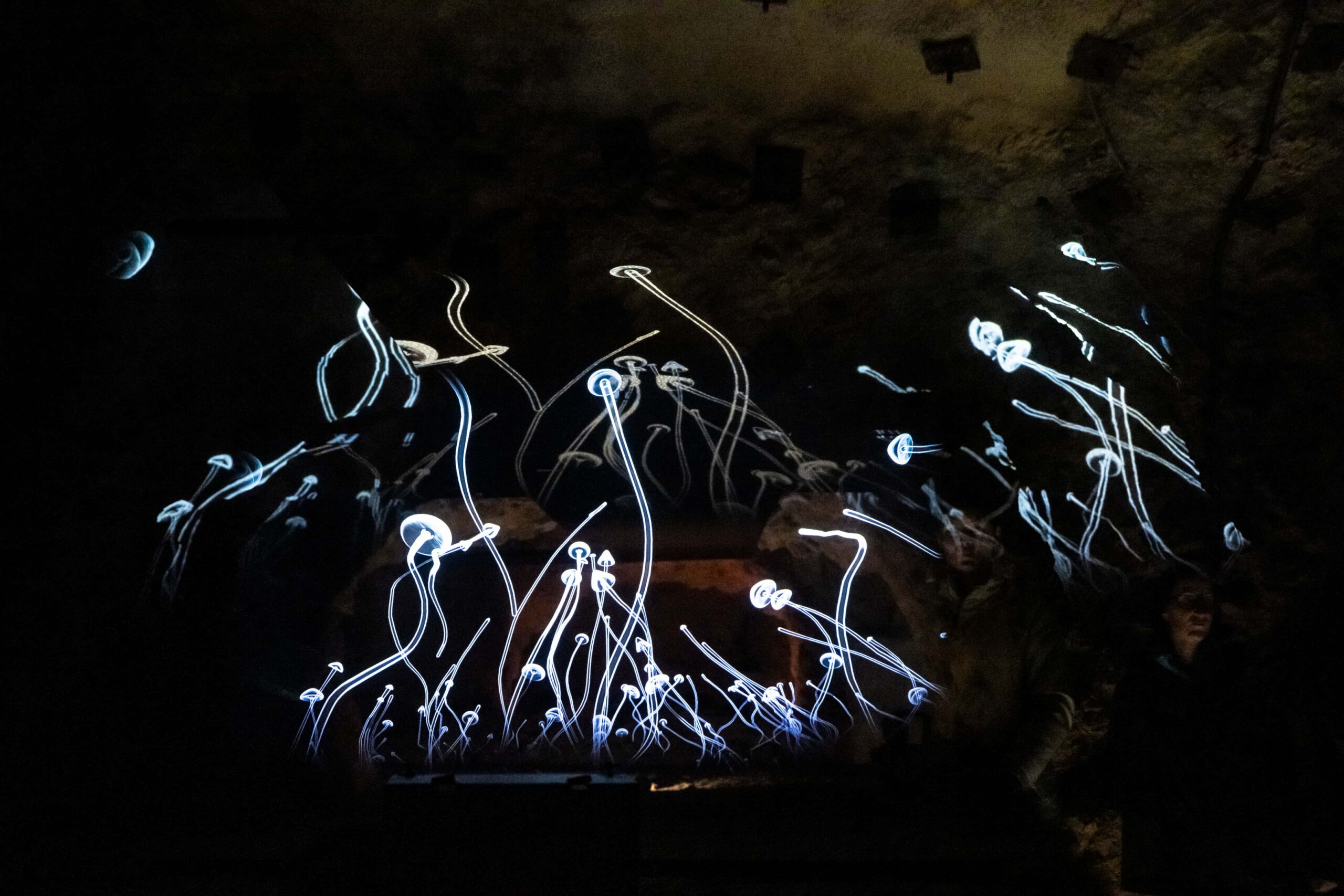
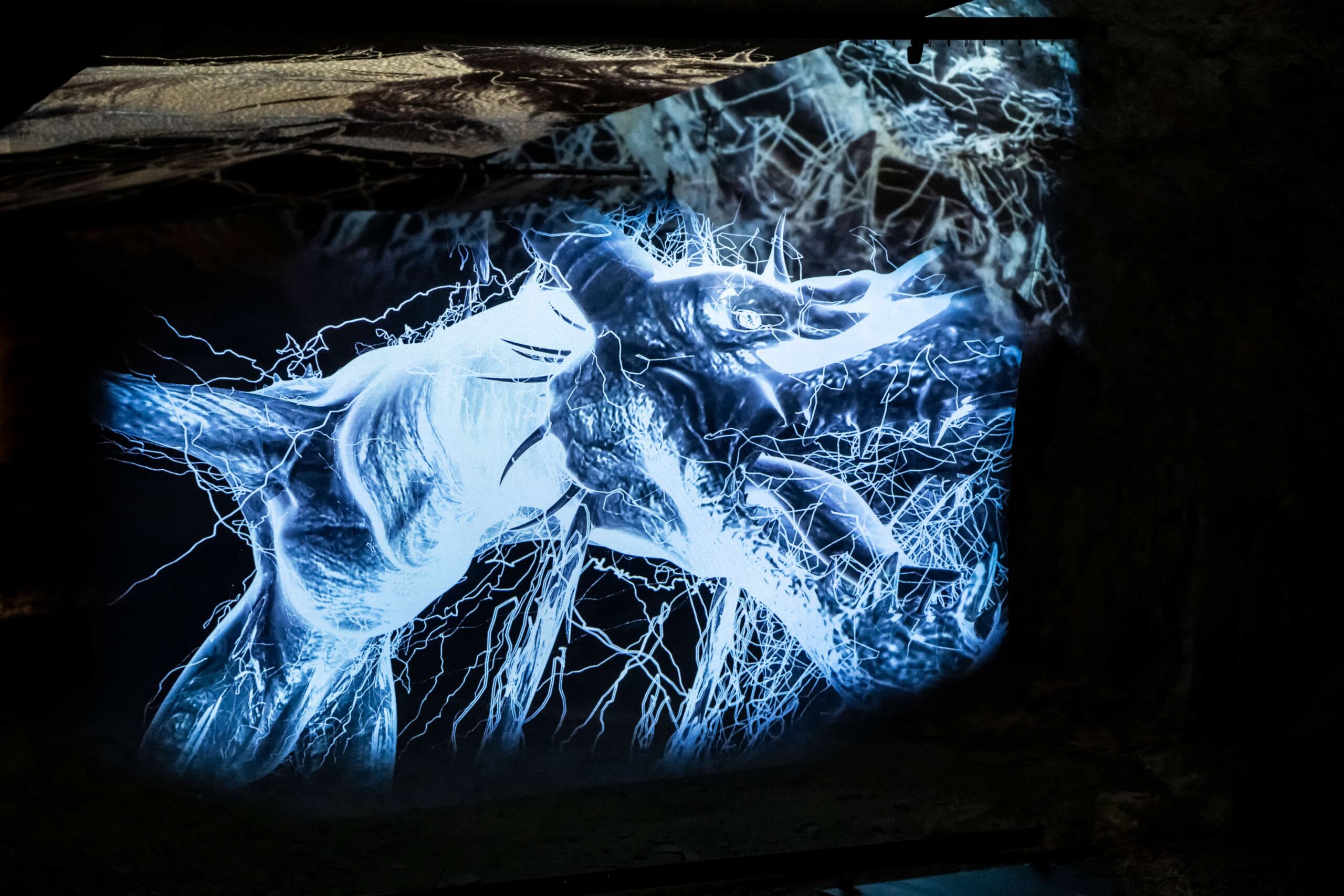
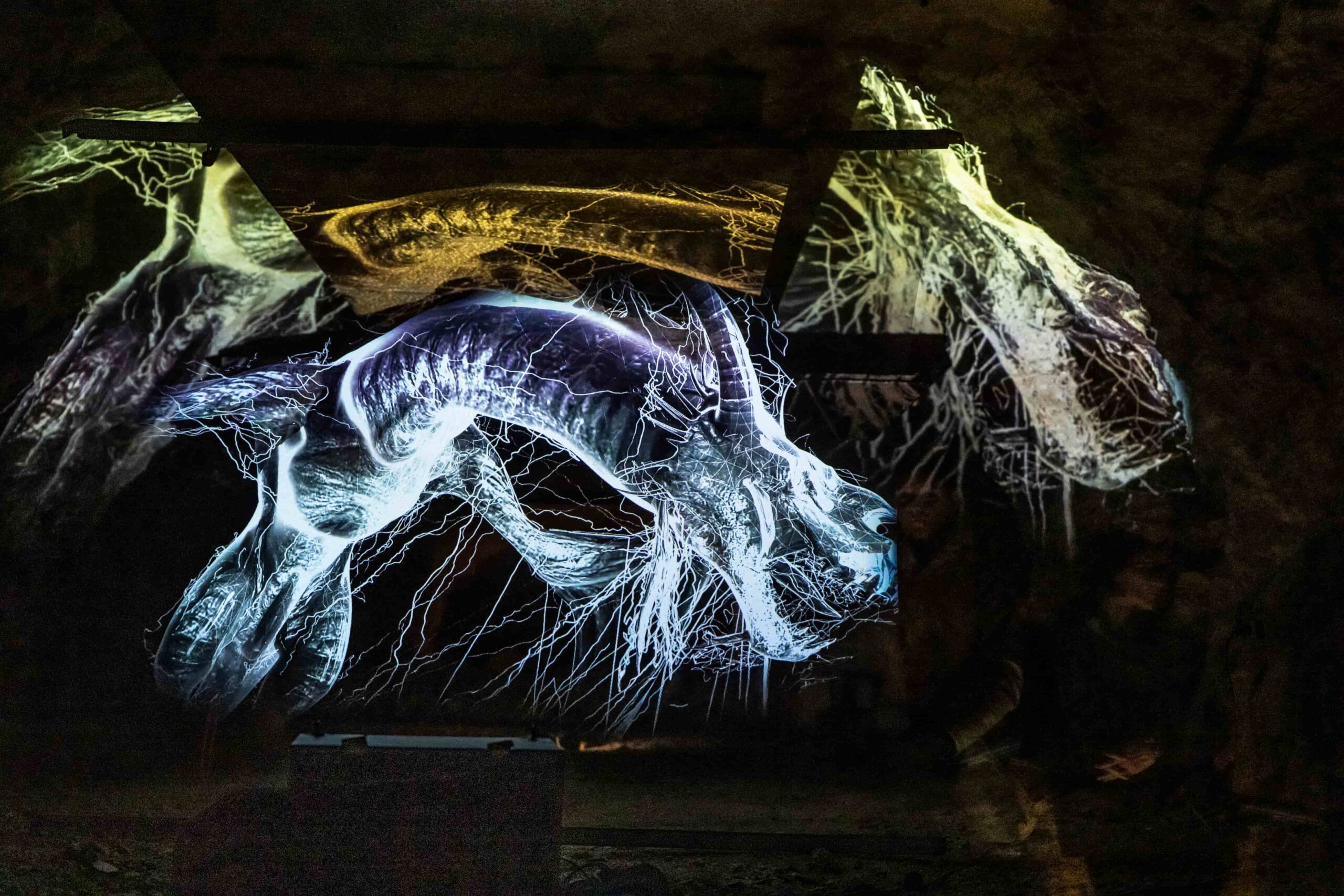
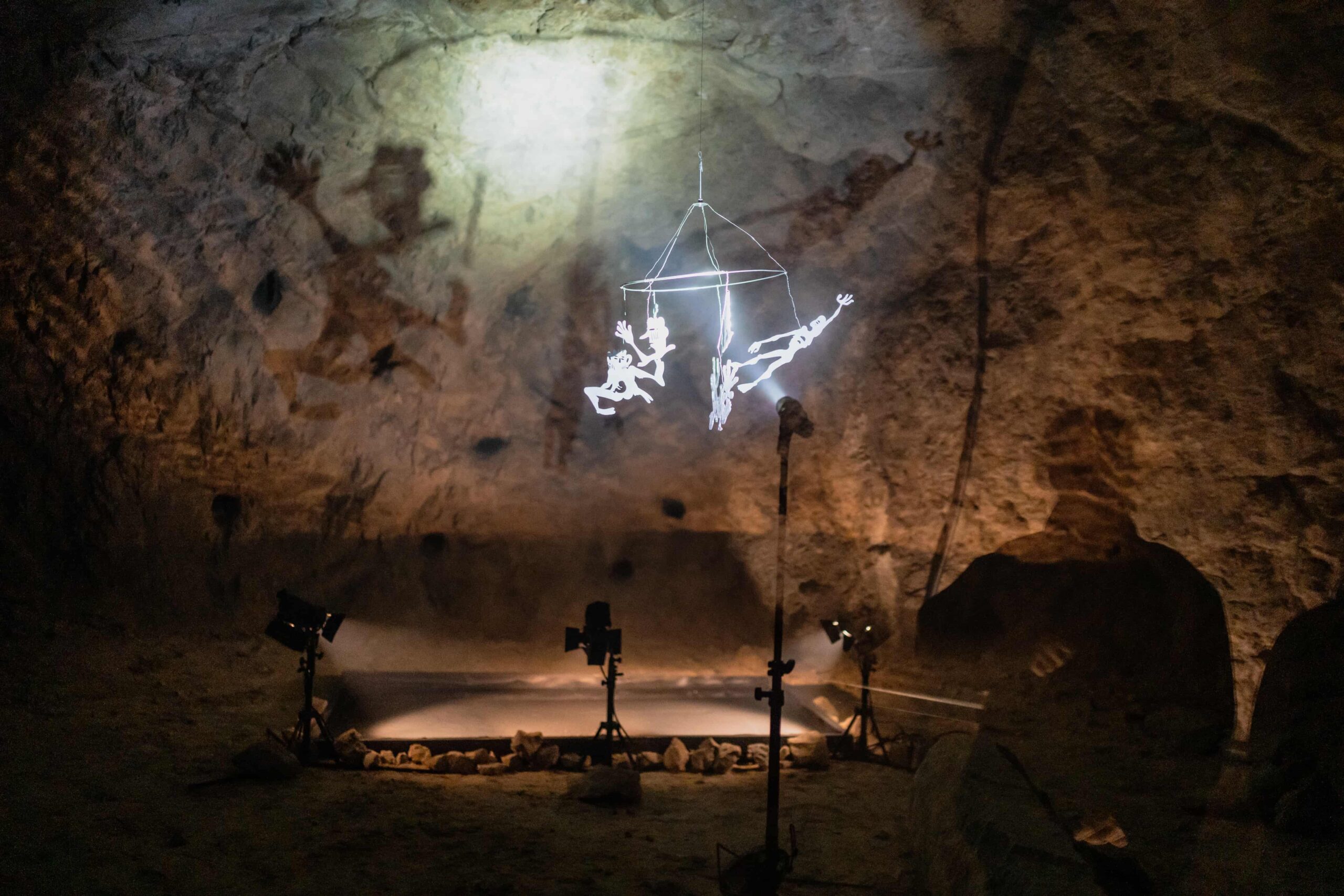
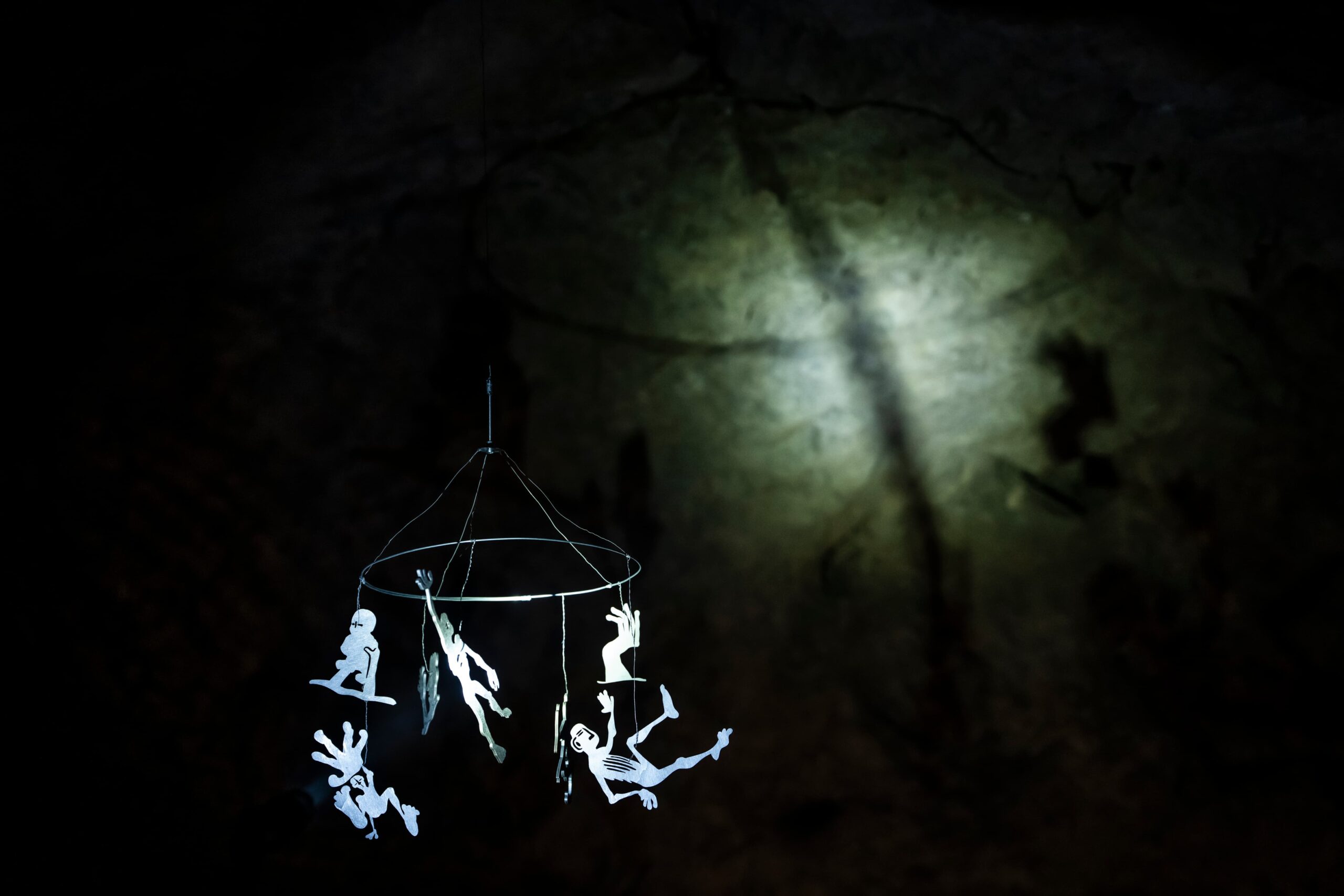
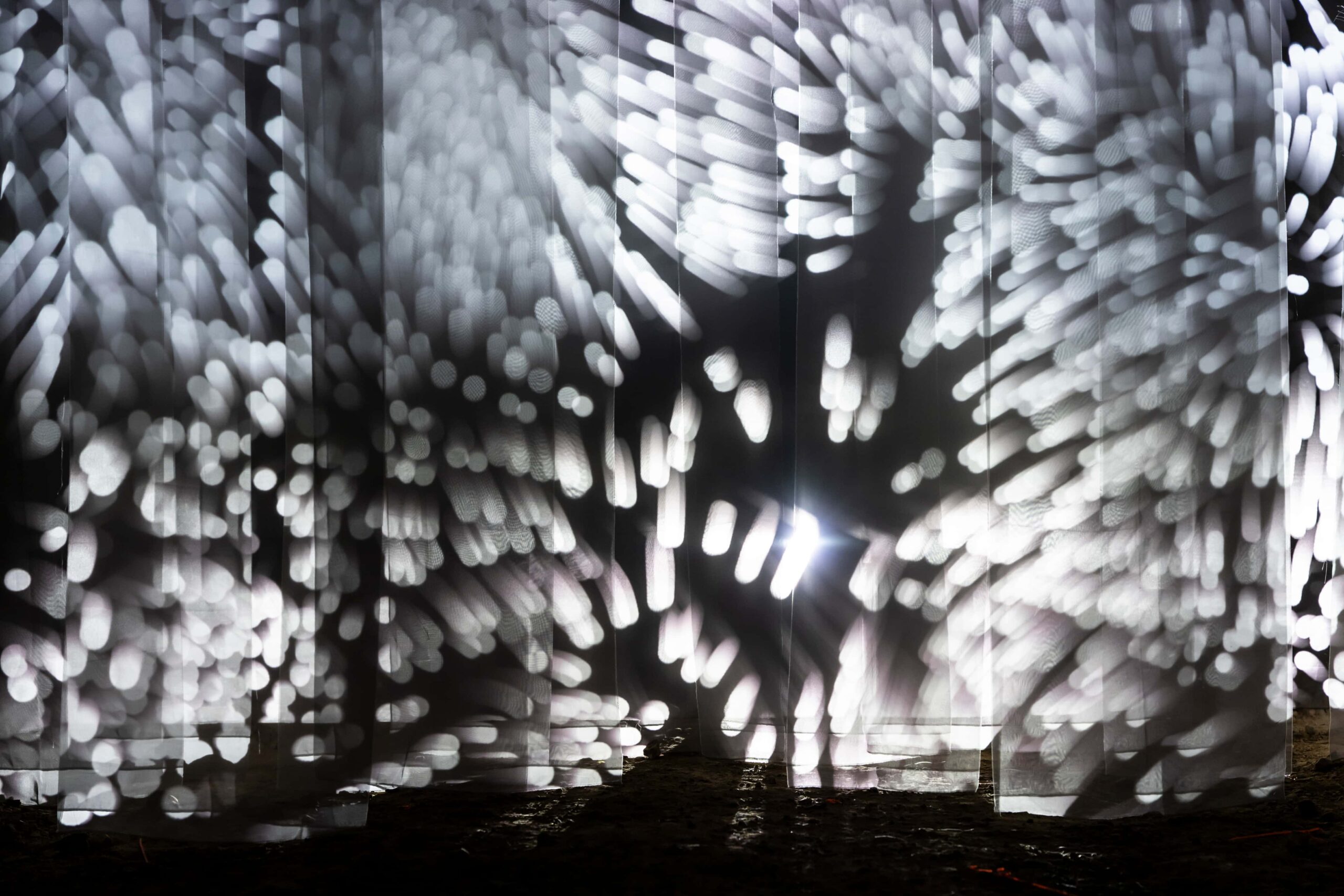
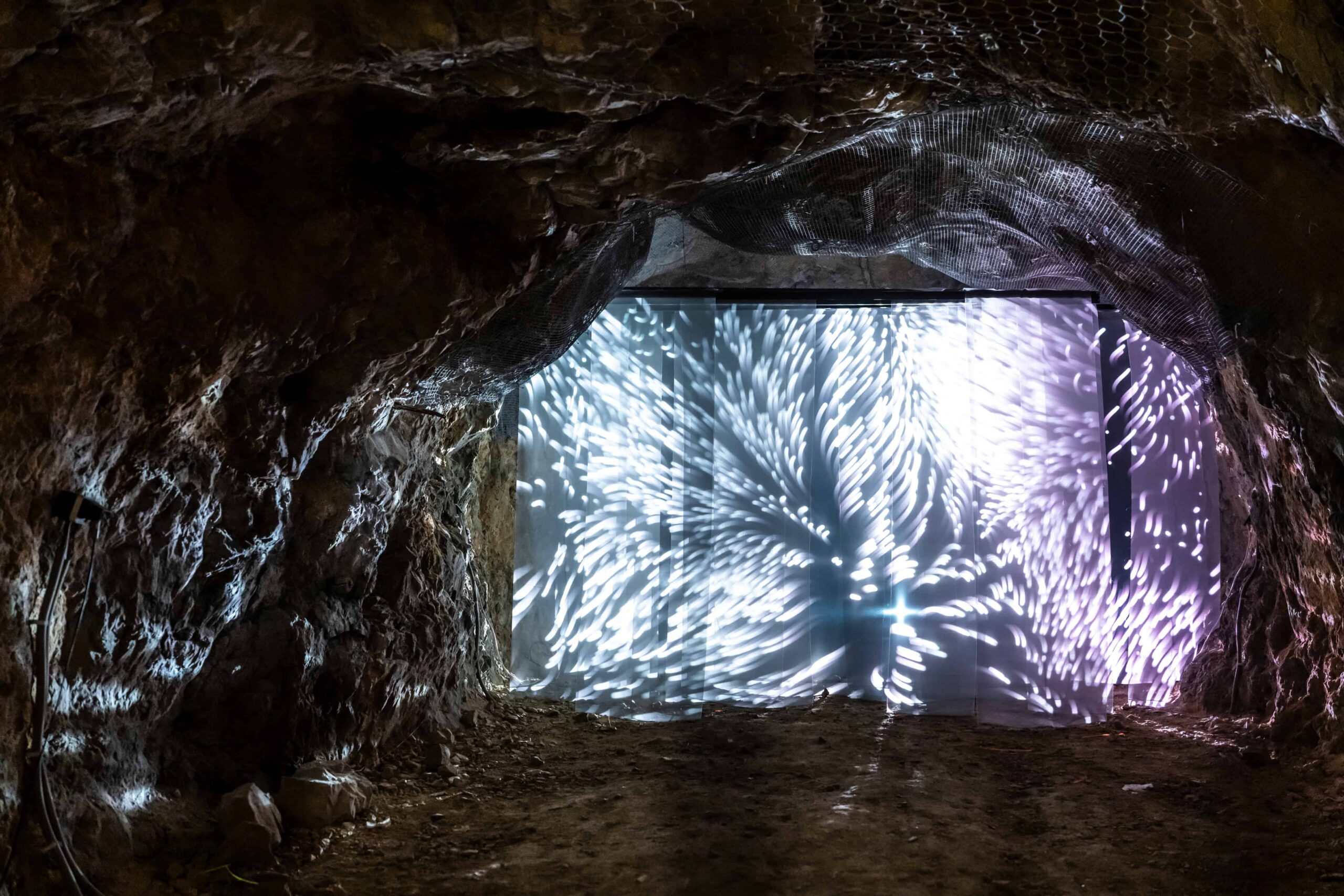
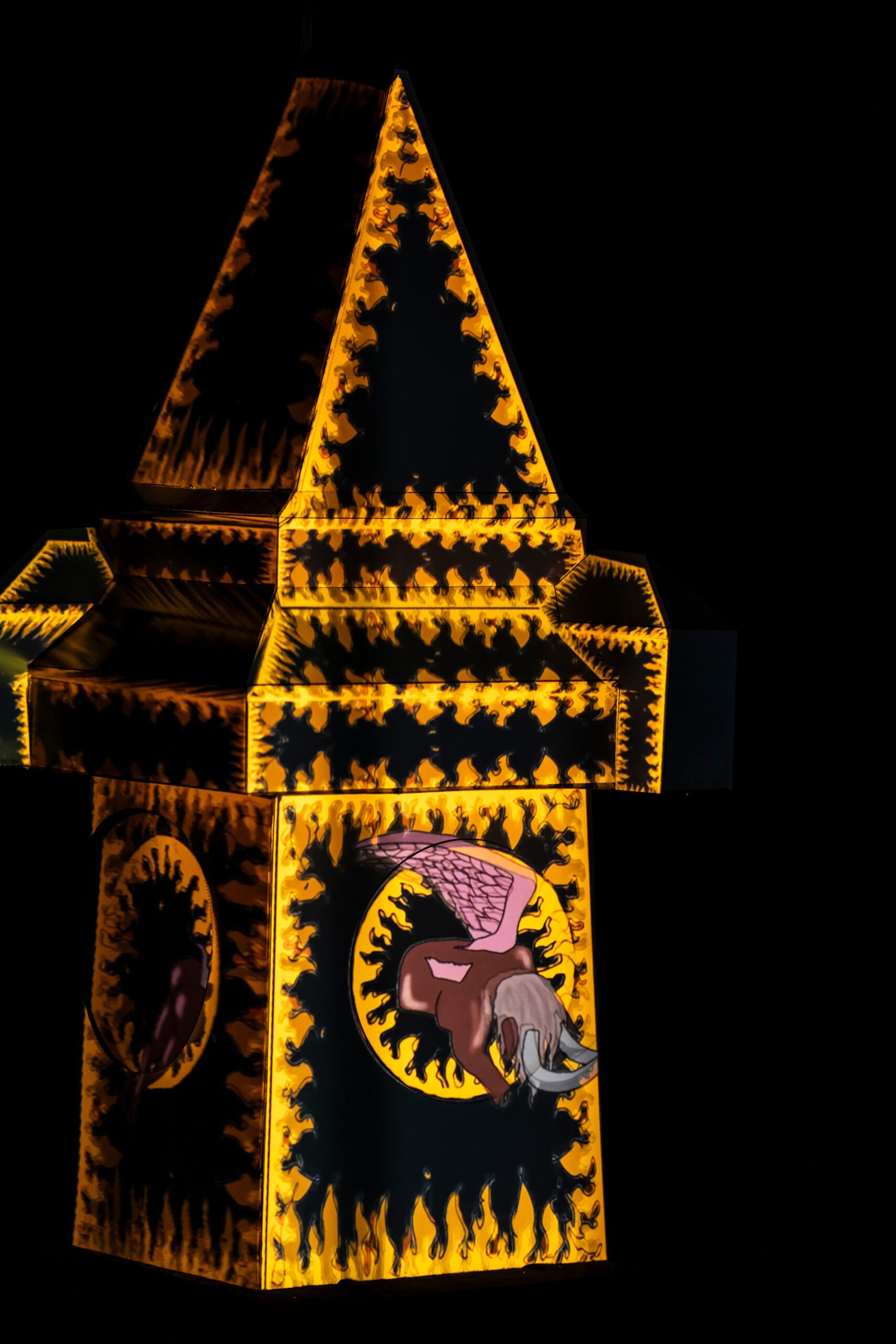
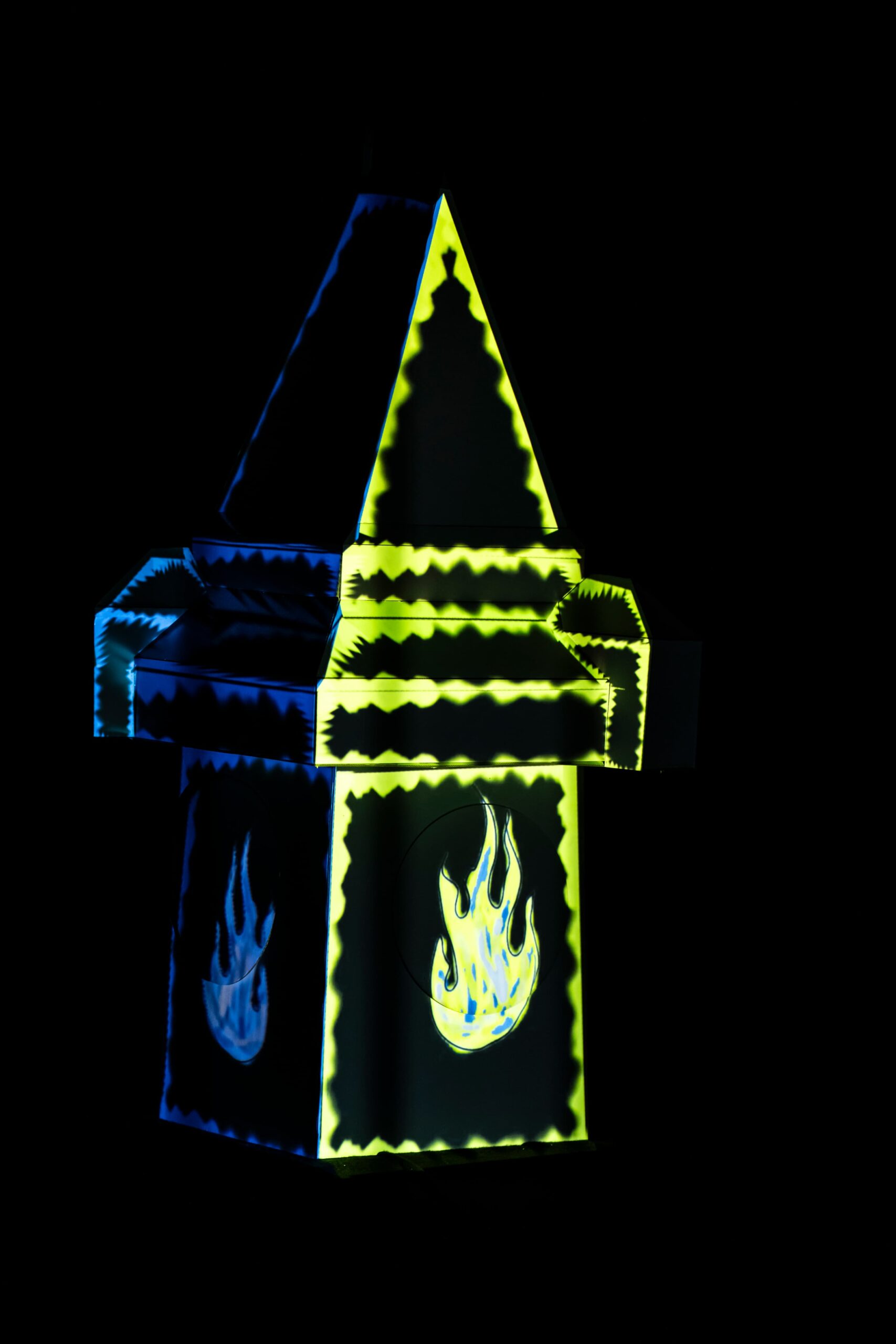
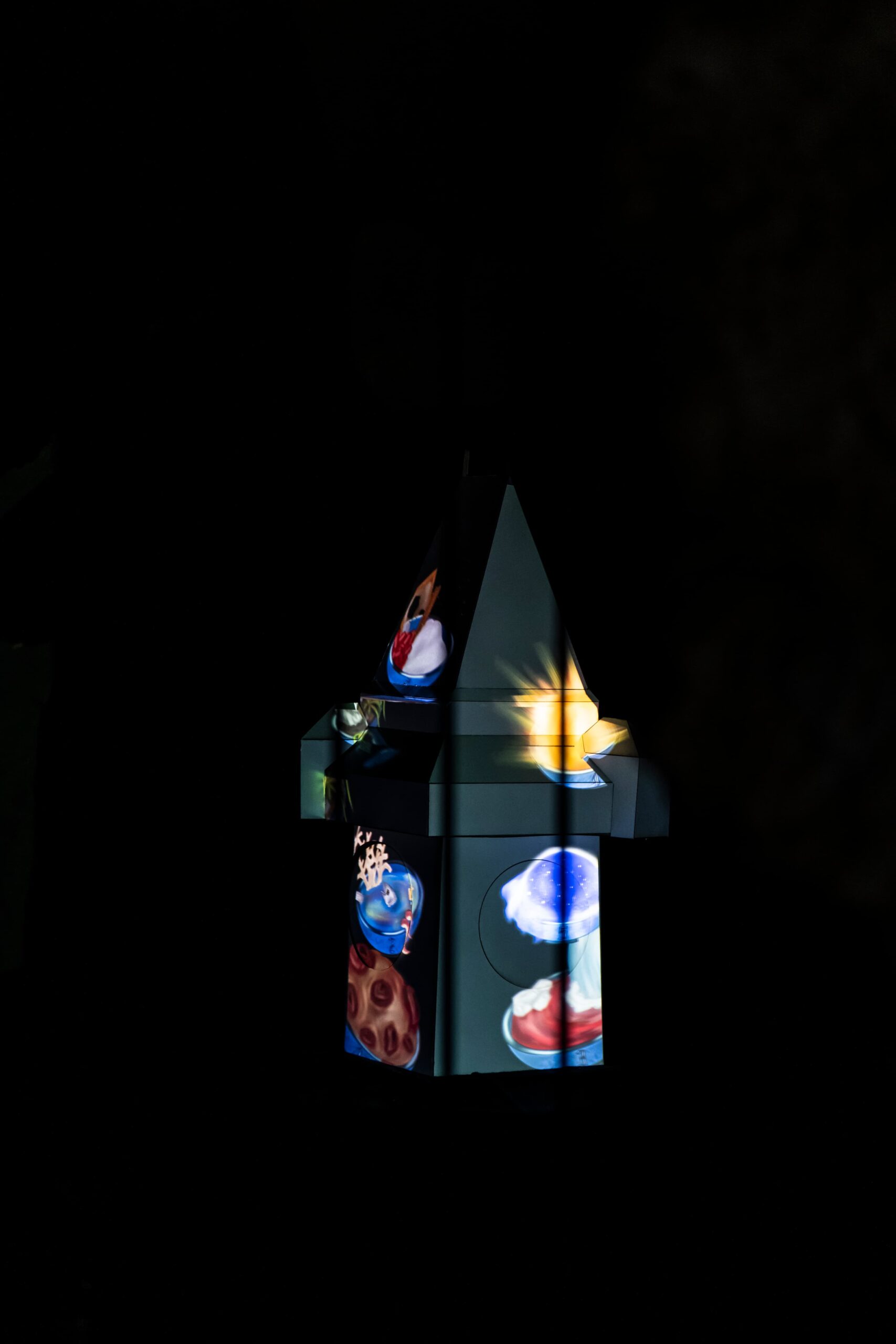
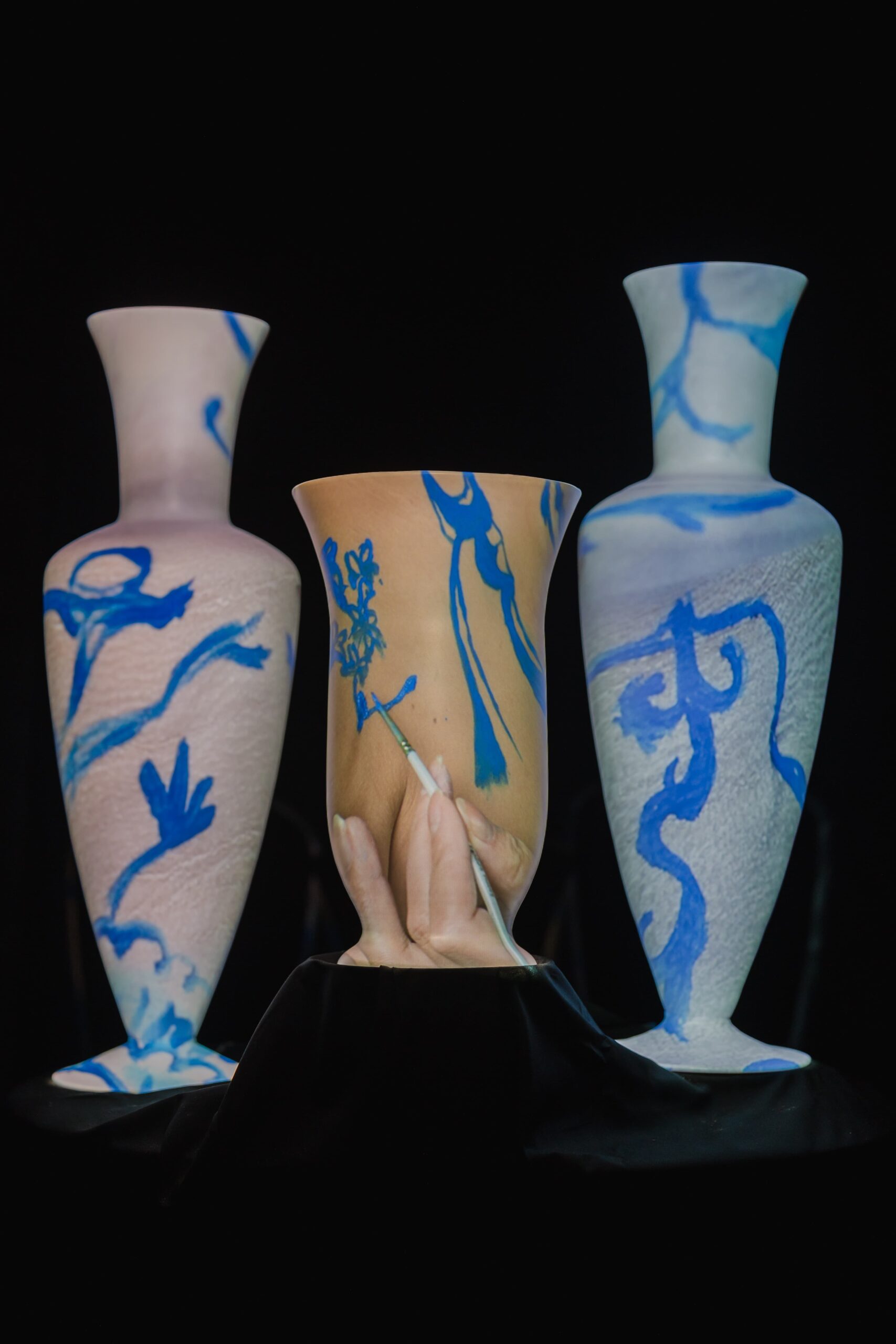
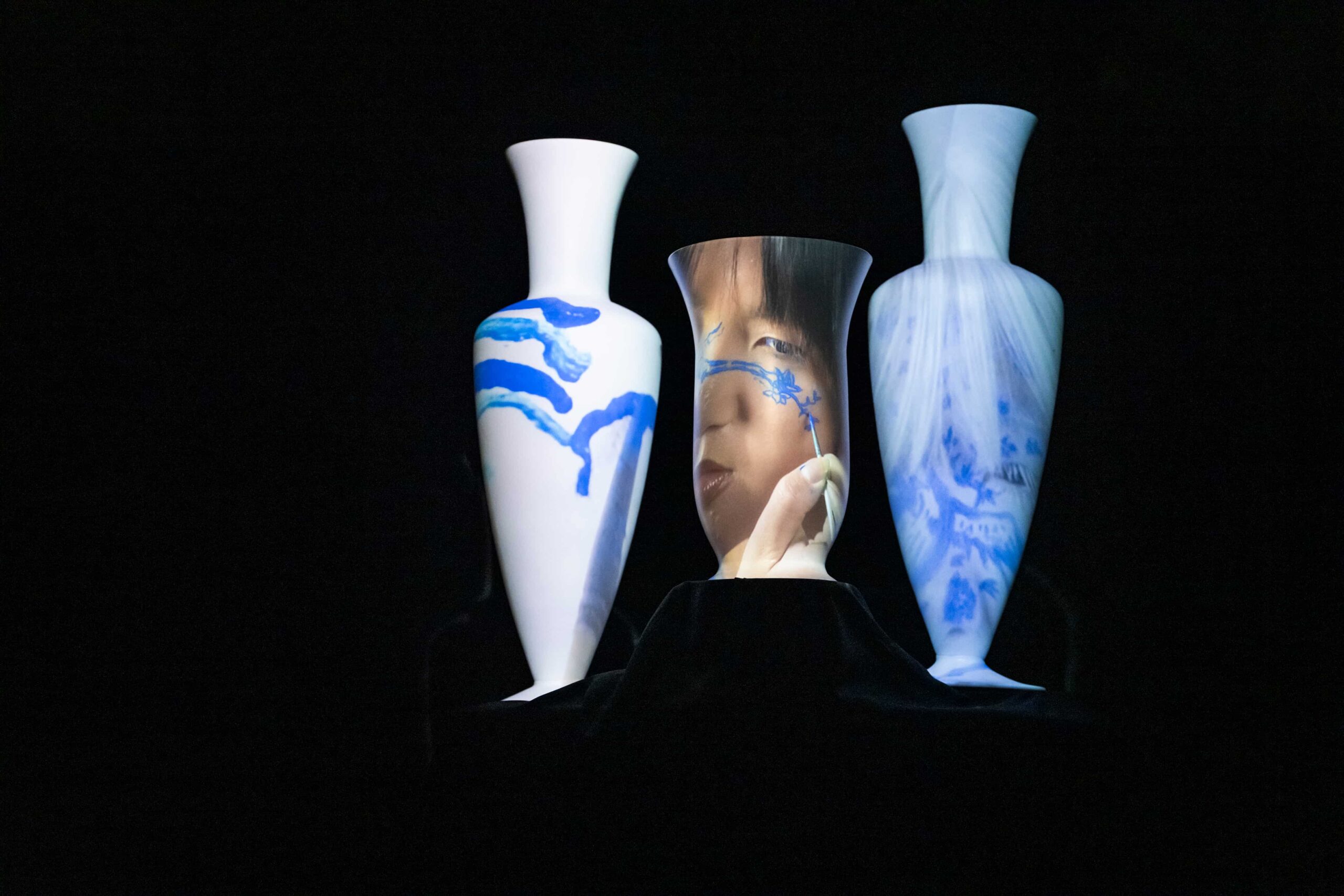
In 2025, the KLANGLICHT Young Masters Exhibition will once again take place in the side tunnels of the Schlossbergstollen as part of the festival. This year, a total of five works by young artists will be on display, most of them for the first time. With this exhibition, KLANGLICHT offers young and emerging artists and collectives the opportunity to present themselves to a wide audience, attract attention and establish new contacts for collaboration or further exhibitions.
This year’s participants are Jana Habiger, Joschua Hohenbrink, Konstantin Postl, Mattia Fiacco Mazzini, Xaver Rath, Alice Zanutti, Bensu Kaya and Indy YuQian. The media artworks of these artists range from philosophical to dramatic, and some are even interactive, and create their own uniquely voiced atmosphere in the caves of the tunnel.
curated by Jan Herman de Boer
location: Schlossbergstollen, Zugang über Schlossbergplatz
This installation is made possible with the kind support of AVL.
Jana Habiger – IN THE END
Strange scenes unfolding in a miniature version of Graz’s Clock Tower. These are scenes from the biblical apocalypse as described in the Book of Revelation. The bells of the Clock Tower, which have already rung for many reasons, now proclaim another new message: seven seals are opened, seven trumpets sounded, and seven bowls of plagues are poured out upon the world.
With ‘In the end’, Jana Habiger draws a parallel to our actual reality – a reality that seems surreal to many people due to climate change, the mass extinction of species and depletion of natural resources; as surreal as the reality in this work.
Joschua Hohenbrink – THE DRAGON’S CAVE
In his project ‘The Dragon’s Cave’, Joschua Hohenbrink tells the story of a dragon that slumbers deep within the Schlossberg. However, it does not keep itself hidden; rather, the mountain itself is the dragon. It is embedded in the geological and cultural history of the place and remains concealed within the layers of time and nature. Using growing plants that form a network of lines, which in turn take the shape of a dragon, Hohenbrink depicts a cycle of transformation, life, decay and rebirth.
Konstantin Postl, Mattia Fiacco Mazzini, Xaver Rath – LET GO
Not every moment needs to be shaped. Sometimes profound changes occur when people decide not to shape the experience, but to observe it. That is the message of ‘Let go’. The installation by Konstantin Postl, Mattia Fiacco Mazzini and Xaver Rath explores the tension between control and acceptance in dreams and thus also in life. The audience can influence the dream they experience here via an interface: every touch changes it. But the more interaction there is, the more resistance the system offers. Chaos and emptiness follow, giving way to beauty only when control ends – and we simply let go.
Alice Zanutti, Bensu Kaya – THE CROSSING
Surface water that initially appears calm is moved by hidden currents. Warm white is constantly disturbed by aggressive red. And a carousel of silhouettes spins incessantly. There is no thought of calm – let alone safety – here. The audience watches from a distance. Intervention is not possible.
‘The Crossing’ by Alice Zanutti and Bensu Kaya is an installation of light and shadow that tells the story of migration: displacement, the illusion of safety, danger, death and, last but not least, the world’s passive view of humanitarian crises.
Indy YuQian – FRAGEMENTS OF IDENTITY
Fragments of Identity is an audiovisual installation that explores self-discovery between two cultures. At its heart is porcelain, which once travelled from China to the Netherlands, where it broke away from its Chinese ancestors and established itself as an independent and valuable cultural heritage alongside the development of Dutch ceramics.
Like porcelain, Indy YuQian herself came to the Netherlands from China and found herself in a culture that was often different from what she had expected. Based on this analogy, the artist’s project explores cultural life, questions traditions and celebrates identity.
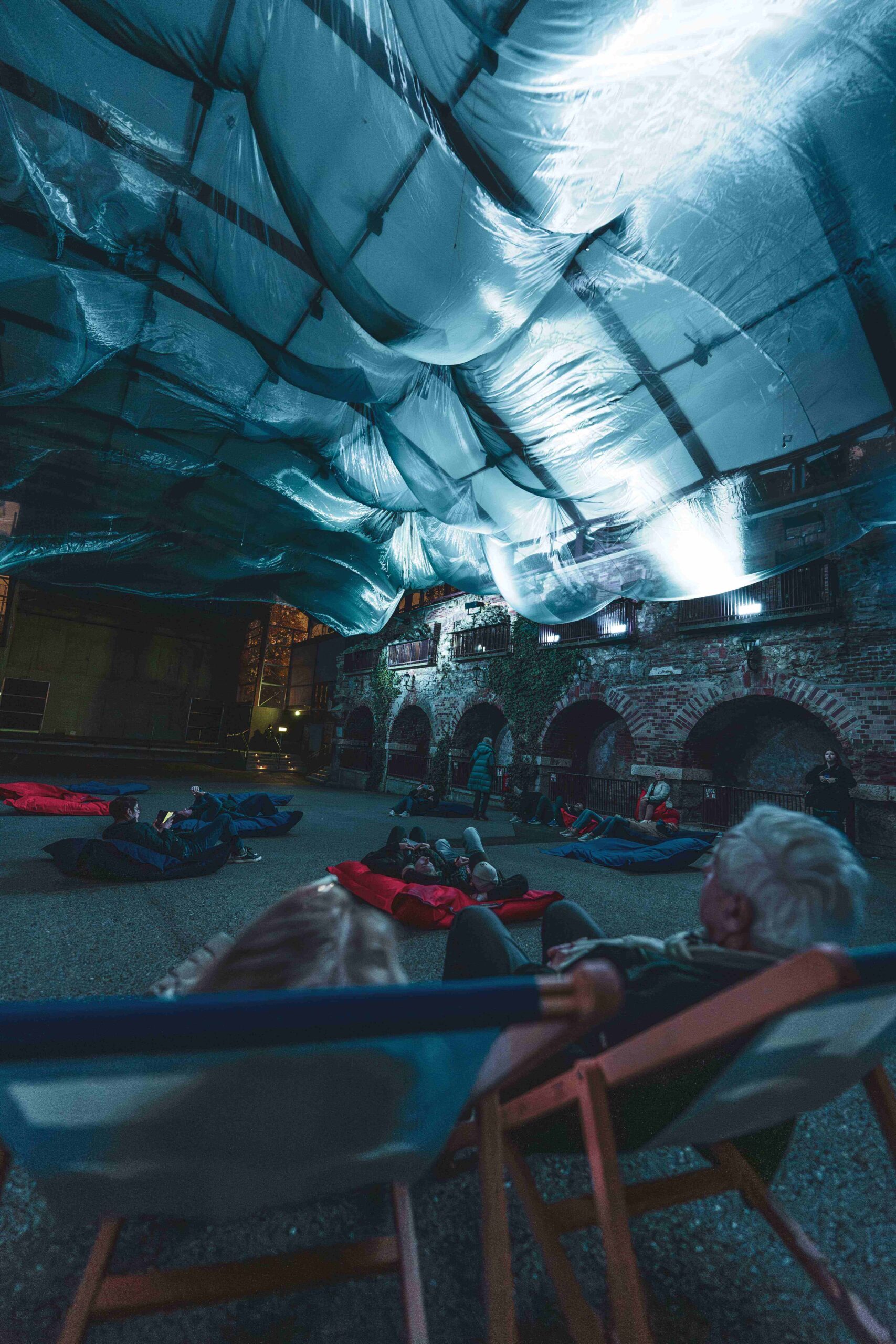
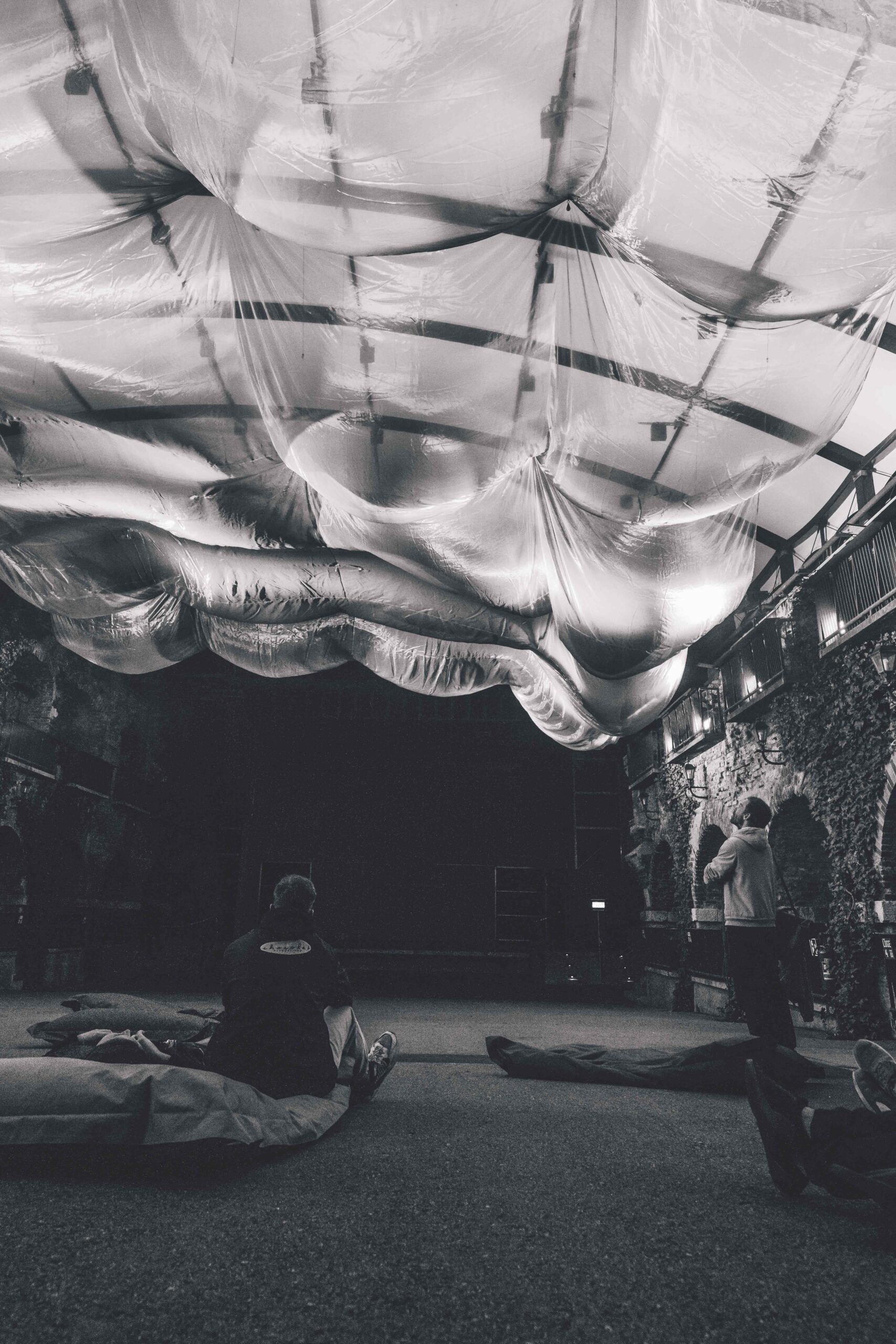
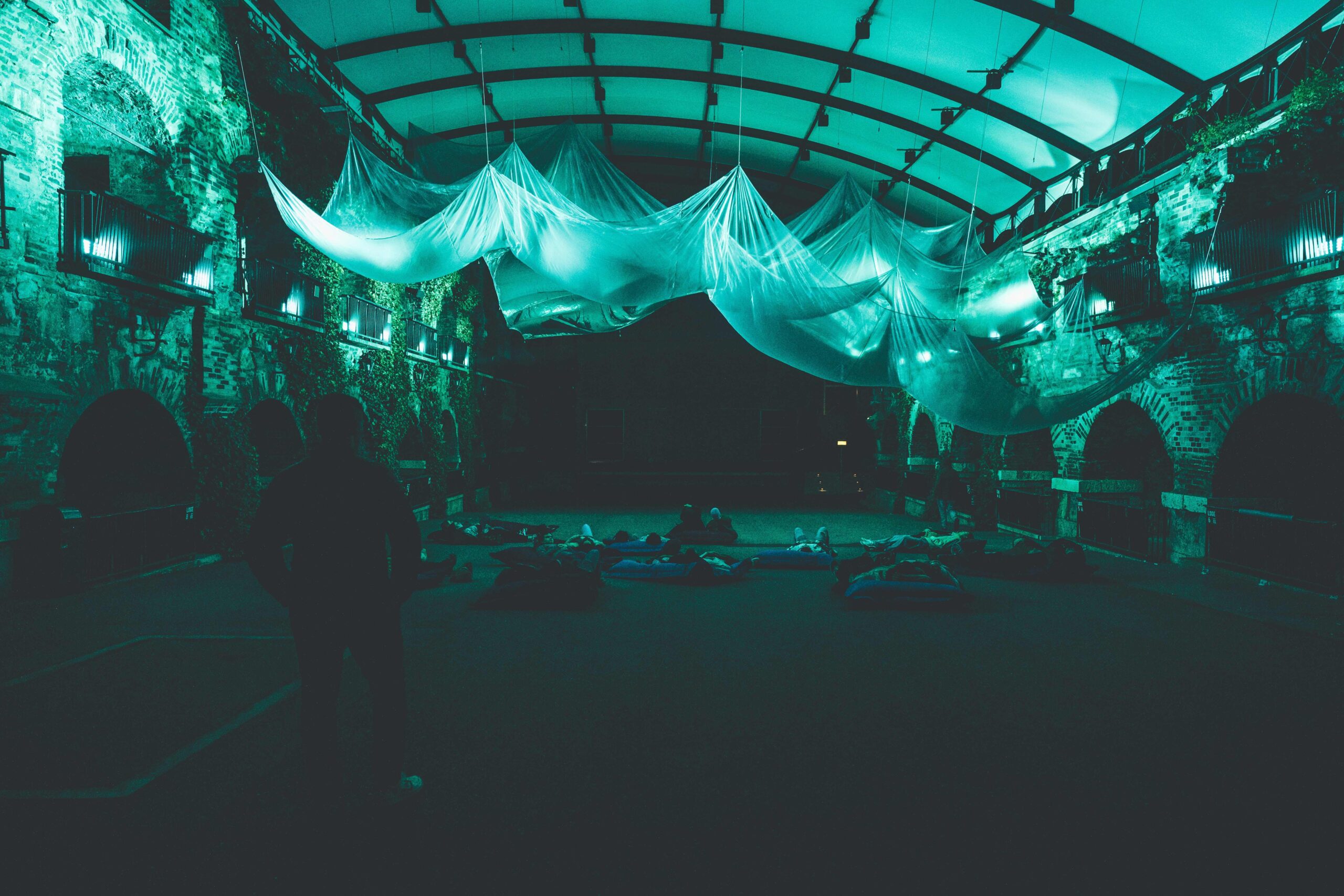
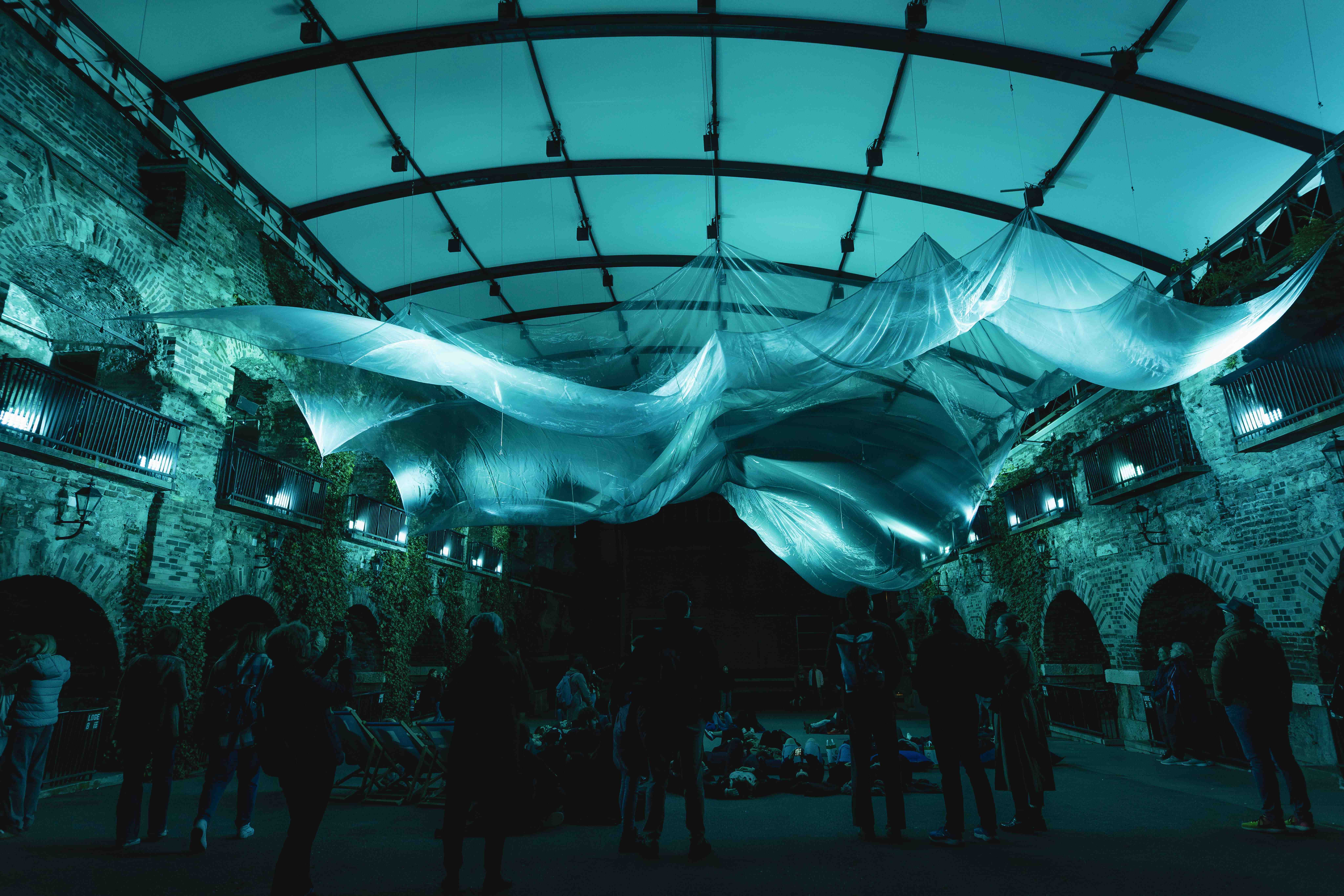
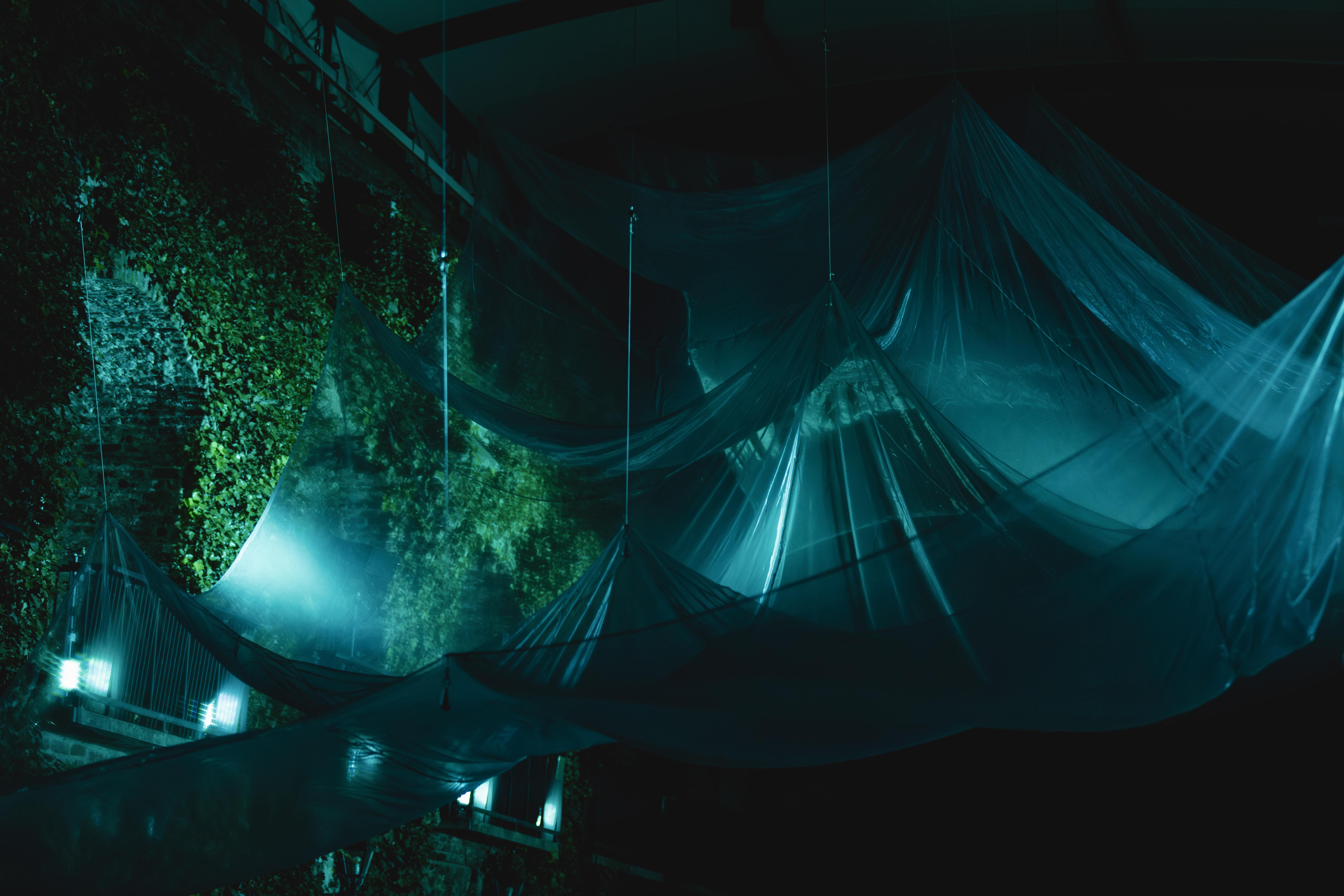
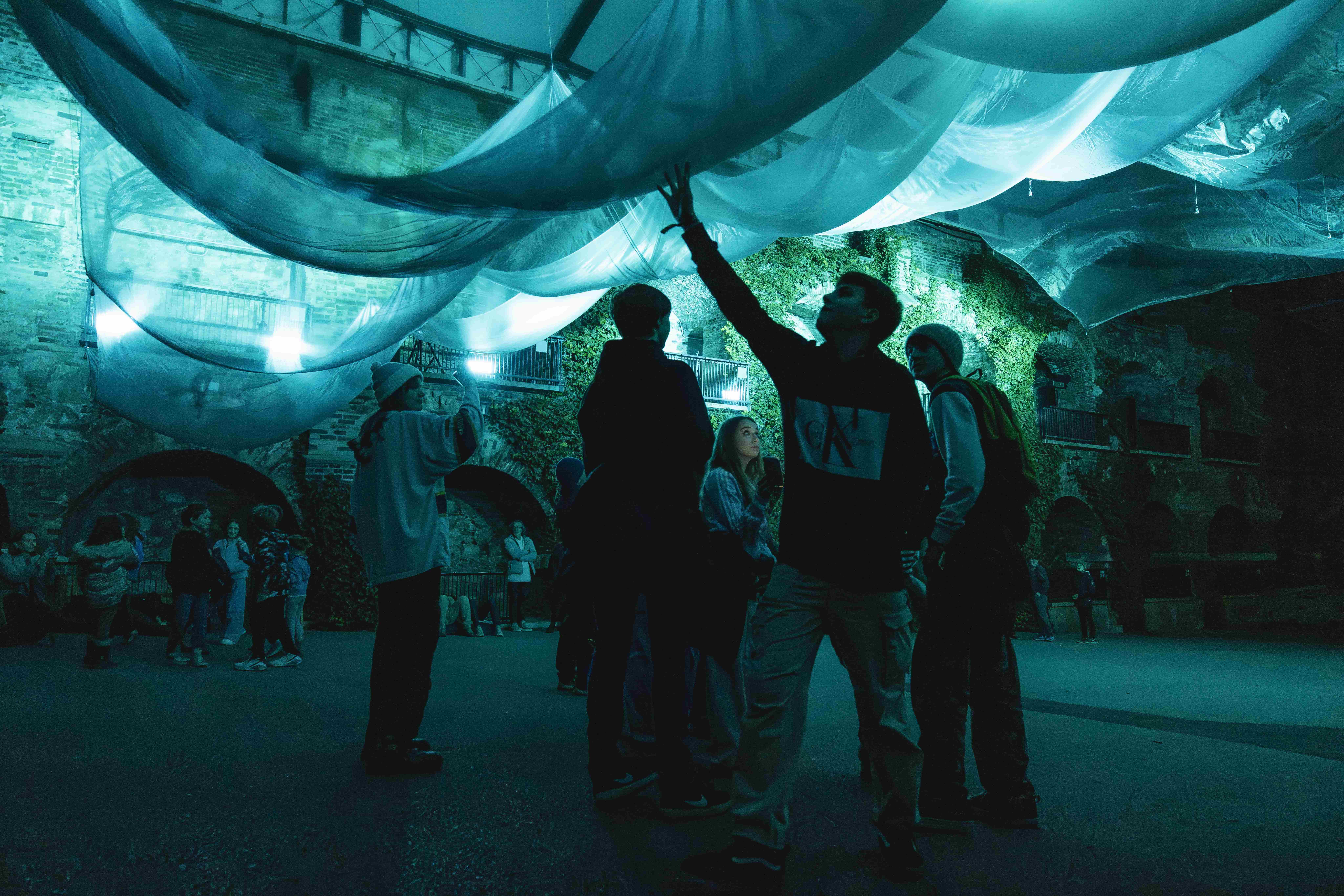
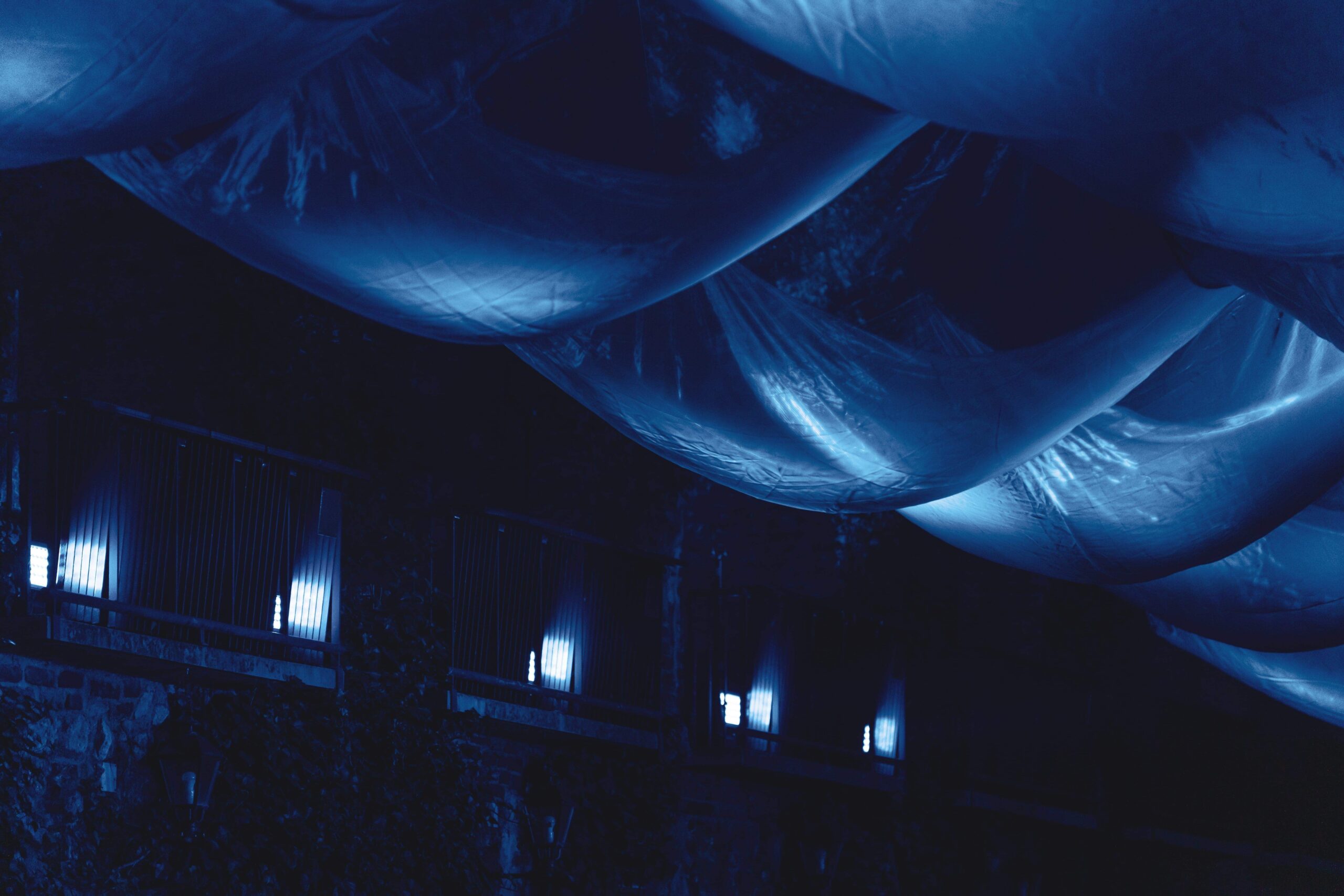
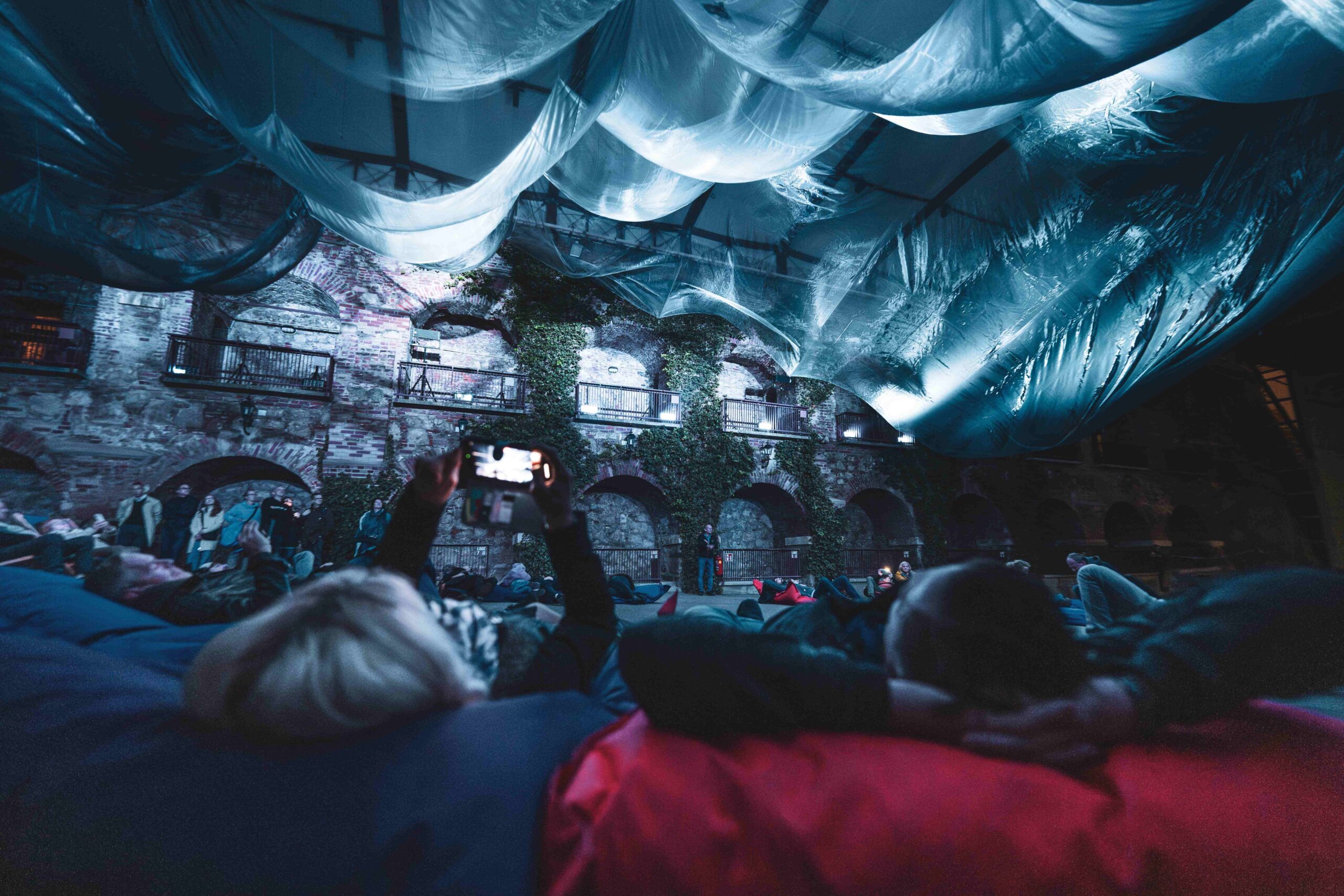
It is the imaginary border between heaven and earth that the old Dutch word “Einder” describes. At the same time, the term is also a metaphor for the border between reality and fantasy, the transition between the real and the subconscious, as marked by dreams. With his audiovisual installation, Boris Acket creates an oversized, moving, luminous wave that brings to life a wide variety of associations, thoughts, feelings and memories in the viewer. The poetic work is accompanied by a soundscape in which synthetic and organic sounds overlap. As a complete work of art, “Einder” is an invitation to enter into a dialog with oneself, one’s own illusion, but also the impressions of others.
Location: Schlossbergbühne Kasematten
Biography
Boris Acket (1988) is a contemporary artist, composer and director specializing in multidisciplinary projects in the fields of music, installation art, performance and film. Acket acts as a conductor of creative processes within complex systems in which artist, space and medium form a unity. His works and performances have been presented at Mutek MX, Milan Salone del Mobil, Venice Biennale, Paris Fashion Week, Dark Matter Berlin, Lost Art Festival Berlin, Stedelijk Museum, NXT Museum, Lowlands, STRP, Holland Festival, Het Hem, Fiber Festival, Amsterdam Dance Event, De School, Down The Rabbit Hole, Muziekgebouw aan ‘t IJ, Van Gogh Museum and many more.
This installation was realized with the kind support of E-Werk Franz realized.
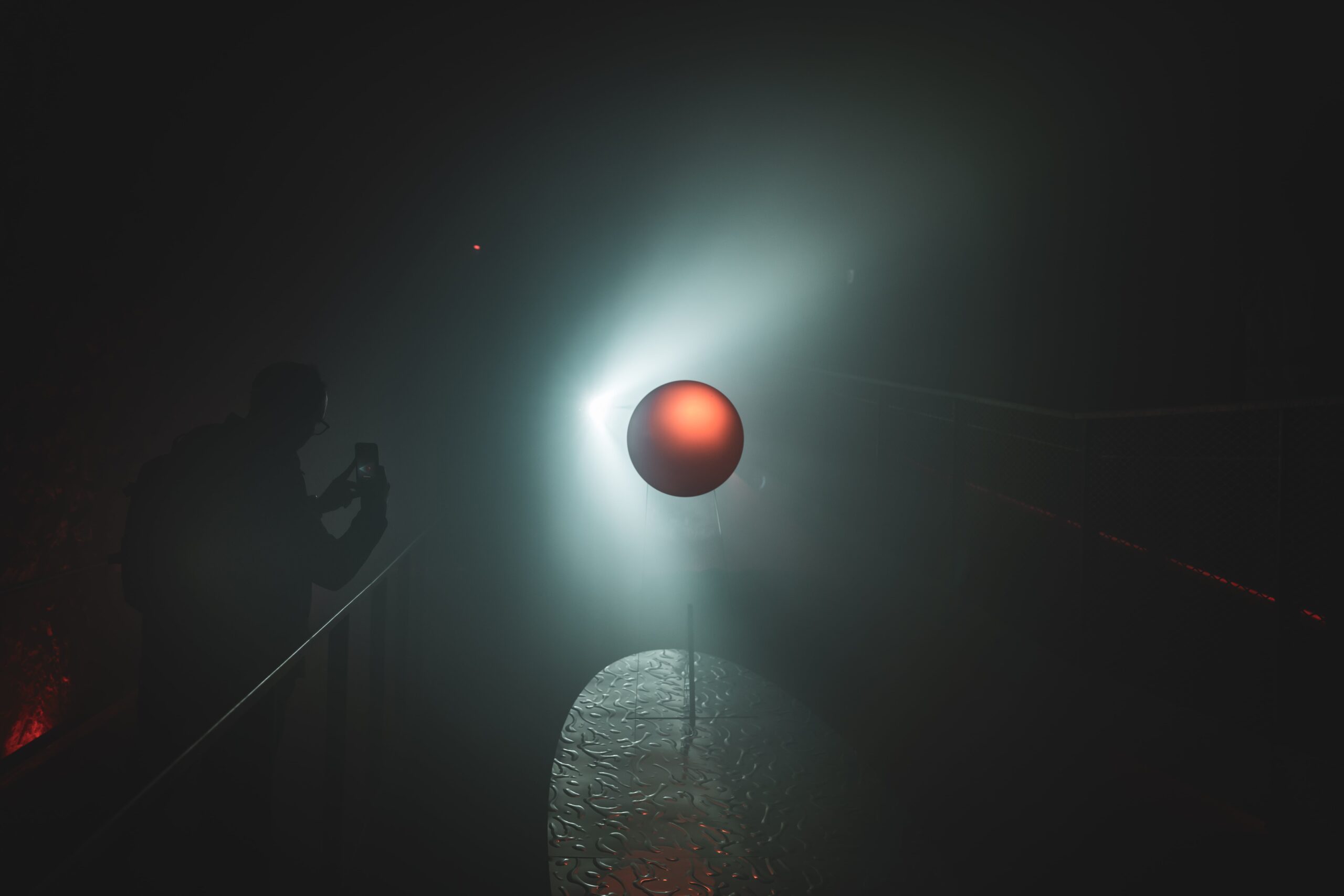
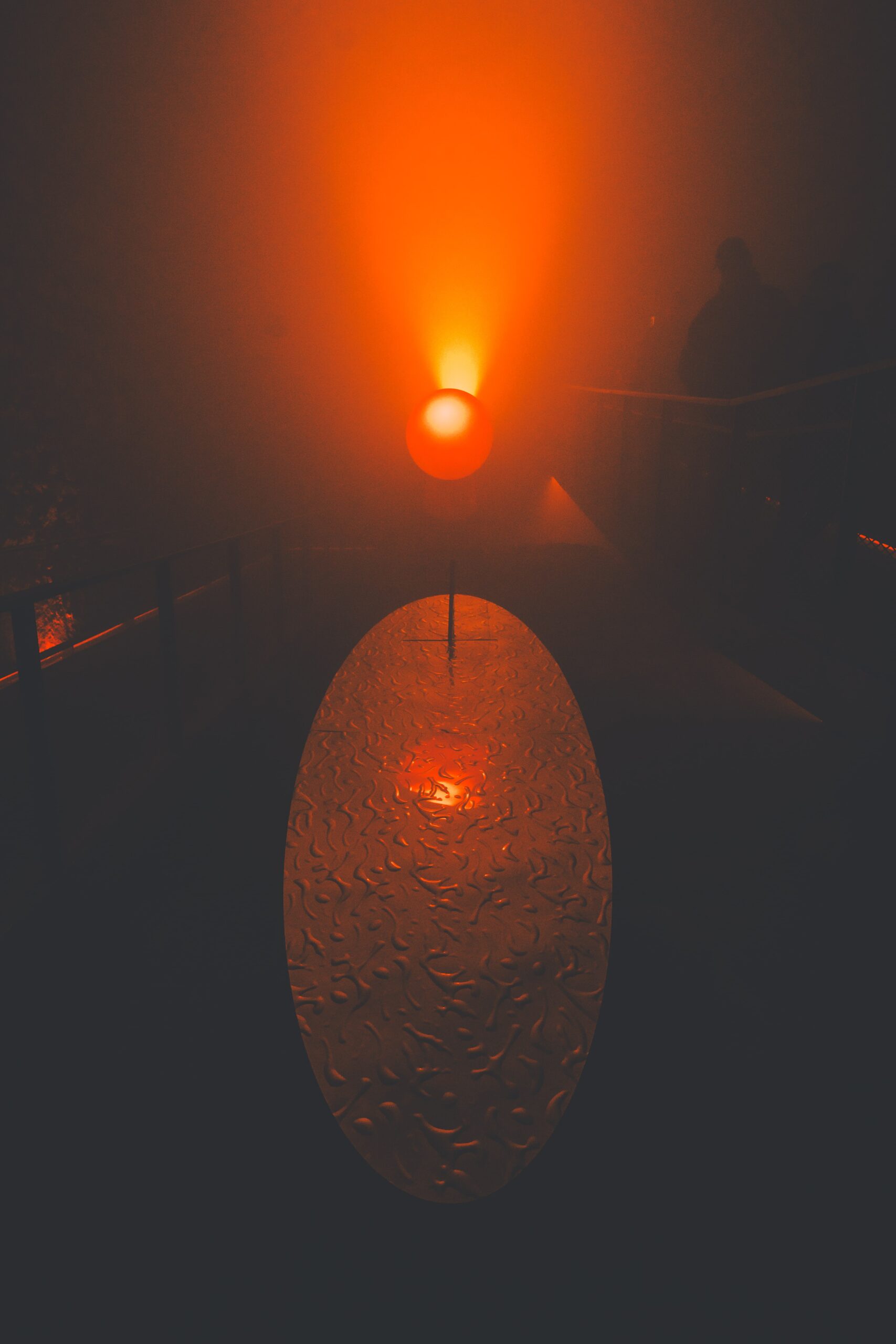
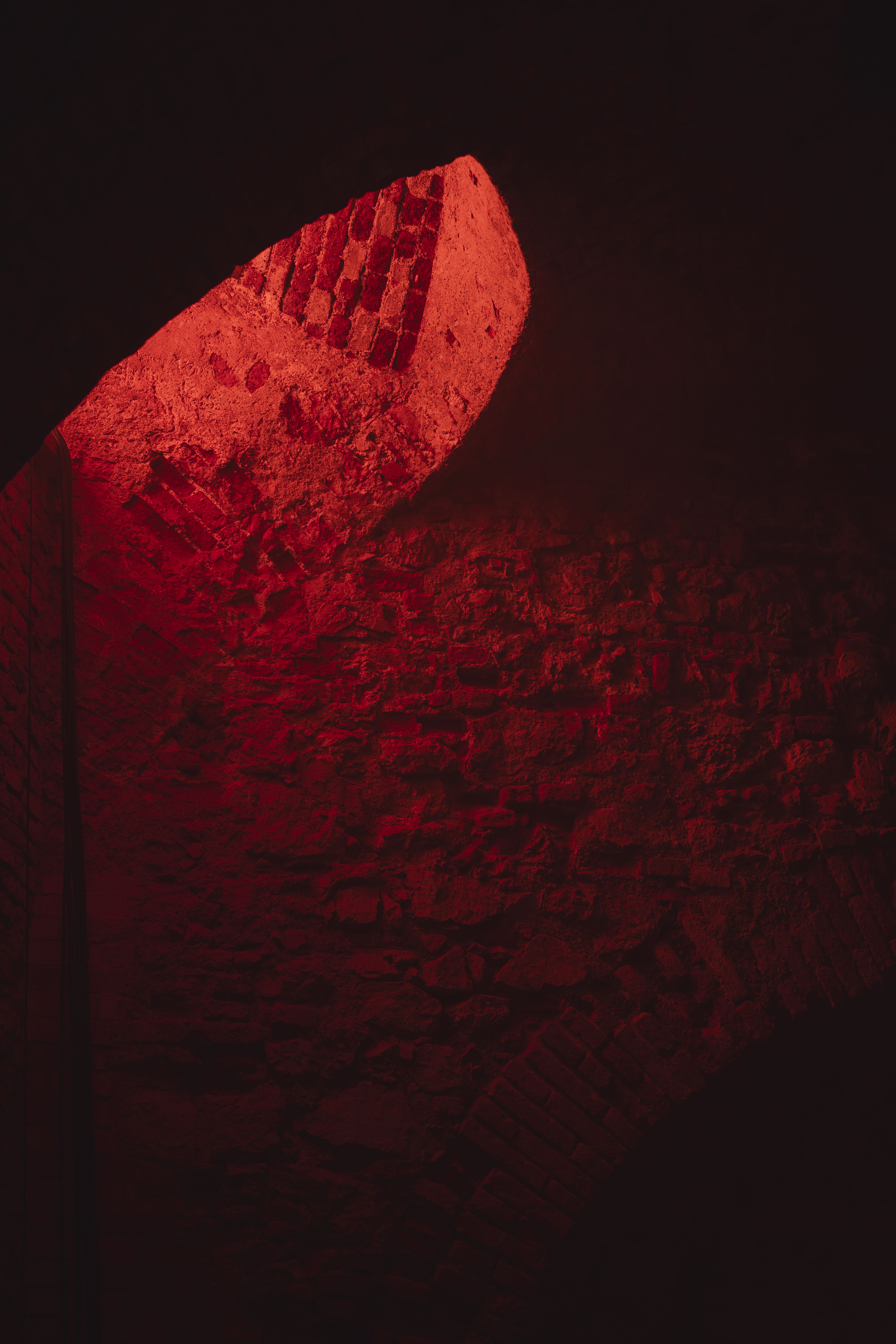

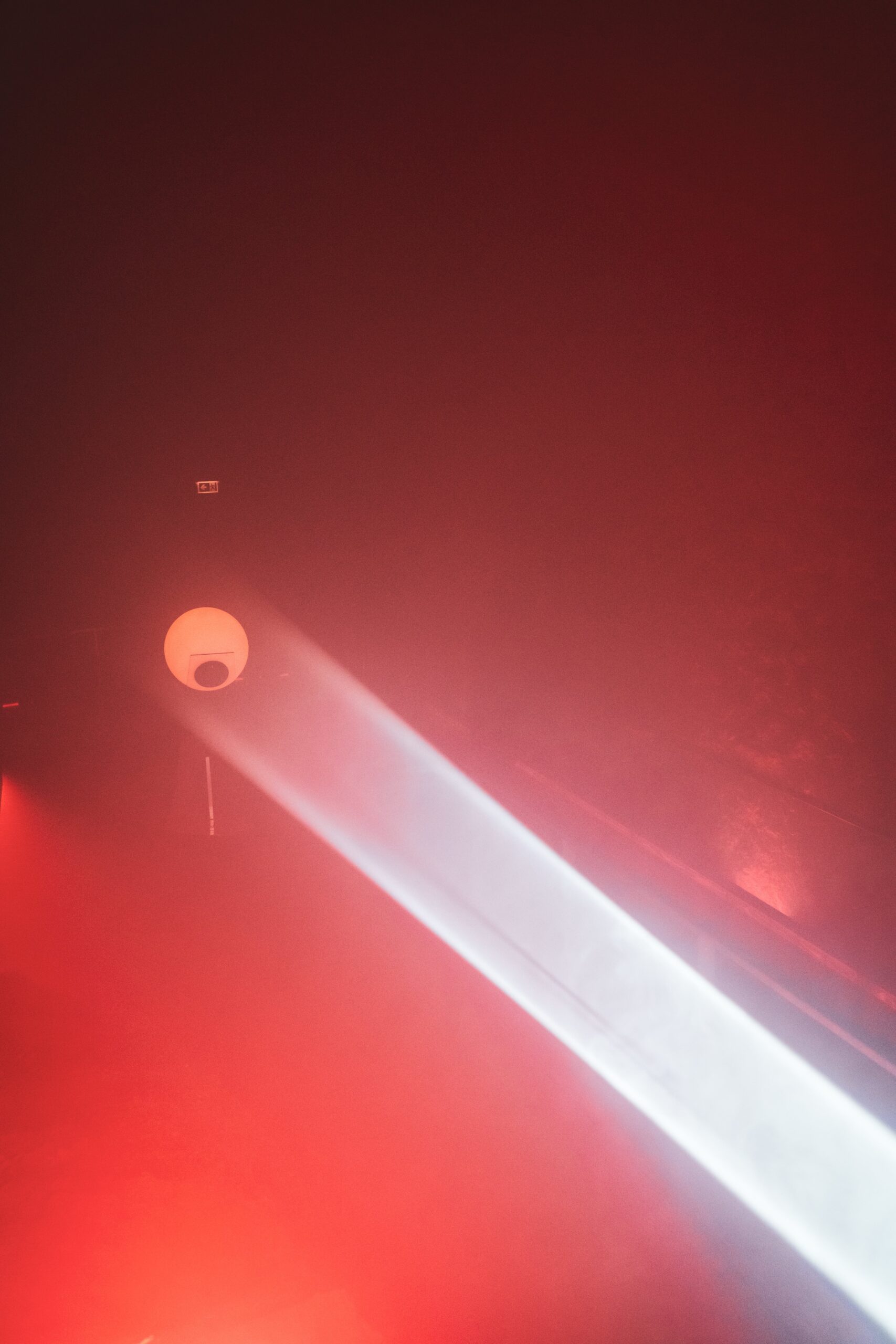
Ana Shametaj and Giuditta Vendrame’s “Sot Glas” project is a sensitively arranged physical and linguistic labyrinth. Beginning in the Wundergarten on Graz’s Schlossberg, it continues in the Stallbastei, moving from impressions of dreamlike weightlessness with a view of the city lights to a warm, humming space that allows individual identity to recede and collective experience to come to the fore. The sound and light installation was first realized at the 18th Architecture Biennale in Venice. For KLANGLICHT 2024, the artists have added lullabies in different languages to previously researched peace, war, migration and children’s songs.
A project as a guest at the Graz Museum Schlossberg.
Location: Graz Museum
Biography Ana Shametaj
Ana Shametaj (born 1991, Durrës, Albania) is a filmmaker and theater director. She co-founded Kokoschka Revival, an artist collective and digital art studio, in 2013. Her hybrid practice moves towards video art and installation, developing multiple levels of perception of dramaturgy. Her work has been exhibited in various international contexts, including the Venice Architecture Biennale, the Locarno Film Festival and the Piccolo Teatro in Milan.
Biography Giuditta Vendrame
Giuditta Vendrame (b. 1985, Maniago, Italy) is an artist based in the Netherlands. In her practice she explores and investigates citizenship, space and mobility. She questions social, artificial constructions with physical, geographical elements and natural forces. She has exhibited at the Venice Architecture Biennale, the Walker Art Center and the Van Abbemuseum Eindhoven, among others.
Credits
Authors: Ana Shametaj, Giuditta Vendrame,
Light Design and scenography: Giulio Olivero
Sound Design: Renato Rinaldi
Technical Director: Fabio Brusadin
Voices: Anutis (Alba Nacinovich, Juliana Azevedo, Caterina De Biaggio, Laura Giavon), Piccolo Coro degli Amici diretto da Aglaia Merkel Bertoldi, Gruppo vocale femminile Stu Ledi
Production: Kokoschka Revival
Scientific consultancy
Valter Colle, Marjeta Pisk (ZRC SAZU, Institute of Ethnomusicology), Lino Straulino
Acknowledgment: A special thanks to the music label NOTA per “Lisica ta Fasalawa” – CD “REZIJA” NOTA CD 231.
SOT GLAS has initially been ideated and created for f “Spaziale. Everyone belongs to everyone else,” Italian Pavilion at the 18th. International Architecture Exhibition – La Biennale di Venezia 2023, promoted by the General Directorate for Contemporary Creativity of the Ministry of Culture and curated by Fosbury Architecture. In 2023 the project has been developed in collaboration with Comune di Trieste, Casa della Musica, Club Alpinistico Triestino, Alpe Adria Cinema – Trieste Film Festival and with the support of Regione autonoma Friuli-Venezia Giulia, Comune di Trieste, Ambasciata e Consolato Generale del Regno dei Paesi Bassi, Ambasciata della Repubblica d’Albania in Italia, Creative Industries Fund NL, INPS – Fondo PSMSAD, Fondazione Benefica Kathleen Foreman Casali, Fondazione Pittini, OPIFICIO NEIRAMI.
The work “constellations” by Detlef Hartung and Georg Trenz locates Graz at a point visible from afar, which provides both a unique view and orientation and forms an interface between heaven and earth. A cosmos of language and light transforms the fortress wall below the Graz Museum Schlossberg into a zero point for determining one’s own position.
Location: Graz Museum Fortress Wall
Biography
In over 20 years of collaboration, Detlef Hartung and Georg Trenz have developed their own form of artistic expression with which they transform texts into impressive images. Concrete language becomes pictorial signs in terms of both content and form. The resulting word images create large-scale image-text spaces that correspond with the real, three-dimensional spaces onto which they are projected.
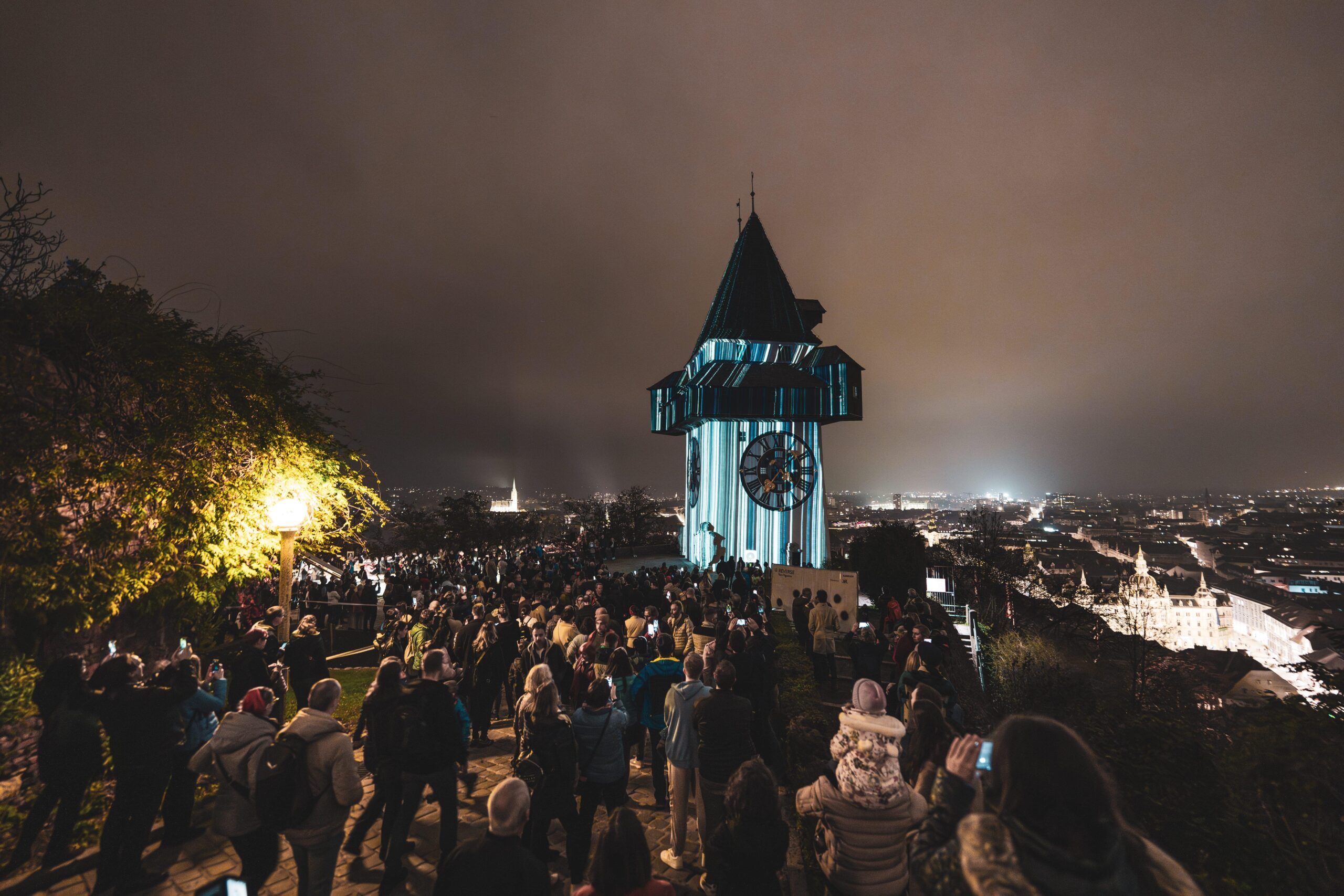
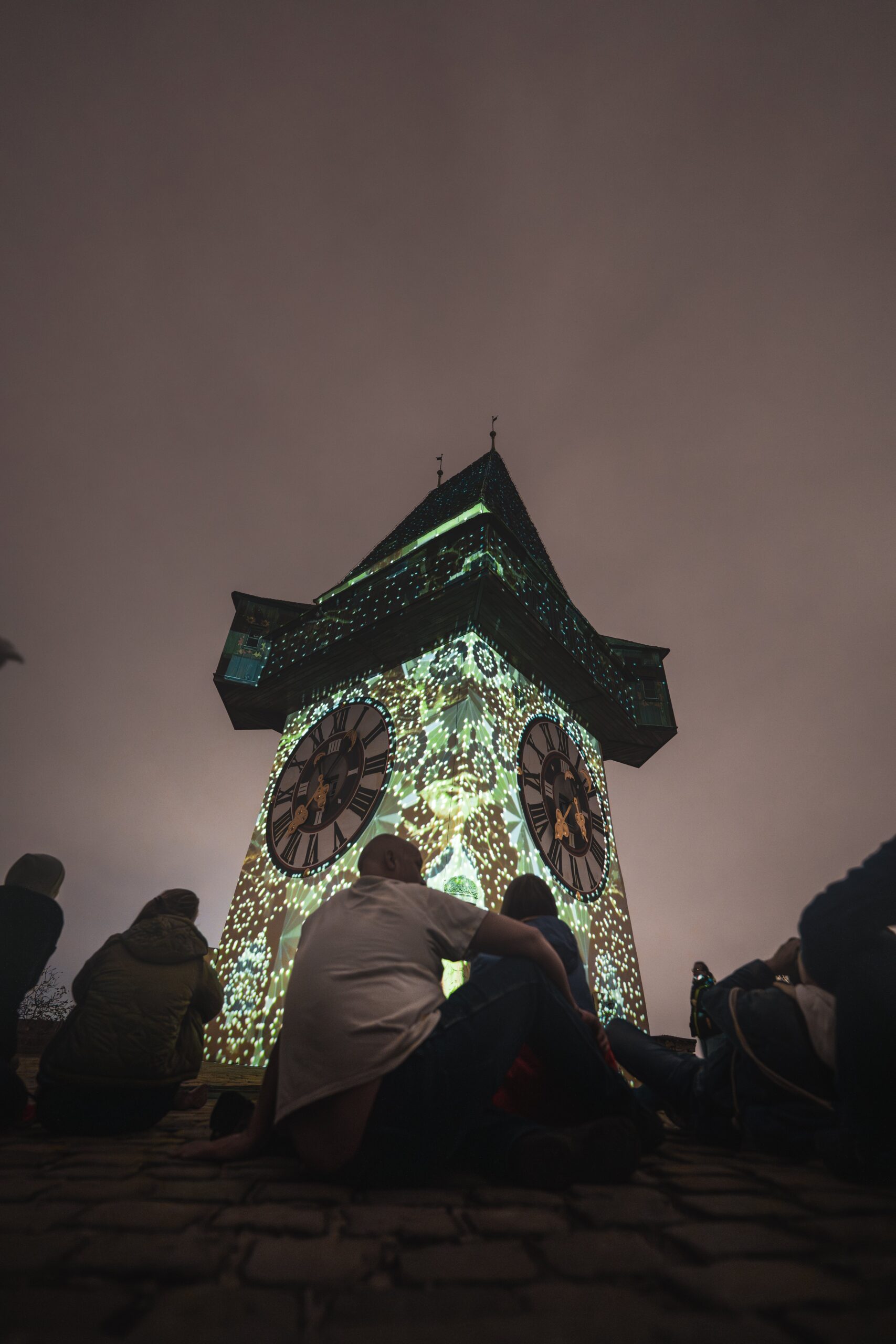
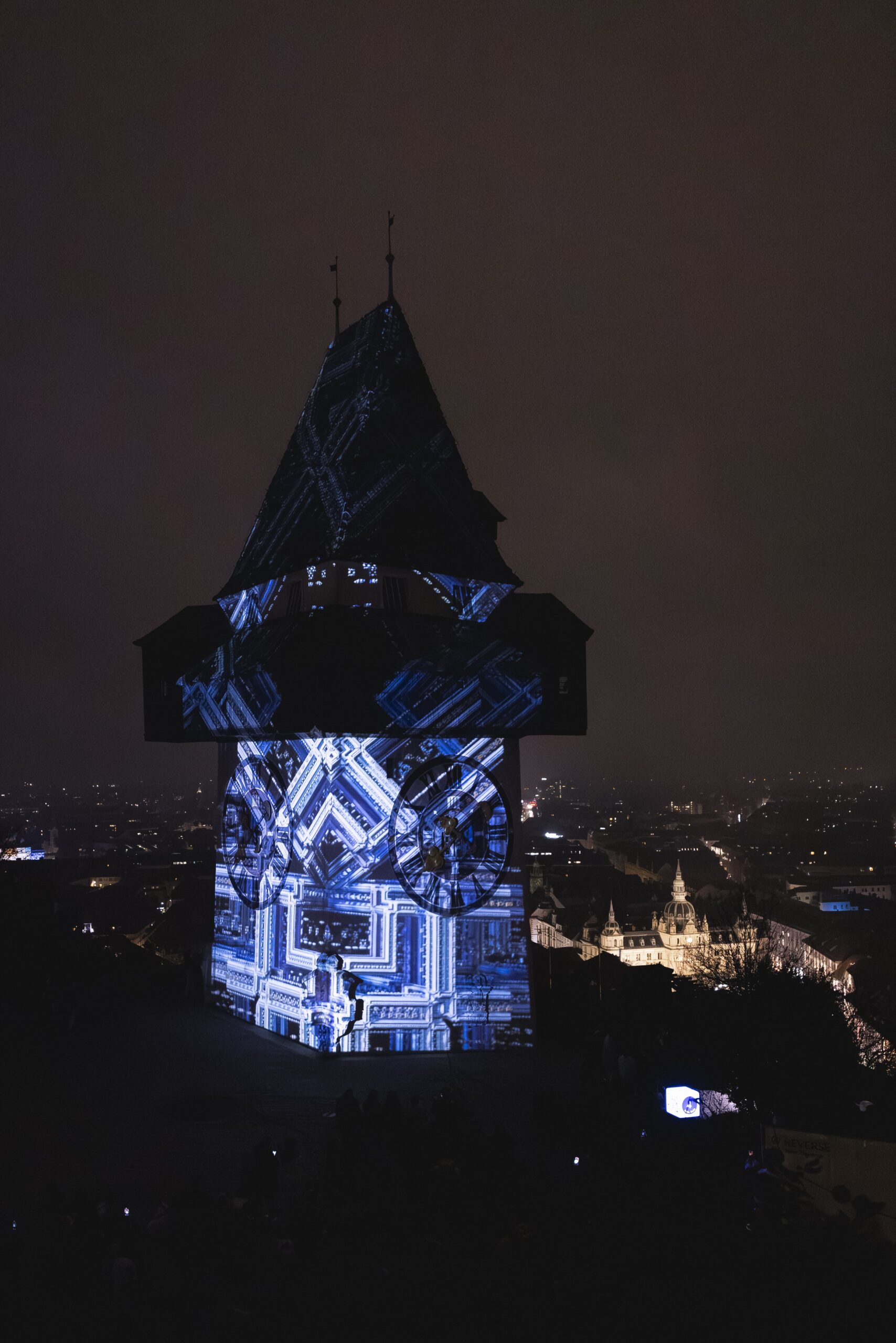
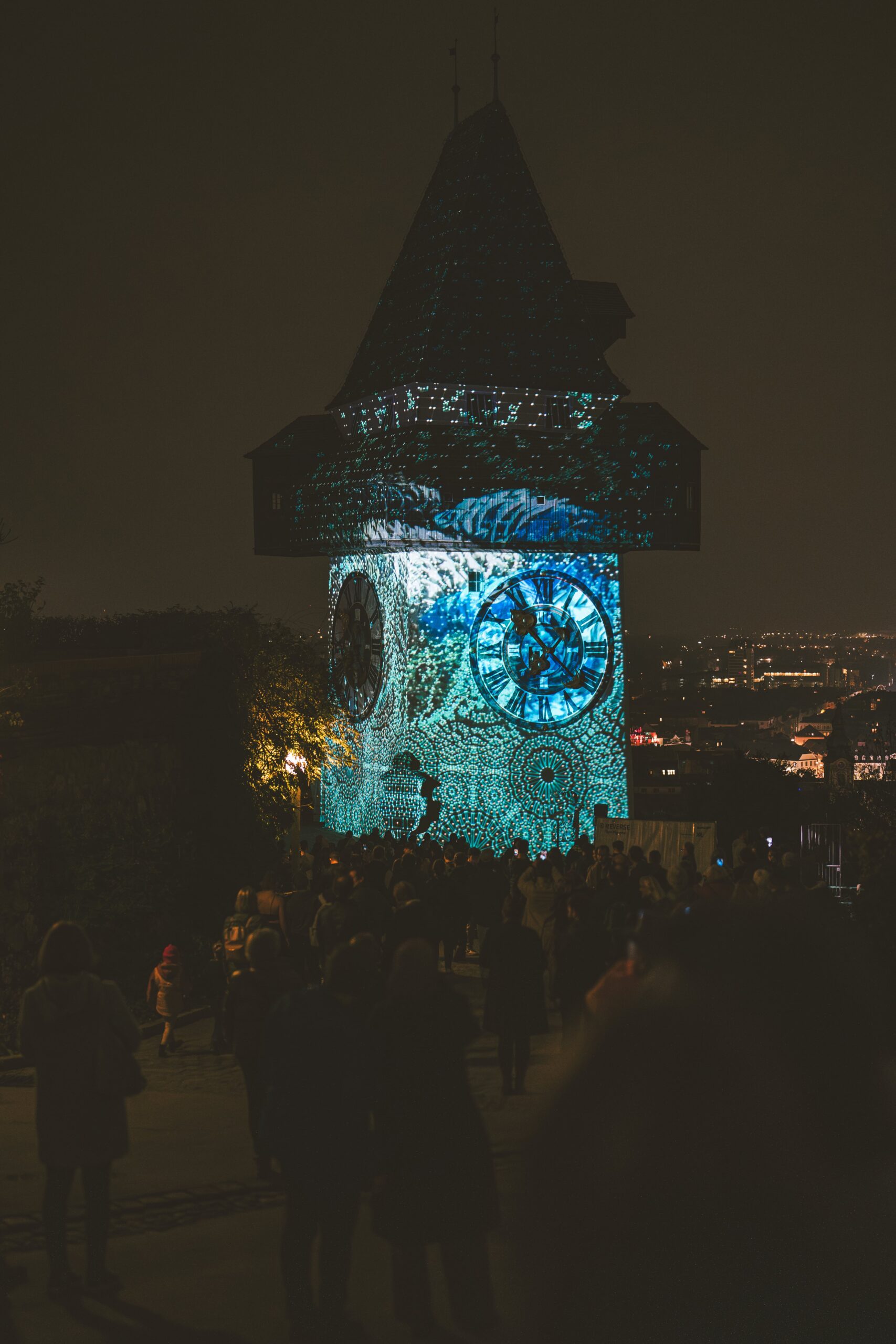
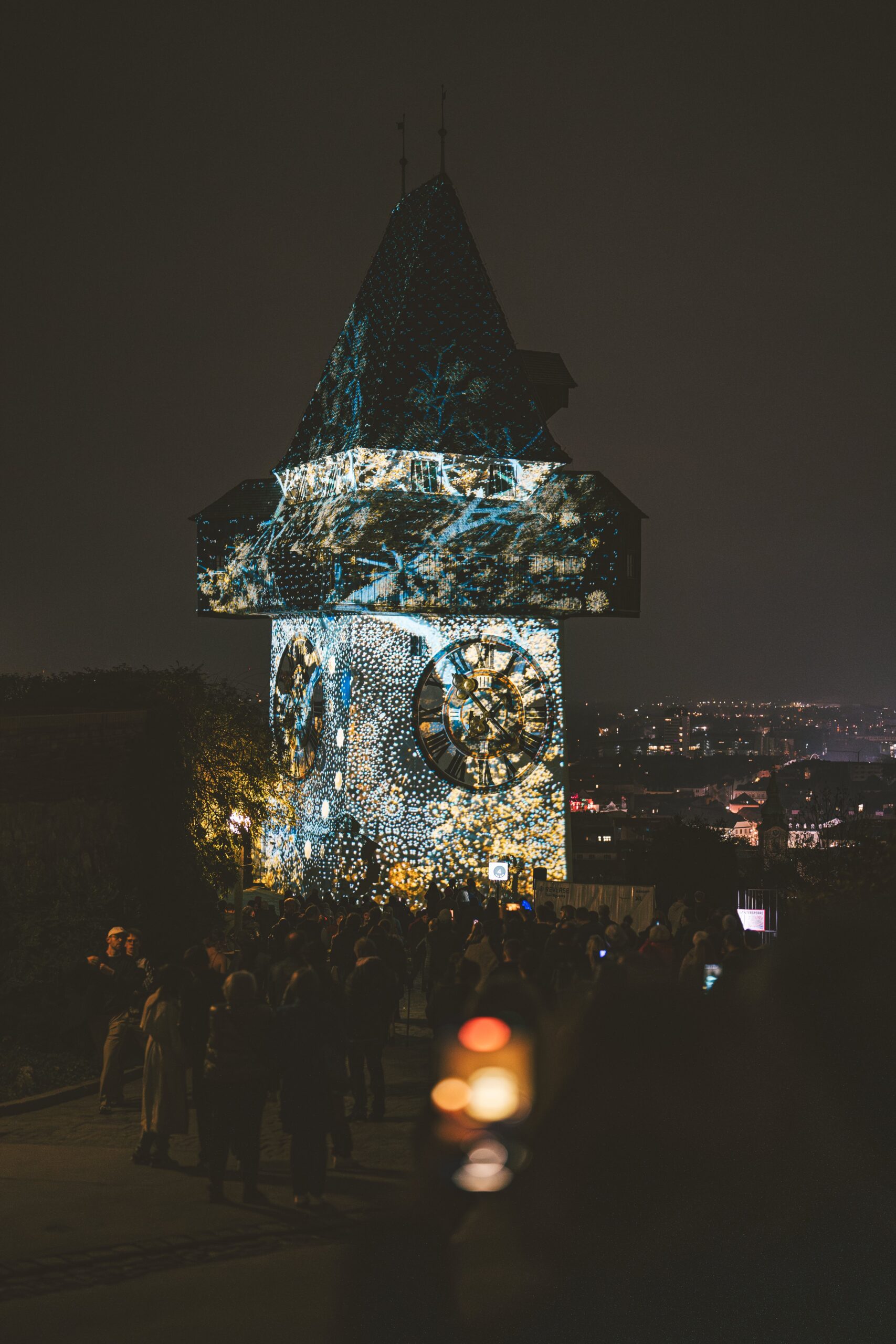
“Reverse” – English for “turn around” and at the same time a play on the French “rêve” for “dream” – transports visitors into a dreamlike confusion of space and time. Yann Nguema’s installation shows a contemplative choreography on the Graz Clock Tower, which allows the architecture of the building to step out of itself, emerge again and again from other dimensions and reassemble itself. The layers overlap with both technical and aesthetic elegance; complex, luminous images emerge from fractals, evoking associations with magical dream worlds. Nguema, currently an ambassador for the Lyon Festival of Lights, is an artist, designer, musician and programmer with a background in science who uses technology, research and poetry to effectively merge light and sound.
Location: Clock tower
Biography
As the founder of the French visual label EZ3kiel, Yann Nguema has been behind countless projects in the 25 years of its existence, with which the former scientist has established himself on the international art scene. He has not turned completely against science, as his projects are actually based on technology, research and art. He explores and exploits the relationships between image and sound, creating his own software tools and thus enriching the exhibition with interactive sparks.
This installation was realized with the kind support of XAL .
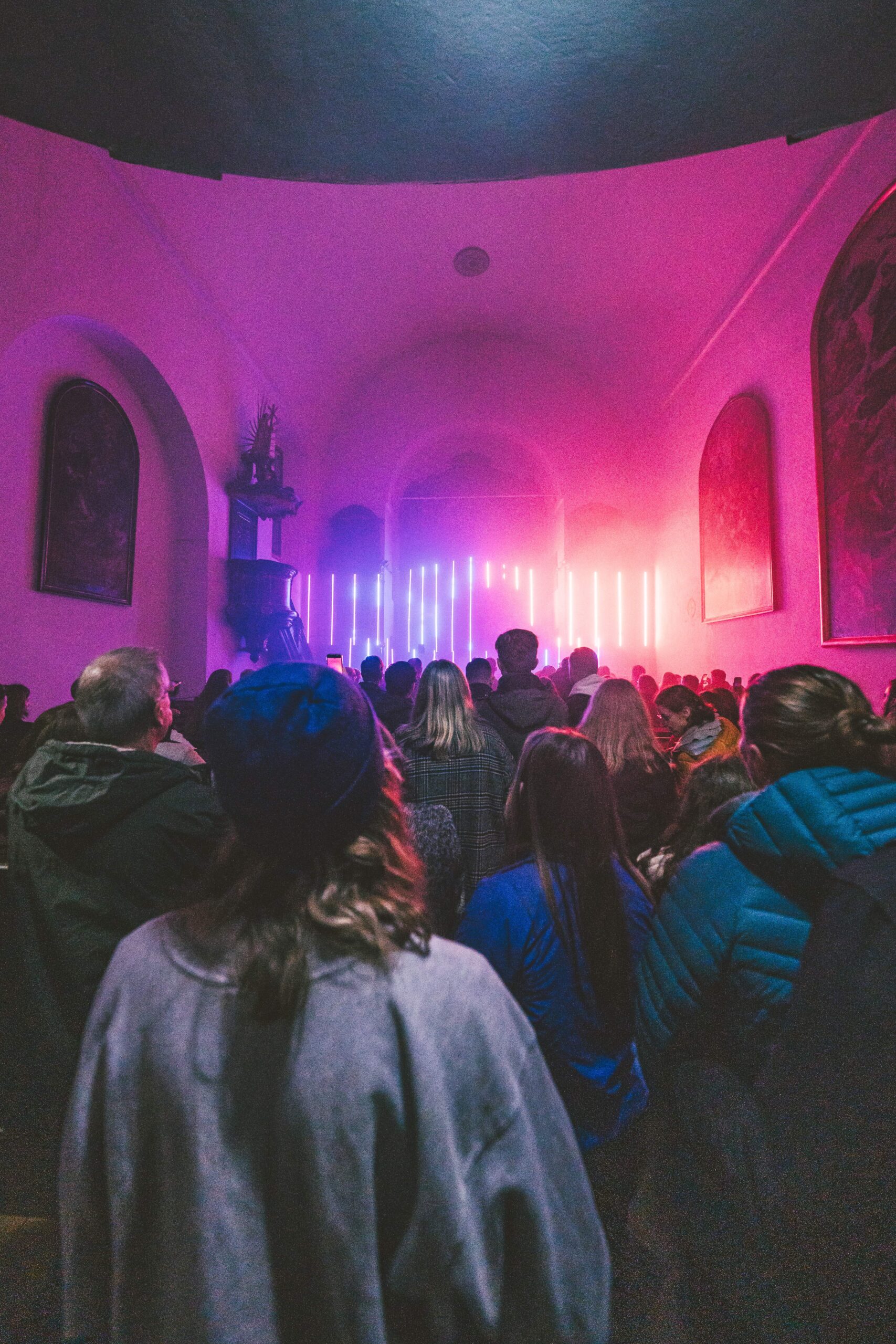
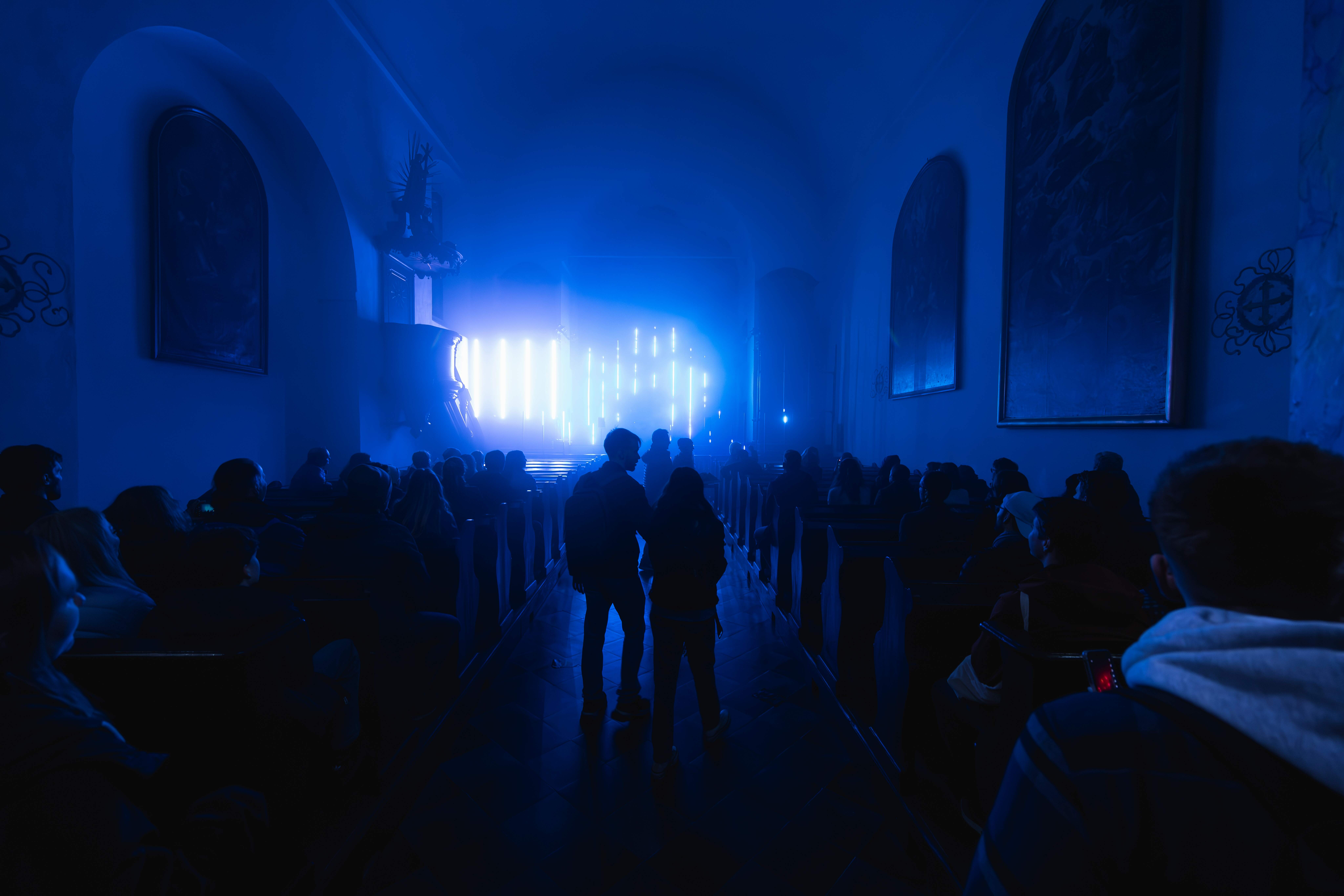
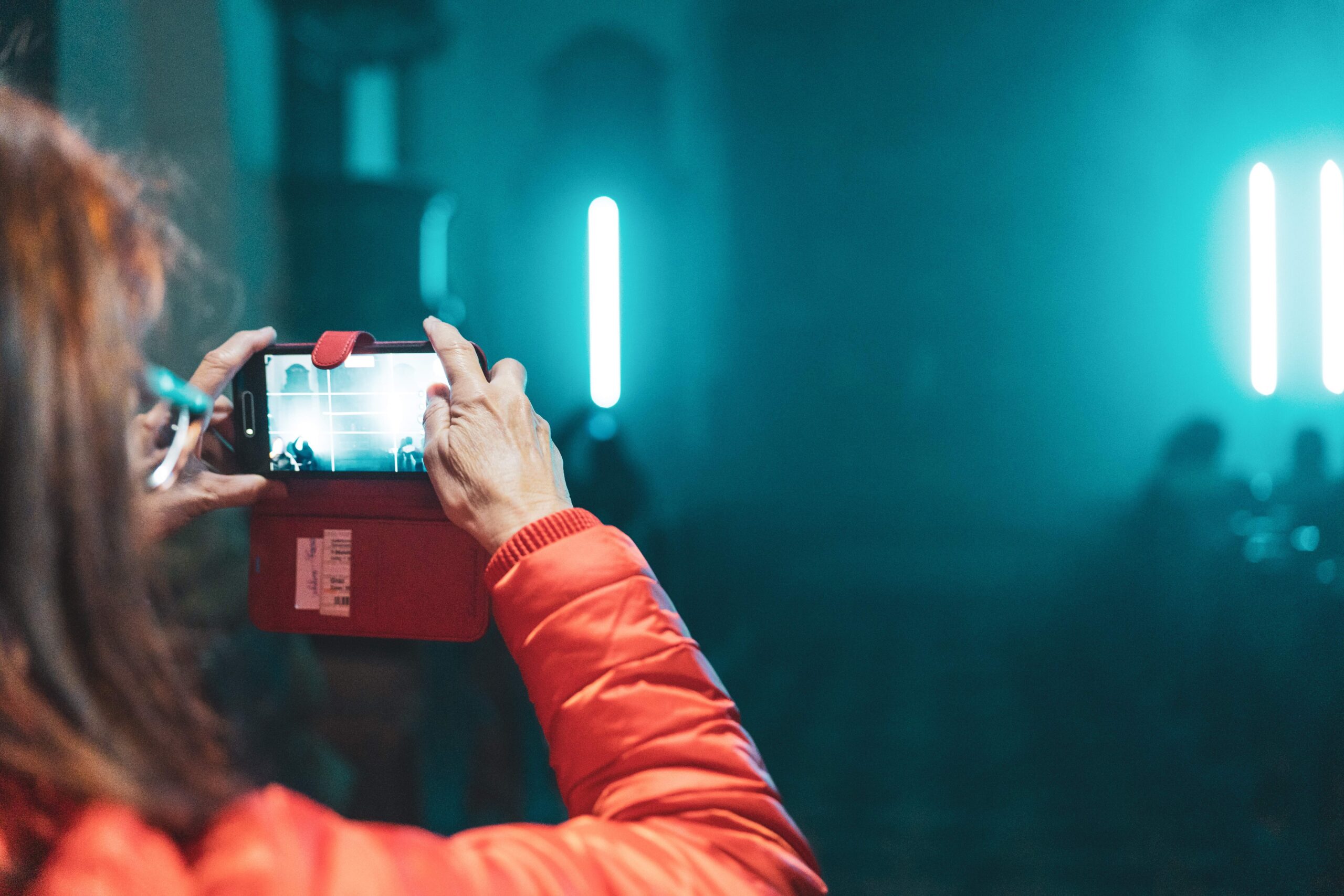
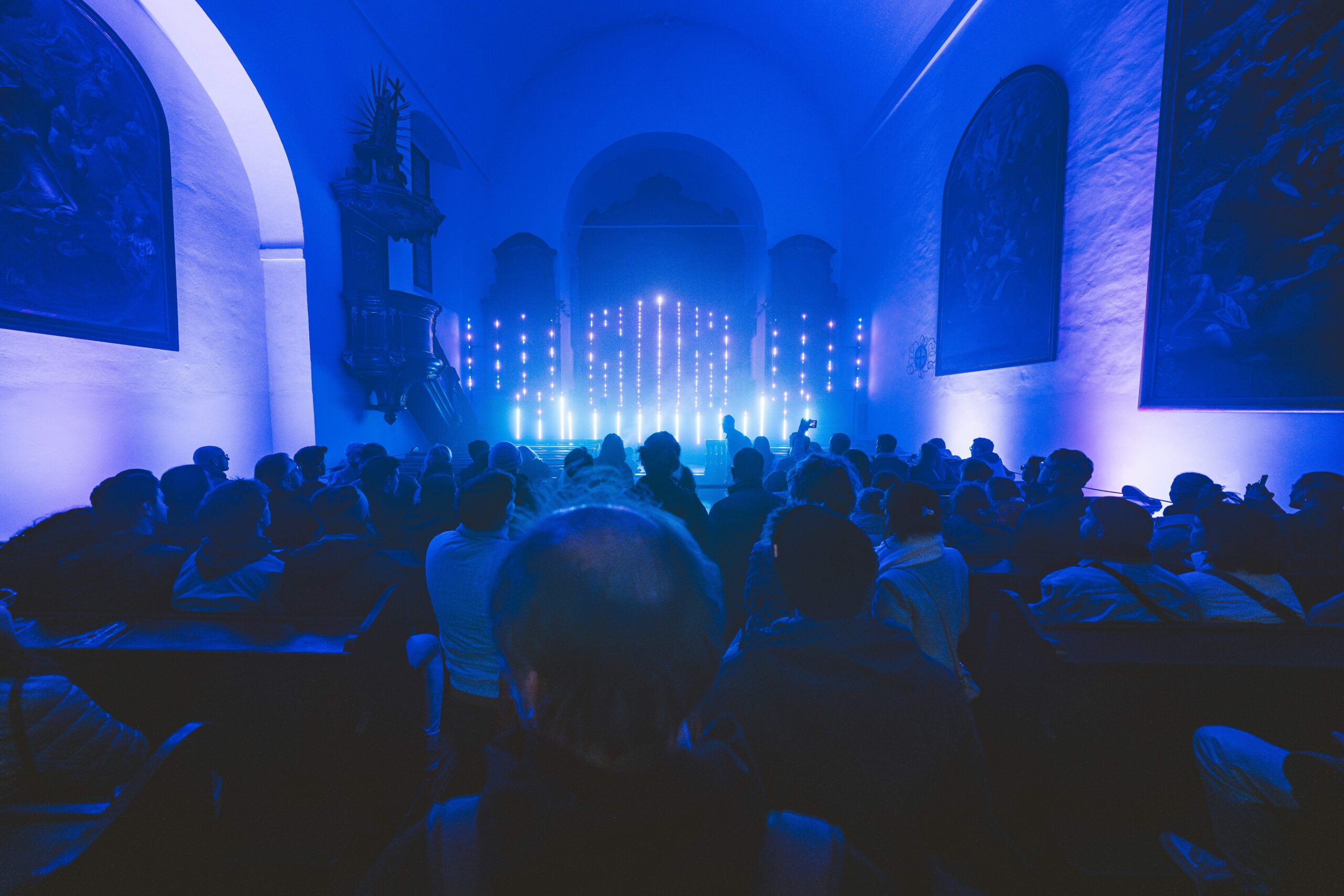
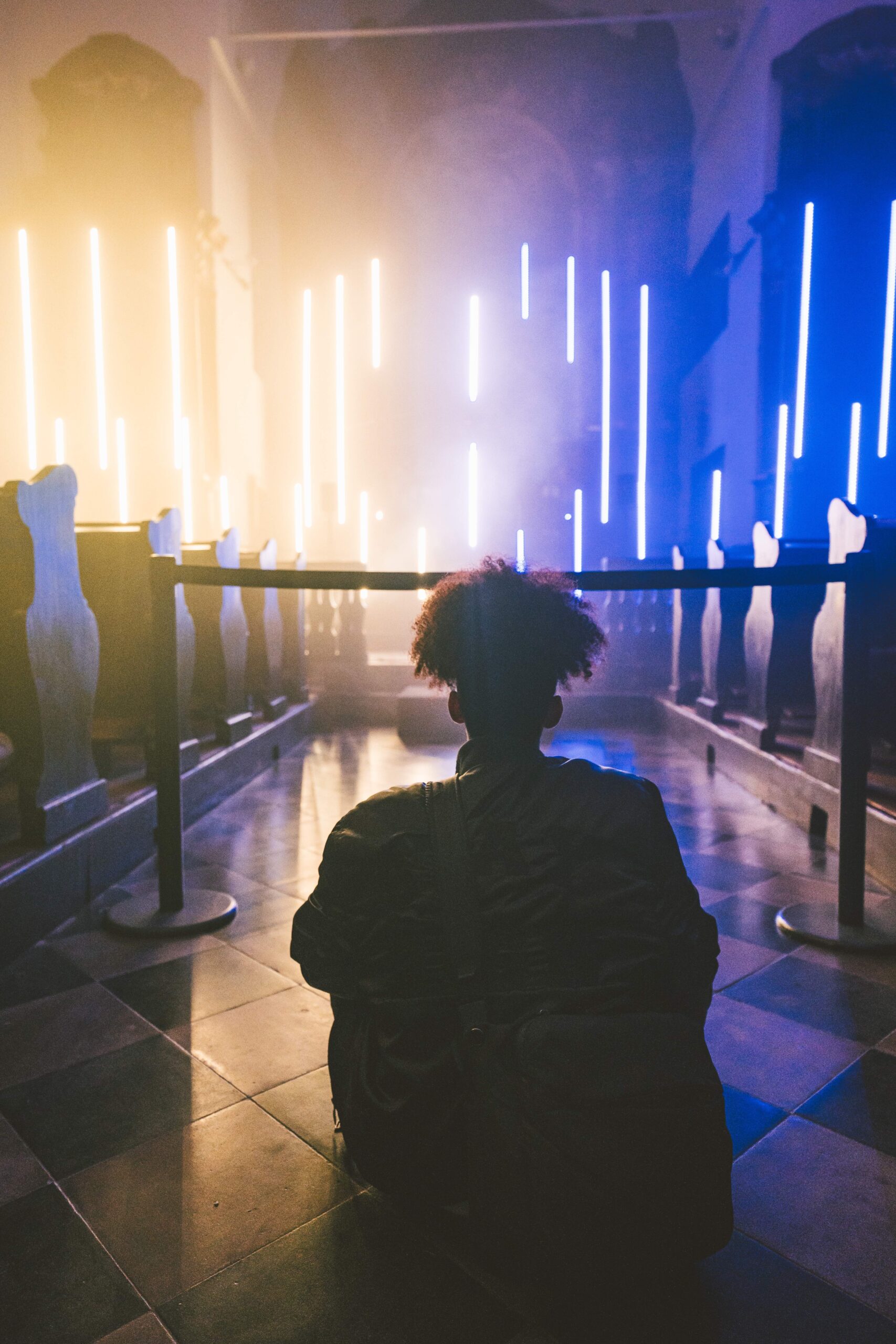
Under the title “Spectrum”, FH JOANNEUM IDK design students are transforming the nave of St. Anthony’s Church in Graz into an immersive media experience. Not only sound and light spectra, but any concept of diversity and bandwidth is used as design material. The various narratives explore intermediate spaces and shades of emotional and semantic spectra, color and movement ranges, harmony and chaos. They sound out possibilities of representation and creative playfulness, which, with light and sound, become intense experiences for all the senses. The works on display by students from the design disciplines of communication, media, sound and interaction design were supervised by Astrid Drechsler, Daniel Fabry, Michael Kernbichler, Didi Mosbacher and Roman Pürcher.
A project as a guest at the Folklore Museum.
Location: Antonius churche
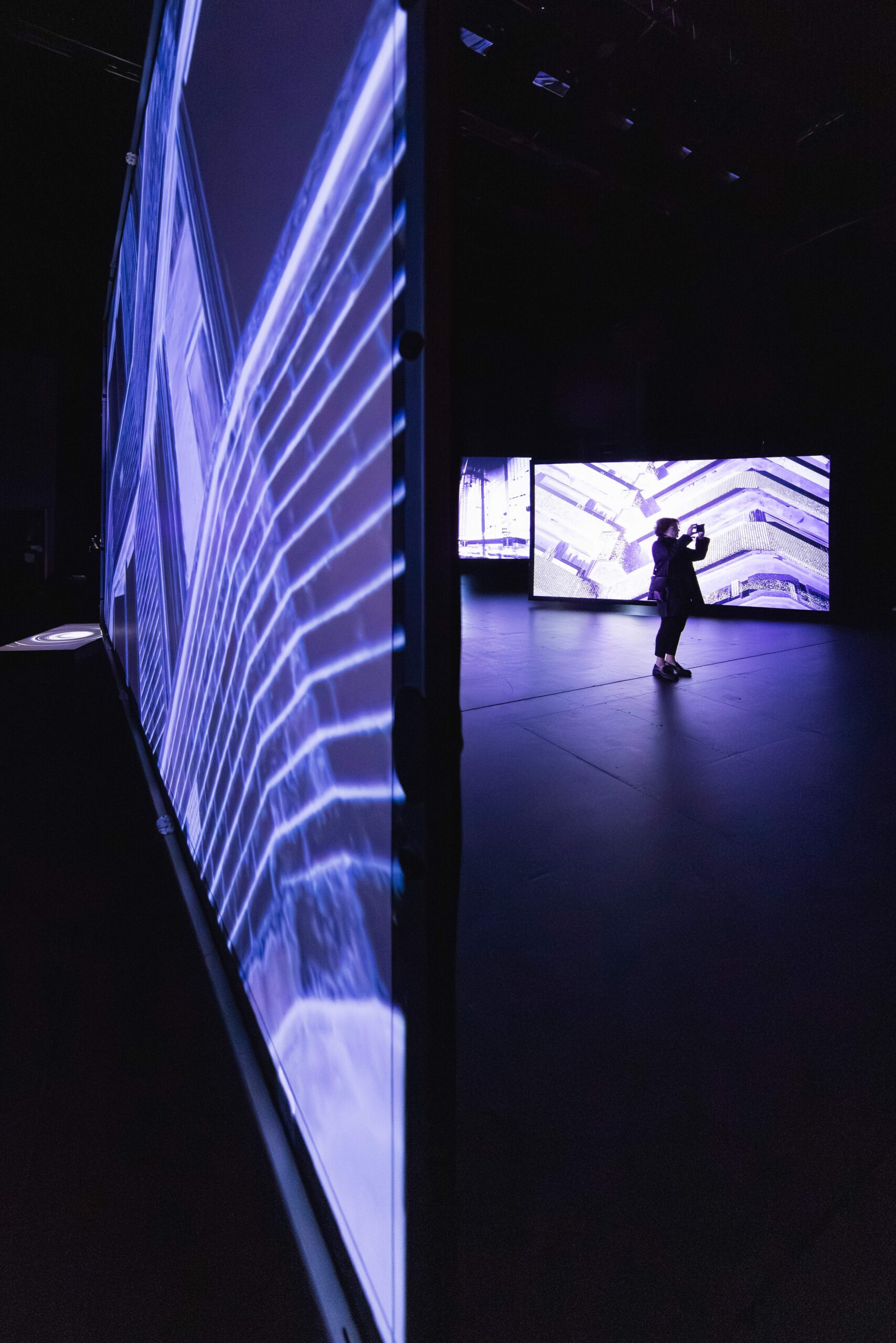
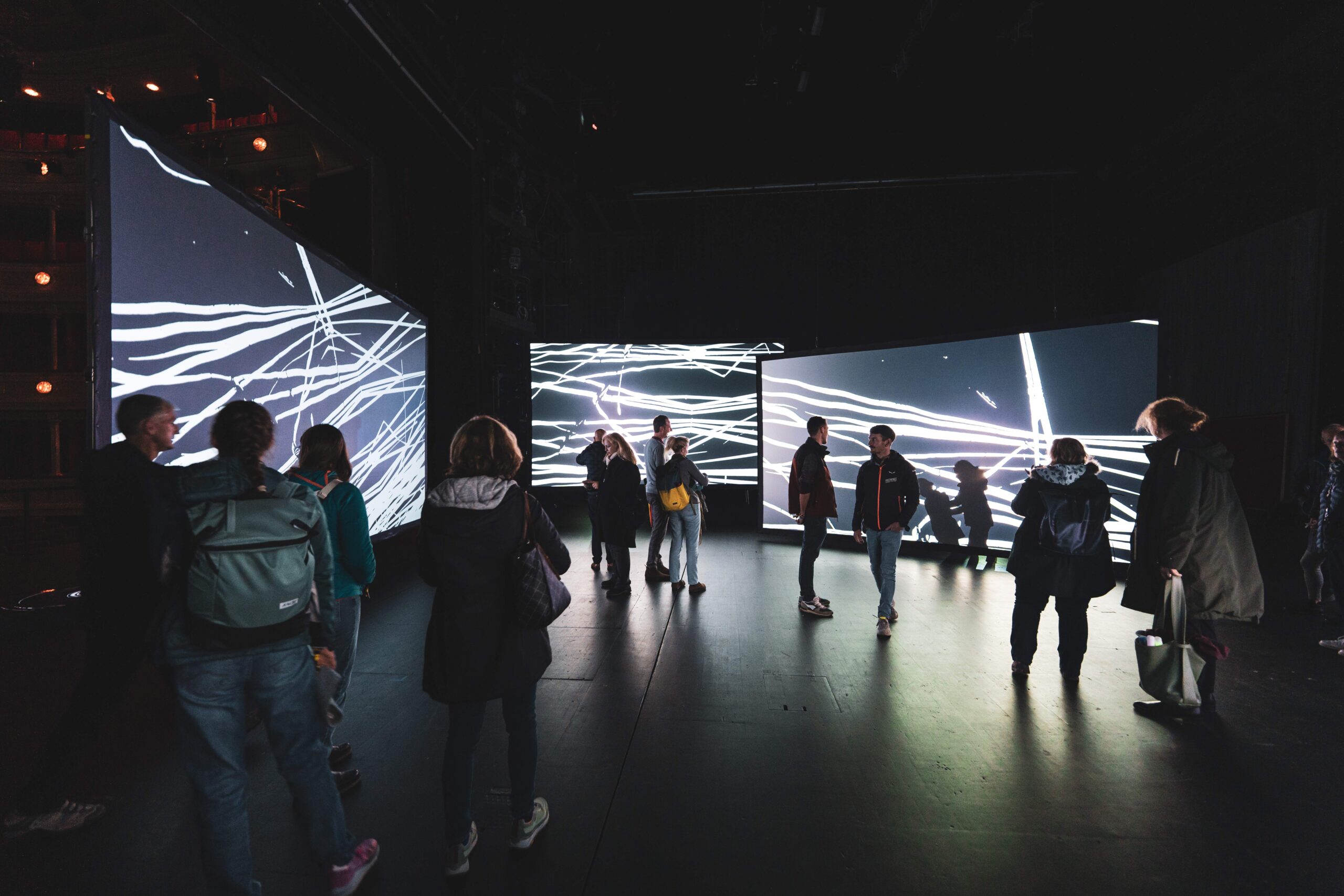
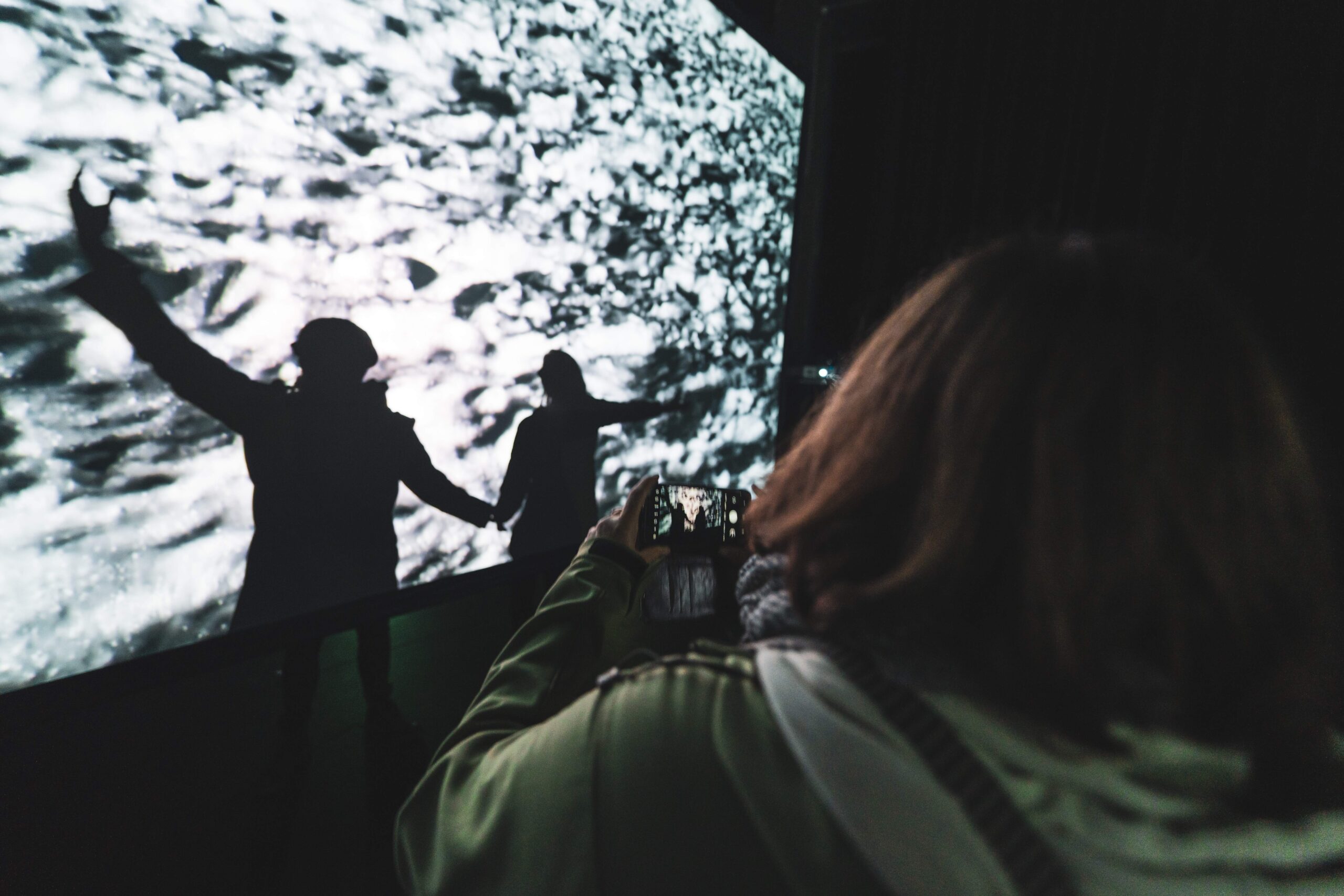
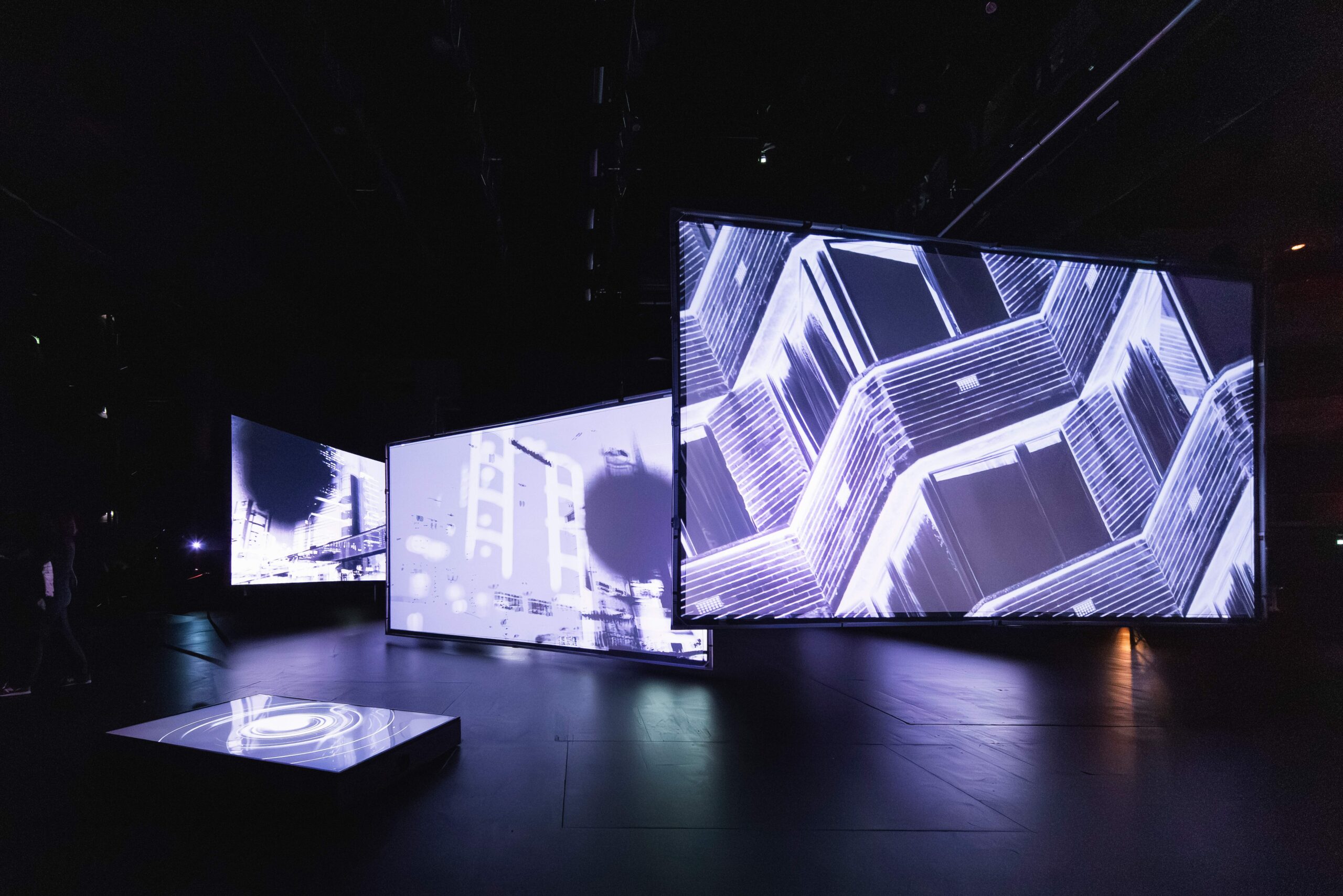
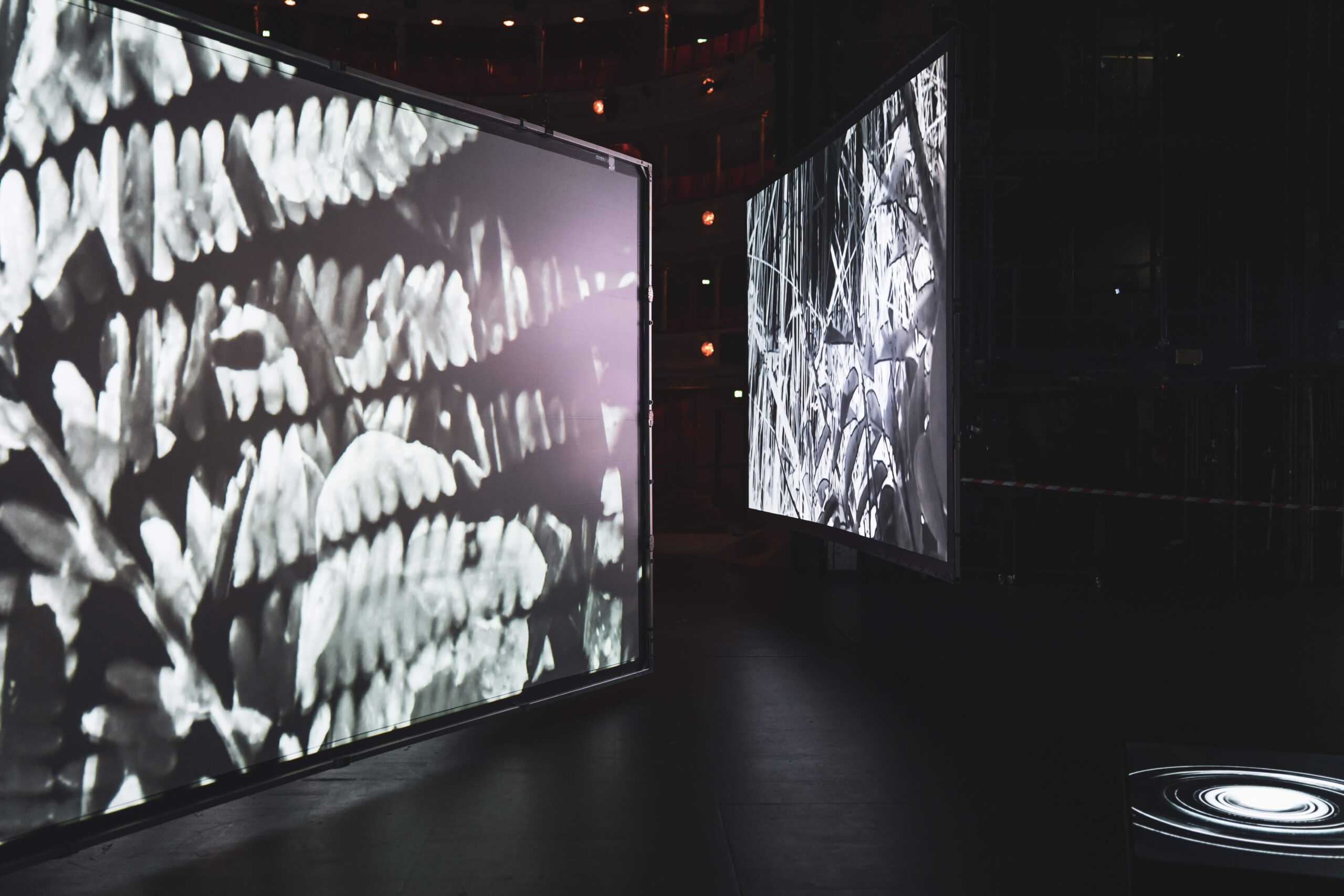
As a multi-layered montage of photos, videos and sounds, “REM” explores human sleep and makes the process of dreaming visible. The multimedia installation by no means attempts to illustrate a dream, interpret it or sketch a wishful image. Rather, Gudrun Barenbrock is concerned with grasping the world in all its intensity – including sleep, in which people process the information of the day in fragmented memories. The artist thus explores the fluid, uncertain boundaries between reality and dream, revealing the mechanisms of human consciousness. Like Barenbrock’s projection, the accompanying composition by Sebastian Gramss and Klaus Osterwald was originally developed for Graz. The music forms an independent level that corresponds with the visuals and at the same time contrasts them sharply. A text by Valerie Fritsch, read by Schauspielhaus ensemble members Otiti Engelhardt and Rudi Widerhofer, complements the work.
The composition by Klaus Osterwald is sponsored by the Cultural Office of the City of Cologne.
Biography
Gudrun Barenbrock creates walk-in image spaces. For her installations, the Cologne-based media artist uses both filmic and photographic material, which she places precisely in selected spaces. Her subjective-minimalist works move between representationalism and abstraction, often in collaboration with sound artists and musicians. This results in dynamic visual landscapes that take full possession of the space and develop a strong sensual presence when experienced directly.
Credit
Concept, videos: Gudrun Barenbrock
Bass, composition: Sebastian Gramss
Soundscapes: Klaus Osterwald
Text: Valerie Fritsch
Voices: Otiti Engelhardt, Rudi Widerhofer
In cooperation with the Schauspielhaus Graz.
This installation was realized with the kind support of Industriellenvereinigung Steiermark.
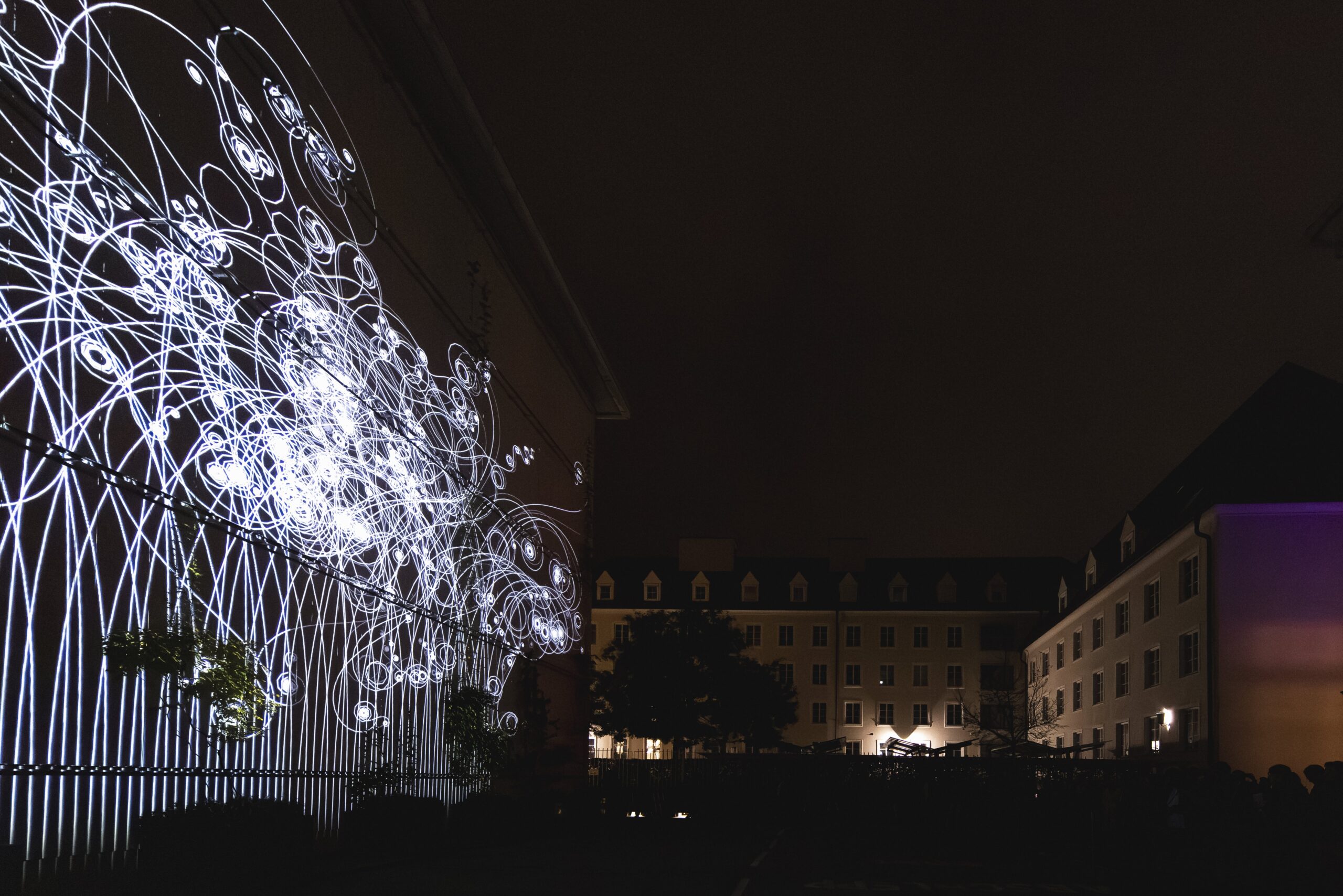
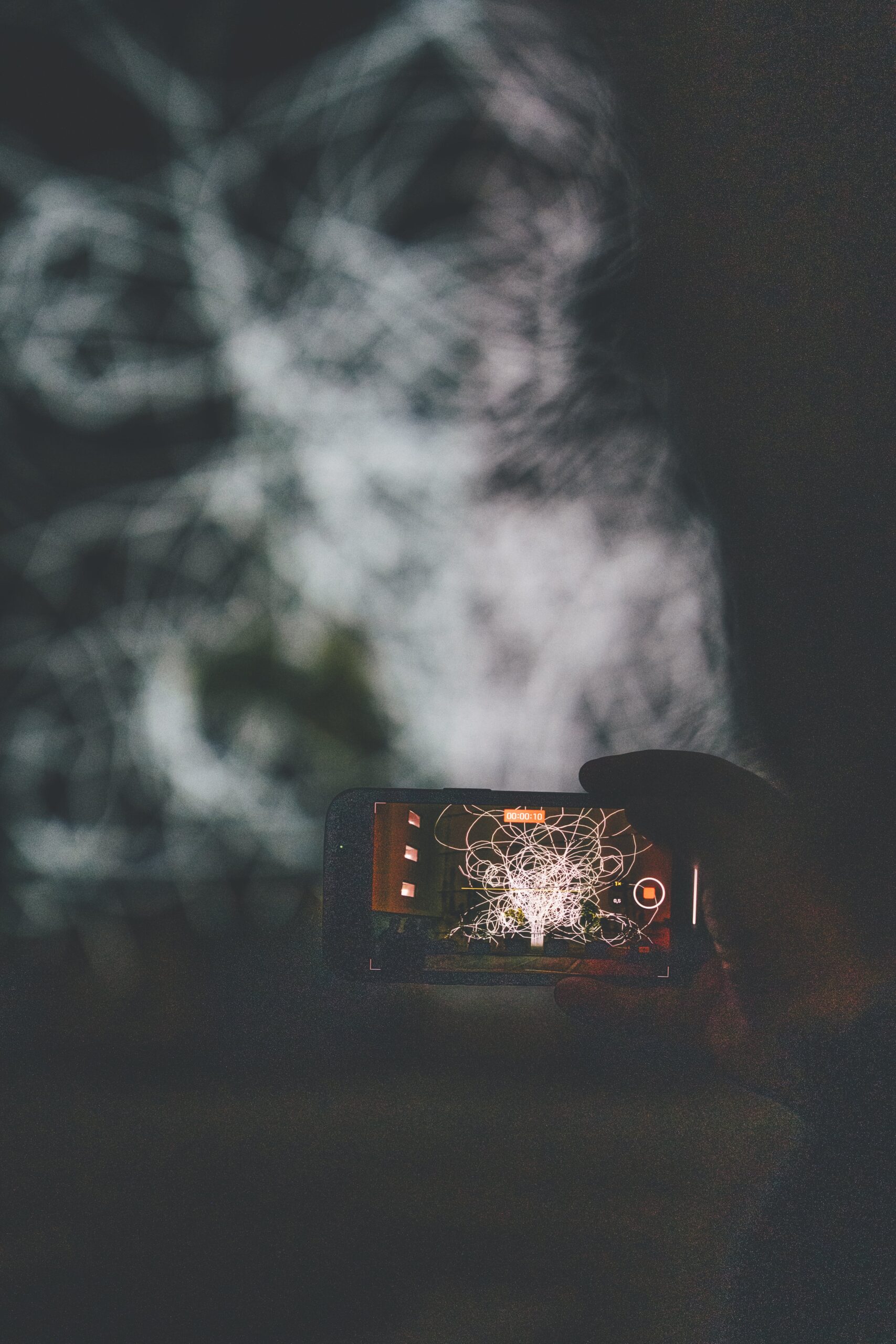
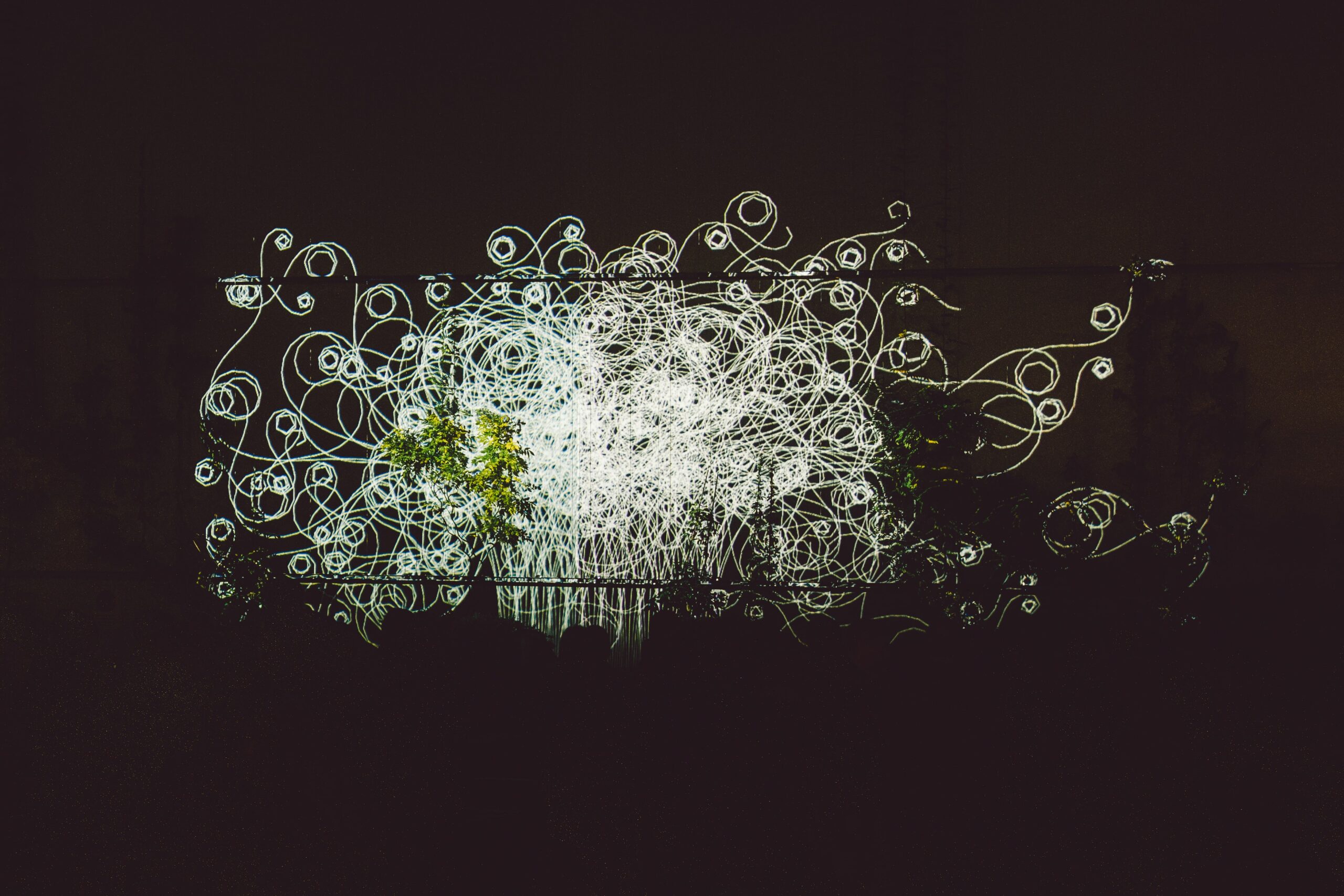
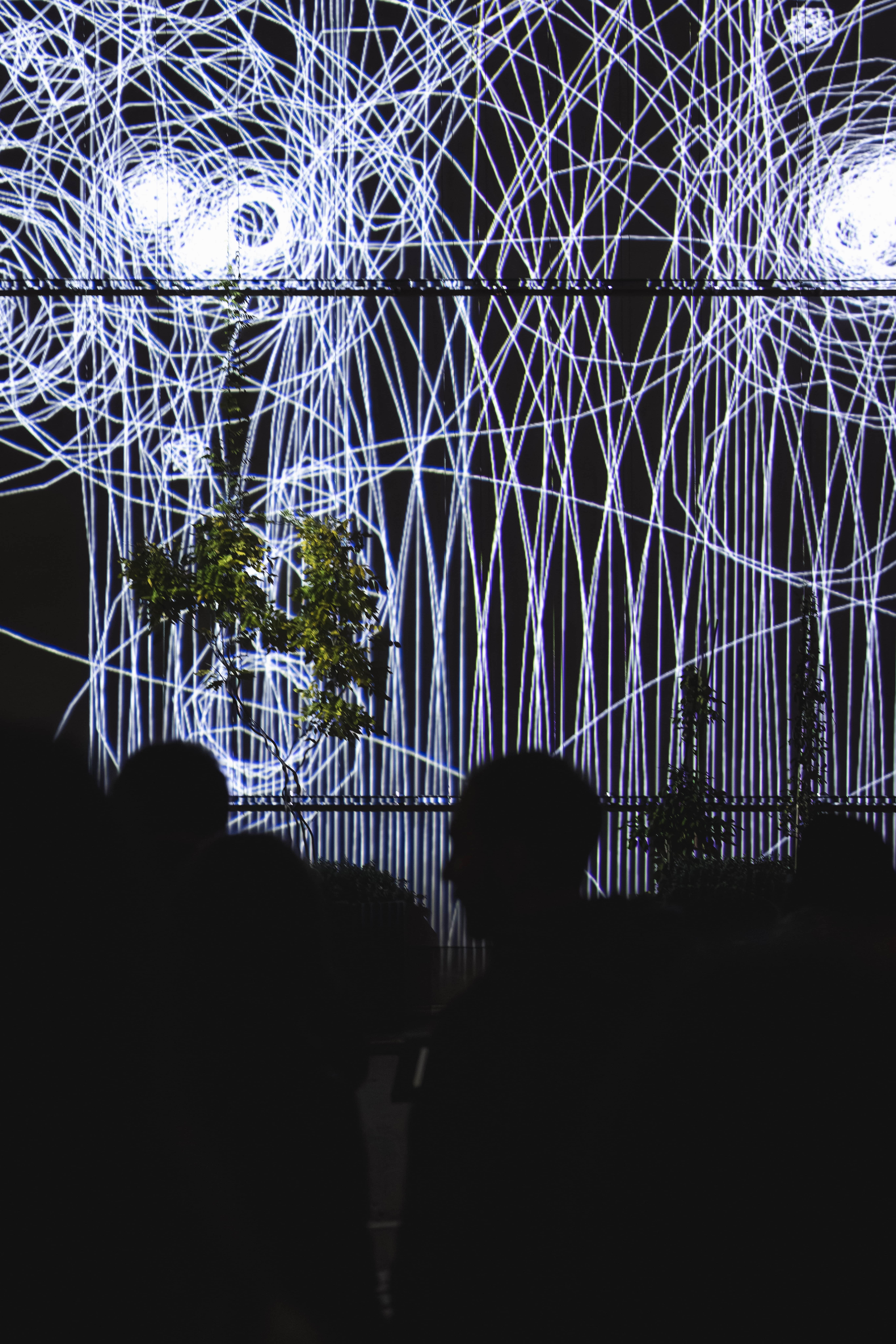
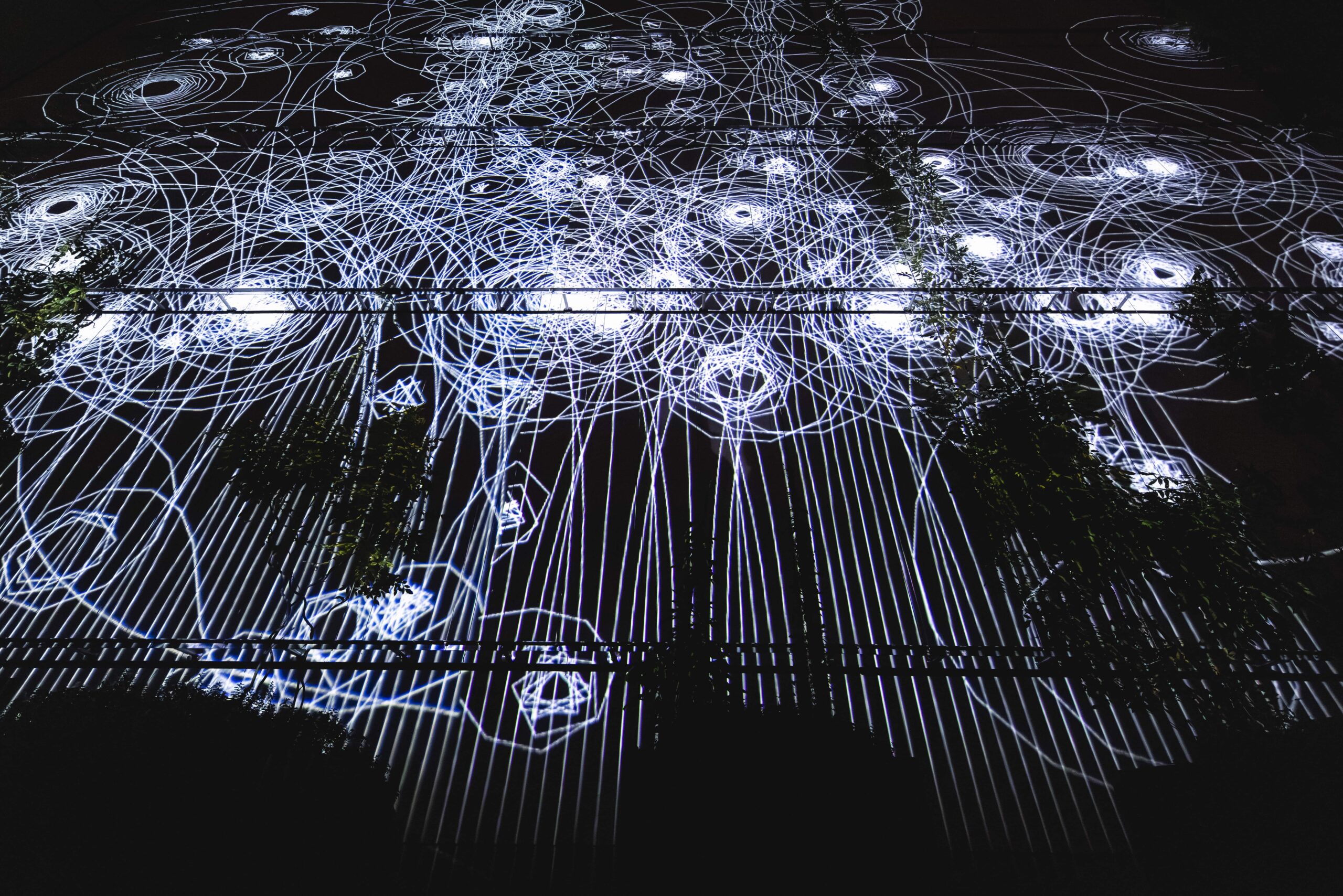
Abstract lines come together to form complex and at the same time very aesthetic shapes, which sometimes appear in curved harmony, at other times in angular chaos – these are the impressions that the interactive installation “FLORA” is able to create. The appearances are never the same, as they are controlled and designed by the viewers themselves using a touchpad. The underlying algorithm uses overlapping sine waves to create an animation that resembles our personal dreamscapes. Just as the inner images we encounter in our sleep differ, “FLORA” also brings out the personality of the interacting persons through the translation of individual interaction: from hesitant to wild, even reckless, from round and organic to angular and abstract.
Location: Schauspielhaus facade
Biography
Philipp Artus is a multidisciplinary artist and filmmaker based in Berlin.
His experimental animations, light installations and drawings explore the manifestations of life through movement, sound and visual language. He composes audiovisual experiences that combine playful elements with minimalist structures, timeless themes with contemporary observations, turbulent acceleration with contemplative stillness.
Credits
Composer: Stina Francina
This installation was realized with the kind support of Holding Graz .
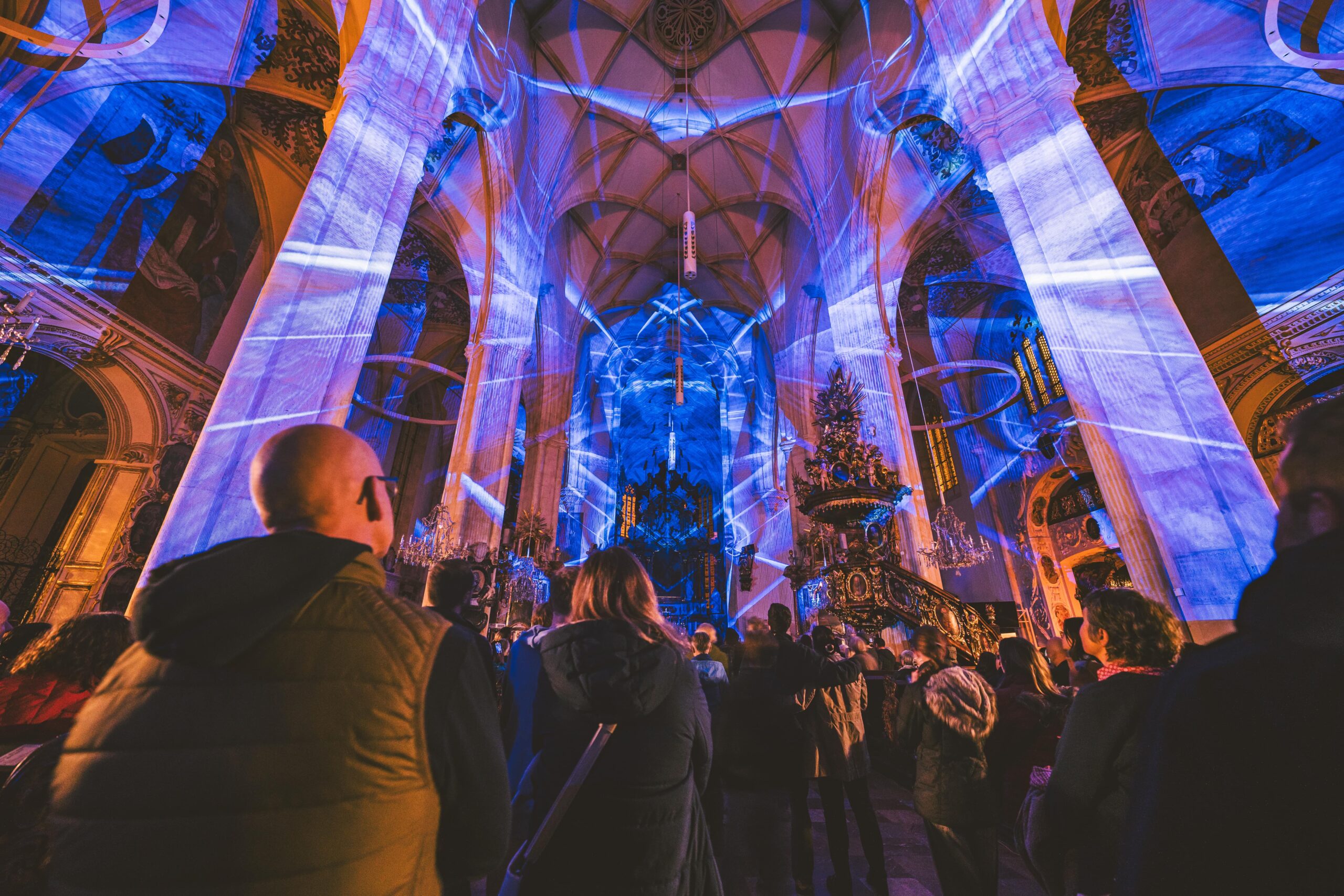
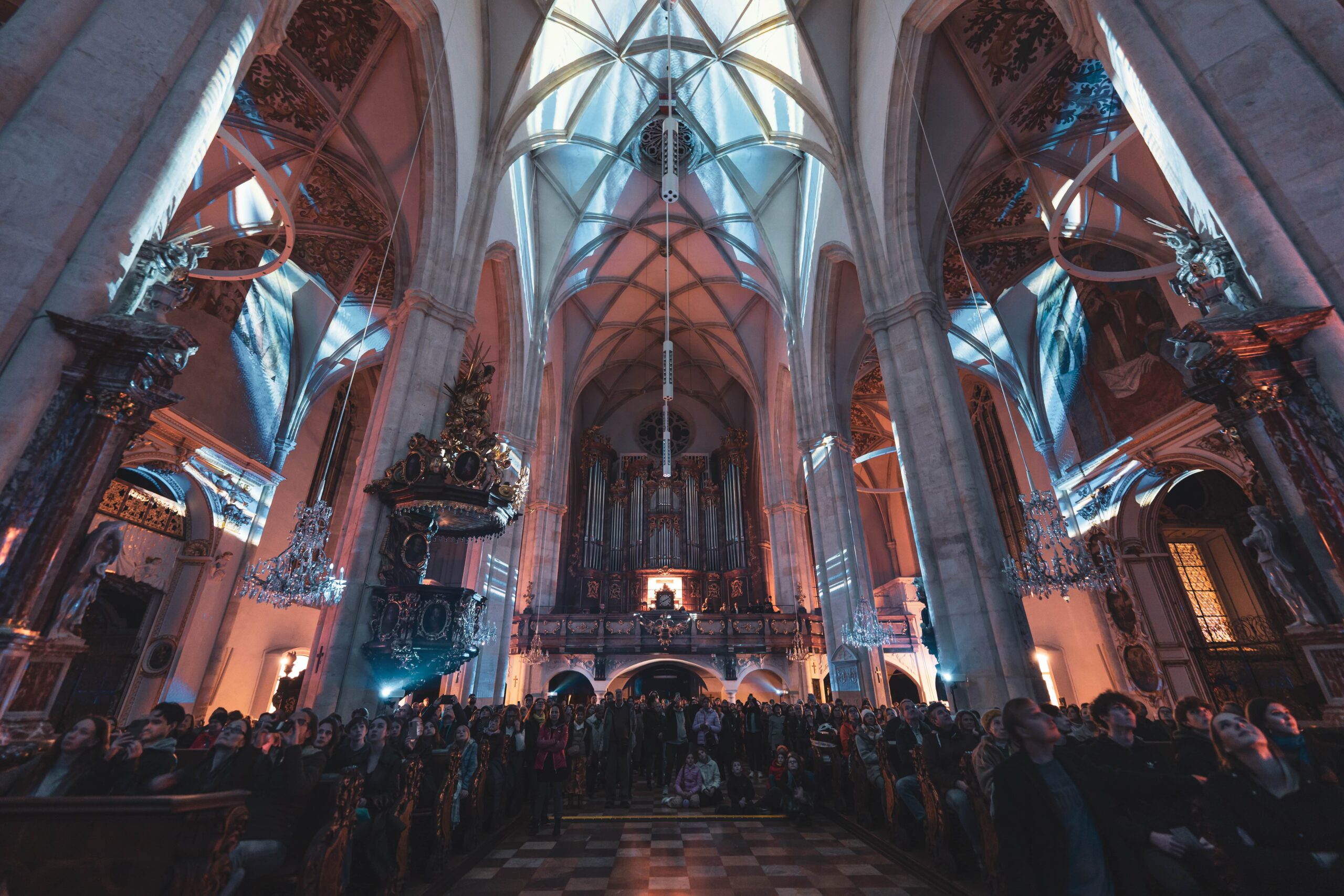
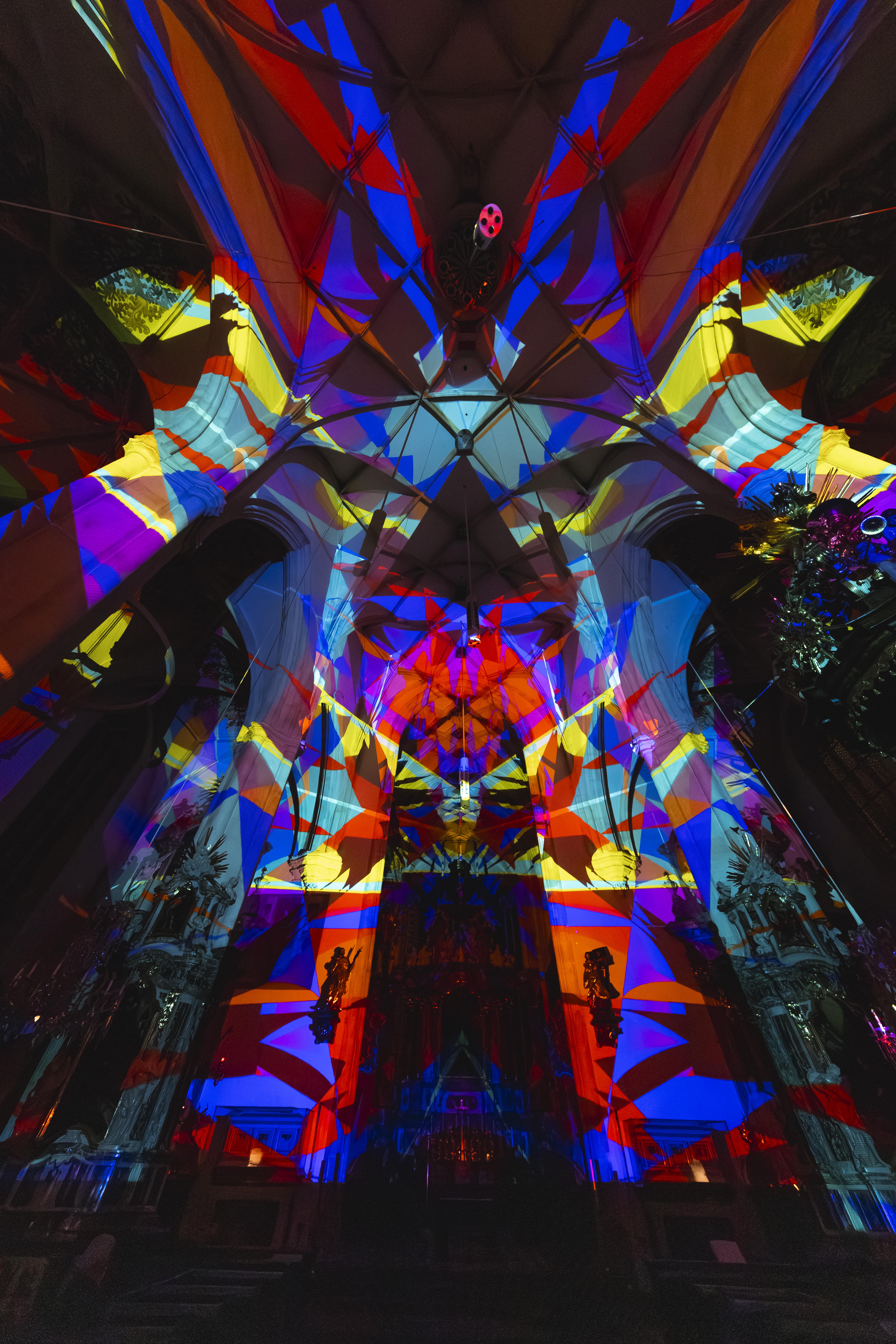
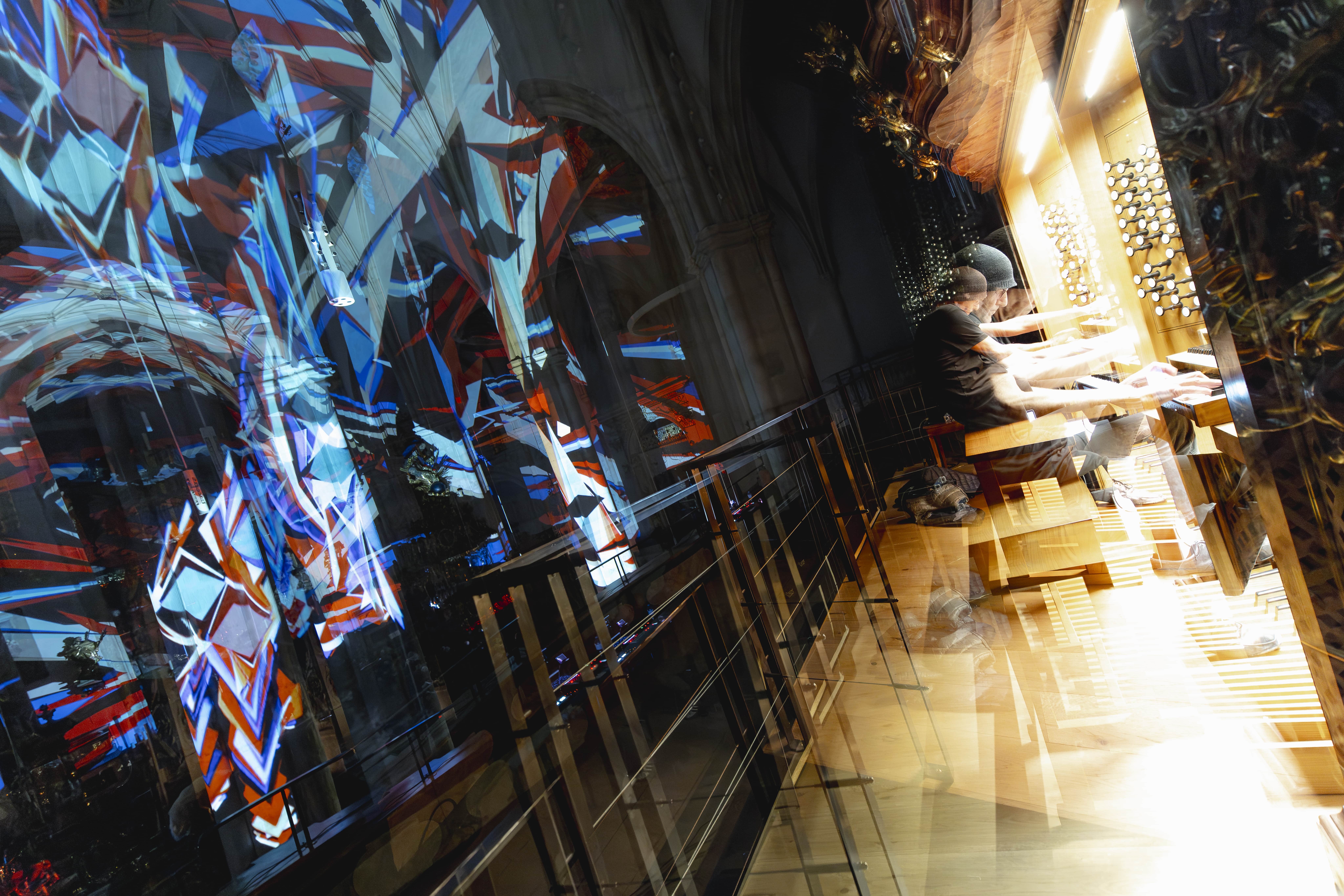
We all see and hear the same things, but perceive them completely differently. Based on this individuality of human sensory perception, the artist Laurenz Theinert creates experiential spaces with his “visual piano” that are free of messages, thought patterns and concepts and are therefore open to subjective and collective experience. In Graz Cathedral, visitors encounter moving light sculptures that expand the dimensions of the space and create a feeling of boundlessness. The organ pieces played live by cathedral organist Christian Iwan (24.10.)*, cathedral conductor Melissa Dermastia (25.10.)* and Austrian composer and musician Wolfgang Mitterer (26.10.)* allow for a free interpretation of the melodies and rhythms, analogous to the visuals:
As if in dreams, cathedral organist Christian Iwan interweaves musical elements in his improvisations that were created in different times and could therefore never meet in reality. The starting point is the timbre of the new Graz Cathedral organ, the tonal language is inspired above all by the “sound mysticism” of French music from the 20th century, the thematic material will be taken from well-known works by Anton Bruckner, the regent of the year.
Cathedral organist Melissa Dermastia will be playing the cathedral organ on October 25. This evening’s program will feature tone-painting works by the two French composers Louis Vierne and Jehan Alain. In “Claire de lune” – i.e. by moonlight – you can embark on a journey into the dreamy world of late Romantic French music. Here, the melody nestles obliviously in the architecture of Graz Cathedral before the listener is abruptly brought back into the glistening light of the sun with the “Hymne au soleil”, a hymn of praise to the sun.
In 2023, Wolfgang Mitterer developed a project for organ and surround electronics entitled “requiem for a beautiful dream” for the “Biennale Musica” in Venice. This piece is the starting point for the improvisations in Graz Cathedral on 26.10. Six loudspeakers will be distributed throughout the church space, starting from the organ and its many colors, the sounds will circle through the room like invisible light.
Together with the musical improvisation of the organists, Theinert’s improvisation on the “visual piano” enables an immediate art form of light and sound that exists in all its immateriality only for the moment. Laurenz Theinert himself calls it “dreaming with open eyes and ears”.
In addition to the existing light and sound installation, there will be three live concerts on each of the three festival evenings – tickets are available at www.ticketzentrum.at.
Location: Graz Cathedral
Biography
Photographer and light artist Laurenz Theinert (*1963) concentrates his work on visual experiences that do not refer to anything pictorially. Rather, he strives for an abstract, reduced aesthetic, which – through the desire for further dematerialization – ultimately led him from photography to the medium of light.
He is a live light and media artist. His “visual piano” performances are shown all over the world. From Sao Paulo, London, Sydney and Berlin to New York and Singapore. He creates media light spaces with 360° panoramic projections. This creates abstract, live environments.
This installation was realized with the kind support of Raiffeisen-Landesbank Steiermark.
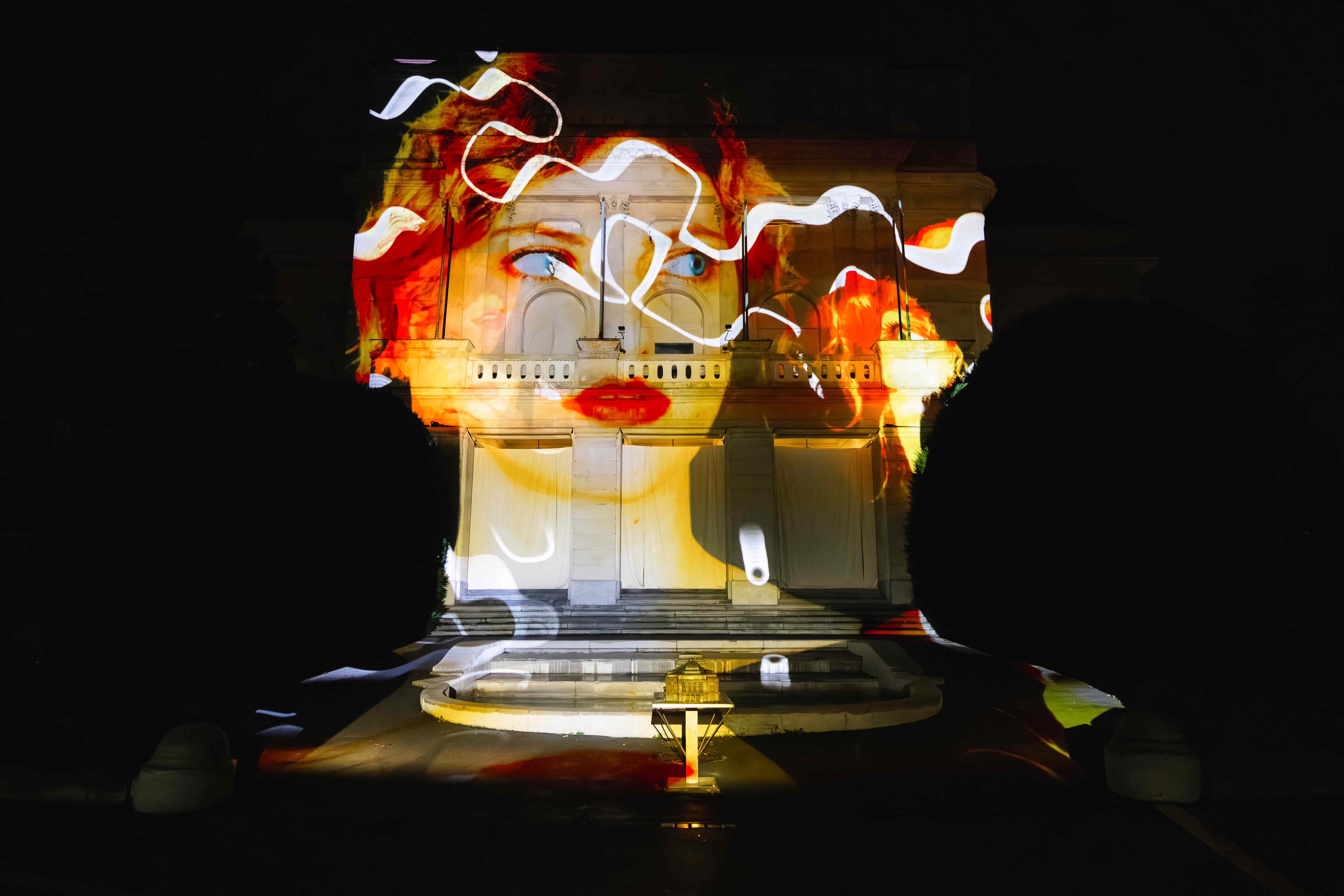
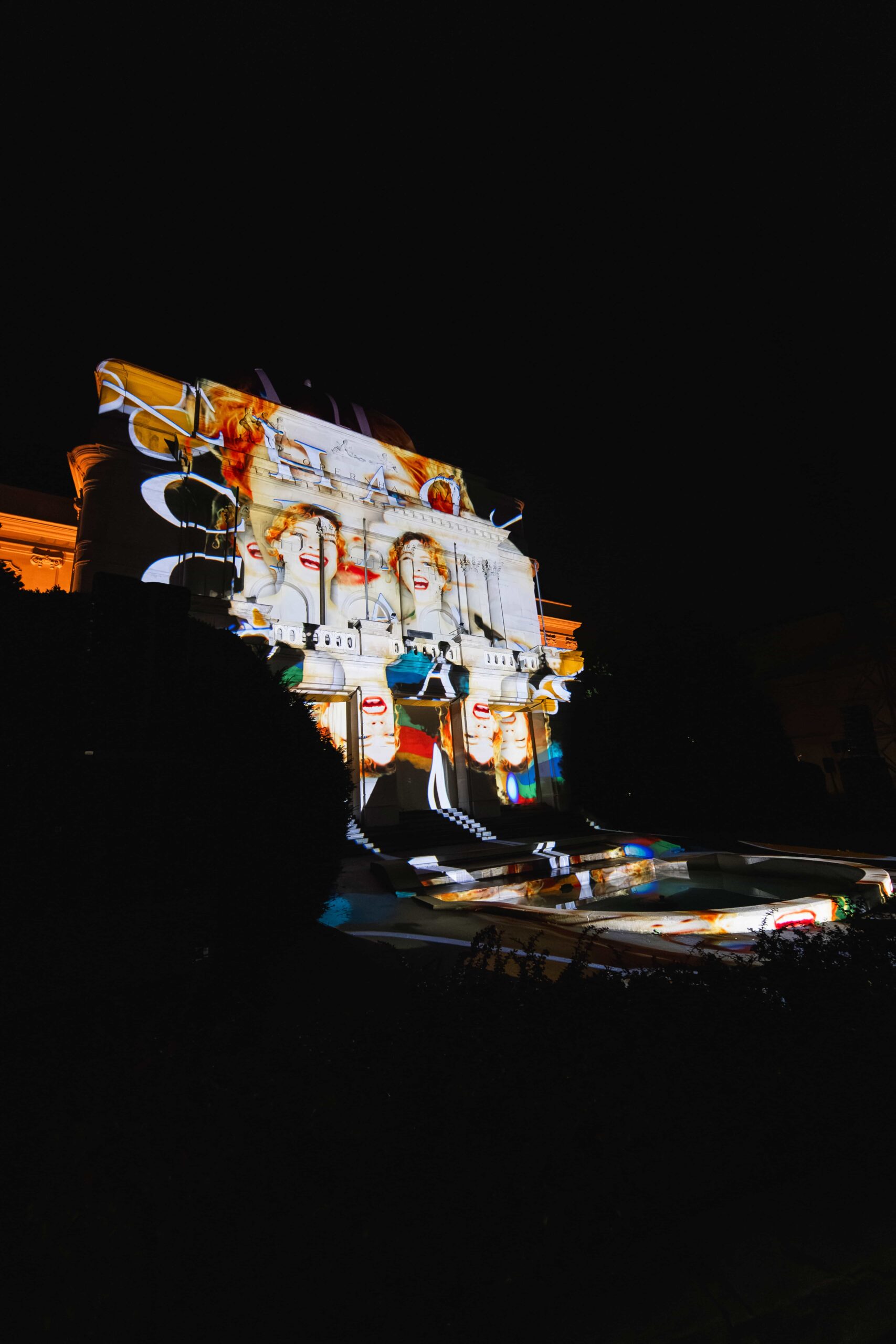
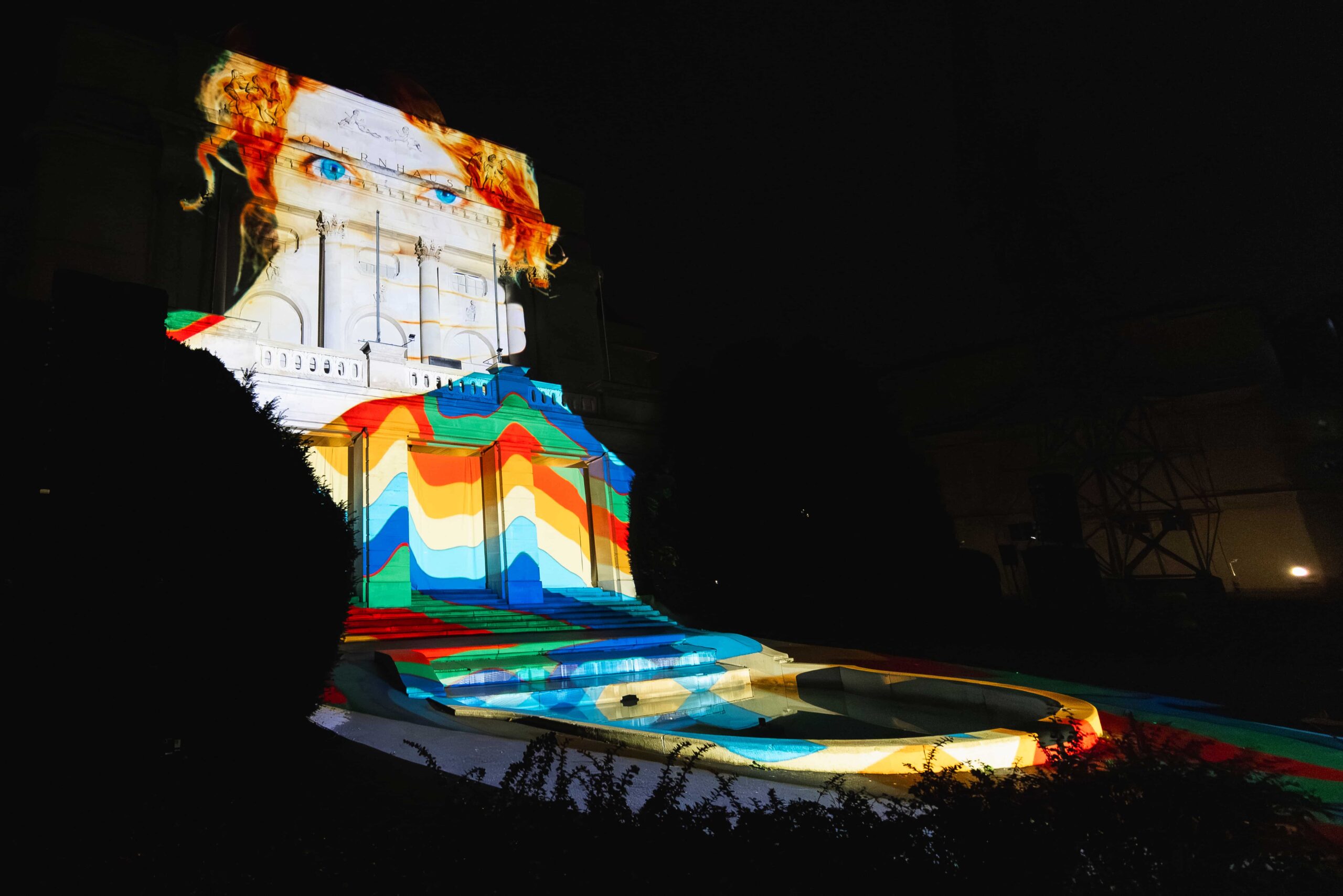
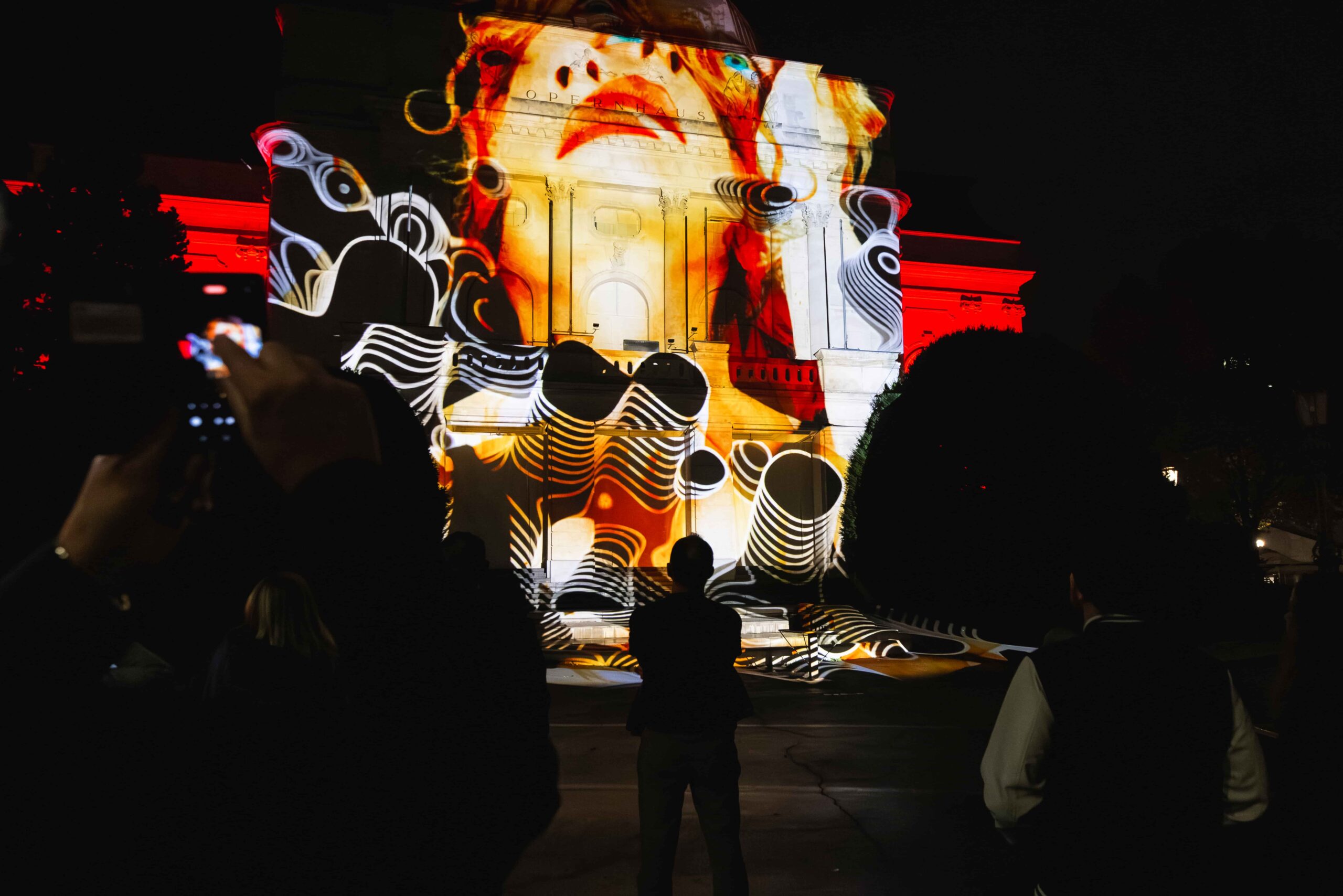
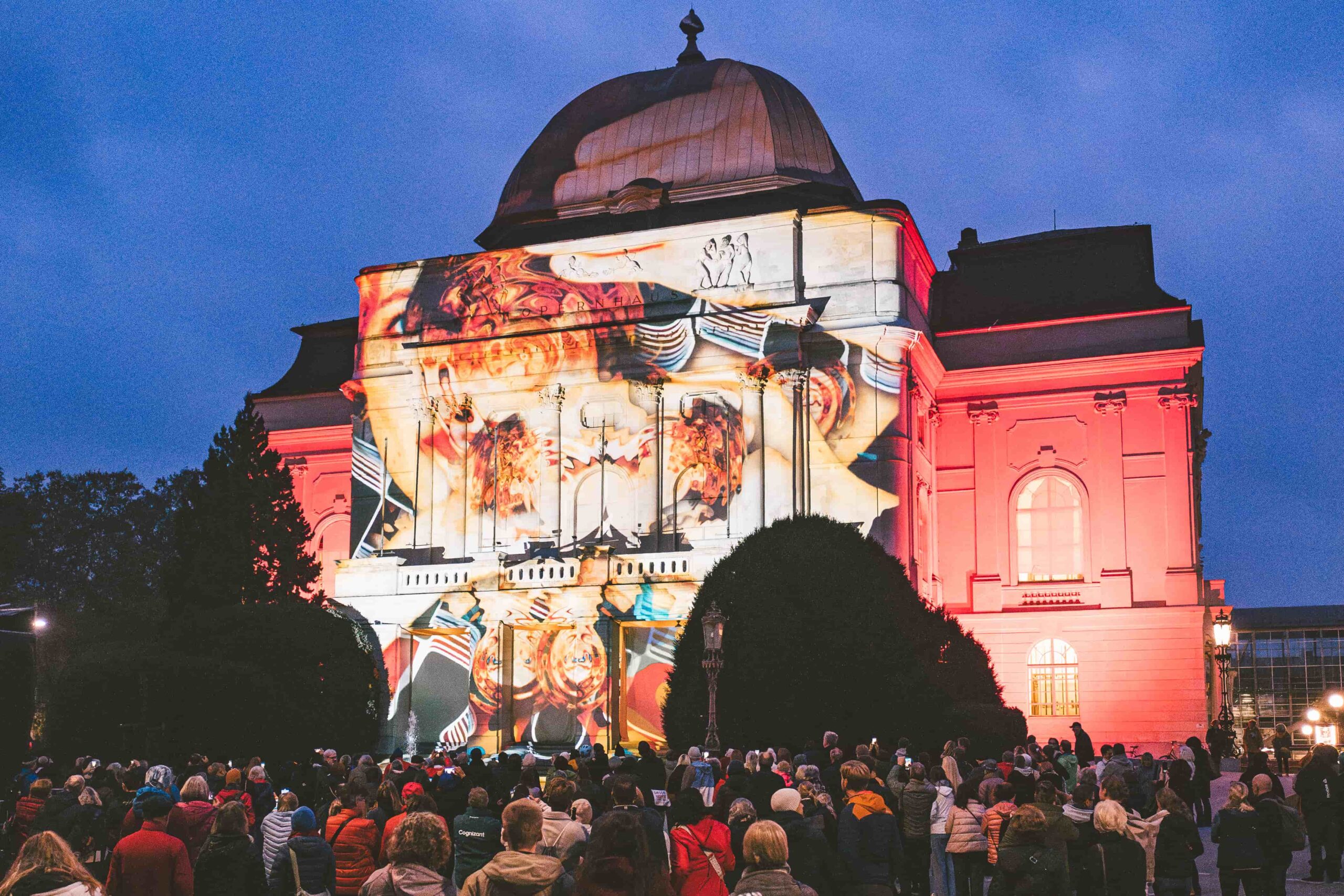
With their audiovisual projection “Unveiled – Dreams are my reality”, OchoReSotto literally unveil the complexity of our reality, building on their previous artistic explorations. Seemingly solid images are fragmented in order to be reassembled into new, illusory and surreal landscapes. The play with subjective perception, with the constructed artificiality of truth, but also with the diversity of human feelings conveys a central message of the Graz-based artist collective: reality is always a reflection of ourselves. In the interplay between the individual and society, it changes, is influenced and shifted. Visitors encounter texts about the complexity of dreaming and waking, with all their emotional depths, both in the images on the façade of Graz Opera House and in the accompanying music by Wolfgang Lehmann.
Location: Graz Opera Facade
Biography
Volker Sernetz, Stefan Sobotka-Grünewald and Lia Rädler from Graz have been working as film and projection artists for more than 20 years. In addition to video and film productions, they are successful both nationally and internationally with their large-format projections. OchoReSotto create light and sound installations on facades or literally make rooms appear in a different light. The trio also use their projection art for permanent installations such as in museums and showrooms or in combination with architecture and in public spaces.
They are founders of “strictly analog – studio for experimental progress” (Graz / Trieste / Tokyo) – a network for the promotion of alternative/experimental work and communication processes.
www.ochoresotto.com
This installation was realized with the kind support of Polestar .
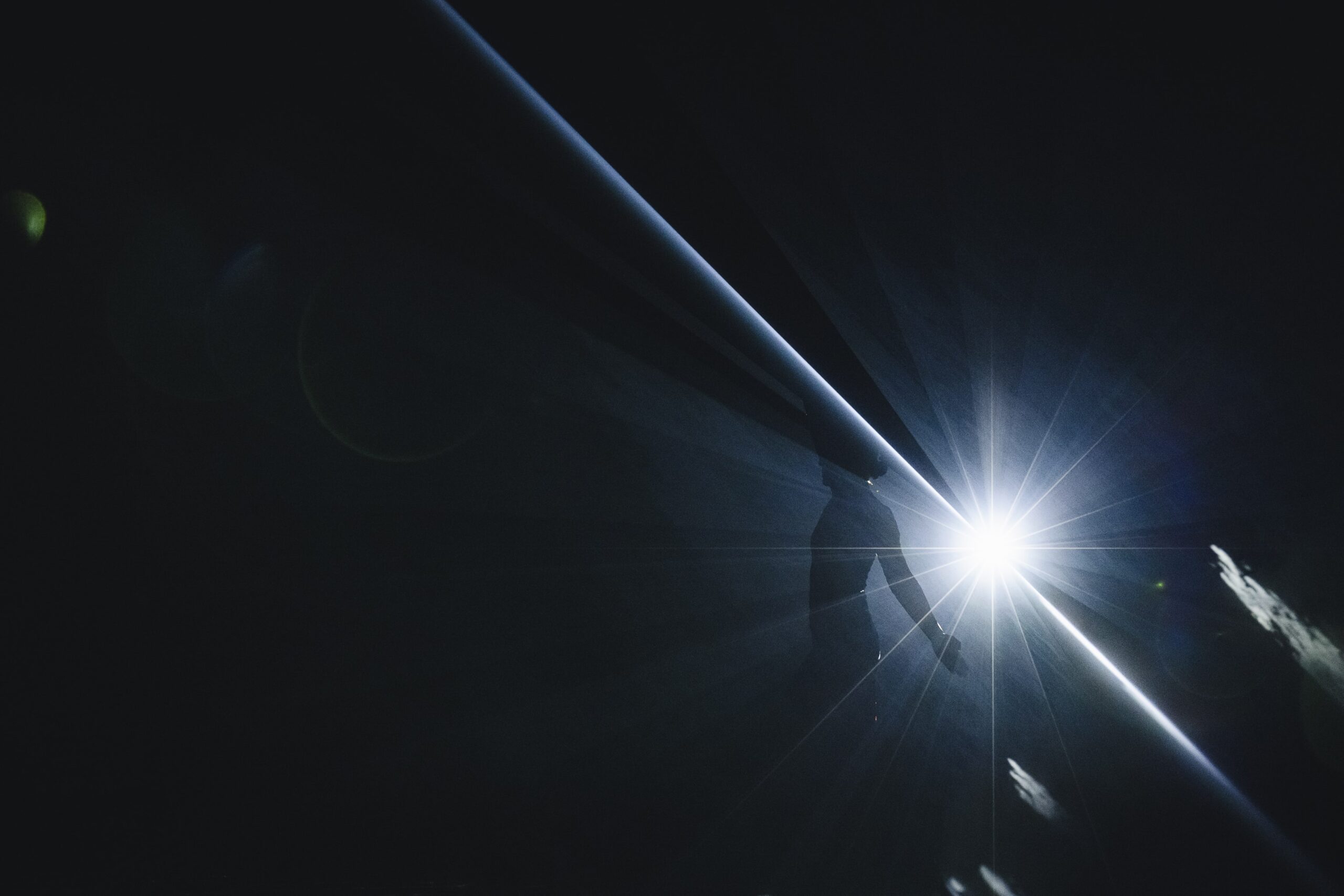
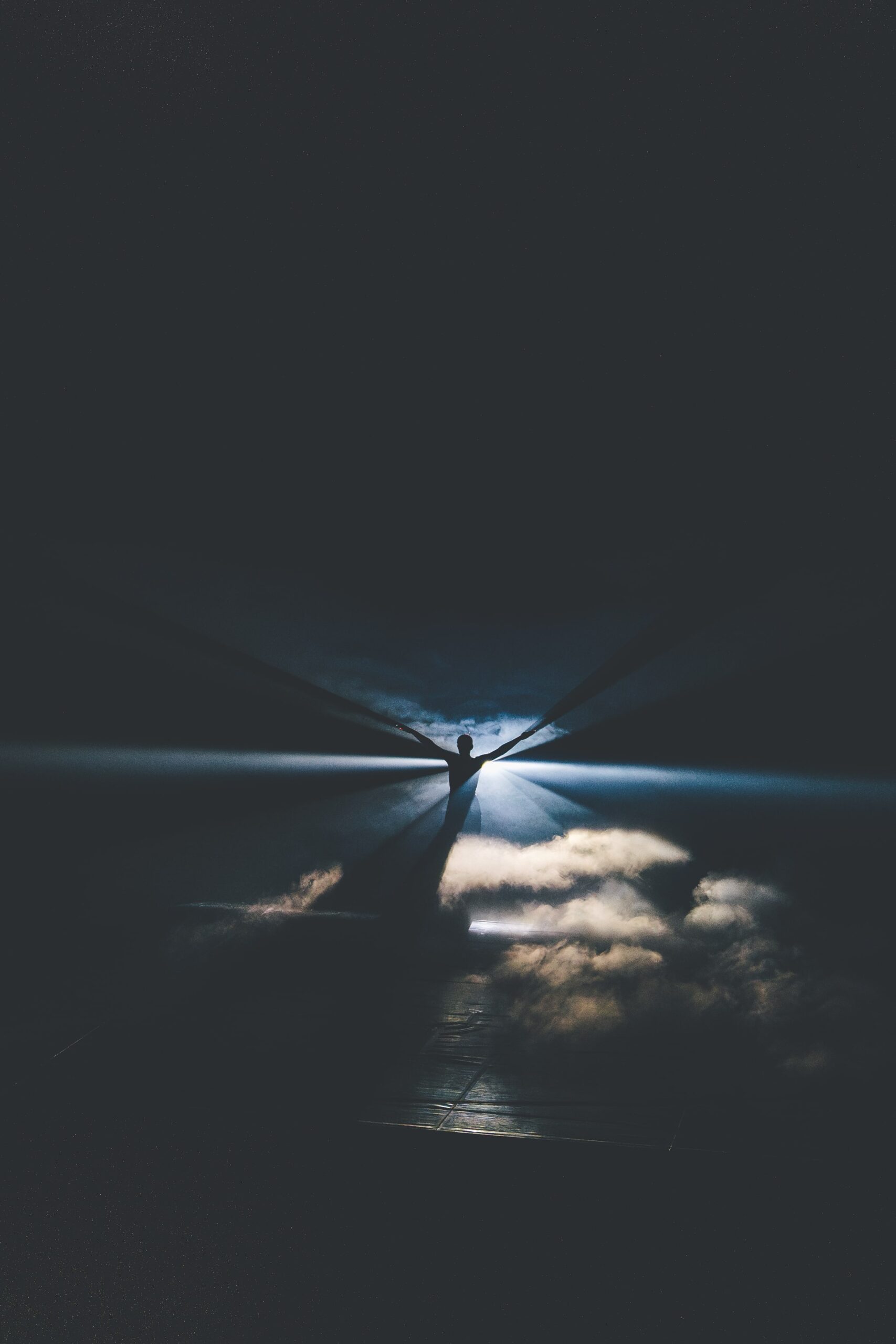
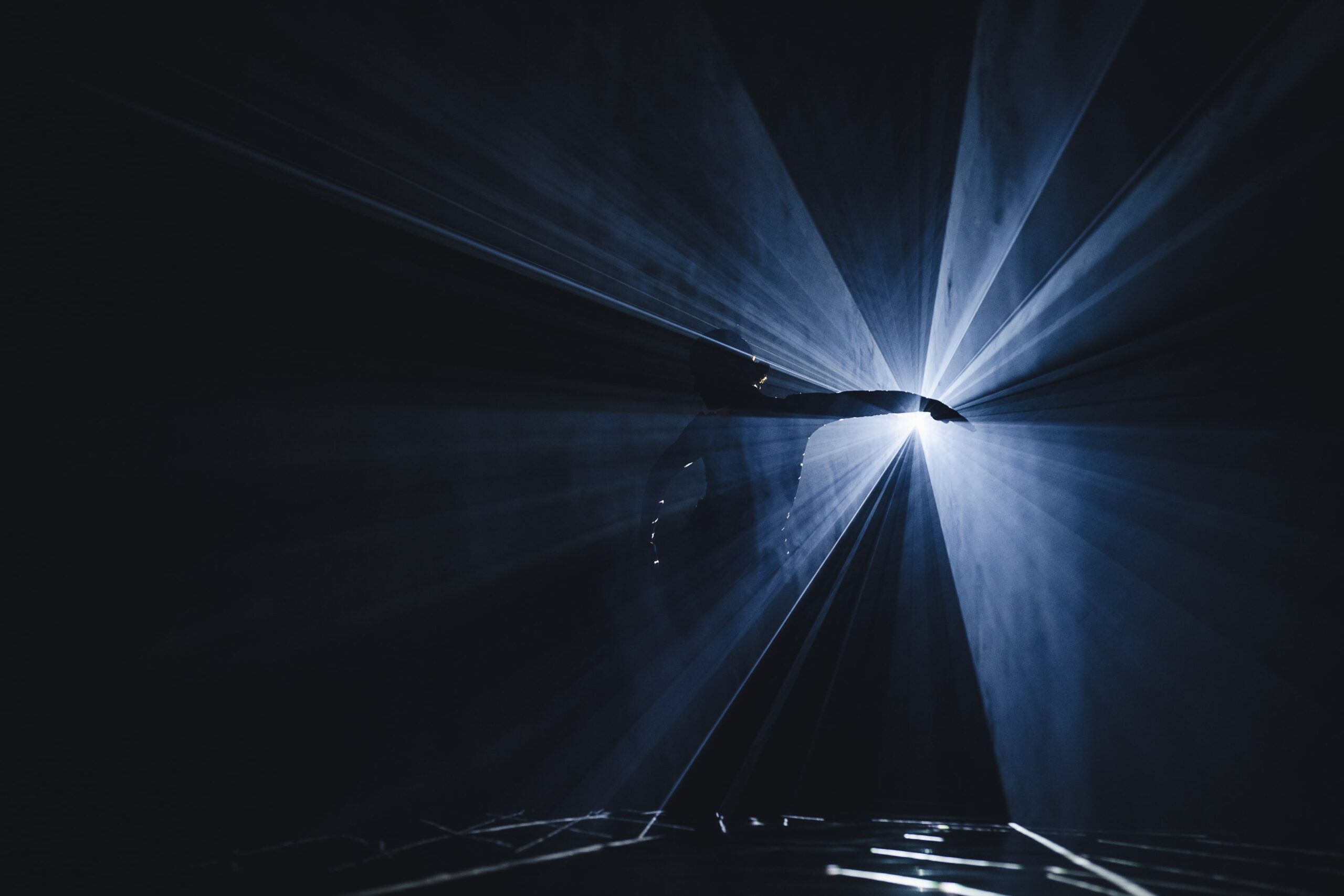
In the immersive performance “Lumière Sonore” by A.I.L.O, light and fog merge with the dance performance by installation and performance artist Anna-Eva Berge and the sound improvisation by sound artist Fabrice Leroux. The interplay of the elements continuously oscillates between the material and immaterial: it seems like a quest for absolute detachment from everything tangible; a sensual search that slowly slips away from reality.
“Lumière Sonore” by A.I.L.O will be presented as part of the 529th anniversary of Bühnen Graz on October 24, 2024 at Oper Graz. Tickets are available at www.ticketzentrum.at.
Opera Graz
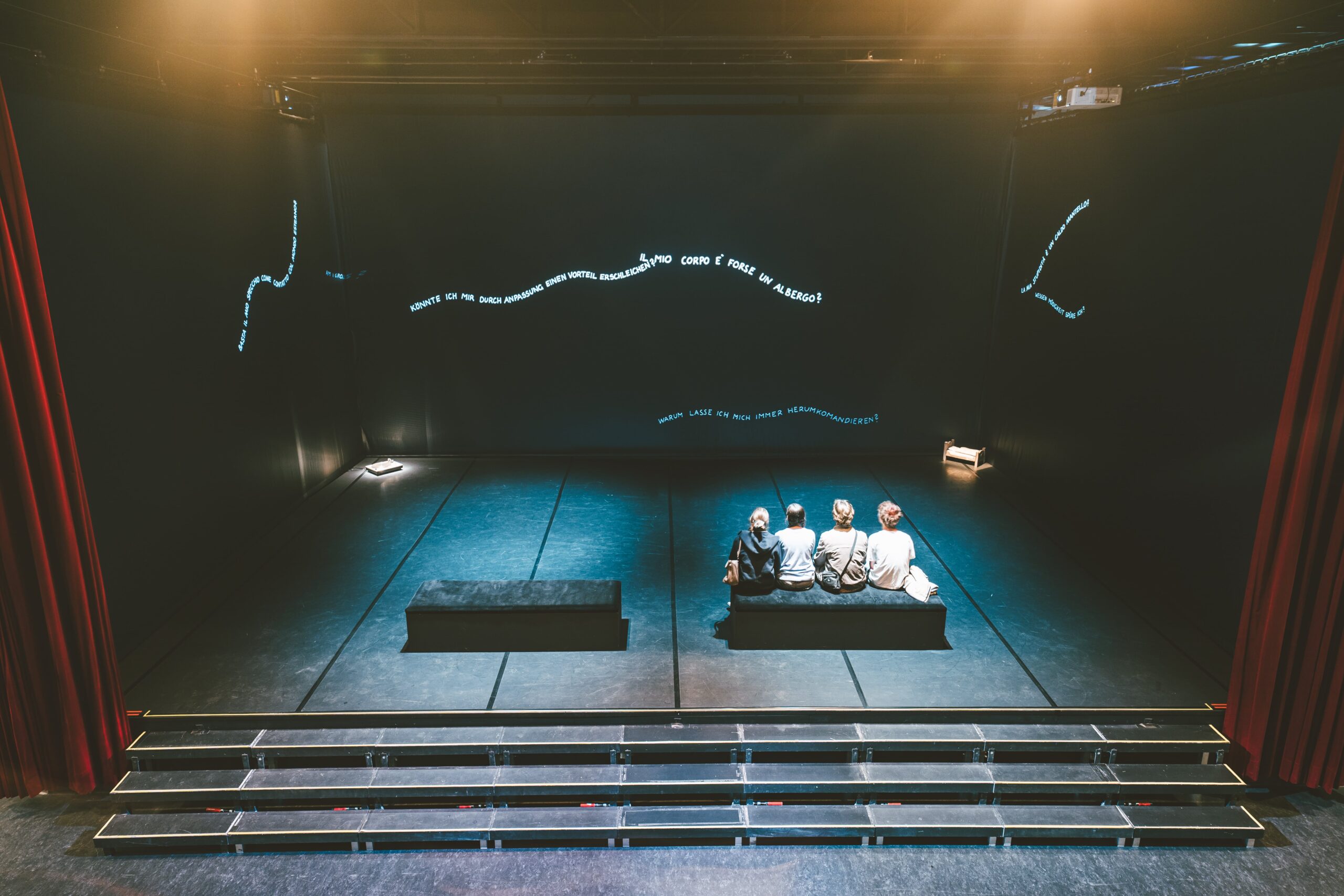
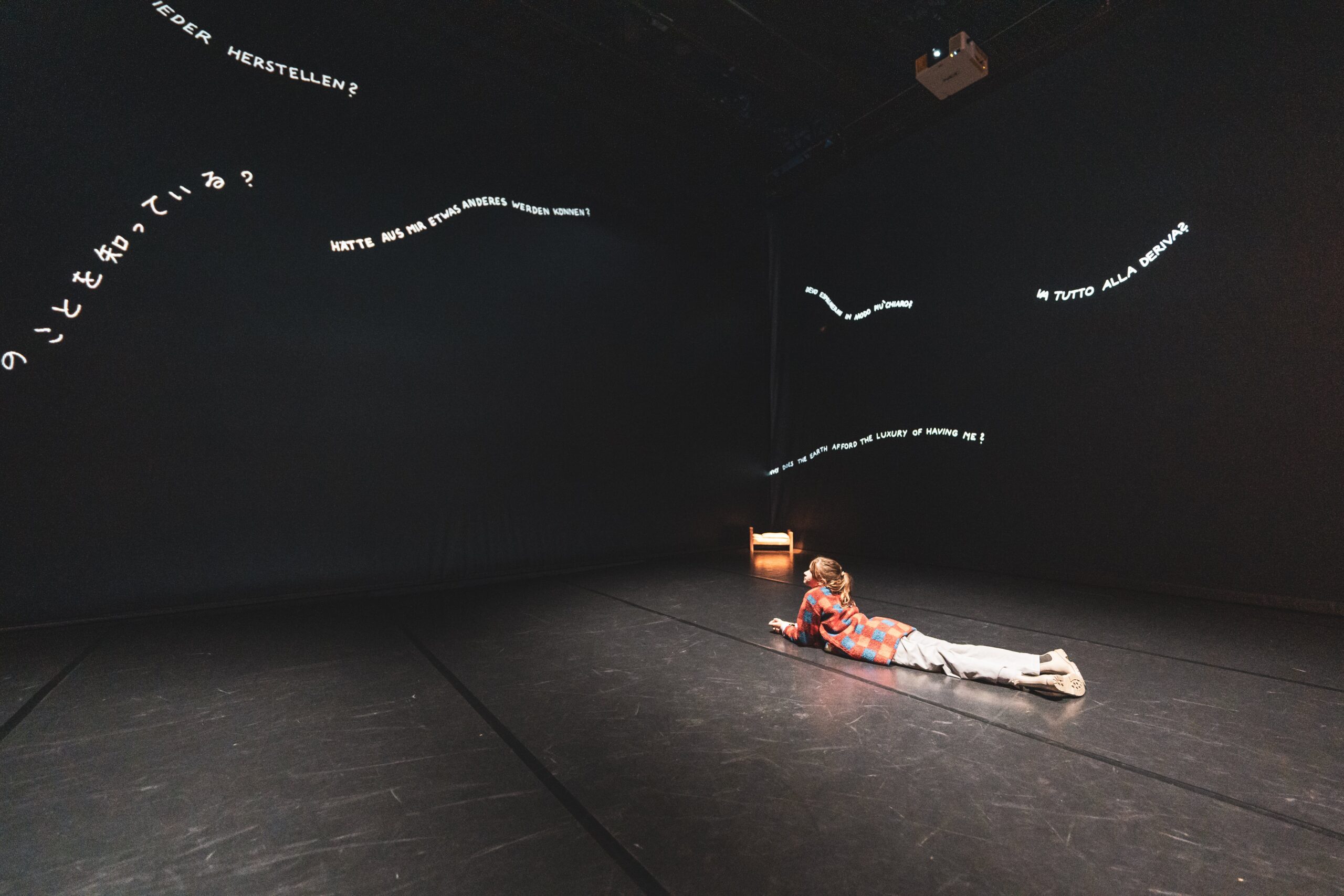
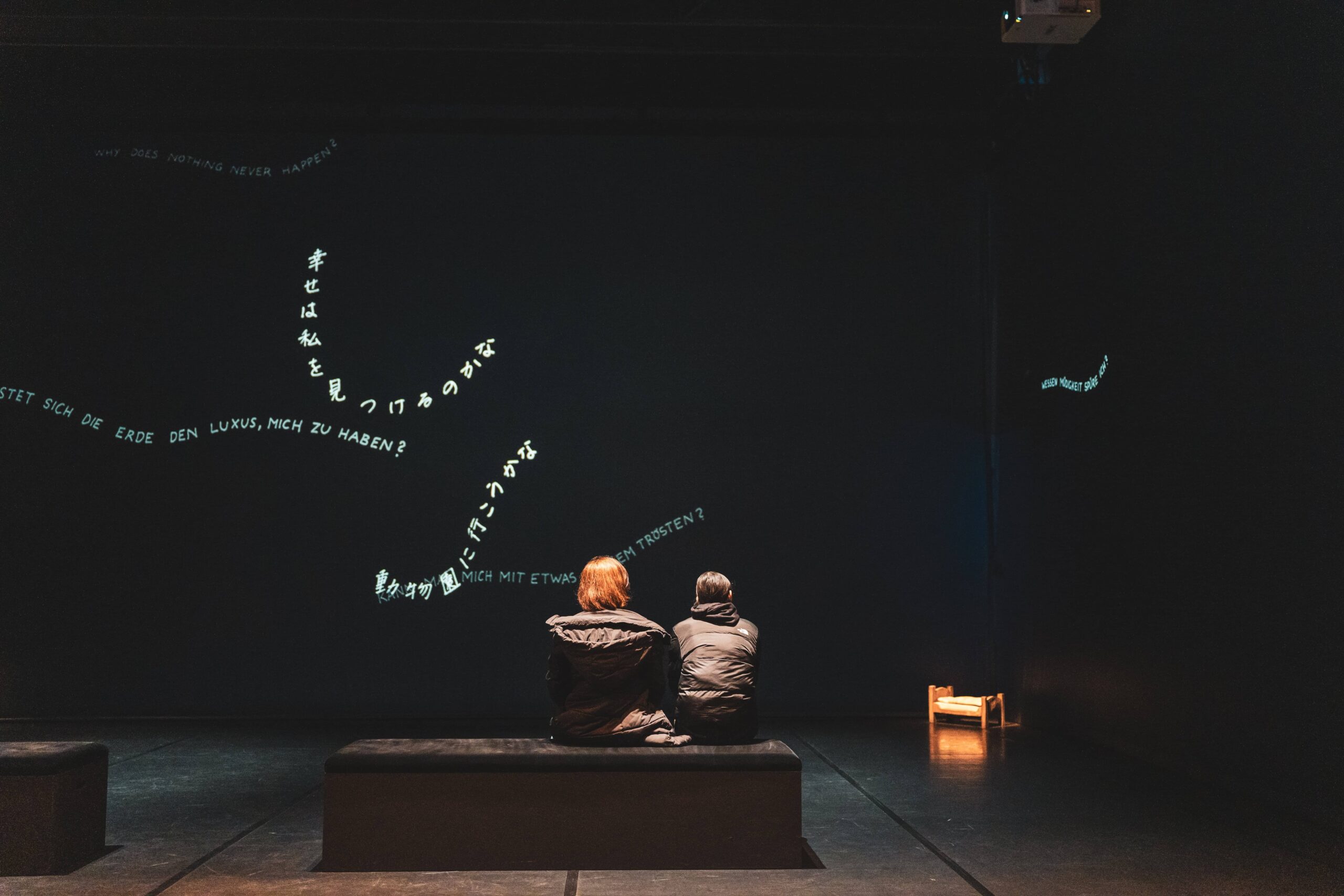
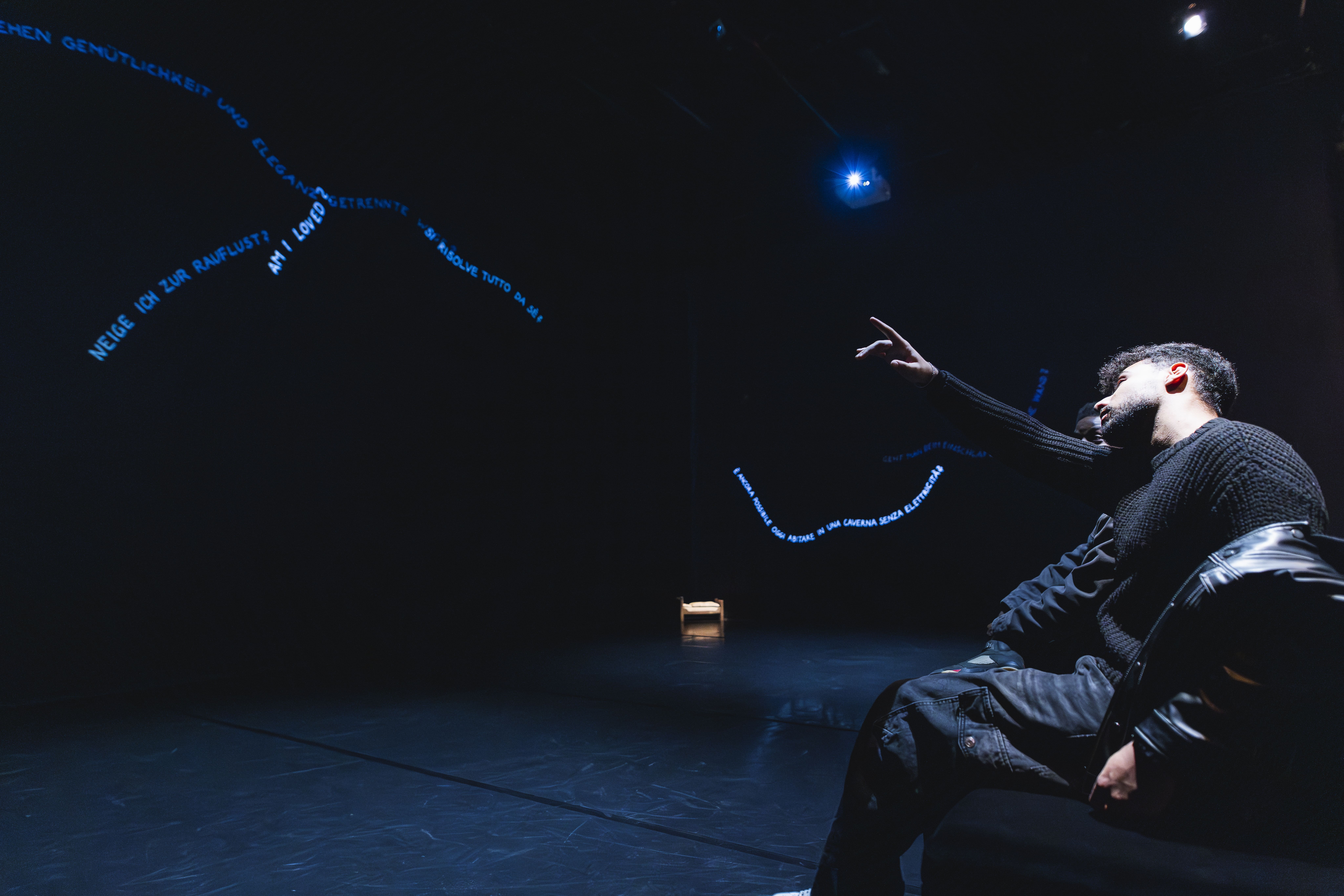
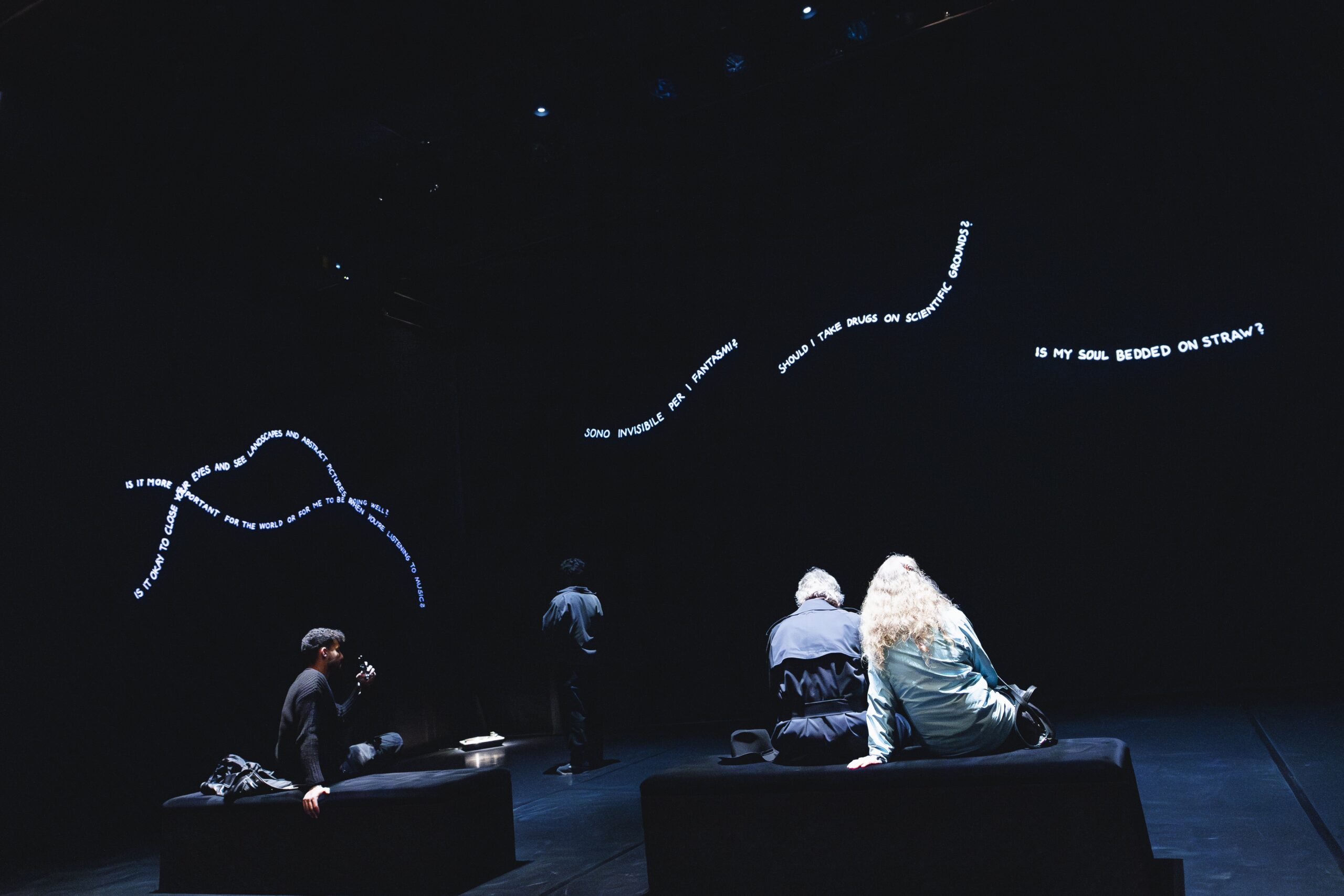
People tend to use their minds to categorize and classify the world and thus make sense of it. In reality, however, all our knowledge provides no answers to many existential, burning and banal questions: Why does nothing ever happen? Have I never been fully awake? Should I get drunk? Or: Will happiness find me? With their project, the renowned Swiss artist duo Peter Fischli and David Weiss throw around 1,400 recurring questions onto walls with a bed at the foot of them – possibly because we like to ask ourselves such serious but also amusing questions before sleep overtakes us. As one of the most important works of contemporary art, which was awarded the Golden Lion at the 50th Venice Biennale in 2003, Fischli & Weiss’ question projections demonstrate the complexity of seemingly simple questions and encourage us to think about them more intensively.
A project in cooperation with the Next Liberty.
Location: Next Liberty
Biography
Peter Fischli (Swiss, born 1952) and David Weiss (Swiss, 1946-2012) are an artist duo best known for their multimedia installations and films that present everyday materials in absurd and humorous contexts. Fischli was born in Zurich and studied at the Academy of Fine Arts in Urbino and Bologna. Weiss, also born in Zurich, studied at the School of Applied Arts in Zurich and Basel. Fischli and Weiss began their collaboration in 1979 with the sausage series, 10 color photographs of everyday scenes depicted by disguised sausages. The absurdity and playfulness that characterize all their works show the influence of Dada, Surrealism and Pop Art.
Credits
Courtesy: Private collection
Provenance: Private collection
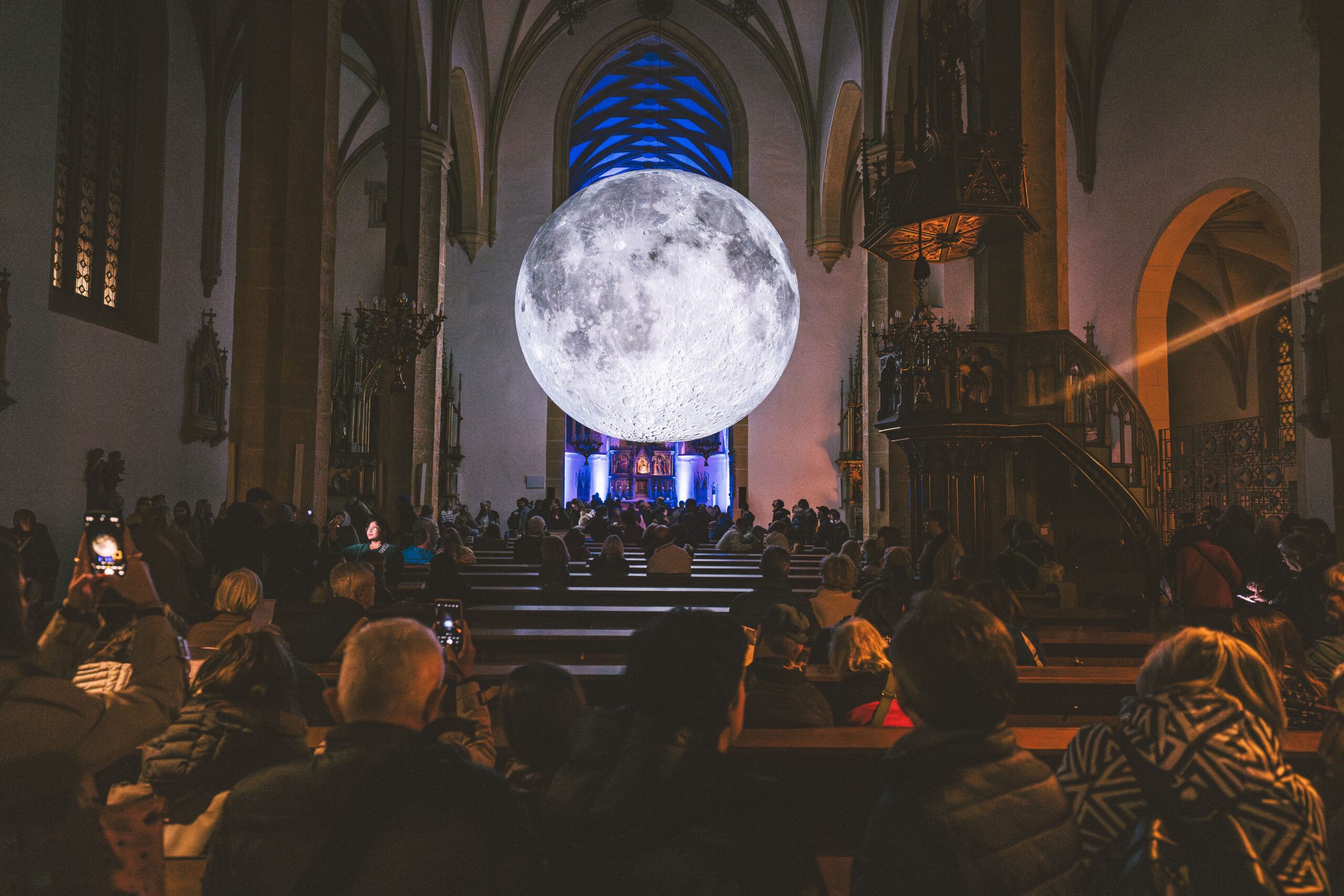
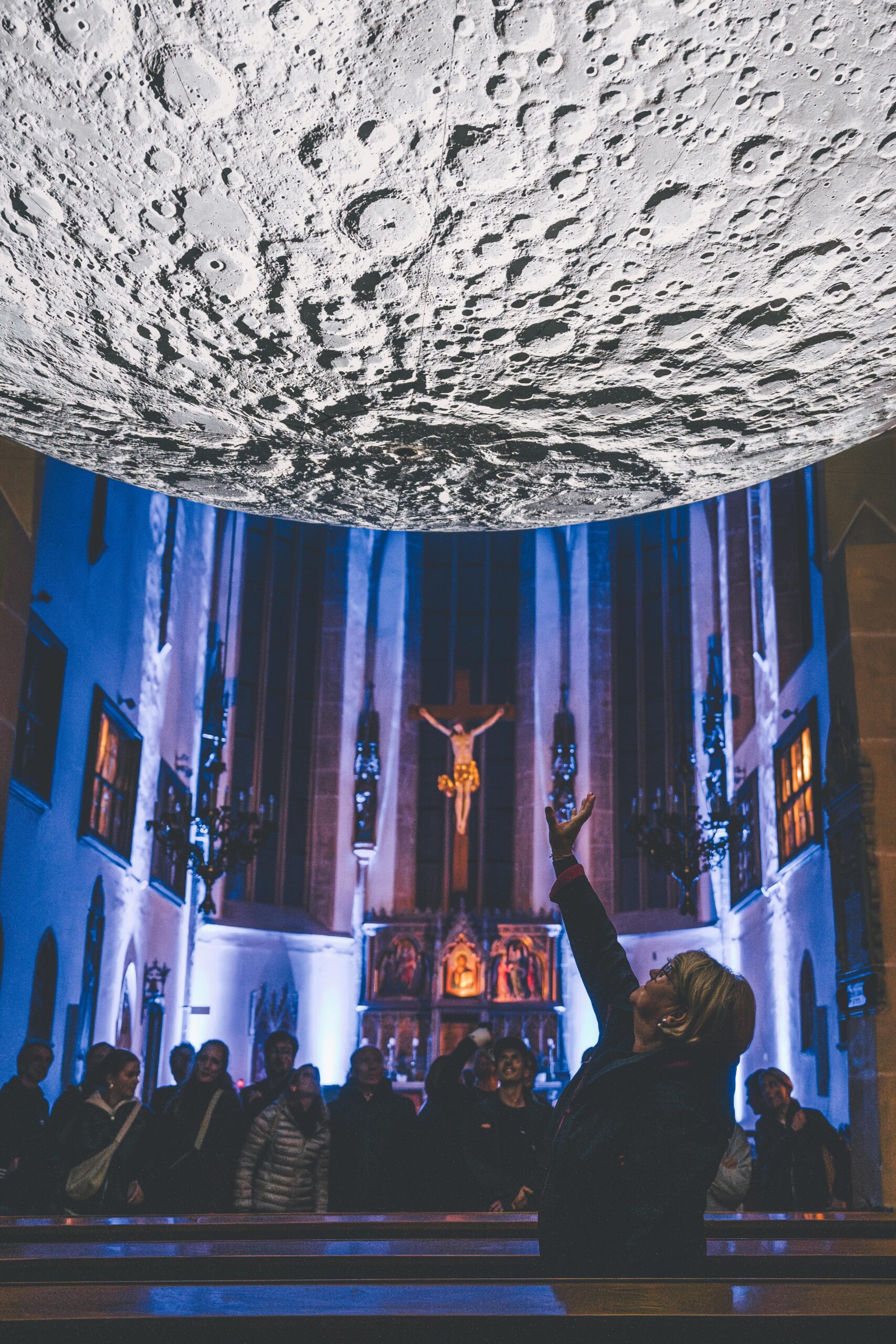
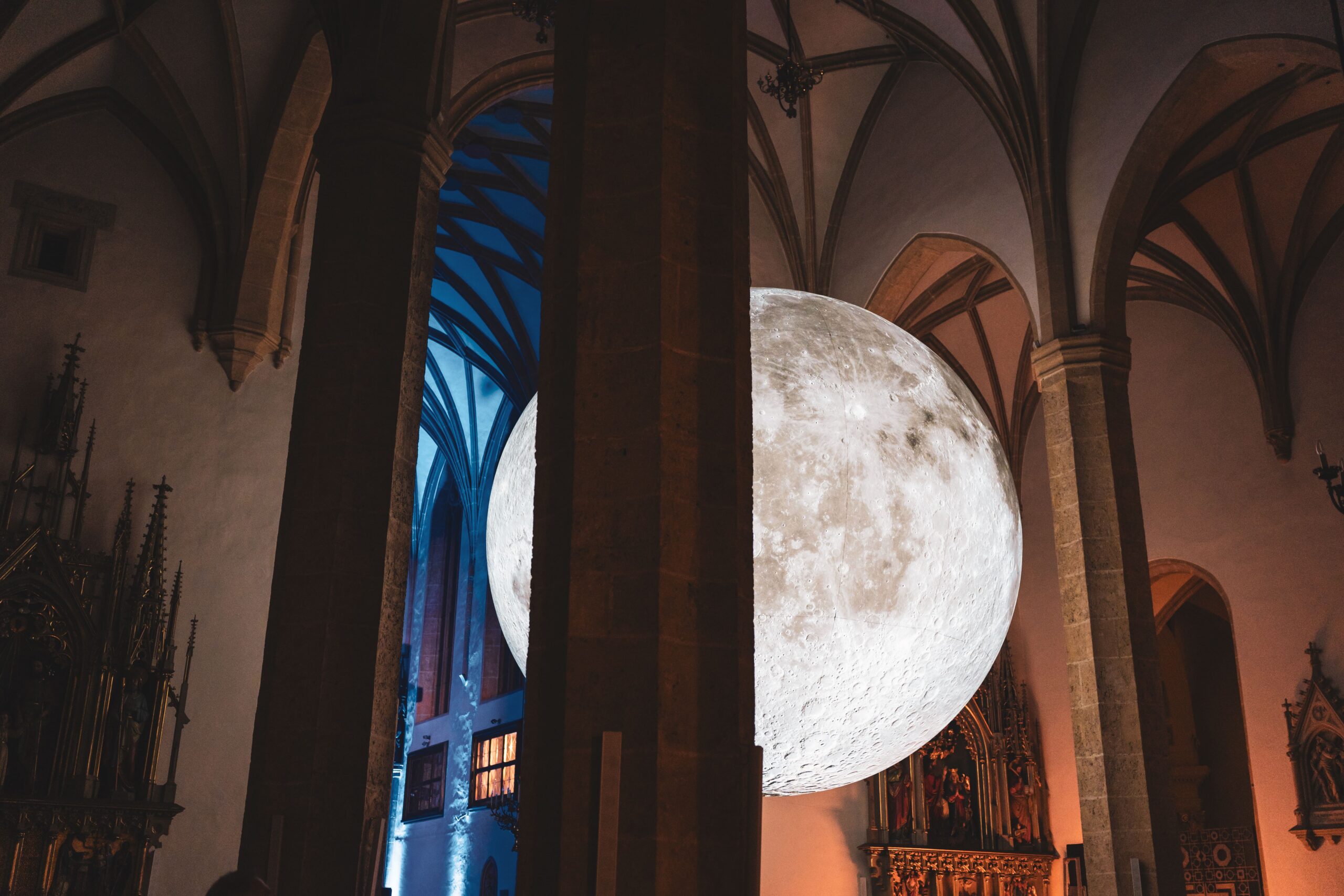
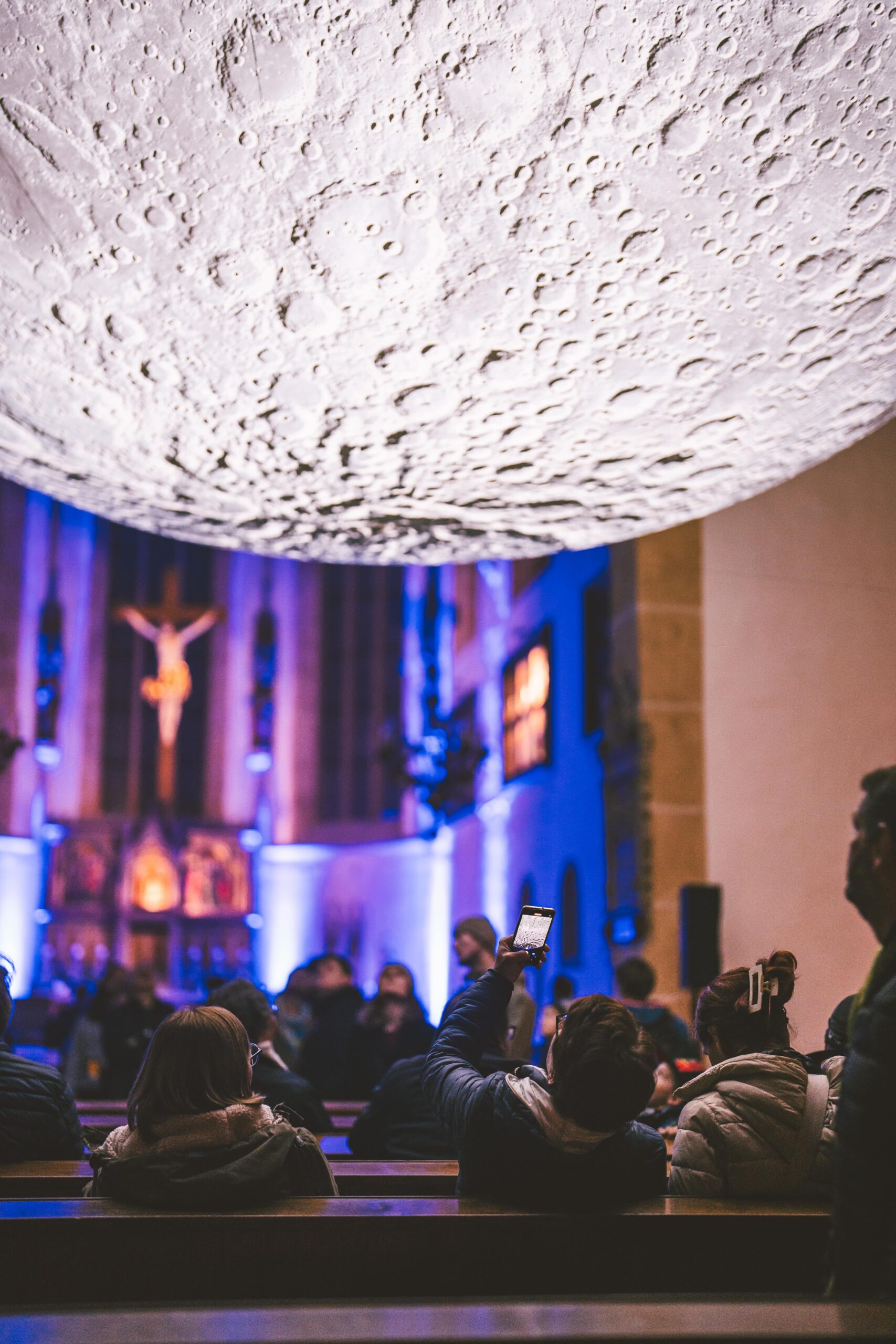
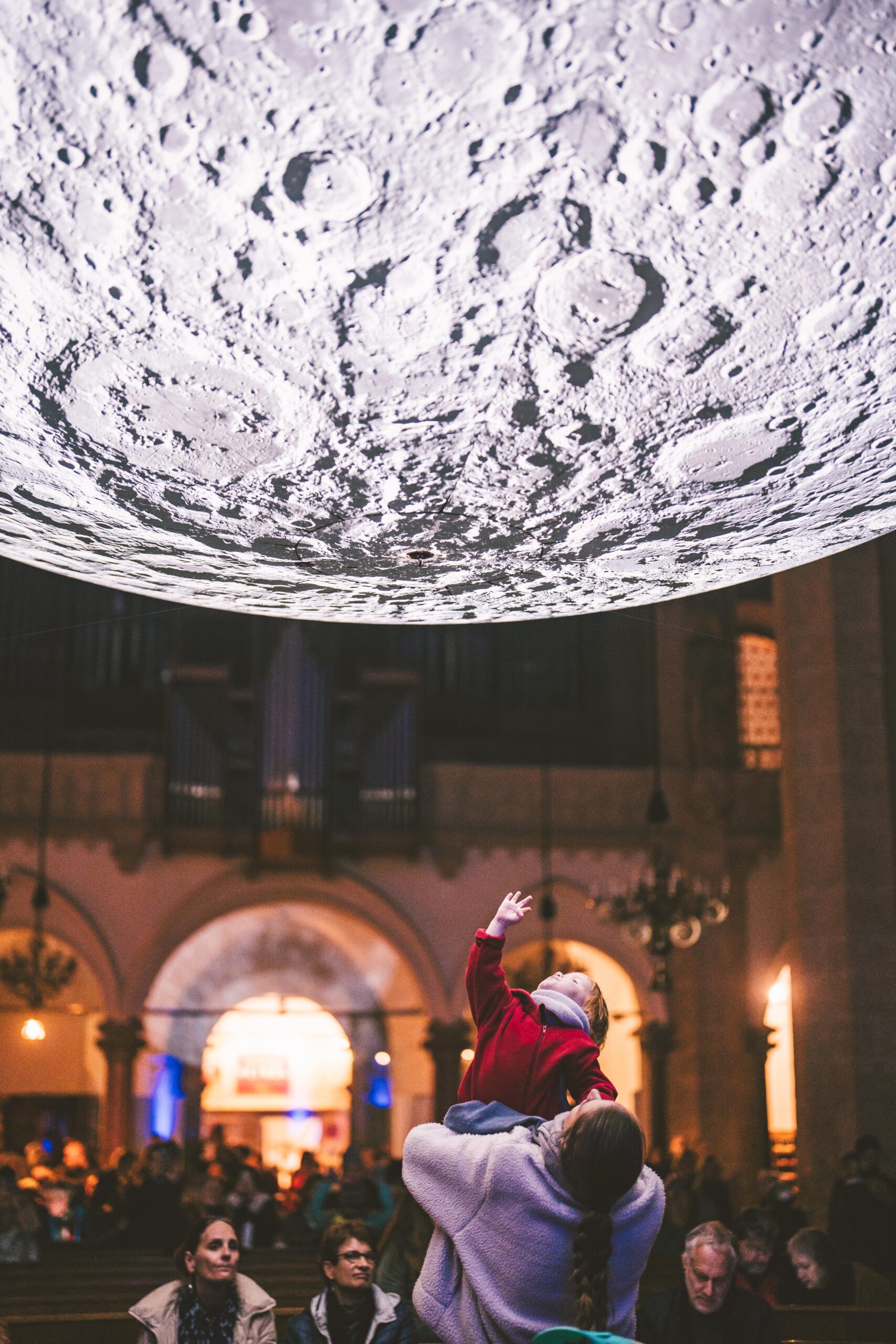
It is a powerful sight that opens up as you enter the Graz parish church: the moon. Luke Jerram’s light sculpture “Museum of the Moon” shows a replica of the moon with a diameter of six meters. Each centimeter replicates around five kilometers of the moon’s surface, whose craters, mountains and valleys become visible to viewers. In the experience here, NASA images of the moon merge with soft moonlight radiating from the interior, acoustically complemented by a surround sound composition by award-winning composer Dan Jones. In the latter, sounds from the Apollo moon missions are interwoven with classical music, Claude Debussy’s “Clair de Lune”, as well as sounds of nature. The “Museum of the Moon” project has been shown in more than 300 exhibitions in around 30 countries and has already inspired millions of people. The viewer’s interpretation changes from place to place – on the one hand a sign of our cultural differences, on the other hand proof of how much the moon touches people across all borders and thus connects them.
Location: Stadtpfarrkirche
Biography
Luke Jerram’s multidisciplinary practice includes the creation of sculptures, installations and live art projects. He lives in the UK but has worked internationally since 1997 and has created a number of extraordinary art projects that excite and inspire people around the world. In 2023 alone, he had over 115 exhibitions in 27 different countries, which were visited by more than 3 million people.
Credits
The Museum of the Moon project was commissioned by several creative organizations brought together by Luke Jerram and the Norfolk & Norwich Festival. These include Greenwich+Docklands International Festival, Brighton Festival, Without Walls, Cork Midsummer Festival, We The Curious, Lakes Alive, Provincial Domain Dommelhof, Les Tombées de la Nuit, Rennes and the Kimmel Center for the Performing Arts. The artwork was created in collaboration with the UK Space Agency, the University of Bristol and the Association of Science and Discovery Centres. The Astrogeology Science Centre in the USA produced the 23-metre-wide, high-resolution image of the moon, which was taken by a NASA satellite with a Lunar Reconnaissance Orbiter Camera.
This installation was realized with the kind support of Grazer Wechselseitige Versicherung .
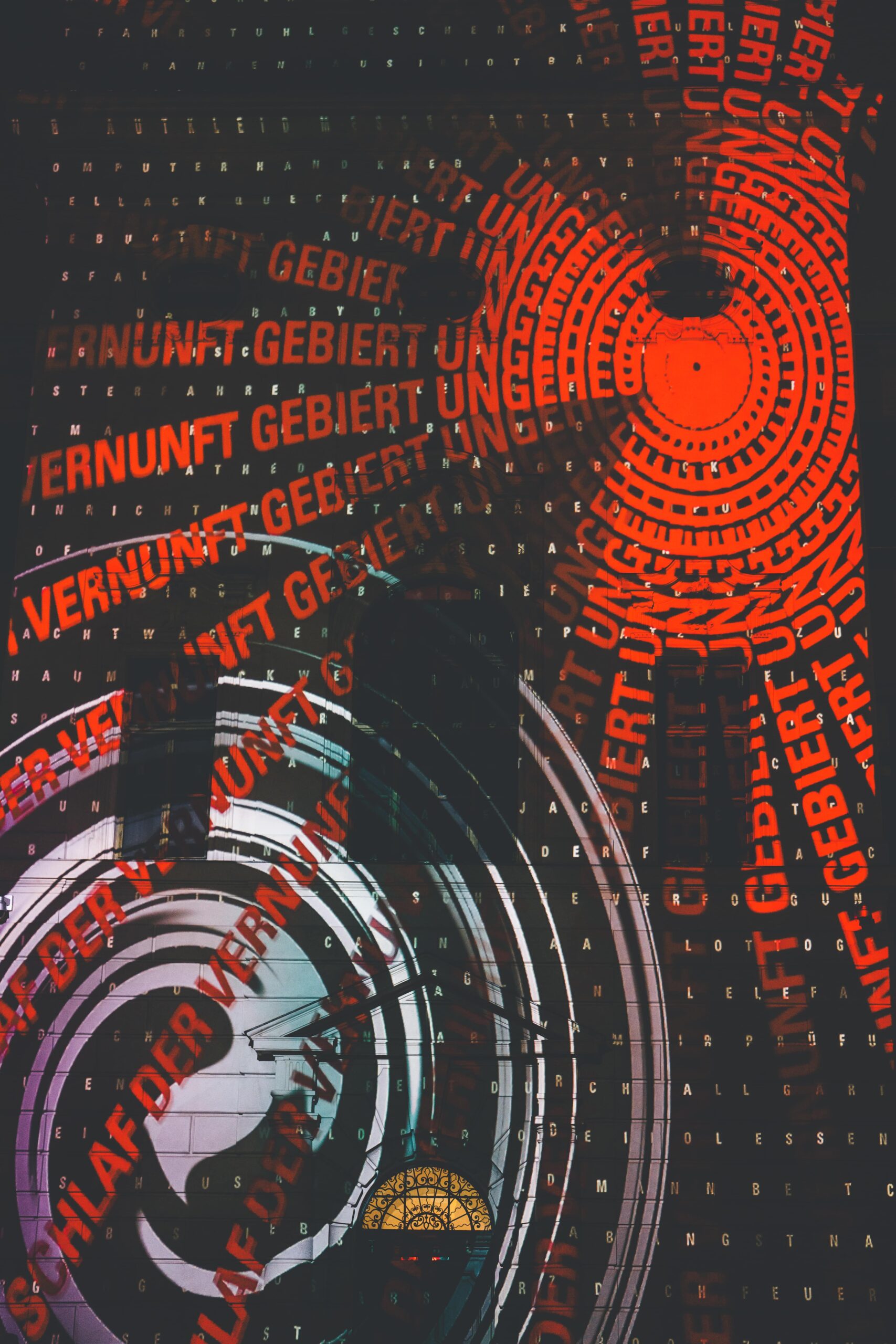
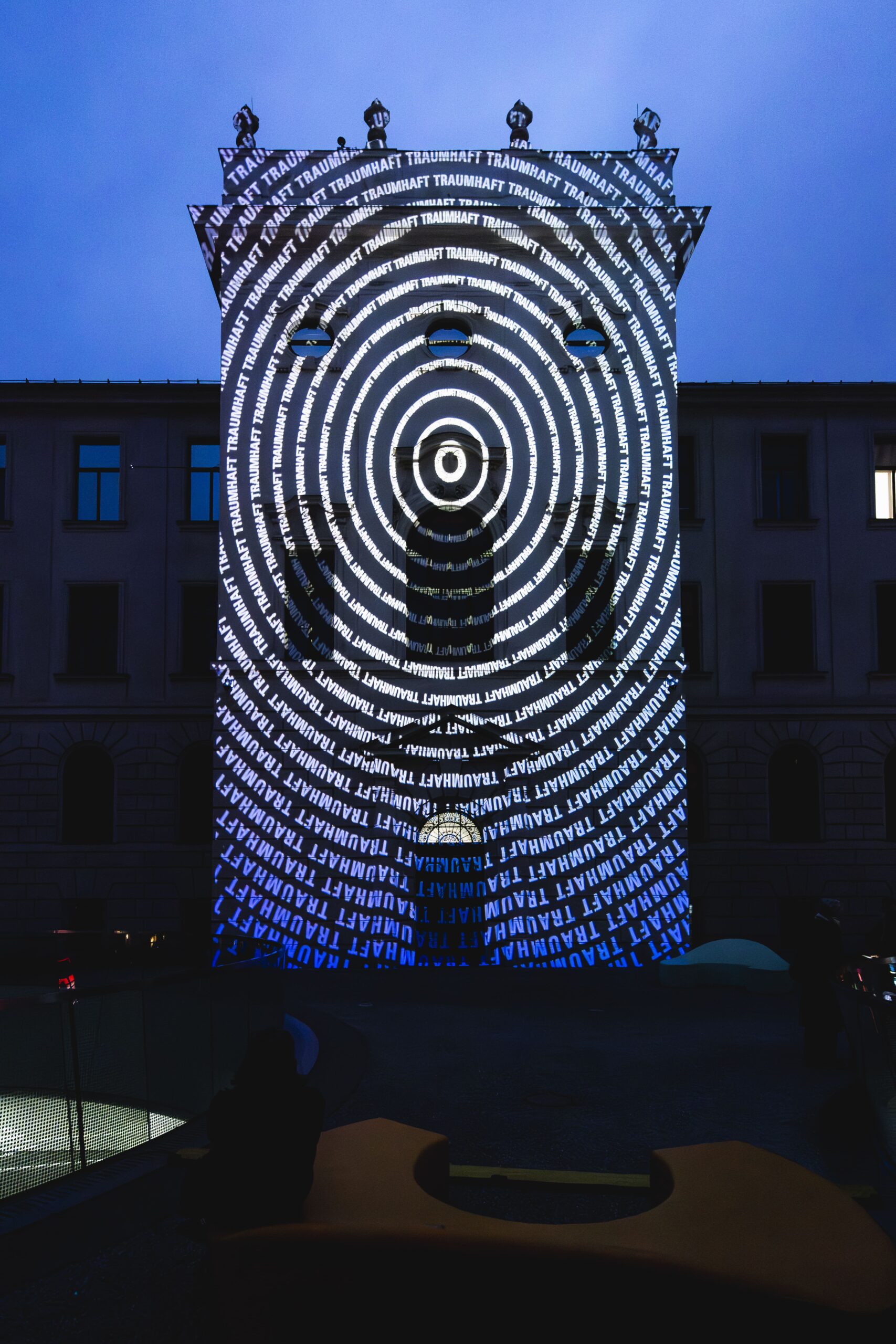
Is it sleep or the dream of reason that gives birth to monsters? Inspired by a Spanish artwork with an ambiguous title, the artists Detlef Hartung and Georg Trenz pose the question of whether the presence or absence of our reason creates monsters, thereby focusing their project on the polarity of statements. The associative space of thought created by the artist duo is based on playing with contrasts: sleep and wakefulness, dream and reality, beauty and ugliness. Hartung & Trenz use the architectural conditions of the Joanneum quarter in Graz to open imaginary windows by means of light and typography, allowing insights into the underworld they have created. With the musical support of sound and media artist Seppo Gründler, the cone-like funnels in the floor are transformed into islands of sound that form a continuous, partly contrasting, partly adding sound space and are perceived differently depending on the visitor’s point of view.
A project as a guest at the Universalmuseum Joanneum.
Location: Joanneum Universal Museum
Biography
In over 20 years of collaboration, Detlef Hartung and Georg Trenz have developed their own form of artistic expression with which they transform texts into impressive images. Concrete language becomes pictorial signs in terms of both content and form. The resulting word images create large-scale image-text spaces that correspond with the real, three-dimensional spaces onto which they are projected.
This installation was realized with the kind support of Kronen Zeitung .
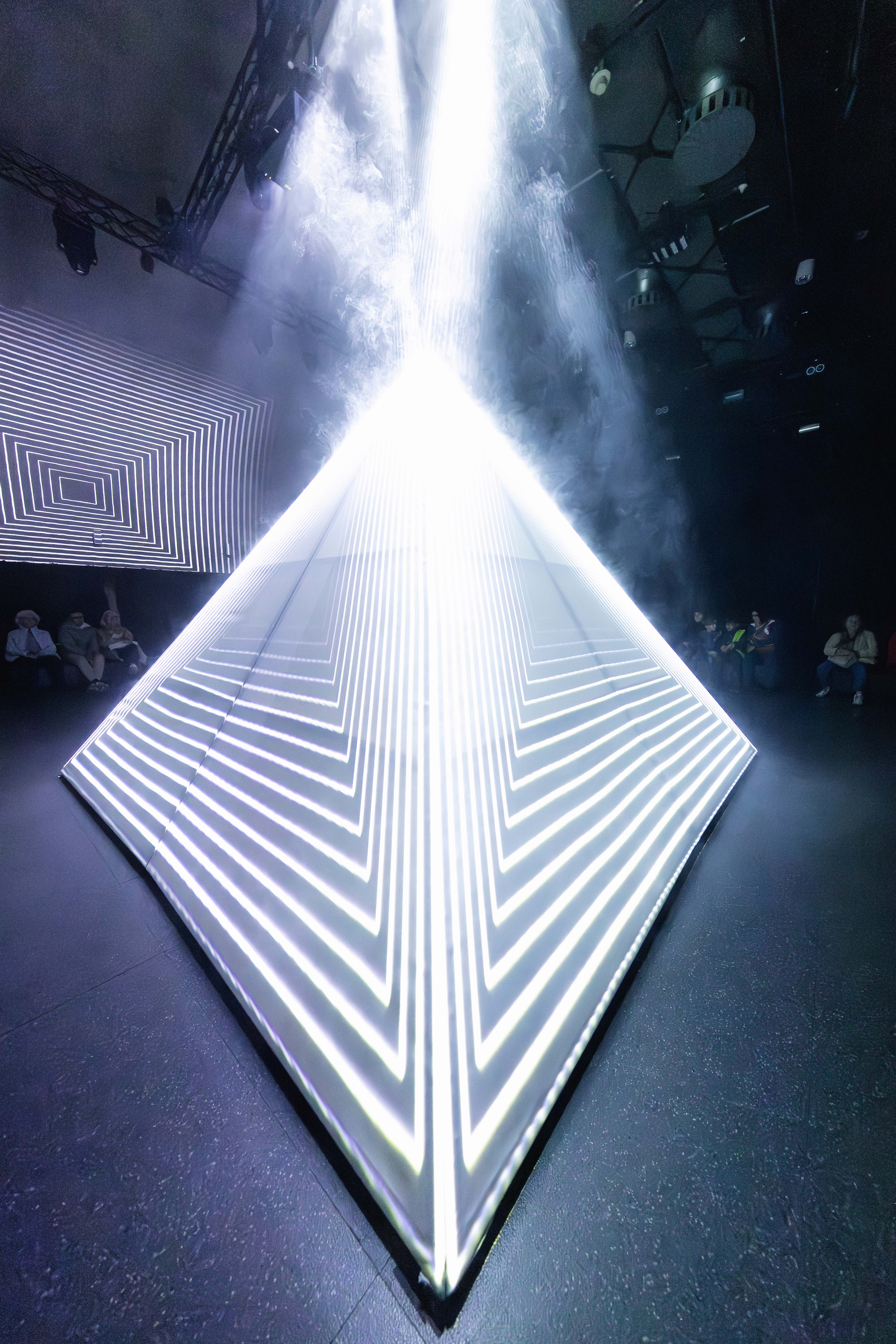
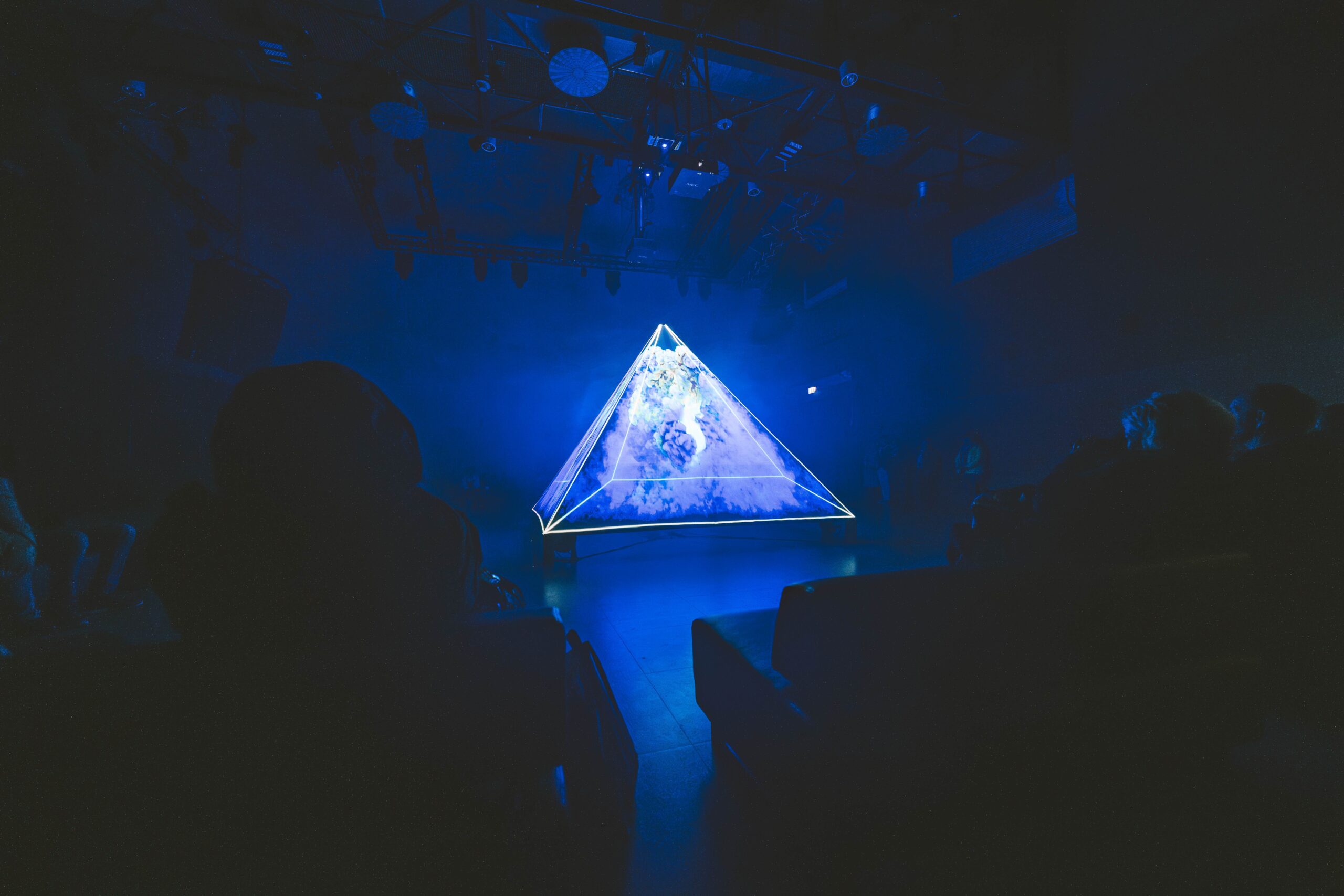
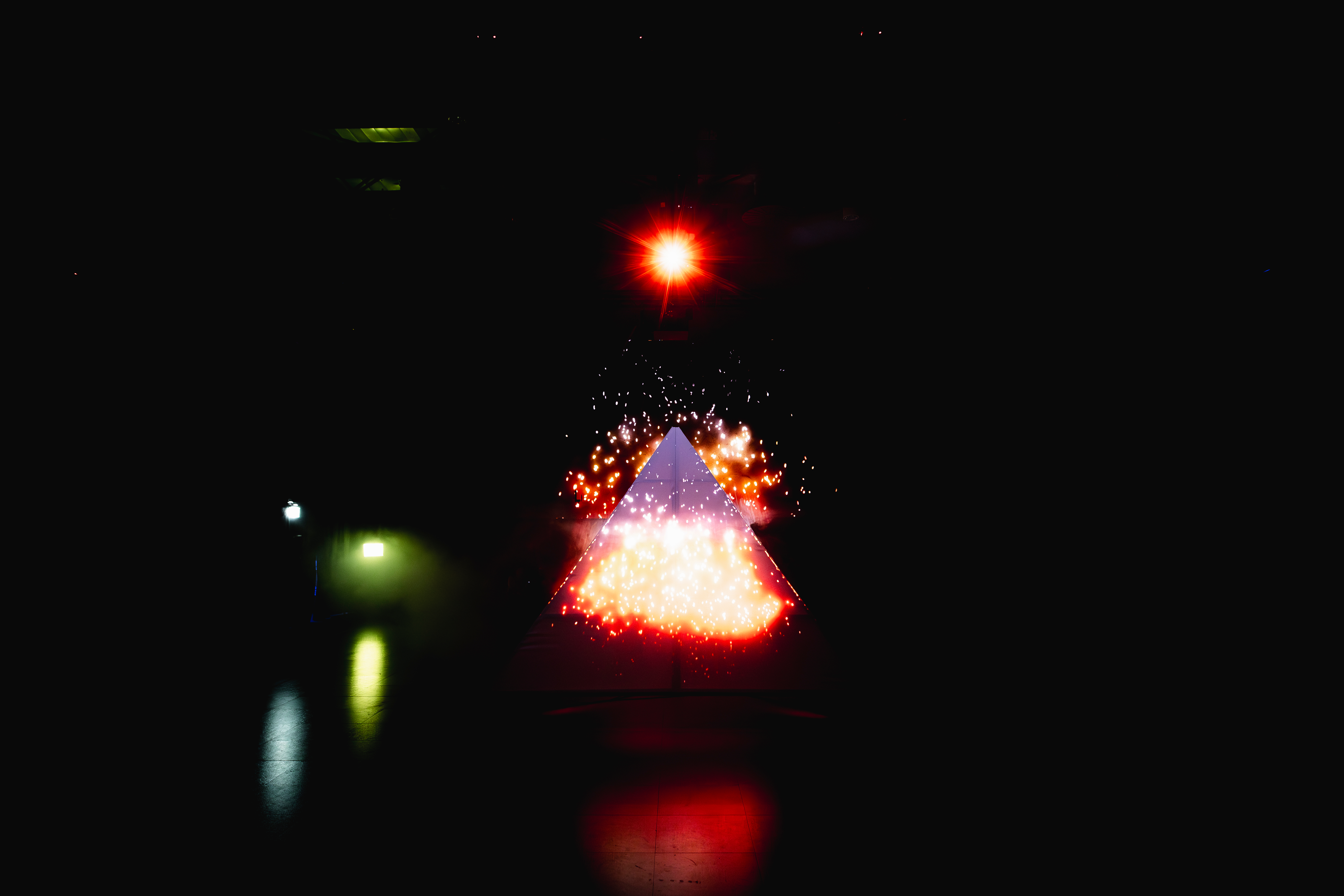
Surrounded by the massive dolomite rock of Graz’s Schloßberg, the “Dom im Berg” becomes a powerful place of inspiration. In a world that is increasingly dominated by virtual experiences, “OM” deliberately sets a counterpoint. Created using state-of-the-art digital tools and following classic design principles, it opens up an analog space of experience that directly targets visitors’ senses.
The freely accessible audiovisual installation invites visitors to discover ever new perspectives and enables an experience that is as personal as it is intense. Studio MO:YA is realizing this project together with Graz-based musician Markus “Seismo” Graf, who composed an original sound composition for the Ambisonic sound system at Dom im Berg.
On this audiovisual journey, conceived without a clear beginning or end, there are no limits – only the freedom to linger, to dream and to be enchanted by the magic of the place.
Location: Dom im Berg
Biography
Studio MO:YA is a creative studio based in Graz and Salzburg that specializes in immersive multimedia projects. Werner Huber and Roland Mariacher have been creating unique experiences with their work since 2011 by interweaving physical and virtual realities using video projections. The two designers were awarded the State Prize for Design in the “Design Concepts” category and are lecturers at the Institute for Design and Communication at FH Joanneum.
This installation was realized with the kind support of Kronen Zeitung .
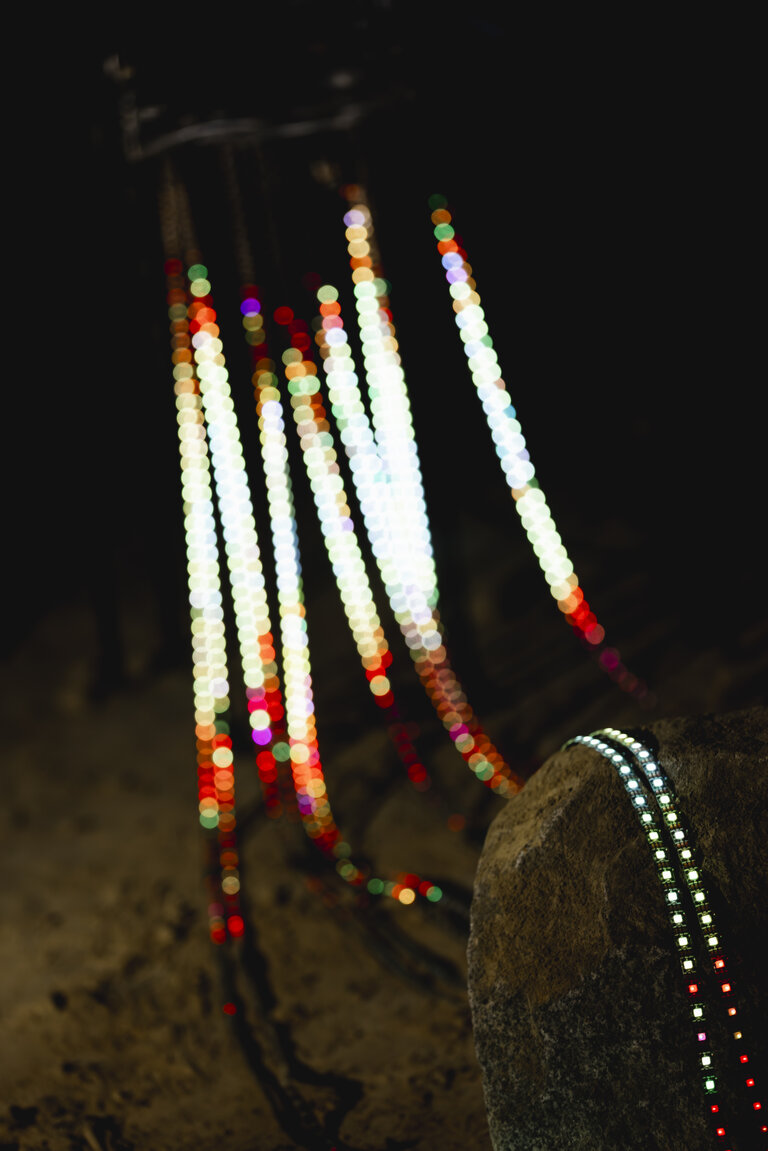
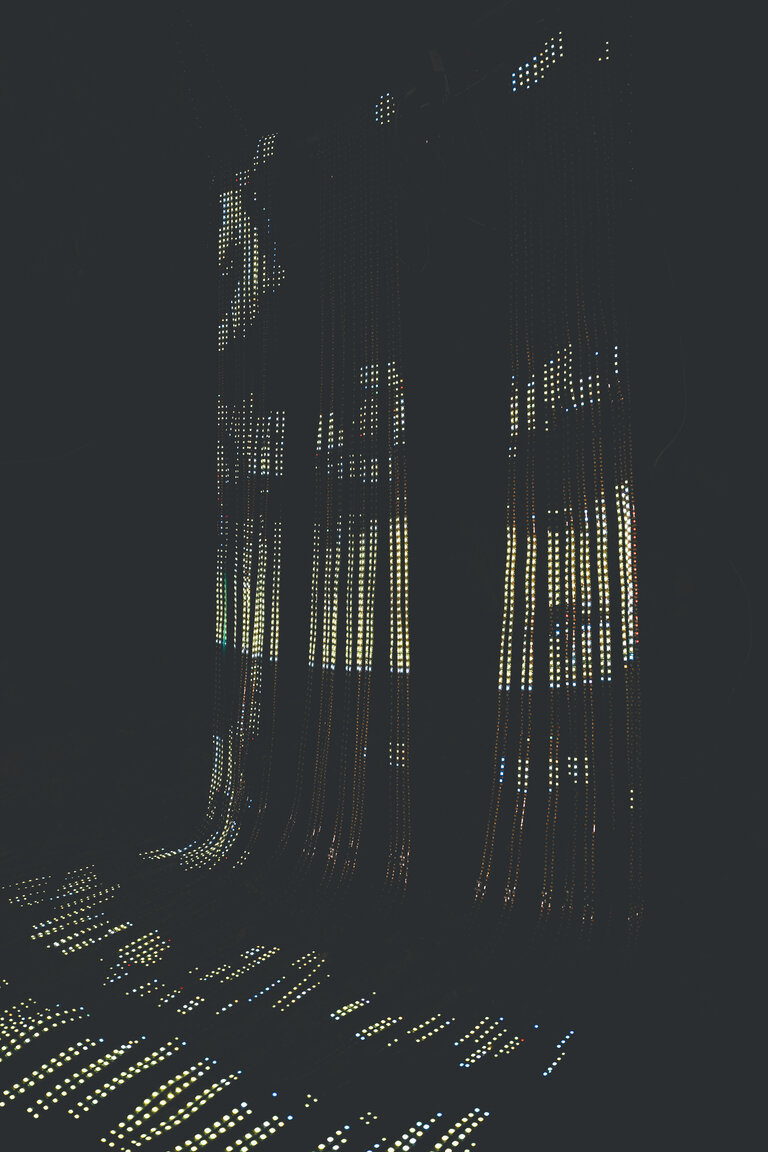
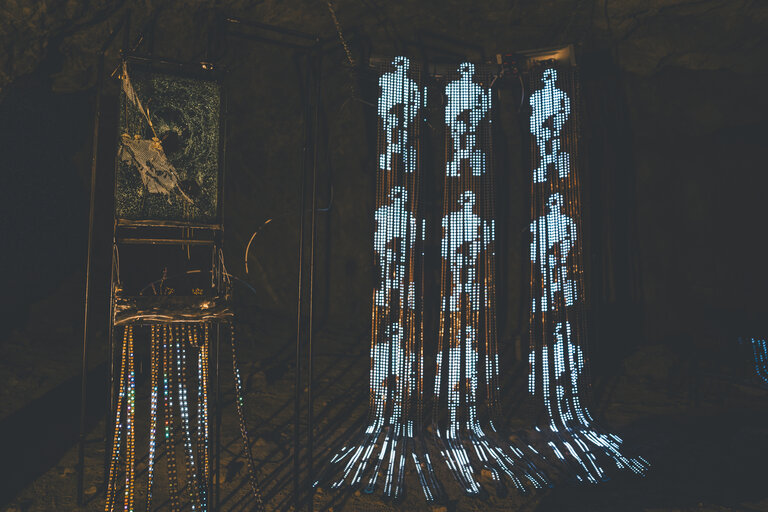
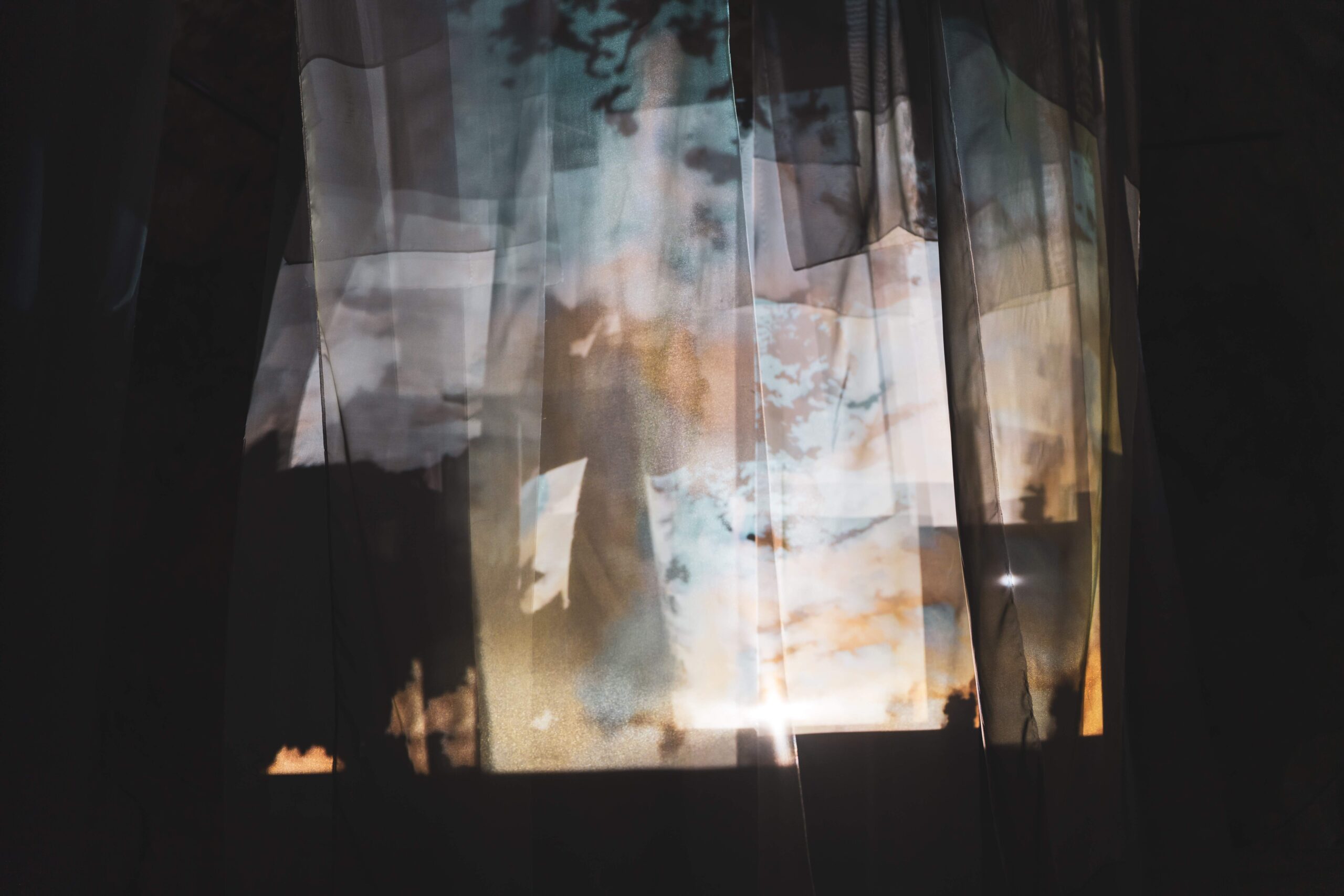
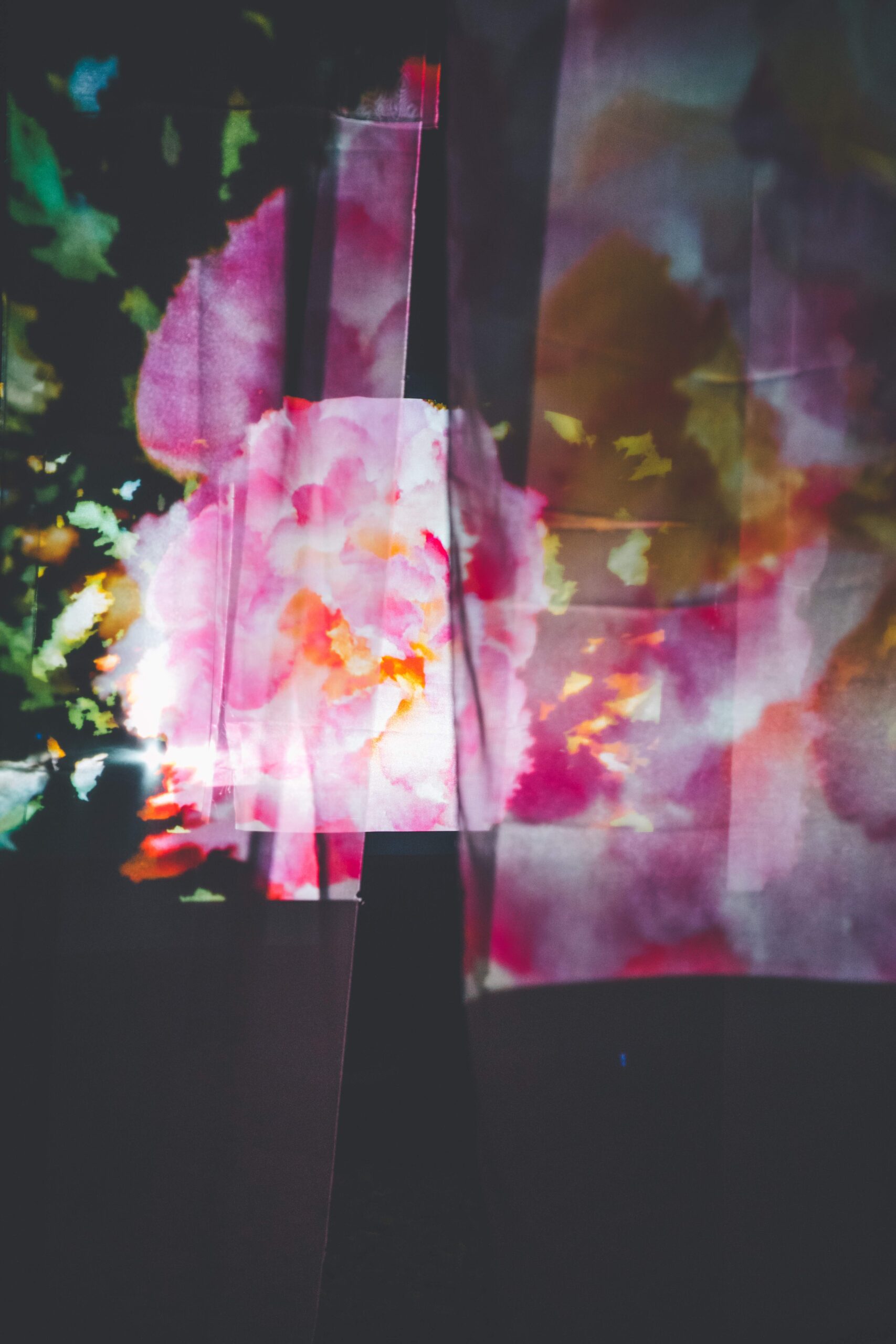
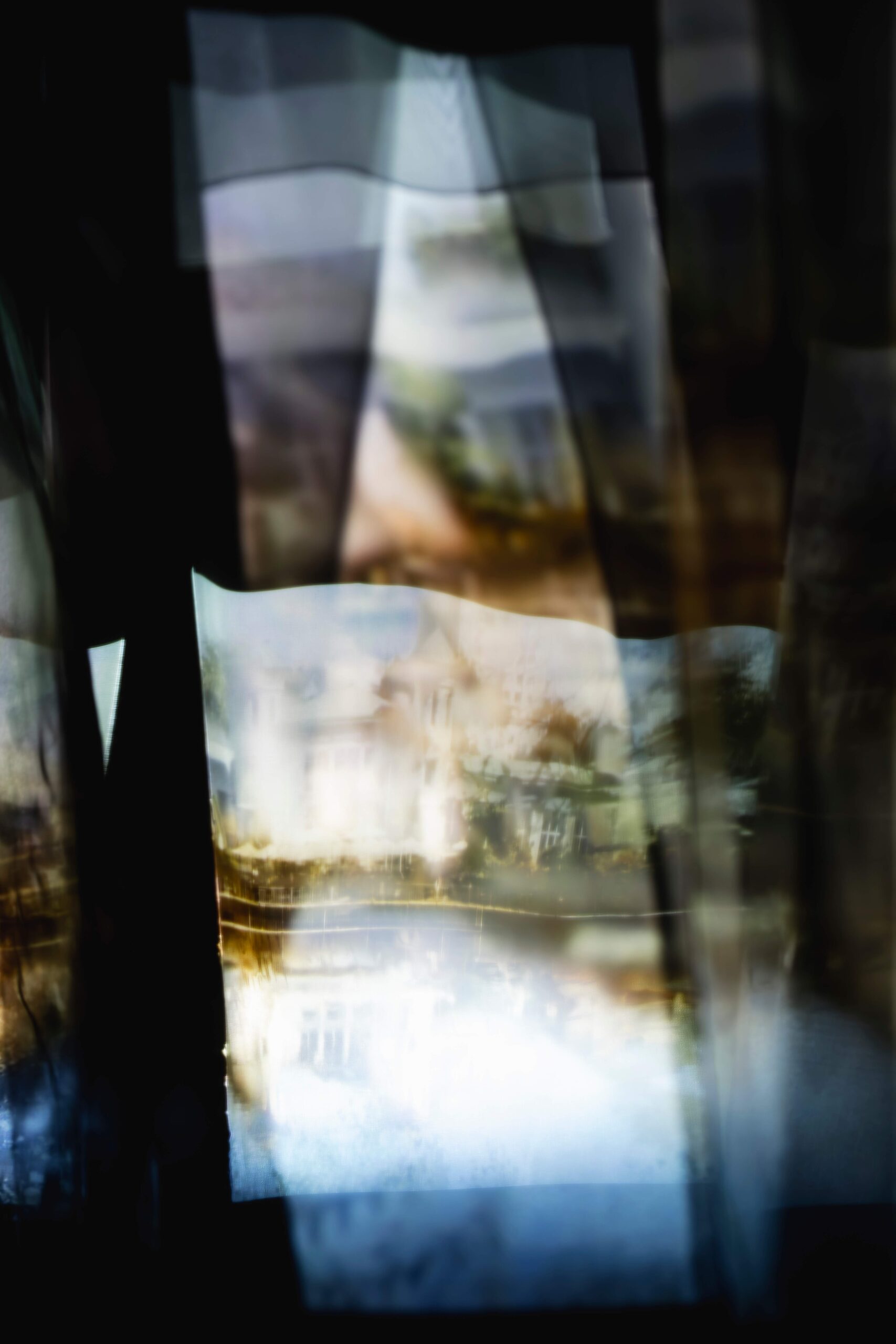

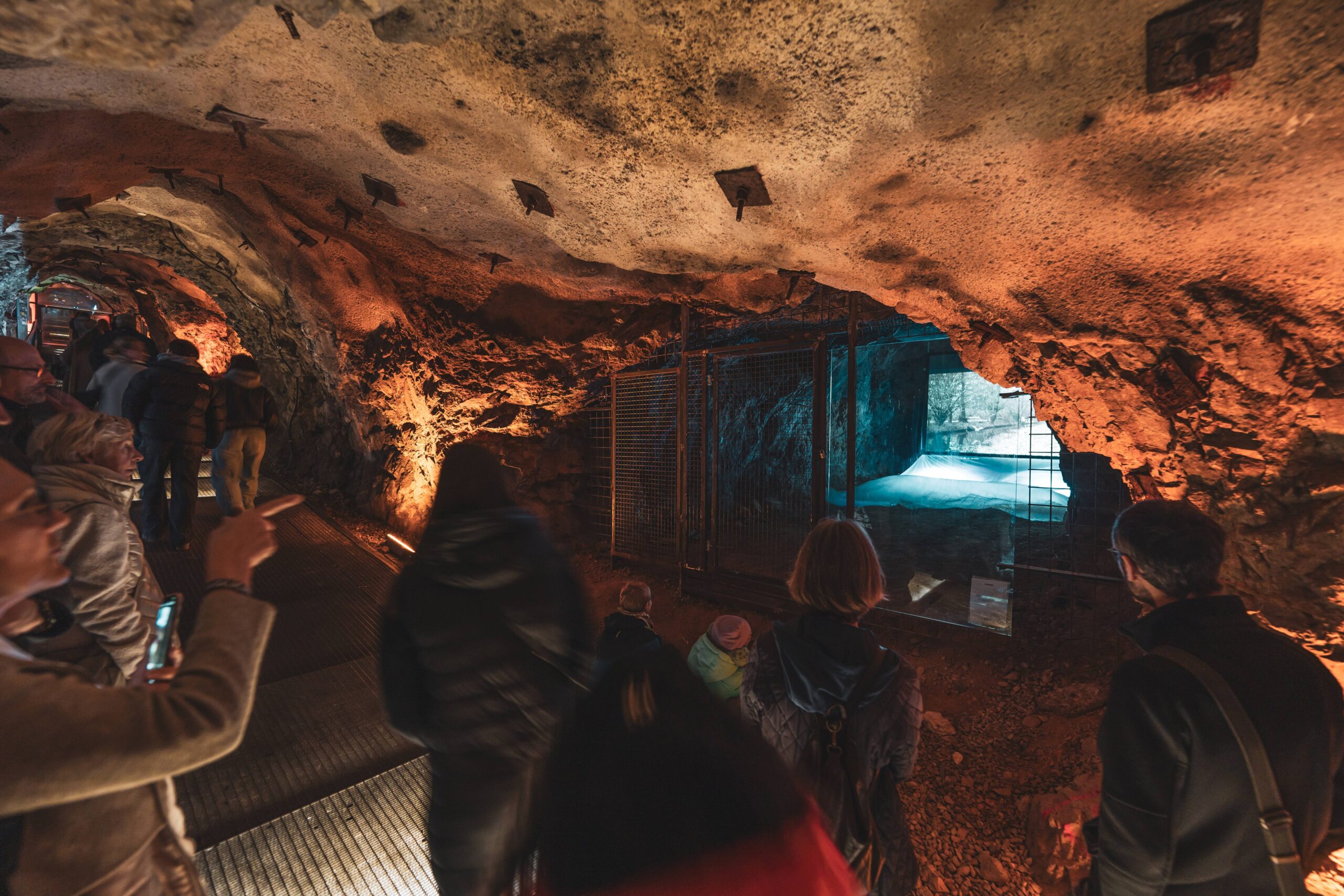
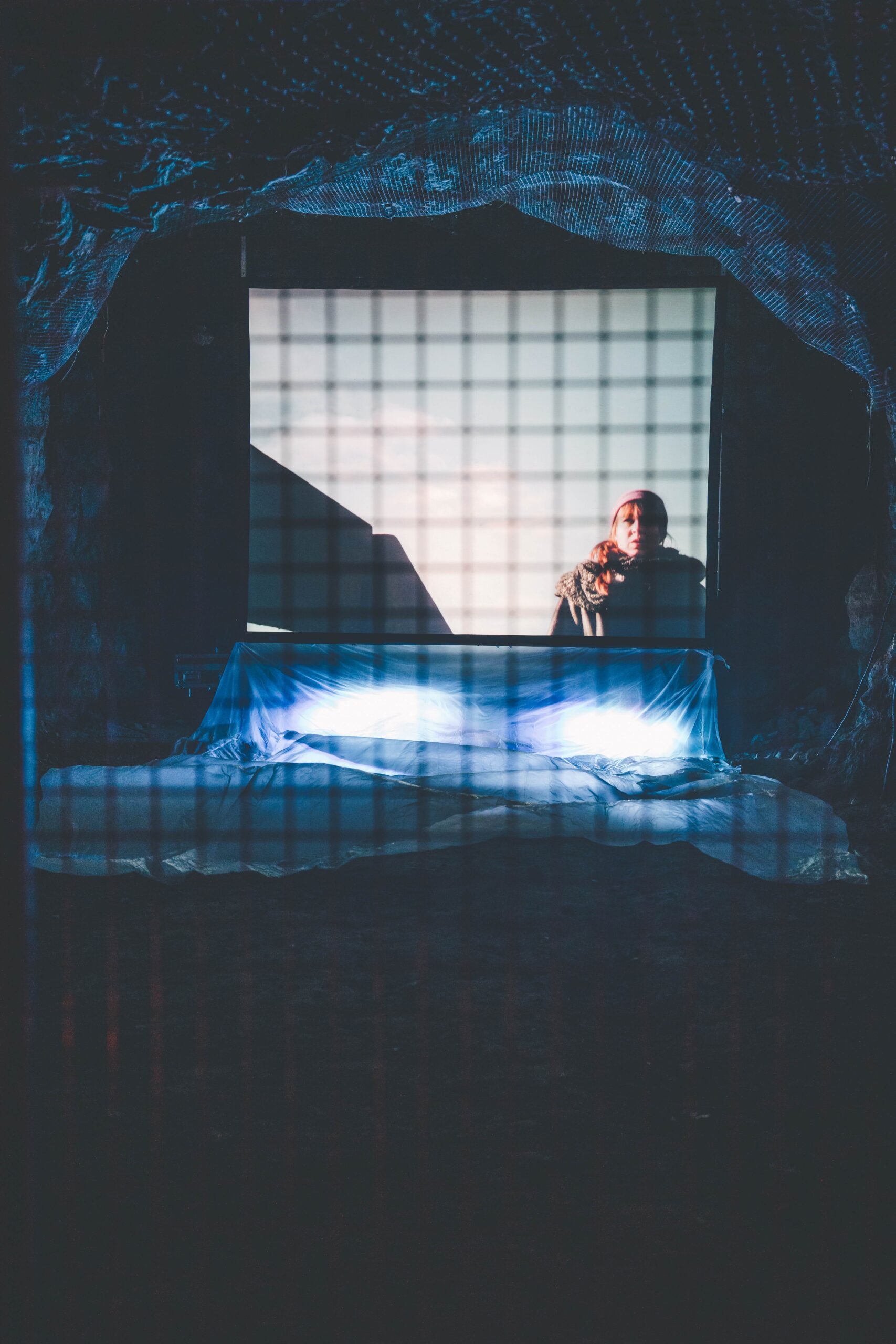
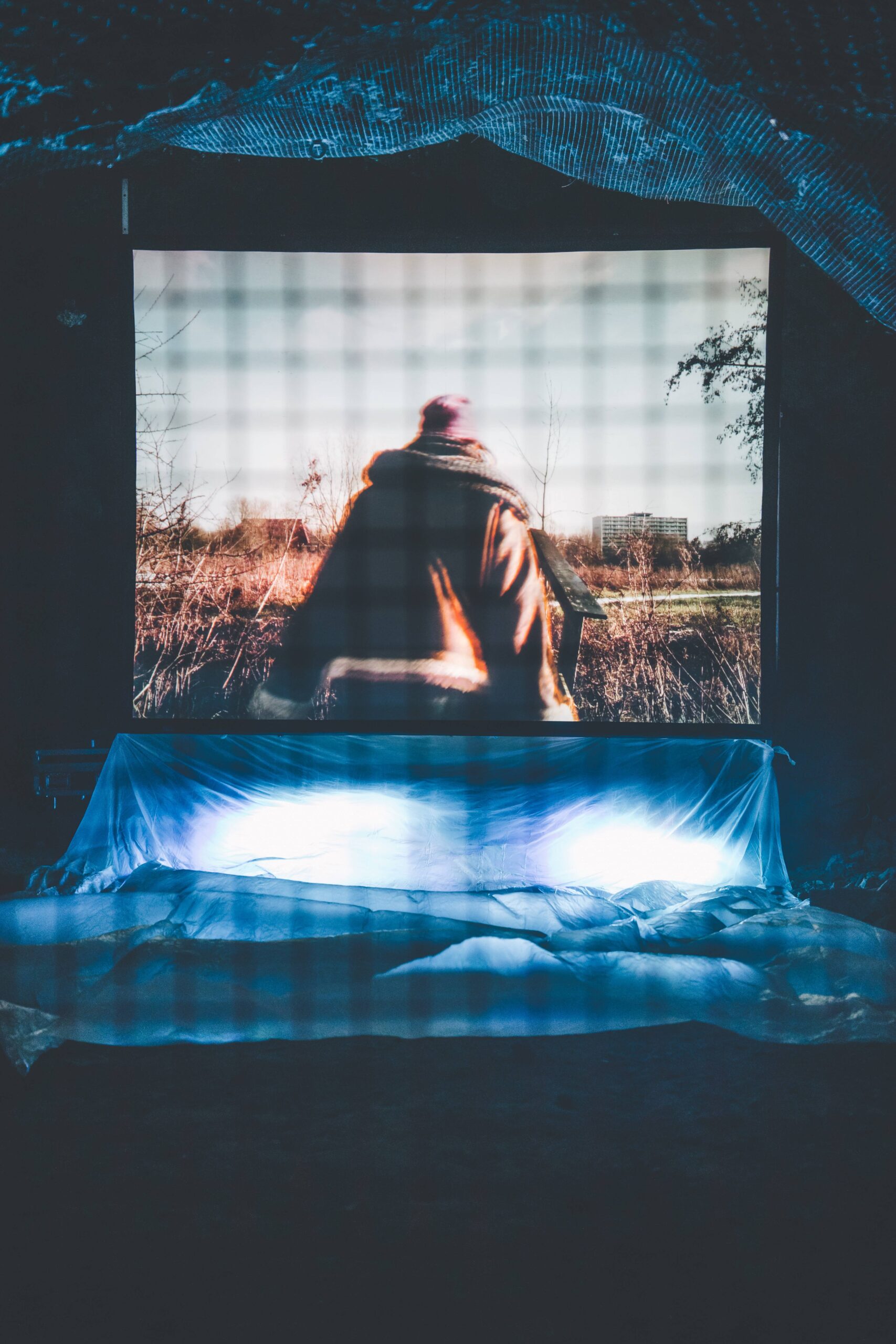
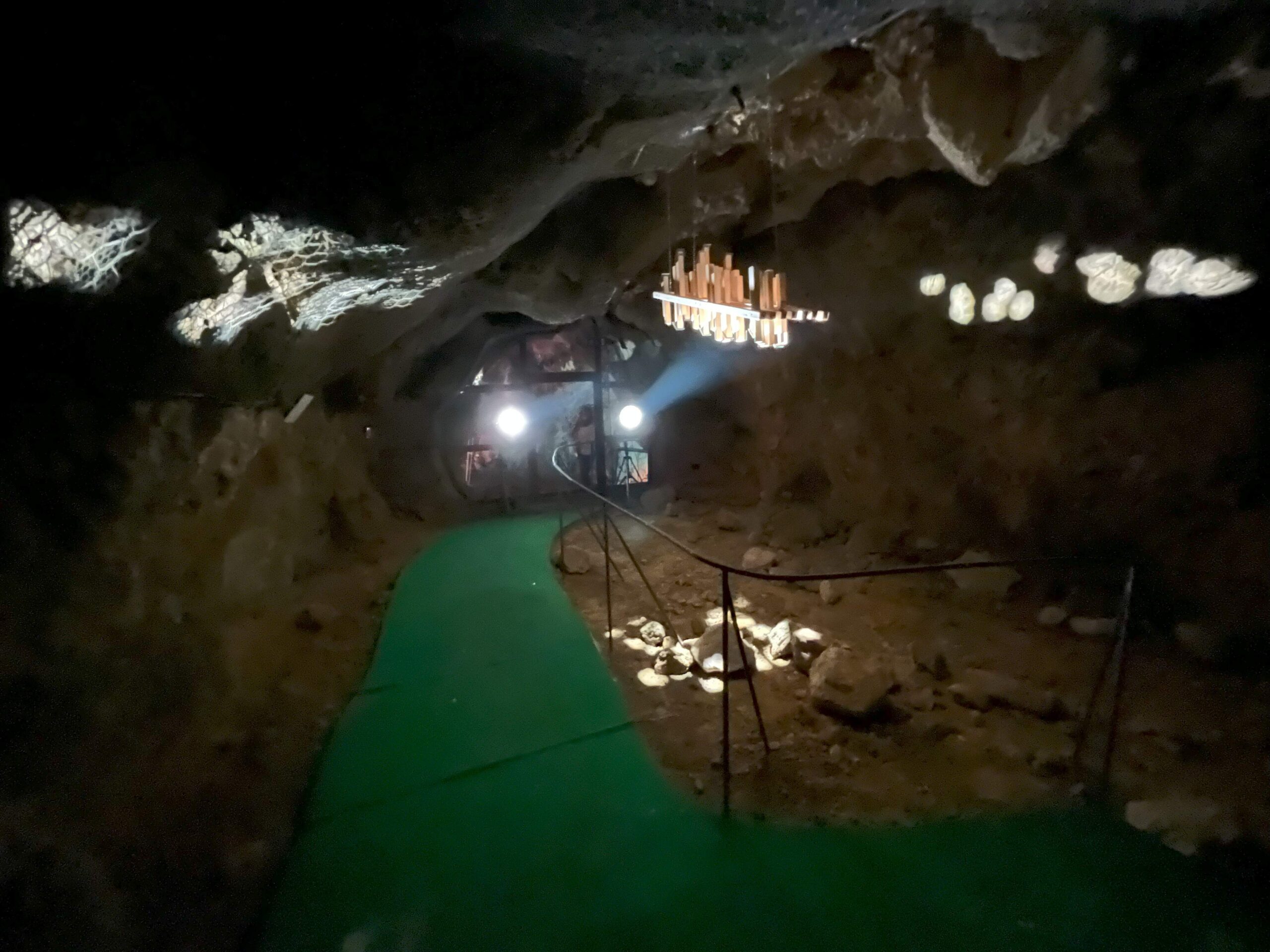
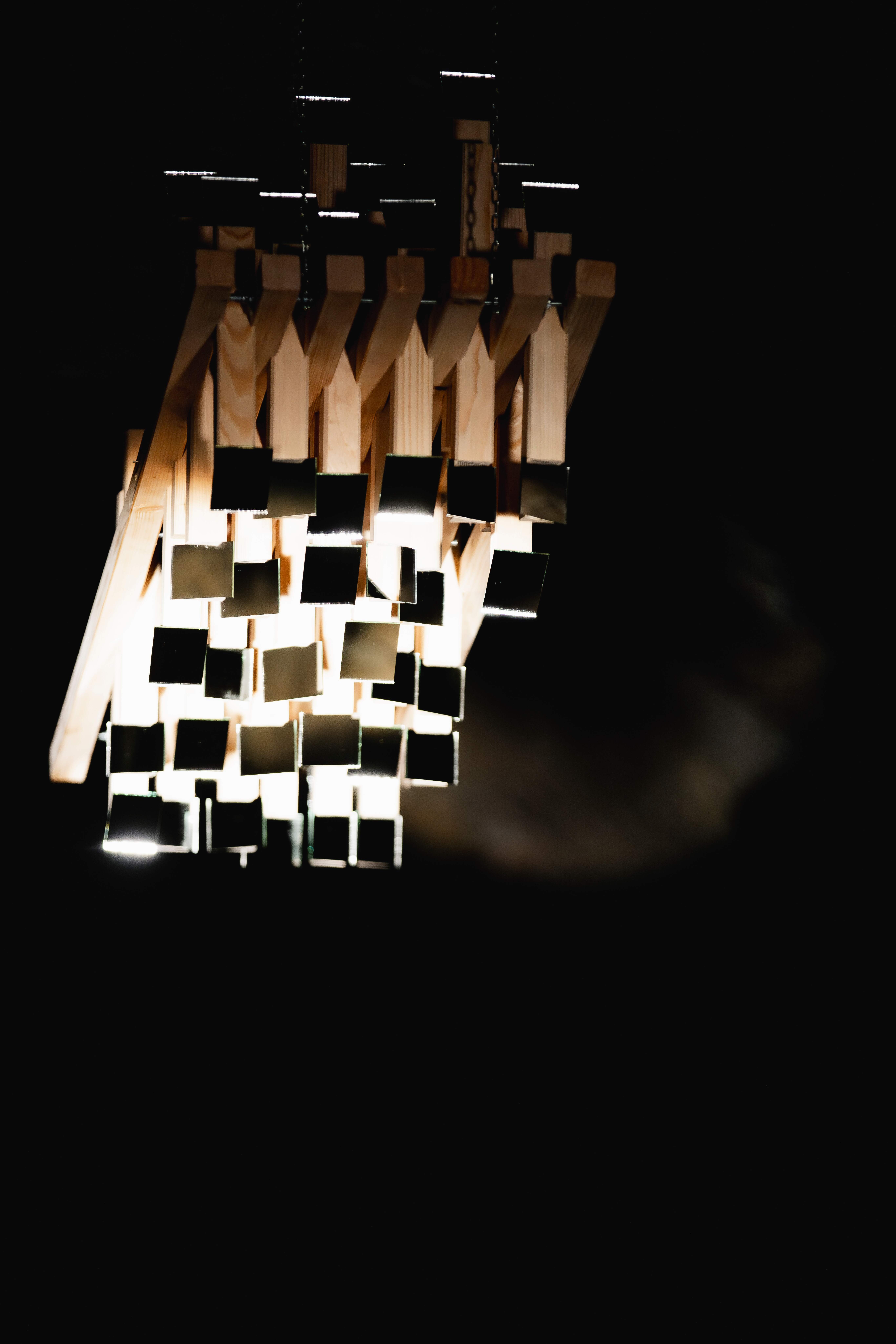
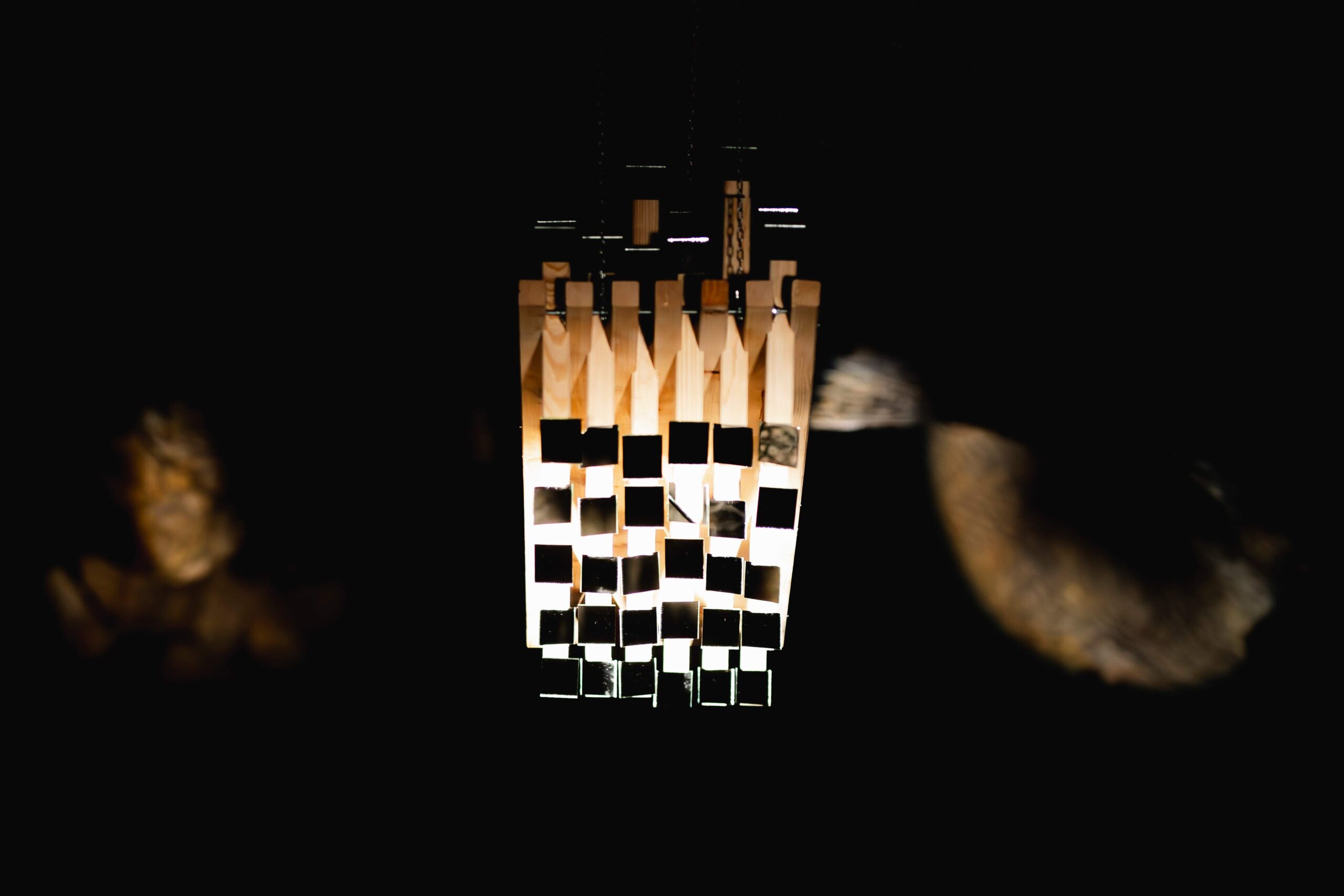
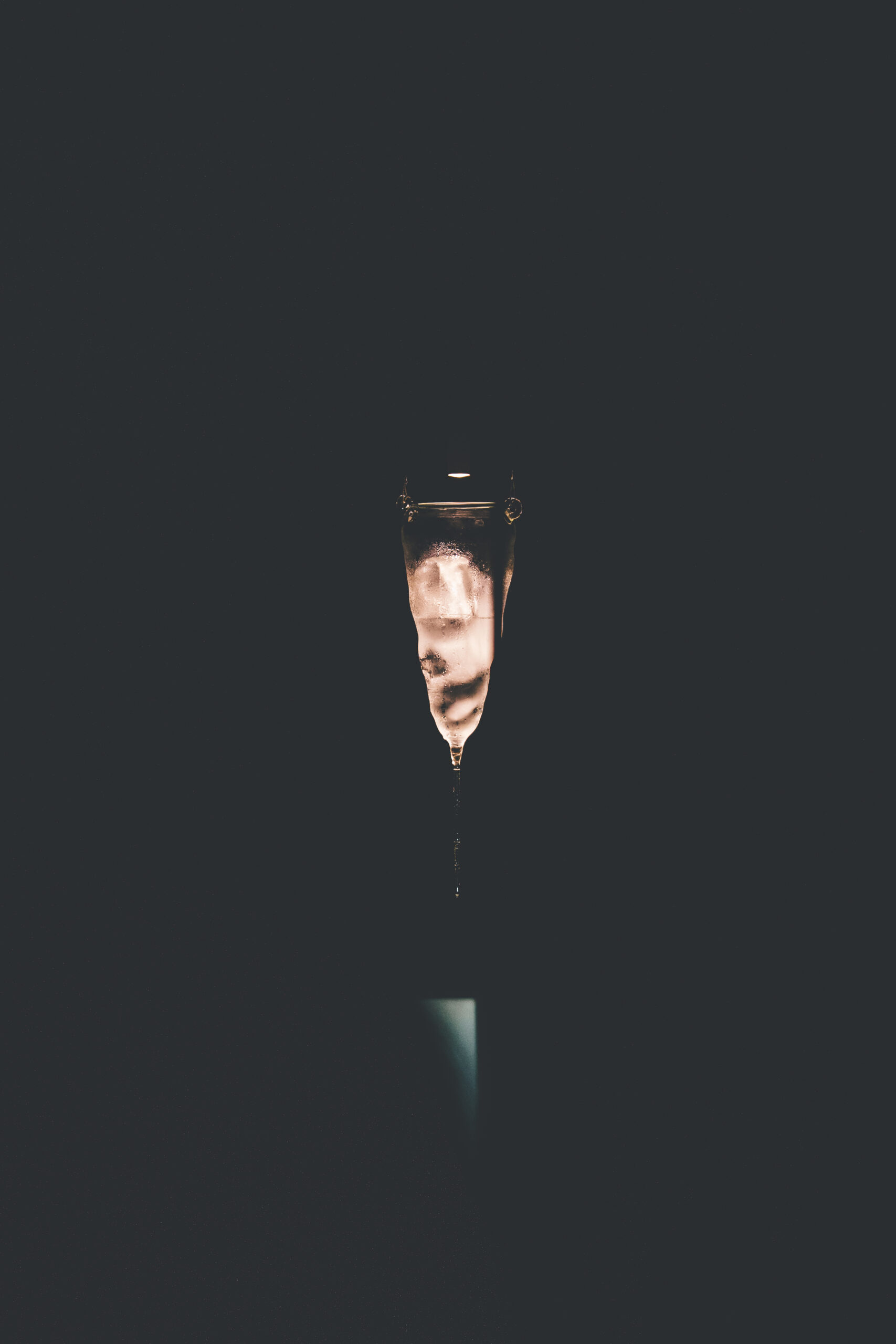
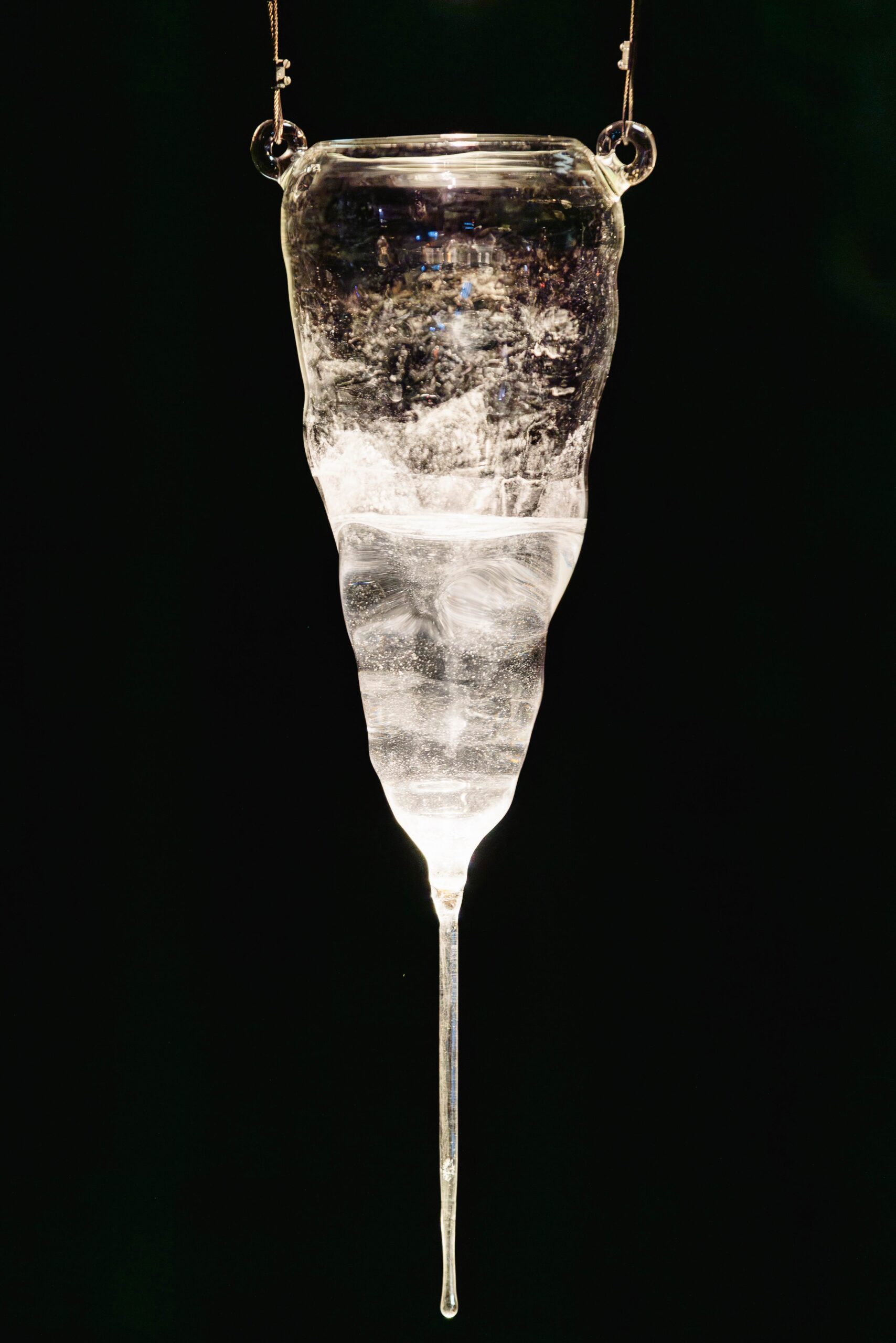
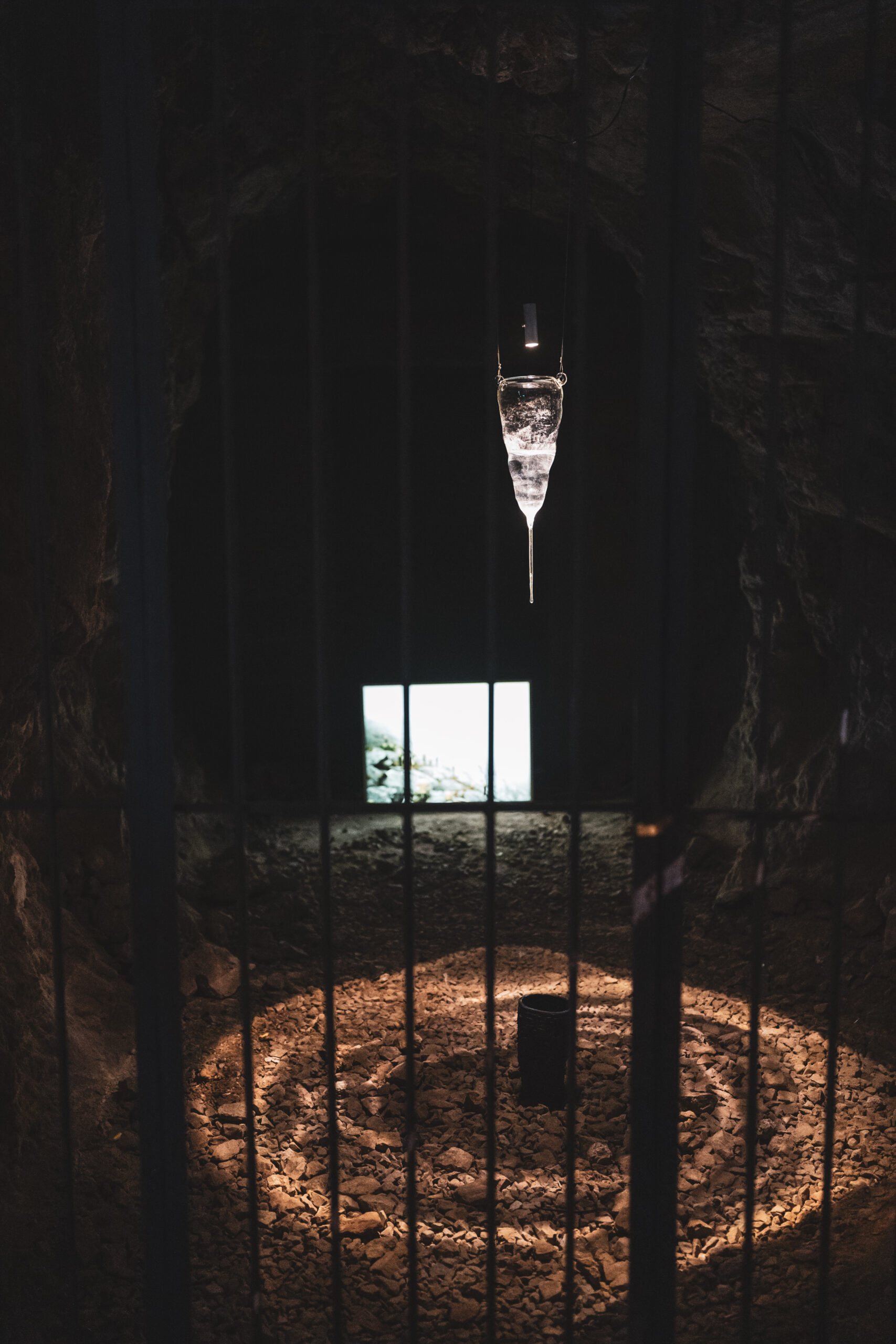
In cooperation with LUNA YOUNG MASTERS
Bodies inside each other – Jazmin Rojas Forero
A plant grows in the mountains of Colombia that absorbs moisture from the fog through its leaves and releases it again through its roots. “Bodies inside each other” is an art installation that explores the plant’s relationship with its environment. The illuminated sculpture is inspired by the inside of the plant and transforms ice into drops of water. Jazmin Rojas Forero interweaves the fictional and the real, science, fantasy and dreams. Her aim is not only to create sensual and convincing poetic gestures, the Colombian artist is also pursuing a dream with her art that she shares with many other contemporary artists: The fragile relationship between humans and the environment – nature, animals, everything non-human – is to be cast in a new light, thereby being viewed, reflected upon and restored.
Being hoodwinked – Lena Höll and Robert Anagnostopoulos
What lies behind the light? In Lena Höll’s and Robert Anagnostopoulos’ work, it is a world of illusions and fantasies, a world dedicated entirely to dreams. The installation “Hinters Licht führen” explores these fleeting yet powerful experiences that the human subconscious undergoes both at night and during the day. Beams of light, which are directed, reflected and multiplied with the help of mirrors, transform the room into a dreamlike landscape through which the light floats and even dances. The purist structures – clear zones of light in the midst of darkness – create a particularly contemplative atmosphere precisely because of their simplicity. Visitors find themselves in a place of tranquillity that is nevertheless full of secrets. If you entrust yourself to the light and allow it to guide you, every reflection opens up a new dimension, an idea or a thought, possibly even a new dream. Lena Höll and Robert Anagnostopoulos are studying architecture at the Institute for Space and Design at Graz University of Technology. Their interests include the interaction of light and space, especially the play of reflections.
Rain of Change – Marith Buma, Melvin Dotinga, Daniël Hellendoorn, Iris Stroeve, Lennart Wenzig and Martijn Pekel (“Still loading …”) from FH NHL Stenden in Leeuwarden, Netherlands
Every day, we humans are confronted with a variety of influences that also change our own views. As a result, the world becomes a dynamic landscape that we look at from different perspectives. The media installation “Rain of Change” deals with these different perspectives: two figures wander through a confusing world to which they react in completely different ways due to their attitudes to life. While one can only recognize the negative in their experiences, the other manages to discover the beauty of this world in many small things. The message: it is above all your own positive view that can brighten up your surroundings and improve situations. Under the direction of project manager Marith Buma, students of the “Art’n Sound” course at the Dutch University of Applied Sciences NHL Stenden produced a short film accompanied by fluttering film and light effects. In “Rain of Change”, video, projection and other light sources merge into a sensual and impressive installation, which has already been shown at the LUNA Festival in Leeuwarden.
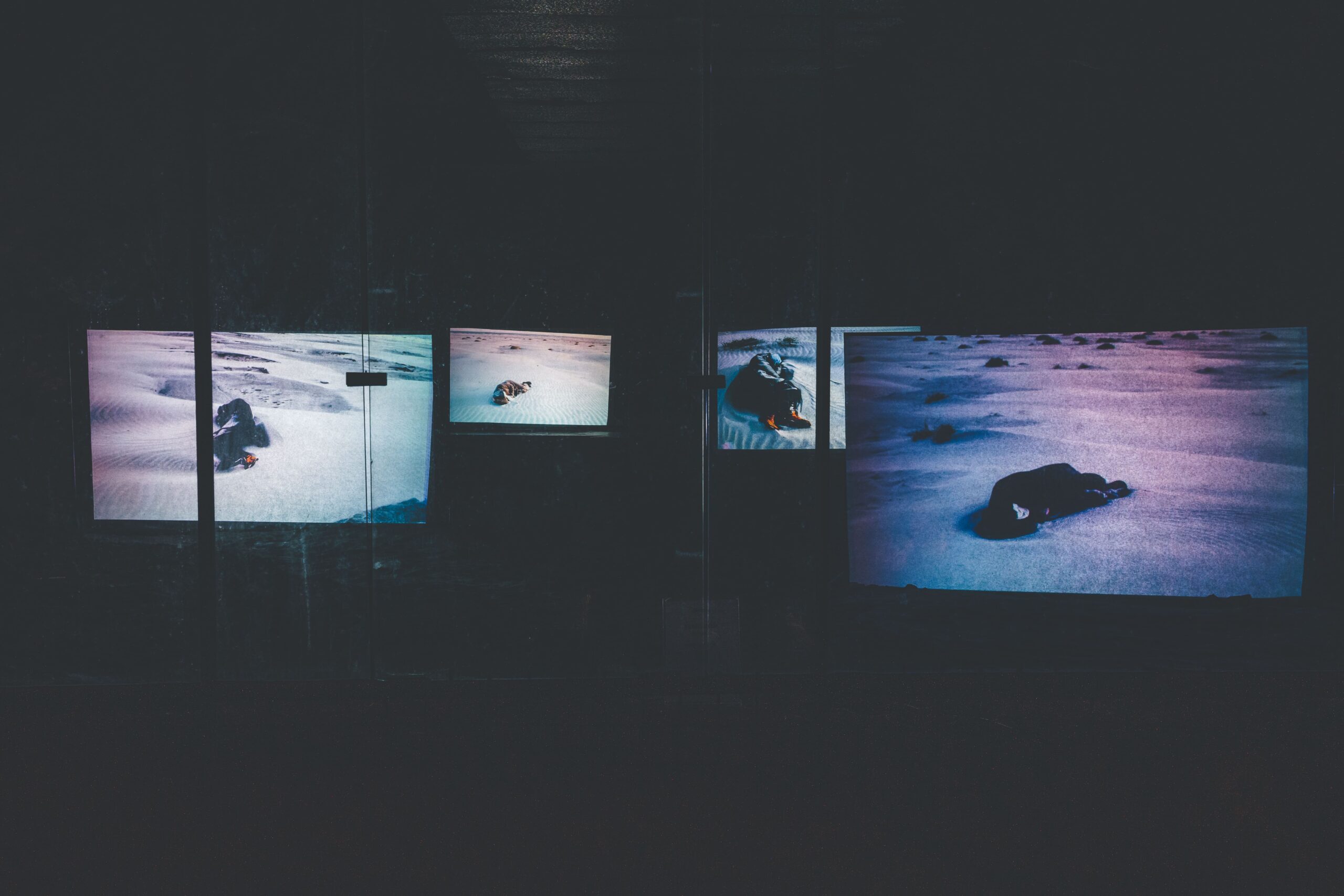
Verduinen (“Becoming a dune”) – Maria Stuut
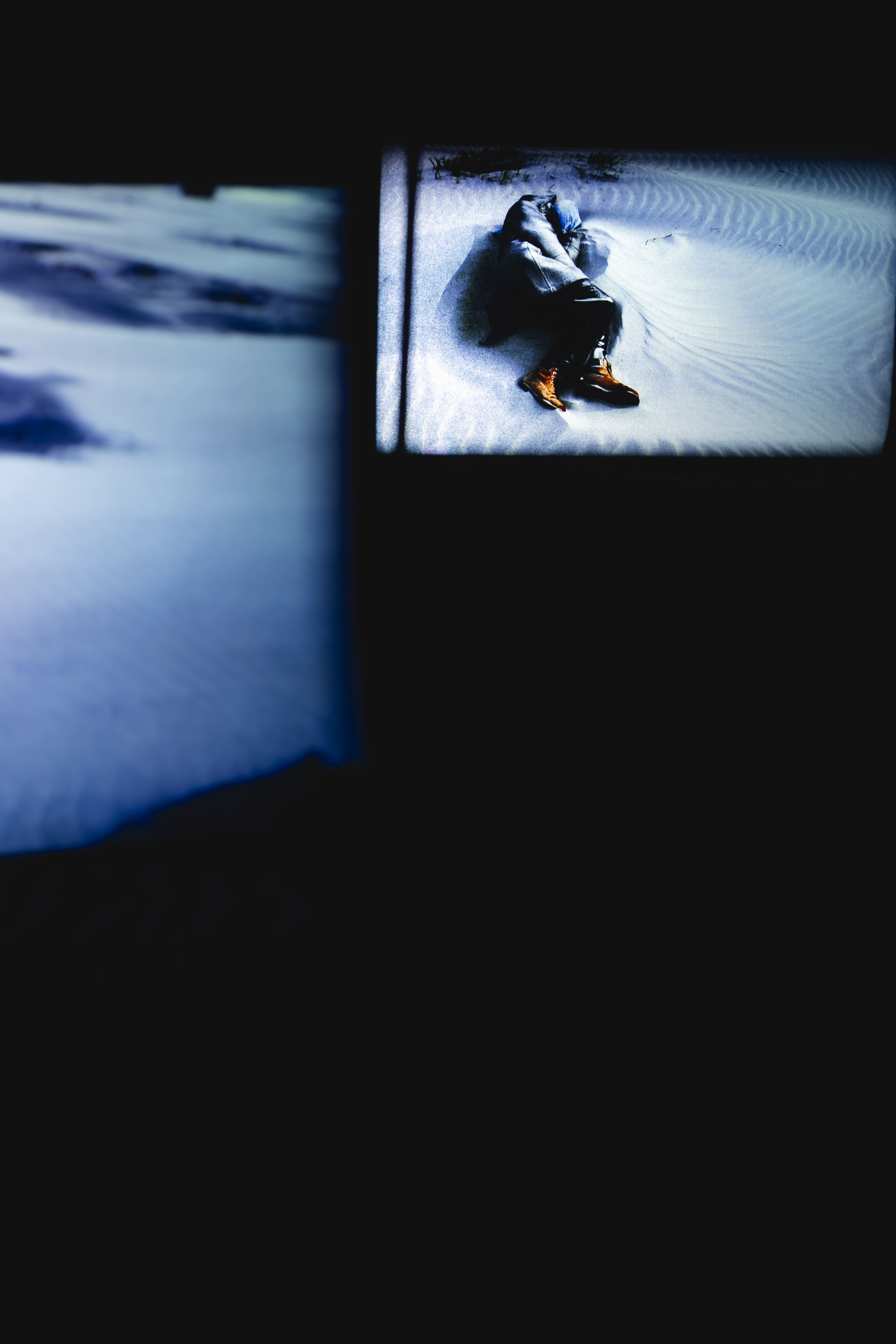
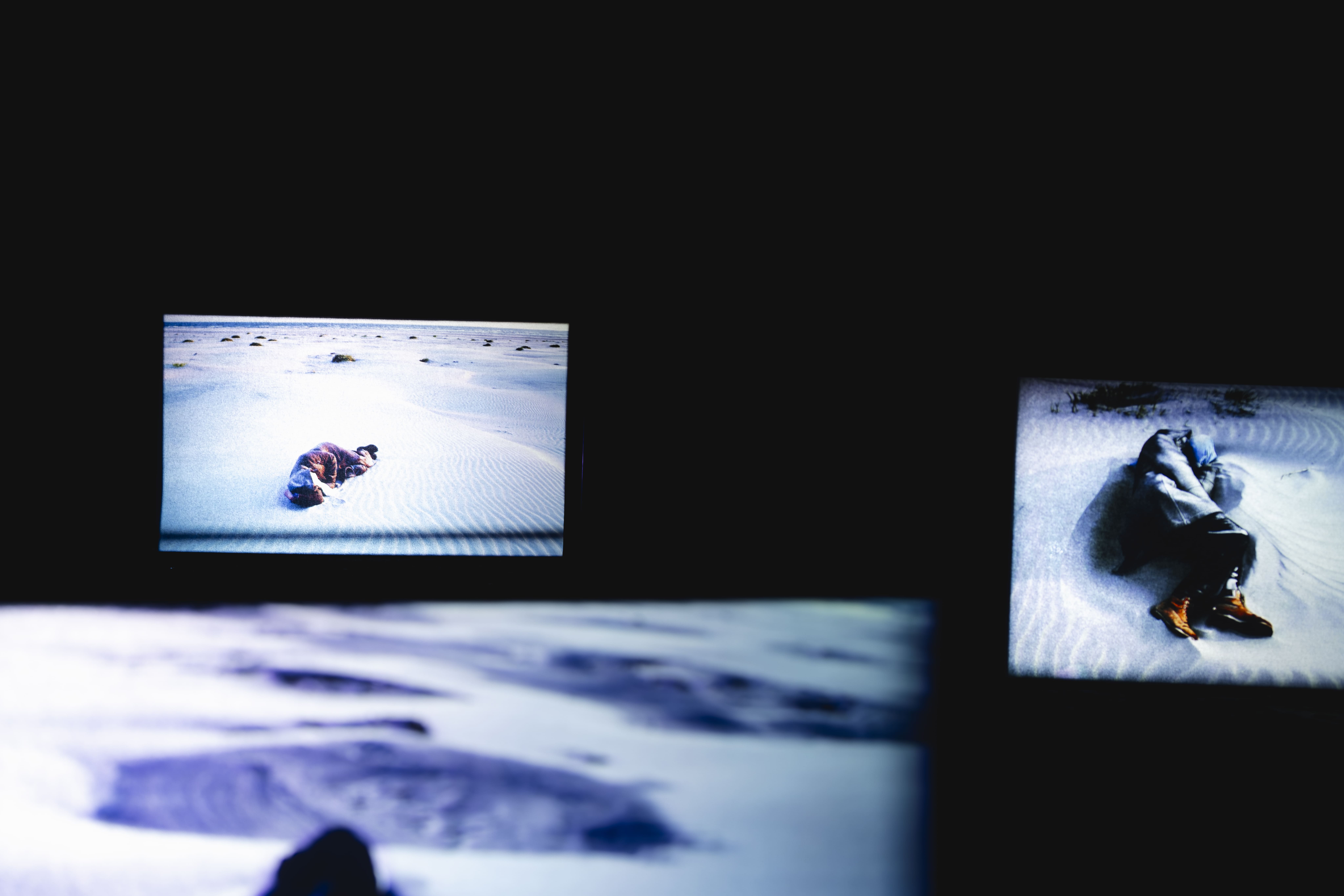
It was a beachcomber who pointed out the changing landscape on the island of Ameland to Maria Stuut. While the sand was disappearing on one side, it was increasing on the other. With her video installation “Verduinen”, the artist explores this shifting sand in her very own way: She transforms herself into a dune – she “verduins”. “People try to influence the movement of the sand, but they don’t succeed. That’s why I wanted to become a dune myself and found out: I too was trying to manipulate the sand,” says Maria Stuut about her experience. “Verduinen” is one of those artistic projects that deal intensively with the level of the more-than-human. People are not only in a relationship with other people, but also inevitably with everything non-human that surrounds them. This results in a dimension that allows people to step out of their humanity. In Maria Stuut’s installation, viewers immerse themselves in this dimension as if in a dream and experience what many may dream of: leaving the human body and becoming part of a completely different, non-human environment.
Instructions for trying to become a dune yourself
Feel the desire to become a dune.
Find a beach or a desert.
Find a windy day.
Lie still for a long time. It’s best if you only think about the sand, but that’s hard. You could sing songs in your head. This makes it less painful. You could bring someone with you to throw sand into the wind. This speeds up the slowness.
Give up, but not too quickly.
Try to become a dune.
This could be the answer, this may be a nightmare – Jakob Kolb
Sculptural objects meet light and sound. Each medium explores the subconscious in its own way, and in their symbiosis they translate this exploration into a real form. This in turn creates a dream-like environment: poignant and yet not quite tangible, bright and clear, almost ethereal. With his installation “This could be the answer, this may be a nightmare”, Jakob Kolb addresses his audience on several sensory levels – always with the aim of revealing hidden layers of perception and consciousness. The sculptures “Vessels”, a significant part of the work, are made of cold, inorganic materials. However, their rigid form captures vivid memories: Things thought, felt, experienced find their place here. The objects are complemented by a staging of light and sound. LED modules play the scenery with videos – film material that was recorded and edited by the artist himself. The accompanying sound, also by Jakob Kolb, has a minimalist feel, but intertwines with the visual and physical elements, reinforcing the dreamlike character of the work. Jakob Kolb is a graduate of the Academy of Fine Arts Vienna with a Master’s degree in Expanded Pictorial Space. The LED modules for this project were built in collaboration with electrical engineer Thomas Baumhartner.
Sonolux – Speculative Future
Mahtab Jafarzadeh Miandehi, Hannah Albrecht, Bensu Kaya, Francisco Sylla, David Laßlberger
A collective consisting of five students of Sound and Interaction Design at the FH Joanneum and the University of Art and Design Graz has set itself the task of exploring soundscapes in Graz’s urban space and deriving future scenarios, both dystopian and utopian in nature, from them. The aim is to draw attention to both acoustic ecology and the design of sound in public and private spaces. Subtle visual elements complement sonic impressions. This project aims to illustrate how urban development can influence natural soundscapes.
Location: Schlossberg tunnel
This installation was realized with the kind support of AVL .
In cooperation with KLANGLICHT, the HALLE FÜR KUNST Steiermark presents a commissioned work by Norbert Pfaffenbichler. Pfaffenbichler is a conceptual artist and a key protagonist of Austrian experimental film. With his often opulent works, which oscillate between horror and humor, he opens up new perspectives on the world. The surrealistic video installation “PANDORAS BOX PARTY” shows high-contrast images of countless interwoven and distorted human bodies in constant metamorphosis. Projected onto the inside of the glass cube, the projection is only visible to the audience from the outside, but seems to transcend all real physical boundaries. The resulting eerie atmosphere is reinforced by deep, sombre and choral drones by musician Wolfgang Frisch. At the same time, abstract lyrical text animations by author Barbara Kaufman on the subject of dreams and transformation are broadcast on monitors in the outdoor area.
Credits
Camera, VFX: Paul Lechmann
Text: Barbara Kaufmann
Music: Wolfgang Frisch
Choir of Kin is an ongoing, multi-part intermedia project by the collective Transformative Narratives, which explores experimental composition and sound production processes through multispecies encounters. At Neue Galerie Graz, the collective presents its music notation technique Lichenography as an audiovisual installation. This technique was originally developed during a research residency as part of the European Media Art Platform in 2023.
Lichenography is a music notation technique that creates sounds based on the morphological data of lichens. In this process, the body shapes of lichens growing on trees and rocks are manually traced and translated into MIDI notes using digital editing software to compose music. In this way, the lichens become active participants in the composition process, creating sound clusters based on their physical structures.
This approach is inspired by a technique developed by scientist Anne Pringle to track individual growth cycles and declines in biodiversity.
Lichens are crucial organisms for understanding symbiosis and have played a significant role in the colonization of the land by plant life. Their structure consists of a fungal body in which algae or cyanobacteria live. The fungus forms the bulk of the lichen body and protects against drought and UV light, while the algae and cyanobacteria produce sugar as their main food source through photosynthesis. This collaboration between fungi and photosynthetic organisms has created a crucial connection that has existed for millions of
years and plays a central role in our ecosystem.
Inspired by these complex relationships, Transformative Narratives explores the emergence of multispecies worlds characterized by processes of survival and coexistence. The collective strives to tell stories that connect micro and macro worlds and expand our understanding of human identity by learning from more-than-human life. The collective’s themes and methods are informed by investigations into symbiosis and
the interweaving of landscapes.
The animation makes the audible visible: a fine line traces the shapes of the lichen, triggering notes and creating sound. The audience is invited to watch and listen as a symphony unfolds.
Credits
The development of the project was supported by the European Media Art Platform as part of a research residency with Antre
Peaux in Bourges, France.
Animation with Cris Anutoiu and Martin Eichler
Coding with Gerard Valls Montaño
Biography Transformative Narratives
Transformative Narratives initiates performative and audiovisual experiences through transdisciplinary world-building strategies. By linking stories, transformable characters and glimpses into imaginary landscapes, the collective focuses on the transformative powers of the self and the urgency for collective growth and radical care. Symbiotic togetherness is the central theme and method in the creation processes of projects that
are composed of experimental music, visual art and text. The projects initiated suggest the queering of relationships and kinship and weave personal stories into collaborative, performative experiences. In their most recent work, Transformative Narratives explore cross-species worlds, re-learning how space is negotiated and community is formed.
www.transformativenarratives.xyz
Biography Lena Kuzmich
Lena Kuzmich (they/them/no pronouns), born in Vienna in 1998, sketches alternative worlds composed of elements of photography and video art. Her work focuses on world-building strategies and the expansion of body and identity in order to present visions of alternative forms of society and life.
The fusion of technology and biological life is a central theme that serves to break up narratives and create space for speculative worlds that attach increasing importance to non-human life in particular.
Lena eclectically collects content from science, art, social theory, pop culture, subcultures and historical myths to create collage-like worlds and new contexts and narratives.
Biography Tony Wagner
Tony Wagner (he/they) is a musician and artist whose work is based on the conception of immersive
soundscapes for introspective listening. In his solo and ensemble pieces, he explores the wide range of sound and emotionality with an experimental approach, without losing sight of the cathartic and transformative capabilities of pop music. Tony’s work ranges from productions under the pseudonyms Tony Renaissance and Bogland, to collaborative works with the duo Snake Boots and the collective Transformative Narratives, to commissions for film, theater, dance and performance, and his work as co-manager and promoter within the music label Tender Matter.
Johannes Kepler, a historical great in mathematics and astronomy, was forced to leave Graz as a Protestant during the Counter-Reformation. 200 years later, a monument was erected to him in this place: The founding of the Joanneum was a political statement to make knowledge accessible to everyone – regardless of their convictions. With his project “Not in the present state of affairs”, artist Joseph Kosuth also refers to the scholar: the title is a reference to Kepler’s astronomical reflections on creation. For his work at Lesliehof, Kosuth also combines the medium of light with a Keplerian thesis that makes reference to the starry sky: The force that gives the aspects their meaning is inherent in all bodies and shows itself where a fact is visibly expressed.
Galerie Grill is presenting works by Esther Stocker and David Reumüller for KLANGLICHT 2024. Stocker expresses herself through lines, grids, right angles and the non-colors black and white. For KLANGLICHT 2022, she explored the medium of light for the first time. Various illuminated objects were subsequently created, and works from this series are now being shown again as part of this year’s festival. David Reumüller combines different disciplines and media in his work. The artist first showed his interactive video installation “Exposure 03” as part of KLANGLICHT 2023 at Dom im Berg, and the work is now being presented internationally. At Galerie Grill, Reumüller is restaging his original animation – supplemented by an exclusive screen print edition of video stills that are further condensed with additional sound.
From October 24 to 26, 2024, the streets and squares of Graz city center were once again transformed into a glowing work of art. This year’s festival edition was dedicated to the worlds of dreams – those surreal, poetic and often profound spaces that accompany us when we are awake and asleep.
The art installations by national and international artists made thoughts float and emotions vibrate. Sometimes gentle and subtle, sometimes powerful and expansive, they unfolded a variety of moods and fantasies. Visitors were immersed in colorful cheerfulness, found themselves in fascinatingly surreal scenes or were confronted with critical reflections on existing reveries. Each installation opened up new perspectives and yet left enough room for individual interpretations – entirely in the spirit of the dream, which retains its secret.
The magic of light and sound created moments of wonder and invited visitors to leave the boundaries of everyday life behind. Between the glittering visions on the Schlossberg, the poetic light shows in the Joanneum quarter and the artistic soundscapes around the opera and Schauspielhaus, the dreams of the artists merged with those of the audience.
KLANGLICHT 2024 showed once again how art and culture can transform reality – not only as a sensory experience, but also as an invitation to reflect. Around 105,000 visitors were enchanted during these three evenings and helped to make the festival an unforgettable experience.
A big thank you to all artists, supporters and to you, the great audience! They have made KLANGLICHT 2024 a truly dreamlike journey.
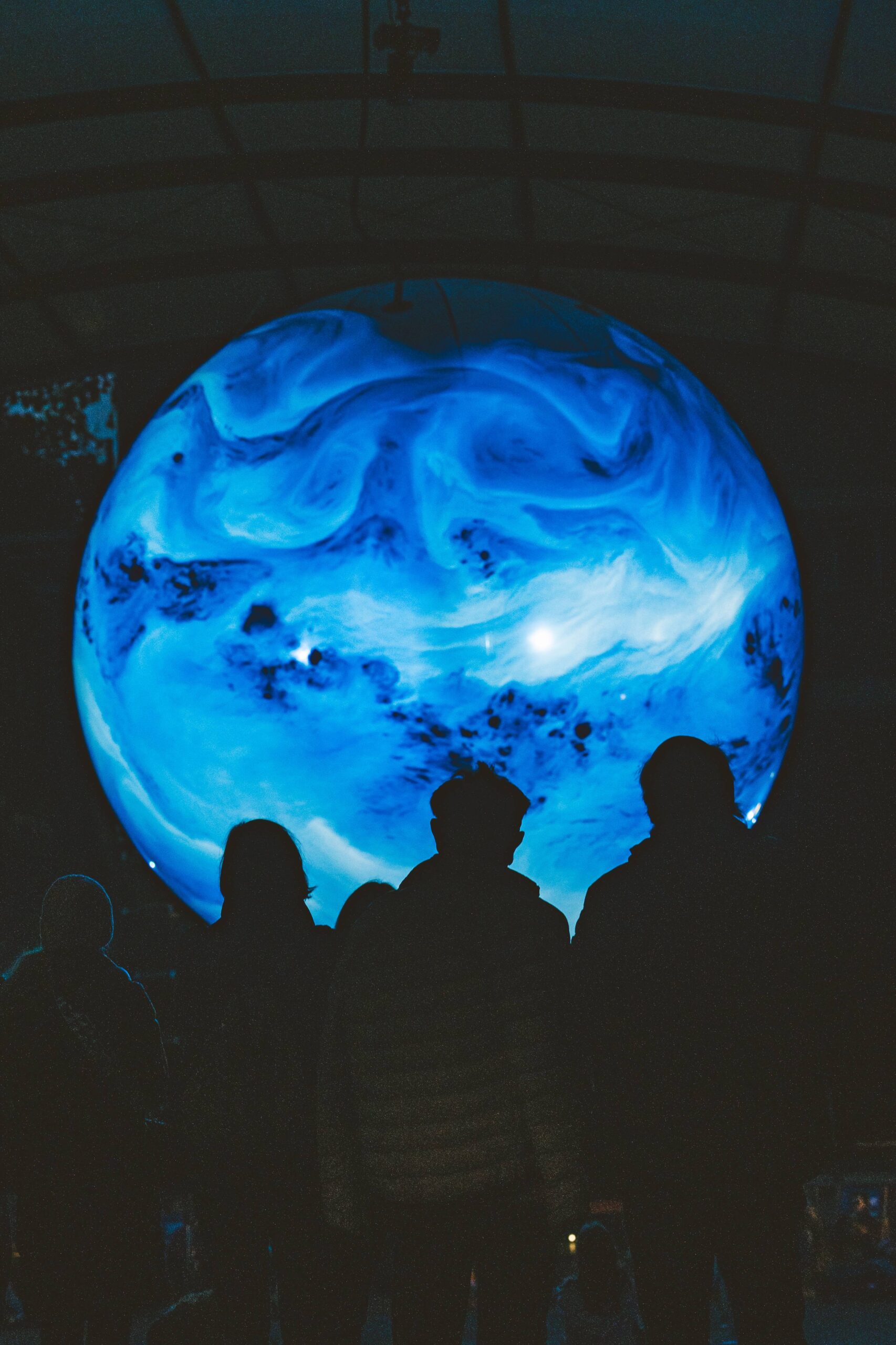

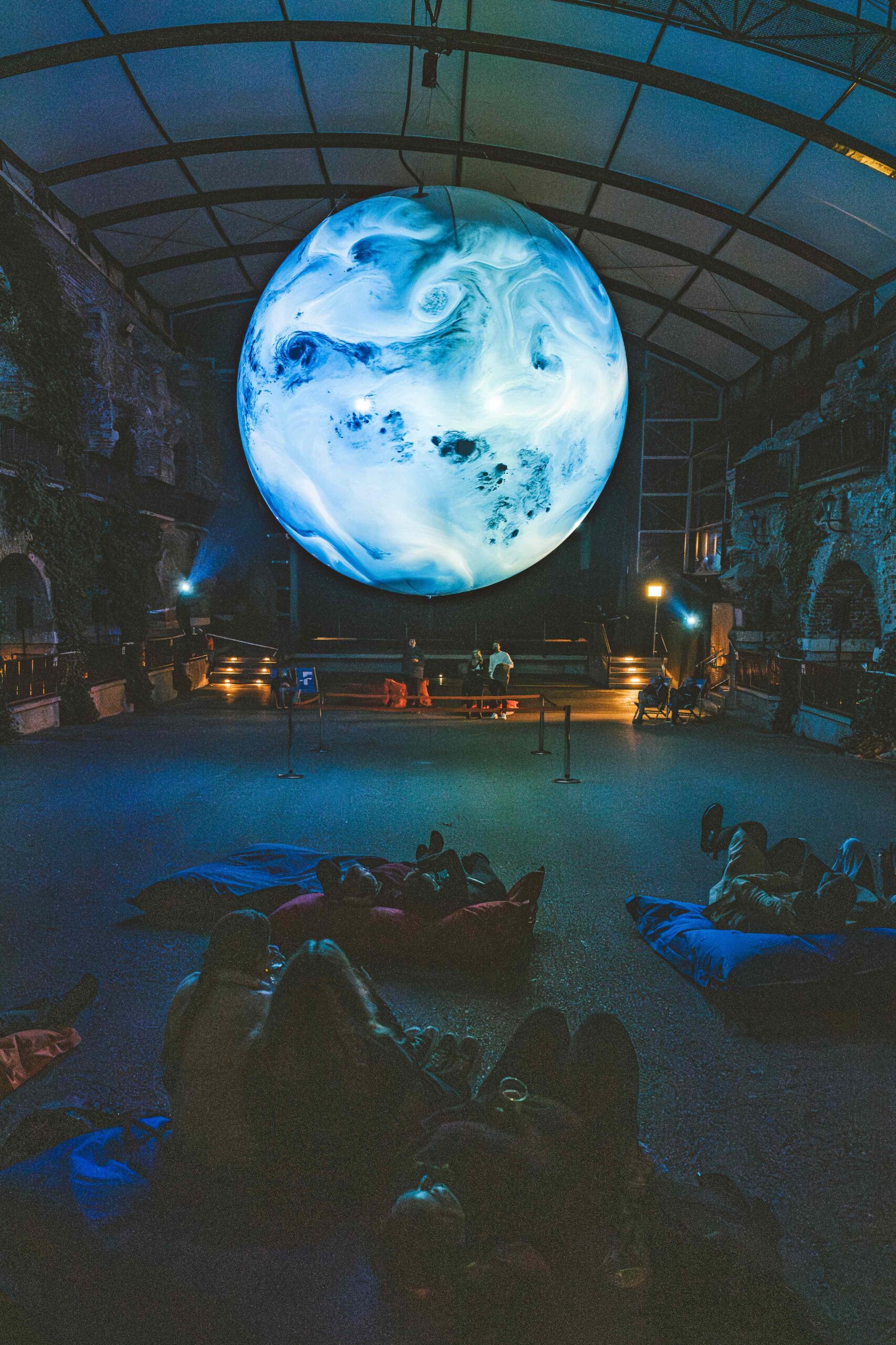
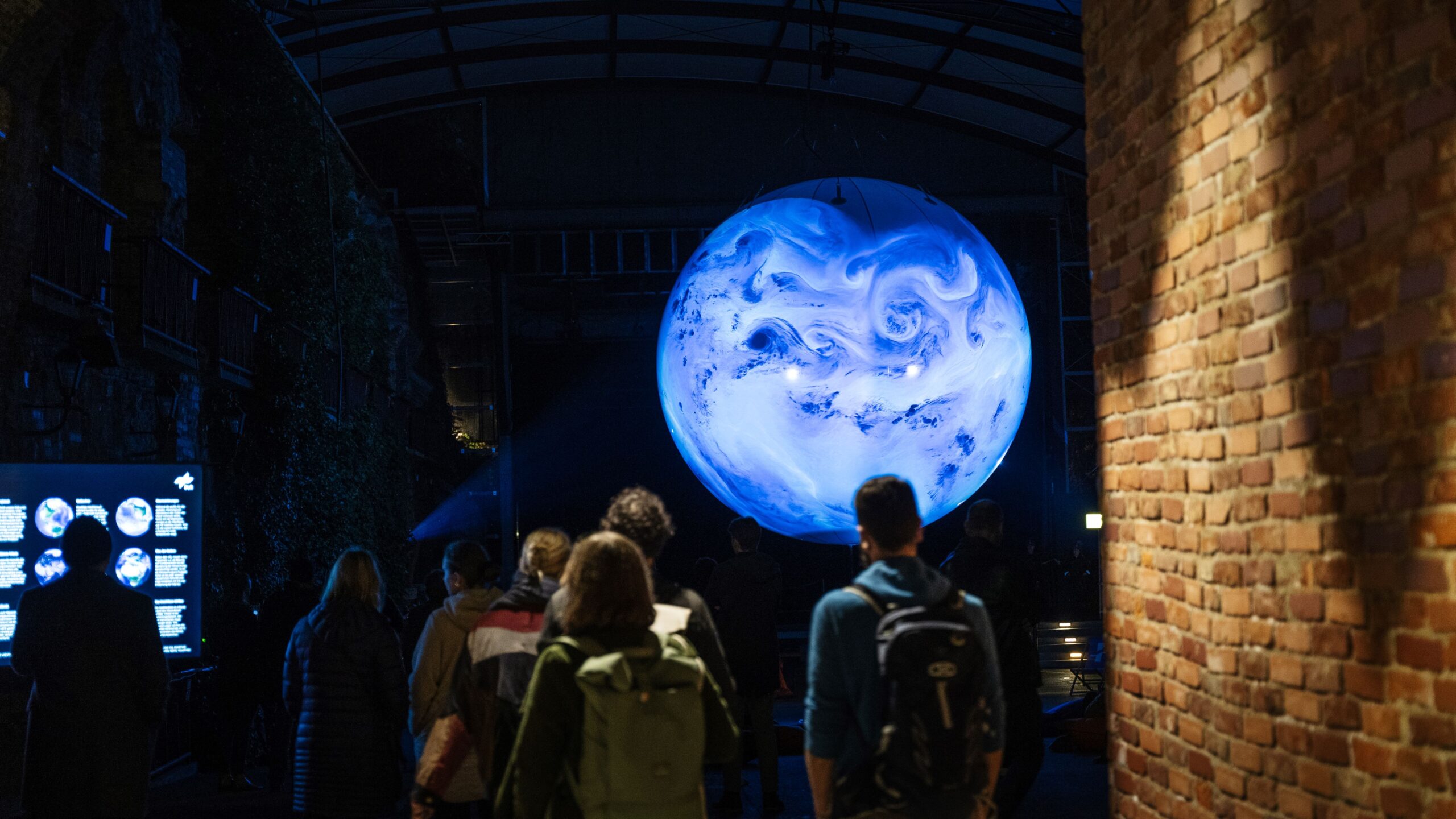
The installation The Blue Planet on the Schlossbergbühne Kasematten stage showed our planet in all its glory. Scientists from the German Aerospace Center combined and visualized real data and images of the Earth. The result was a symbiosis of science and art, a total work of art that literally showed us the uniqueness of the Earth. A soundscape by Austrian composer Rupert Huber complemented the visual experience acoustically.
Location: Schlossberg stage Kasematten
Biography
With over 10,000 employees at 30 locations, the German Aerospace Center conducts research and development in the eponymous fields of aeronautics and space as well as energy and transport, security and digitalization. With the project “The Blue Planet”, the research center, together with Rupert Huber, created a symbiosis of science and art that brought the uniqueness of the Earth to life. Huber is an Austrian composer. He integrates physical and interactive aspects into his “dimensional music”, creating participatory sound architectures.
This installation was realized with the kind support of E-Werk Franz realized.
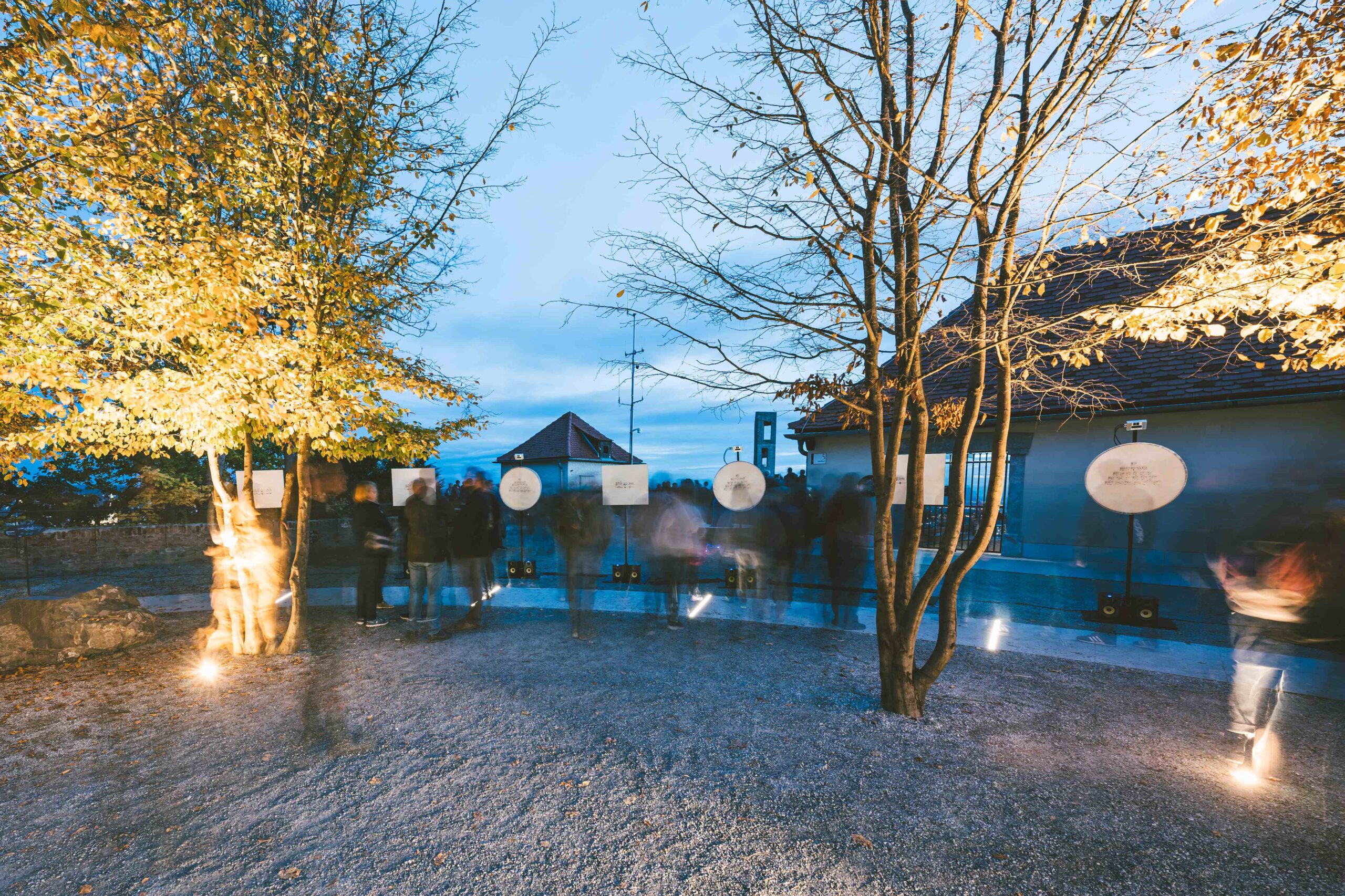
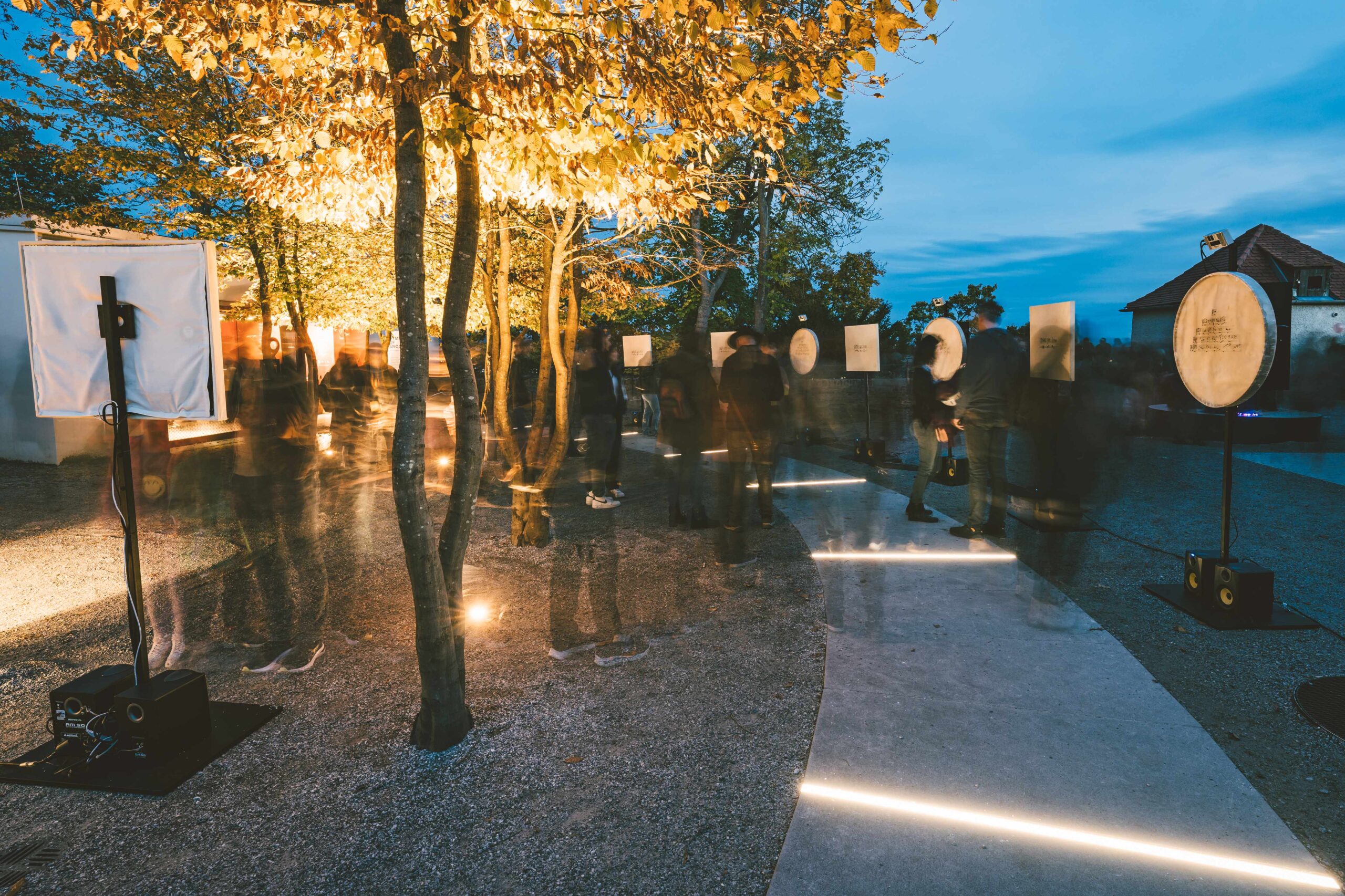
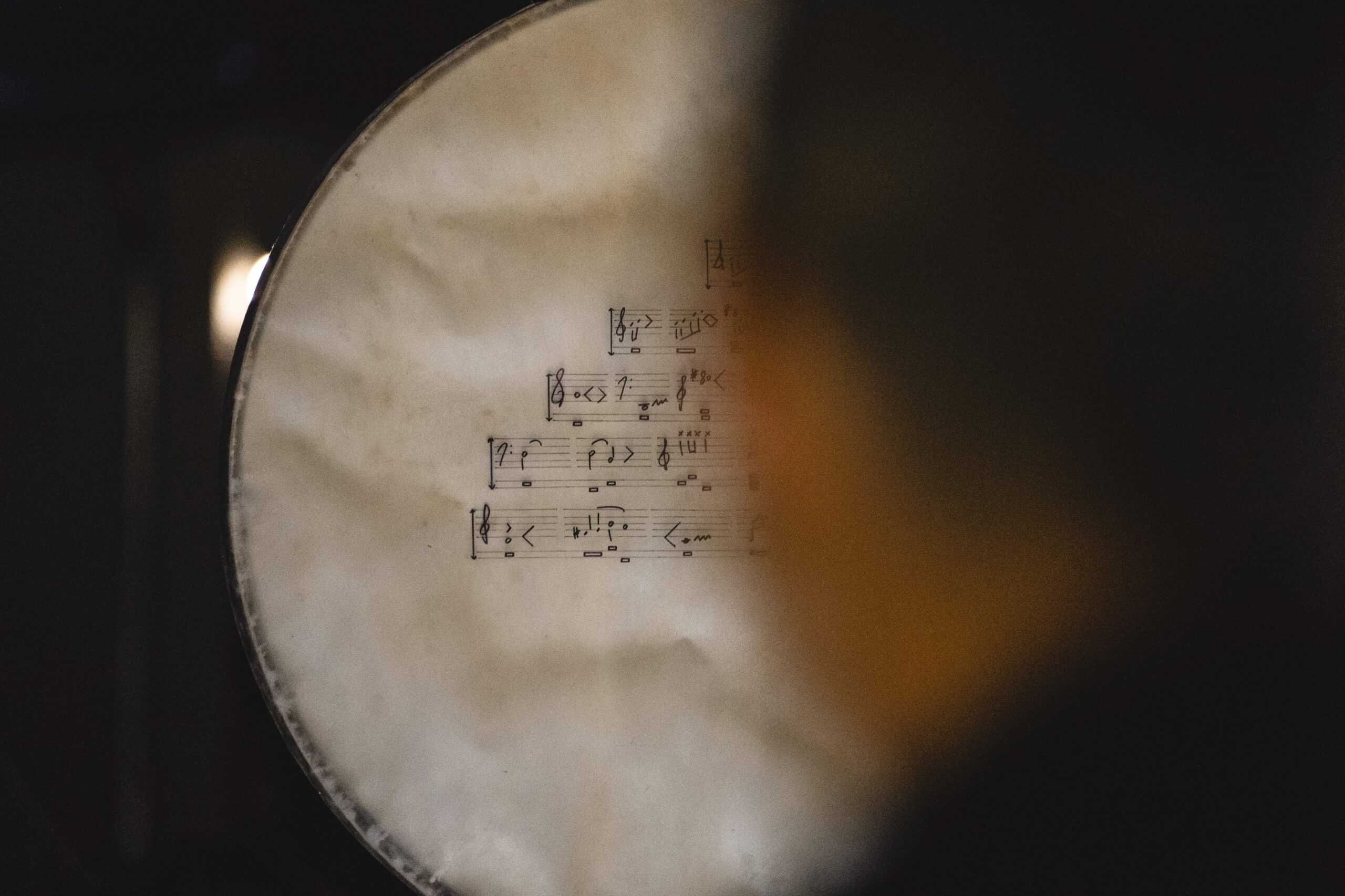
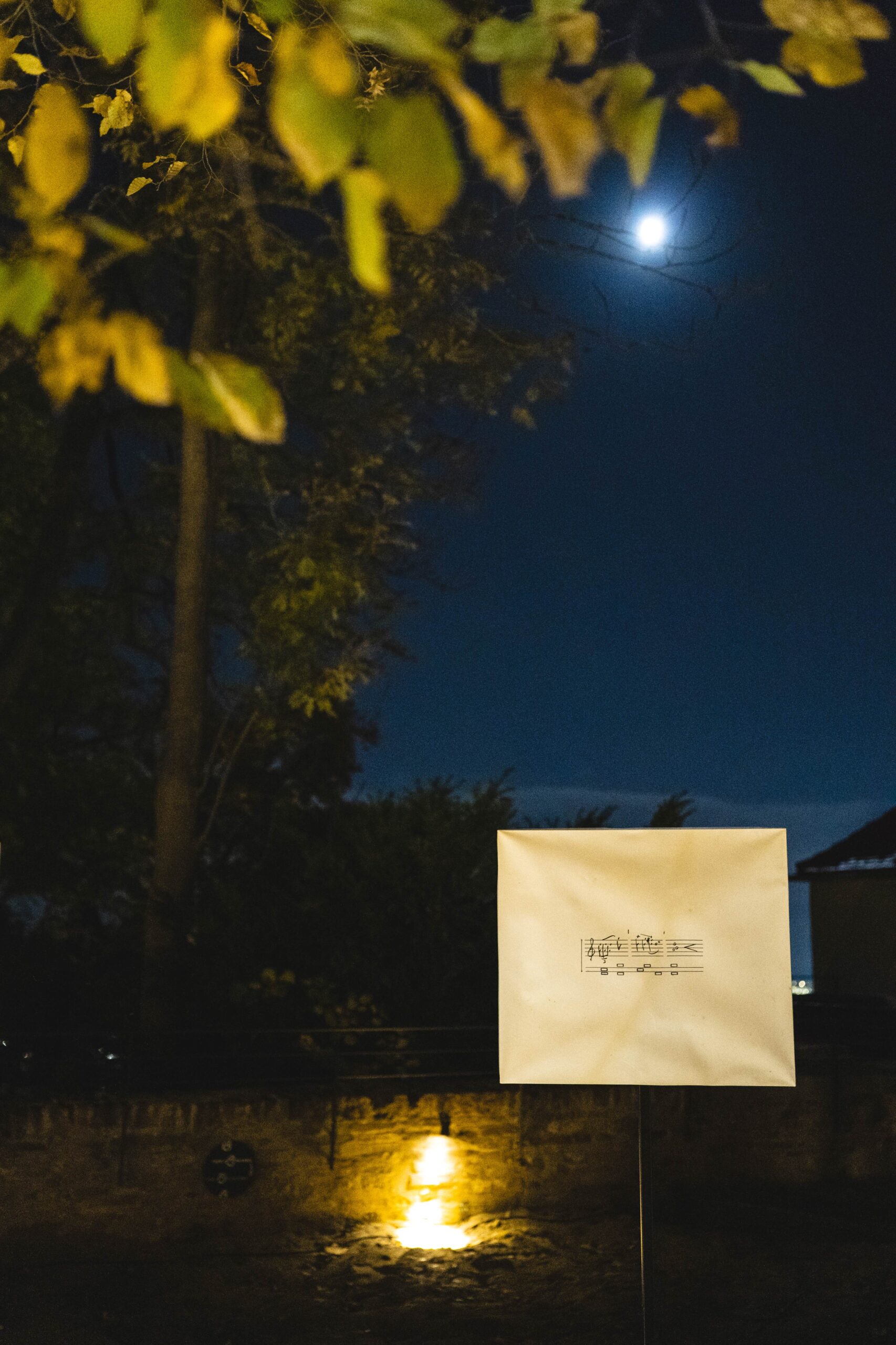
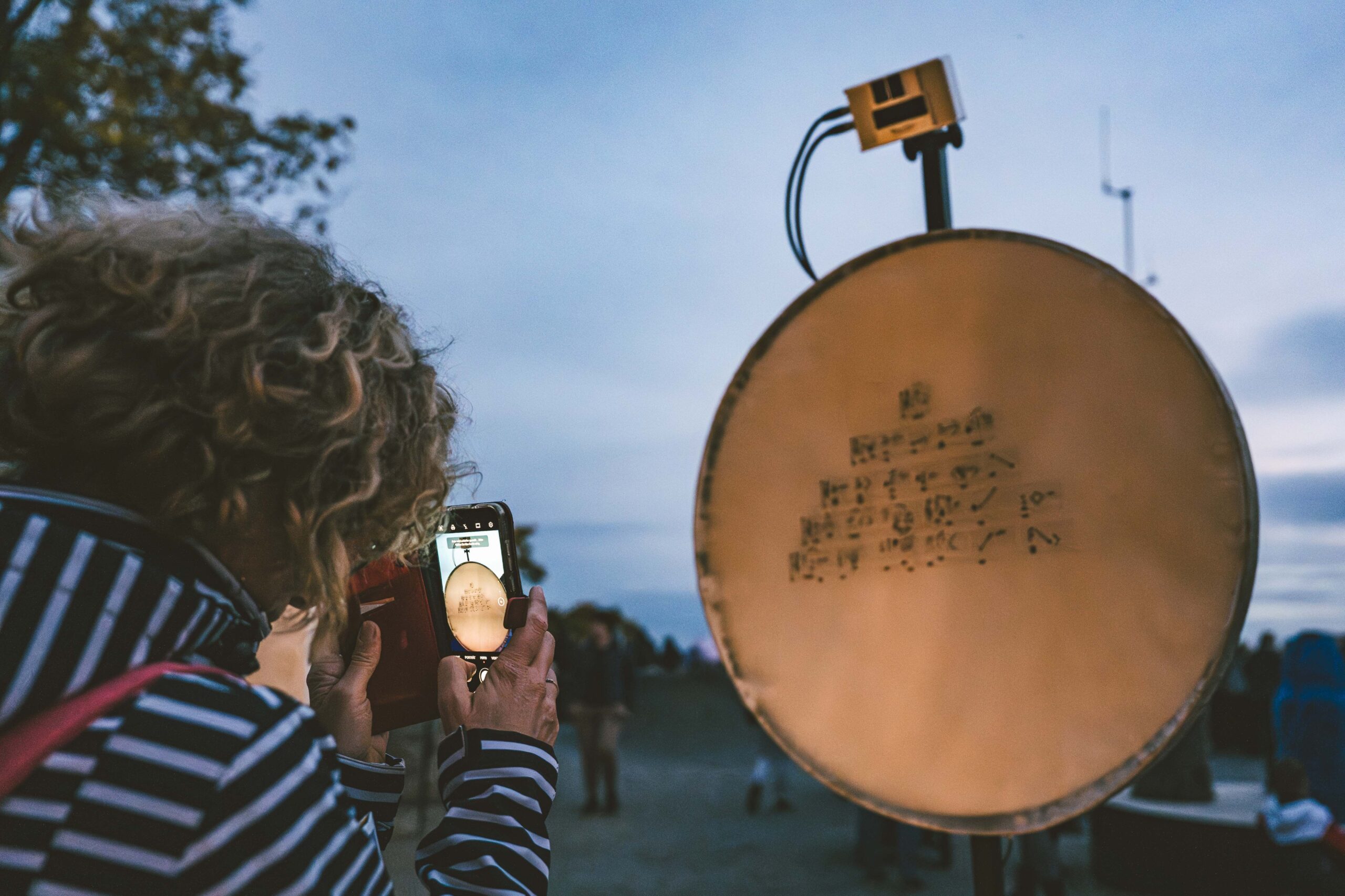
Rupert Huber is fascinated by the poetic-musical potential of physical encounters and what each person contributes to the whole simply through their presence. Following this idea, the composer created the participatory music installation Symphony of Encounters in the Wundergarten of the Graz Museum Schlossberg in collaboration with the AVL Cultural Foundation. Visitors’ movements were recorded, allowing musical objects to resound and interact with each other. The result was a musical network of relationships between people, art and technology.
Location: Graz Museum Schlossberg
Biography
Rupert Huber is a composer best known for his piano music and music installations. His theory of composing, which he calls “Dimensional Music”, takes into account physical space and a variety of possibilities to create a social and participatory musical architecture. For several years, Rupert Huber has been working with the Irvine instrument and exploring its tonal and compositional possibilities. Based on this, Huber has developed a notation for the unique instrument, which can also be heard in the Symphony of Encounters.
This installation is kindly supported by the AVL Cultural Foundation realized.
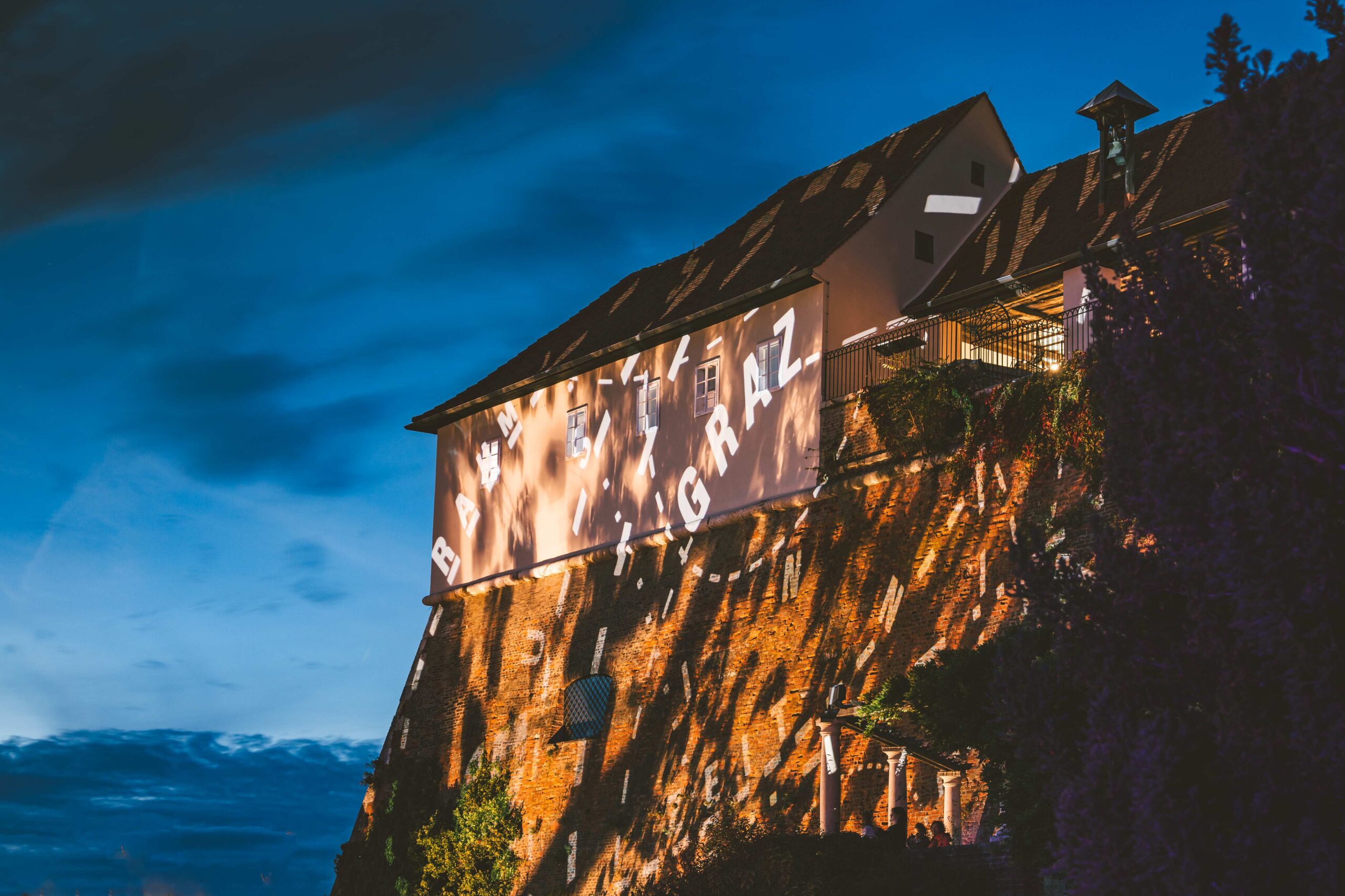
The work constellations by Detlef Hartung and Georg Trenz locates Graz at a highly visible point that provides both a unique view and orientation and forms an interface between heaven and earth. A cosmos of language and light transformed the fortress wall below the Graz Museum Schlossberg into a zero point for determining one’s own position.
Location: Graz Museum Schlossberg
Biography
Detlef Hartung and Georg Trenz have developed their own form of artistic expression over more than 20 years of collaboration, transforming texts into impressive images. Concrete language becomes pictorial signs in terms of both content and form. The resulting word images create large-scale image-text spaces that correspond with the real, three-dimensional spaces onto which they are projected.
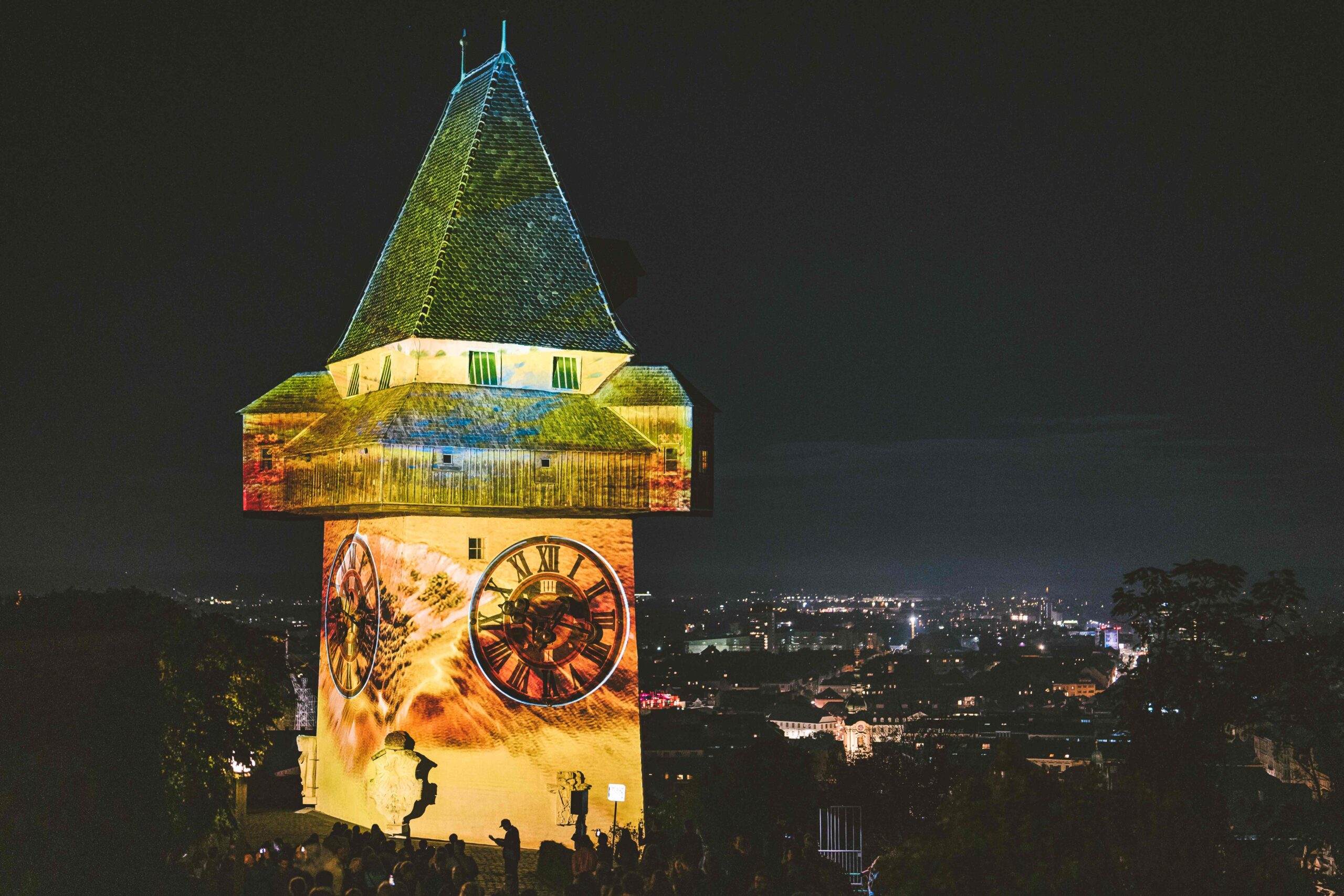
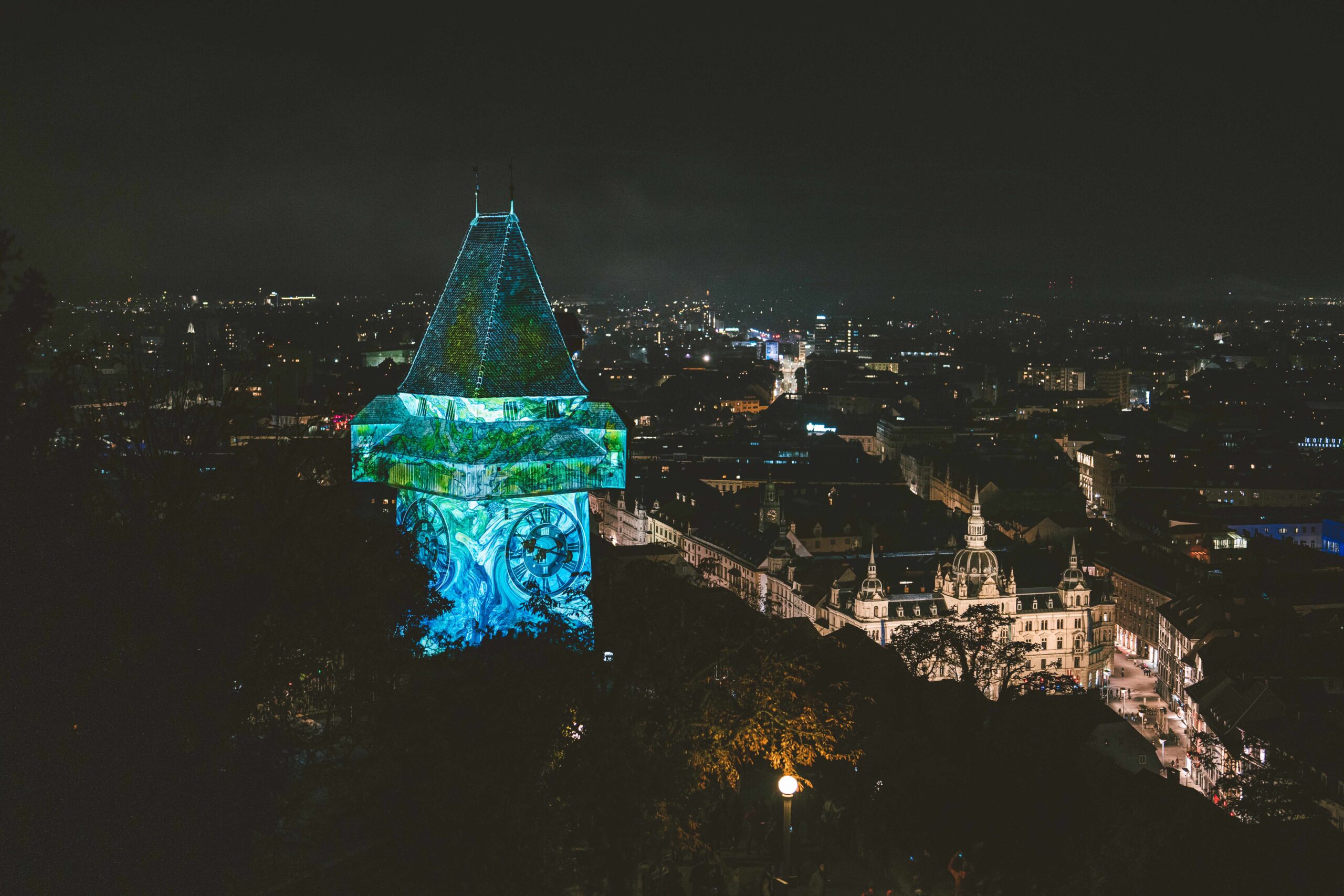
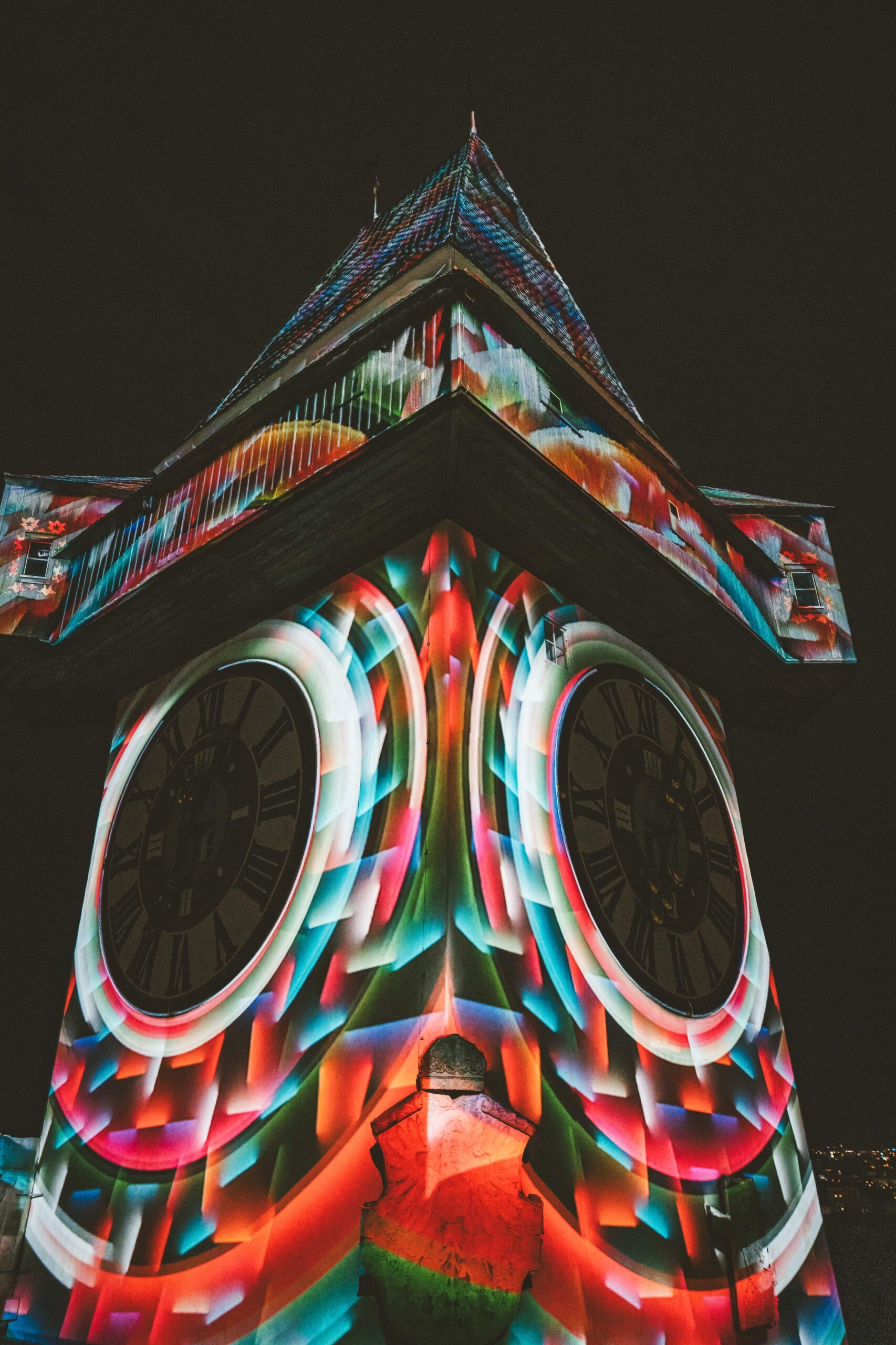
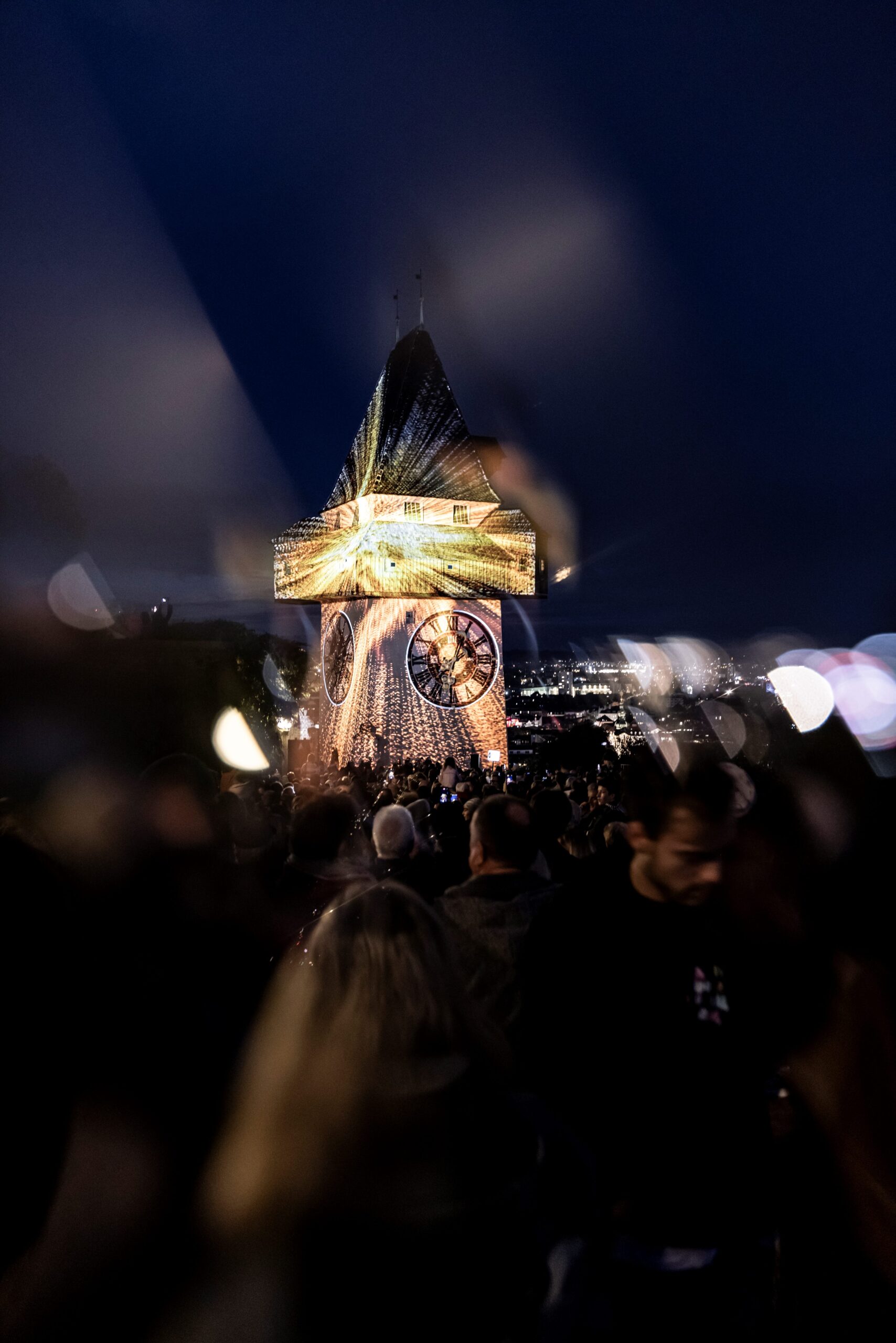
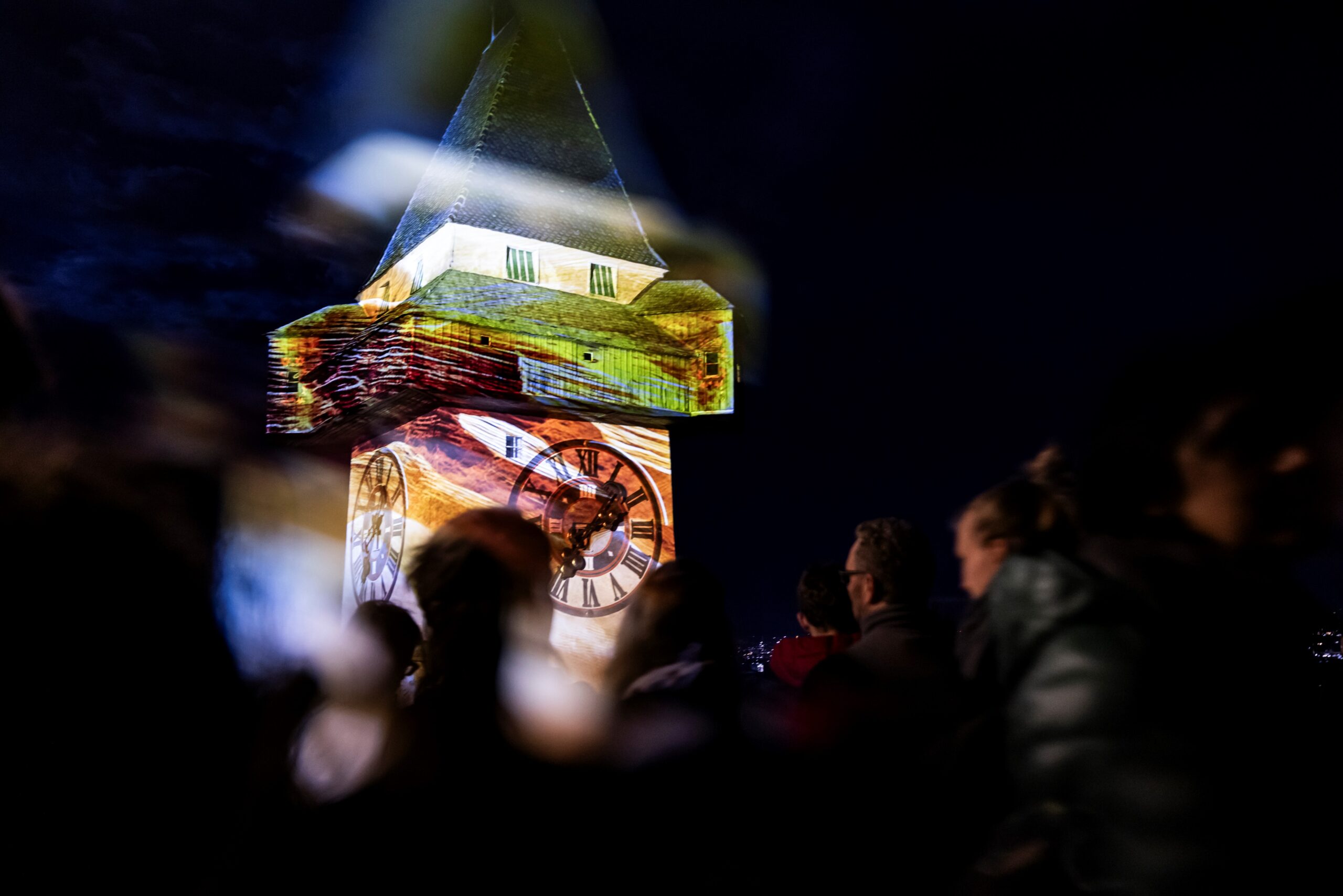
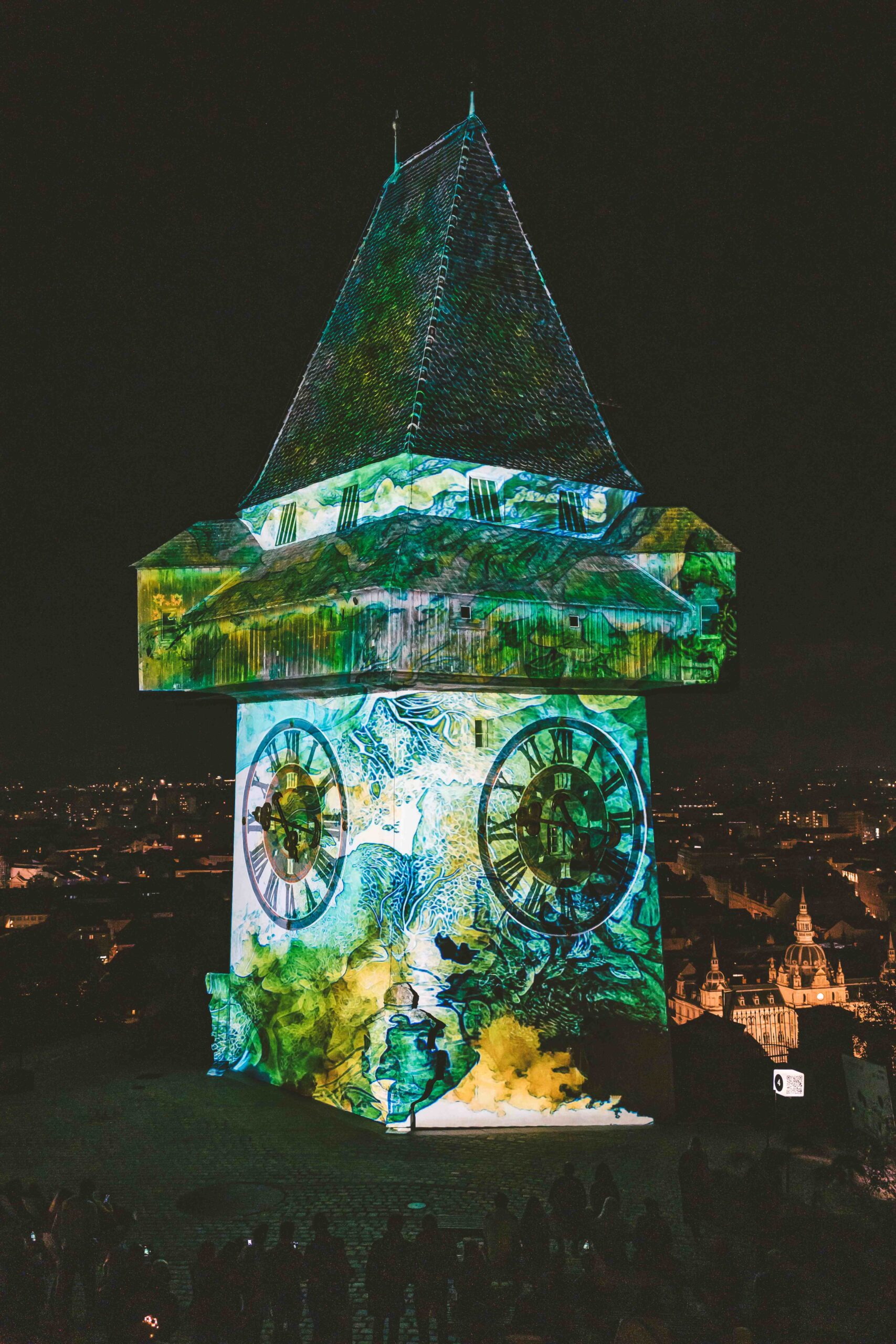
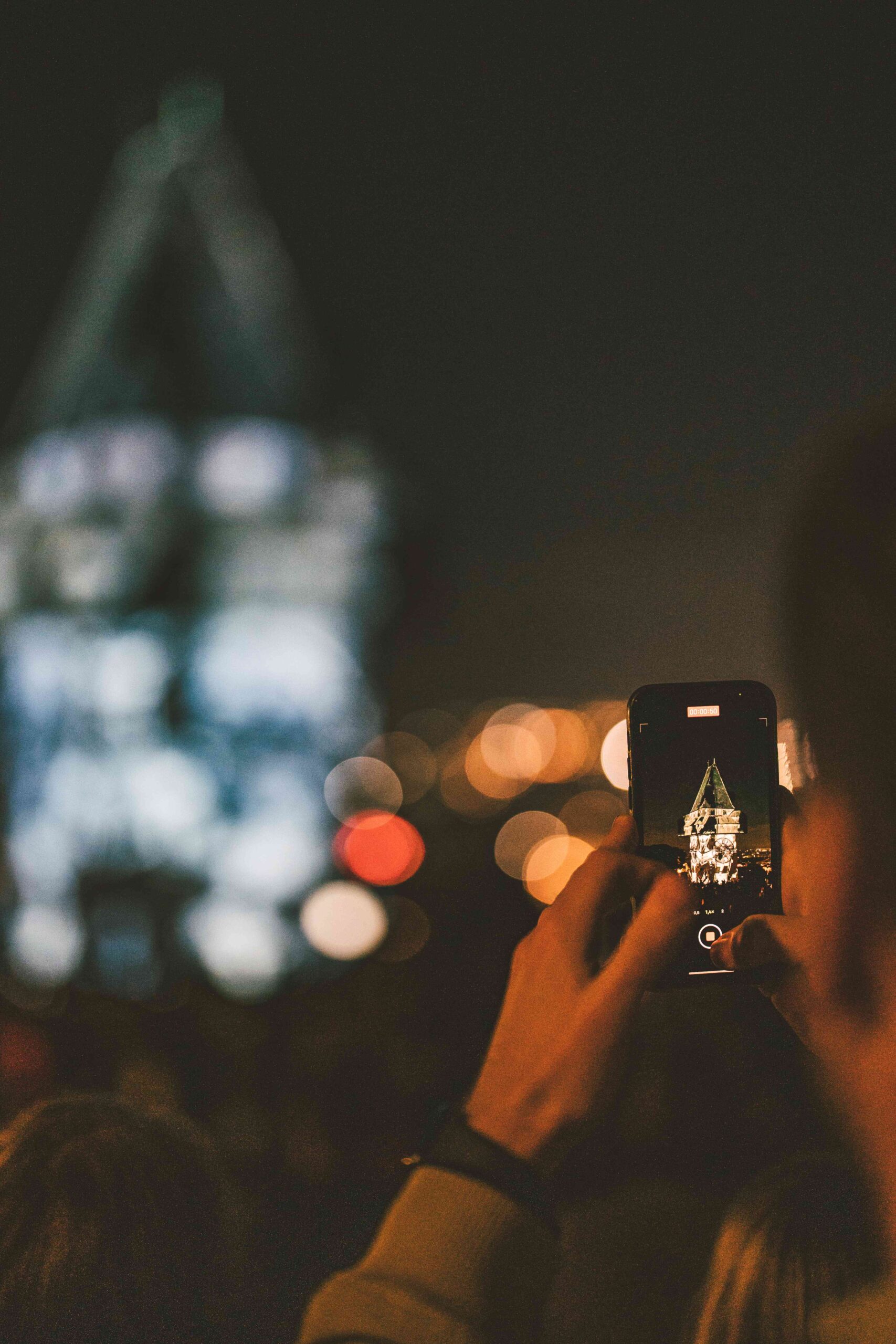
According to Onionlab, art is the most positive thing we have ever left on earth. With Patterns of Time , the Catalan artists’ collective pursued the idea that human artistic creation is an expression of our relationship to time and space. They transformed their thoughts into a story with the Graz Clock Tower as its projection surface. A visually stunning chronogram told how artists from different eras interpreted and reflected the world around them and in turn shaped it themselves through their work.
Location: Clock tower
Biography
Onionlab is a multidisciplinary studio that stages and produces audiovisual installations and exhibitions. Their work creates intersections between technology, design and art. Onionlab is based in Barcelona and works worldwide with more than 15 years of experience.
Credits
Onionlab Crew
Director: Jordi Pont
Producer: Neith Sentis, Aina Mesquida, Nuria Gironès
Sound design: Before Tigers, Absis, Urbez Capablo, Federico Morrison
Art Director: Berta González
3D Artists: Santiago Morrison, Gerard Rubio, Berta González, Jorge Rivera, Federico Morrison
Composition: Gerard Rubio
This installation is made possible with the kind support of XAL realized.
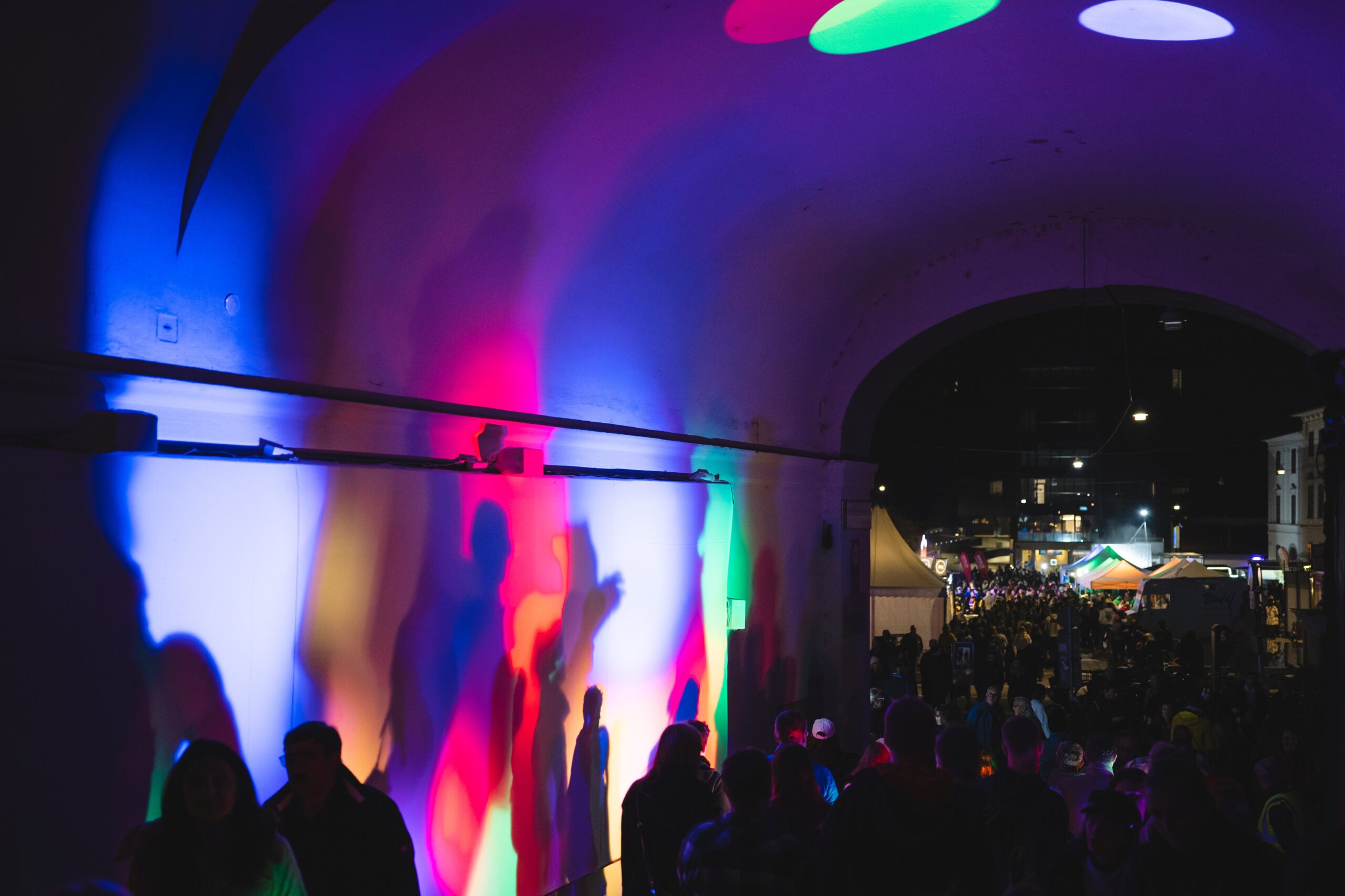
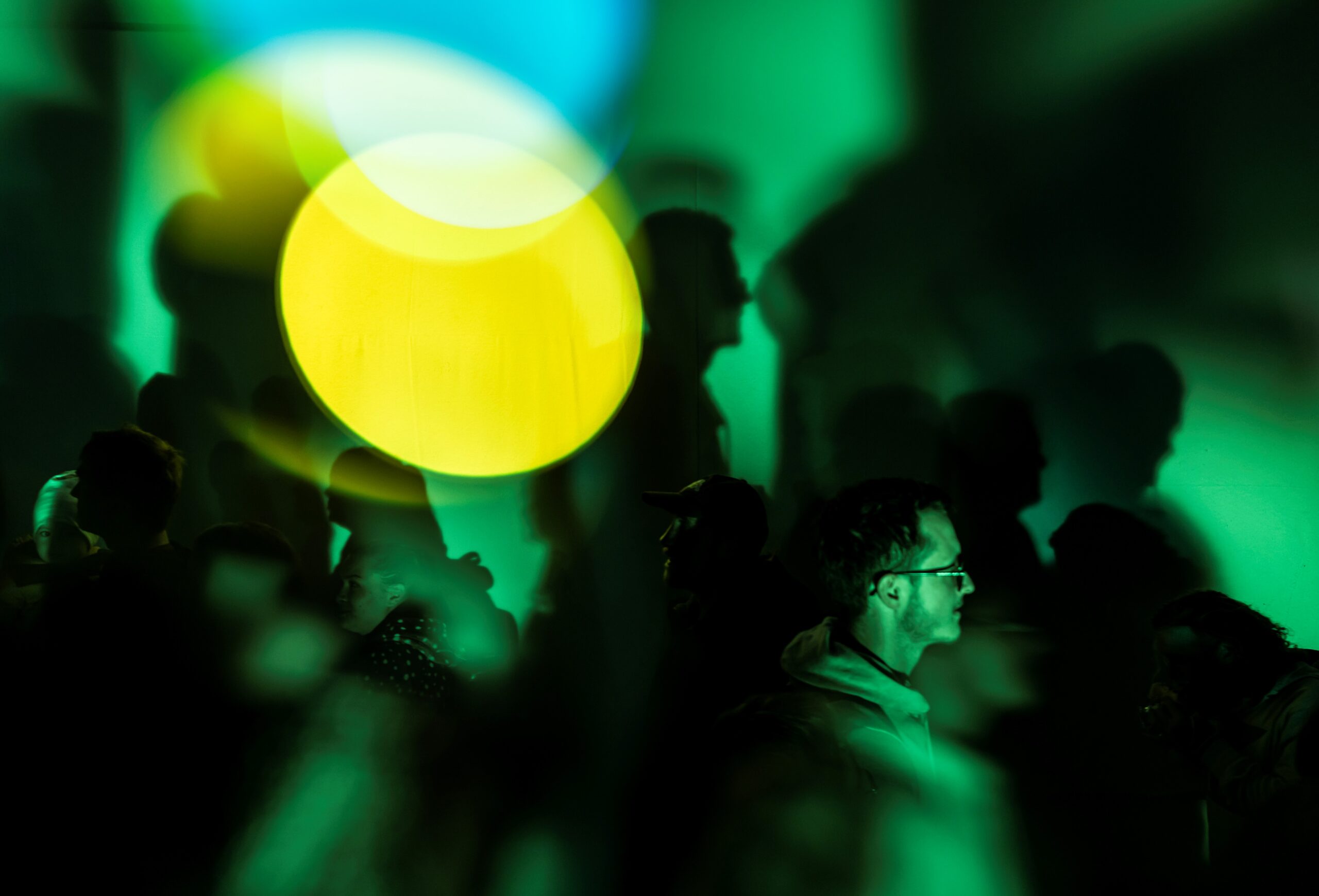
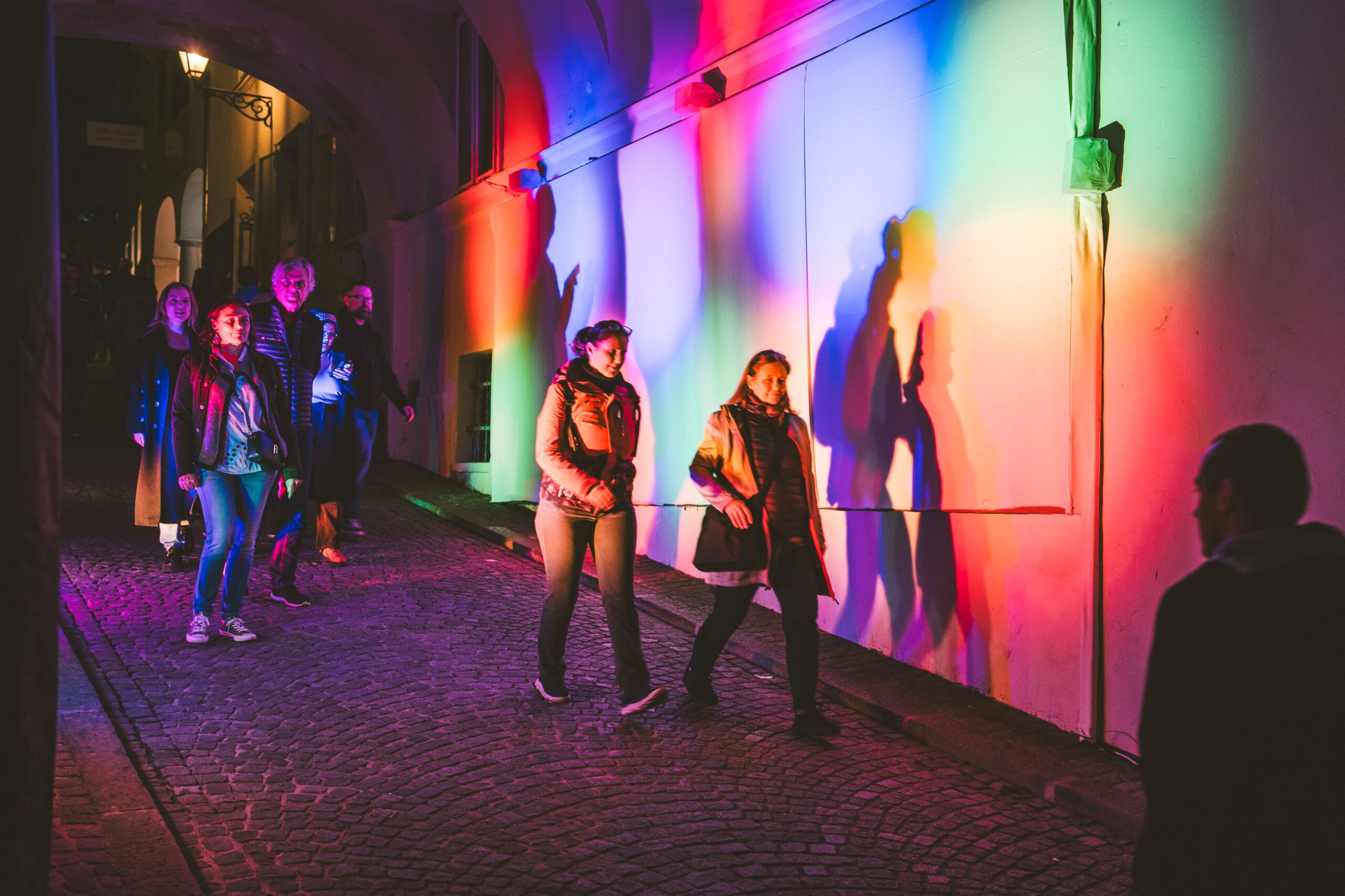
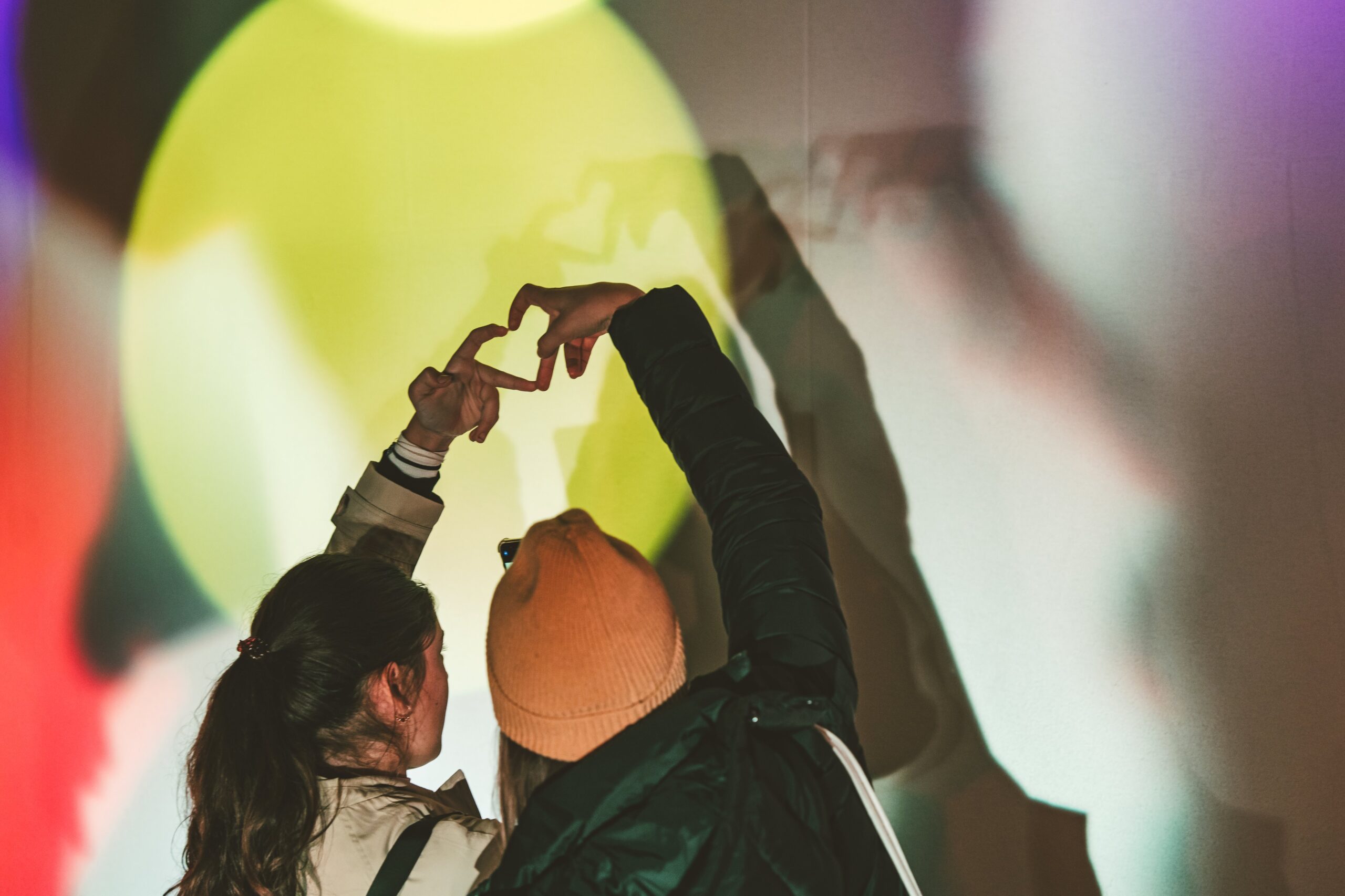
Animal voices could be heard in the archway at the foot of the Schlossberg; acoustically, nocturnal amphibians, insects and owls were cavorting in initially homogeneous color spaces. For the artist Martina Tritthart, a work of art is constituted by the relationship between color, light and shadow, space and human perception. This project was also constantly changed by the interaction of people and thus became a unique field of experimentation with light and sound. The resulting, artistically designed space was a sensory experience that appealed to different levels of perception and encouraged reflection on the relationship between man and nature.
Location: Schlossberg staircase (Paulustorgasse 1)
Biography
Martina Tritthart is a media artist, filmmaker and curator working at the interface of visual art, moving image and architecture and lives in Vienna. In her mostly site-specific works, the artist uses light as a medium and artistic material to explore the subjective perception of space. In addition to her active exhibition presence in Austria, the artist is represented at international light and media art festivals, both alone and as part of the artist collective mutual loop. Martina Tritthart completed her doctorate in architecture at Graz University of Technology with her thesis “Lichträume – Raummodelle der Wahrnehmung” and is a board member of the association Künstlerhaus, Gesellschaft bildender Künstlerinnen und Künstler Österreichs. www.spacelab.at
Credits
Concept, direction, lighting: Martina Tritthart
Sound, digital media: Michael Strohmann
Assistance and set-up technology: Holger Lang
Work shadowing: Raika Dittmann
This art intervention is organized with the kind support of Polestar Austria realized.
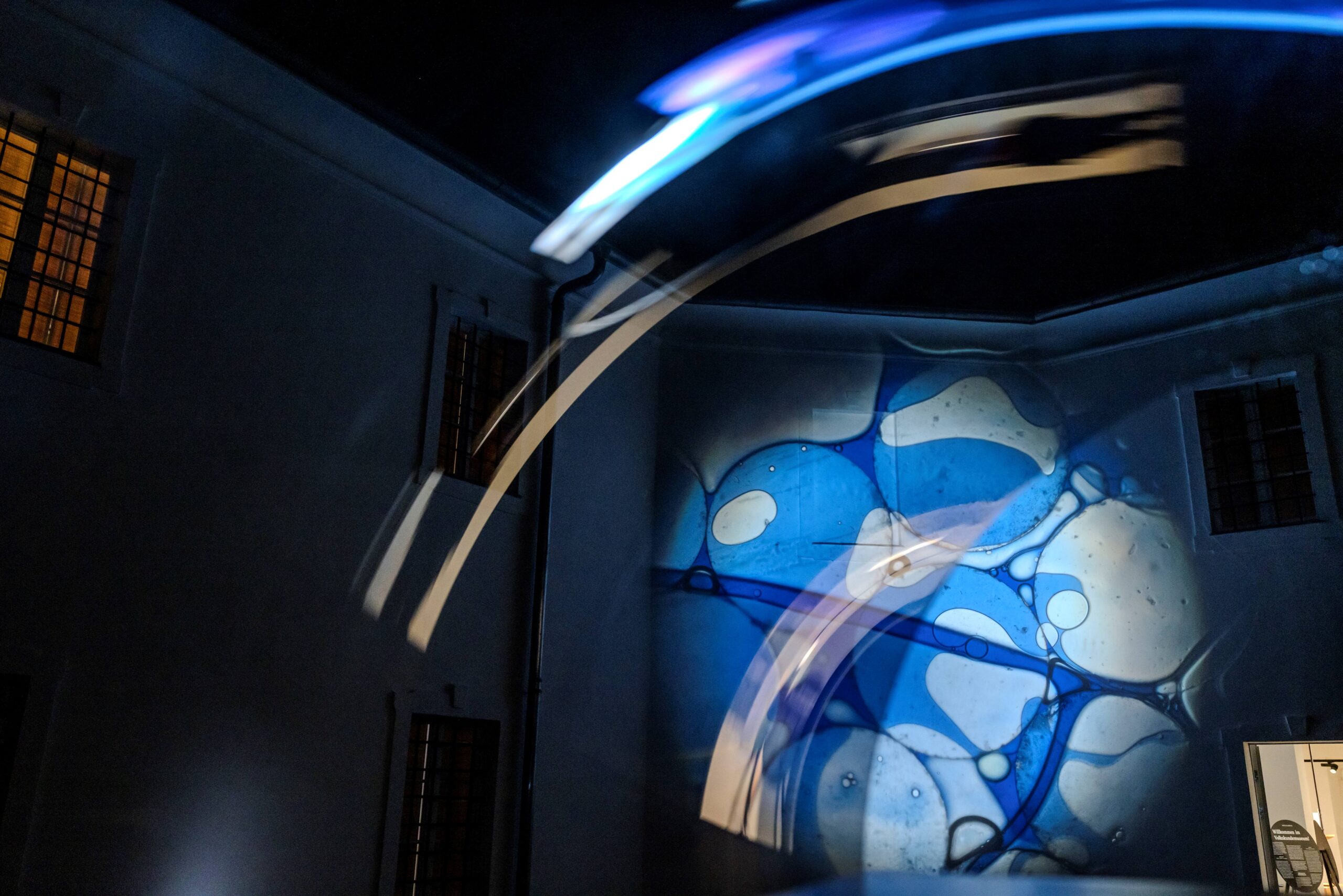
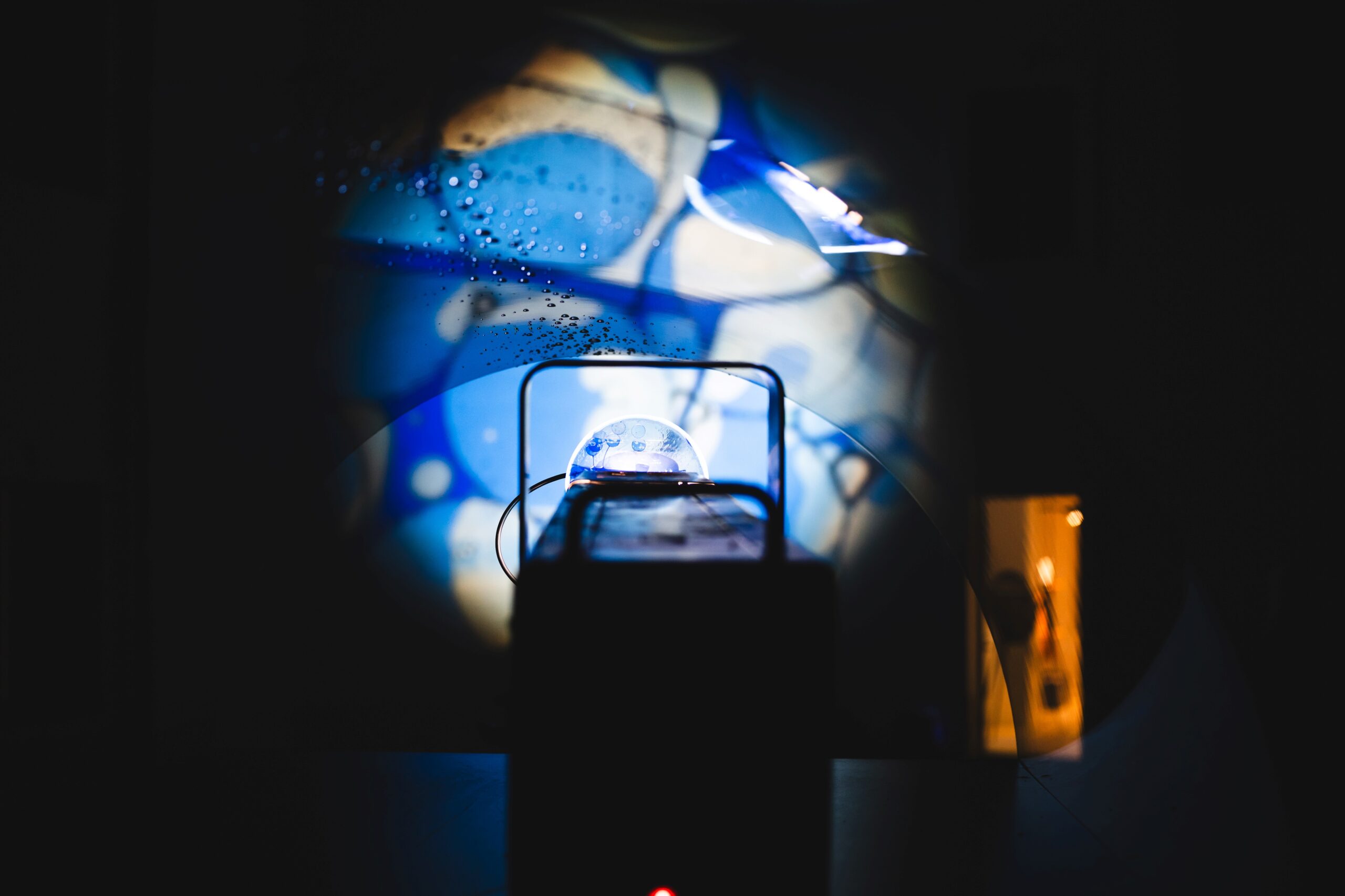
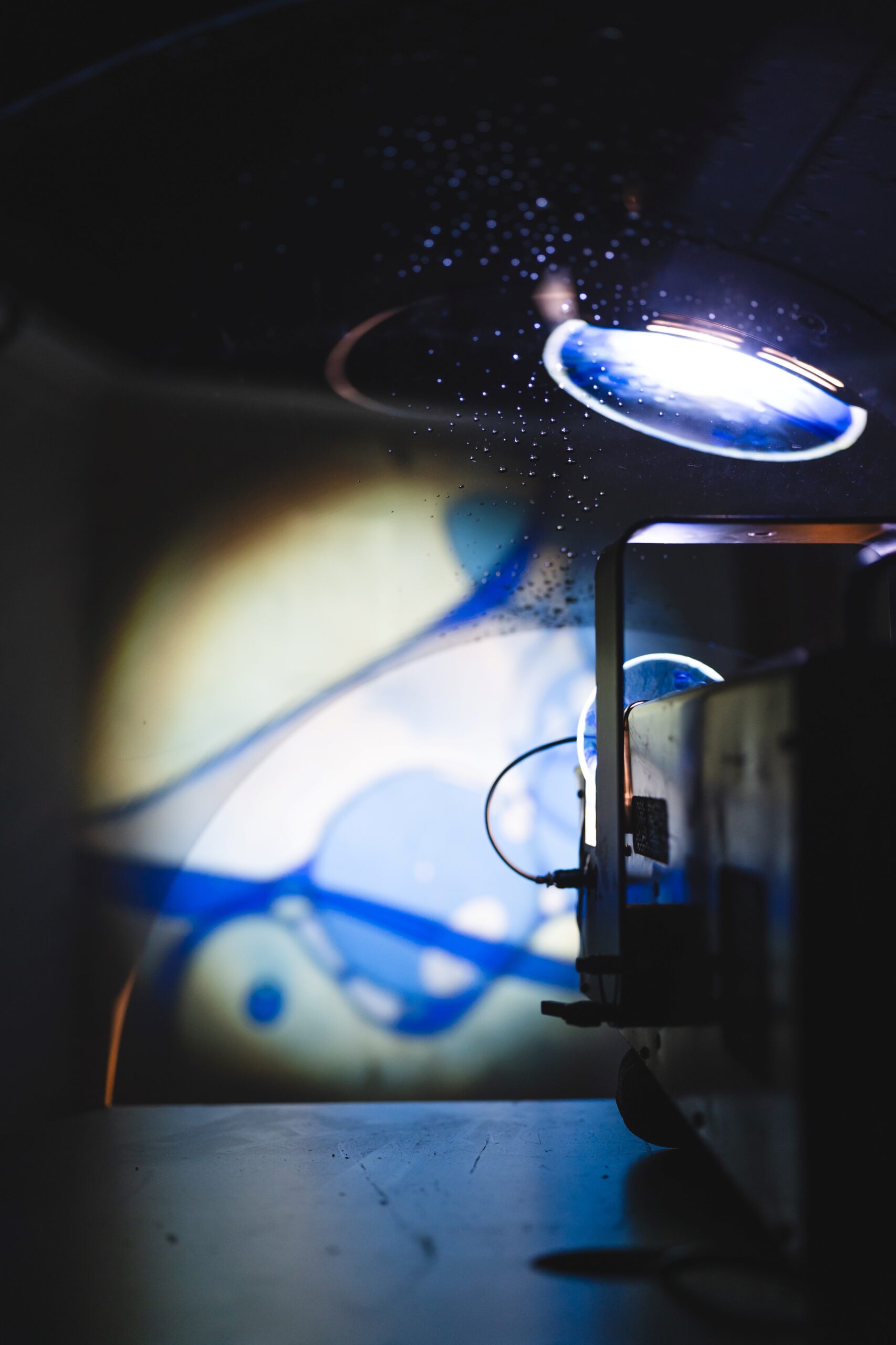
13 million liters of ice melt every second worldwide. This installation, in which both melt water and sound recordings from the Dachstein glacier massif were used, tells the story. The work on display at KLANGLICHT, The Ice is Melting at the Pøules, is one of the sub-projects of the total art project wearemelting.art by the Danish artist collective Båll & Brand. The latter will be staged around the globe and will conclude in 2024 at the World Climate Summit in New York.
Location: Folklore museum at Paulustor
Biography
Båll & Brand is a Danish artist collective specializing in atmospheric installations and scenography. Together with their team, artists Martin Ersted and David Ruben blur the boundaries between aesthetics, technology and science. Their mostly site-specific interventions encourage reflection on our world and our society. The music composer and sound artist Robotic Folk, who acoustically underpinned “The Ice is Melting at the Pøules”, moves from orchestral to electronic between different means of musical expression and thus also creates a pointed sound for each visuality.
Credits
Installation: Båll & Brand (Martin Ersted and David Karpantschof)
Sound and composition: Robotic Folk
A big thank you to Blue Sky Wetteranalysen, who supported the excursion to the Dachstein glacier with care and know-how.
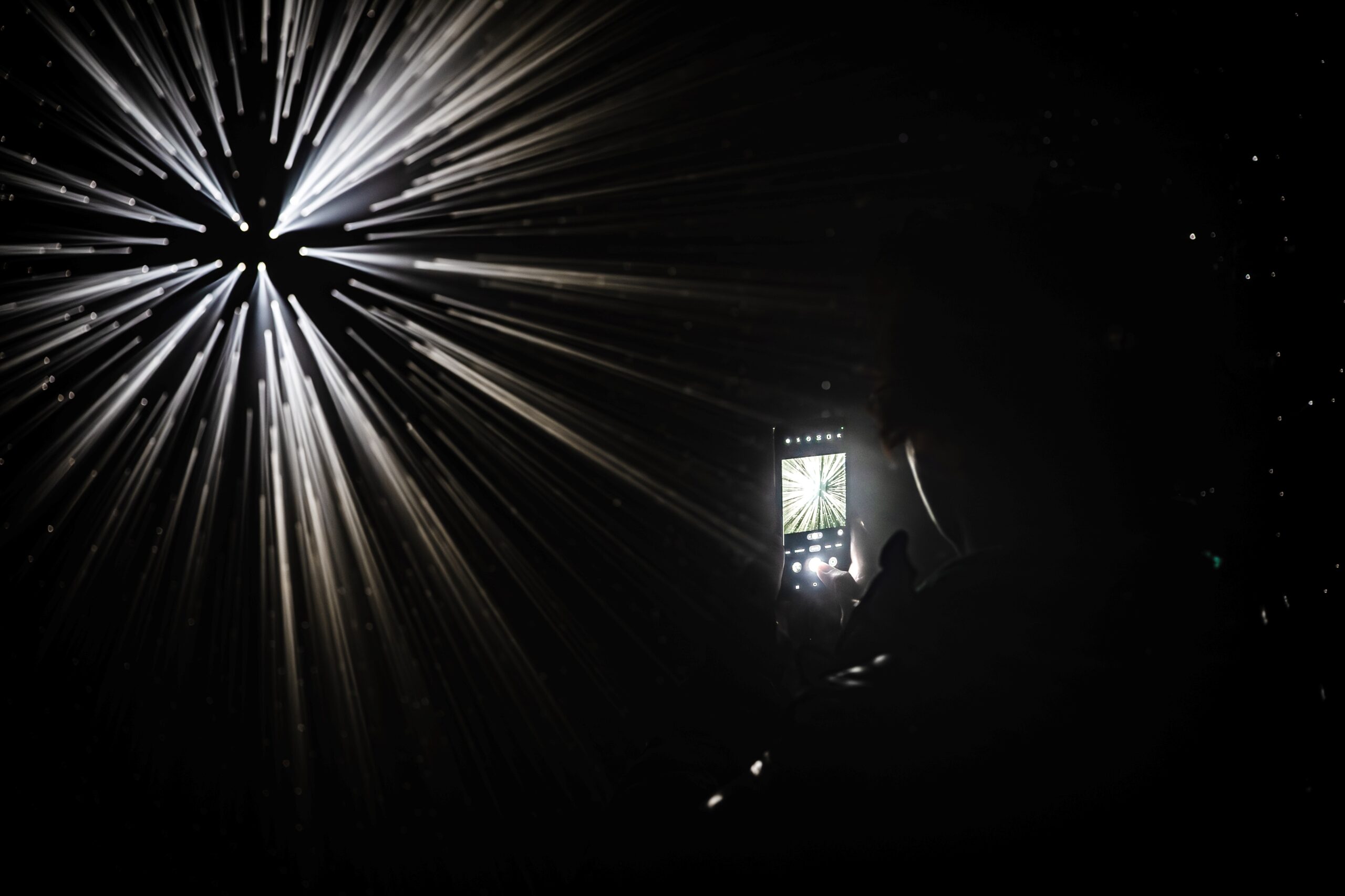
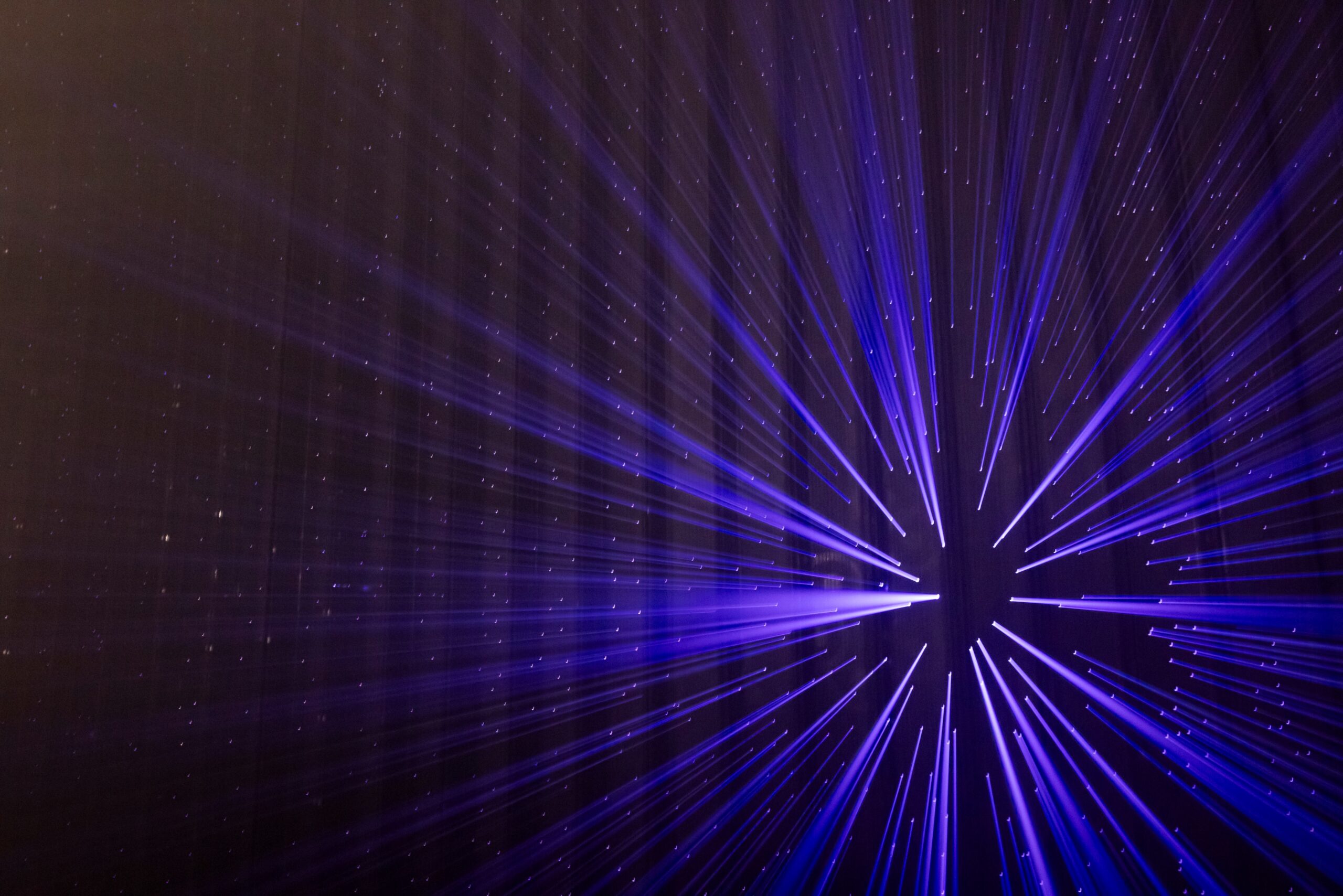
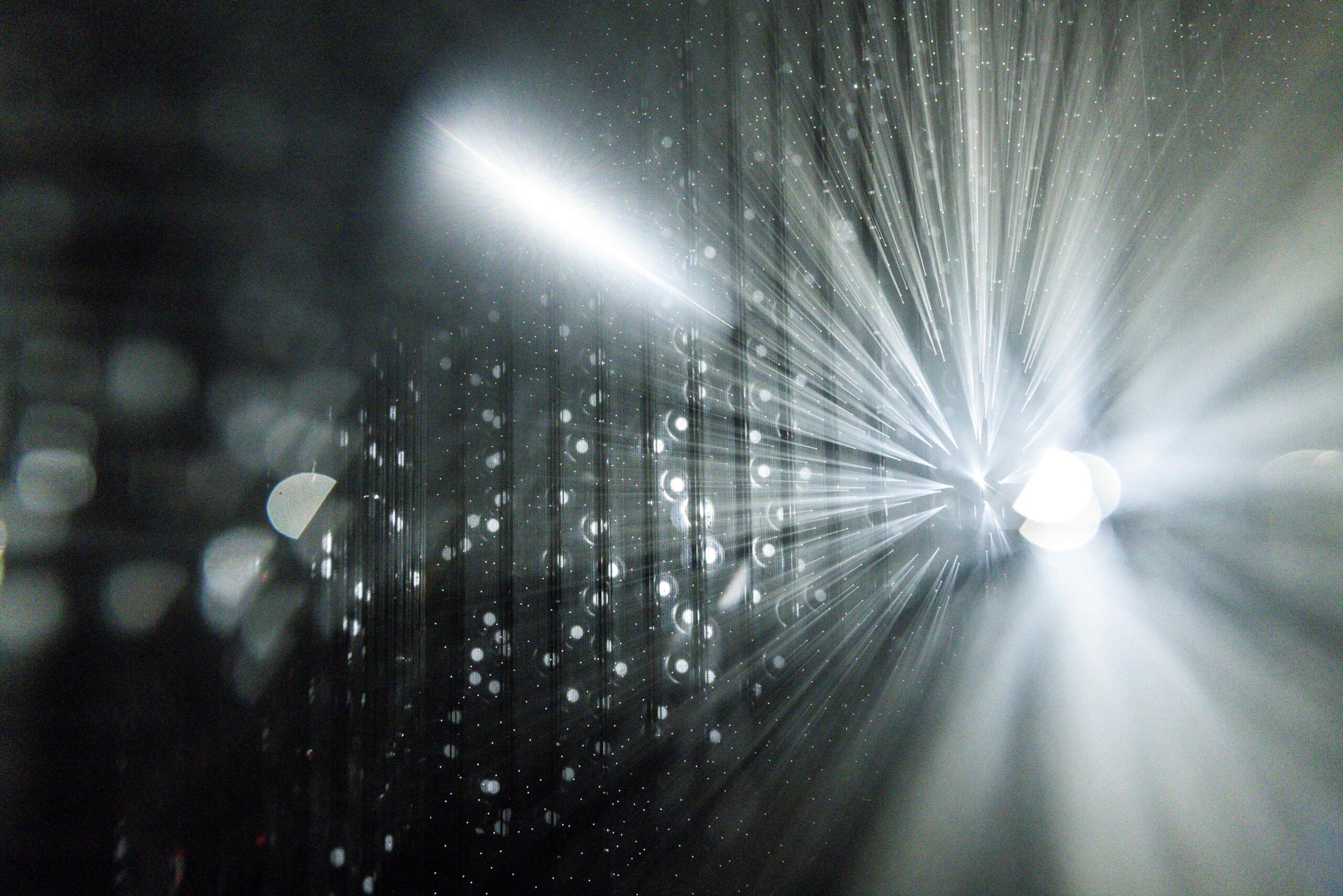
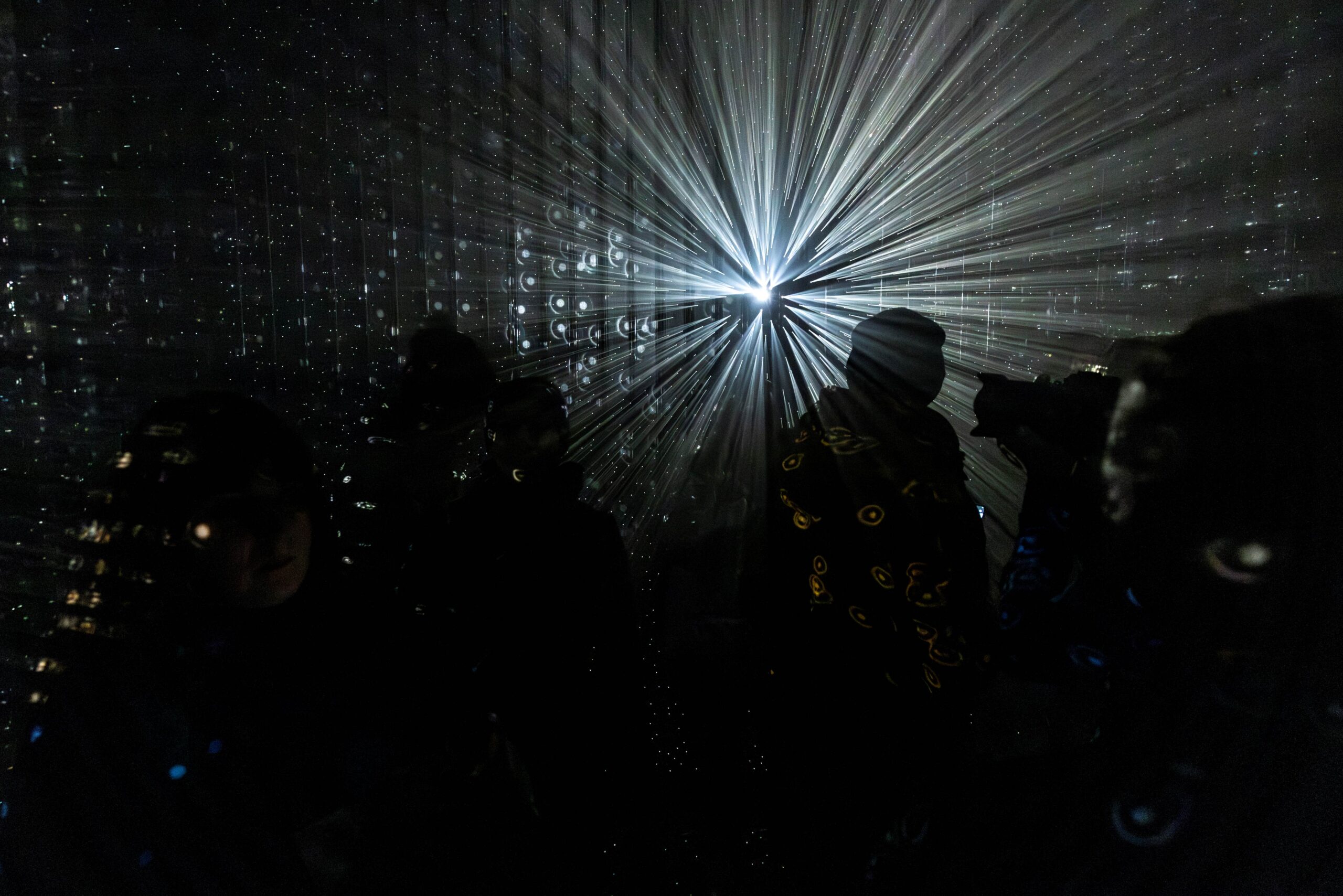

Inspired by the mysterious natural phenomenon of the Brocken spectrum, Yasuhiro Chida created the interactive installation Brocken 5.6: rays of light penetrate the dark space through thousands of holes, creating the illusion that the light follows the people. Chida’s works deal with the sensory perception of our environment, changes in it and our reaction to them. Together with Ólafur Eliasson and James Turrell, the Japanese artist was named one of the nine most remarkable digital artists in the world by Artdex in 2019.
KLANGLICHT 2023
Location: Karmeliterplatz
Biography
Yasuhiro Chida is a light artist from Japan. He studied architecture at Musashino Art University in Tokyo. Influenced by his personal experiences in mountaineering, ice climbing and caving, he explores this special spatial awareness in nature, as well as the impressive, physical sensory impressions in his immersive installations. In this way, the artist creates impressive experiences in public spaces using often extremely simple means. In 2019, Yasuhiro Chida was awarded the audience prize at the International Light Art Award 2019 in Unna. He is also creating his own art museum, the Museum of Spatial Art in Tatsuno, Nagano, Japan.
This installation is kindly supported by the Kleine Zeitung supported.
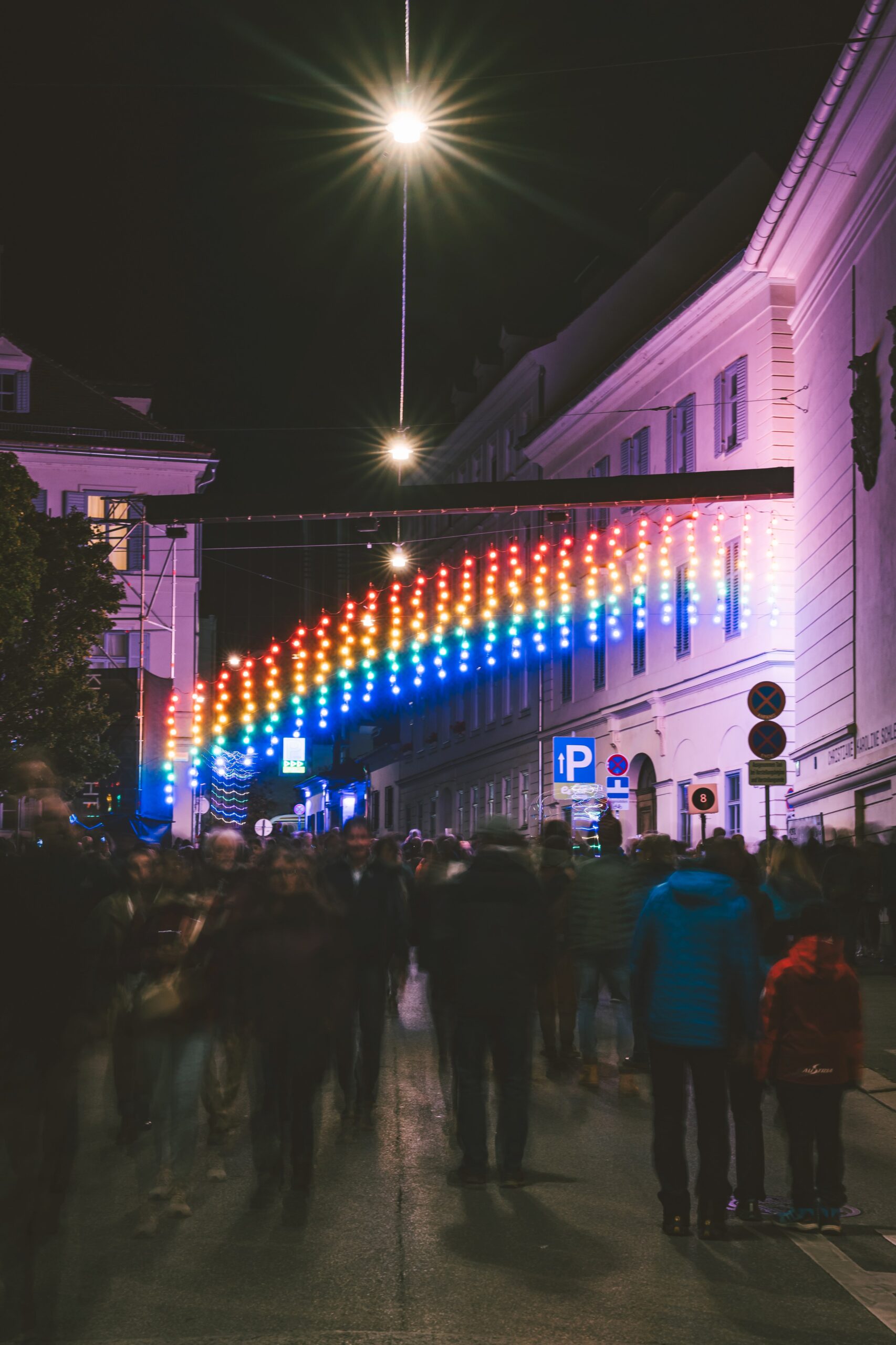
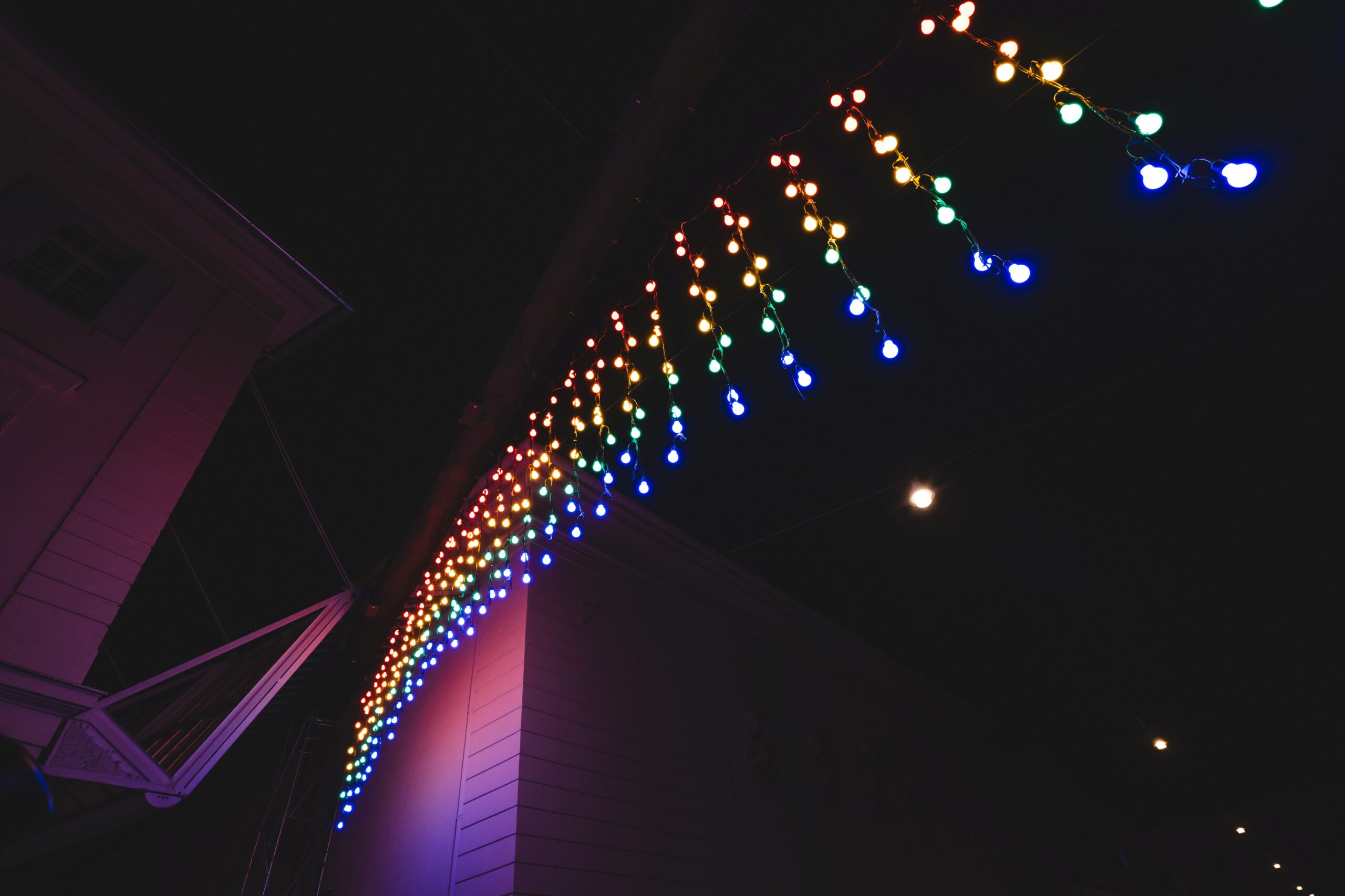

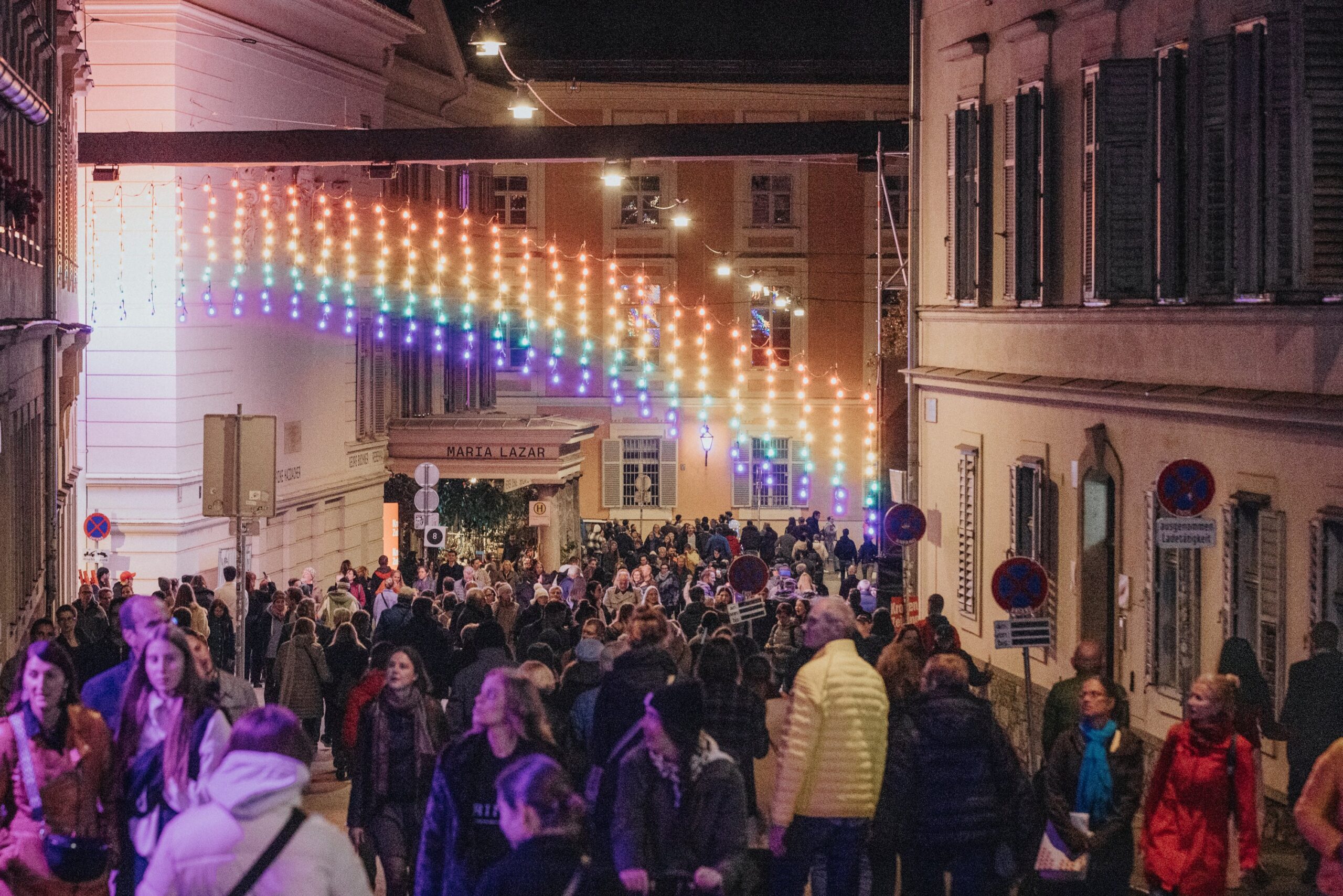
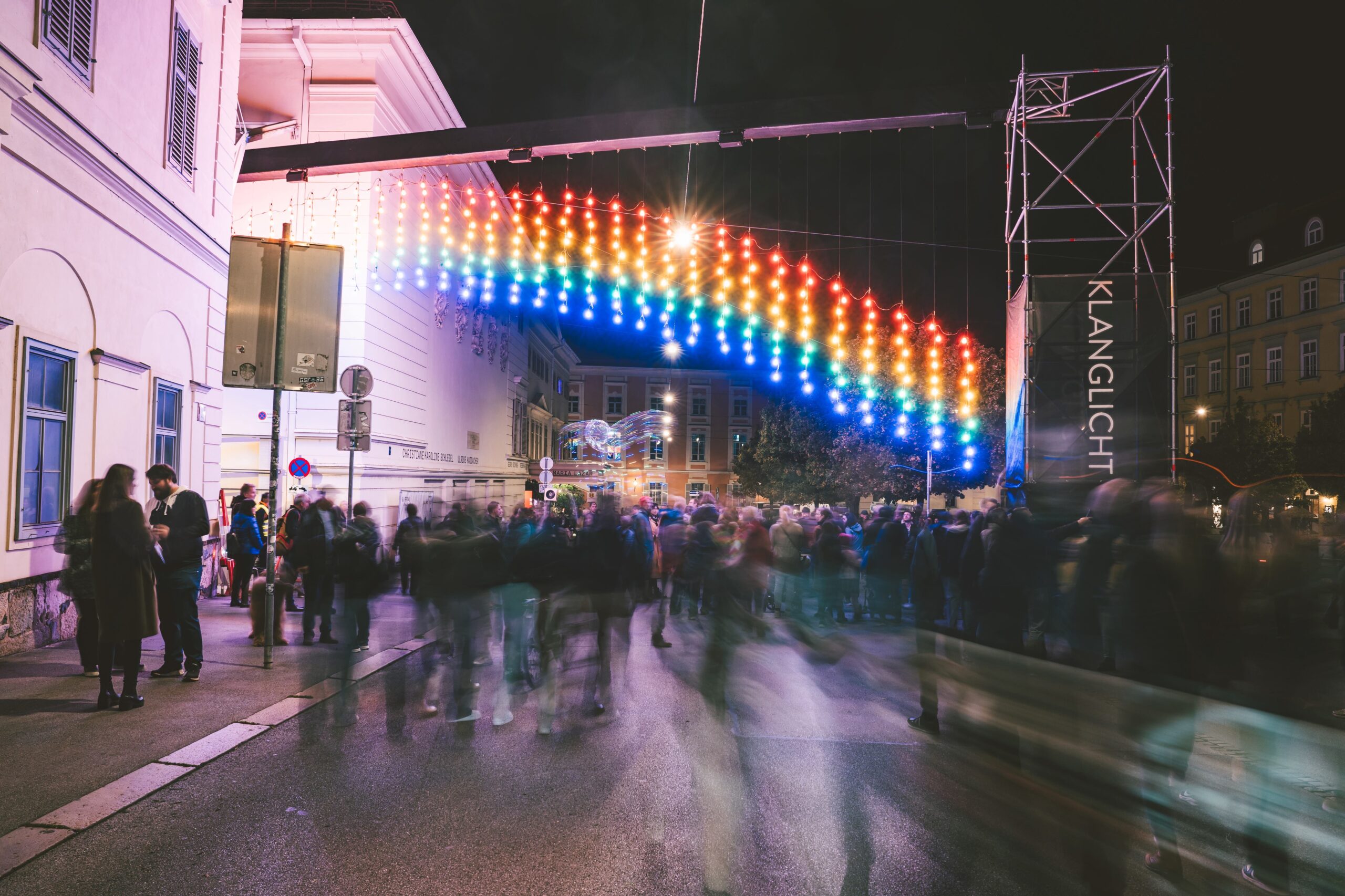
In everyday life, it is usually not easy to change sides, but at Klanglicht it only takes a few steps: with his installation Portal, Graz-born artist Alfredo Barsuglia allows visitors to change sides both physically and mentally. He shows them the way with colorful light bulbs. Texts spoken by members of the Schauspielhaus Graz ensemble complete the project.
Location: Schauspielhaus Graz
Biography
Alfredo Barsuglia, born 1980 in Graz, lives and works in Vienna.
Barsuglia has received numerous awards and scholarships, including the Monsignore Otto Mauer Prize (2019), the State Scholarship for Fine Arts (2017), the Art Promotion Prize of the City of Vienna (2015), the Theodor Körner Prize (2013), the Art Promotion Prize of the City of Graz (2007) and the MAK Schindler Scholarship in Los Angeles (2006).
His works have been exhibited at Lentos, Linz (2023), Dominikanerkirche, Museum Krems and donaufestival (2023), Pinakothek der Moderne, Munich (2022), Kunsthaus Graz (2021), Museum of Estonian Architecture in Tallinn, Estonia (2021), Kunsthalle Esch, Luxembourg (2020), Kunstforum Wien (2019), at the MMKK Museum of Modern Art Carinthia, Klagenfurt (2018), at the MAK – Museum of Applied Arts, Vienna (2015), at the MACRO – Museo d’Arte Contemporanea di Roma / Testaccio (2014), at the ARTPLAY Design and Architecture Center, Moscow (2011) and at the mumok Museum moderner Kunst Stiftung Ludwig, Vienna (2010).
In numerous projects in public space, such as Social Pool (2014) in the Mojave Desert, Mariainsel (2018) in Fürstenfeld, Abriss (2021) in Graz or Back to Now, a project for the European Capital of Culture 2024 in the Salzkammergut, he deals with social values and the boundaries and transitions between the public and private spheres.
Credits
Installation: Alfredo Barsuglia
Sound Design and Sound Engineer: Stefan Voglsinger
Voices: Luisa Schwab and Željko Marović from the ensemble of Schauspielhaus Graz
This installation was realized with the kind support of the Kronen Zeitung realized.
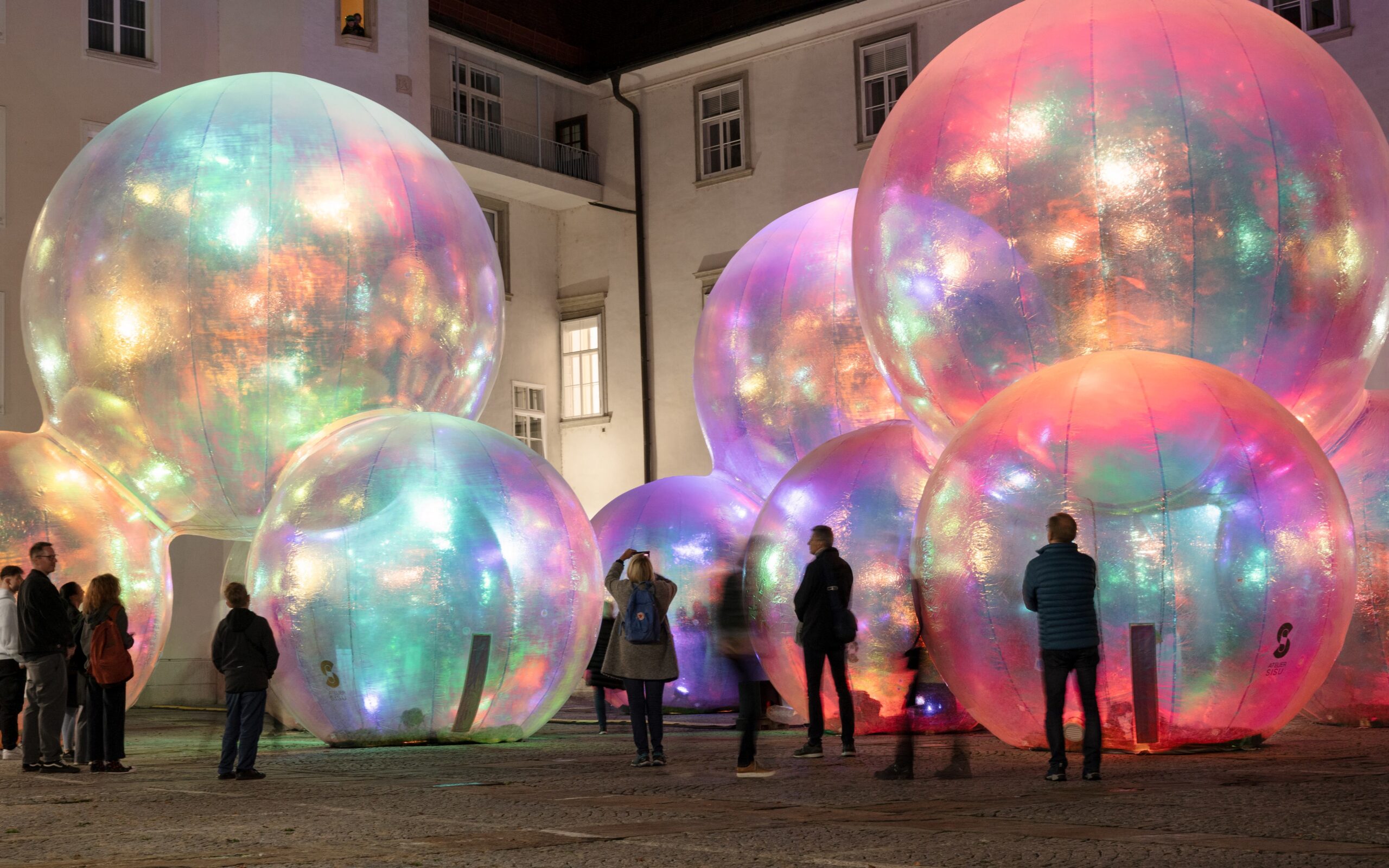
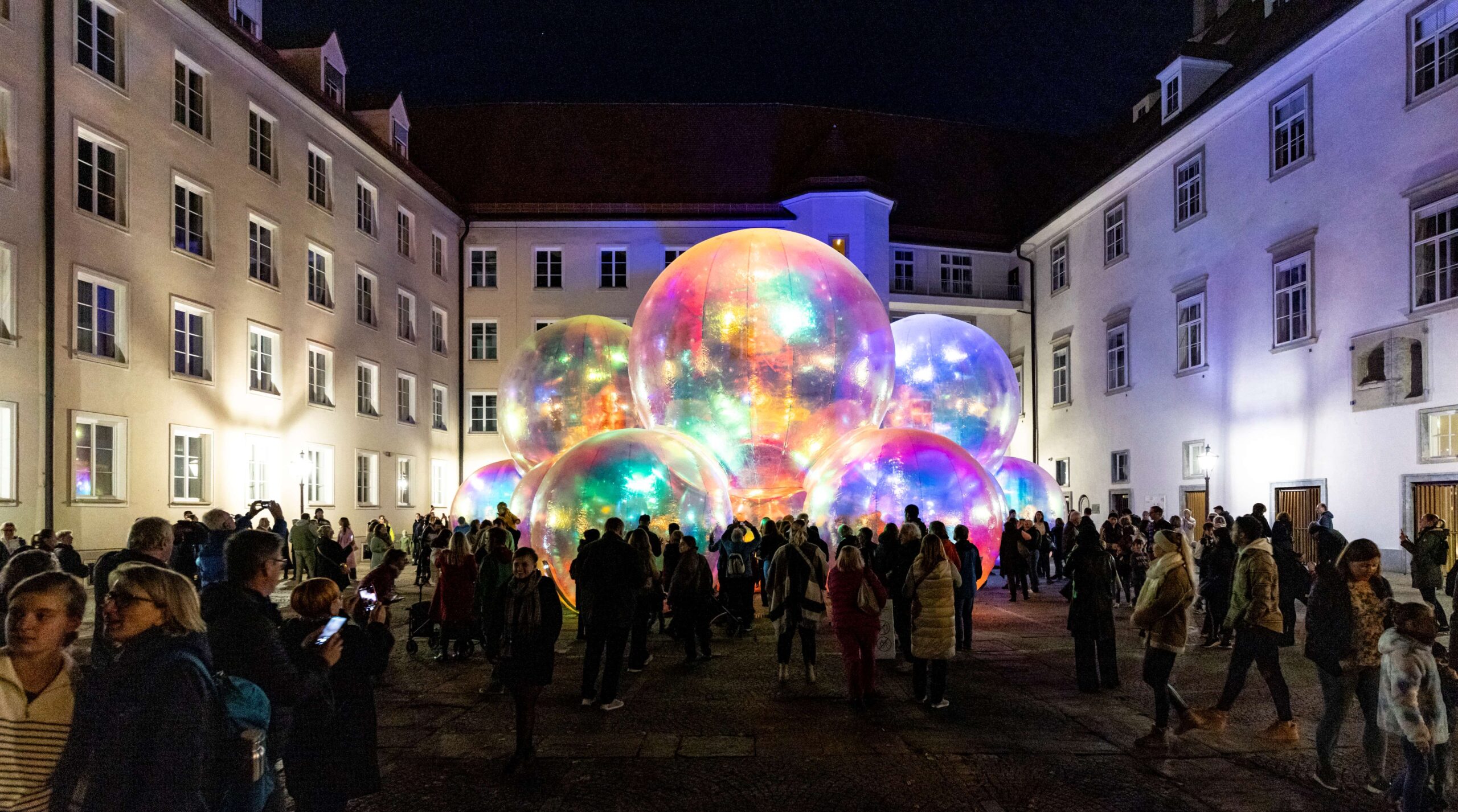
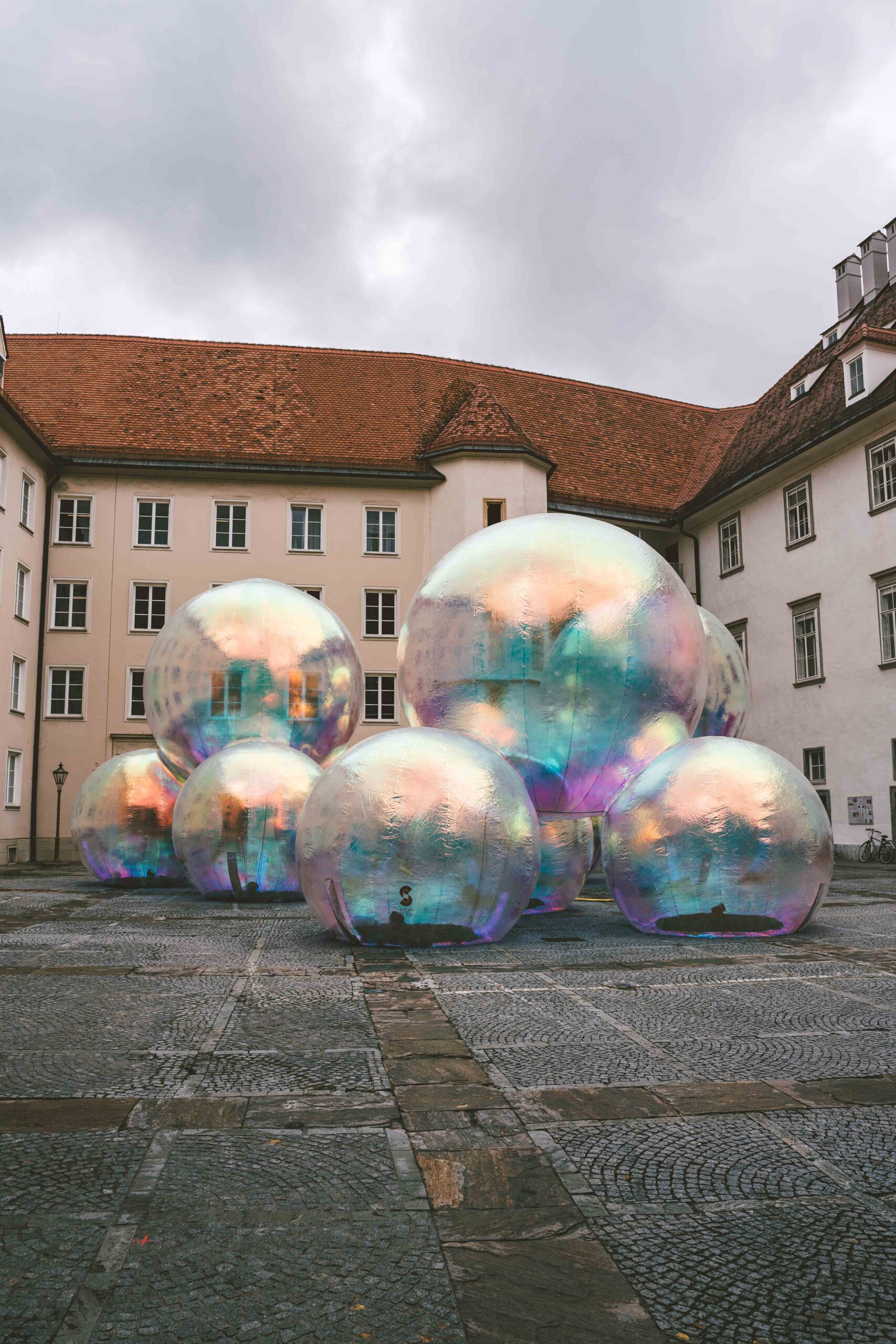
Driven by the forces and events of a changing world, Evanescent immerses the viewer in an immersive architecture of light and sound. Polarizing foils created the illusion of a bubble-like form that is in constant flux due to people’s participation. The movement of visitors through the space created ever-changing images on the reflective form. The message is clear: the only thing that remains is change.
Location: Graz Castle
Biography
Atelier Sisu is a Sydney-based design studio that works at the interface of art and architecture. The large-scale works are developed specifically for their exhibition venues and thus completely rethink the respective spaces. Their works create a magic that invites people to discover the world around them, whether familiar or unfamiliar, from a different perspective
This installation is made possible with the kind support of Grazer Wechselseitige realized.
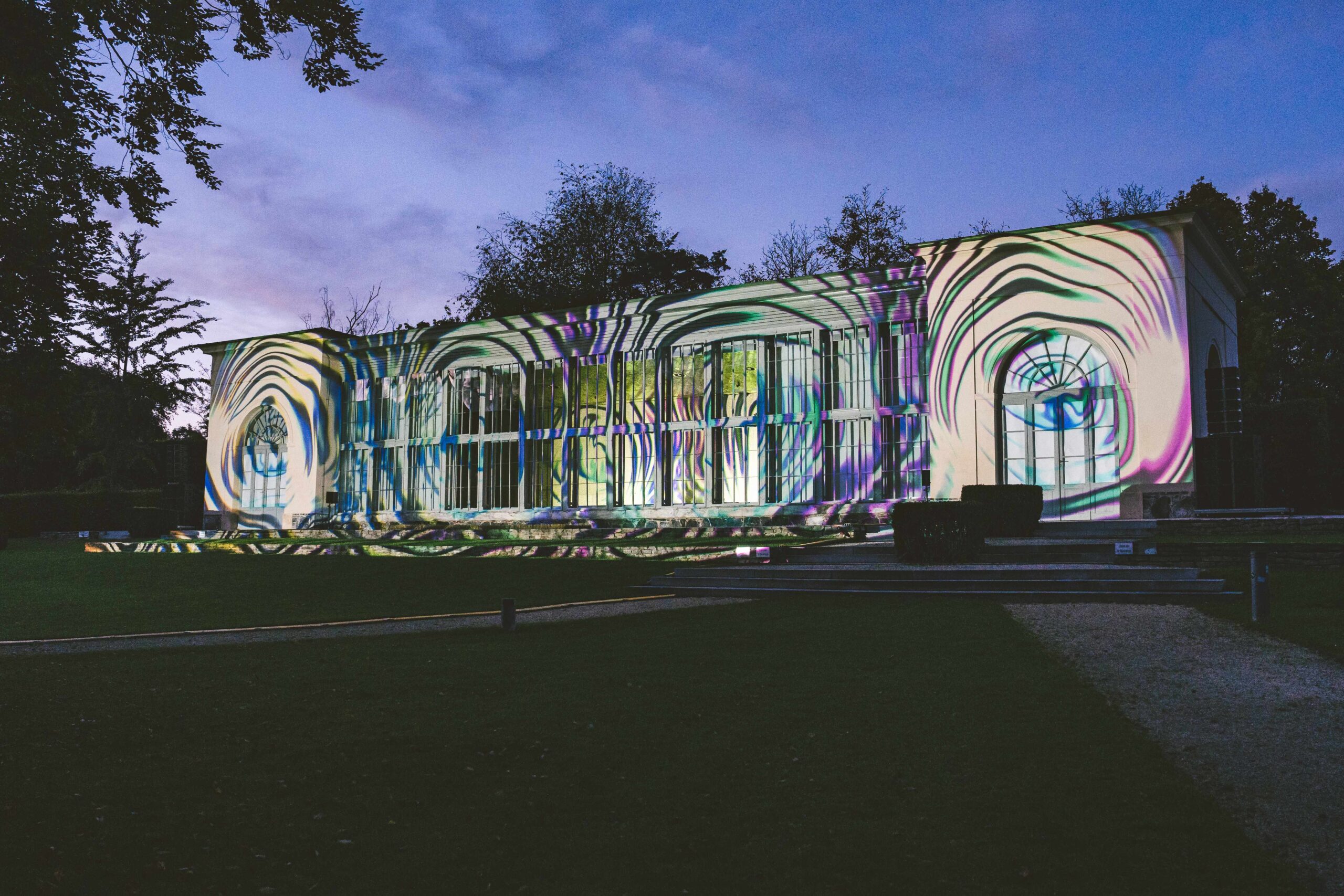
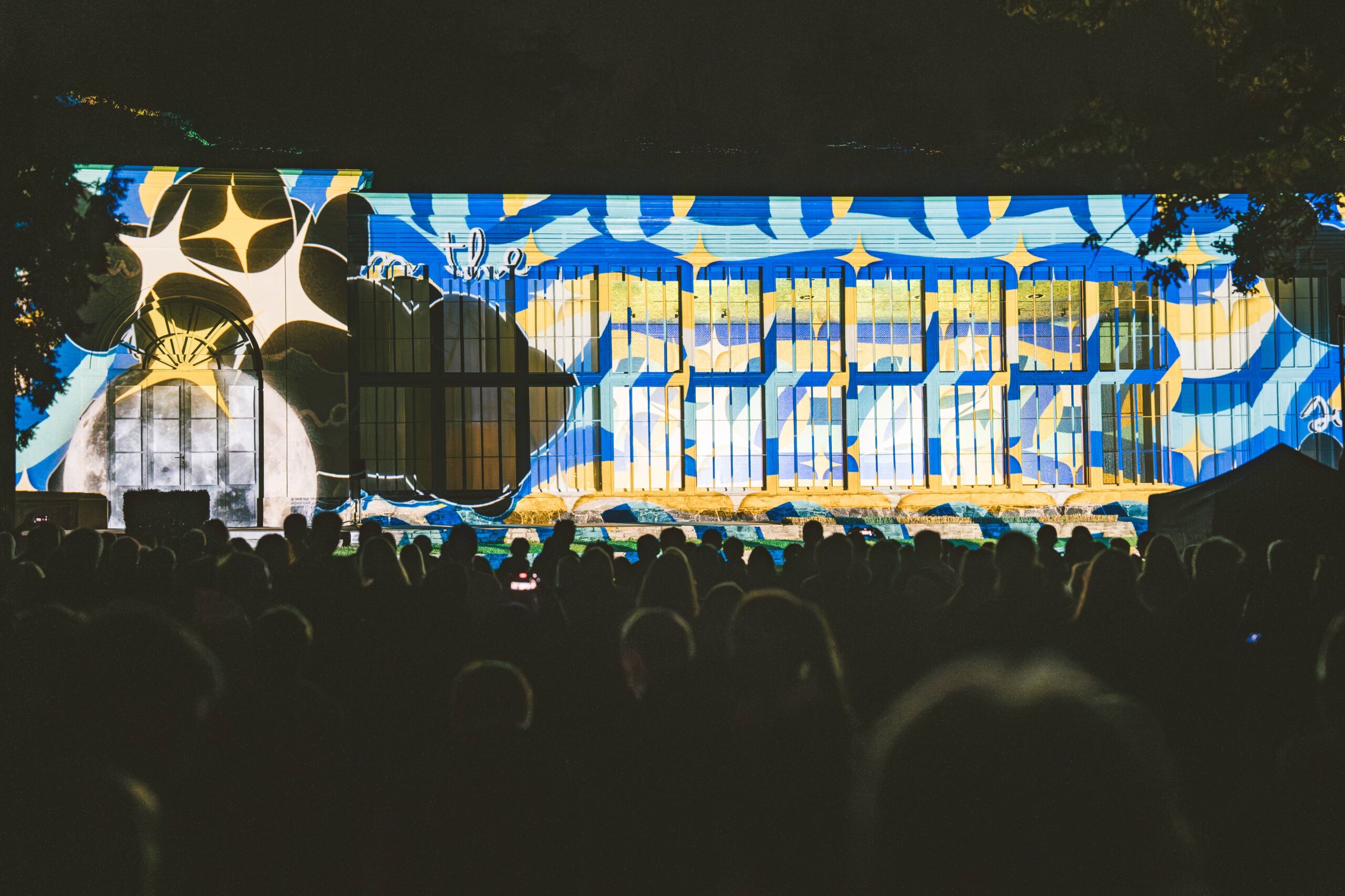
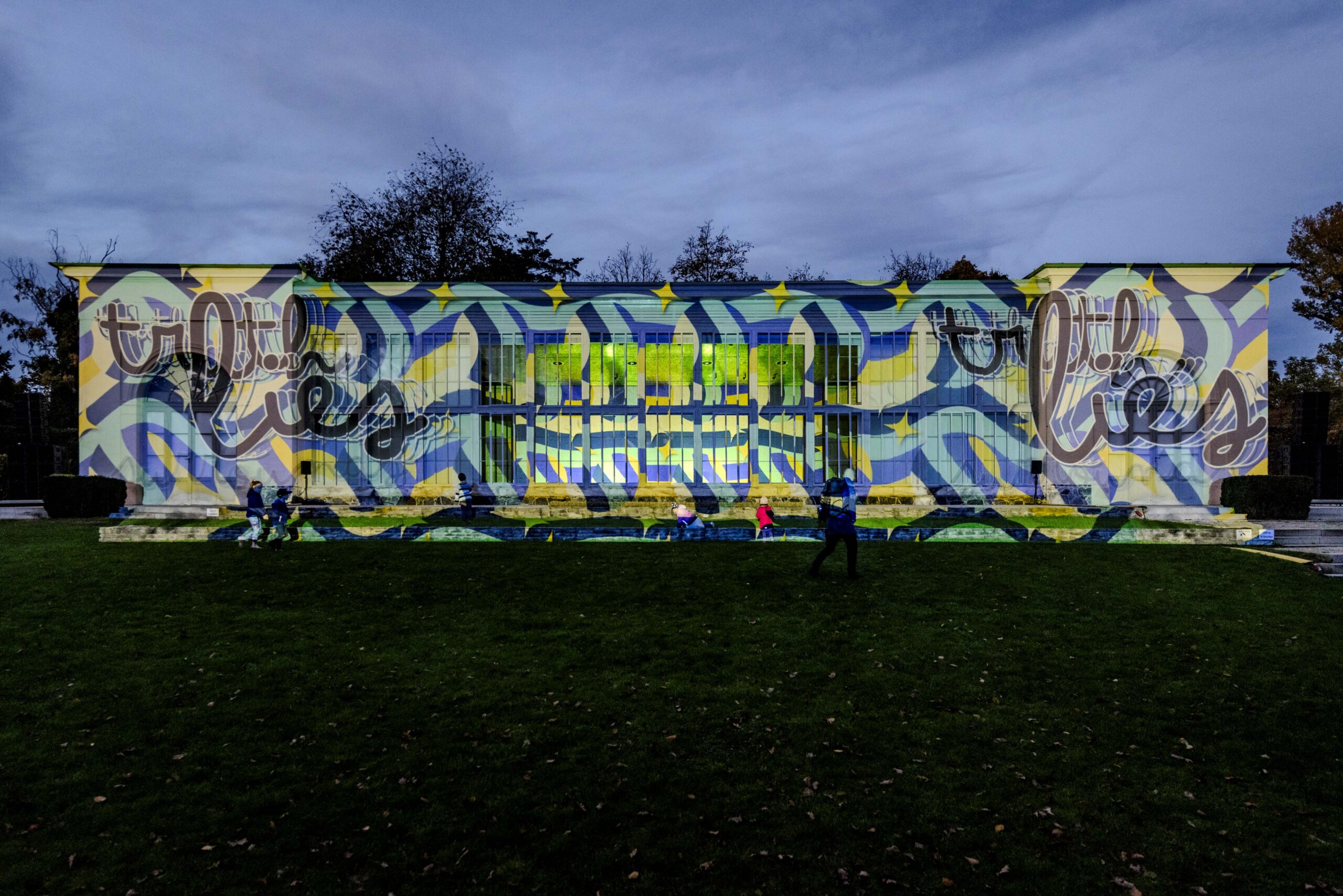
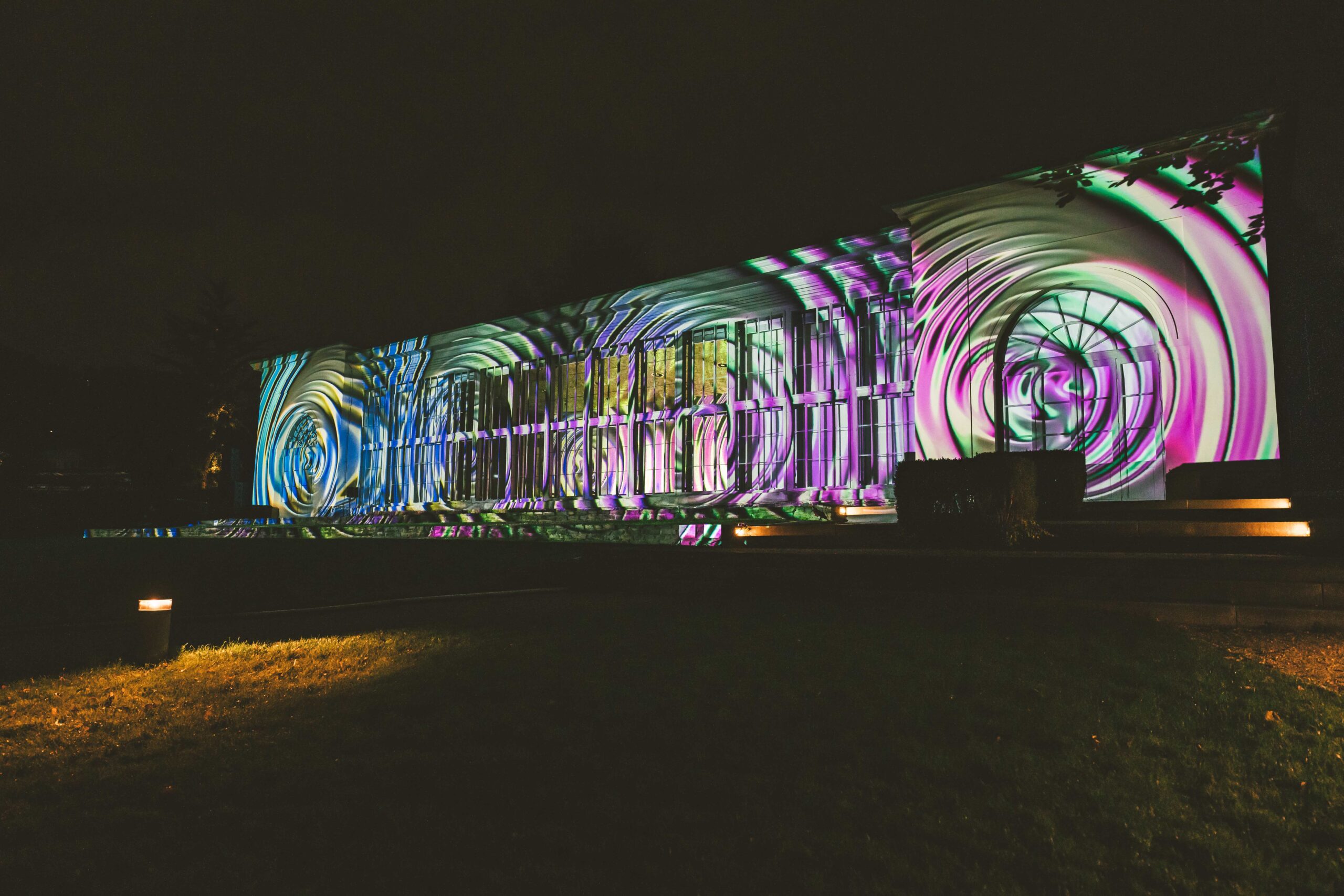
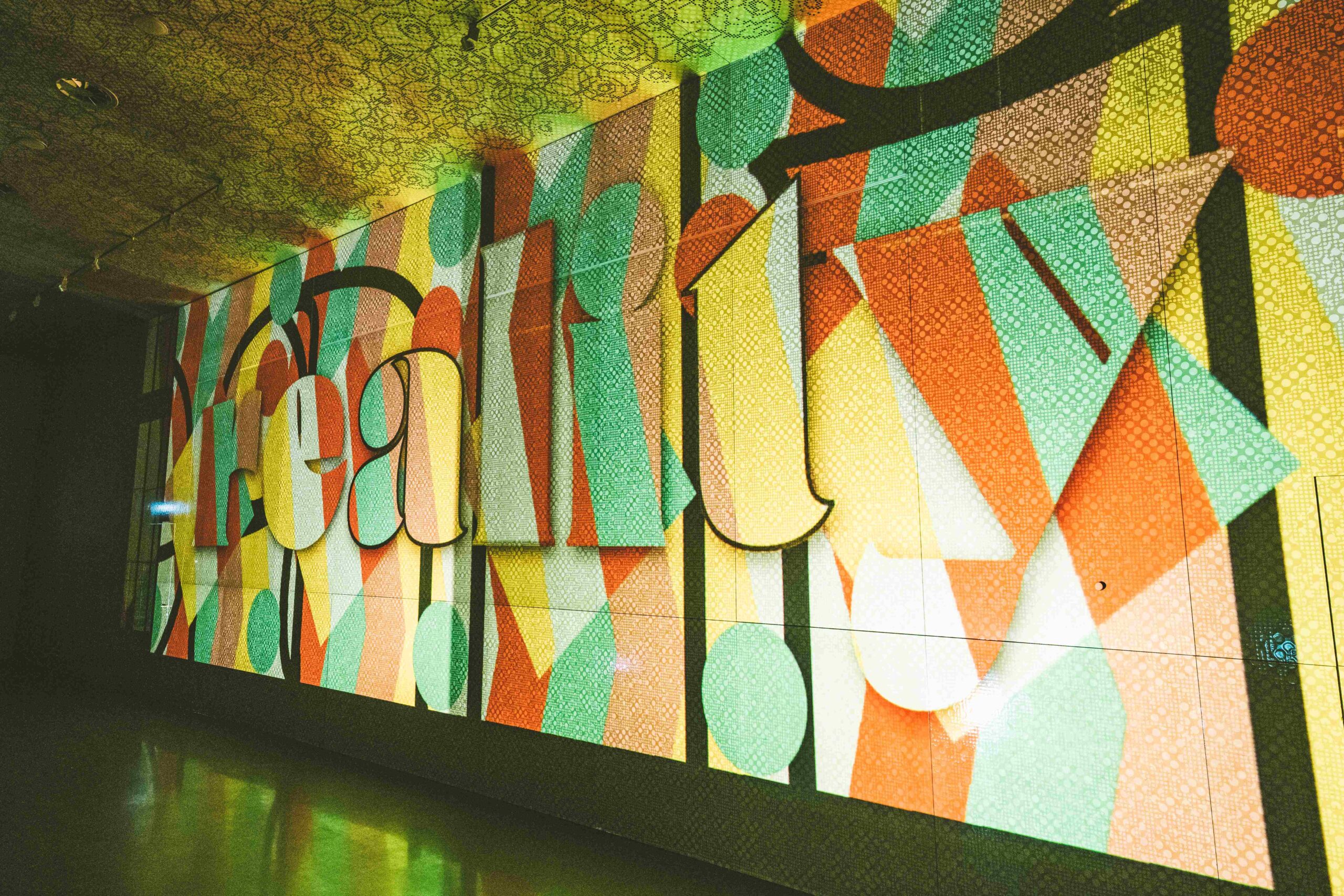
In the orangery of the Burggarten in Graz, real images, paintings, textures and sketches were superimposed to create a visual infinity loop of evergreen climate metamorphoses. The transmedia collage by the Graz-based artist collective OchoReSotto explored the integration of reality in us humans and the influence of the environment on our perception as a society. The accompanying composition by performer and artist denovaire interwove non-European sound with the language of European avant-garde music.
Location: Orangery in the castle garden
Biography
Volker Sernetz, Stefan Sobotka-Grünewald and Lia Rädler from Graz have been working as film and projection artists for more than 20 years. In addition to video and film productions, they are successful both nationally and internationally with their large-format projections. OchoReSotto create light and sound installations on facades or literally make rooms appear in a different light. The trio also use their projection art for permanent installations such as in museums and showrooms or in combination with architecture and in public spaces.
They are founders of “strictly analog – studio for experimental progress” (Graz / Trieste / Tokyo) – a network for the promotion of alternative/experimental work and communication processes.
www.ochoresotto.com
Credits
Idea, concept & realization: OchoReSotto
Music composition: denovaire
Video technology: Peter Venus
Sound technology: Noisegate
This installation is made possible with the kind support of Raiffeisen-Landesbank Styria realized.
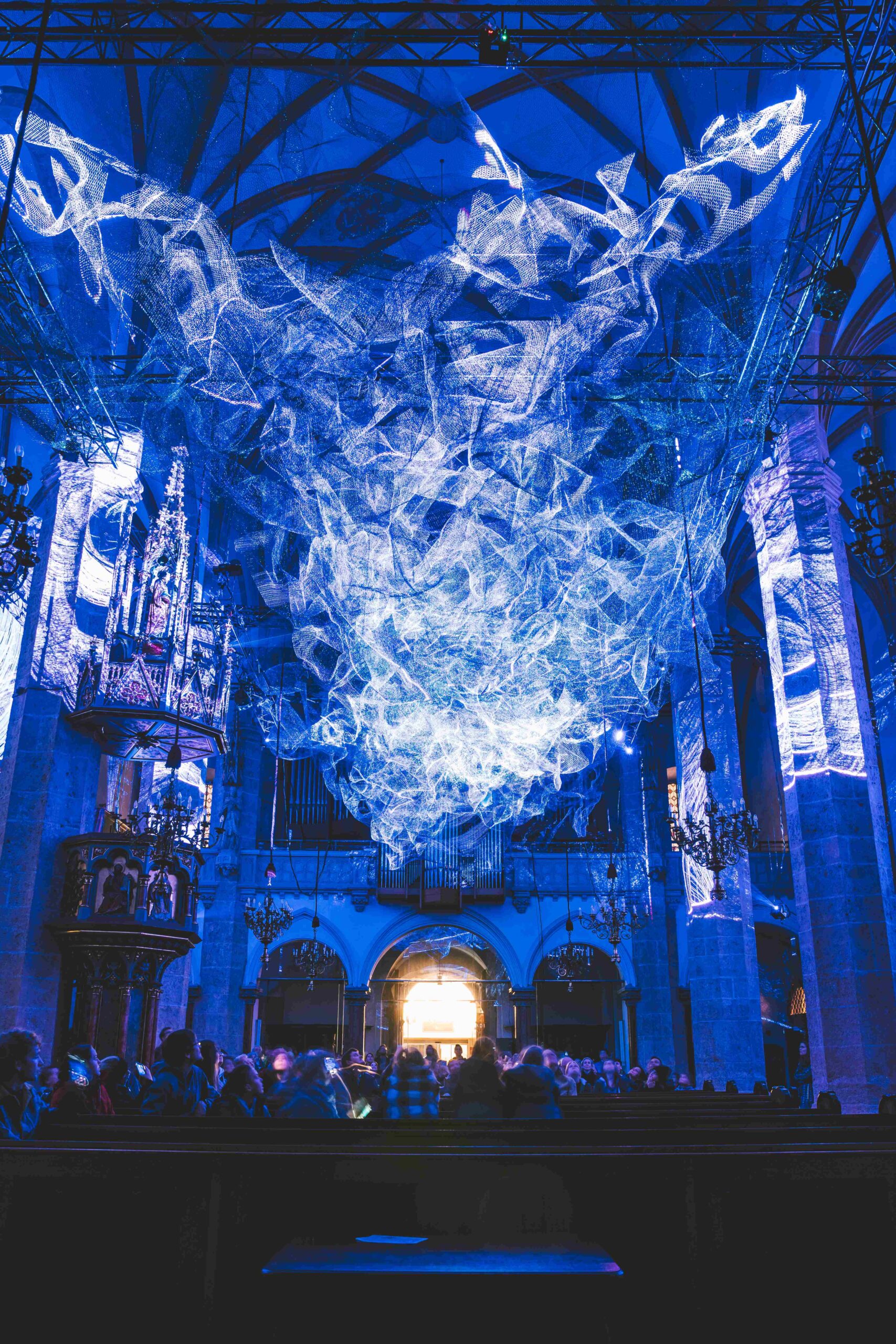
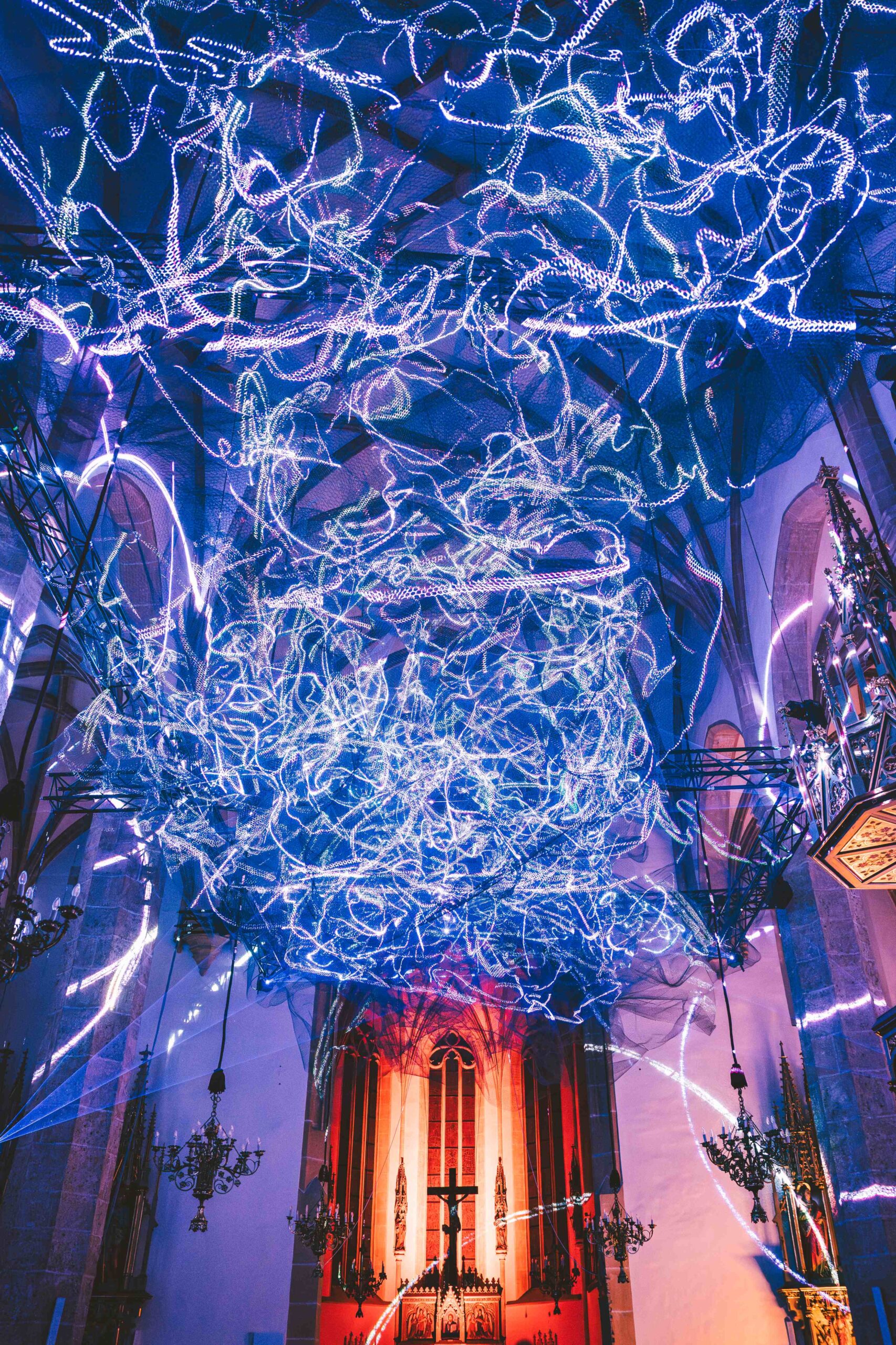
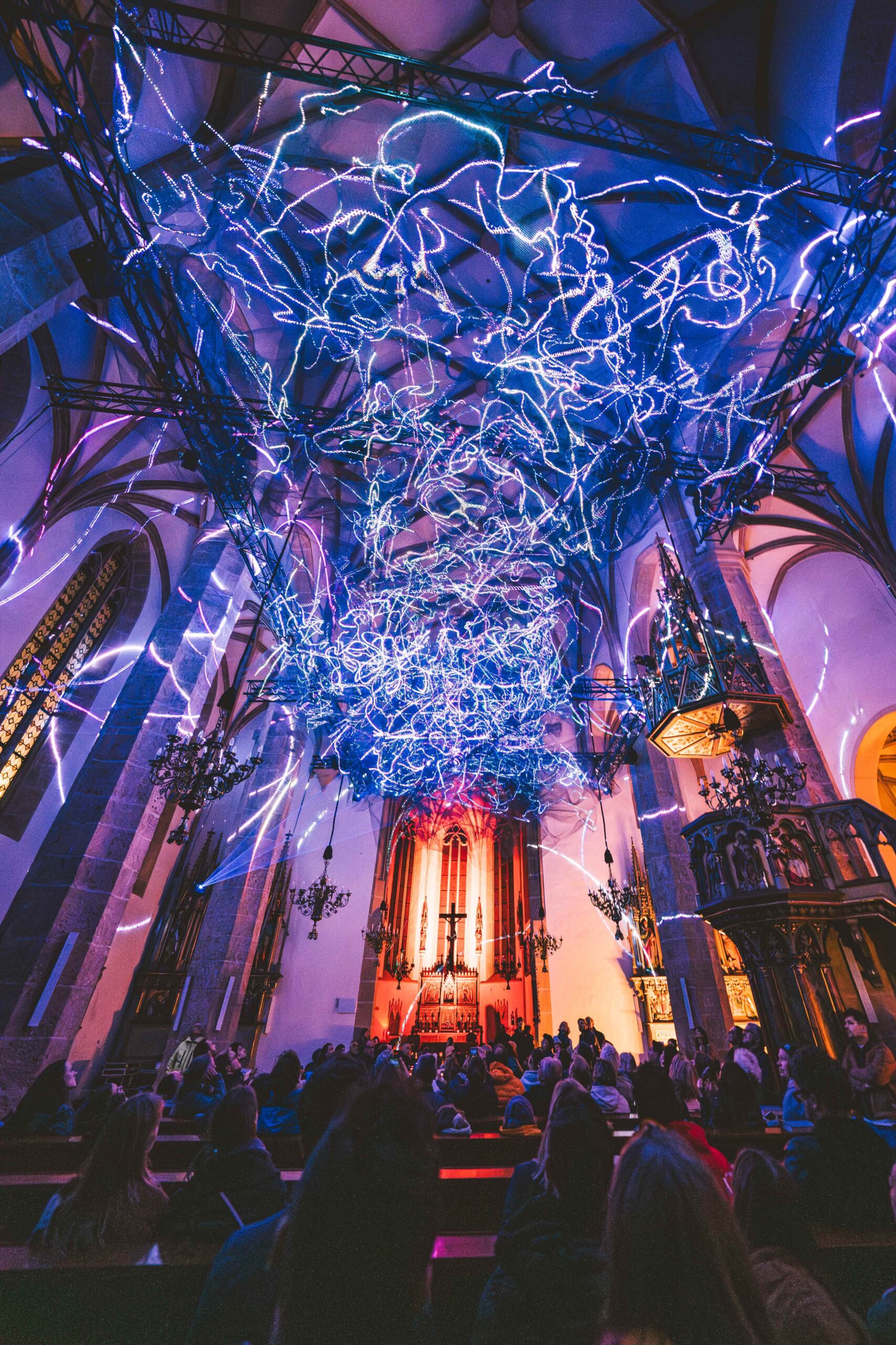
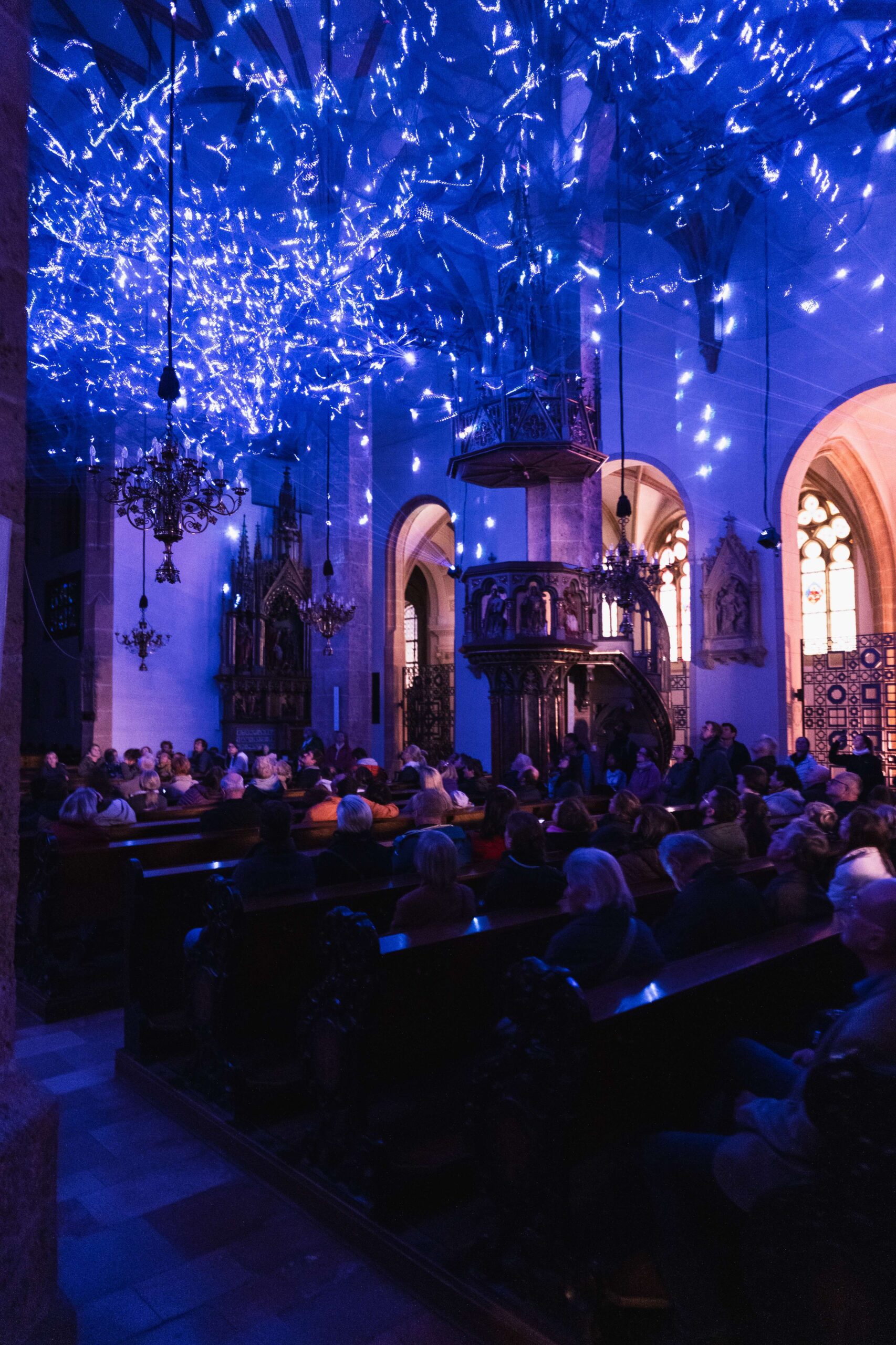
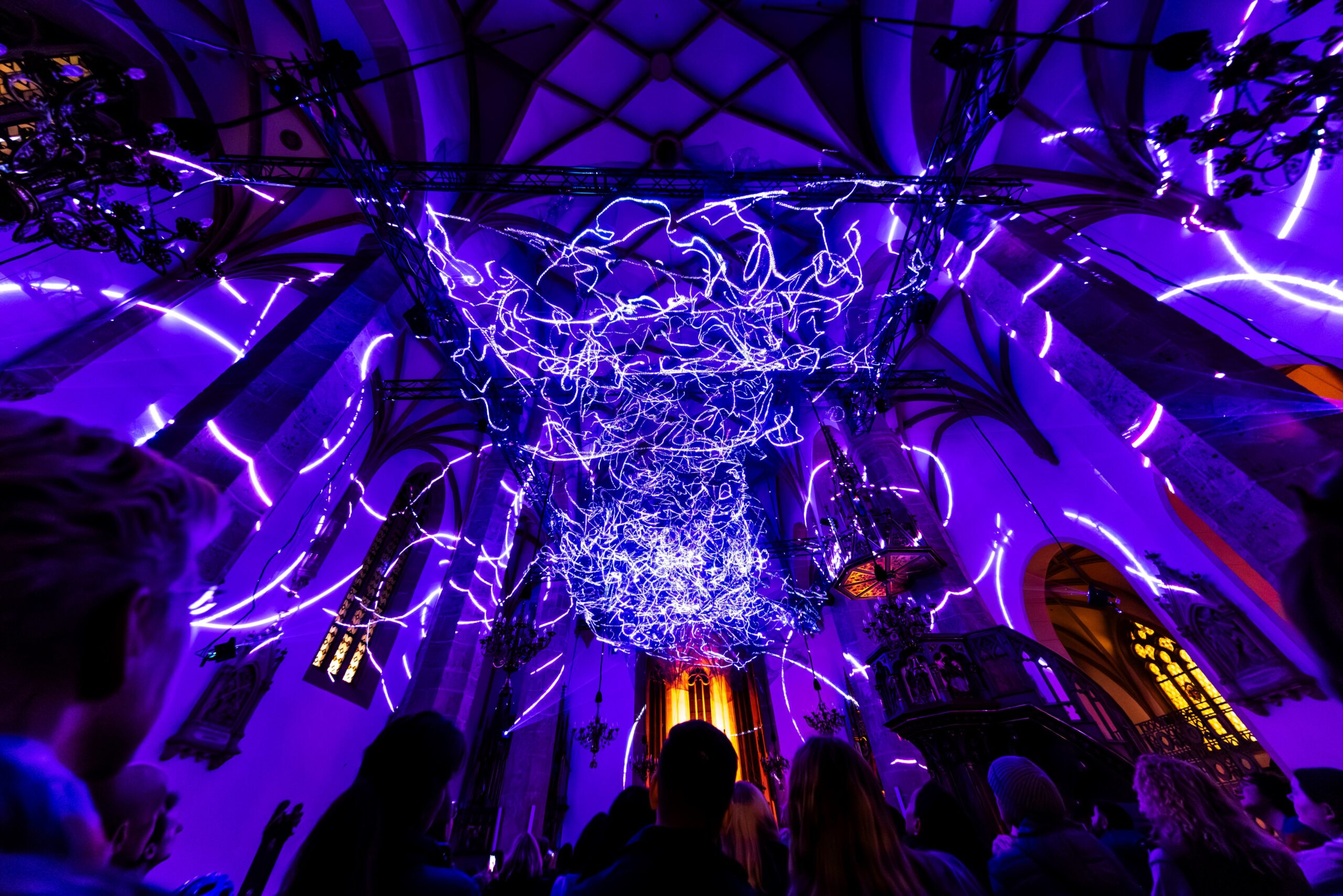
Above the heads of the visitors, the Solar Dust installation caused glowing stars to float in the air, dancing as a three-dimensional cloud in the nave of the church. The solar particles are dynamic, pulsating in time with the music as if they were one with it. The artist collective Quiet Ensemble, consisting of Fabio Di Salvo and Bernardo Vercelli, focuses on the balance between nature and technology with its immersive light and sound projects, revealing invisible events that surround us every day or directing our eyes and ears to aspects of the world that we often overlook.
Location: Stadtpfarrkirche
Biography
The artist collective Quiet Ensemble is a creative studio working on unexpected audiovisual experiences, immersive installations, light-sound and interactive works that focus on the balance between nature and technology as the main tools for the creation of their work.
Founded in 2009 by Italians Fabio Di Salvo and Bernardo Vercelli , the collective develops audiovisual performances and installations by capturing the essence of various objects and creatures – from goldfish to pineapples to clouds. Their research is based on the observation of the balance between chaos and control, nature and technology, and opens up thematic fields resulting from the relationship between organic and artificial elements.
Quiet Ensemble celebrates the “invisible concerts” that surround us every day and strives to reveal hidden or often overlooked aspects of the environment around us.
This installation is realized with the kind support of Church Culture Graz realized.
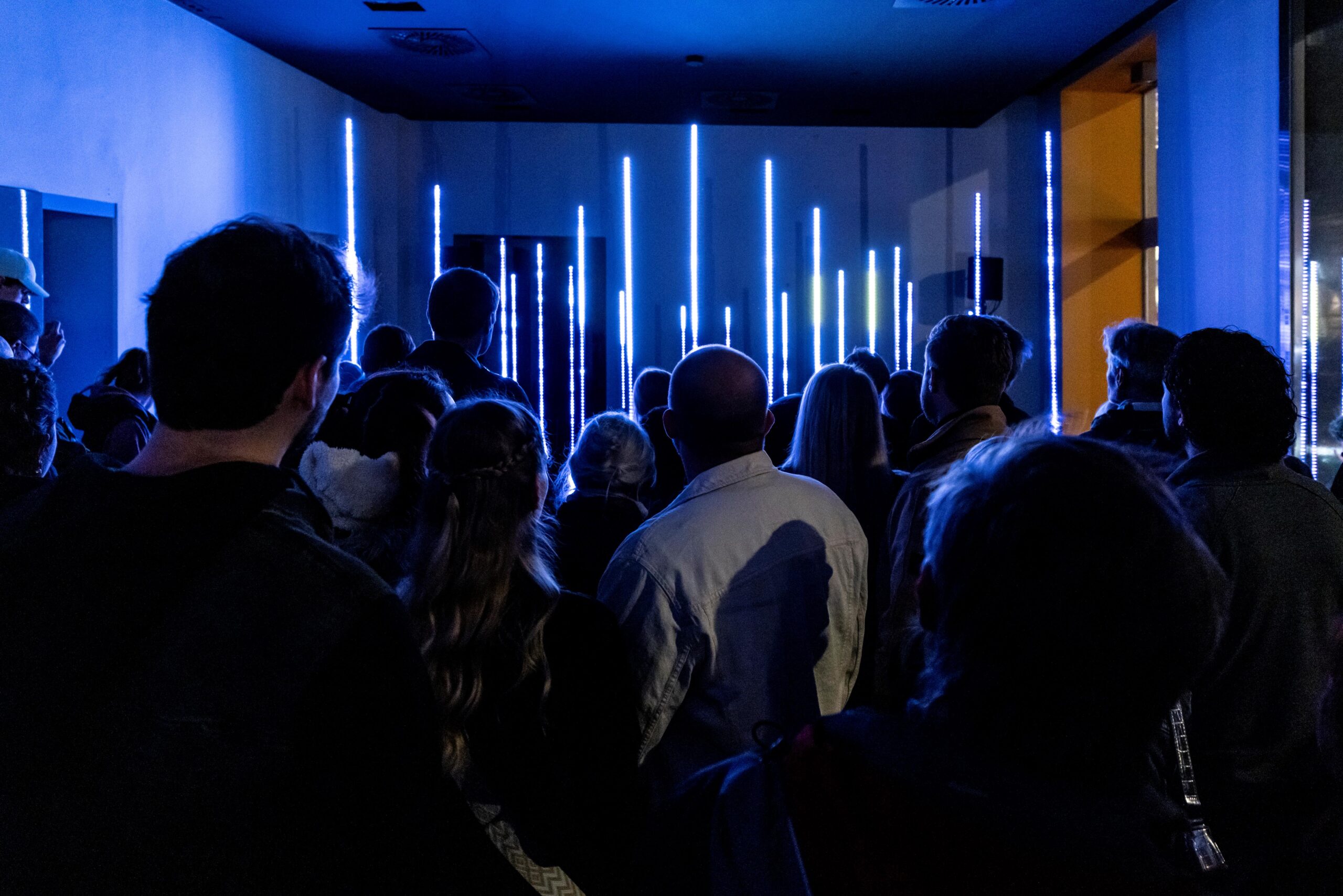
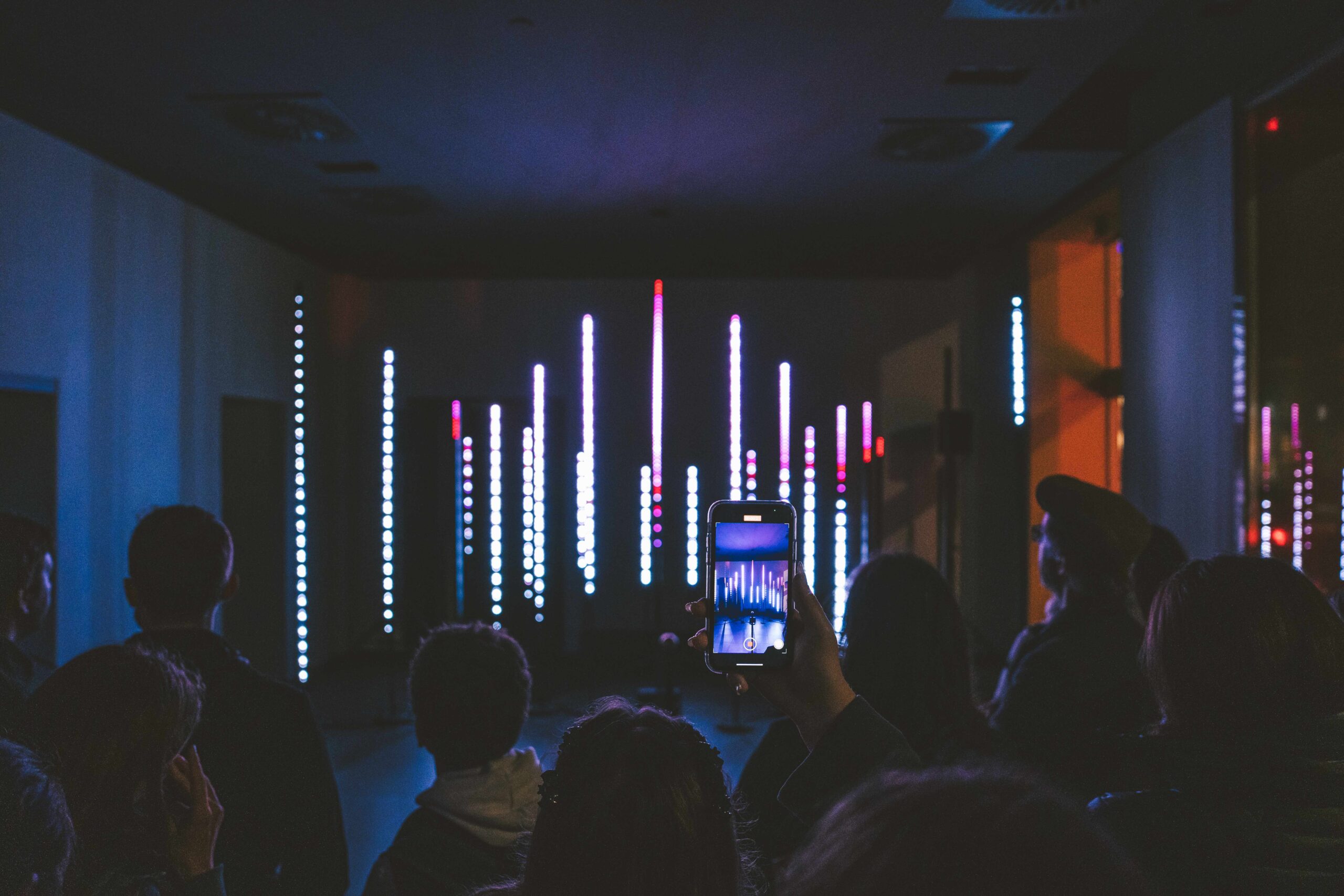
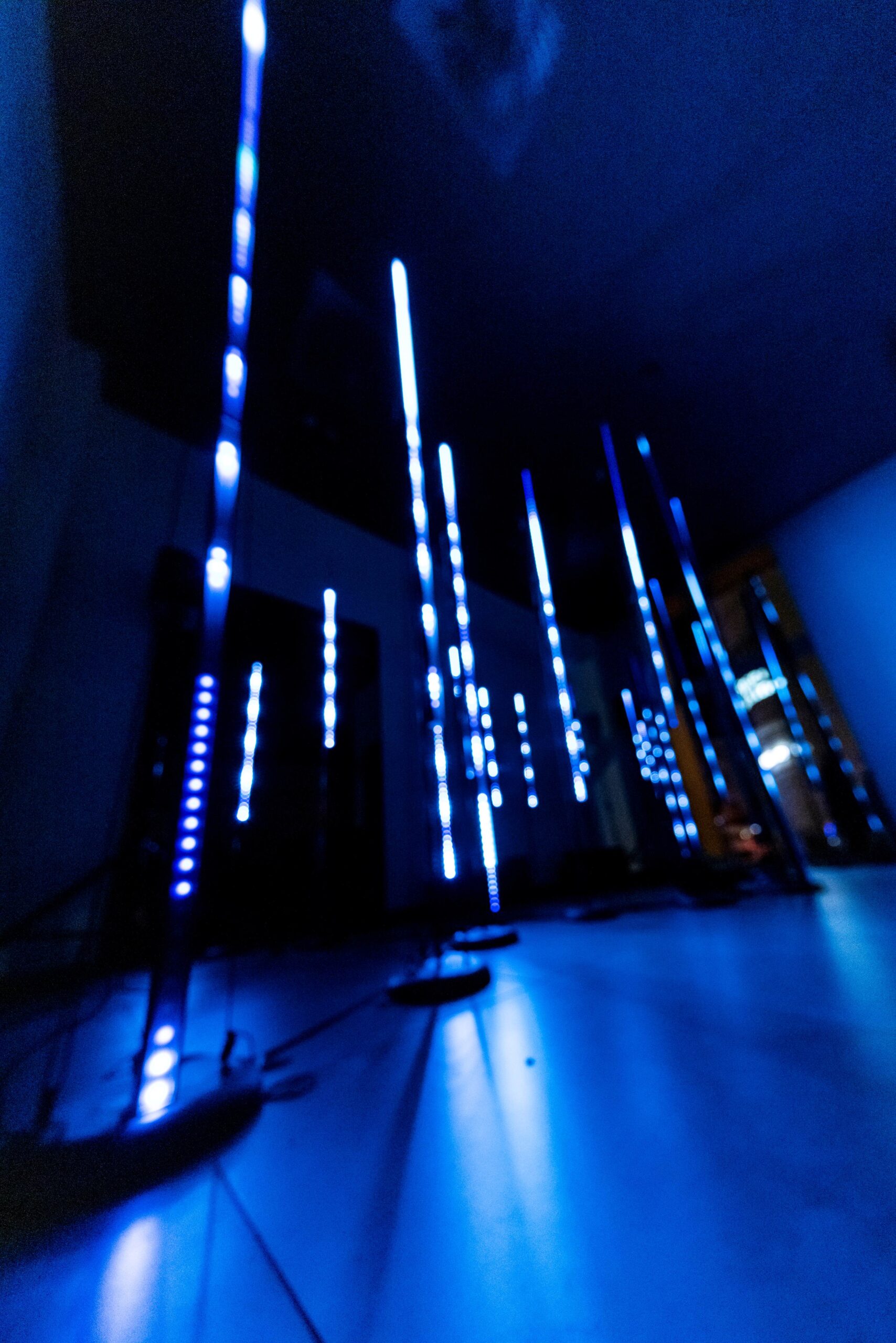
FH JOANNEUM design students interpreted the theme of “electricity” and its levels of meaning with their work. Moving volumes, electrical charges, masses of water and data flows were artistically processed and staged in a site-specific and accessible installation. Light and sound were used by the students from the Media, Sound and Interaction Design departments as materials with which to explore media presentation possibilities, creative variations and narratives of immersive experiences. The project was supervised by Astrid Drechsler, Daniel Fabry, Michael Kernbichler and Roman Pürcher.
Location: Landhausgasse 7
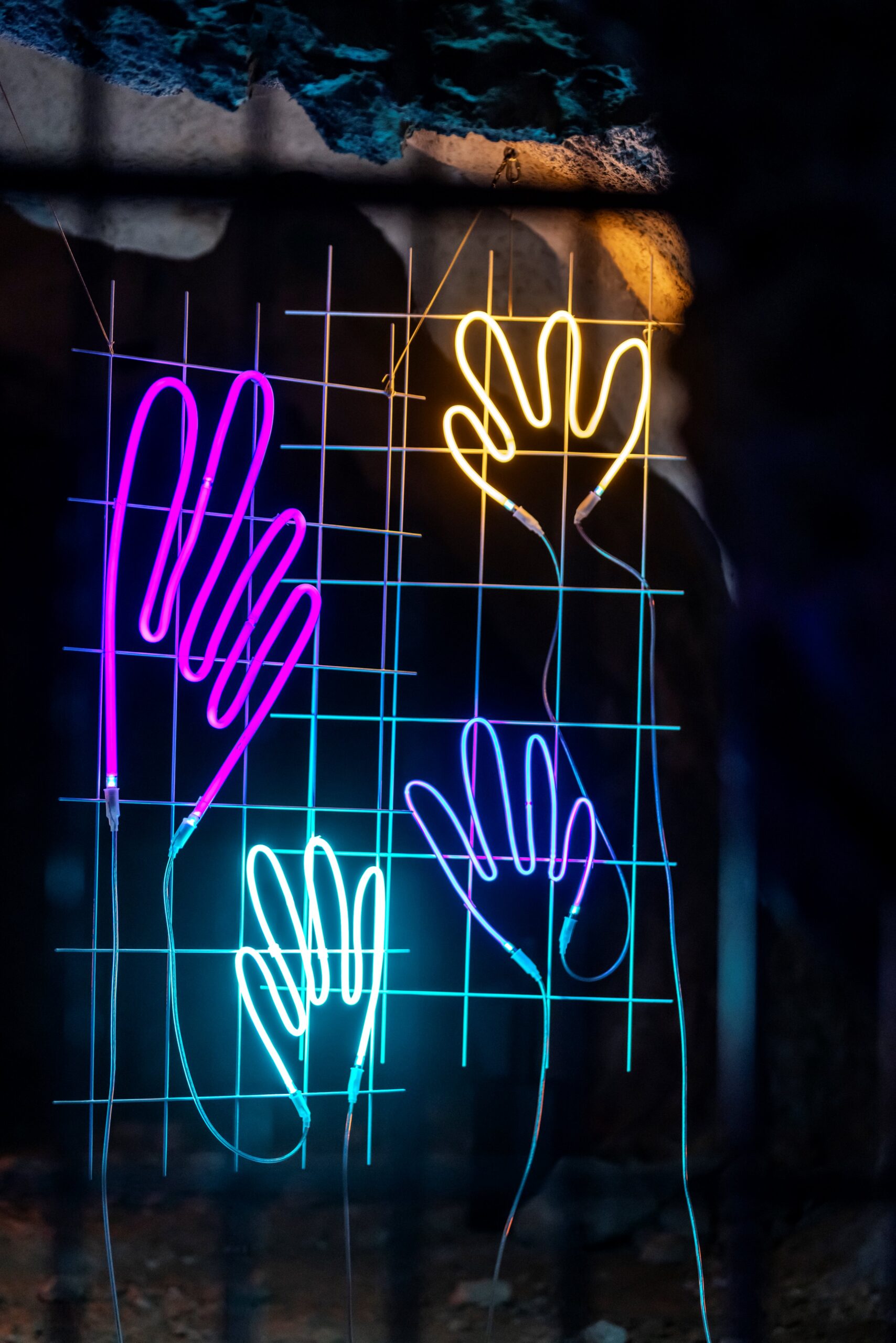
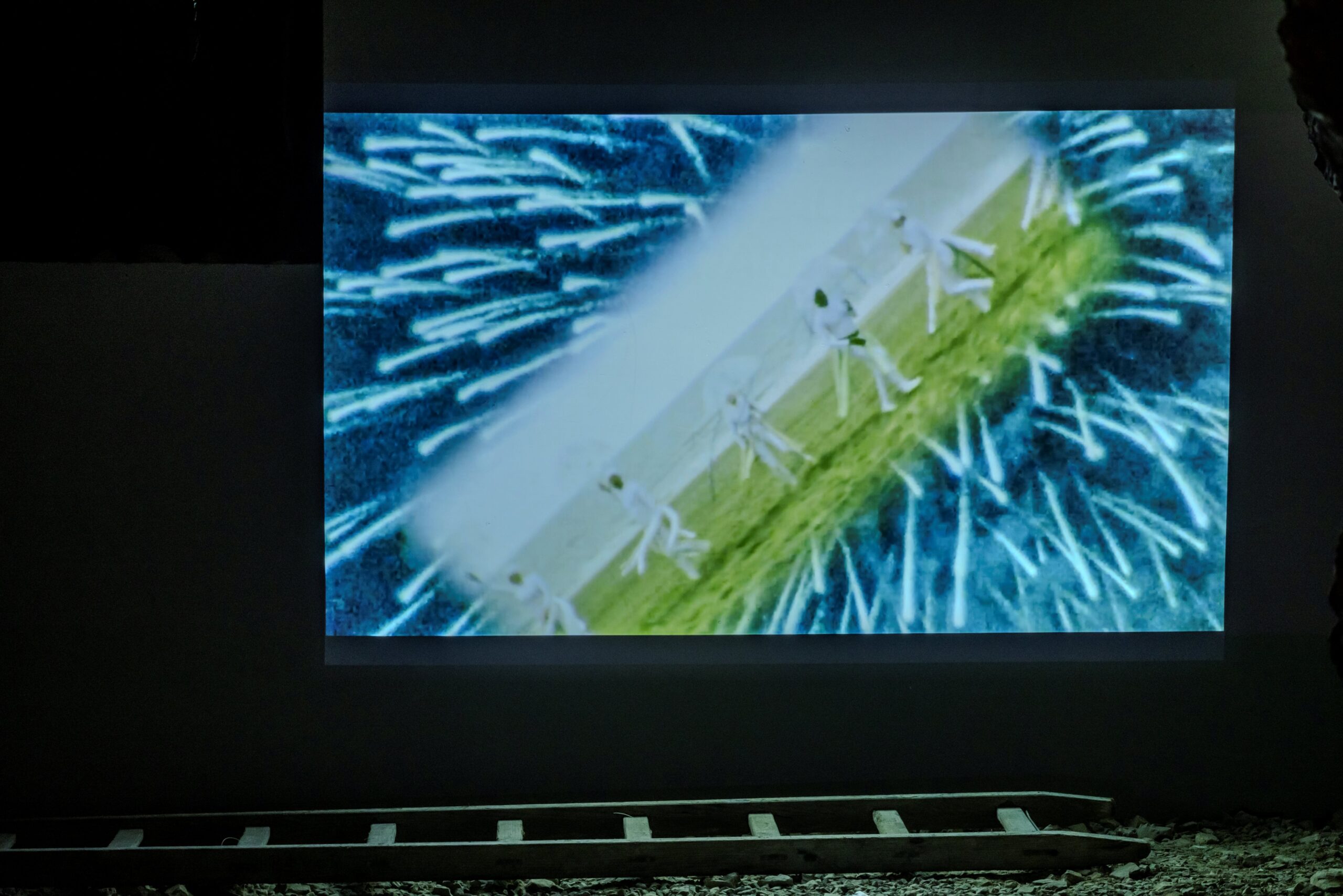
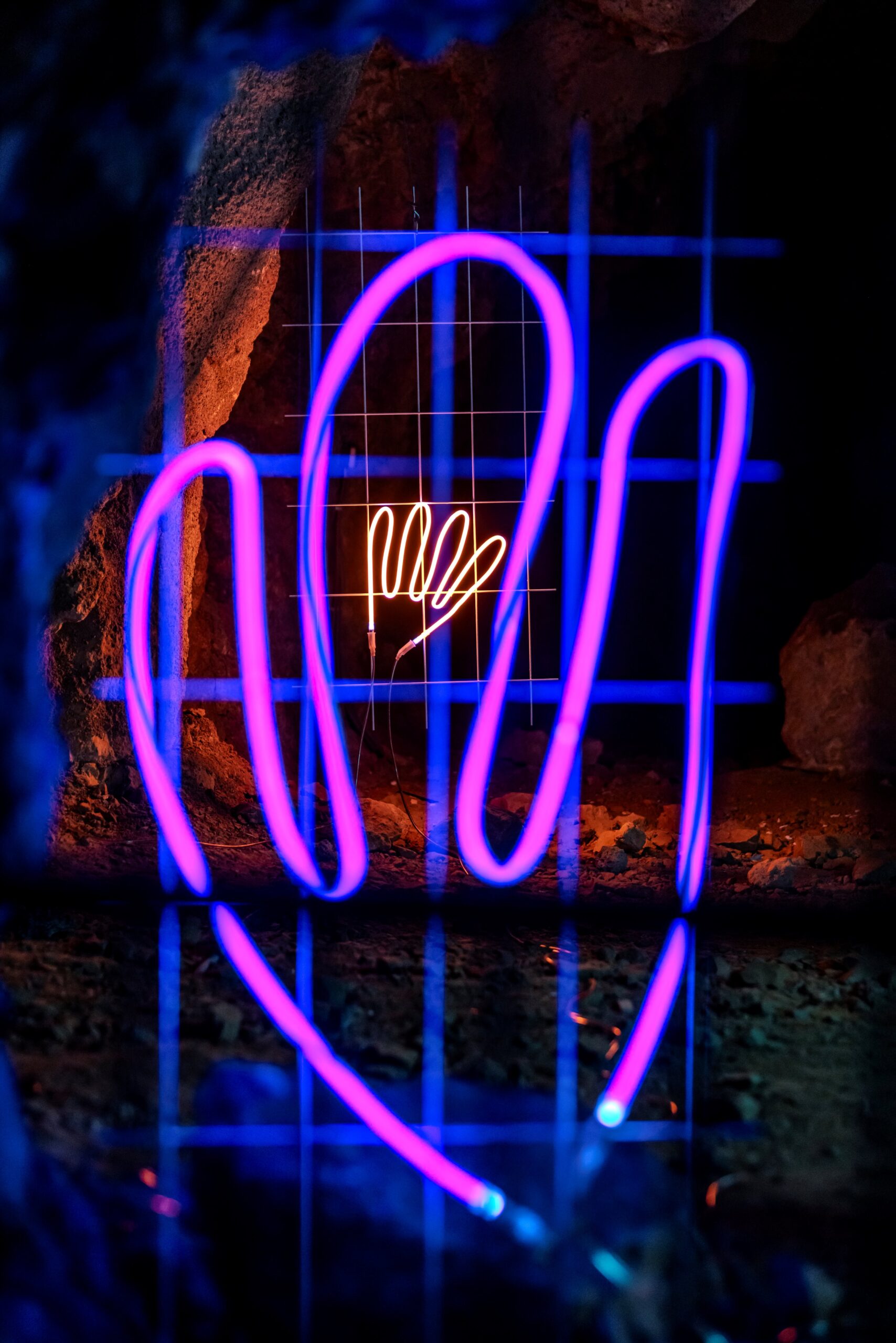
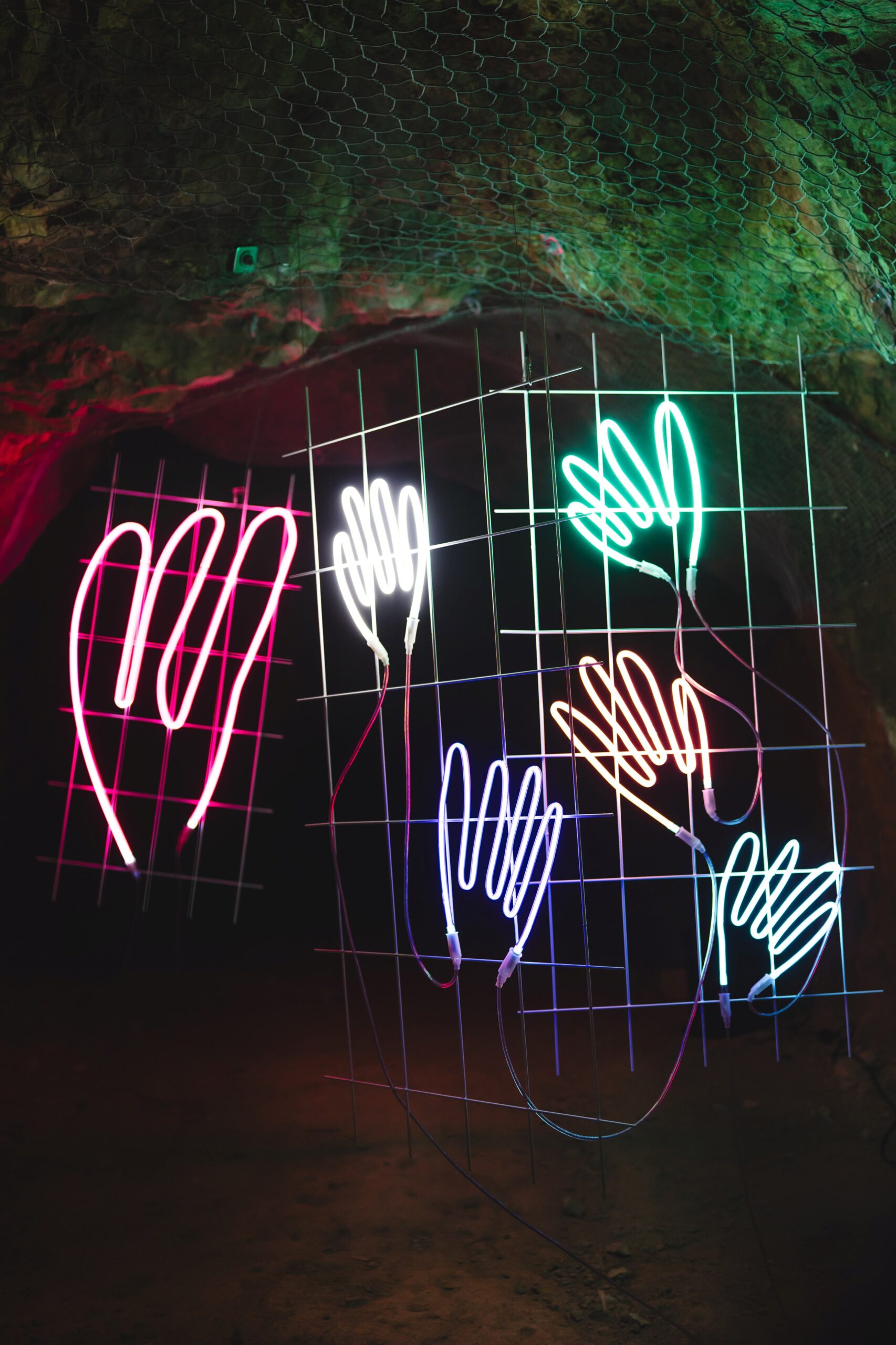
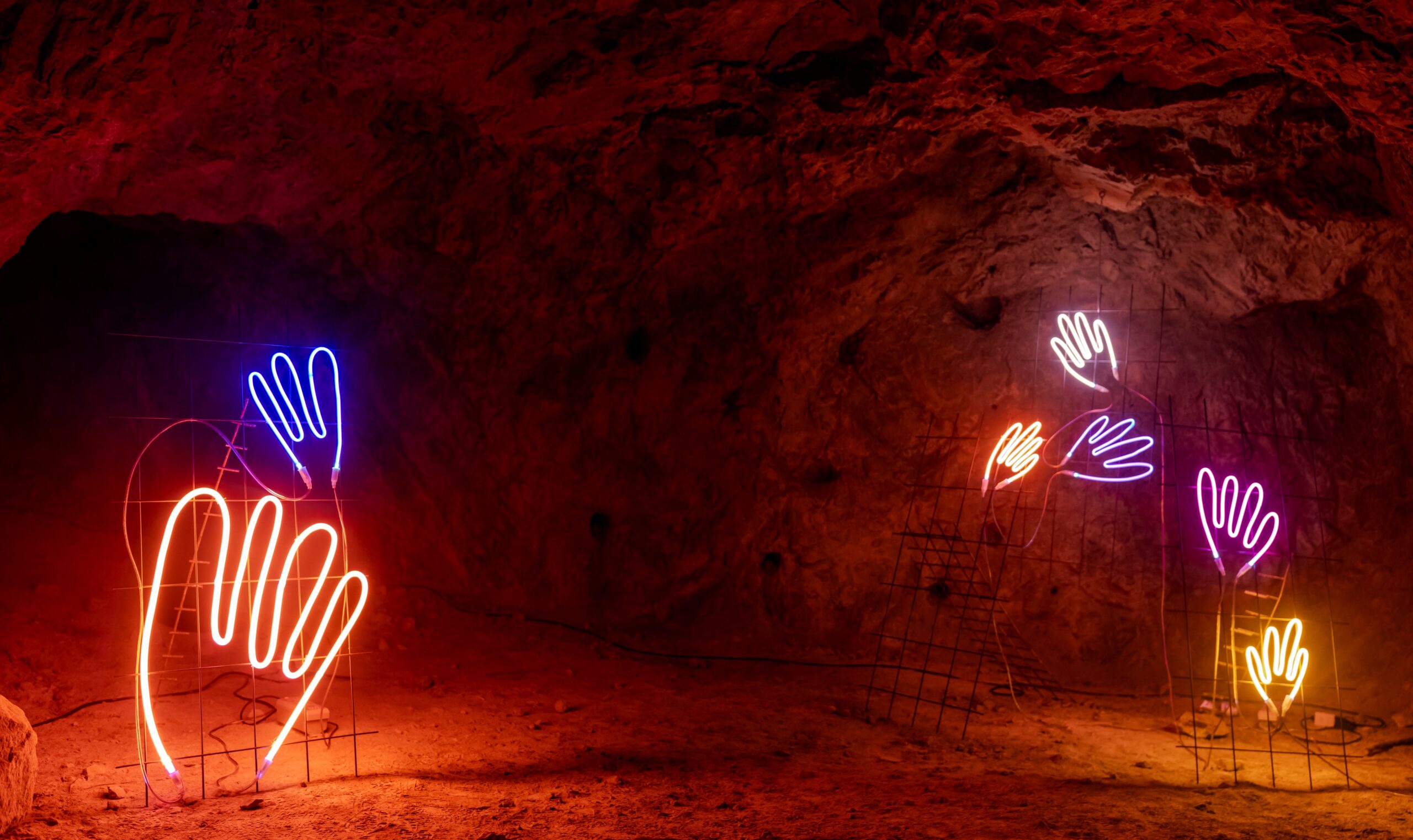
The artist Raphaela Riepl sensitively and intuitively created moments of poetic and atmospheric contact in the side tunnels of the Schlossberg: Neon-lit objects scattered light into the darkness, creating immersive spaces and thus opening up a dialog between space, light, medium and the viewer himself, who was part of the installation. The light was made audible by the sounds of composer Peter Kutin.
Location: Schlossberg tunnel
Biography
Raphaela Riepl (AT) is a visual artist working in the fields of light installation, drawing and experimental film. She studied at the Academy of Fine Arts Vienna and the École nationale supérieure des beaux-arts Paris. After graduating in 2010, Riepl went to New York and took part in numerous group exhibitions and several solo exhibitions. There, Riepl also learned how to work with neon light tubes when she worked in Keith Sonnier’s neon workshop.
Back in Vienna in 2015, neon became her primary medium. The following year, Raphaela Riepl took part in a course at the Bartenbach Academy and deepened her investigations into the propagation of light in space. Based on the line and with an understanding of drawing, Riepl’s installations are oriented towards the spatial effect. Riepl’s light installations, drawings and films have been shown in art institutions at home and abroad.
This art intervention is kindly supported by the Styrian Federation of Industry realized.
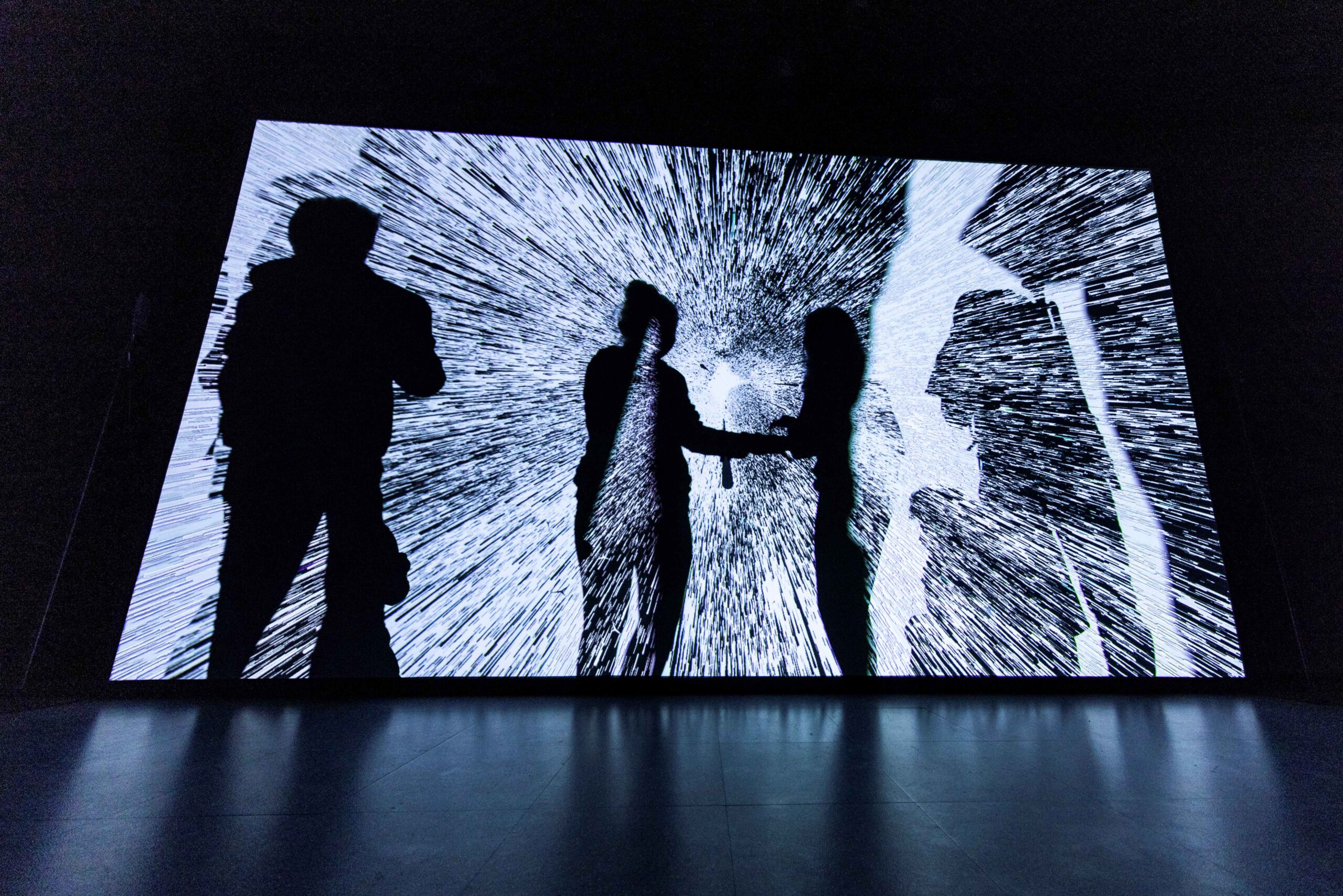
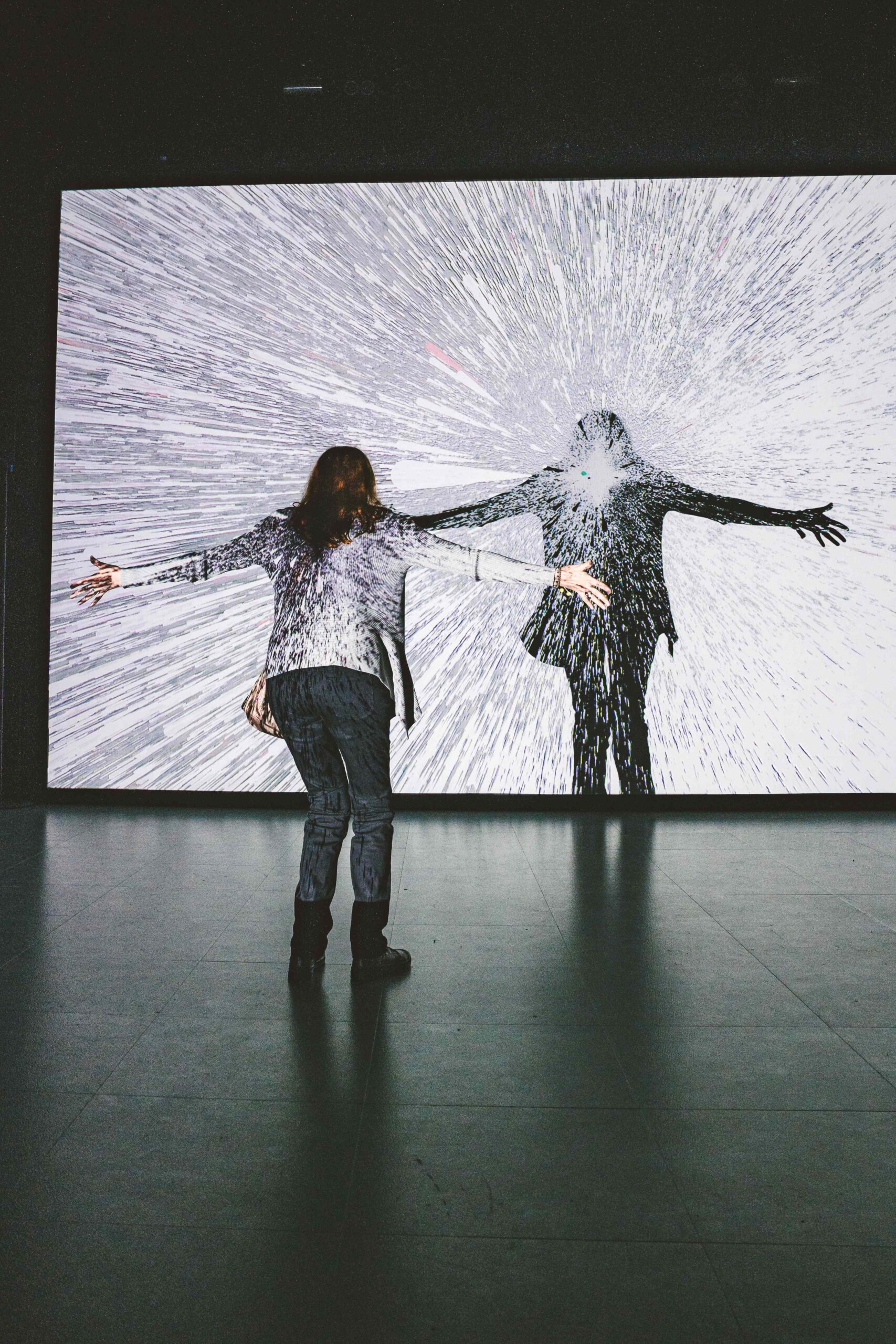
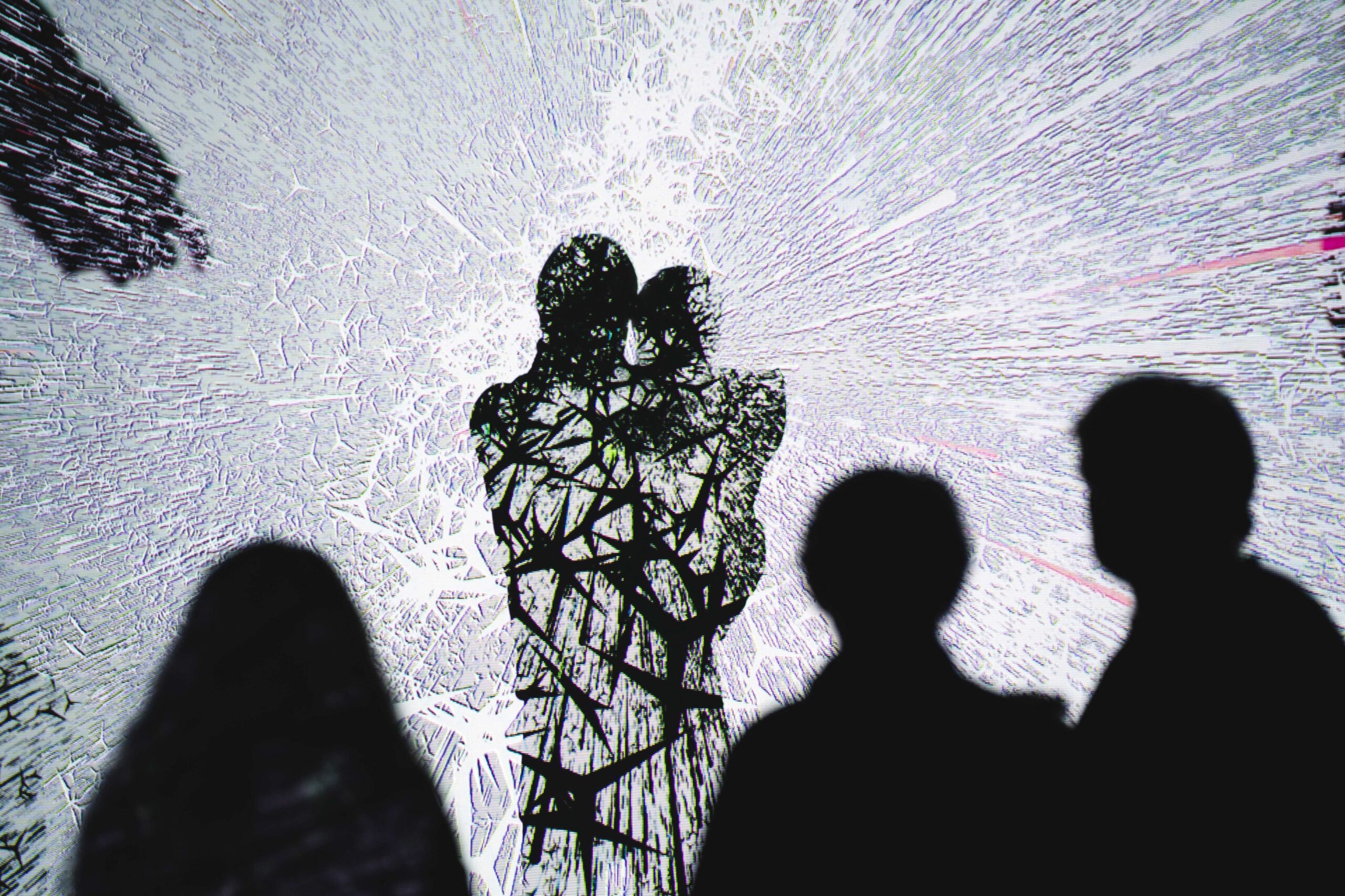
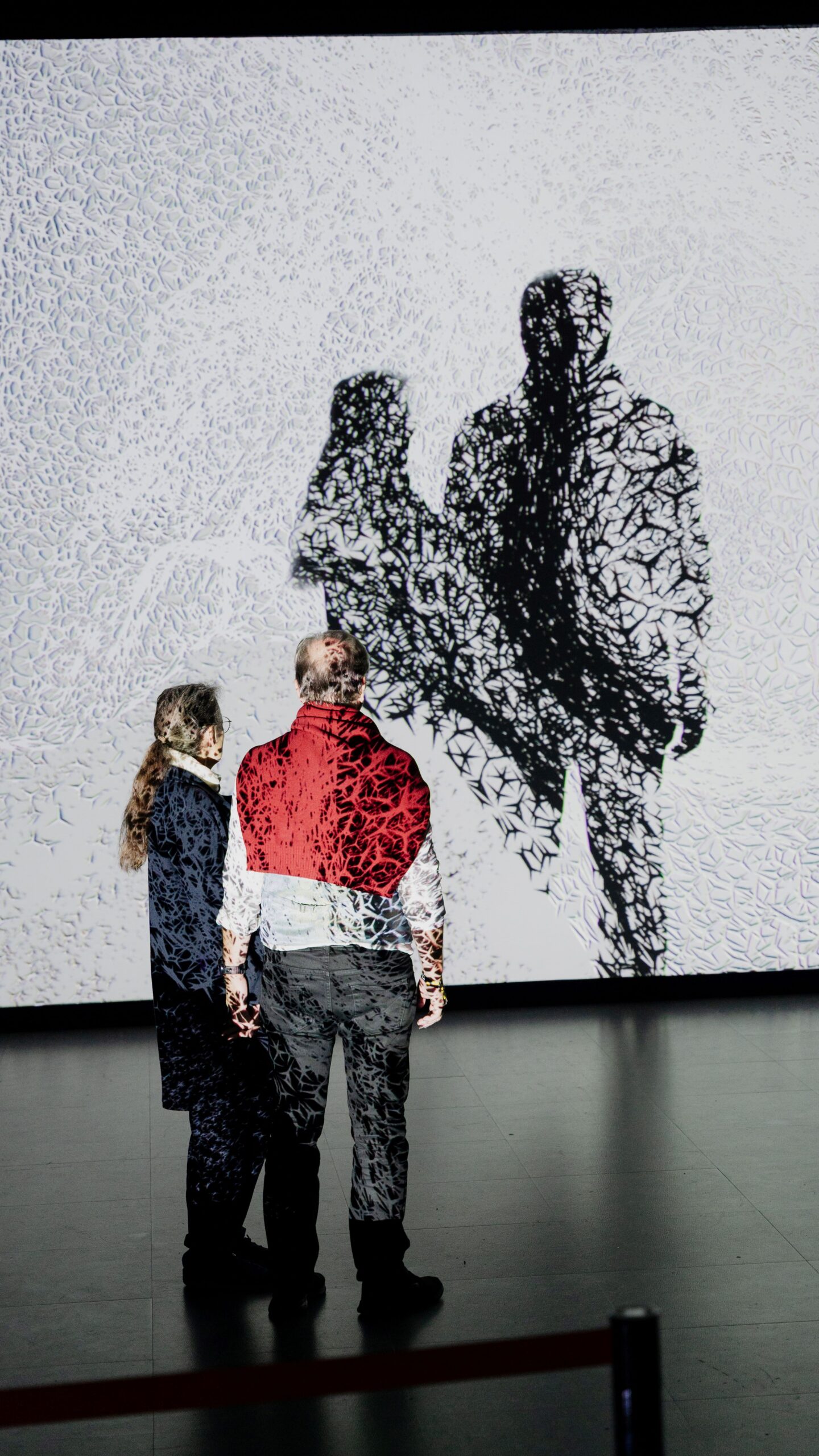
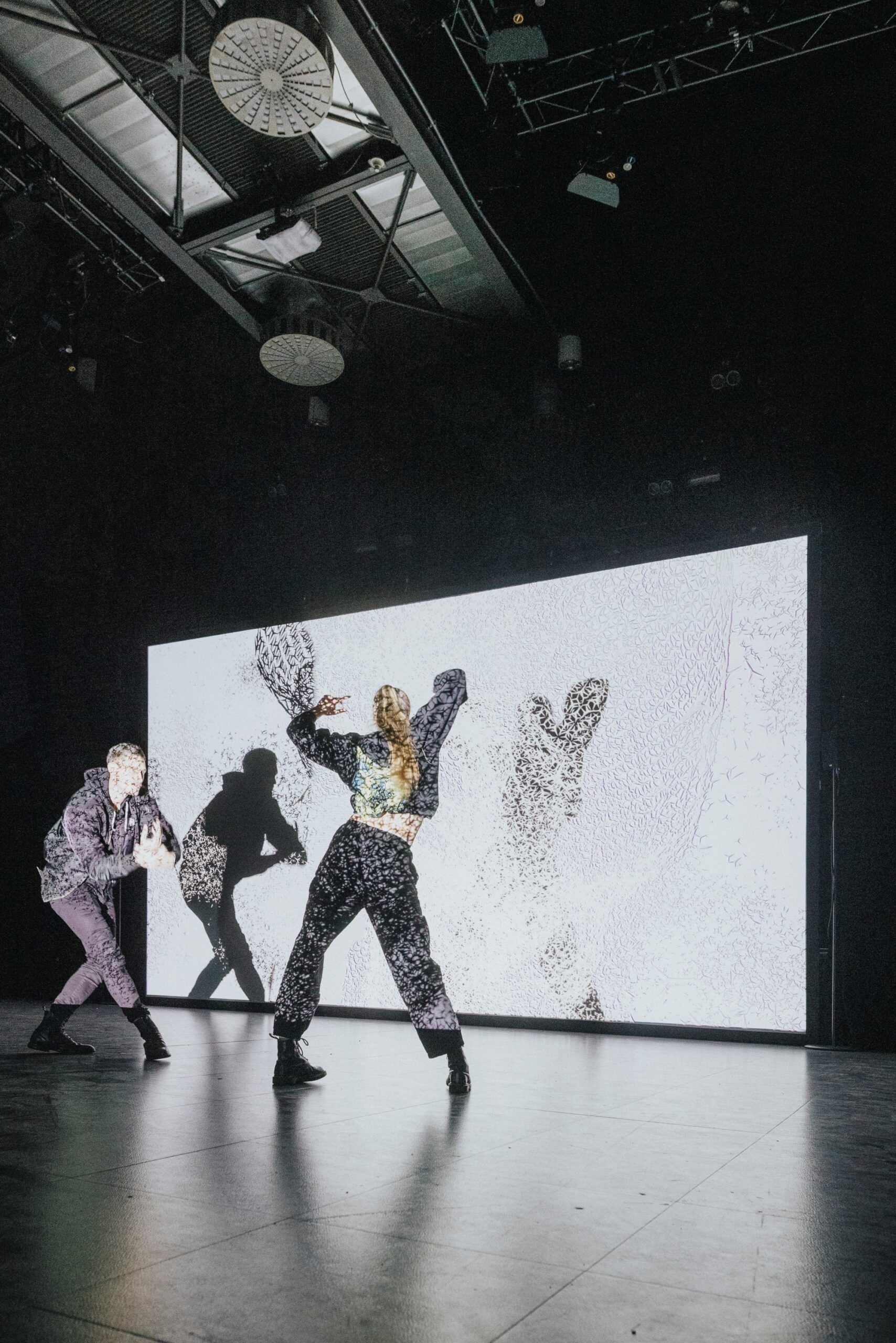
With exposure_03 by David Reumüller, visitors became part of a new galaxy, were able to immerse themselves in it and travel through it as particles. A soundscape created by David Reumüller and Wolfgang Lehmann especially for the Ambisonic sound system of the Dom im Berg condensed the interactive installation. As a symbolization of immersion in an idea, the project became a visual-acoustic experience that posed the question: Who are we humans in the context of this world? What do we do and where do our ideas stand? exposure_03 was a continuation of Reumüller’s work with textures and fragments, which for the first time used all three dimensions of space.
Location: Dom im Berg
Biography
Born in 1979 in the Murtal valley, David Reumüller moved to Graz at an early age to devote himself to visual art at the Ortweinschule. Since graduating in 1998, the Austrian artist has been working with various media. In addition to his visual productions, he has also published numerous musical anthologies, publications and films. In his interactive video installations, Reumüller primarily examines perception and puts its individual information content to the test.
Credits
Artist: David Reumüller
3D Animation: Julius Steinhauser
Music: Wolfgang Lehmann & David Reumüller
featuring: Alex Kranabetter: Trumpets/ Electronics, Soap&Skin: Voice
Tech. Realization: OchoReSotto, Henrik Bergstedt, grafx live-marketing and the team of Grazer Spielstätten
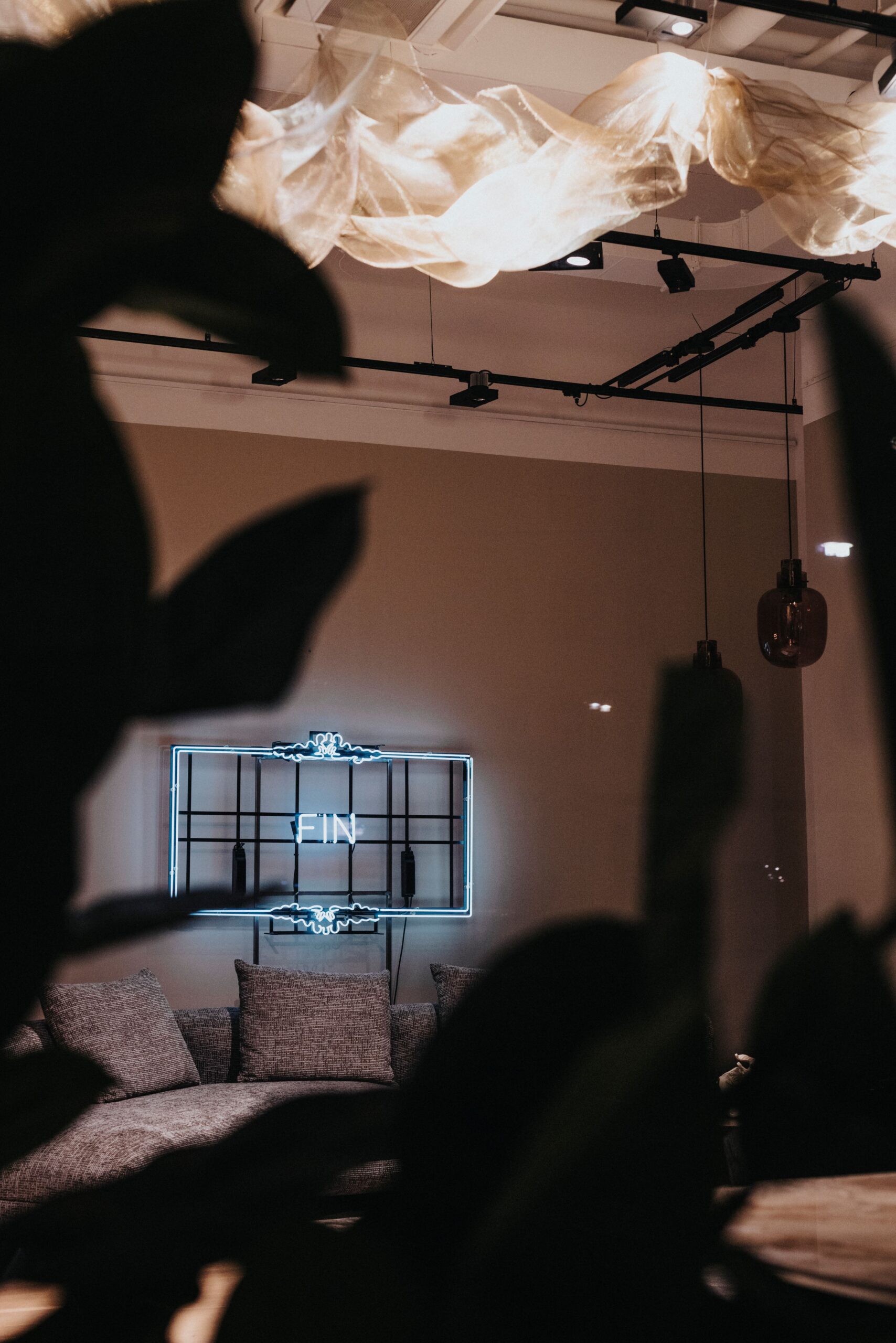
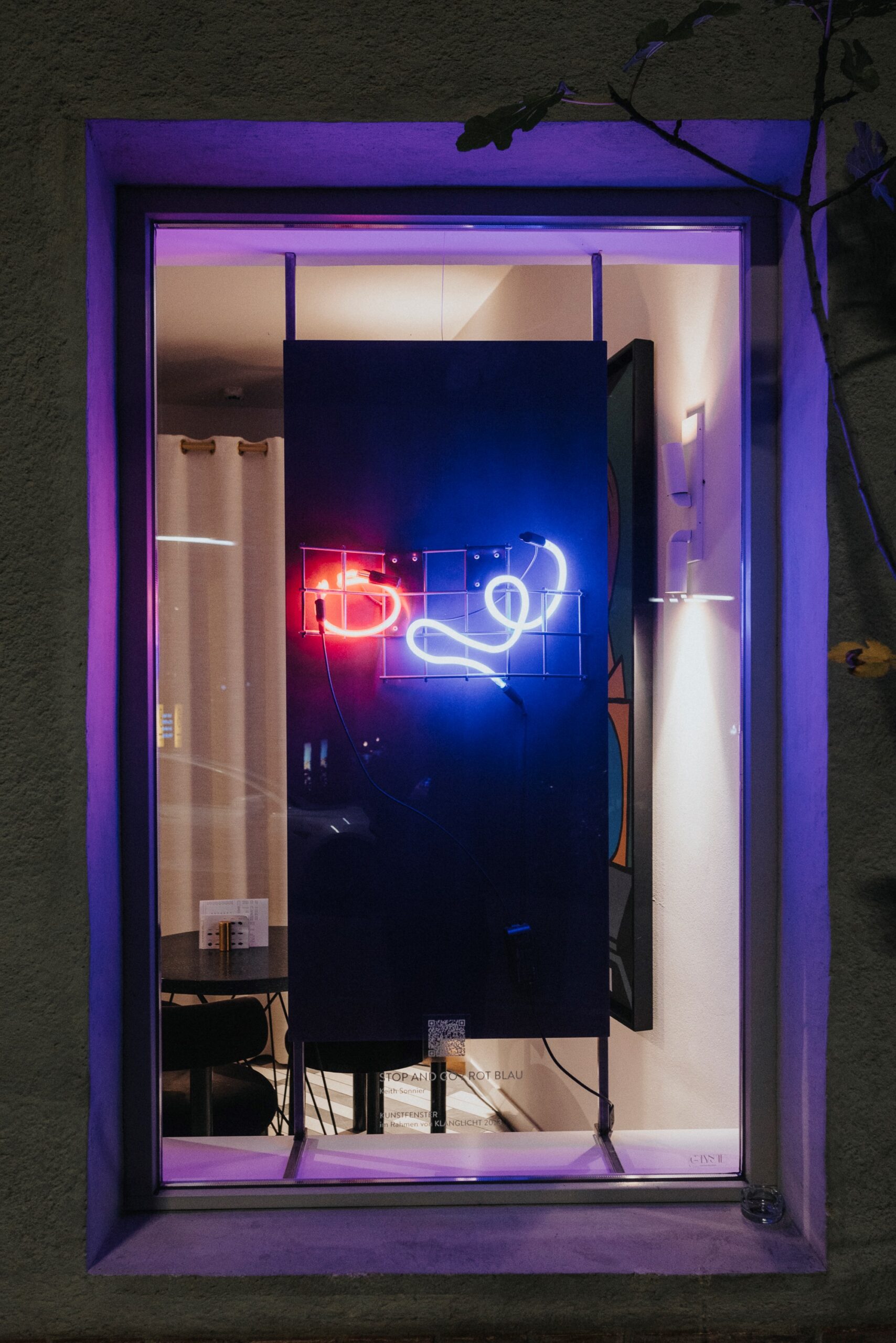
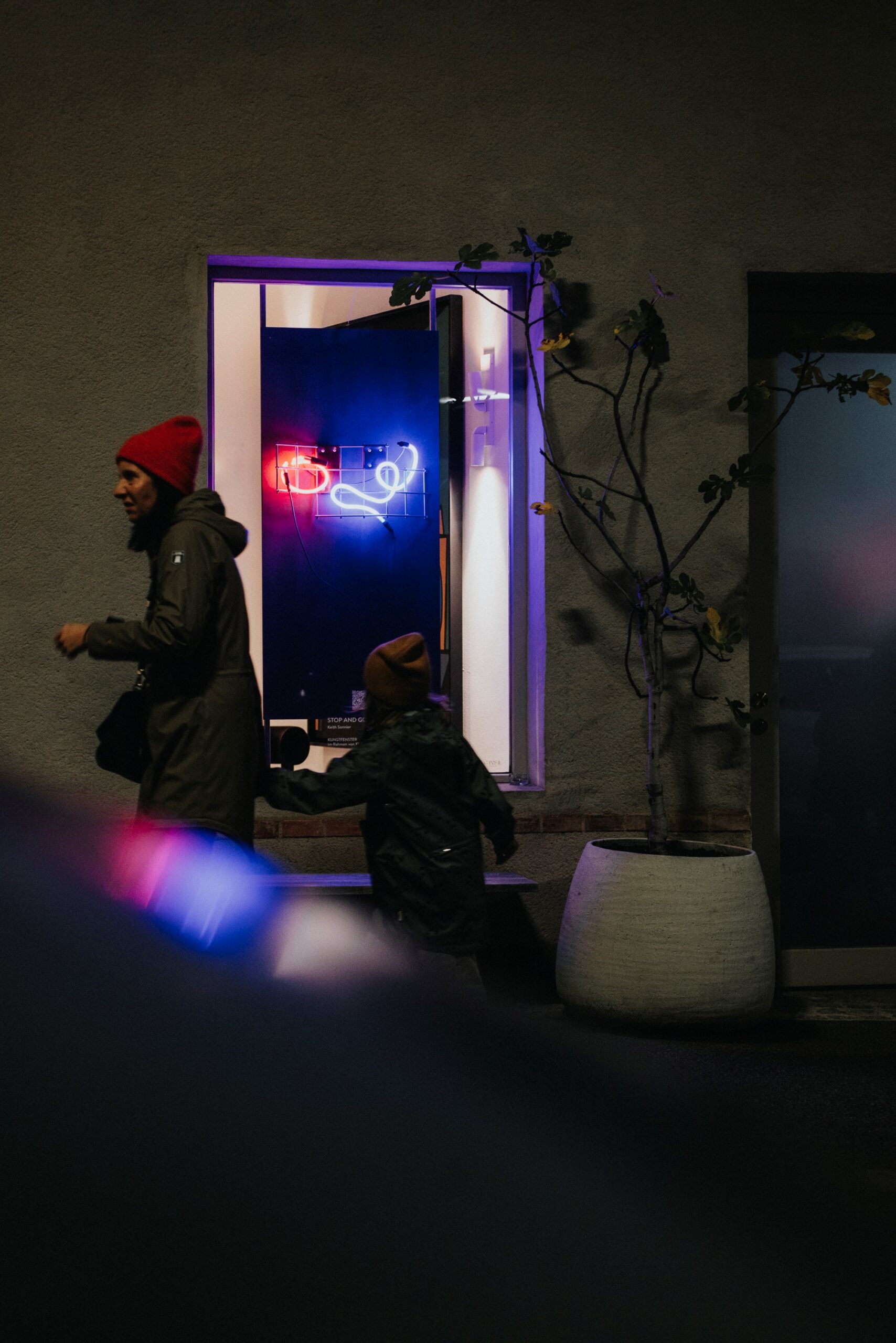
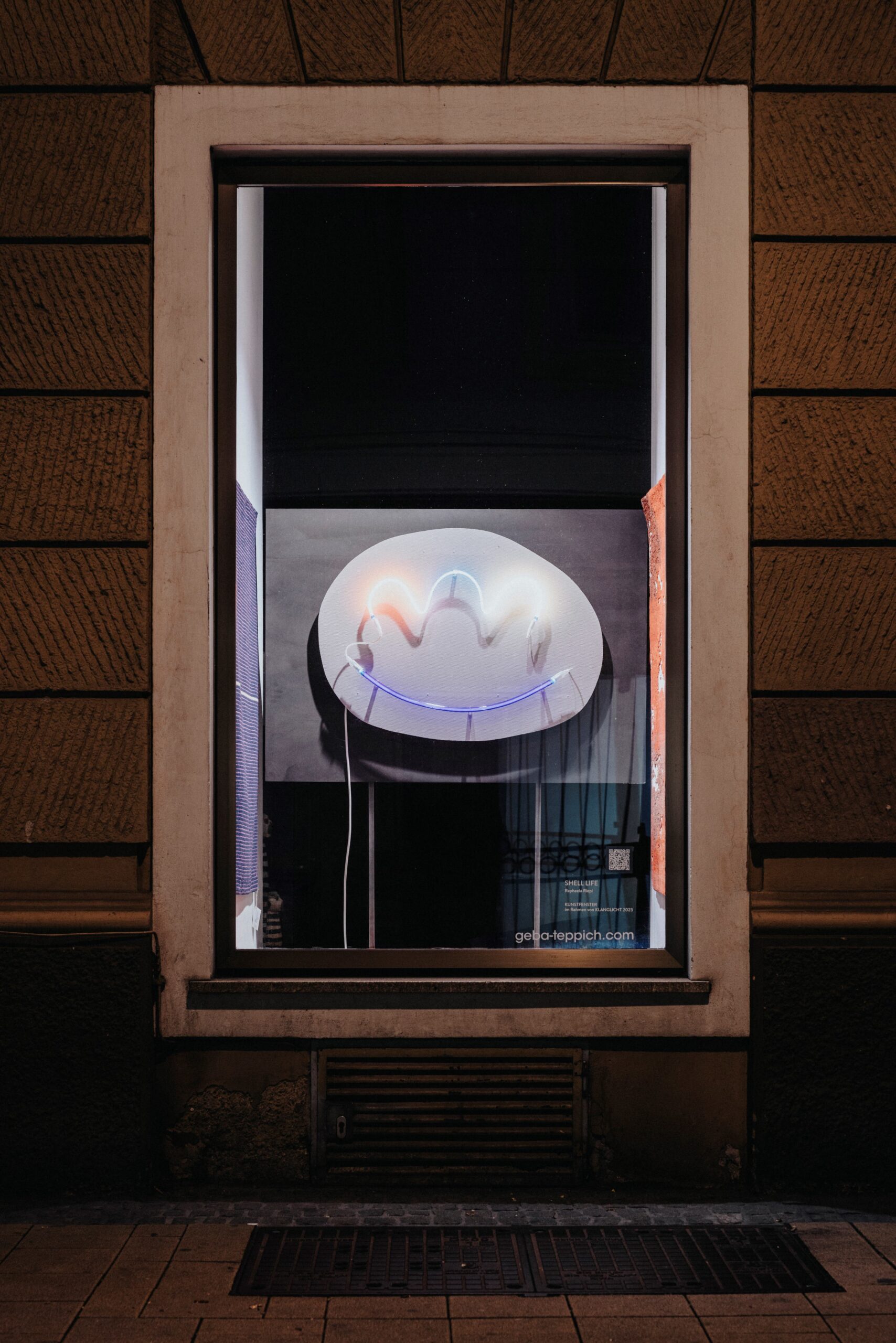
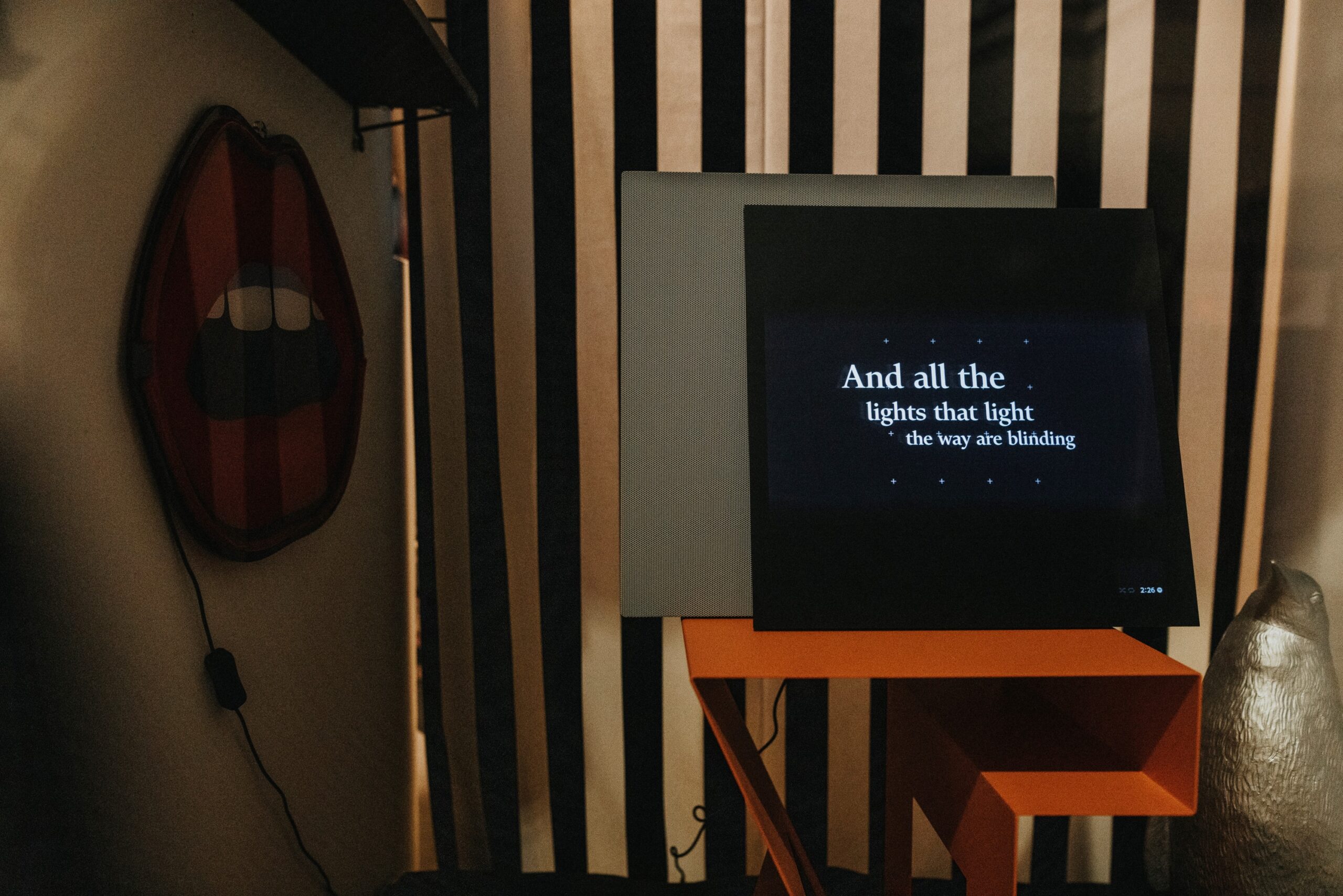
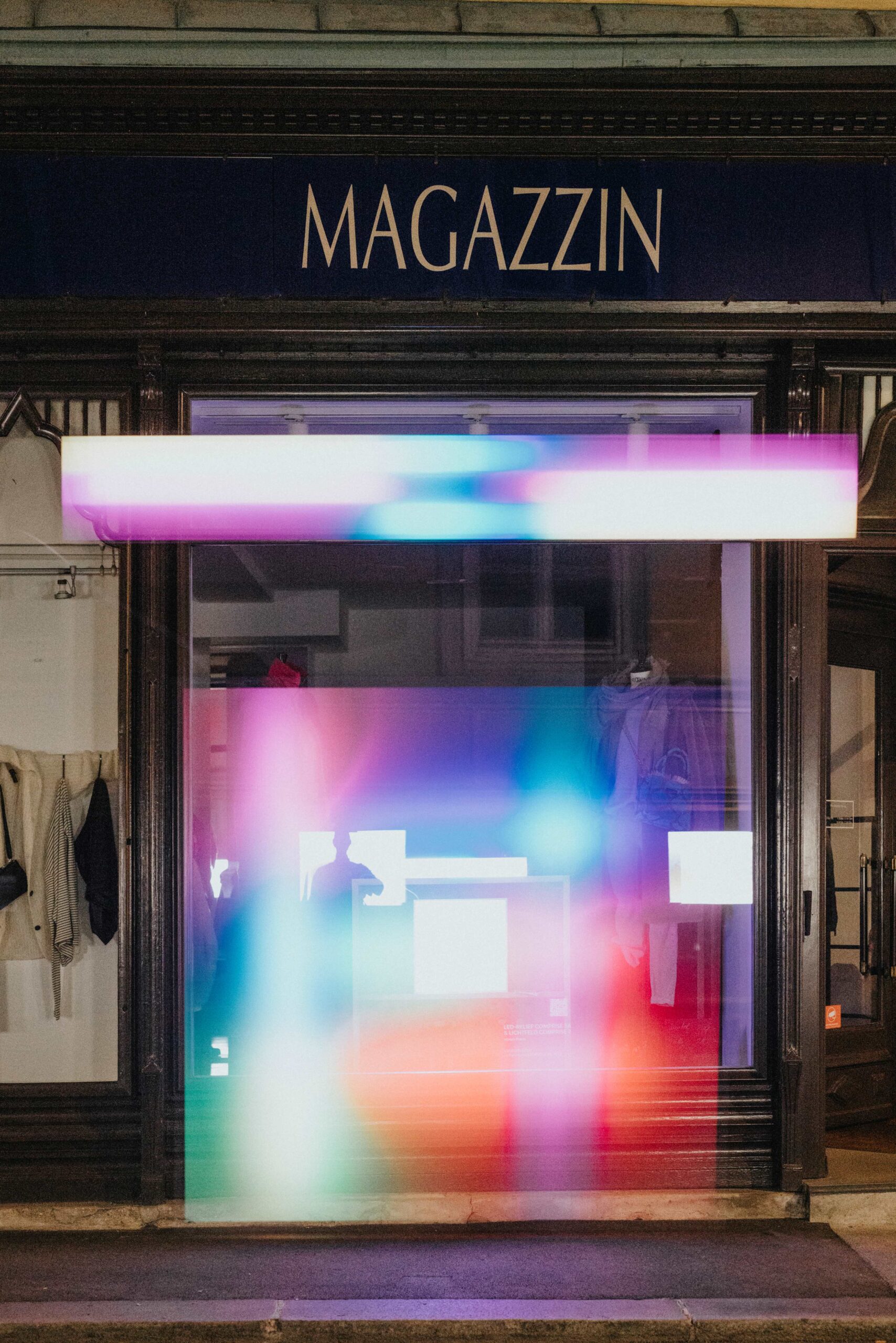
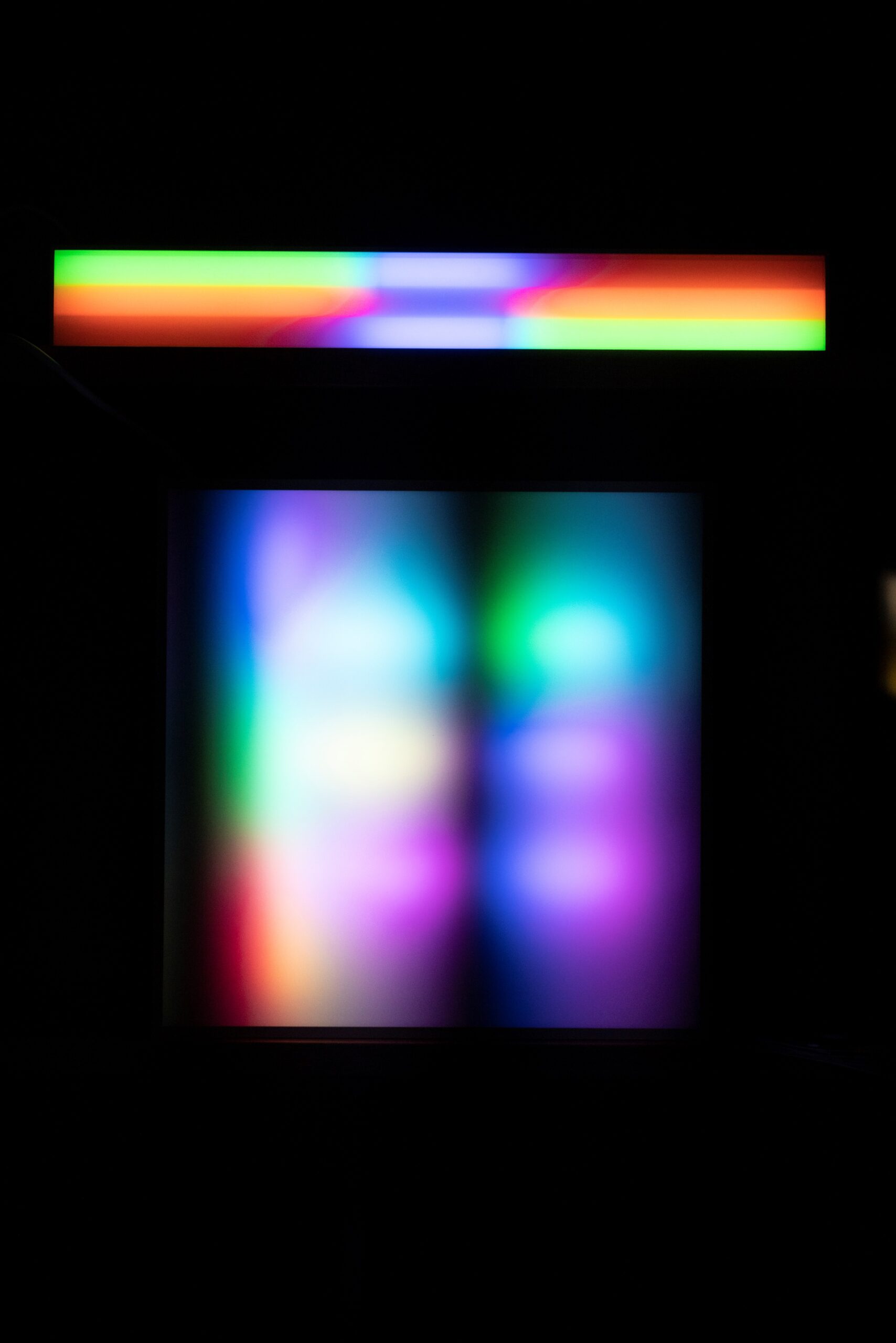
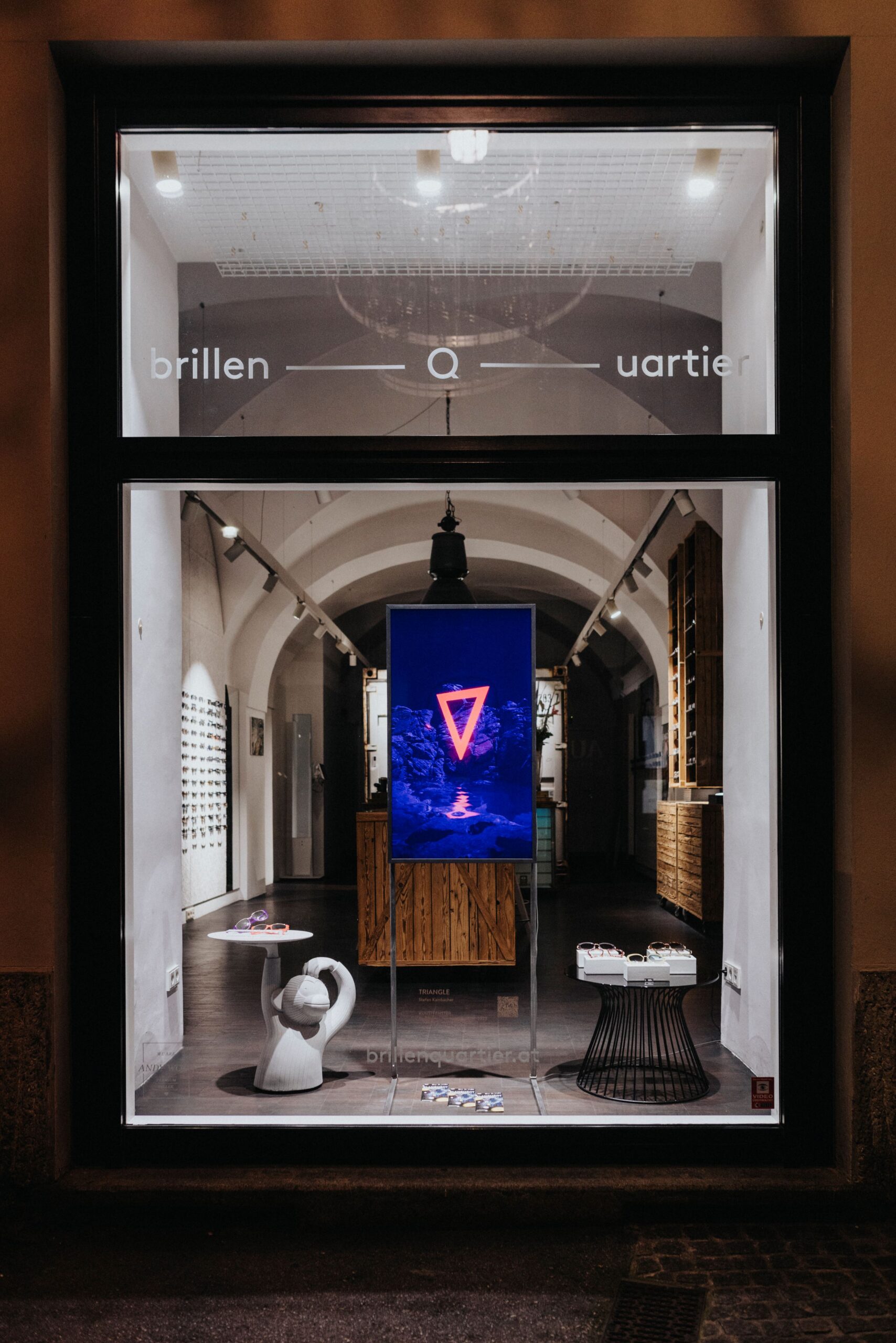
Selected shop windows in Graz city center became the stage for light installations by national and international artists. A total of nine companies took part in KLANGLICHT 2023 as part of this pilot project and transformed the glass fronts of their stores into temporary art galleries. The resulting “art windows” are symbols of the synergy between art and business, which focuses on, promotes and intensifies the cultural experience in the city.
Works by Miriam Prantl, Raphaela Riepl, NEON GOLDEN, Manfred Erjautz, Stefan Kainbacher and Mehmet Gün and – last but not least – Keith Sonnier were exhibited.
Magazzin in Bürgergasse, GEBA Teppiche in Hans Sachs Gasse, Klammerth in Herrengasse, BoConcept and Brillenquartier on Tummelplatz in Graz, MUR Design Store Graz, Aiola Living in Schmiedgasse and Hotel Kai36 acted as hosts for these diverse artistic contributions.
The works of Bregenz-born artist MIRIAM PRANTL are based on a geometric formal language, straightforwardness and order. She compares her play with lines, color mixtures and pigments to an instrument that has to be tuned until the tone sounds perfect, creating extraordinary symphonies with light and color. Her works “Led-relief comprise 3a” and “Lichtfeld Comprise 2” will be exhibited in the Magazzin shop window in Bürgergasse.
RAPHAELA RIEPL is a visual artist working in the fields of light installation, drawing and experimental film. She studied at the Academy of Fine Arts Vienna and the École nationale supérieure des beaux-arts Paris. After graduating in 2010, Riepl went to New York to work in Keith Sonnier’s neon workshop. Since then, neon has been her primary medium. Her works “shell life” and “attract & repel” are exhibited in the shop windows of GEBA Teppiche in Hans-Sachs-Gasse. At KLANGLICHT 2023, Raphaela Riepl will stage the side tunnels of the Schlossbergstollen with her work “tactile memories”.
NEON GOLDEN creates projects in various areas of media art. Their work merges disciplines such as visual, generative, interactive and computer-related art as well as rapid prototyping, performance, architecture and design. Her work “I AM WHAT” confronts visitors with messages that call themselves into question. I AM? I AM WHAT? I AM WHAT I AM. These questions and answers ultimately lead to a critical analysis of their meaning and, in particular, their significance for each individual recipient. Furthermore, it should initiate the start of a discussion about the existence of each individual and the meaning of life.
The work “#NEONEGO” by STEFAN KAINBACHER and MEHMET GÜN addresses self-aggrandizement in the mirror as a social phenomenon of our time. What used to be private is now openly displayed on social networks using cameras and selfie sticks. The mirror object “#NEONEGO” offers a stage for these very moments and at the same time acts as an amplifier. The fragile moment of contemplation is only immortalized forever by being depicted and shared in the infinite memory of social networks. Please take a selfie and share your #neonego – on display in the shop window of Aiola in Graz’s Schmiedgasse.
MANFRED ERJAUTZ, born in Graz in 1966, is a member of the Vienna Secession and the Forum Stadtpark and has received several scholarships and prizes, including the State Scholarship for Fine Arts and the Otto Mauer Prize. Erjautz’s works deal with the experiences of the individual within interwoven and mutually irritating areas such as inside and outside, private and public. By blurring and simultaneously defining boundaries, the real and the fictitious, Erjautz exposes familiar situations as temporary conventions, thereby revealing the mechanisms of society. His work “Thinking about the end as a beginning” will be on display in the BoConcept shop window at Tummelplatz.
The digital artist and light artist STEFAN KAINBACHER has his roots in the international club scene and transfers sensory experiences into art. This transfer is not only expressed in the digital presentation of the respective objects, but is also reflected in the creative process of various works, for example, when an algorithm programmed by the artist uses a laser to laser sweeping images that are very similar to paintings. His work “TRIANGLE” can be found in the Brillenquartier on Tummelplatz.
Since 1968, light has been the preferred means of artistic expression for KEITH SONNIER, who was an important pioneer of the “new sculpture” in the 1970s. Sonnier often combined the neon tube, which until then had mainly belonged to advertising and everyday aesthetics, with materials such as glass, fabric, latex or metal in order to test the sensual and emotional qualities of these materials. “Stop and go / red-blue” is on display in the shop window of Hotel Kai36 on Lendkai.
Design objects relating to the theme of light can be found on display in the MUR Design Store Graz. Installations, light objects and numerous luminaires show the broad spectrum that light covers in the world of design.
We would like to thank all participating businesses for their interest and support of the Klanglicht art windows!
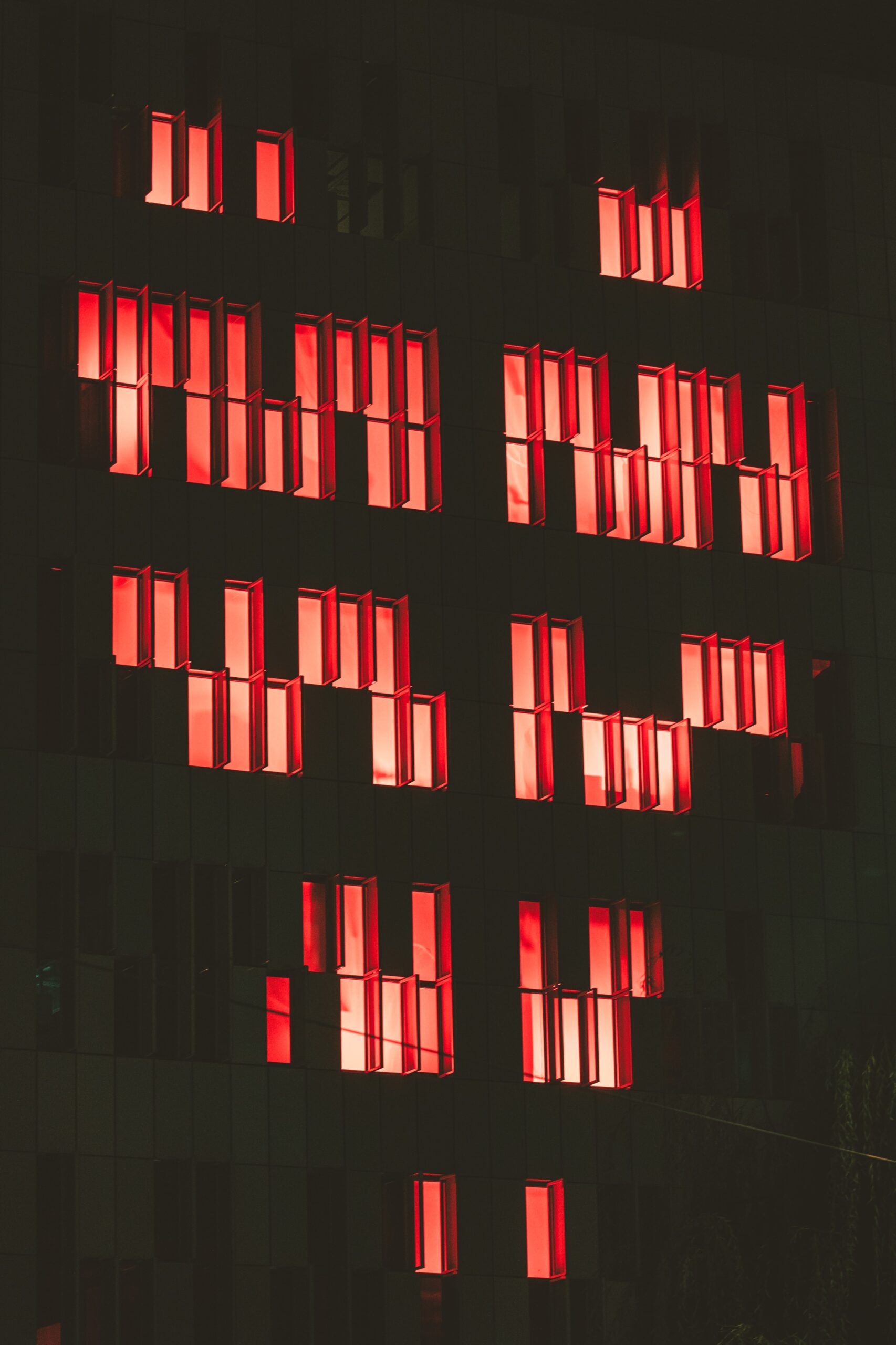
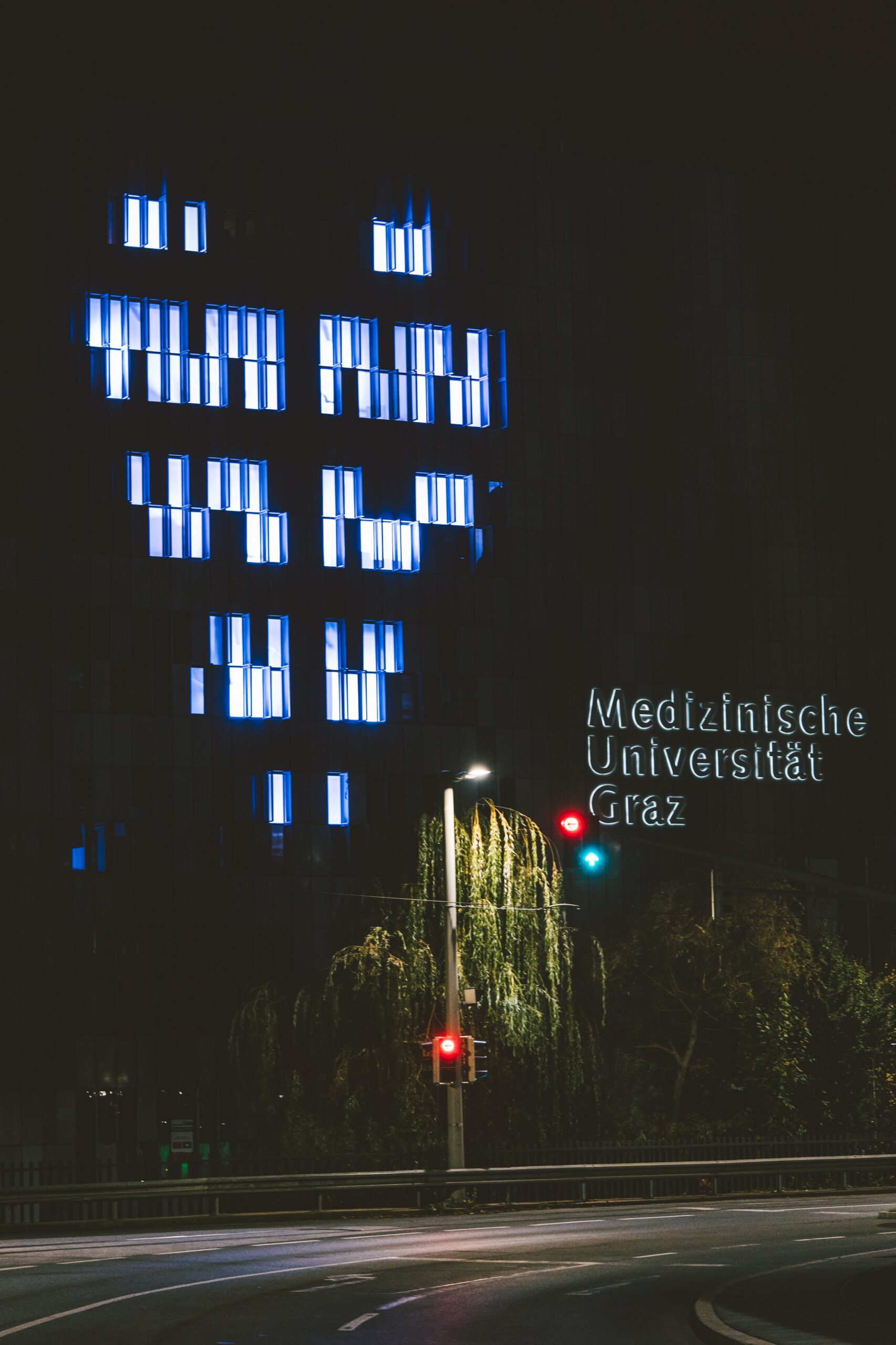
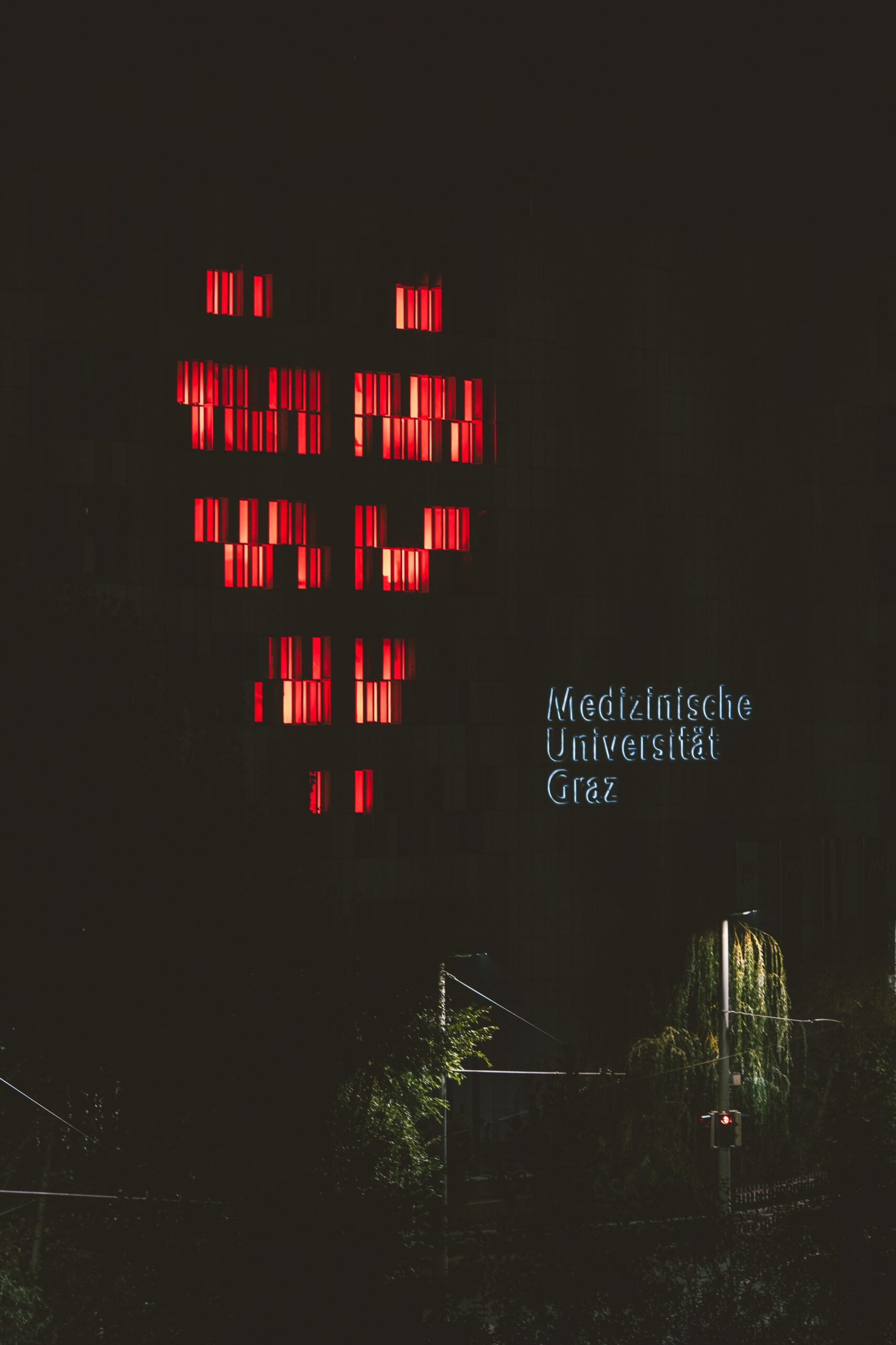
The beating heart installation illuminated the campus of the Medical University of Graz: In the midst of the urban architecture, British artist Stuart Langley created a work of art that breathed artistic and visual energy into the research location as the new urban fabric of Graz. Windows began to glow, pulsate and form a beating heart, which for three days created an impressive connection between art and medicine, light and people.
Biography
Stuart Langley creates sculptures and installations that transform everyday objects and spaces with light and color to convey the importance of imagination and a shared belief in magic. He has exhibited his work at Lumiere Durham, Canary Wharf Winter Lights, ilight Marina Bay Singapore, Nuit Blanche Brussels and Light Night Leeds amongst others.
This installation was realized with the kind support of BIG Bundesimmobiliengesellschaft and PKE Holding realized.
From October 25 to 27, 2023, immersive light and sound architectures transformed the streets and buildings of Graz city center and dedicated the 2023 edition of the festival to questions of reality and perception, permanence and transience of the artistic search for traces.
The audience’s presence and participation created symphonies of encounters and transformed physical interaction into luminous visuals. Twinkling stars invited you to lose yourself while elsewhere you found yourself in swinging, dancing sounds. Much of it resembled magic, while others practiced collective criticism of human activity and its increasingly obvious traces. Installations by renowned national and international artists gave rise to associations of longings, dreams and actual states in equal measure.
KLANGLICHT once again proved in Graz how it can transform the city into a shining work of art. This year’s festival edition was not only a tribute to art and culture, but also a real highlight for around 100,500 visitors.
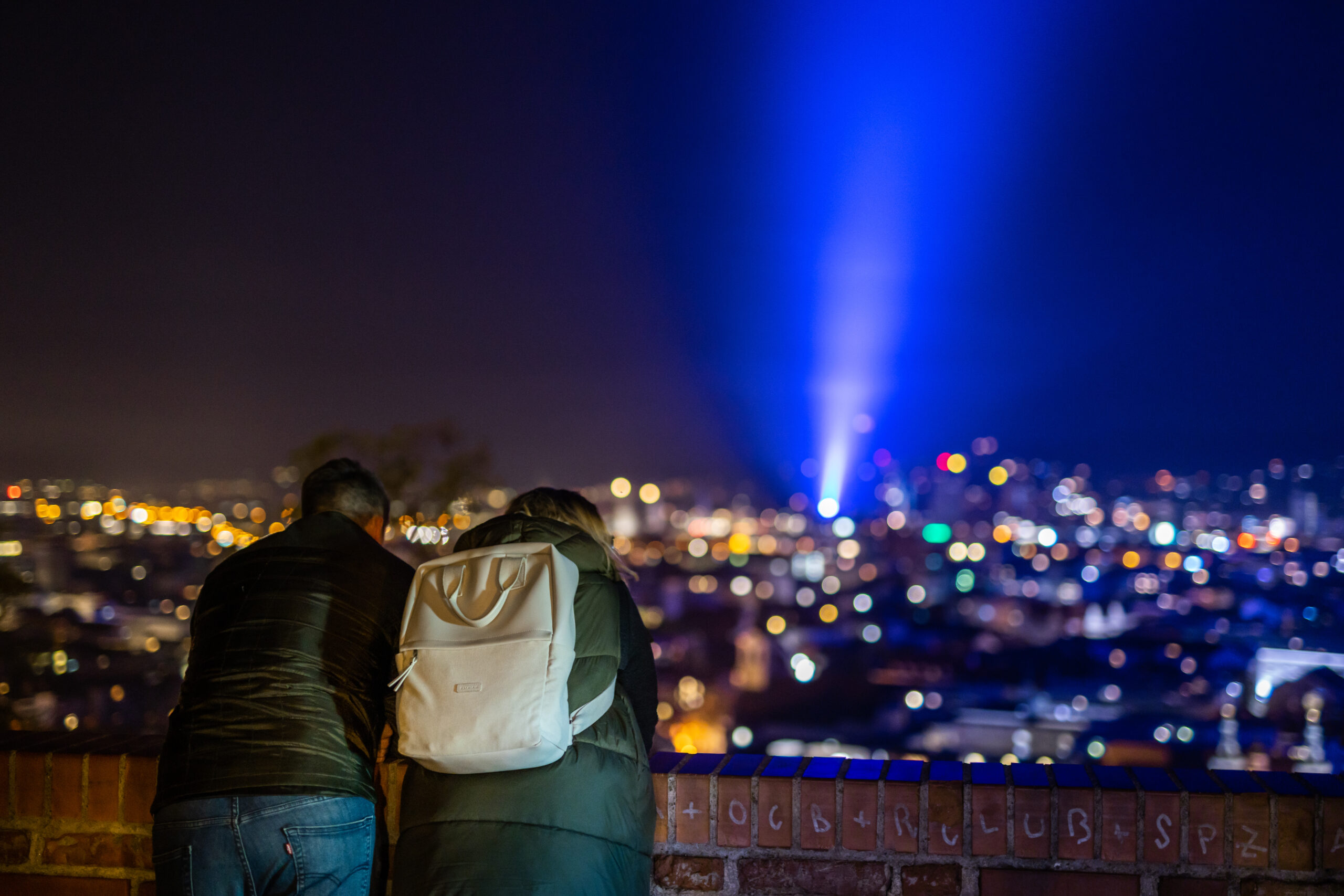
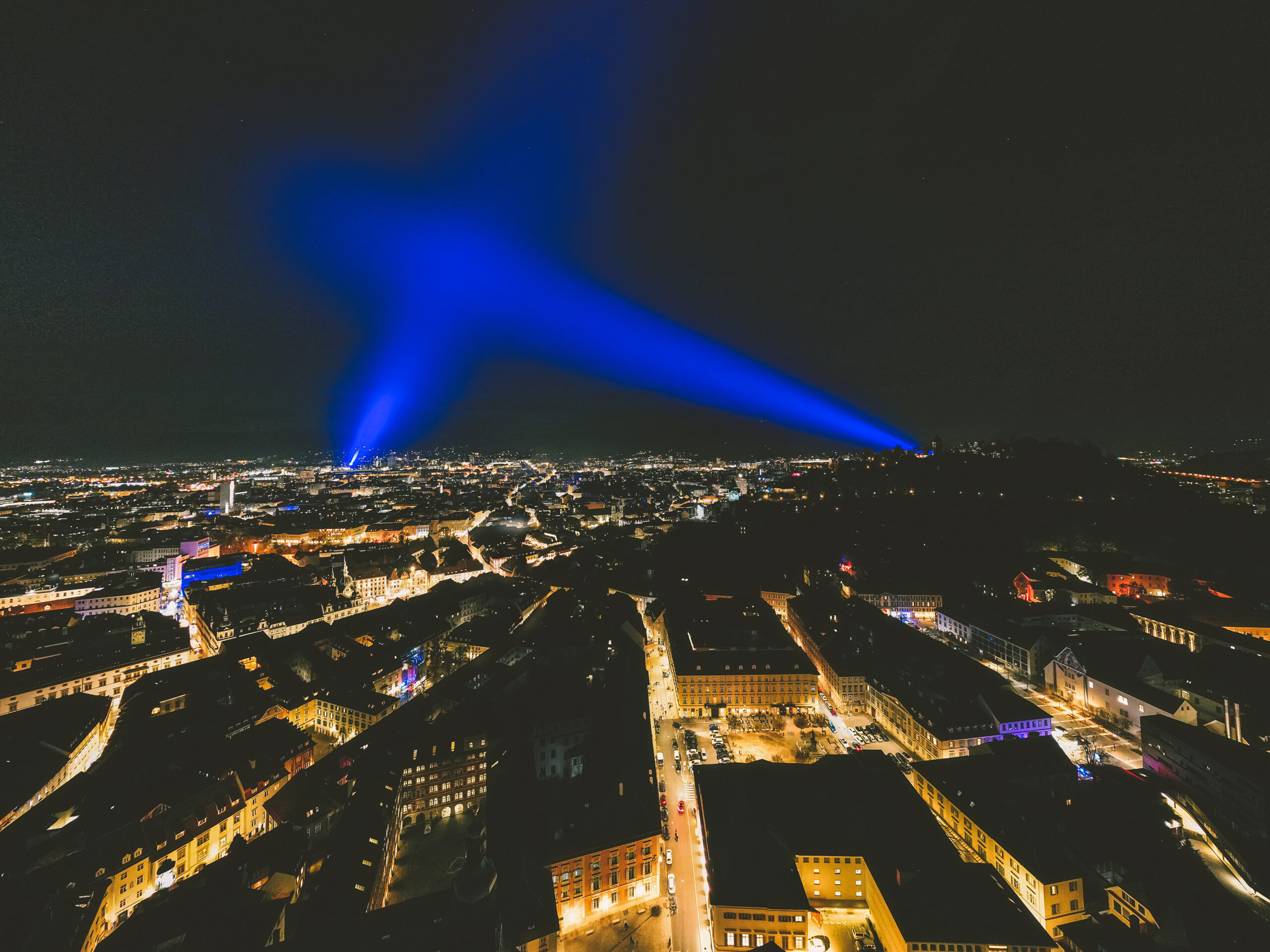
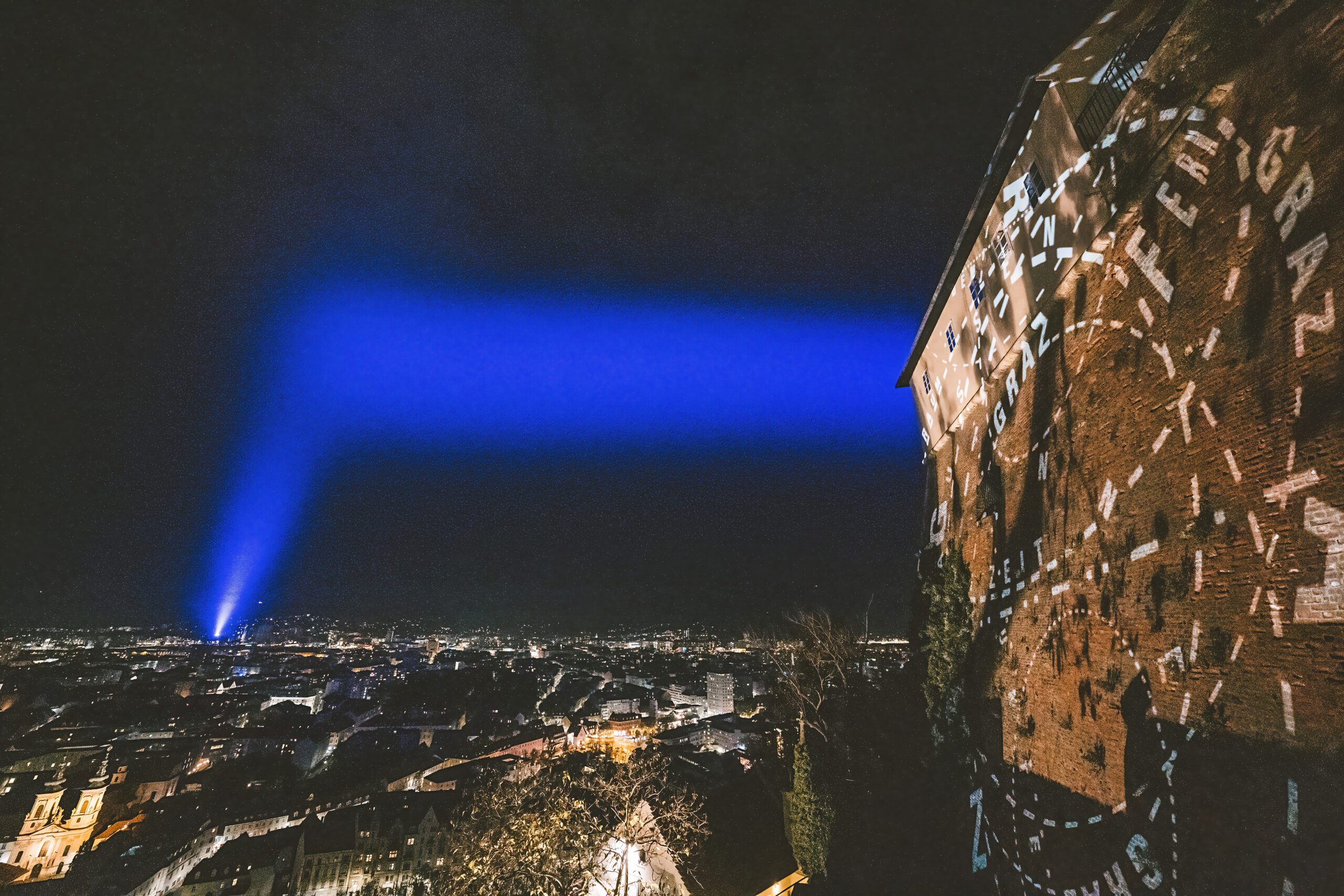
For almost 20 years, Finnish light artist Kari Kola has been realizing spectacular light projects around the world that combine architecture, landscape and the history of places to create an unforgettable experience.
For Klanglicht 2022, Kari Kola is “building” a light bridge that connects the two locations, Graz’s Schlossberg and Reininghaus.
The project is supported by E-WerkFranz
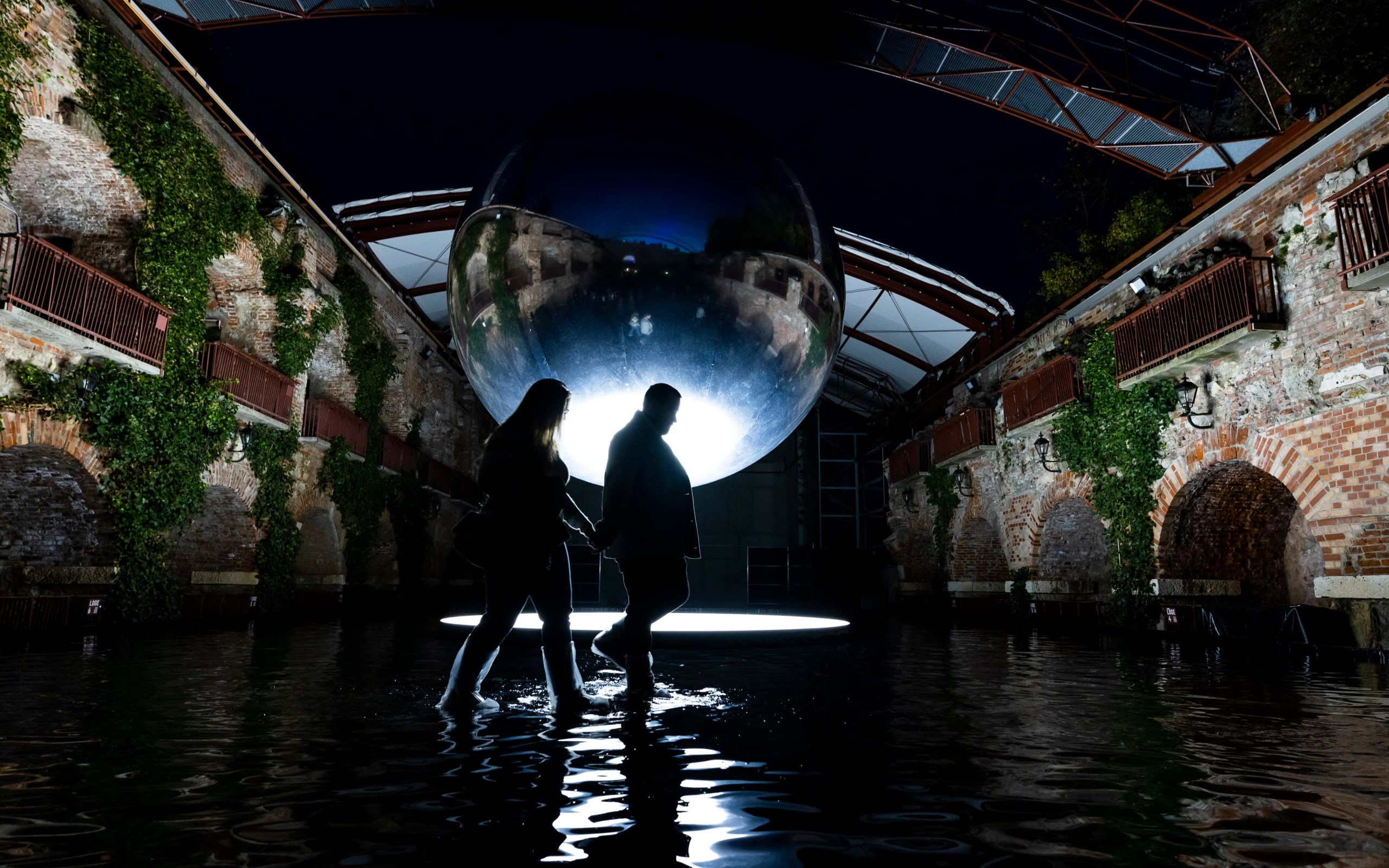
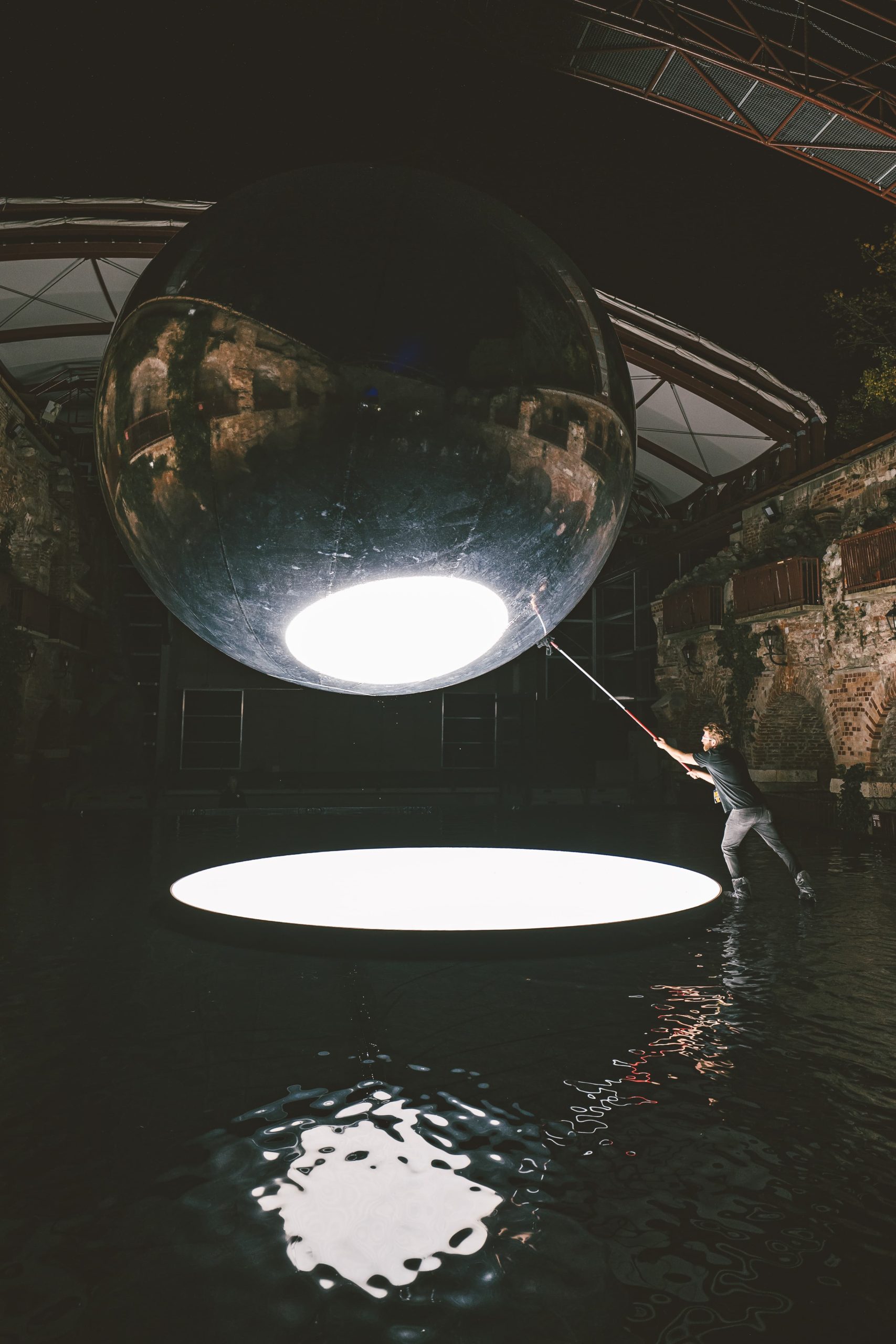
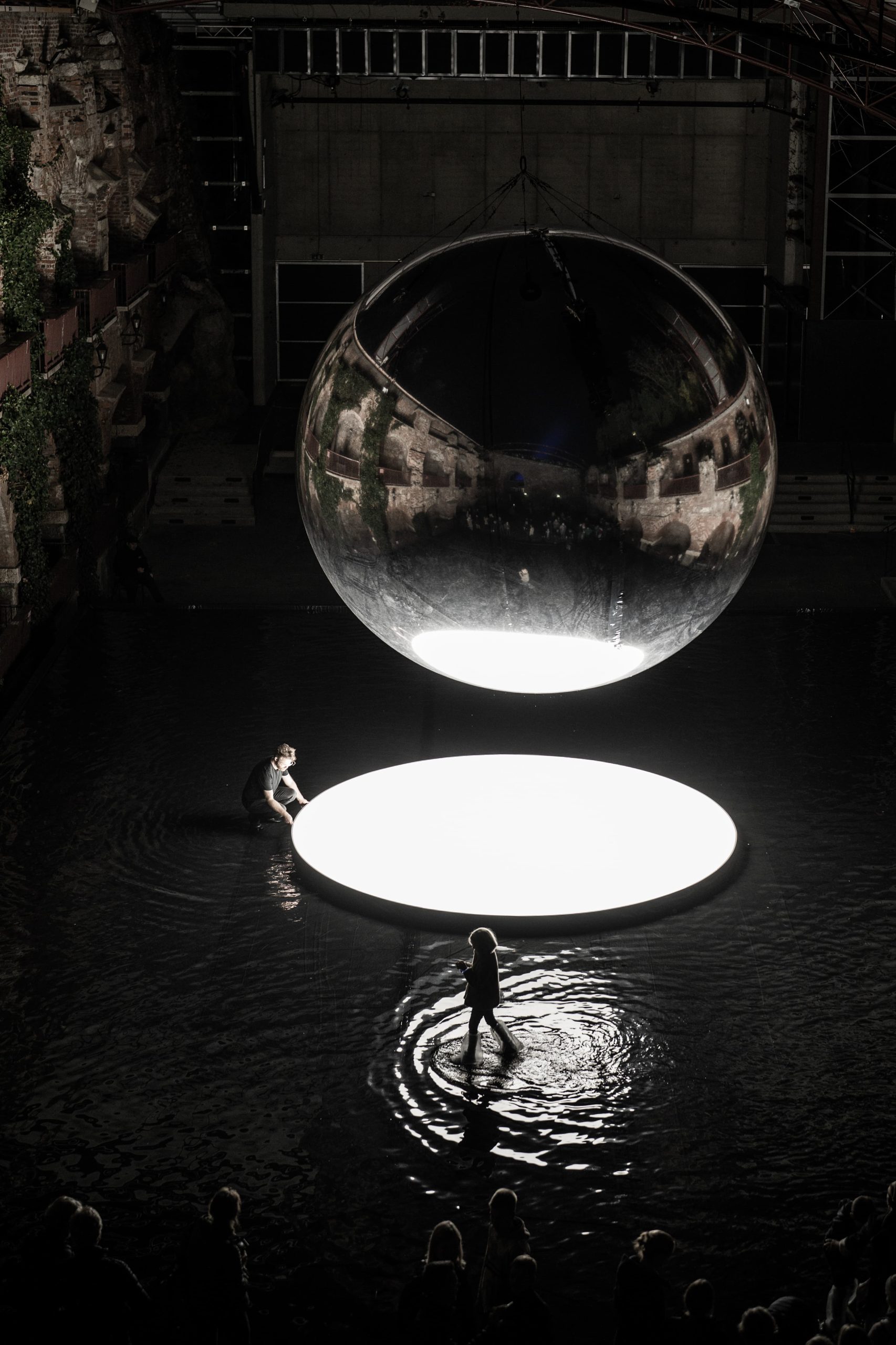
“Inner, Outer, Other” is a site-specific installation that creates a different world on the Schlossbergbühne Kasematten stage. With the help of light, sound, mirrors, water and air, the German-British artist Sebastian Kite wants to rethink the conventional interpretation of space and its time, and thus subject the concept of the real to a test.
Location: Schlossberg stage Kasematten
The project is supported by
Raiffeisen Landesbank Steiermark.
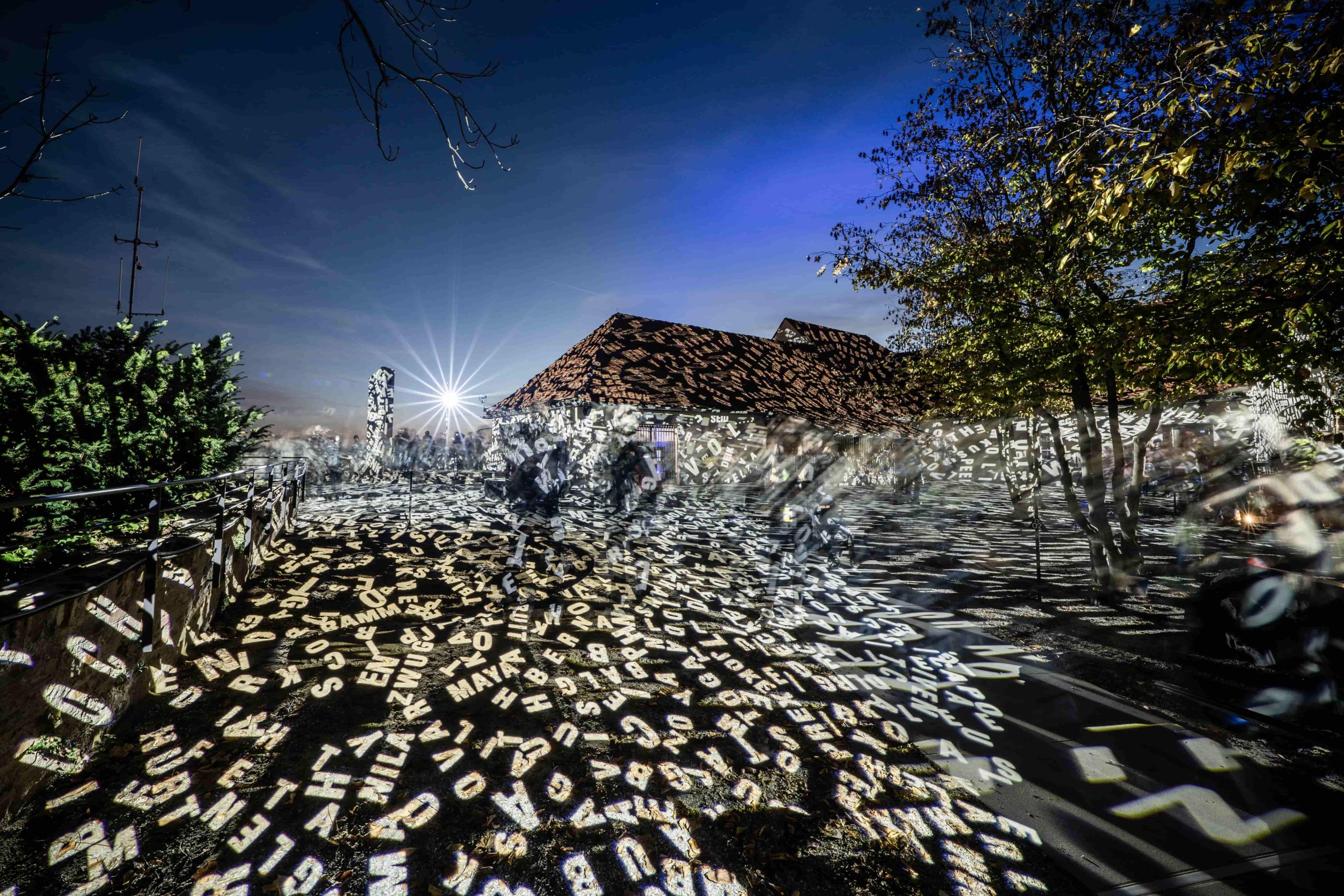
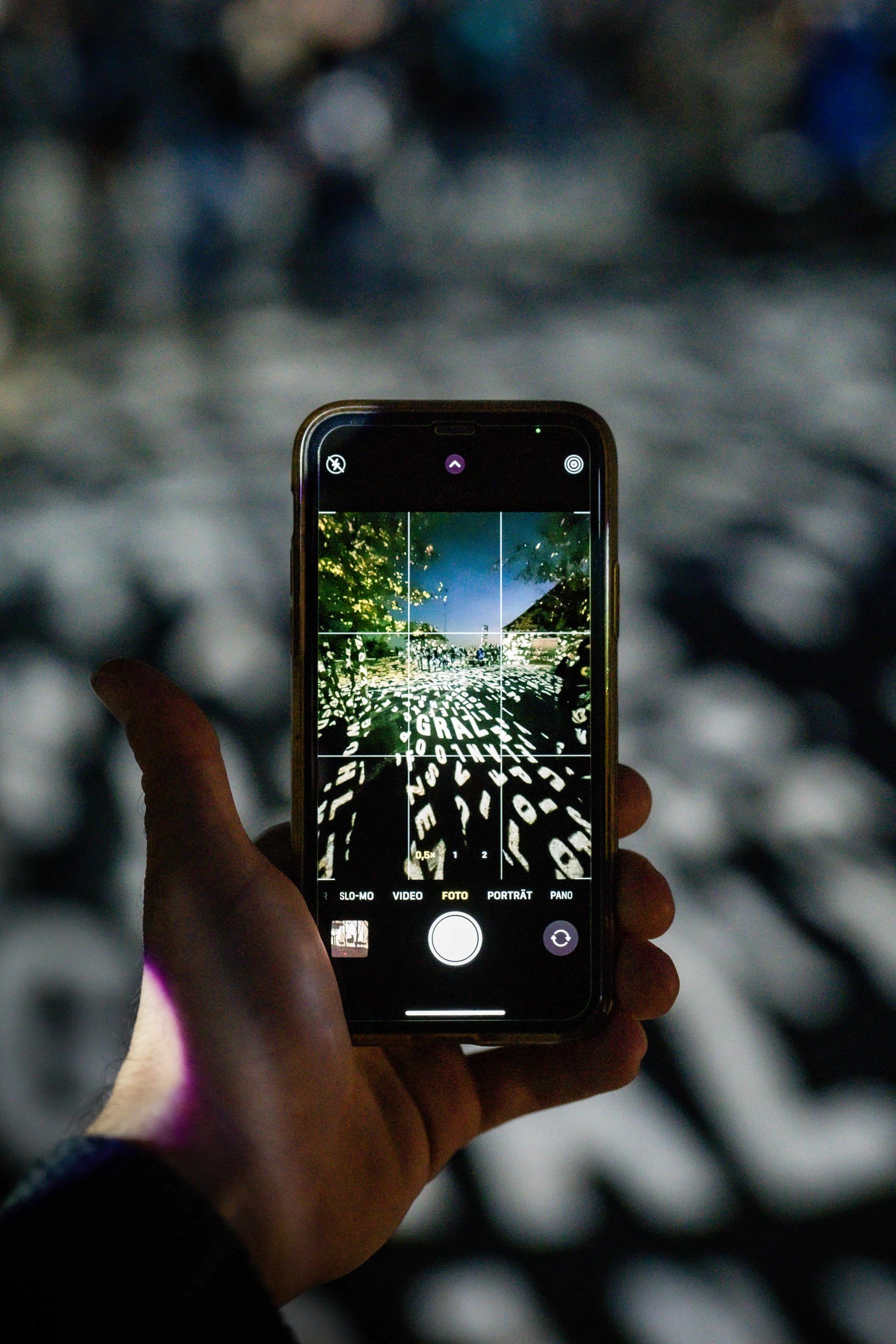
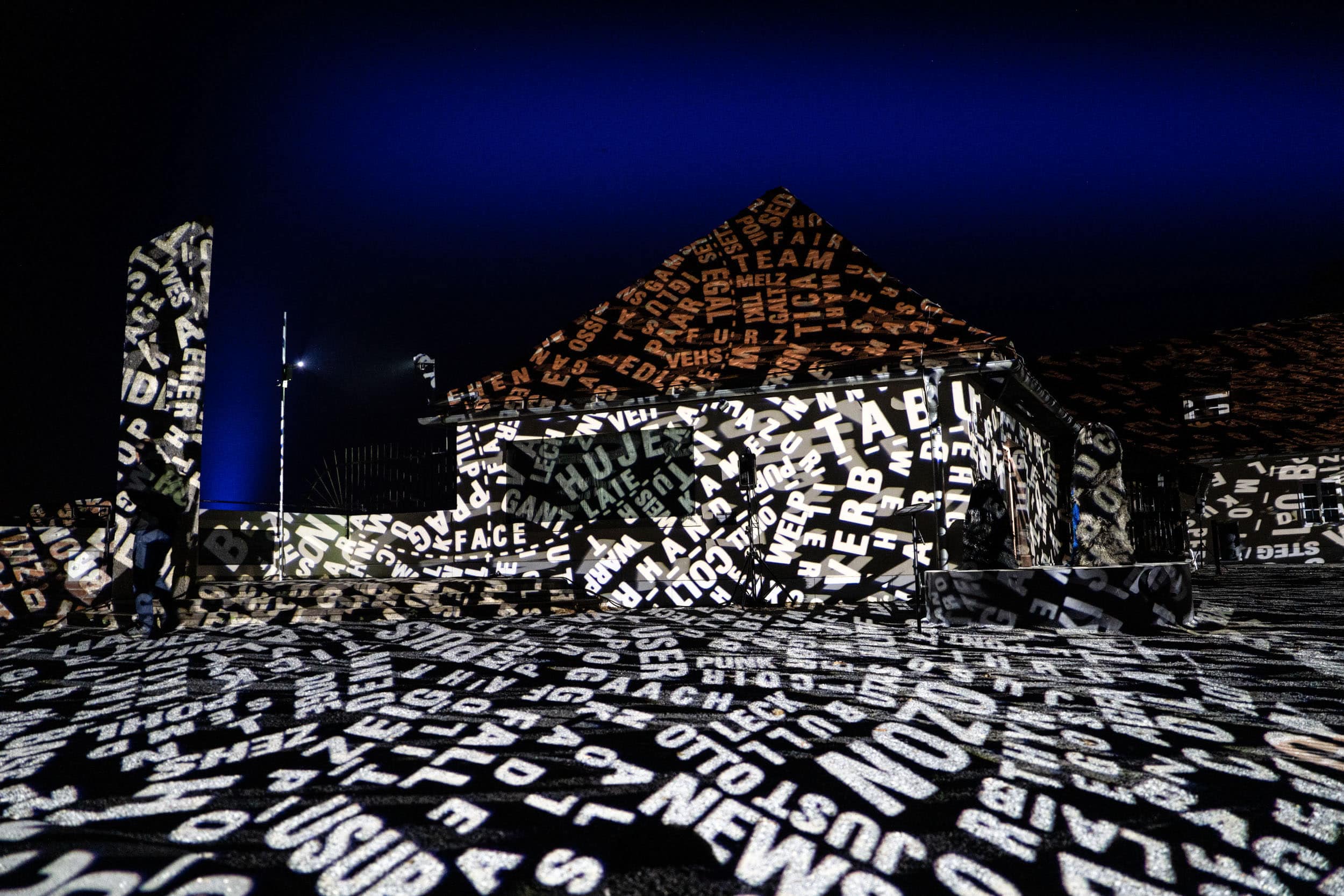
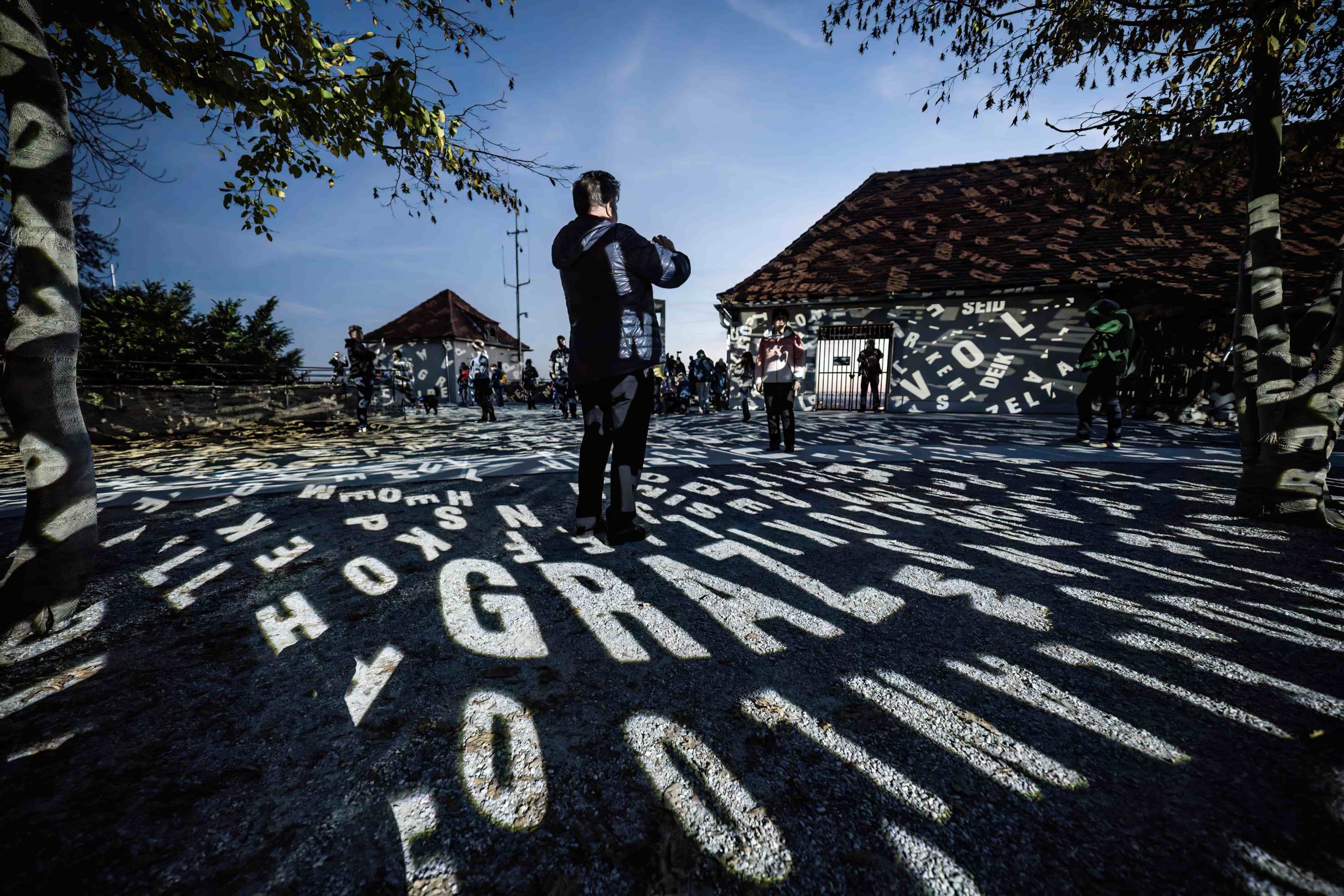
Detlef Hartung, Georg Trenz, Josef Gründler
In cooperation with the Graz Museum Schlossberg
The Graz Museum Schlossberg is a very special place. It offers a unique panoramic view and provides orientation. An interface between heaven and earth.
The work “Constellations” by Detlef Hartung and Georg Trenz interprets this place as the zero point of its own location and transforms the courtyard of the museum and its surrounding buildings into an experimental, immersive planetarium of light and typography. A cosmos of language and writing. Infinite expanses and worlds, generated from the 26 characters of our alphabet. Representing the 3000 or so stars visible from one point in the firmament, around 3000 words composed of 4 letters are projected. One of them: G R A Z. The sound for this project is provided by Josef Gründler from Graz.
Location: Graz Museum Schlossberg / Wundergarten
Biography
Detlef Hartung and Georg Trenz have developed their own form of artistic expression over more than 20 years of collaboration, transforming texts into impressive images. Concrete language becomes pictorial signs in terms of both content and form. The resulting word images create large-scale image-text spaces that correspond with the real, three-dimensional spaces onto which they are projected.
The project is supported by Steiermärkische Sparkasse.
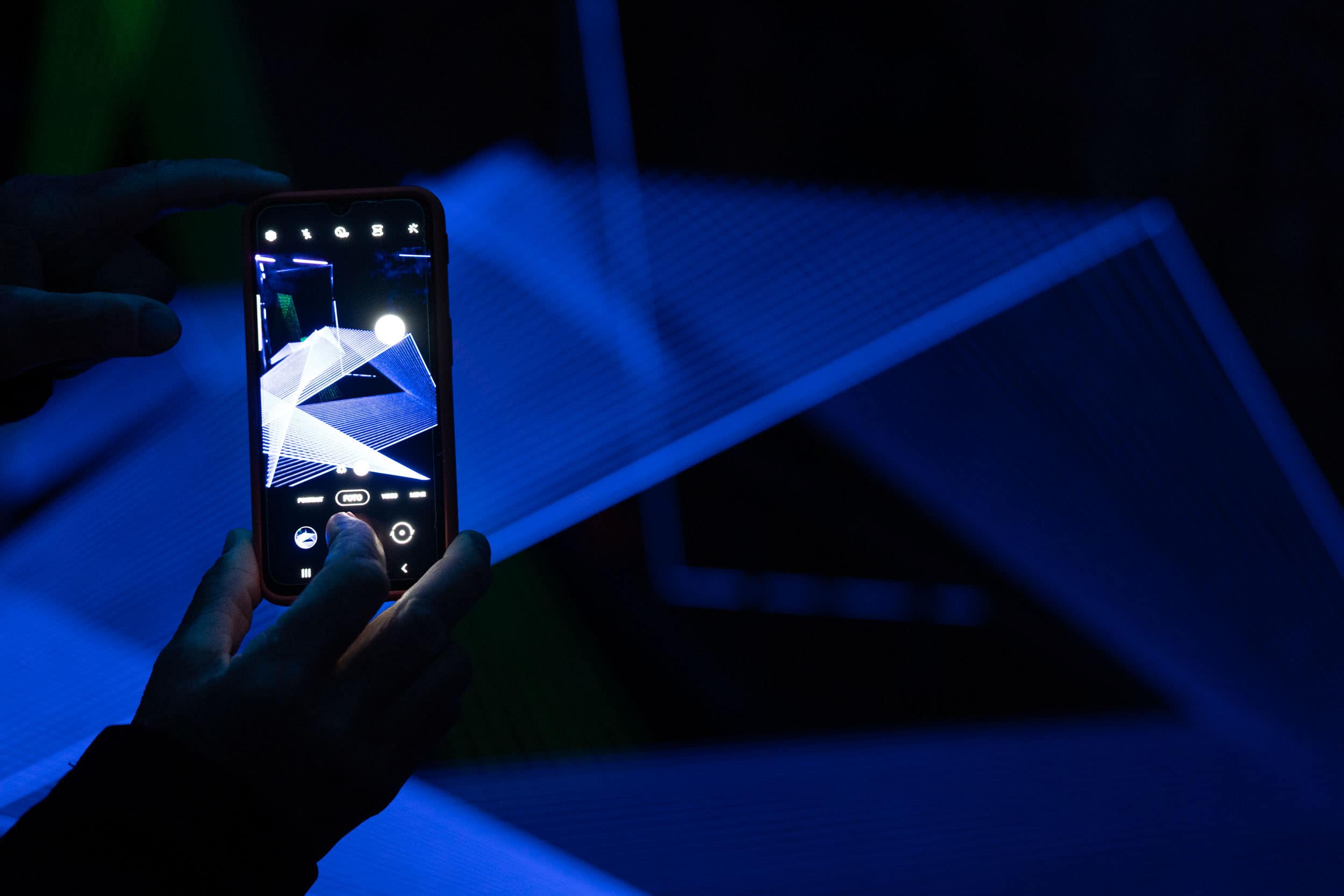
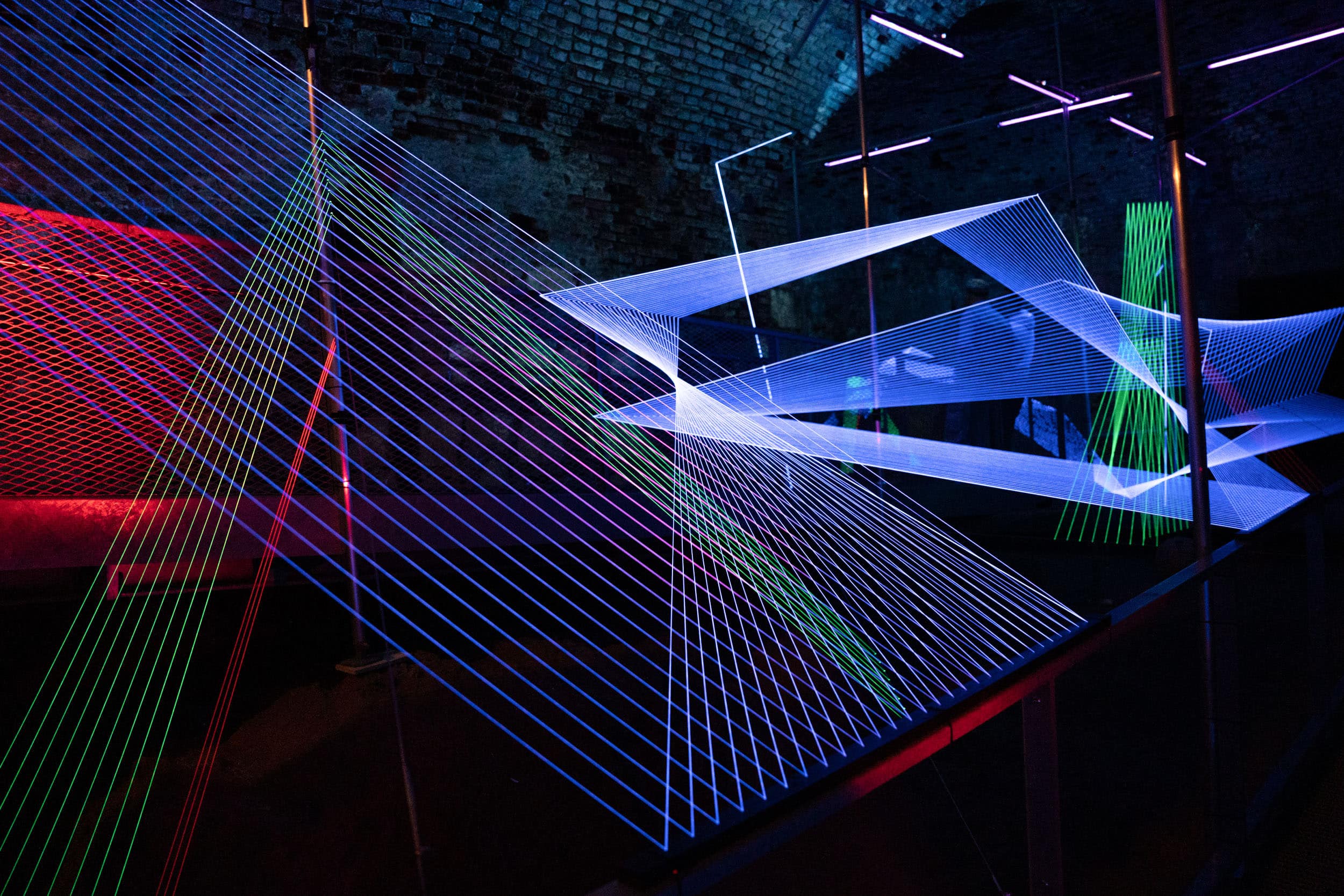
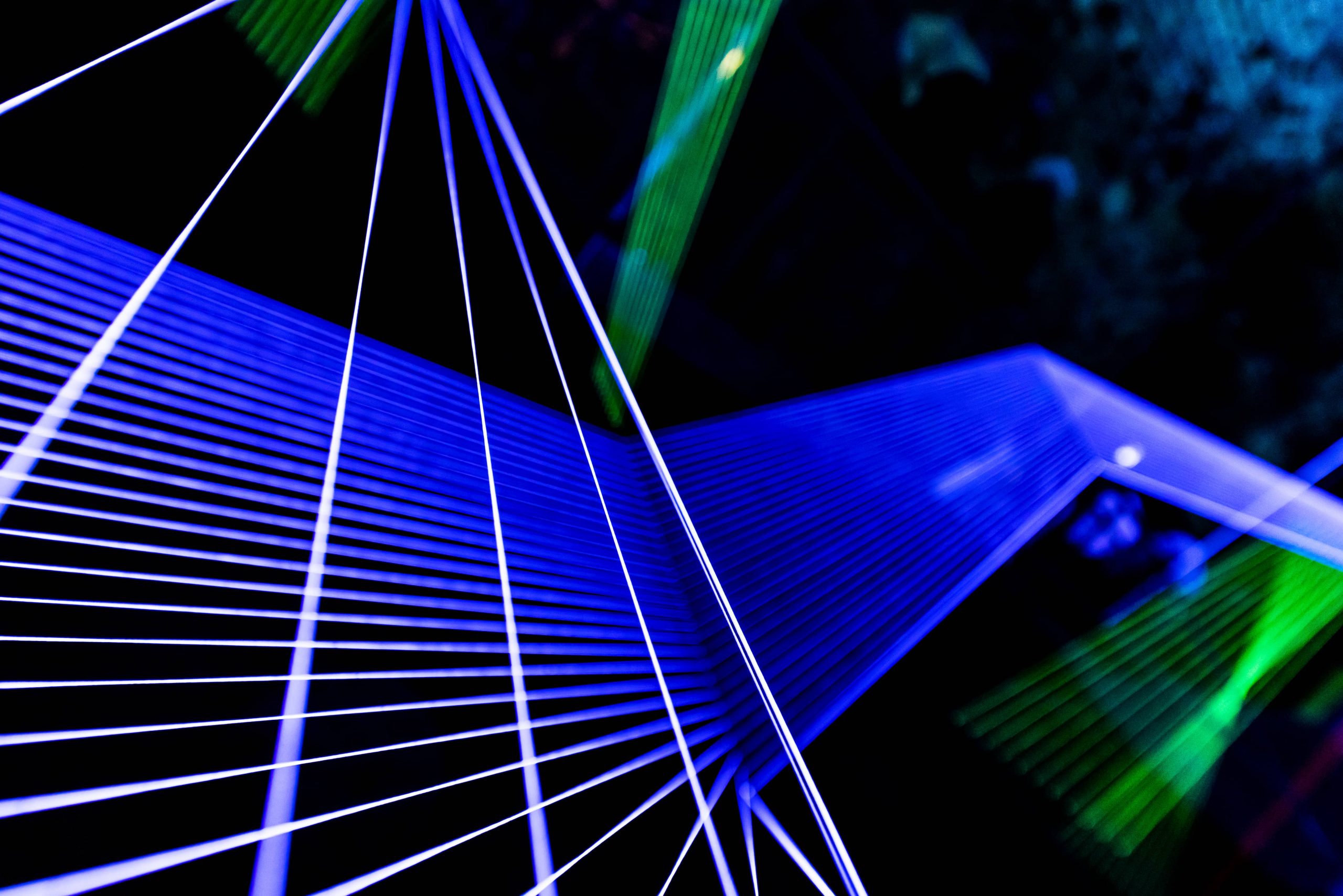
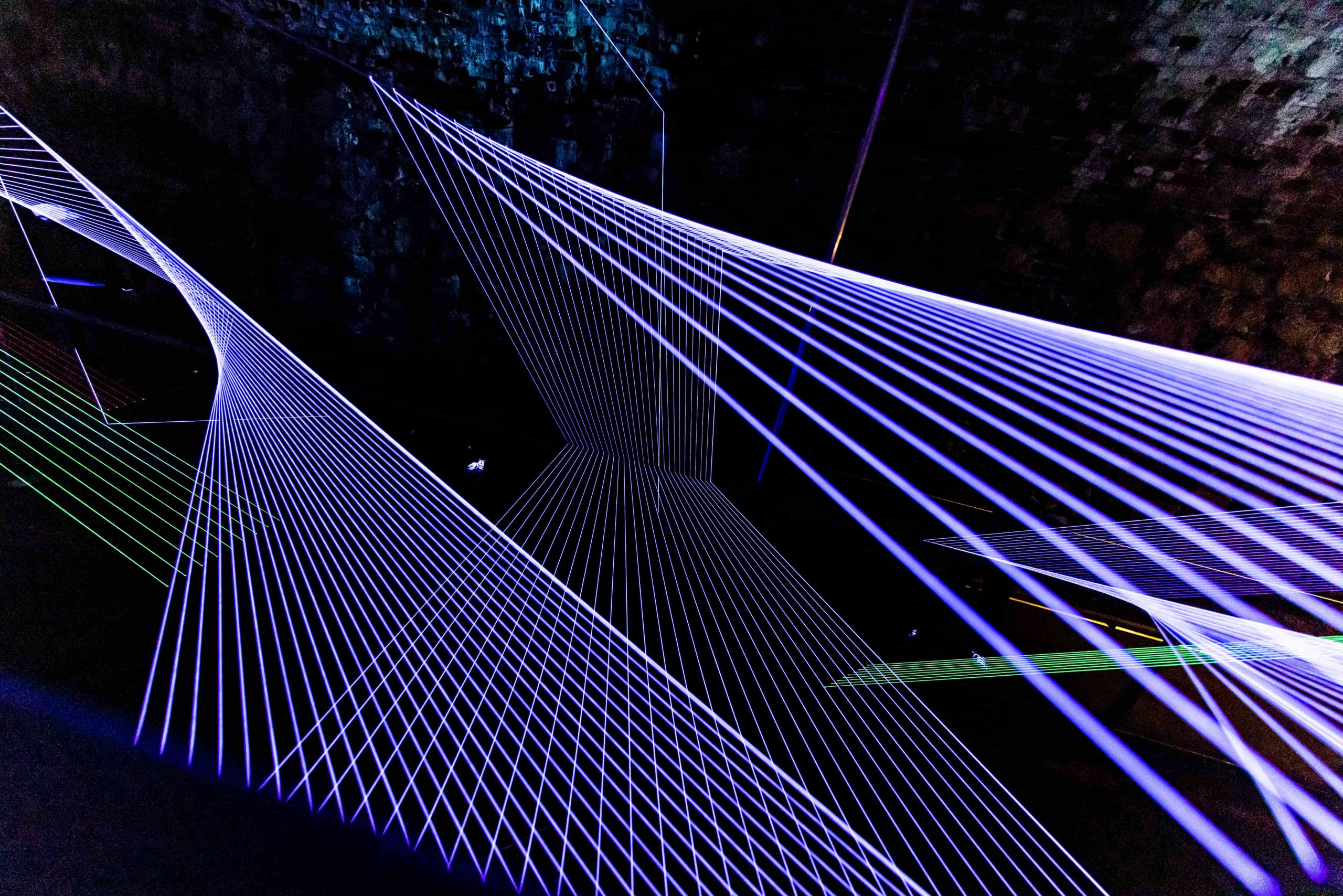
In cooperation with the Graz Museum Schlossberg
In the installation “Drawing in Space”, Jeongmoon Choi illuminates the darkness of the Stallbastei with a complex geometric arrangement of fluorescent threads that often create a slight and pleasant sensual confusion in the viewer. As the threads reflect the light in the structures designed by Choi, the space seems to vibrate. The artist conceives a tension between the fragility of the thread structures and the solid structure of the surrounding space. Her installation conveys the impression of a virtual, pulsating contemplation of analog and digital positions, structures, movements and different perspectives of perception in space.
Location: Graz Museum Schlossberg / Stallbastei
The project is supported by WEGRAZ.
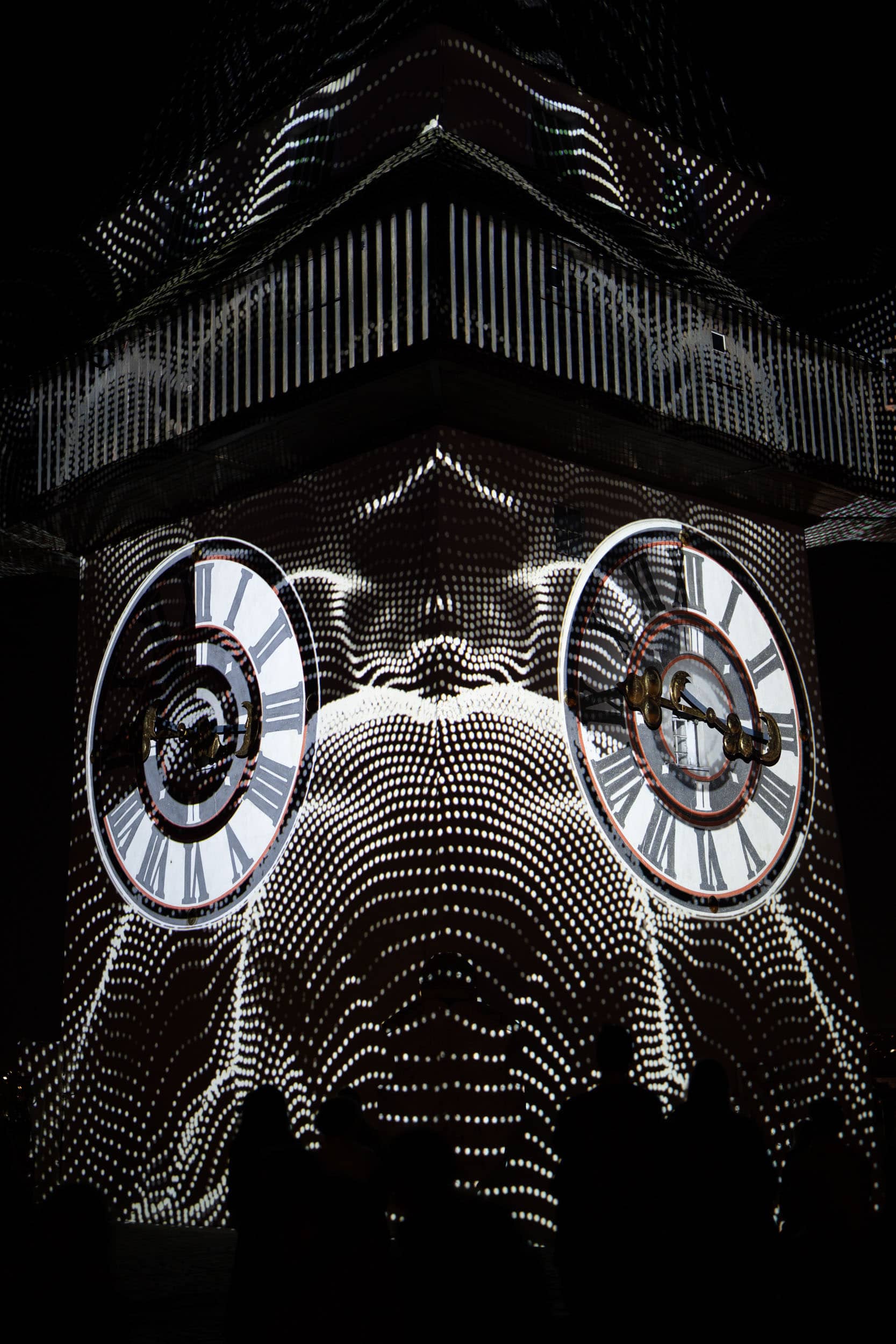
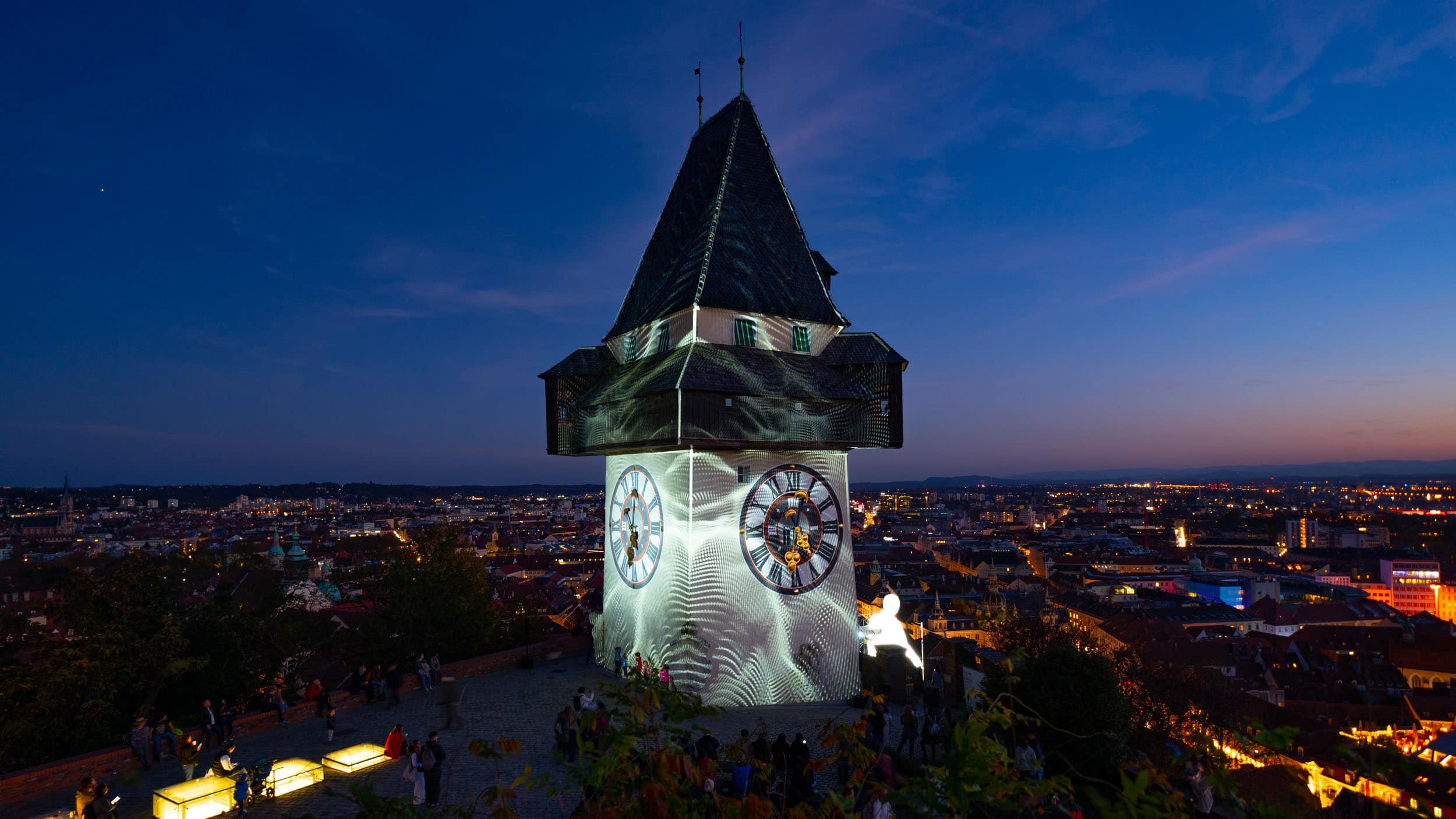
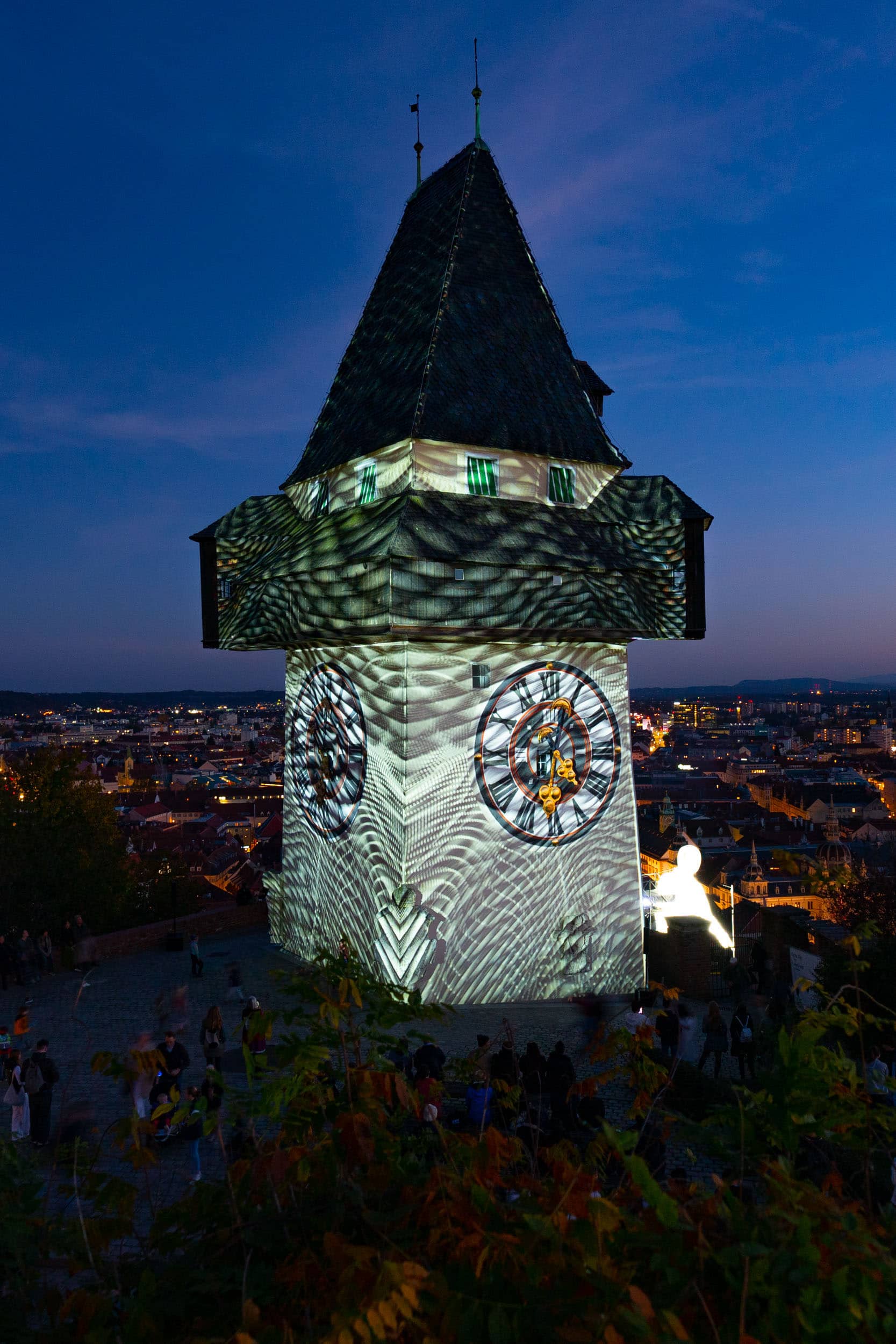
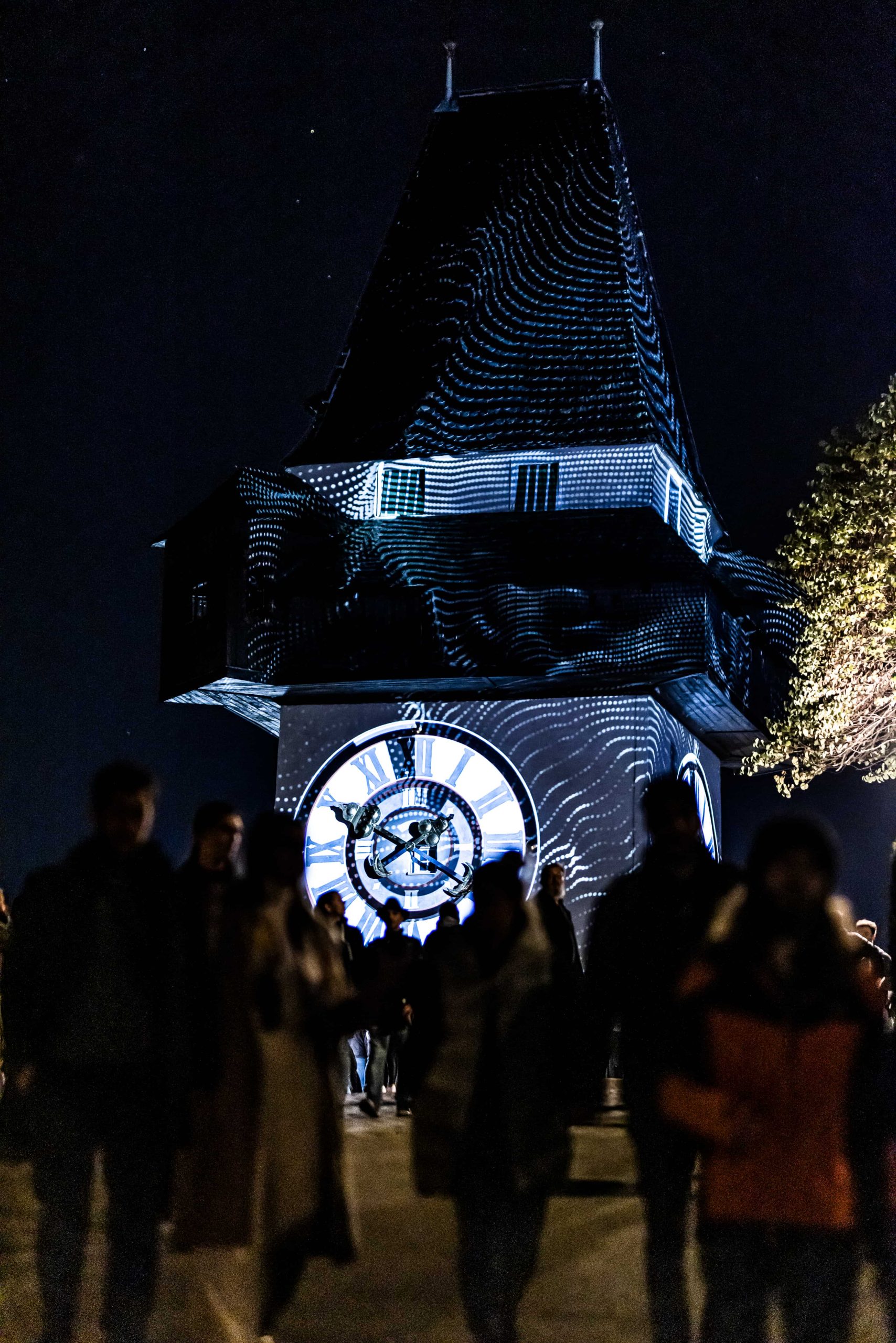
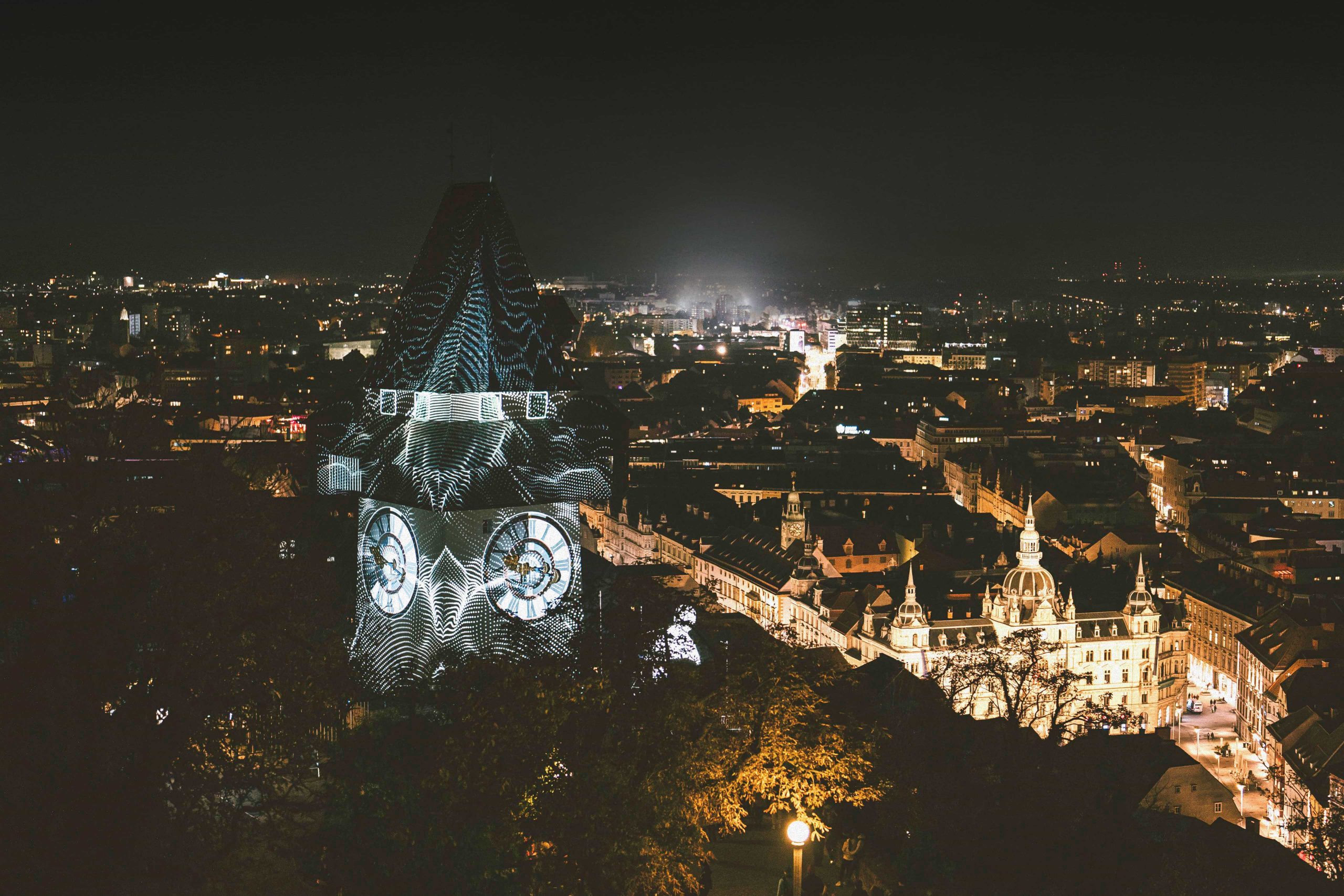
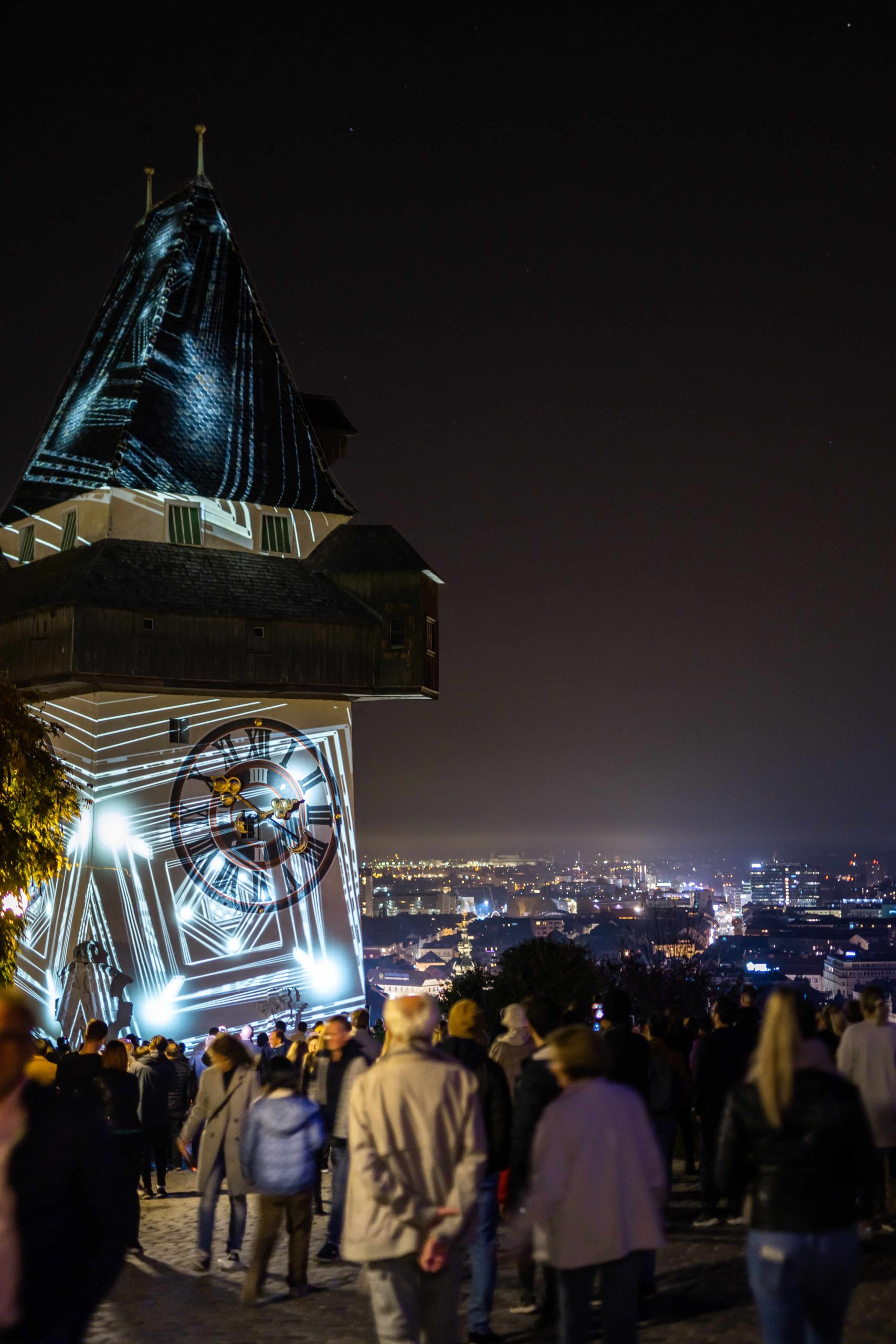
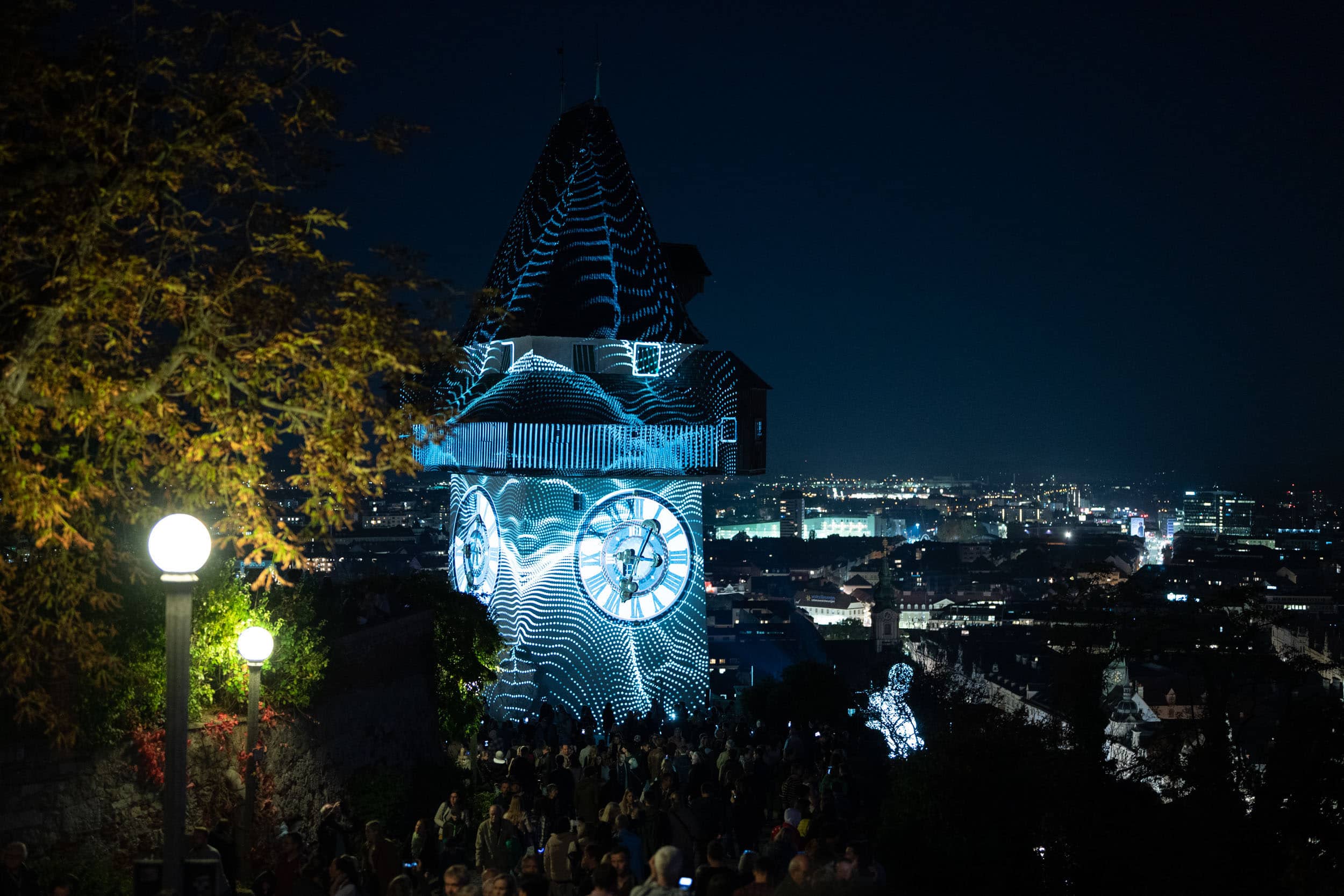
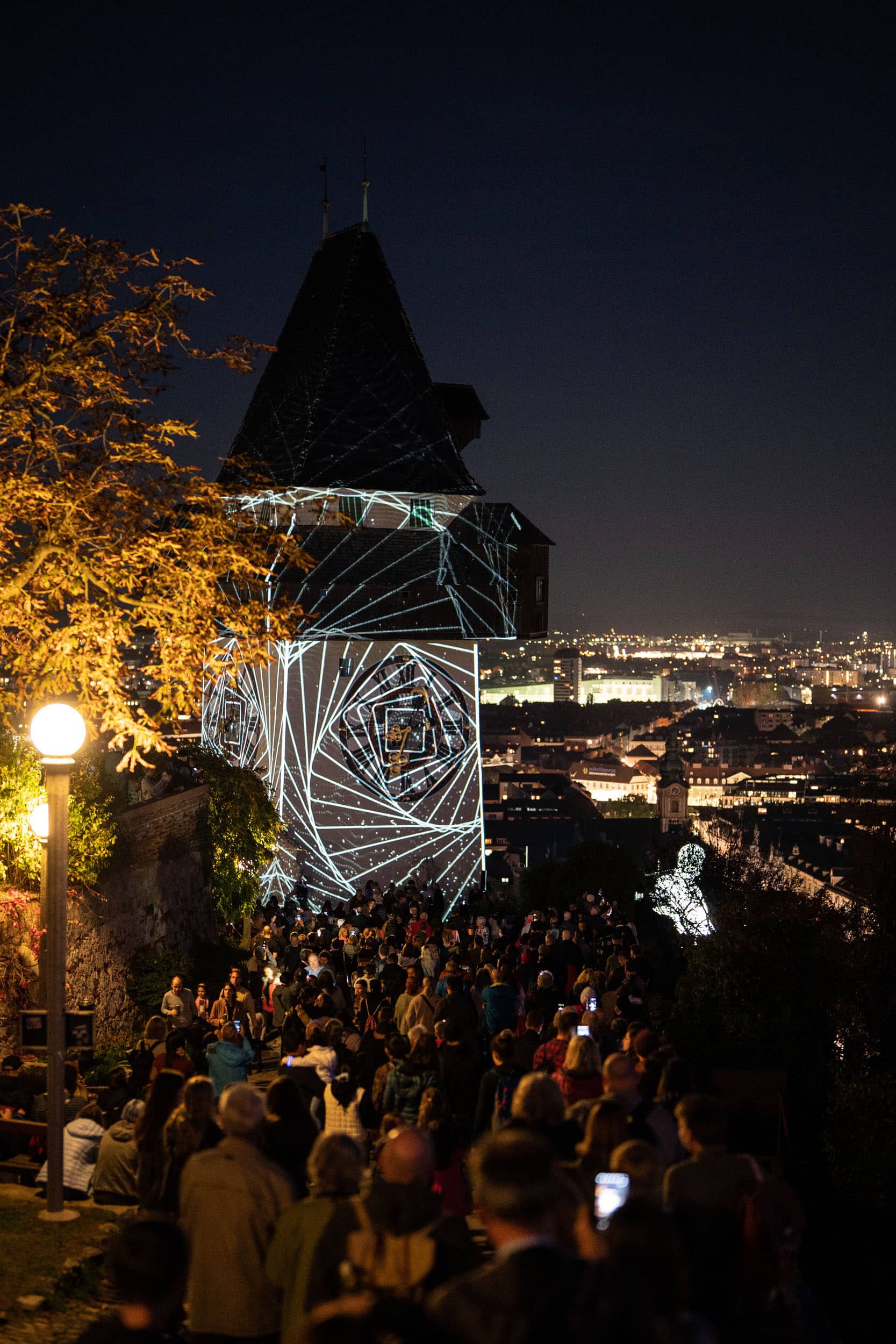
Studio MO:YA | Markus Graf (Seismo) | Alexander Friedl
The multimedia installation “CHRONOS” by the Austrian collective MO:YA transforms Graz’s landmark, the clock tower, into a light sculpture that can be seen from afar. At regular intervals, like its clockwork, the tower awakens from the darkness and its façade is transformed into a play of light and shadow.
Biography
Studio MO:YA is a creative studio based in Graz and Salzburg that specializes in immersive multimedia projects. With their work, Werner Huber and Roland Mariacher create unique experiences between physical and virtual reality. The two designers were awarded the State Prize for Design in the “Design Concepts” category and are lecturers at the FH Joanneum. MO:YA is implementing the “CHRONOS” project in collaboration with sound artist Markus Graf (Seismo), who specializes in instrumental and electronic music. For the composition, Graf also used original sound recordings from the clock tower in his arrangement. For the production of the visual content, a true-to-original 3D model of the building was created as part of the project by Alexander Friedl, a creative from Graz with a love of detail. The HTBLVA Graz Ortweinschule graduate (product design) has been supporting the sculptor Markus Wilfling with 3D modeling and renderings since 2015.
Location: Graz clock tower
The project is supported by XAL.
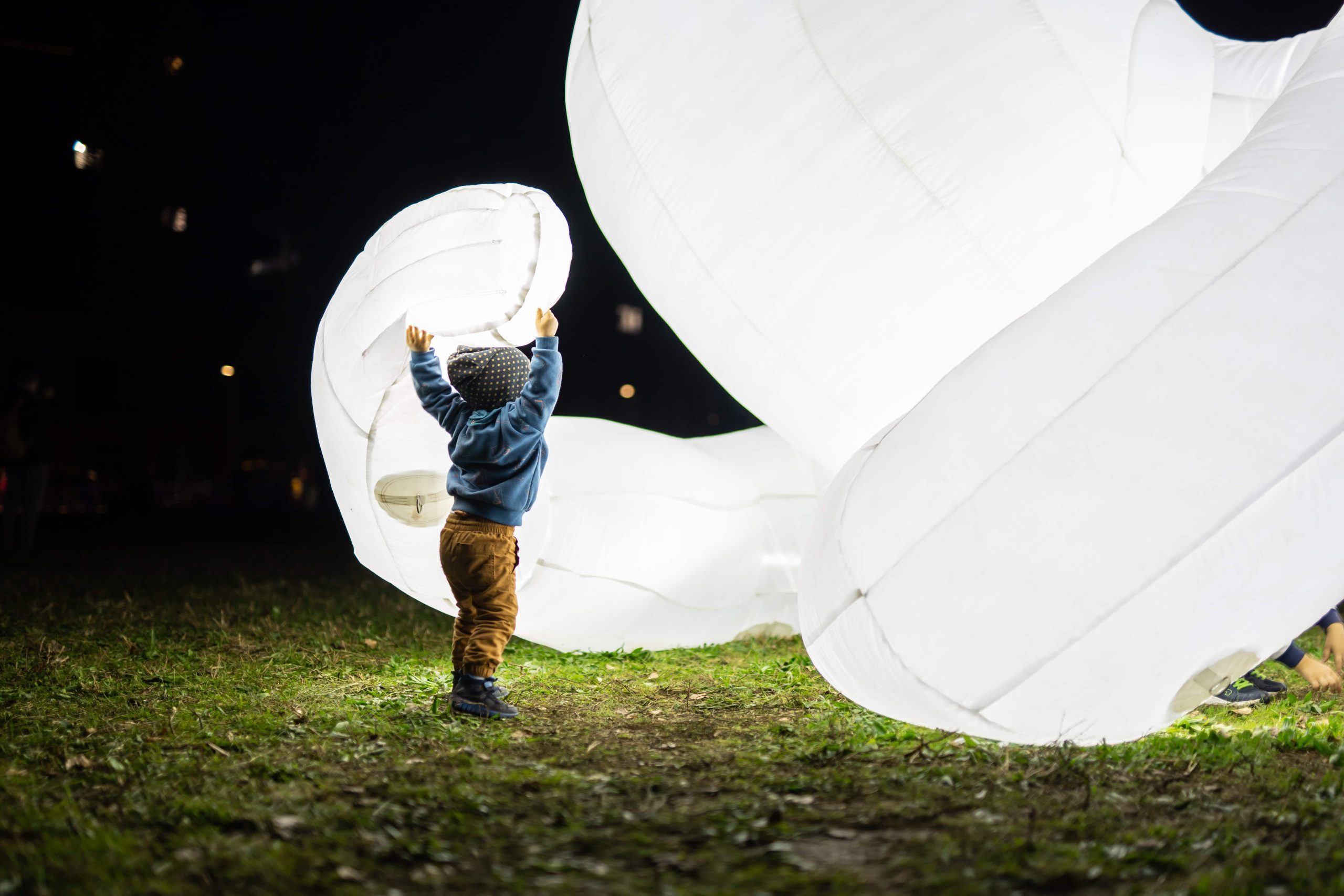
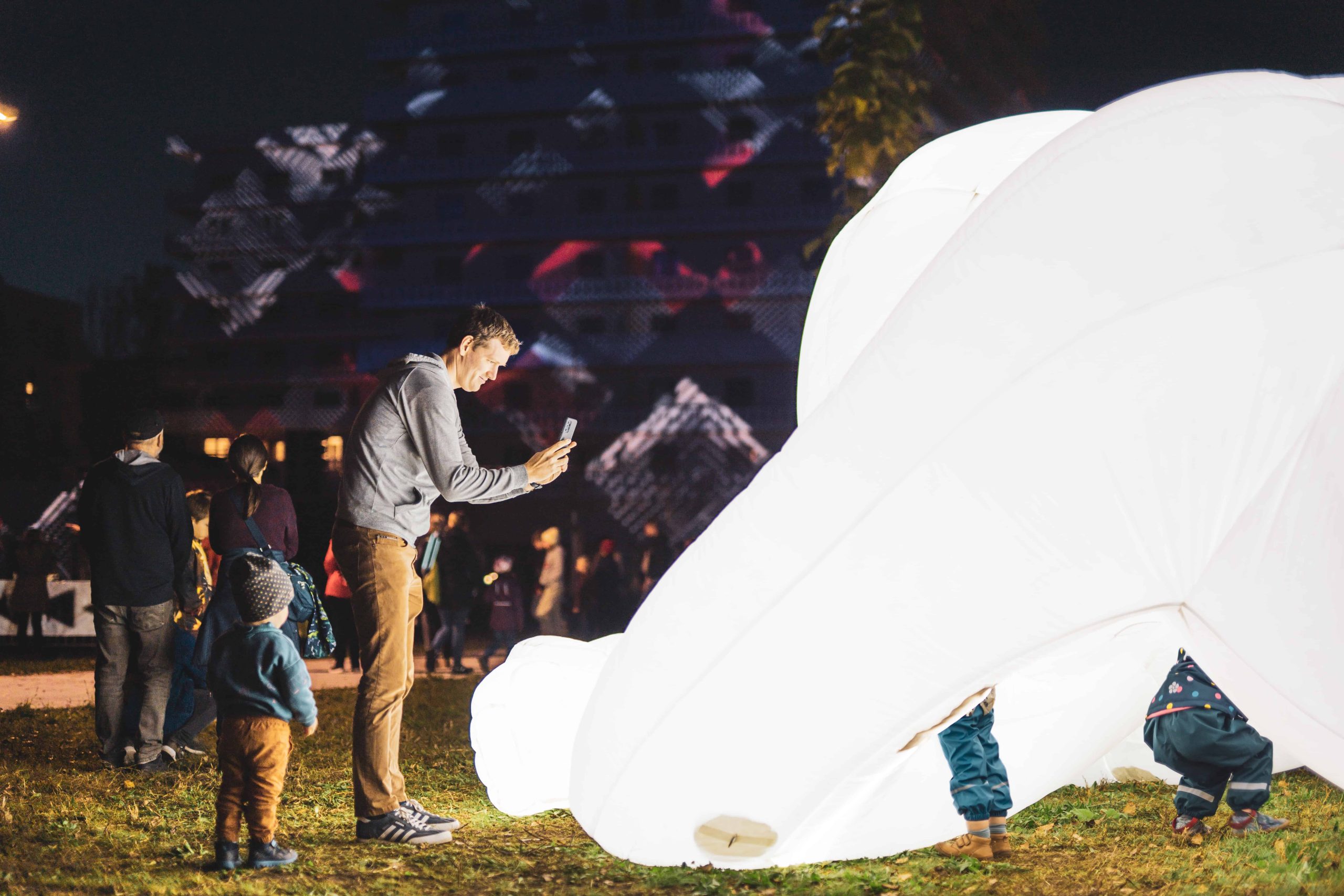
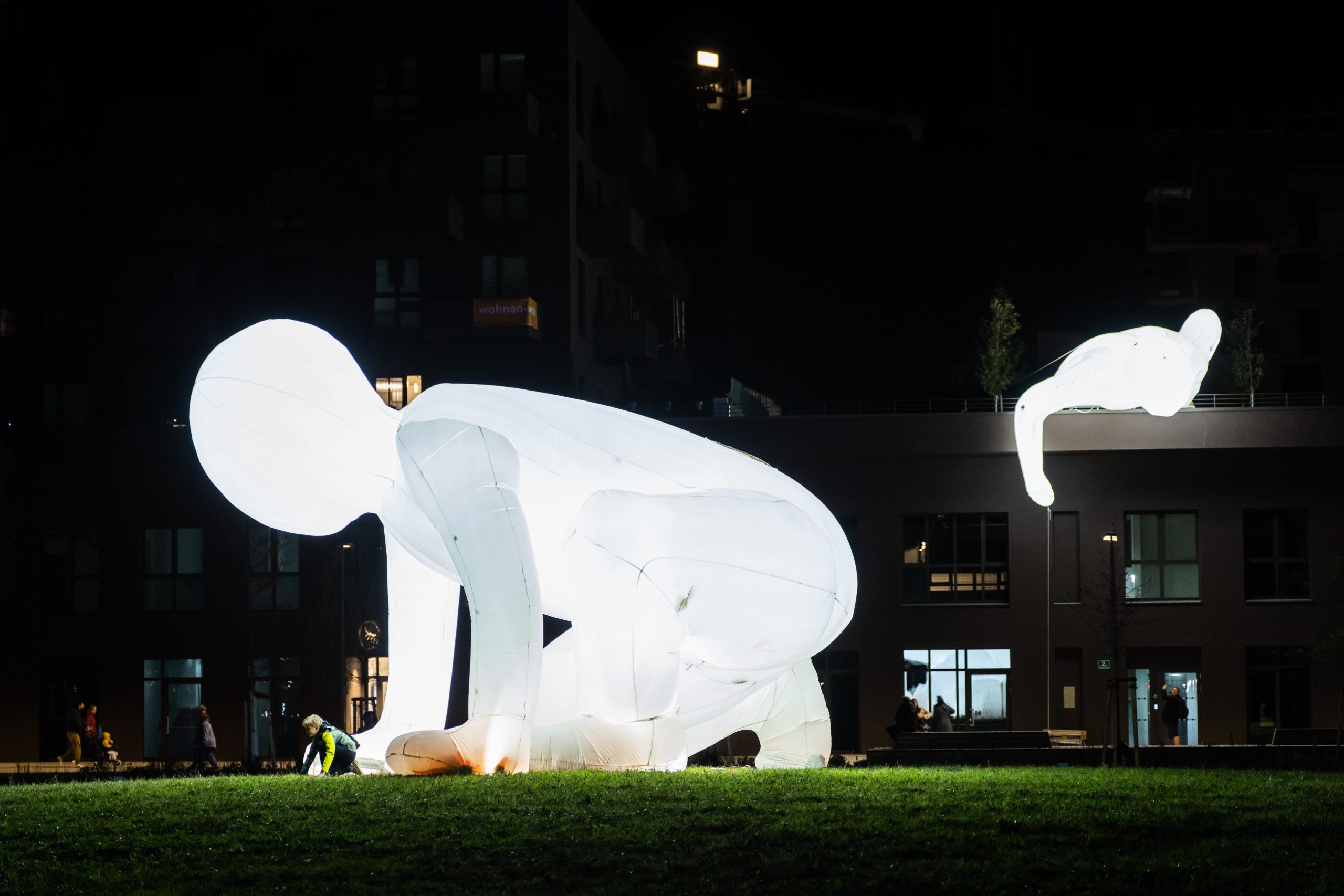
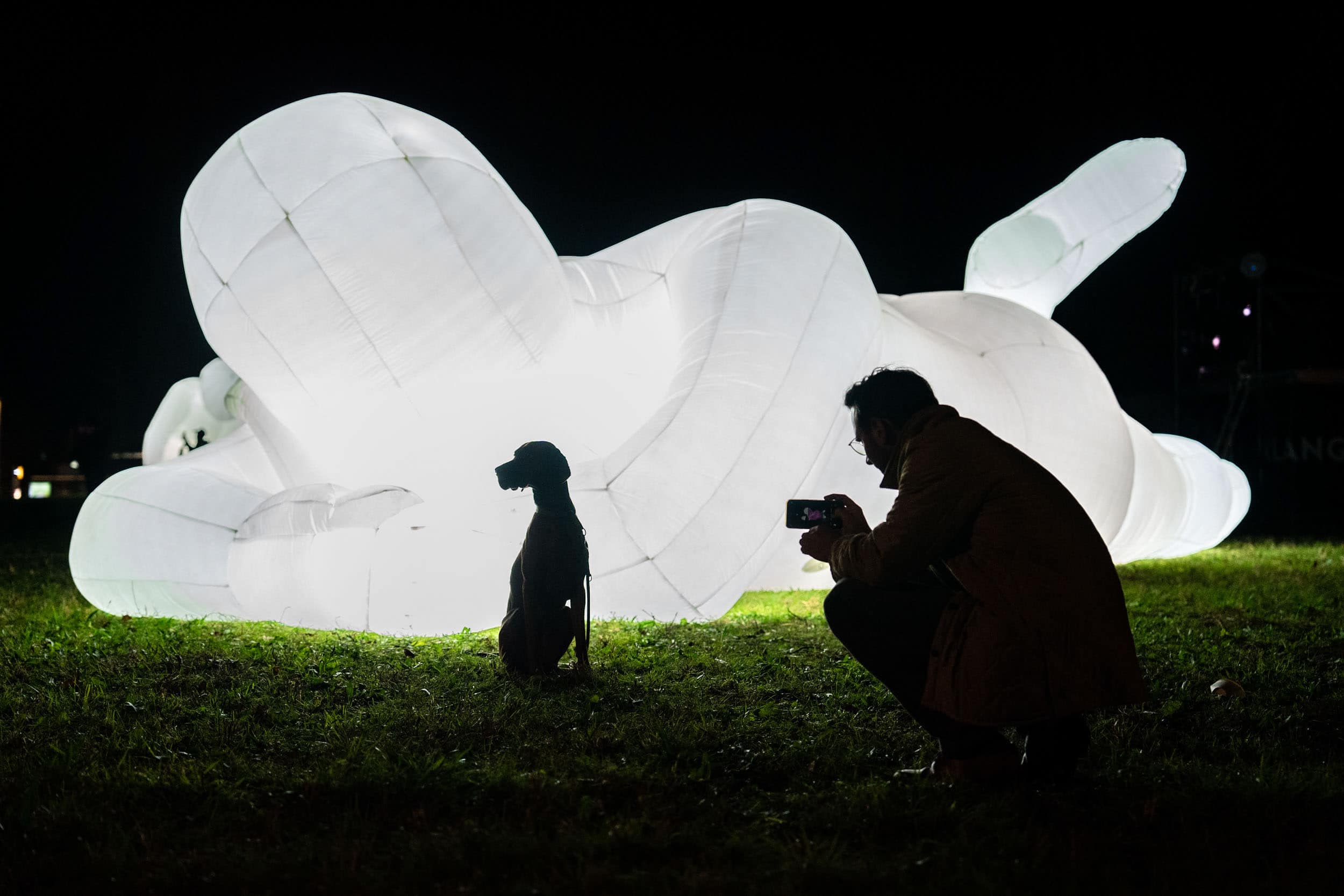
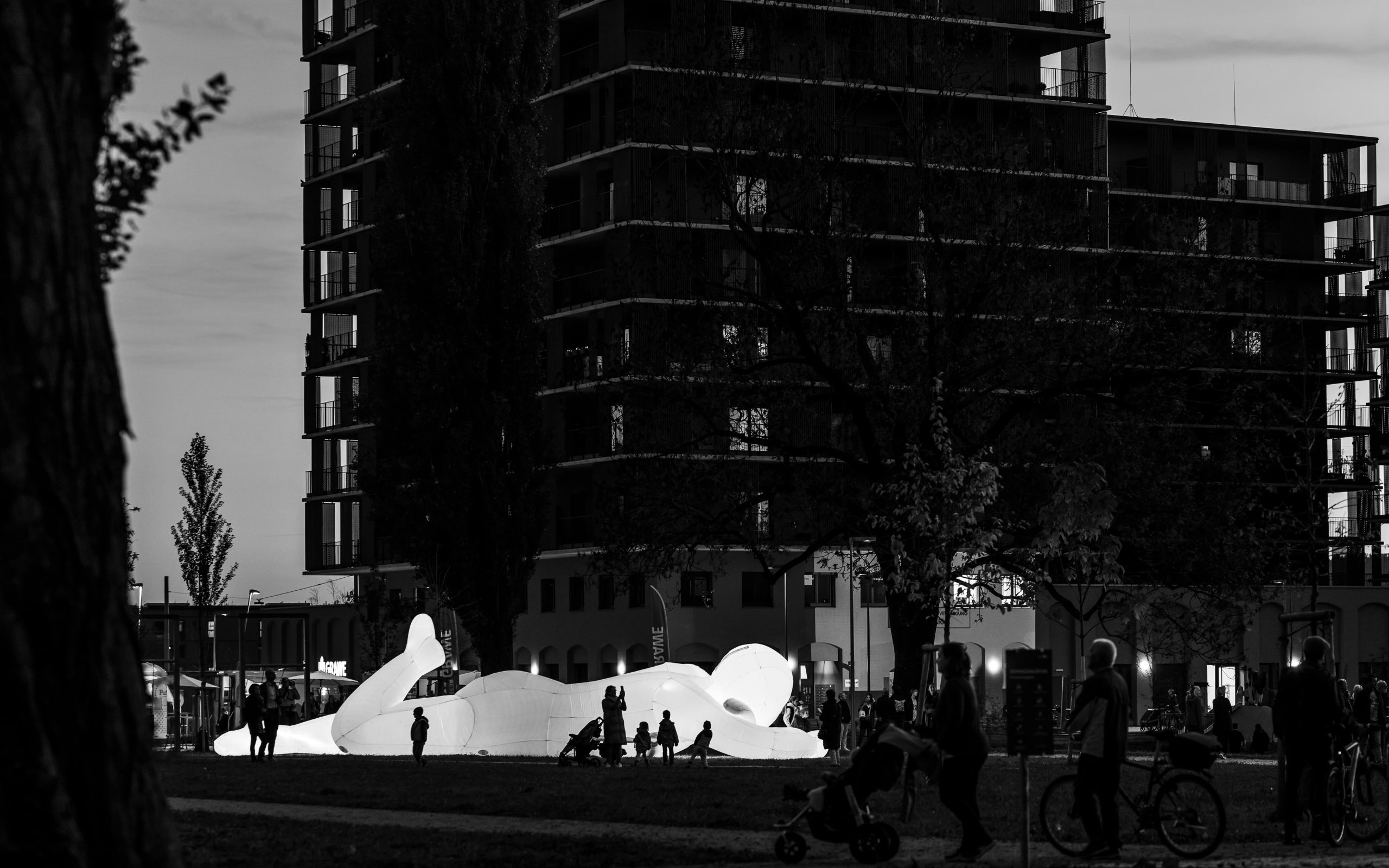
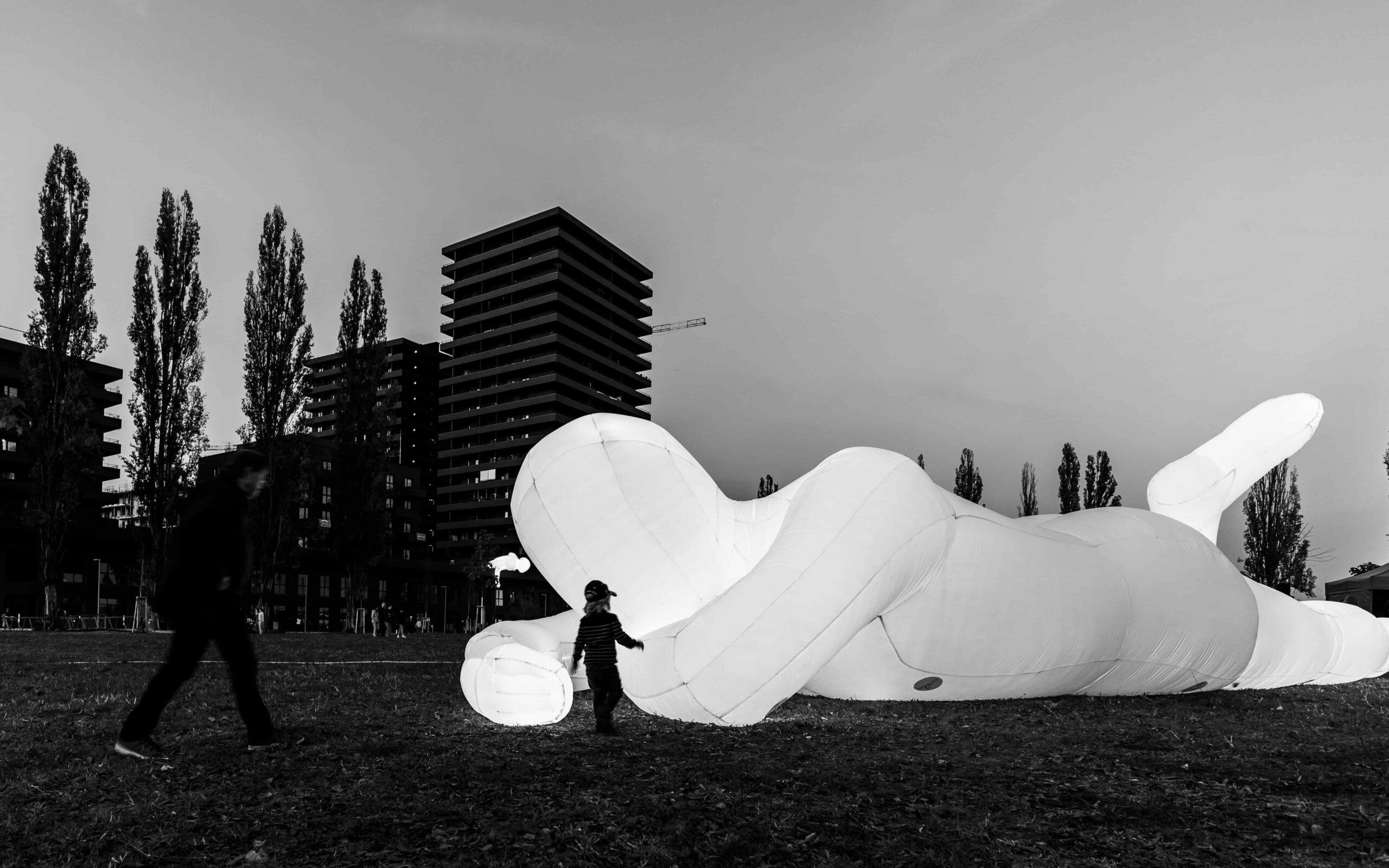
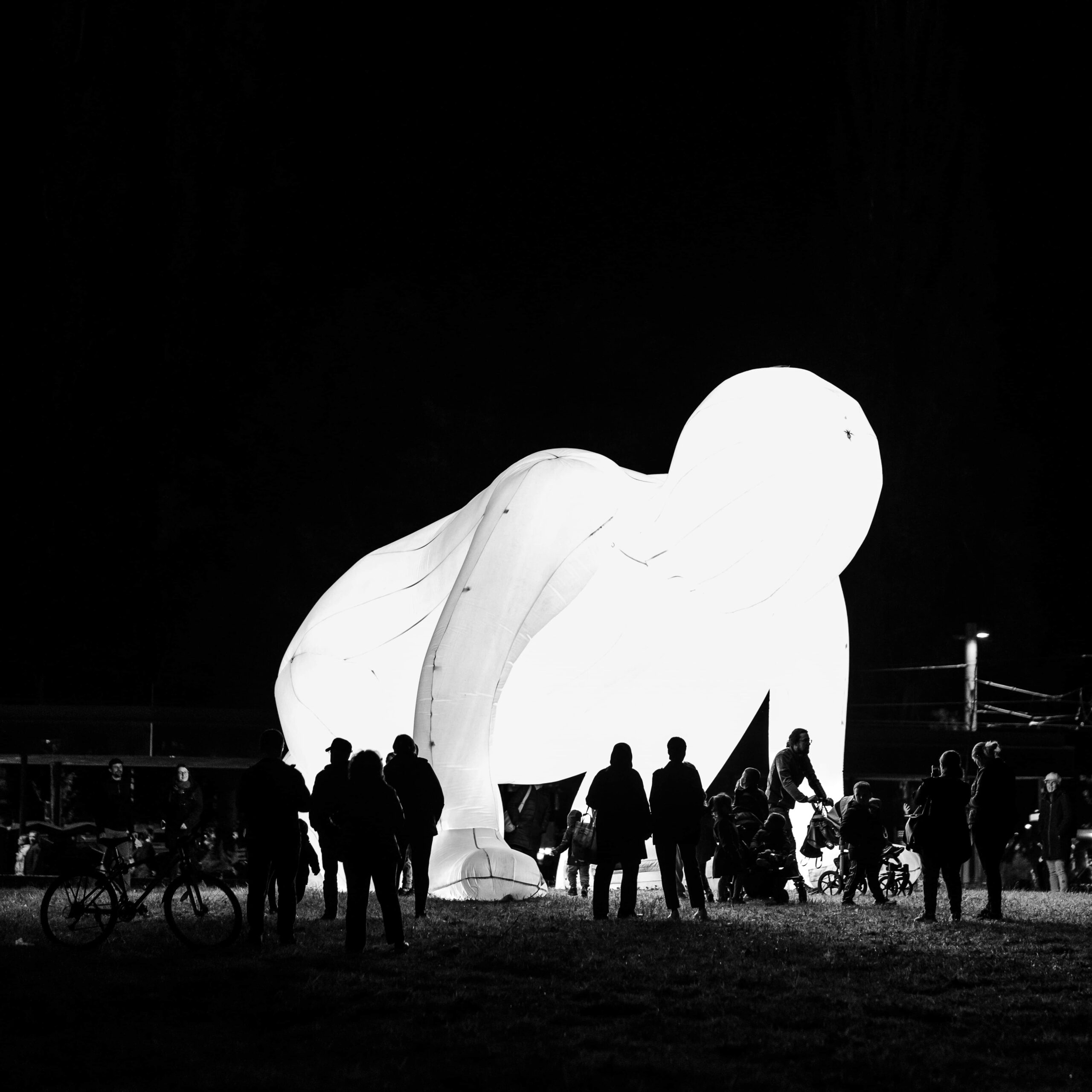
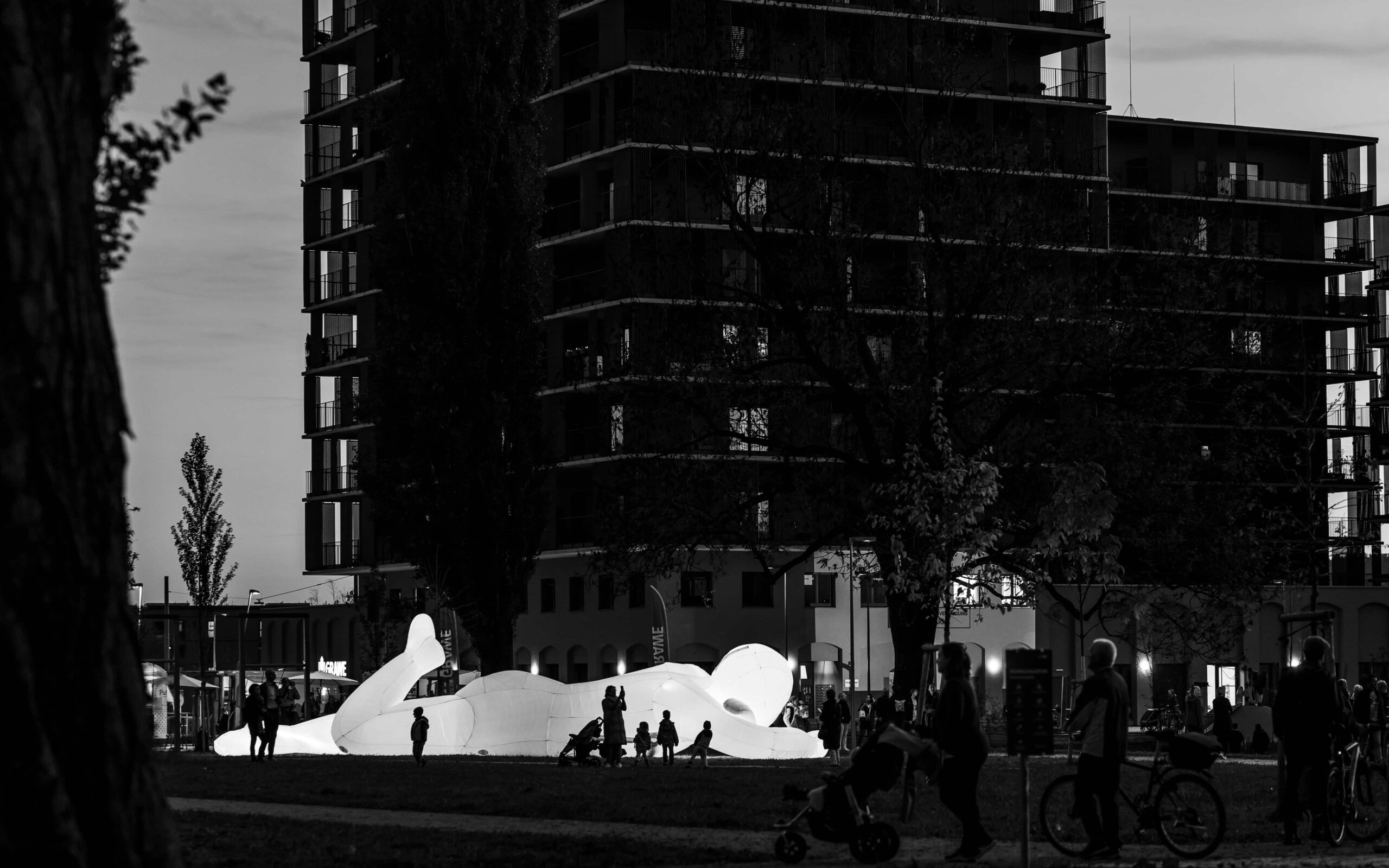
Under the collective “Parer Studios”, Amanda Parer creates objects for public spaces, sculptures and paintings that explore nature and its fragility. Oversized. Human-like. Brightly lit. This is how Amanda Parer’s designed art figures explore the Reininghausgründe and Graz’s Schlossberg during KLANGLICHT 2022. Inspired by the Czech-French film Fantastic Planet, the audience encounters these beings from a distant world. Glowing giants that quietly explore our fantastic planet. A total of three of these imposing figures made of light will be guests in Reininghaus Park, another figure will be placed on Schlossberg Graz and will point in the direction of Reininghaus.
In the Herbersteingarten and at several locations in Reininghaus.
The project is supported by Grazer Wechselseitige.
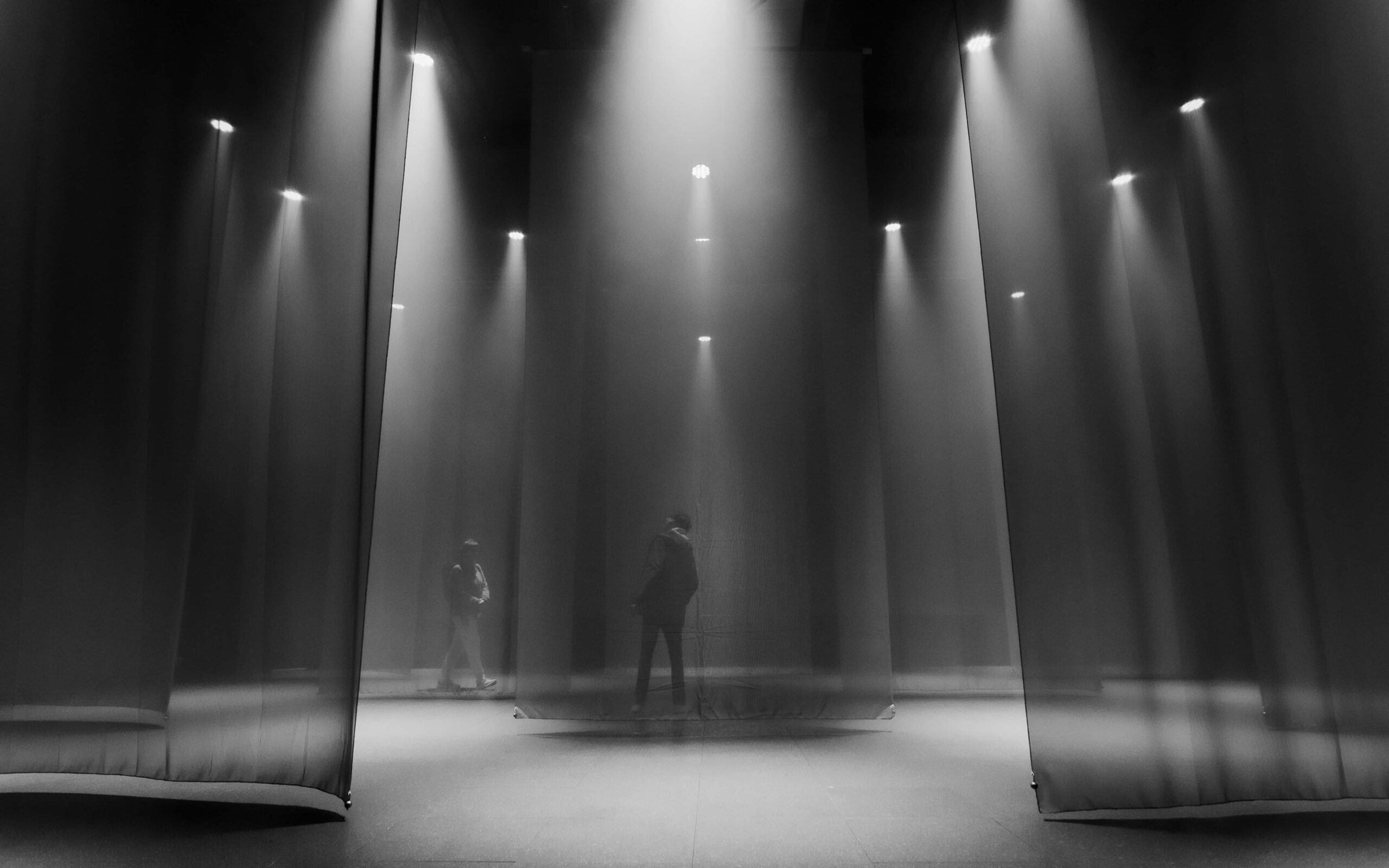
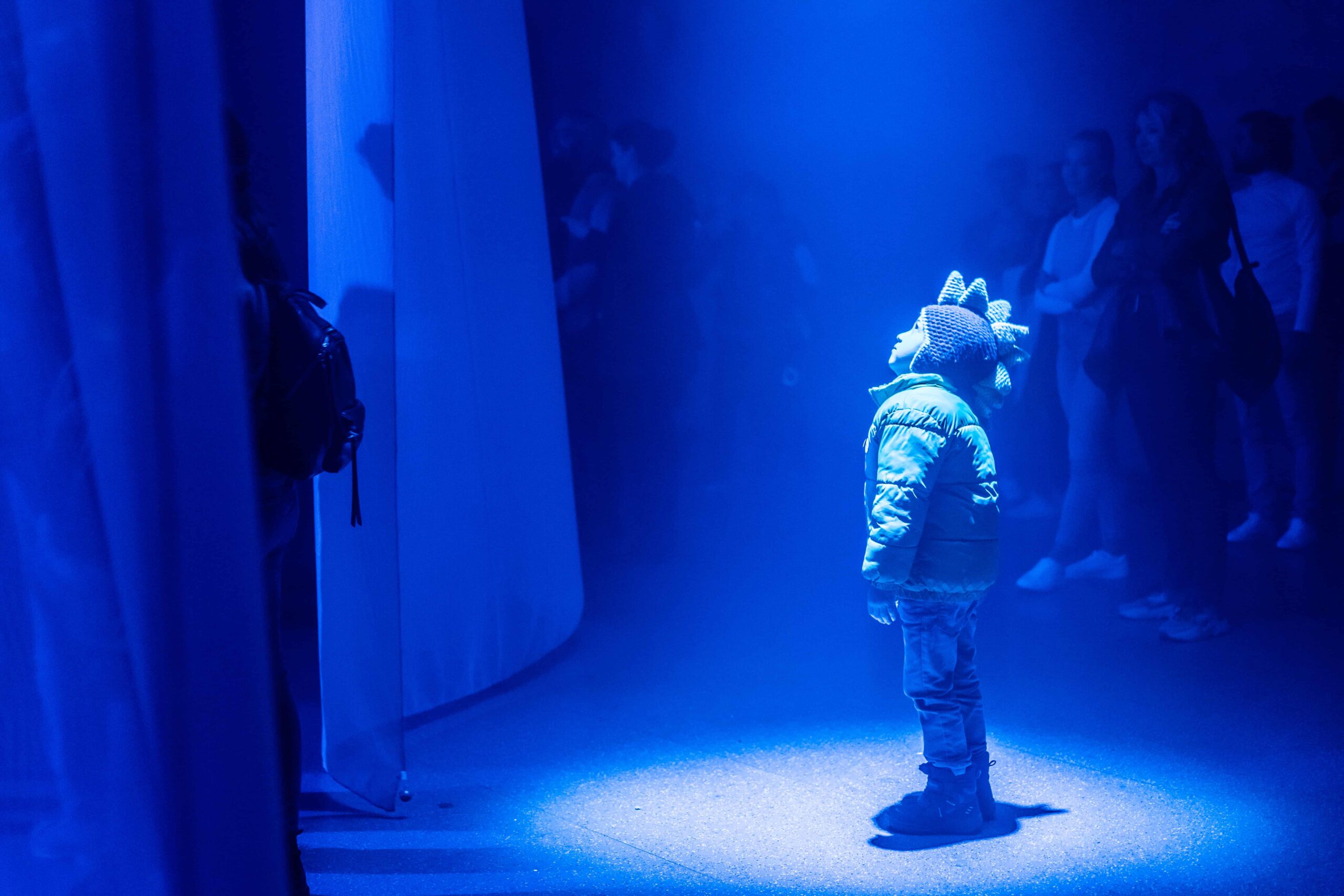
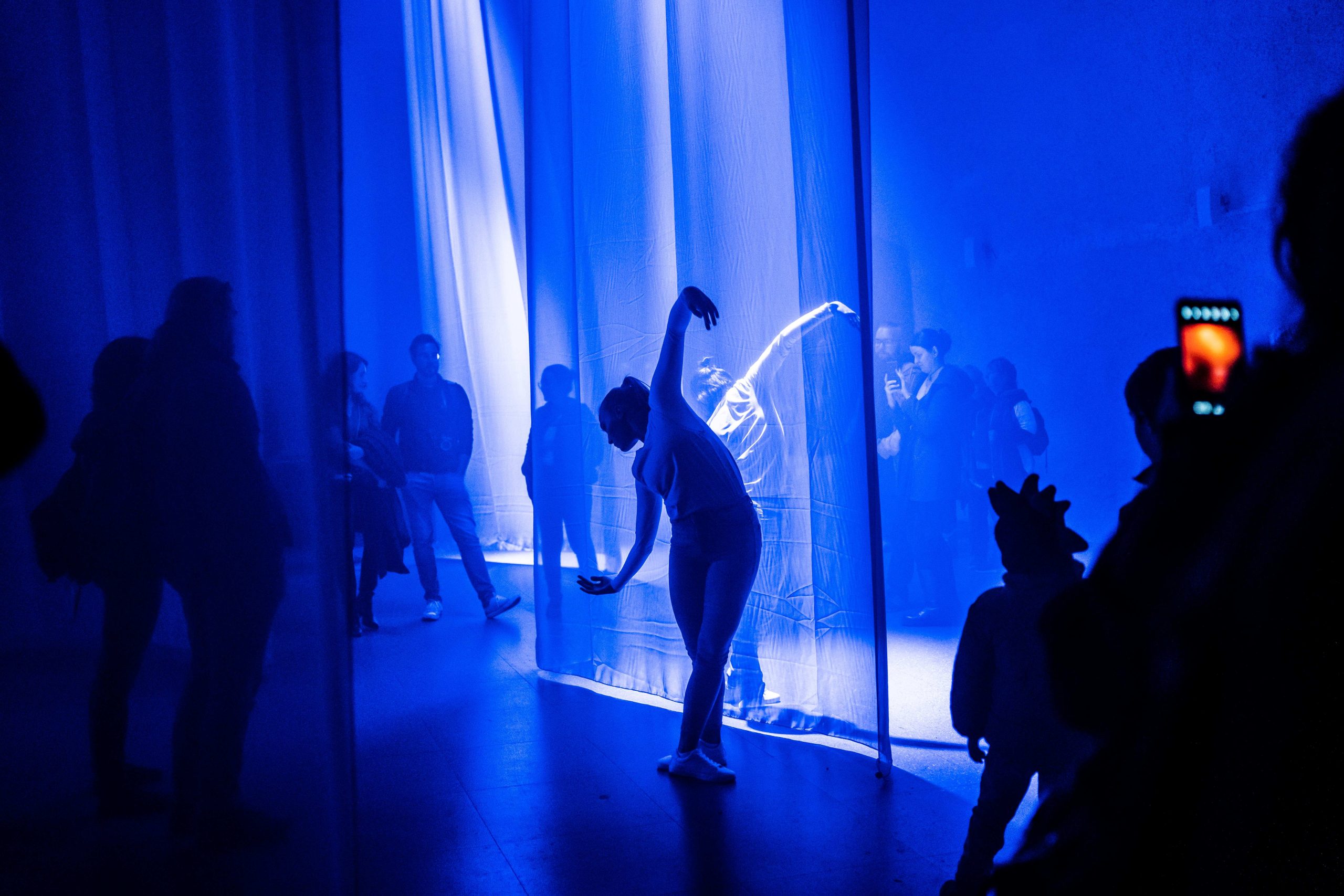
Studio Antoni Arola, Arthur Haas (Choreography)
Antoni Arola is an award-winning designer and artist from Barcelona. For him, light is the beginning of all things, light is order, without light there would be no expression, only chaos. He has therefore made light the primary tool of his work and considers it to be the most interesting, subtle, ephemeral and original material. He places his work in both a philosophical and a poetic context; aesthetics are more important to him than the use of technology.
The installation “Limbo” was preceded by the desire to build with light, to create architecture with light. The result is a stage set in which he has created spaces in which people can wander around, enter and exit, with the viewer himself becoming an actor in the play. The “limbo” is defined as an intermediate stage. In this limbo, you enter a scene, a stage, and find yourself in a sequence of scenes that are controlled and directed by light and sound. Multiple spaces are created, a transparent labyrinth that is in constant transformation, a dreamlike space in which “real” perception takes a back seat.
Four dancers complement the scenery: Bruna Diniz Afonso, Elsa Kurz, Samuel Kirschner and Xianghui Zeng dance in a choreography by Arthur Haas, reinforcing the poetic impression and thus creating further aspects of perception.
Credits
Concept & realization: Estudi Antoni Arola
A co-production with: Llum BCN
Sound Design: Mans O
Production: Light Lumin Tecnoradio
Choreography: Arthur Haas
Dancers: Bruna Diniz Afonso, Elsa Kurz, Samuel Kirschner, Xhianghui Zeng
Technical realization: grafx live-marketing, Grazer Spielstätten
Location: Dom im Berg
The project is supported by Kronen Zeitung.
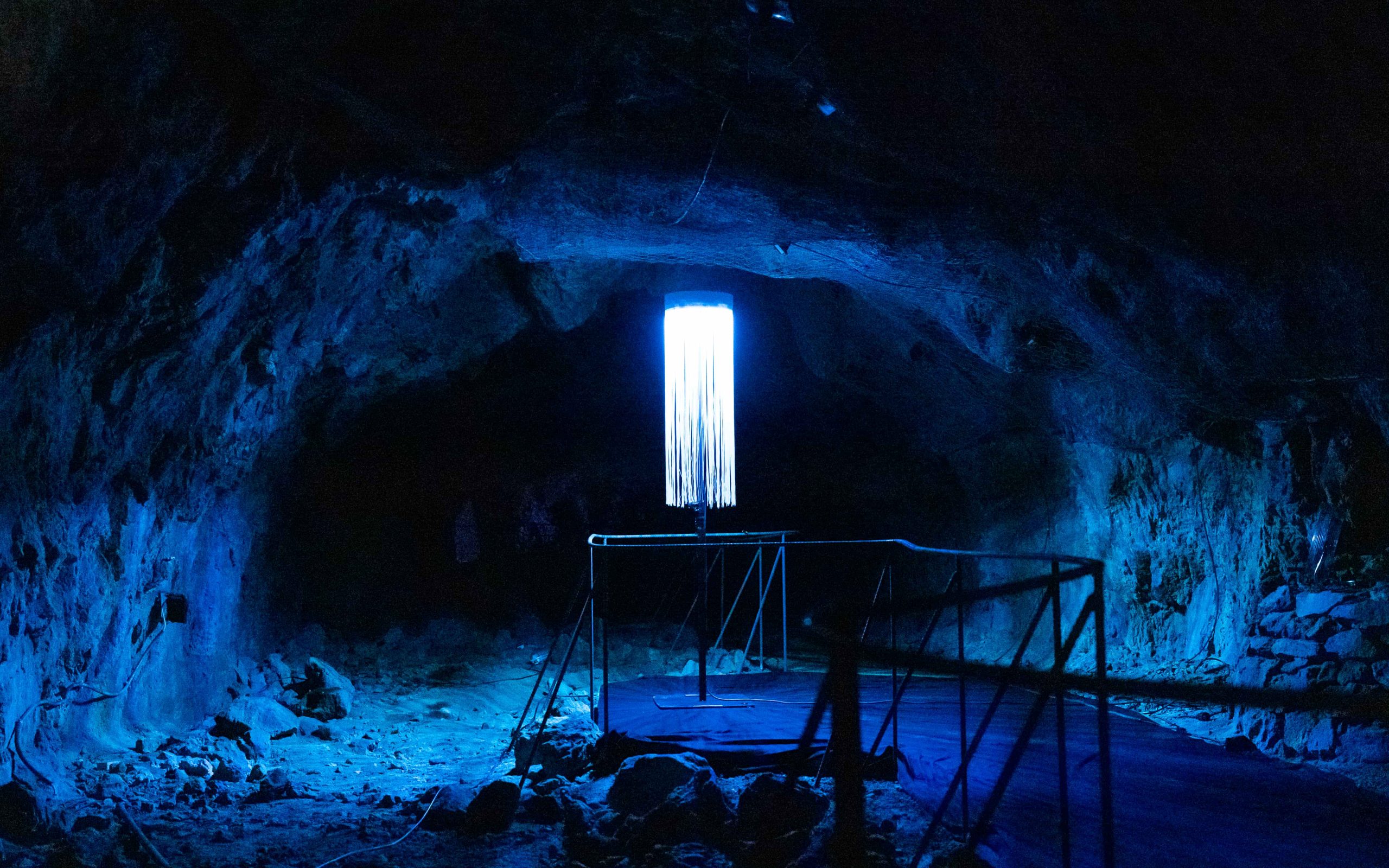
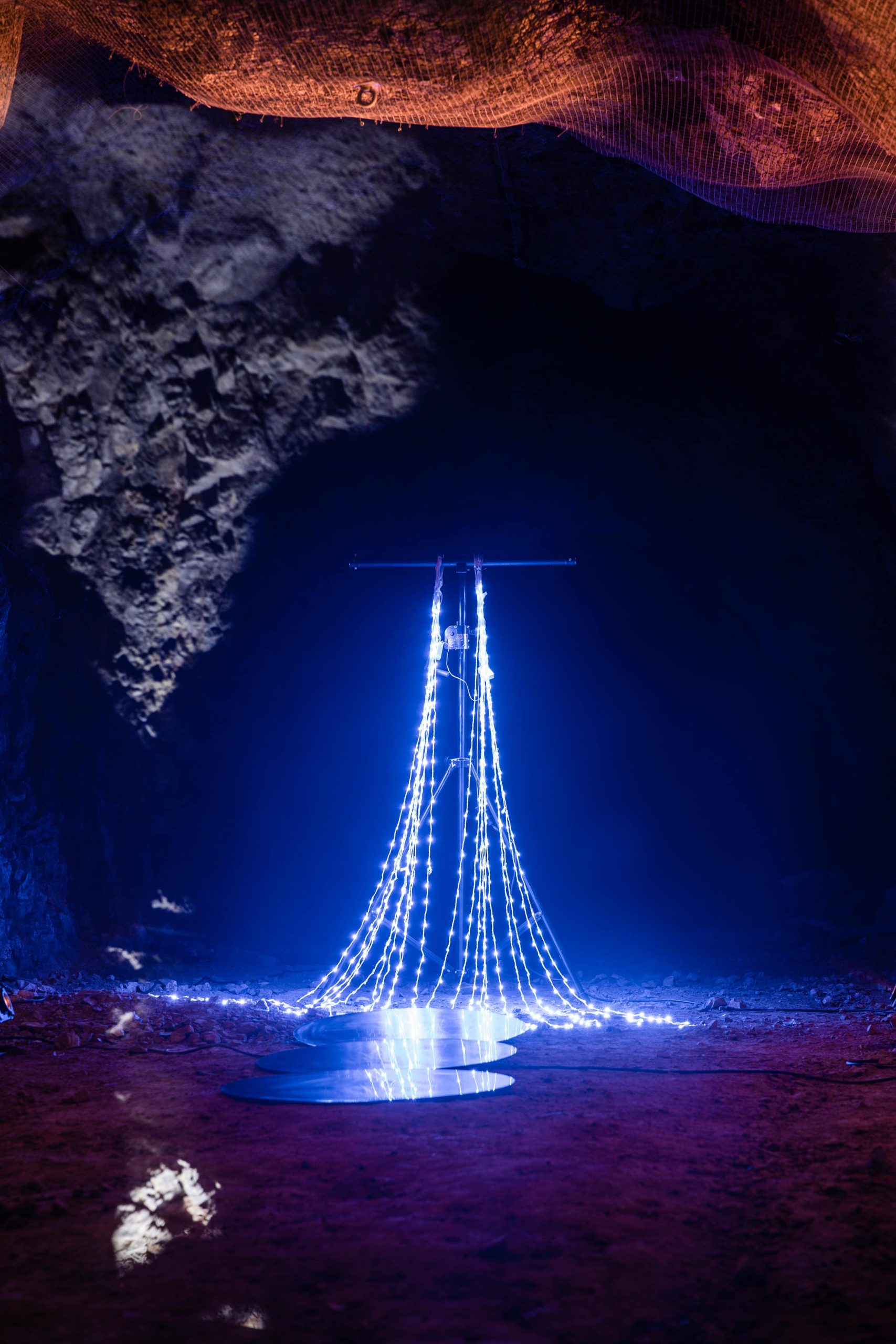
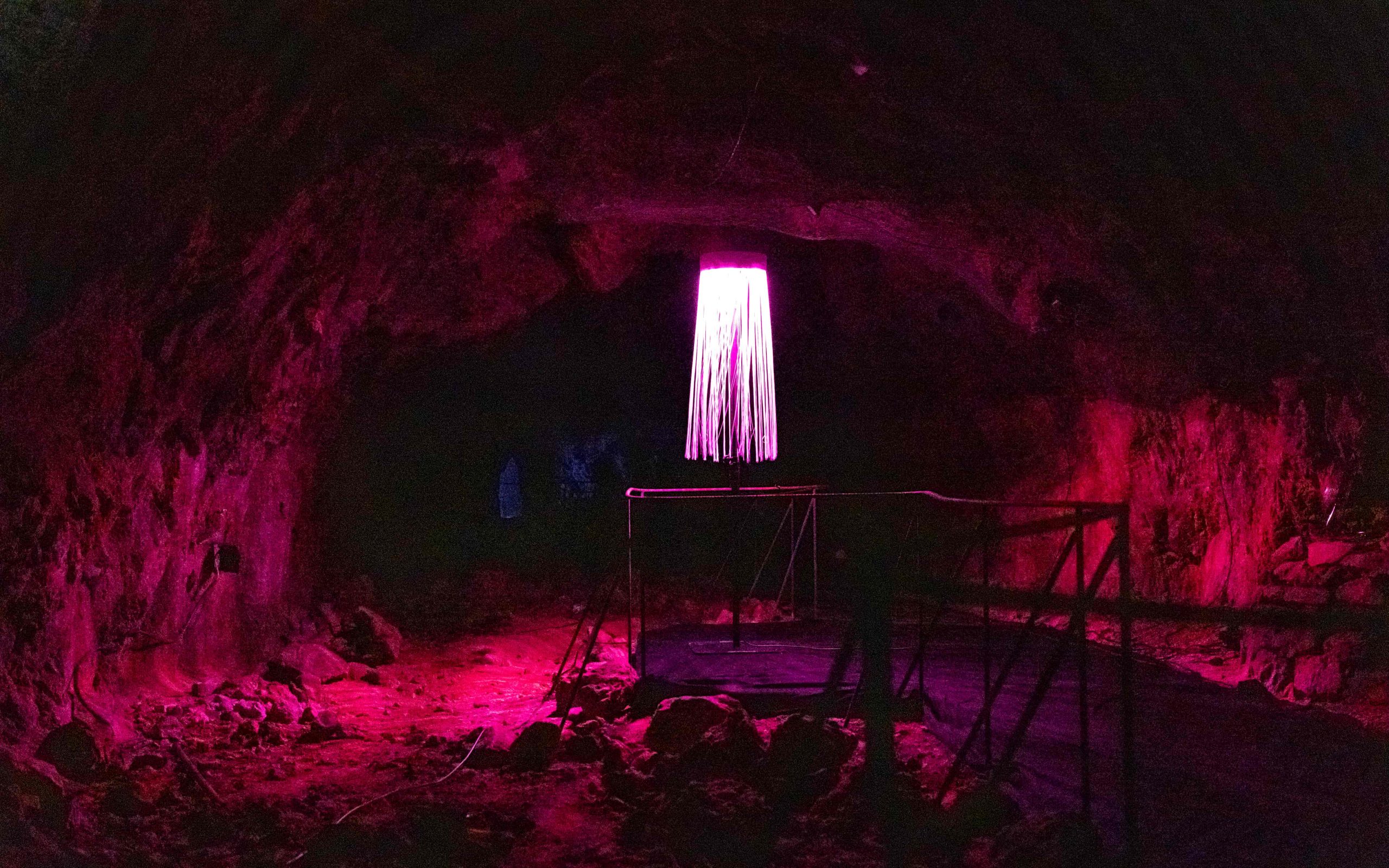
For KLANGLICHT 2022, Miriam Prantl explores Plato’s cave allegory in nine stations in the side caves of the Schlossberg tunnel. “The eyes themselves do not see; it is through our eyes that we see,” writes Plato in his “Politeía”. Based on this, it deals with glare, clearing, passion of light, illumination, twilight, tail light, modulated light, calibrated light and deconstructed light.
Location: Schlossbergstollen
This project is supported by IV Steiermark.
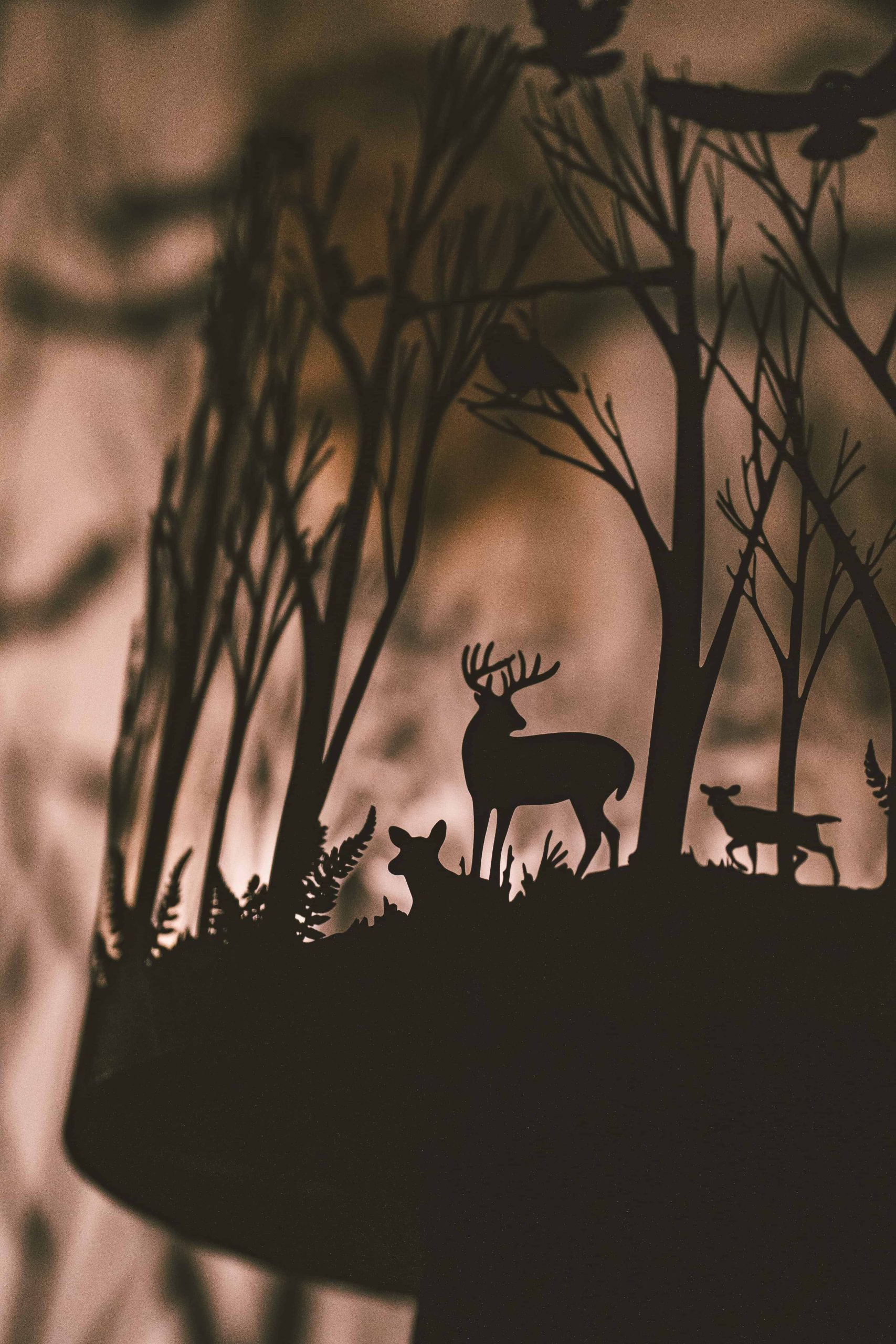
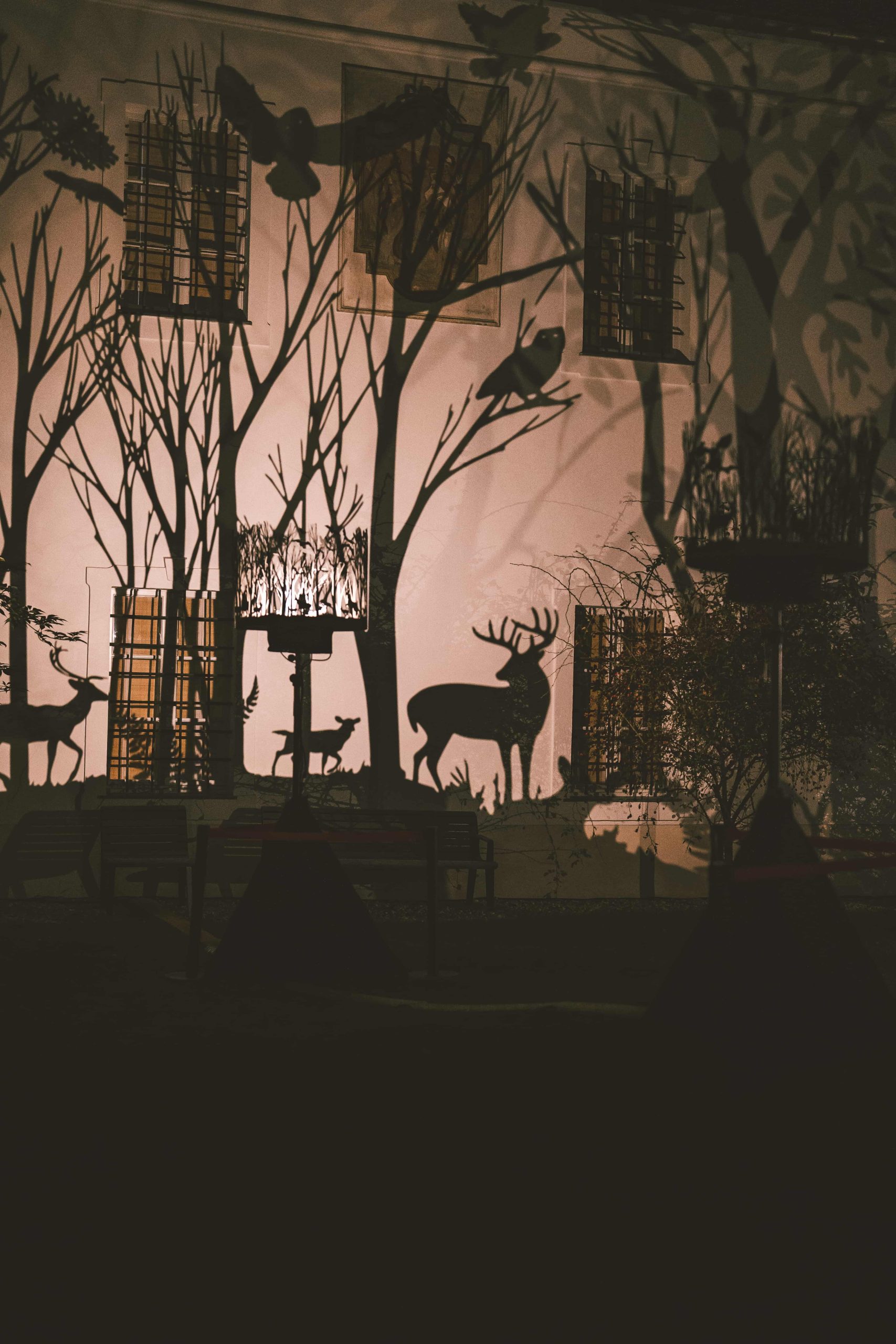
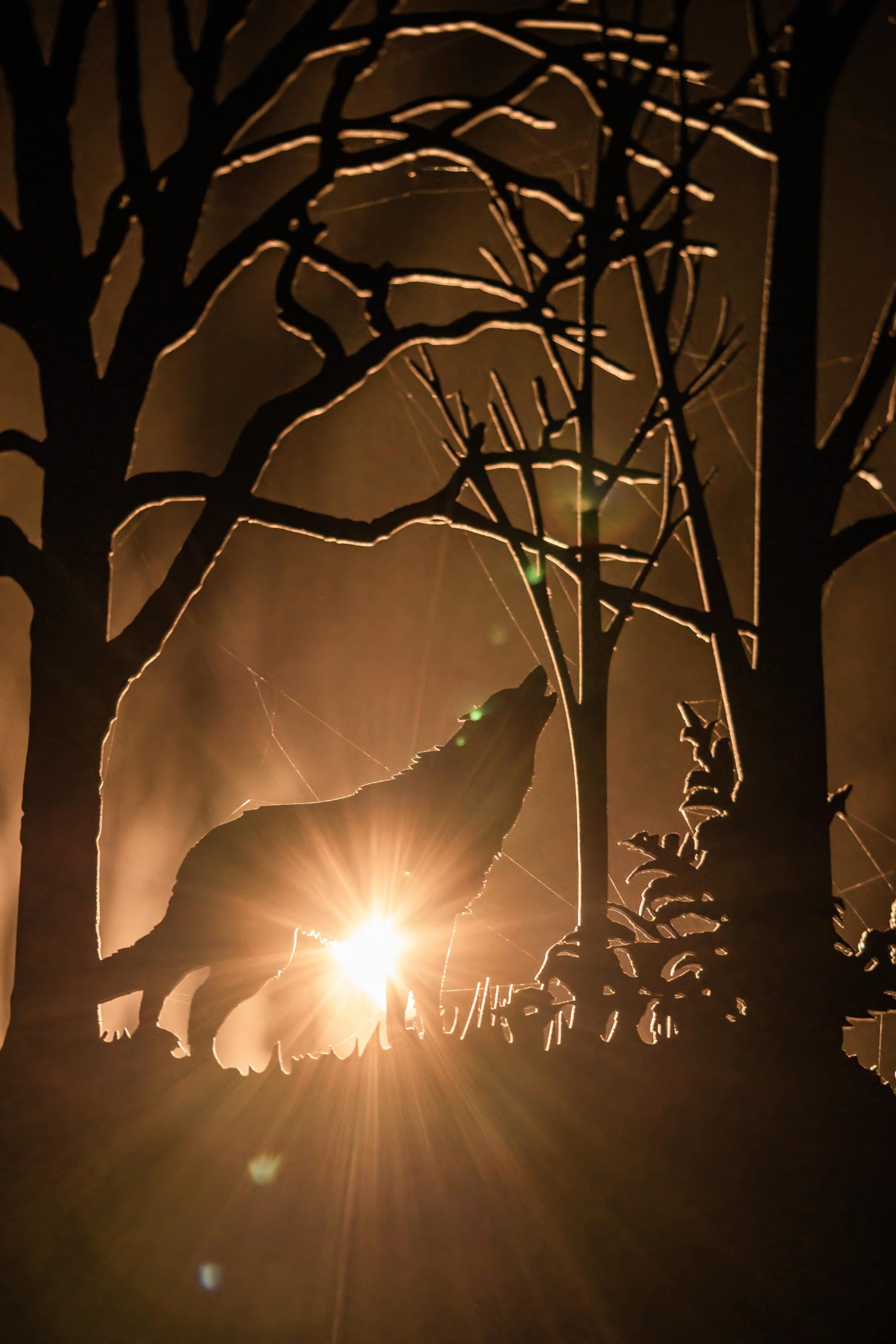
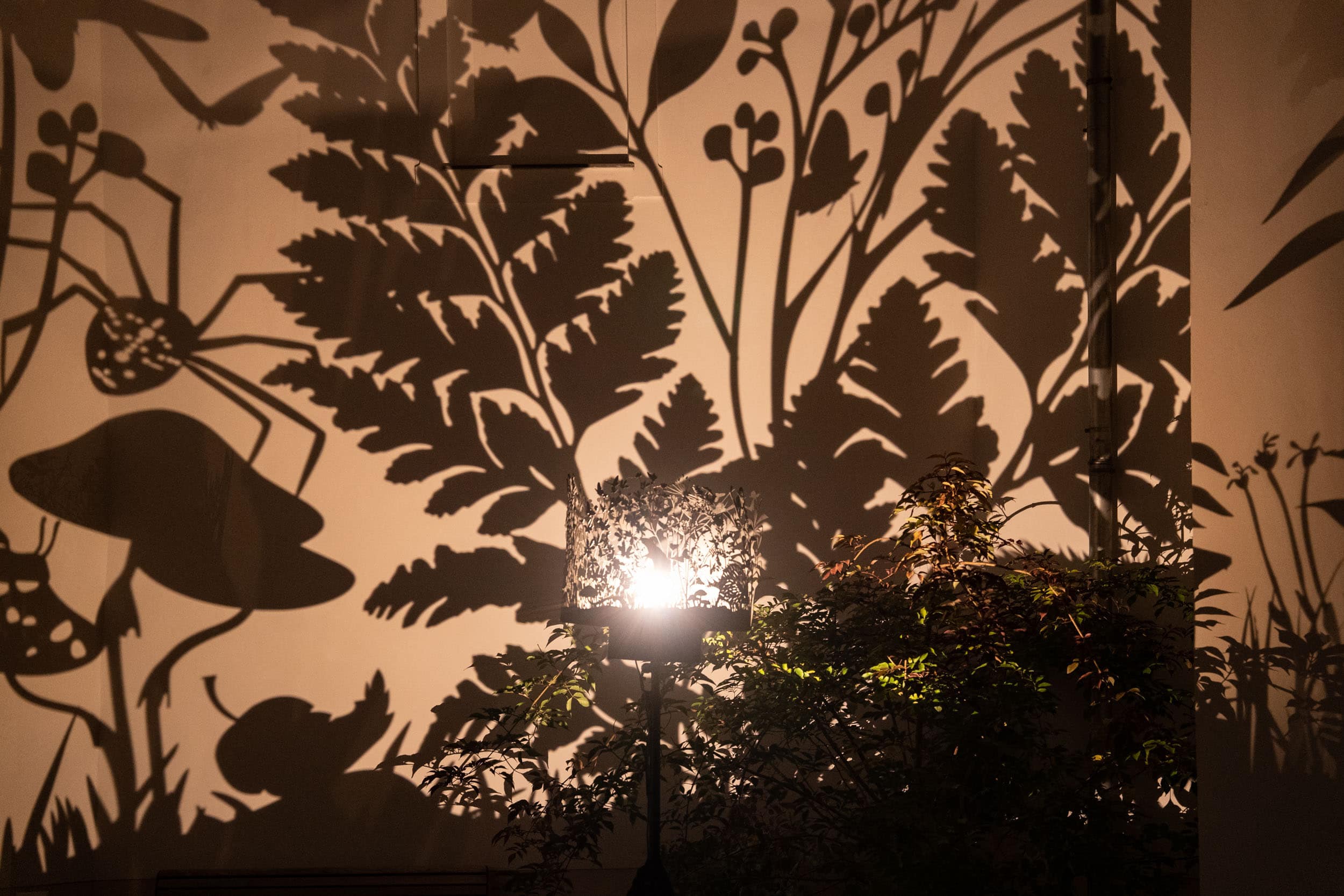
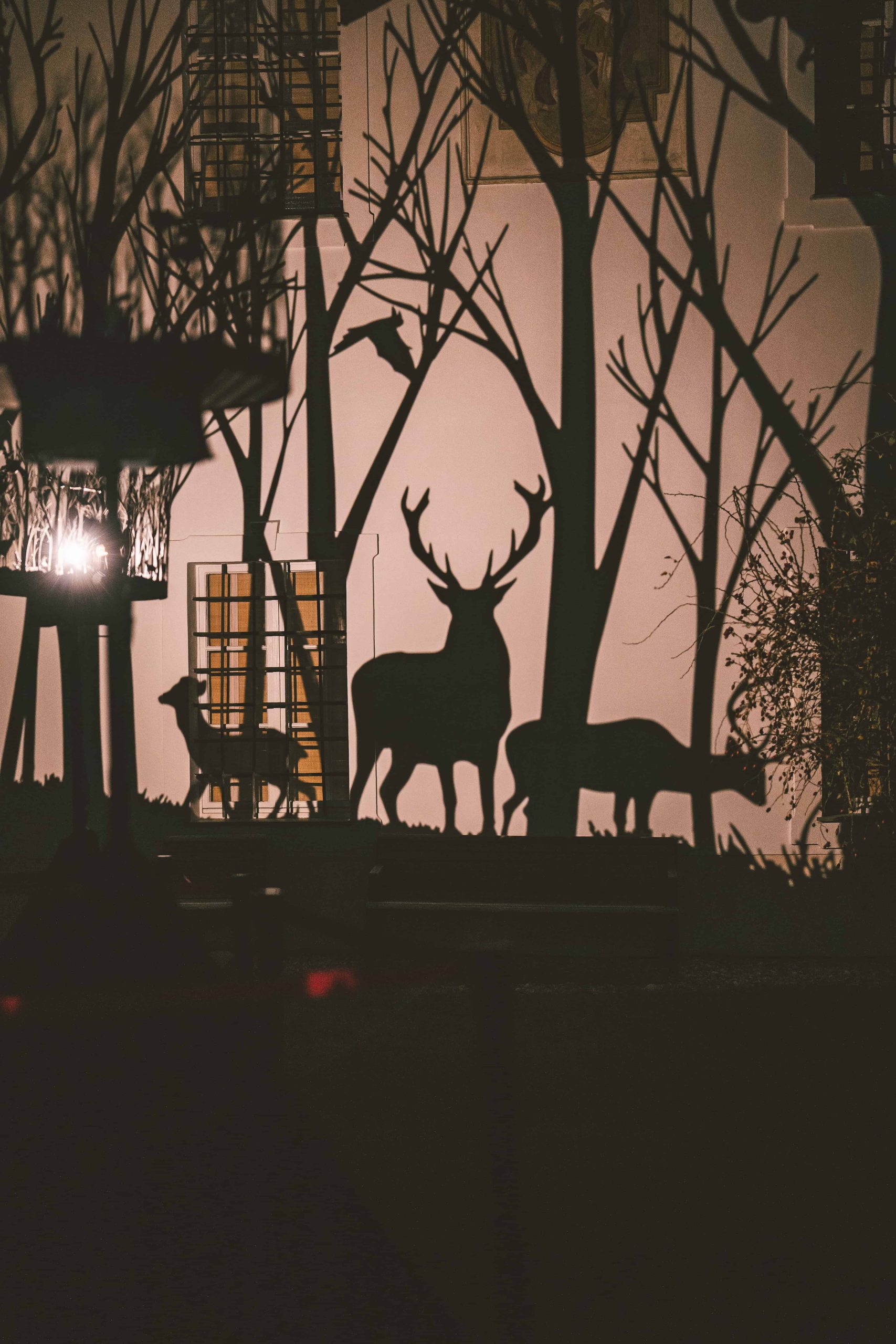
Julia Dantonnet (lighting design), Shantidas Riedacker (sound)
In cooperation with the Volkskundemuseum am Paulustor
A landscape of light and shadow unfolds in the inner courtyard of the Folklore Museum, animated silhouettes dance across the façades: Nocturnal animals, deer, owls and foxes emerge from a mysterious forest. The symbolism of the forest, specific to myths and stories, appeals to our collective imagination to connect us with untamed nature.
Location: Folklore Museum at Paulustor
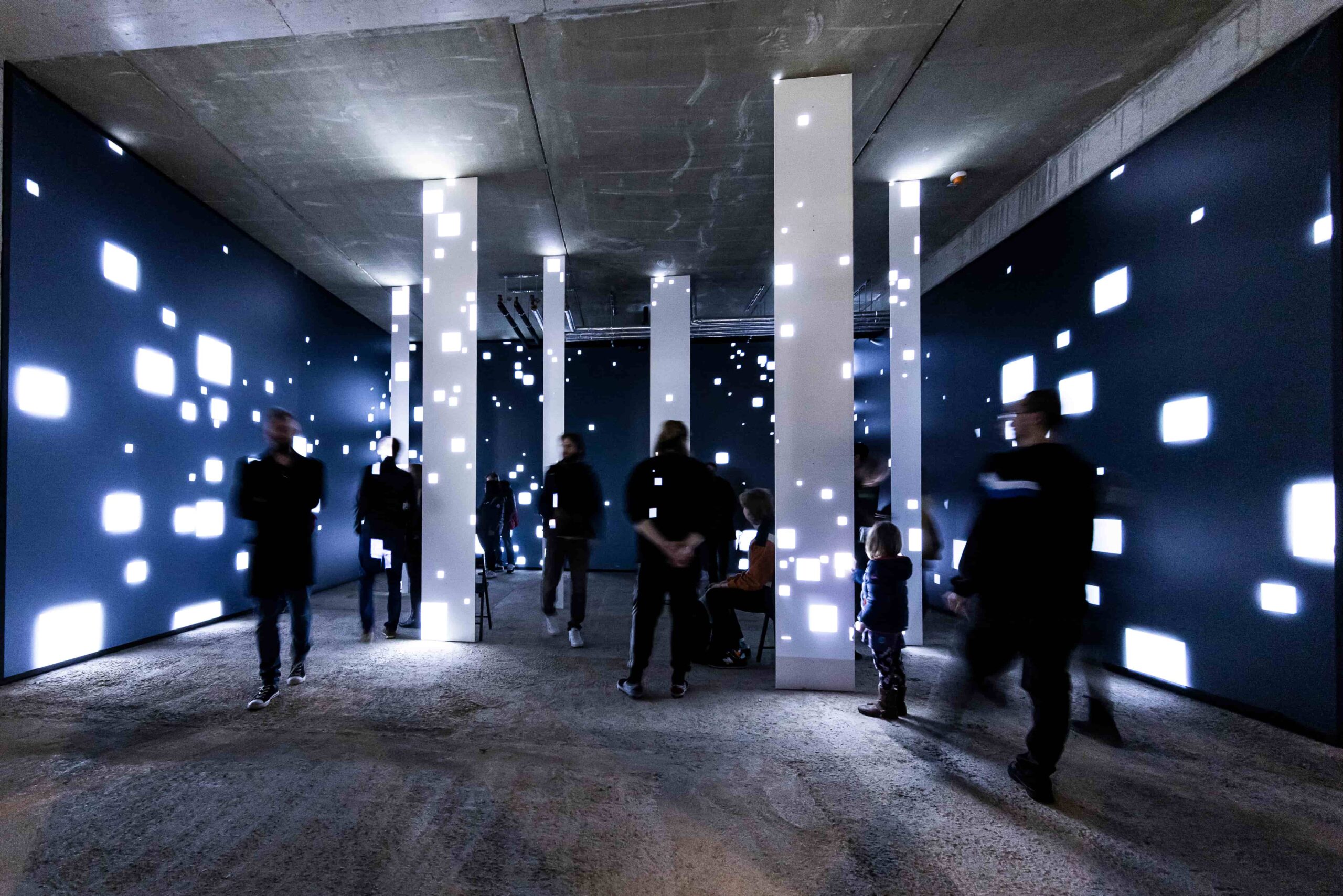
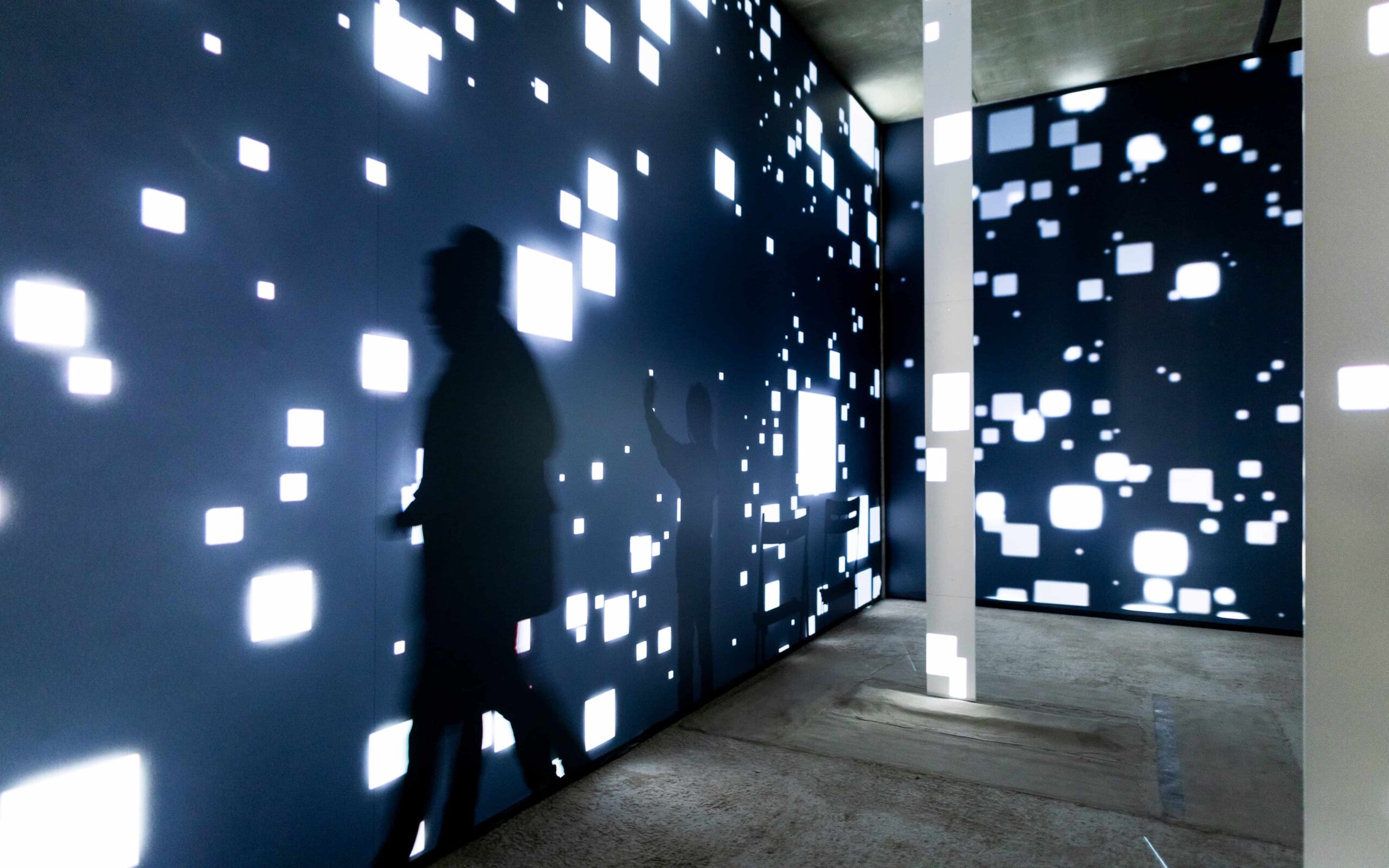
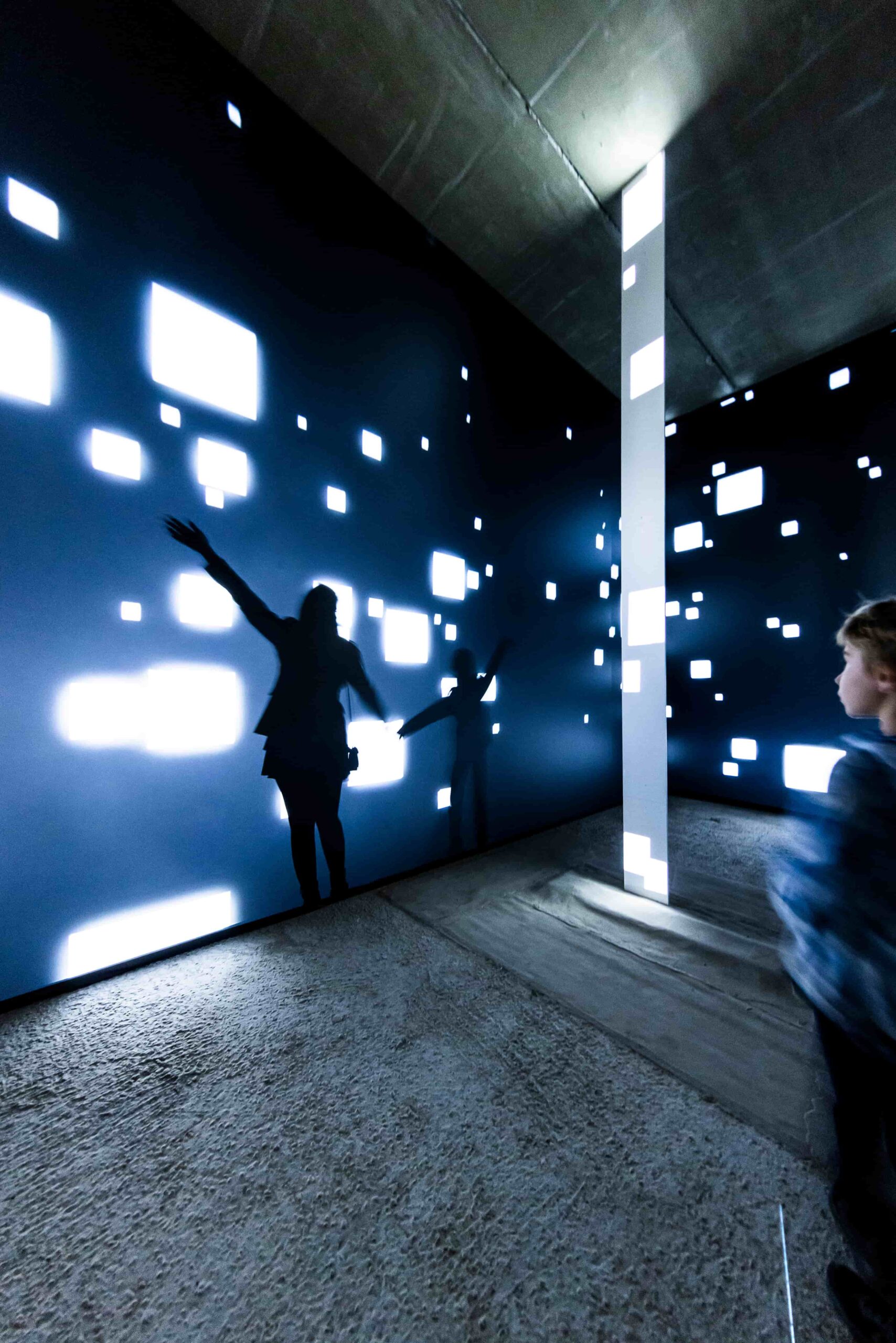
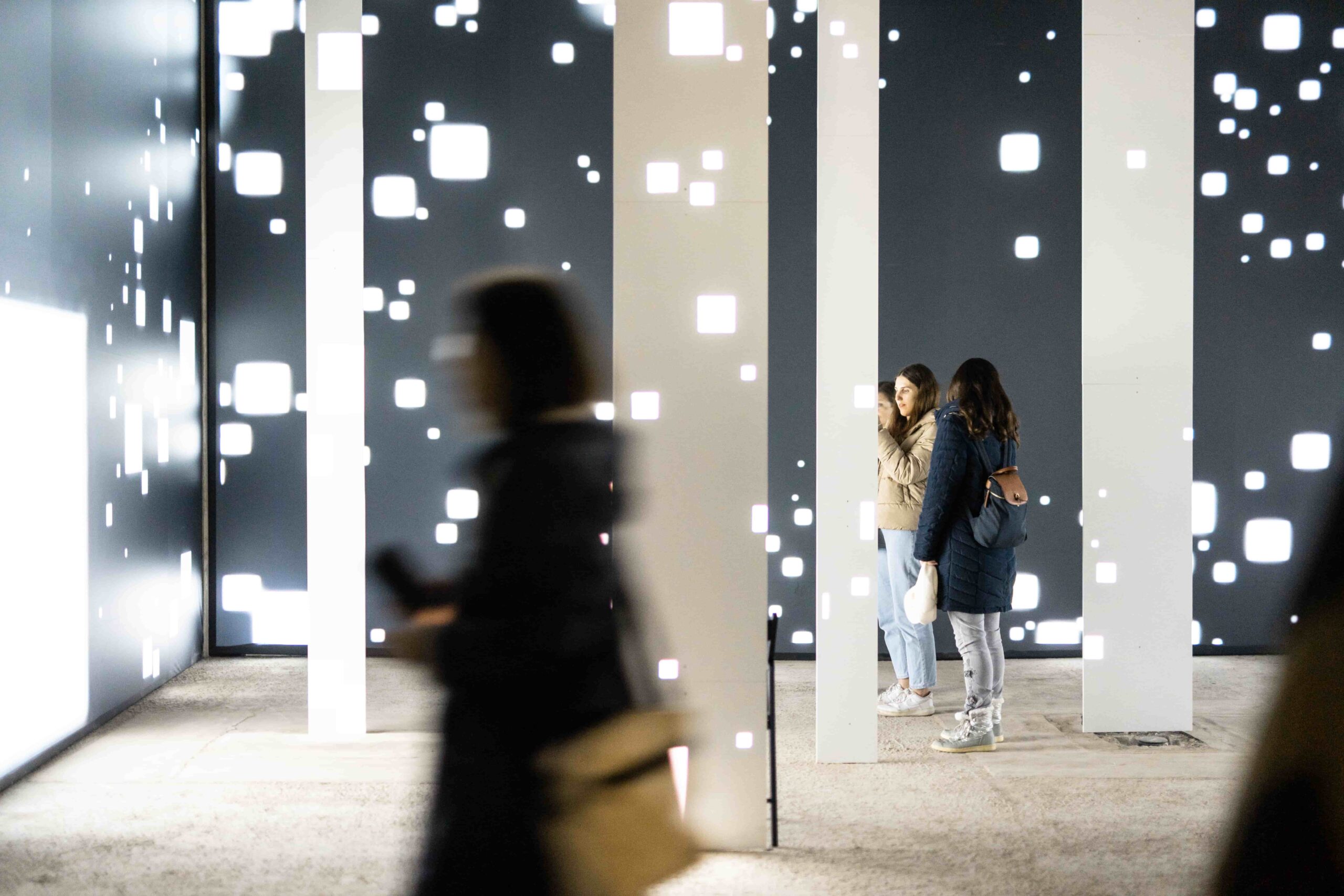
In her artistic work, Esther Stocker uses geometric drawing and grid systems to change space and architecture, creating dynamic pictorial spaces that lose their supposed pattern of order. “I need the grid or the order,” says the artist, “in order to be able to describe a deviation from it in the first place. Systemlessness can only be described by systems, it is part of the system. There is always a kind of order behind chaos.”
For KLANGLICHT 2022, the multi-award-winning artist will be exploring light for the first time: In her original installation for KLANGLICHT, the three-dimensional space becomes a pictorial space; Esther Stocker transfers the mental experience of entering a picture into the real space. The viewer stands in the middle of the picture as they walk through it and can experience the space again and again through movement.
Location: Reininghauspark, Mirror Tower
This project is supported by ÖSW.
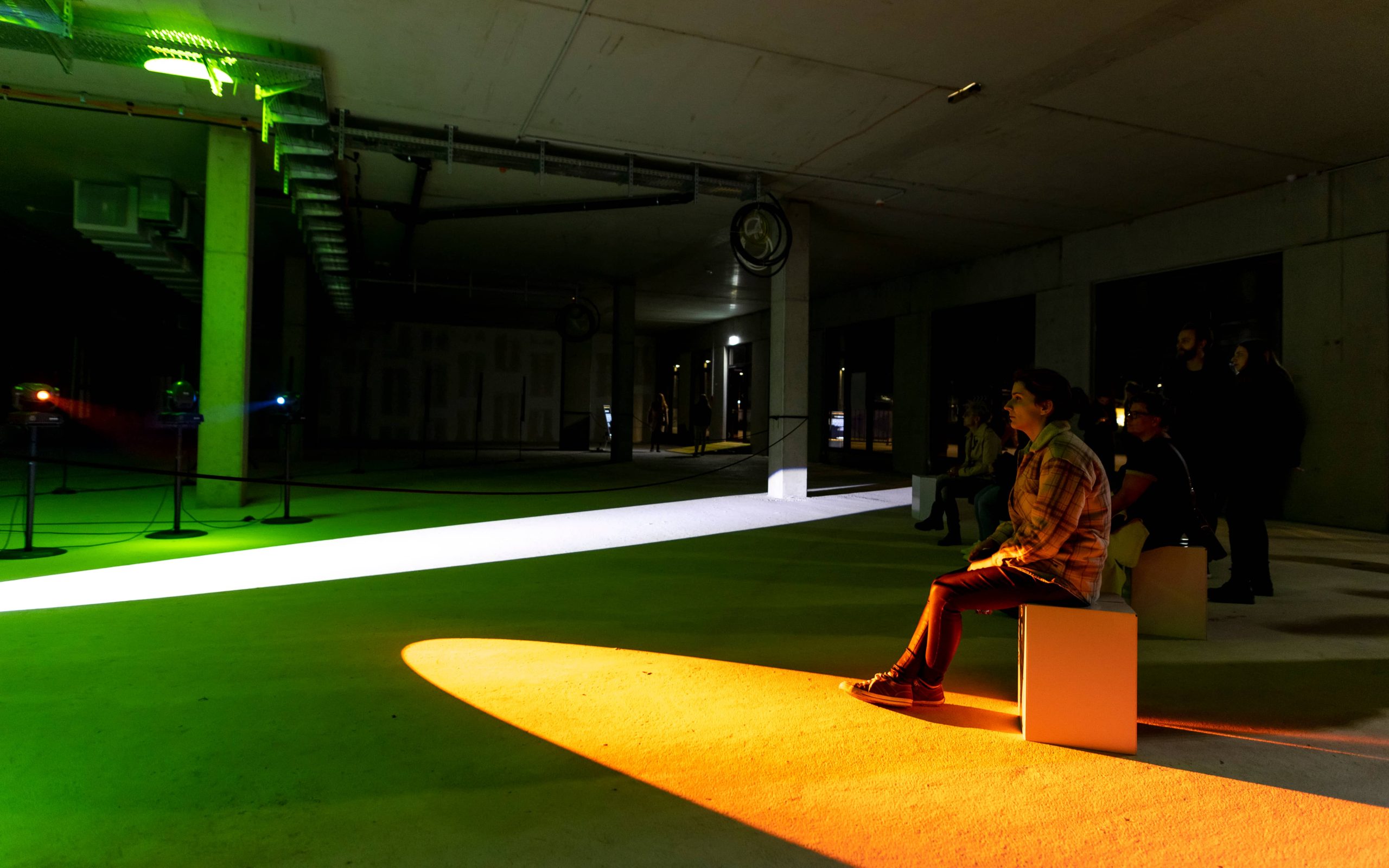
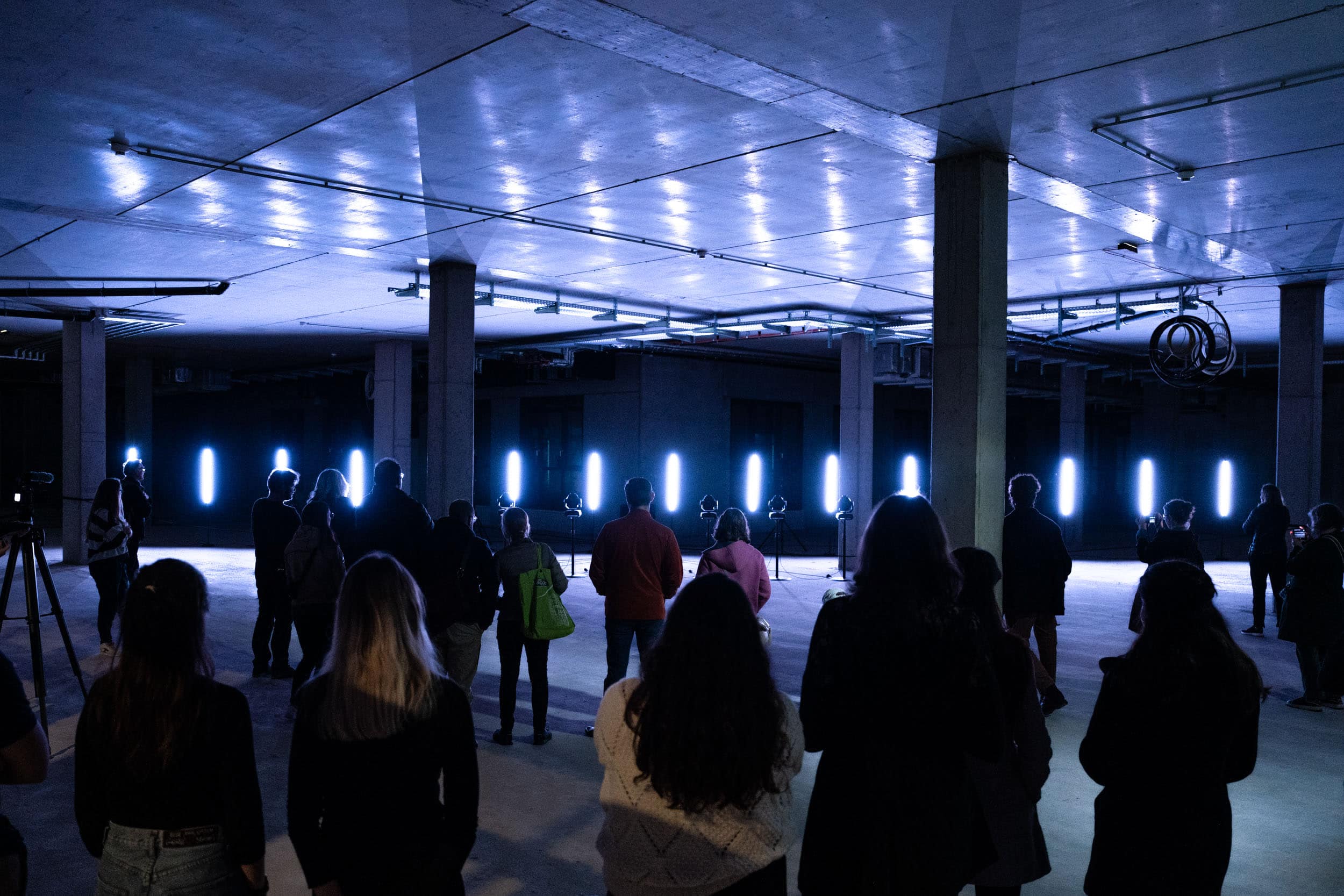
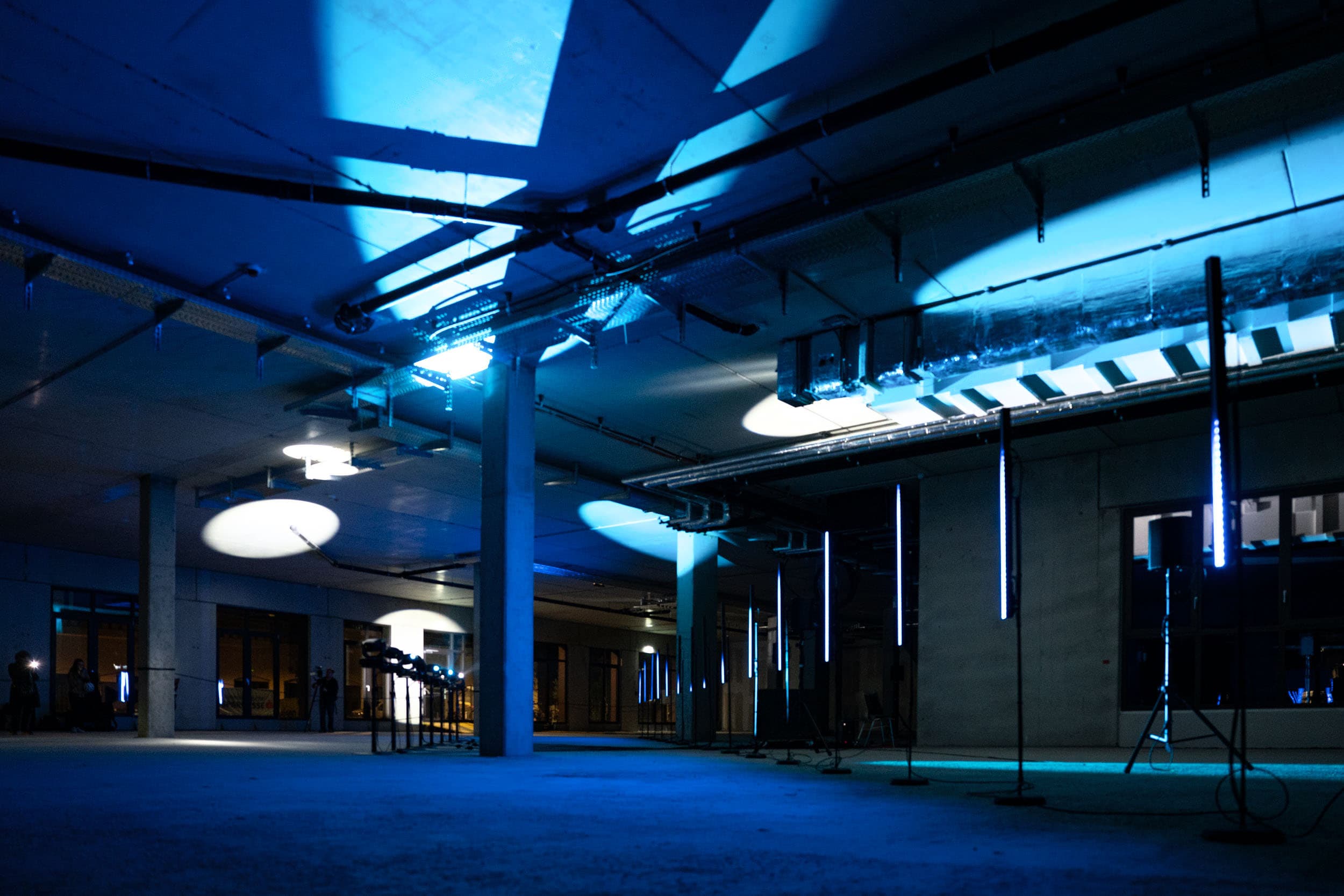
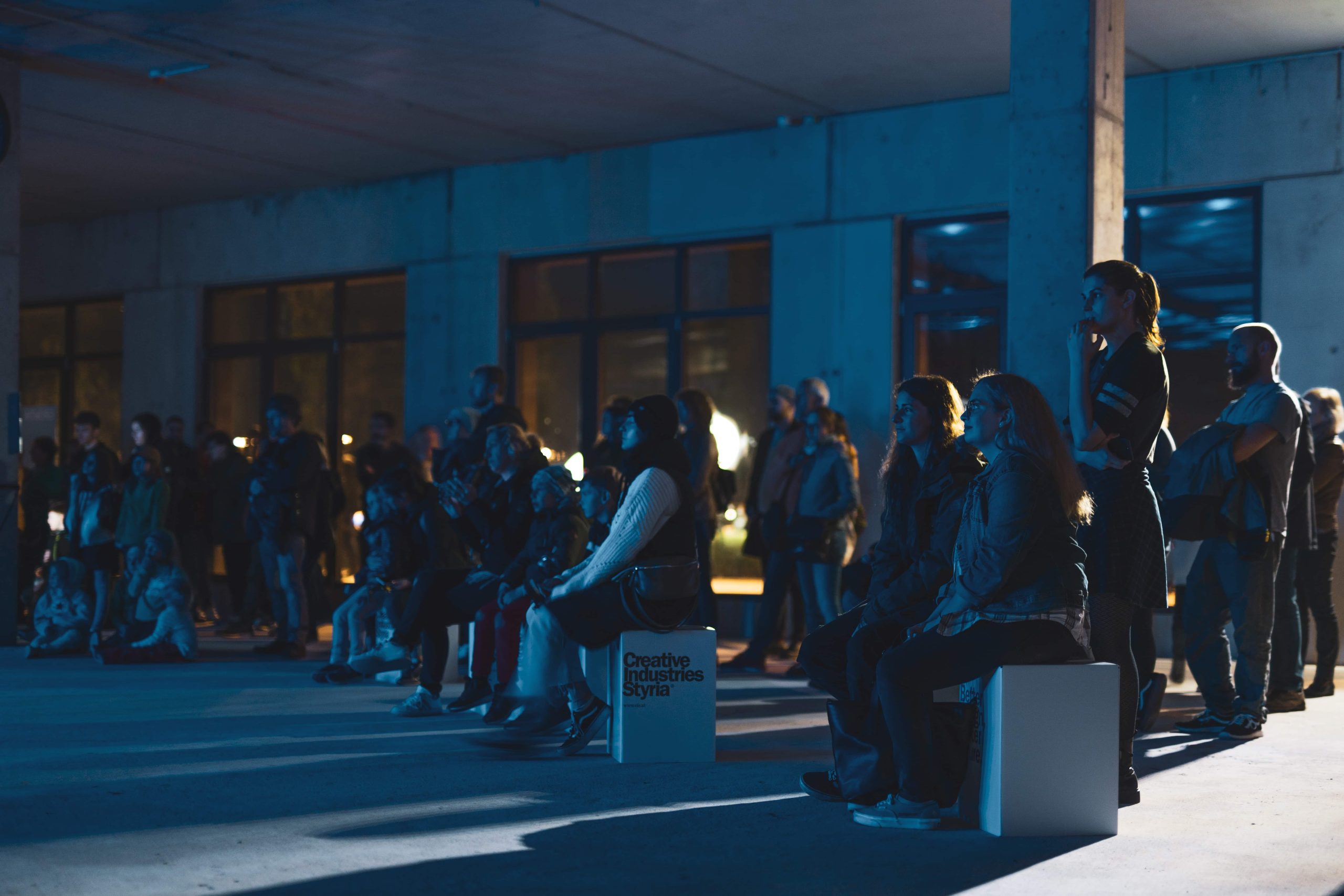
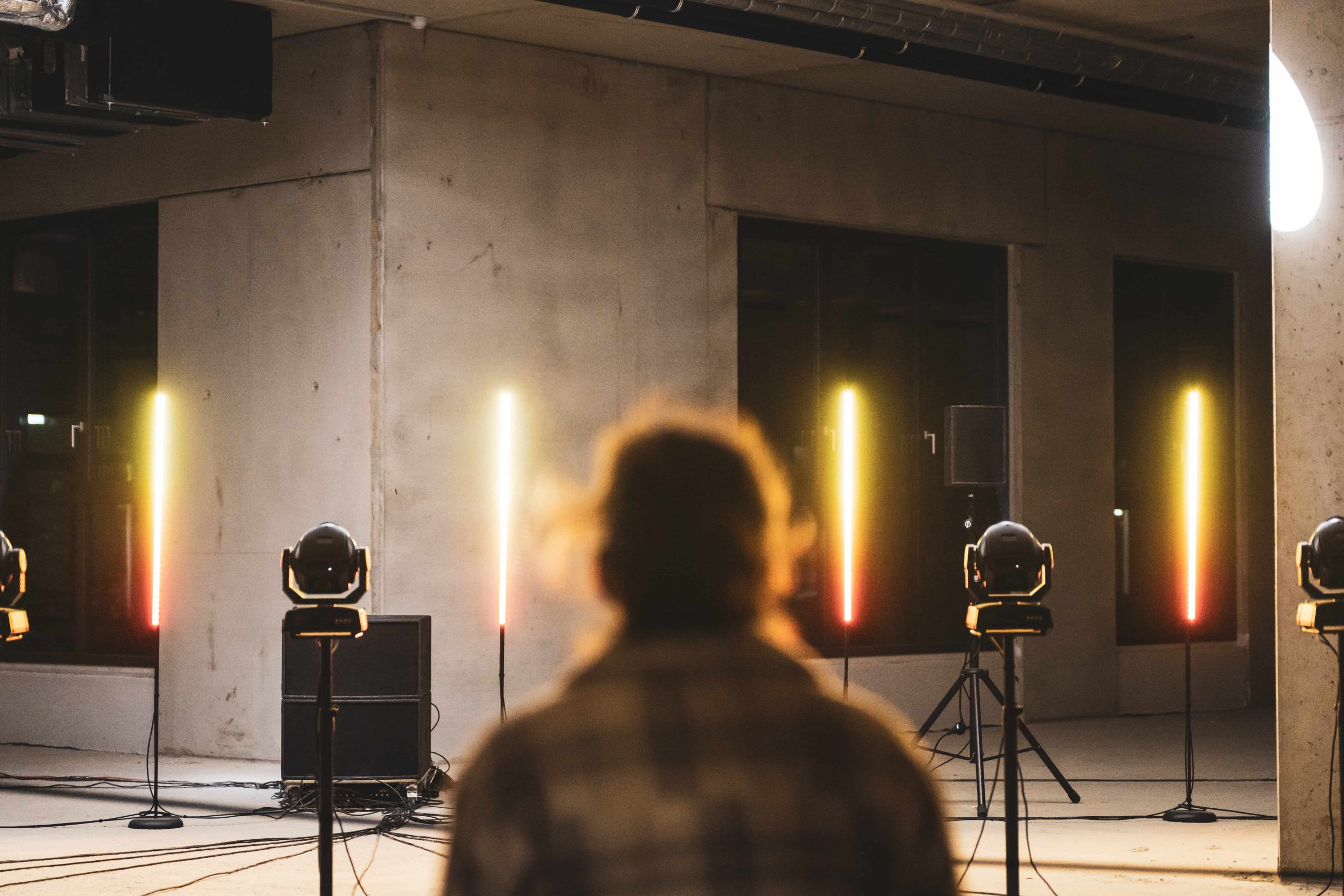
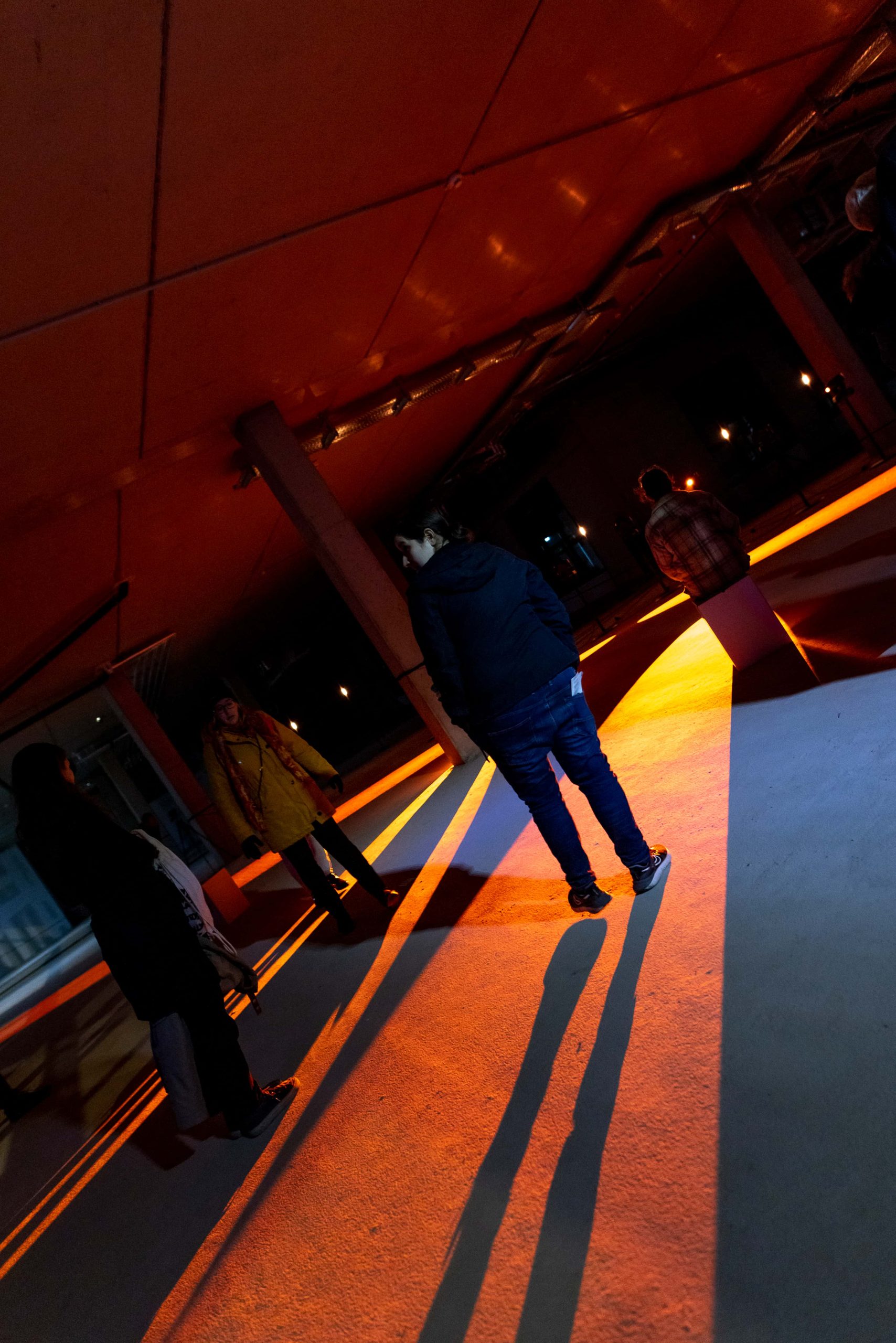
Students of the Communication, Media, Sound and Interaction Design program at FH JOANNEUM. Supervised by Astrid Drechsler, Daniel Fabry and Michael Kernbichler.
In cooperation with FH Joanneum, IDK
Growth is a spatially and temporally structured increase, enlargement or division. The media production “Growth”, produced by students of the Institute of Design & Communication at FH JOANNEUM, examines this concept in all its dimensions and from a wide variety of perspectives.
Light and sound are the materials used to explore the media presentation possibilities and creative variations of growth. Students from the fields of media, sound and interaction design create productions of overgrowth, expansion or enlargement. For example, a kind of site-specific ballet of light will be performed in the newly developed residential area of Reininghaus.
Location: Reininghauspark 11
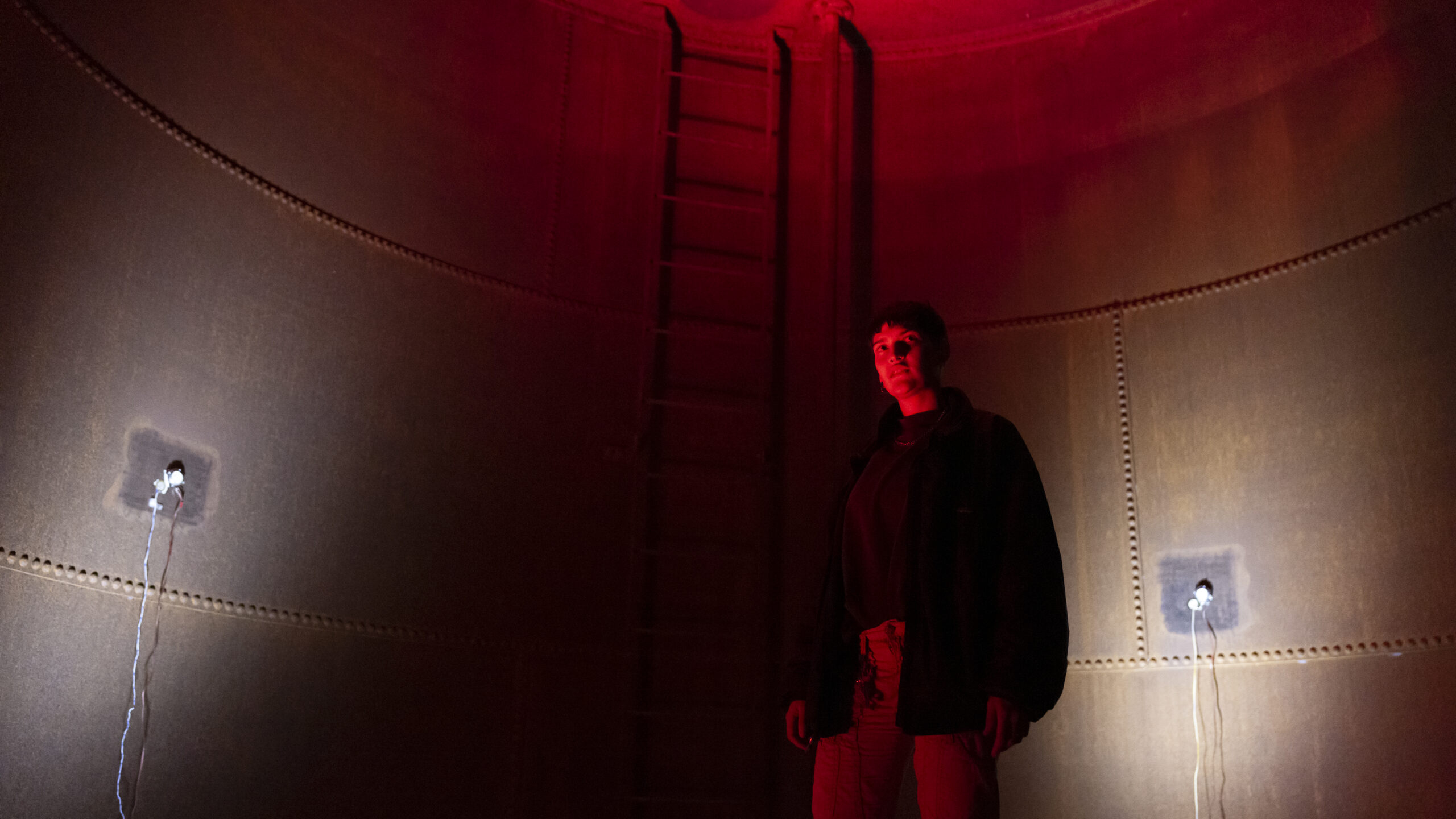
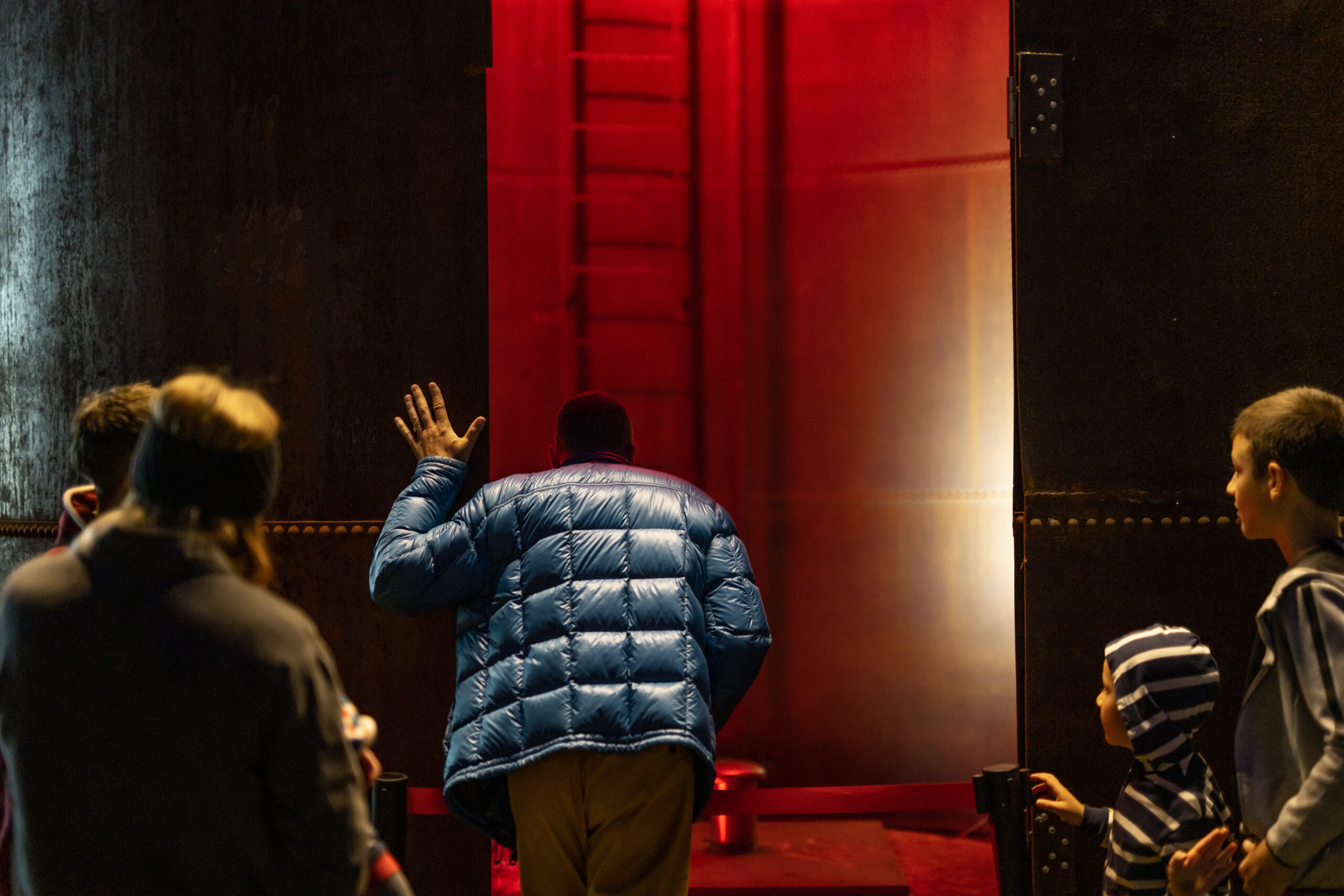
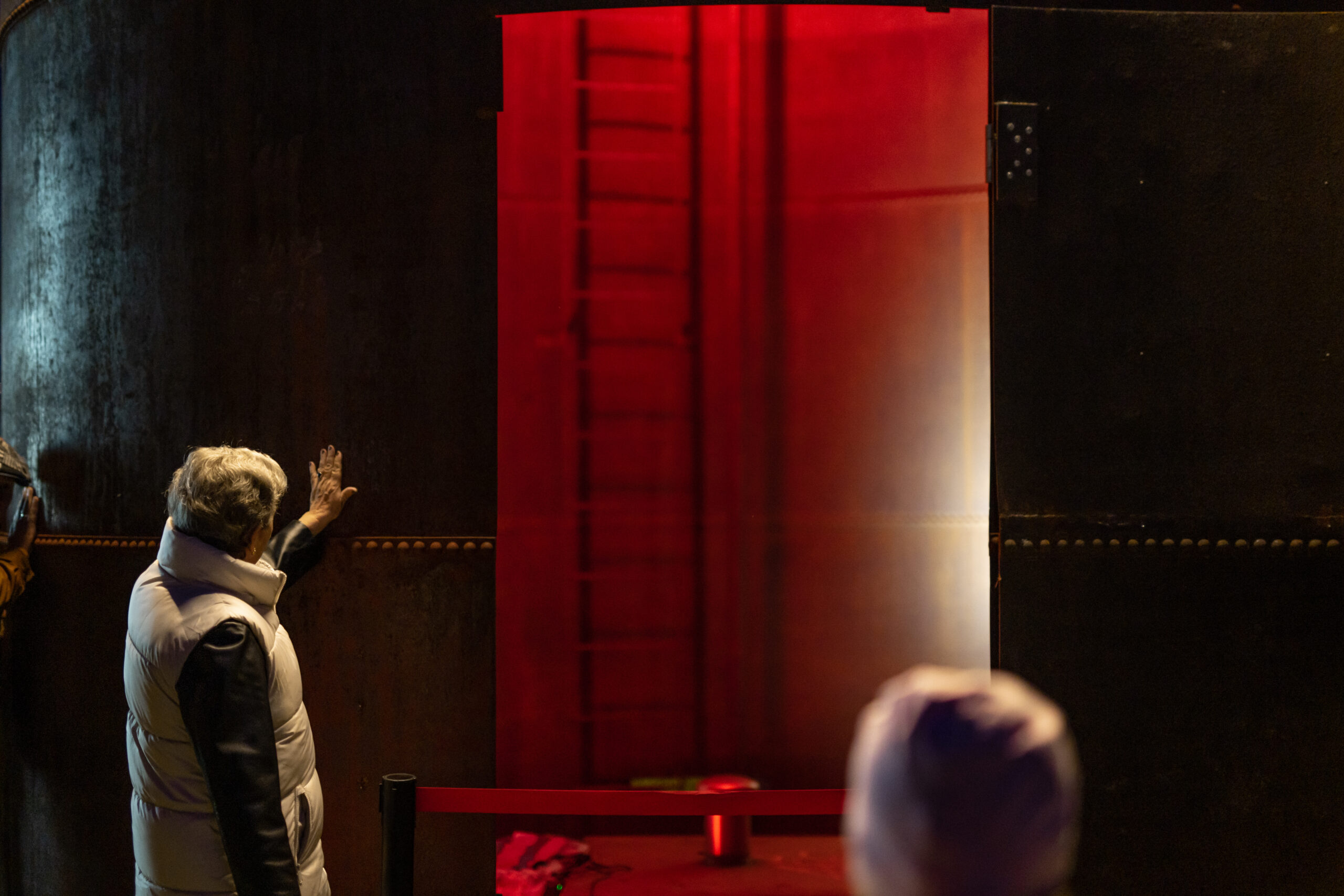
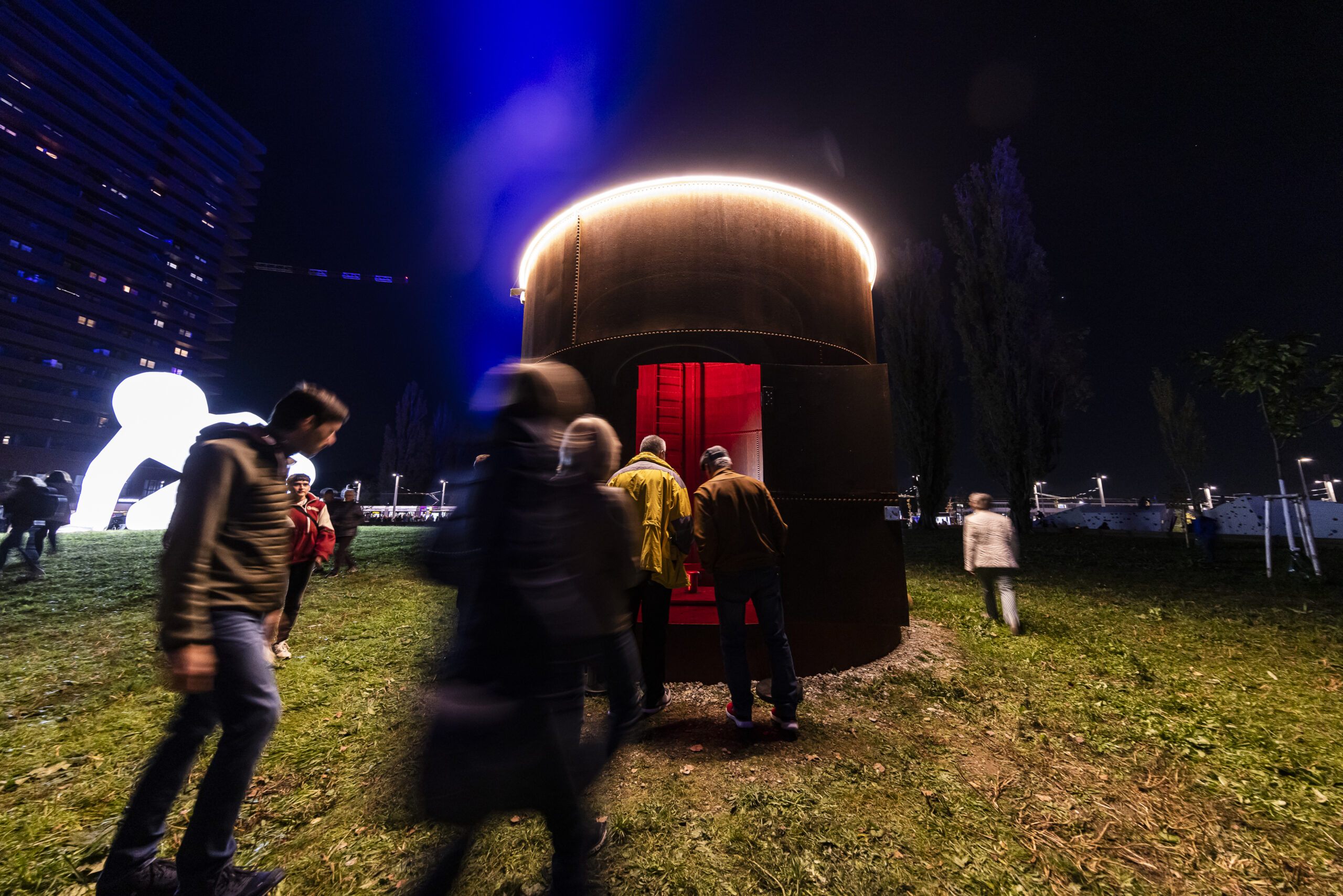
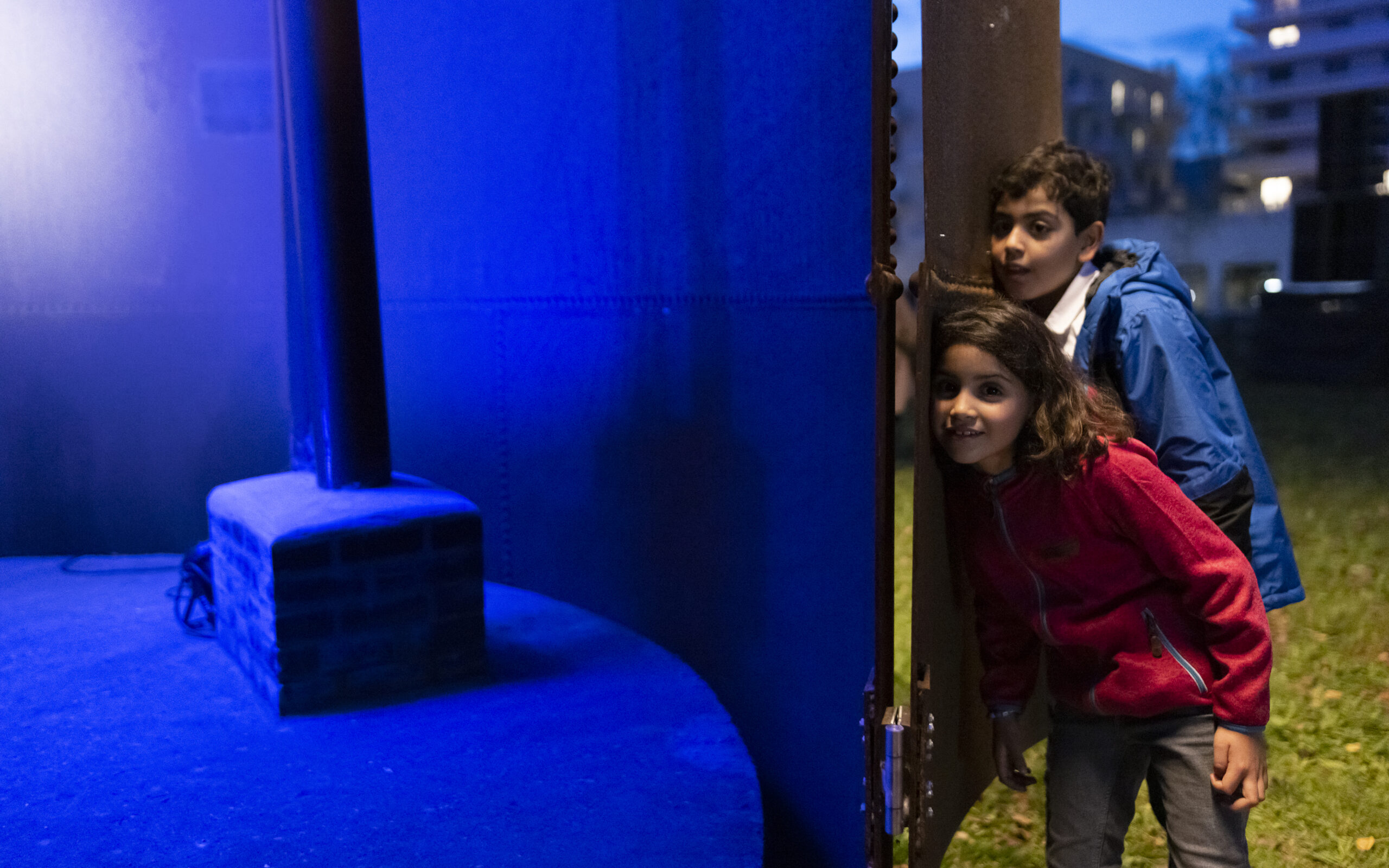
The sound installation ‘those sounds are wrapped in scars’ is based on the idea that we never perceive surrounding architecture and objects neutrally, but can hear their stories. The sound of a room or an object and its intrinsic resonance are made up of its material composition and its spatial dimensions. Every change, be it a scratch, a hole, a weld seam, etc., changes these. The overall sound of an object therefore always tells its story… In KLANGLICHT 2022, Antonia Manhartsberger explores the history of the brandy barrels in Reininghauspark.
Location: Brandy barrels in Reininghauspark
The project is supported by ÖWG.
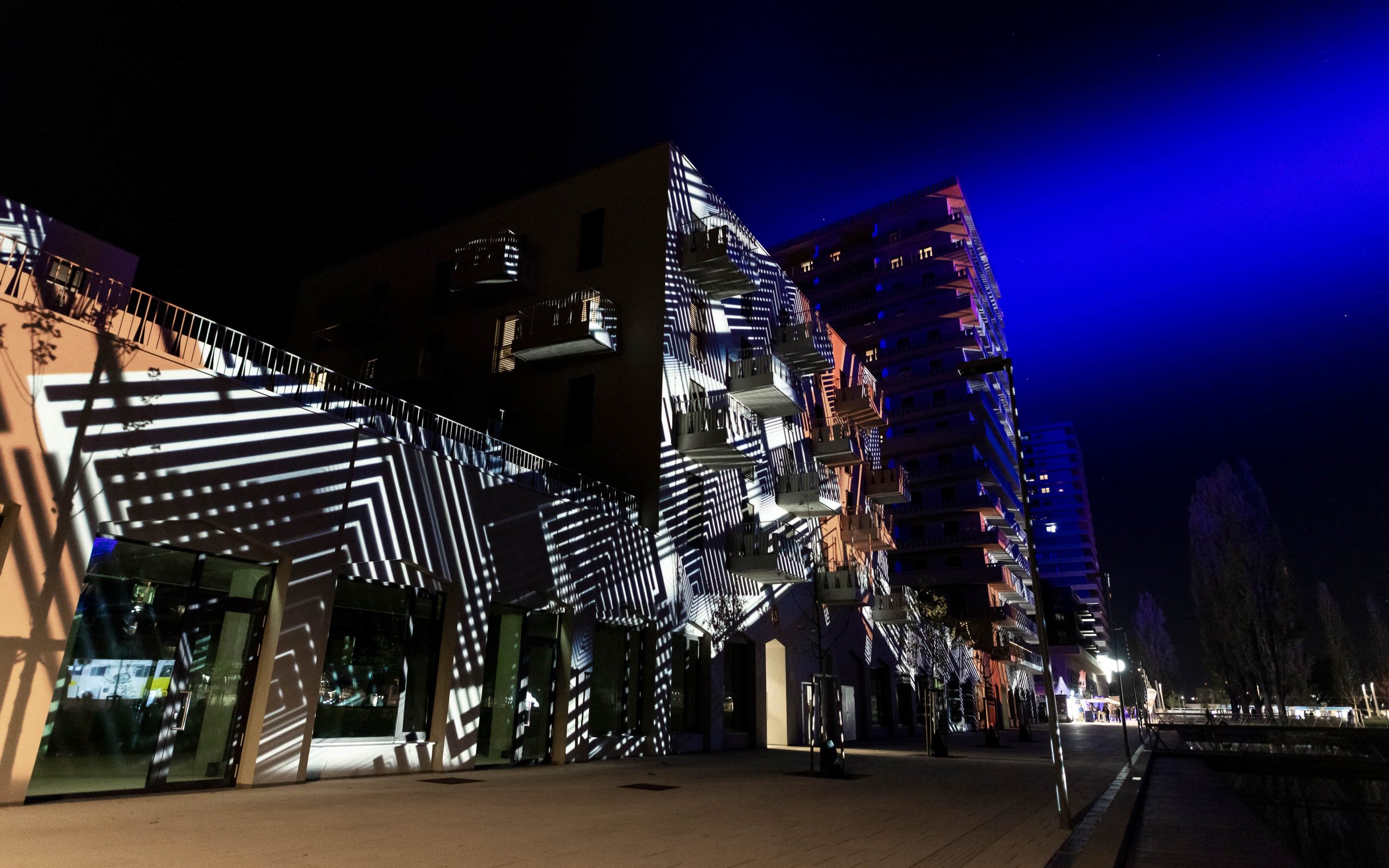
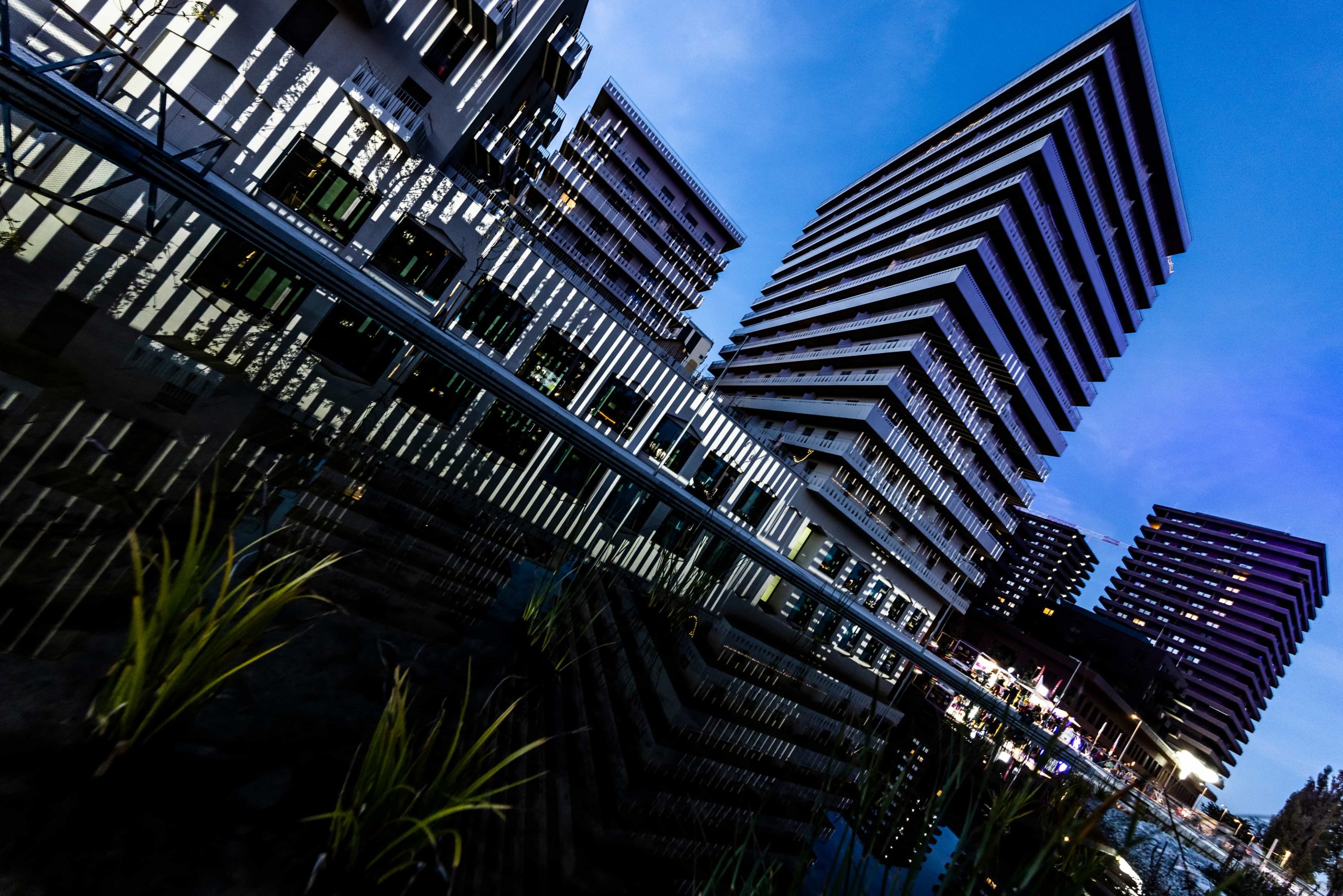
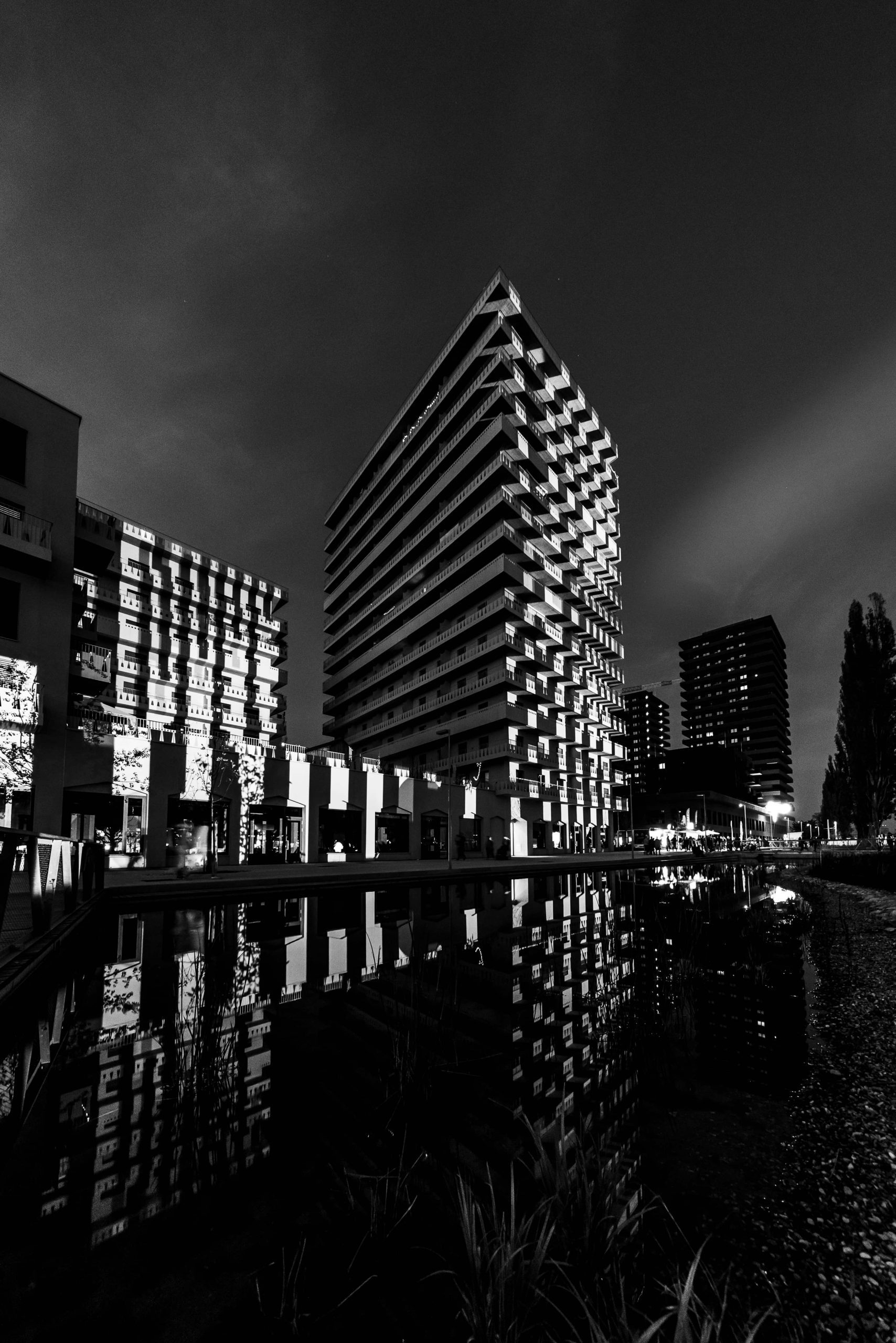
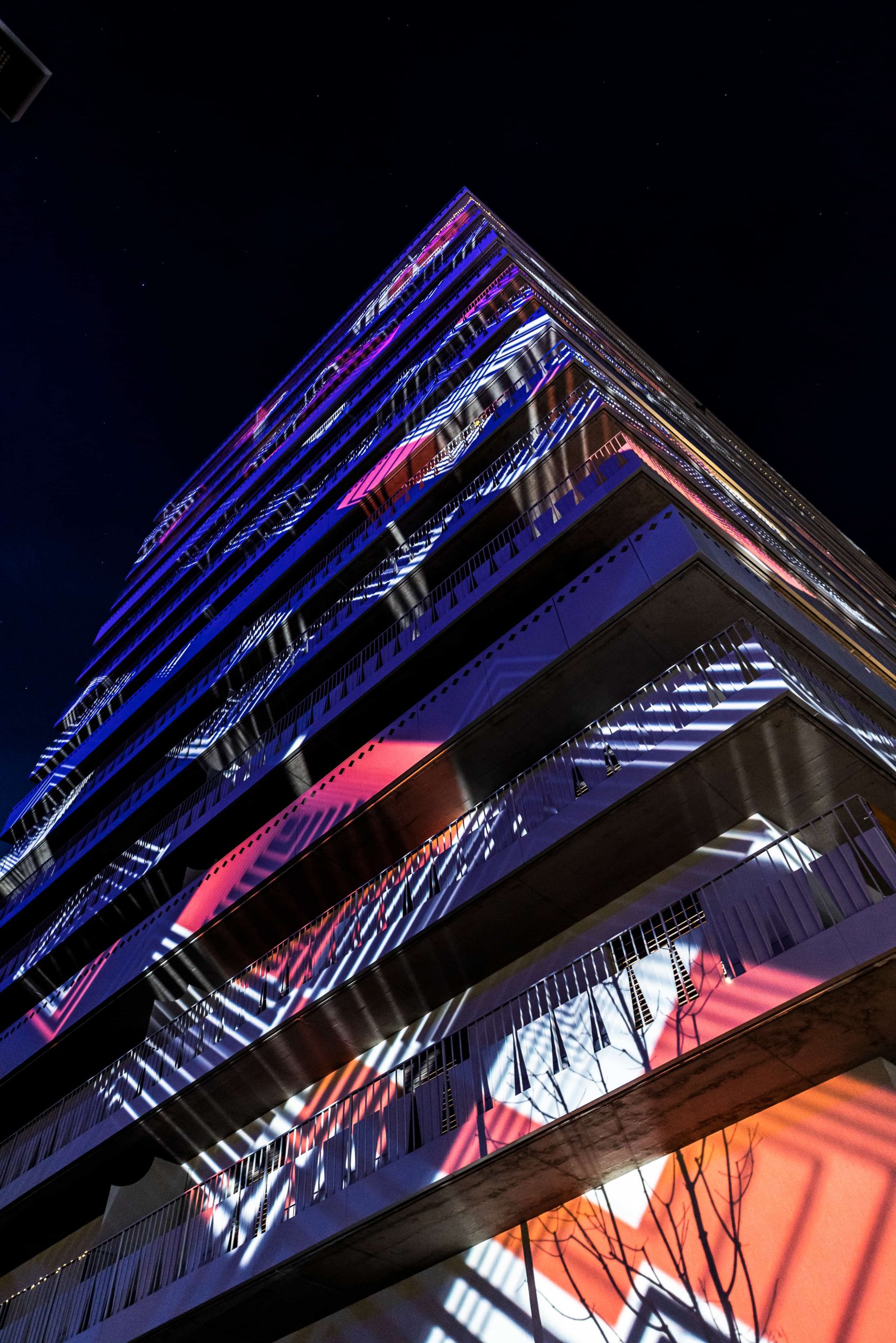
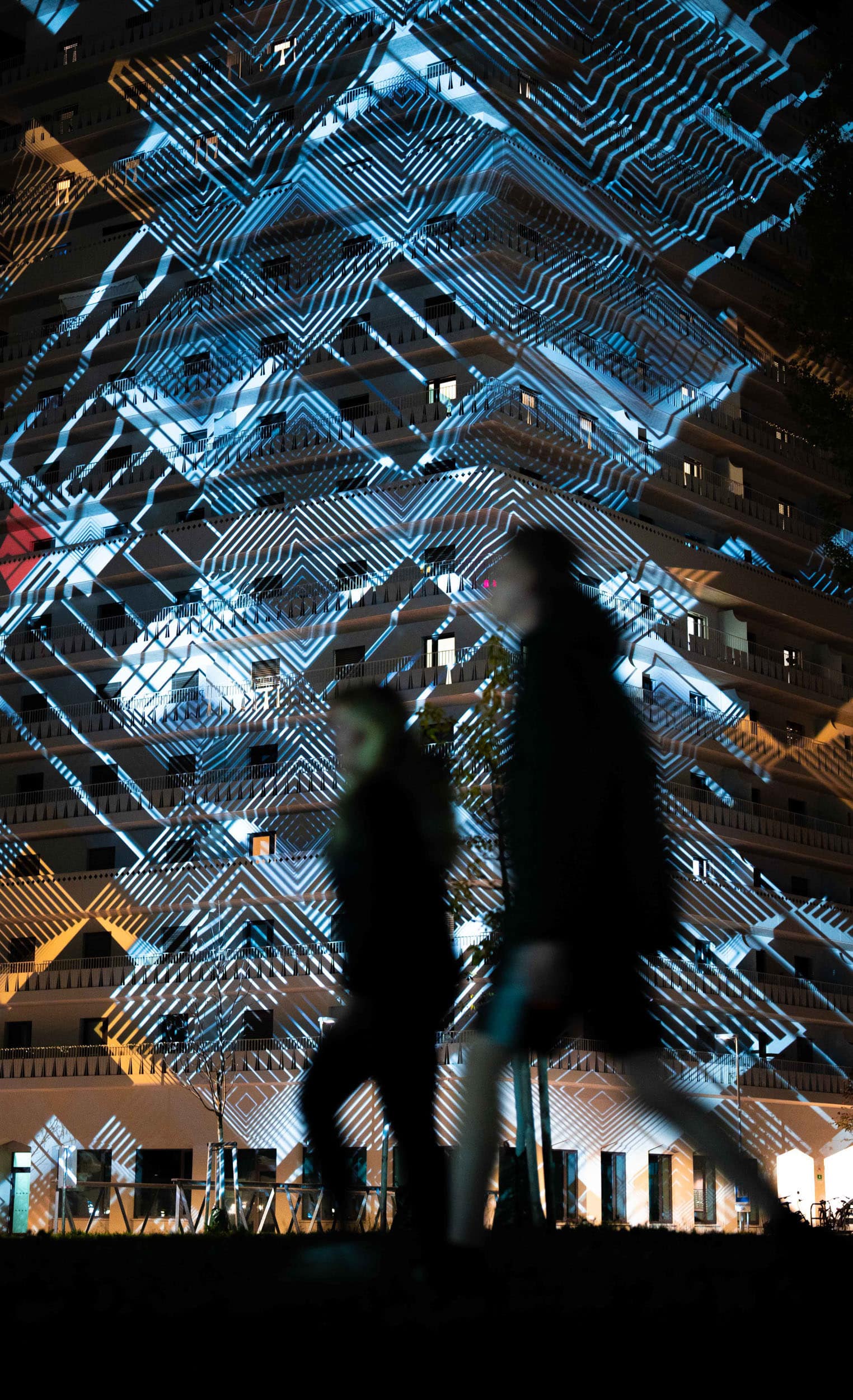
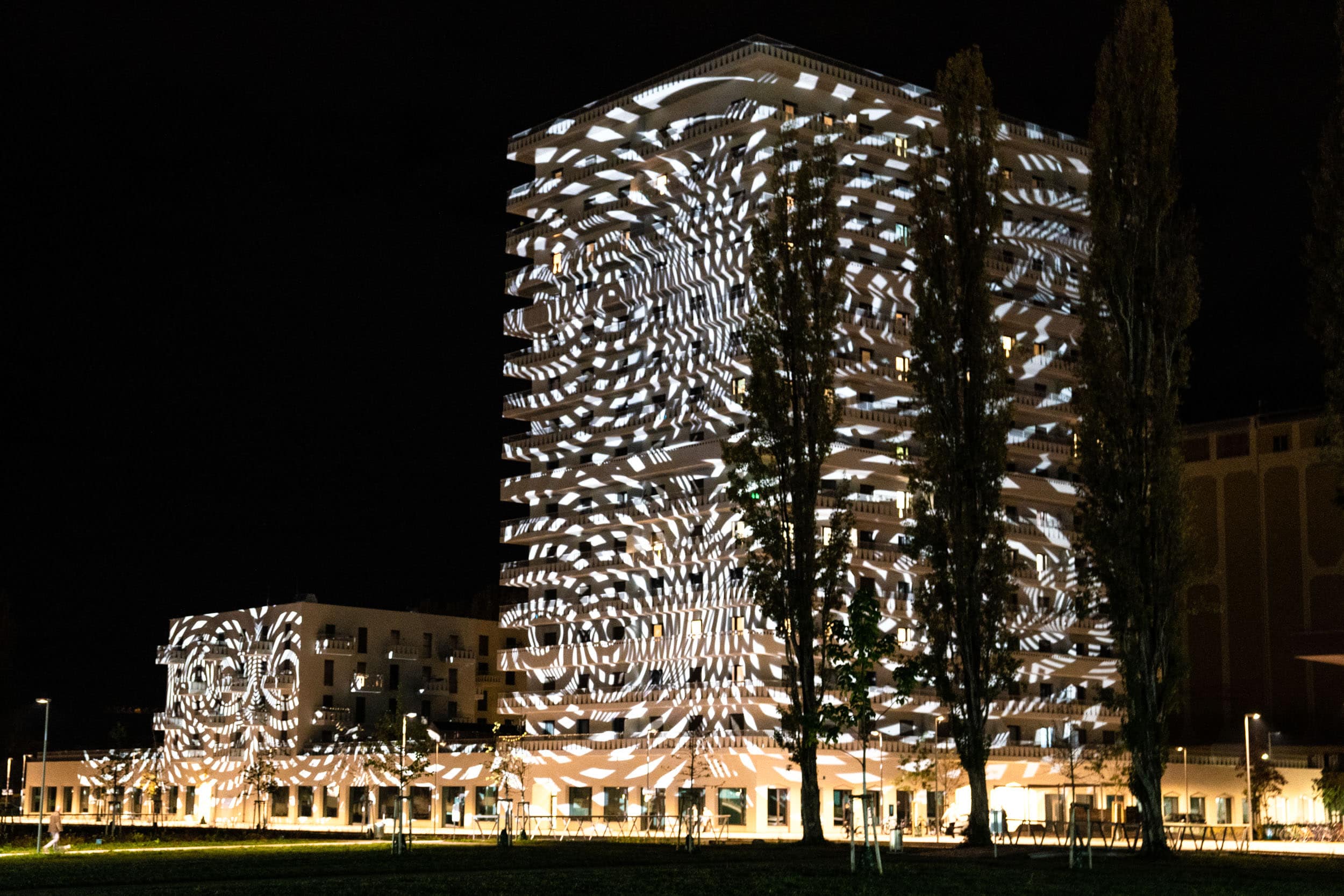
A complex of four houses stands in the darkness of the night. The walls are static, rising rigidly into the air. The windows seem like eyes waiting for something to happen. Suddenly: light! It shines and sounds and the houses become a large projection screen of a completely different world. Patterns evolve, forming ever new shapes, subject to constant development. Carried by the music originally composed for this project, the light images allow the illuminated buildings to take off. The walls seem weightless. The arrangement of the buildings in the space reinforces the play of paradigms. Their staggered arrangement allows the visual elements to work with and against the sound installation. An exciting mix of audiovisual impressions allows thoughts to rise and emotions to soar. An immense space that creates perspectives for impressive images is generated with analog large-screen projectors that move two film reels with and against each other. Sequences tailored to the location stimulate the complex and bring it to life. They are characterized by flowing, consistent movements, captivate with their brilliant luminosity and are precisely synchronized with the music.
Location: Reininghauspark 4-6
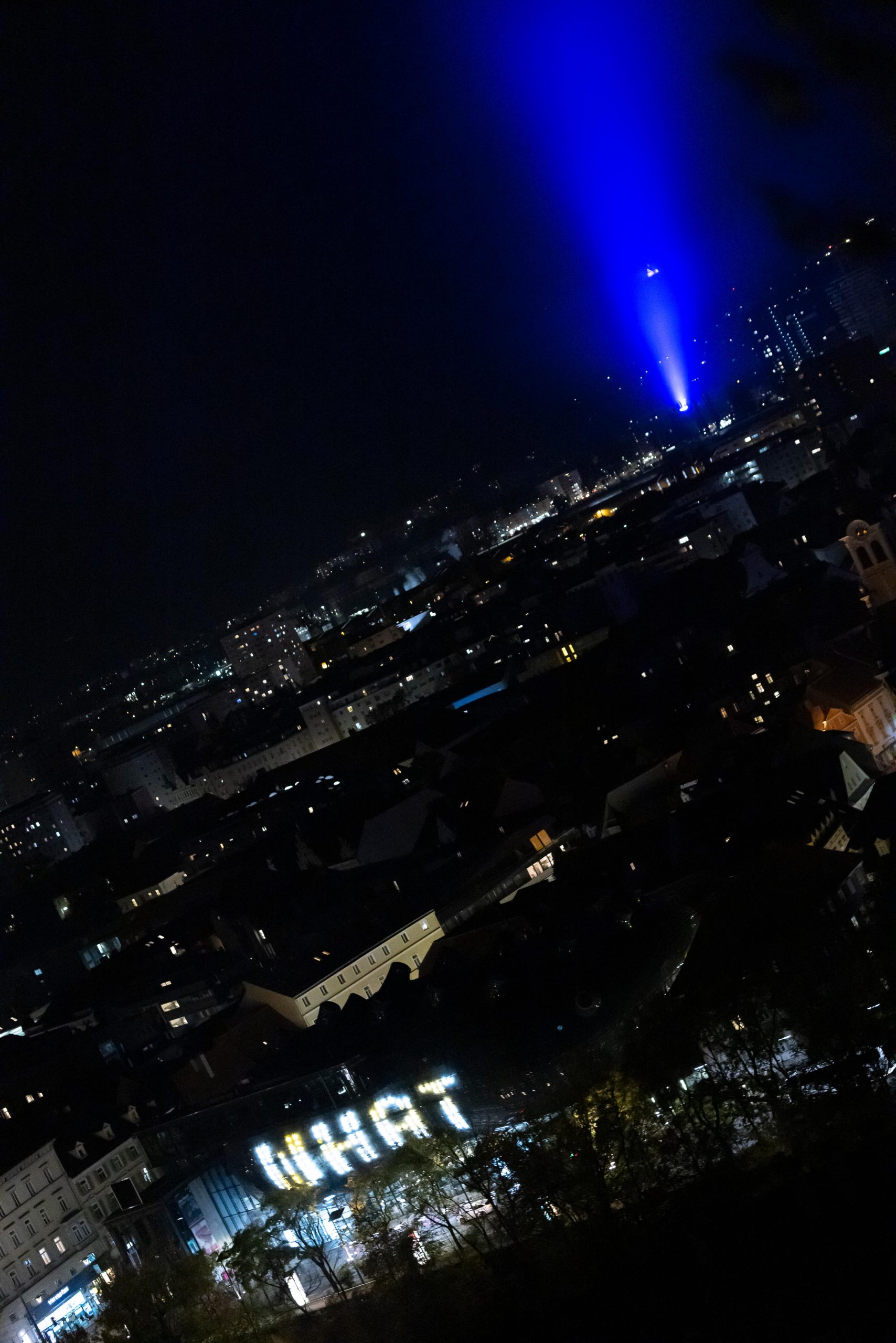
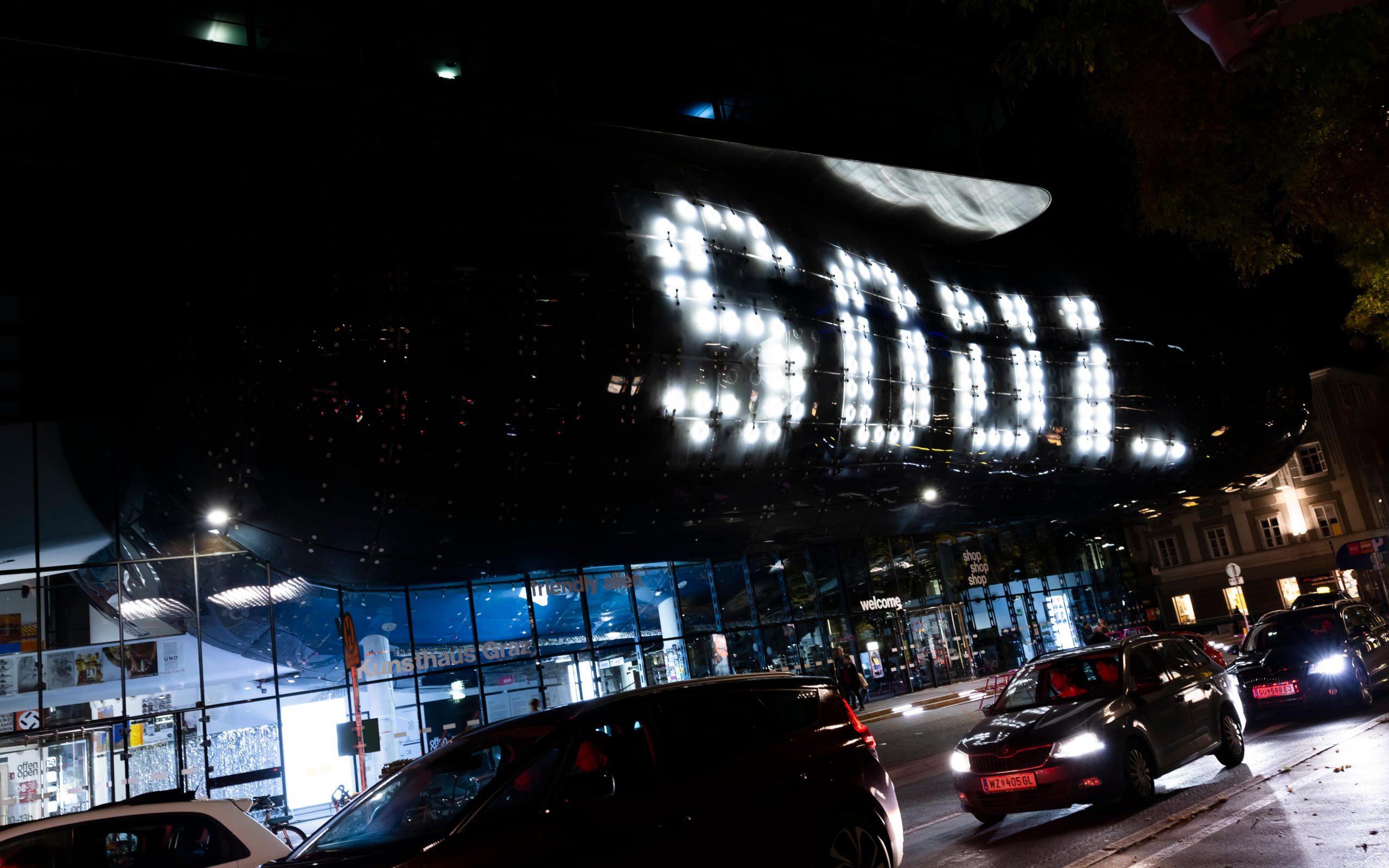
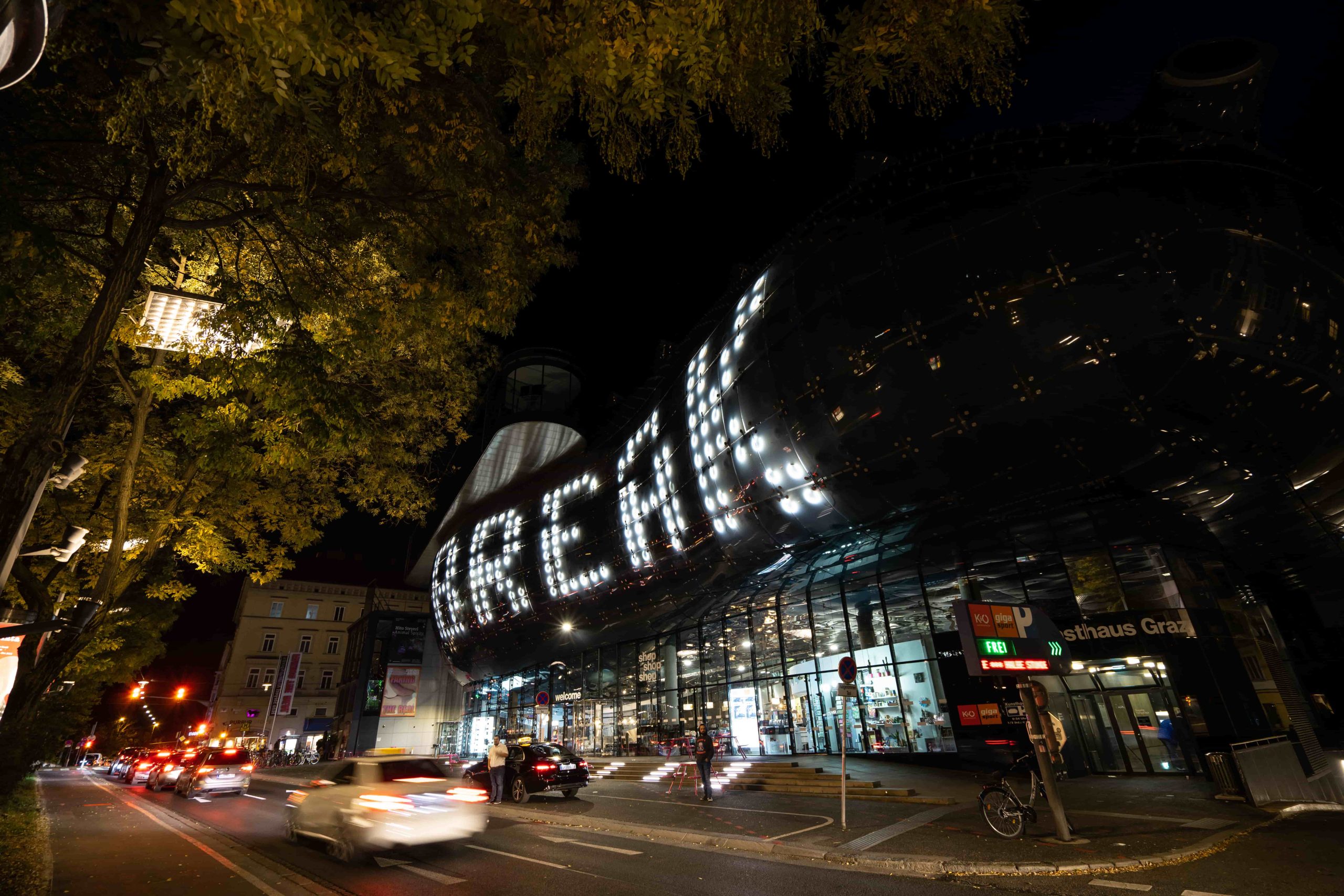
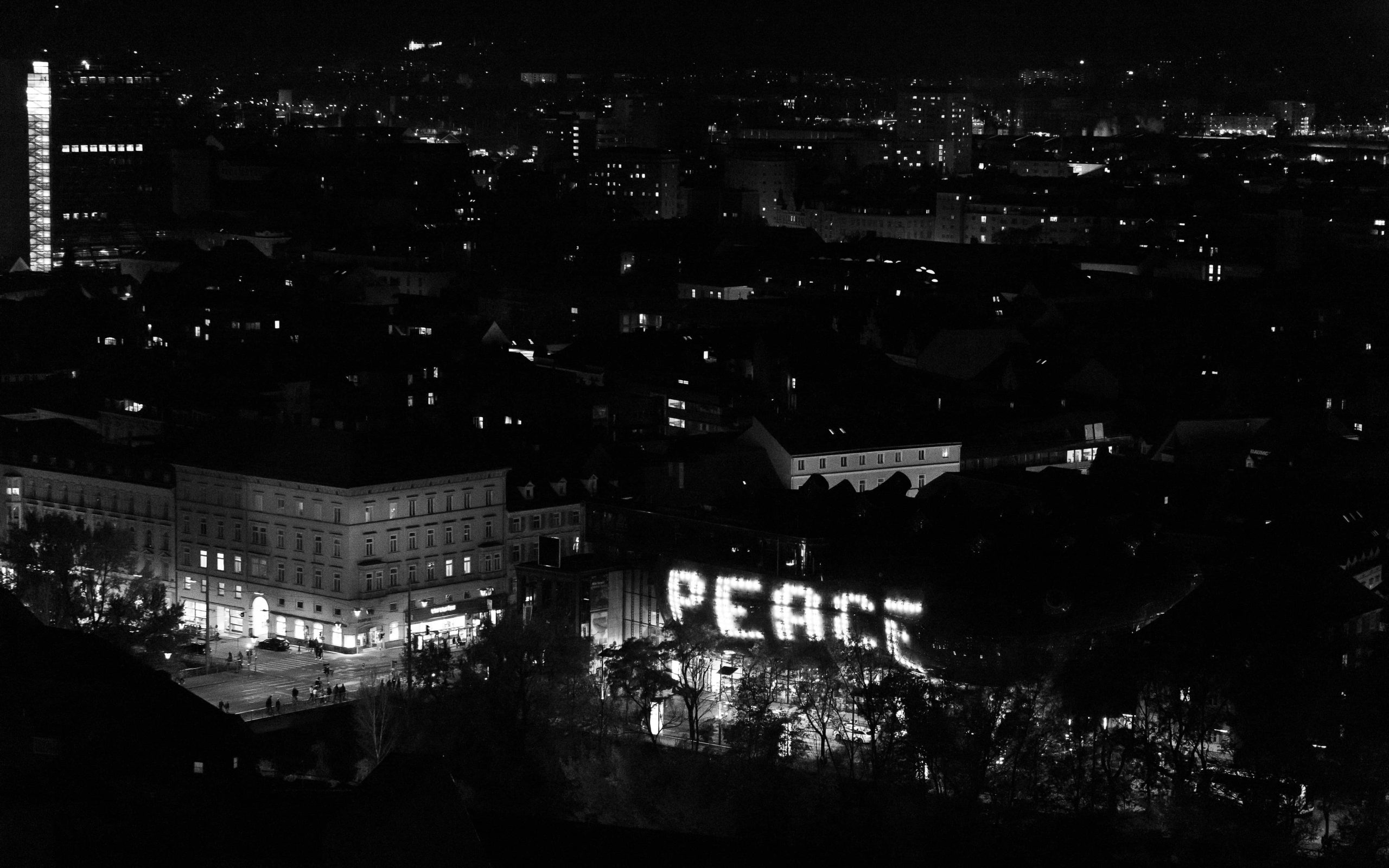
In cooperation with the Kunsthaus Graz.
Are we living in a simulation? For Klanglicht, American media artist Signe Pierce broadcasts her subversive slogans into the city via the BIX media façade of the Kunsthaus, while at the same time playing matching soundscapes in both the elevator and the Aiola upstairs at Schloßberg.
In a game of minimal alteration of sound, signs and language, Pierce shows uncanny worlds of so-called hypermediation, in which analog, digital, artistic and economic rules meet and are played off against each other. “BREAK THE SIMULATRIX” is just one of the challenges.
Location: BIX façade of the Kunsthaus, Schlossberg lift, Aiola Upstairs
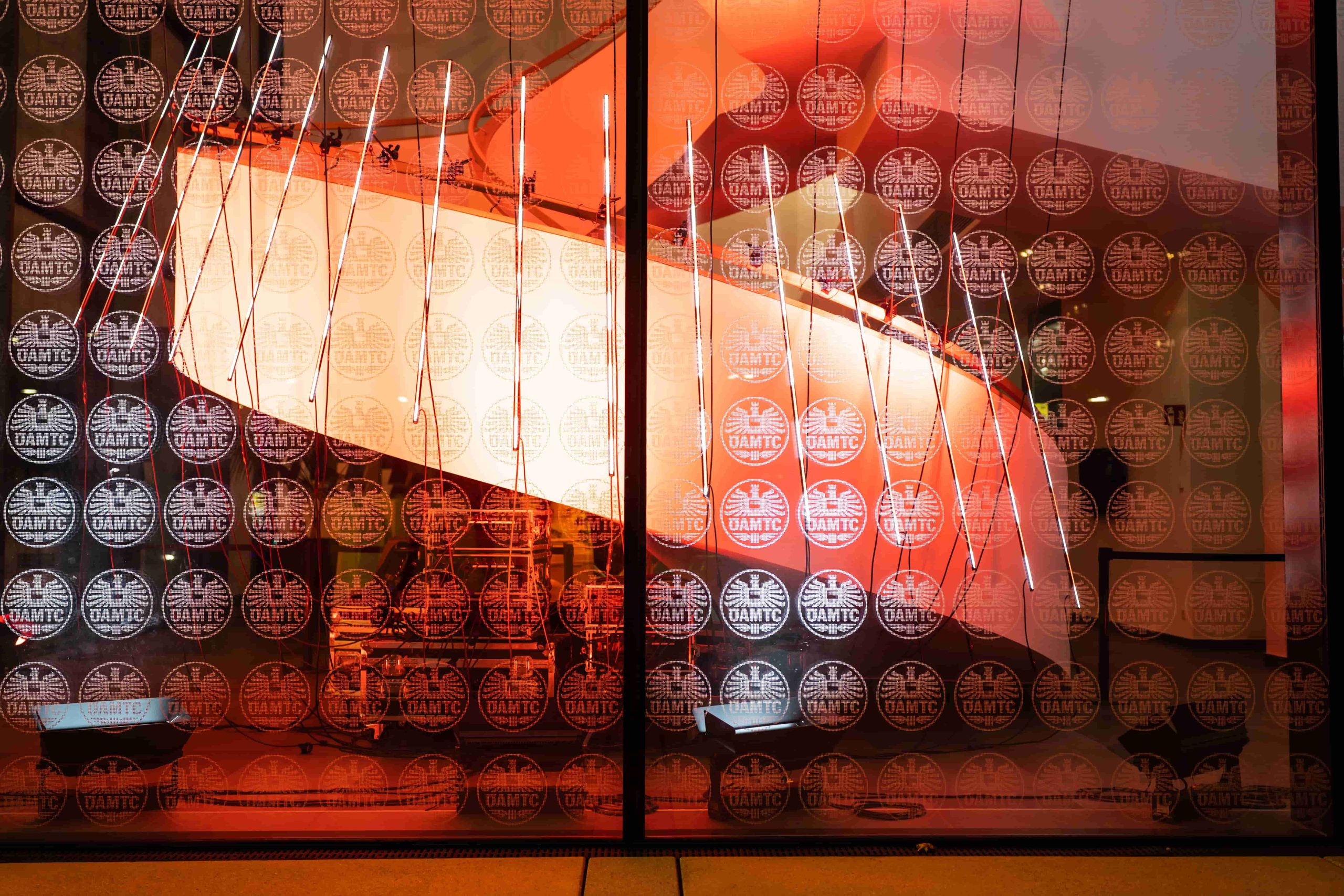
The ÖAMTC headquarters directly opposite Reininghaus Park in Alte Poststraße will become a point of interest during KLANGLICHT 2022. The Graz-based association MariachiProductions will stage the architecturally outstanding building with a variety of playful lighting scenes. The “LED-Stixx-RT2”, developed and handcrafted by lighting technicians and designers Thomas Ritz and Gregor Thurner, were used for the first time at Springfestival 2022 and have been fascinating audiences at concerts and clubbing events ever since. Together with other light sources, these new design and light sources will illuminate the large glass façade of the ÖAMTC building with a brilliant production during KLANGLICHT.
Location: Alte Poststraße 161, 8020 Graz
Light Art by Mariachi Productions is a project of ÖAMTC Graz-West.
In its seventh edition, KLANGLICHT, the art festival of Bühnen Graz, connected the old and new Graz, the future and past of the city and tens of thousands of people with a total of fifteen light and sound installations from October 27 to 29, 2022.
With their light and sound interventions, internationally renowned artists opened the eyes and ears to the Schlossberg as a UNESCO World Heritage Site, a natural spectacle and vantage point that is visible from almost every corner of the city. At the same time, on the other side of the Mur, one of Europe’s largest urban development projects shone and sounded like an urban utopia: the new Reininghaus district was discovered by thousands of visitors along the paths of KLANGLICHT 2022.
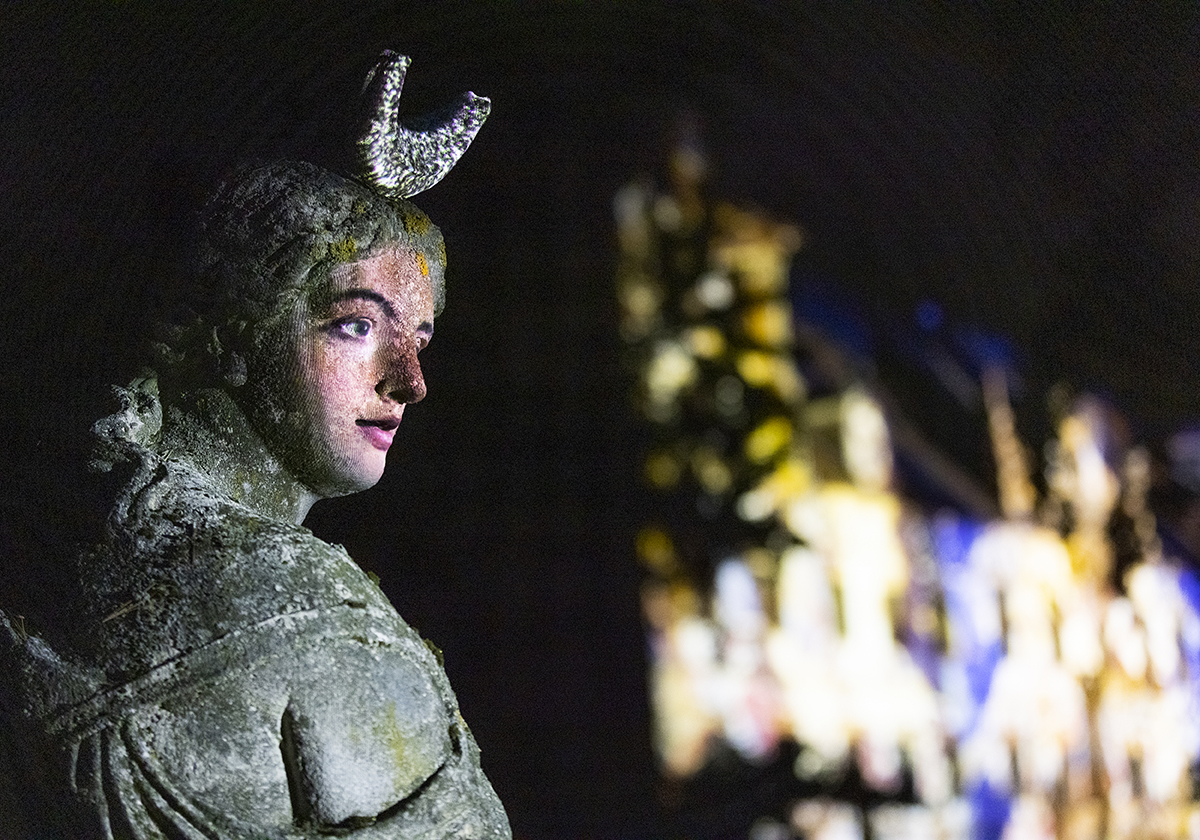
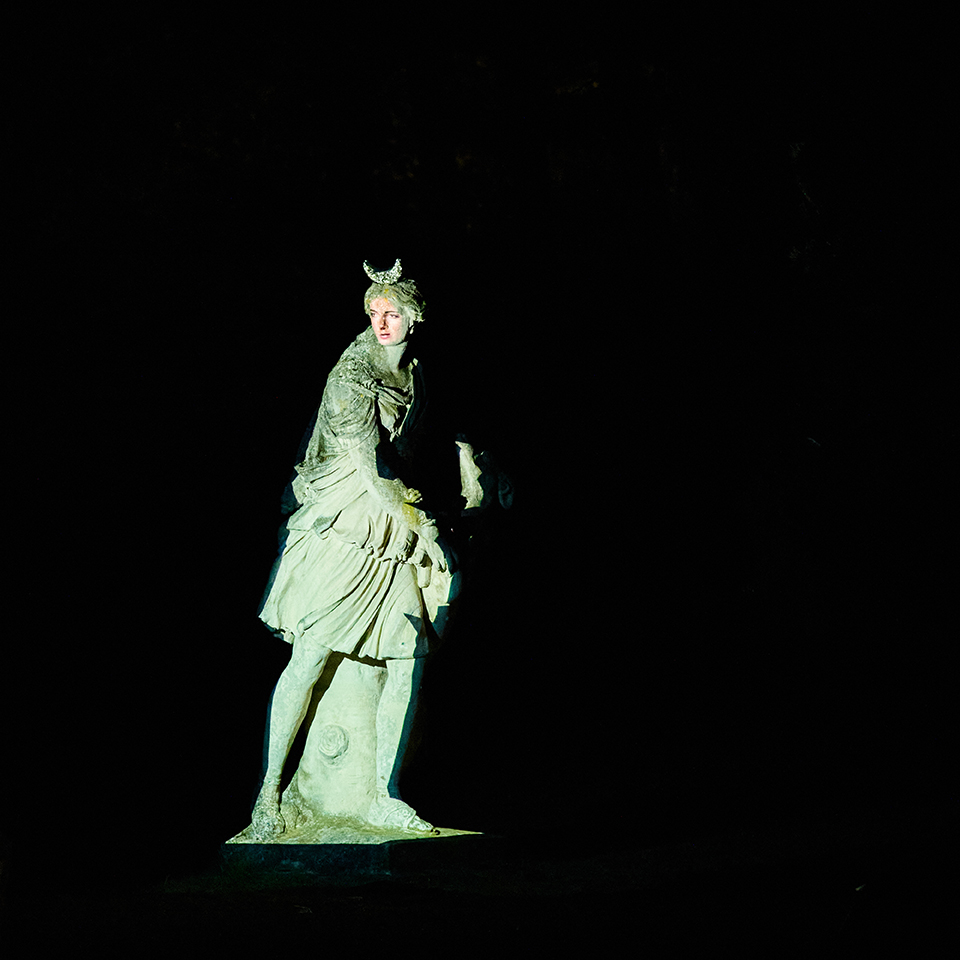
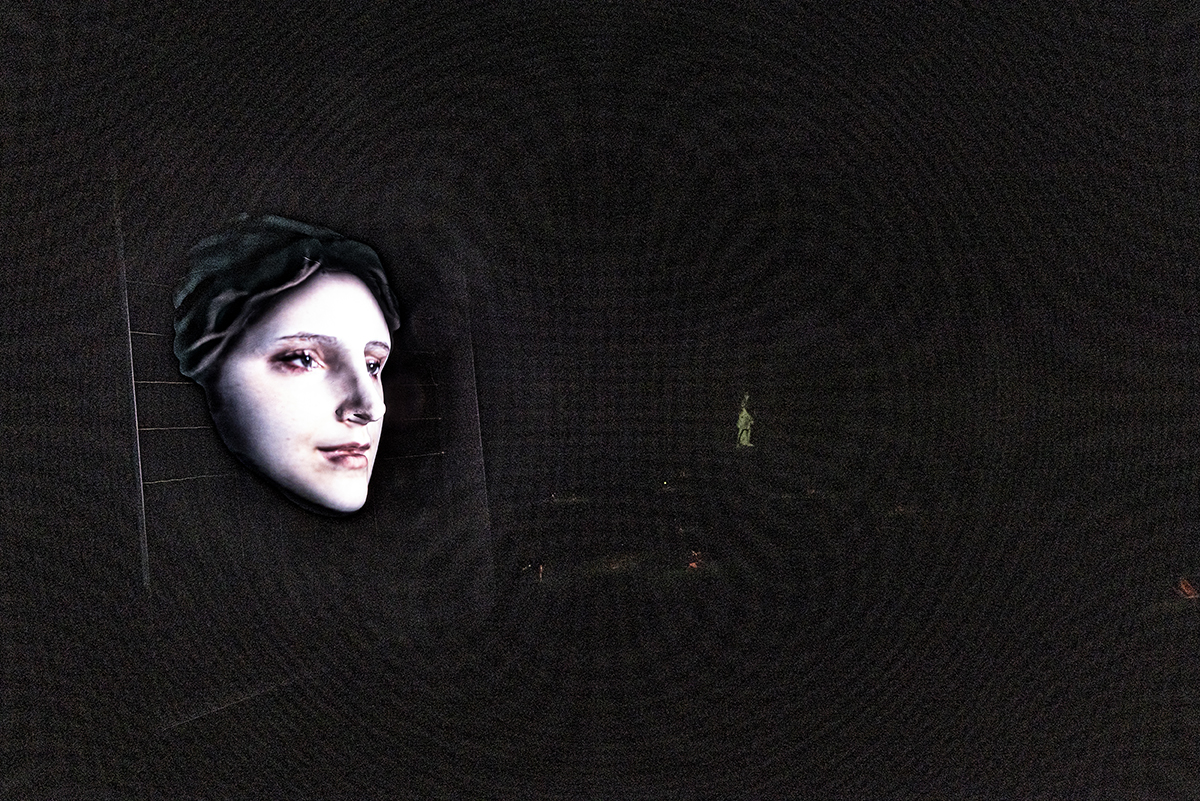
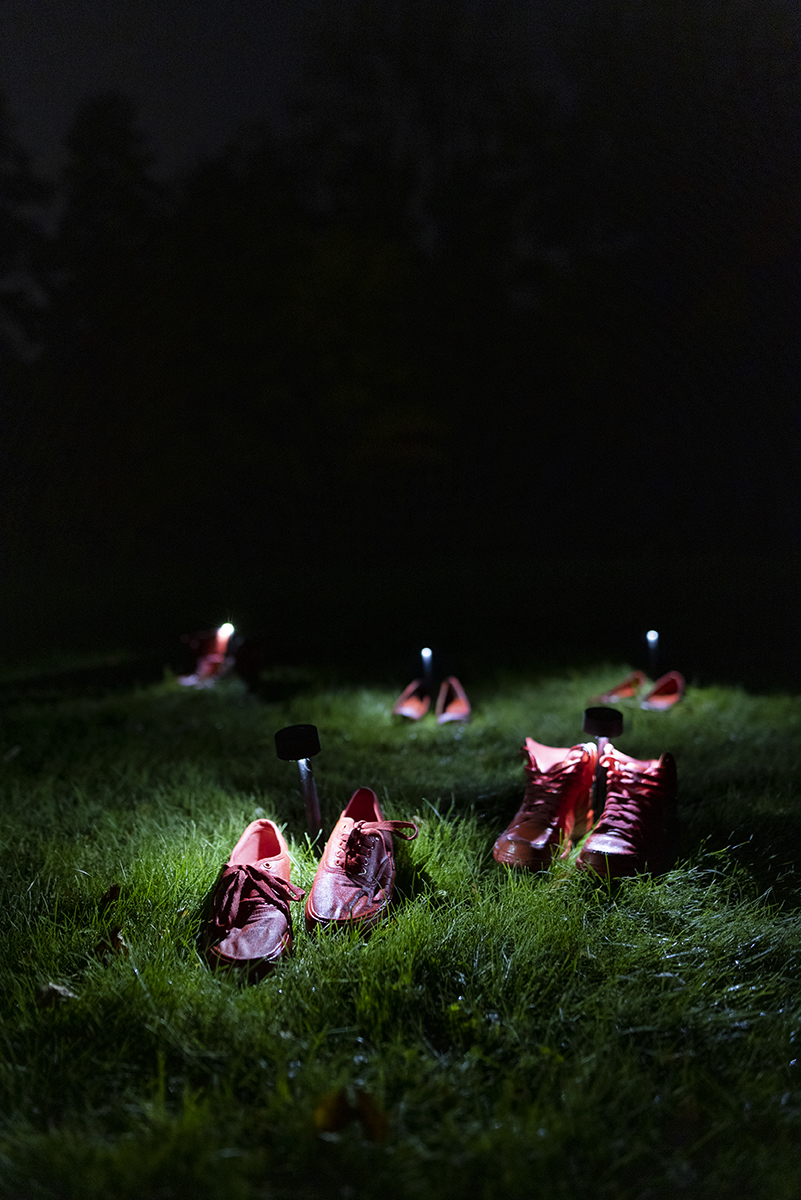
In the park of Schloss Eggenberg stands the image of the goddess Diana. She is known as the goddess of the hunt, but is also regarded as the protector of women and girls. Visitors encounter her for the first time at the edge of the path – as an ordinary woman struggling with the abysses of a patriarchal society, with fears and doubts, with discrimination and, above all, violence. She tells her story openly and it is scary: all these thoughts and experiences are part of “real life”. But then another Diana comes to life: the goddess. Her job is to protect women and girls and to fight for new identities far removed from male interpretation. She is an accomplice, but remains patronizing and unapproachable. She intervenes in the events from a distance. A supposed dialog begins that breaks up and attacks the outdated role model of women, inviting the audience to question their view of gender stereotypes. Symbolism and content open up a multidimensional space of possible attitudes, approaches and visions of the future. The audiovisual installation illustrates the diversity and ambivalence of our present and our expectations and hopes for the future.
With their installation, Michael Bachhofer, Karin Watabe-Wolfger and Karl Wratschko want to address the ongoing topicality of violence against women and raise their voices for women’s rights. “feminitiv” openly addresses structural violence against women and deals with this topic in an aesthetic and innovative way.
Biography Michael Bachhofer
Michael Bachhofer (*1976 in Friesach) works as a freelance artist at the interface of art, science, technology and society.
Biography Karin Watabe-Wolfger
Karin Watabe-Wolfger (*1976 in Friesach) is a Vienna-based dramaturge and conceptual designer for film, television, art and cultural projects.
Biography Karl Wratschko
Karl Wratschko (*1978 in Leoben) works as a curator, filmmaker and artist.
Credits
Concept & realization: Michael Bachhofer, Karin Watabe-Wolfger and Karl Wratschko
Participating performers: Leonie Berner, Julia Posch, Karolina Preuschl
3D Sculpting and 3D Printing: Jörg Bachhofer
Supported by: ViennaBase-Donau – Homes for Students and ARTist- Alumniverband der Universität für Angewandte Kunst Wien
Technical realization: grafx live-marketing GmbH, pro-video
The art intervention was realized with the kind support of the Kleine Zeitung.
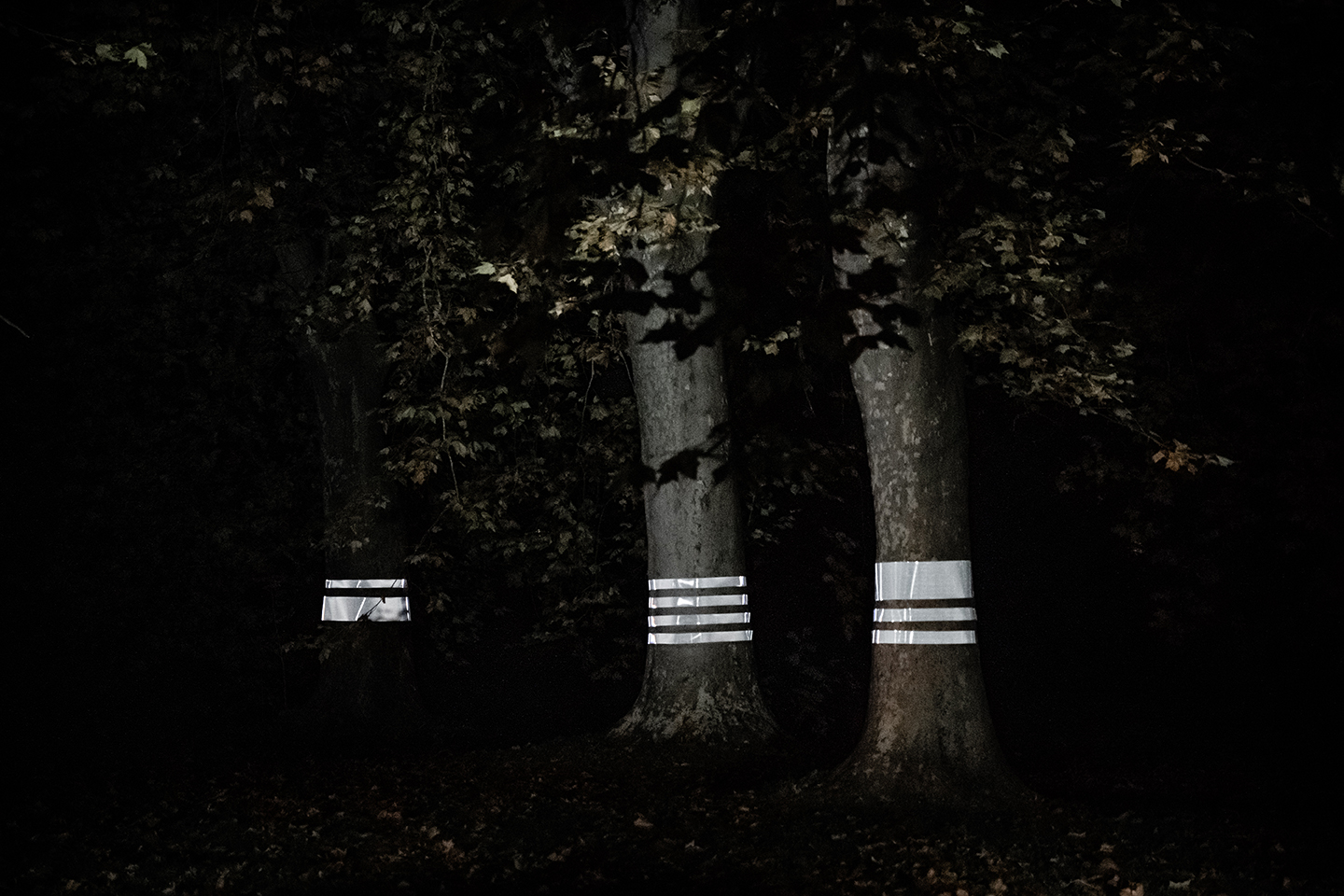
Short signal. Long signal. Pause. Morse code is a system that recognizes only two signs: signal or no signal, whereby the time length of the signal is variable. It is characterized by a variety of possible applications: via sound or radio, with electrical impulses or interruption of a constant signal, with light signals that are switched on and off. Brigitte Kowanz also uses Morse code when she creates words with light – in other words, when she writes with light. At the heart of her work is the thematization of the universal need to send and receive messages, as well as the question of the influence of new media and technologies on our communication. With “Beyond that”, Kowanz staged a total of ten trees in the Schlosspark as a means of communication and invited visitors to expose their message themselves with light. Wrapped in reflective foil strips, the trees became carriers of Morse codes that could be deciphered with their own cell phone flashlight. By illuminating the trunks themselves in the dark, the message was revealed: Beyond that. Beyond the illumination of light, the code also exists in the darkness. Beyond the shining of the stars, the universe exists. Beyond our existence there is infinity. Everyone can find their own interpretation of “Beyond that”. What Brigitte Kowanz’s intervention made everyone aware of, however, was the dematerialization of art and the visualization of the immateriality, fleetingness and boundlessness of light. Guided by the phrase Light is what we see, Brigitte Kowanz shows the paradox of light: it makes everything visible, but usually remains invisible itself. Her codes serve the artist as an aesthetic means of communication. Her invitation is extended to all those who wish to decipher them.
Biography
Brigitte Kowanz studied at the University of Applied Arts Vienna from 1975 to 1980, where she also holds a professorship from 1997 to 2021. Her works have been shown at the Venice Biennale, the Sao Paolo Biennale, the Sydney Biennale, the Cairo Biennale, the Fondation Beyeler, the Hayward Gallery London, the Museum of Contemporary Art Sydney, the MACRO Museo d’Arte Contemporanea di Roma and the Shanghai Art Museum, among others. Light and space, media and information are central elements in Brigitte Kowanz’s multi-layered work. Language, codes, symbols and signs are poetically illuminated in subtle installations. Kowanz creates auratic situations in which viewers play a decisive role in activating and possibly decoding them. Current installations address the influence of new technologies on the construction of reality. The acceleration of communication meets the acceleration of life. Kowanz’s works literally reflect this dynamic: the rhythmic, sensual quality of light, in which the audience is immersed, also becomes a contemplative counter-project.
Credits
Light installation: Brigitte Kowanz
Sound: Elias Jocher
Visualization: Studio Brigitte Kowanz
Technical implementation: grafx live-marketing GmbH, slv-austria
The art intervention was realized with the kind support of of the Federation of Austrian Industries Styria.
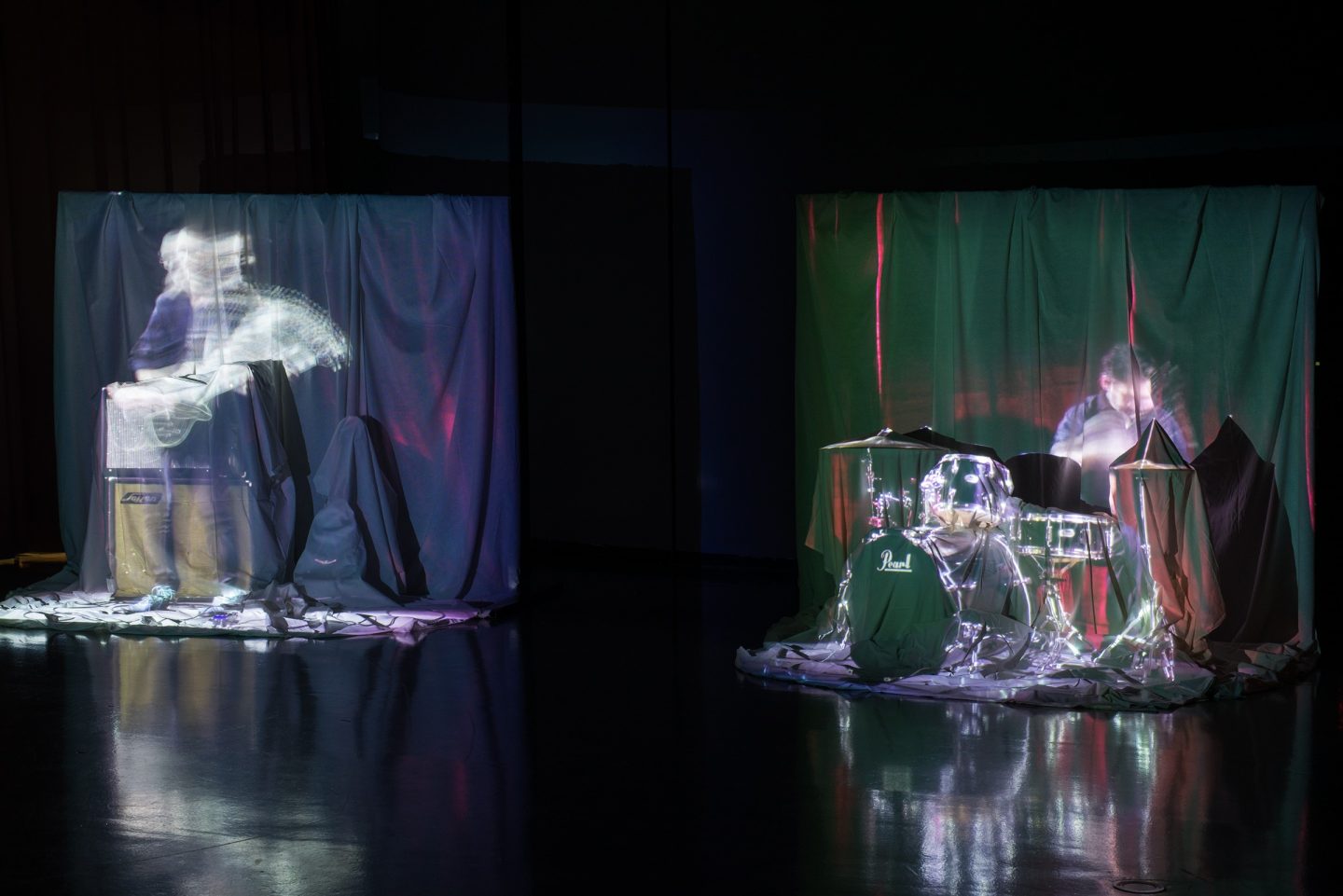
After a long year of enduring without a stage, musician and visual artist David Reumüller’s ghost band is finally playing the new song: a different kind of shadow theater. To immerse yourself and wait. A concert installation in Space04 of the Kunsthaus Graz on the occasion of KLANGLICHT 2021.
“In waiting, time can become endless.” What is endless is long, is eternal. And therefore barely comprehensible for us humans, let alone experienceable. A dream, really. And scary, probably also because we are thrown back on ourselves so much.
For KLANGLICHT 2021, Reumüller is creating an installation at Kunsthaus Graz that merges real and virtual spatial dimensions and makes waiting itself a theme with music that swells and subsides.
Etymologically speaking, to wait means to focus on something. Today, we don’t like to wait and yet waiting is a productive part of our being – according to brain researchers and writers alike. Homer is said to have made waiting his purpose in life … in Space04, people now like to wait. And immerse yourself in waiting.
Born in 1979 in the Murtal valley, David Reumüller moved to Graz at an early age, where he studied visual art at the Ortweinschule. Since graduating in 1998, the artist has been working with various media. In addition to his visual productions, he has also published numerous musical anthologies, publications and films. In his interactive video installations, Reumüller primarily examines perception and puts its individual information content to the test.
In cooperation with Kunsthaus Graz.
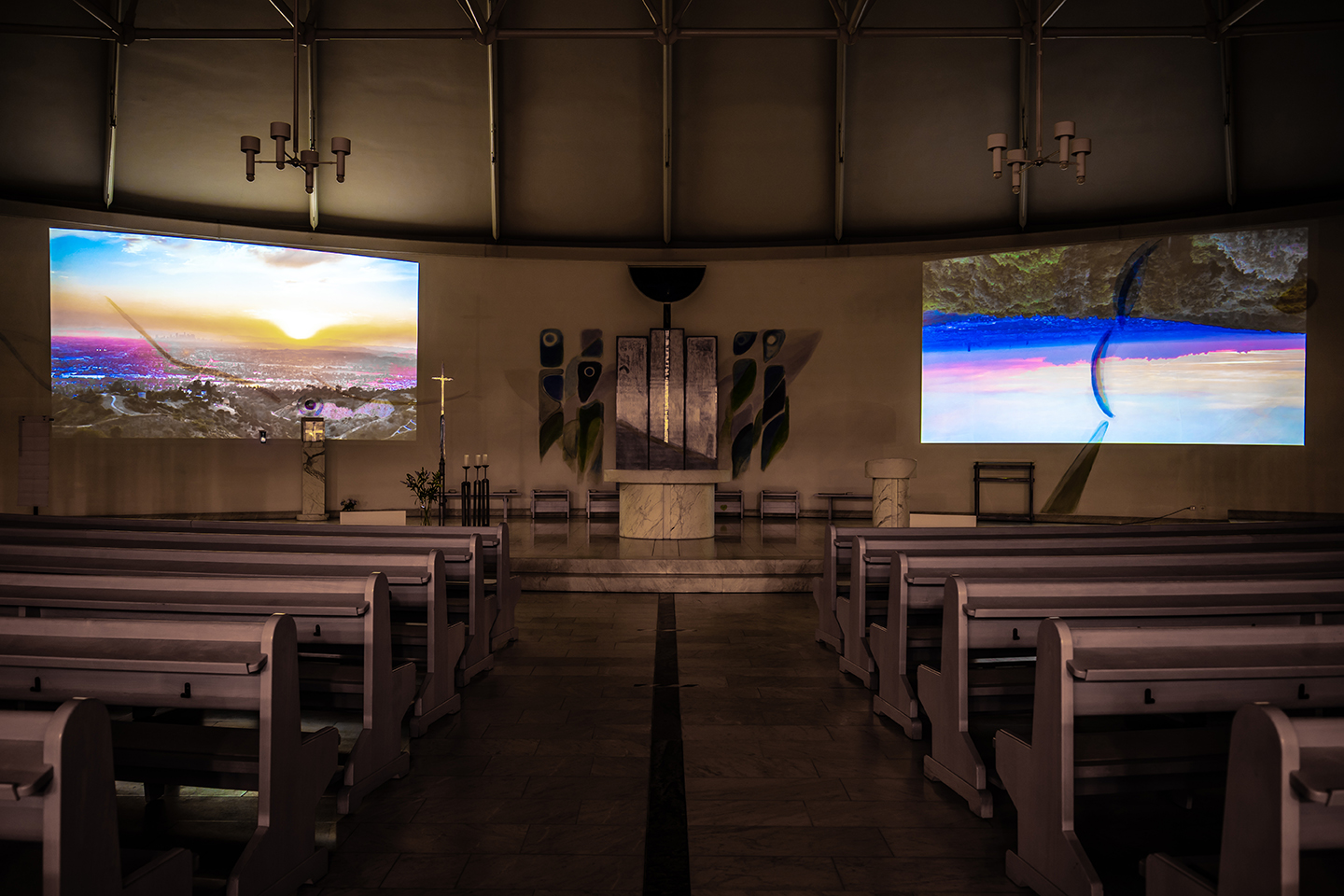
The Schutzengelkirche in Graz-Eggenberg was consecrated by Bishop Johann Weber on October 6, 1996 as the last new church to be built in Styria. On the occasion of this church consecration anniversary and the founding of the parish 90 years ago, this remarkable church by architect Werner Hollomey is part of KLANGLICHT 2021. KIRCHEN KULTUR GRAZ presented a special work by artist Ulrike Königshofer on the four evenings: “Same Time. Different Time.”
One video recording shows the sunrise in Vienna, filmed high above the city from the Jubiläumswarte, while a second recording shows the sunset in Los Angeles at the same time, on the other side of the globe. In everyday experience, it is either day or night. From an objective point of view, these may just be different perspectives on the same event – from a subjective point of view, they are the exact opposite of each other. Everywhere on earth you see the same sun. But the horizon is different. By shifting the perspective, Ulrike Königshofer makes the same event appear completely different.
Biography
Ulrike Königshofer lives and works as a visual artist in Vienna and deals with various aspects of human perception, primarily in photography and media works and installations. Born in 1981 in Koglhof in Styria, she attended the Ortweinschule in Graz and the University of Applied Arts in Vienna. Since then, she has spent time working in Paris, New York, Newfoundland, Trieste and London. In 2019, she received several awards for her work “Same Time. Different Time”, which is part of the KULTUMdepot Graz collection, most recently the Art Prize of the Diocese of Graz-Seckau.
Curated by Kirchen Kultur Graz in cooperation with the Parish Graz-Hl. Schutzengel
Credits
Project: Same Time. Different Time, 2017, HD video, 29:50 min, KULTUMdepot Graz, from: Fantastic knowledge, internally illuminated (2019), art prize winner of the Diocese of Graz-Seckau 2019 | Ulrike Königshofer
For the KIRCHEN KULTUR GRAZ team: Gertraud Schaller-Pressler (overall coordination), Alois Kölbl
With the parish of Graz-Hl. Schutzengel: Heimo Kaindl, Maria Otter, Wolfgang Schwarz
Technical support: Markus Königshofer, eventmanagement/eventtechnics
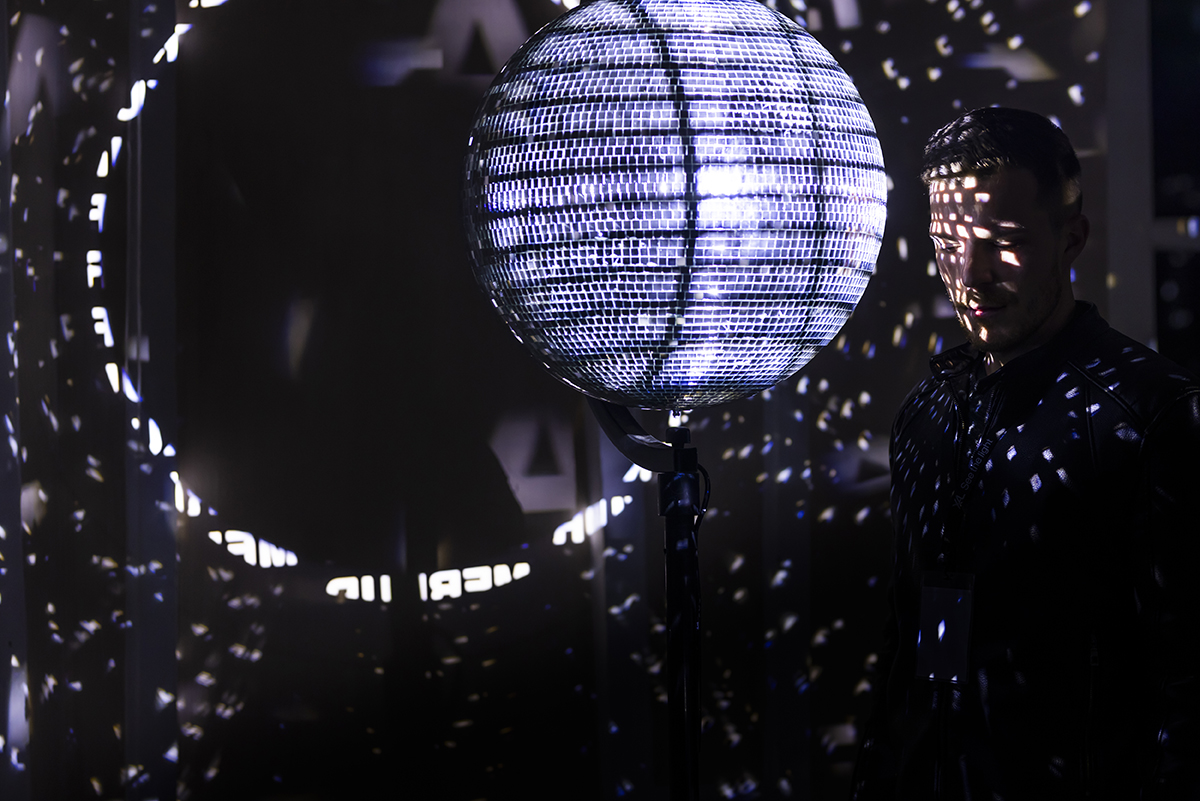
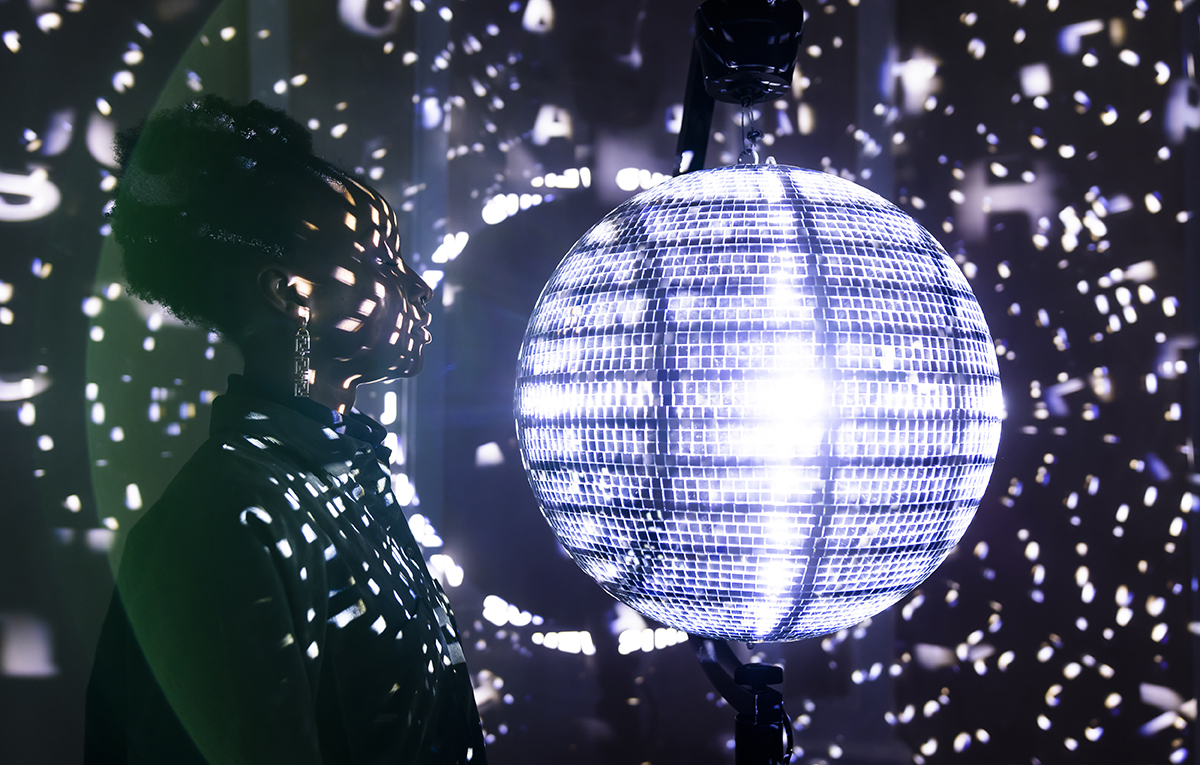
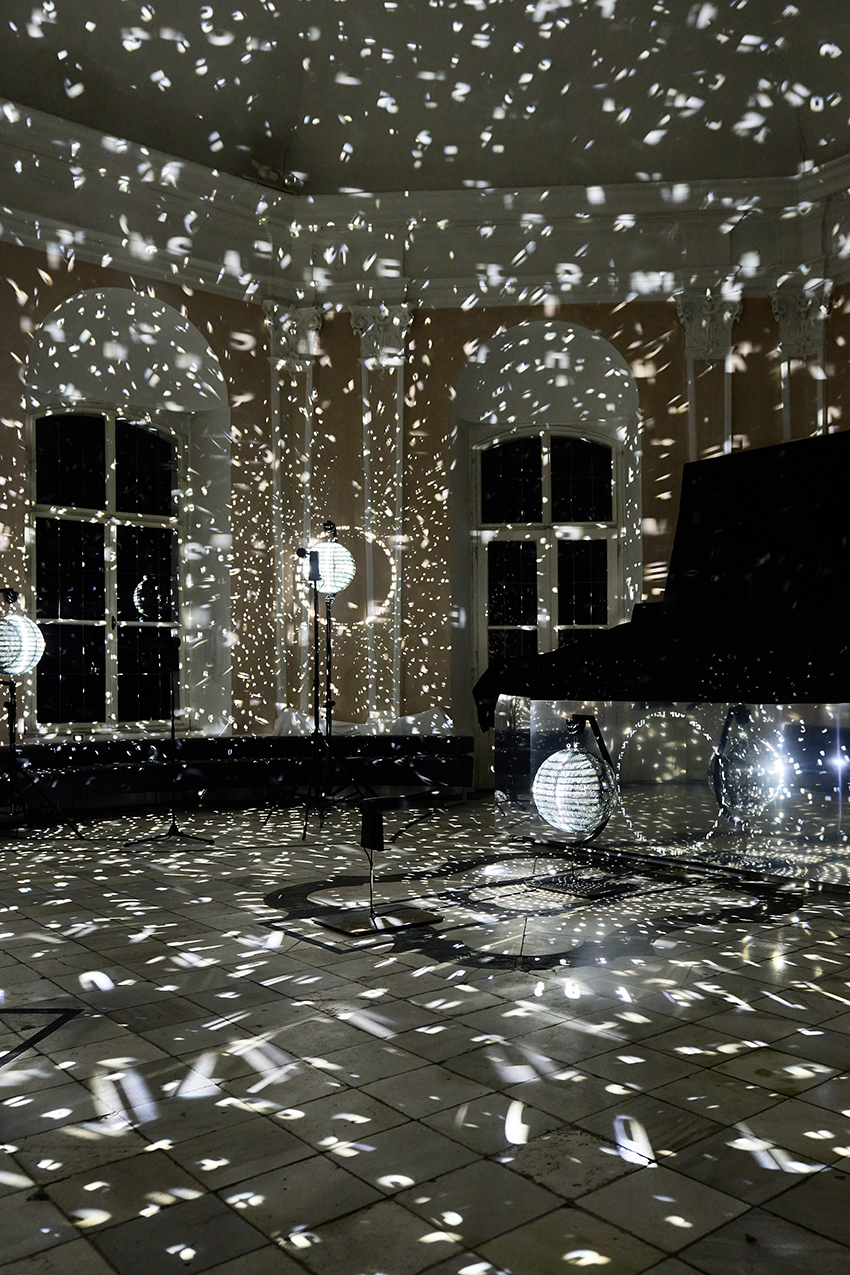
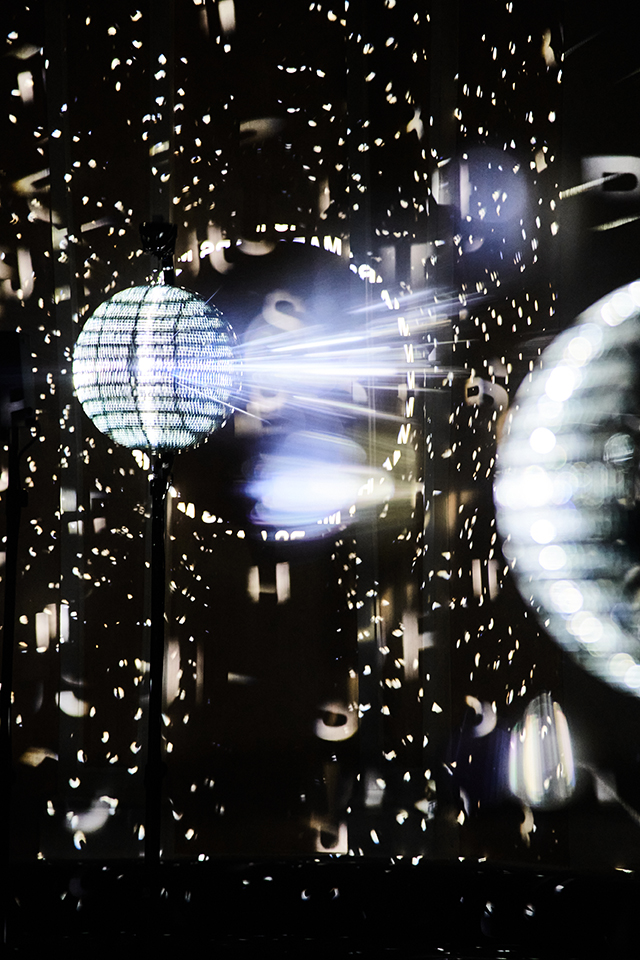
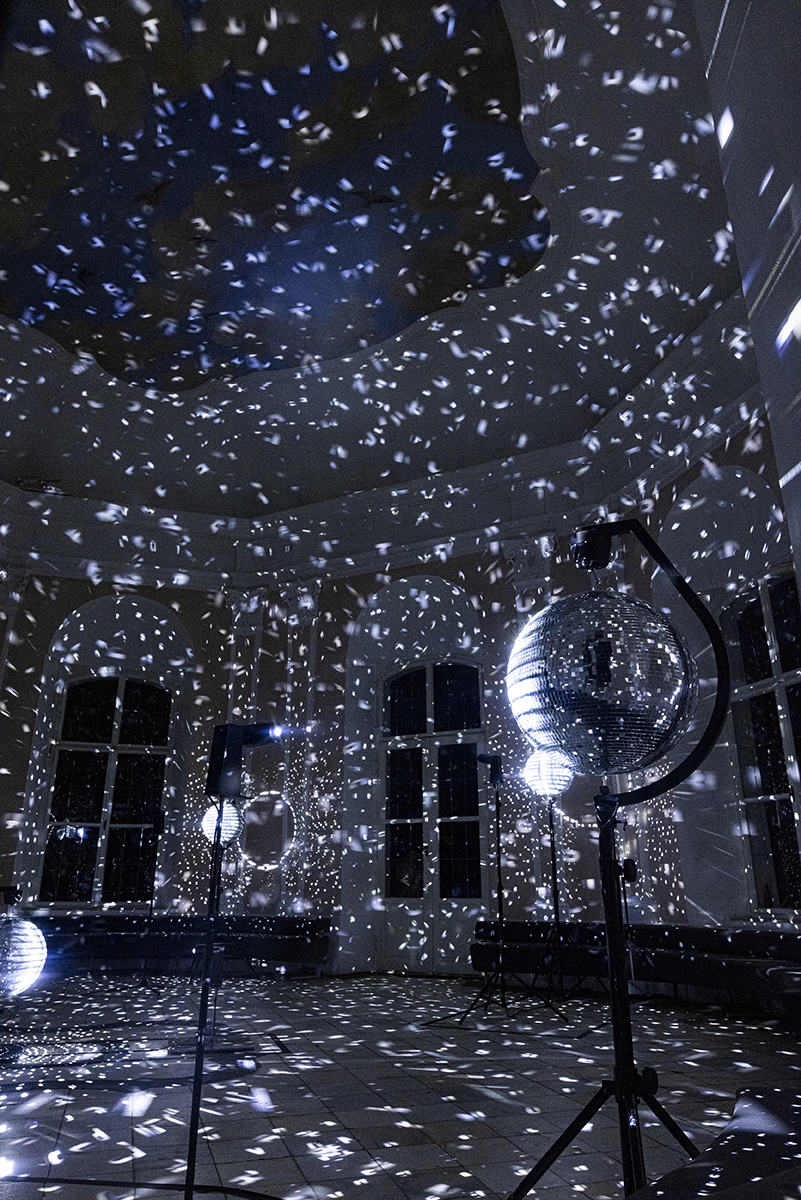
Through the windows of the café pavilion in the garden of Schloss Eggenberg, you are immersed in the infinity of space: the names of five planets in our solar system are projected onto mirrored spheres using light stencils, torn apart by rotation and reflection, losing their clear assignment in the darkness of the room and forming their very own galaxy with their reflections. Viewers are overcome by the sensual feeling of floating in another sphere that is nevertheless intangible. What emerges is a distance to everything earthly, to one’s own self and to the reality of being on planet Earth. For the duration of the viewing of Mischa Kuball’s “Five Planets”, you are carried away into a distant cosmos, created by the superimposition of luminous parts of Mars, Saturn, Venus, Jupiter and Mercury. They glide through space in gentle motion and lend our idea of infinity a touch of accessibility.
With “Five Planets”, Mischa Kuball attempts to make the incomprehensible and incomprehensible of our universe tangible. At the same time, he addresses the development of mankind into an explorer of the universe. In the course of his evolution, especially since the beginning of the Enlightenment, man has strived to know what is “up there” – first by observing with a telescope, later by actually traveling through space. Light can therefore also be understood as a symbol of the enlightened thinking that has always driven mankind.
Biography
Mischa Kuball, conceptual artist, has been working in public and institutional spaces since 1977. He uses the medium of light to explore architectural spaces as well as social and political discourses and reflects on a variety of aspects ranging from socio-cultural structures to architectural interventions, whose monumentality and architectural-historical context he emphasizes or reinterprets. In politically motivated participatory projects, public and private space merge into an indistinguishable whole and offer a platform for communication between audience, artist, work and public space. Mischa Kuball has been Professor of Art in Public Space at the Academy of Media Arts, Cologne, since 2007 and was Professor of Media Art at the Academy of Art and Design/ZKM, Karlsruhe, from 2006 to 2008. He has been a member of the North Rhine-Westphalian Academy of Sciences, Humanities and the Arts, Düsseldorf, since 2015. In 2016, he was awarded the German Lighting Prize.
Credits
Artist: Mischa Kuball
Technical realization: Erik Denneborg, slv-austria
With Courtesy of: Daniel Marzona Gallery
Sound: Julian Koerndl
The installation was realized with
friendly support from WEGRAZ.
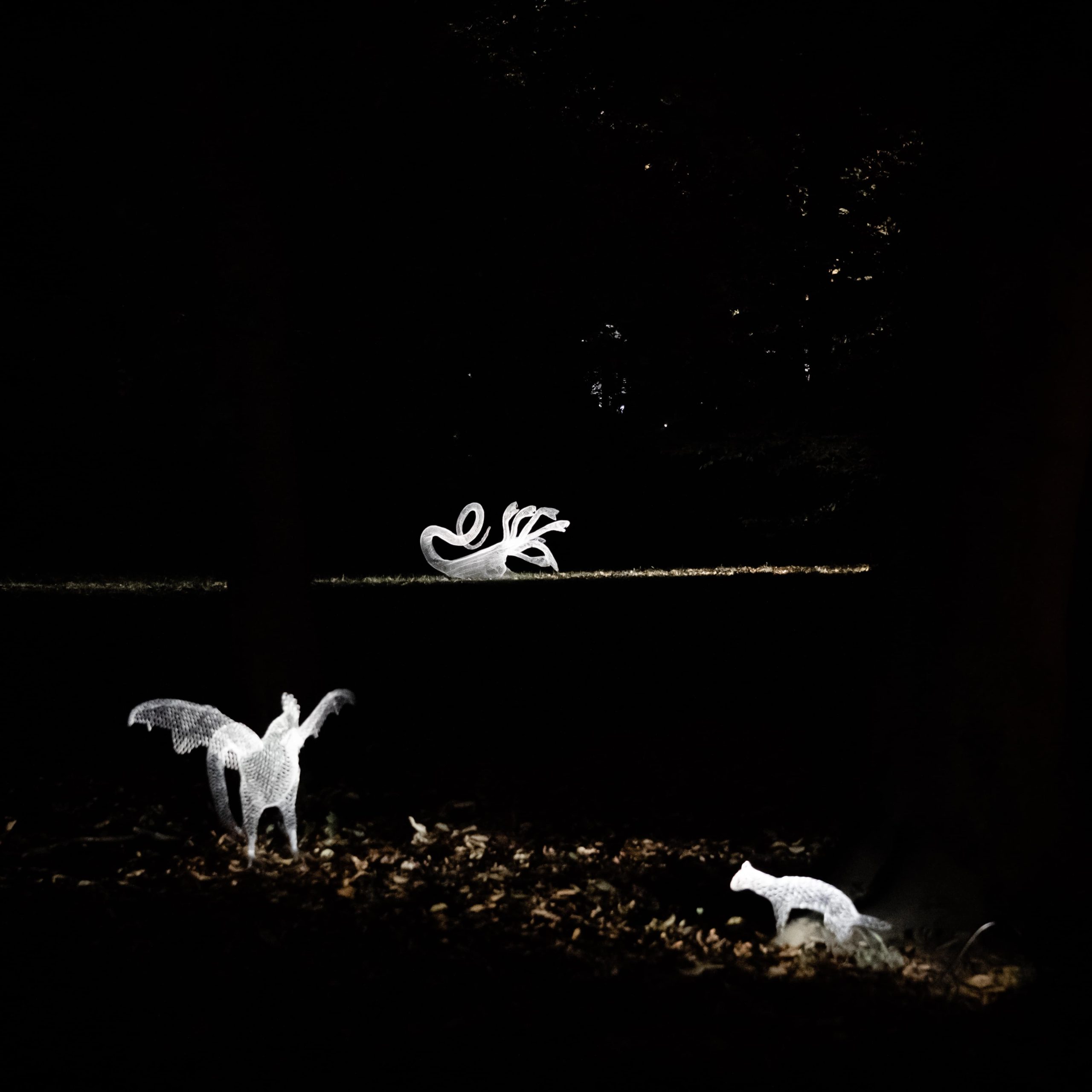
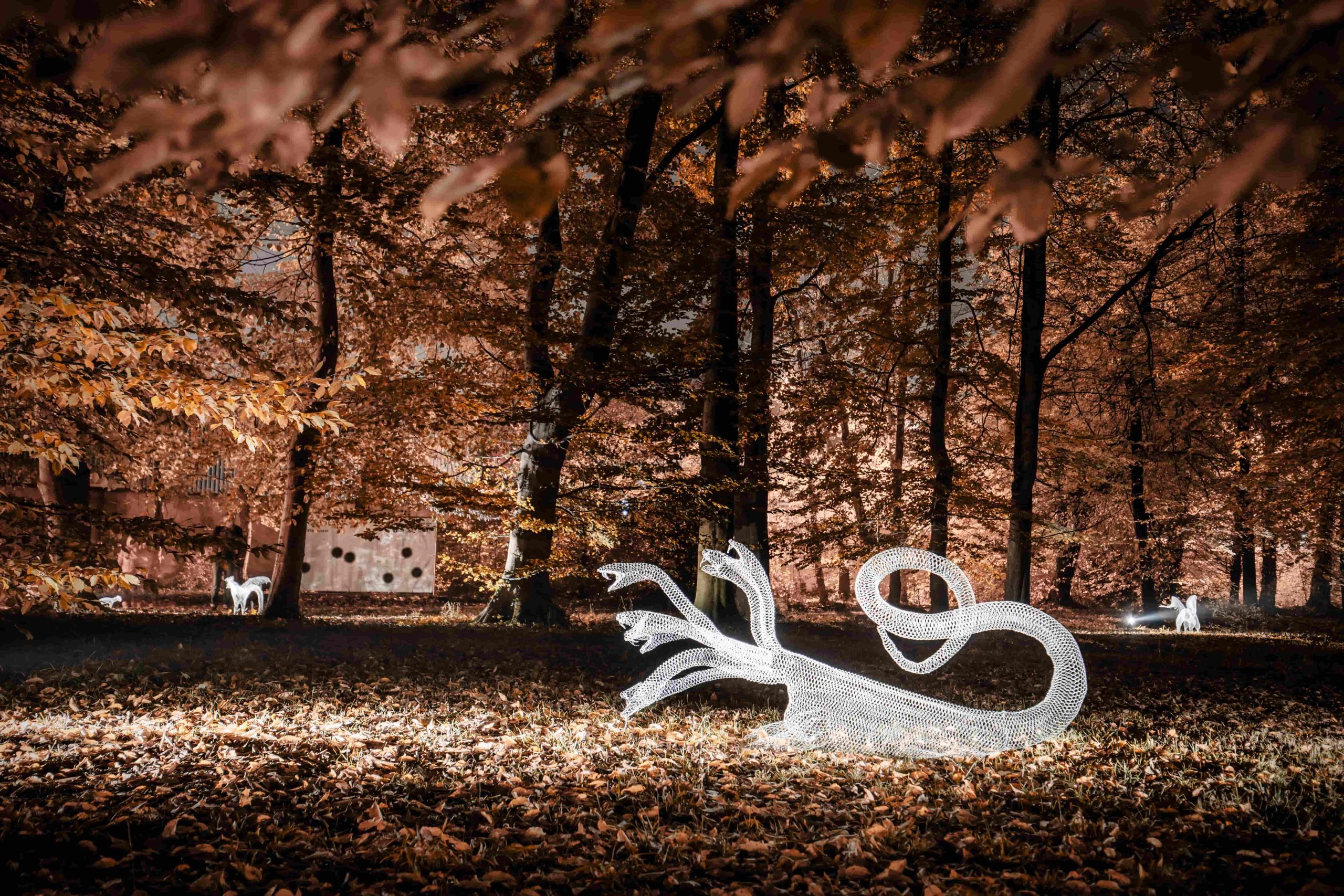
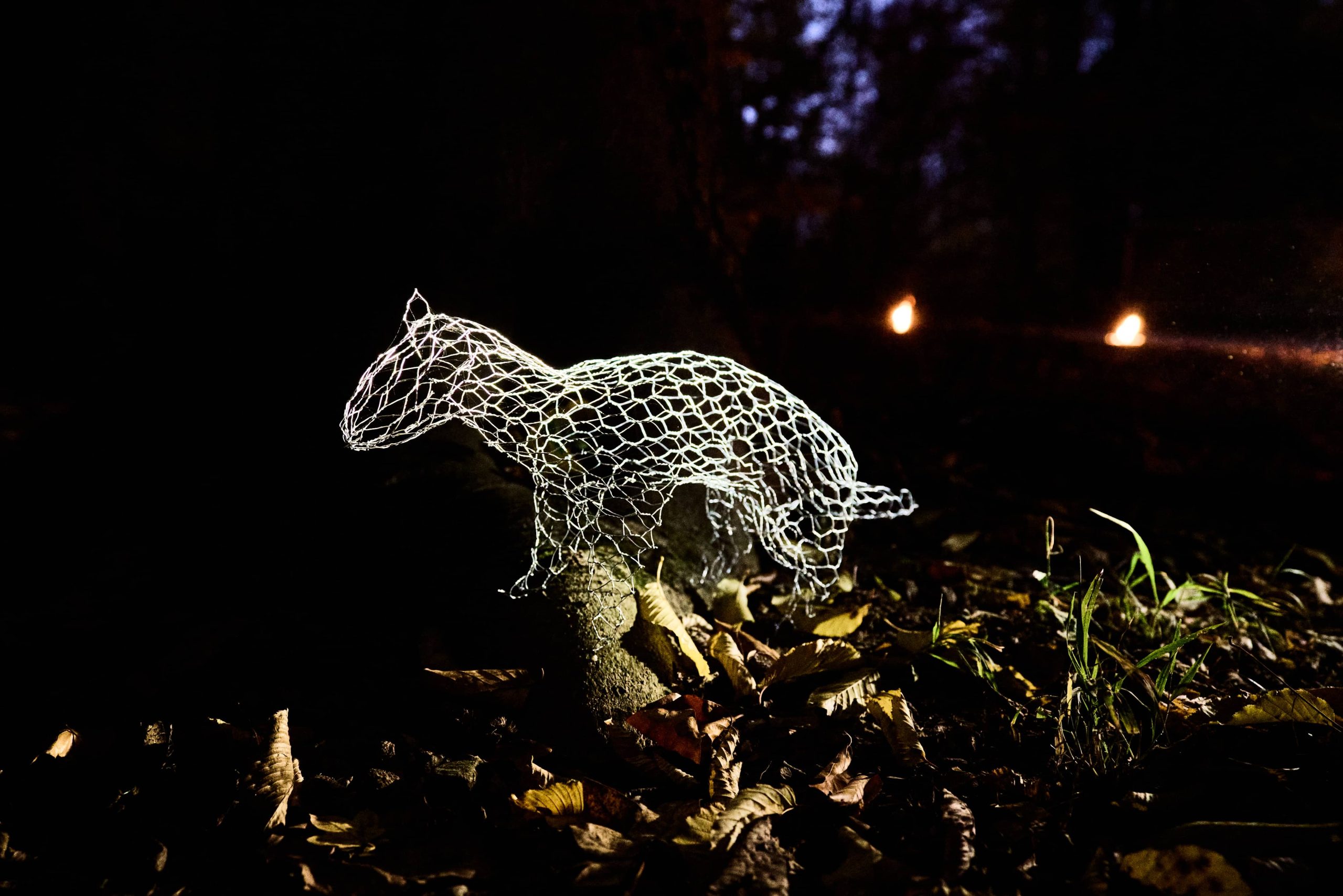
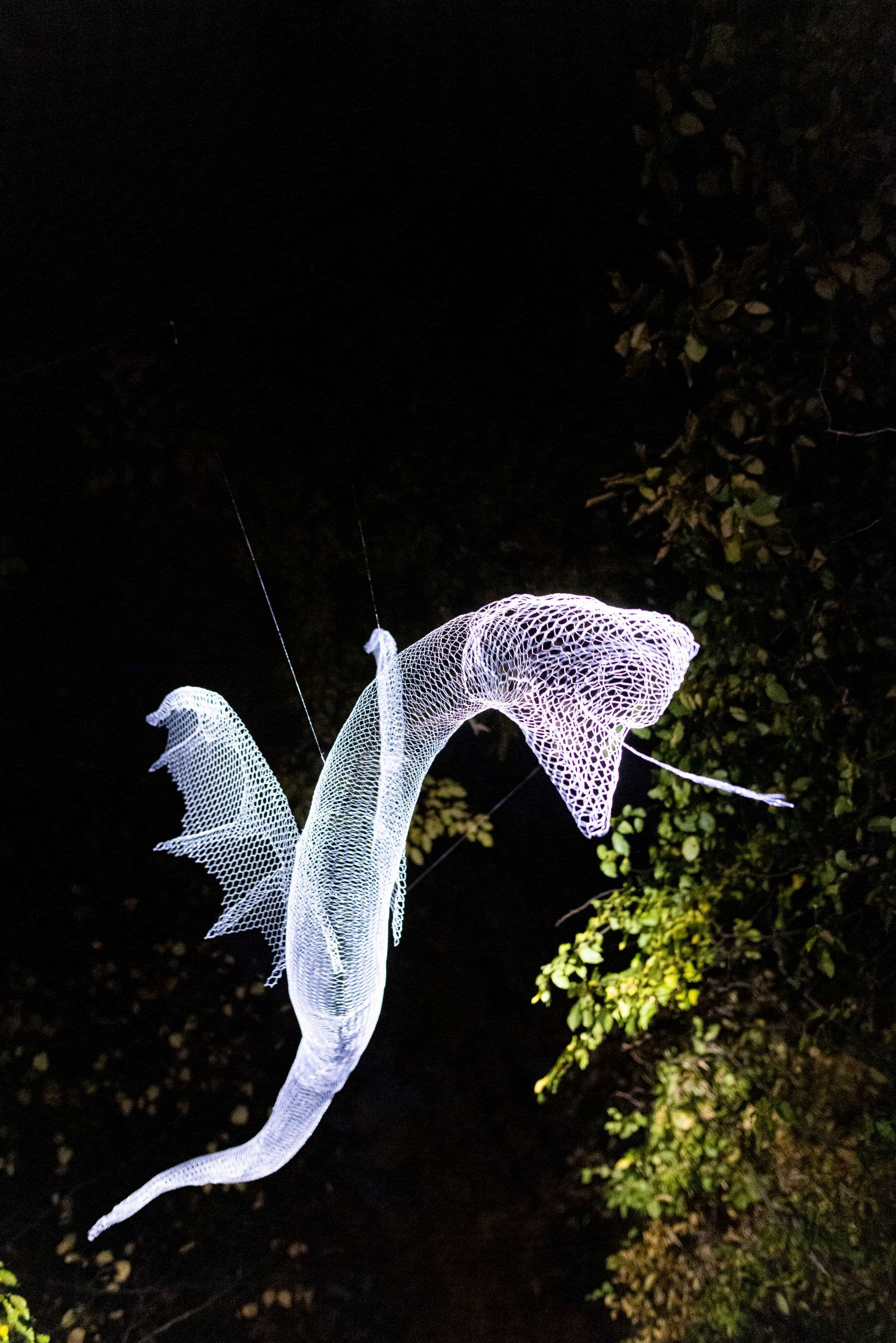
Mythical creatures have always fascinated people, awakening their imagination and casting a spell over them. The walls inside Schloss Eggenberg are also home to a rich and legendary animal world, which inspired artist Katja Paternoster to create her very own fantastic figures. The spatial installation “Wonder Animals” goes back in time and illuminates mythical animals and the legends associated with them. Sculpted by hand and staged with light, a flying snake, a hydra, a basilisk and a weasel, a griffin and a two-headed eagle came to life in the palace park. Hovering in the treetops and hidden in the grove of trees, Katja Paternosters created wonder animals and the illusion of a mythological world in which viewers could also participate when they entered the remote corners of Eggenberg Palace Park. The fragile structure of the wire created the mystical, ghostly, mysterious heroes of legends from the past, which became real in the light.
Biography
Katja Paternoster is a graduate of the Faculty of Architecture at the University of Ljubljana. As a light artist, she works in the field of spatial light installations. Her works reflect a sensitivity to the local identity of the space in which the installation is placed. The medium she uses to express herself is light in combination with simple materials. In the process of creation, the materials lose their original function and with the help of light, the sculptures become visible. Her works have already been presented at many light festivals throughout Europe. She passes on her knowledge and passion for light as a mentor in various lighting workshops. Paternoster’s first installation, a series of wire sculptures, was called “Night Visitors”, in which the light shows the presence of wild animals in the city at night. Her later installation was called “Domestic & Wild”, in which the light symbolically outlines the coexistence of different animal species in a common territory. In Paternoster’s installation “Below surface”, the light revealed the depth of the sea and its rarely seen inhabitants.
Credits
Artist: Katja Paternoster
Music: Igor Matković
Technical implementation: grafx live-marketing GmbH, slv-austria
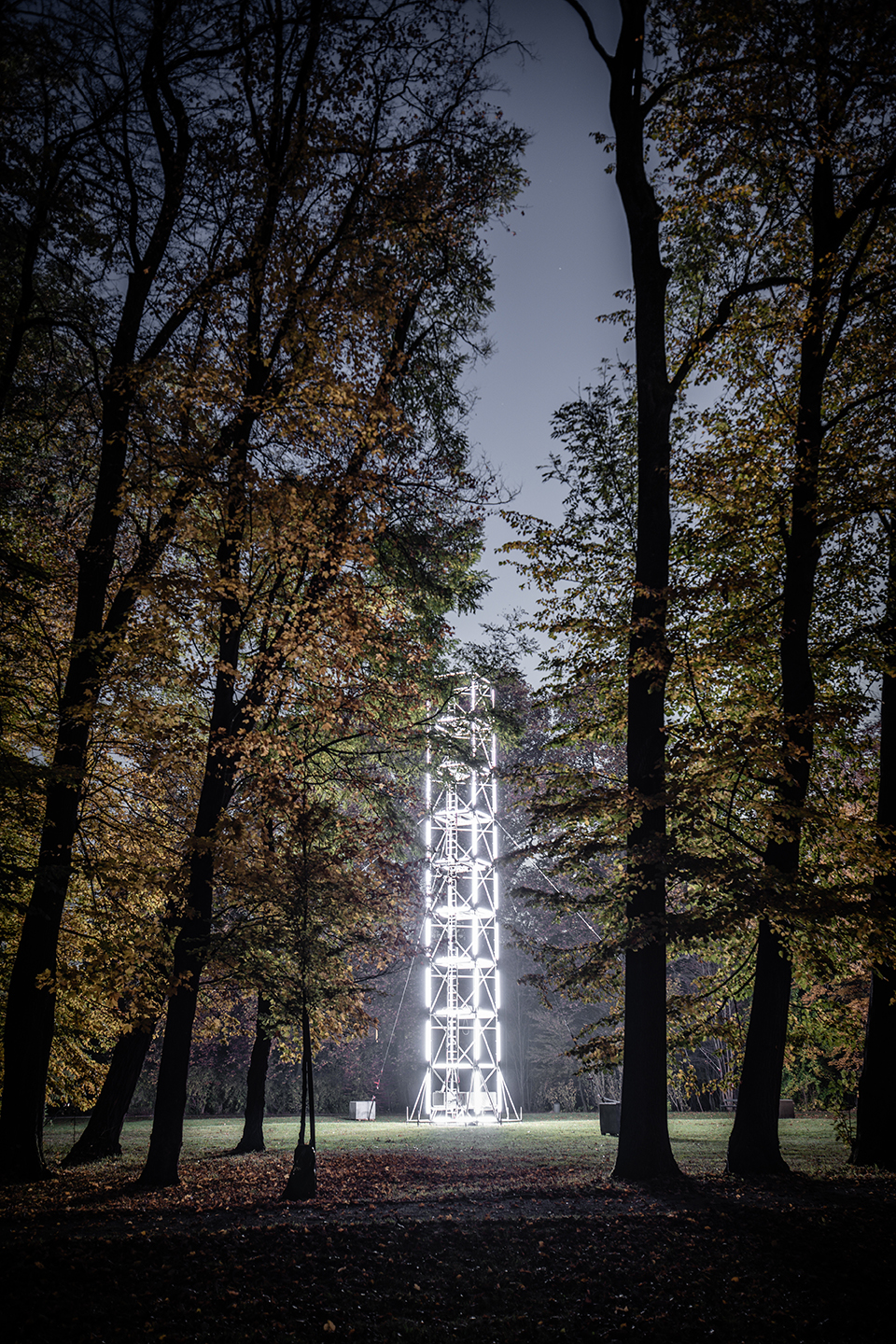
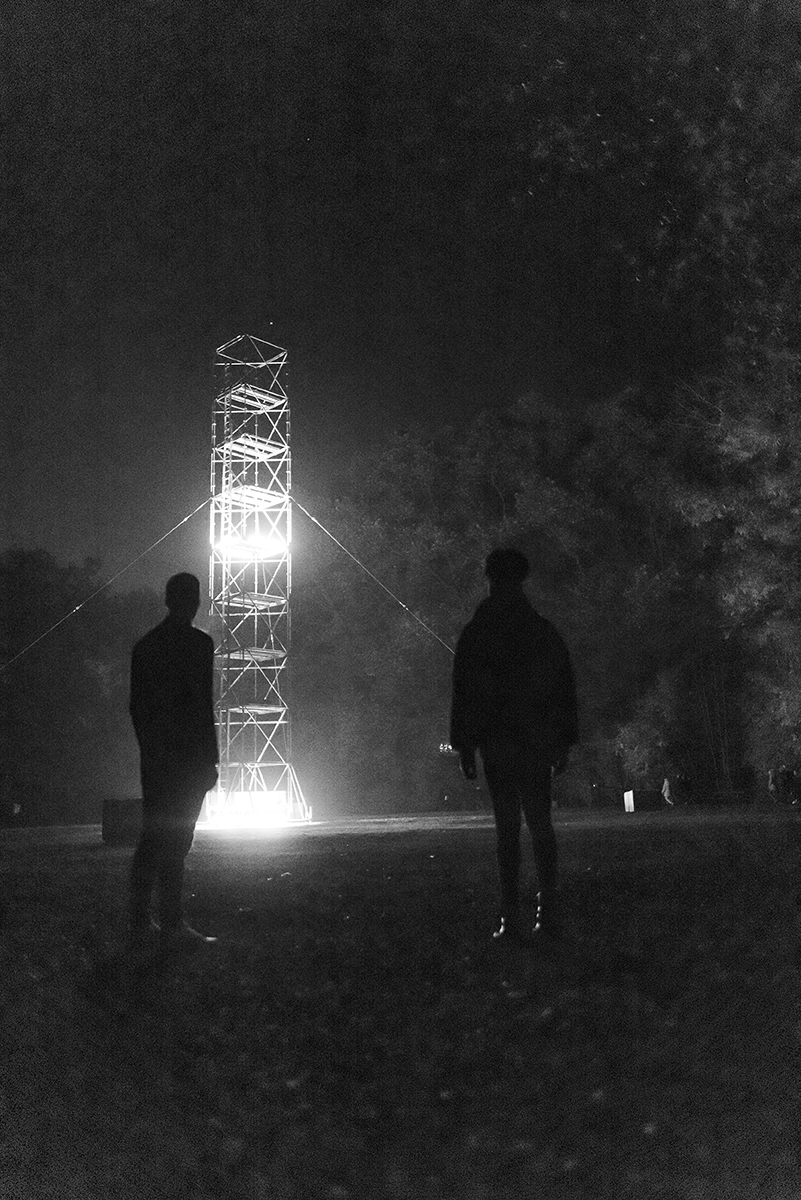
Here, in the darkness of the evening, the light uses the geometric structure as its playground, flitting across surfaces, dancing around a tower, building it up and making it disappear again. The “Tower” installation is based on nine cubes that can be arranged in different compositions and grow upwards – in the truest sense of the word – as a lighthouse at Klanglicht 2021. The edges of the cubes are fitted with 108 LED tubes that dynamically illuminate the sculpture. The eight-channel sound that surrounds the sculpture was specially composed and is a score of “overtones”. An overtone is any frequency that is greater than the fundamental frequency of a tone. In the interplay of light and sound, of construction and deconstruction, the “Tower” project becomes a spatial experience characterized by ascent and elevation, elimination and depression.
Biography
Neon Golden create projects in various areas of media art. Their works merge disciplines such as visual, generative, interactive and computer-related art as well as rapid prototyping, performance, architecture and design. Their artistic concepts focus primarily on the themes of systems, data and interaction, as well as the interplay and interaction between nature and man.
Credits
Concept and programming: Stefan Kainbacher
Music: Lucas Dietrich
Production: Corinna Loesch
Technical implementation: grafx live-marketing GmbH, getec eventtechnik GmbH
The installation was realized with the kind support of the Kronen Zeitung.
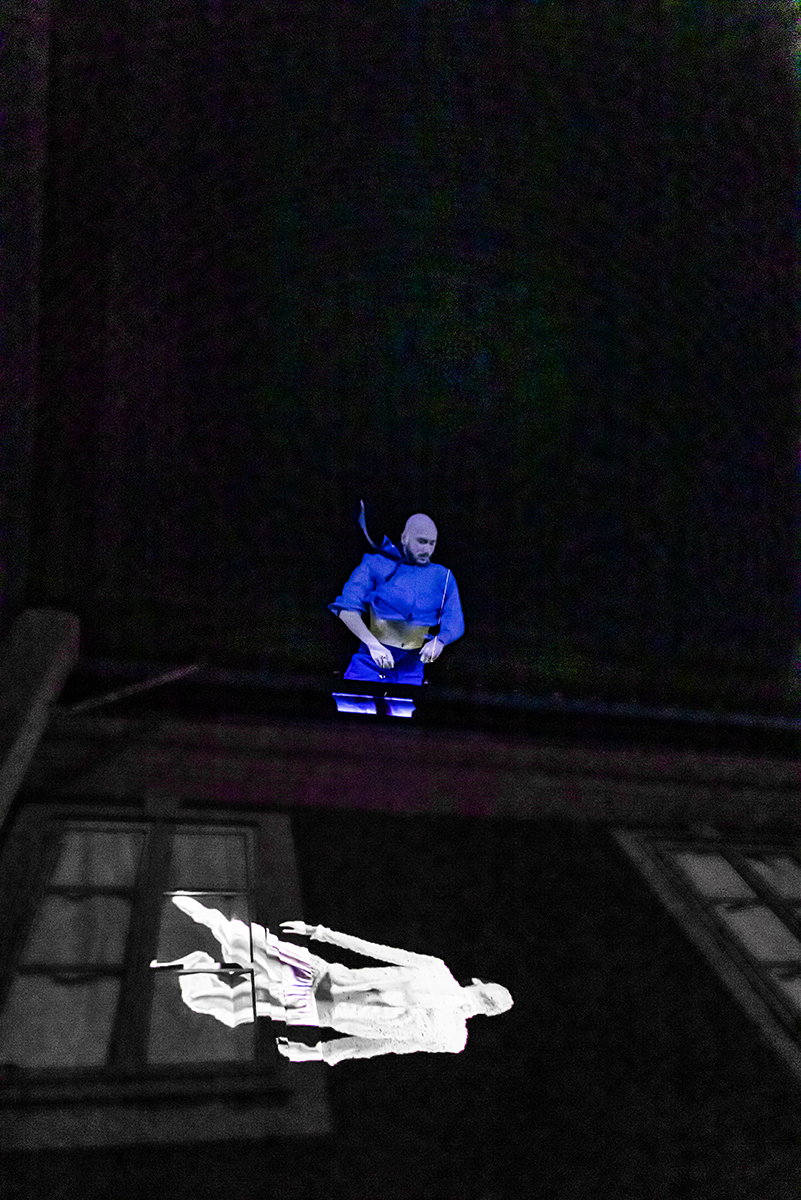
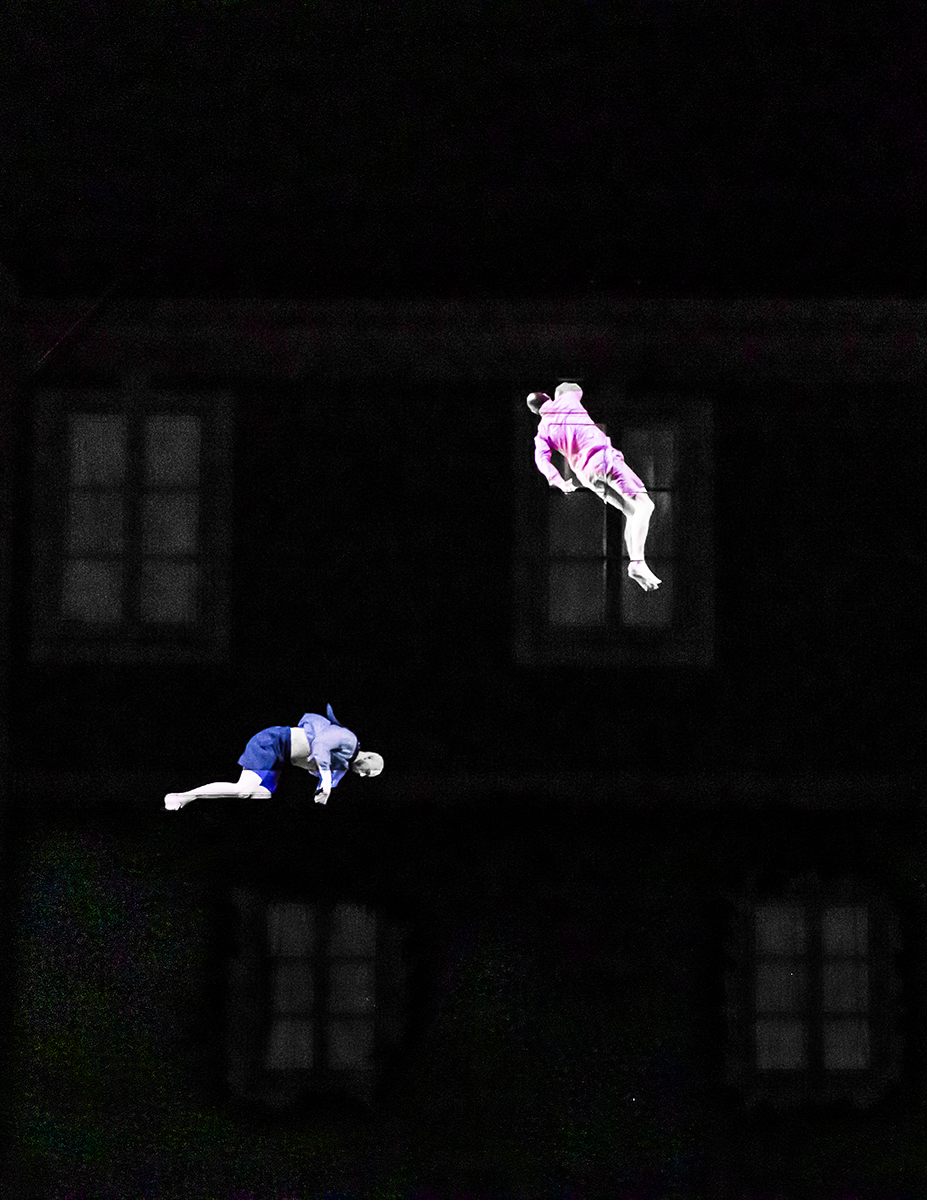
Body – floating and flexible at a height of around ten meters. Timeless, weightless. We stand still and look up. We breathe naturally with the breathless apparitions until they dissolve into a vacuum. “UN-retained” is a visually stunning, poetic story that brings silence into the world and makes us forget time, space and gravity. The image before our eyes seems to slow down our heartbeat and whisk us away to a universe free of worries and fears. The performance artist Sabine Molenaar and her group “Sandman” have created a dance production that is both overwhelming and invites contemplation as an immersive video installation – a large, impressive performance that also touches us with its intimacy. Viewers of “UN-retained” experienced a symbiosis between their own familiarity with real bodies and hidden technology, which makes such an experience possible in the first place.
Biography
With her company “Sandman”, Sabine Molenaar creates imaginative performances in which the associative logic of dreams prevails. The artist and choreographer develops her performances from a specific attitude: the body, in which she combines the highest mental, physical and emotional concentration, is her tool and gives her figures and associations depth and expressiveness. The body is the starting point and the compassion: painful, virtuous and mercilessly personal. The company “Sandman” was founded in 2012 by Sabine Molenaar and is based in Brussels.
Credits
Production: Sandman
Concept & Choreography: Sabine Molenaar
Technical concept and video mapping: Gertjan Biasino
Composer: Jochem Baelus
Dancers: Gunther Polle, Corentin Dockx, Thierry Dockx, An Meirsman, Thibault Dockx, Sabine Molenaar and Umiko Dockx Molenaar
Other contributors: Alexandra Brixy, Cinediving/ Wim Michels, Thibault Dockx, Jeroen van Haudt, Adrien Lengrand, Nienke Rooijakkers, Filip Timmermans
Executive producers: DansBrabant & Kosmonaut
Co-production: DansBrabant, GLOW Eindhoven
With the support of: Beamsystems, Fonds Podiumkunsten, LITES/Cinediving
Technical implementation: grafx live-marketing GmbH, pro-video, getec eventtechnik GmbH
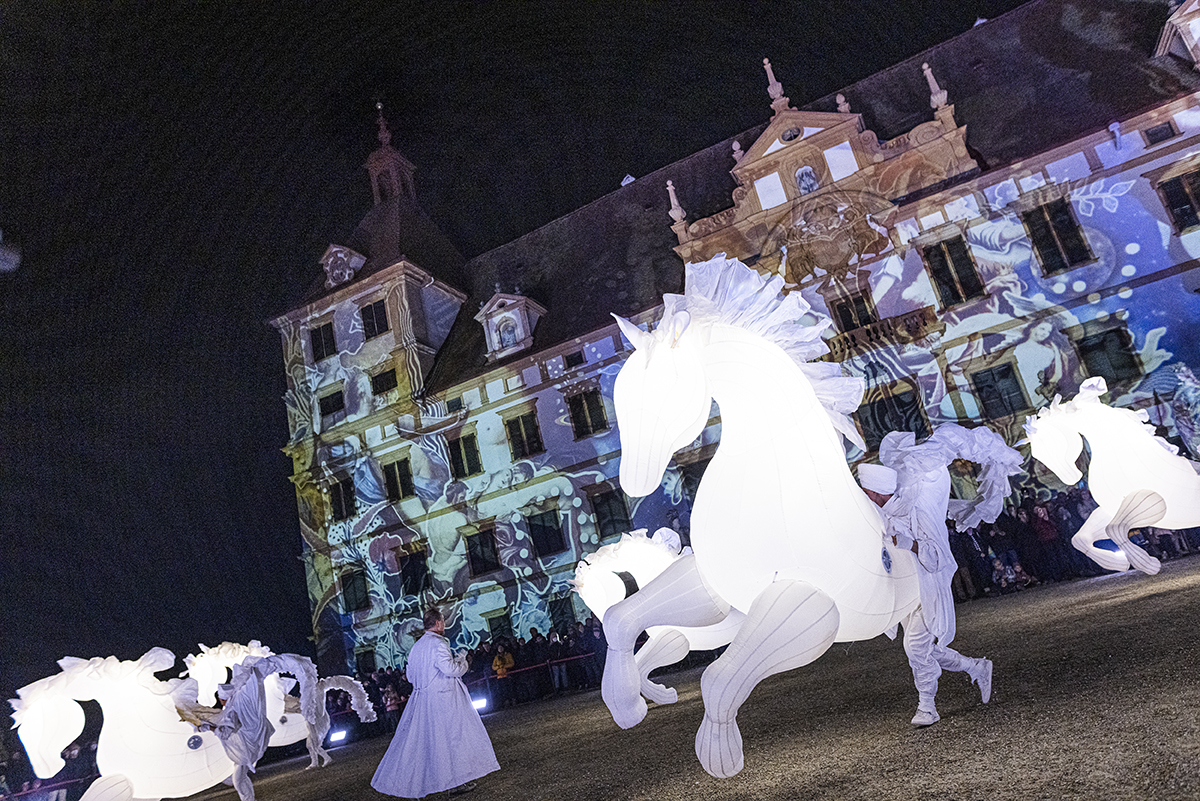
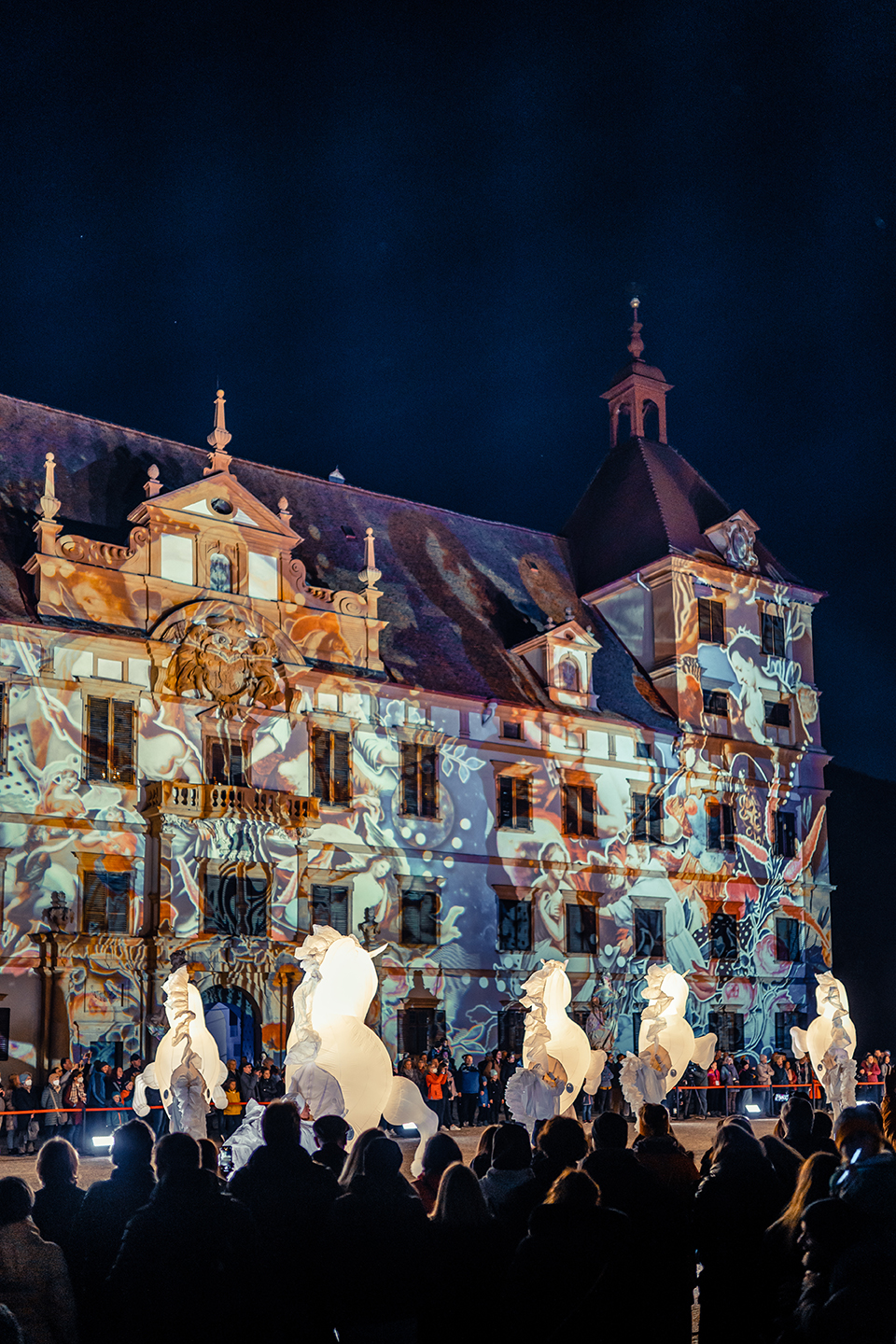
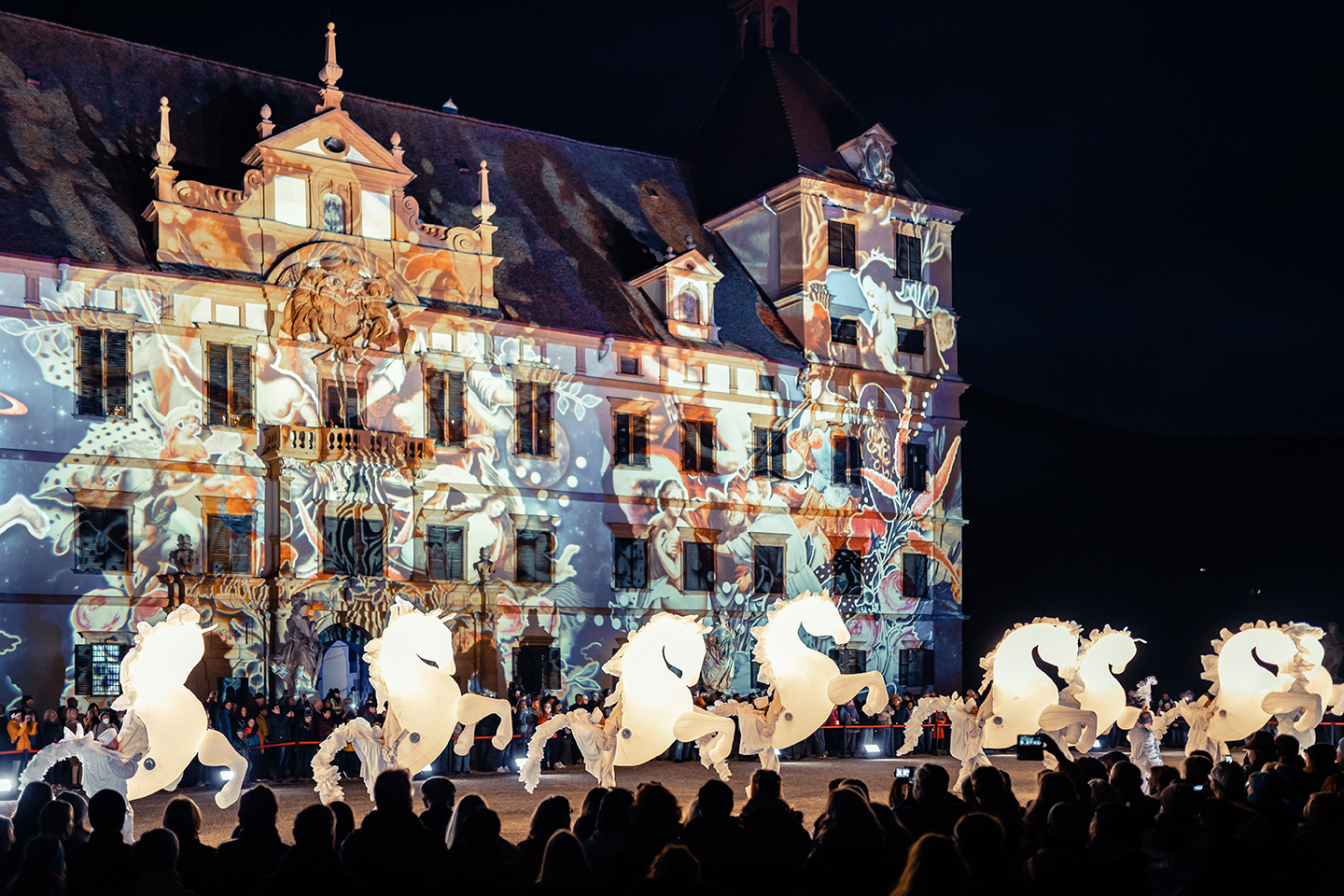
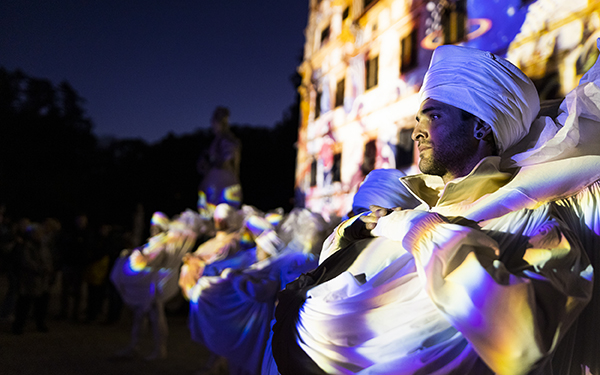
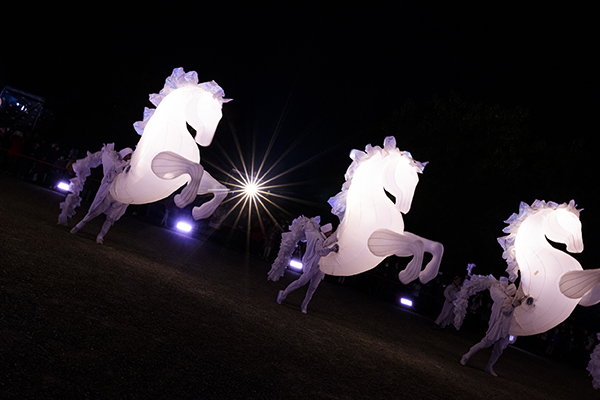
It’s like something out of a dream: strange figures have gathered in this square in front of the castle. They are dressed bizarrely, as if from the distant future, and present themselves to the audience with their heads held high. All of a sudden, this scene is transformed into an enchanting world: the figures become galloping horses, shining brightly and proudly into the night sky. But this fantastic herd is not wild and untamed at all – on the contrary! Elegant and graceful, they follow a precise choreography and cast a spell over the audience.
Every hour, the French artist and performance group Compagnie des Quidams transformed the forecourt of Schloss Eggenberg into a magical world of its own, taking the audience on a luminous journey into the land of dreams. Dancing creatures made of air, light and silk told scenic stories and created unforgettable images against the backdrop of Schloss Eggenberg.
Biography
Founded in 1994 by its artistic director Jean-Baptiste Duperray, the “Compagnie des Quidams ” has staged more than a dozen performances in over forty countries, from Europe and Asia to Australia and South America. It brings together twenty artists and technicians from various fields such as theater, dance, music and circus. The Compagnie des Quidams is based in the village of Etrez Quidams in the north of the Ain. In addition to its performances, it also develops projects to raise awareness of art in public spaces, sometimes with open rehearsals and artistic workshops.
Credits
Writers: Hal Collomb, Jean-Baptiste Duperray & Géraldine Clément
Director: Jean-Baptiste Duperray
Costumes: Géraldine Clément, Frédéric Grand
Music: Serge Besset
3D model: Jean-Marc Noirot-Cosson
Production: Compagnie des Quidams
Technical realization: grafx live-marketing GmbH, ARTEC group GmbH
The performance was realized with the kind support of Steiermärkische Sparkasse.
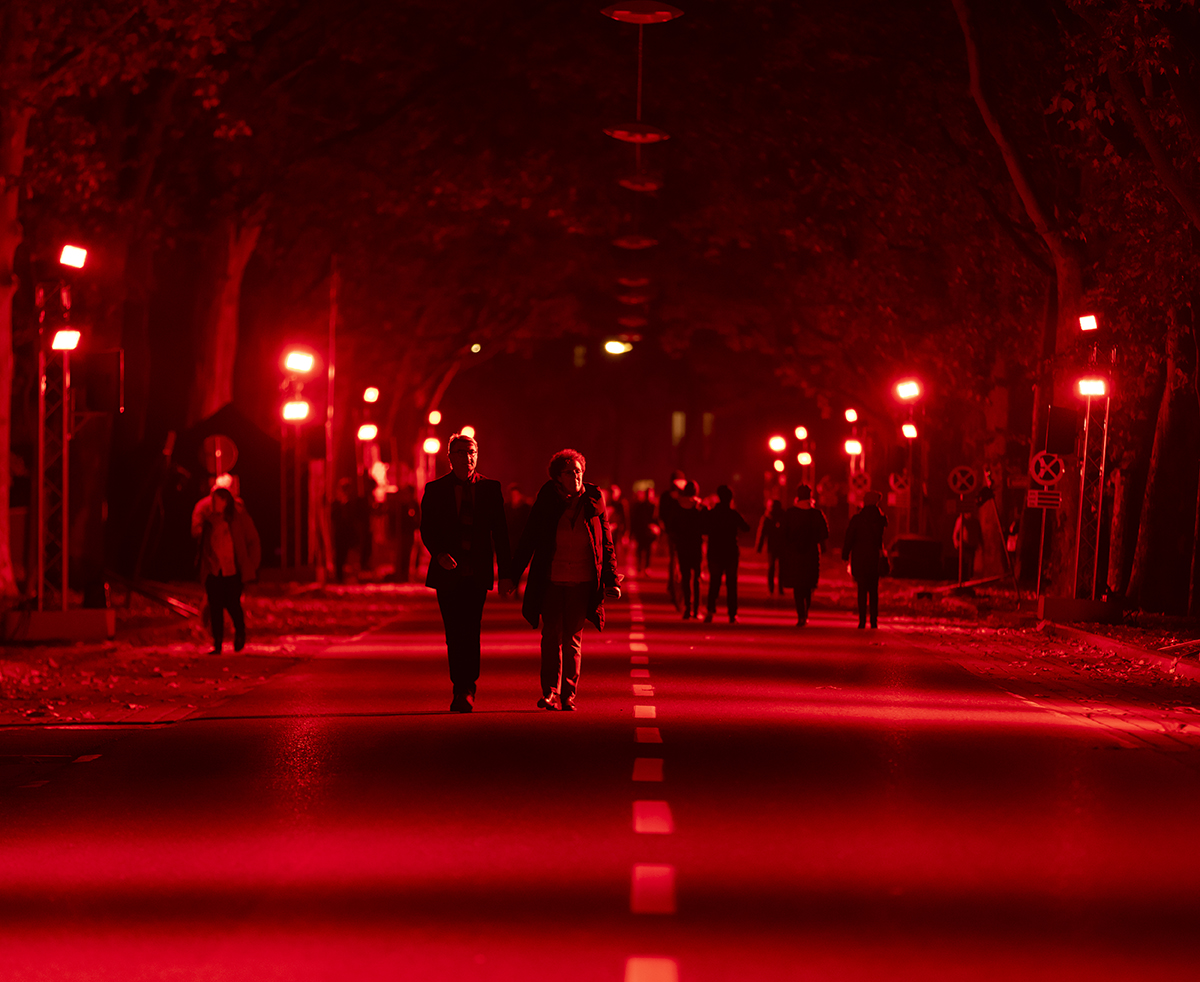
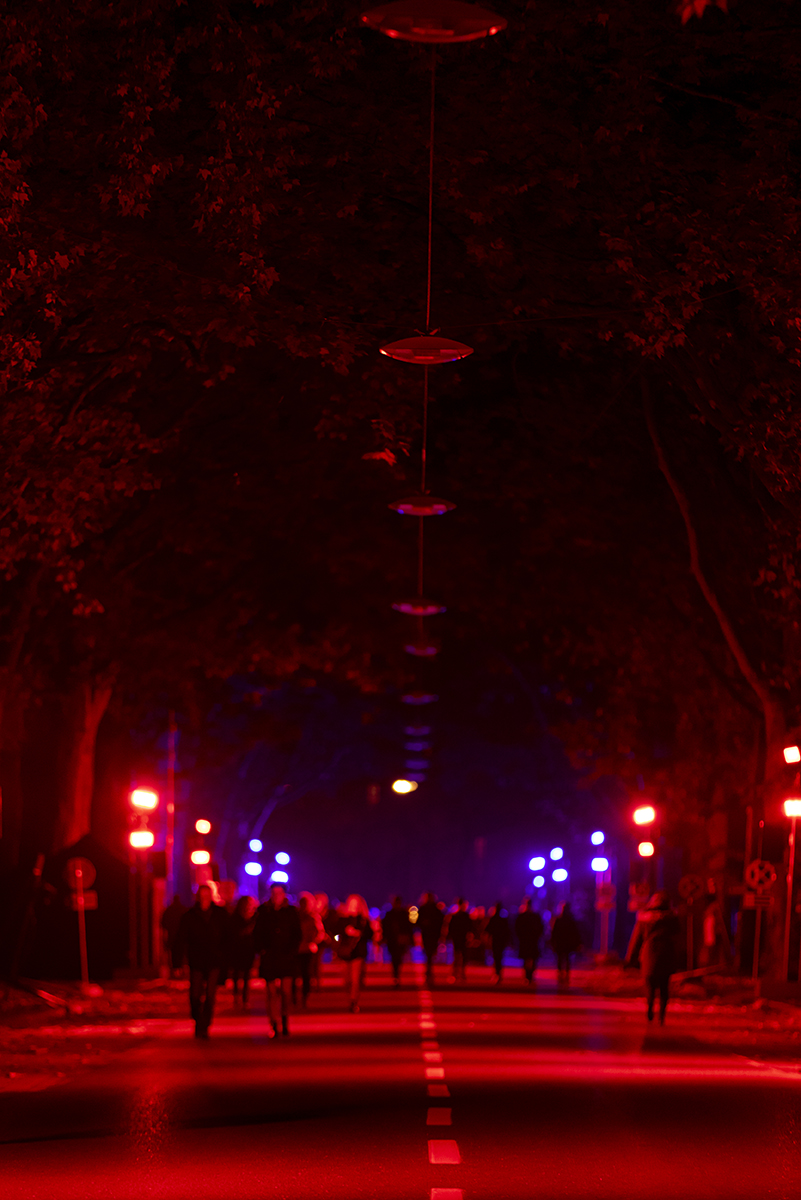
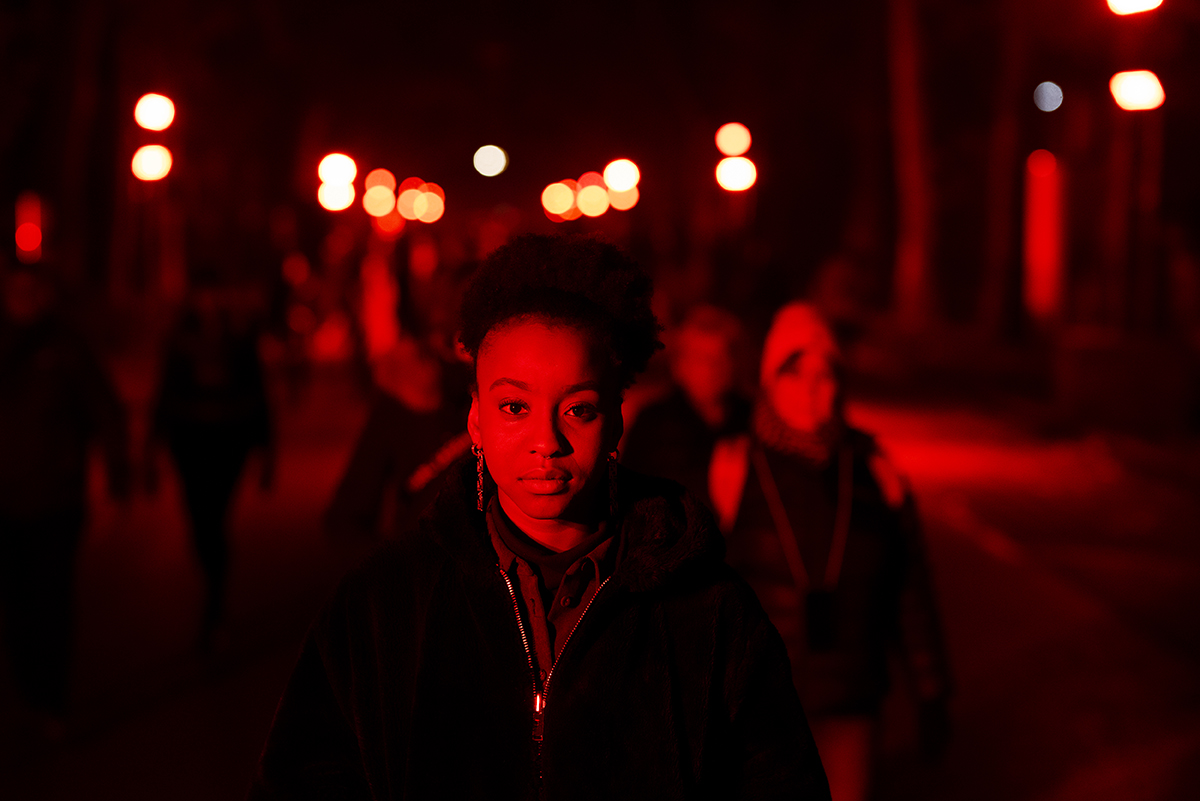
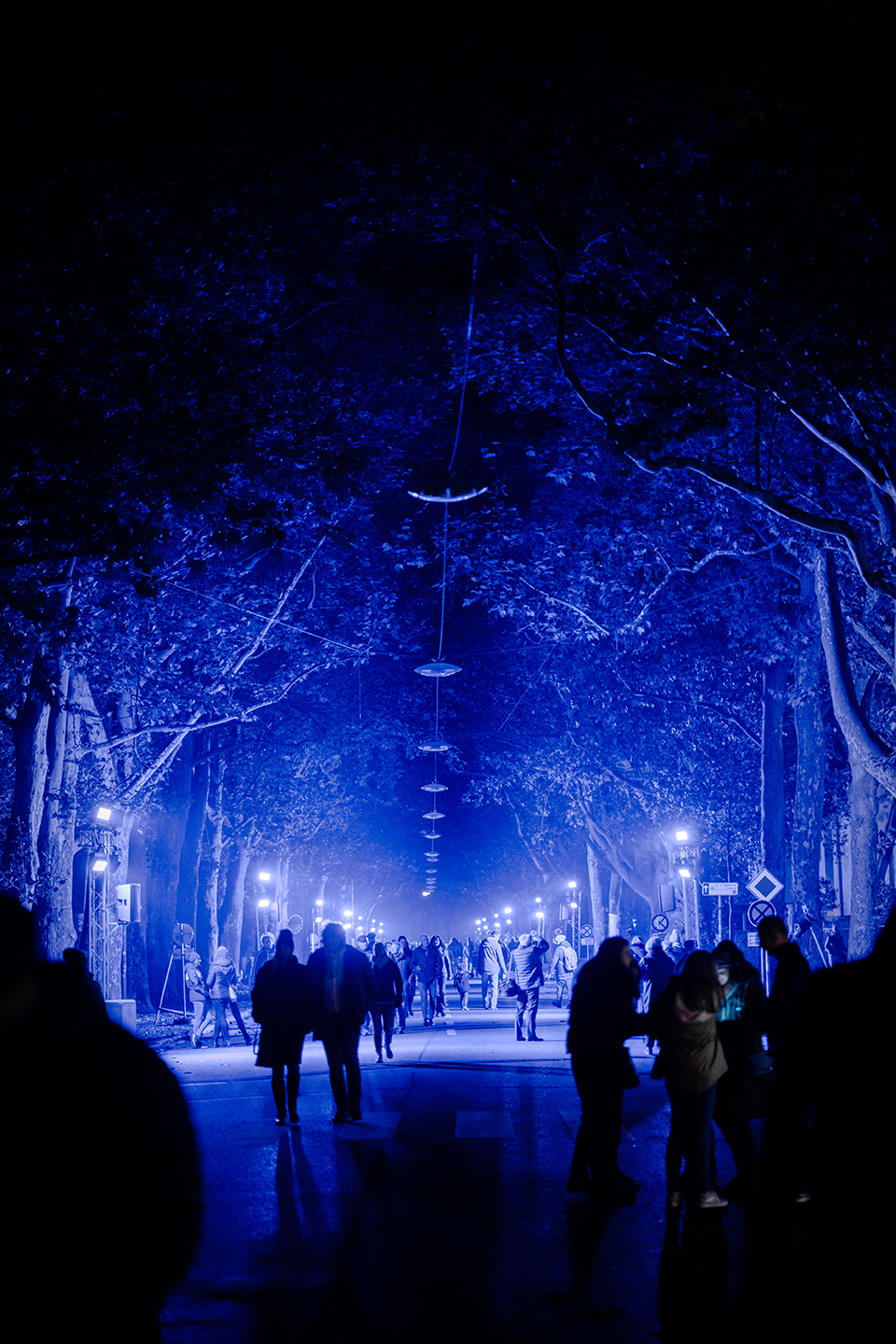
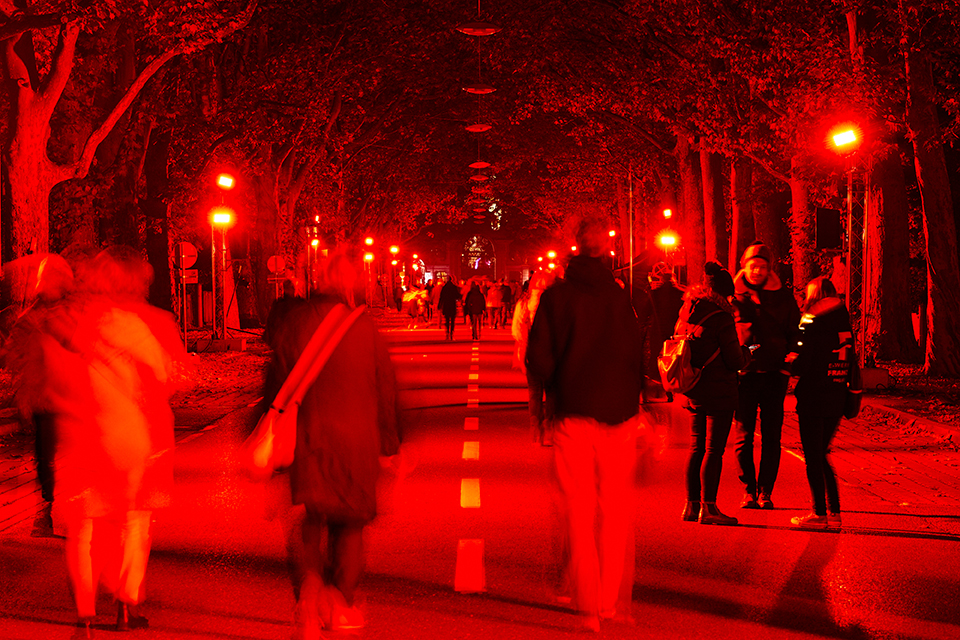
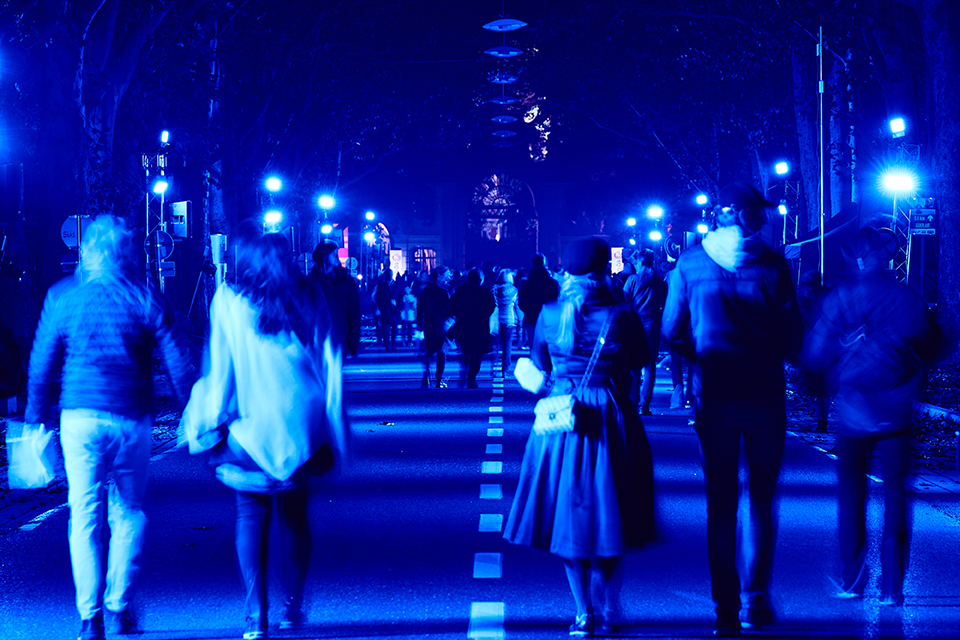
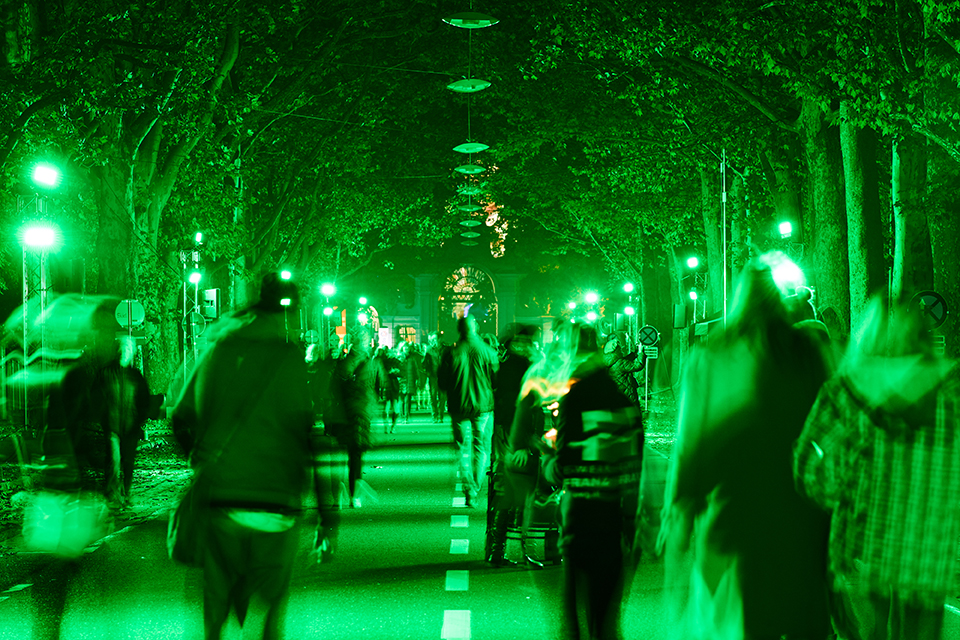
Constant’s Zone by studio Asynchrom
The utopia “New Babylon” by artist Constant Nieuwenhuys is a newly conceived, radical urban development from the 20th century that no longer defines living spaces by their boundaries, but by their use and makes them visible by means of individual coloring. studio ASYNCHROME experiments with this utopia, makes Constant’s city plans tangible and lets Eggenberger Allee shine alternately in red, green and blue. By changing the light spaces, visitors are encouraged to spontaneously enter into an exchange with their changing surroundings and adapt their emotional and sensory world to this new atmospheric space.
Credits
Concept: studio ASYNCHROME
Technical implementation: Helmut Kaplan, grafx live-marketing GmbH, getec eventtechnik GmbH
Sound Paths by Winfried Ritsch
“Sound paths” composed by Winfried Ritsch accompany visitors on their way through the light installation “Constant’s Zones”. Micro-compositions, so-called “SoundLives”, allow visitors to look and listen behind the facades of the Eggenberg district: With the dripping of the tap, with scraps of words and music, with footsteps or the whirring of an electrical appliance.
Credits
Composition: Winfried Ritsch
Software: Martin Simpson, Chonglian Yu, Johannes Zmoelnig (Soundlives)
With the support of: Atelier Algorythmics, Institute for Electronic Music and Acoustics Graz
Technical realization: Helmut Kaplan, grafx live-marketing GmbH, getec eventtechnik GmbH
The installation was realized with the kind support of Holding Graz.
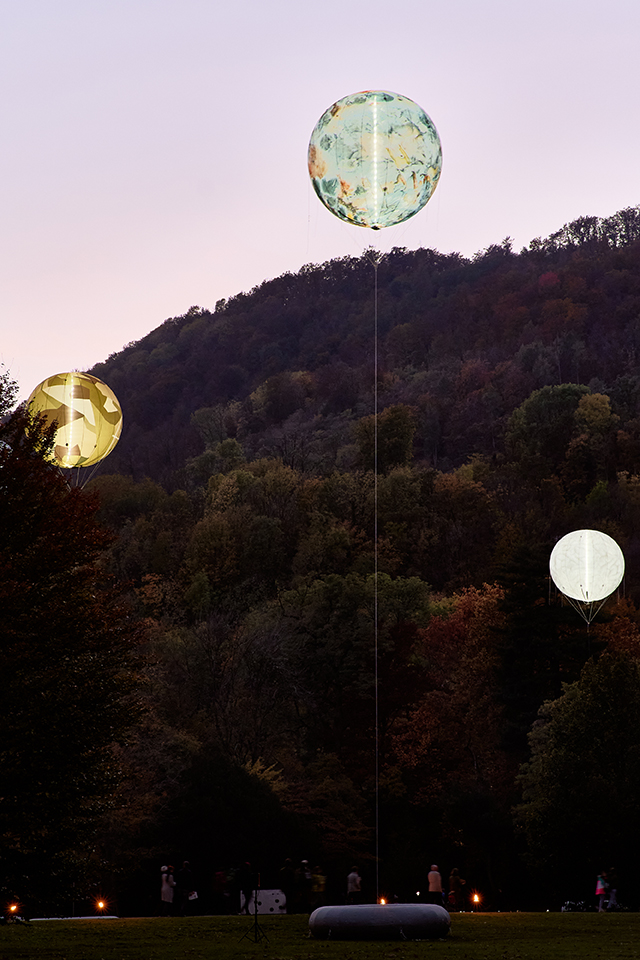
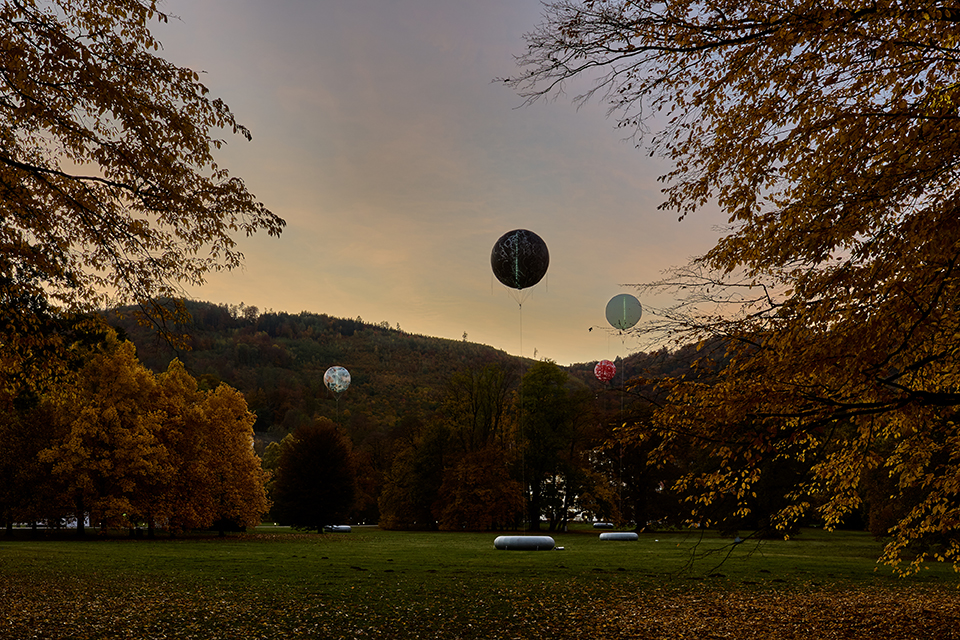
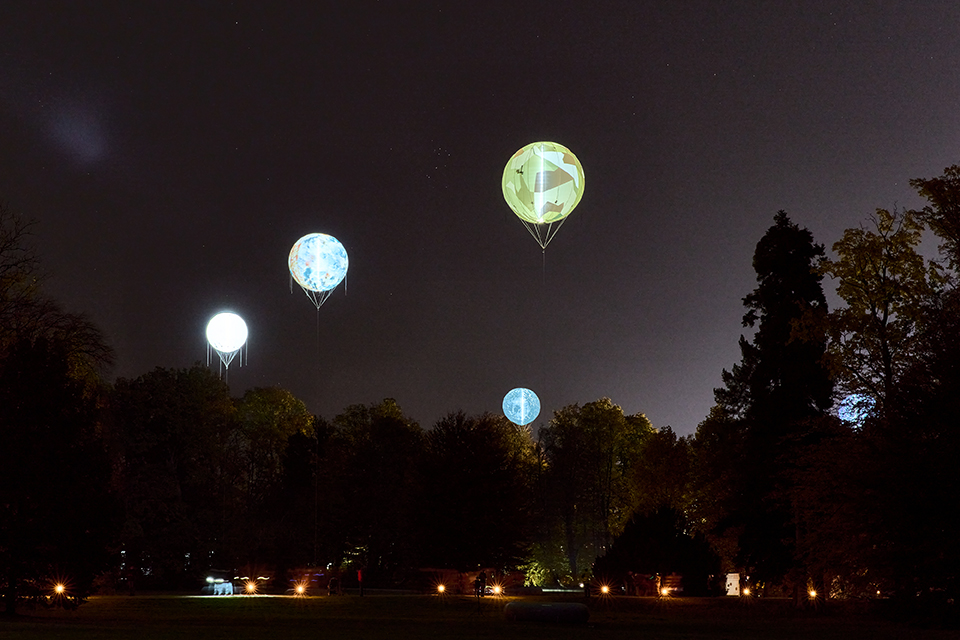
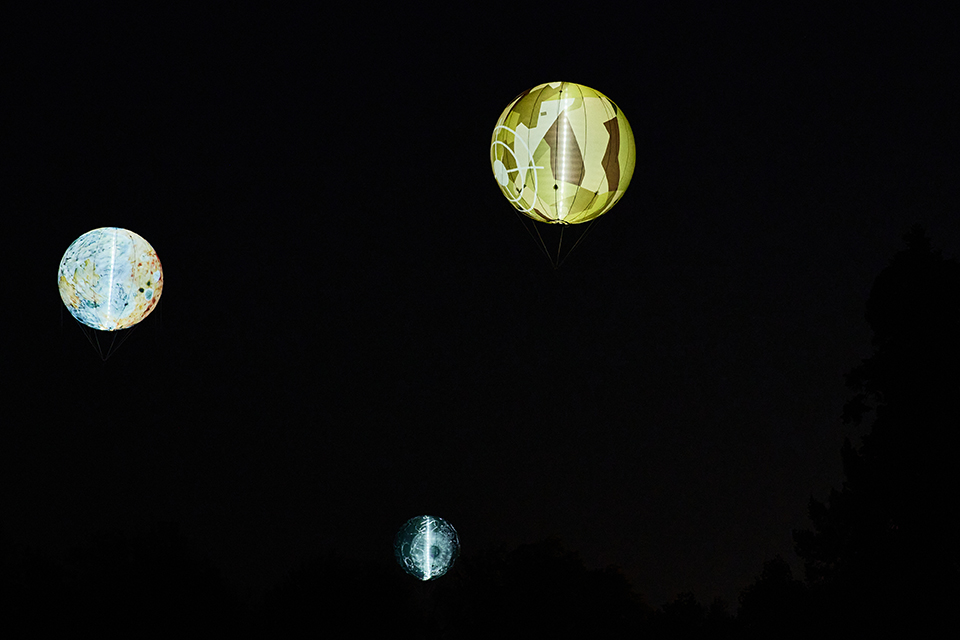
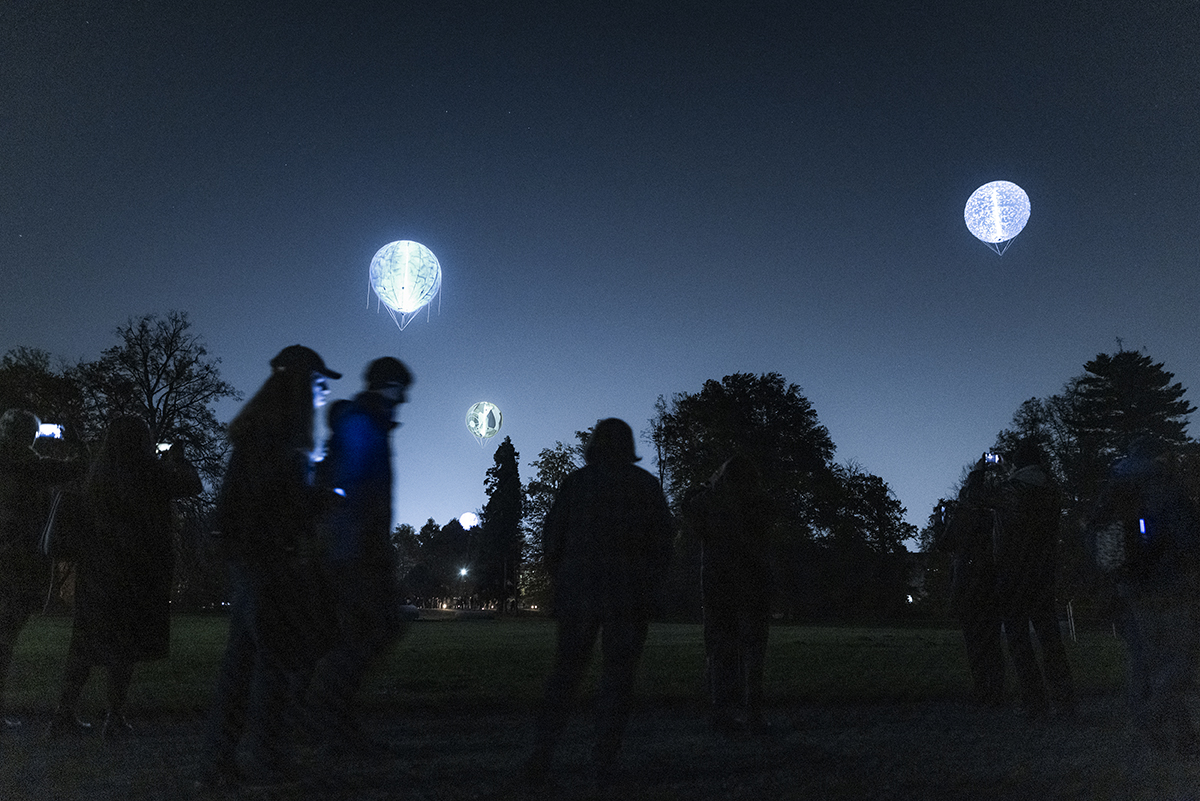
Jardin des Planètes by Littmann Kulturprojekte
In the “Jardin des Planètes” – the garden of planets – planets designed by artists’ hands rise into the sky and create an artificial and artistic universe. Here, visitors walk among trees and planets as if in a distant cosmos, but at the same time find themselves in a modern translation of the magnificent Planetary Hall inside the palace.
Klaus Littmann is, among other things, an international freelance mediator of contemporary art. The Swiss artist and curator focuses on the planning and realization of themed art exhibitions and artistic interventions in public spaces. His elaborate projects focus on everyday culture as well as the confrontation of contemporary art with historically evolved urban spaces. Most recently, his intervention “For Forest” in the Klagenfurt stadium caused an international sensation. Littmann was awarded the Culture Prize of the City of Basel in 2002.
Credits
Concept & realization: Klaus Littmann
Participating artists: Joep van Liefland, Markus Wirthmann, Hanspeter Hofmann, Otto Zitko, Daniele Buetti, Ren Zhitian, Michel Blazy, Peter Kogler, Enrique Fontanilles
Technical realization: Andreas Braunböck, ETWAS ANDERES
Planten Balletten – from bausspiel fest rockenem by Nikos Zachariadis and Max Höfler
The Graz-based multimedia artist Nikos Zachariadis, in collaboration with the writer Max Höfler, reworked texts from the nine-part Baroque planet ballet from 1678. As a sound installation, the new, abstract version of the planetary texts accompanied visitors through the “Jardin des Planètes” initiated by Klaus Littmann. The interweaving of these light and sound interventions invites visitors to see, understand and thus rethink their own position and the role of humans in a larger context.
You can read the text of the sound installation “planten balletten – aus bausspiel fest rockenem” and the original text of the baroque planetary ballet from 1678 “Ballet Von Zusammenkunft und Wirckung derer VII. Planeten” here.
Biography Nikos Zachariadis
Nikos Zachariadis is a multidisciplinary artist, designer and organizer based in Graz. After completing his studies in architecture, he focused primarily on the effects and manipulation of sensory perception within the field of tension between image-sound-space-time in a wide variety of constellations and aspects. He is particularly interested in the interweaving of real, imaginary and virtual space and the resulting aesthetic shifts in atmosphere. In addition to works in classical media and electro-acoustic concerts, the spectrum of works includes immersive AV environments and performative sound sculptures.
Biography Max Höfler
Max Höfler is an Austrian writer, artist and former literary representative of the Forum Stadtpark in Graz. Max Höfler writes experimental prose texts and publishes regularly in literary journals such as perspektive, manuskripte, Lichtungen, schreibkraft, fröhliches wohnzimmer and the publications of the artists’ group monochrom. He is the founder of the net art project Eigenheimgalerie GG44 and co-founder of the artist group R.A.P1.2. Since 2013, he has been the editor of the screen-based literary magazine “GLORY HOLE – nachrichten von drüben”, which is projected onto the outdoor screen of the Forum Stadtpark at night.
Credits
Text and composition: Max Höfler
Composition: Nikolaos Zachariadis
Technical implementation: grafx live-marketing GmbH, slv-austria
The art intervention was realized with the kind support of GRAWE at
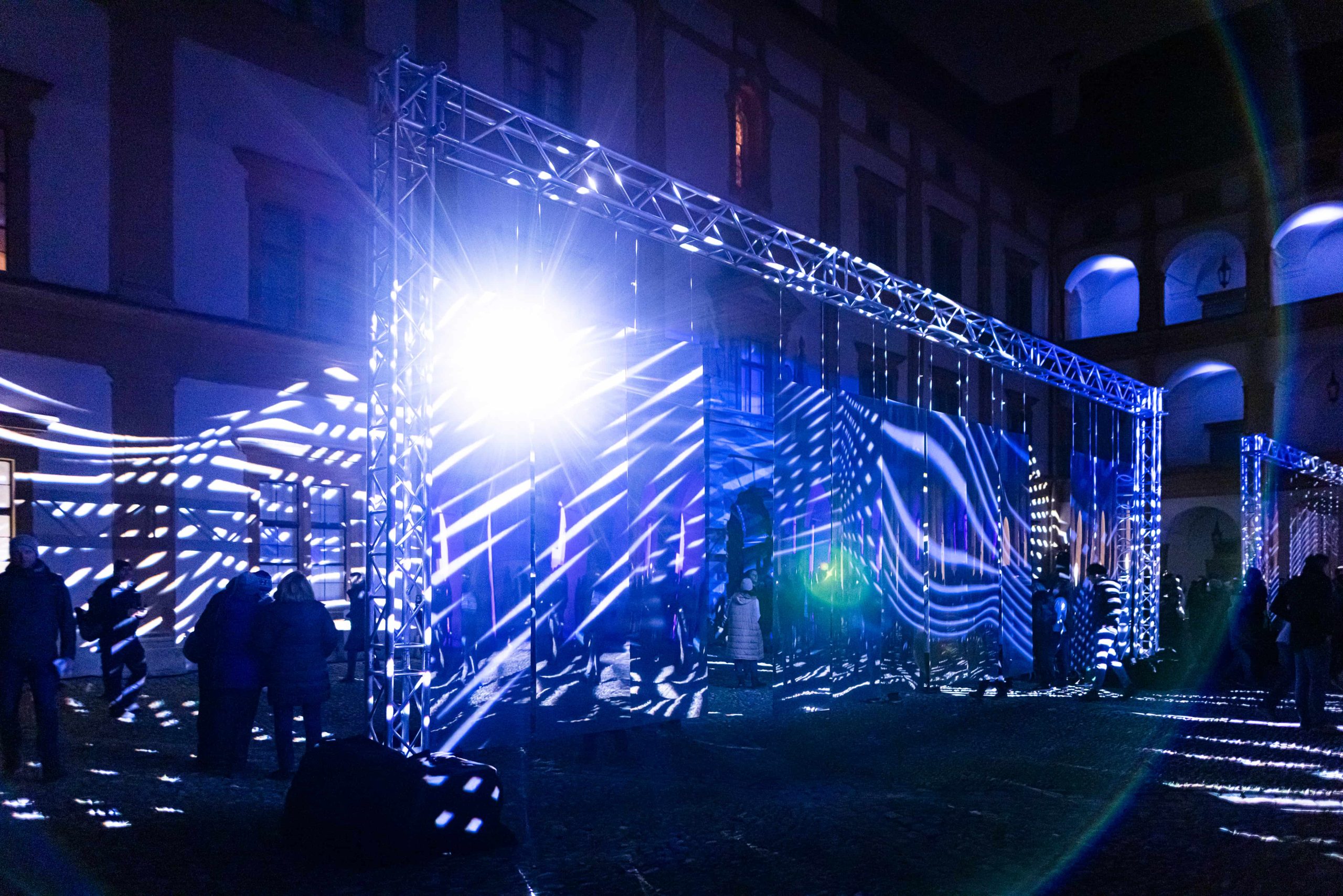
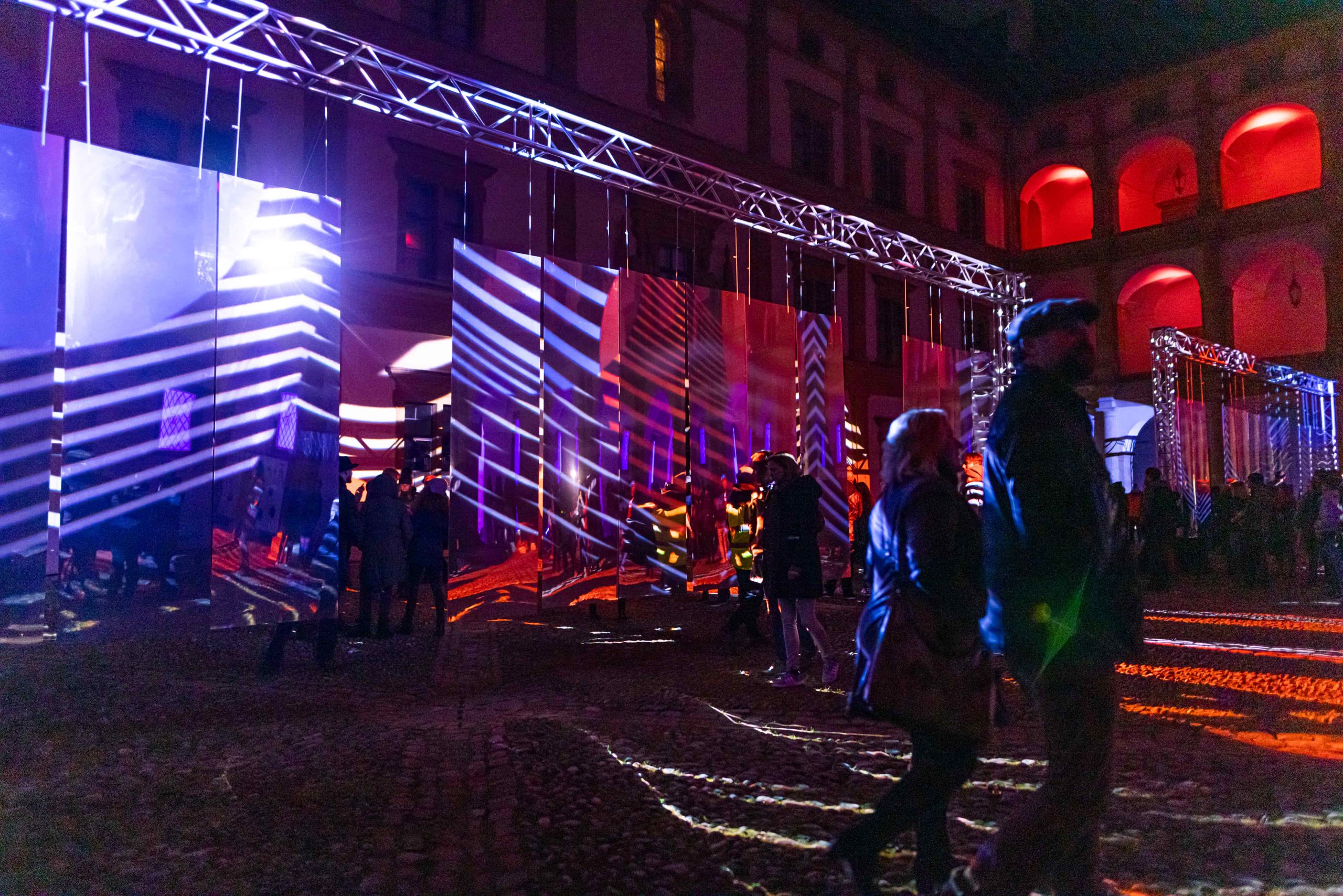
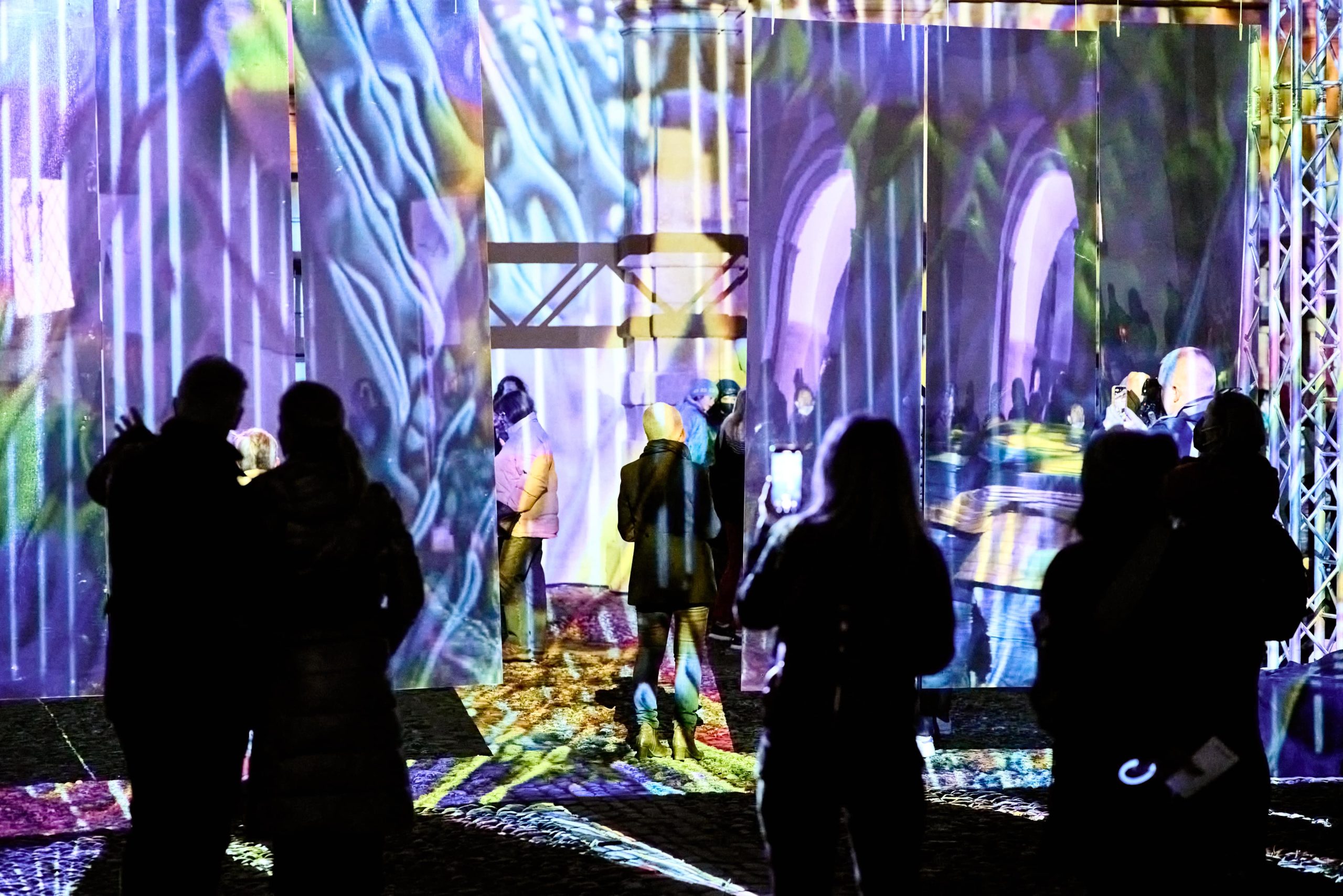
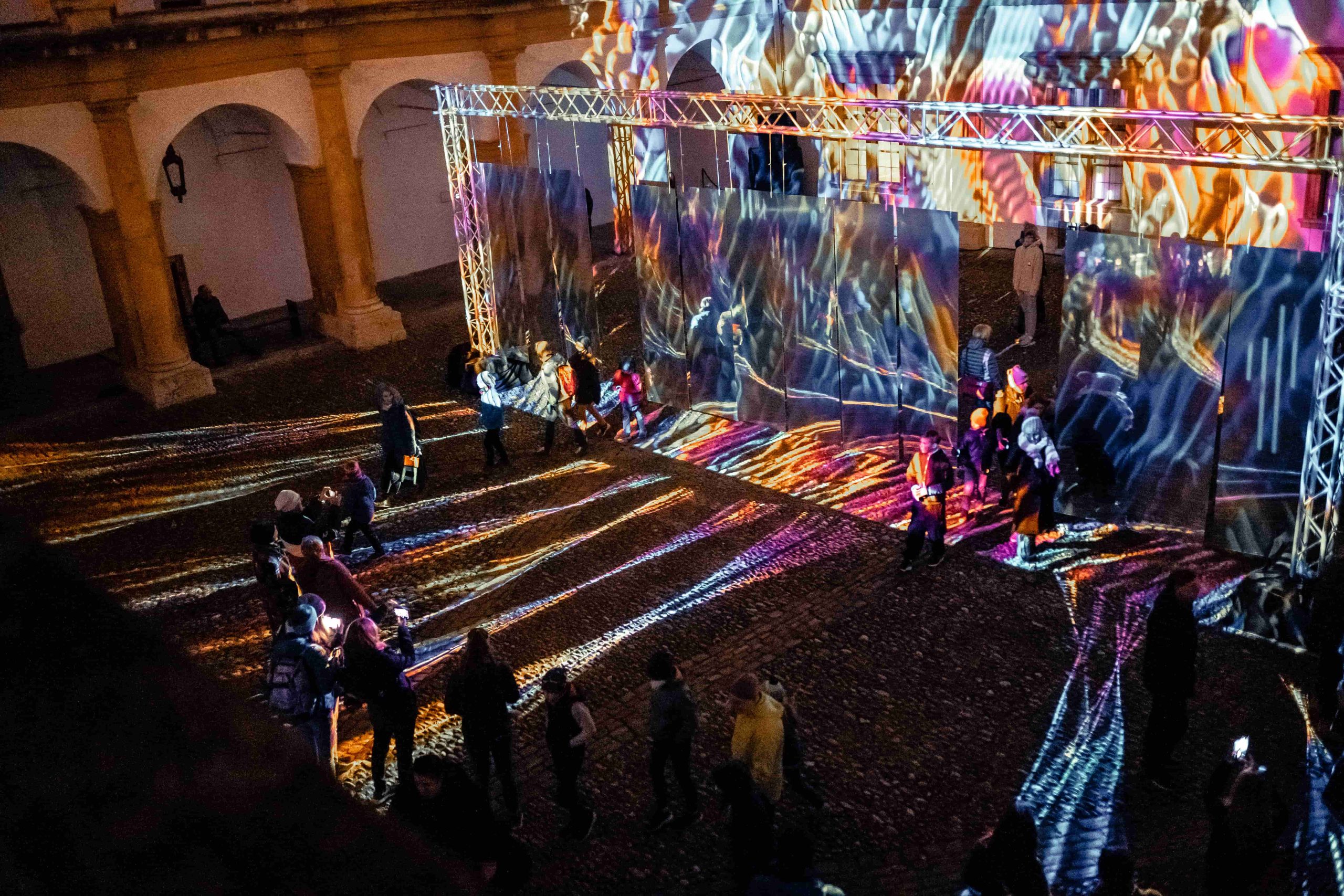
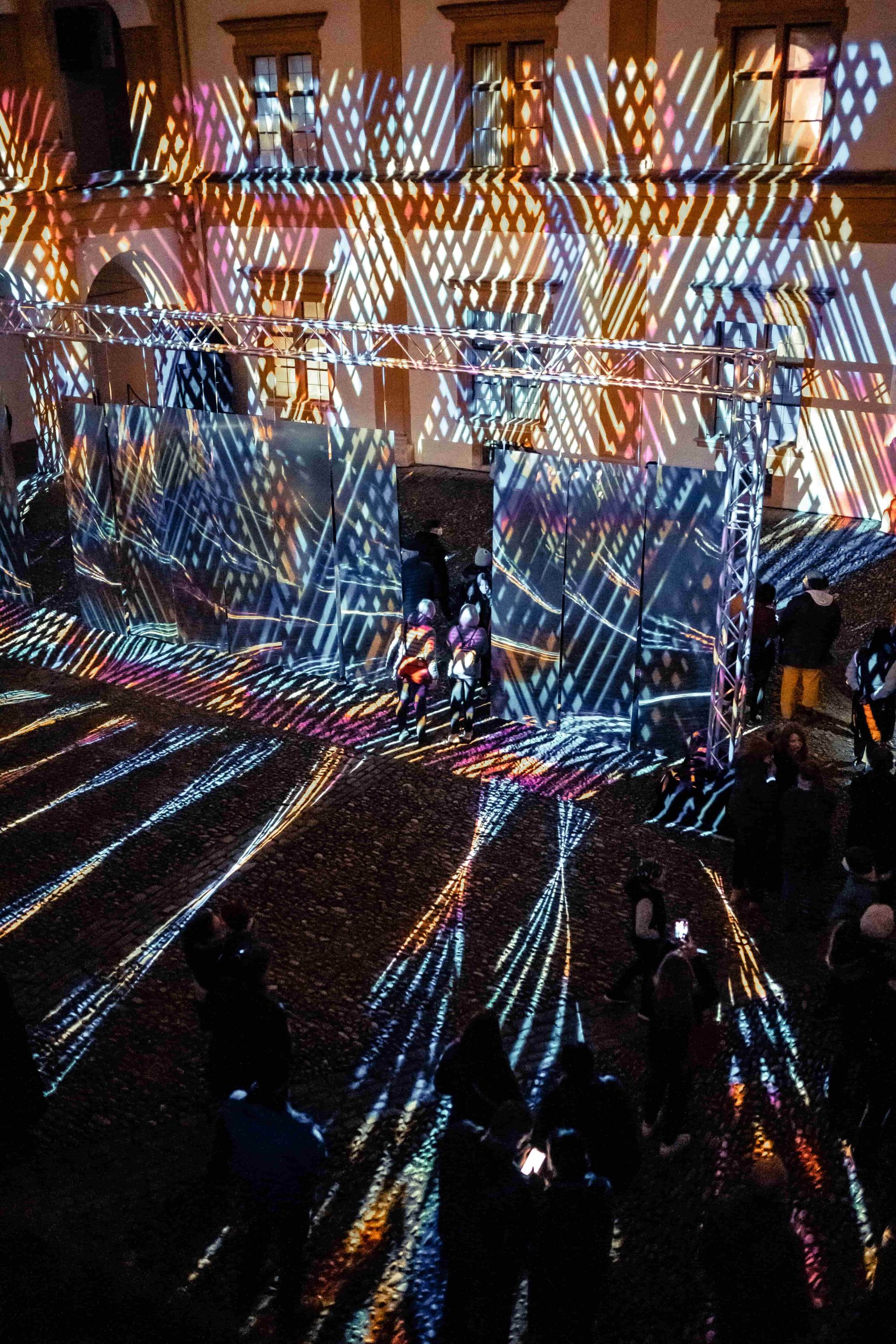
In the courtyard of Schloss Eggenberg, the artist collective OchoReSotto proved that change is often the only constant. In the interplay of history, present and future, everything is in flux – especially our perception. In everyday life, as here in the castle courtyard, we believe we can take in the world as it actually is. But the exact opposite is the case: if we change the angle or the view, the mood or the perspective, everything appears different. This is the essence of A.D.D.I.T.I.V.E., an intervention resembling a luminous kaleidoscope. Starting from a light source, geometric shapes and abstract structures were thrown into the room, encountering reflective bodies that reflect parts of the light back and allow others to pass through, thus creating different versions of the same content on the historic walls of the castle. In this way, you perceived what was presented to your own eyes in one place and thought you understood it. If you moved further into the installation, the parts of the reflection or the transmitted light and thus the luminous forms changed again. If you kept moving, the inner courtyard never seemed the same as before. It resembles an addition of sensory impressions: always further, always different.
The sound for A.D.D.I.T.I.V.E. was composed by Josef “Seppo” Gründler. The sounds recorded on site were distorted, alienated, expanded and repeated. The grotto in the courtyard of the castle was reflected acoustically, synthetic sounds seem to crumble. Using a quadraphonic audio setup, the sound moved throughout the courtyard – unfolding just as expansively as the light and thus becoming the acoustic counterpart to the visual intervention.
Lia Rädler, Volker Sernetz and Stefan Sobotka-Grünewald are the Graz-based artist collective OchoReSotto, which specializes in the combination of digital and analogue media and their presentation as a total work of art. From national and international light art festivals to the Styriarte and the Vienna Opera Ball, OchoReSotto are represented with their projections.
Josef (Seppo) Gründler is a sound and media artist, a “tinkerer” in the field of software and electronics. His main instruments are guitar, electronics and software. Gründler is co-organizer of the Styrian Improvisers Orchestra, holds a doctorate in medicine and is Visiting Professor for Sound Design at the Danube University Krems, board member of the Institute for Media Archaeology and the Society for the Dissemination of New Music. He has composed music for computer games, theater, film, media and sound installations and has presented his work at Ars Electronica, Wiener Festwochen, Steirischer Herbst, the Knitting Factory New York, Sonambiente Berlin, Transmediale Berlin, “See the Sound”, City of Women Festival Ljubljana, Fine senca fine – Venice and many more.
Concept & implementation: OchoReSotto
Sound: Seppo Gründler
Technical equipment: Noisegate Eventtechnik GmbH
The installation was realized with the kind support of Raiffeisenbank-Landesbank Steiermark.
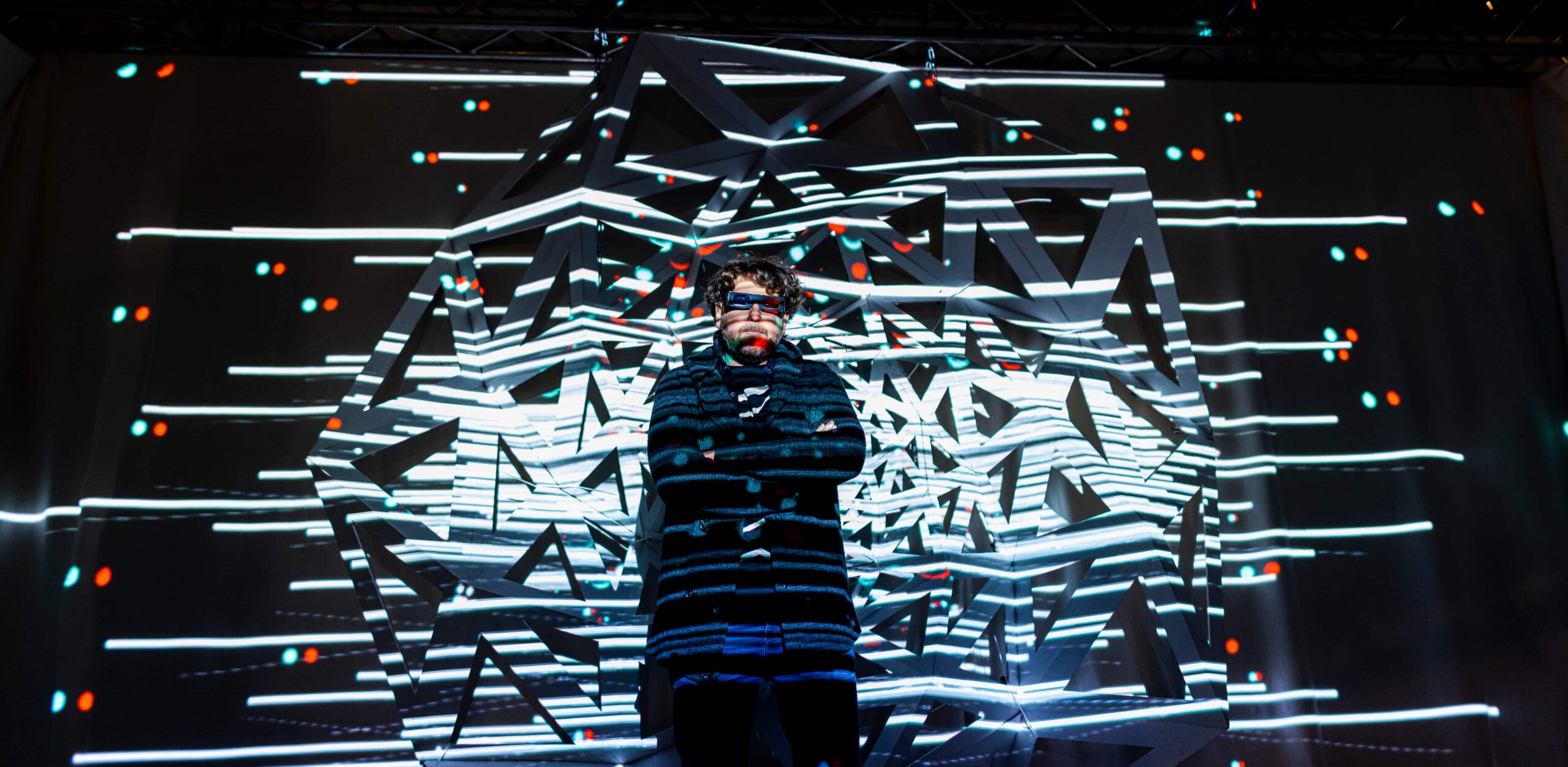
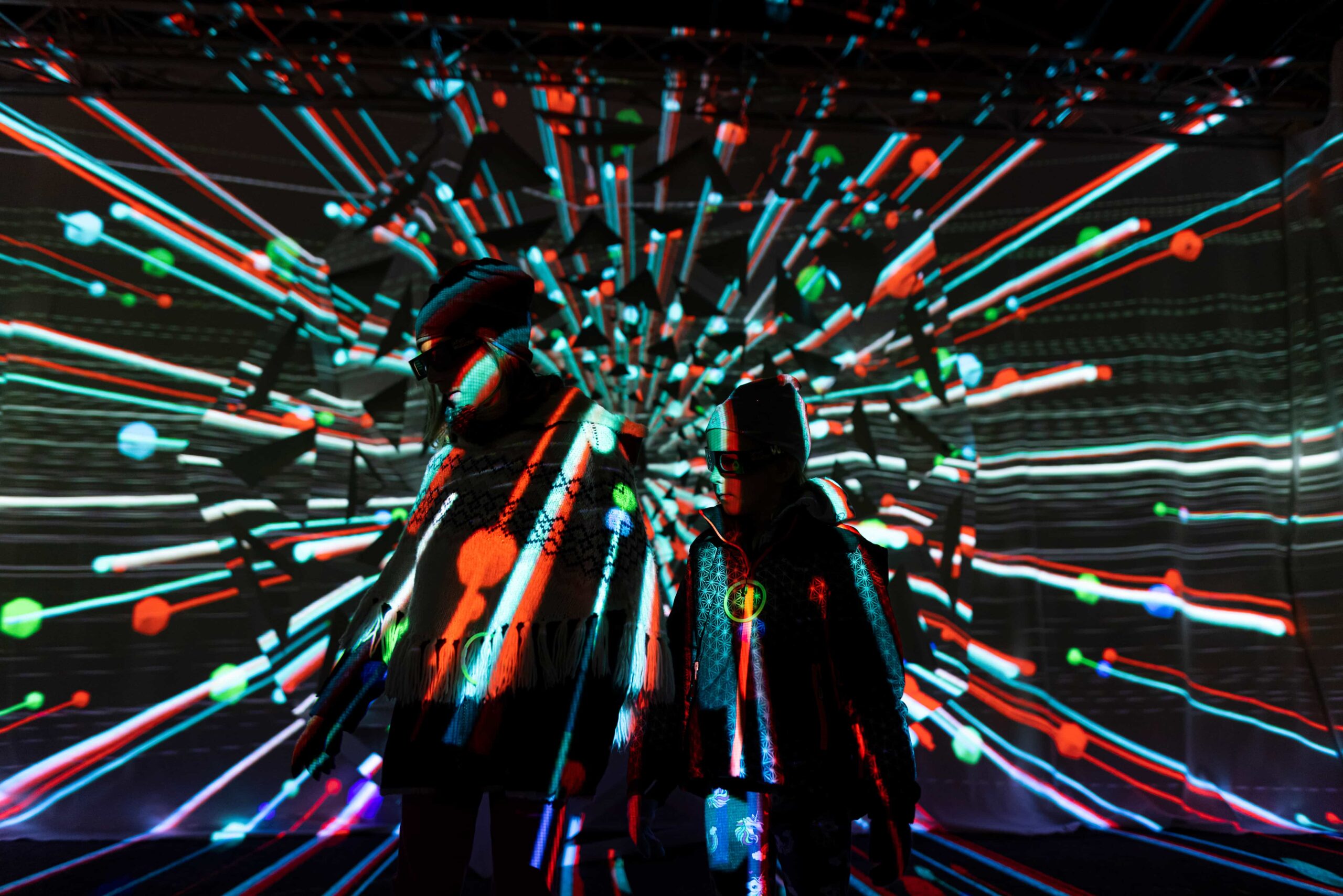
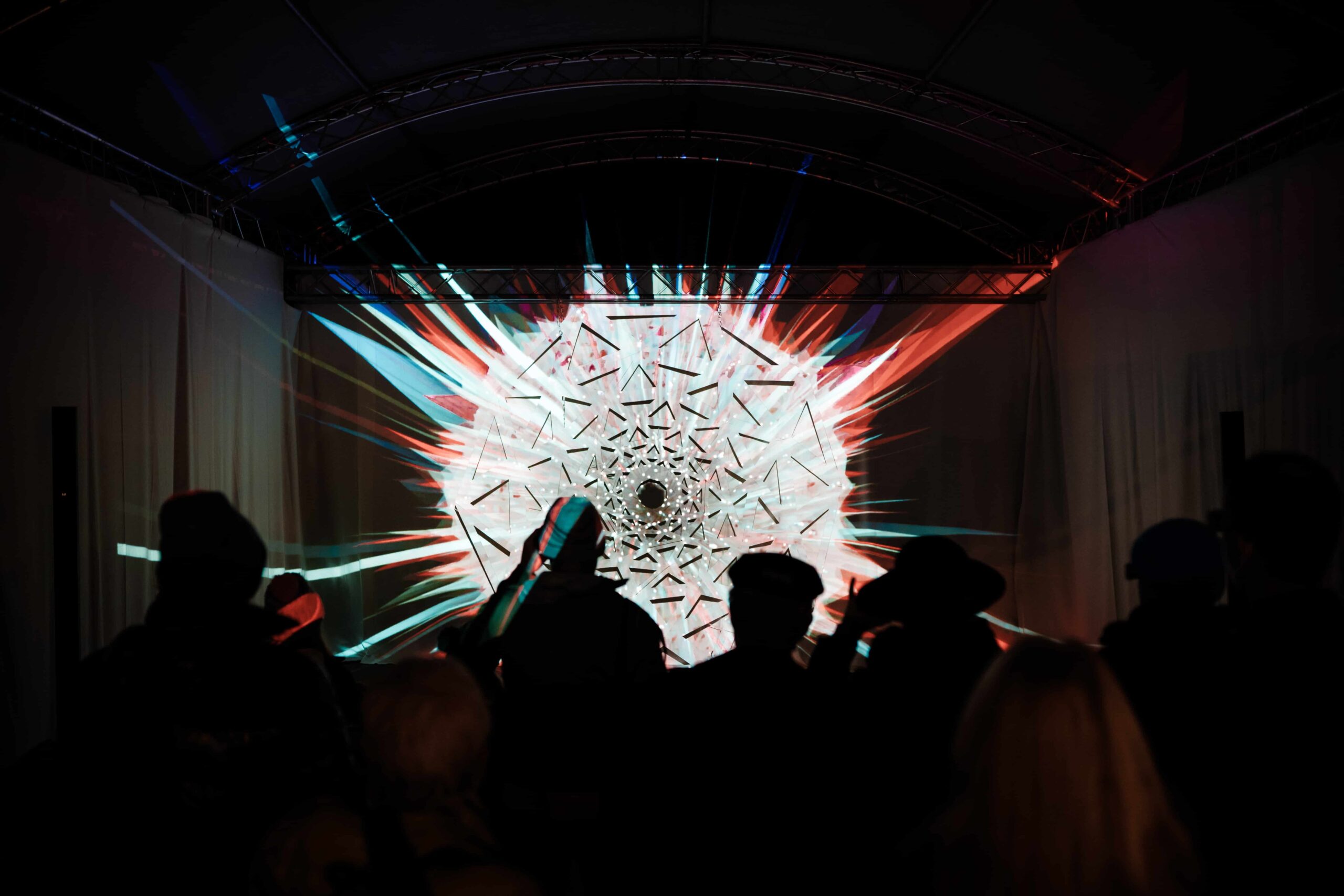
This immersive 3D mapping takes you into the world of mathematics: a spidron is a complex geometric figure that was first discovered and described by the Hungarian designer Dániel Erdély. Erdély’s spidron consists of equilateral triangles, with two triangles each forming a hexagon, which in turn is connected to a hexagon. Erdély was guided in his studies by Ernő Rubik, the inventor of the Rubik’s cube. The installation “Spidron” by media artist László Zsolt Bordos shown at KLANGLICHT 2021 uses stereoscopic animations as well as sound and video projections that are mapped onto such a spidron. The abstract formations are expanded through the use of 3D techniques: the moving images are overlaid with a stereo projection that only becomes fully visible through the use of 3D glasses – in this case color-anaglyphic glasses. The glasses enhance the visual experience many times over, increasing its depth and impressiveness. The viewer’s perception is put to the test: What exactly is being observed here? How can we interpret what we see? Where does the projection begin and where does it end?
Biography
László Zsolt Bordos, also known as Bordos. Artworks, lives and works in Budapest. He started as a visual jockey in 2000, performing in the Hungarian underground party scene. He became a pioneer of the genre with his early 3D VJing, his giant projections on building facades as well as his outrageous video performances and 3D mapping projects. Since 2015, Bordos has focused on solo art projects, light installations and stage projections for theater and opera and participates in the most important light art festivals worldwide.
The immersive 3D projection was realized with friendly support by sehen!wutscher.
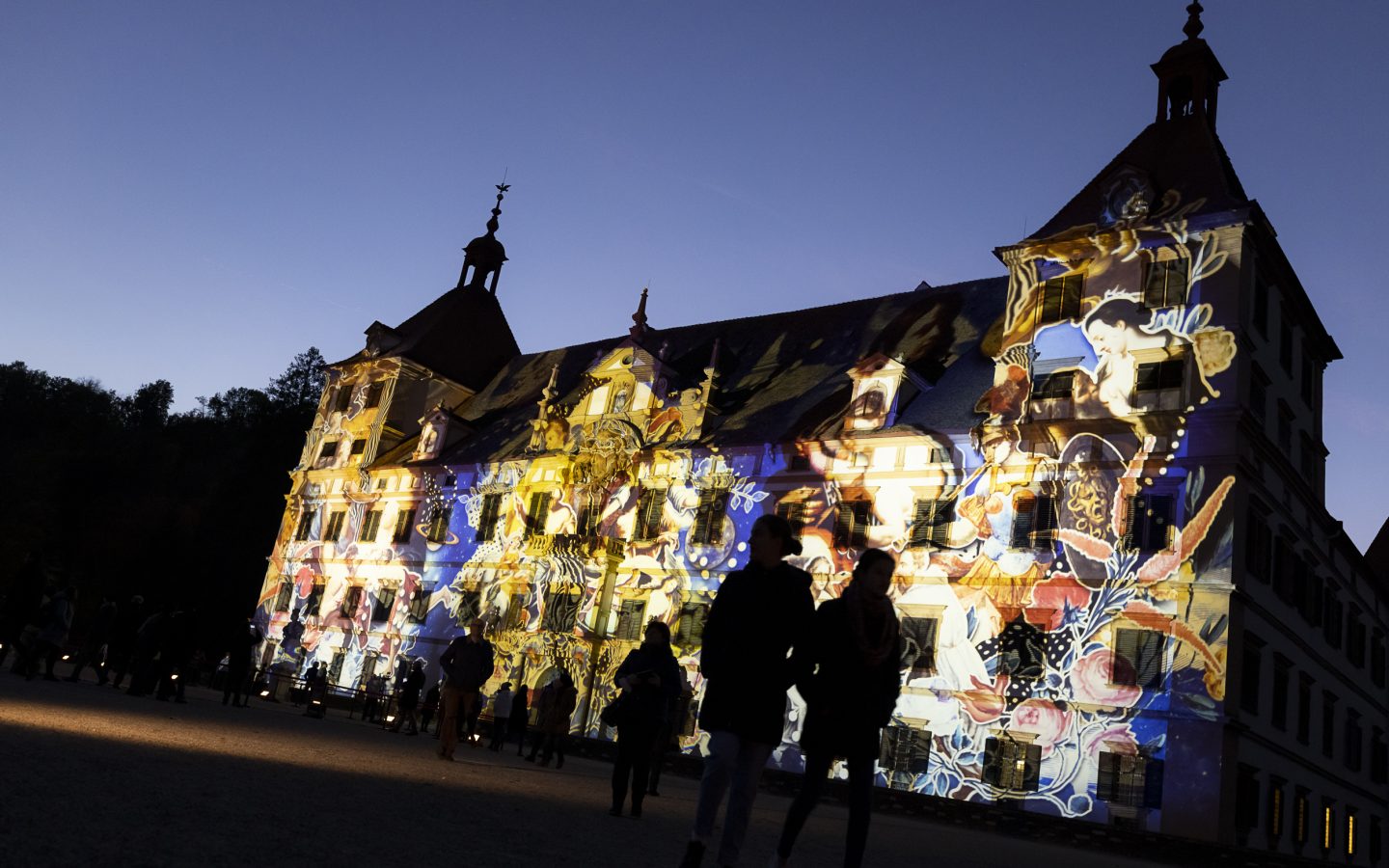
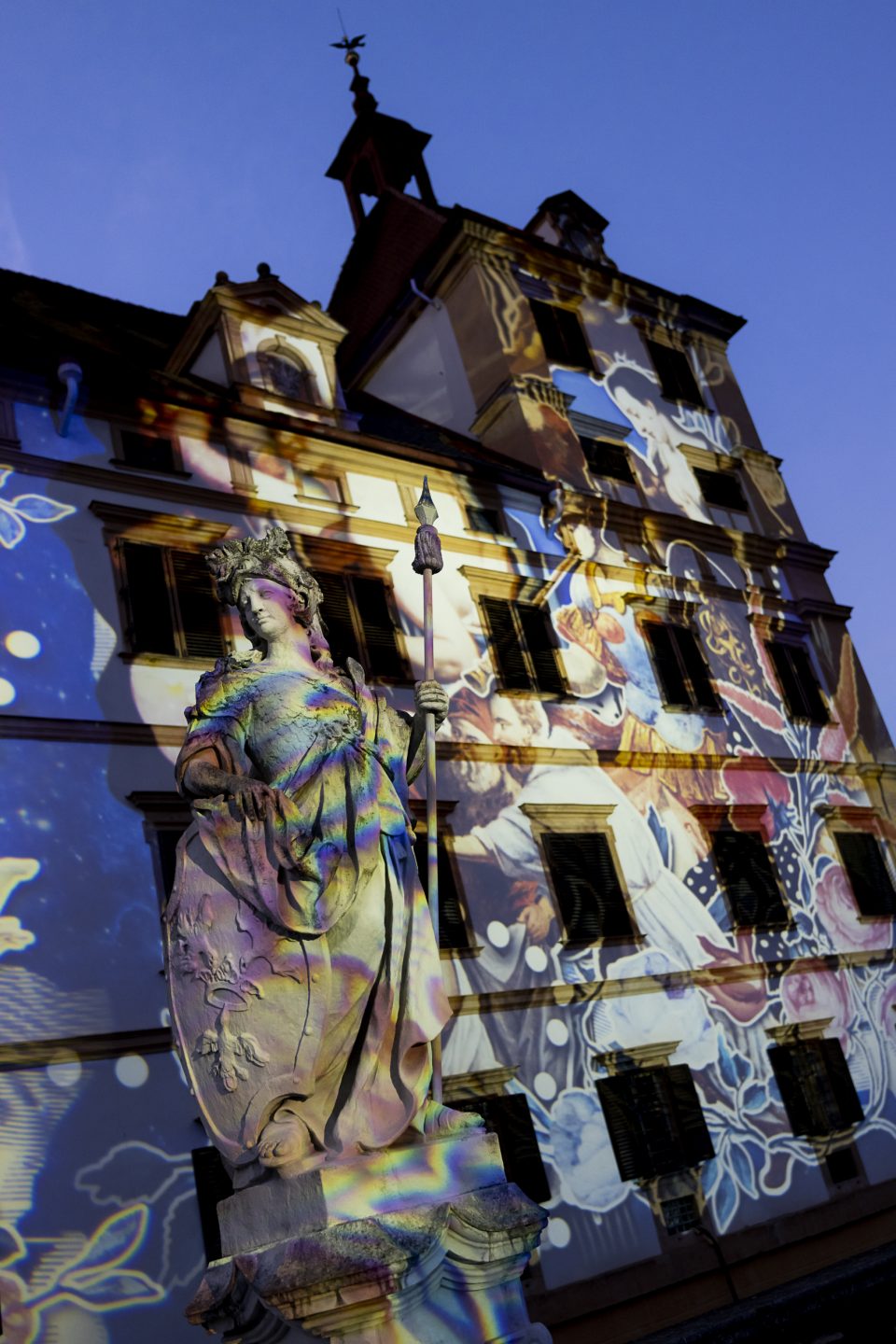
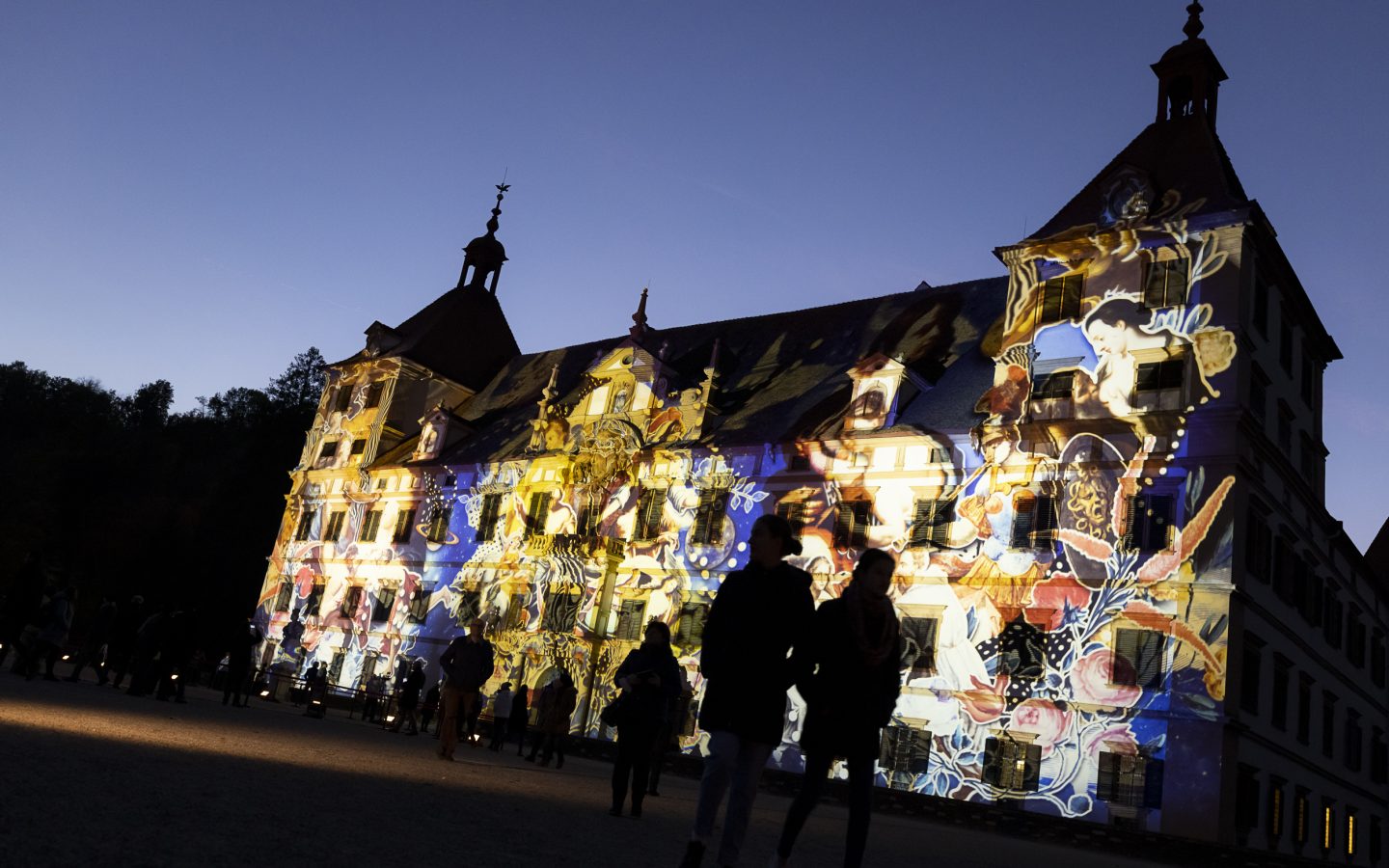
So many stories and myths, scenes and motifs on frescoes, paintings and fabrics are hidden inside Schloss Eggenberg. They are all connected, intertwined and weave the myth of the UNESCO World Heritage Site. As a contrast to the precisely calculated alignment of the palace complex, we encounter memories and stories in the interiors, even the seemingly fantastic, which also make up the fascination of this place. The artists’ collective OchoReSotto saw the starting point of their project “Entanglement” on the façade of the castle in the opening up of this very world behind the walls: The projection onto the building interwove the history of the palace and the art in the rooms with the collective’s own artistic approaches: the characteristic opulence, and in some cases scurrility, of the murals was worked out, women as heroines of the Baroque period were brought into focus and the resulting collage was placed in the context of the planets, which is so significant for Eggenberg. The resulting images seem to render the walls almost invisible and instead make a baroque universe visible, allowing the audience to look deep inside the palace from the outside. At the same time, “Entanglement” wrapped the castle façade in a new dress and gave it a completely new appearance for the duration of the festival.
Biography
Lia Rädler, Volker Sernetz and Stefan Sobotka-Grünewald are the Graz-based artist collective OchoReSotto, which specializes in the combination of digital and analogue media and their presentation as a total work of art. From national and international light art festivals to the Styriarte and the Vienna Opera Ball, OchoReSotto are represented with their spatial projections.
Credits
Concept & implementation: OchoReSotto
Technical equipment: Noisegate Eventtechnik GmbH
During the 2021 fall vacations, the Bühnen Graz art festival was finally able to take place again after a coronavirus-related break! Compositions of sound and light were performed at a total of eleven locations in the garden and the immediate surroundings of Schloss Eggenberg: nationally and internationally renowned artists were inspired by the historic cosmos and developed works of art that coexisted with the famous
UNESCO World Heritage Site and at the same time entered into a visible and audible dialog with it.
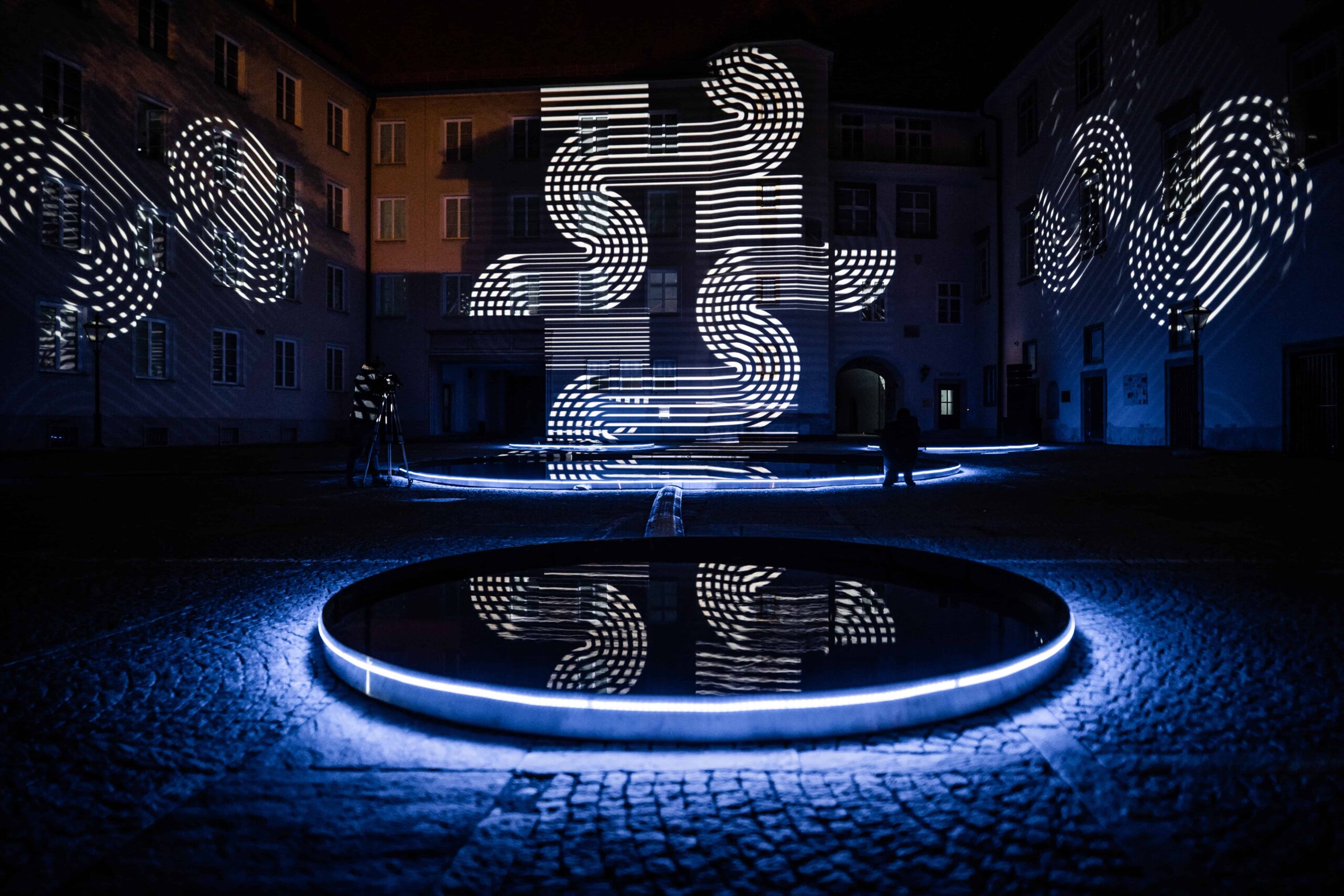
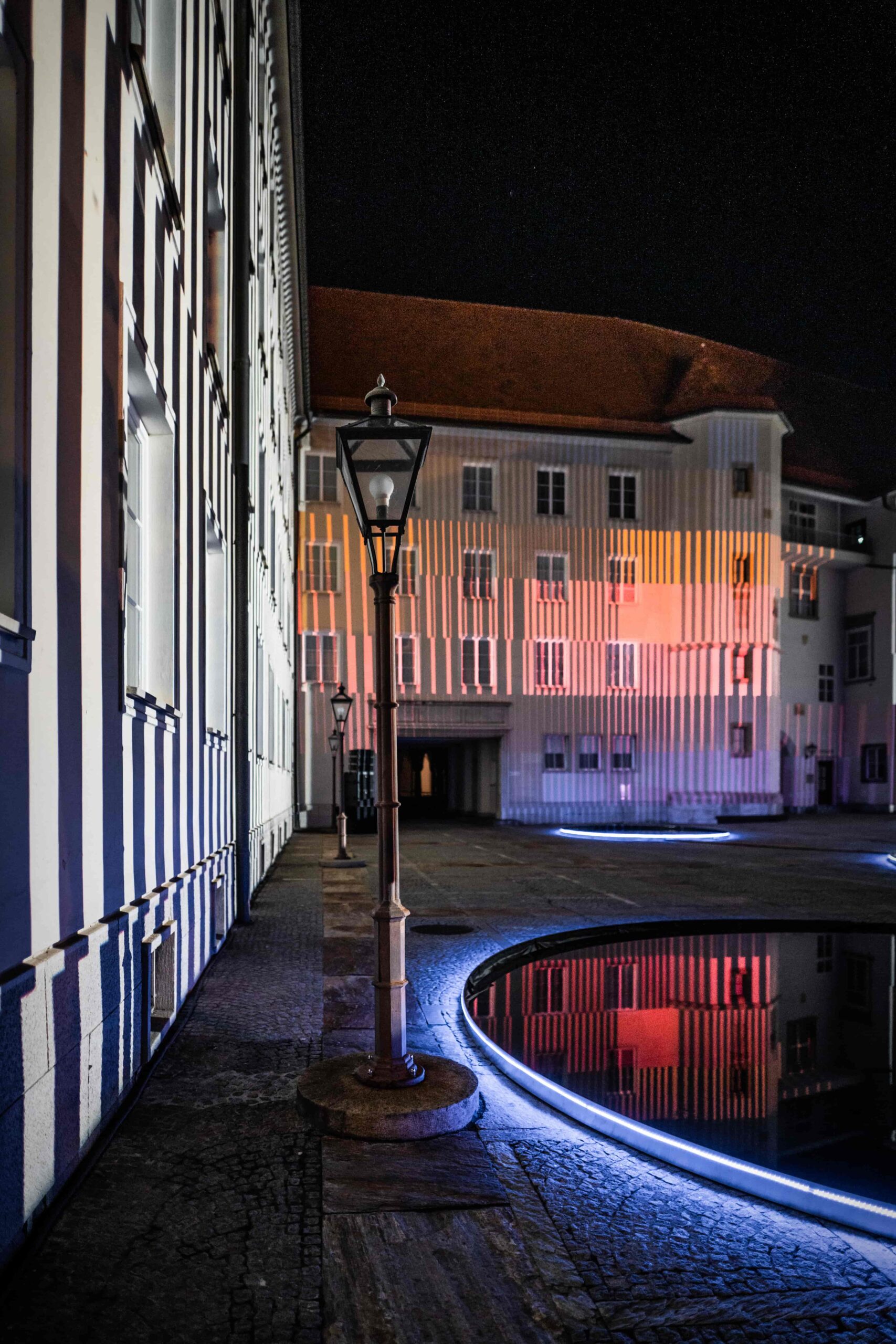
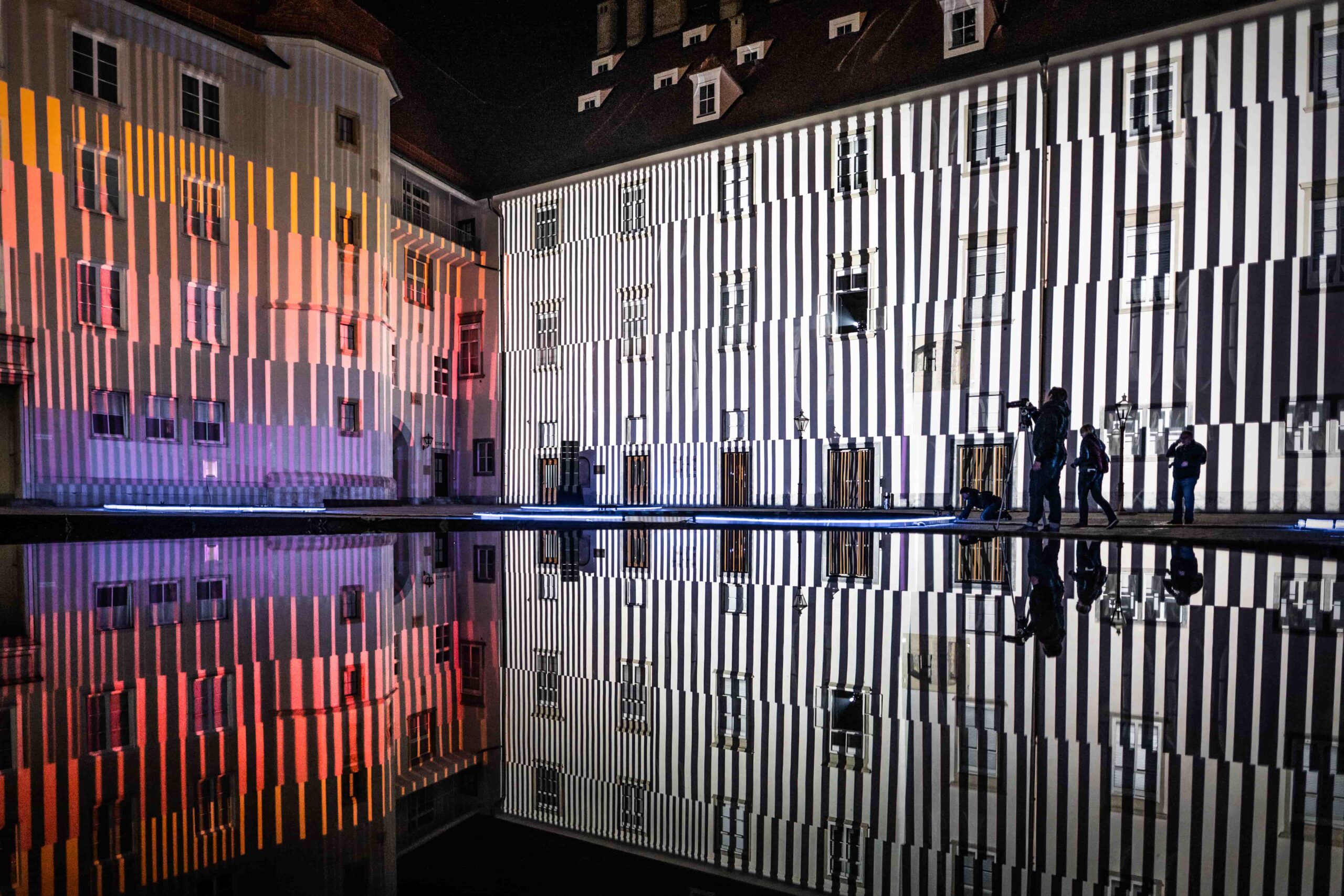
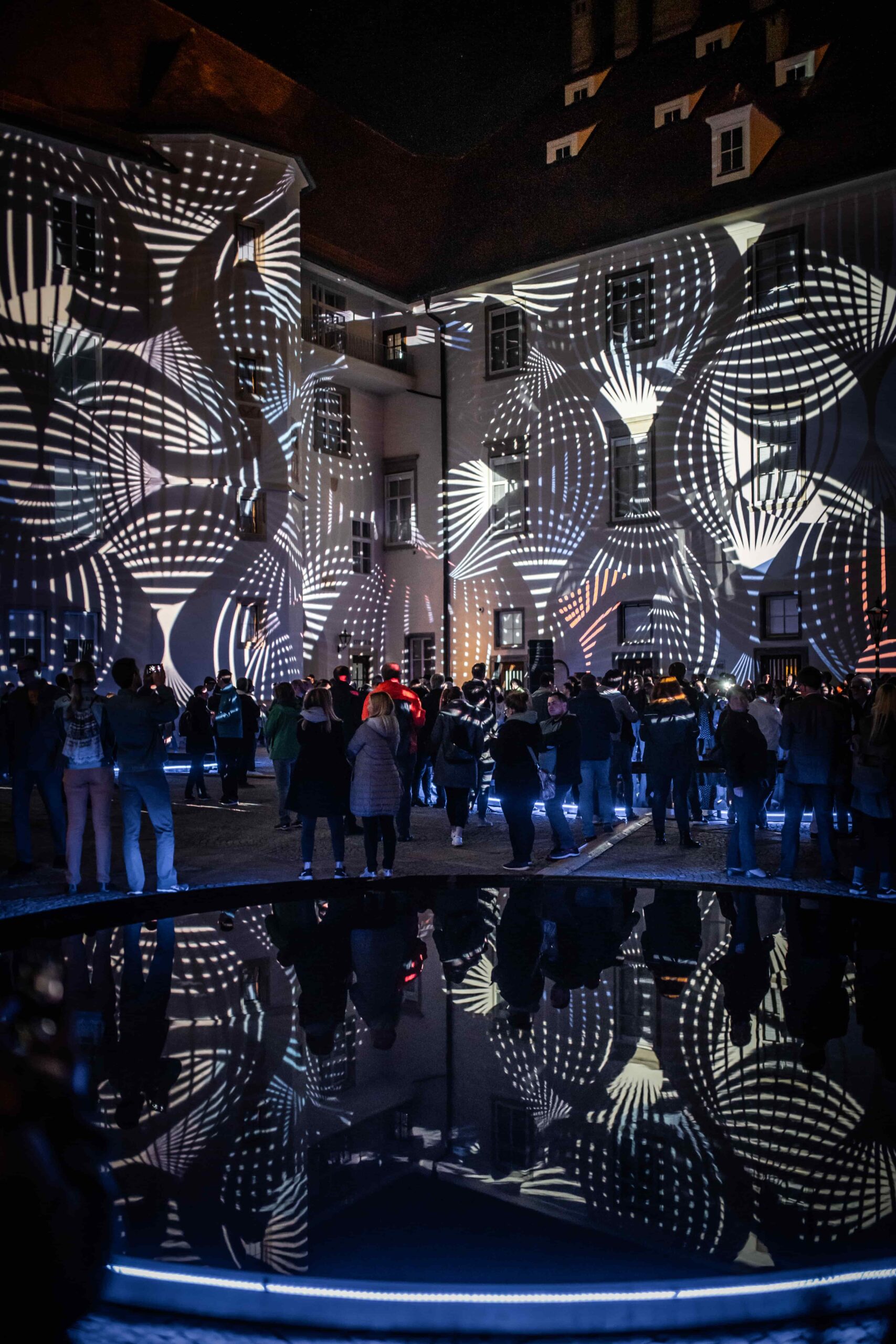
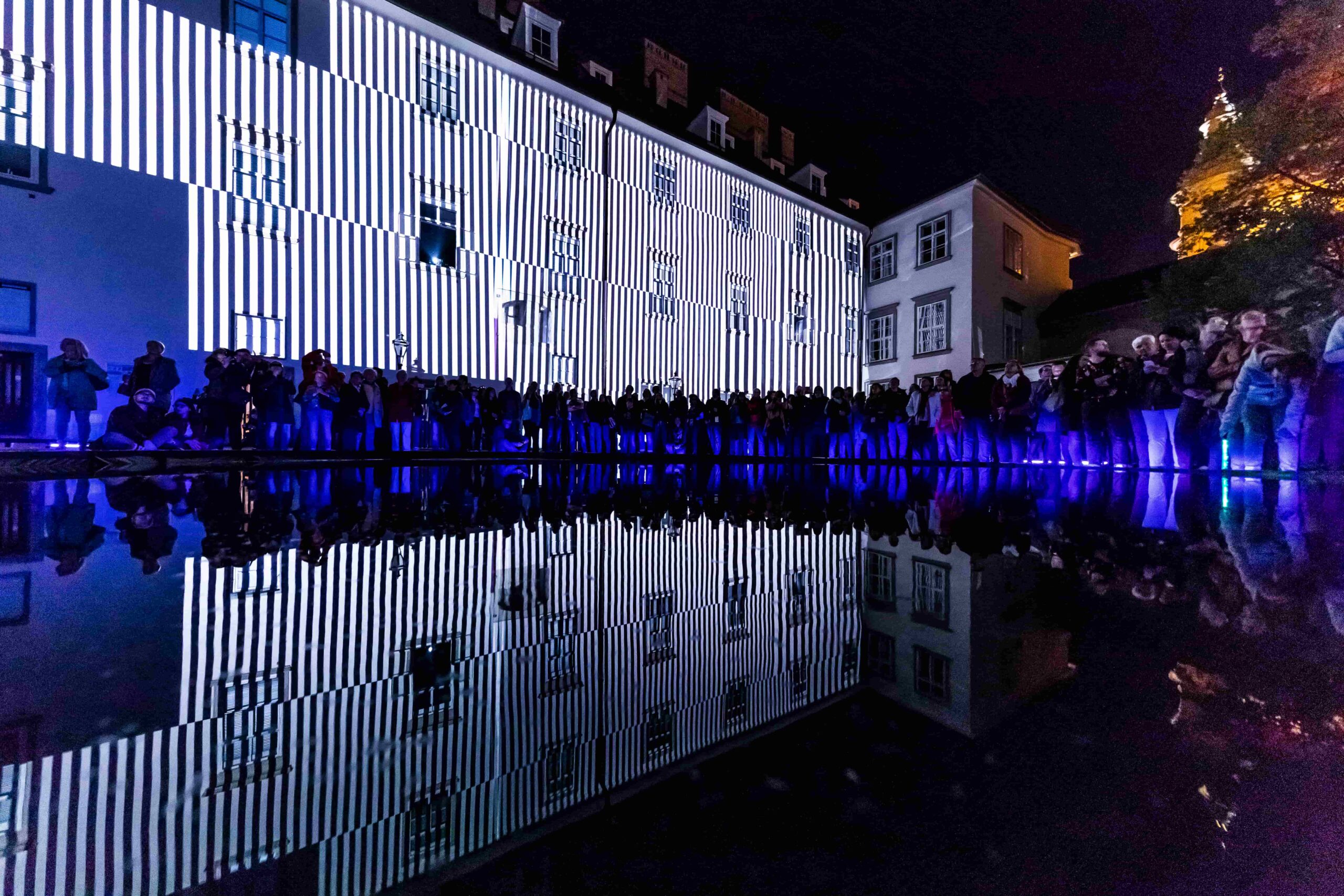
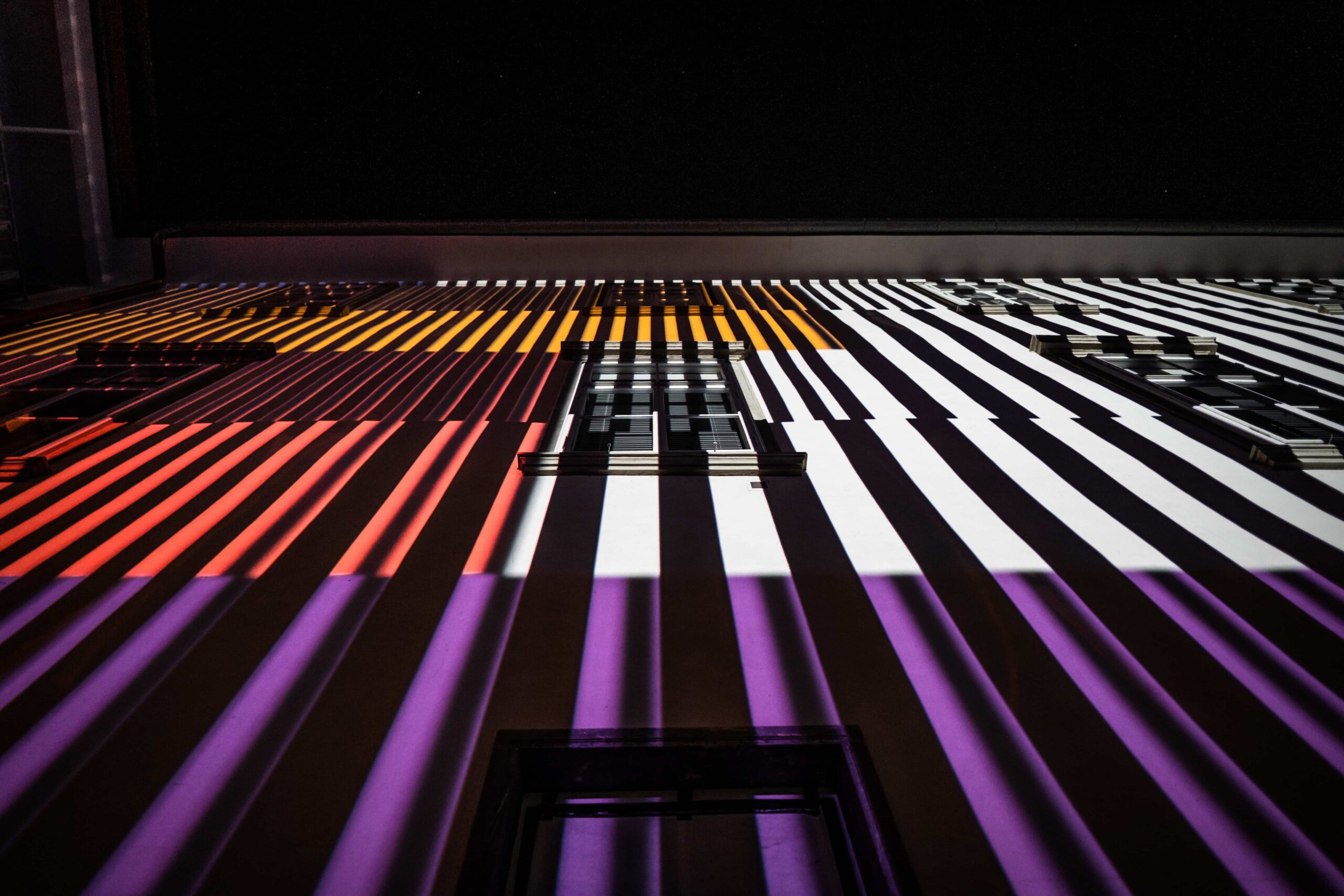
Graz Castle was given a new look as part of KLANGLICHT 2019: magical, hypnotic light and sound projections by the artist collective OchoReSotto made their way into the castle – with polarized light that is actually invisible to the human eye… and yet can be experienced: the light is refracted, reflected, polarized – and the human eye is hypnotized. The projection at Graz Castle dealt with the theme of the polarization of light: the projection surface on the façade was additionally extended by pools of water on the floor of the inner courtyard. The reflection of the projection on the water could be understood as a kind of polarized light and made it possible to view the surroundings from completely new angles. The projection was accompanied by a soundscape of field recordings and two-dimensional, supporting elements specially composed by Mario Zangl and Wolfgang Möstl.
Biography
Lia Rädler, Volker Sernetz and Stefan Sobotka-Grünewald are the Graz-based artist collective OchoReSotto, which specializes in the combination of digital and analogue media and their presentation as a total work of art. From national and international light art festivals to the Styriarte and the Vienna Opera Ball, OchoReSotto are represented with their spatial projections.
Credits
Sound design: Mario Zangl and Wolfgang Möstl
Projection technology: Rezac HPP
Technical implementation: NoisGate
The project was realized with the kind support of Raiffeisen-Landesbank Steiermark .
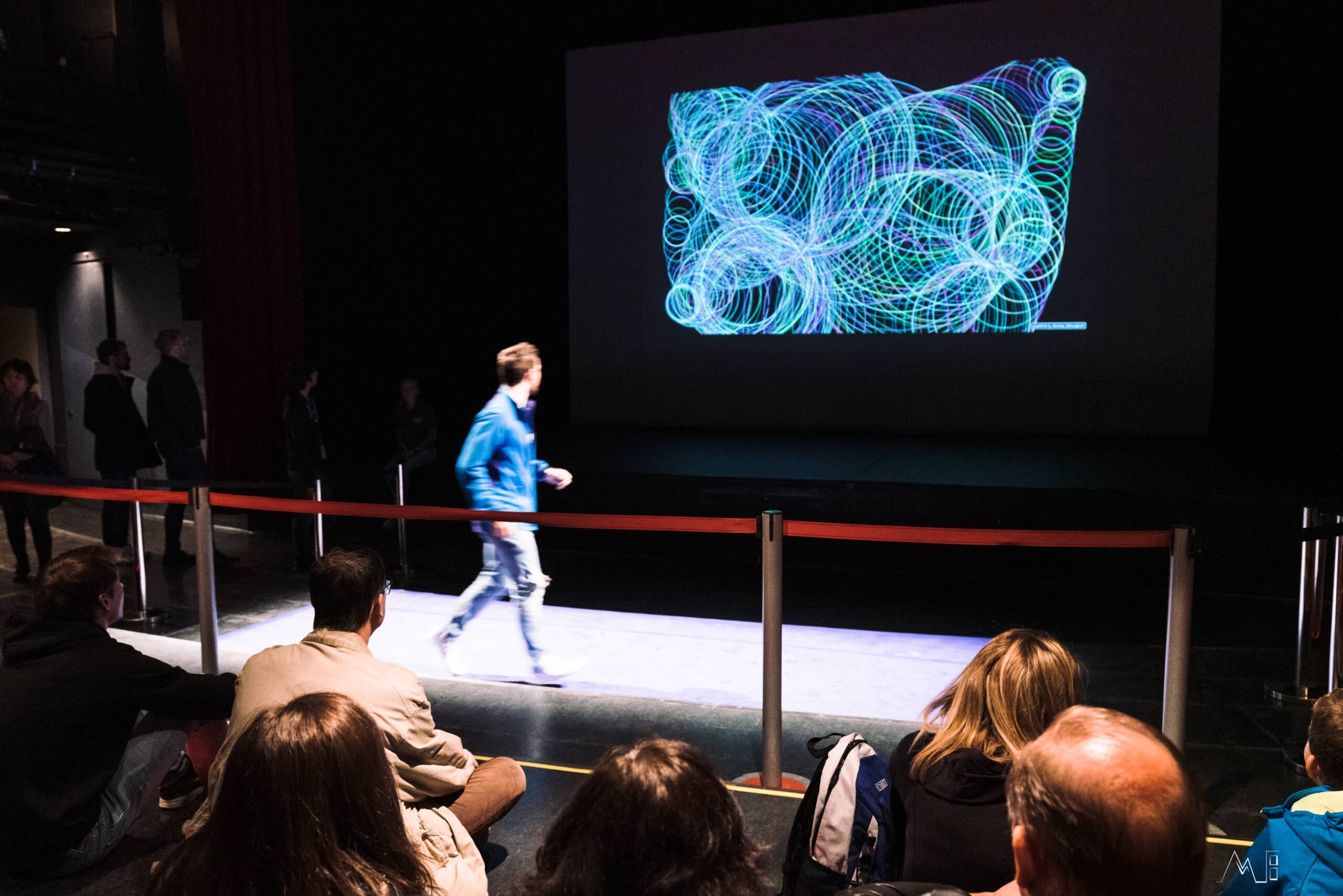
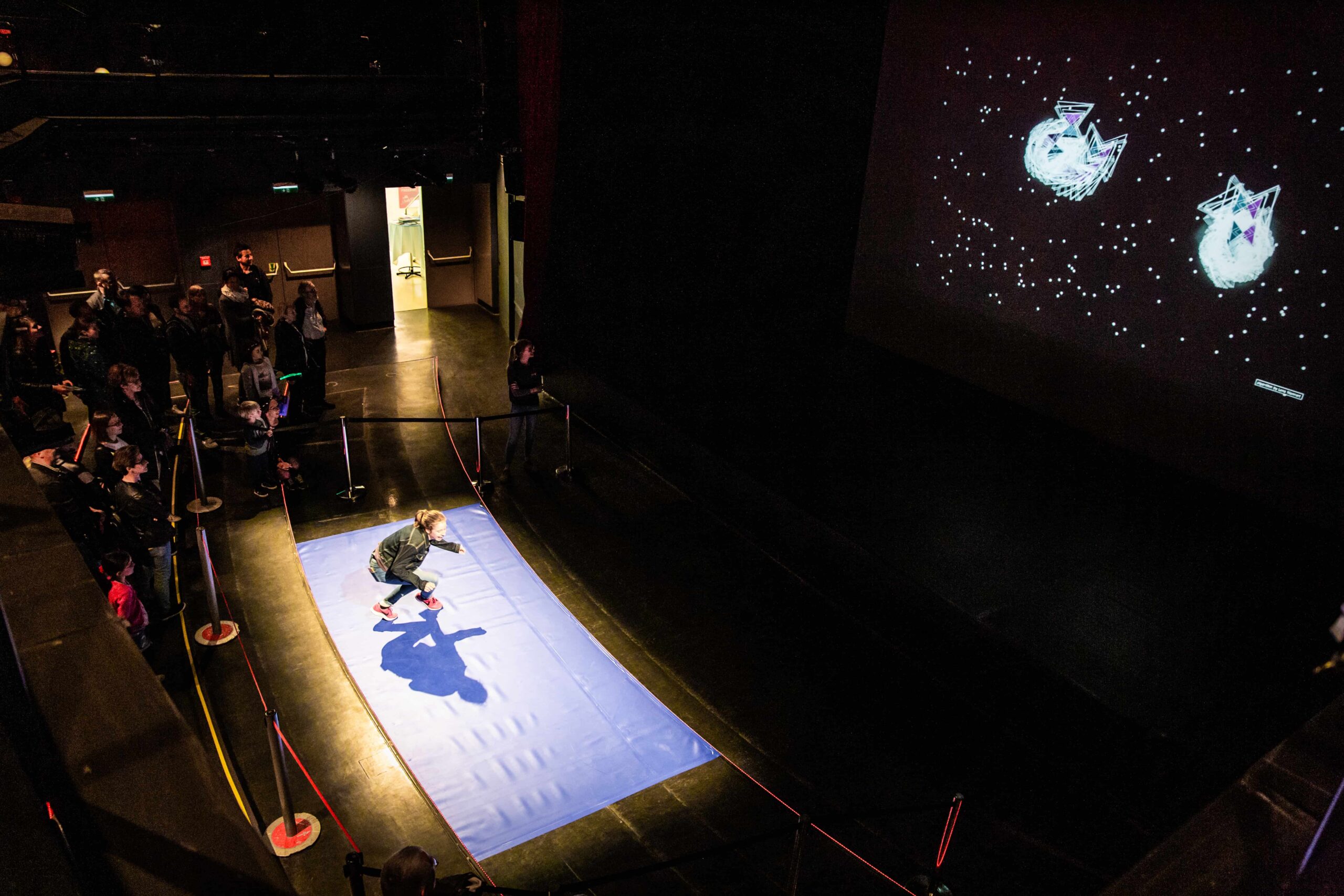
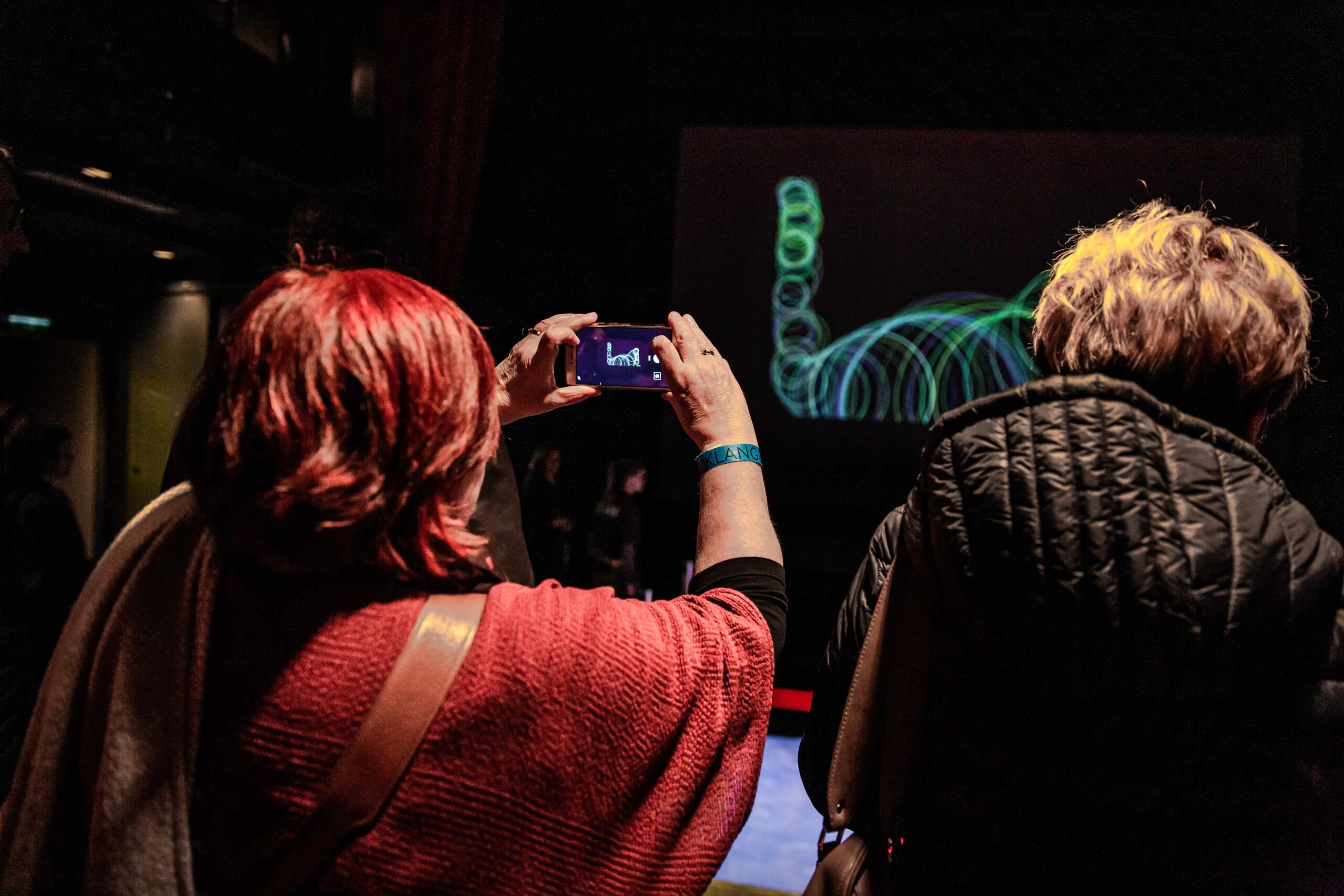
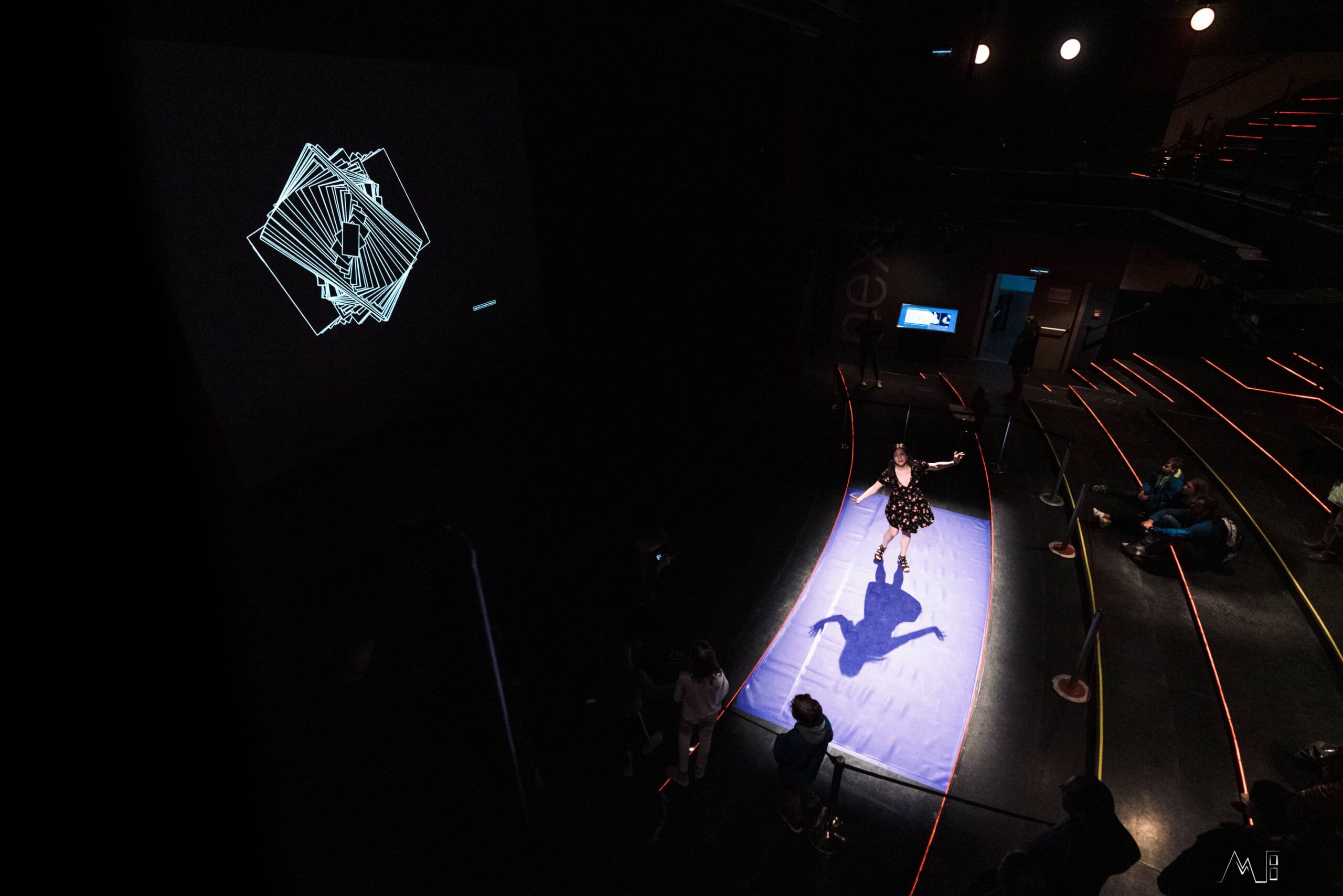
The project “//movingshapes” is a media installation in which active and courageous participation is not only allowed, but encouraged! Using creative coding and processing, the technology of a Kinect interacts with the viewer: the forward, backward or sideways movement of the viewer’s own body sets objects in motion and changes the soundscape. Behind this were 18 algorithms that were developed by the students and also reflect the personality and inspiration of each individual through different shapes, colors and sounds. The visual part of the installation “//movingsshapes” won an award at the Prix Ars Electronica. The students then developed the original interactive soundscapes for the color and shape codes for KLANGLICHT 2019. This enabled them to create an audiovisual media installation that allows visitors to become part of a digital work of art with their eyes and ears.
Programming and sound design: The students Zoe Borzi, Johannes Fischer, Alina Fromm, Nicolas Glockner-Lösch, Antonia Gutschelhofer, Nikolaus Heckel, Lena Landschützer, Lena Mannert, Kathrin Mayerl, Timo Neubauer, Natalie Pinter, Alexandra Rieser, Mona Schmelzer-Ziringer, Martha Schnuderl, Andreas Schweighart, Jonathan Steininger, Maximilian Thaler, Raphael Wohlgemuth under the direction of Joachim Dietze and Jona Hoier.
Credits
Curated by: Birgit Lill
Technical implementation: grafx live Marketing
In cooperation with NEXT LIBERTY.
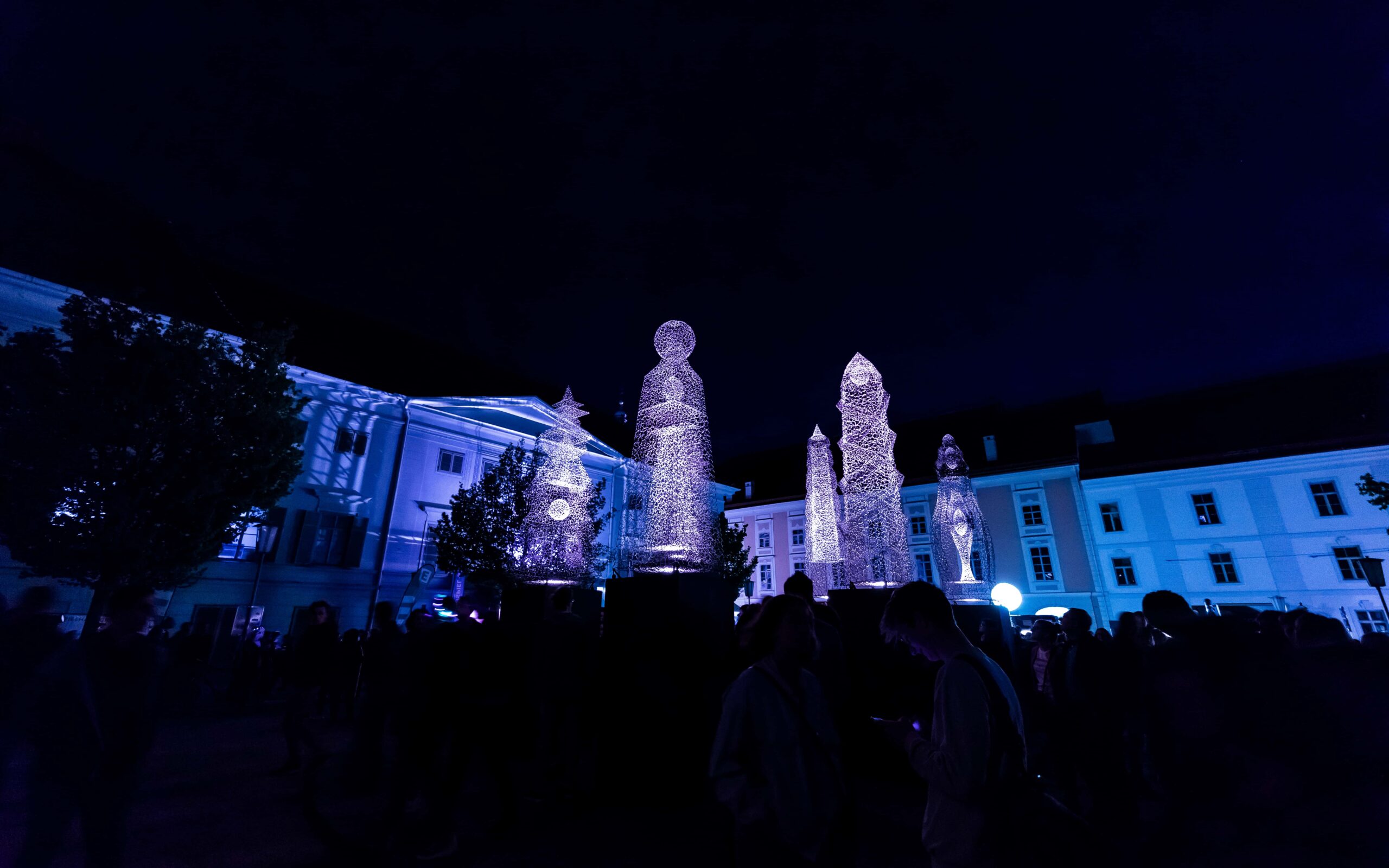
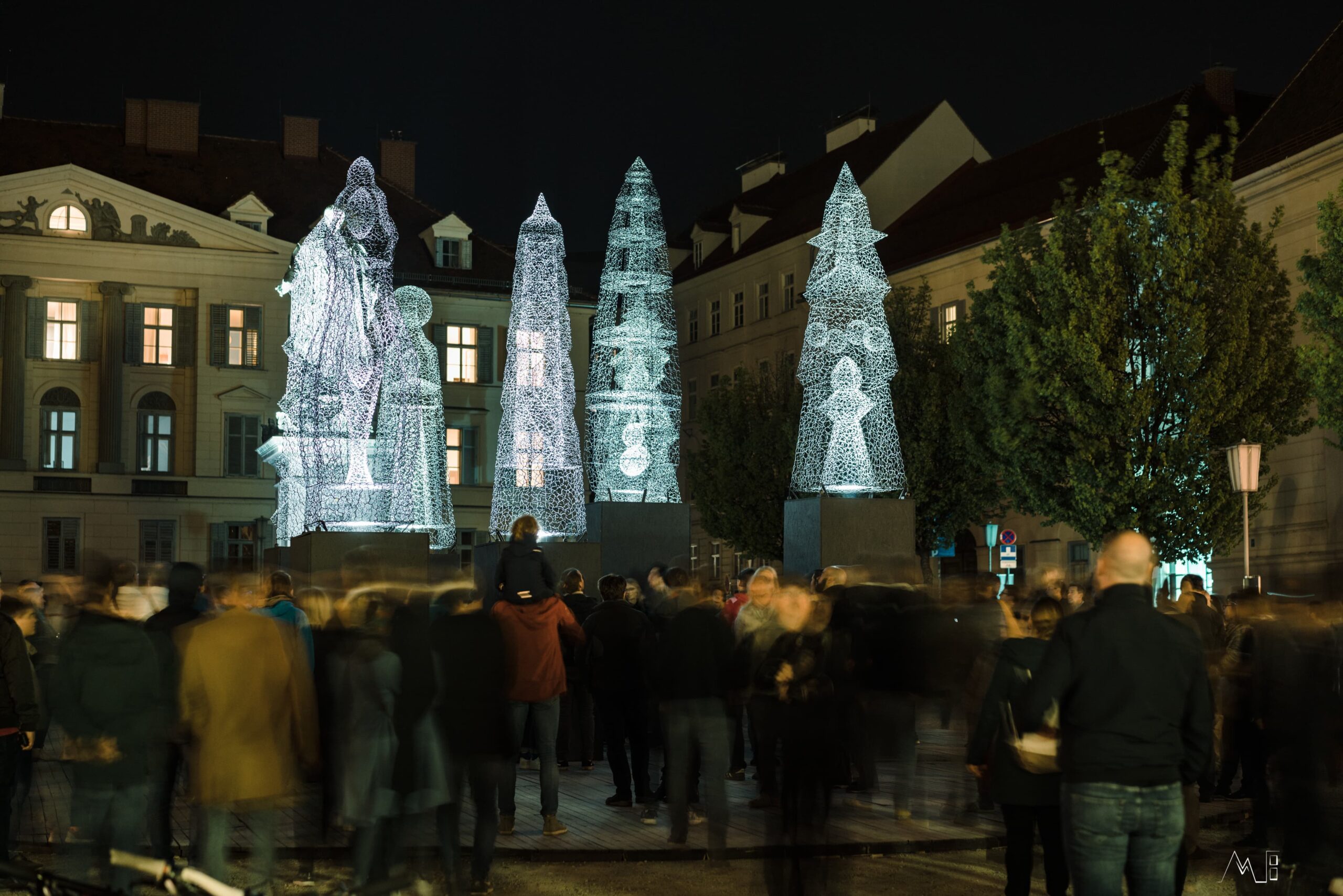
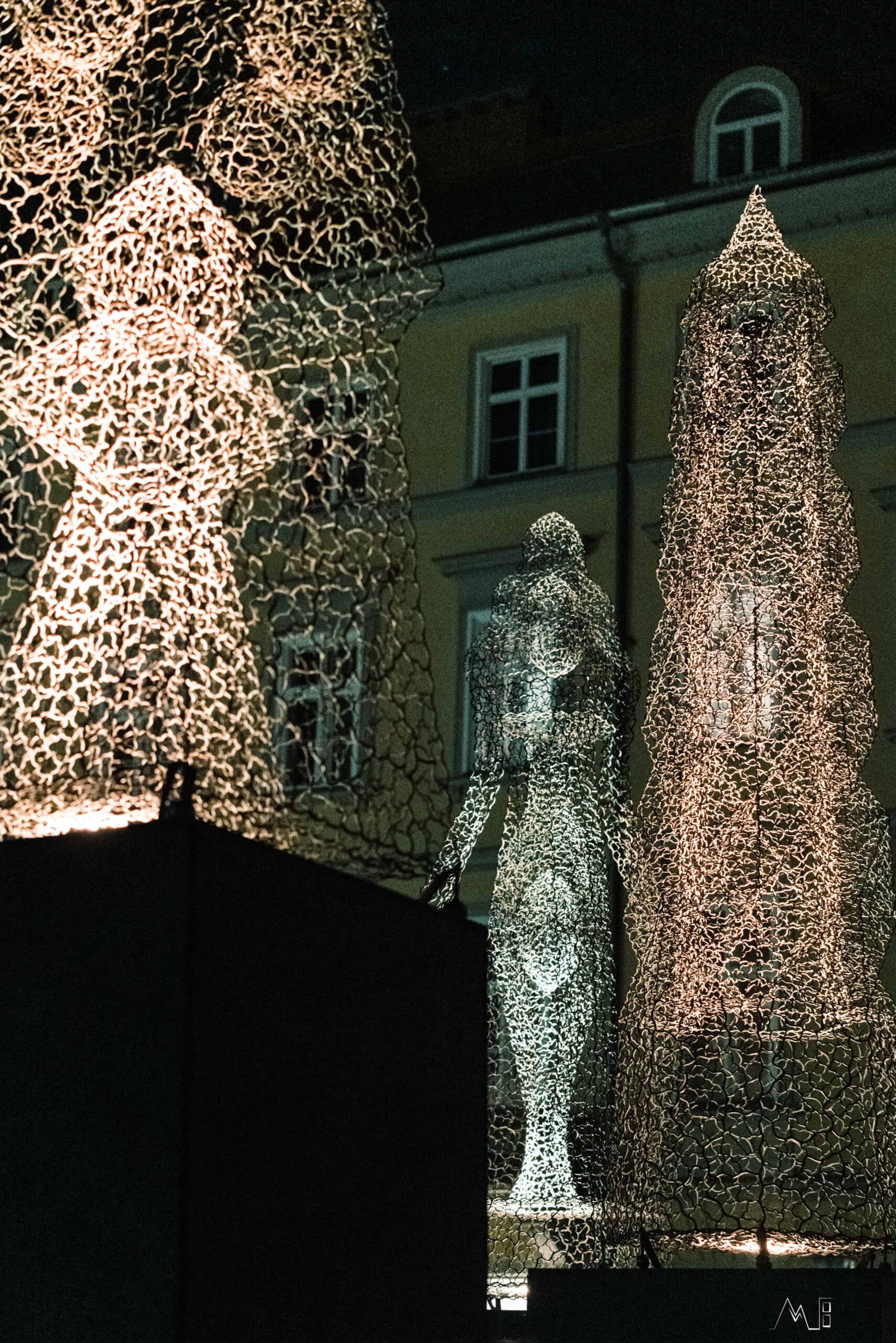
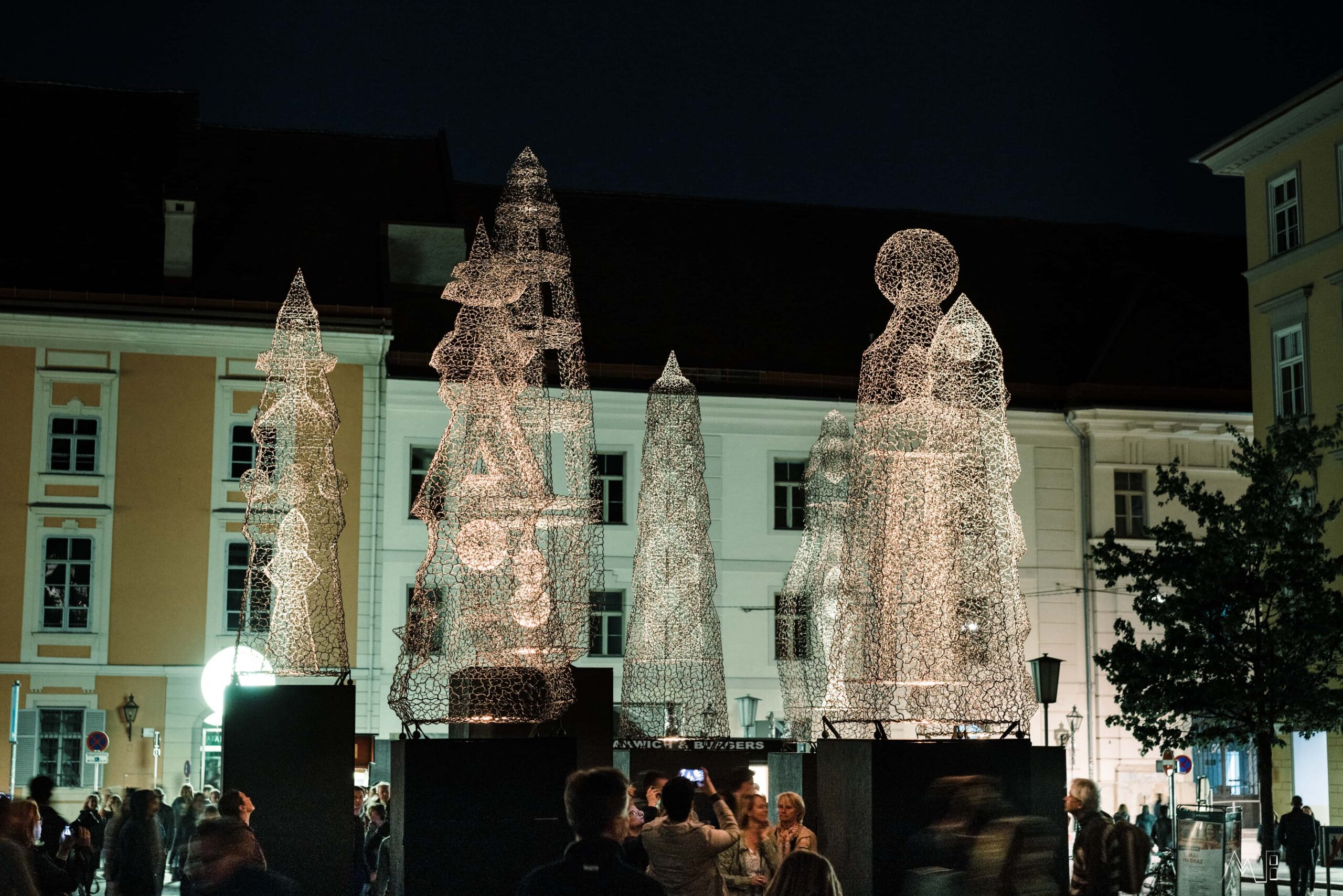
Krešimir Rogina’s project “The Sunken Cathedrals”, created in collaboration with the sculptor Siniša Majkus, is a very meaningful and poetic installation consisting of seven towers. Light and sound are used to create analogies to Claude Monet’s depictions of Rouen Cathedral, which tell of the change in our perception through the influence of light. At the same time, the columns also reflect our inner self, which is always shown in a different light. Debussy’s prelude “The Sunken Cathedral” is part of the sound installation and also spans an arc between the visual and auditory experience in this project.
Biography
Krešimir Rogina is a Croatian artist and architect. In addition to his architectural firm Peneziv & Rogina, he works on various projects worldwide. Rogina’s works have been shown three times at the Venice Biennale, among others.
Credits
SUNKEN CATHEDRALS by R/IN Zagreb: Krešimir Rogina
Art Director: Siniša Majkus,
Sculptures: Tvrtko Ćavar & Igor Teofilović,
Light & Sound: Dario Jukica
Technical realization: Kupole, Construction
The project was realized with the kind support of Grazer Wechselseitige.
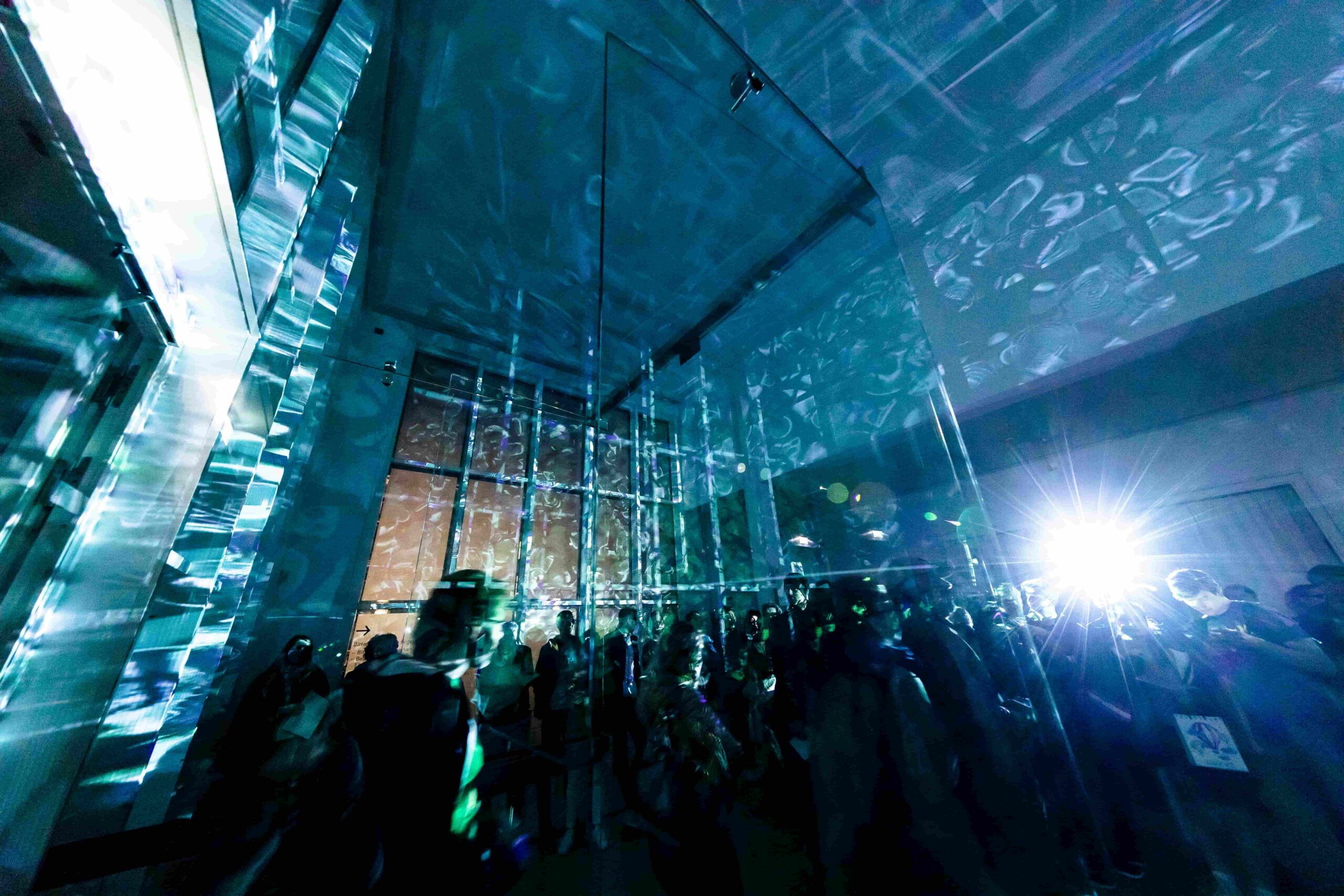
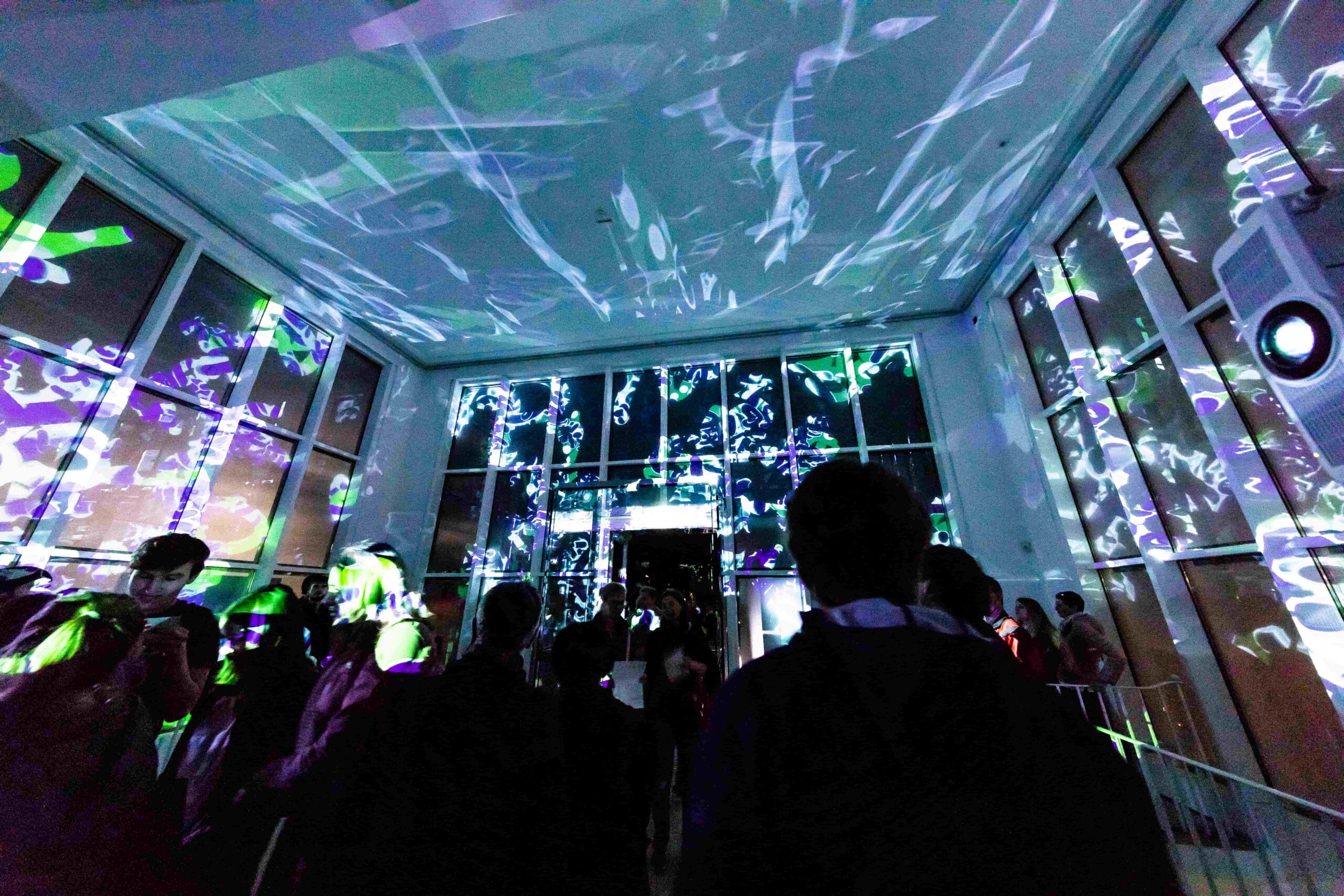
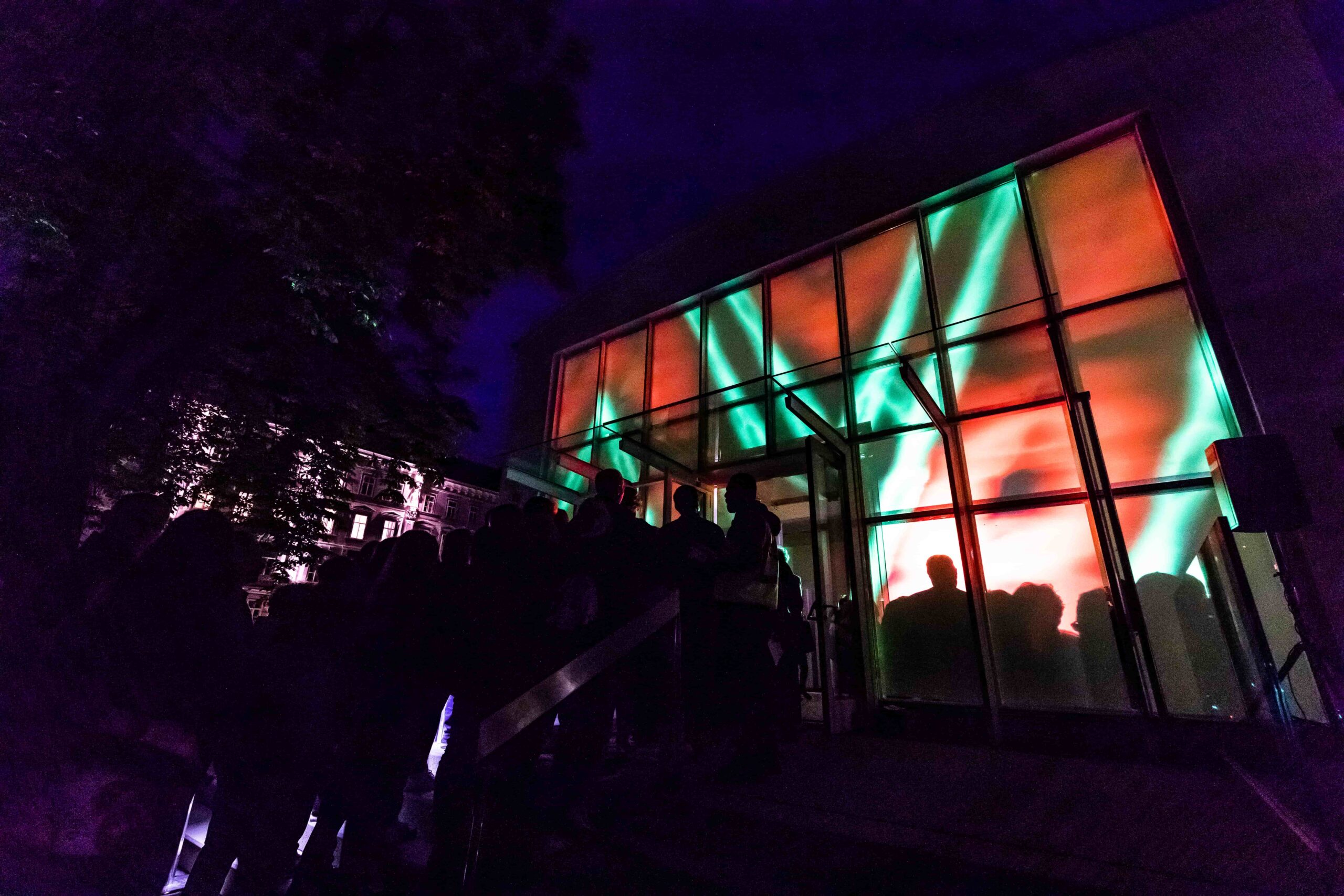
What if everything were different? The immersive image-sound installation by the two artists Tina Frank and Alex Murray-Leslie is a thought experiment that uses projections of form, color and image to question the boundaries of our thoughts. Inspired by the feminist theorist Donna J. Haraway, the artists transformed the Künstlerhaus into a glass habitat for fictional and political reflections that cannot refuse to issue a warning to the world: Those who sit in glass houses should not throw stones.
Biography
Tina Frank is a video artist, graphic designer and professor at the University of Art and Design Linz. In her artistic work, she deals with digital data visualizations and synaesthetic experiments. Her installations and videos are shown at festivals worldwide. Alex Murray-Leslie is a researcher in the field of tension between design and digital music and a founding member of the internationally renowned female artist band “Chicks on Speed”.
Credits
Video: “Dive” by Alexandra Murray-Leslie
Swimmer: Jana Salcedo Strausfeld
Camera: Wolf-Dieter Grabner
Boatman: Bruno Erich
Curated by: Künstlerhaus – Halle für Kunst und Medien, Sandra Droschl
Technical realization: ProVideo
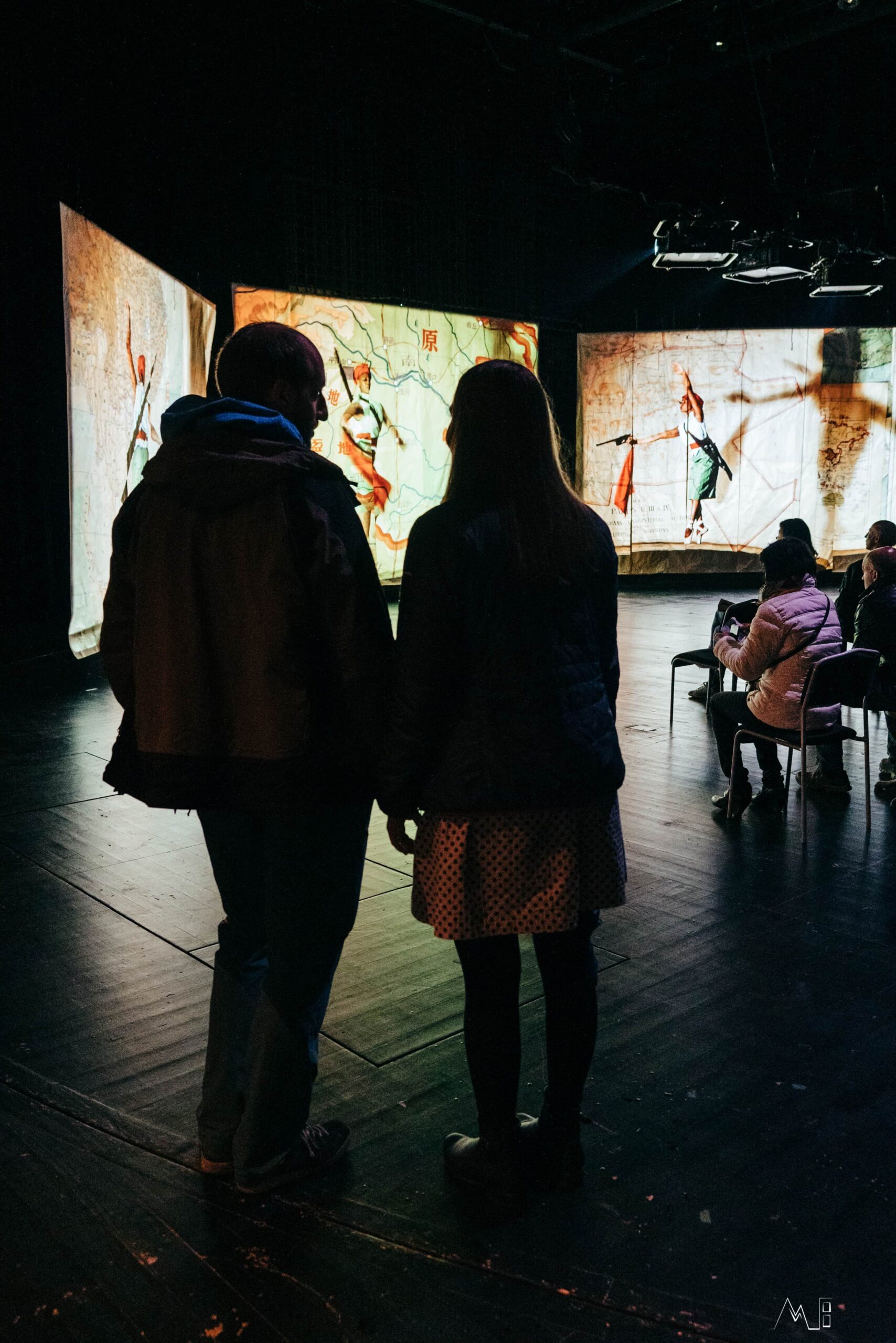
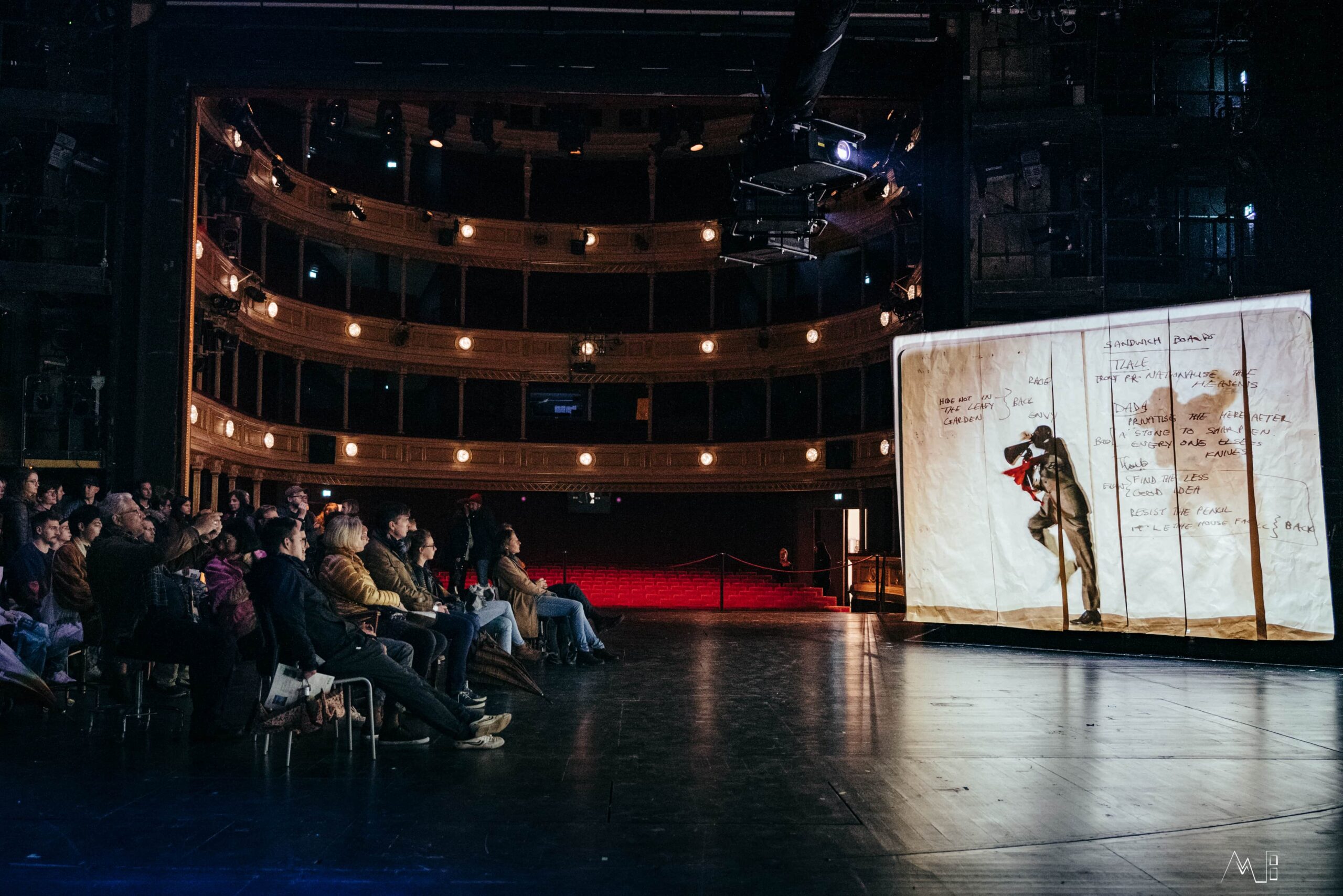
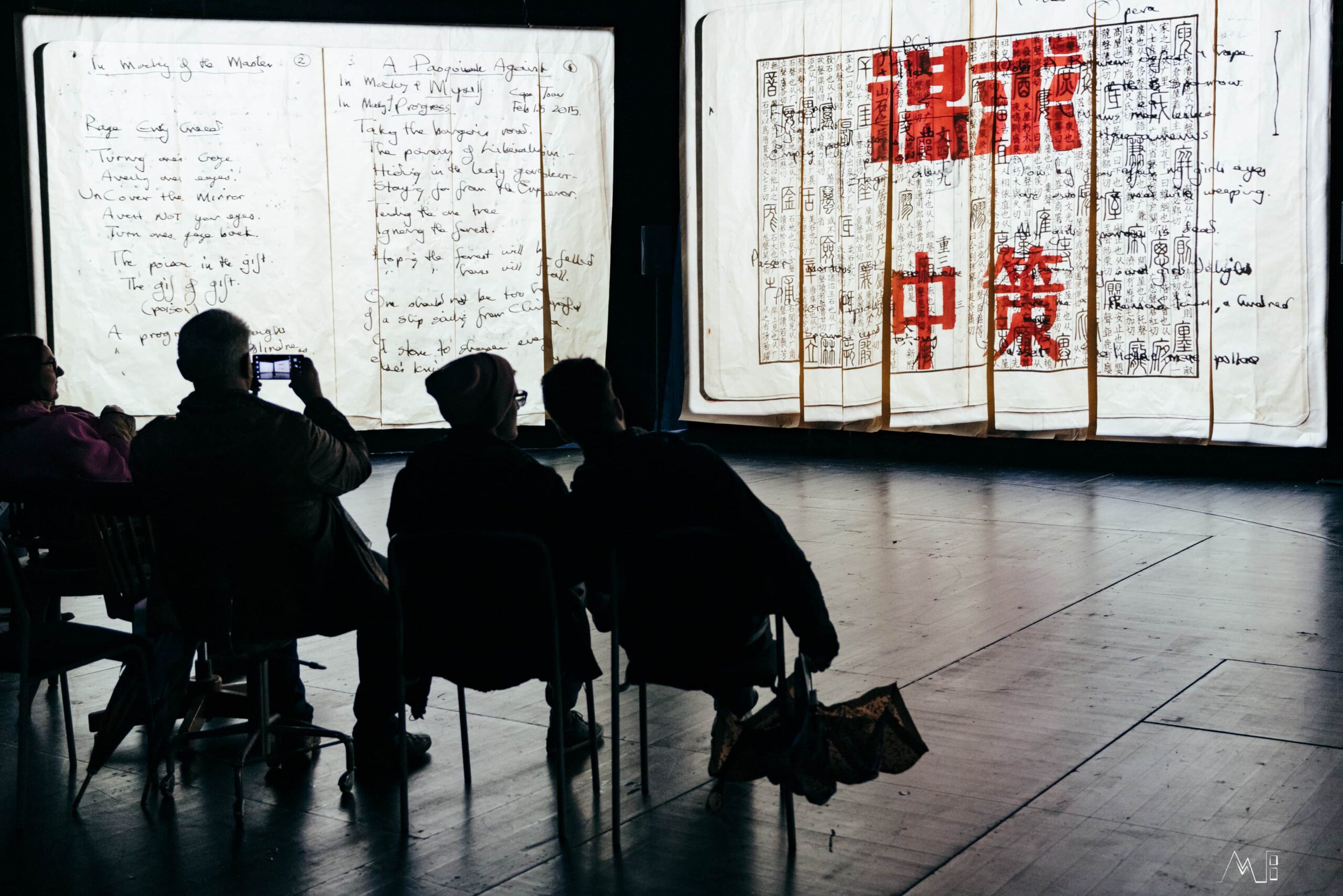
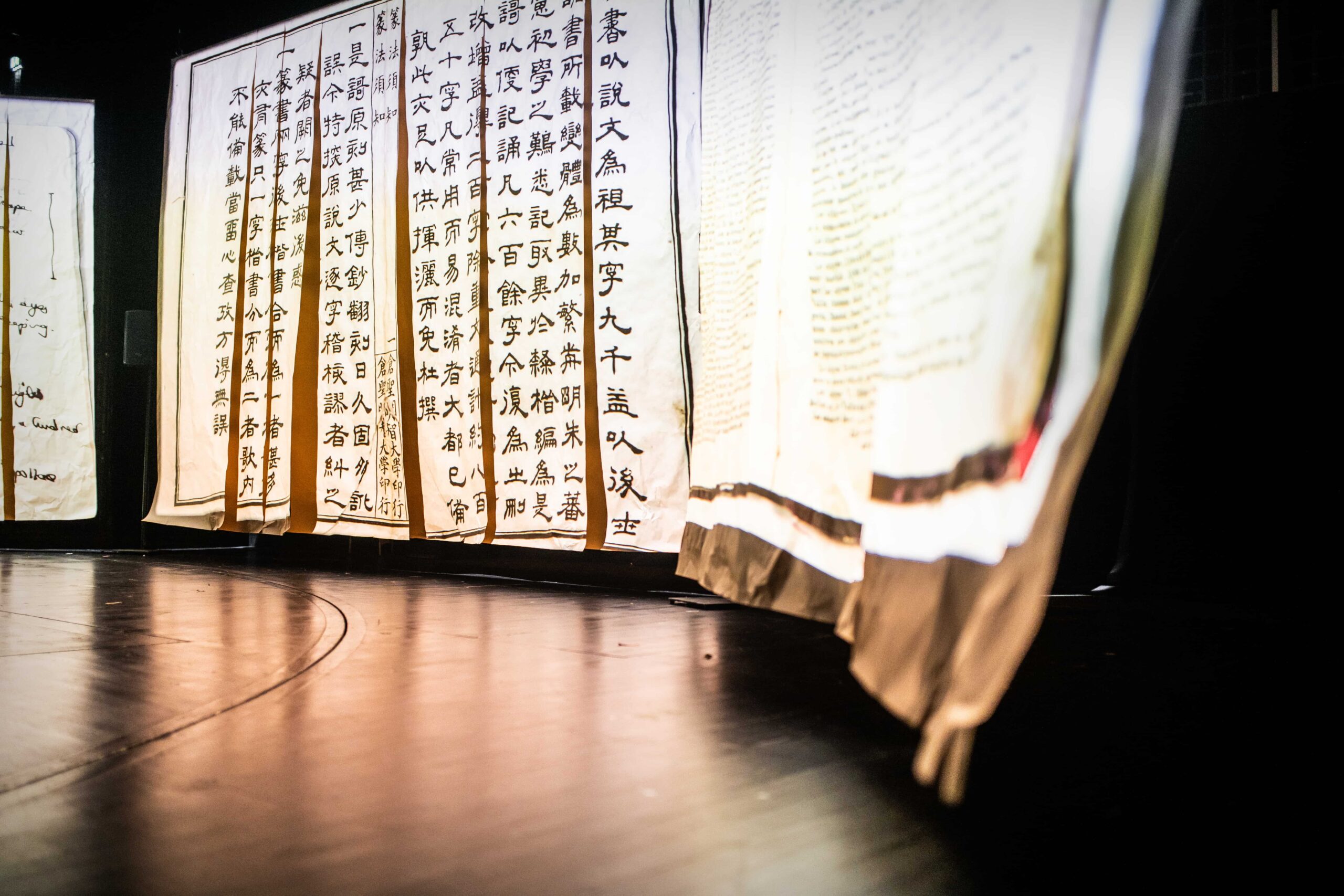
Today is superimposed on yesterday, but the past can no more be erased than what is currently happening: With a highly political installation by William Kentridge, the Schauspielhaus continued its exploration of the African continent at KLANGLICHT 2019. In the 3-channel video and sound installation by the South African artist, symbols of the Chinese Cultural Revolution overlap with the atrocities of the white apartheid regime in South Africa and the history of European colonialism with China’s current economic interests.
Biography
William Kentridge is internationally renowned for his expansive installations and is also one of the world’s leading theater and opera directors. With his films, drawings, objects and performances, he transforms traumatic political experiences into poetic allegories.
Credits
A project by: William Kentridge
Choreography: Dada Masilo
Composition and arrangement: Philip Miller
Performers: Dada Masilo, Tlale Makhene, Bham Ntabeni, Thato Mothlaolwa, Thabani Edwin Ntuli
Musicians: vocals Bham Ntabeni, Moses Moeta, Joanna Dudley, Ann Masina, tlale Makhene, Thato Motlhaolwa, percussion Tlale Makhene, trombone Dan Selsick, trumpet and spoons Adam Howard, tuba George Fombe, guitar Charles Knighten-Pullen, Stroh violin Waldo Alexander
Curated by: Schauspielhaus Graz
“William Kentridge’s works – whether for the theater or the opera, whether drawings or installations – deal with social conflicts. They are political, create sensual and at the same time complex pictorial spaces and rely on the ambiguity of suggestive images. In the work on display, he deals with the multifaceted entanglements of European and Chinese colonialism on the African continent. With this contribution, Schauspielhaus Graz continues its “Africa” discourse.”
– Iris Laufenberg, Director Schauspielhaus Graz
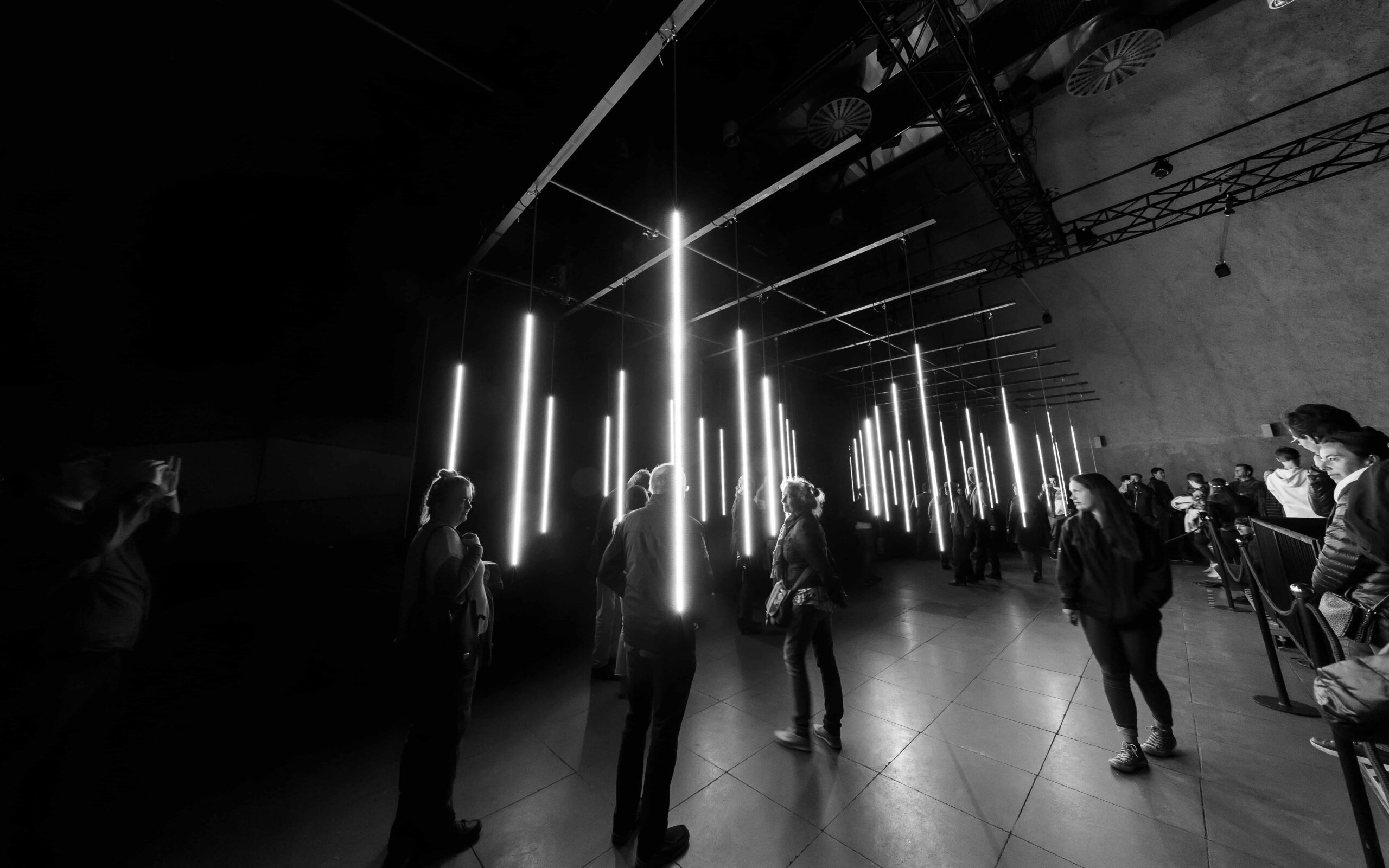
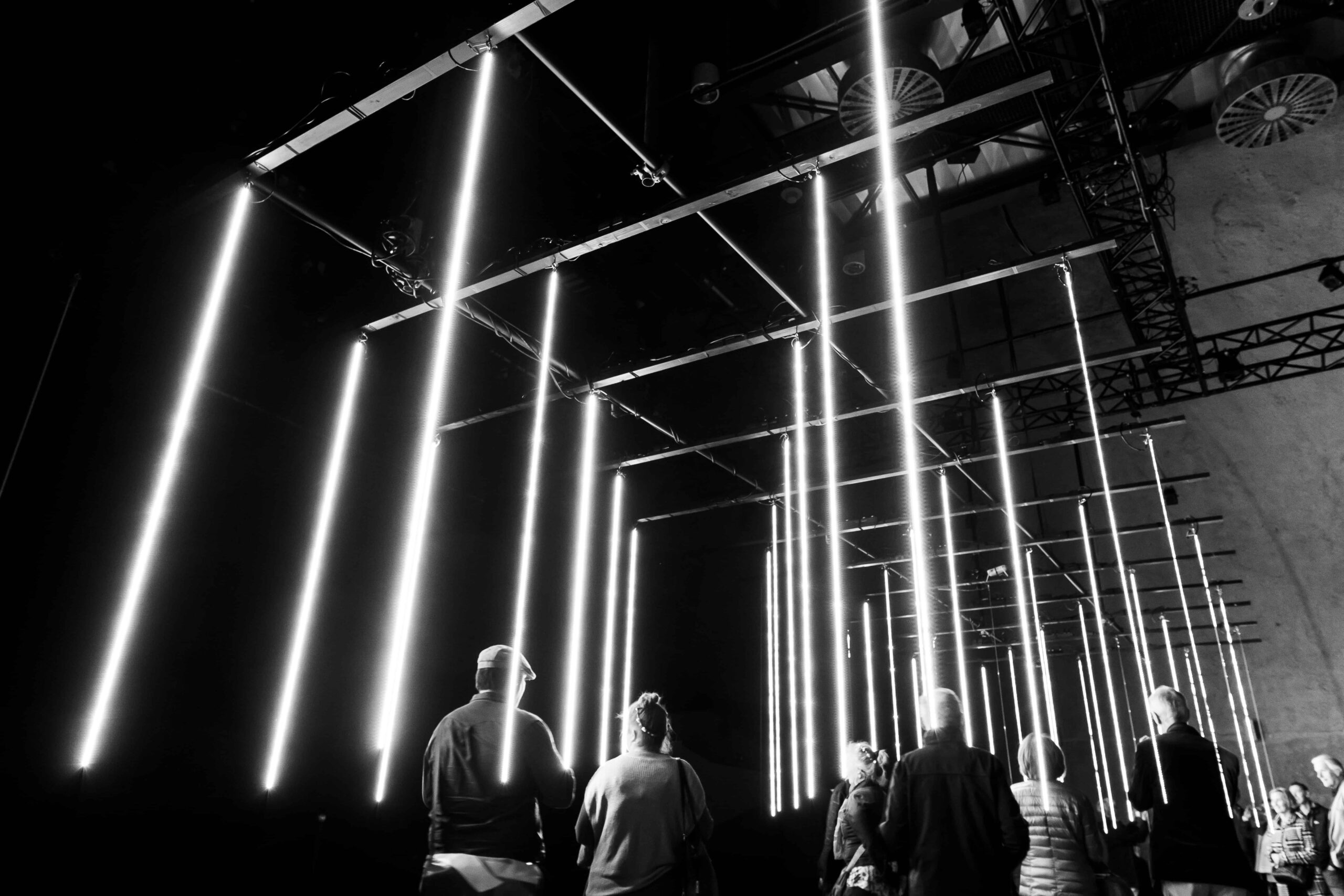
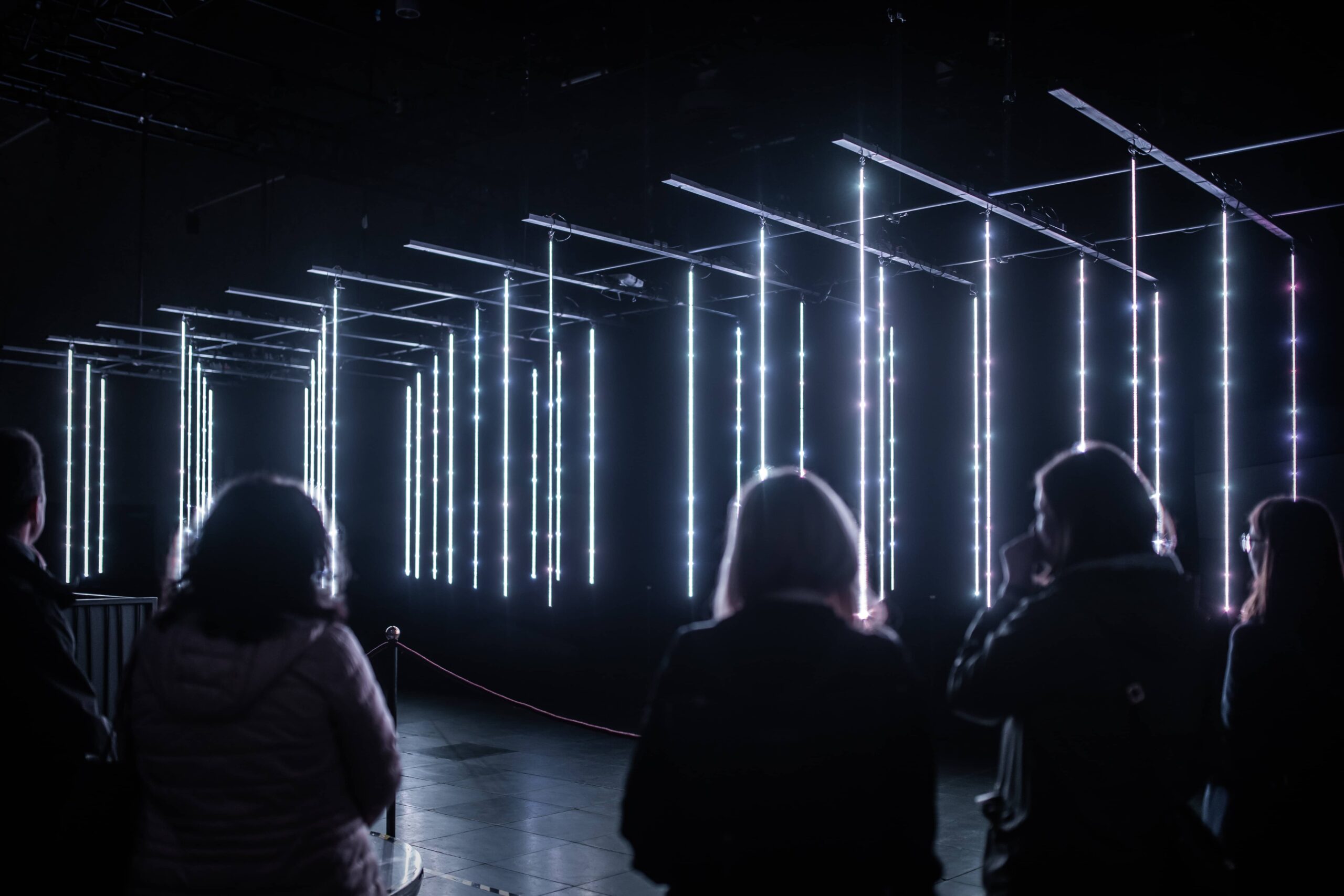
Nature is truth: it constantly reveals itself to us and rain, whether monsoon or sunshine, is one of its languages. With his sensory installation “In the Rain”, Yuki Anai finds a translation for all those whose senses are open to the messages of natural conditions. The Japanese artist uses light and sound to create rain in the Dom im Berg, which is intended to open the door to the viewer’s memory through their experience.
Biography
Japanese media artist Yuki Anai combines light and sound with and through sensory technologies. His installations are mainly inspired by nature. His projects have won the Asia Digital Award, the Best Award of Smart Illumination and the Japan Media Art Festival.
Credits
Sound design: Hideaki Takahashi
Technical realization: The team of the Graz venues
In cooperation with IV Steiermark.
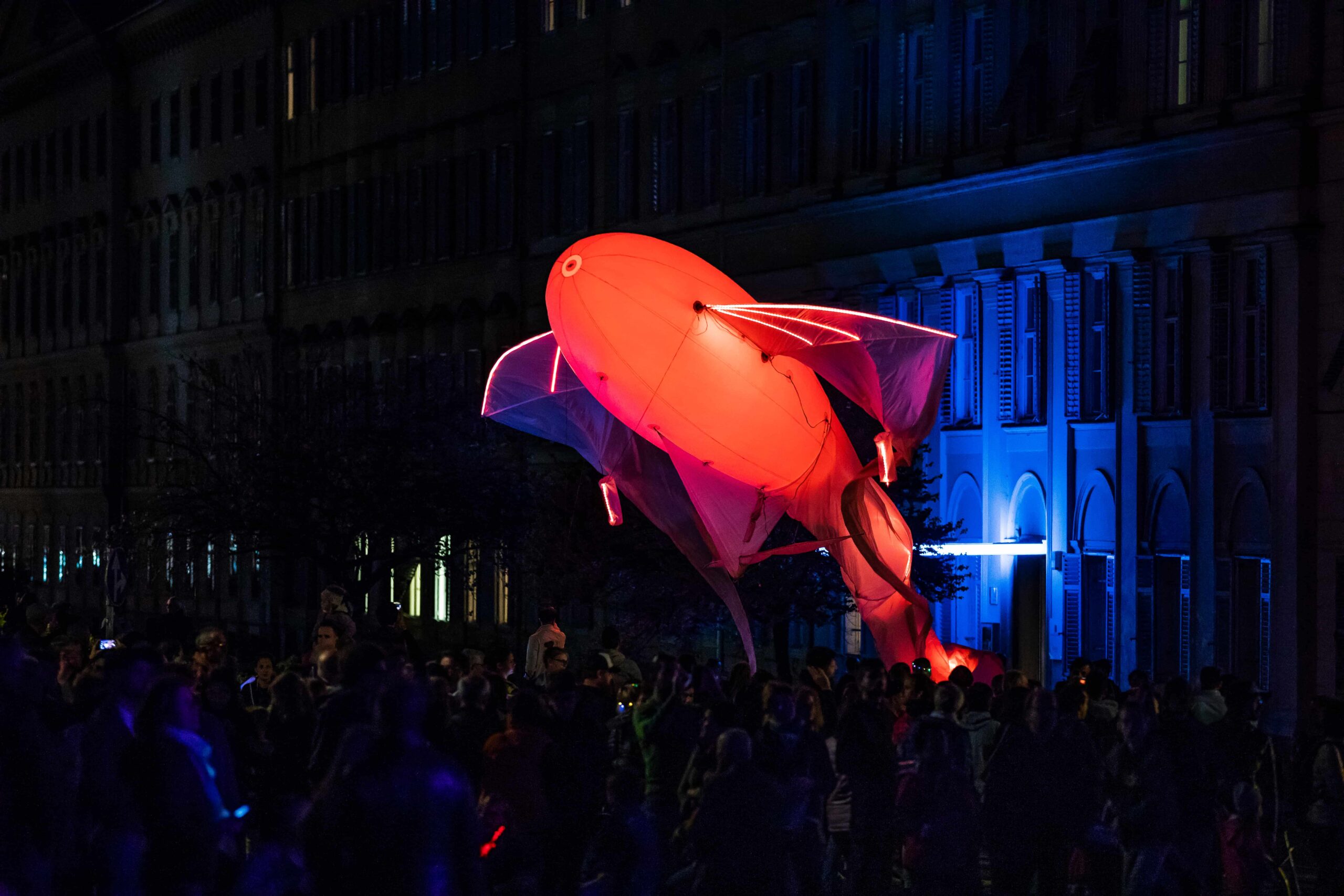
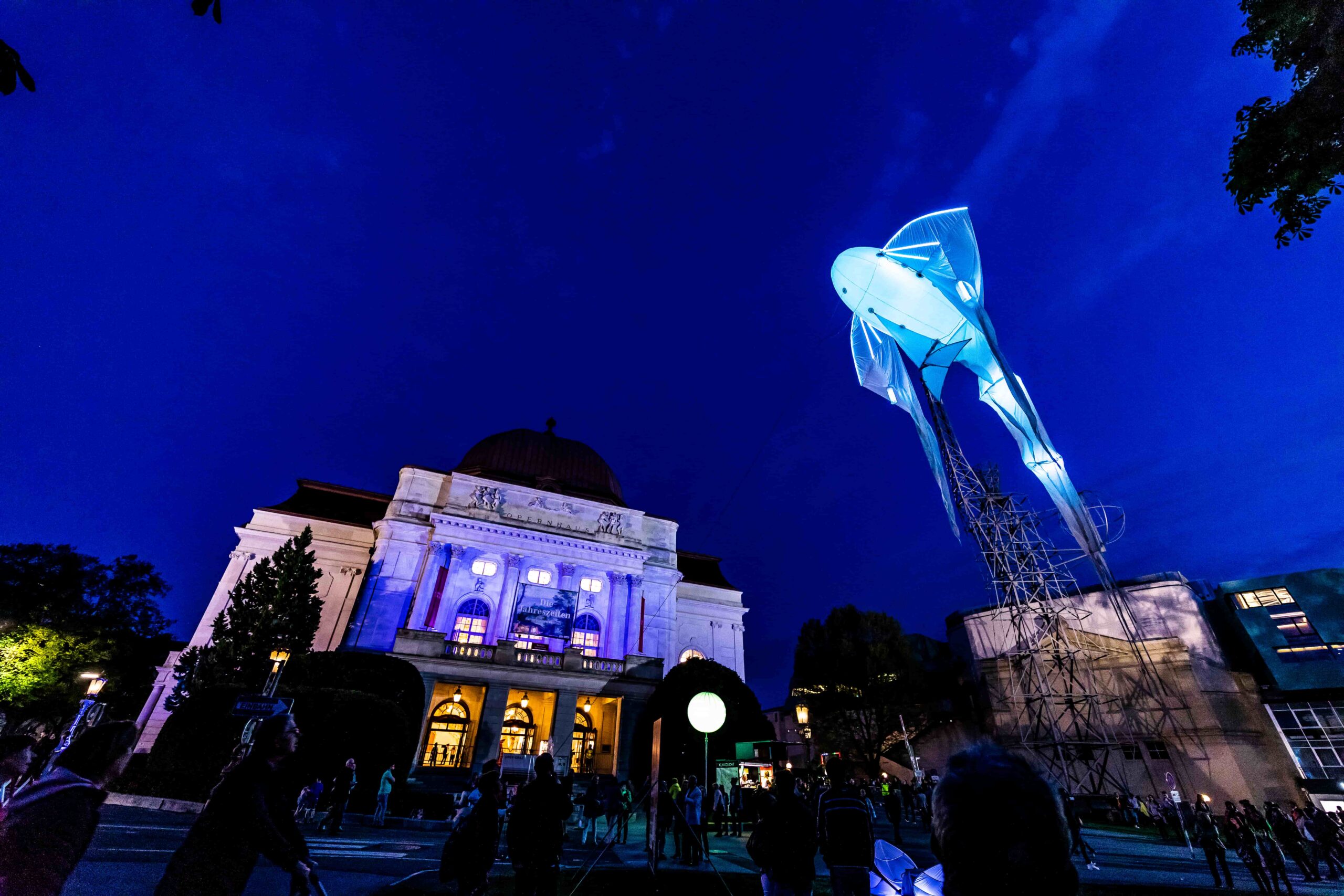
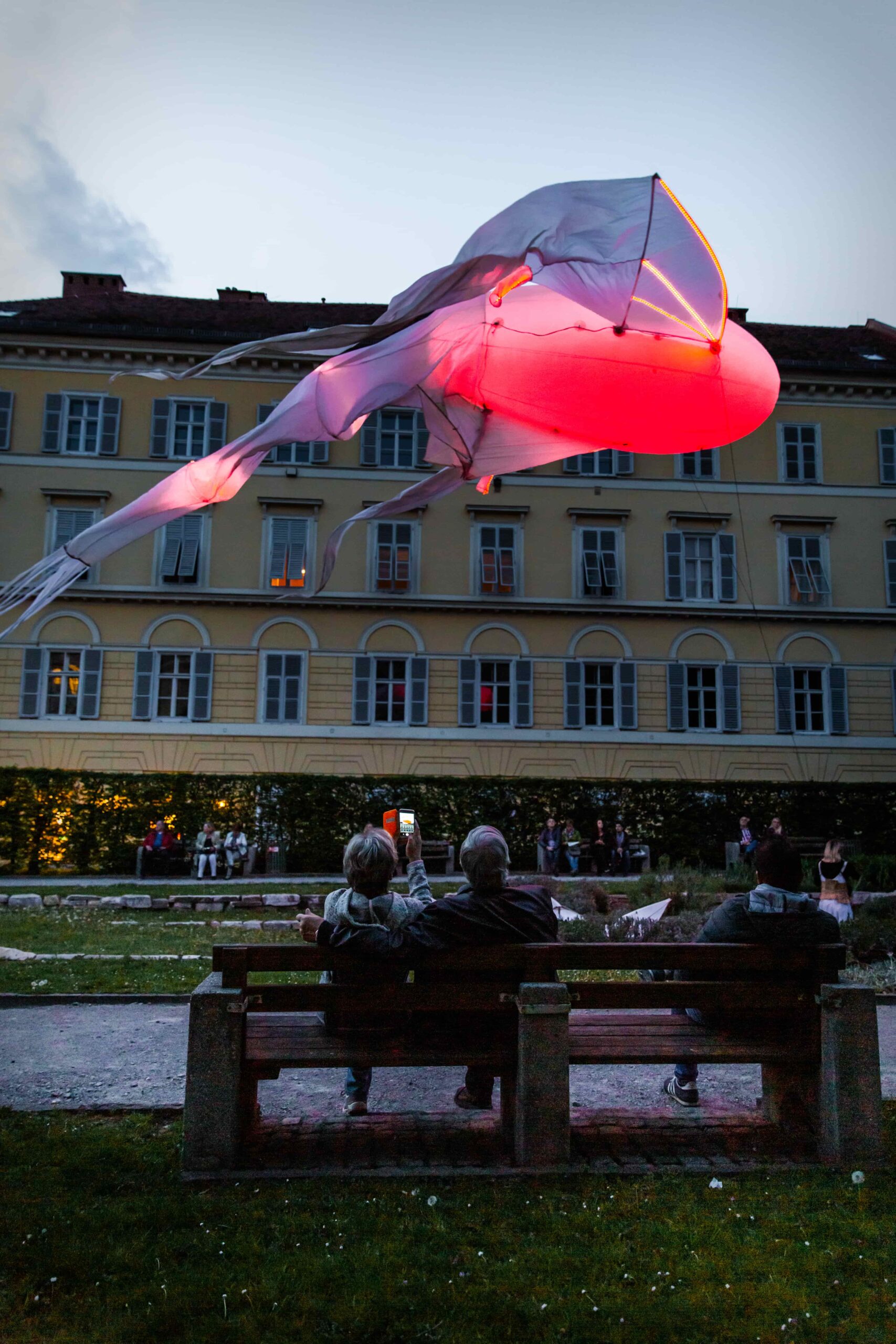
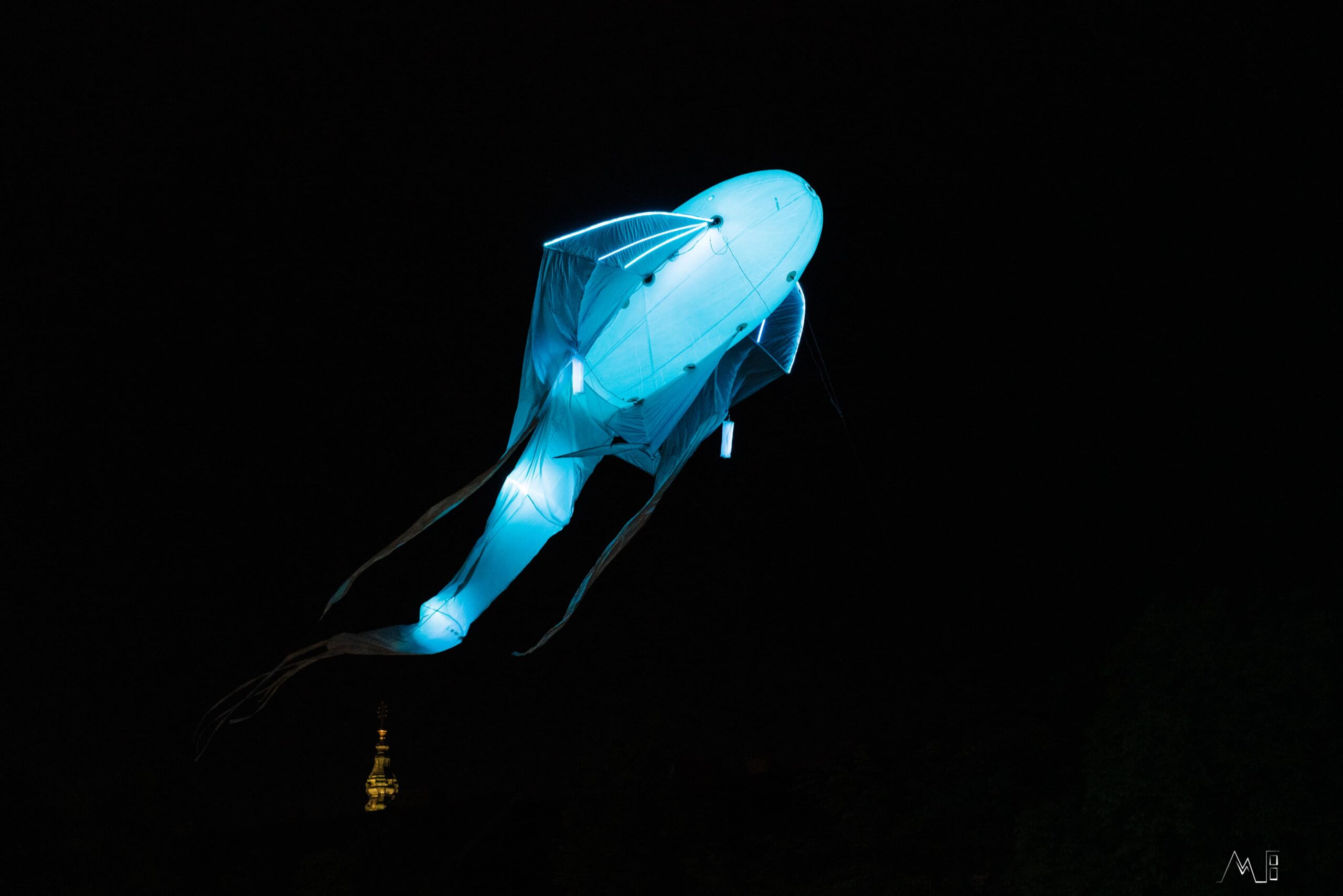
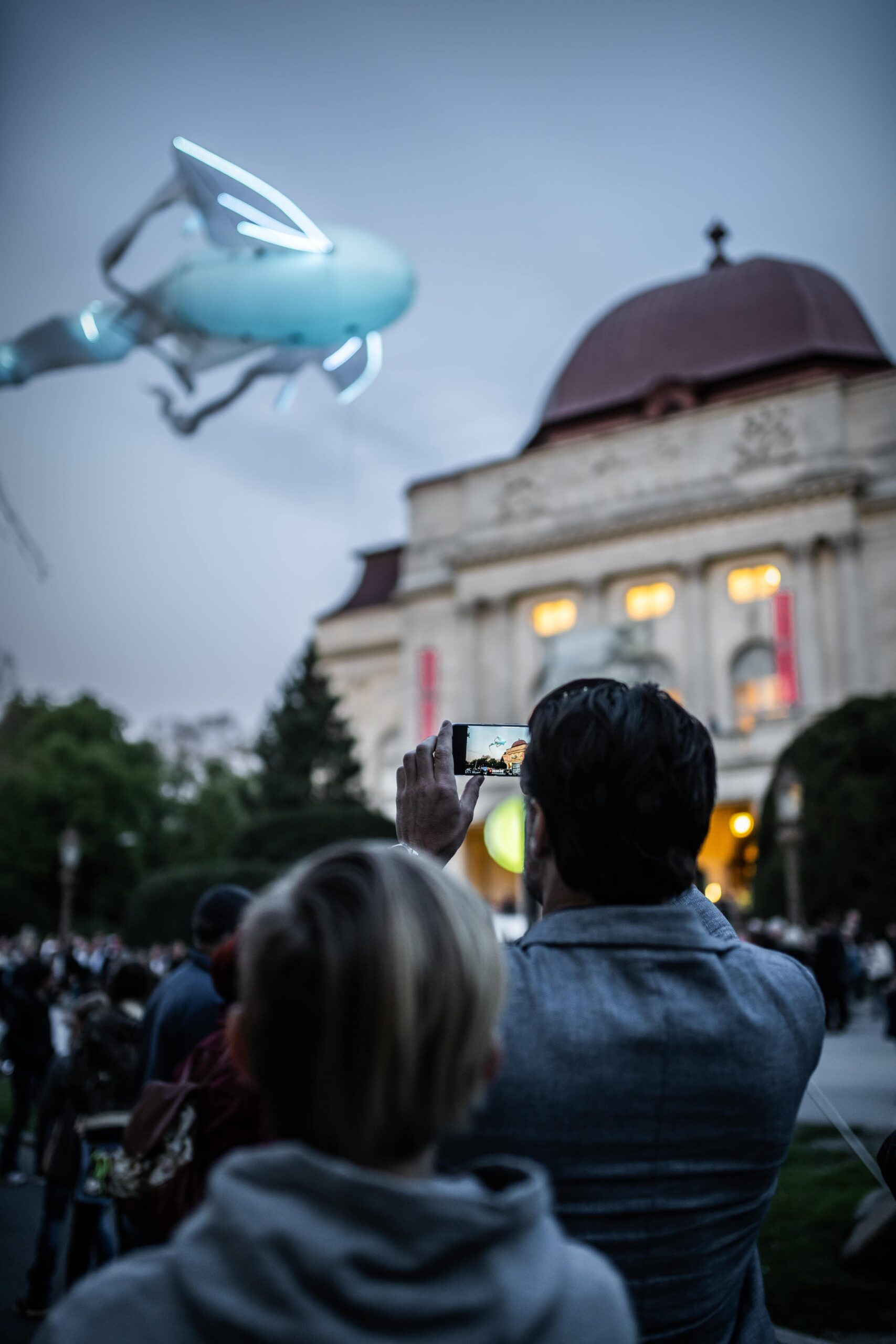
Back again for the 5th KLANGLICHT anniversary!
The colorful “Luminéoles” won the hearts of the KLANGLICHT audience back in 2017. For the fifth anniversary of Klanglicht, the poetic aerial creatures returned and this time soared through the air above the Graz Opernring. “Les Luminéoles” are an installation by the French collective Porté par le Vent. “Carried by the wind” – that is also the program when the creatures filled with helium and light take to the air, dance with the wind and enchant the night sky of Graz.
Biography
Christophe Martine, the founder of the “Porté par le Vent” collective, discovered his passion for paragliding back in 1987 at the age of 14 and has perfected this passion over the years. He ultimately turned his hobby into his profession: as a sports teacher, he has been working with his students on the subject of hang gliding for almost twenty years. Starting with “Les Luminéoles”, Christophe Martine has since developed several programs with light artworks that have resounding names such as “Le Bal des Luminéoles” or “Jardin d’hiver”. “Les Luminéoles” were created in collaboration with Fête des Lumières Lyon.
Credits
Technical implementation: grafx live Marketing
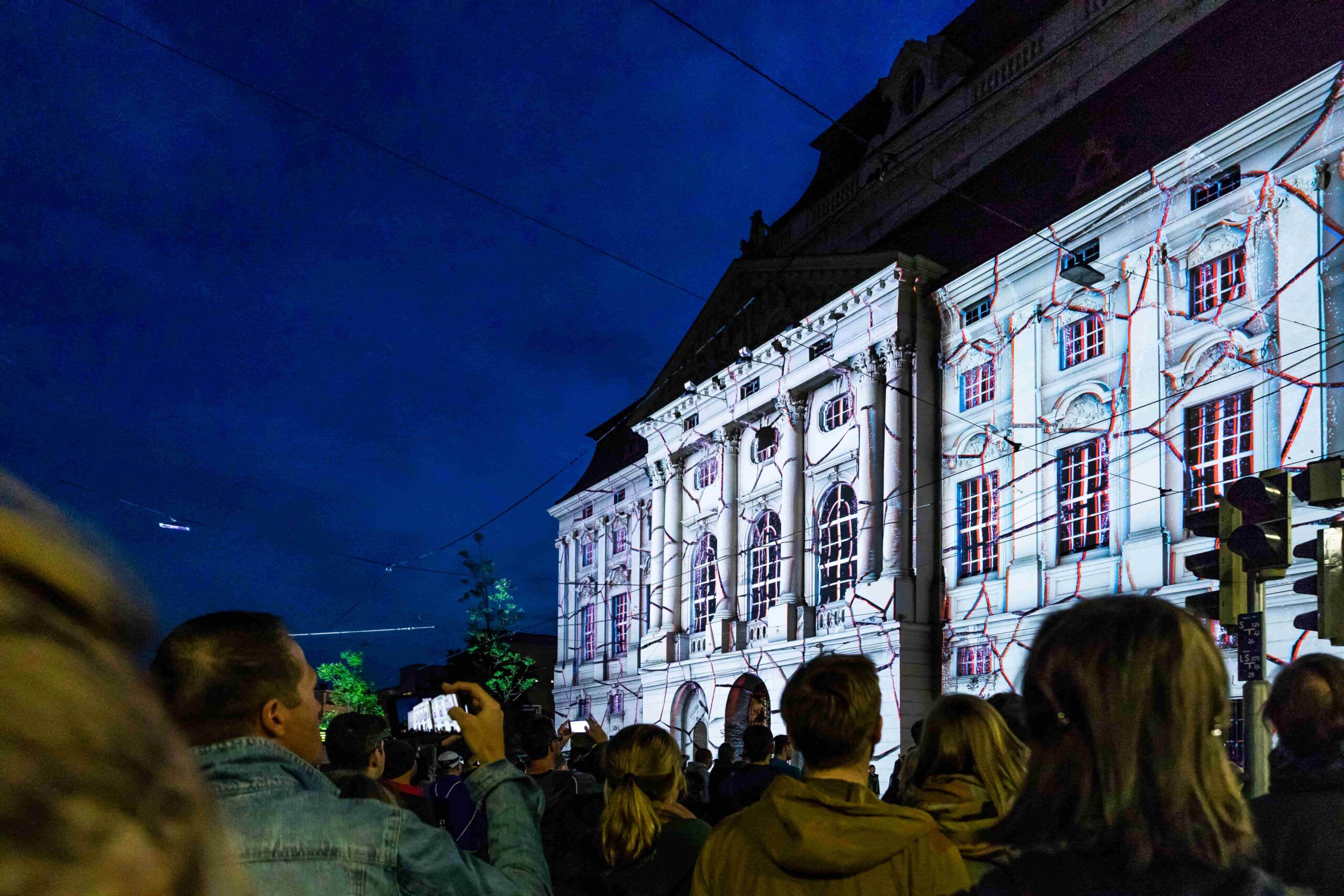
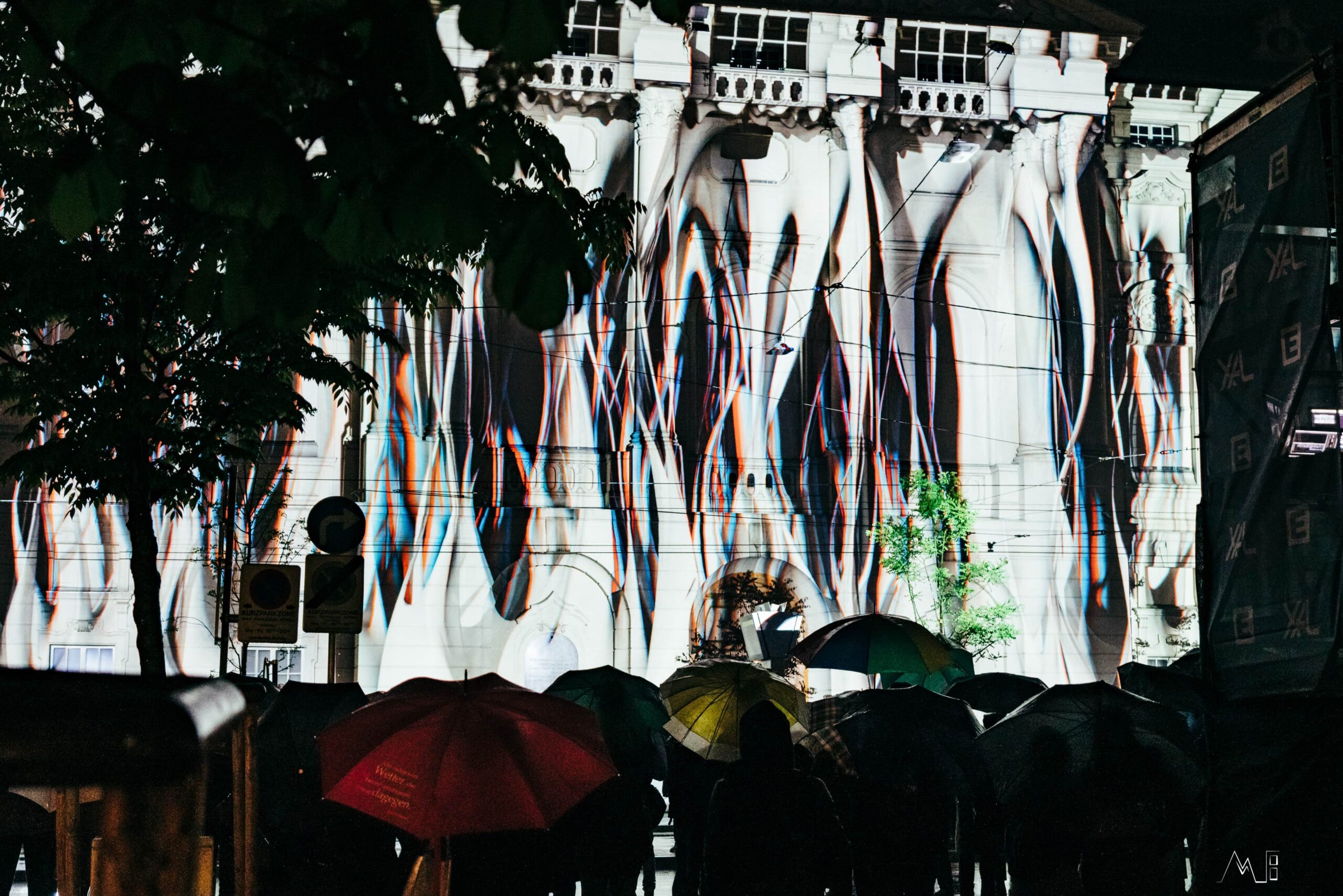
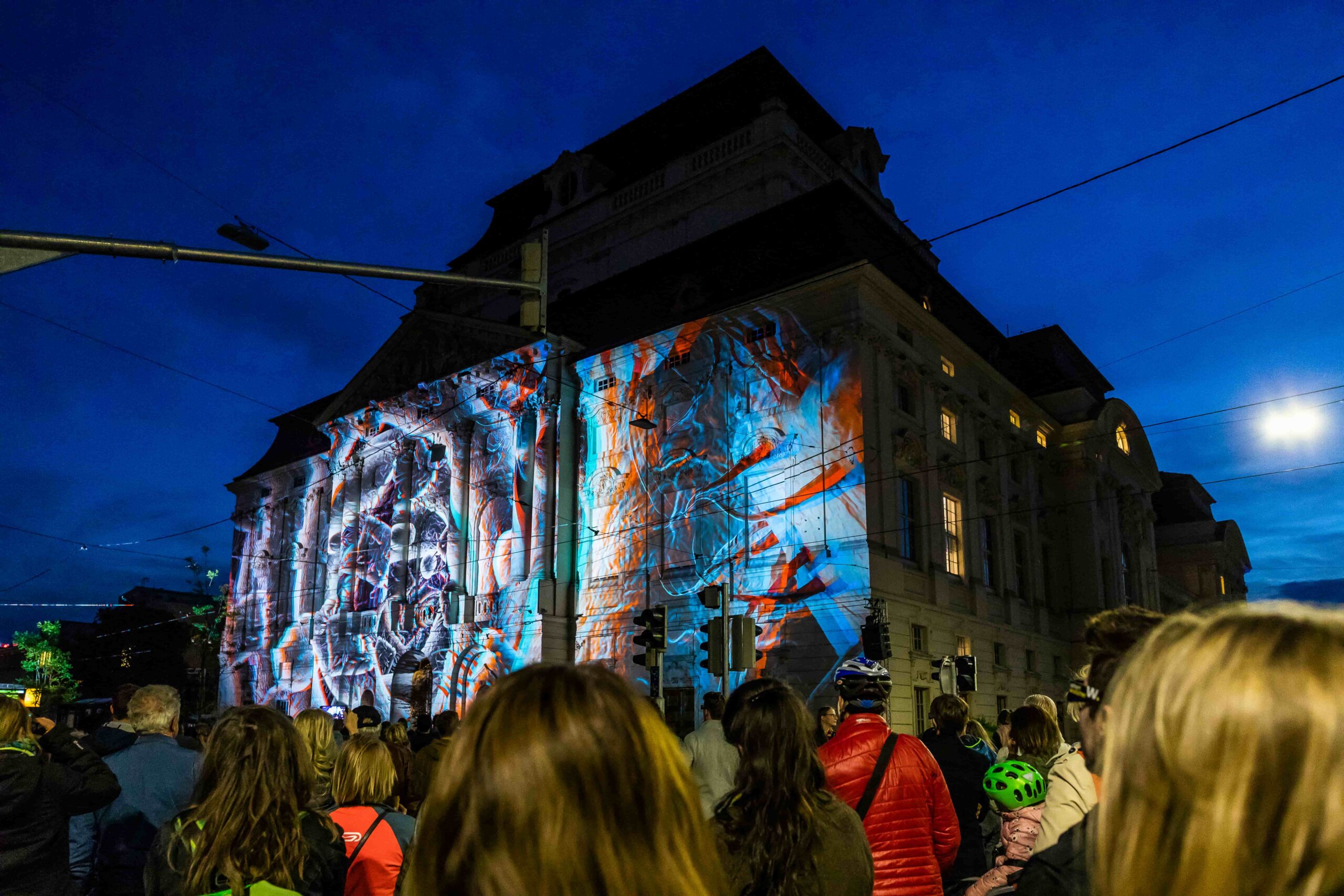
Light and shadow, flexibility and hardness, proximity and expanse, noise and silence: the three-dimensional projection “Diplopia” by the Spanish artist collective Onionlab explored the theme of contradictions. Volumetric contrasts and illusions of depth created images that fascinate, irritate and also deceive the viewer. The 3D project not only created visual contrasts, it also suggested a feeling of inner tension. This made “Diplopia” an audiovisual experience whose effect spread further into the emotional world of the visitors.
Biography
Onionlab specialize in oversized projections and virtual reality, creating intersections between technology, design and art. Their stereoscopic 3D mappings use different viewing angles and special techniques to create the illusion of depth in images for binocular (two-eyed) viewing. With the help of 3D glasses, these merge into three-dimensional objects that appear to emerge from the building.
Credits
Artistic concept: Onionlab
Technology: provideo, grafx live-marketing
The project was realized with the kind support of by sehen! wutscher .
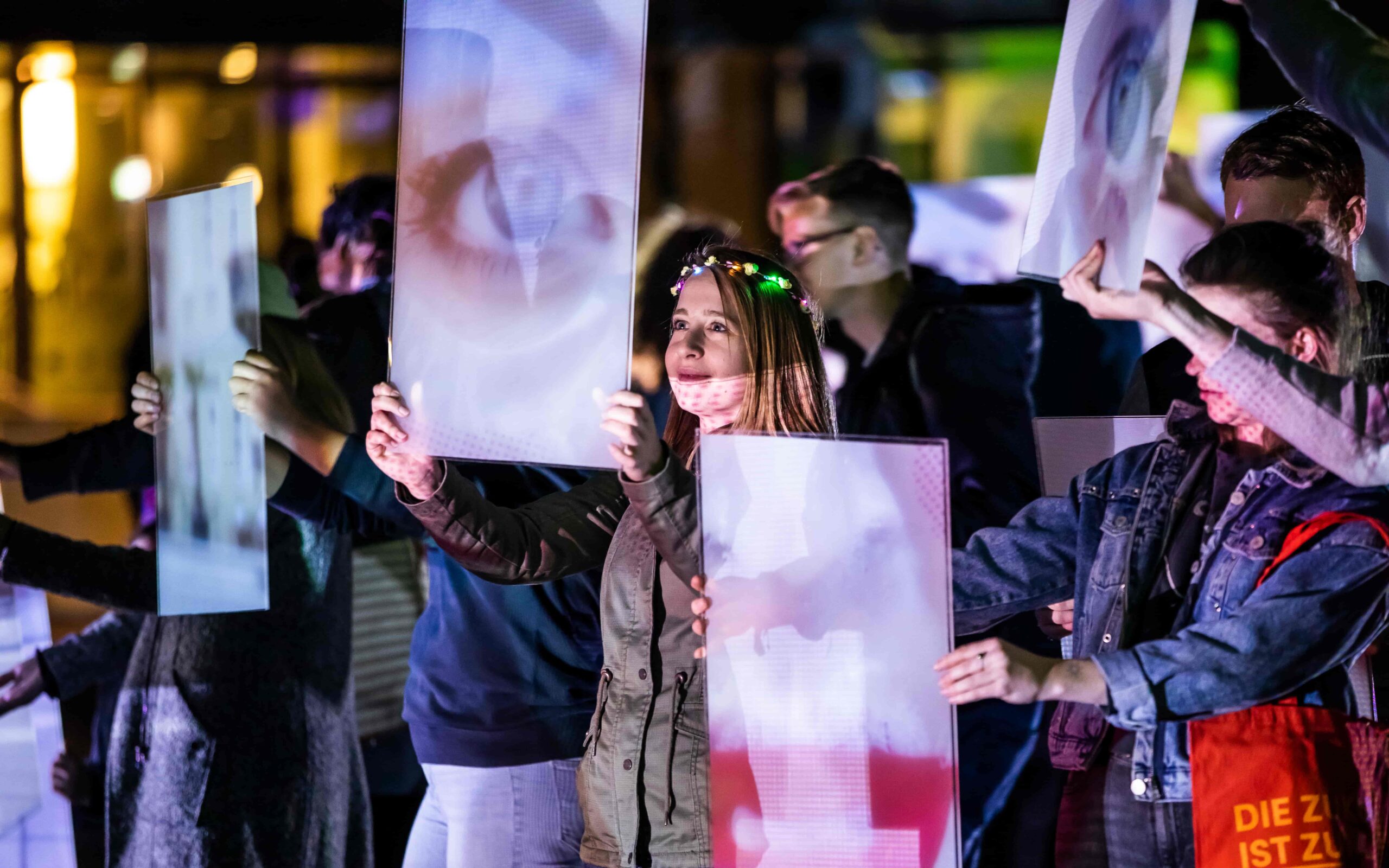
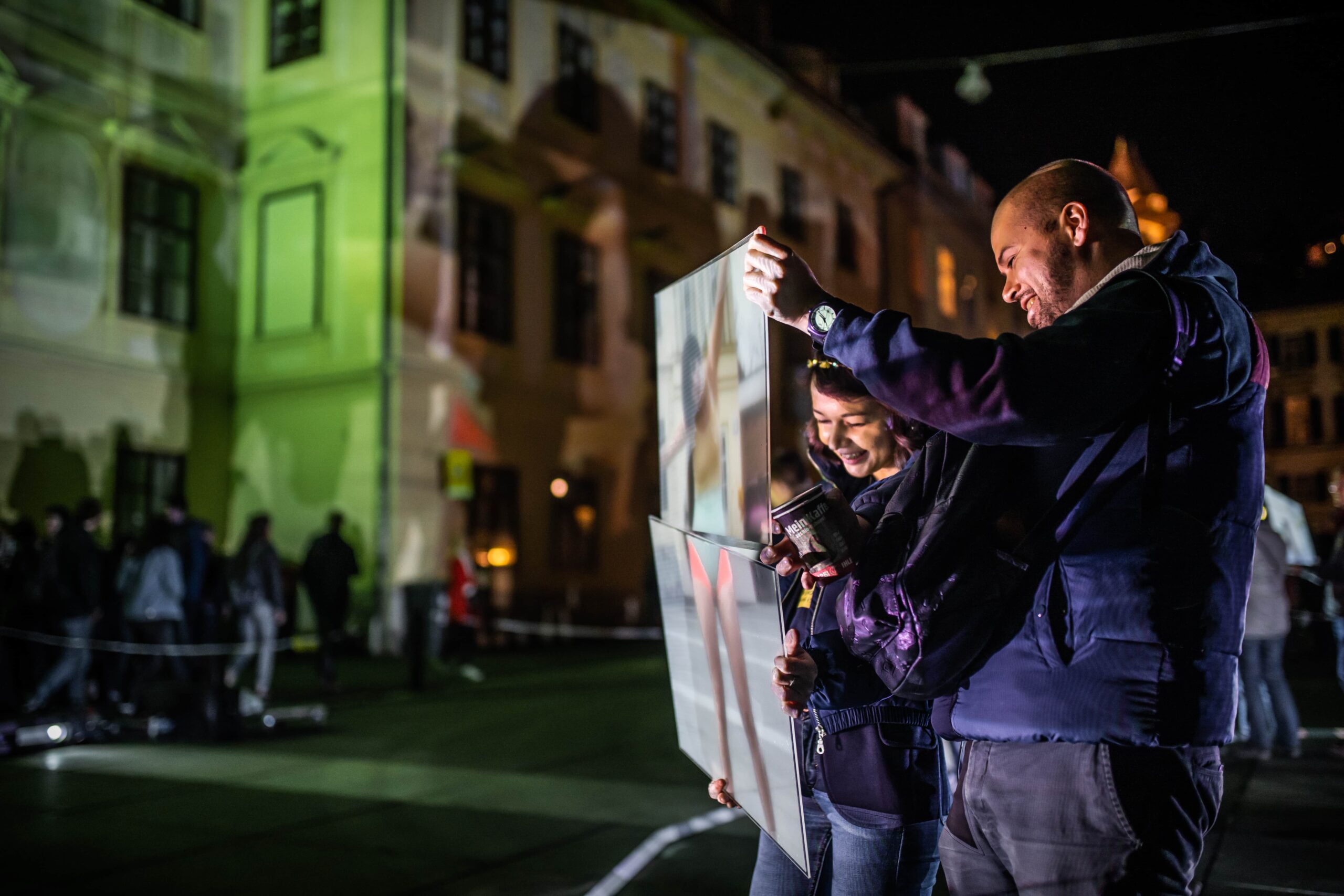
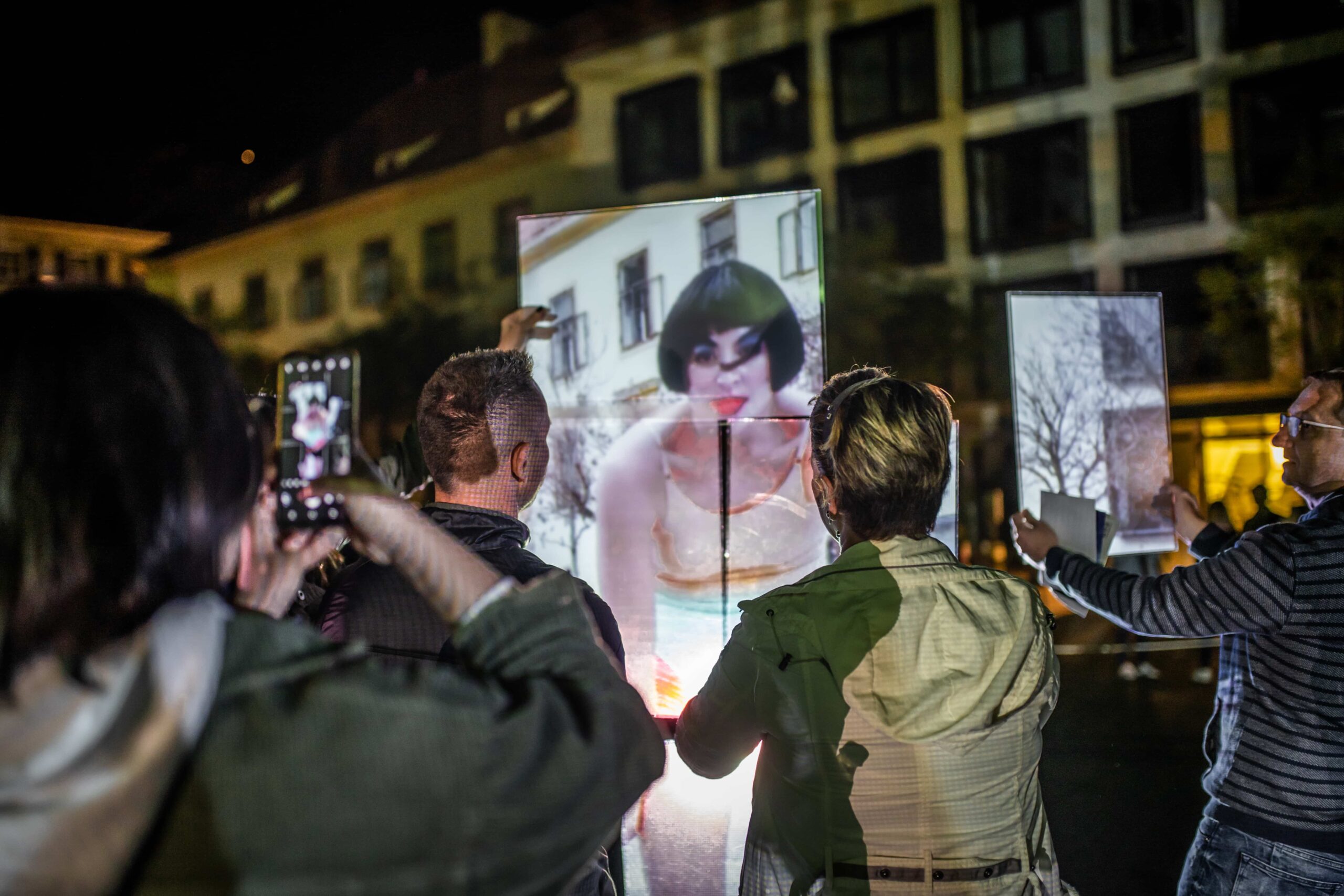
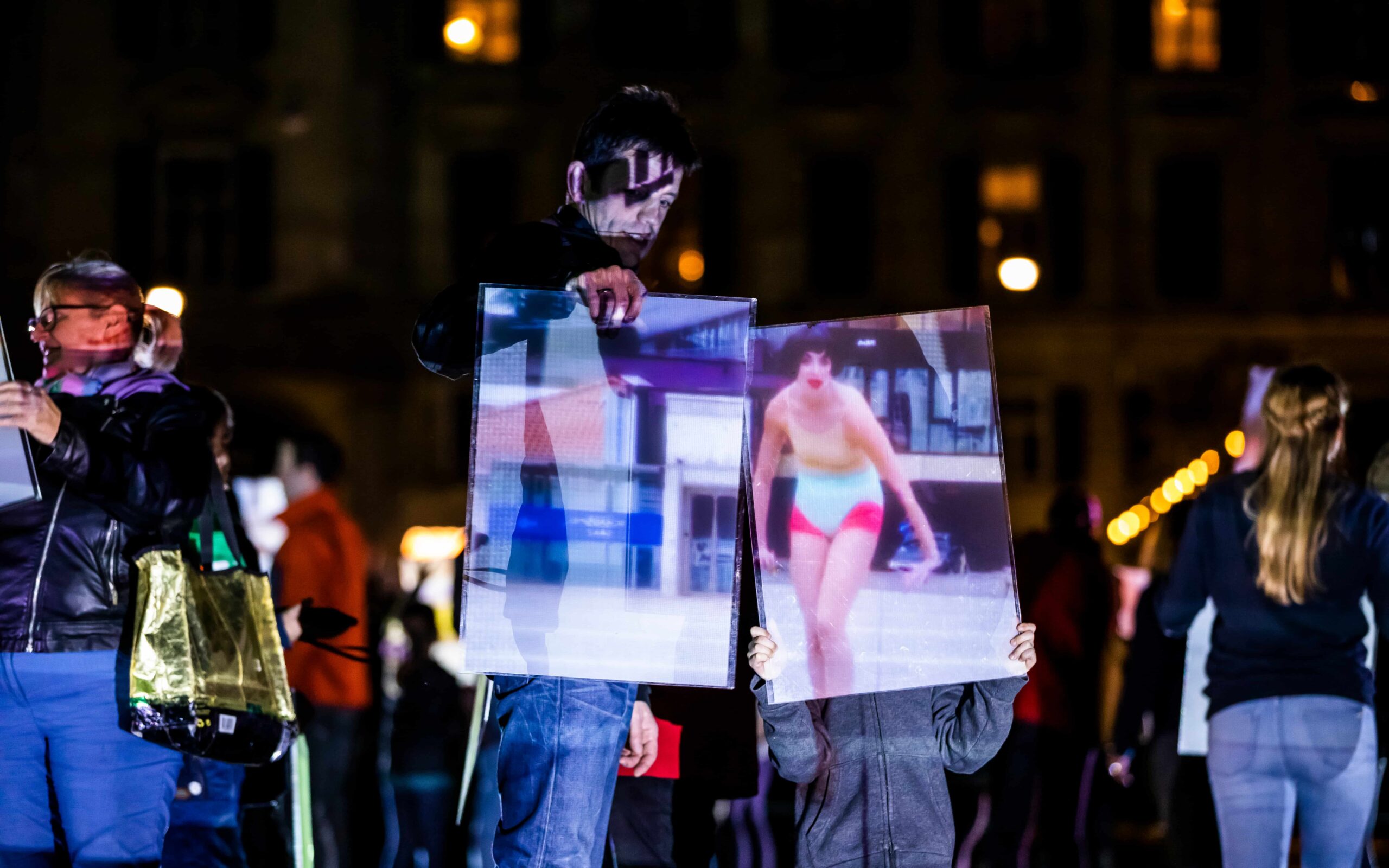
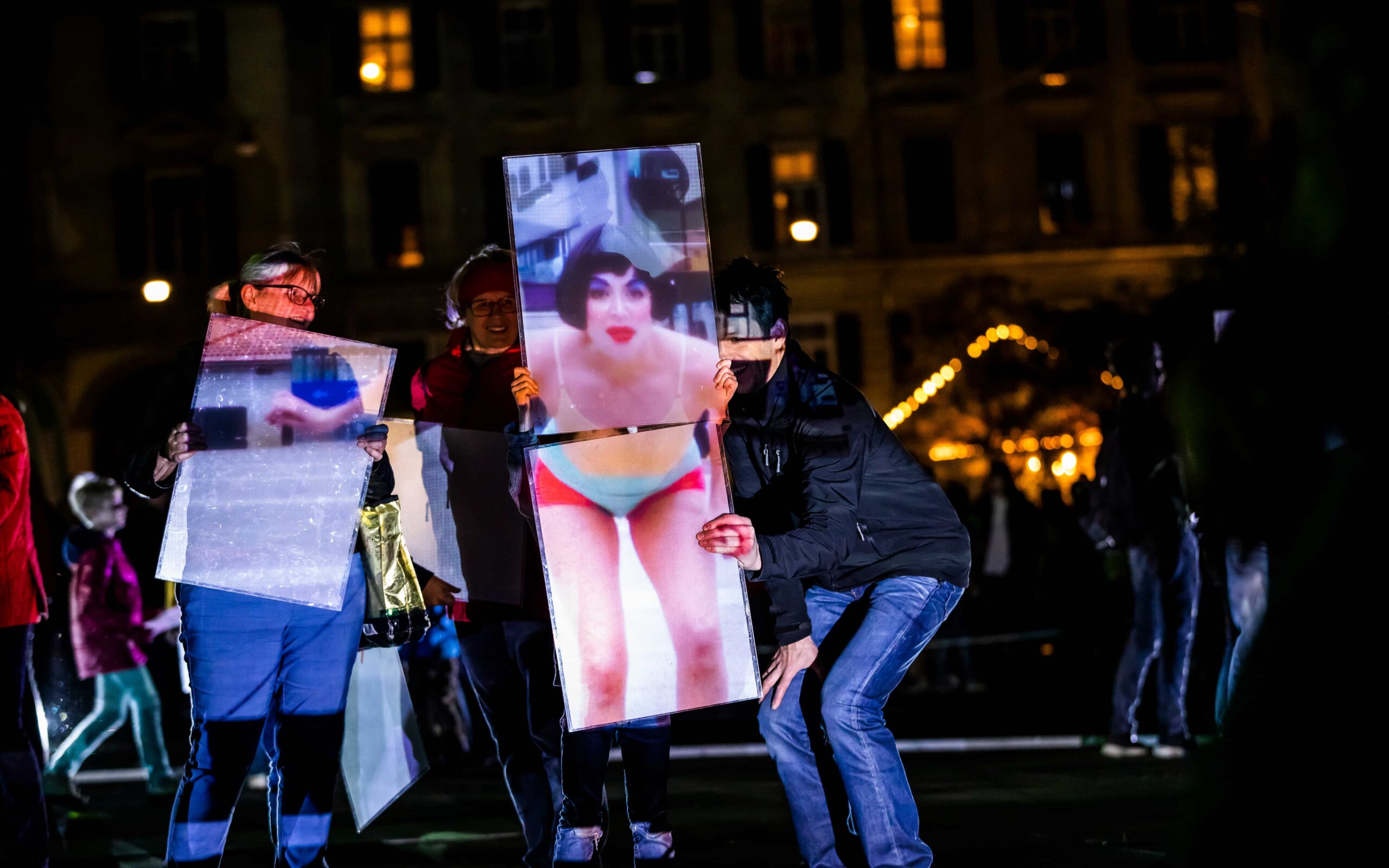
When art captures infinity: With her light installation “For iTernity”, Katja Heitmann allowed a dancer to become immortal in a dreamlike way. In doing so, she not only subtly explored the human desire to never be forgotten, but also paid critical homage to the medium of the internet. At KLANGLICHT 2019 on Karmeliterplatz, visitors were invited to discover the glowing ballet dancer moving gently around and above their heads using screens (mirrors). The music for the installation was based on Mozart’s “Requiem”, sung by an American YouTube vlogger.
Biography
Katja Heitmann (1987, Hamburg) lives and works in the Netherlands. A choreographer by training, her artistic work moves between theater, dance, visual art, performance and installation. The central theme in her work is always movement. Does man move the machine or does the machine move man? Her performative installations show in a poetic way that the answer can never be clear. Katja Heitmann was honored as “Outstanding Choreographic Talent” at the Dutch Dance Festival in 2016.
Credits
Technical realization: Katja Heitmann
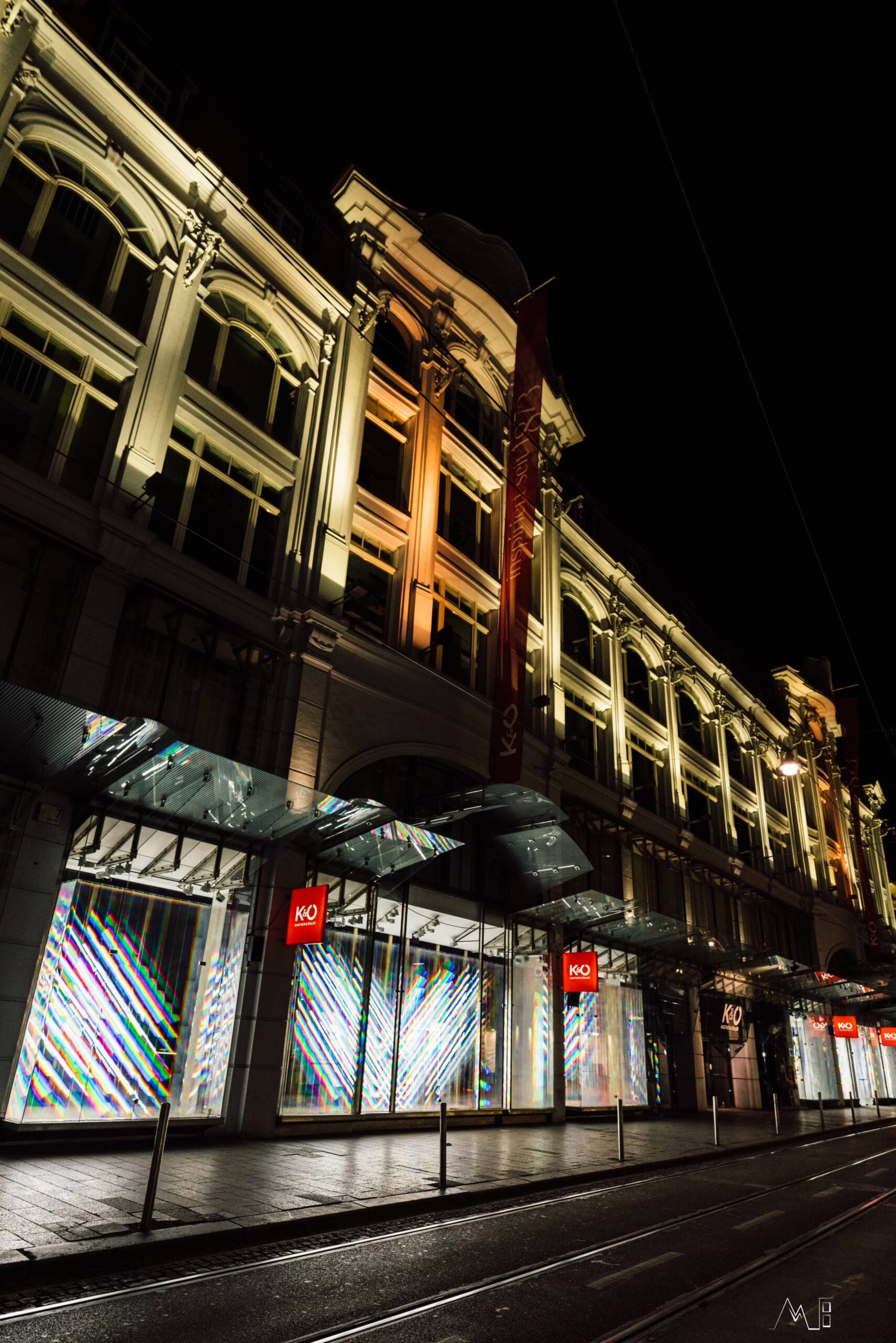
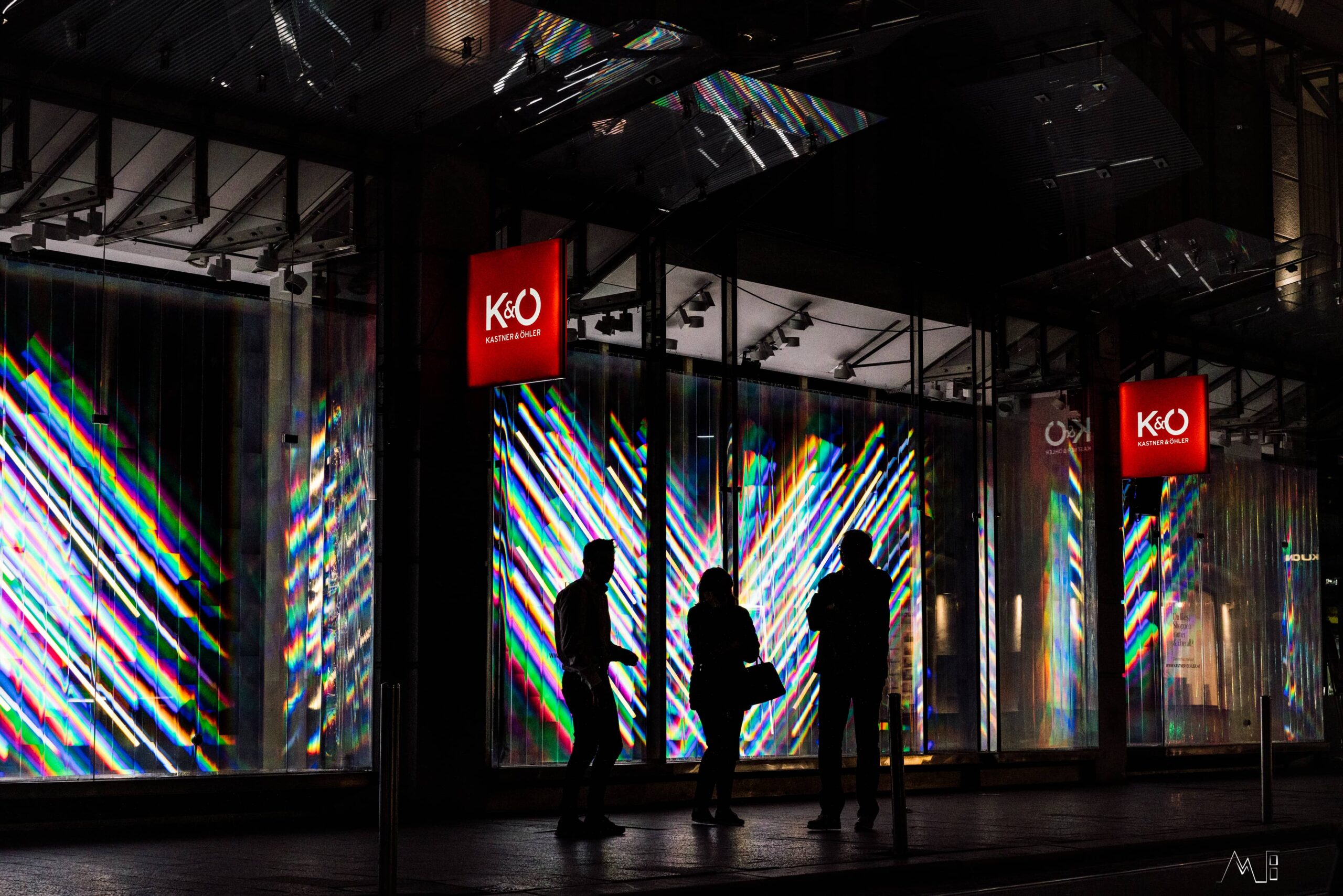
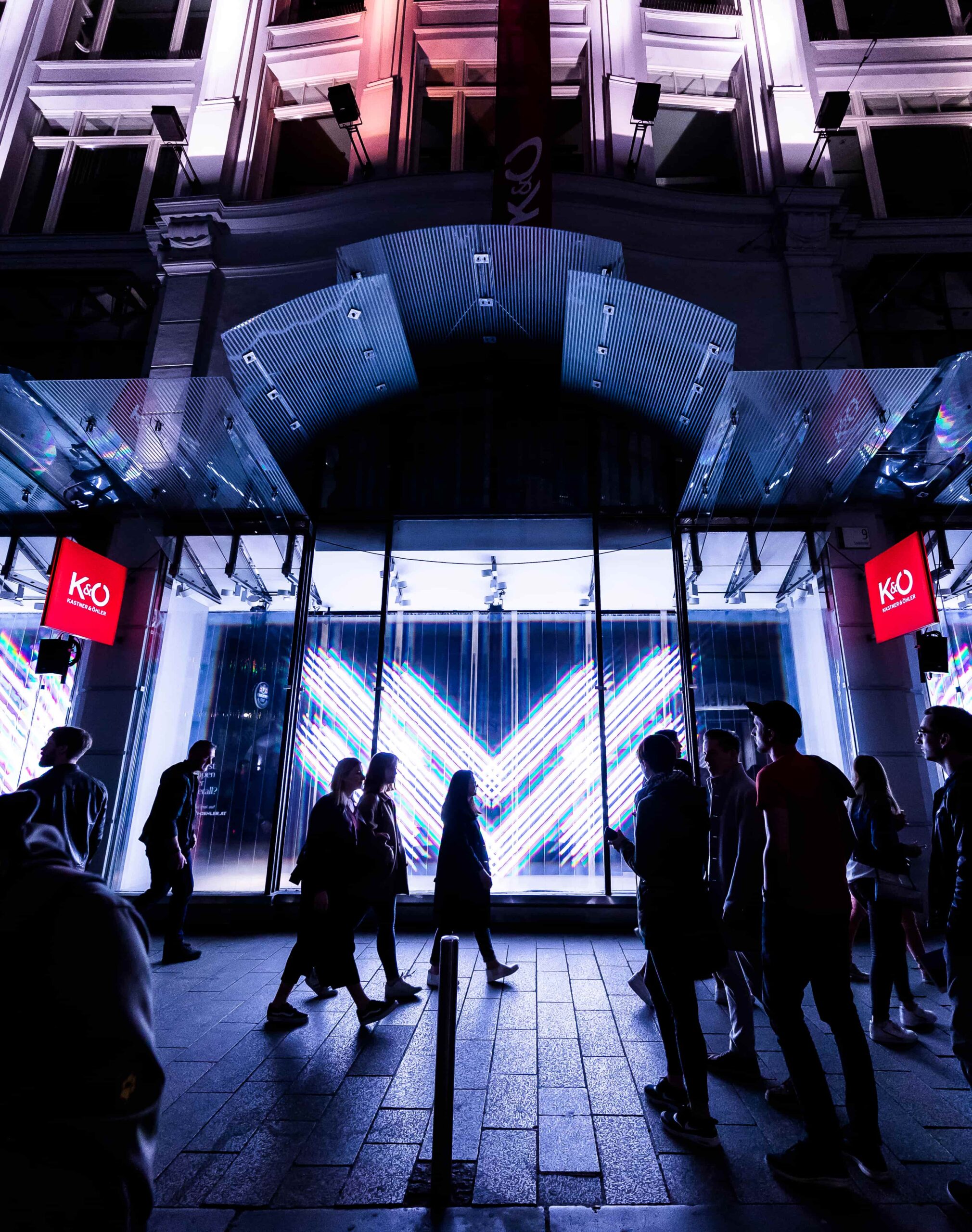
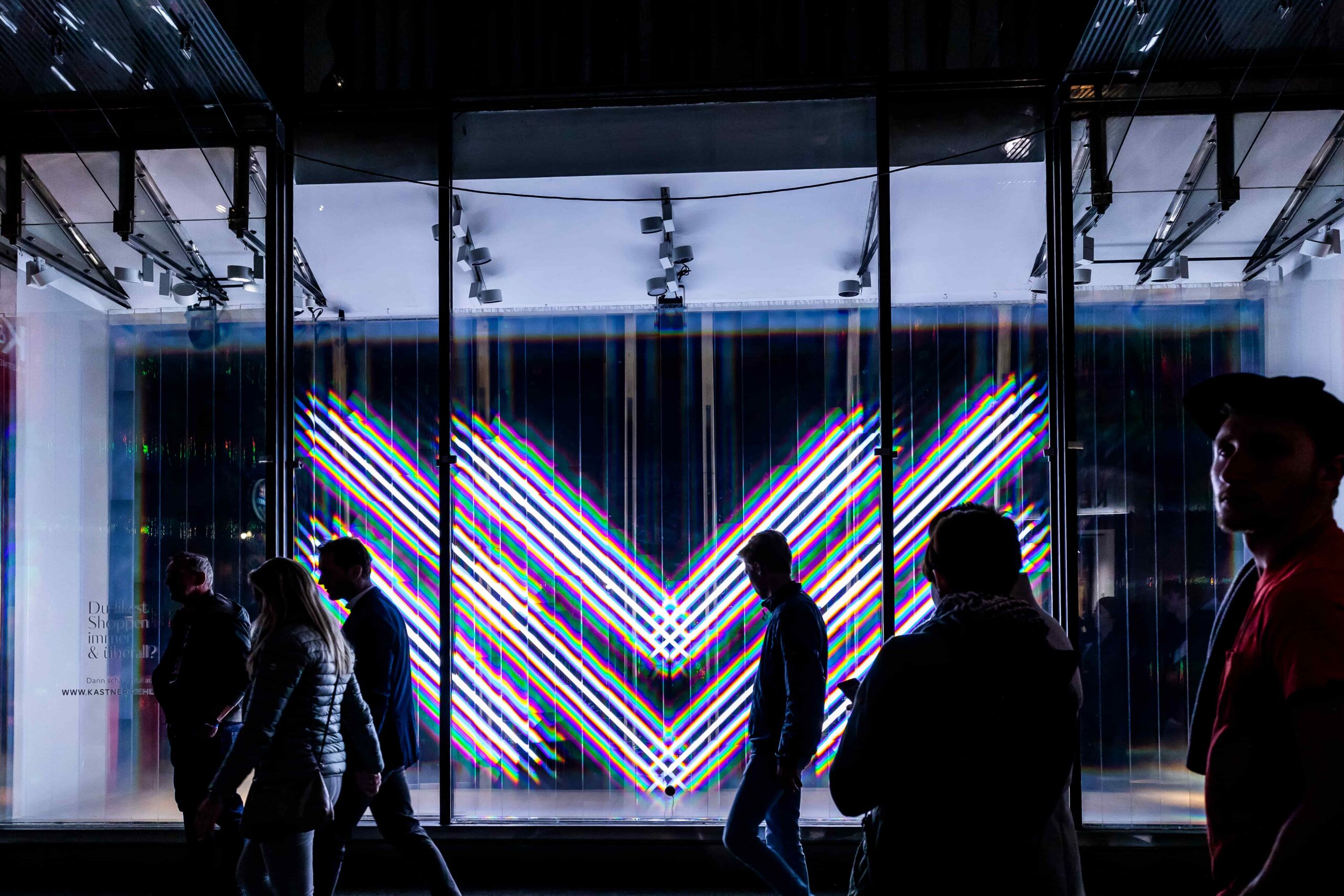
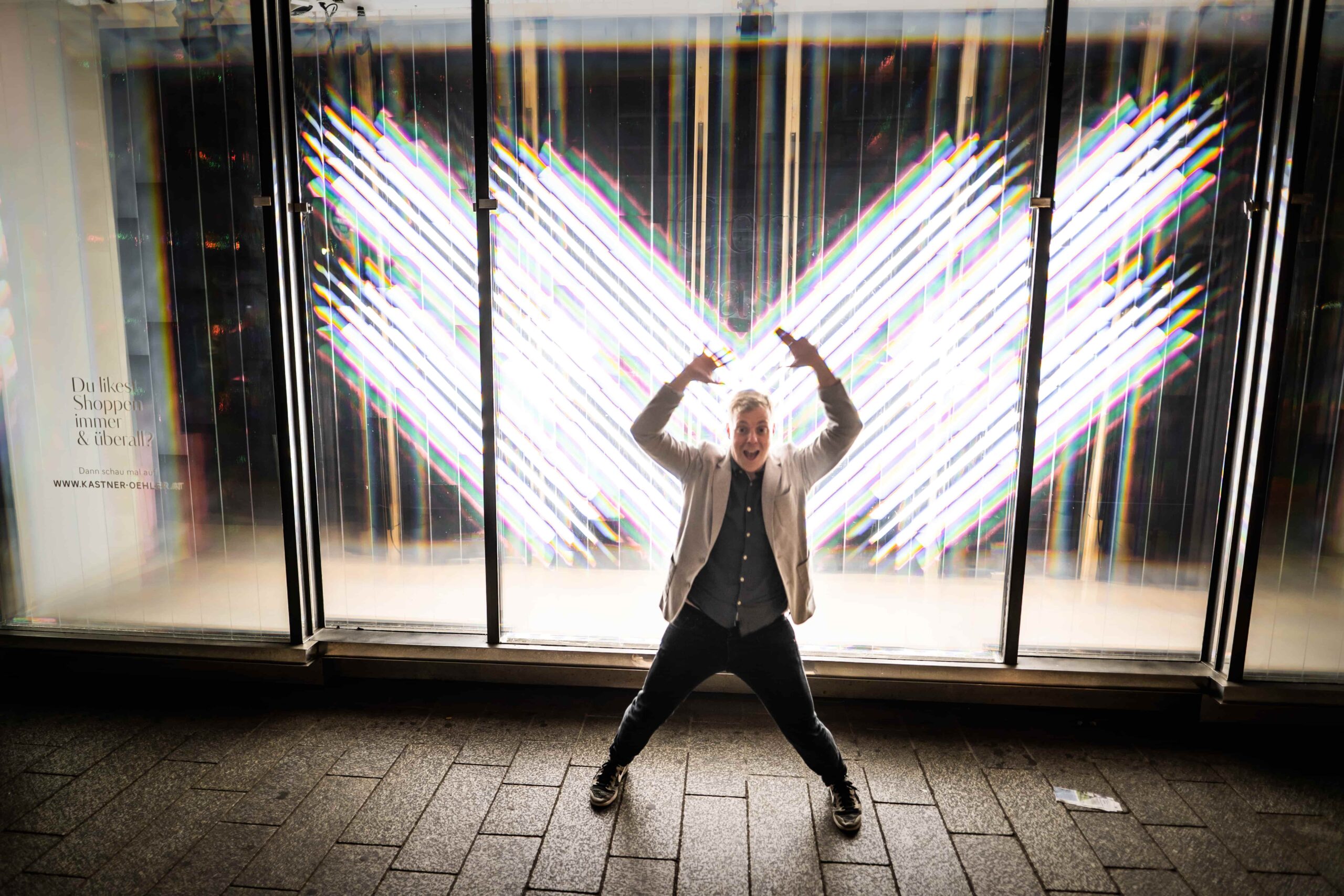
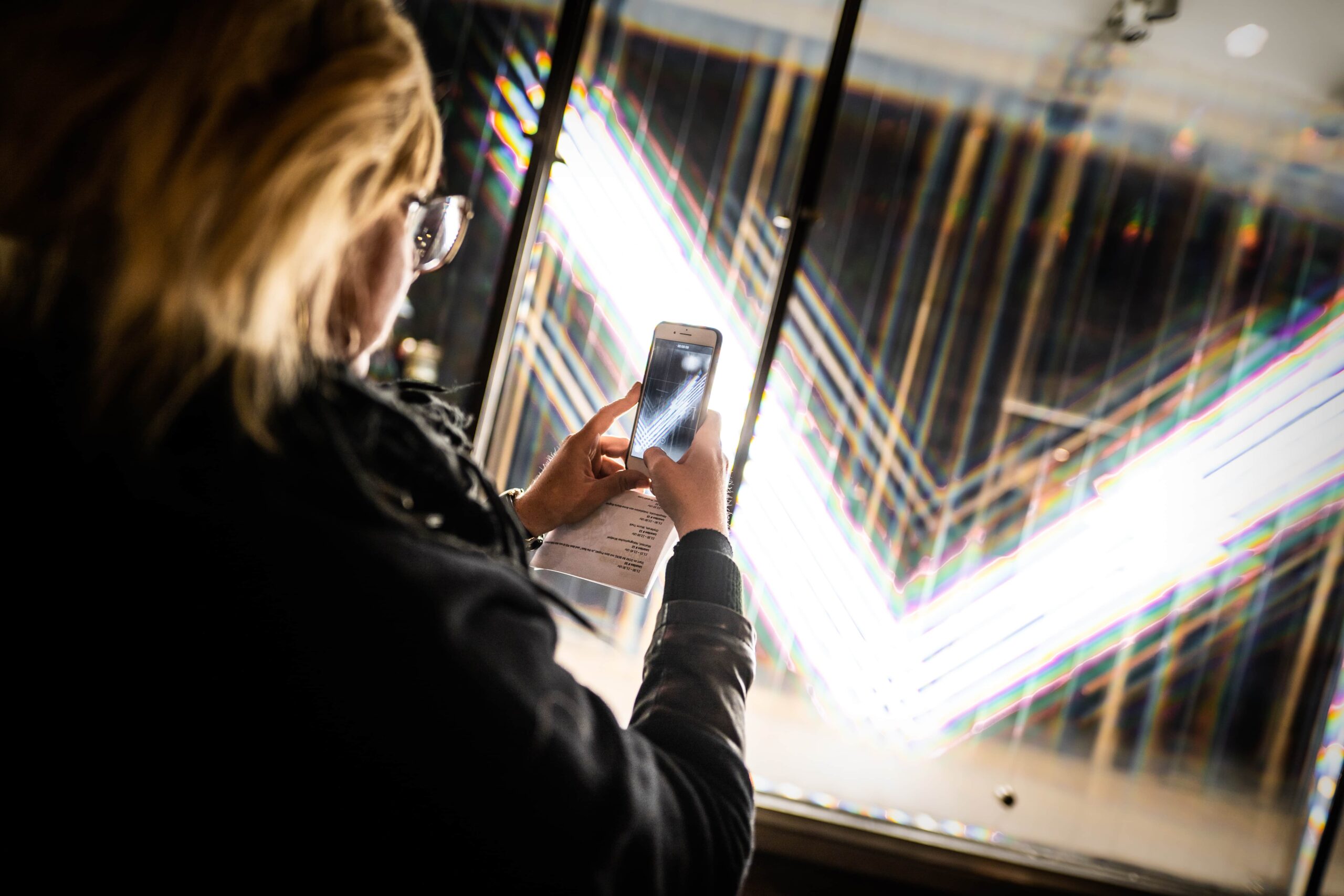
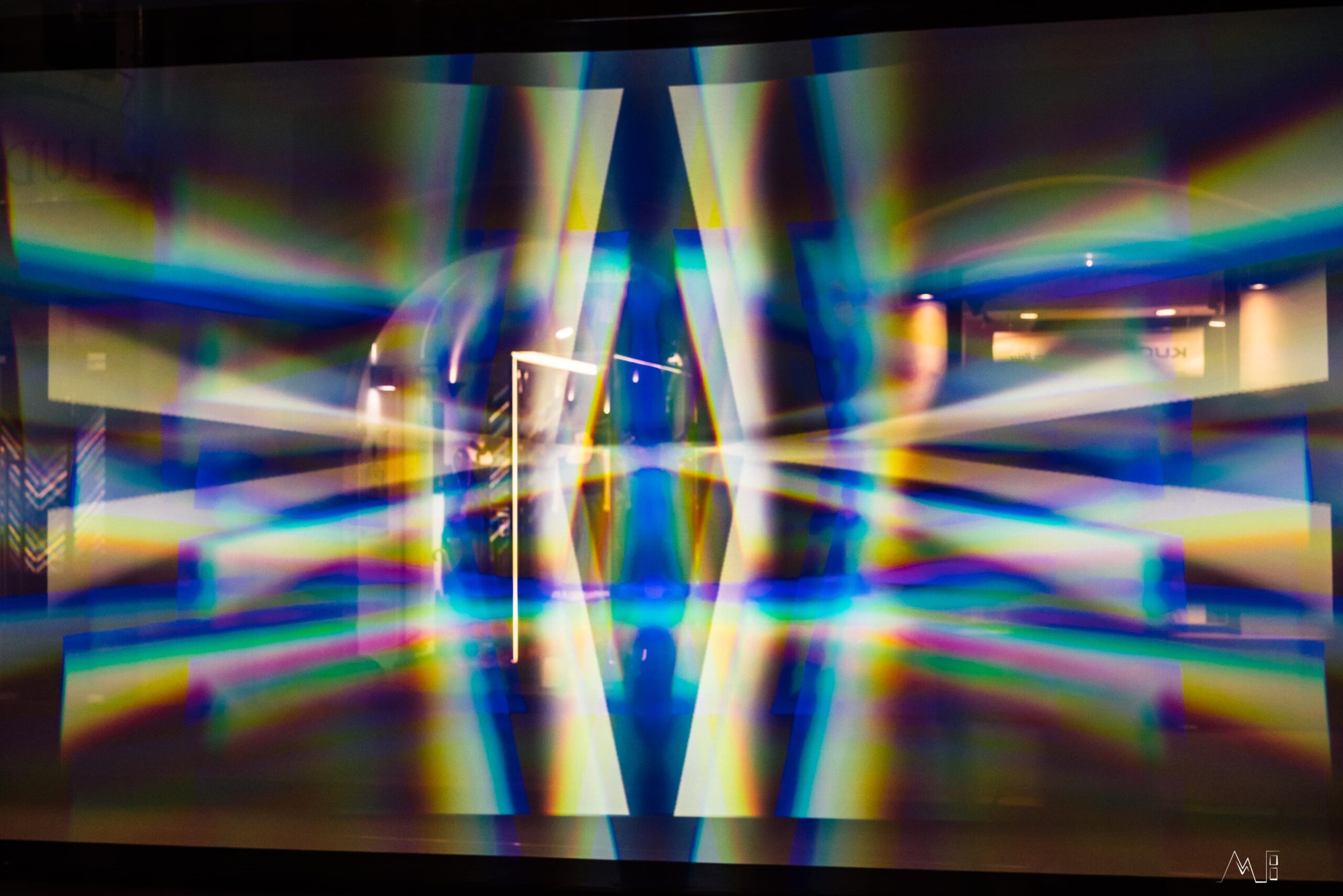
The traditional Kastner & Öhler store shimmers like a diamond: “Luxe” by Jordan Söderberg Mills plays with the creative possibilities of the “Pivot” light source window by window, refracts the light, captures it again and transforms the glass façade of the building into a jewel of the city. To achieve this, the Canadian artist lets light meet glass. Perforated surfaces scatter the rays, but the installation captures the sum as a large whole – like searching for a treasure, you encounter a luminous façade in front of the Graz fashion house.
Biography
Jordan Söderberg Mills is an interdisciplinary light and glass artist. He works intensively with the refraction of light through and in various materials – with glass becoming an important part of his work. Whether installation, sculpture or design, each of his works plays with the boundary between digital and analog reality. His works are/were on display at the Victoria Albert Museum, Blythe House, the London Design Festival and the Museo Nacional de Bellas Artes in Santiago, Chile, among others.
The “Luxe” project was developed in collaboration with XAL and Kastner & Öhler. The flexible Mobile Graphic Tubes “Pivot” from XAL are an integral part of the installation and enable the playful use of ever-changing light graphics.
Credits
Technical implementation: grafx live marketing in cooperation with Kastner & Öhler with the support of XAL
In cooperation with Kastner & Öhler with the support of XAL.
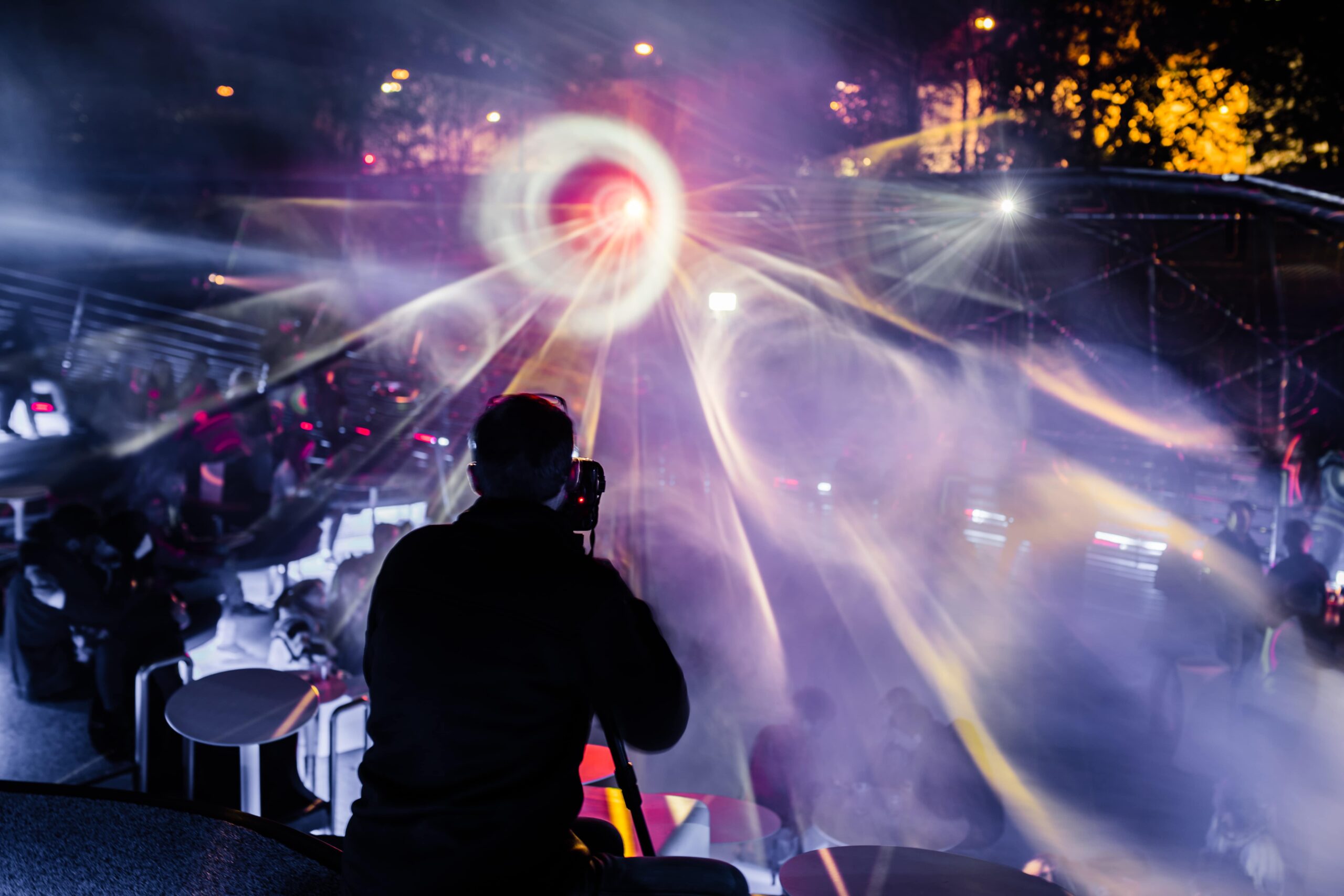
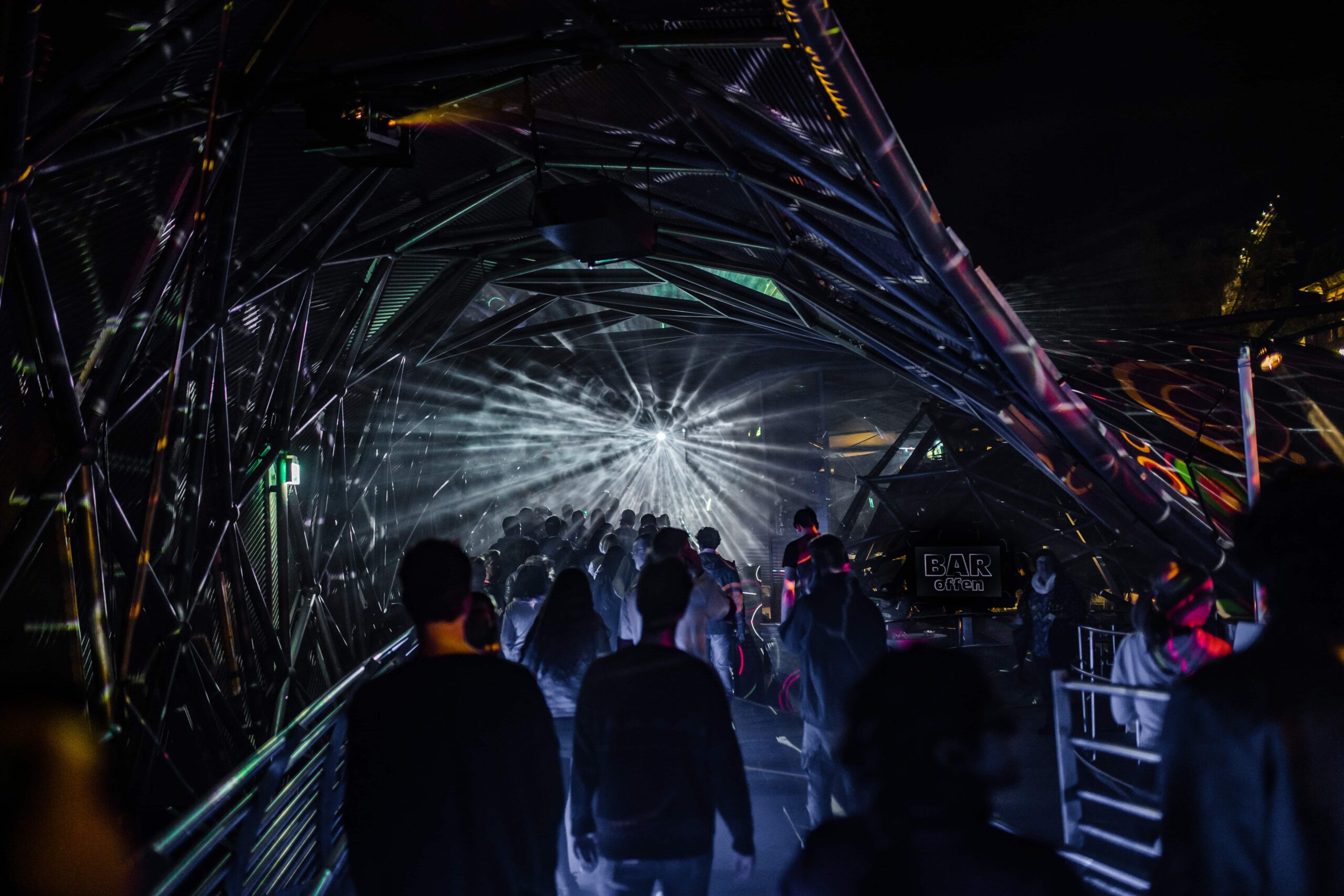
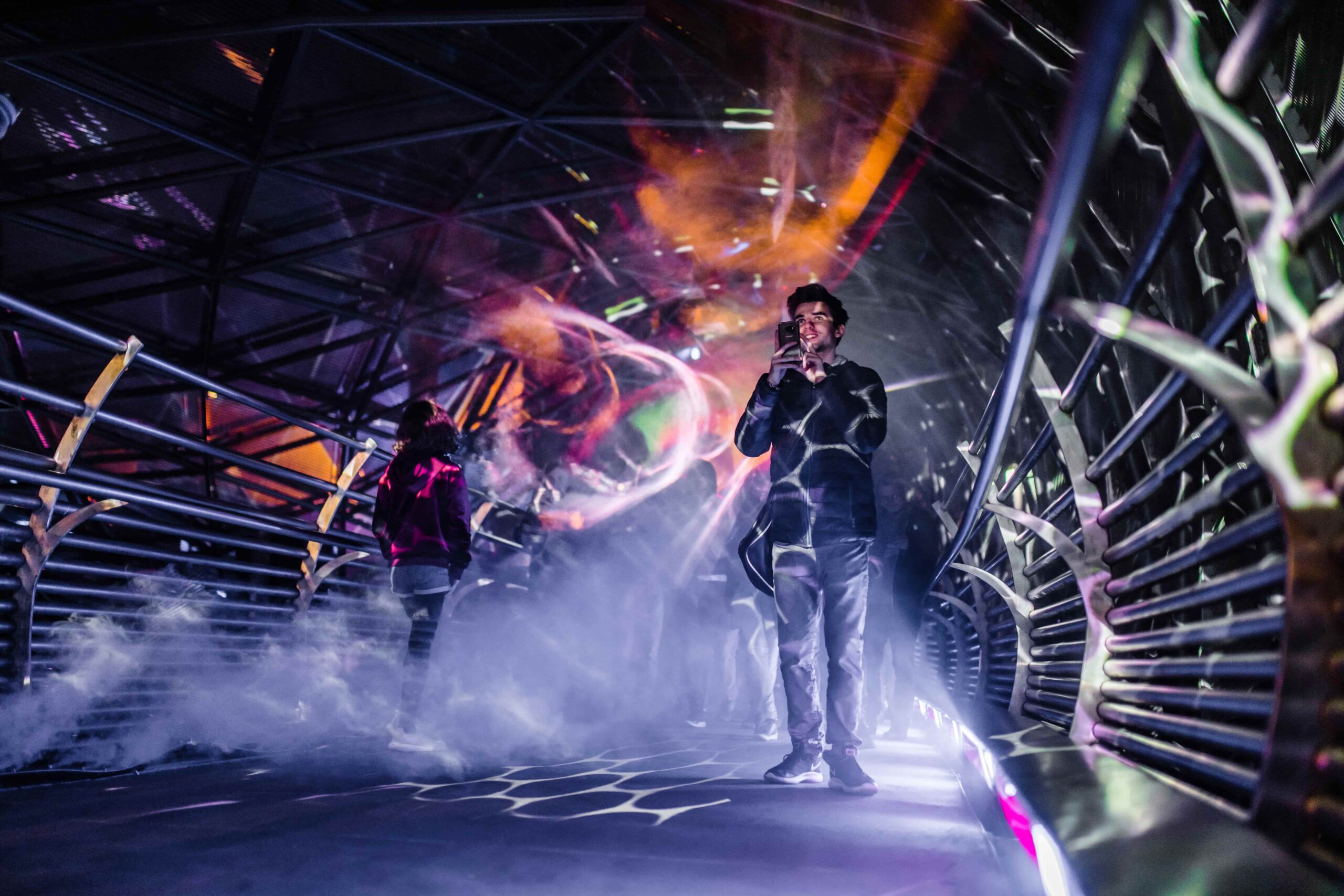
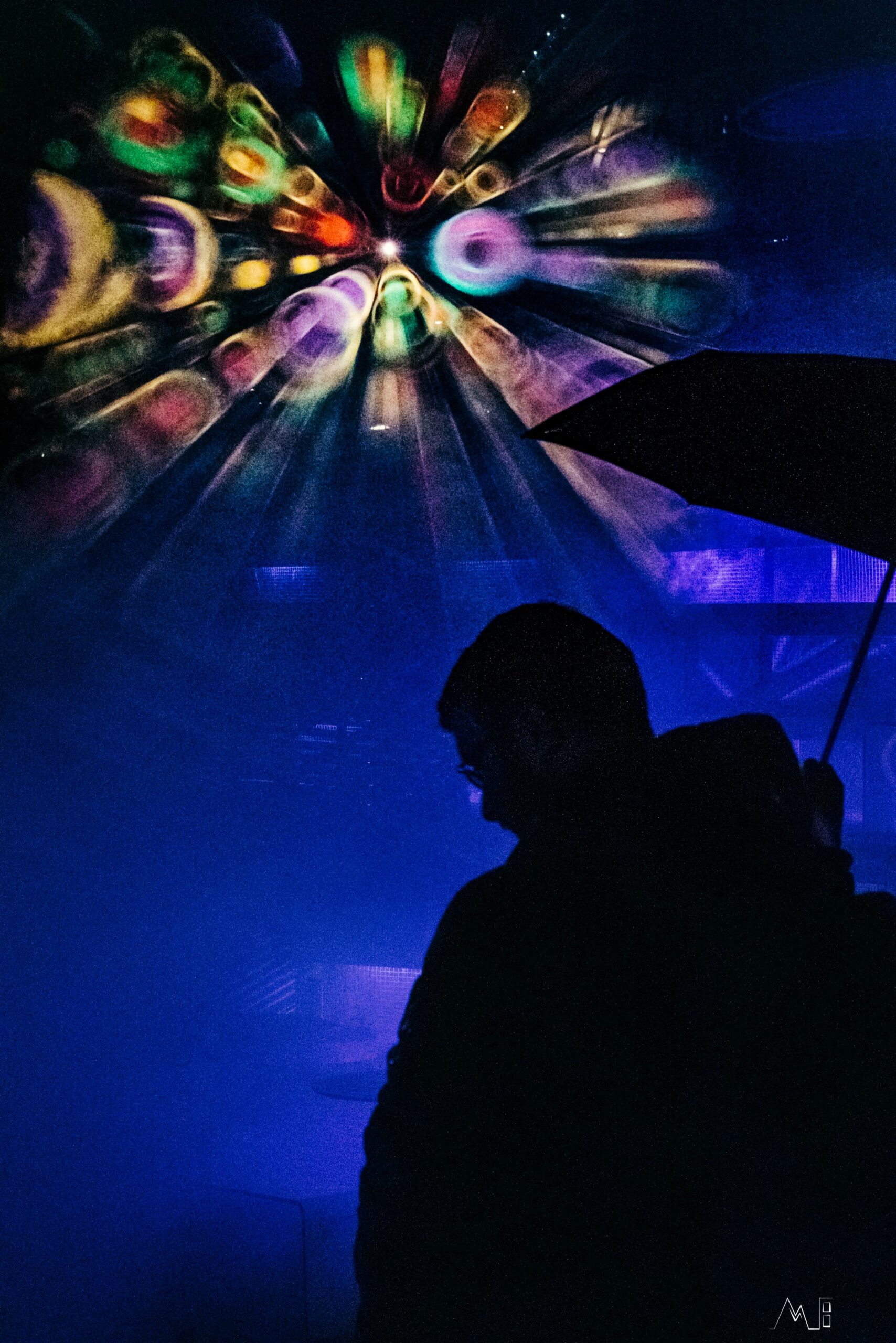
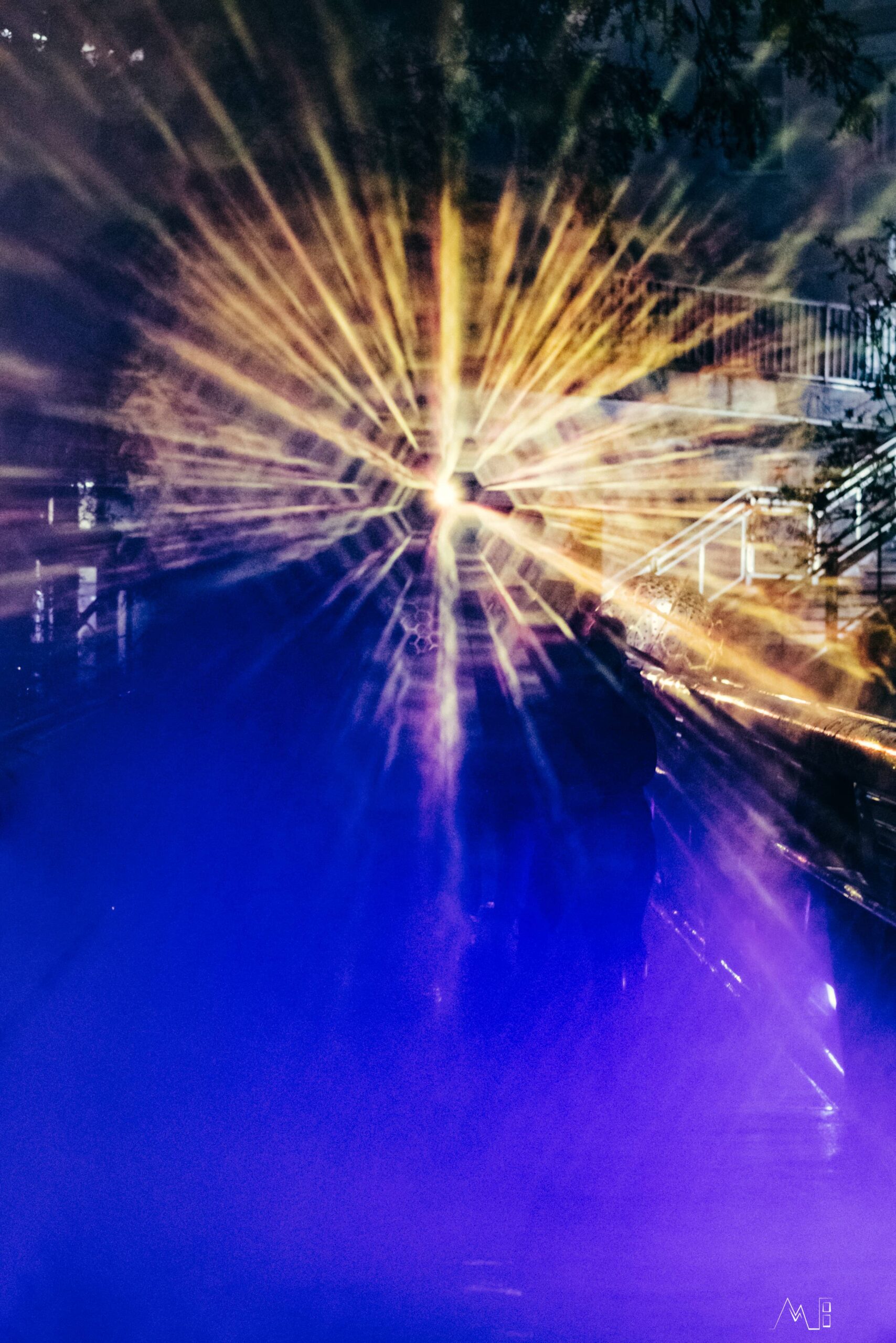
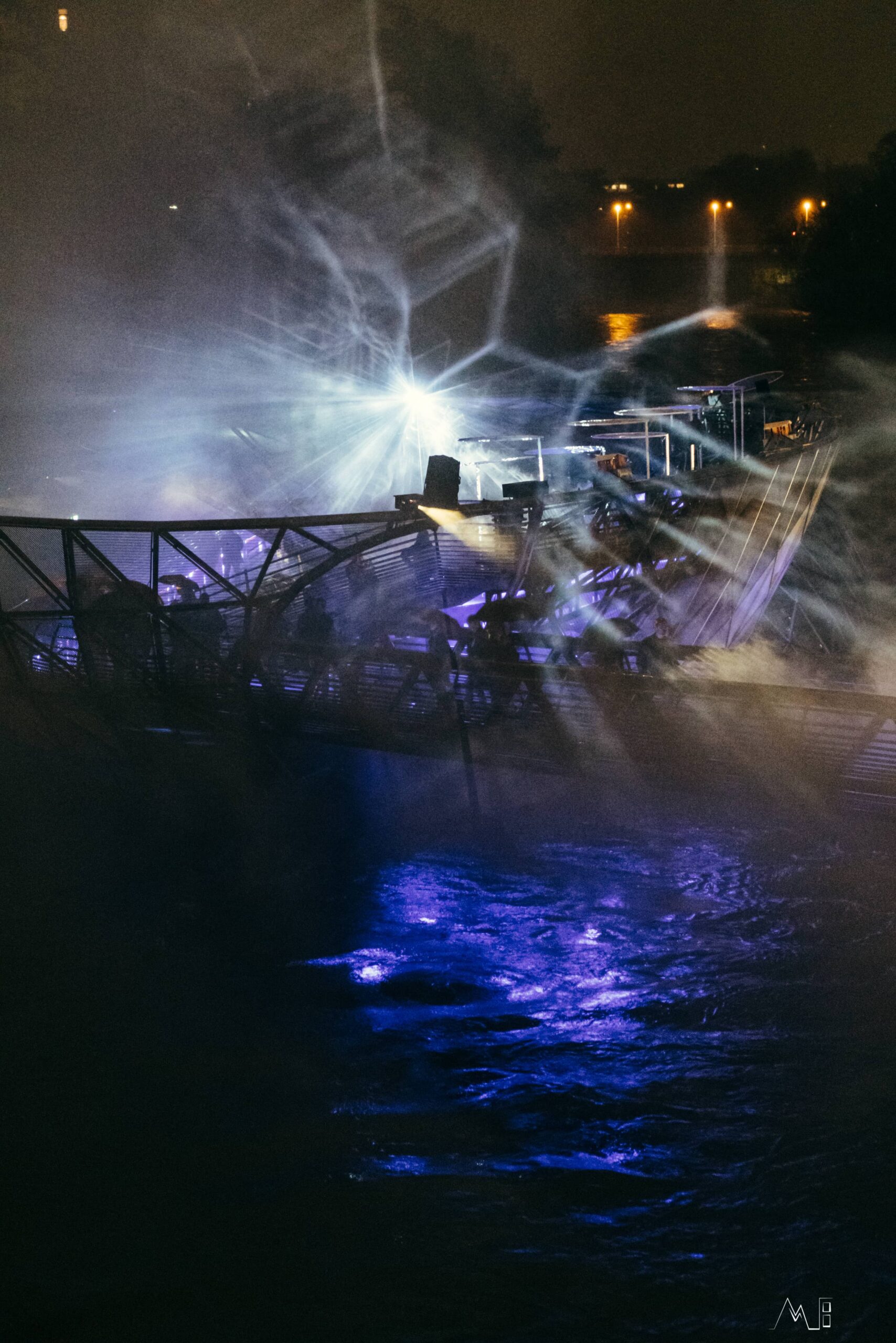
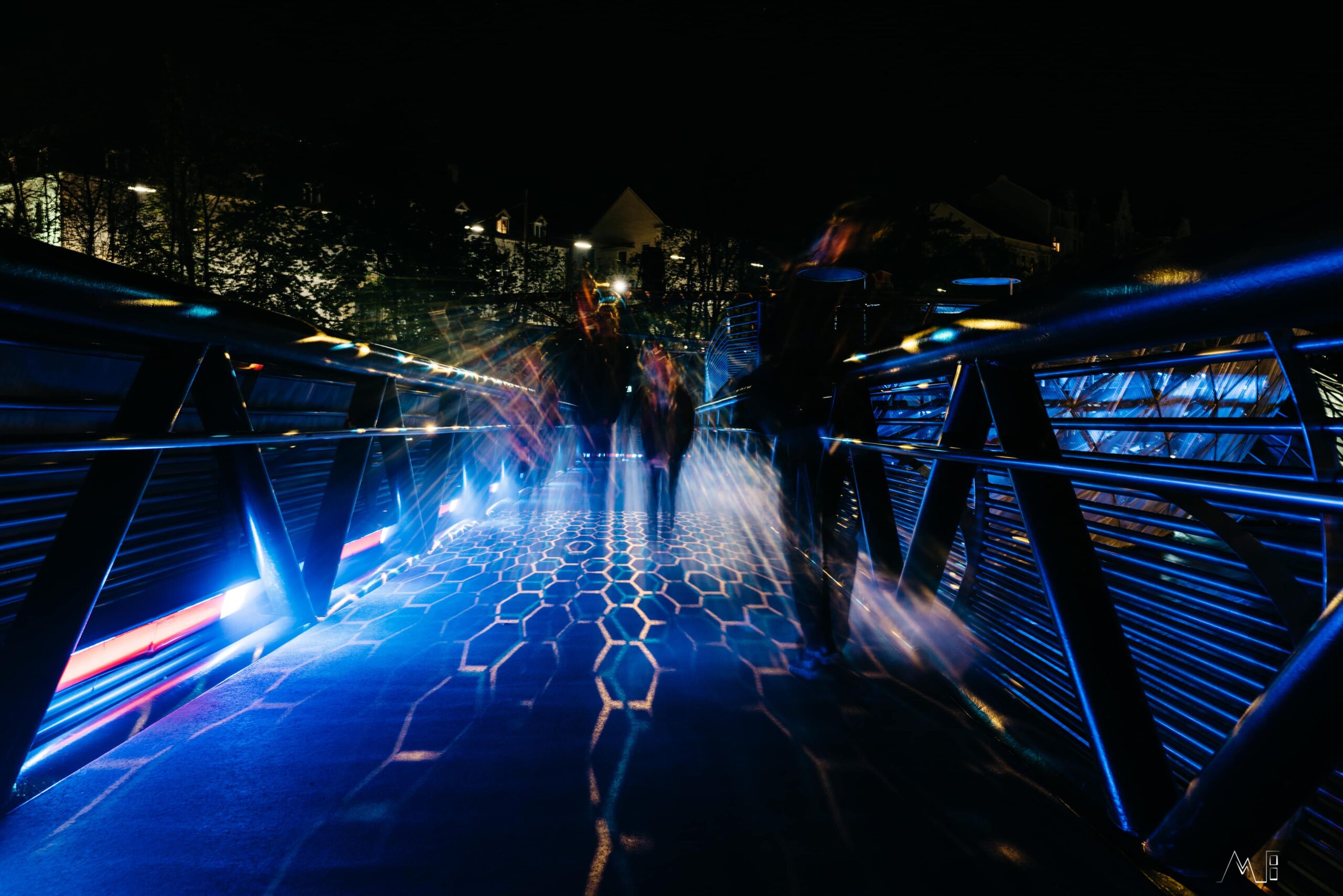
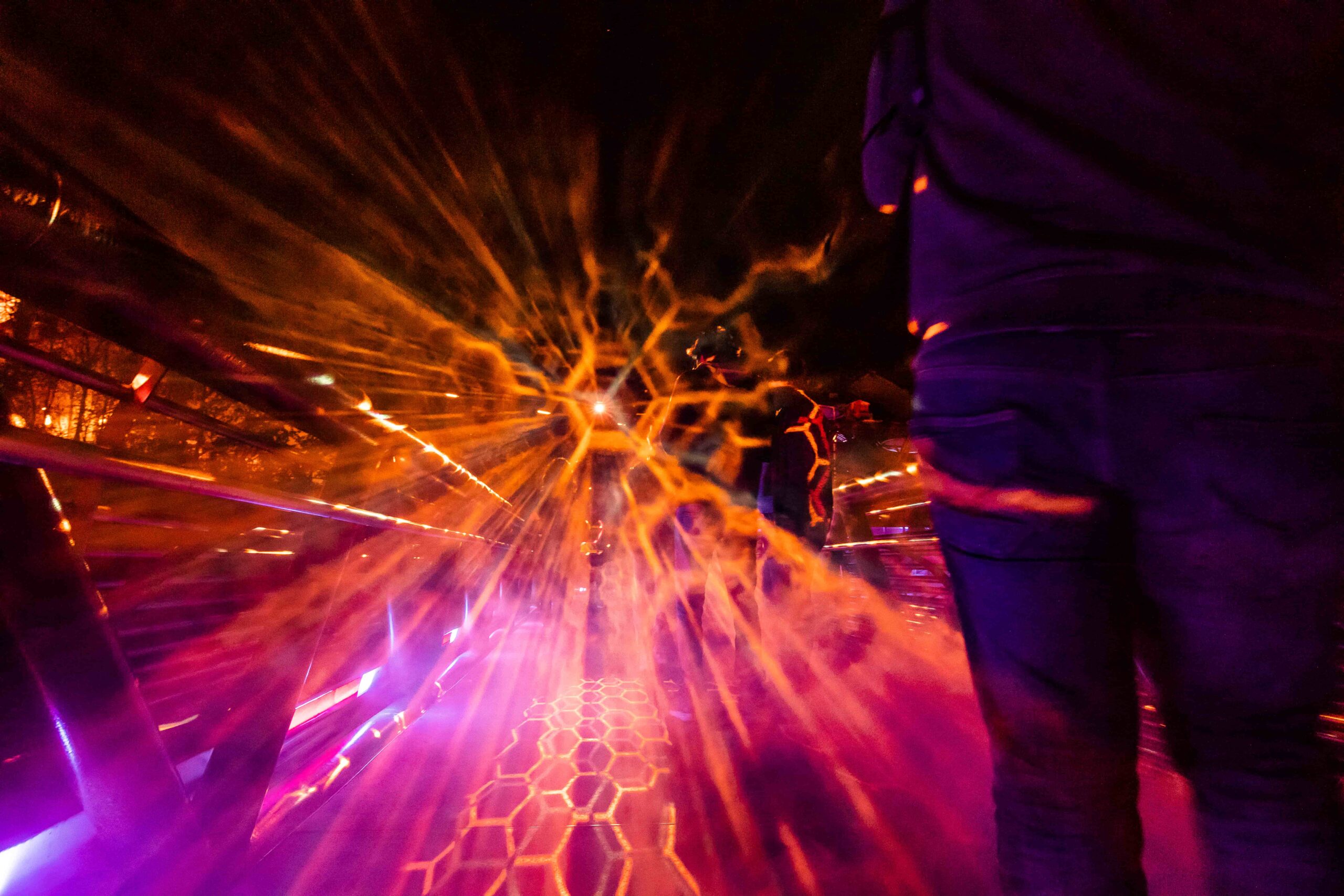
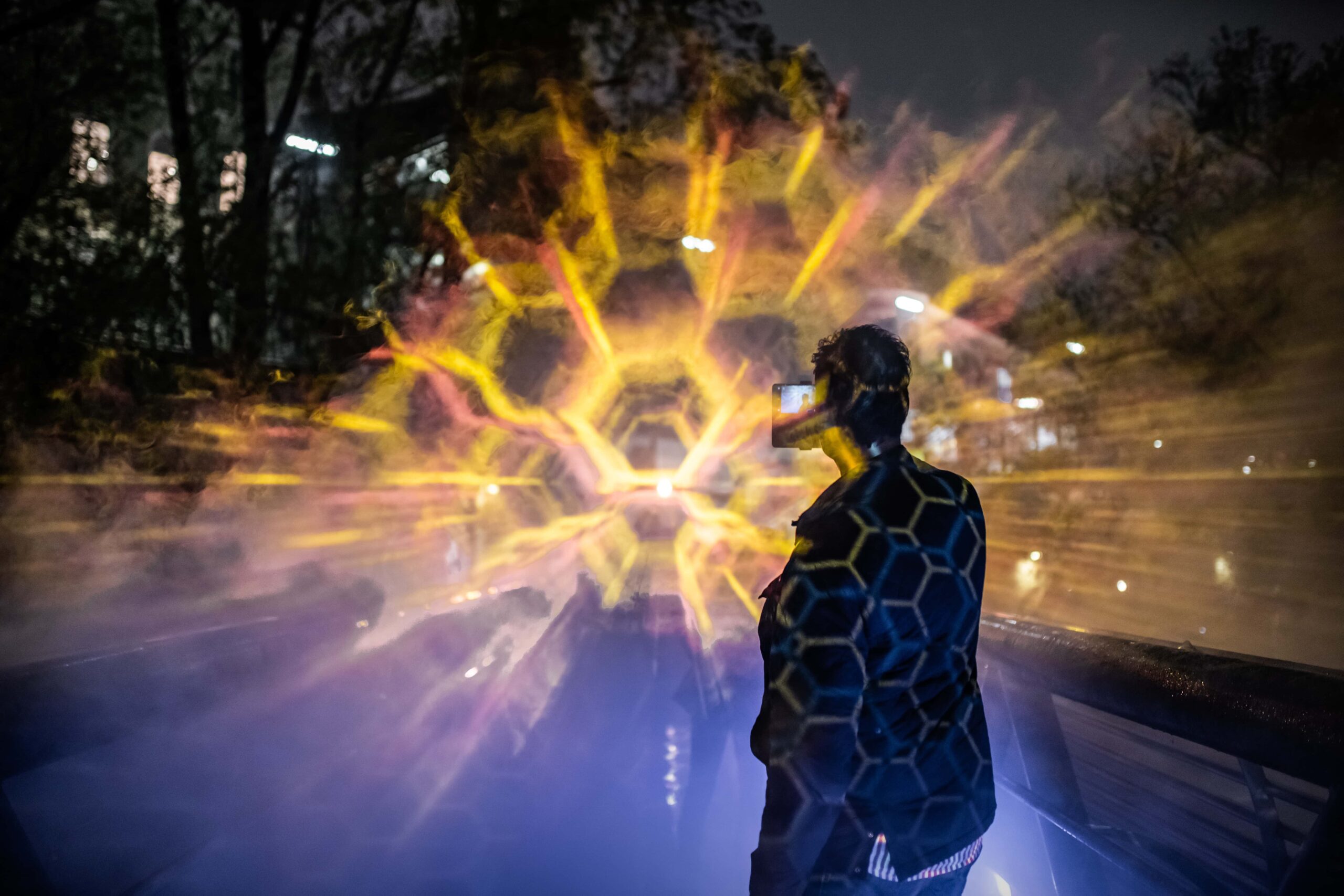
Fog rises on the Mur Island. Natural air currents interact with light to form dancing, constantly changing sculptures of mystical beauty that break up the parametric architecture of the surroundings and generate a completely new space through their own forms. Using light, sound and fog, the collective led by artist Jan Raphael Knieza created an illusionary experience that completely changed the perception of the space. The result was a fleeting, dream-like world into which the audience was gently immersed and only slowly awakened again. The Murinsel was no longer the place that is so familiar to many people in Graz…
Biography
The Swiss artist collective Artificial Owl led by Jan Raphael Knieza creates fascinating installations from light, fog and sound that allow new things to be discovered even in familiar spaces. With the help of analog and digital technologies, themes relating to deceleration, illusion, dreams and spatial perception are artfully explored and made tangible for the audience in a very gentle way through immersive light and sound projects.
Credits
Art director and illustration: Jan Raphael Knieza
3D animation: Matthias Pfaeffli
Sound design: Joshua Koch
Sound engineering: Sebastian Stedler
Technical implementation: Franziska Menzel, Jan Raphael Knieza, Sebastian Stedler
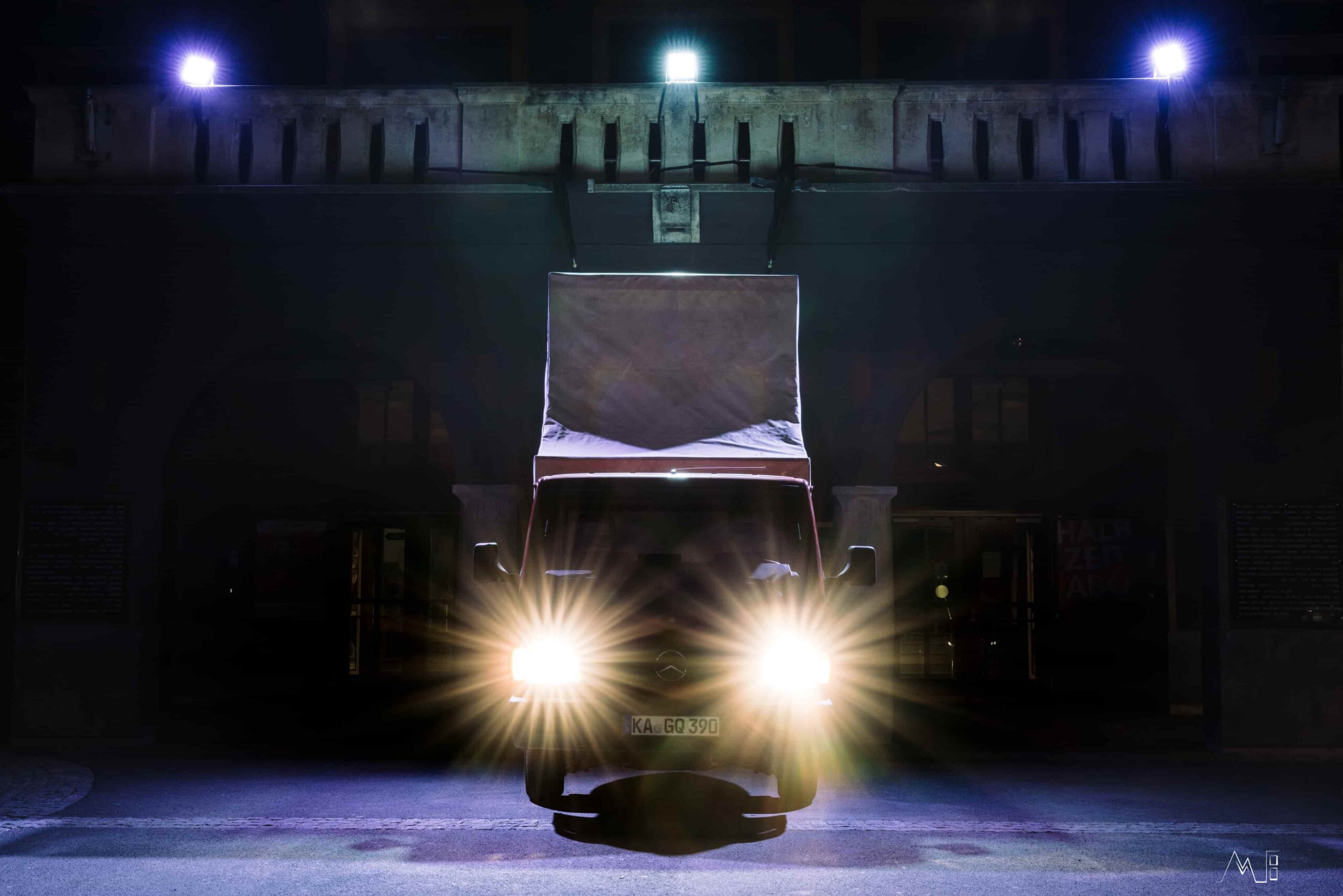
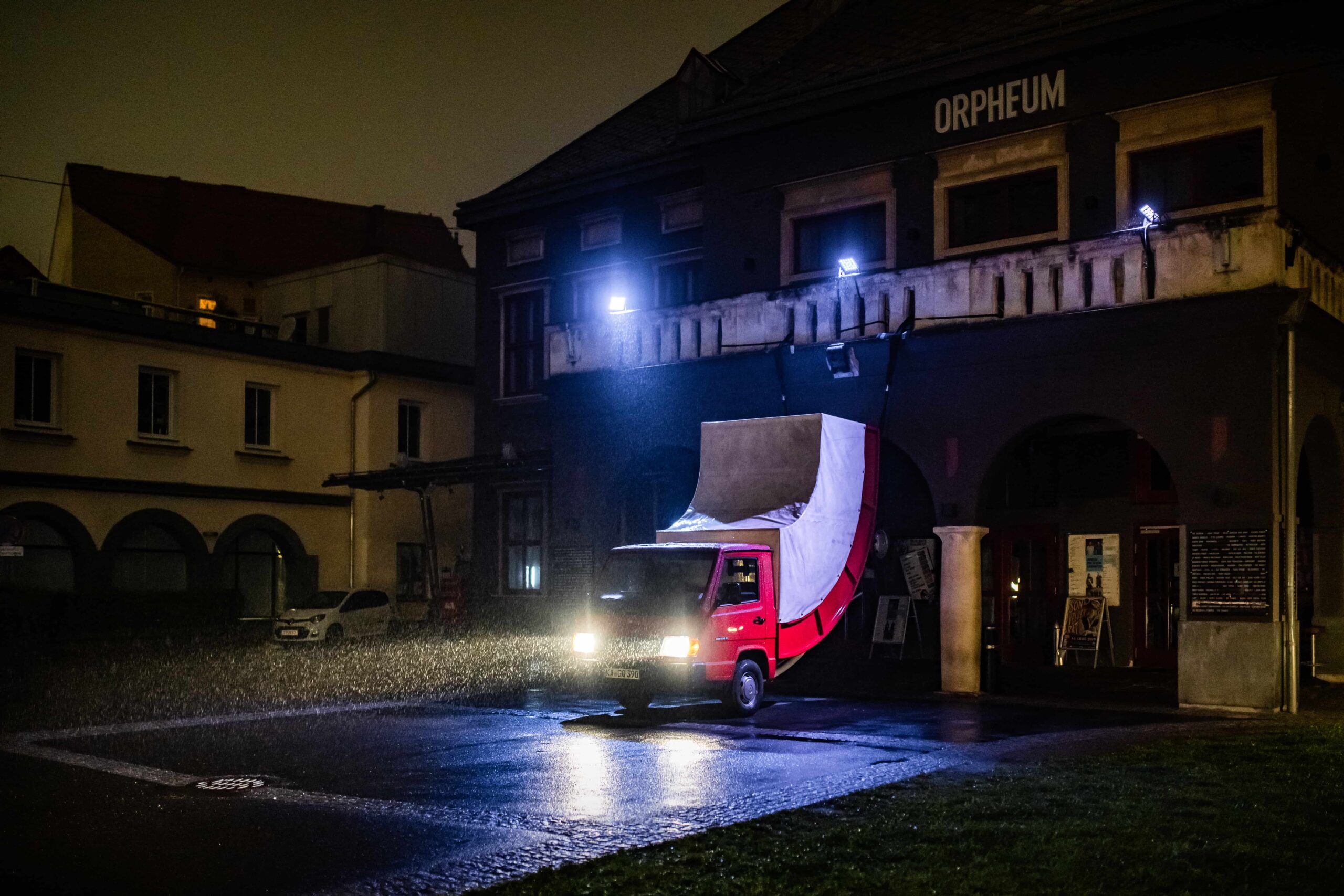
Reality melts, truth bends: a bright red truck drives backwards up the wall of the Orpheum. Elegantly bent upwards in the middle, the truck seems to overcome its weight effortlessly and adapt to the shape of the building. As a result of its physical distortion, the commercial vehicle takes on a sculptural character, its function receding behind its artistic form. But it is not only the sight of the vehicle that appears paradoxical: the façade of the Graz venue is also detached from its original meaning. Used by the truck as a parking lot at night, the wall appears less as a protective shell for an interior than as a stage for the art.
Biography
Erwin Wurm, born in 1954, lives and works in Vienna and Limberg/Lower Austria. In the 1990s, Erwin Wurm attracted the attention of the cultural public with his “One Minute Sculptures”. Erwin Wurm’s multi-layered work encompasses performance, video, photography, drawing and classical sculpture in an interconnected and mutually dependent manner. Wurm understands the concept of sculpture in the pre-modern sense as a game with mass and volume. In this sense, he likes to deform everyday objects. With his inflated houses, bent cars and his participatory “One Minute Sculptures”, he ironically questions the appearance of status symbols and the meaning of social conventions.
Credits
Technical implementation: The Graz venues team
“My work is about the drama of the insignificance of existence.
Whether you approach it through philosophy or through a diet, you always lose out in the end.”
– Erwin Wurm
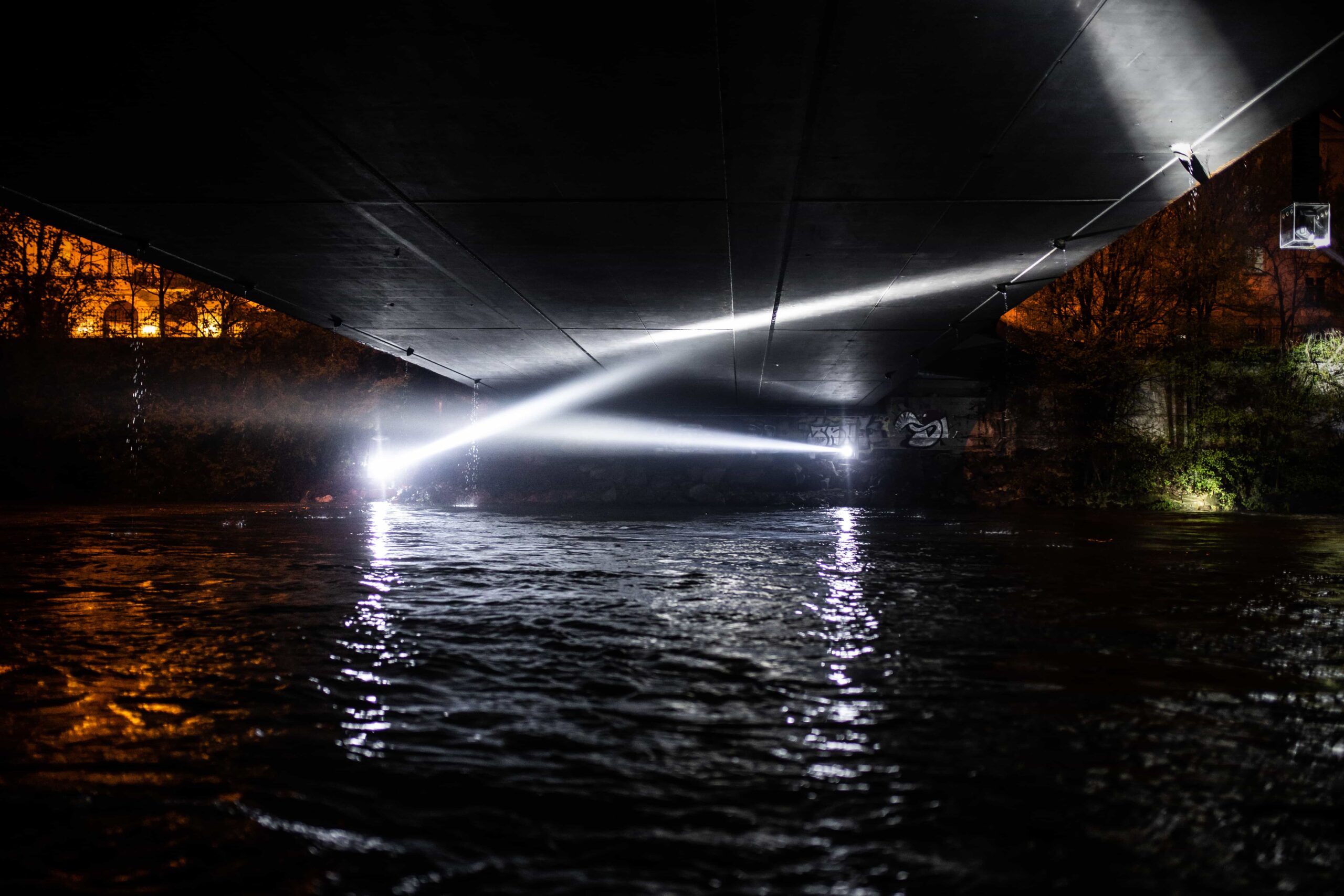
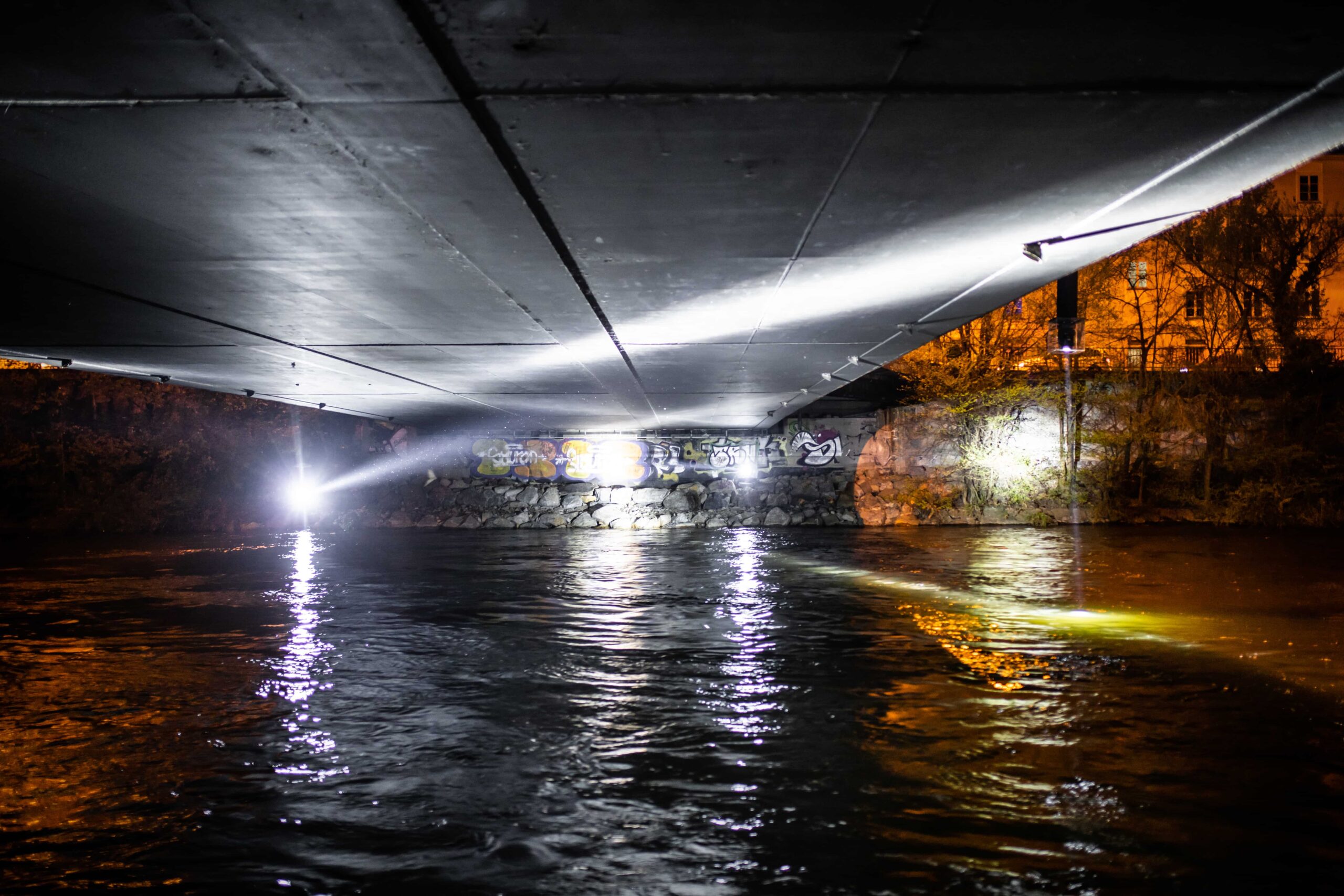
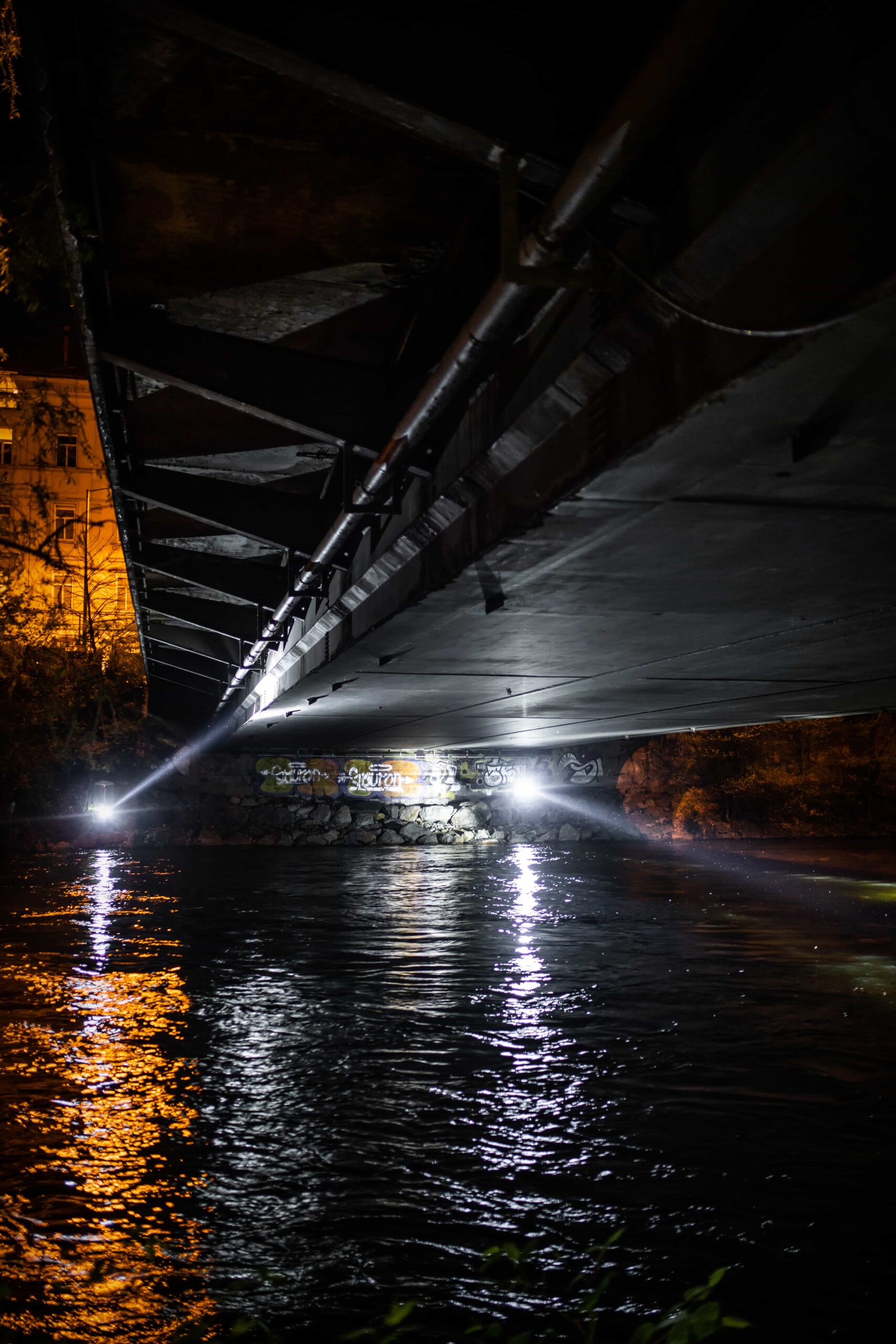
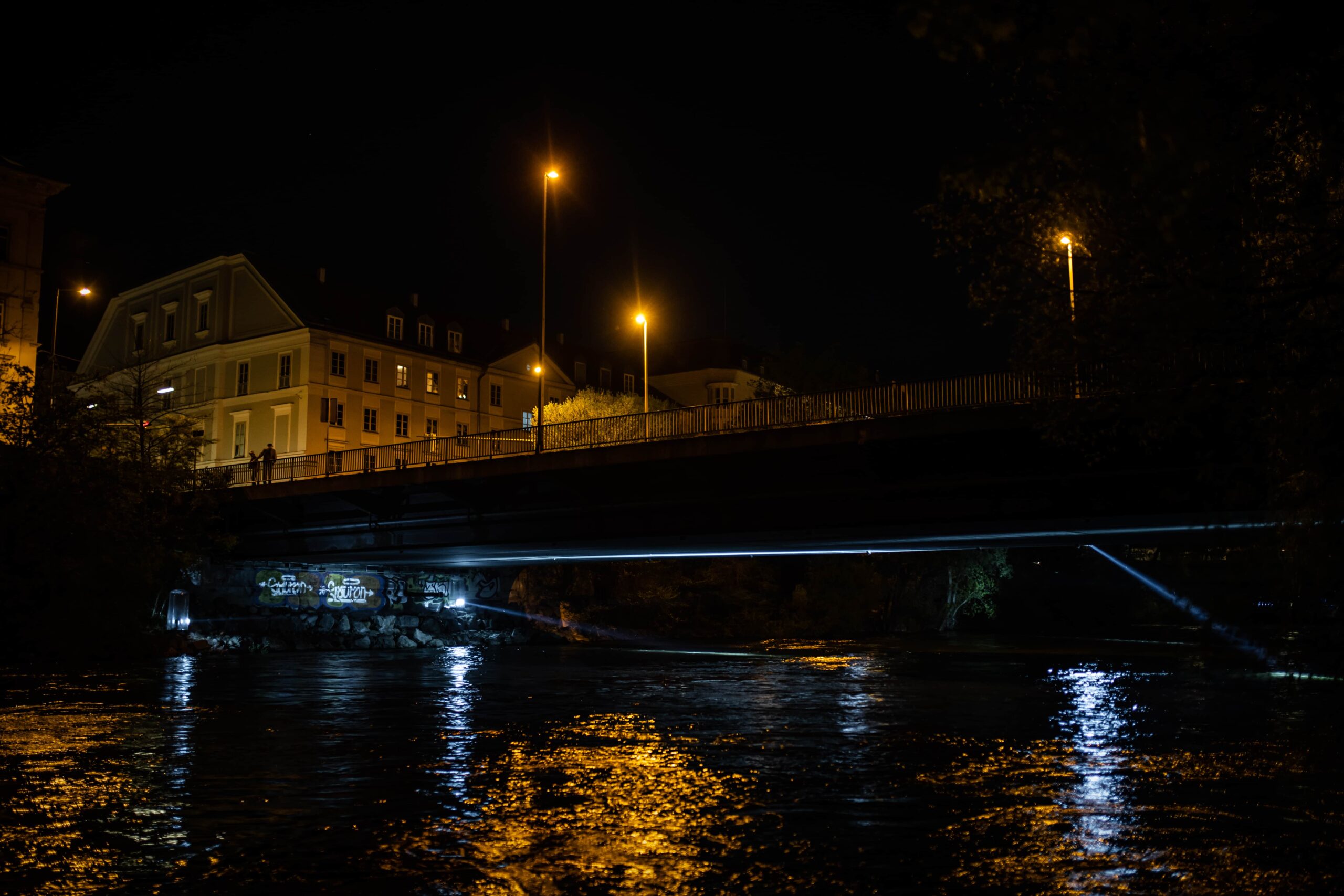
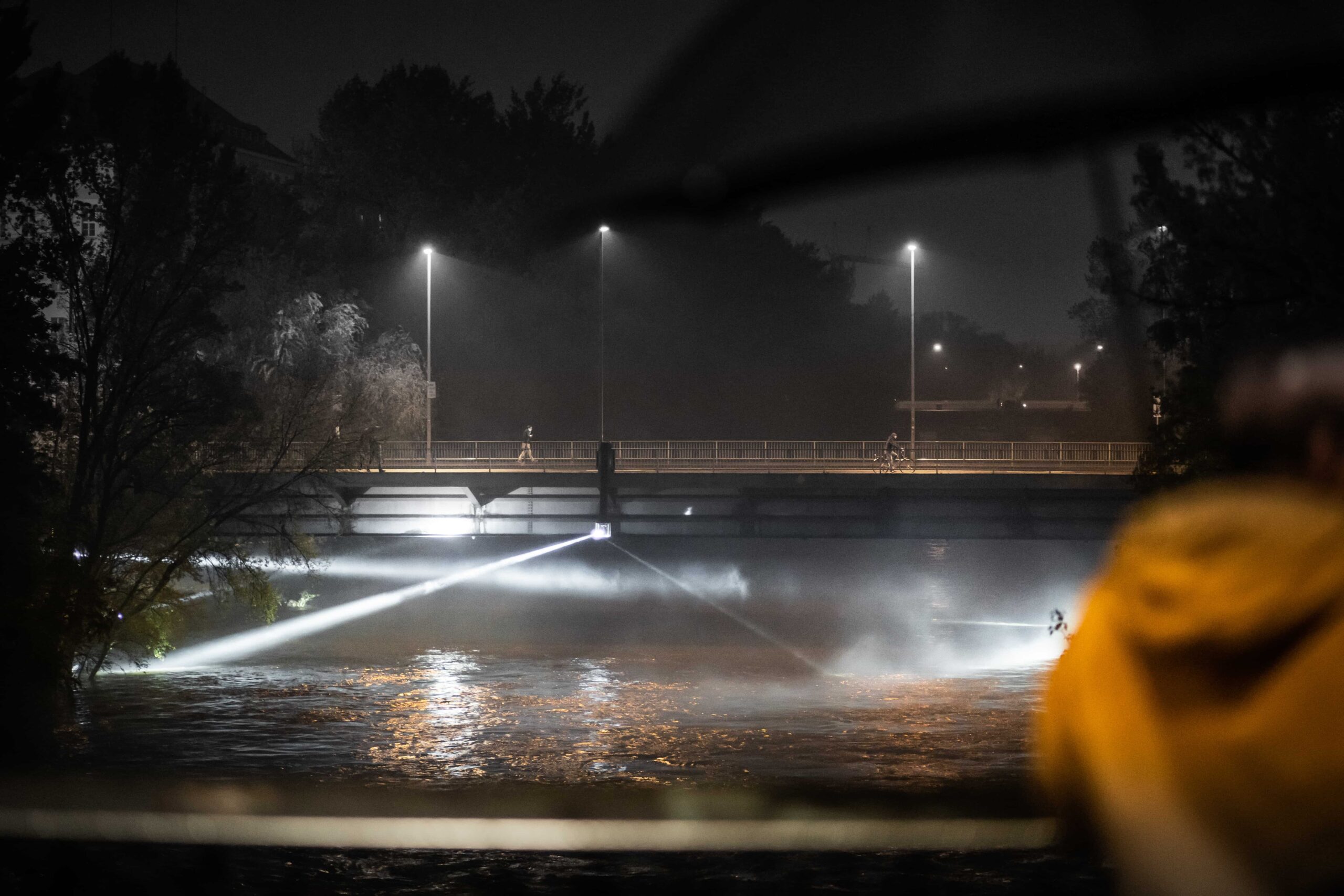
The project “OHNE TITEL, 2019” was originally developed by the Austrian artist Anna-Maria Bogner for KLANGLICHT 2019 and dealt with the question of space. What is space? Where is it located? From the vantage point of the Erzherzog Johann Bridge, viewers saw cones of light hovering over the water. Where they come from is not clear, but what they point to is: Less than a non-place, the volume framed between the Tegetthoff Bridge and the Mur eludes everyday attention in its inaccessibility. An undiscovered space that was perhaps consciously seen for the first time and – through the transmission of the soundscape there – heard.
Biography Anna-Maria Bogner
Born in 1984 in Tyrol, AT, Anna-Maria Bogner lives and works in Düsseldorf, DE. In her works, space is not an object, but rather the condition under which objects can appear. The Austrian artist has received grants as an artist in residence in the Netherlands, the USA and Bulgaria as well as numerous sponsorship and art awards. Her art can be seen in Austrian museums and collections from Berlin to Los Angeles.
Biography Nikos Zachariadis
Nikos Zachariadis is a multidisciplinary artist, designer and organizer based in Graz. He is primarily concerned with the effects and manipulation of sensory perception within the field of tension between image-sound-space-time in a wide variety of constellations and aspects. In addition to works in classical media and electro-acoustic concerts, the spectrum of his work includes immersive AV environments and performative sound sculptures.
Credits
Sound design: Nikos Zachariadis
Technical implementation: grafx live Marketing, SLV-Austria
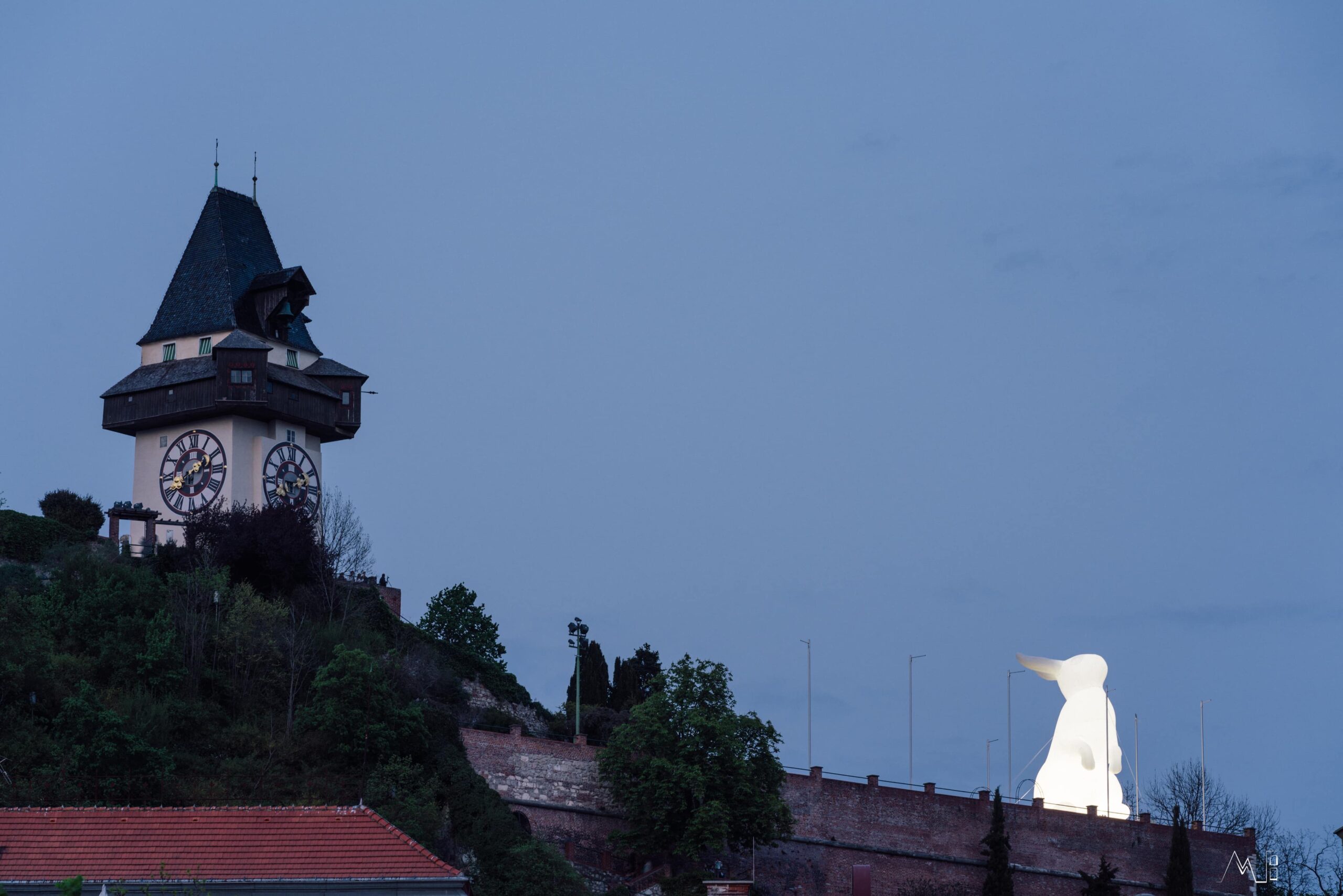
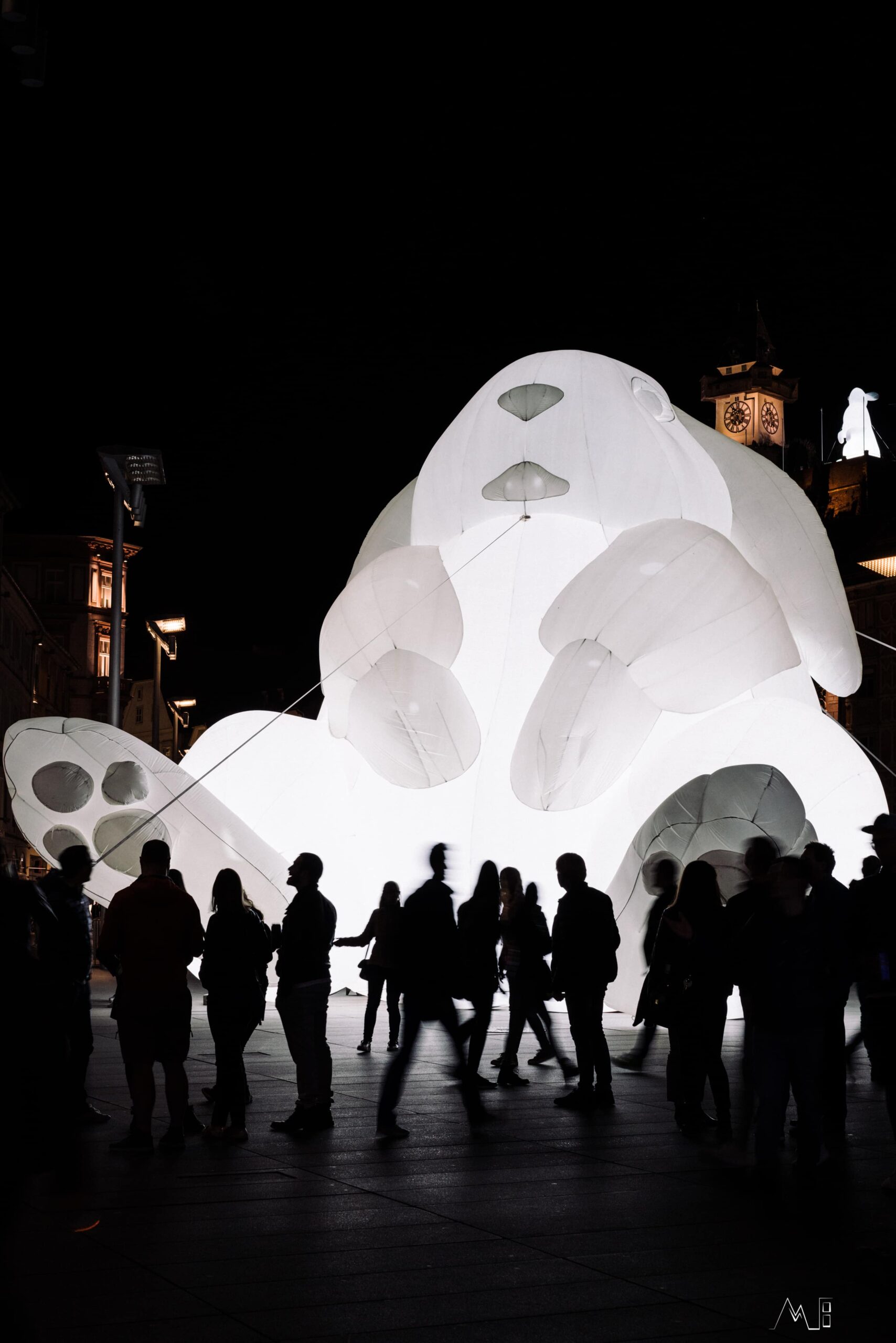
Their creator, Australian artist Amanda Parer, calls them “intruders”, although the two glowing giants with long spoons have purely peaceful intentions. Under the title “Intruders XL”, two oversized rabbits positioned themselves in direct line of sight of each other at KLANGLICHT 2019 and wanted to achieve one thing above all with their presence: a smile on people’s faces. From the main square, people gazed in amazement at the size of the figure in the immediate vicinity until they spotted the glowing hare in the distance on the Schlossberg.
Biography
Under the collective ‘Parer Studios’, Amanda Parer creates objects for public spaces, sculptures and paintings that explore nature and its fragility. The role of humans in this structure is always critically scrutinized. The Australian artist has received great international acclaim, particularly for her imposing installations, which can take up entire (urban) landscapes. The “Intruders XL” have already been illuminated in over 26 major cities worldwide, including London, Perth, Paris and Boston.
Credits
Technical implementation: grafx live Marketing
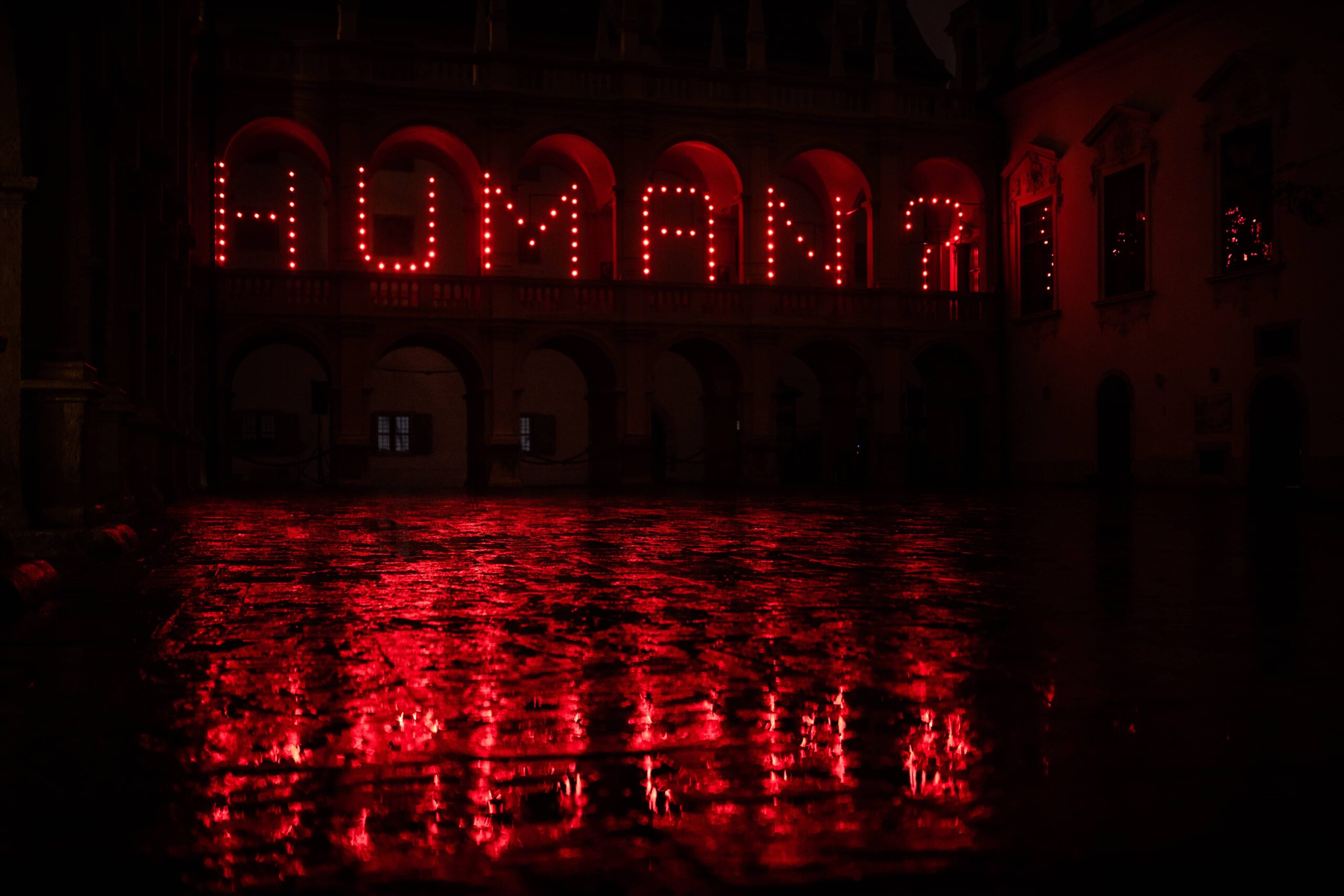
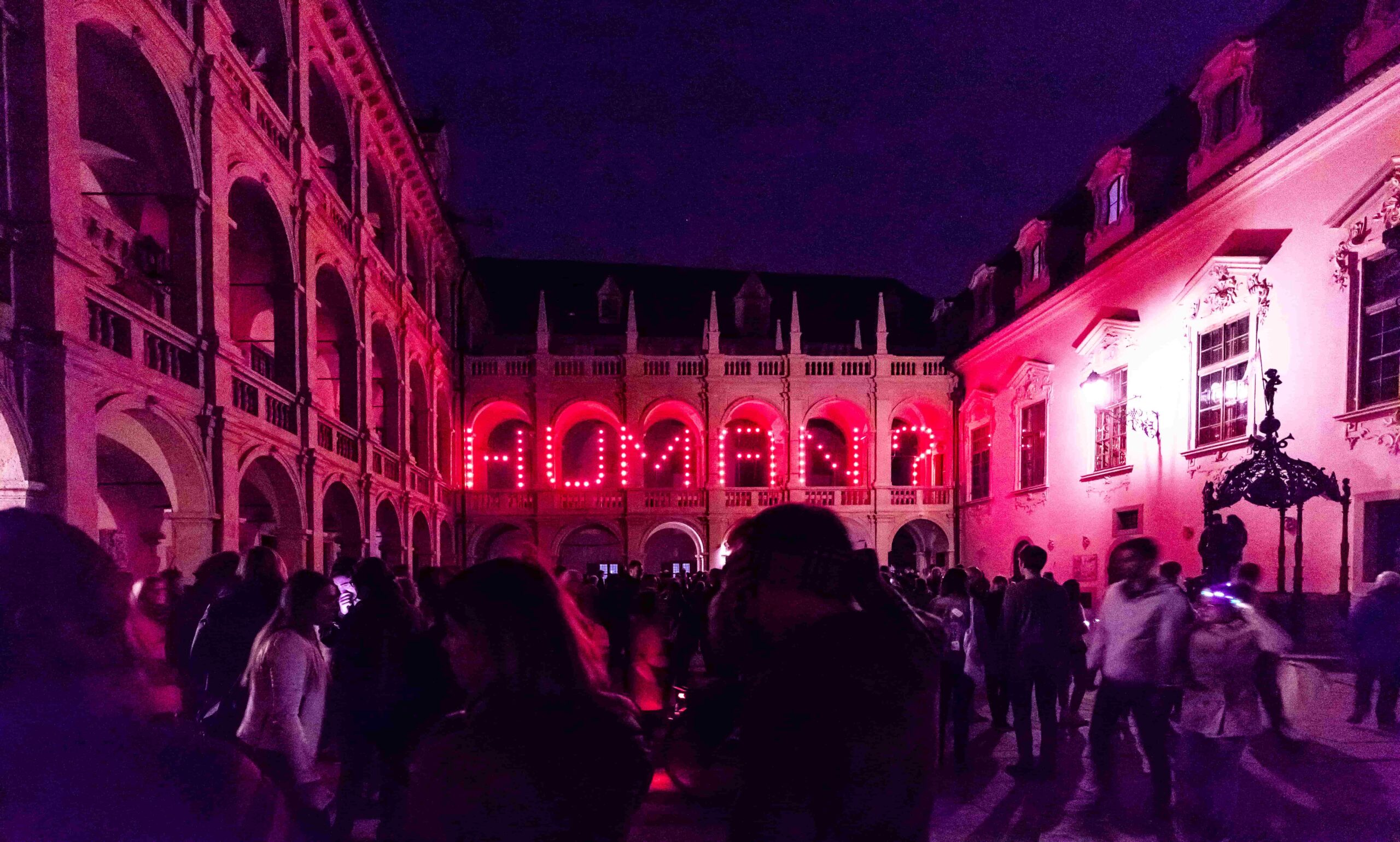
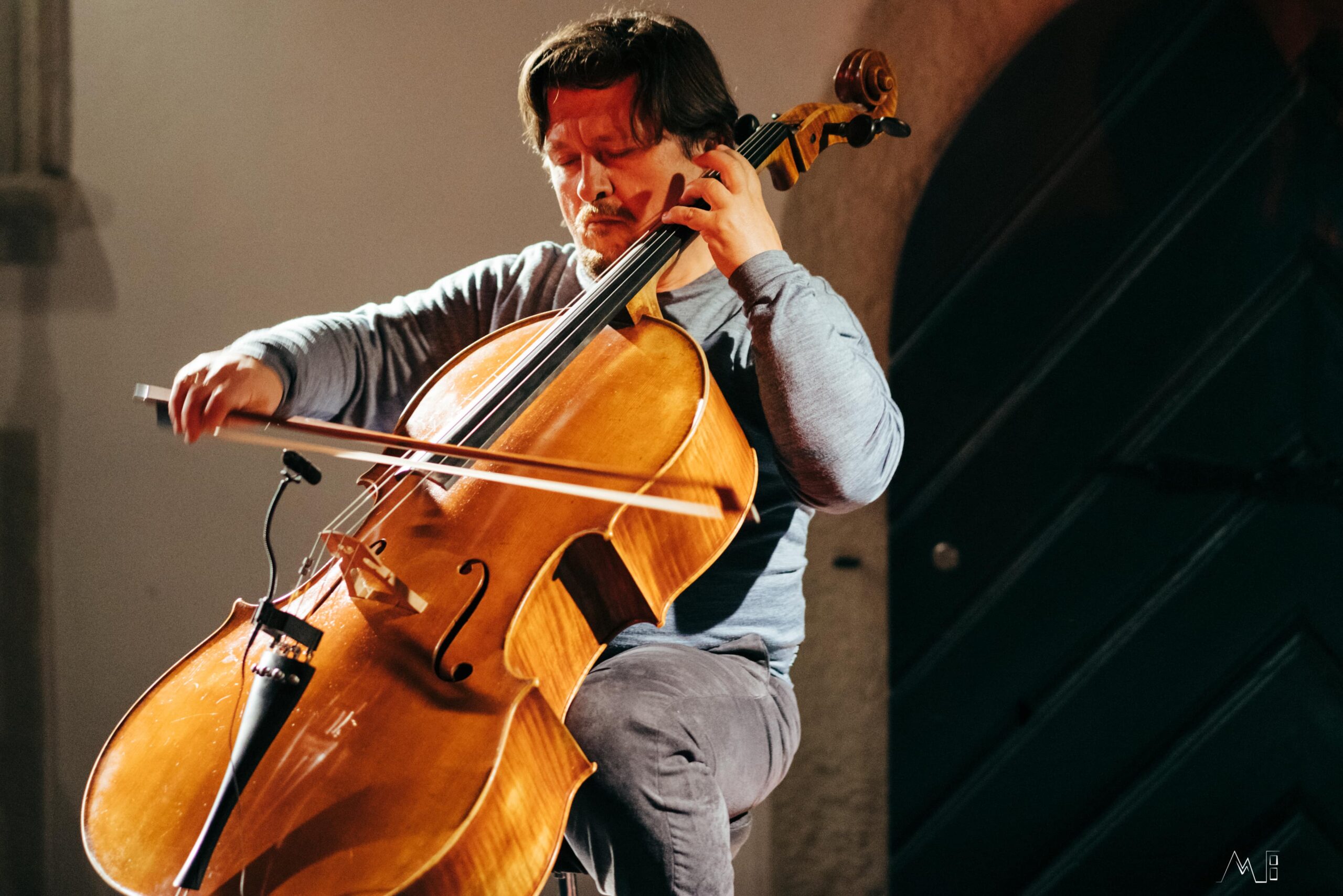
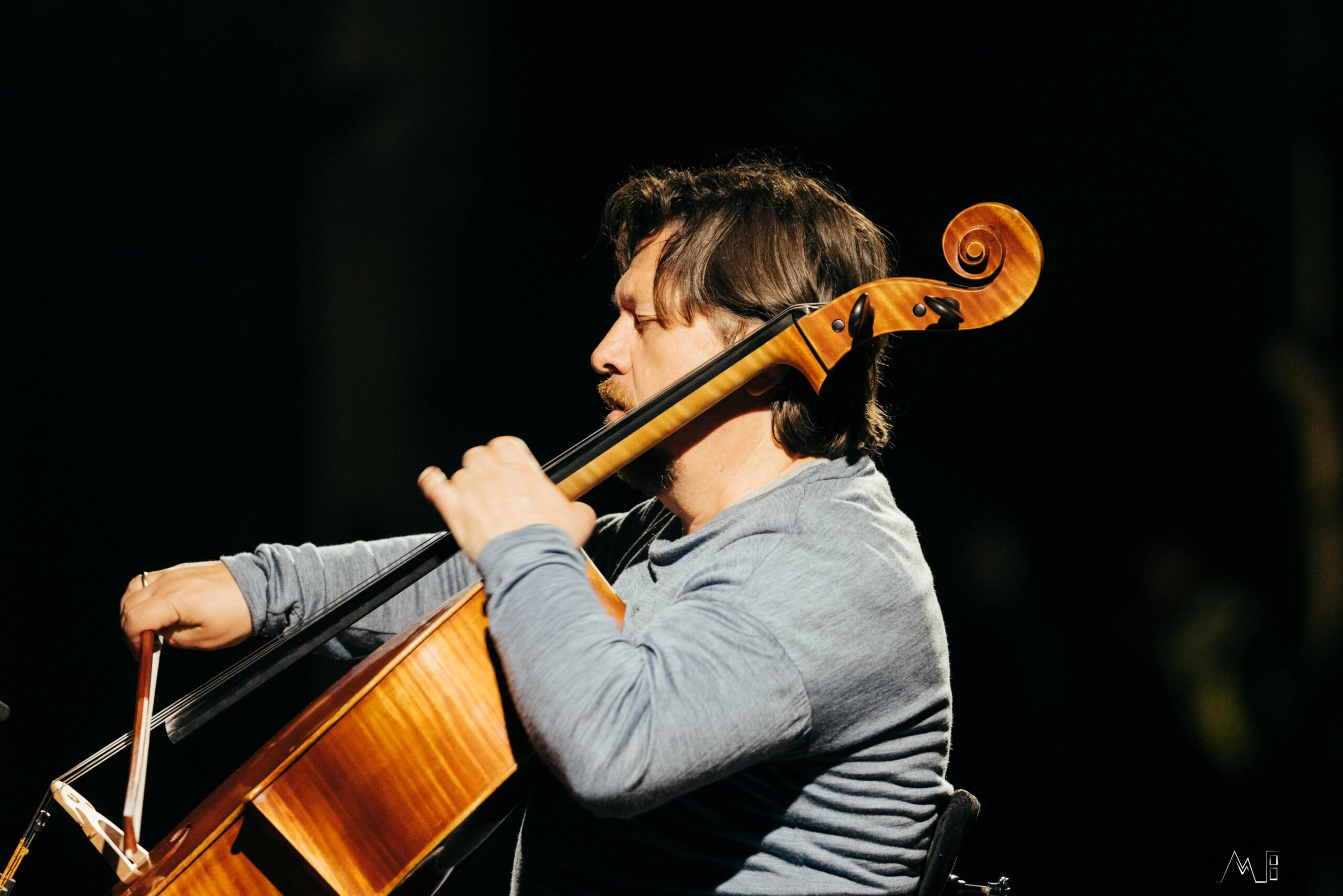
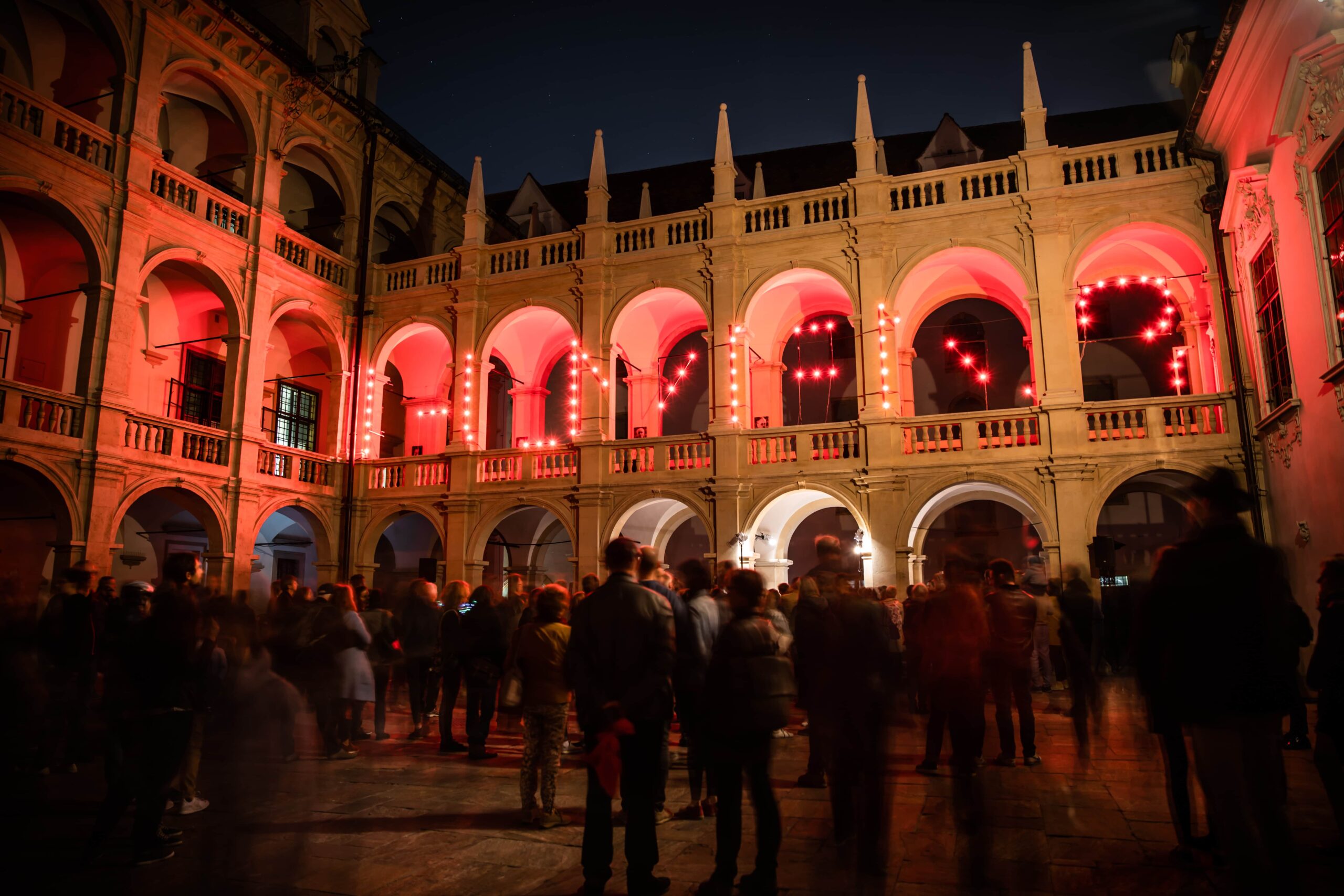
With “H-U-M-A-N-?” in the Landhaushof, Swiss light artist Sophie Guyot poses not only the question of humanity, but also that of perspective. Never to be understood as a statement and also free of criticism, she asks: Are we human? And: What does it even mean to be “human”? In life, there is always more than just one point of view, more than just black and white. To visualize this, Sophie Guyot uses language on the one hand and the red light on the other, which – as she herself says – evokes great attentiveness in people. On all three Klanglicht evenings, the musician Friedrich Kleinhapl will also play his cello in the space around Guyot’s “H-U-M-A-N-?”. In addition to suites for solo cello by Johann Sebastian Bach, Øistein Sommerfeldt’s “Monologi” and Friedrich Gulda’s “Cadenza” will also be performed. The overall audio-visual project transforms the Landhaushof into a place to pause, look and listen closely and invites you to enter into an inner monologue with yourself.
Biography Sophie Guyot
Sophie Guyot studied literature at the University of Lausanne, but in the years and decades that followed she increasingly devoted herself to artistic work with light. Language plays a key role for her: she uses light to create messages that – depending on the project – can be discovered and experienced in a variety of ways.
Biography Friedrich Kleinhapl
Friedrich Kleinhapl is an Austrian cellist with Belgian roots and performs as a soloist and chamber musician in numerous European, American and Asian cities. His music is characterized by expressive playing, colourful tone and uncompromising interpretations.
Credits
Technology: grafx live Marketing
The project was realized with the kind support of Energie Steiermark.
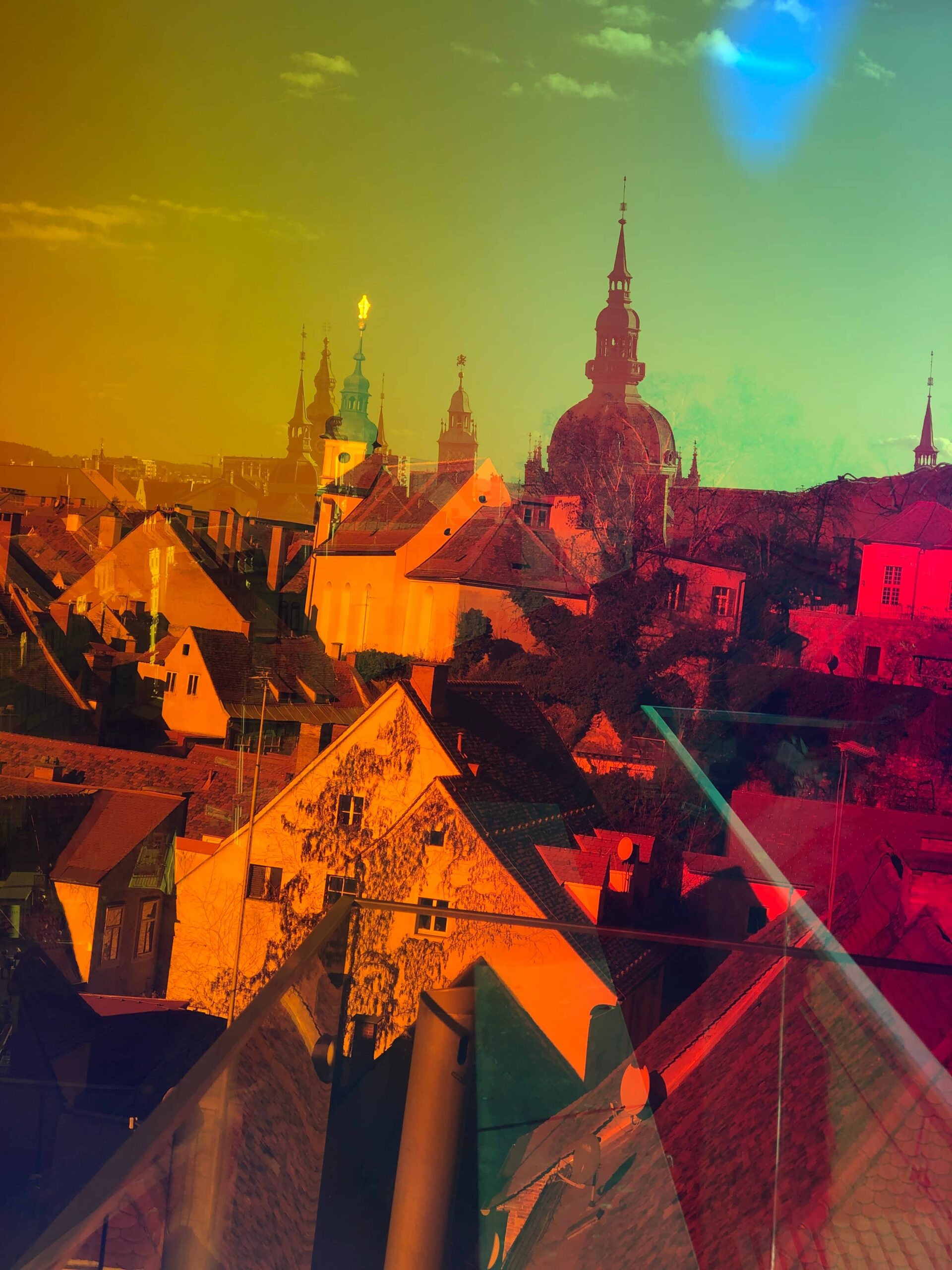
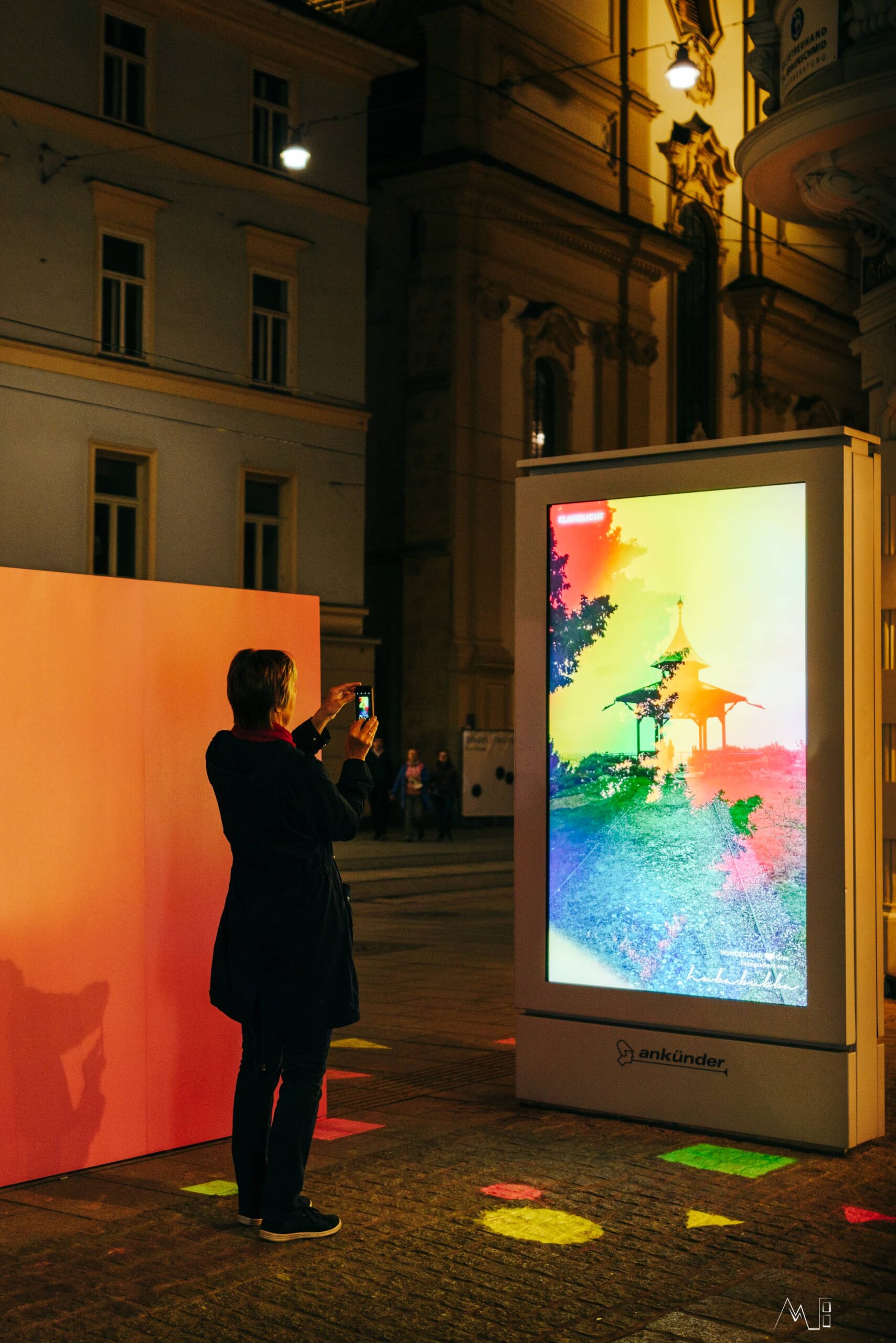
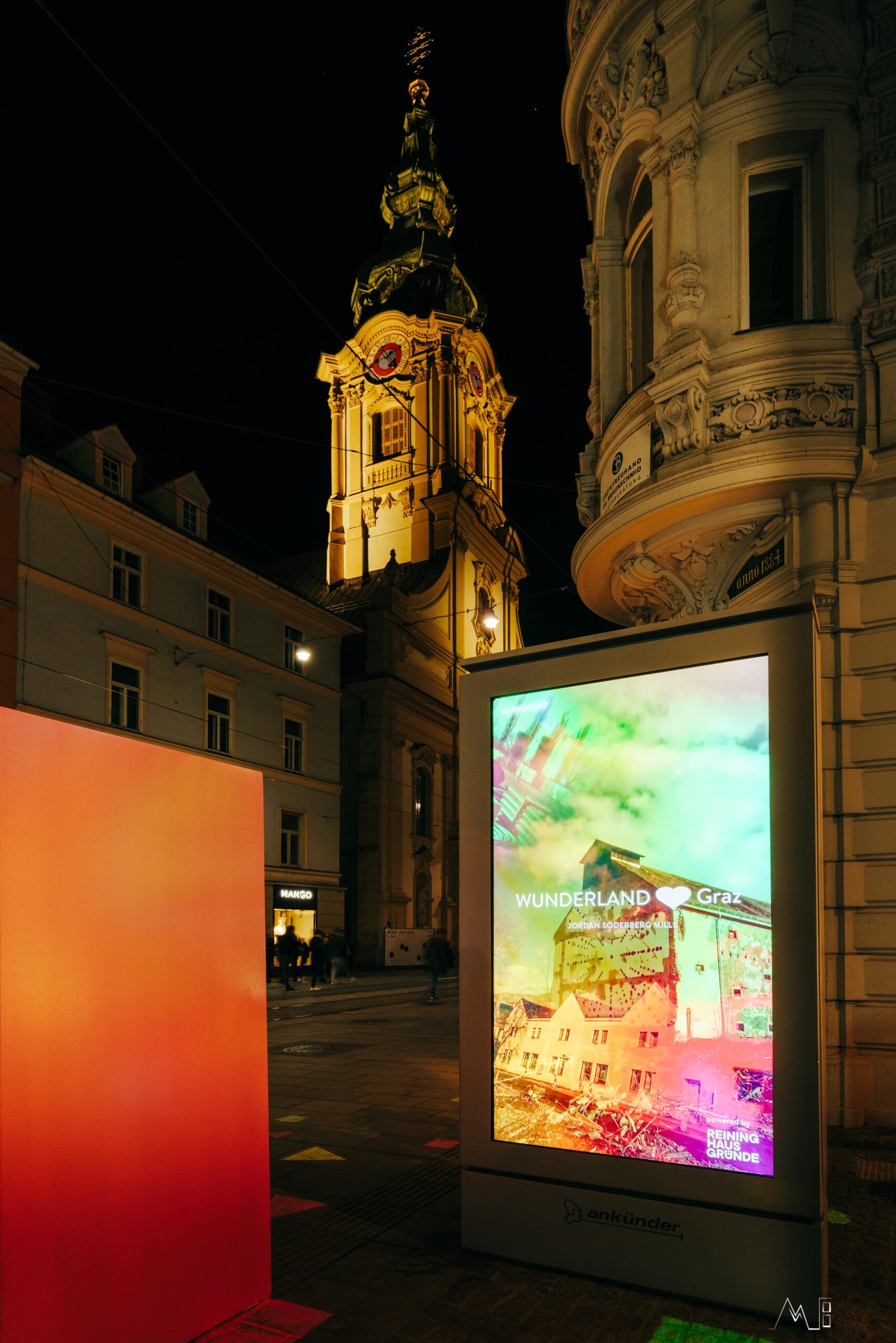
A game with the rainbow: Seeing Graz in new colors and from different angles and capturing these colorful moments. The interactive project “Wunderland” showed favorite places of Graz residents – photographed through their own lens and effectively staged with the glass photo filter by Jordan Söderberg Mills. Positioned on the camera lens, Jordan Söderberg Mills’ “Colour Cube” looks like an analog color filter that captures the world from all sides. Depending on how you turn and twist it, light is refracted differently. The result: a spectrum of colors and images, superimposed on each other and therefore unique.
Biography
Jordan Söderberg Mills is an interdisciplinary light and glass artist. He works intensively with the refraction of light through and in various materials – with glass becoming an important part of his work. Whether installation, sculpture or design, each of his works plays with the boundary between digital and analog reality. His works are/were on display at the Victoria Albert Museum, Blythe House, the London Design Festival and the Museo Nacional de Bellas Artes in Santiago, Chile, among others.
In cooperation with Reininghaus Gründe.
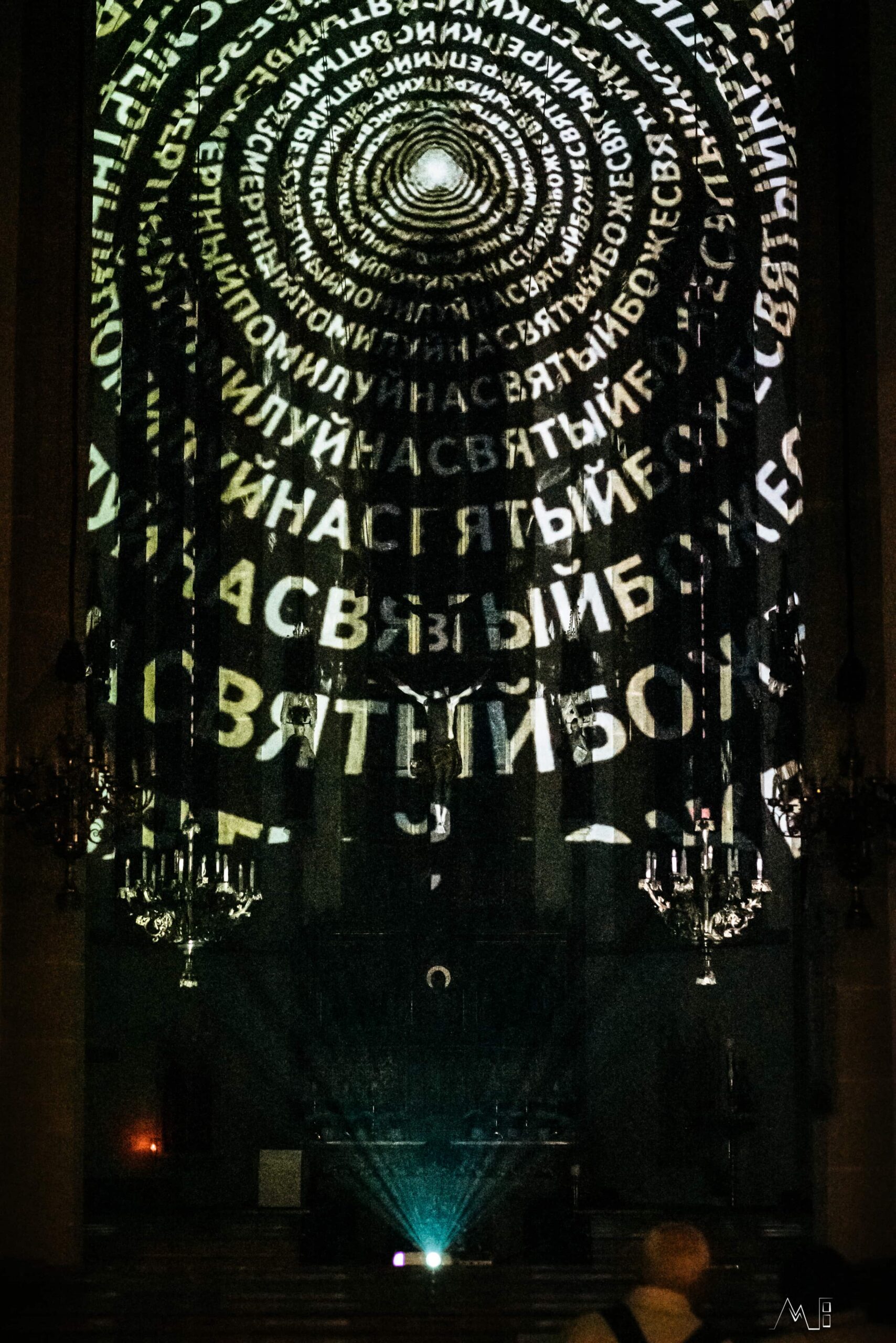
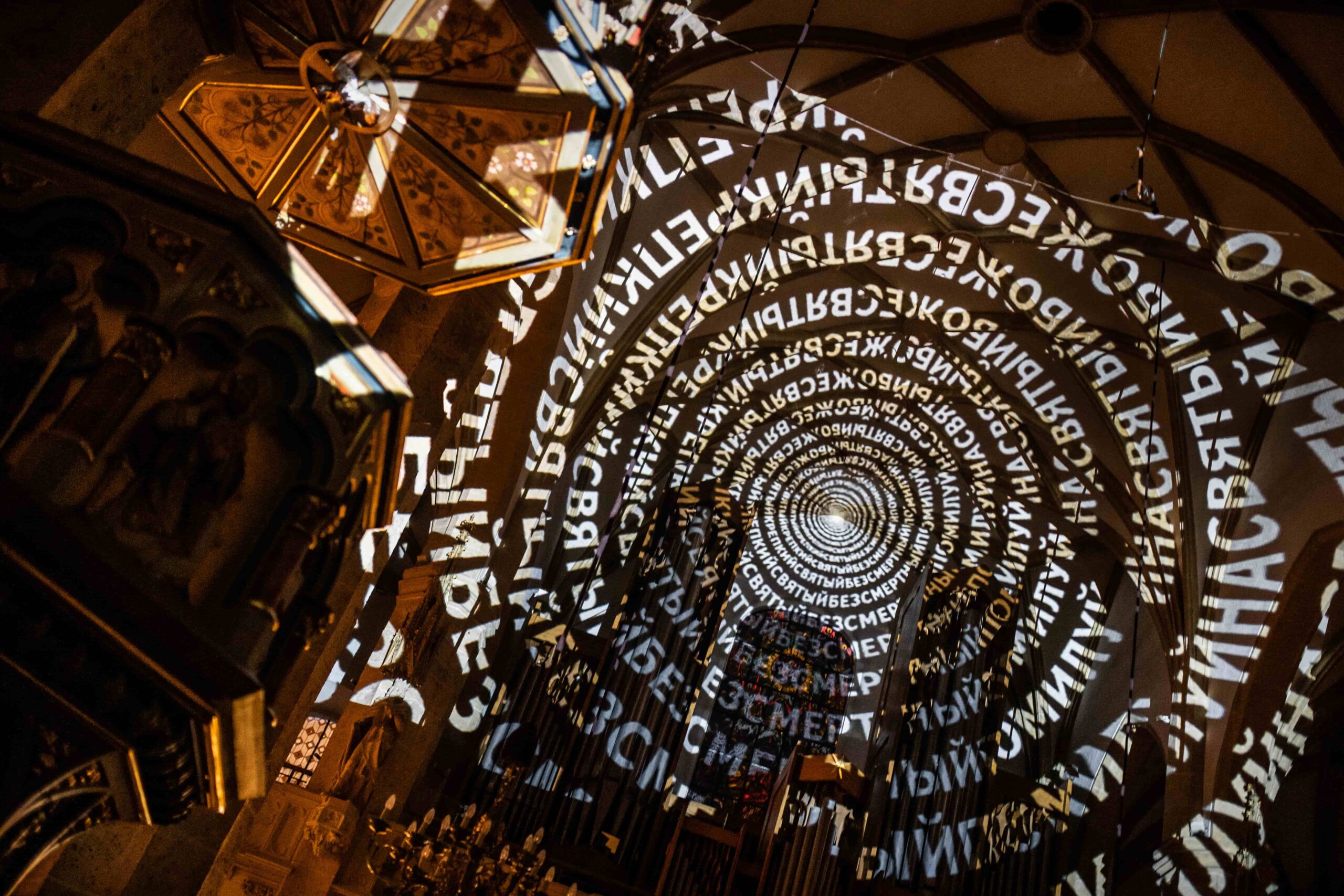
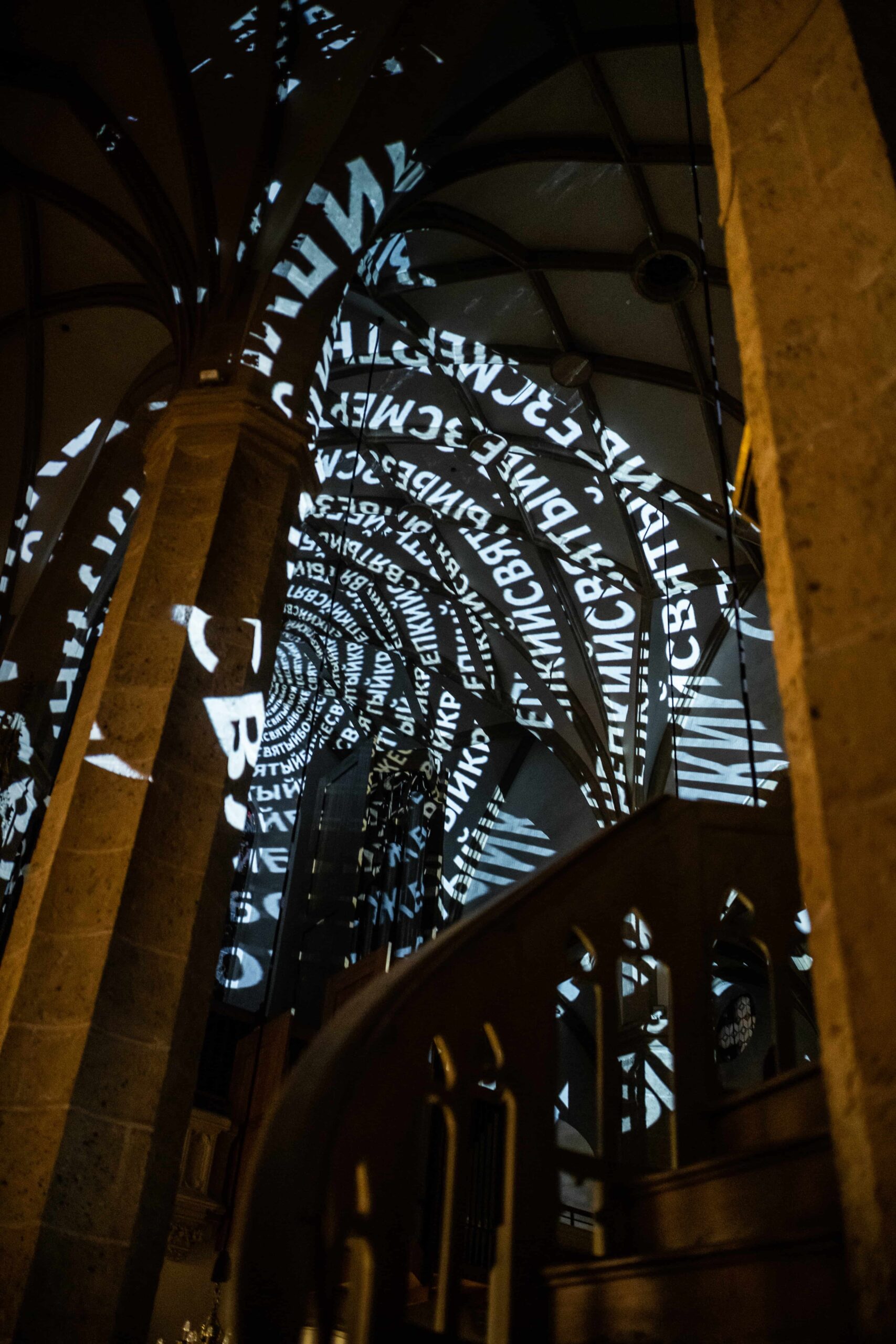
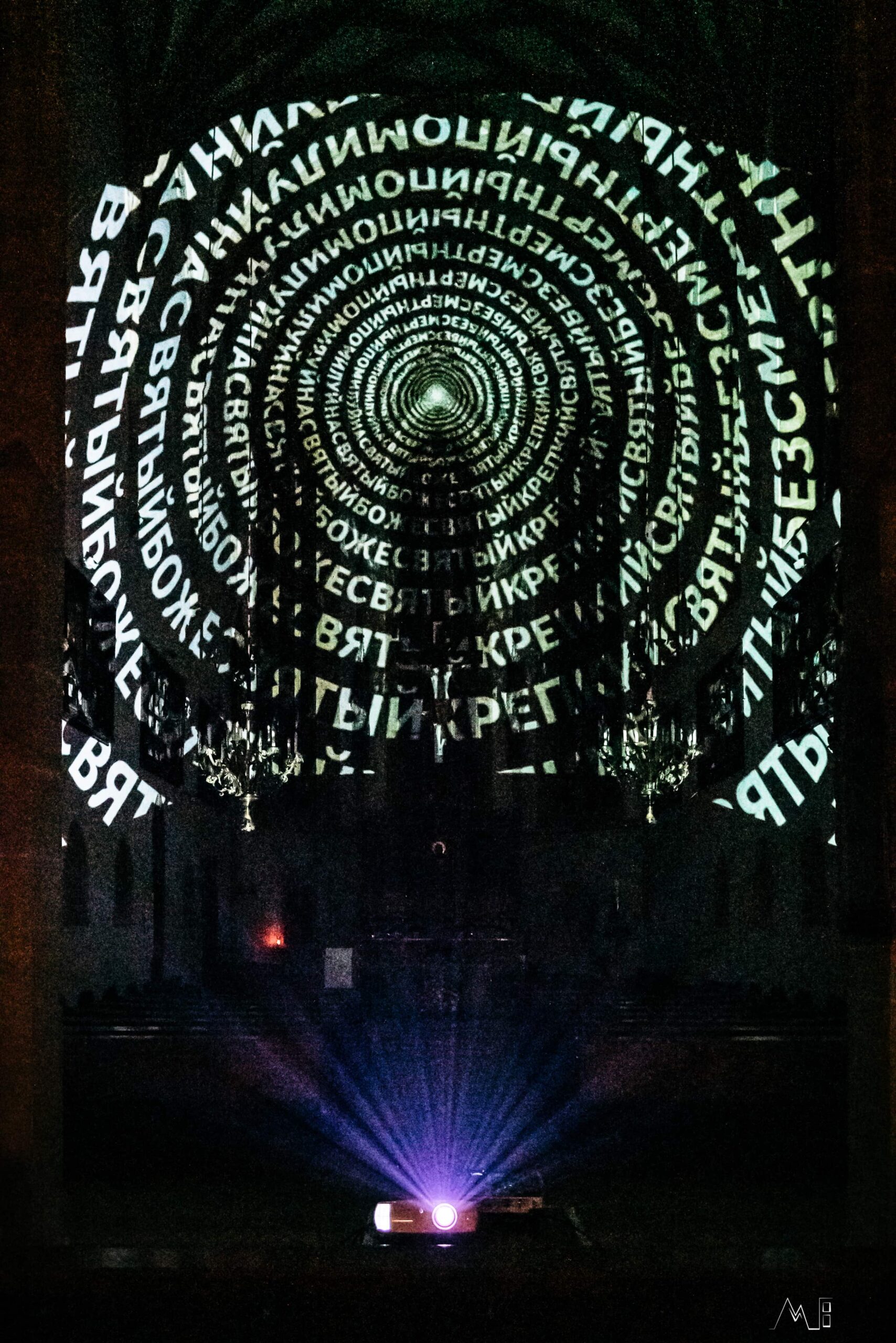
Traditional spirituality translated into the present day: The Russian artist Gor Chahal transformed the tradition of Hesychasm of the Orthodox Church into a contemporary formal language in the parish church. In his video “Stages”, created in 2005, the written invocations to God unfold a spatial pull that is hard to resist.
For the presentation in the Graz City Parish Church, the video from 2005 was expanded to include a sound installation consisting of the interweaving of a vocal piece by the Russian avant-garde artist and musician Alexei Khvostenko (1940-2004) and a spoken text by the Russian Orthodox theologian John Meyendorff (1926-1992) on the theological system of Gregor Palamas. The text, performed by Khvostenko in the manner of an Orthodox church chant, is reminiscent of meditative prayer practices in the repetition of sentences and parts of sentences, but by interlacing and overlapping parts of sentences and exchanging words and abandoning a recognizable syntax, it deliberately loses itself in a web of words without a recognizable context of meaning. The sound recording made by Khvostenko’s musical partner Kamil Tchalaev represents the opposition of the avant-garde in the communist Soviet Union.
Biography
With his virtual sculptures created in the 1980s, Gor Chahal is considered one of the pioneers of multimedia art in Russia. In addition to group and solo exhibitions in many European countries, his work was shown in a solo exhibition at the renowned Tretyakov Gallery in Moscow in 2010.
Credits
Sound installation: Kamil Tchalev(Music: Alexei Khvostenko, Text: John Meyendorff)
Curated by: Alois Kölbl (QL-Galerie), Gertraud Schaller-Pressler (Kirchen Kultur Graz)
Technical implementation: Markus Königshofer (eventmanagement/eventtechnics)
In cooperation with Kirchen Kultur Graz.
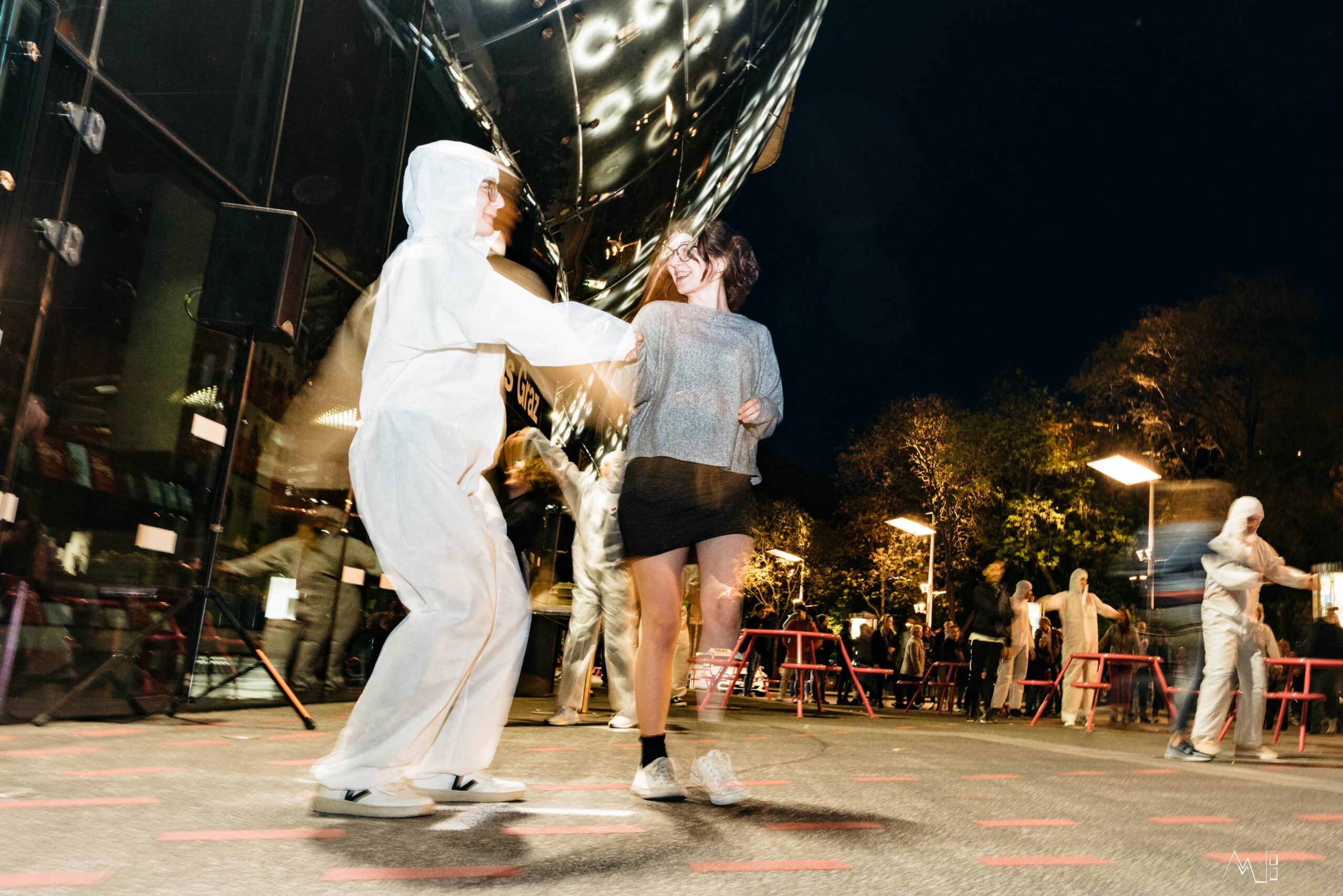
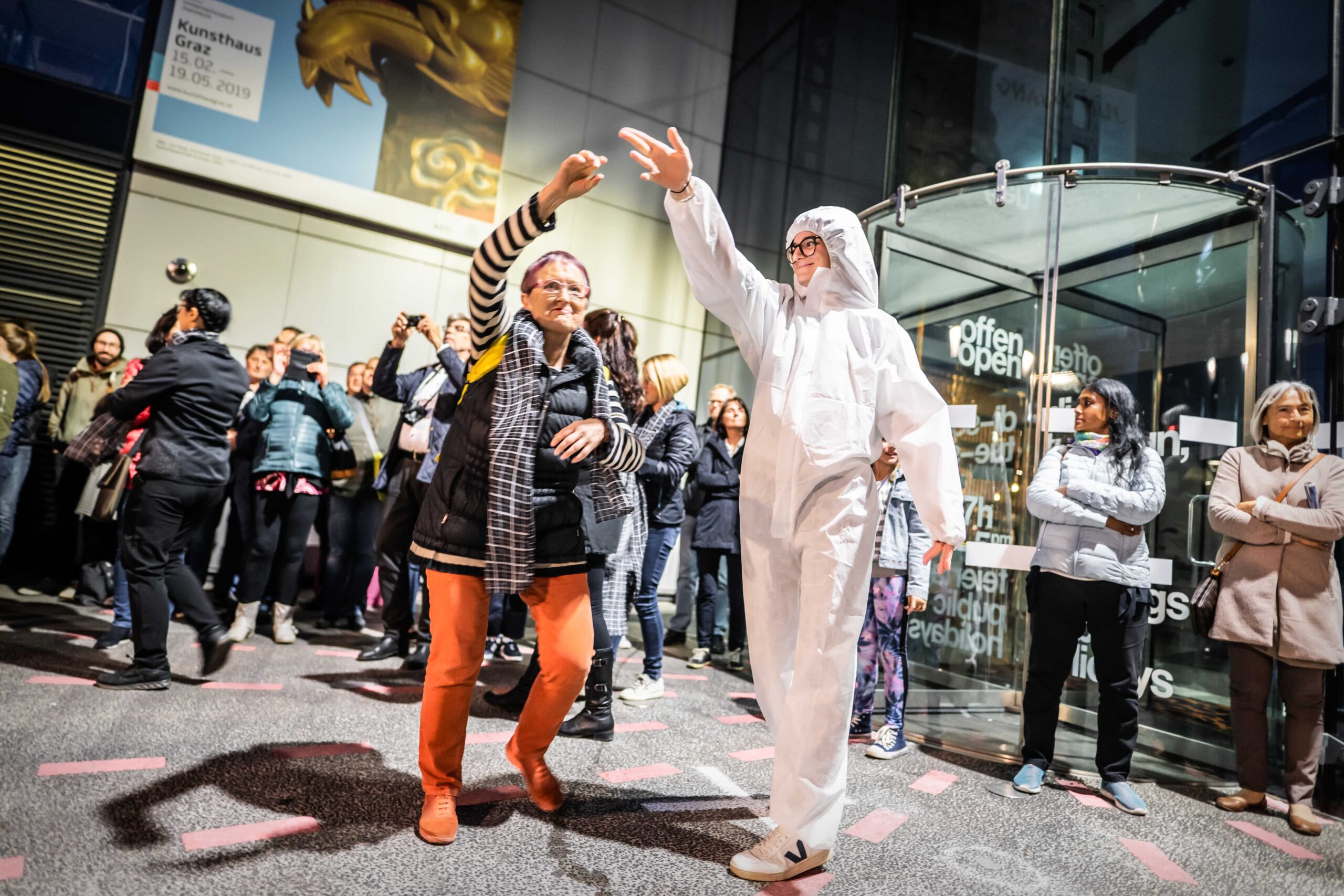
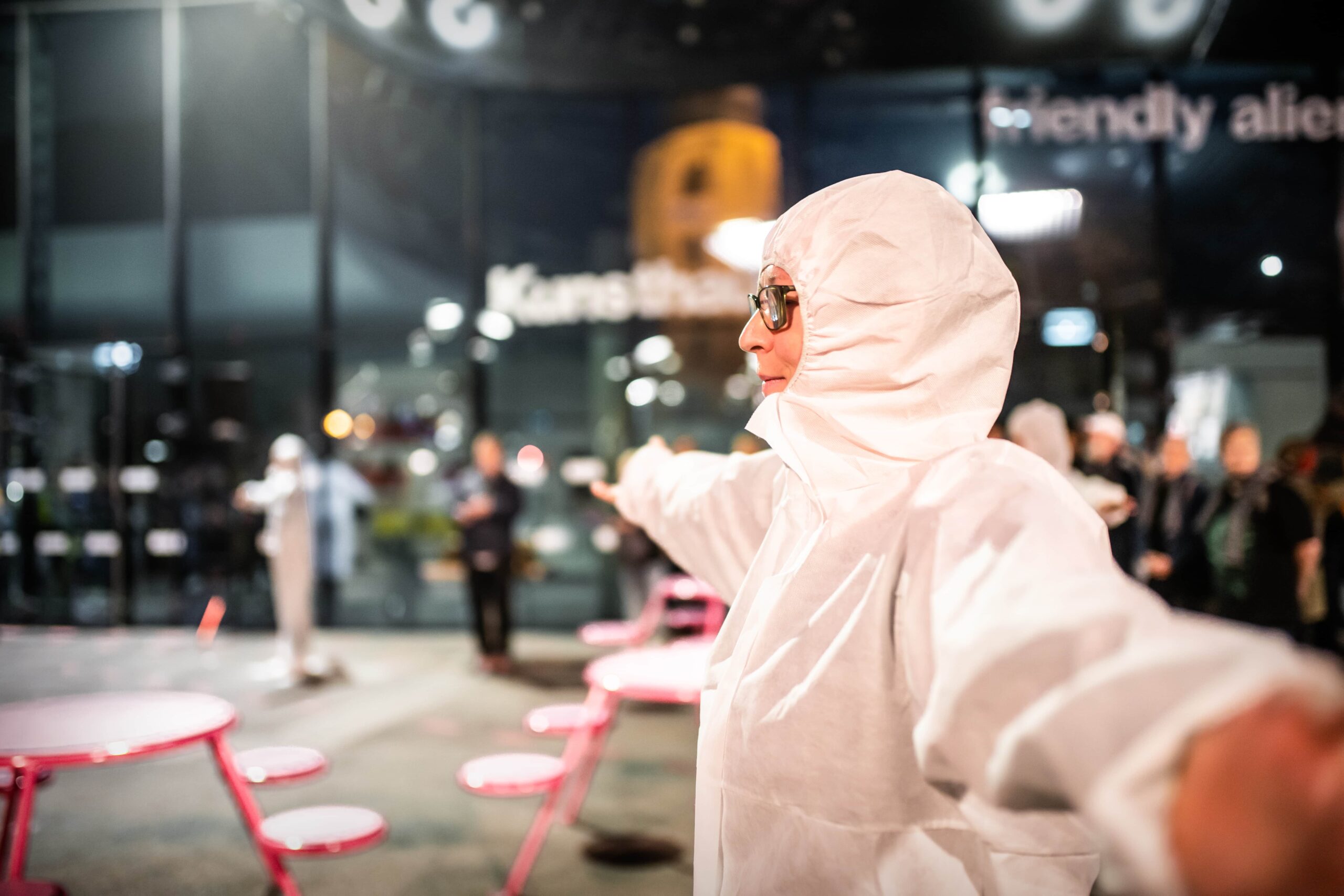
In the run-up to the exhibition “Connected. Peter Kogler with…” at Kunsthaus Graz, the internationally active Austrian media artist Peter Kogler made a double intervention at KLANGLICHT 2019. Visitors encountered his hypnotic patterns both on the BIX media façade and in the urban outdoor space. Scarves with a net-like pattern became a highly visible part of the festival – and so did the audience who wore them around their necks. In this way, “Klanglicht Connected” links Peter Kogler’s art directly with the visitors to Klanglicht.
Become part of a work of art!
Equipped with the Peter Kogler scarf, the audience, together with the Kunsthaus Graz, transformed the public square in front of the museum into a shining sea of people!
Biography
Peter Kogler has been working as a media artist between computer graphics, film, collage and architecture since the 1980s. His consistent preoccupation with the technical and reproducible image and the power of the media makes him today – under the conditions of a digitally influenced everyday life – a visionary in dealing with the power of the masses.
A project of the Kunsthaus Graz.
Supported by legero united.
“I am looking forward to a ‘glowing’ crowd of people in front of the Kunsthaus, who will become part of a work by Peter Kogler and then take their own personal Kogler home with them. … a wonderful image of a real reverberation of the event!”
– Katrin Bucher Trantow, Chief Curator Kunsthaus Graz
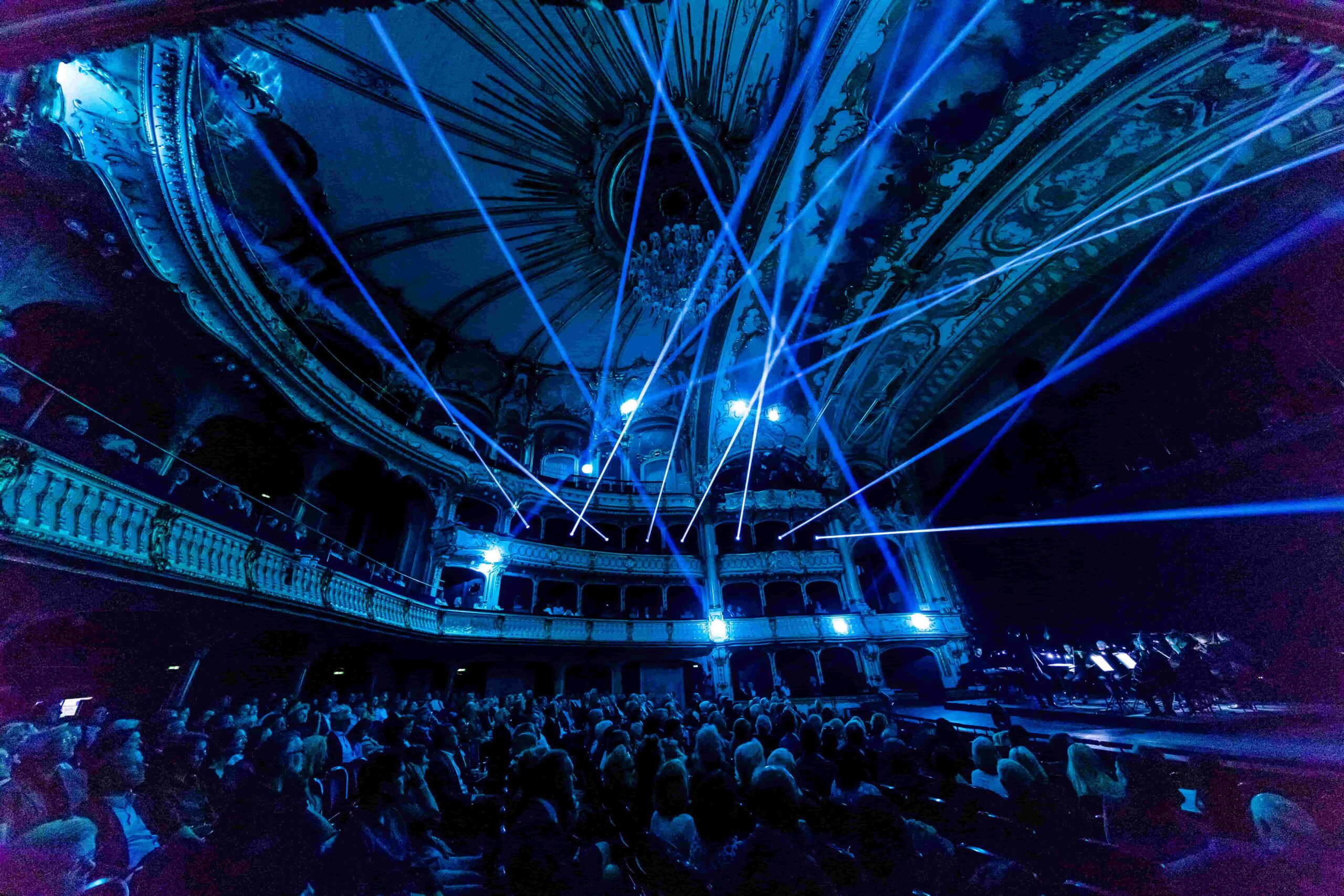
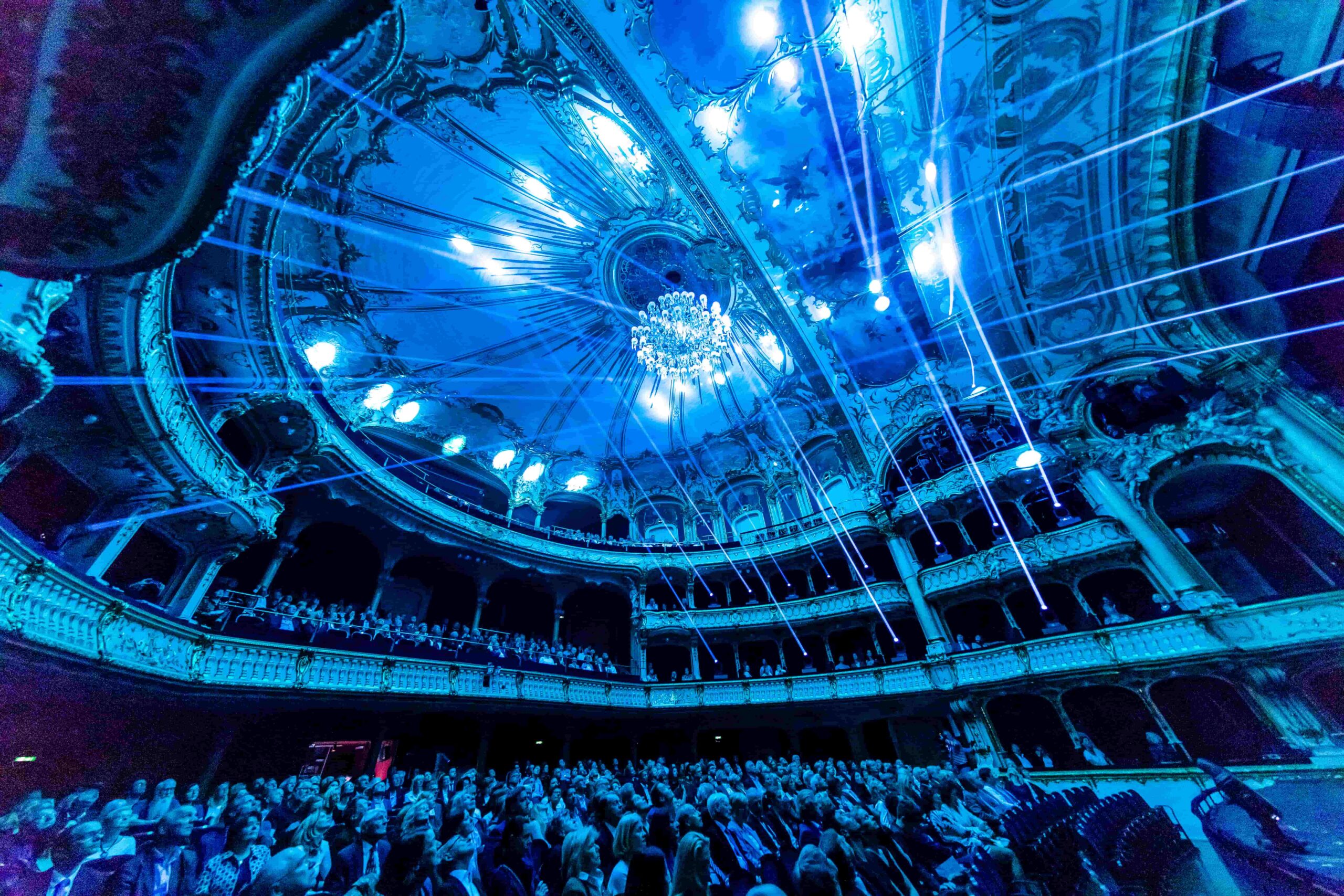
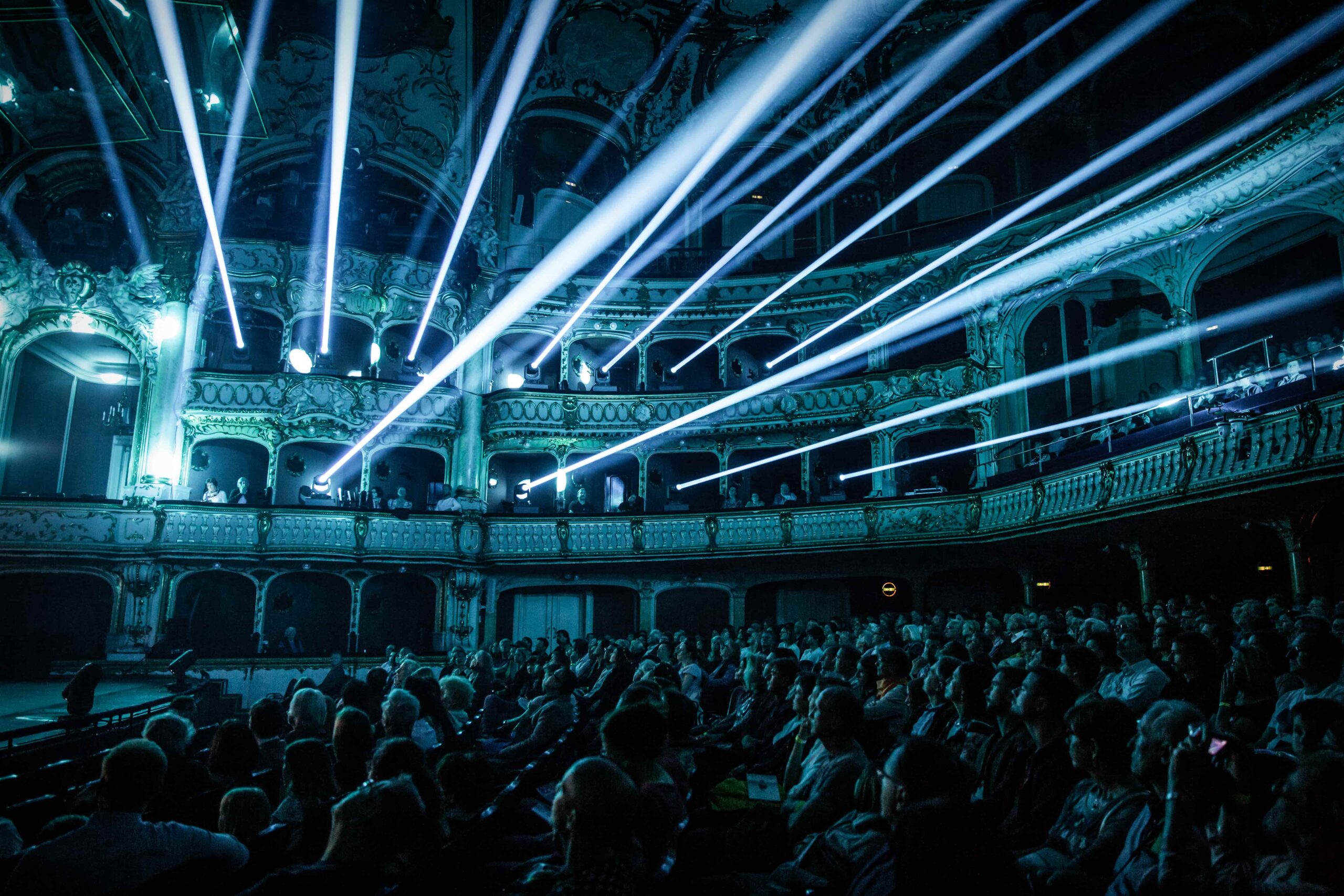
Light and sound transform the space and turn it into a new, unique experience. The surrounding architecture, whether familiar or not, becomes part of an experience for the eyes and ears.
The interplay of live orchestral music and precisely controlled aesthetic lighting allows the auditorium of the Graz Opera House to be experienced as a completely new space. The audience is swept away by sound and light and taken on a journey that opens up completely new perspectives on the architecture of the space and the musical experience. The lighting installation follows the rhythm of the music, using state-of-the-art technology to precisely control the lighting and create moods that appeal to, awaken and touch the senses and emotions. The installation “The Transformation” was first shown on the occasion of the 600th anniversary of the nave of Girona Cathedral and has since been shown in Bilbao and New York.
Biography
Onionlab specializes in oversized projections and virtual reality and creates interfaces between art, design and technology with its works. The Spanish artist collective is currently based in Barcelona, but its audiovisual productions can be seen all over the world. Xavi Bové is an artist, curator and professor. His main interest lies in audiovisual projections and video mapping, where art and technology, image and sound are closely interwoven.
Credits
Orchestra: Opera Graz
Technical implementation: Opera, grafx live-marketing, SLV-Austria
photo (c) Onionlab and Xavi Bové
“By supporting this project, Steiermärkische Sparkasse is helping to ensure that architectural masterpieces such as the Graz Opera House are presented in an unforgettable light through an impressive production, thereby bringing the history of this building to life.”
– Gerhard Fabisch, Chairman of the Management Board of Steiermärkische Sparkasse
In cooperation with Steiermärkische Sparkasse
5 years of KLANGLICHT: a small anniversary! Once again, light and sound found their way into the streets and thousands of visitors from near and far flocked to Graz to be captivated by the many installations. Every year KLANGLICHT, but always different! An overwhelming backdrop of light, color, sound and text once again opened up completely new perspectives on familiar or newly discovered things.
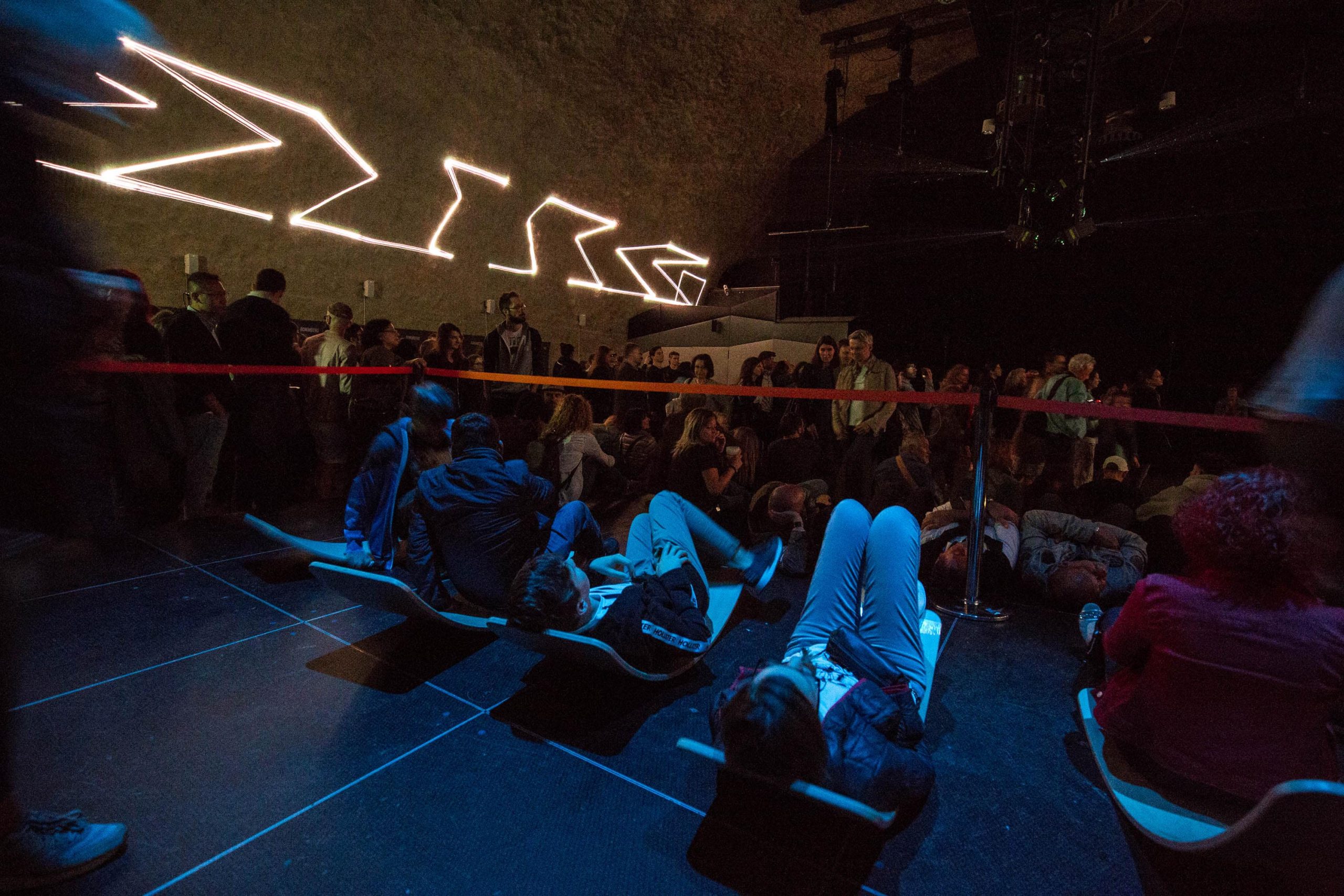
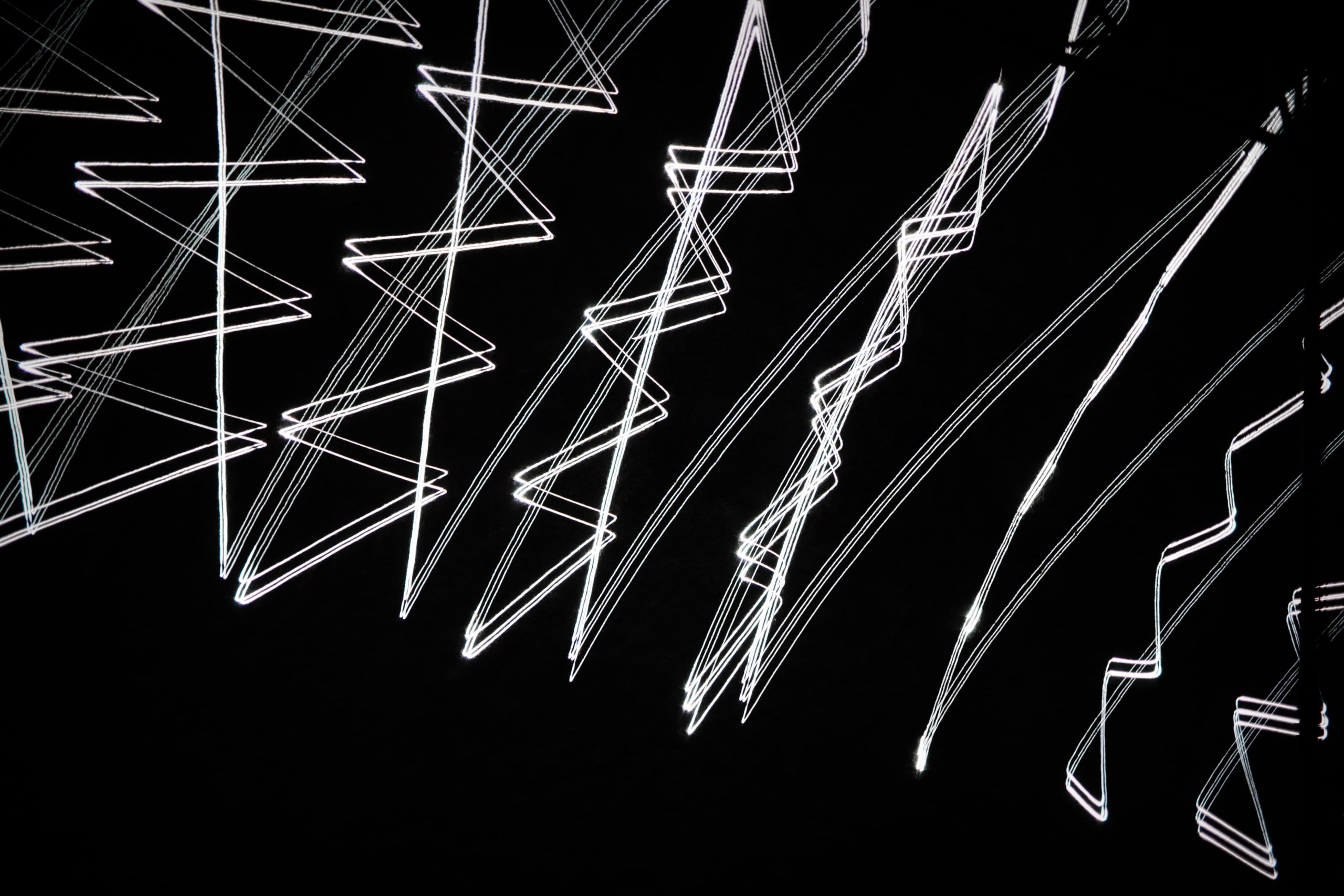
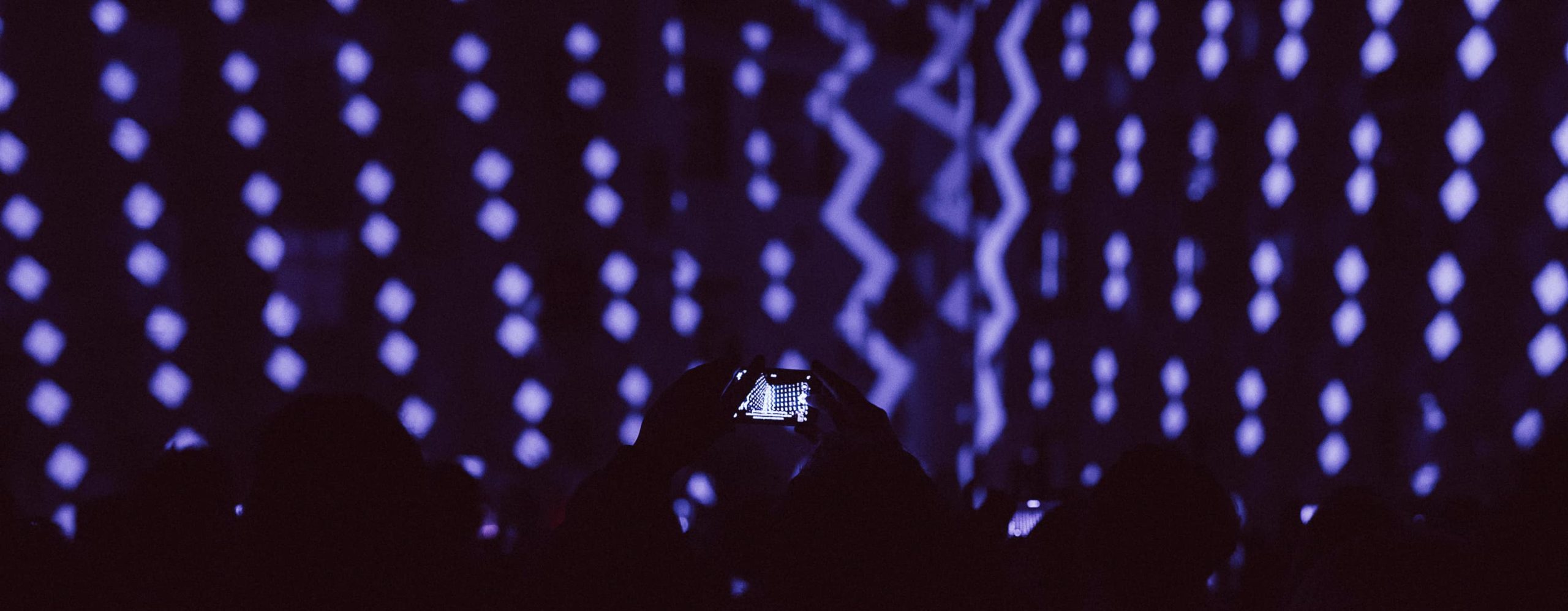
“We see in order to move. We move in order to see.” William Gibson
Once in endless motion as children, today we only move our heads. Thoughts flow … but can they alone really grasp the meaning of life? Like dancers, like athletes or simply like children, we let ourselves drift here to these sound lights, deep inside the mountain and we realize: The body in action brings new vision, new ideas, new freedom for the human being.
With ‘Motion Scape’ and ‘PianoMetalSpace // SoundLinks’, the two media artists Rombout Frieling and Winfried Ritsch joined forces to create an extraordinary sound and light installation in the Dom im Berg. The lighting installation inside the Schlossberg in Graz created contrasts that encouraged human movement. In addition, Rombout Frieling’s light art controlled Winfried Ritsch’s concert installation with a robotic piano player and metal plates. The ‘sound links’ of the algorithmically controlled piano hit the metal sound plates in real time and created an extraordinary ambient sound in the main room through resonances that reacted to movement.
Location: Dom im Berg
Biography Rombout Frieling
As a designer, technician and Innovation Fellow at the Royal College of Art, Dutch artist Rombout Frieling is convinced that the human body has unjustifiably lost importance in the age of technology. Frieling’s works encourage viewers to interact with their surroundings in a new way, with his holistic human approach always focusing on movement.
Biography Winfried Ritsch
In addition to his own compositions, Graz-based media artist Winfried Ritsch also implements innovative concepts from the media art laboratory and the artists’ initiatives FOND, TONTO and mur.at in his studio Algorythmics . His artistic portfolio includes sound sculptures, performances and the development of computer music systems. Winfried Ritsch is an associate professor at the Institute for Electronic Music and Acoustics at the University of Music and Performing Arts Graz. His sound installation ‘PianoMetalSpace // SoundLinks’ will continue to provide an impressive sound backdrop in the Dom im Berg after Klanglicht 2018.
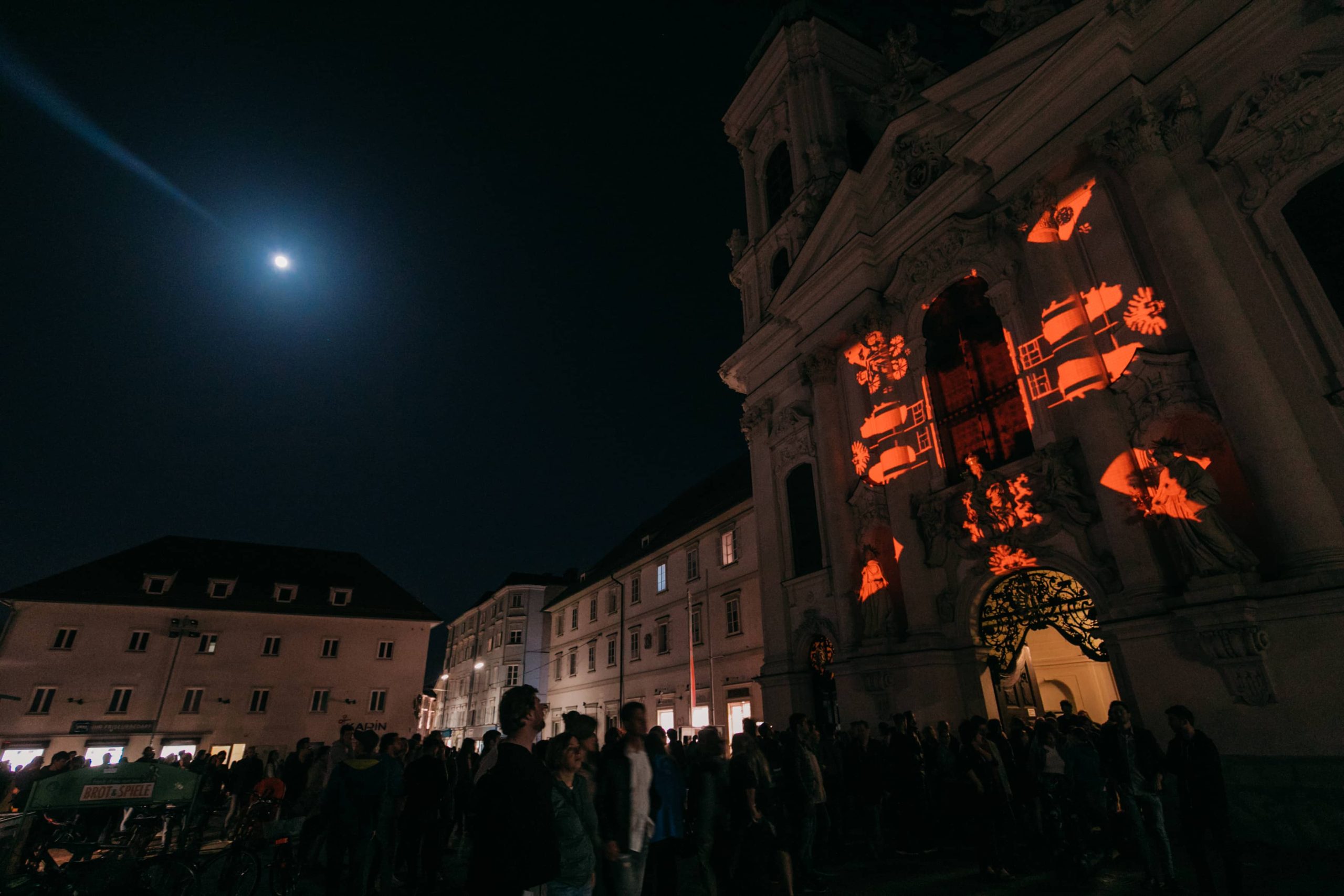
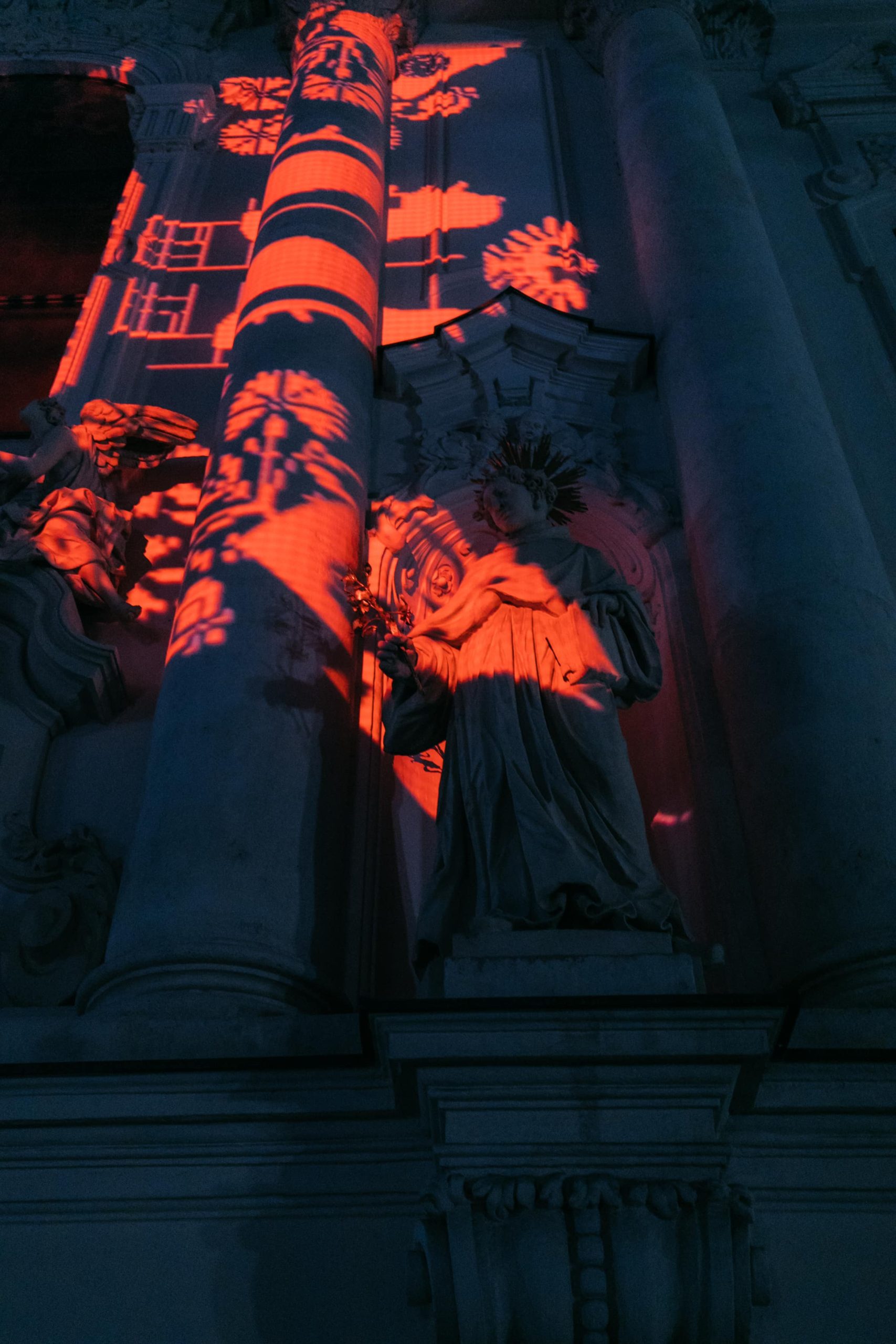
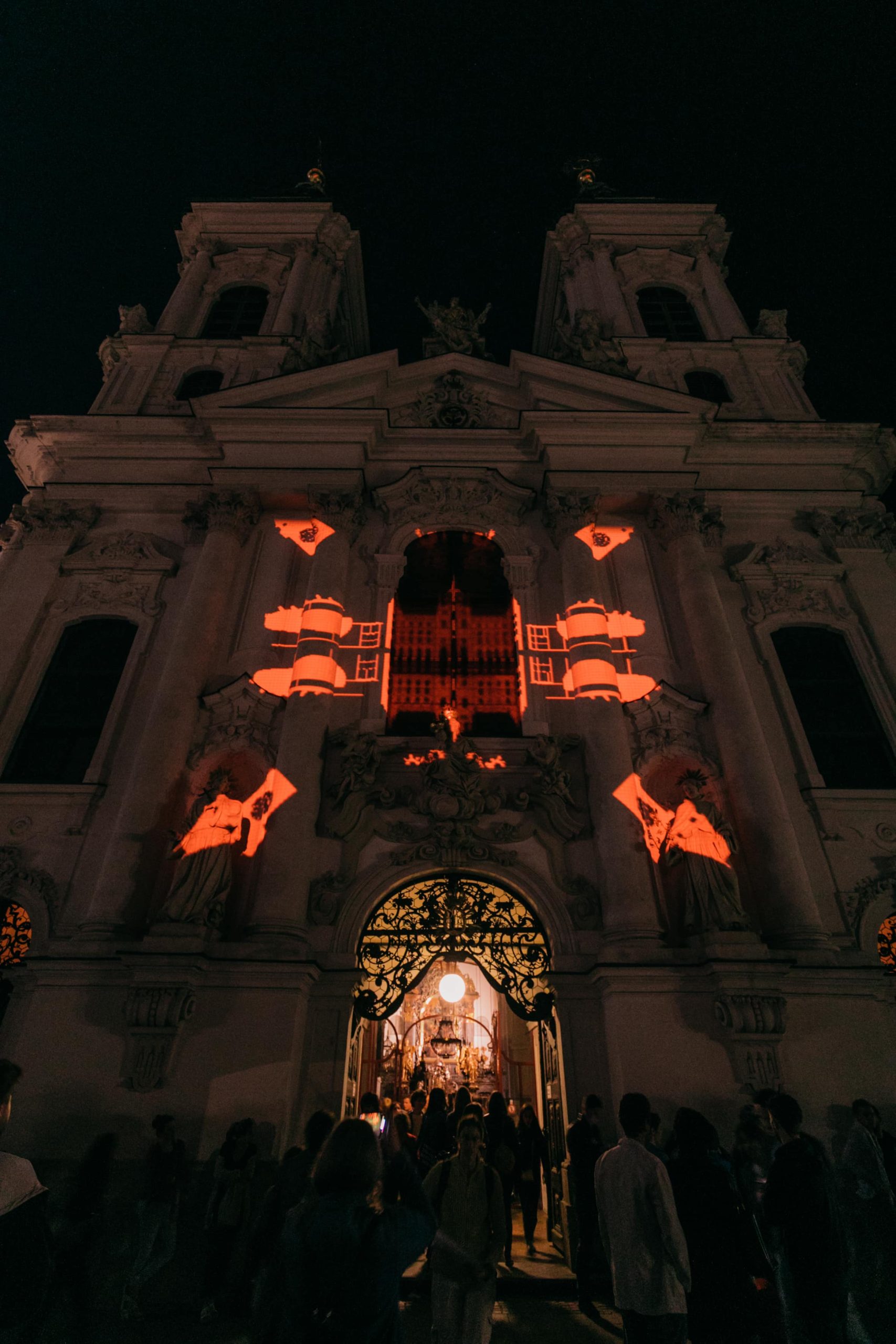
When fabrics speak volumes.
The light envelops the walls in a play of ornamental colors, like a carpet of different identities. 1 pattern = 1 meaning? The boundaries between cultures have long since become blurred – they are interwoven like individual threads in a delicate embroidery that becomes the carrier of culture and history.
Not only in the eyes of the beholder, but also in their minds and hearts, this image of cultures is thus much more than the sum of its parts.
Biography
The artist Azra Akšamija, who grew up in Graz after the Yugoslavian war, deals with cultural and religious constructions of identity. With the aim of promoting community, overcoming trauma and enabling socially and politically valuable innovations, the architectural historian traces technological and material knowledge. As an art installation, “Diaspora Scroll” is a first version of a growing fabric and memory scroll that collects embroidery patterns and interweaves local and migrated knowledge. The light installation thus appears as a digital overlap of different ethnic ornaments, like a manuscript written in many different ways.
Concert tip: QUARTETT FÜR DAS ENDE DER ZEIT
1941 Nancy, France.
In the bitter cold of January, 400 Frenchmen and the German camp authorities gather in a German Wehrmacht prison camp to forget the war for a short time: With the utmost attention and understanding – in the words of composer Olivier Messiaen – the men listened to the premiere of the ‘Quatuor pour la fin du temps’. The “Quartet for the End of Time” not only reflected Messiaen’s deep reverence for the divine mystery of the apocalypse, his music was also able to bring the hostile soldiers into harmony for a moment.
Ringing KLANGLICHT in Graz Mariahilf
The “Quatuor pour la fin du temps” also played twice each evening in the Mariahilferkirche during the festival, accompanied by atmospheric candlelight. Olivier Messiaen’s Quartet for the End of Time is not only a moving impression of the past, but also carries deep meaning for our present. Members of the Graz Philharmonic Orchestra will present the chamber music work, which was premiered in January 1941. The line-up includes Kurt Mörth on clarinet, Pauli Jämsä on piano, Fuyu Iwaki on violin and Gergely Mohl on cello.
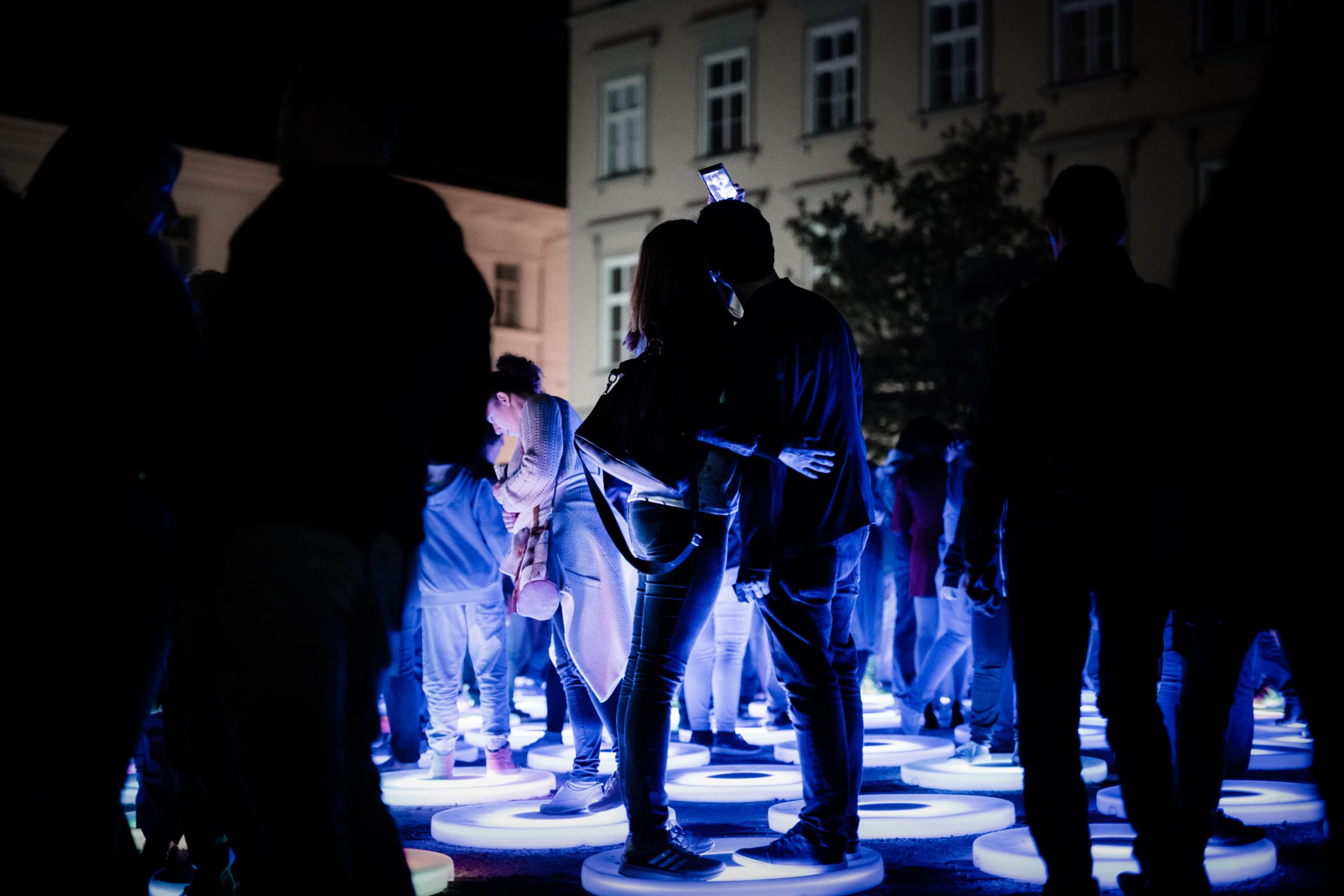
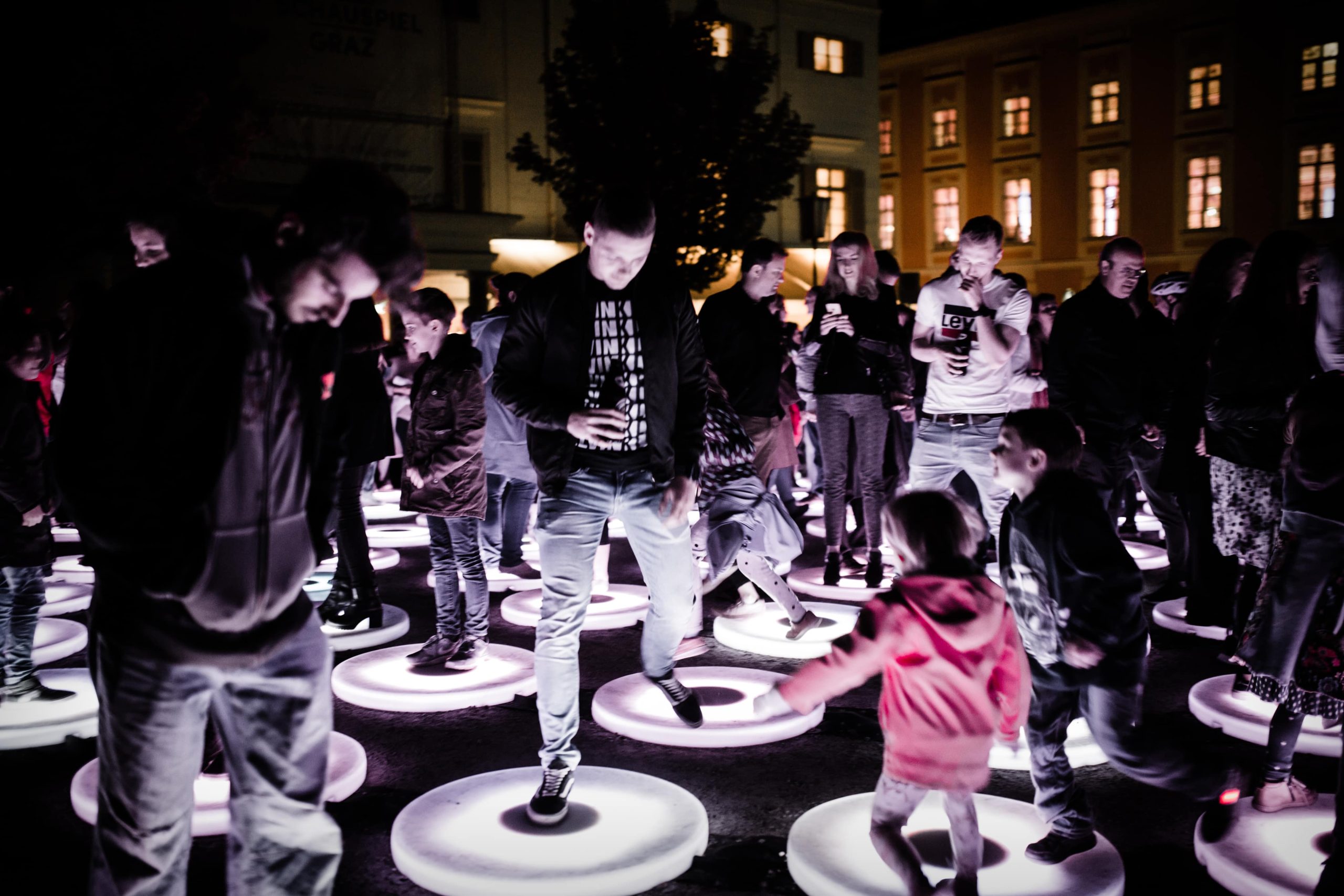
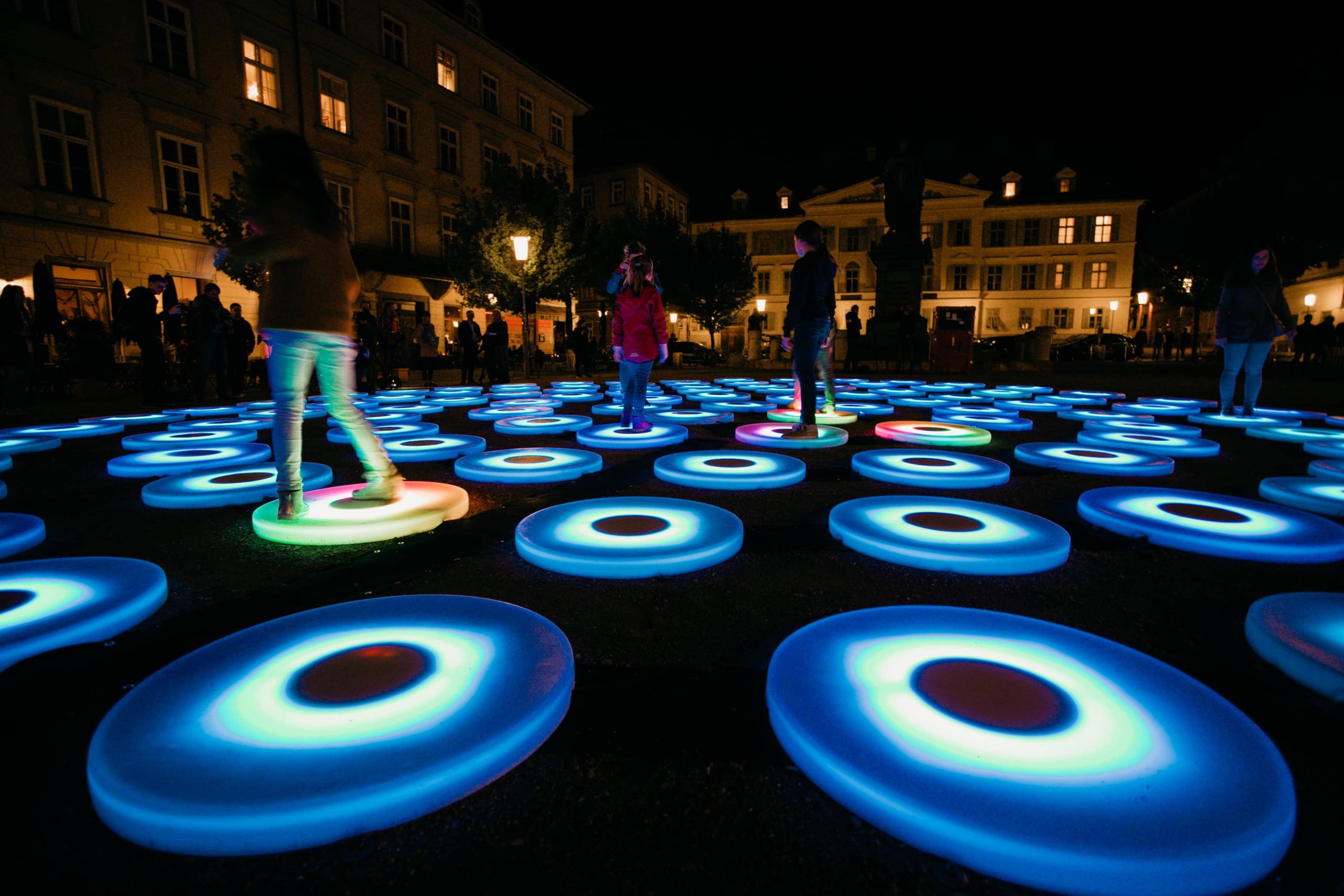

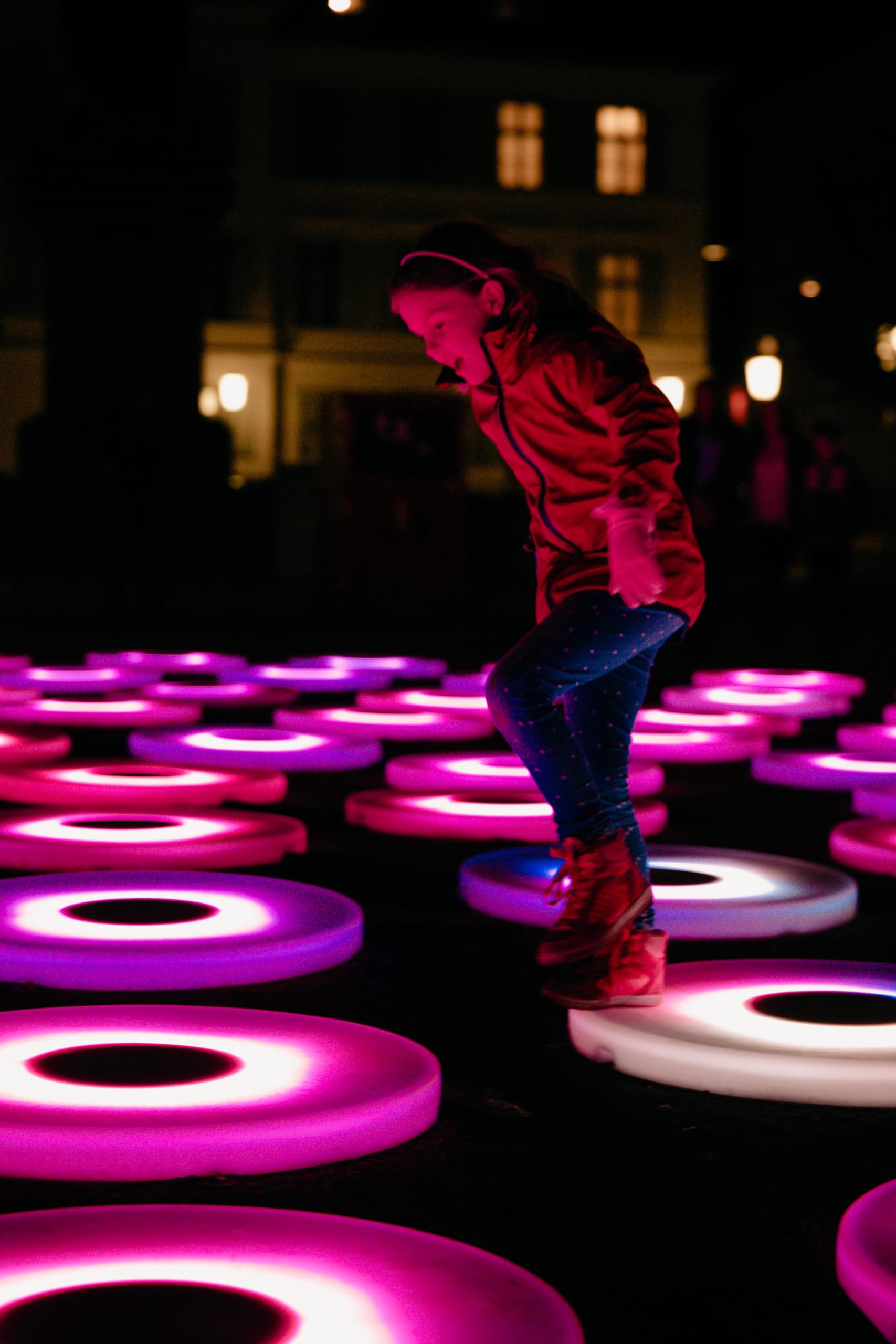
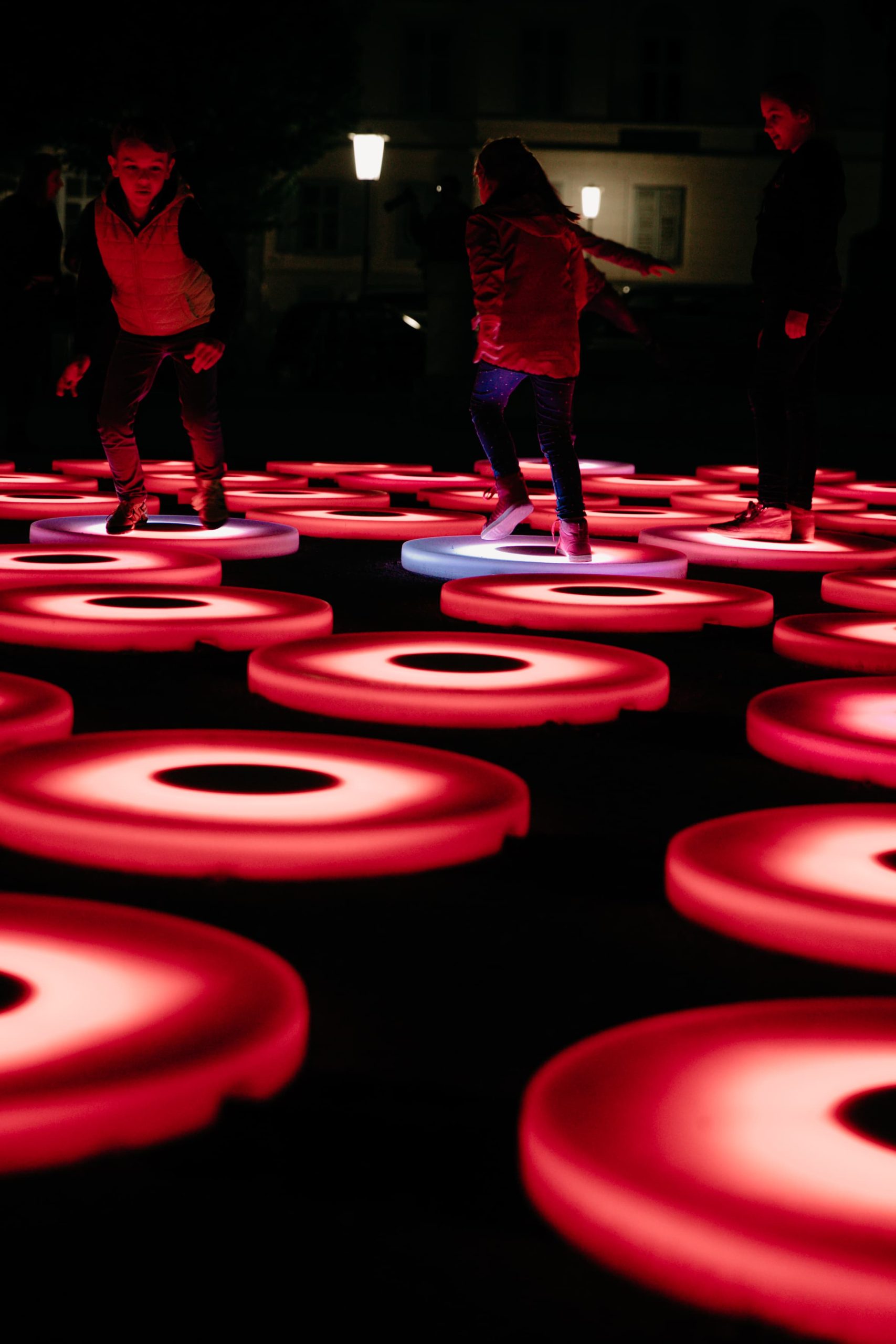
Your traces in the light.
One foot in front of the other. Sometimes slowly, sometimes quickly. Walk or run, jump into the glowing water and dive in. Oh, it is so much more beautiful and brighter here in our luminous work of art, our landscape of light. Everyone is welcome – because even the most colorful path begins with the first step.
Biography
In her New York studio, the American interaction artist Jen Lewin creates large-scale installations for public spaces that always combine different elements. Her best-known work, The Pool, combines light, sound and complex technology to create an oversized digital canvas. Interactive “pads” form a walk-in pool whose 200 LED lamps react to the pressure and speed of human footsteps. Through their collective movement, visitors create a unique artwork of light and color. Since 2012, The Pool has been part of over 40 art festivals around the world, recording several million “footprints”.
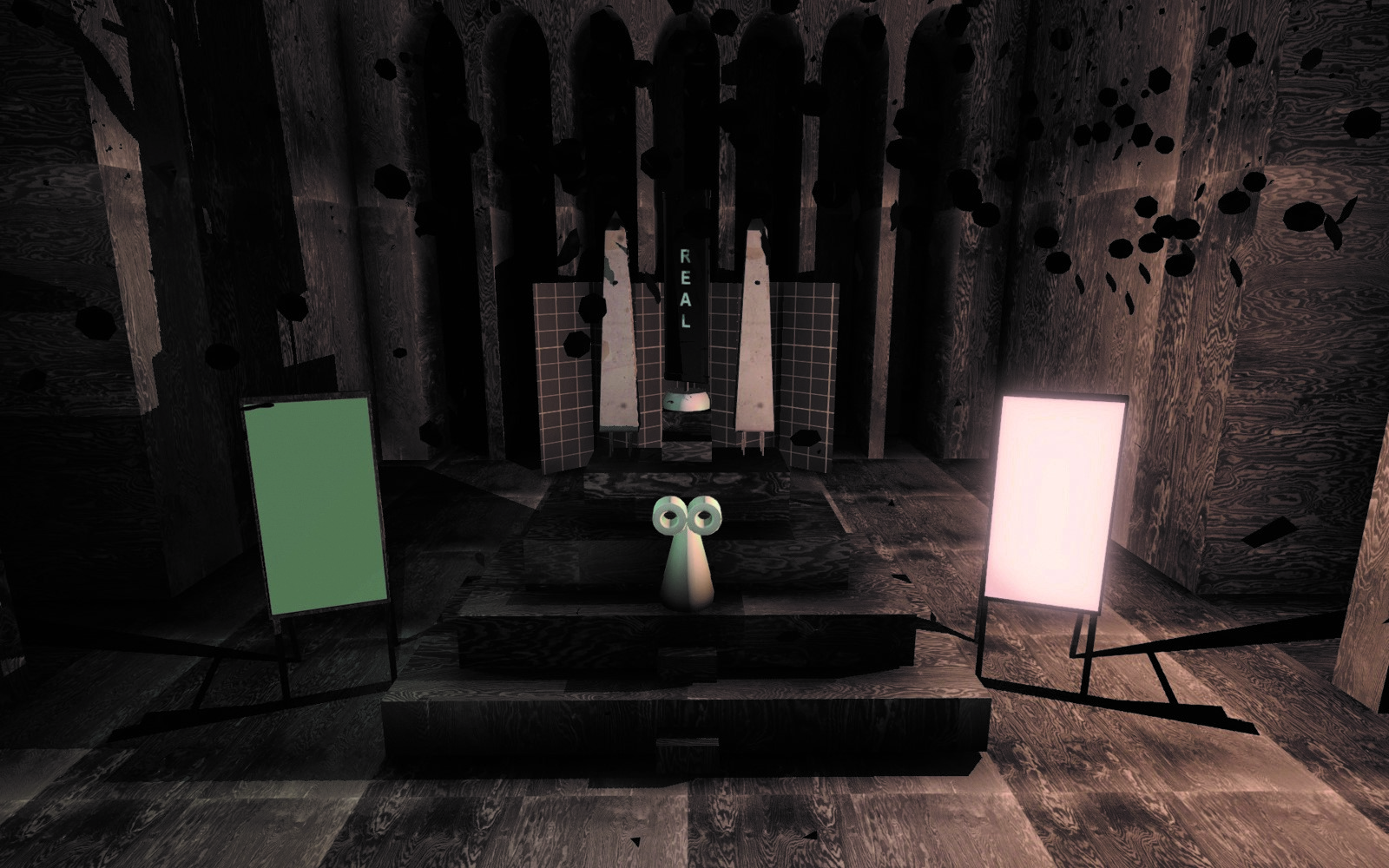
Mirror, mirror on the wall …
… where am I in this country? This wonderful world of moving walls seems like a dream to me. I am standing (or floating?) in a poetic, even fantastic playground of my imagination. Everything around me is in the eye of the beholder, but the beholder – is it really me?
I move when I stay. I stay when I move.
I think that I fall, but I do not at all. … do I?
Biography
Depart – that’s Leonhard Lass and Gregor Ladenhauf. The artist duo from Vienna specializes in virtual reality installations and works with real-time 3D environments to generate unique VR experiences. As the wearer of the VR headset, you are not only transported into a surreal world of physical and spatial instability, you also interact with what is happening around you. Based on Lewis Carroll’s Alice’s Adventures in Wonderland, “The Lacuna Shifts” stages a modular dramaturgy in which the observer’s gaze plays a key role. In this way, the virtual experience becomes a changeable stage that never shows the same piece twice in the field of tension between individual perception and acoustic hallucination.
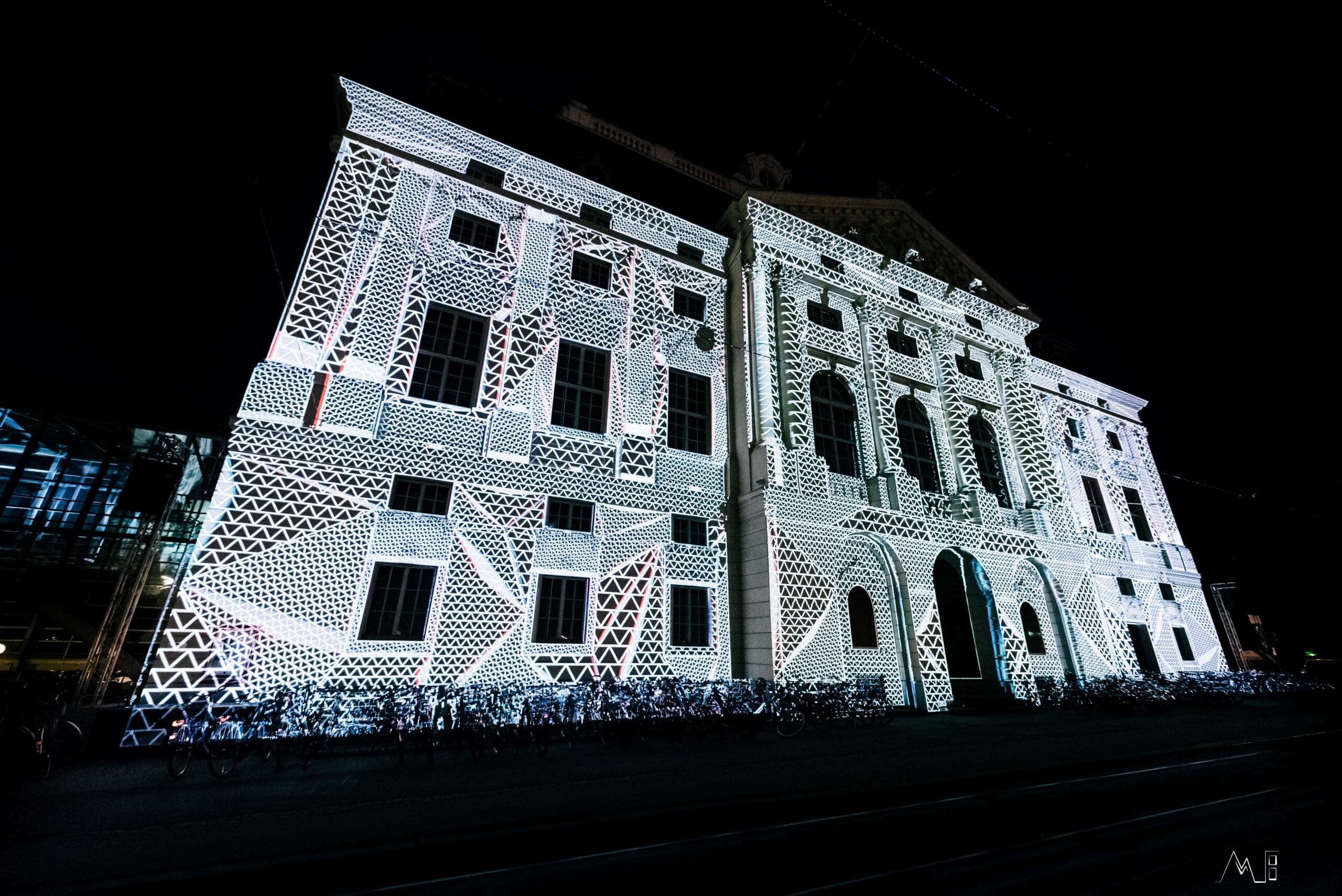
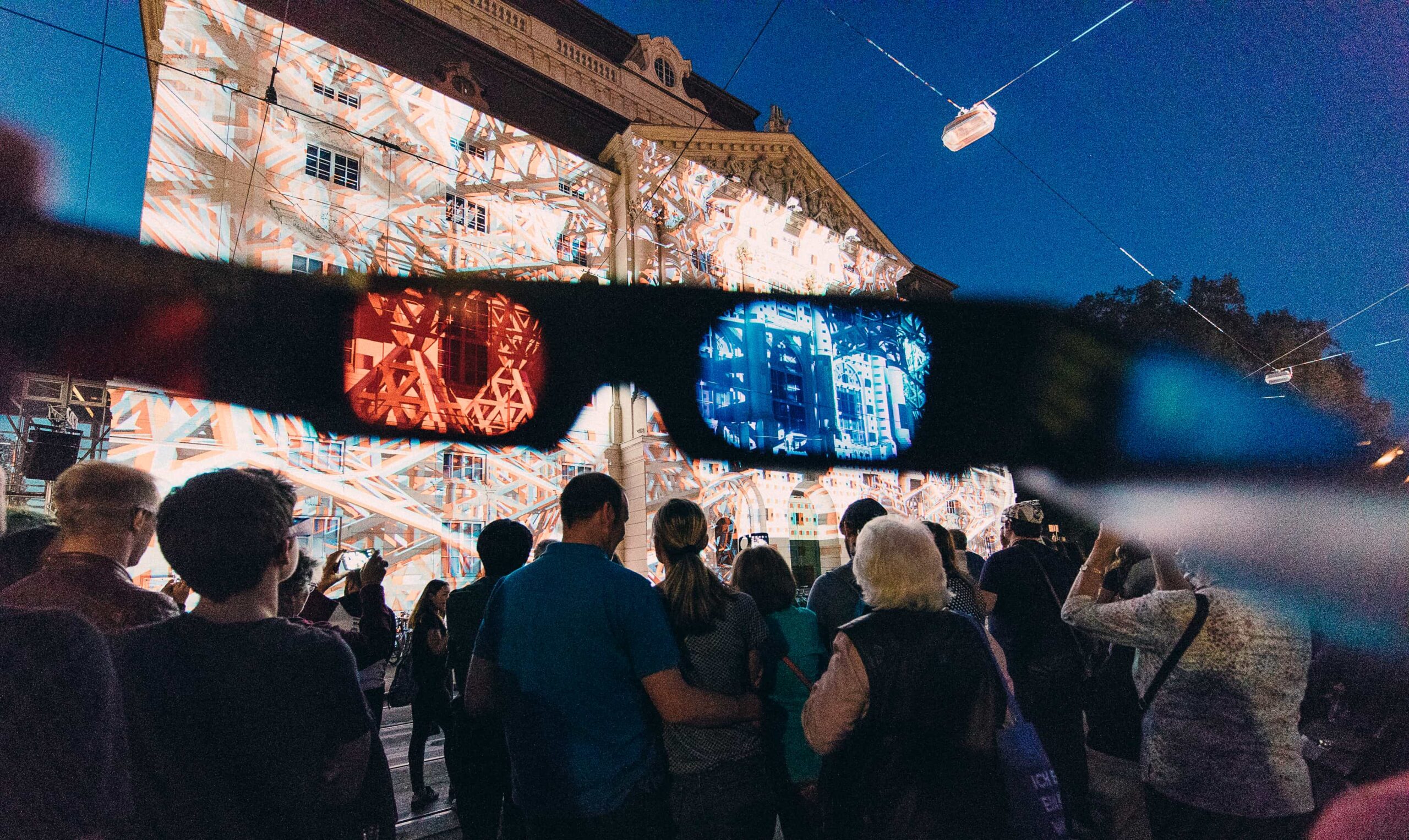
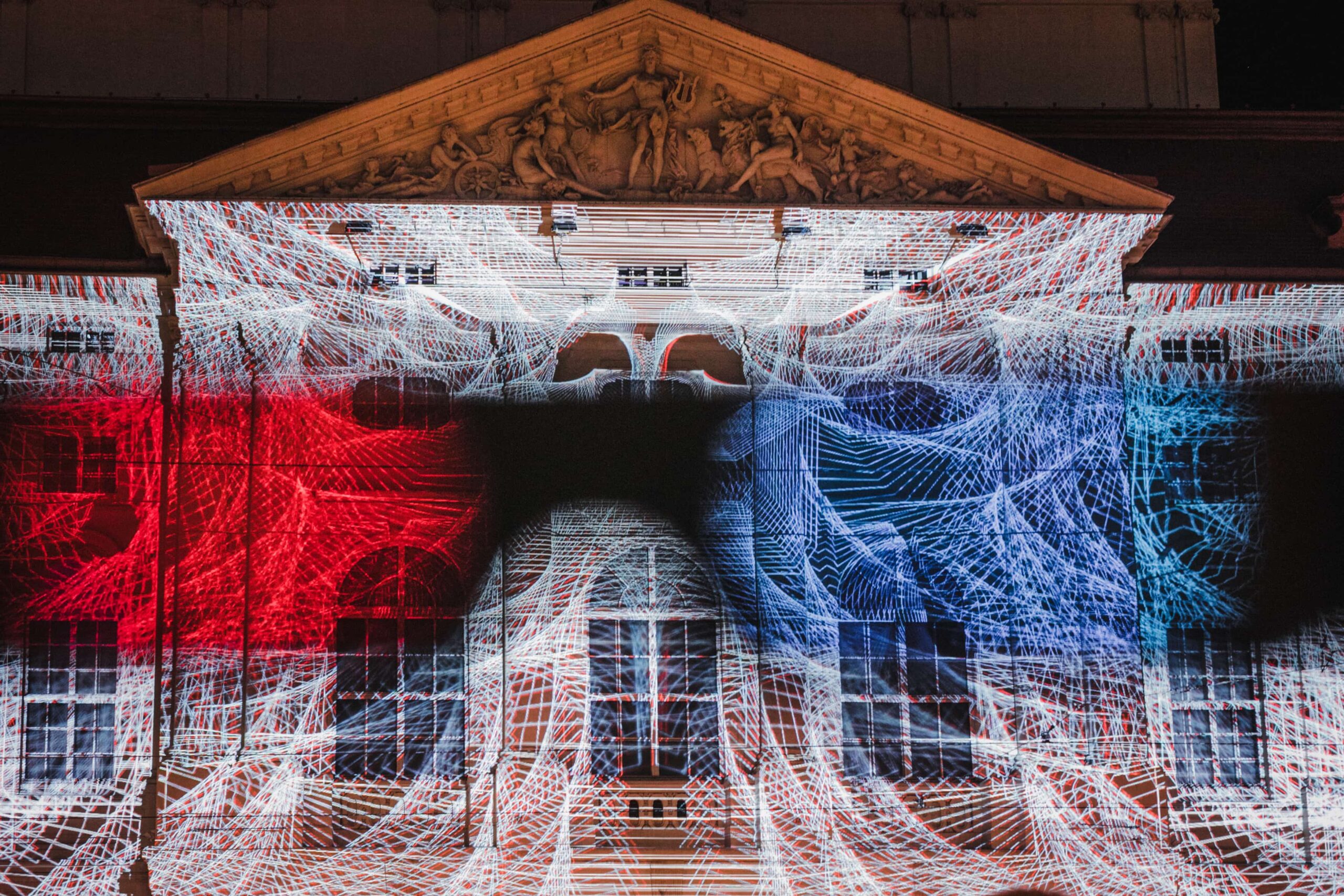
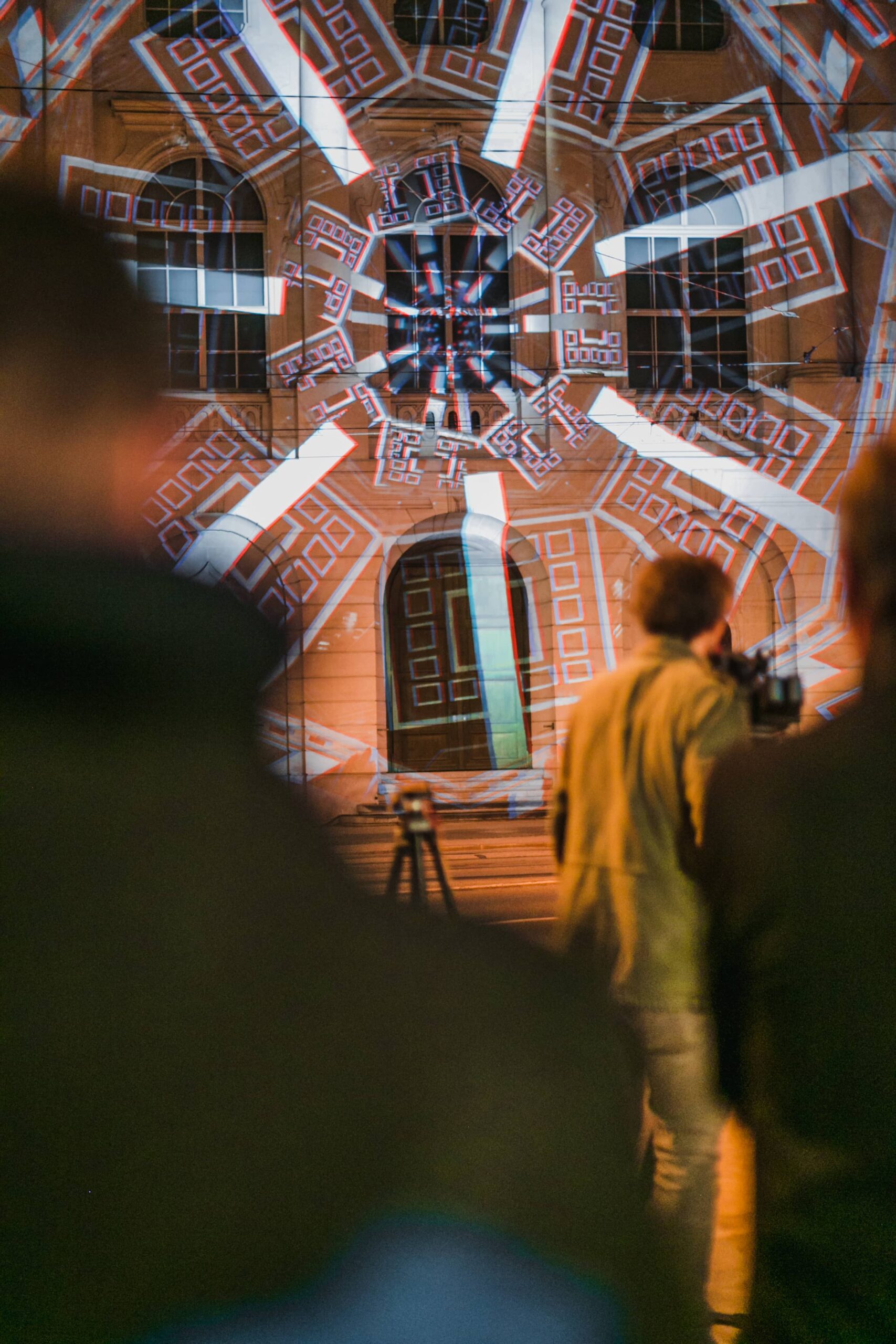
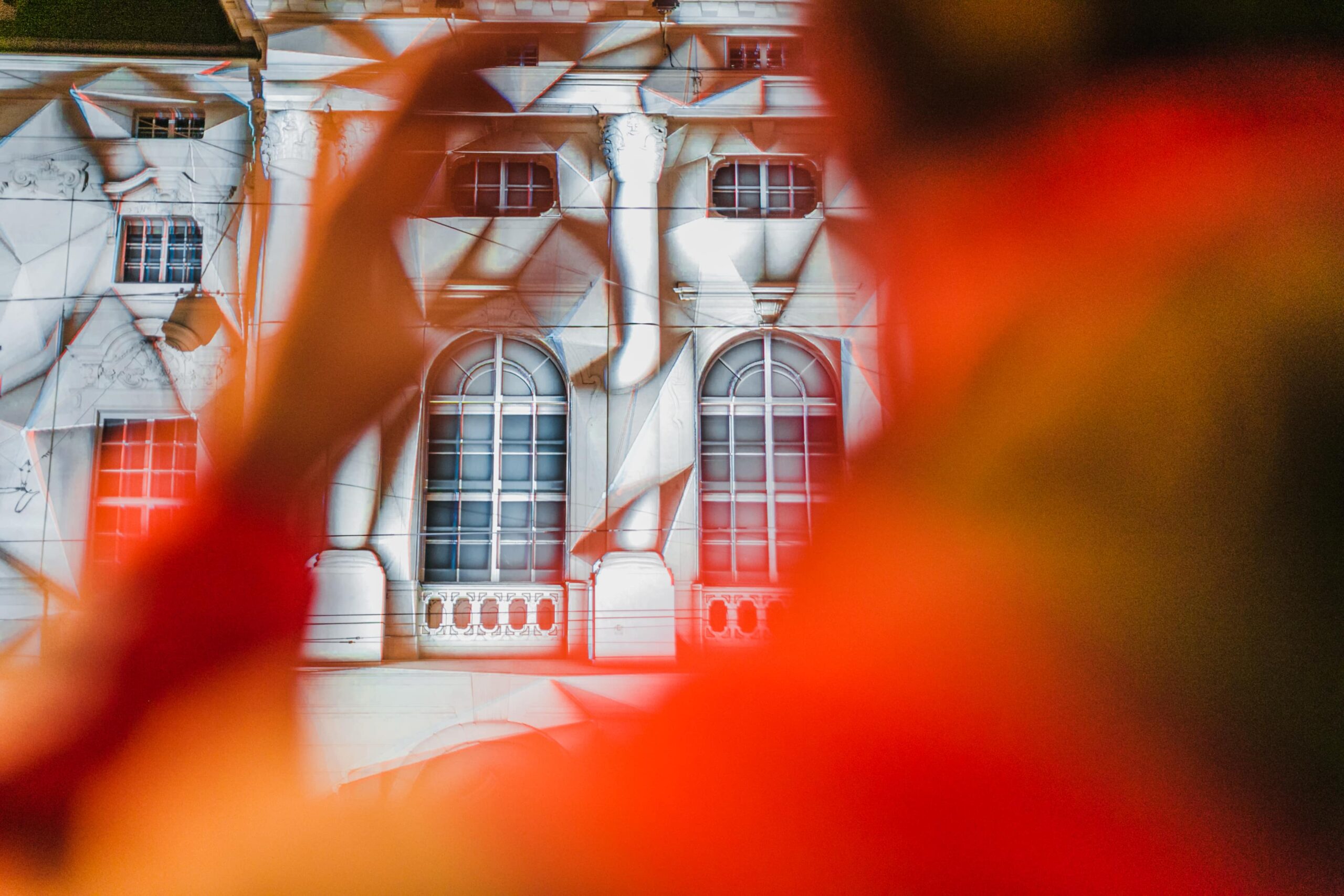
Shapes form themselves. They know what to do because their geometry sets the tone. Fantastic, isn’t it? But these glasses are not rose-colored at all… As if through dark glass, you fall further and further into the dimensions of a surreal world. And when the path becomes the destination, you, dear hiker, can only be a winner.
Biography
Onionlab specialize in oversized projections and virtual reality and create intersections between technology, design and art with their work. The Spanish artist collective currently lives in Barcelona, but works with its audiovisual content worldwide. Axioma is a stereoscopic 3D show that explores the properties of geometric shapes. The impressive three-dimensional staging is only revealed to the viewer through 3D glasses.
The installation was realized with the kind support of sehen! wutscher.
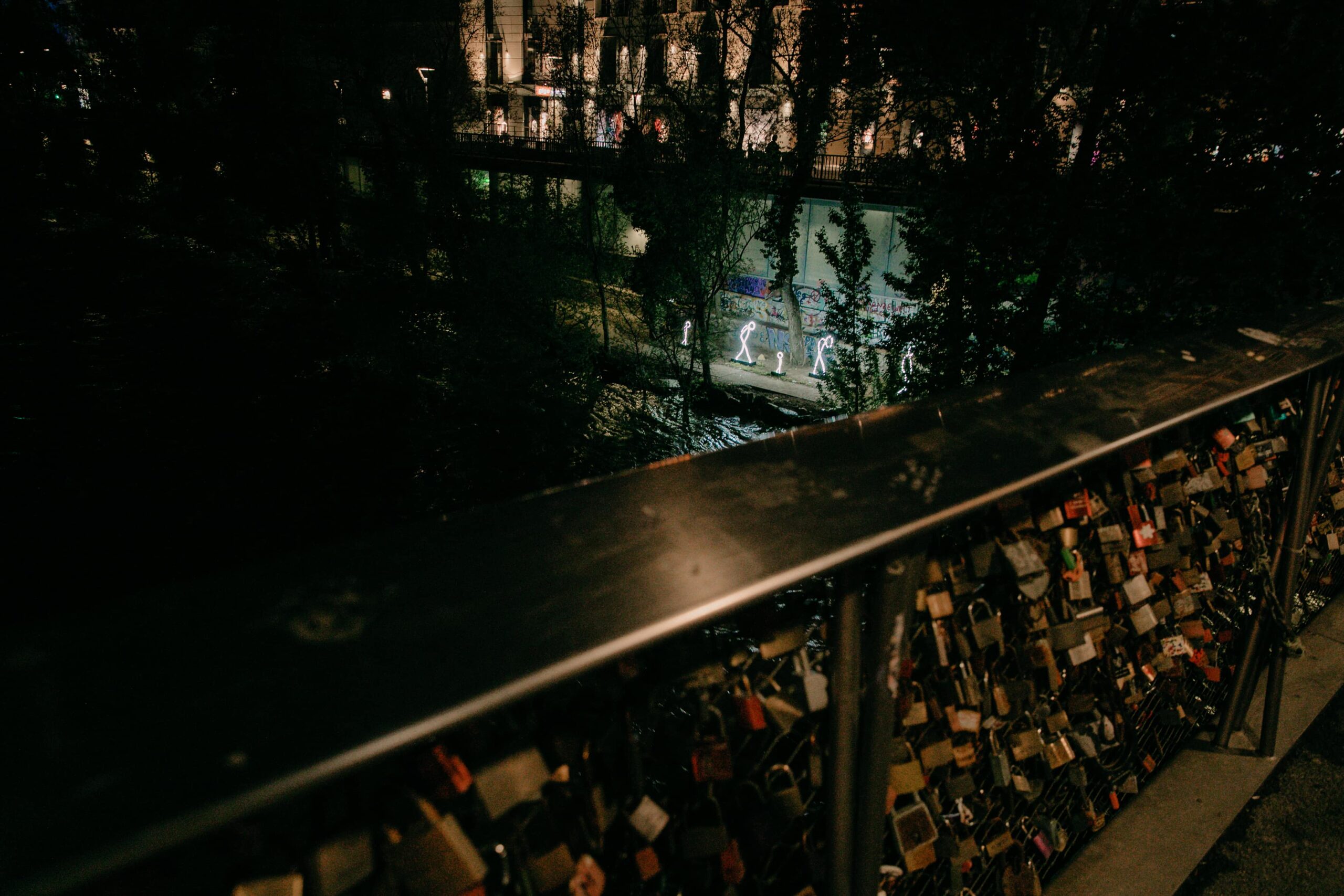
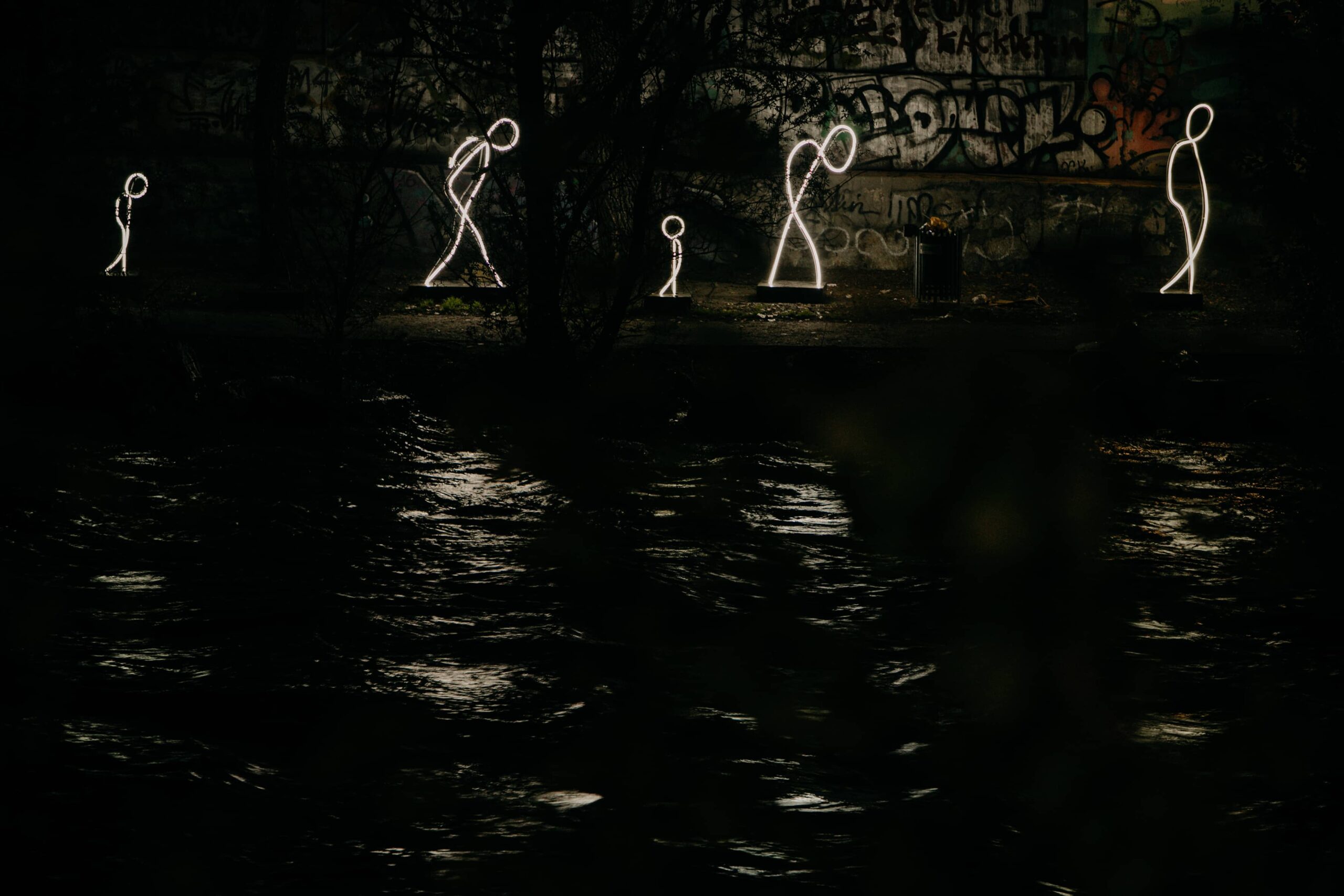
Now we are here.
Glowing softly in the darkness of the night, they have come. All they have at this moment is themselves and their memories. An observer, but only a silent one, is able to hear their story here. They are sad words that tell of the infinite uncertainty of existence. But there is also hope shimmering through the darkness: a trust beyond all boundaries that one day they will be home.
Biography
alaa minawi is a visual artist. Since 2006, he has been working intensively with film, photography and theater, both in the Arab world and in the USA. His current interests are light art and writing. Like his grandfather and father, alaa minawi is a Palestinian refugee who now lives in Lebanon. This history influences his artistic work, among other things. My light is your light is reminiscent of people who had to leave everything behind when they fled. Soft neon light outlines human contours, but their inner selves need to be filled again – with a secure future in a new country.
“Connections” – The Klanglicht clubbing at the Orpheum in Graz
Idea: Rolf Schreiber / Realization: Team of the Graz venues
We’re connected.
Light and music come together in a frenzy of illusion, and you are right in the middle of it all. The walls are in the round dance, the trees join in too. Can you see them dancing in their play of colors? Oh, give free rein to your senses at last! What is inside is now also outside here. Everything is connected. We are celebrating a festival – all of us together!
The Orpheum connects. Whether it’s music, dance or words that appeal – arcs are spanned here under glittering lights. But it was time to change something. The disco balls have left their usual terrain and decided to transform the public space into a magical dance floor. Inside, visitors dance to the concerts of the day, but live music can also be heard “outside”. The indoor and outdoor spaces join forces and call out in chorus: “Dance with us through the night!”
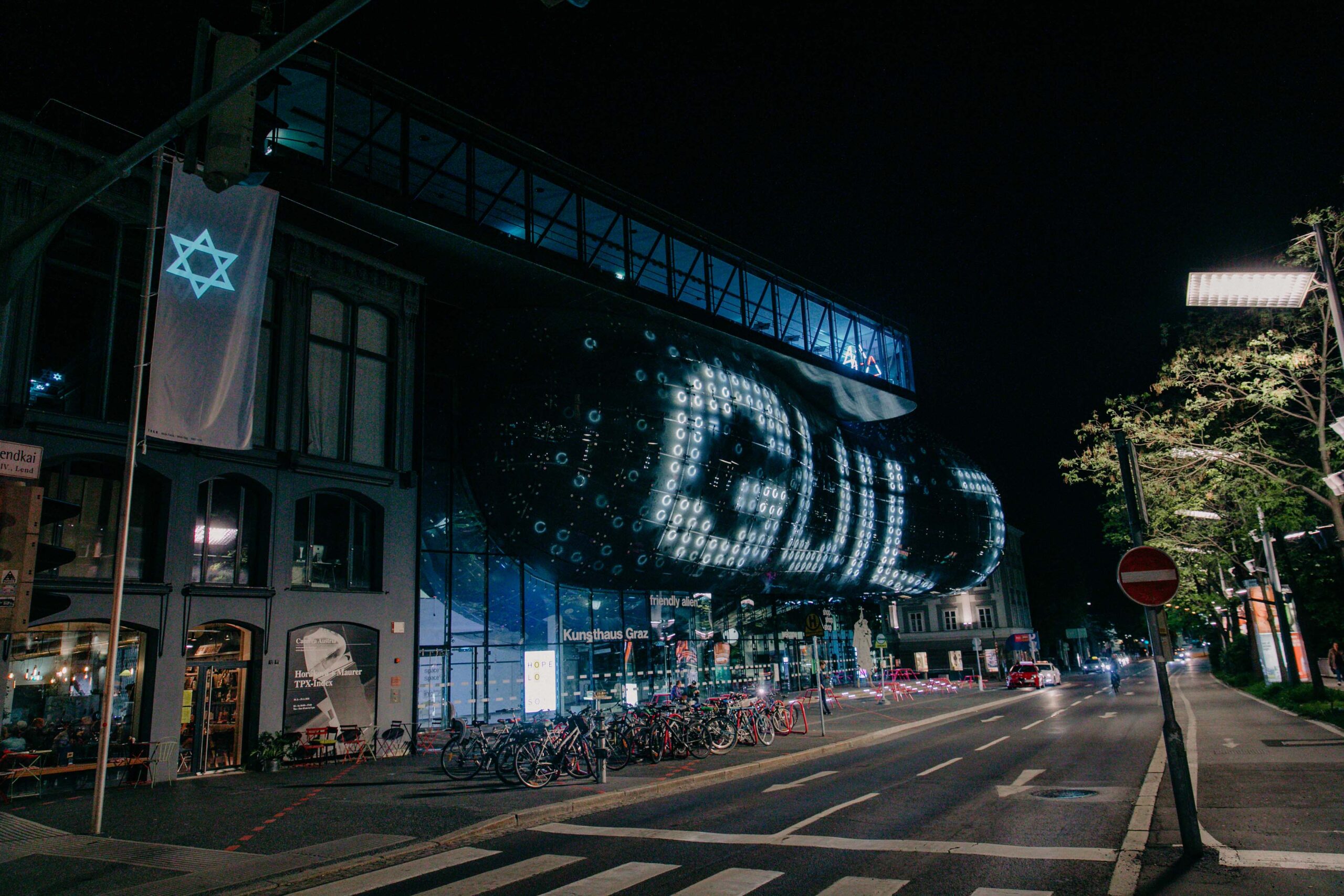
Guilt culture.
Guilt. The sequence of letters becomes a visual assertion, a signet that contains both admonition and denunciation. But who is the addressee?
Guilt. A term with so many meanings:
[subjektiv] an unauthorized/reprehensible act.
[objektiv] the transgression of moral or legally prohibited boundaries.
One or the other – combined with power over people and behavior.
Biography
Monica Bonvicini, born 1965 in Venice, is an Italian artist and university lecturer at the Berlin University of the Arts. She lives and works in Berlin. Her works are cross-media with installation, sculpture, video, photography and drawing and deal with power structures as they manifest themselves in architecture or everyday objects, among other things. On the BIX media façade of the Grazer Kunsthaus, Bonvicini brings the culture of guilt discussed by our society into the focus of the city center. In their formal language, the works often make reference to minimal art and conceptual art.
“Being part of Klanglicht with the projects by Monica Bonvicini on the façade of the Kunsthaus and Azra Aksamija on the church façade on Mariahilferplatz is very important to us. We are thus linking the exhibition Faith Love Hope, which extends from the Kunsthaus and the Minorite Cultural Center far into the city, with urban events today. The two works deliberately focus attention on levels of Christian heritage that manifest themselves everywhere in urban space.”
– Barbara Steiner, Director Kunsthaus Graz
In cooperation with Kunsthaus Graz.
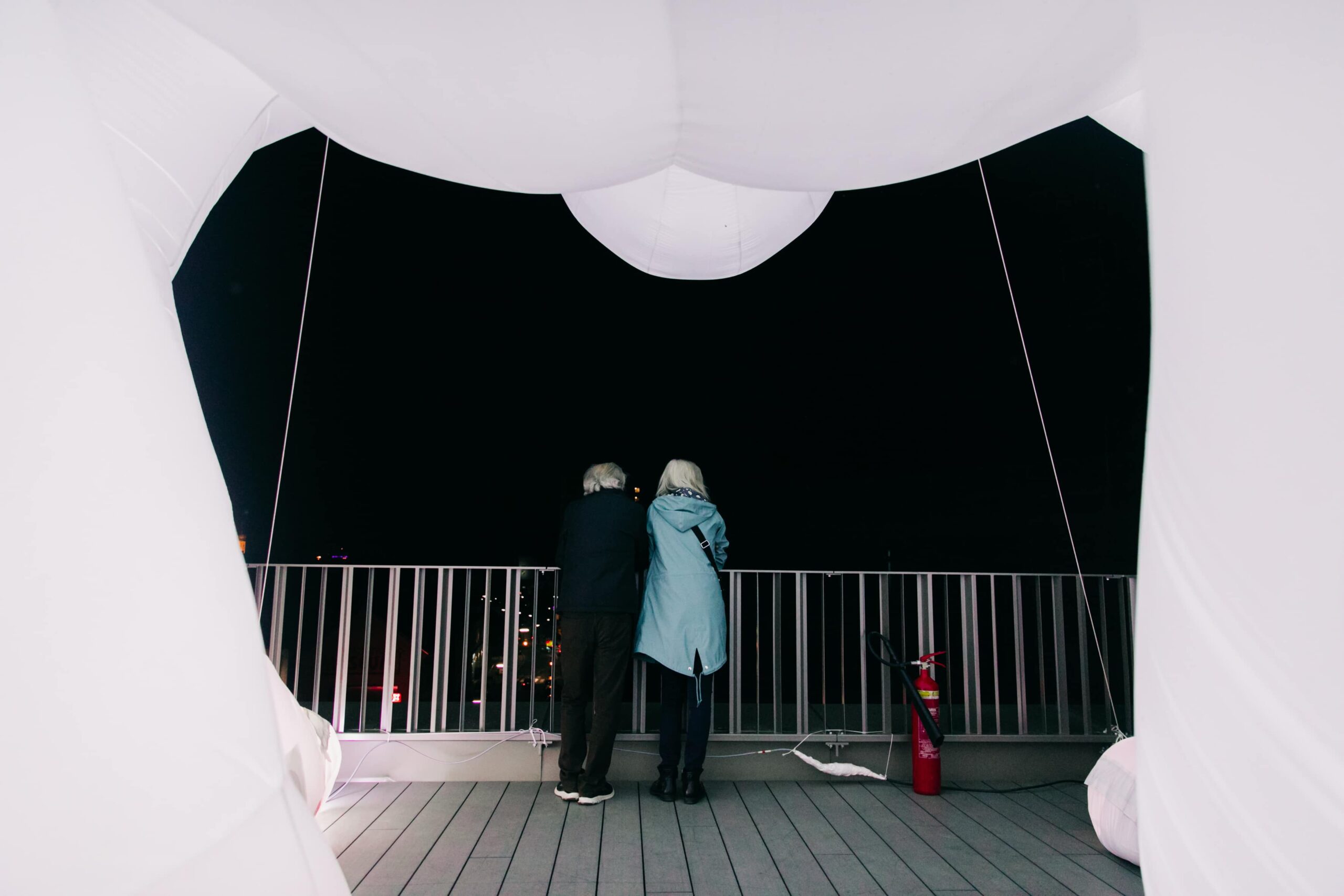
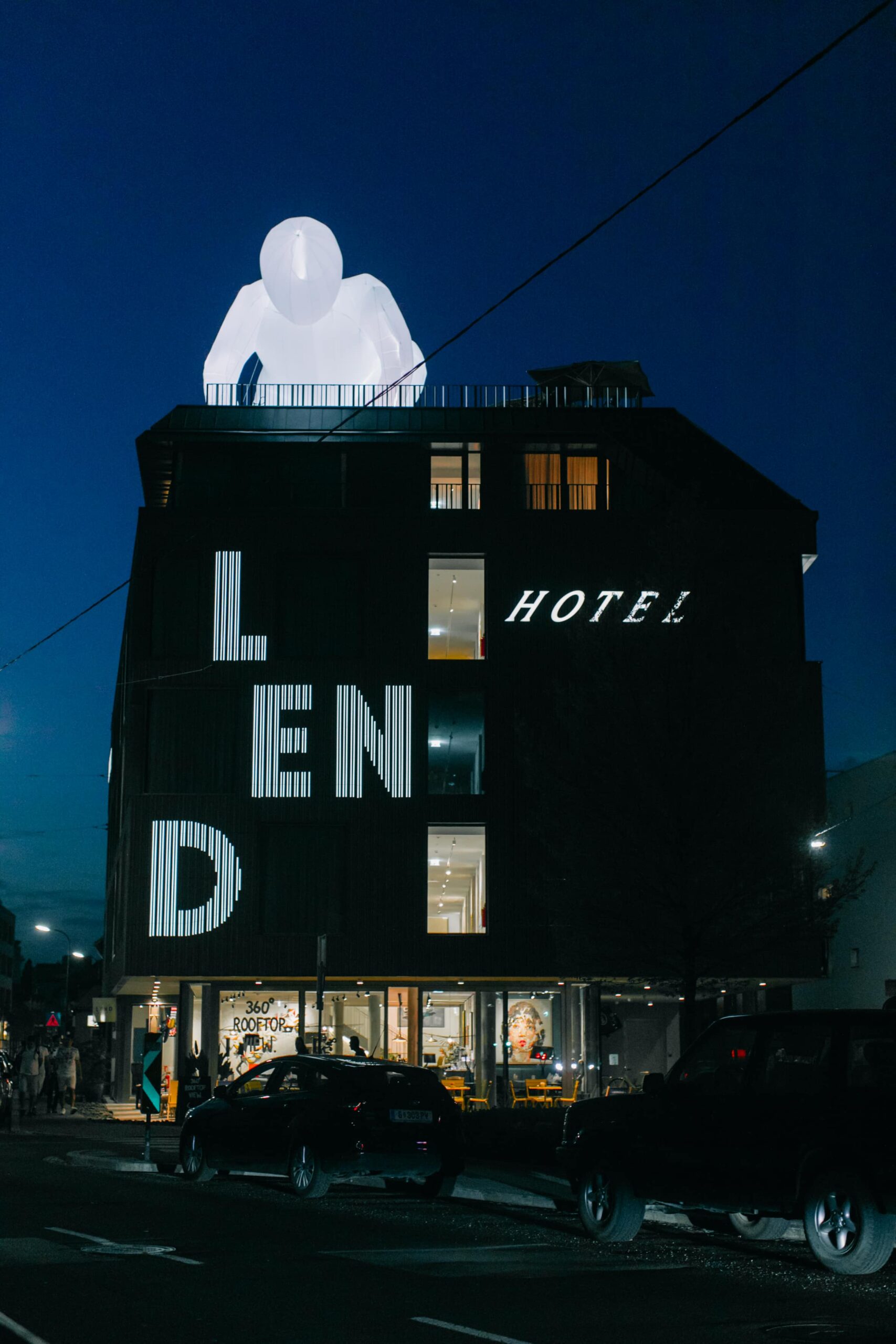
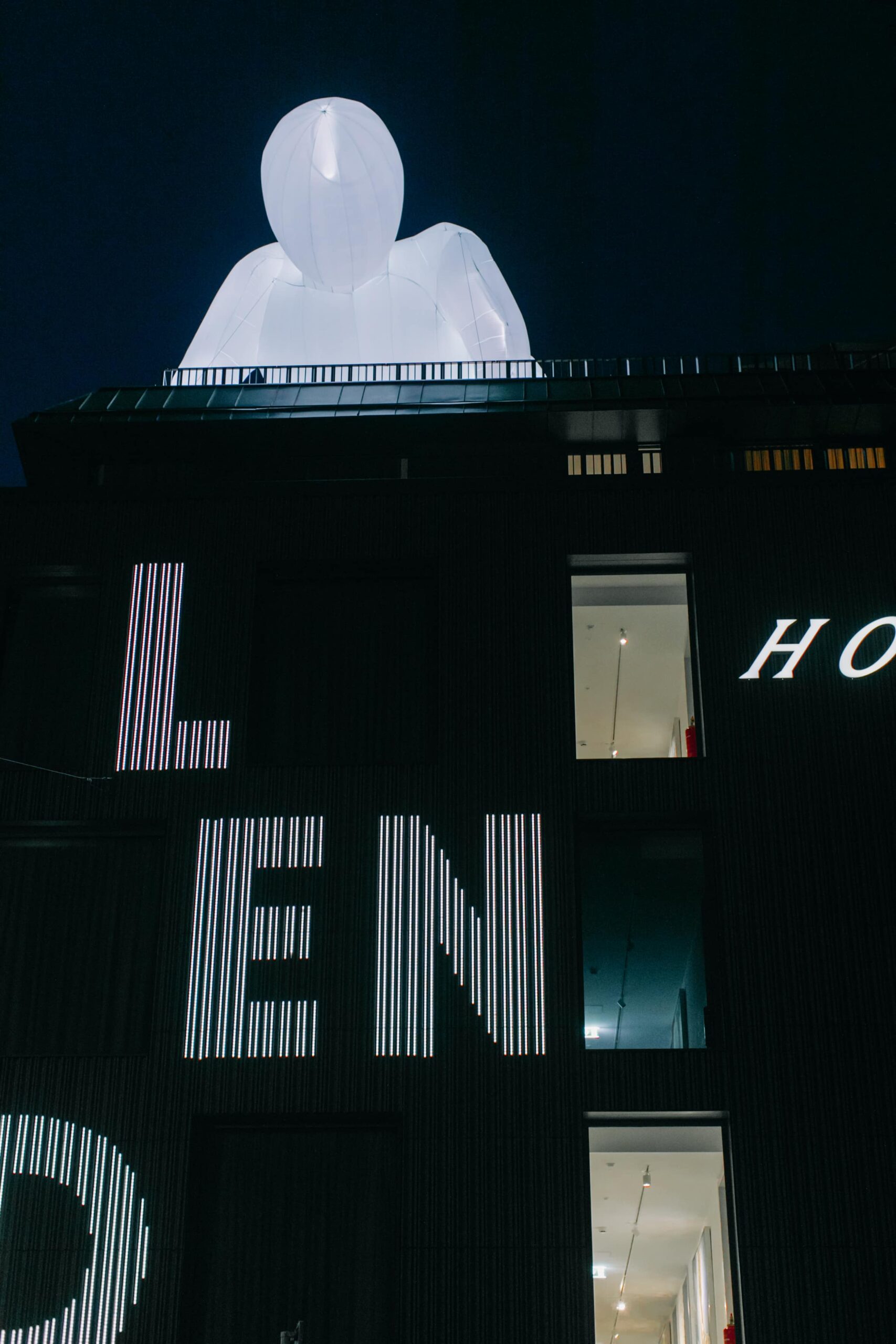
Oh, what a fantastic planet!
Oversized. Human-like. Brightly lit. This is how Amanda Parers sits
Artificial figure on the roof of the Lendhotel, where it has just landed. Inspired by the Czech-French film Fantastic Planet, you will encounter this creature from a distant world in the middle of our city. A glowing giant that quietly explores our fantastic planet. I wonder what it will discover?
Biography
Under the collective ‘Parer Studios’ , Amanda Parer creates objects for public spaces, sculptures and paintings that explore nature and its fragility. The role of humans in this structure is always critically scrutinized. The Australian artist has received great international acclaim, particularly for her impressive installations, which can take up entire (urban) landscapes.
In cooperation with Lendhotel.
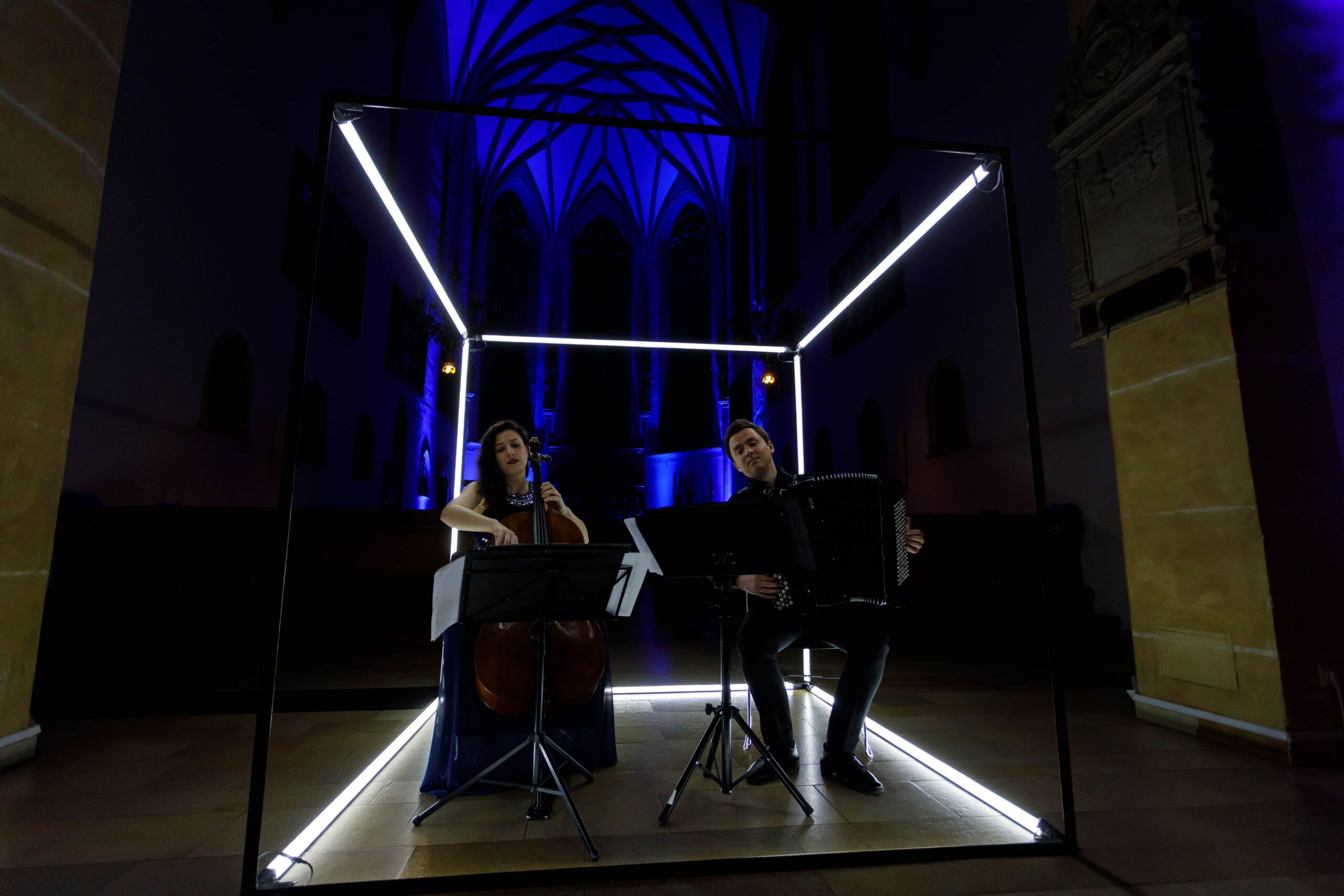
Past. Full of meaning. Experienced.
The doors of the church are wide open. Come in, everyone is welcome. In the middle of the room or to the side, you will sense that history resonates here. Now your eyes and ears open. Luminous sounds and immaterial words of light are omnipresent. And so an all too easily forgotten past is linked to the present.
Biography
Born in Feldkirch in 1956, Ruth Schnell now lives and works in Vienna. She currently teaches at the University of Applied Arts Vienna, heads the Digital Art department and works as an artist herself. With her project, the artist responds to the history of the Graz parish church in Herrengasse, which dates back to a small church on the site of the former Jewish ghetto. The subtle installation only reveals itself to those who look at it from a distance. An independent Klanglicht in this context is the light cube, which was designed by the Norwegian artist Vibeke Andersen and can currently be experienced as a stage set in the play “Judas” by Lot Vekemans in Styrian churches. Vita Peterlin on violoncello and Žan Trobas, both students at the University of Music and Performing Arts Graz, will be playing atmospheric music in this very sound cube.
“This special cooperation between church and stage corresponds to my constant efforts to open up the church to the world. The art installation by Ruth Schnell, together with the live music from the light cube, creates extraordinary visual and auditory experiences.”
– Provost Christian Leibnitz
Curators: Gertraud Schaller-Pressler / Alois Kölbl
In cooperation with Kirchen Kultur Graz.
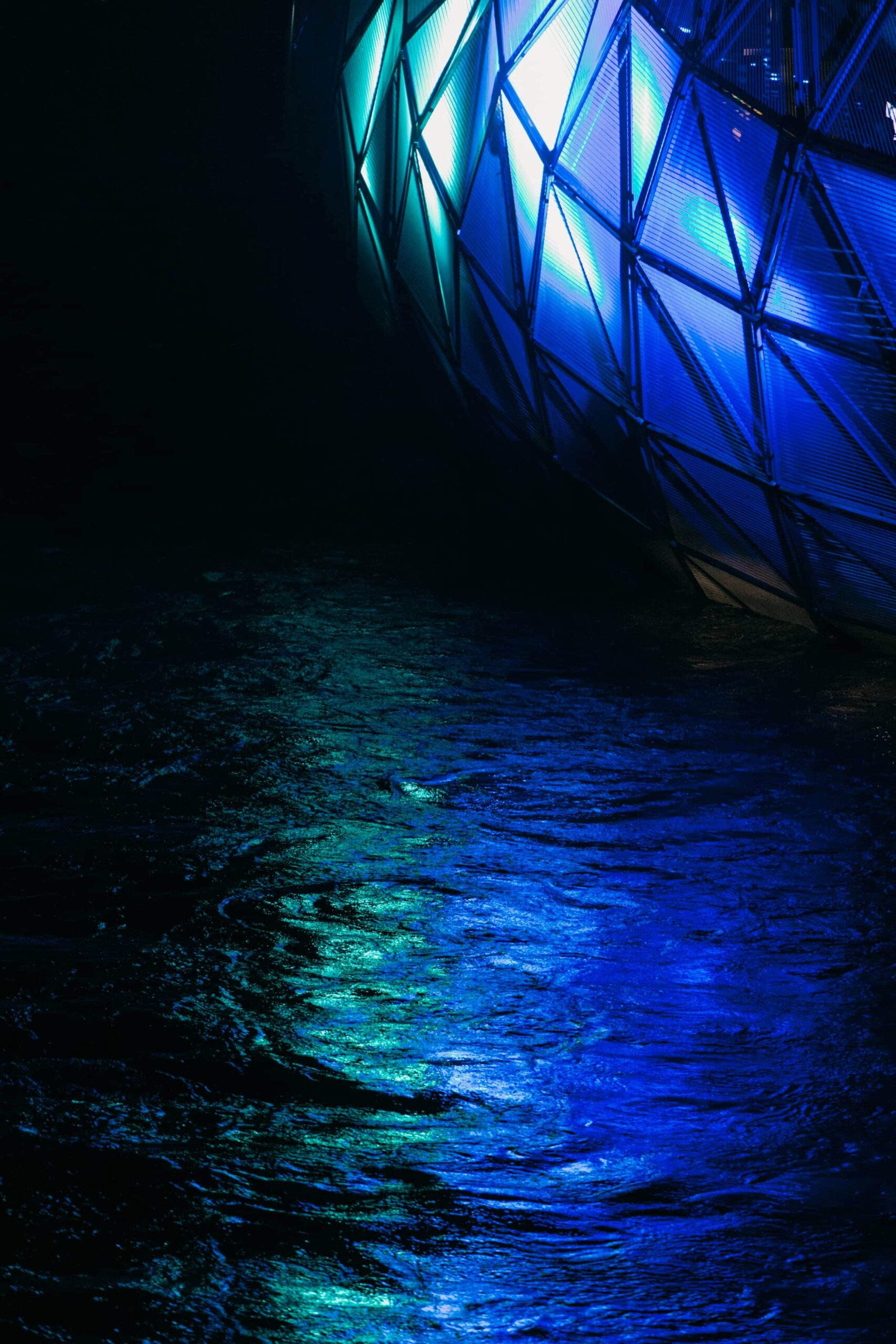
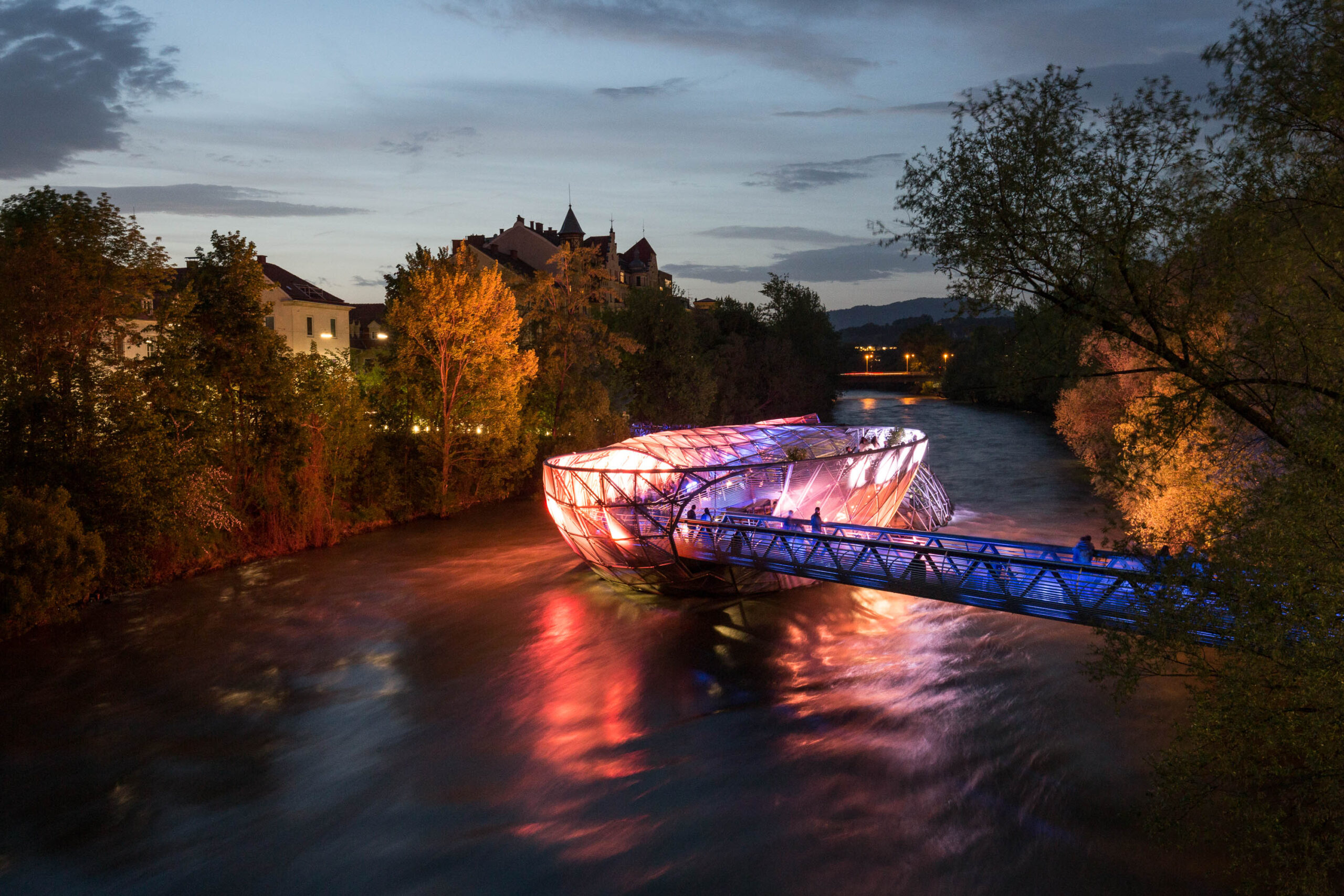
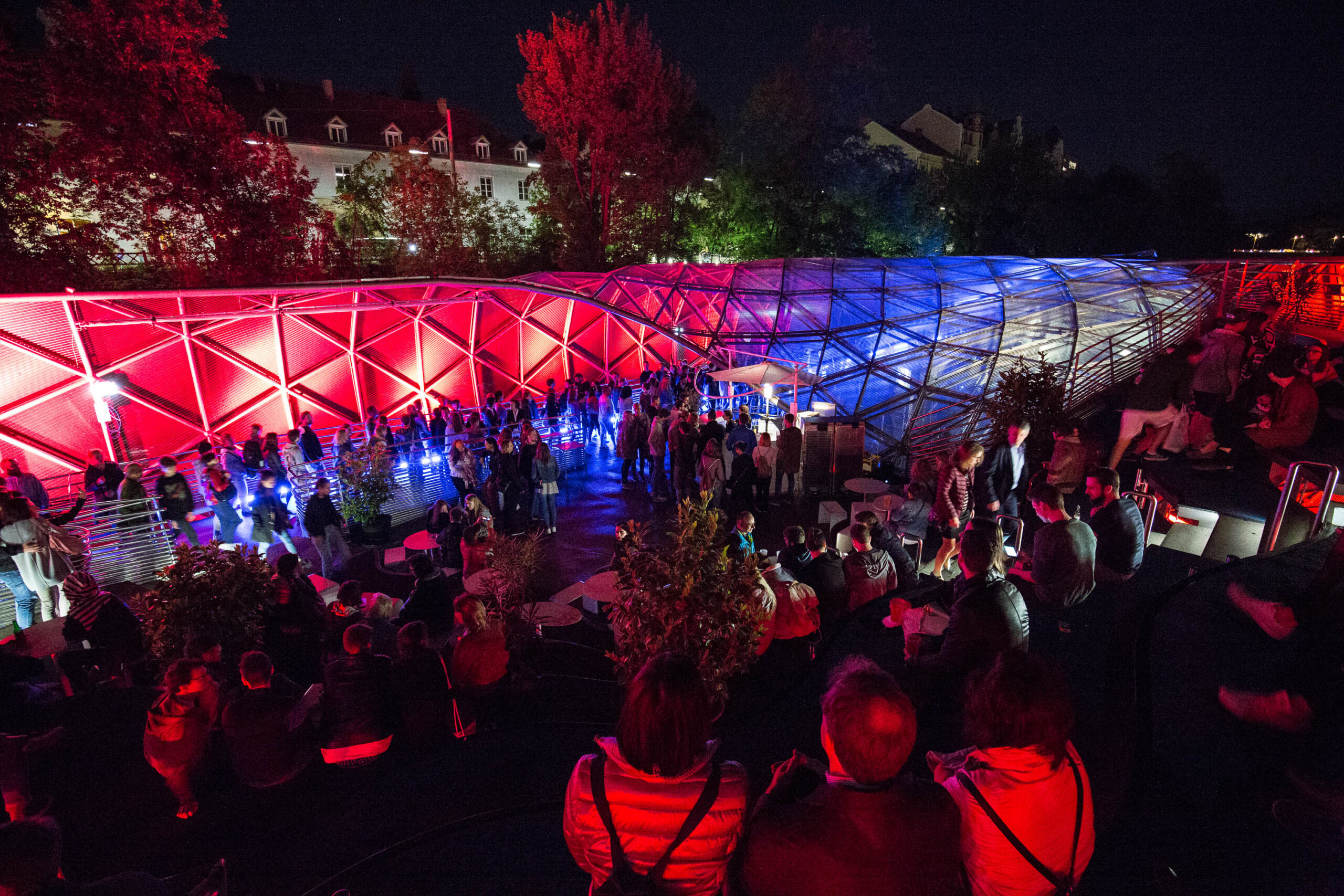
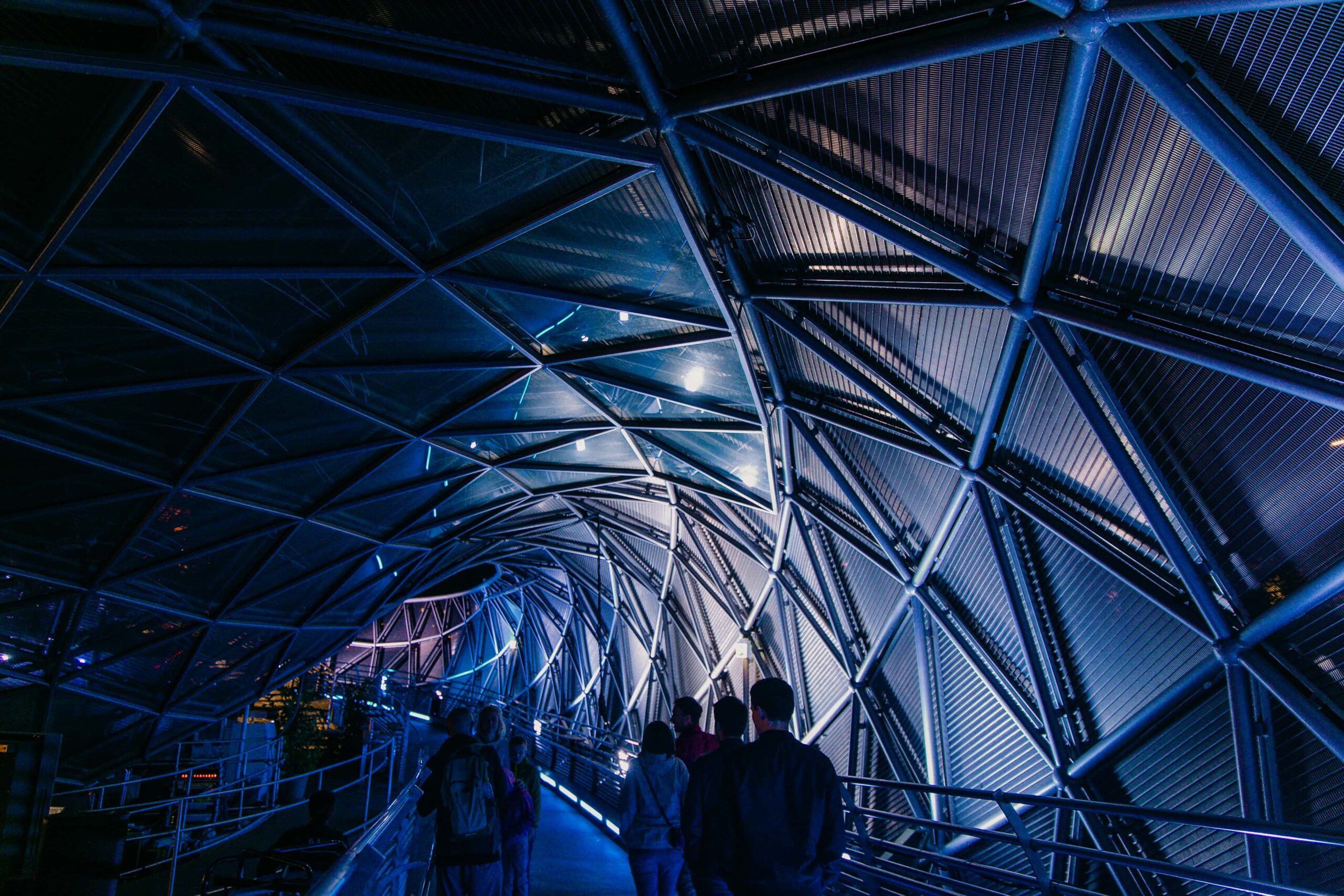
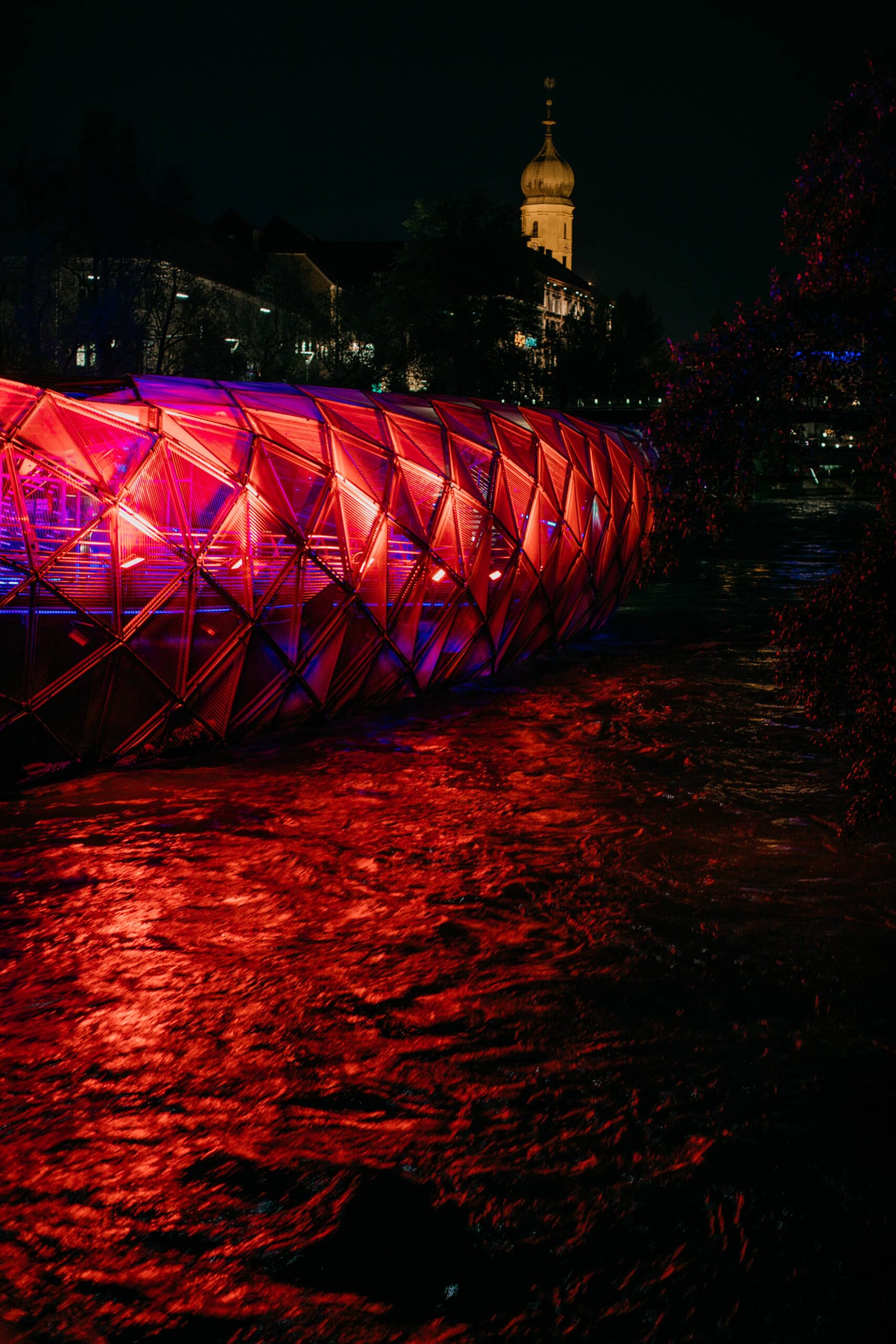
MUR – experience underwater.
The water rushes, powerful and unstoppable. Everything is in motion and nothing is ever the same as it was. This city is the same as it always was? Its waters always the same? Spend a moment longer on this island and you will understand: No one sees – or hears – the same river twice.
Biography
Philip Ross is a designer of interactive lighting concepts and a light artist. In his work he explores, among other things, the extent to which the encounter between the environment and people can generate meaning. Joep le Blanc is a sound designer with a degree in industrial design. He combines many years of experience as a professional musician with knowledge of abstract psychoacoustics, which gives his work a high recognition value. With their joint project ‘Transience’, the Dutch artists take up Vito Acconci’s idea of the floating Mur Island and pay a great tribute to its builder, the first anniversary of whose death was celebrated at Klanglicht in 2018. Real-time underwater recordings of the Mur are transformed into a unique composition of sound and light that makes its way across the island. Following the ancient idea of “everything flows”, this art installation is also in constant flux.
In cooperation with Murinsel Graz.
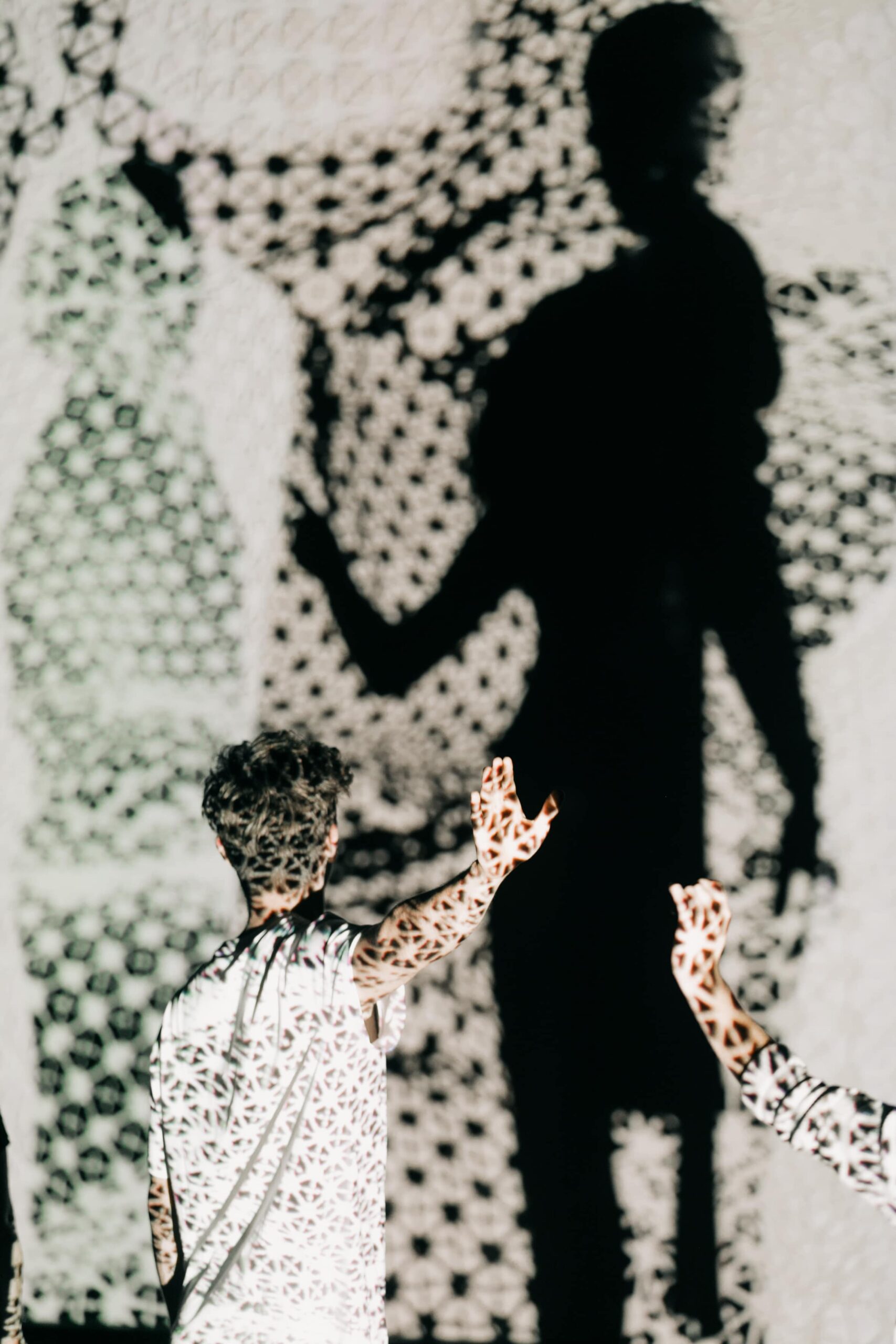
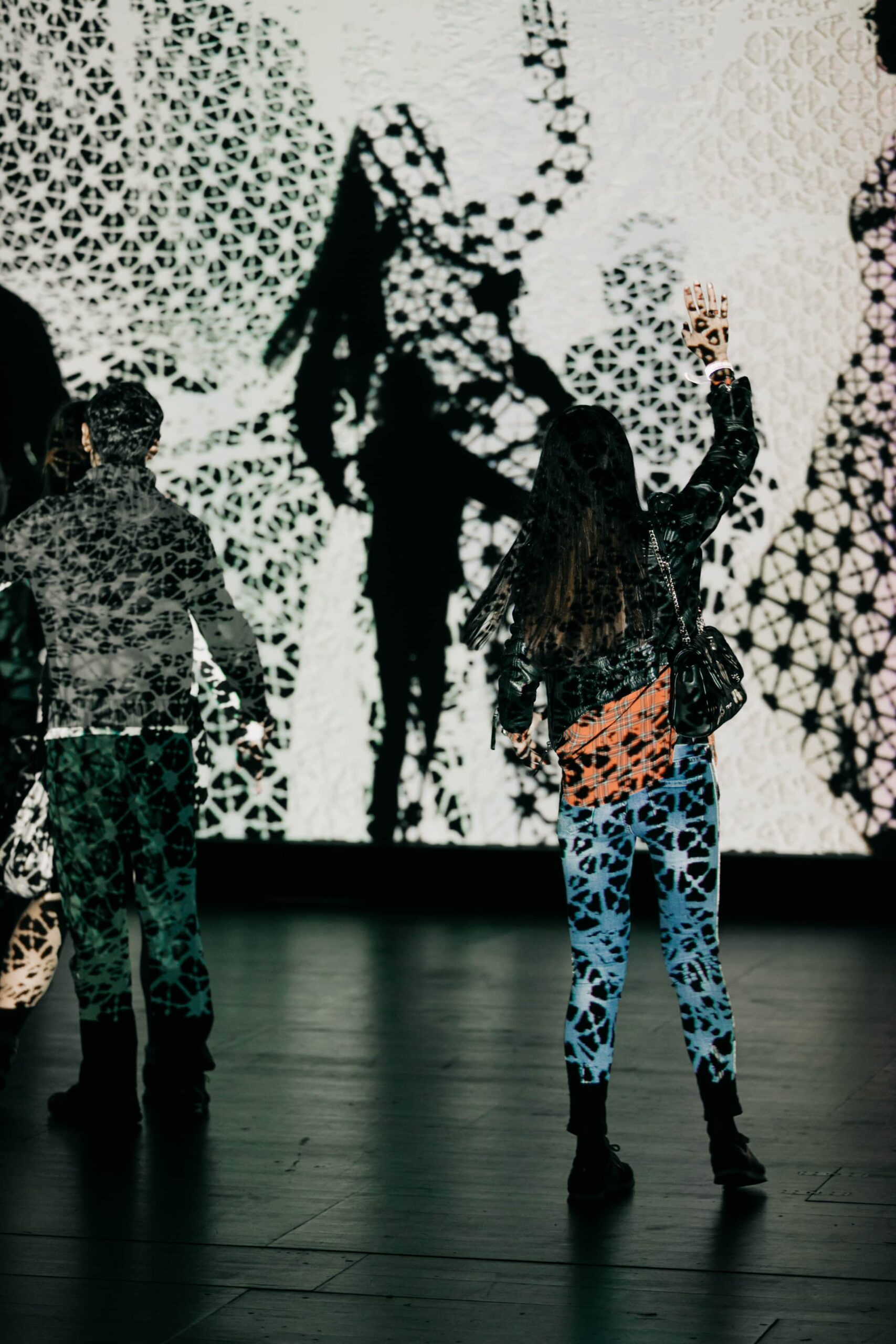
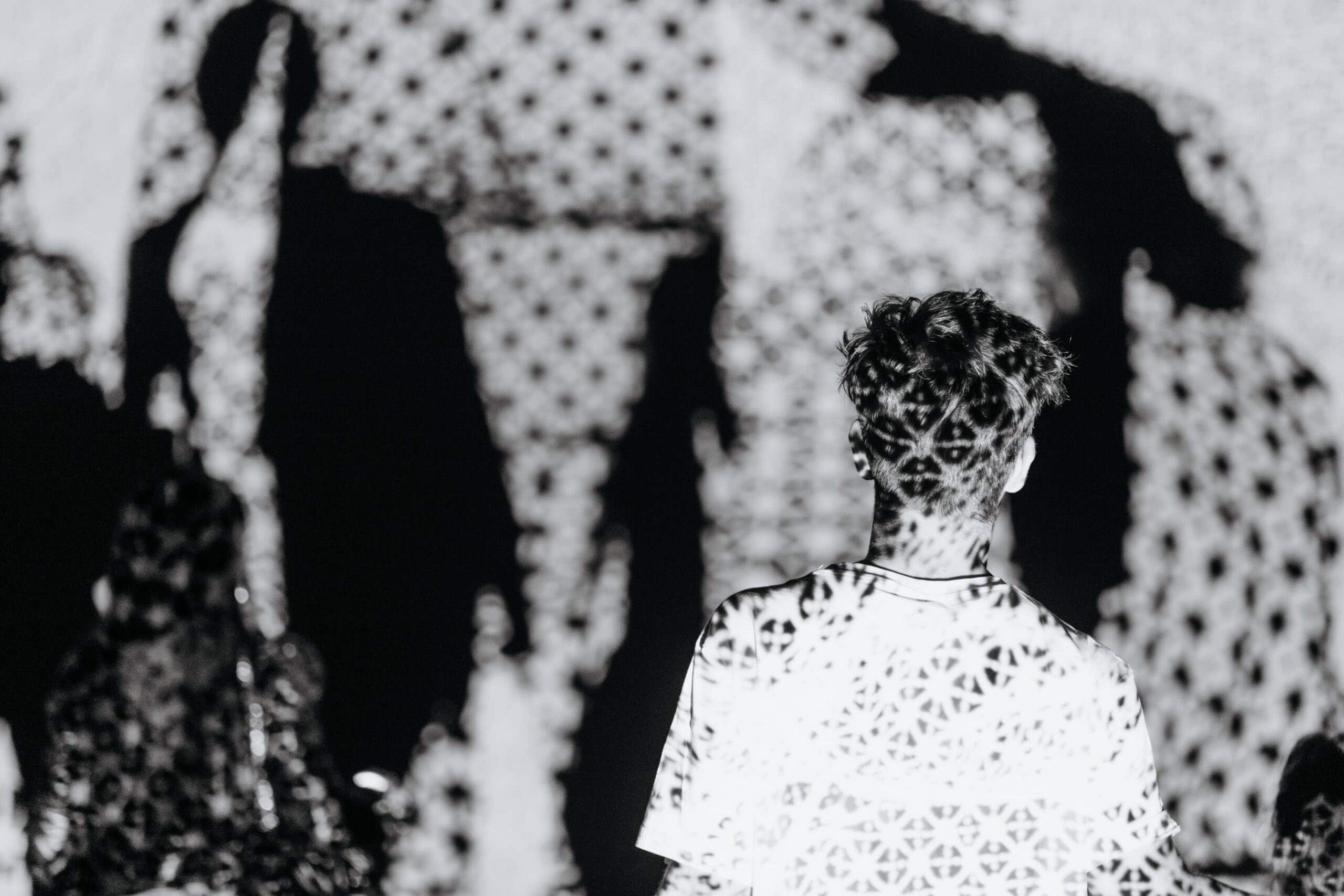
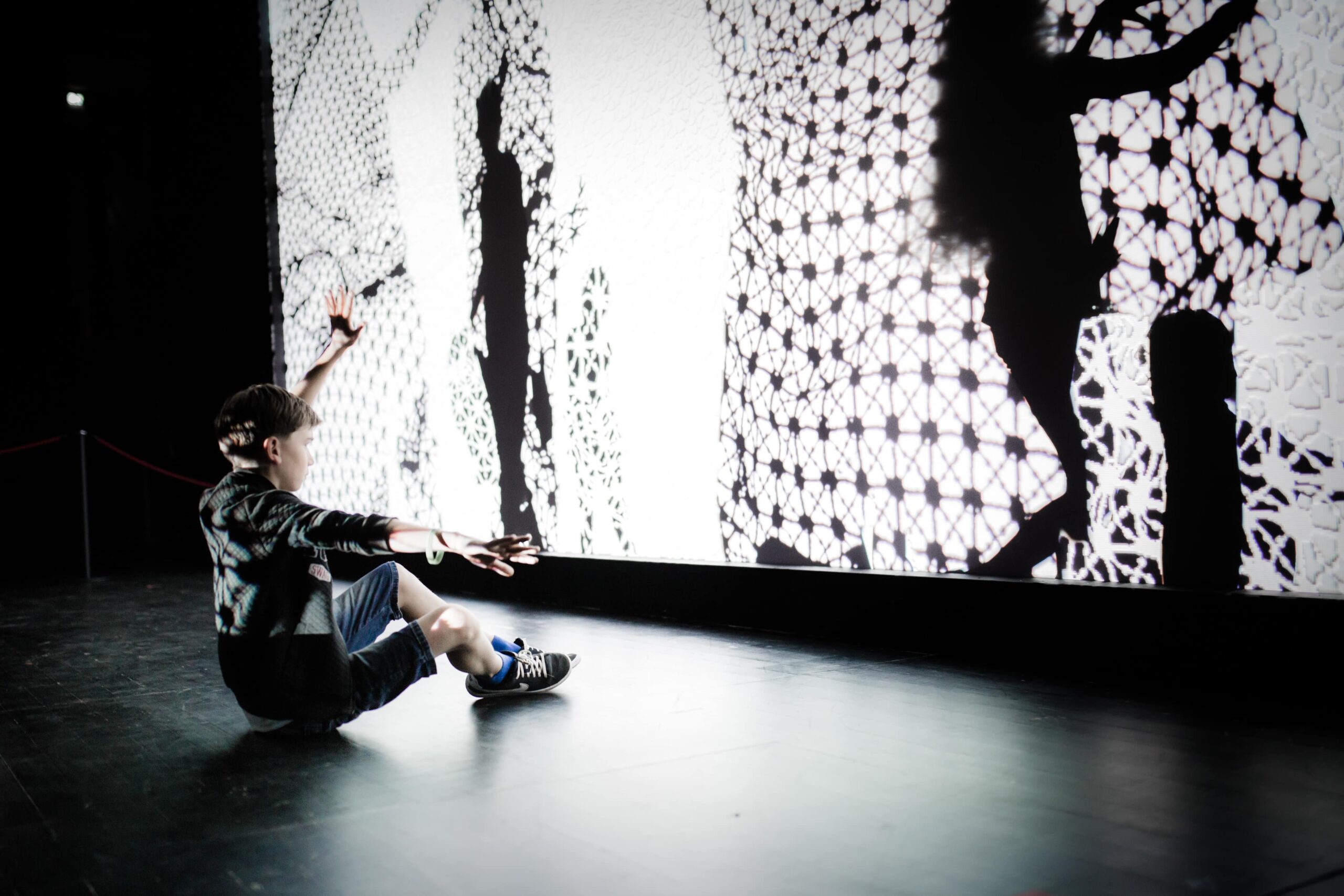
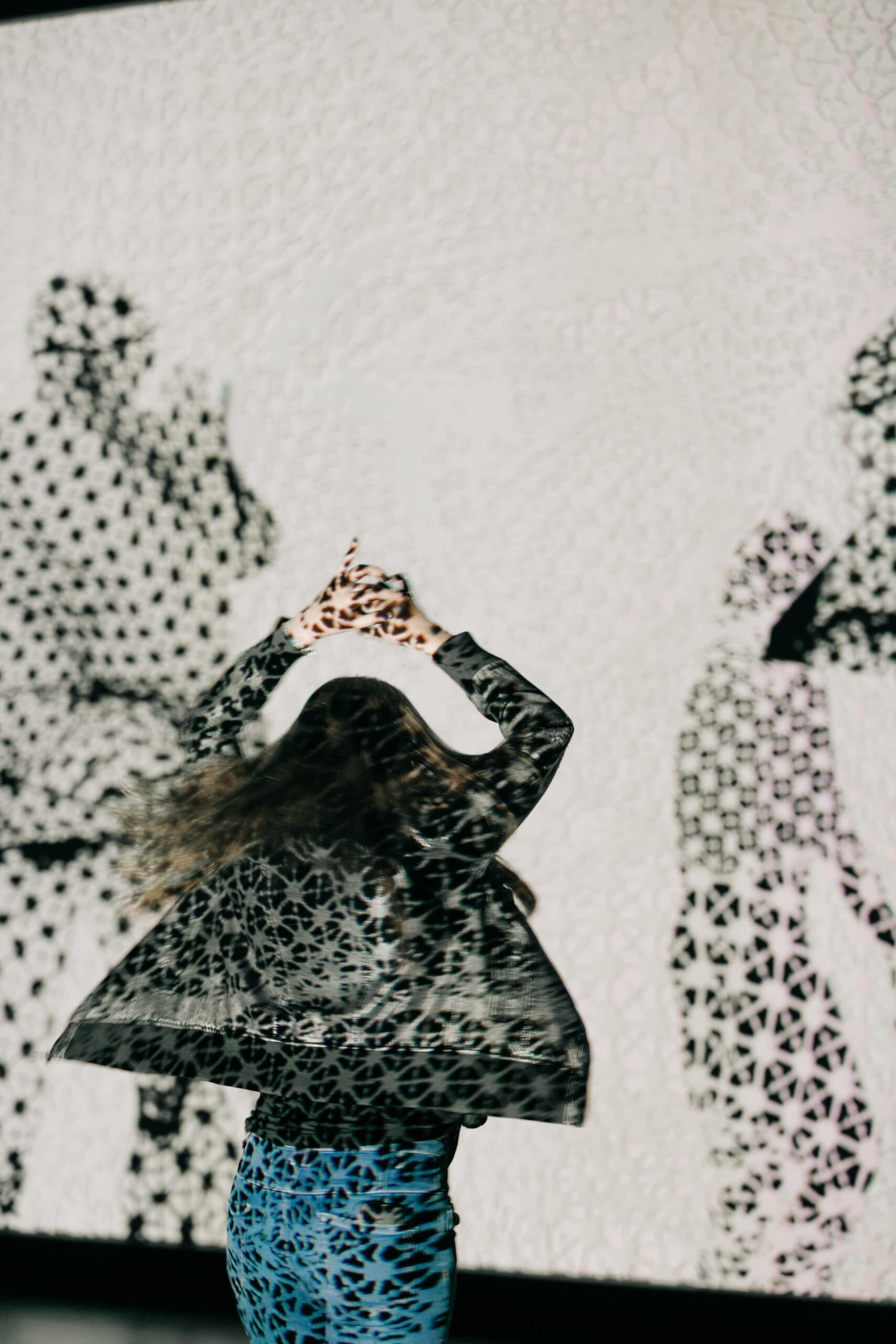
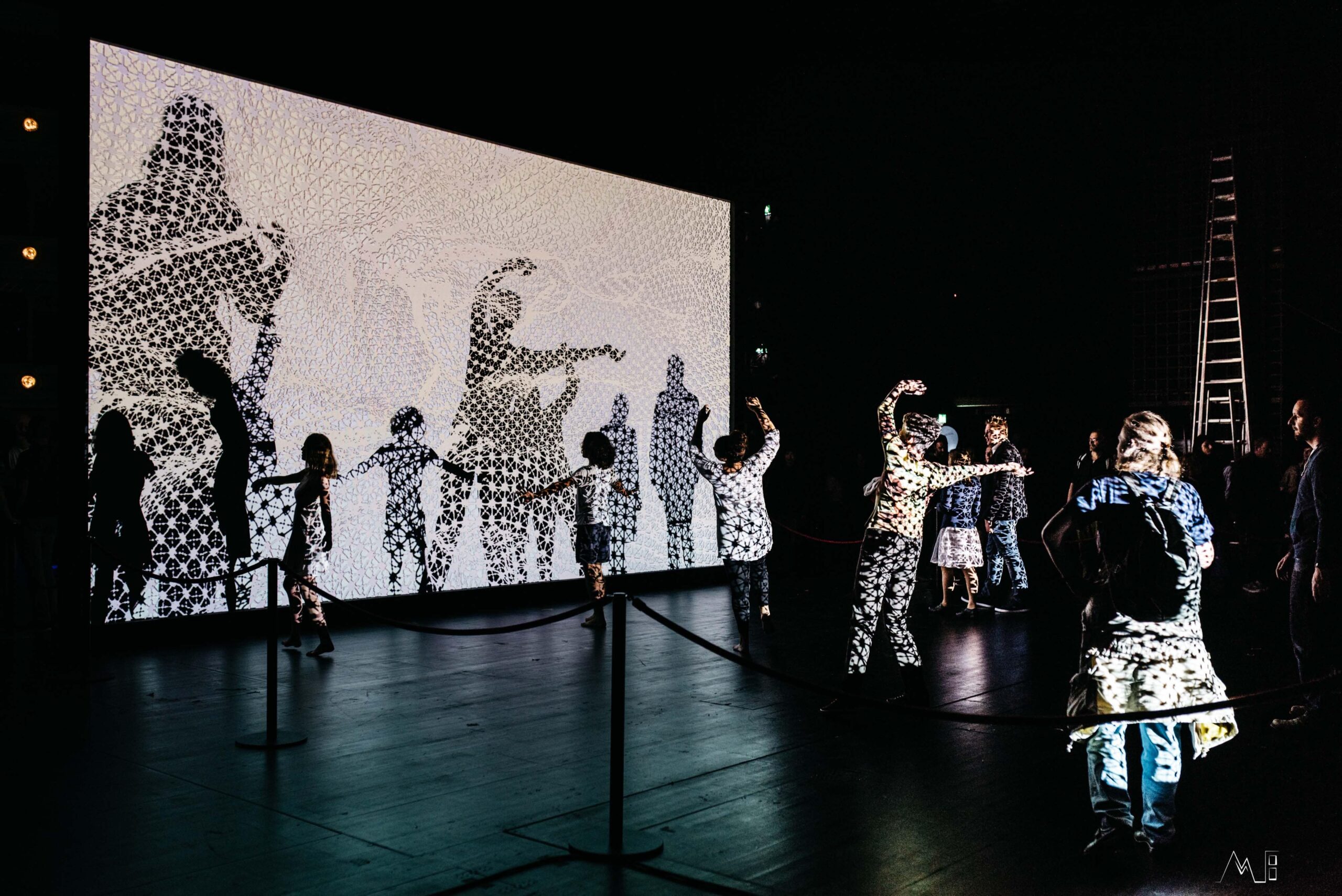
Exposed to sound/light.
A texture, first only in a gray veil. Then black, then white. Your movements change what you see. But is the picture really real? A game with the light begins, in search of the “real”, the “genuine” work of art. The sound intensifies the visuals and soon it is clear:
Each of these worlds of images and sounds is short-lived and created through your active interaction. As is so often the case in life, it is all a question of observation.
Biography
Born in 1979 in the Murtal valley, David Reumüller moved to Graz at an early age to study visual art at the Ortweinschule. Since graduating in 1998, the Austrian artist has been working with various media. In addition to his visual productions, he has also published numerous musical collections, publications and films. In his interactive video installations, Reumüller primarily examines perception and puts its individual information content to the test. Together with Manfred Engelmayr and Bernd Heinrauch, he also forms the trio ‘Muscle Tomcat Machine’, which is responsible for the sound installation for the project.
“Contemporary art such as that of David Reumüller critically examines the complexity of our existence without judging it. This is precisely how what happens on stage retains a certain magic. “
– Iris Laufenberg, Managing Director Schauspielhaus Graz
In cooperation with Schauspielhaus Graz.
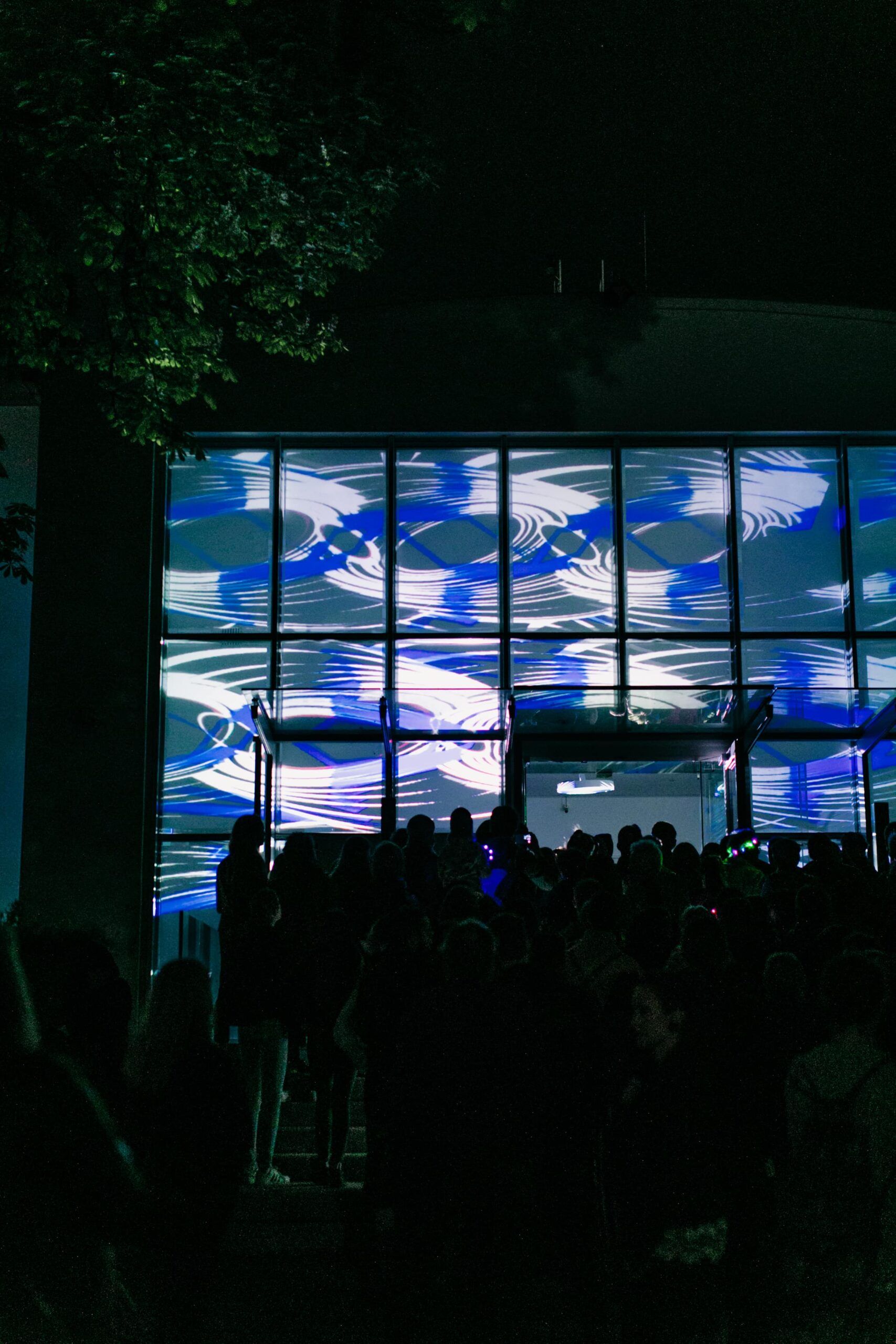
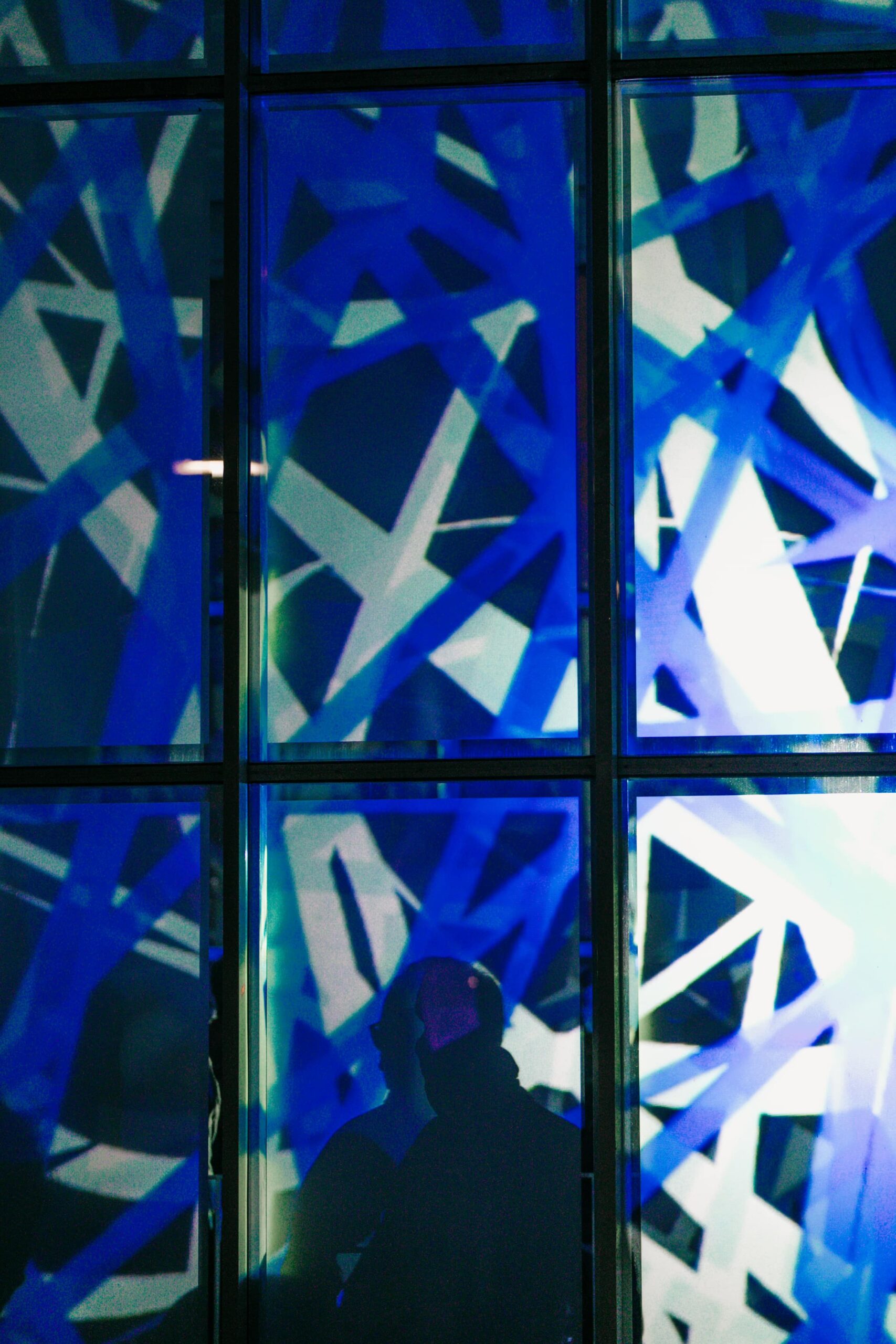
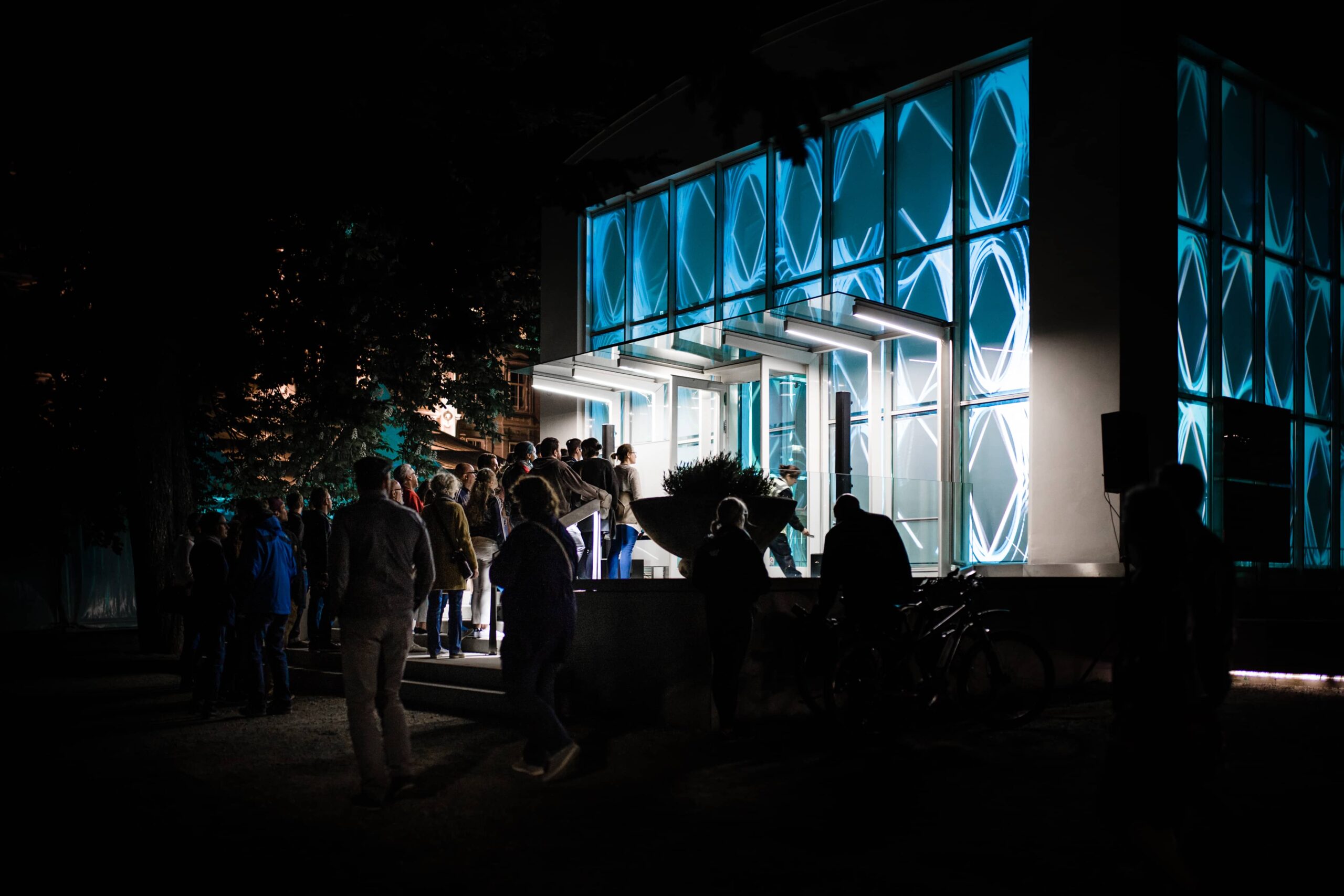
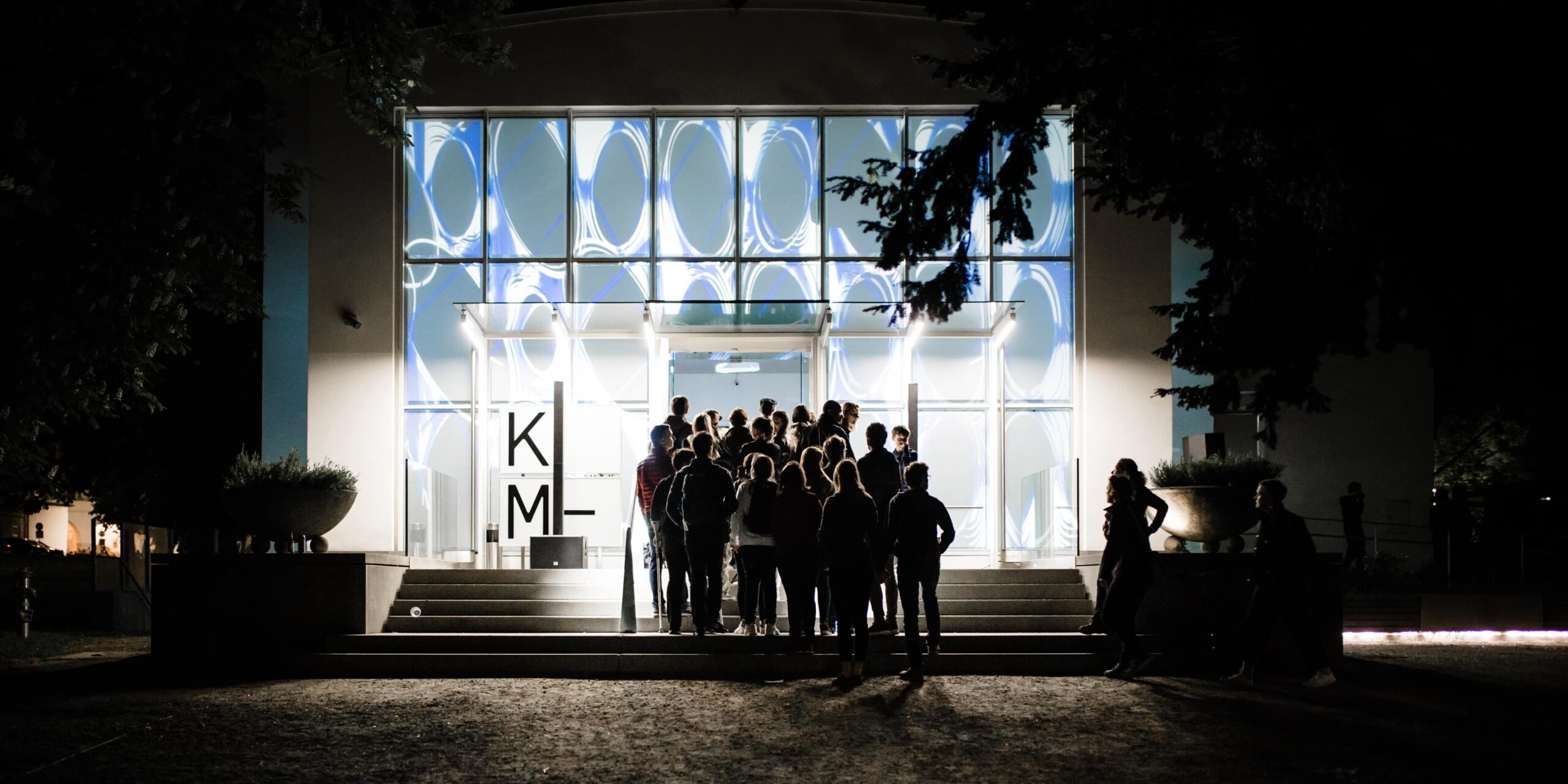
Thoughts of a building. Or: a silver cut.
That’s how moving the pictures on my glass walls are.
New, made by the rhythm of the sounds.
To feel the connection between sound and light,
I also let myself be guided by the shape of the house
_anonymous.
Biography
LIA, born in Graz, lives and works in Vienna. The pioneer of software and net art has been working with digital art since 1995, producing videos, performances, installations, sculptures, projections and digital applications. The basic material of her work is code. The Austrian artist translates concepts into formally written structures, which in turn generate output through a “machine”. The artistic result then stands in contrast to the formality of the written code. LIA’s works draw on drawing and painting traditions and combine these with the aesthetics of digital imagery and the language of algorithms. With ‘Silver Ratio’, the artist refers to the relationship of the visual elements to the architecture of the Künstlerhaus and draws an arc between the rigid structure and the liveliness of the building, created by the people who use it. Damian Stewart, who combines sound, code, light and electronics in his artistic works, is responsible for the musical staging of the installation.
In cooperation with Halle für Kunst & Medien.
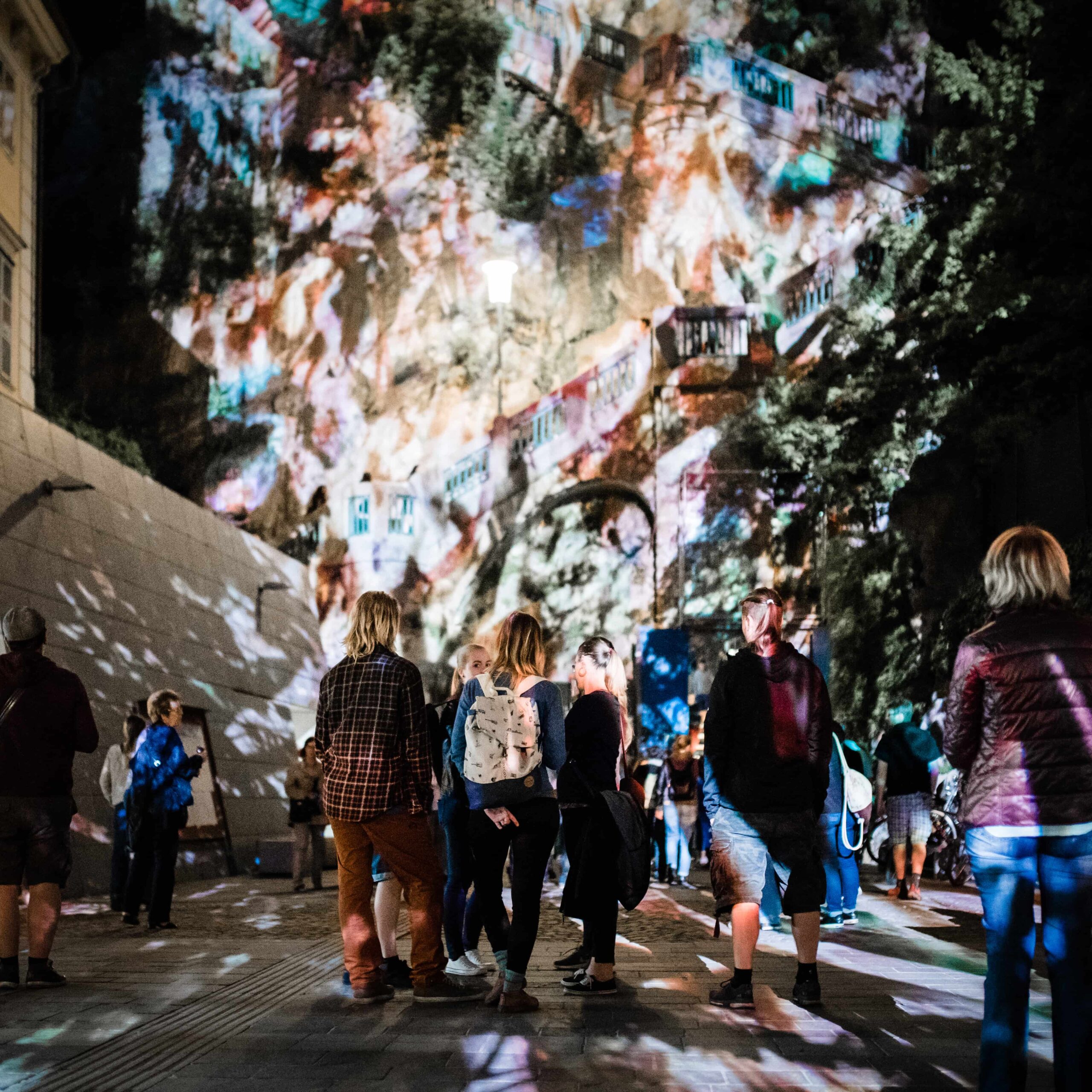
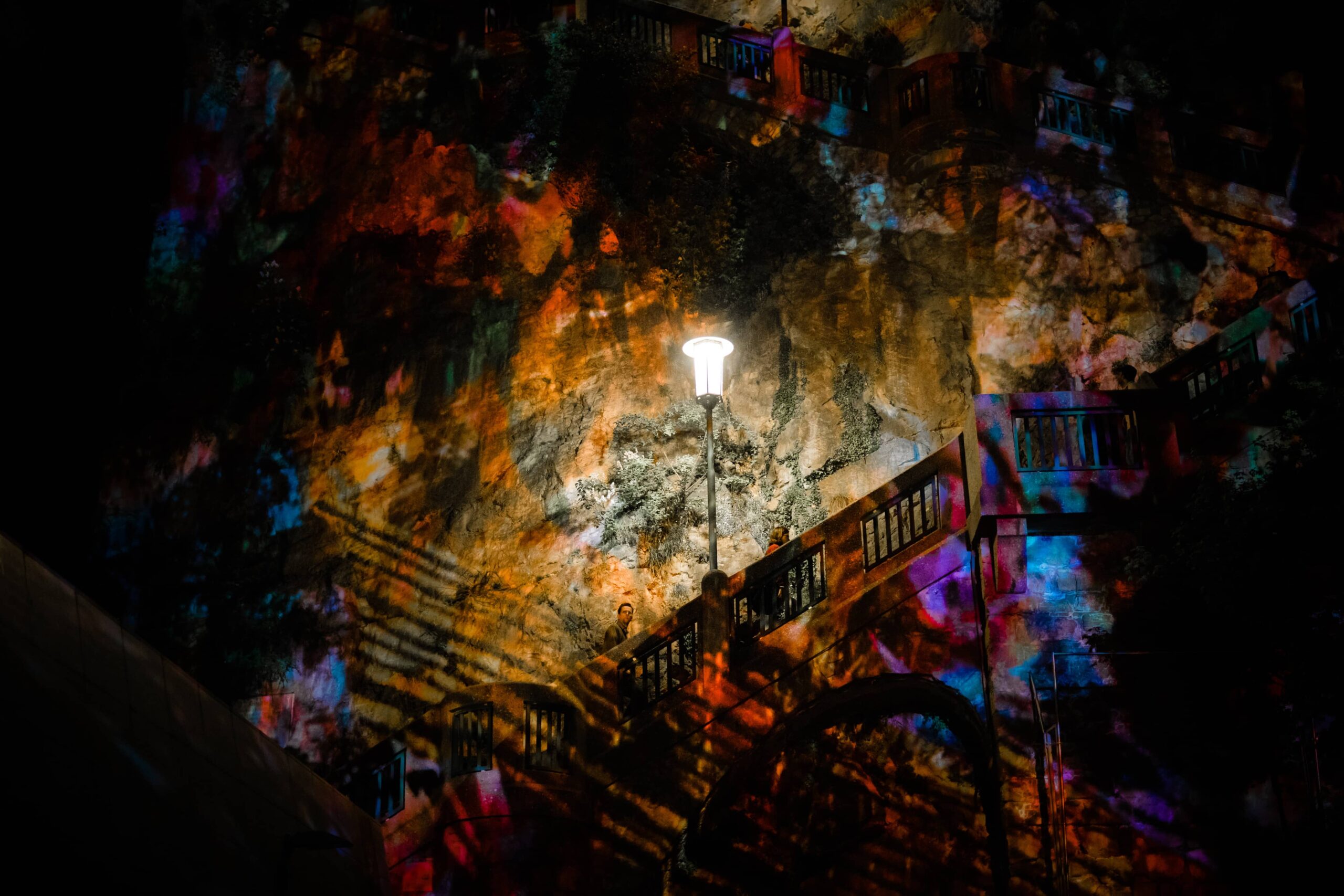
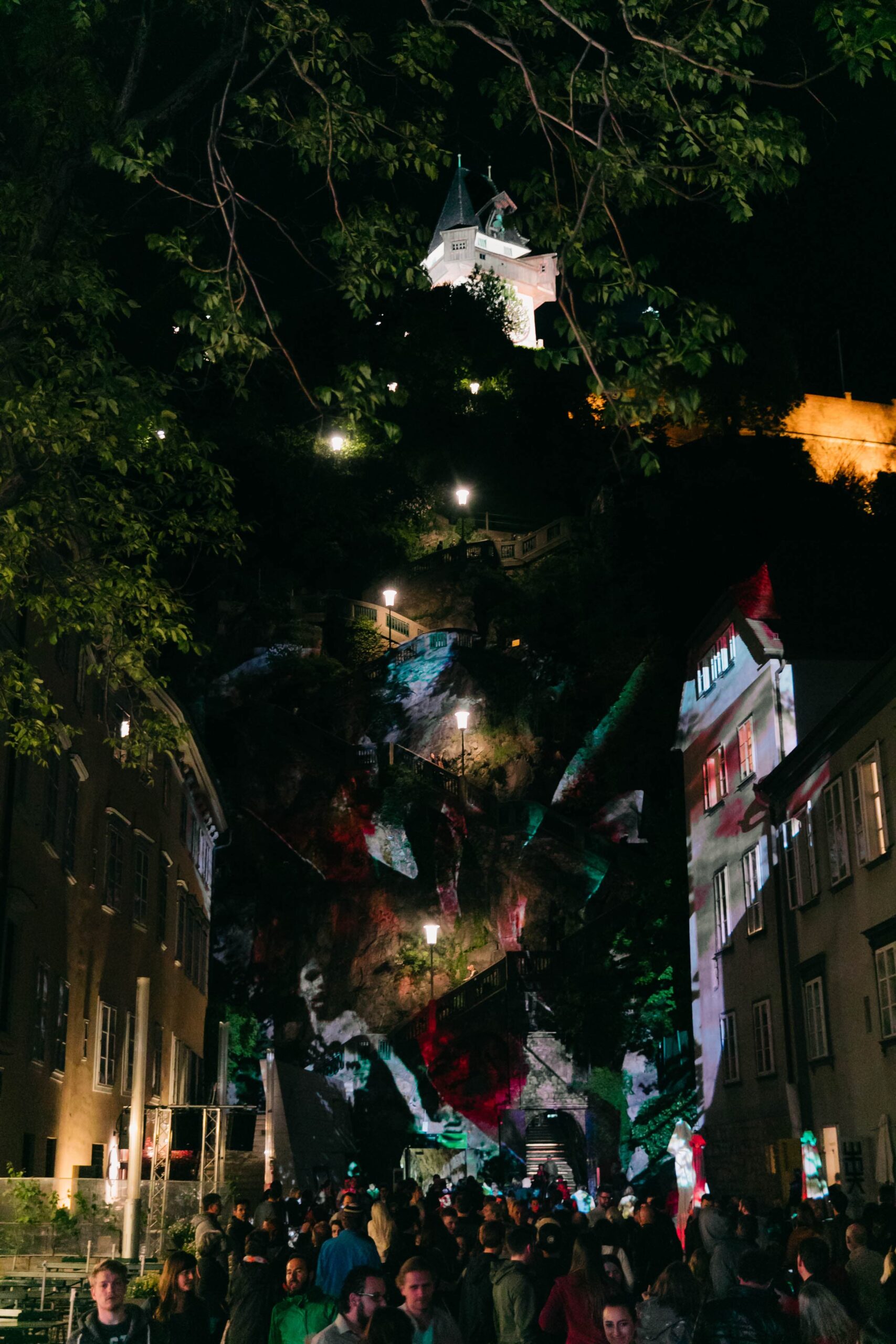
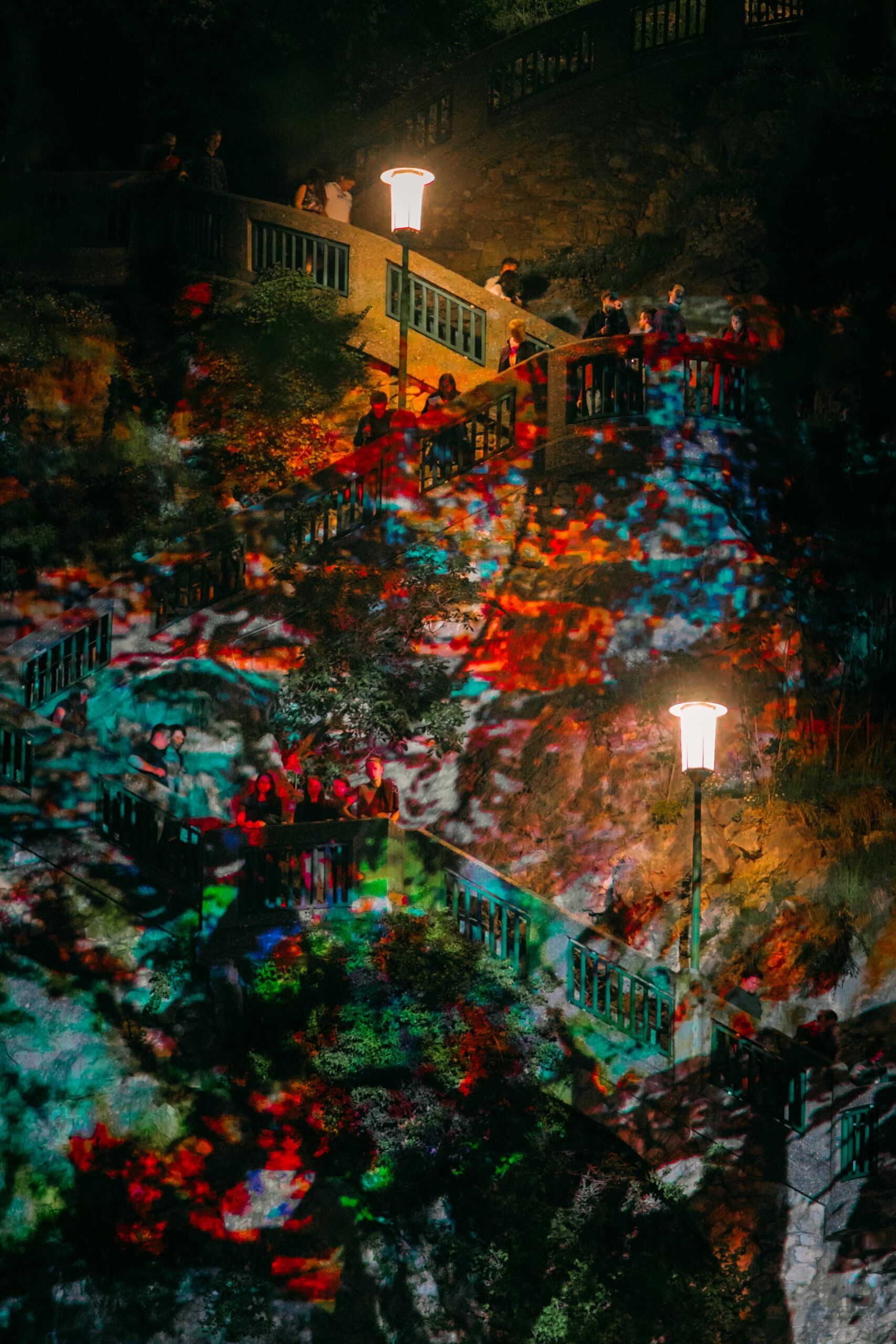
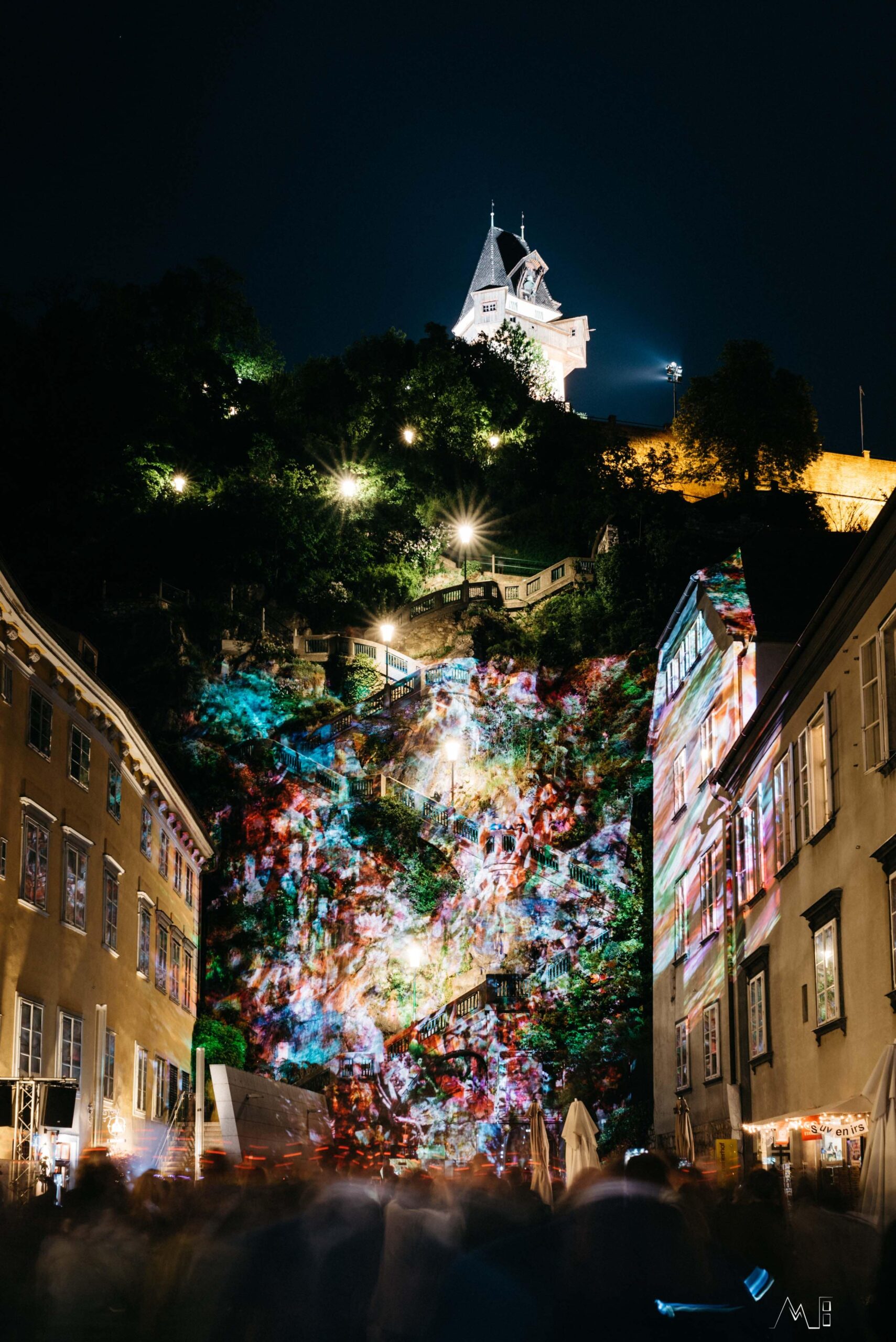
Staircase of light.
Where the steps nestle close to the rock.
Where the staircase connects height and depth like a bridge.
A mosaic of impressions of life is illuminated there – a picture of what was here and what is today.
Scala Lucida. Let’s take the time to look at it and to ascend with our gaze. Because with time comes not only advice, but also sense and sensuality.
Biography
The Austrian artist Teresa Mar currently works in Klagenfurt, Vienna and Barcelona. After graduating in political science in 1997, she began working as an artist. In addition to her paintings, she has also created pasted collages, which have served as the basis for her digital image processing since 2003. She superimposes image sections, i.e. layers or codes of color and light, until they condense into a new image of their own. The tension lies in the creation of new structures and contrasts, which allow the viewer a wide range of associations in the interpretation of the image. Because, according to Teresa Mar, people always see what they want to see.
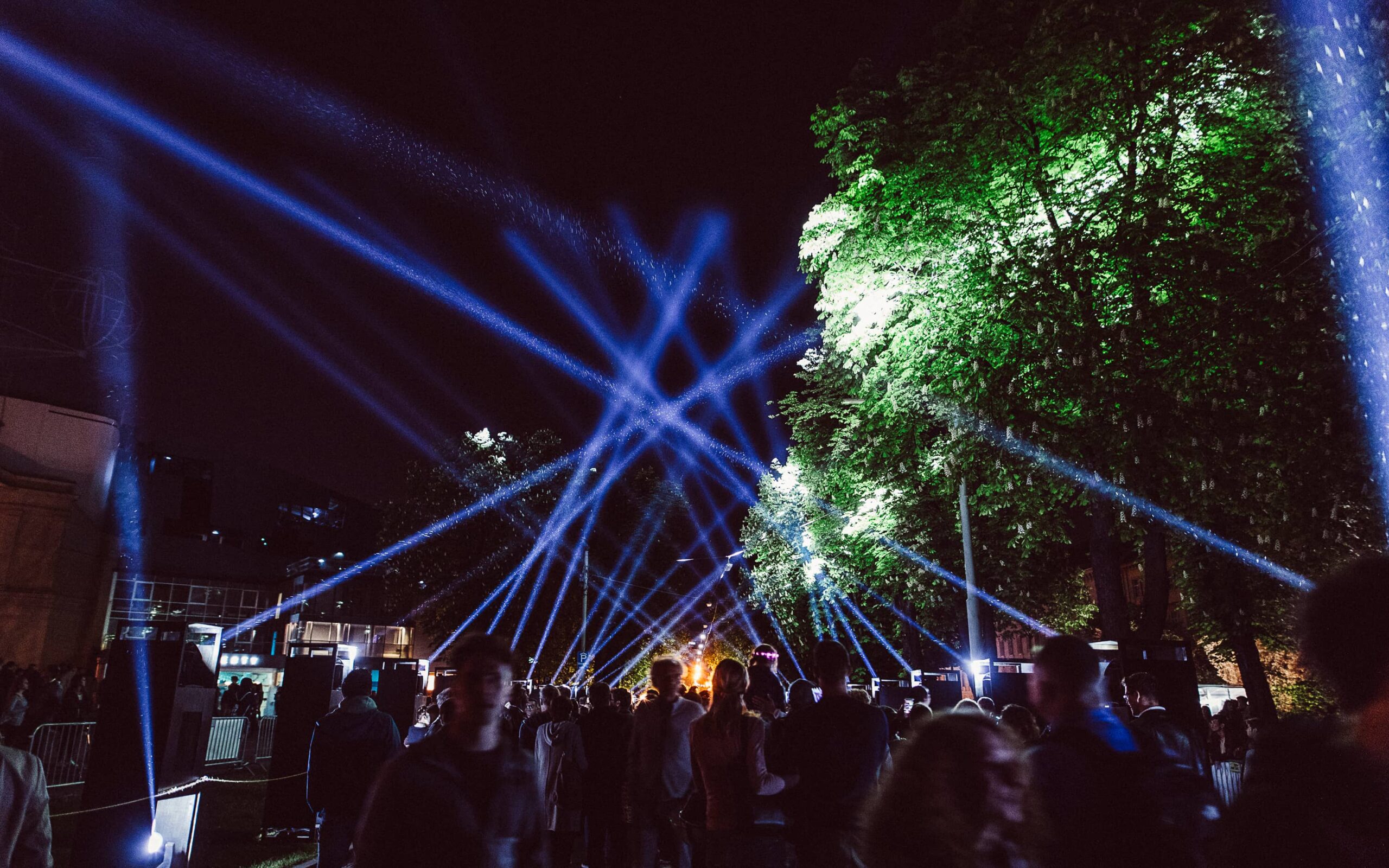
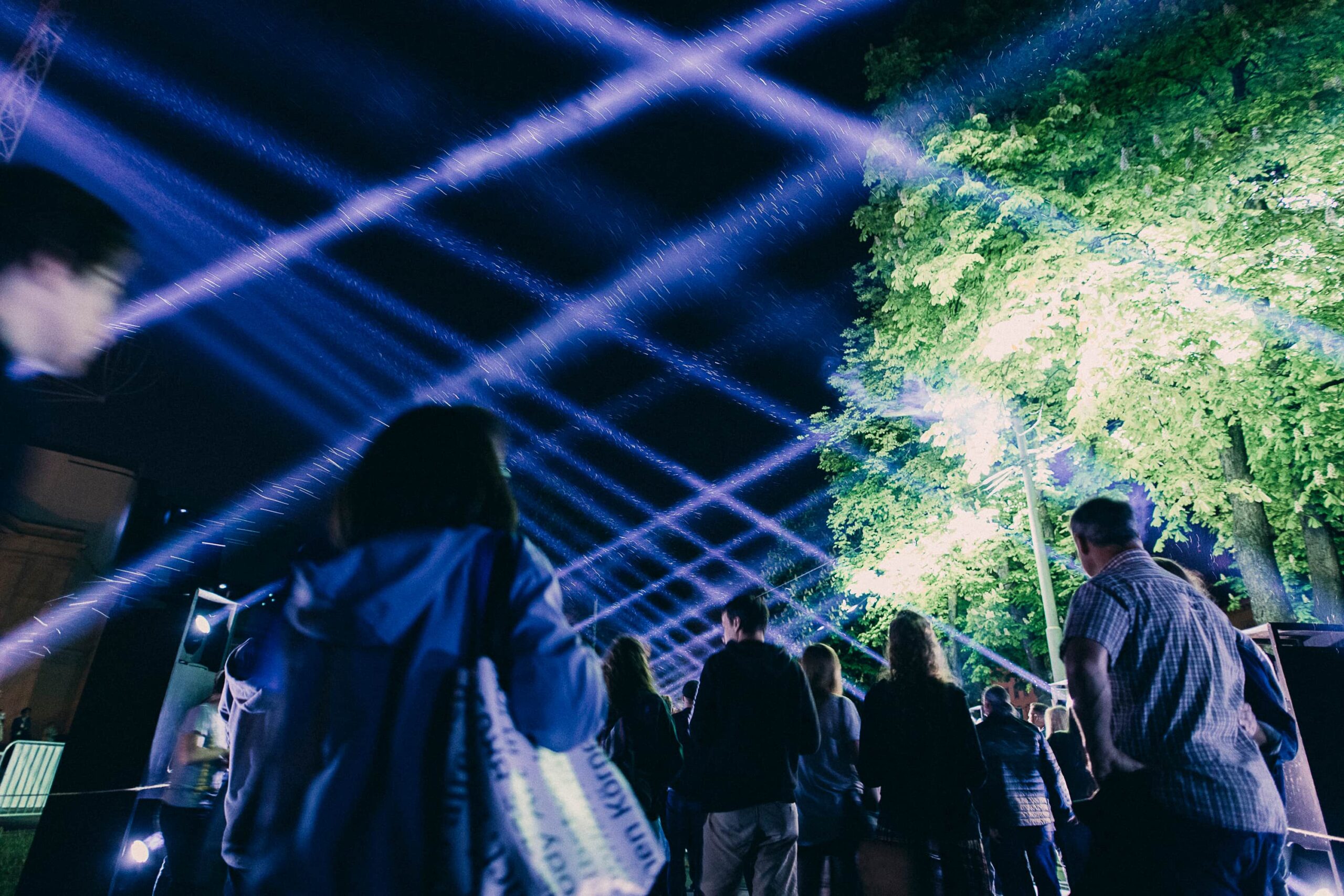
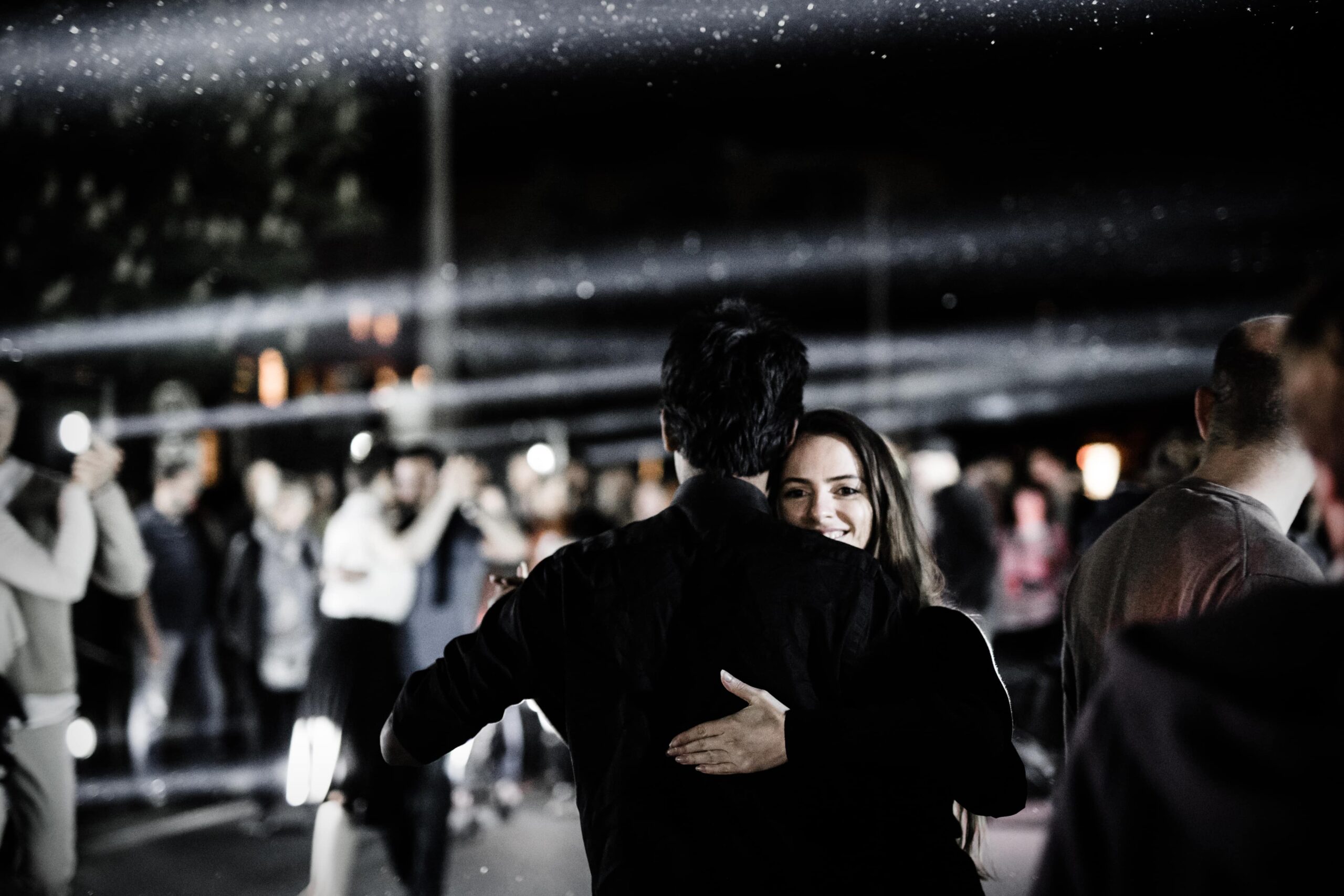
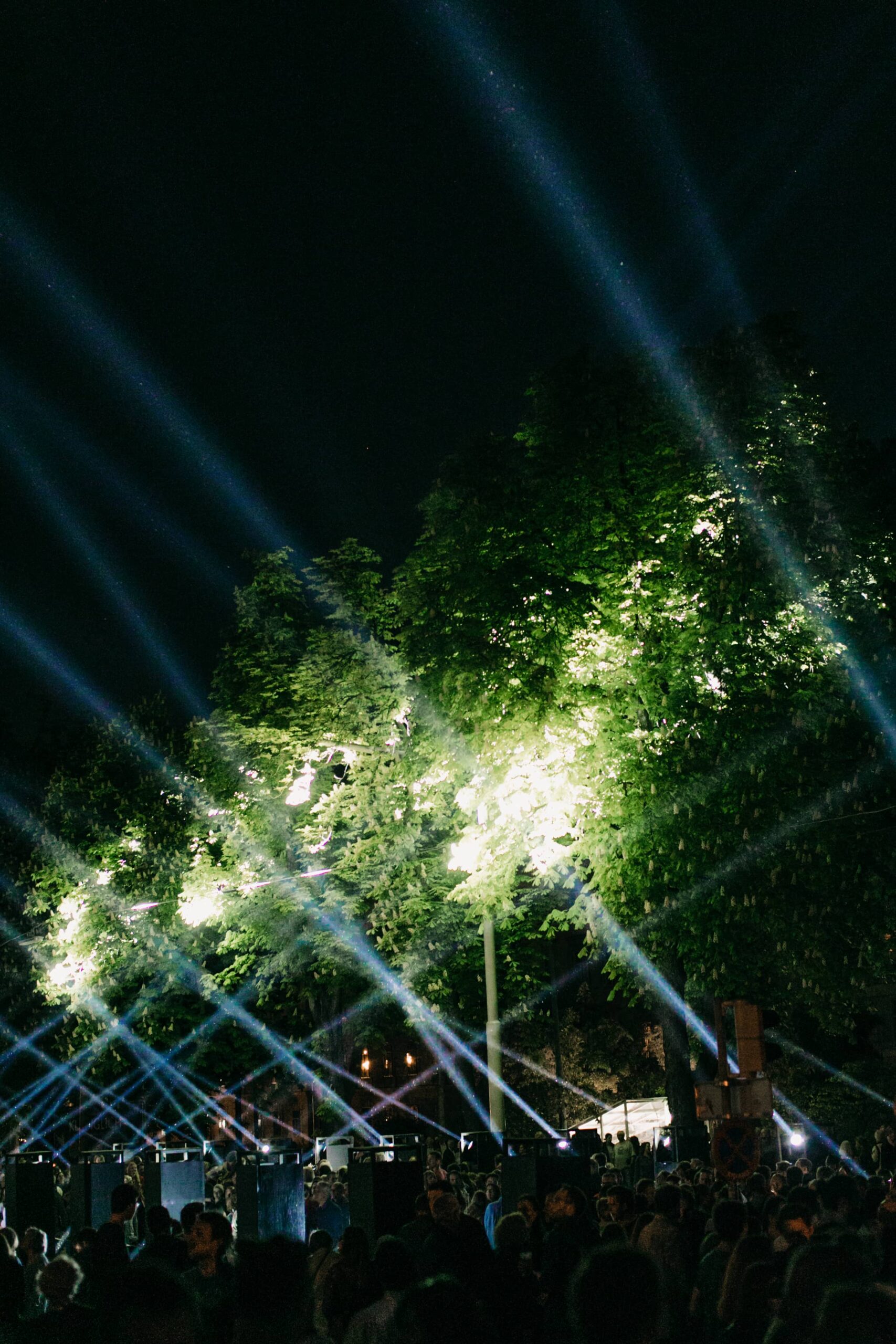
It takes 2 to tango!
A stage for the light. And you right in the middle of it. With the elegance of a dancer, the rays of light glide across its parquet floor, and visitors become part of the choreography on their way through. The light installation is transformed into an interactive work of art to the sounds of Astor Piazzolla. It is up to you to decide whether you want to avoid a dancer or dance with the light yourself.
Biography
Wouter Brave is a multidisciplinary artist who has been working with the medium of light for 10 years. Active as a dancer and choreographer between 1980 and 2000, he now devotes himself primarily to light art. His fascination with this element and his professional career in dance form the basis of the art project ‘Lumière Tango’: two rows of 12 black towers, each with 48 spotlights creating a dance floor of a special kind.
In cooperation with Opera Graz.
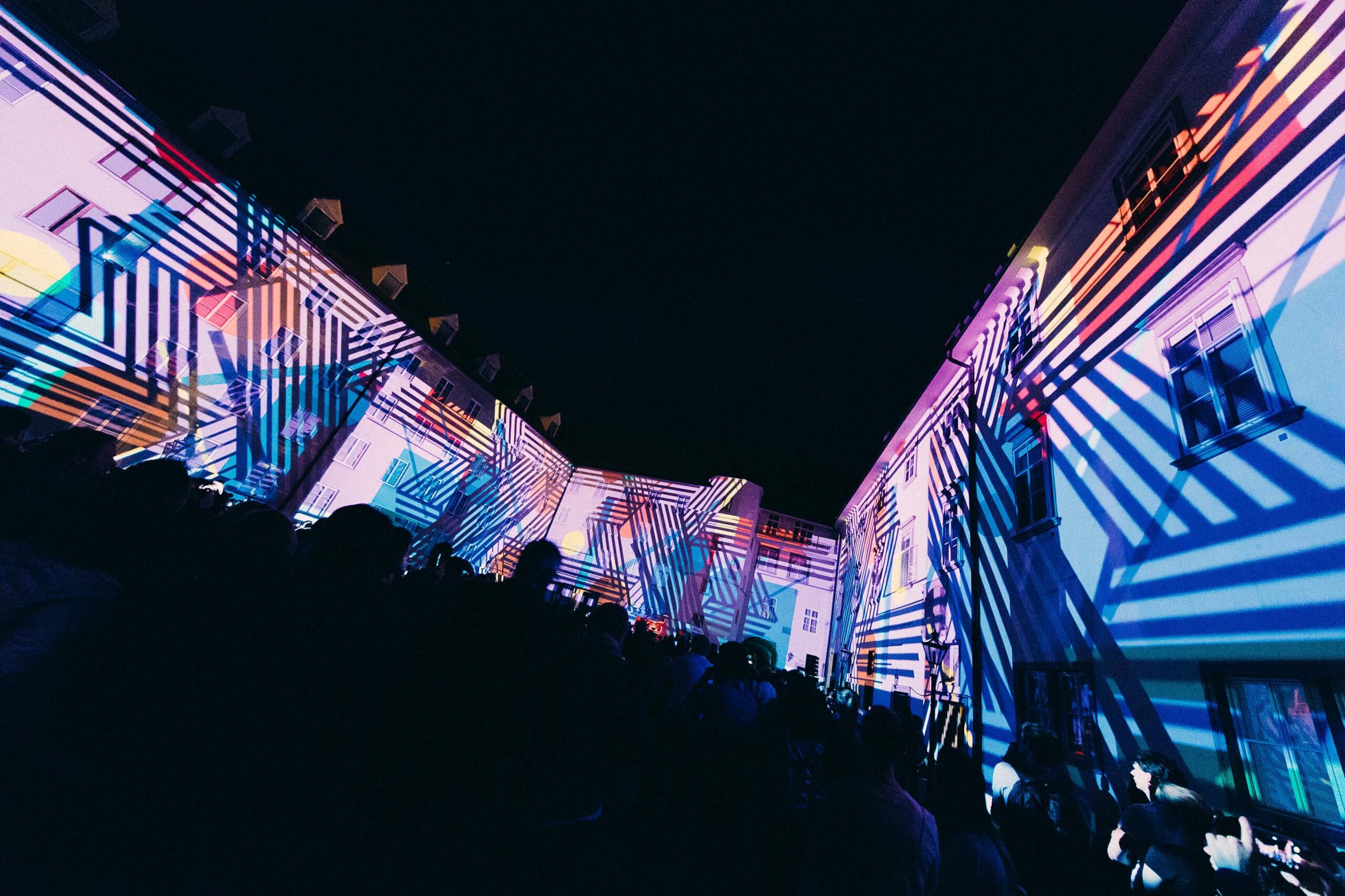
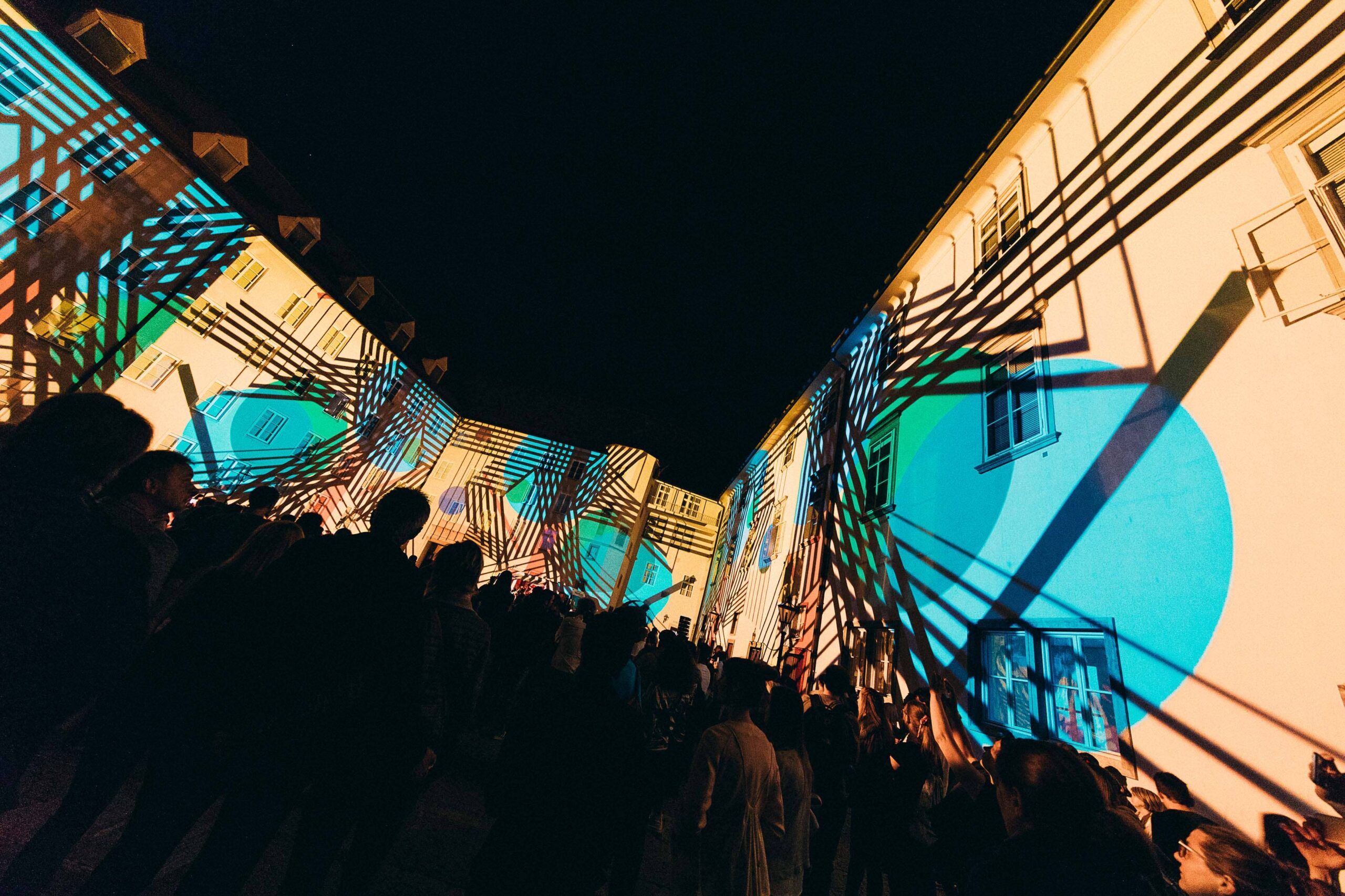
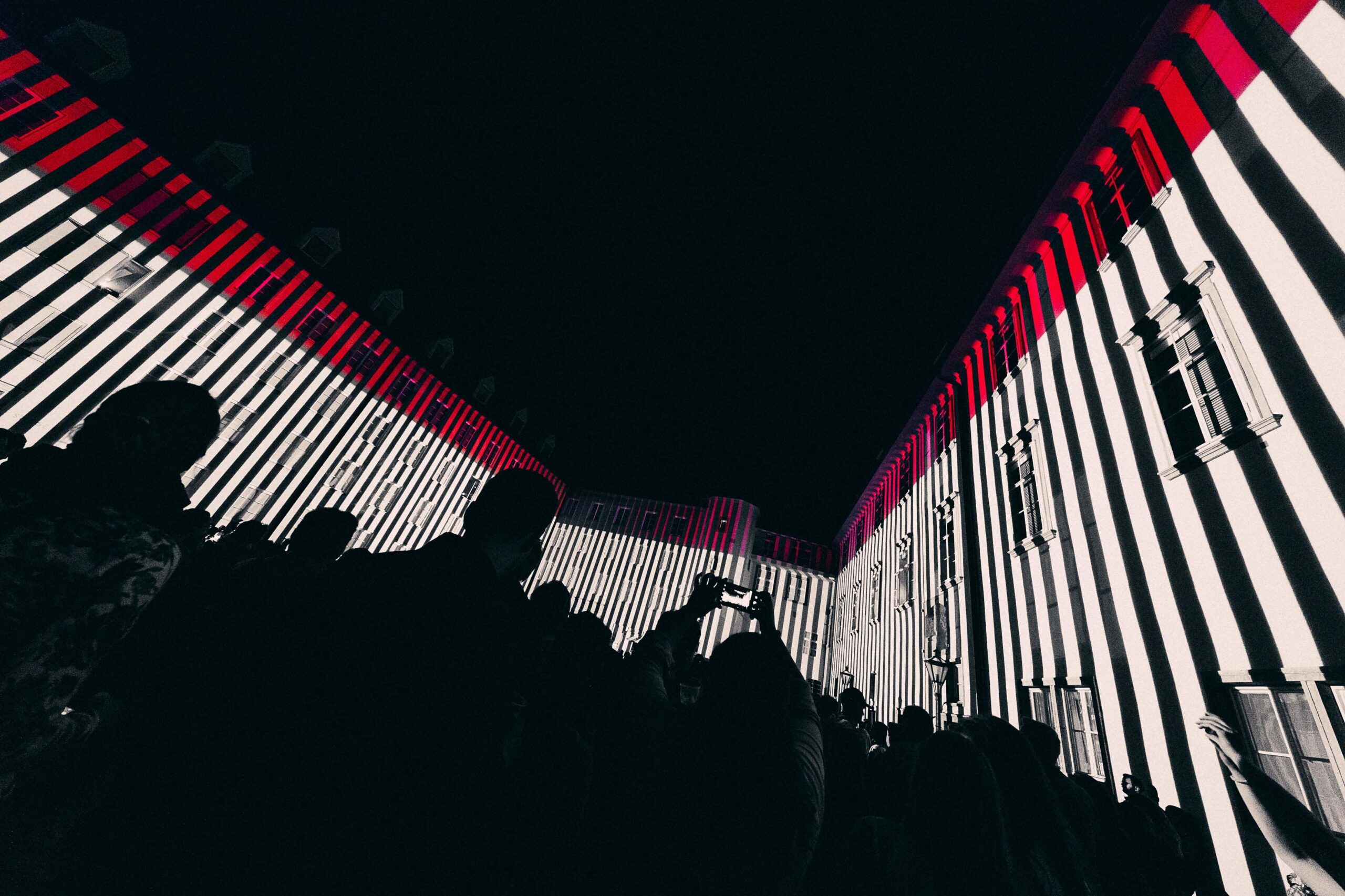
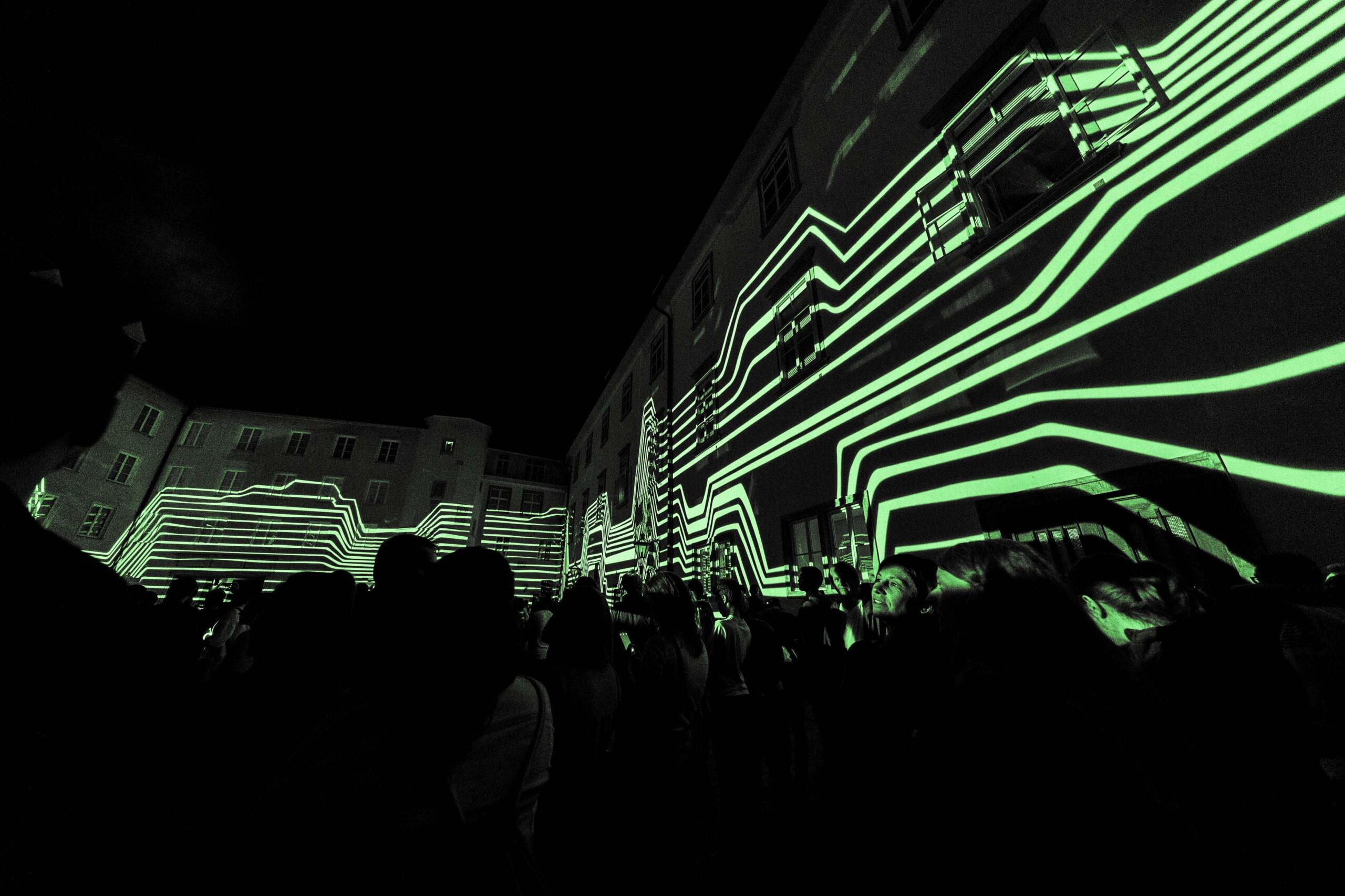
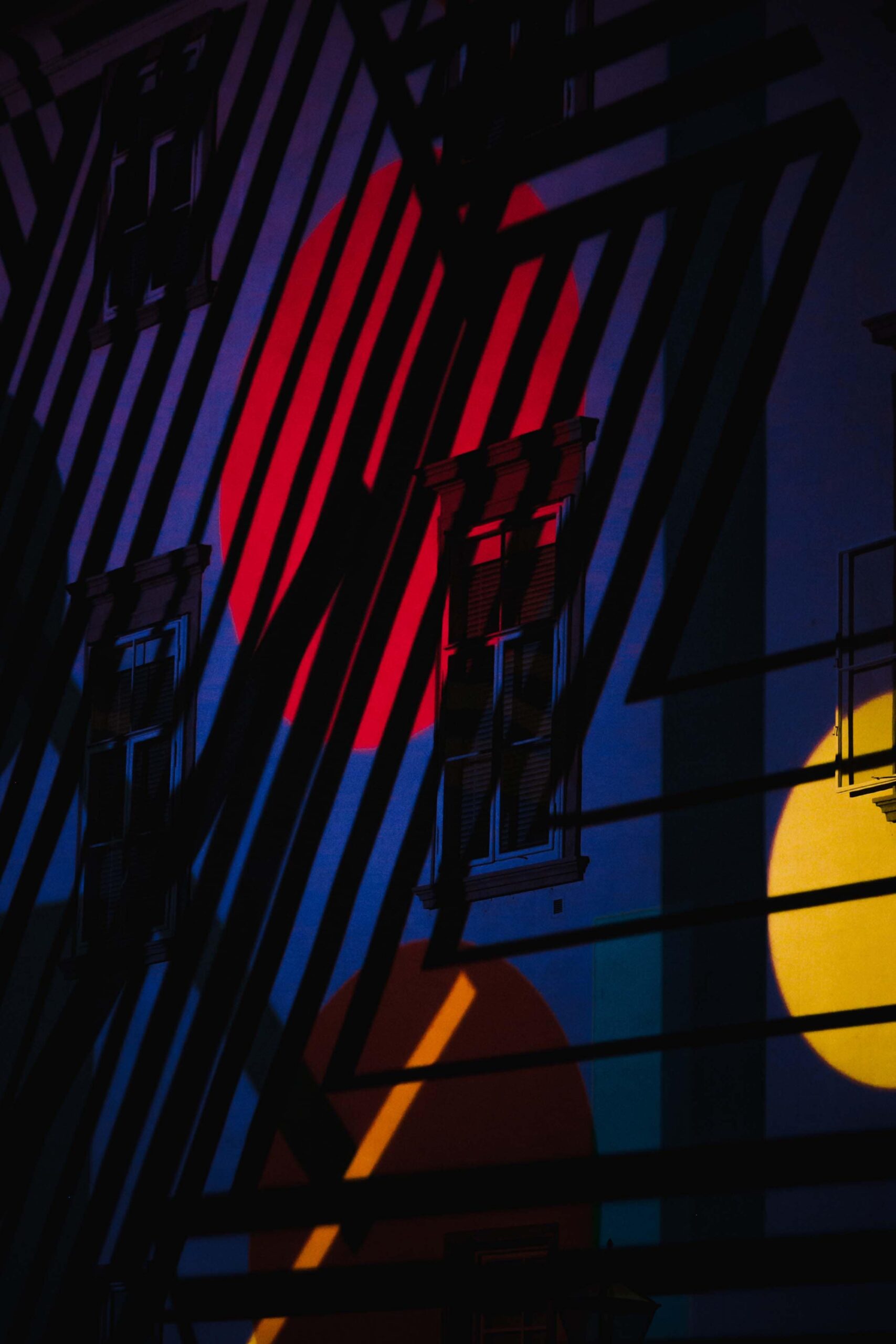
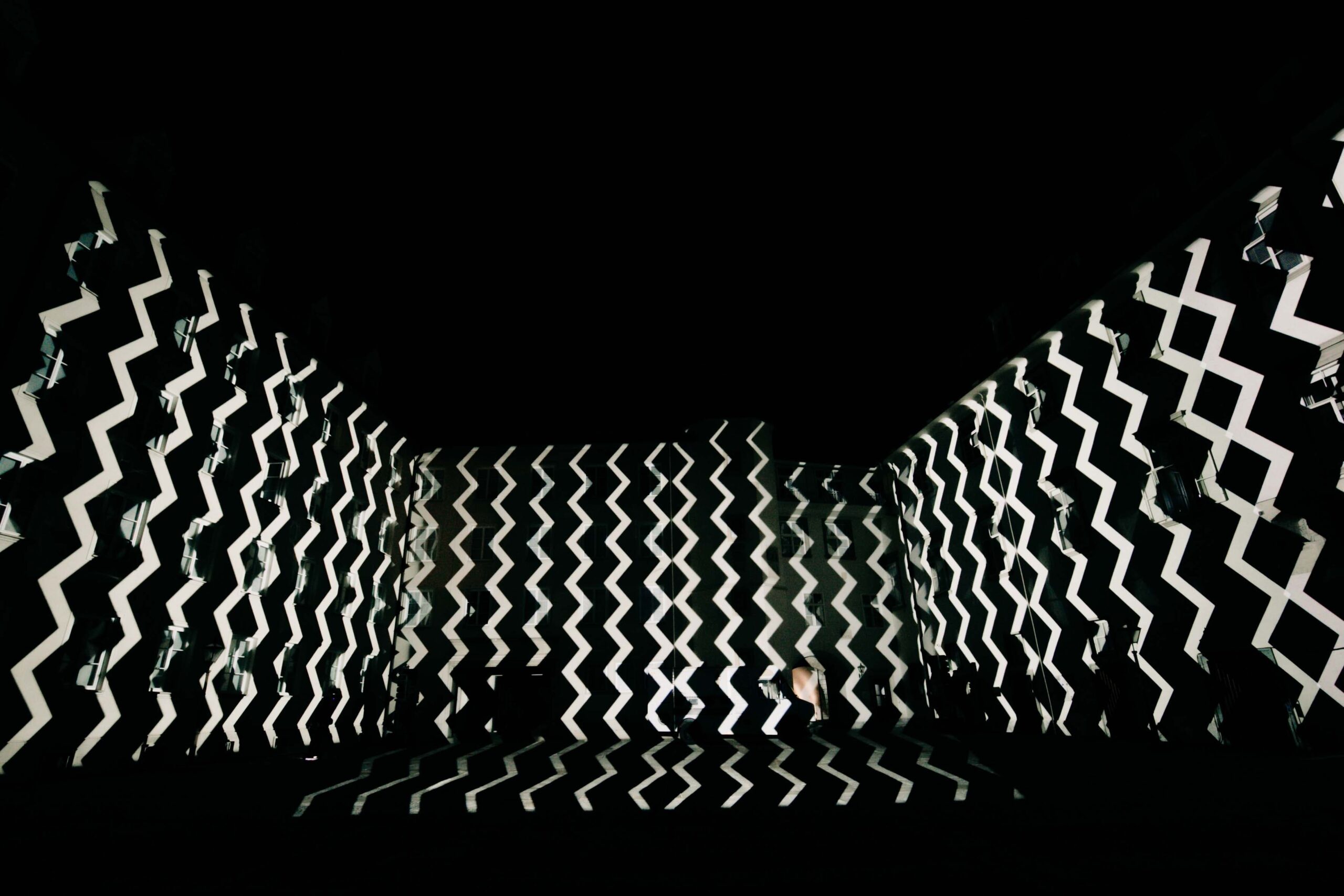
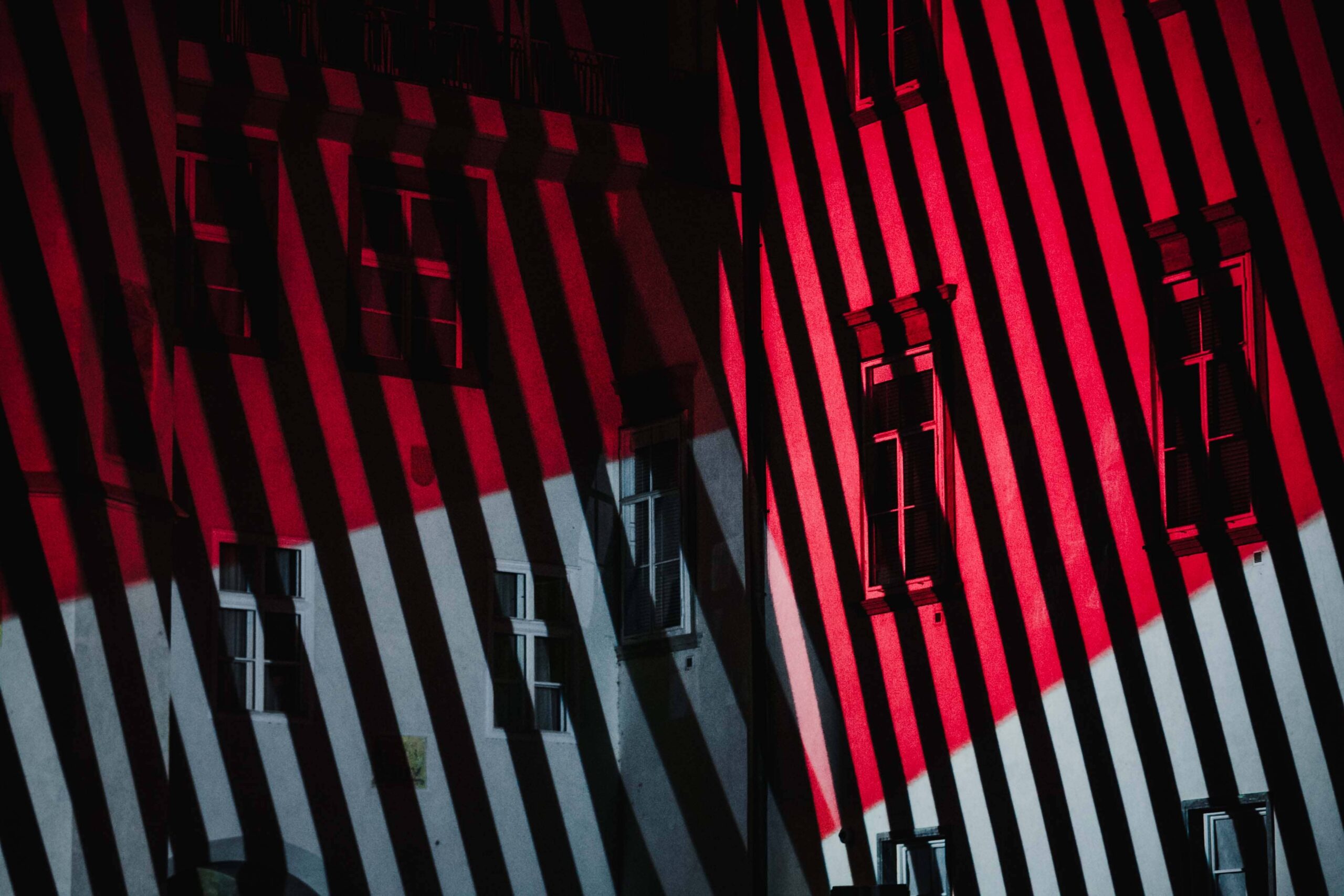
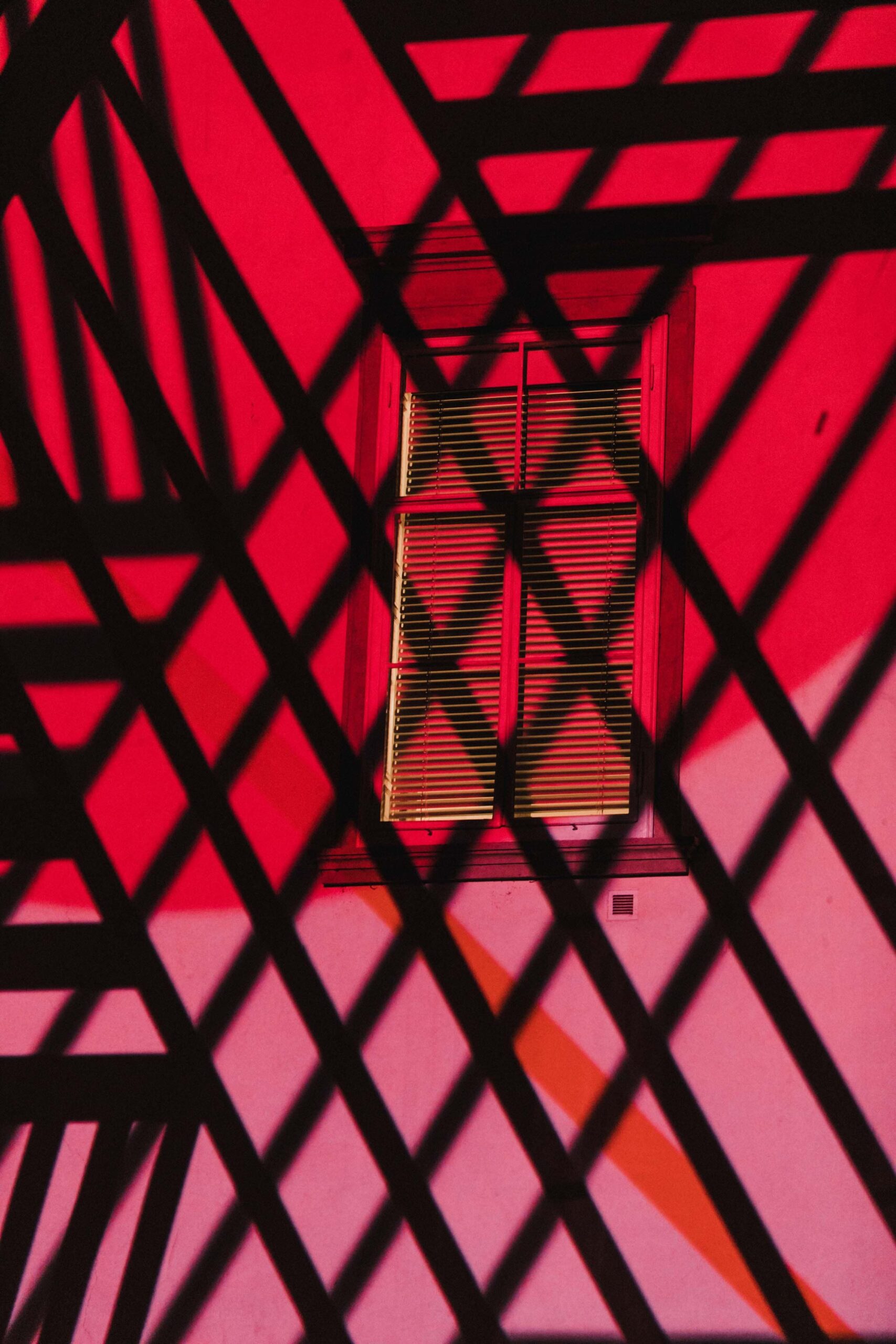
This strange world of my city.
A historic place at the heart of the city, where a staircase meets itself like a mirror: Graz Castle. But as darkness falls, a play of colors suddenly illuminates the shapes and figures all around. The orchestration of light turns the exterior space inwards, creating a parallel world of infinite dimensions and centric depths. Hold on tight! The viewer is not just there, no, he or she is truly in the middle of this surreal event.
Biography
Lia Räder, Volker Sernetz and Stefan Sobotka-Grünewald are the Graz-based artist collective OchoReSotto, which specializes in the combination of digital and analogue media and their presentation as a total work of art. The audiovisual installation ‘Arkestra of Light: parallel’ celebrates its premiere with this year’s performance in the inner courtyard of Graz Castle. Over an area of 2880 m², around 400,000 lumens are projected by large-screen projectors onto all three facades of the building, creating a projection surface of superlatives. The visionary light is accompanied by a precise, spherical soundscape created by Wolfgang Möstl and Mario Zangl.
Under the patronage of Raiffeisen Landesbank Steiermark.
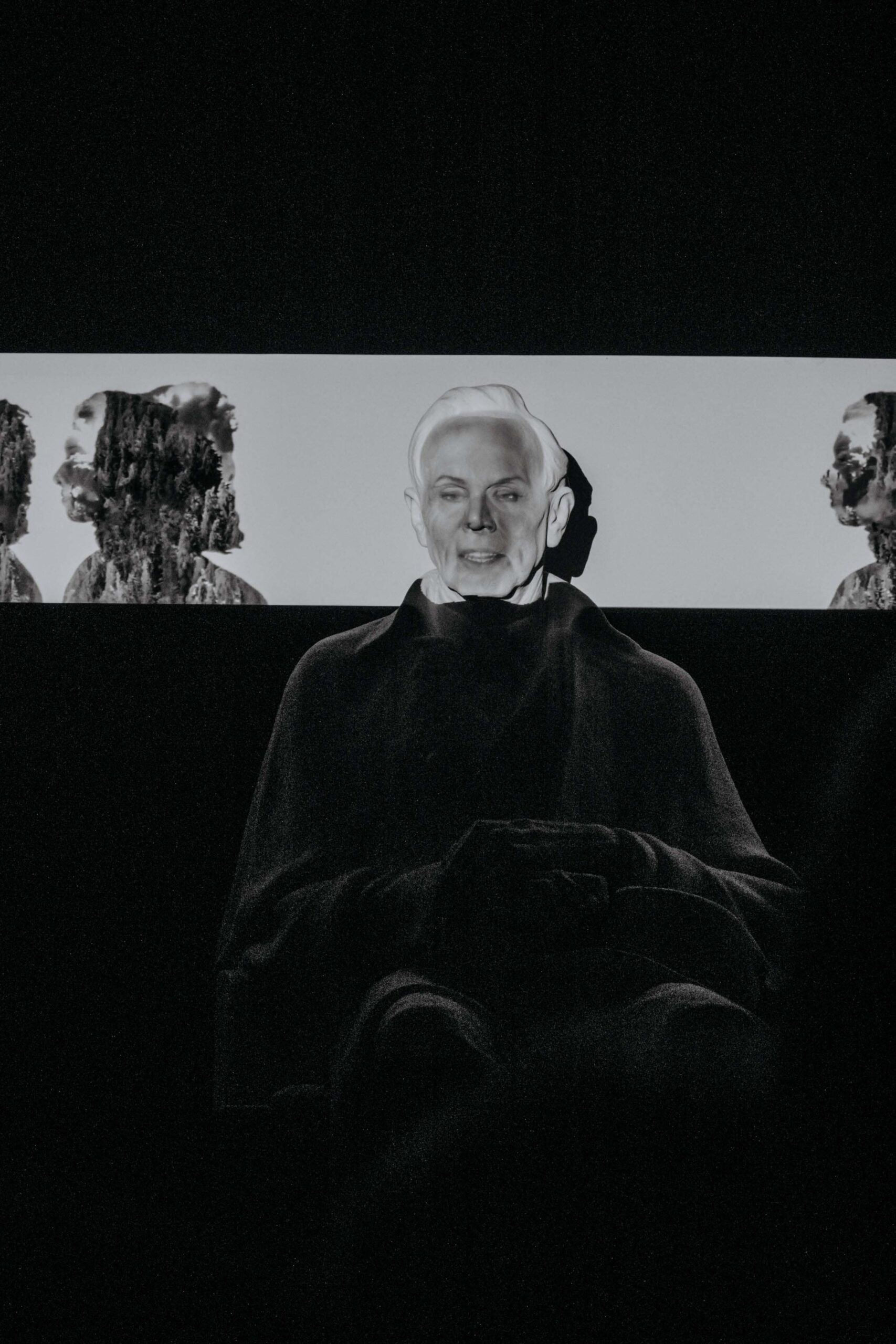
Did I really say that?
Peter Rosegger had many faces. He commented, criticized, praised and condemned, only to reject everything he said. He discussed everything, often several times and often contradictorily. But who has a homogeneous world view today? No two people always think the same. No one always remains the same. Because we are all many things. You and I, and those over there too.
Biography
Michael Bachhofer, born in Friesach and raised in the district of Murau, now lives in his adopted home of Vienna. He is an artist whose work focuses on perception, reality and something like truth. Karl Wratschko is a curator, film and radio producer who also grew up in Styria. In addition to other works, he made the films ‘Index’ and ‘I have seen the future’ in 2017. On the occasion of the 175th anniversary of his birth and 100th anniversary of his death, the two artists shed light on Peter Rosegger’s journalistic work. Actors and actresses from Next Liberty lend their faces to the Styrian writer and bring him to life. The audiovisual installation illustrates the imbalance of human opinion using Peter Rosegger’s words as an example.
“Whether young or old, male or female, we humans are always multi-layered in our views, sometimes even contradictory. In theater as well as in literature, this characteristic serves as a source of inspiration.”
– Michael Schilhan, Managing Director Next Liberty
In cooperation with NEXT LIBERTY.
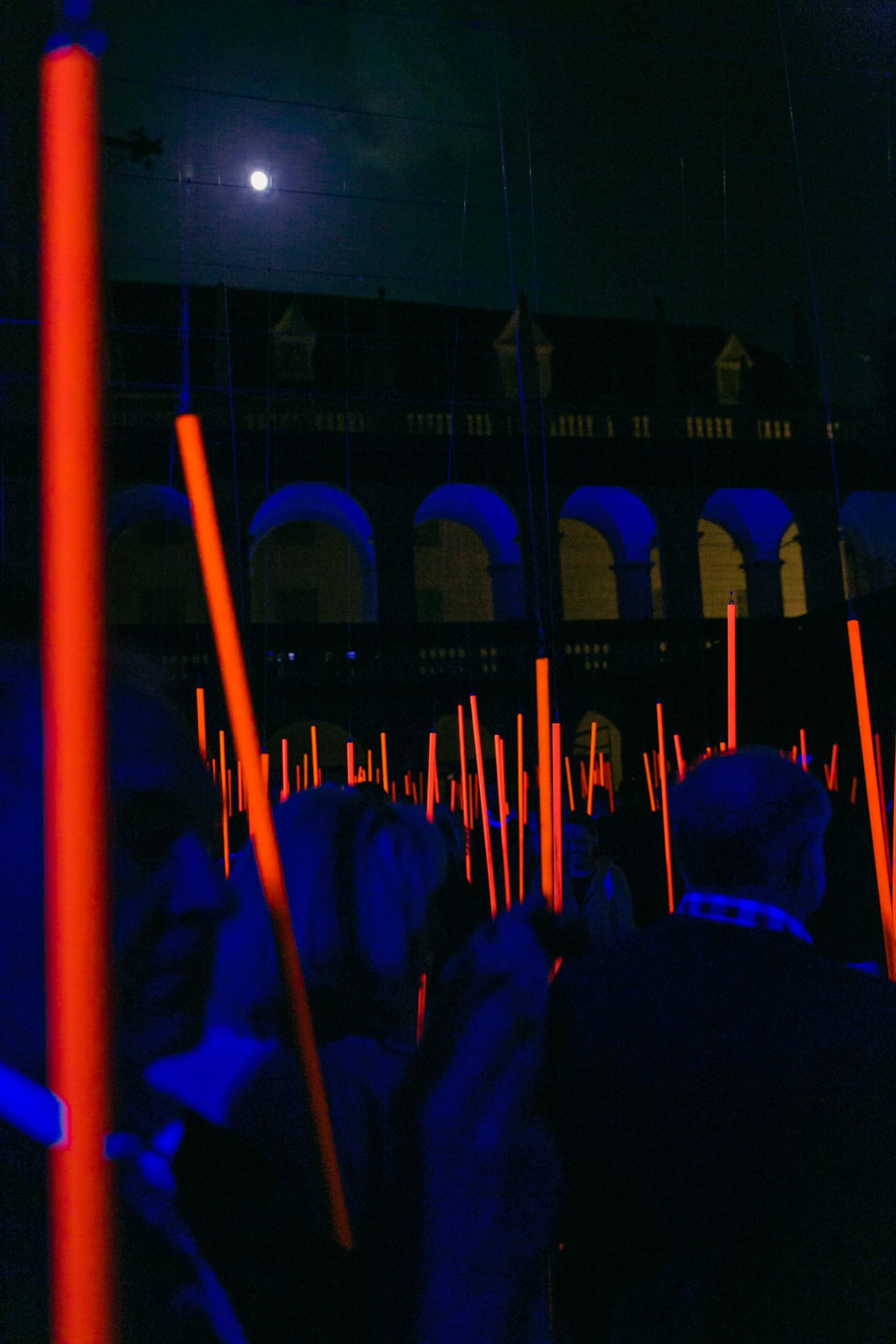
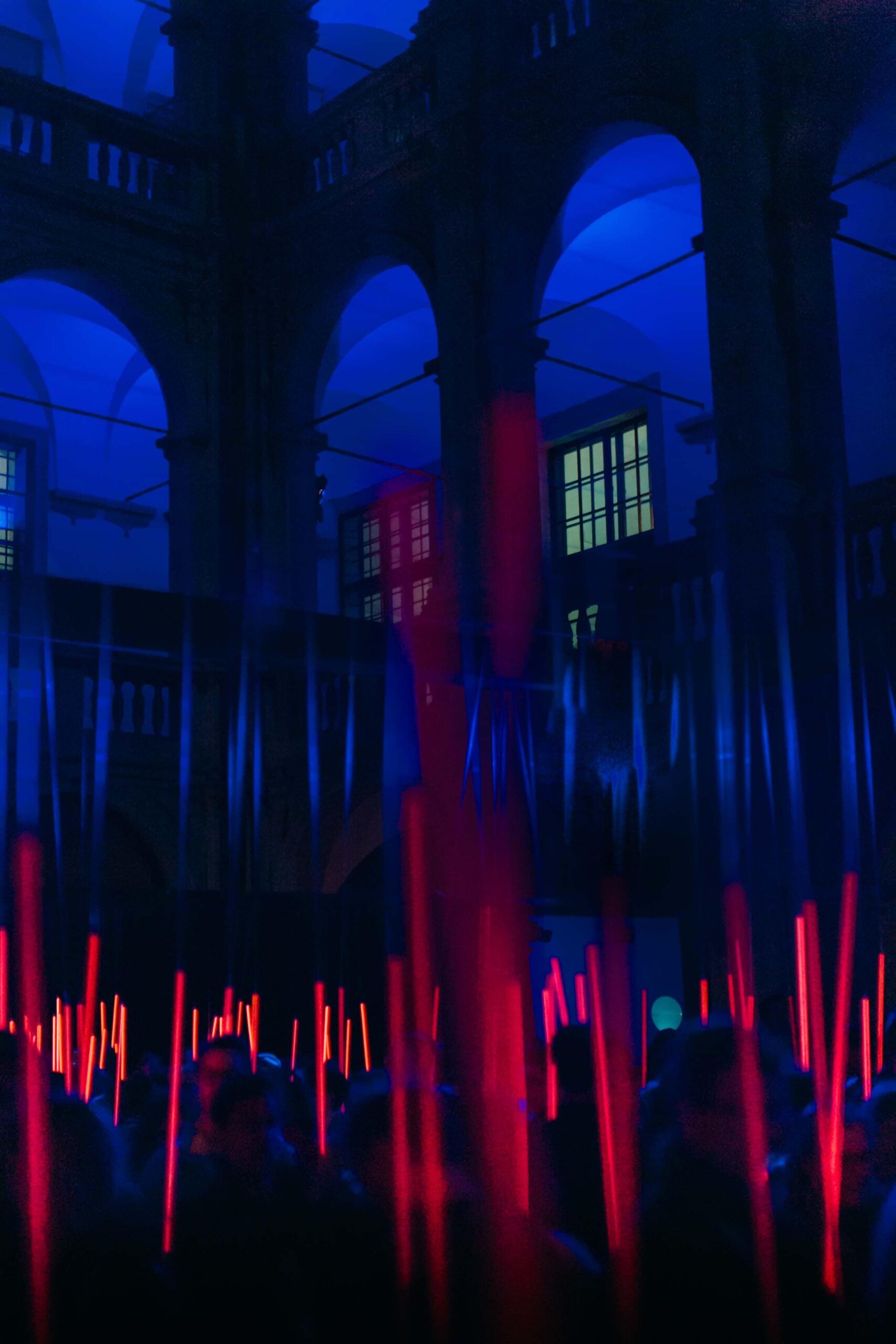
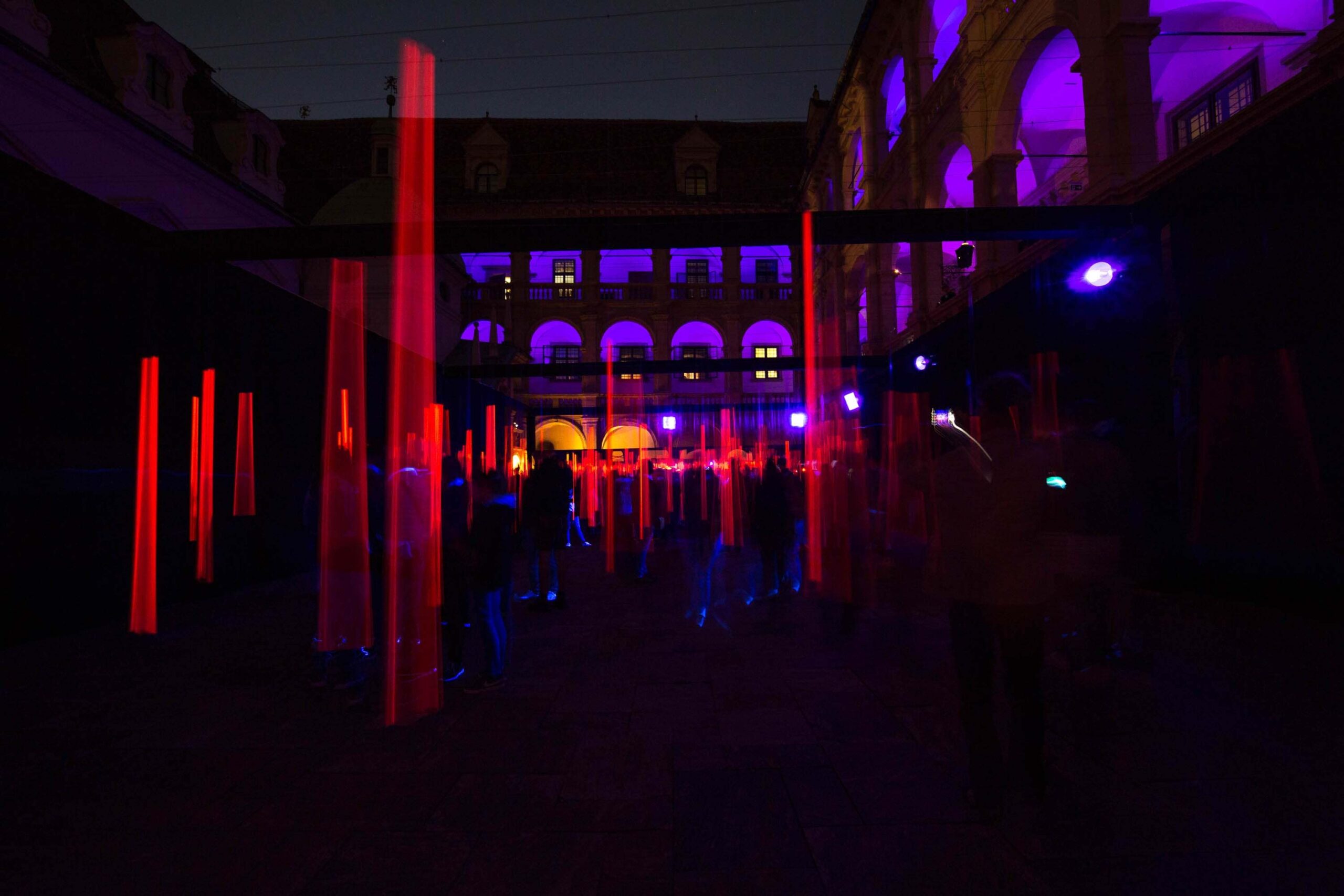
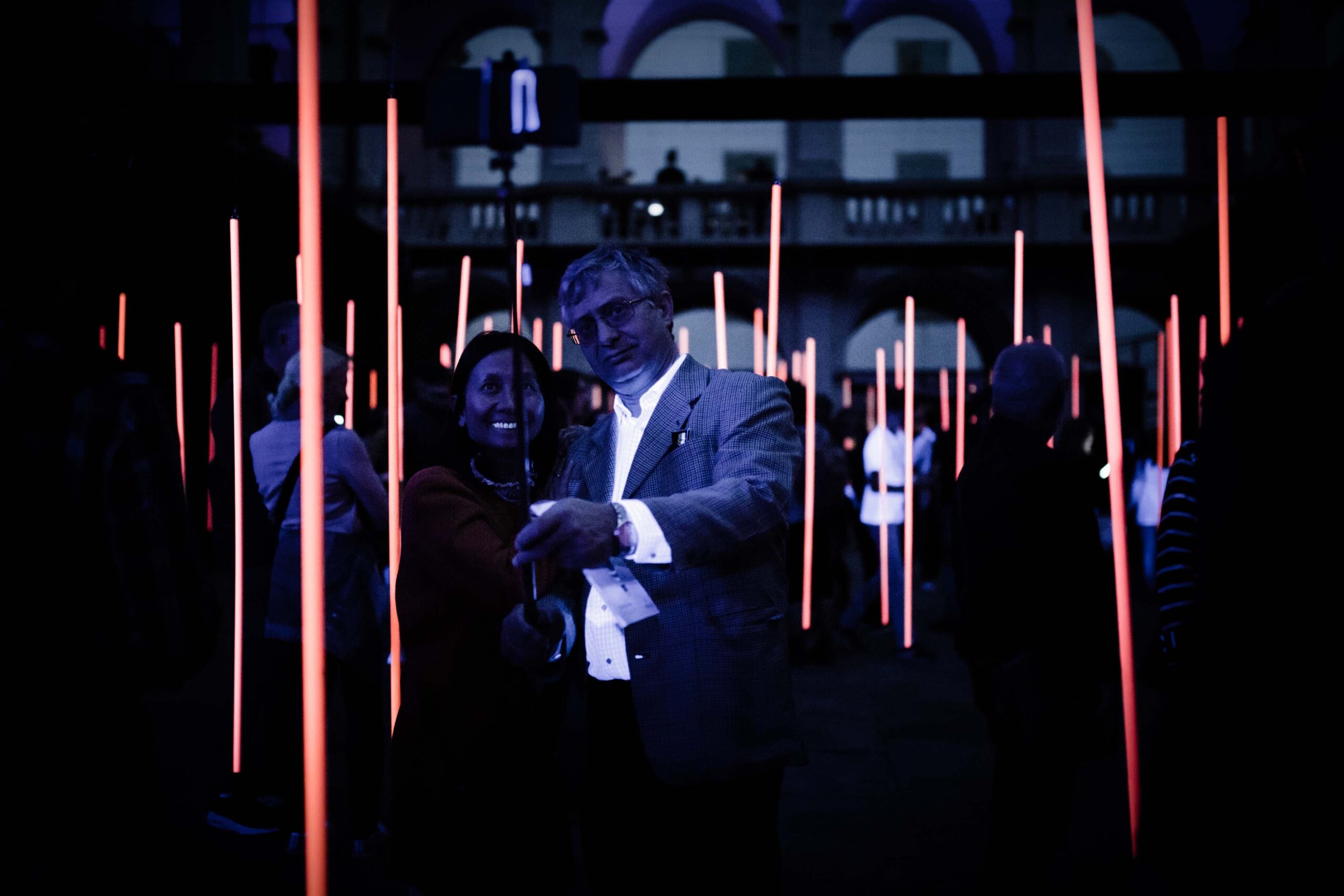
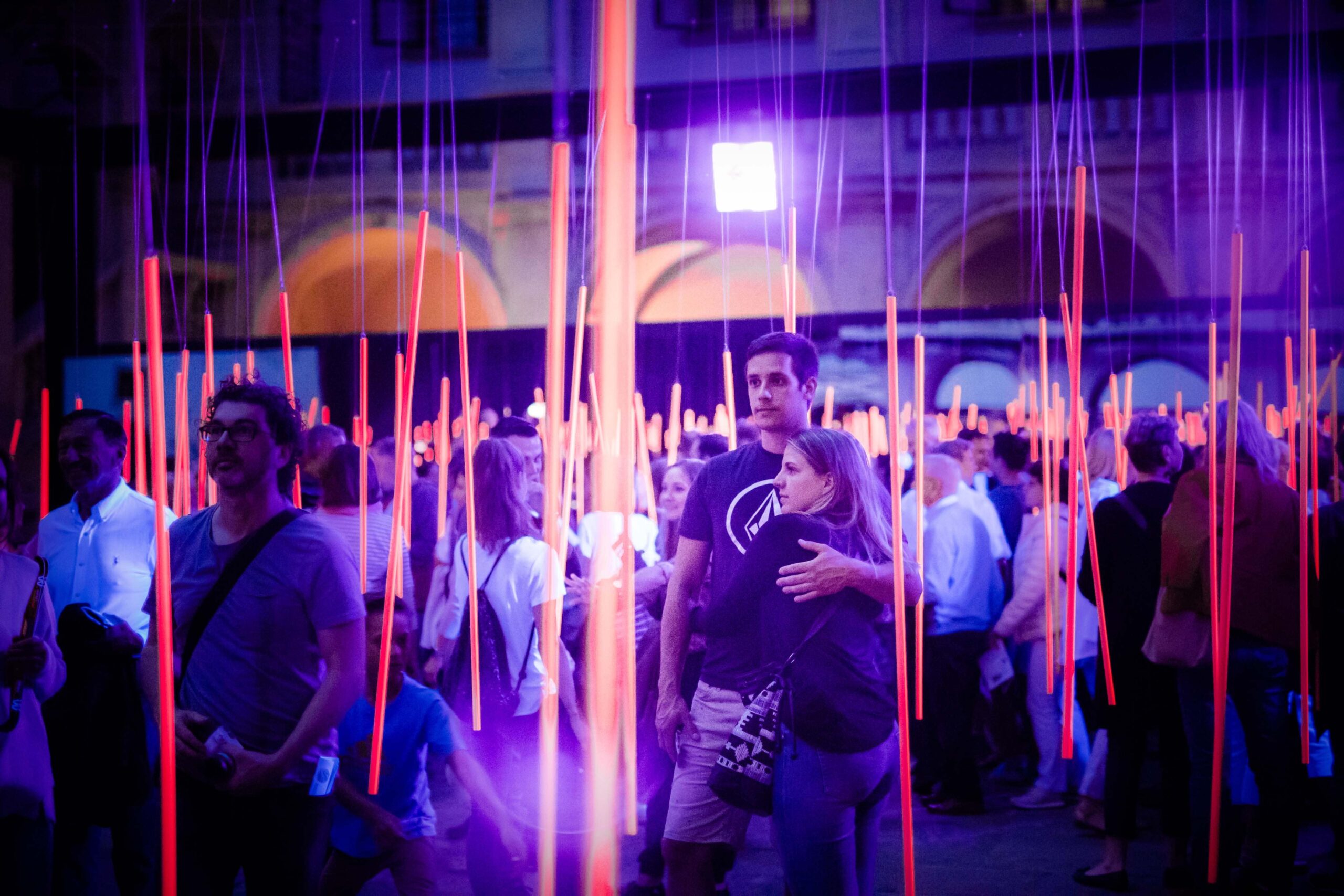
Listen! A universe to the dance!
Not lifted to the highest heights, but rather floating like red magic on their carpet of sound. With a gentle touch, they become dancers of light, slender in their silhouette, yet great in their effect. Like the sound, they also exercise noble restraint and, as a dancing universe, carry you off into the flood of infinity.
Biography Wouter Brave
Wouter Brave is a multidisciplinary artist who has been working with the medium of light for 10 years. Active as a dancer and choreographer between 1980 and 2000, he now devotes himself primarily to light art. His love of dance and his fascination with the medium of light enter into a playful symbiosis in “Floating Light”: The luminous, shining rods become floating dancers in the eye of the beholder, performing an infinite choreography in the darkness of the night.
Biography Studio Percussion
The Graz-based ensemble STUDIO PERCUSSION Graz was founded in 1979 by Günter Meinhart and over the years has dedicated itself to its own contemporary projects as well as to cross-border collaborations with musicians, composers and organizers from the fields of jazz and classical music. In the Landhaushof, STUDIO PERCUSSION Graz use six simple pieces of wood to make the tonal compression and reduction of instruments audible and tangible. They used Michael Gordon’s award-winning piece “Timber” as a model and inspiration.
In four years, KLANGLICHT as the Festival of Sound and Vision has not only established itself as a highlight for light and sound art fans, but as one of the crowd-pullers in the cycle of the Styrian cultural year, the art festival of Bühnen Graz now played host to visitors to the art festival for three evenings. Whether huge light and sound effects, silent glow or touching sound, all the installations once again provided impressive moments and proved to the large crowds of visitors that art can also move the masses and move them emotionally!
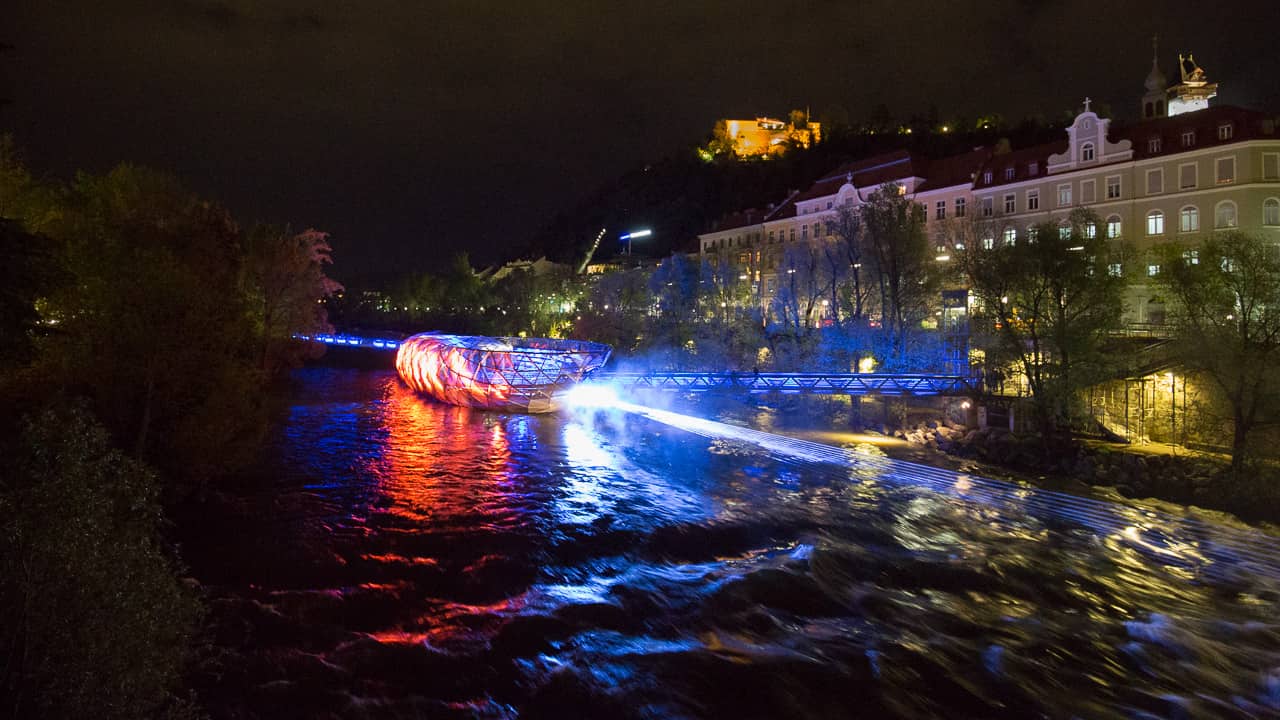
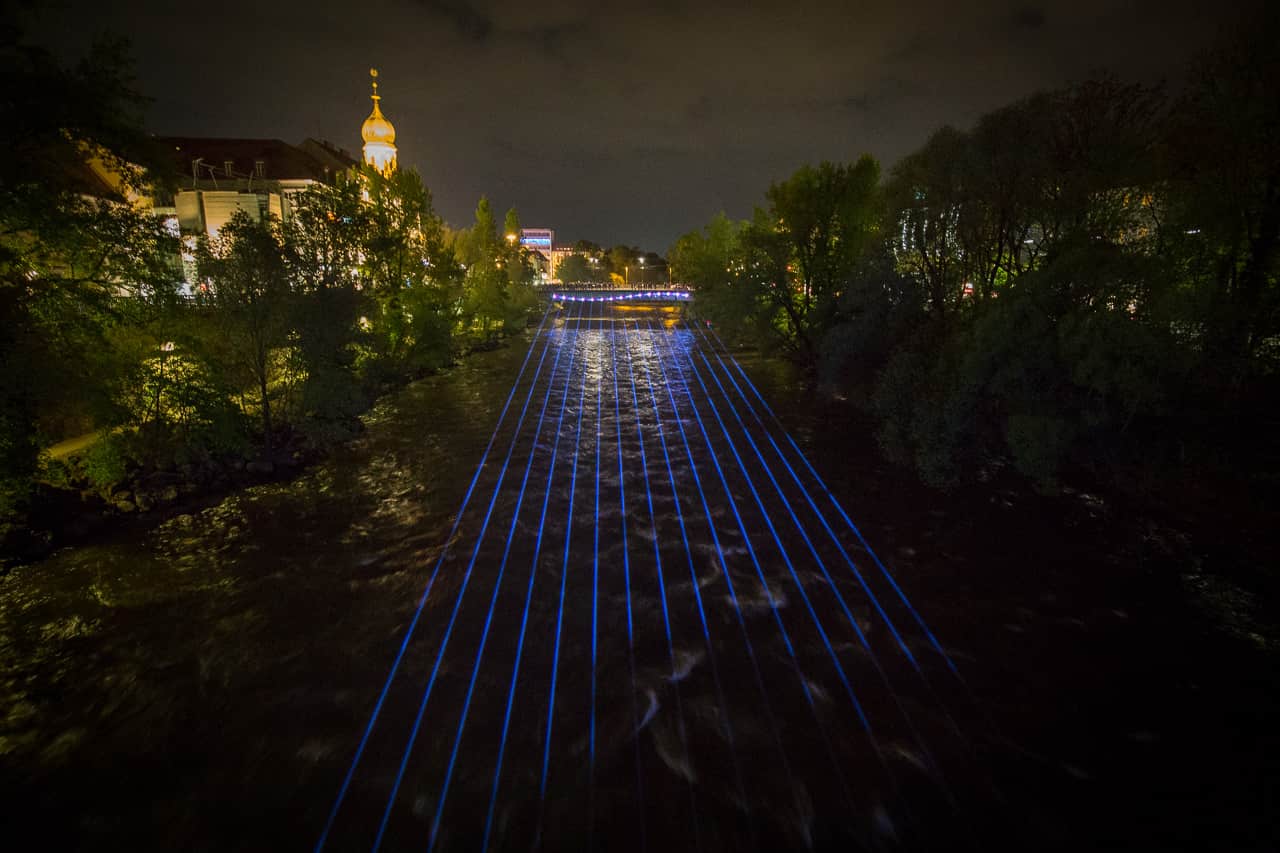
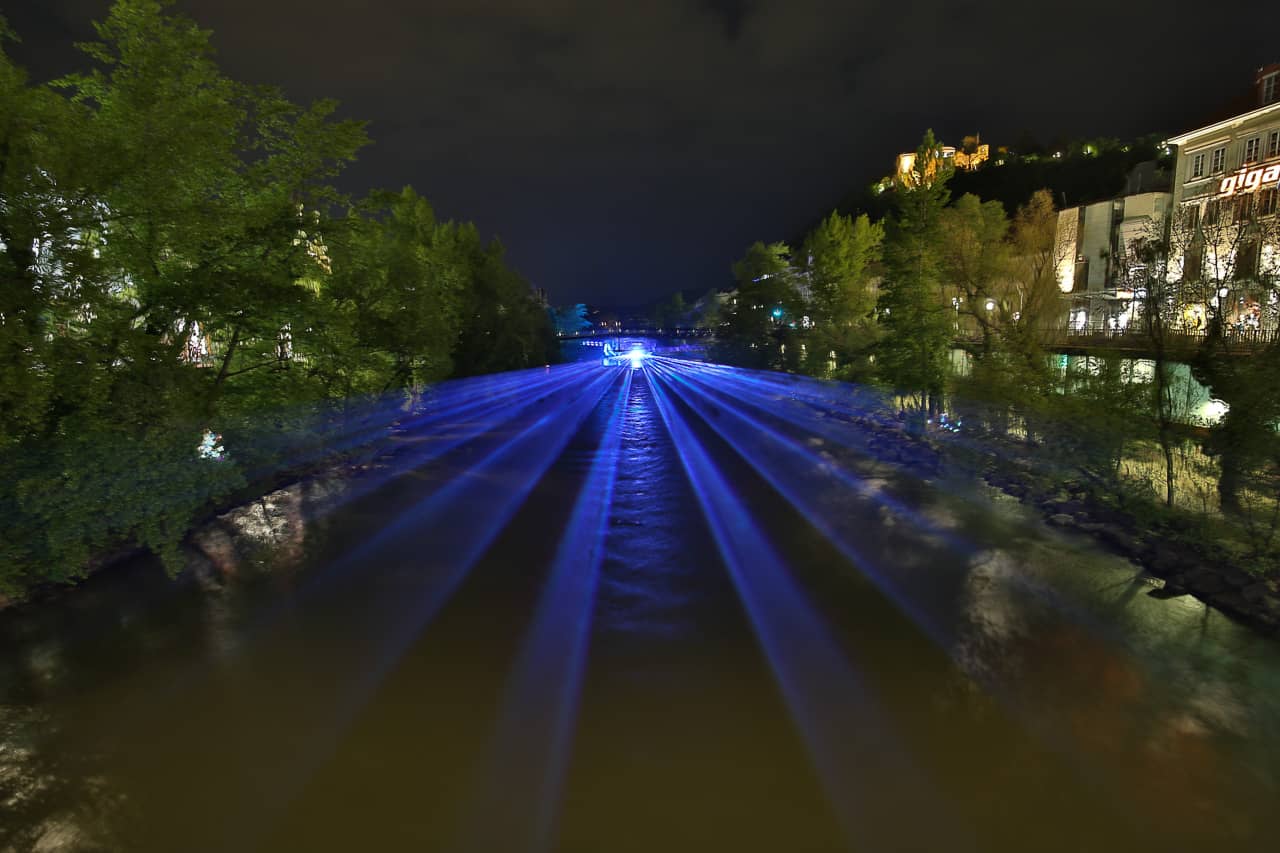
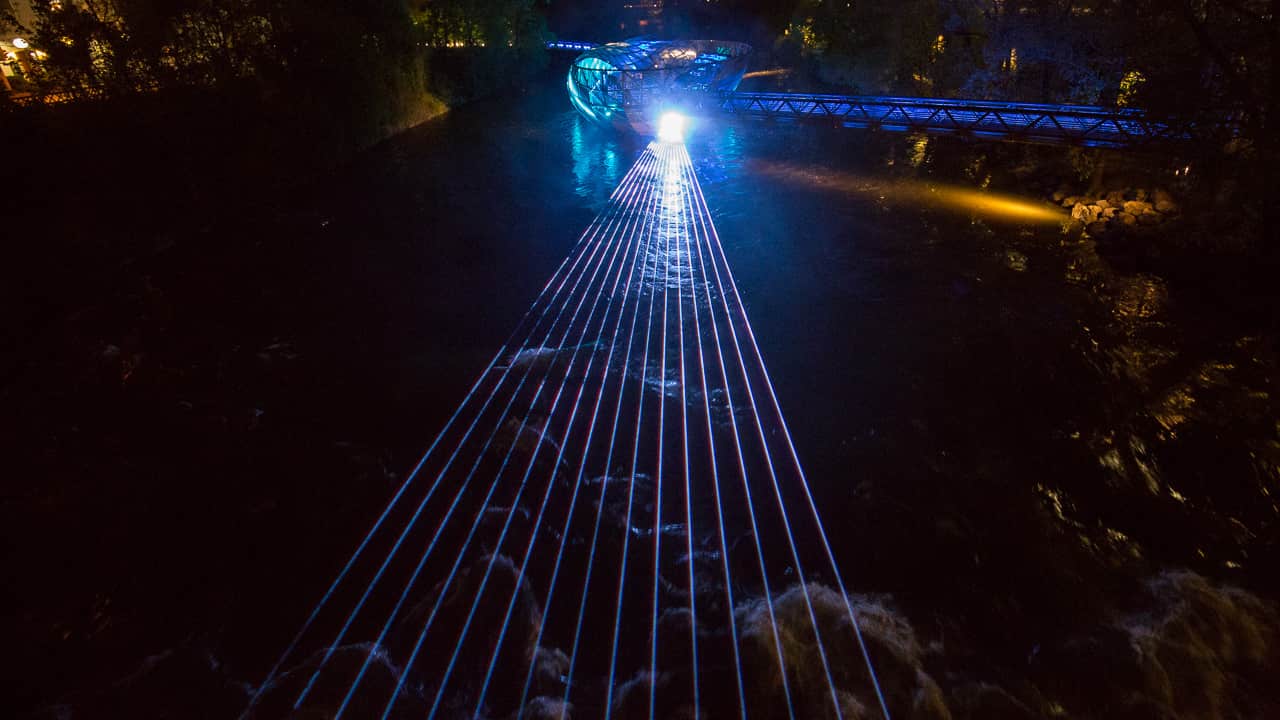
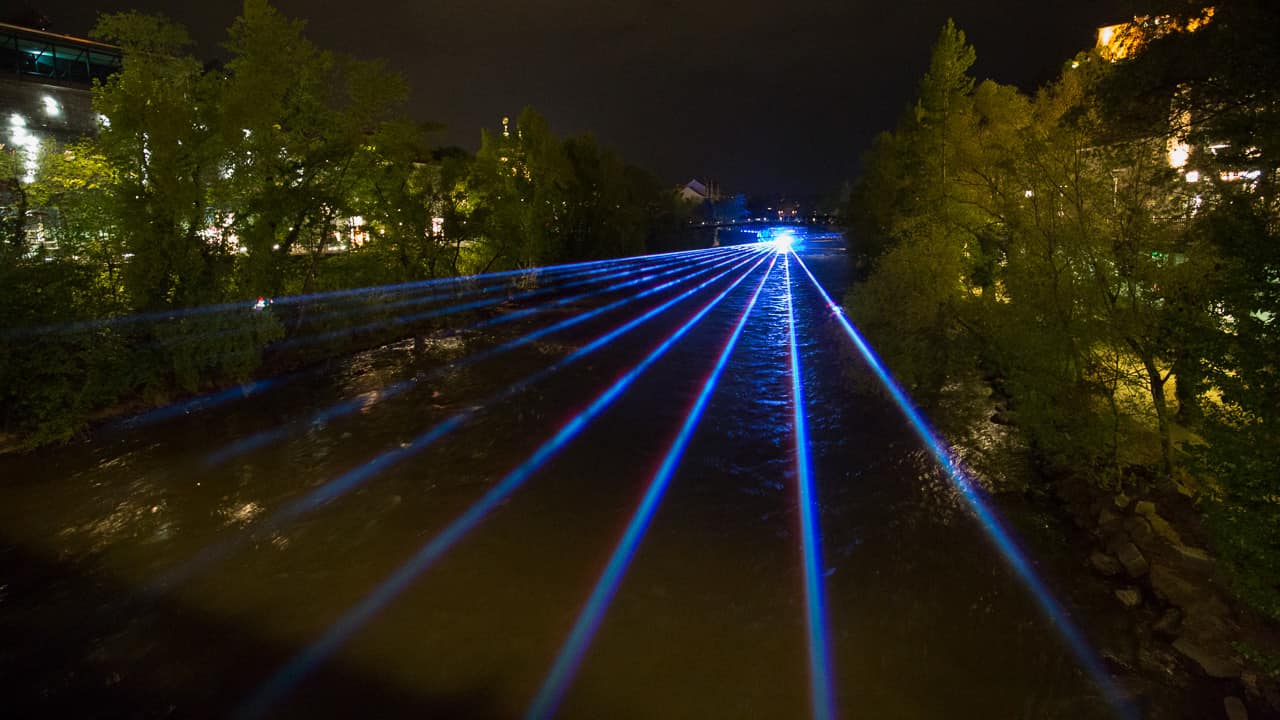
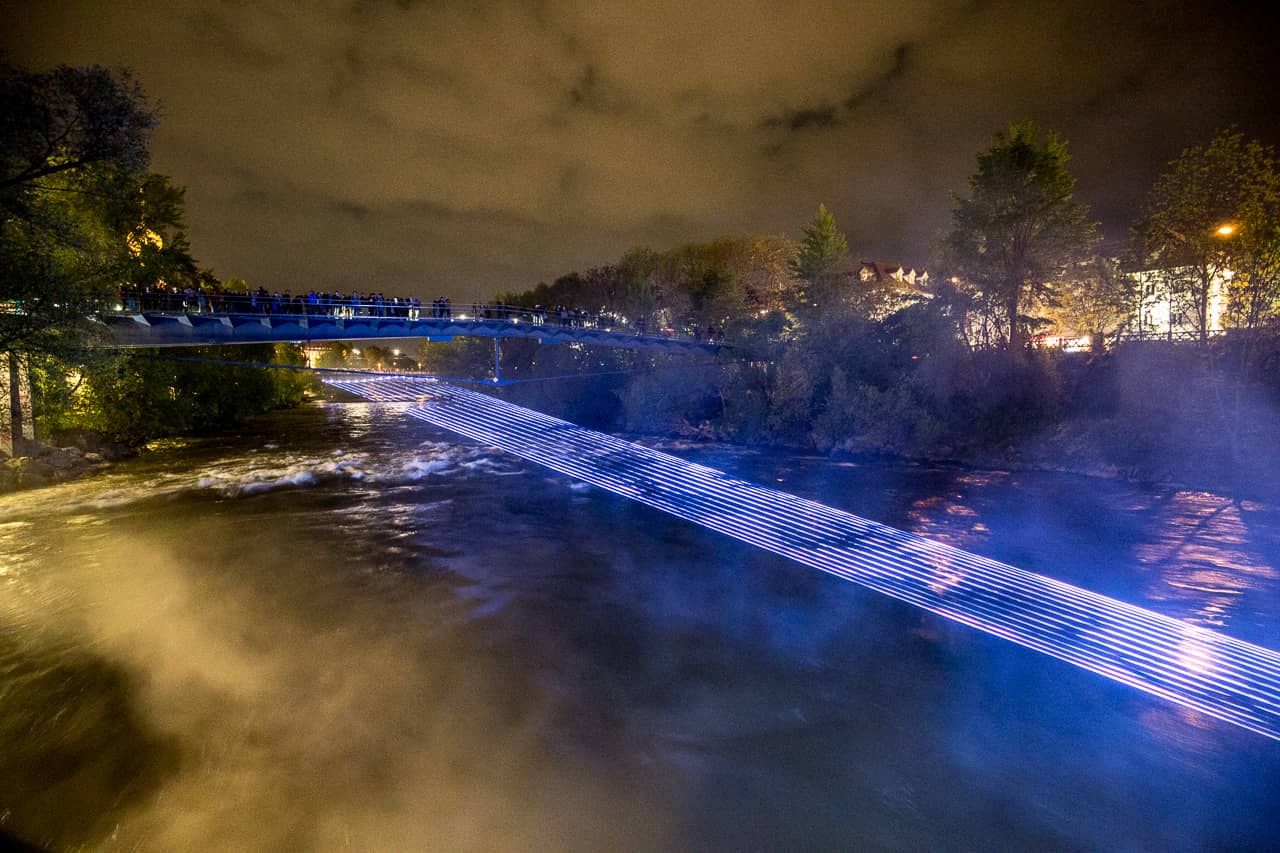
As part of its general refurbishment, the Murinsel was also equipped with event lighting (LED bars that illuminate the metal outer skin of the island in all kinds of changing color effects). This means that the island is no longer illuminated with spotlights from the shore, but shines itself. During the Klanglicht weekend, a laser light wave designed by the visual artists from OchoReSotto provided another unusual visual Mur experience from the Mur island downstream to the main bridge. OchoReSotto: “Between reflection and imitation, water and light meet. Electromagnetic waves reproduce the natural movements of the river and are reflected in the currents of the Mura. A new level of light rays and transparency is created, in which reality blurs with its image.”
Location: Murinsel
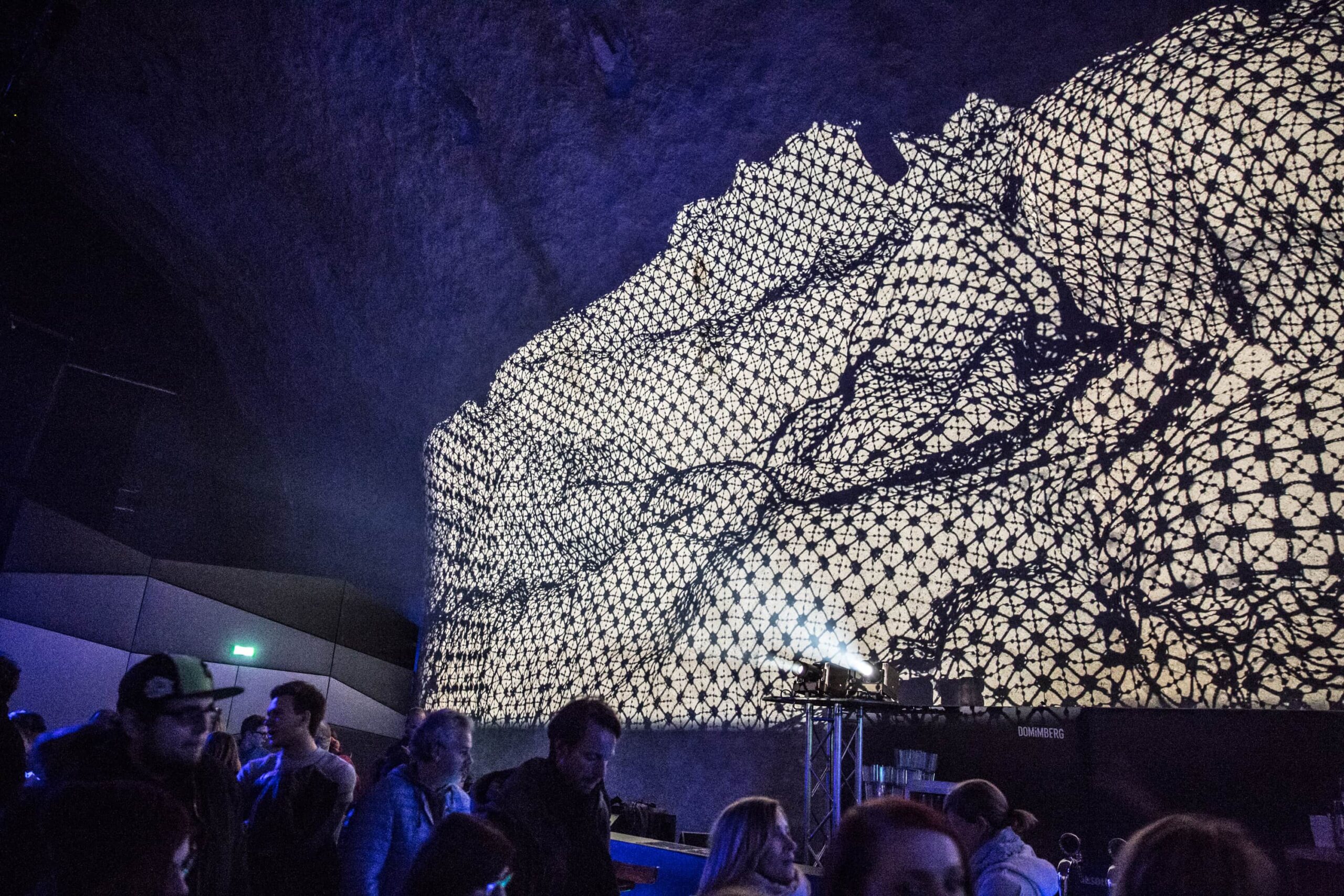
In his work, David Reumüller examines the nature of individual and cultural identity. His method is the reconstruction of image and generated images. With video installations and photographs, the building blocks of contemporary image production are made tangible on several levels in parallel. Images are created that relate to images – a perceptual experience that expands the fragility of our supposedly linear reality. In his stagings through veiling and covering, new landscapes emerge from textures. Reumüller showed one of these landscapes at the Dom im Berg as part of Klanglicht 2017.
Location: Dom im Berg
Biography
David Reumüller was born in 1979 and lives and works in Graz and Sausal. Reumüller has been working as an artist, musician and filmmaker on various interdisciplinary projects since 1997. In his paintings, he stages everyday surfaces, such as textiles or fragments of facades, to create an image or identity. By giving his works a special perspective, Reumüller allows the spatial images to be viewed in their entirety and without distortion from just one location. The artist’s position thus becomes identical to that of the viewer.
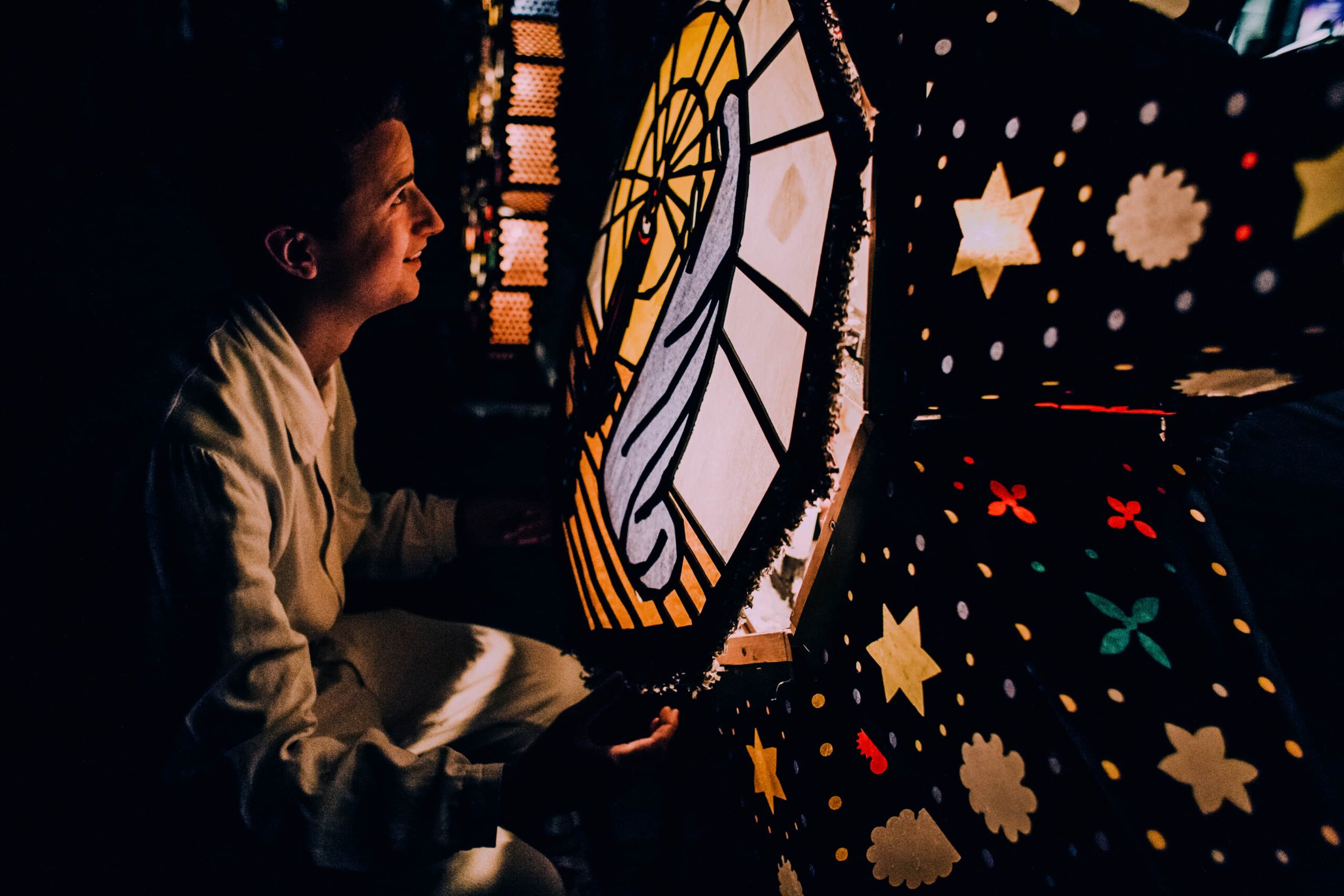
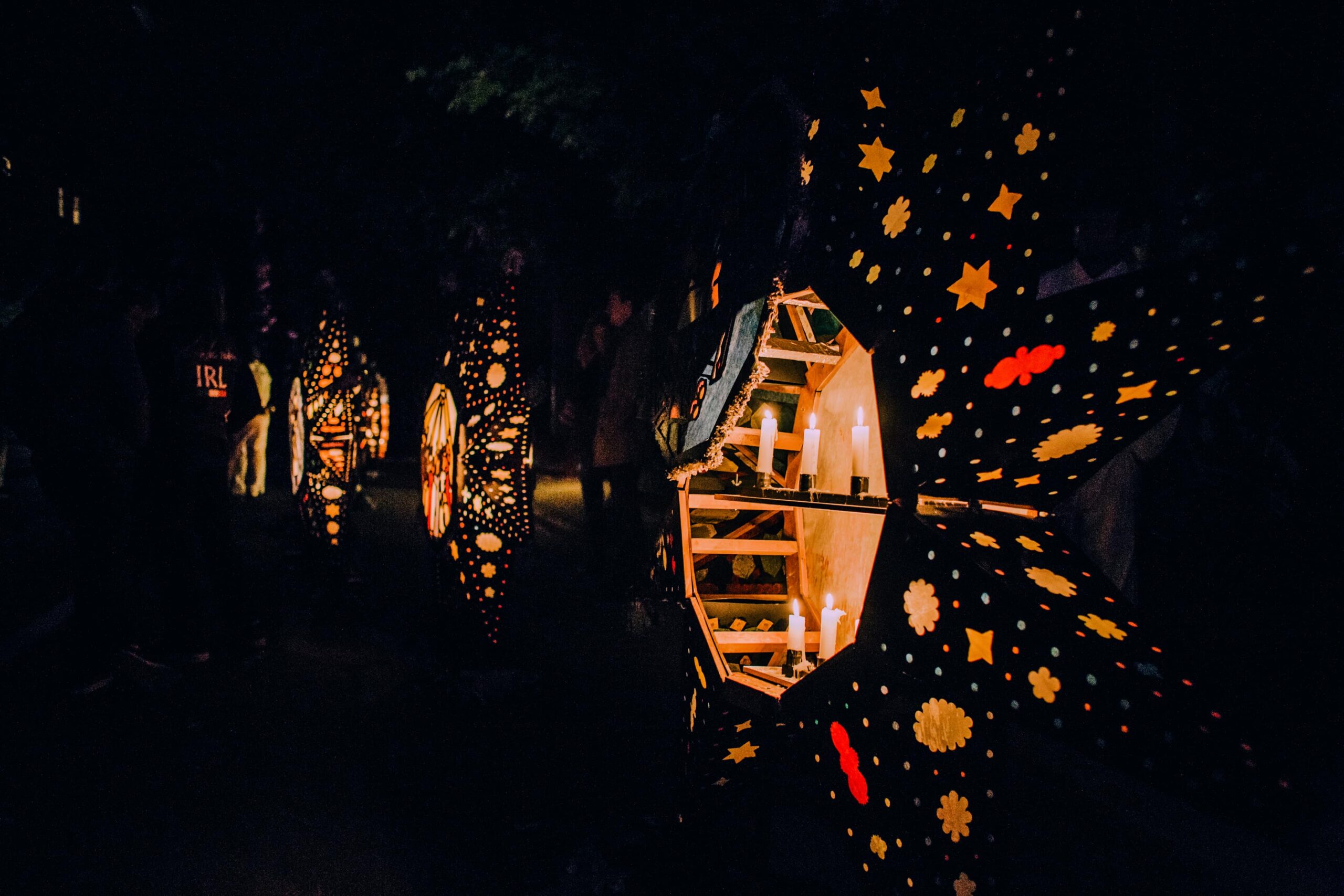
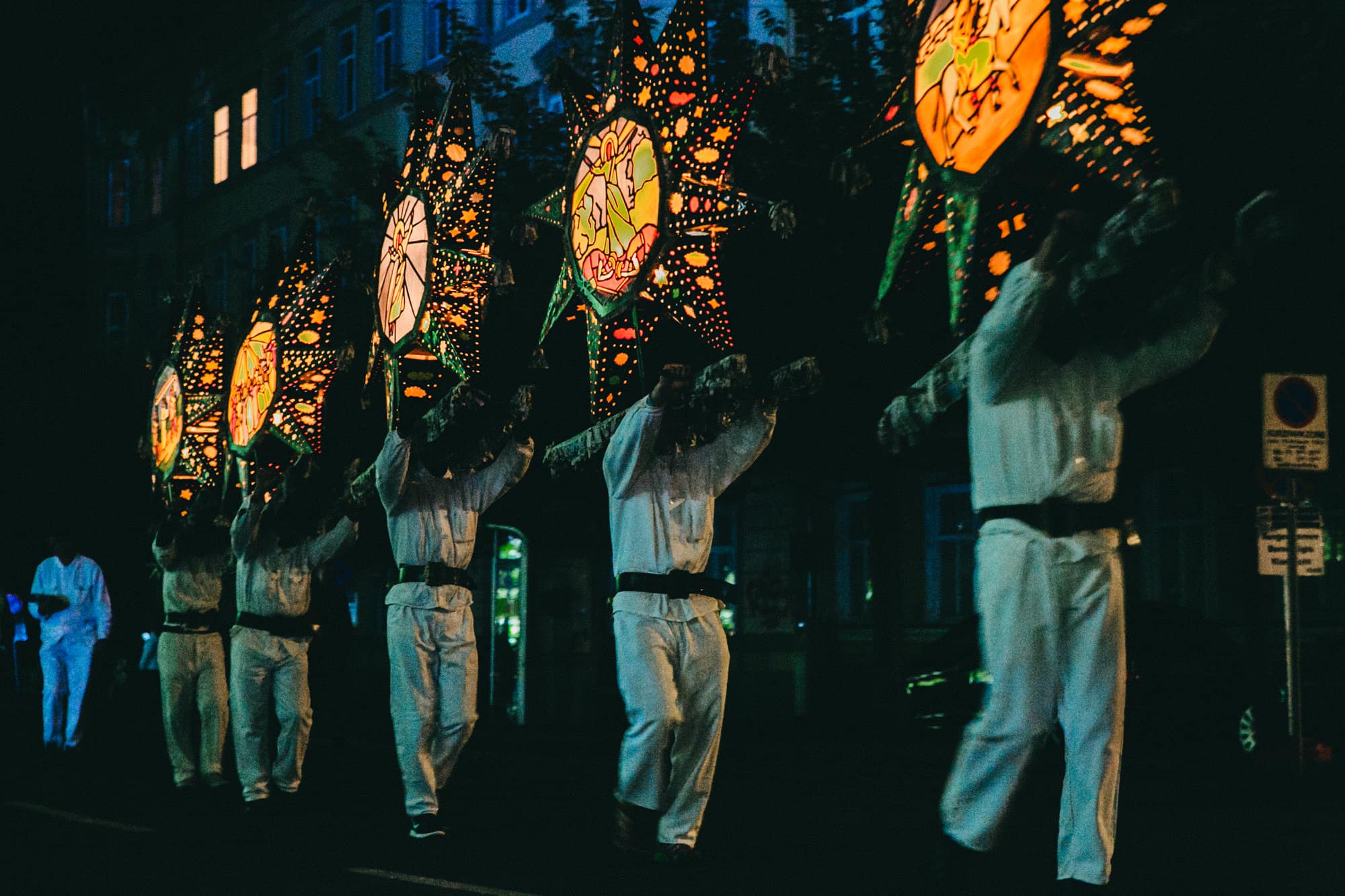
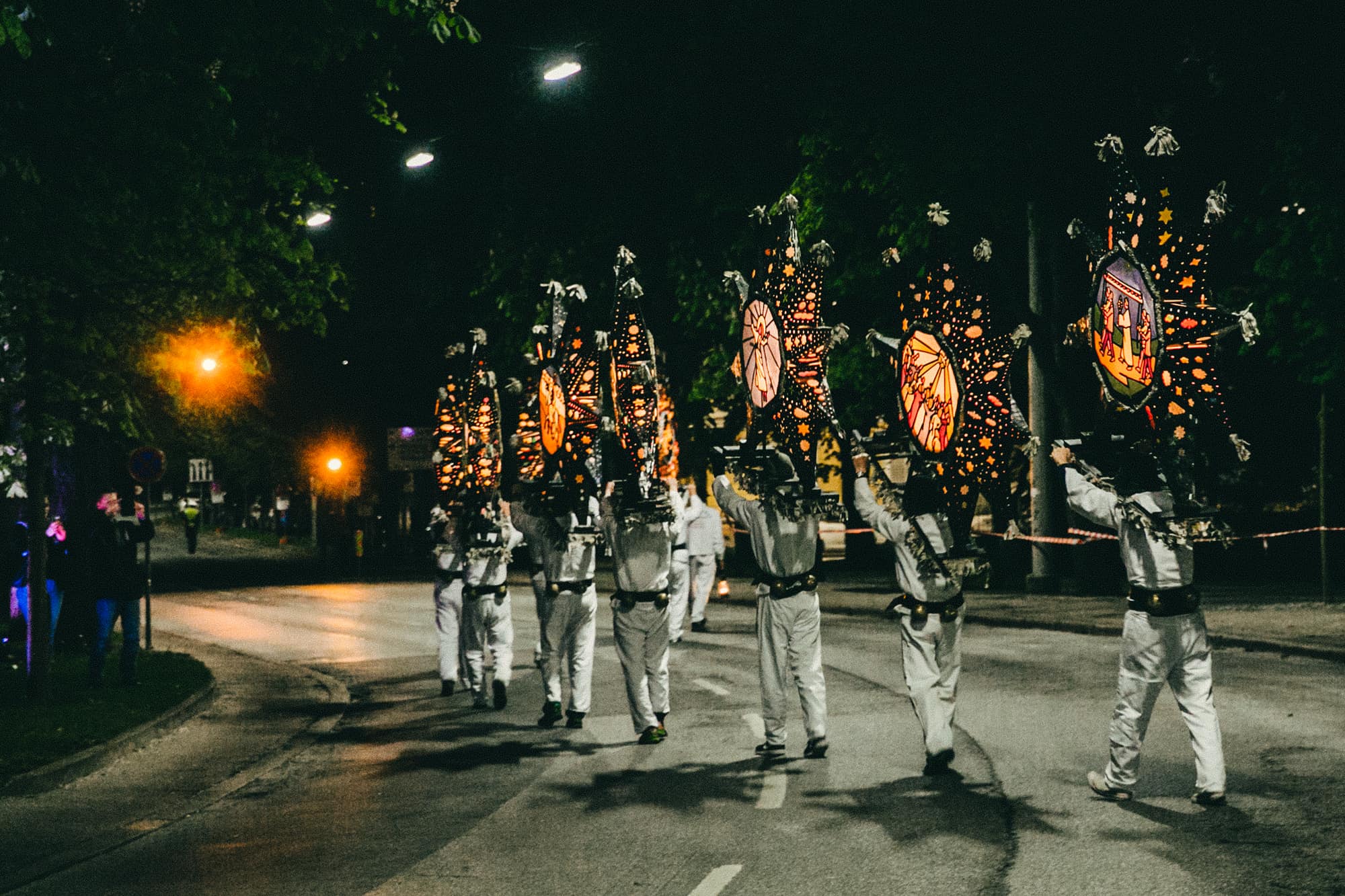
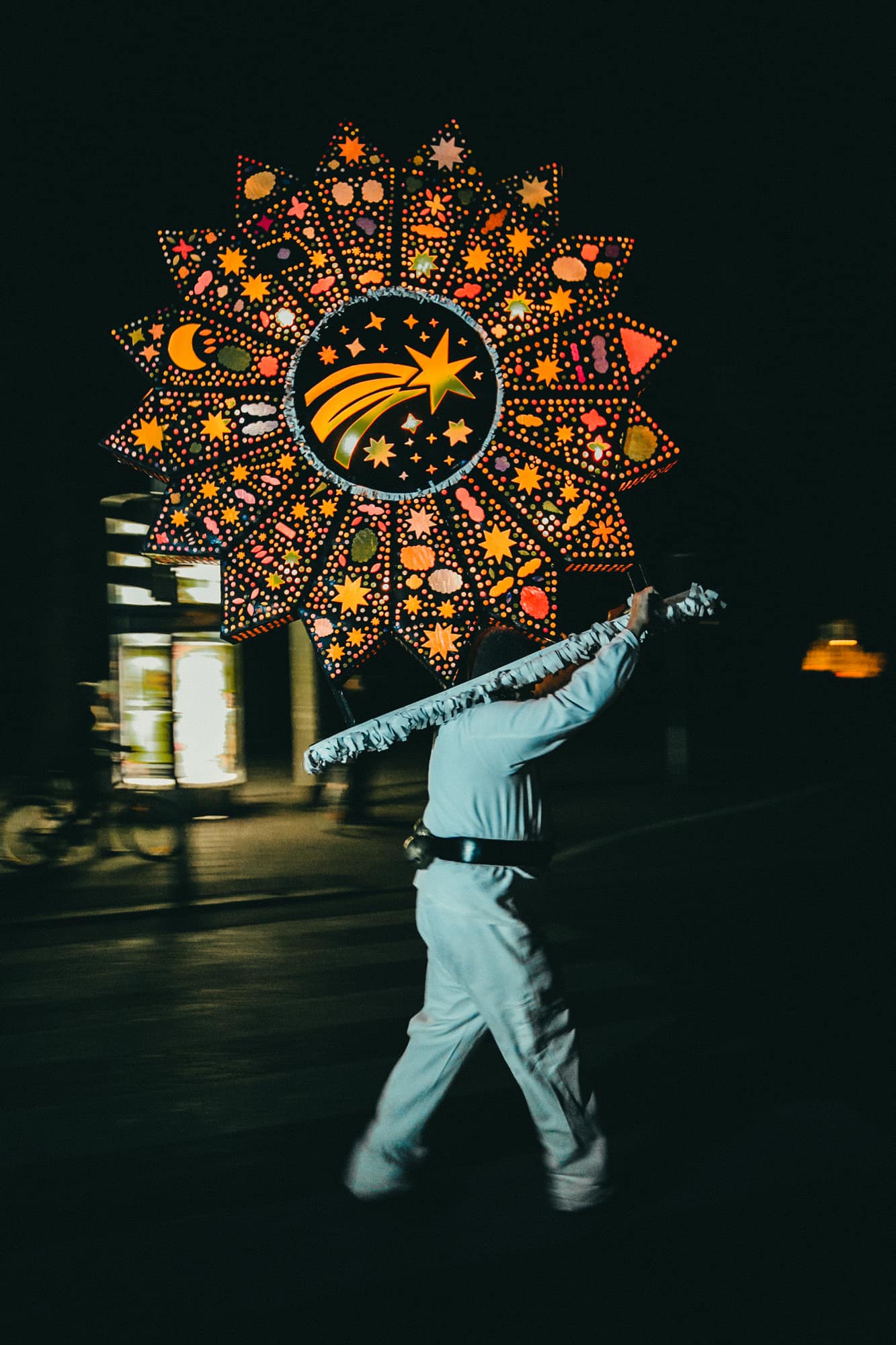
The Glöckler are spirits of light who are supposed to drive away their opponents during the Rauhnacht. This custom is particularly widespread in the Salzkammergut region. The Stainacher Glöcklerlauf has even been part of Austria’s intangible cultural heritage since 2010. The white-robed Glöckler wear paper caps, which are traditionally lit from the inside with candles. There are pictures on the side of the caps. As the name suggests, the Glöckler also wear cowbells, which provide the appropriate background noise. A Glöcklerlauf is a fantastic experience for young and old alike, even if it takes place at an unusual time of year, as is the case at Klanglicht.
Location: Public space
In our everyday lives, we are exposed to a growing stream of sensory impressions that demand our attention. Two Dutch scientists, Rachel and Stephen Kaplan, have studied this topic. In their theory (“Attention Restoration Theory”, A.R.T.), they claim that certain patterns in nature allow us to relax and recharge our energy. Based on this theory, a 200-metre-long installation was created in Graz City Park that offers space for relaxation and forms an antipole to the many sensory impressions of a city. “A.R.T.” was also part of the “Glow Eindhoven 2016” festival.
The installation “A.R.T.” is an initiative of the Intelligent Lighting Institute (ILI) of Eindhoven University of Technology (NL) in collaboration with Indre Kalinauskaite, Joep LeBlanc, Randi Nuij and Studio Philip Ross. Indre Kalinauskaite is a designer and researcher. Joep le Blanc is a sound designer. Randi Nuij studies industrial design in Eindhoven. Philip Ross designs interactive lightscapes, has won several design awards and has been a guest at various festivals with his work.
Location: Stadtpark/Burgring
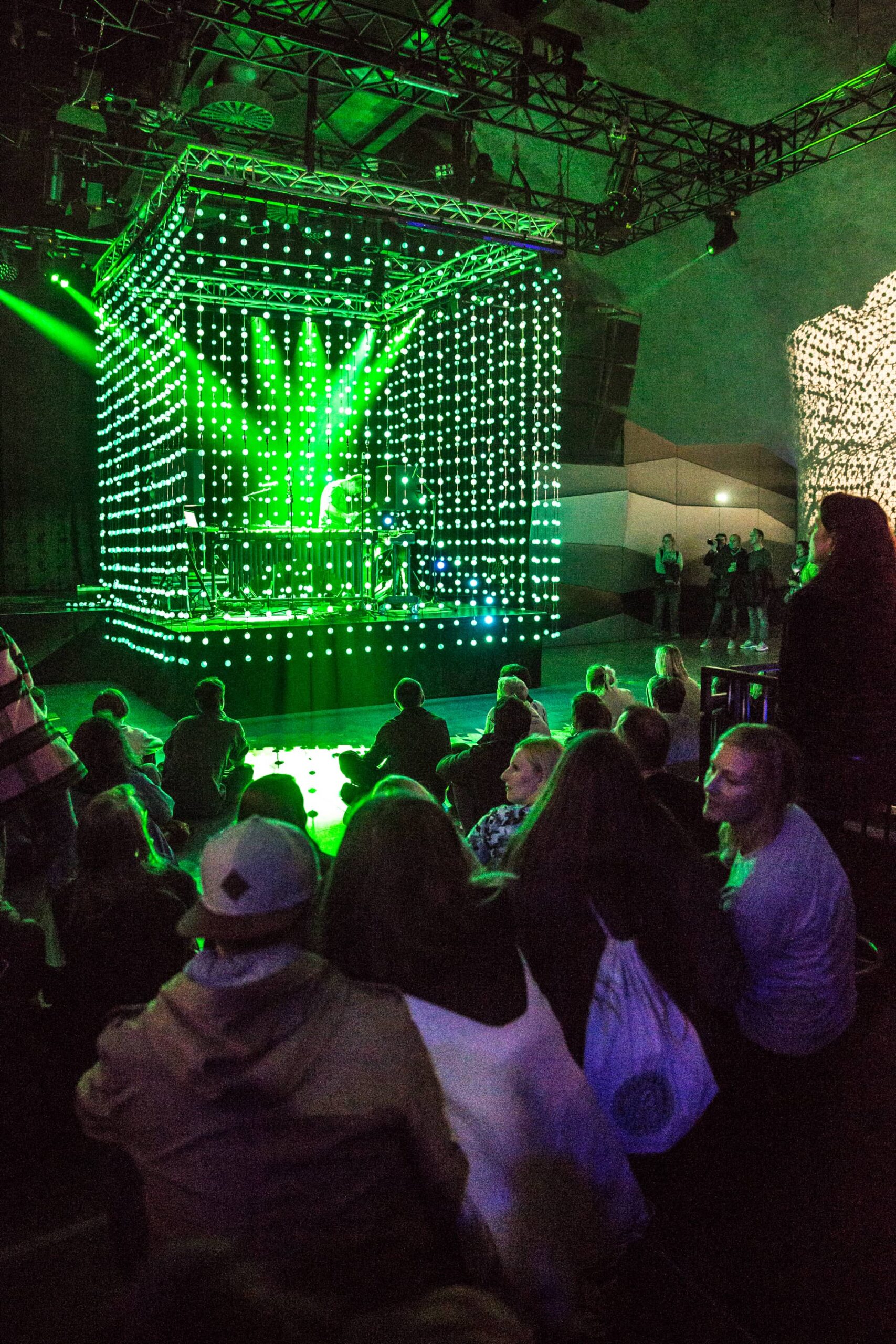
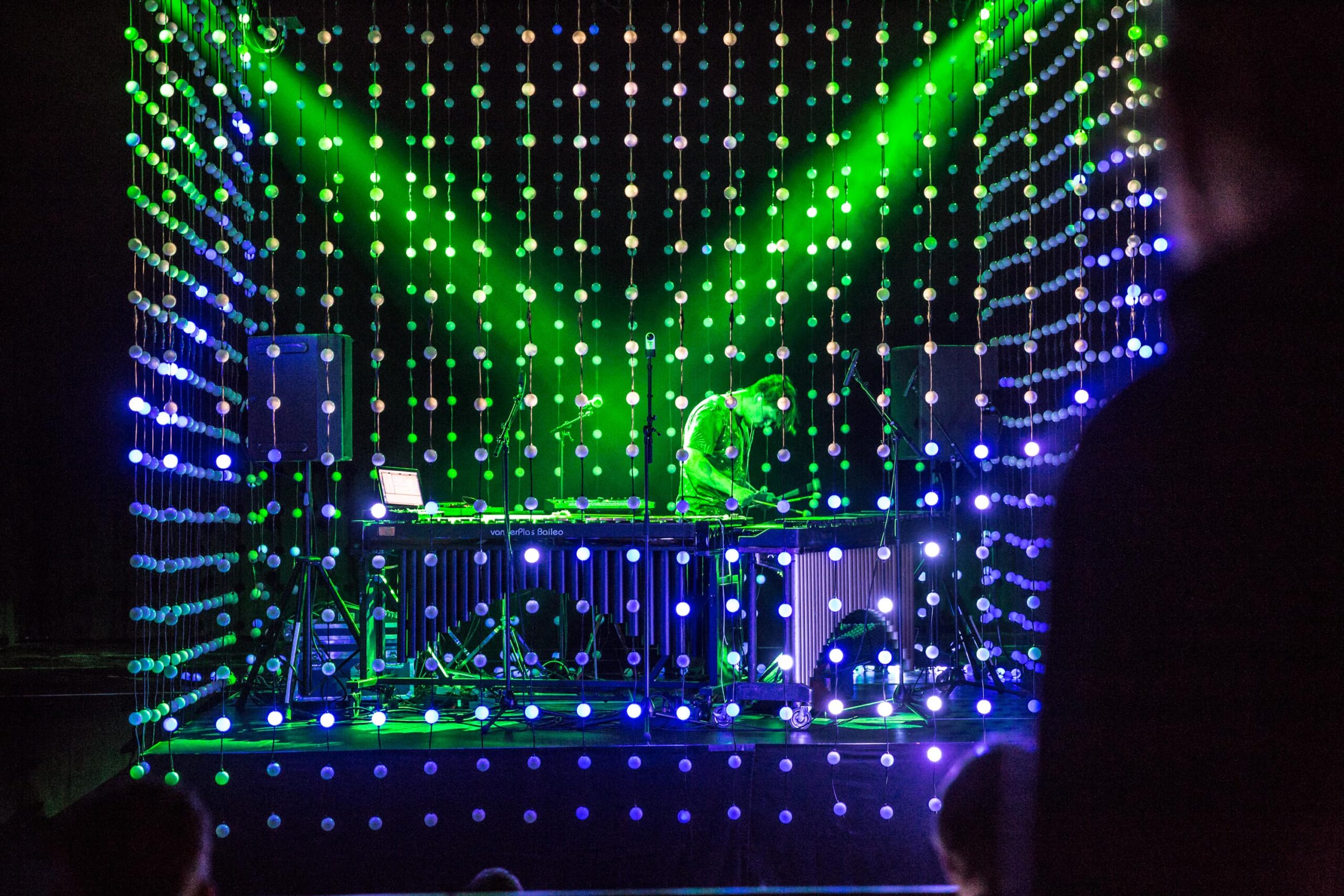
The concept for Pulsation was created by Gerhard Kosel. Raphael Meinhart was responsible for the music and performance. The starting point for the project was “Tribute to Steve Reich”, which Meinhart performed for the first time at Austrian Soundcheck 2016. The two-hour performance used the style that Reich, the inventor of minimal music, had specified. The breathtaking performance was a balancing act. The entrance from Karmeliterplatz was the starting point for the pulse beats, which continued along the path through the mountain. There was another light pulse in front of the entrance to the cathedral, as well as at the exit to Schloßbergplatz.
Location: Dom im Berg
“In times of information overload, minimalist music is a way for me to let my thoughts flow freely again and give my soul space.” (Raphael Meinhart)
Biography
Percussionist Raphael Meinhart came into contact with the music of Steve Reich at an early age through his involvement in his father’s ensemble, Studio Percussion Graz. Since then, minimal music has been a recurring theme in Meinhart’s musical work, whether in his own projects such as Who Man Dog, Unchain Meinhart and Trio de Janeiro or as a sideman with Shackleton, Studio Dan or Studio Percussion. On the occasion of Reich’s 80th birthday, Meinhart dedicated a solo project to him, which shows strong traits of Reich’s early work and is enriched by his own musical elements. www.raphaelmeinhart.com
There is whispering, laughing, complaining. And finally someone says: “Open your eyes and you will see!” With a radio play, the Schauspielhaus Graz added a strong acoustic note to Janet Echelman’s object in front of its building. The texts were taken from plays of the season as well as from “Cyrano de Bergerac” by Edmond Rostand, which will be performed on the Kasematten from June 10. A possible challenge for the audience: recognizing which plays the quotes come from. The text fragments were recorded by the actors and actresses of the ensemble, while the radio play was designed by musician Matthias Grübel.
Biography
Matthias Grübel (D, born 1982) has released his music on several labels and has produced theater music for the Schaubühne and Maxim Gorki Theater in Berlin, the Thalia Theater Hamburg and the Théâtre National de Strasbourg, among others. He has worked with director Jan-Christoph Gockel for many years. He has also recently worked with Falk Richter, Marius von Mayenburg, Jette Steckel, the collective Copy & Waste and the choreographer Kat Valastur. He has also produced radio plays for Bayerischer Rundfunk, SWR and Deutschlandradio. This season, Grübel is creating the music for “Der gute Gott von Manhattan” at the Schauspielhaus.
Location: Playhouse
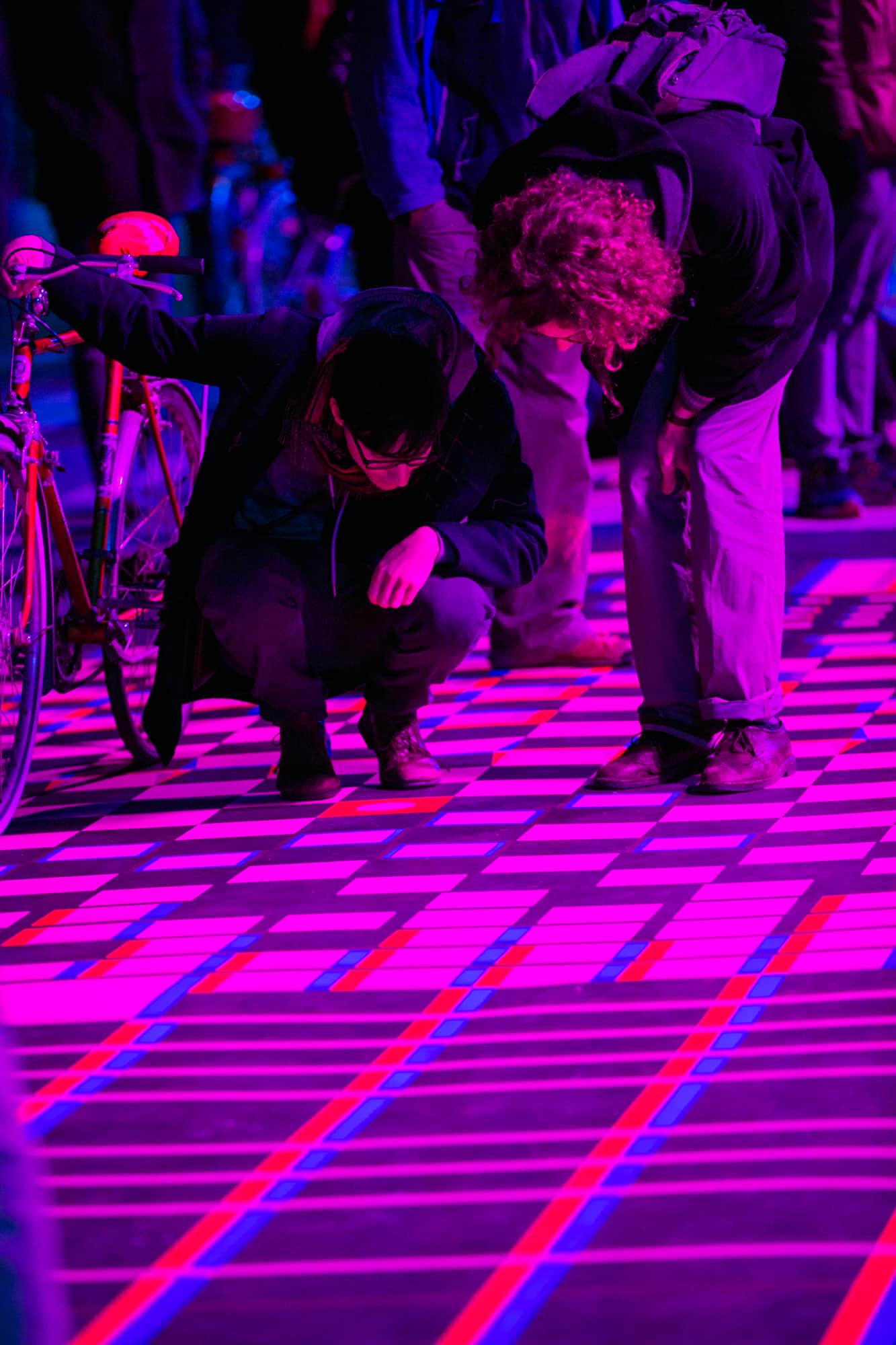
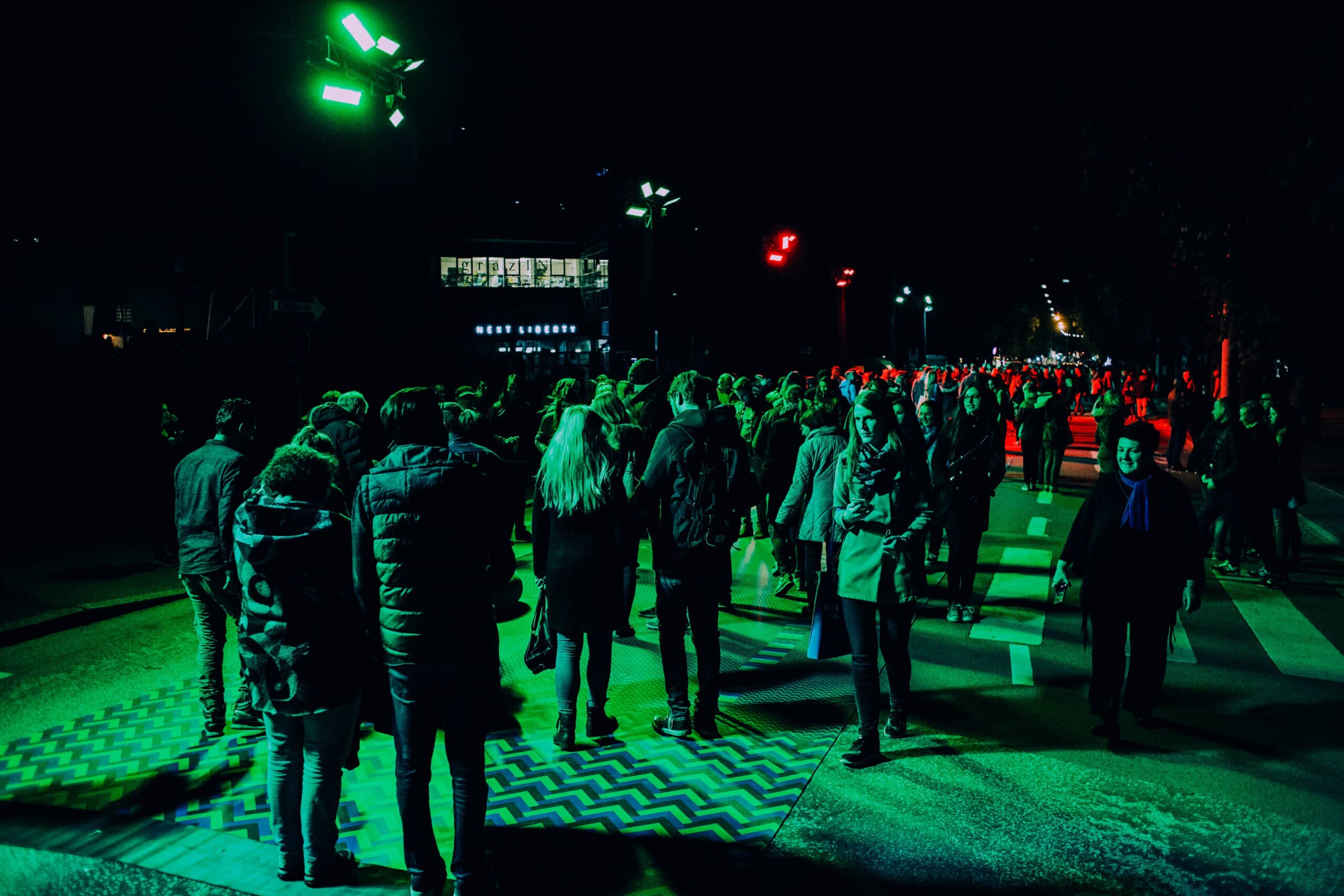
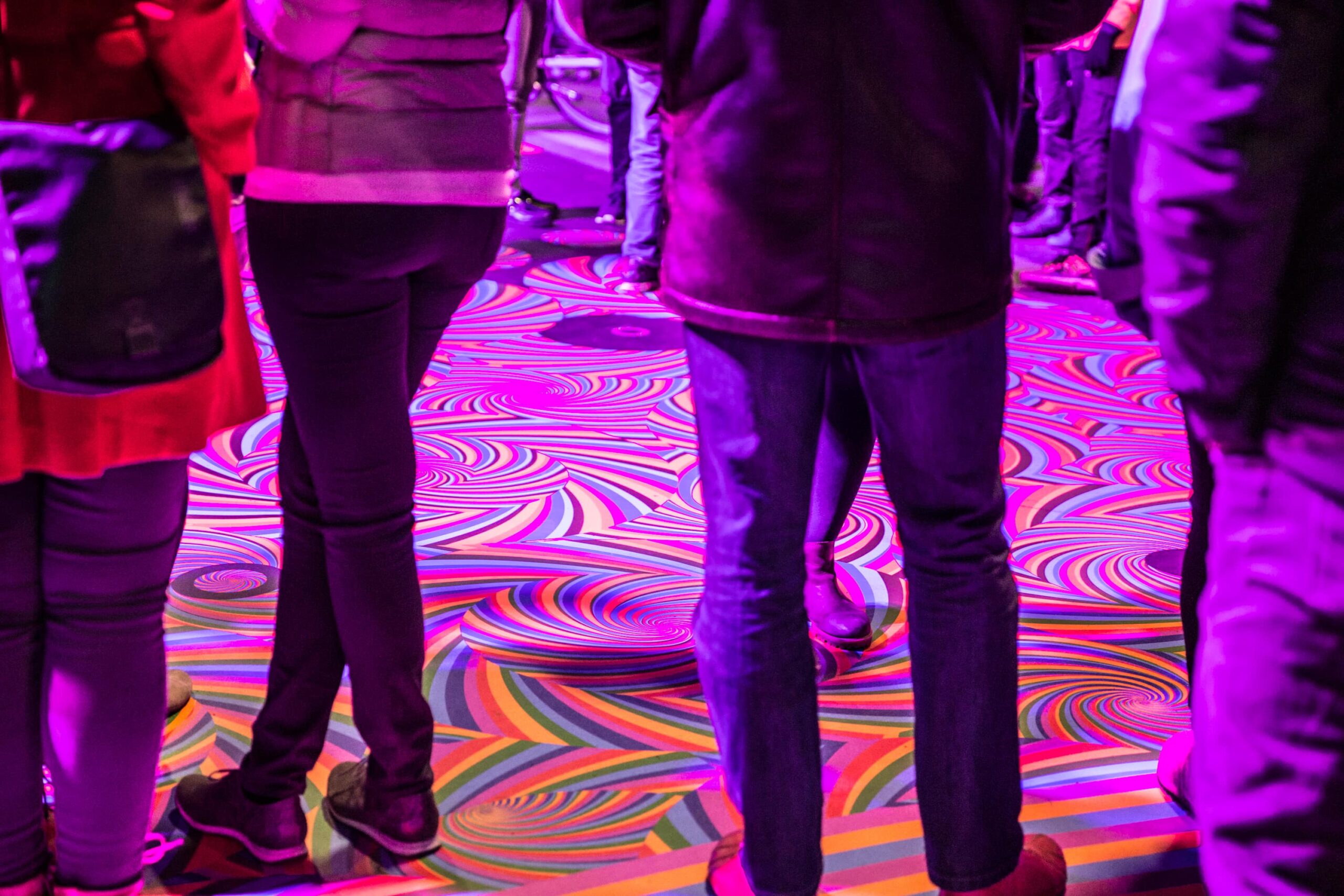
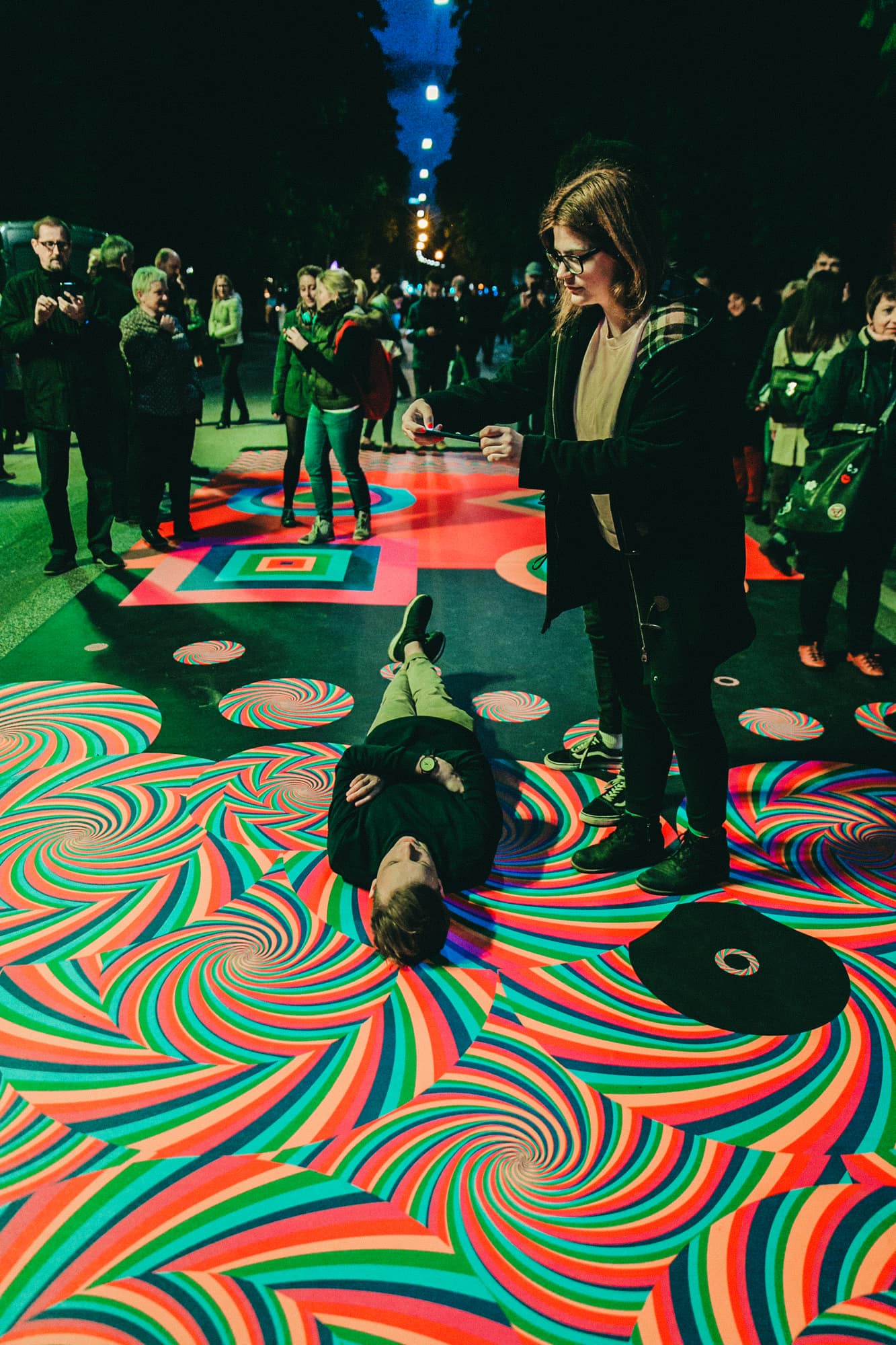
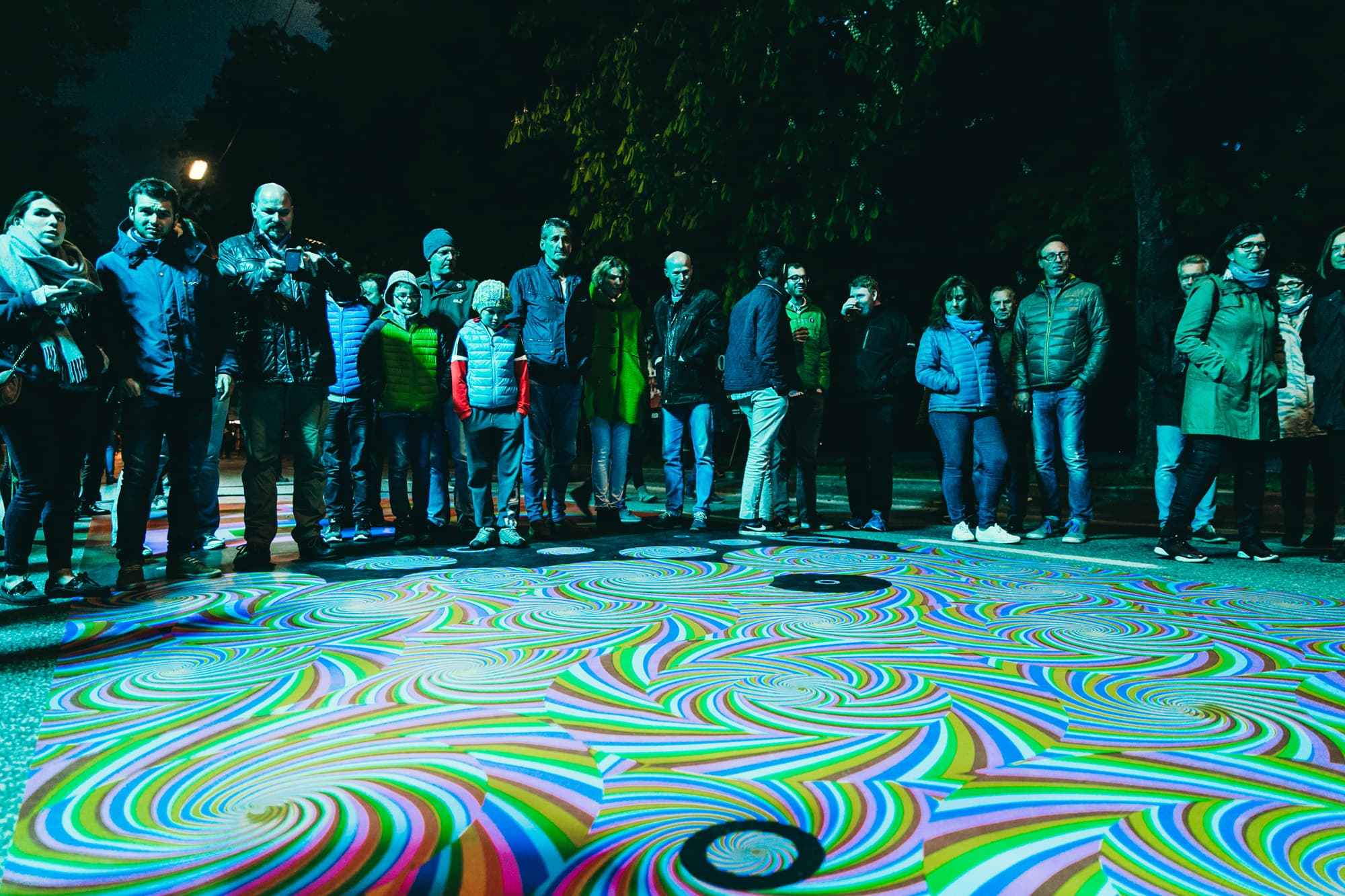
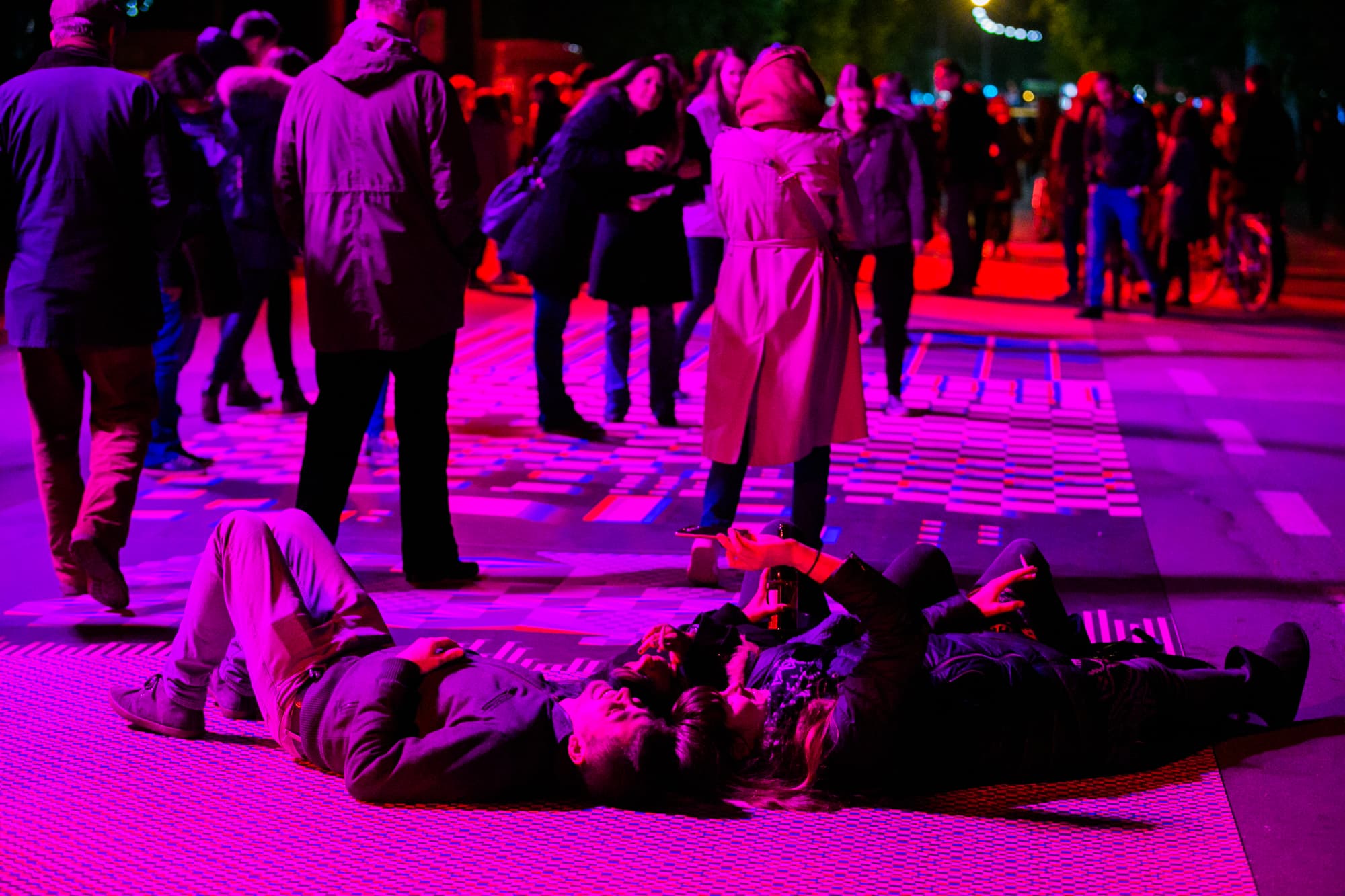
Dutchman Rombout Frieling says of his concept: “Colors don’t really exist. They only exist in our heads. They are the result of complex processes of observation, comparison and adaptation.” A carpet of light and color, which was rolled out in front of the Next Liberty Children’s and Youth Theater on Opernring, proved that our eyes play many a trick on us. Patterns, structures and waves appear through slight changes in color. Completely different colors can suddenly appear uniform. What appears to be red may also be yellow. Viewed in a different light.
Location: Next Liberty
Biography
Rombout Frieling, born in 1983, studied at Stanford University, Imperial College London and the Royal College of Art. Today, he works primarily as a designer and researcher who is interested in how matter moves people. Together with his team, he develops projects that combine technology with human potential. Rombout is the inventor of “vertical walking”, which was presented for the first time last year at the Venice Biennale. He is also the founder of IKAWA, a social enterprise for the democratization of coffee distribution. He headed the Experimental Lab at the Philips Lighting Institute in Eindhoven for many years.
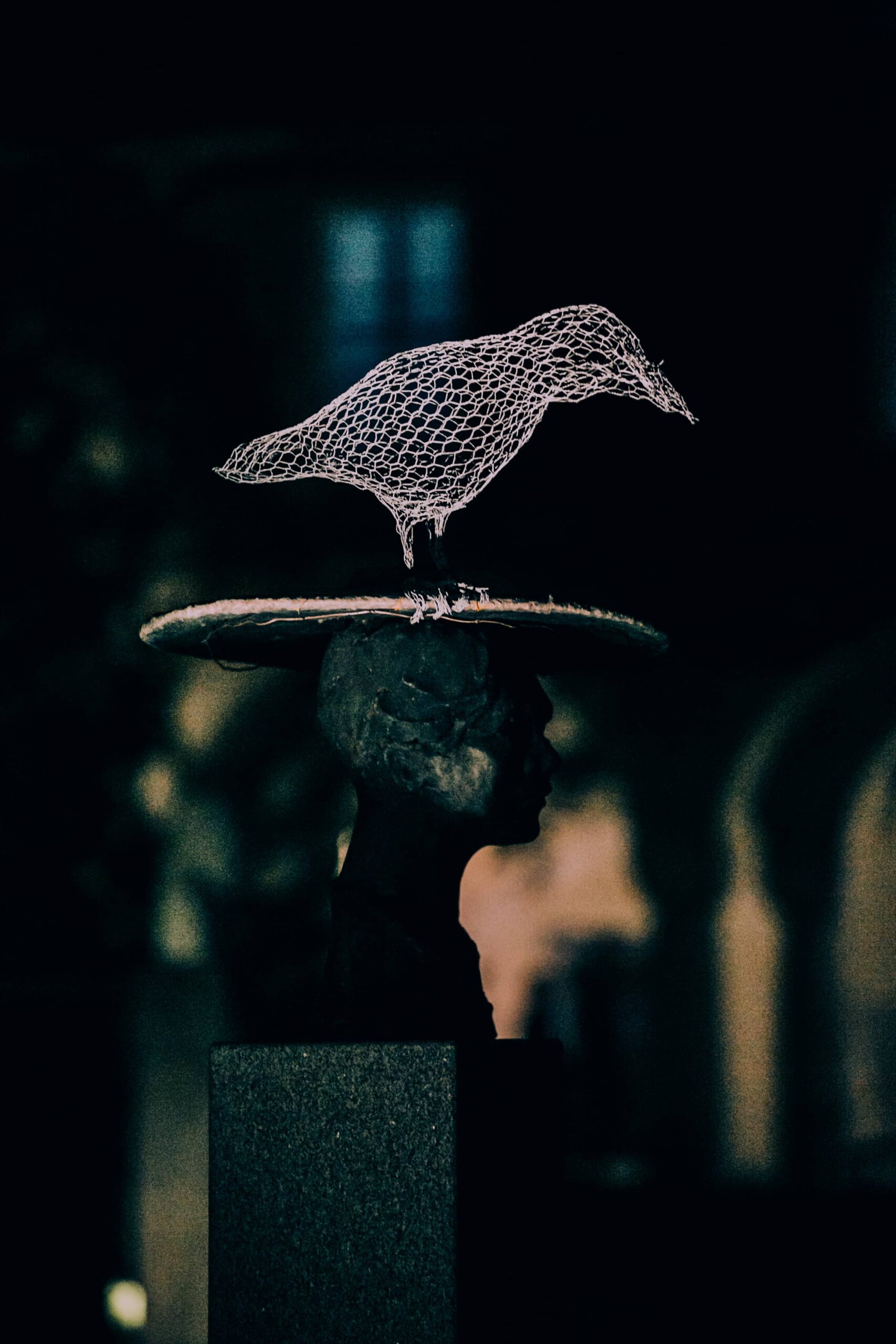
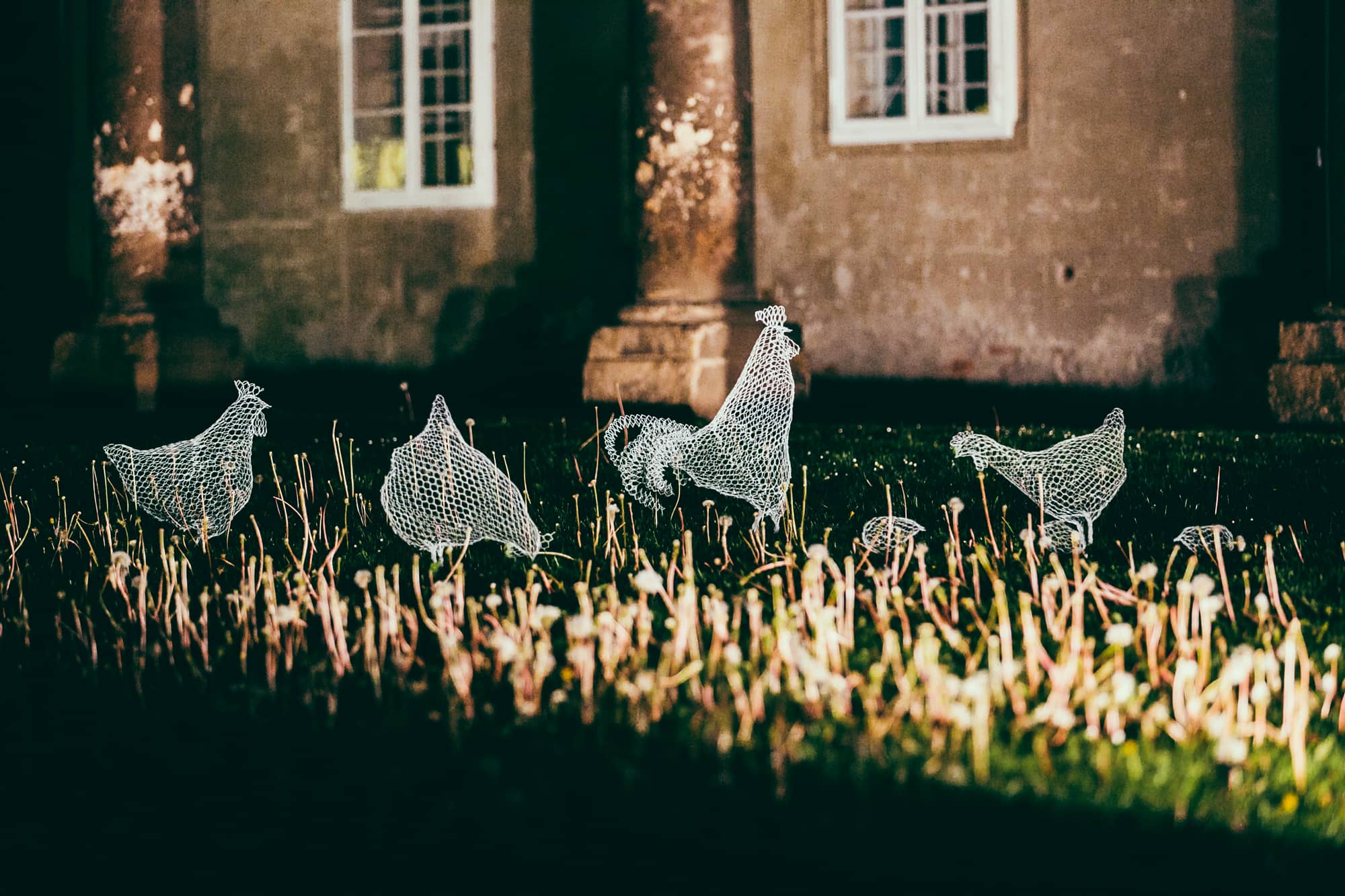
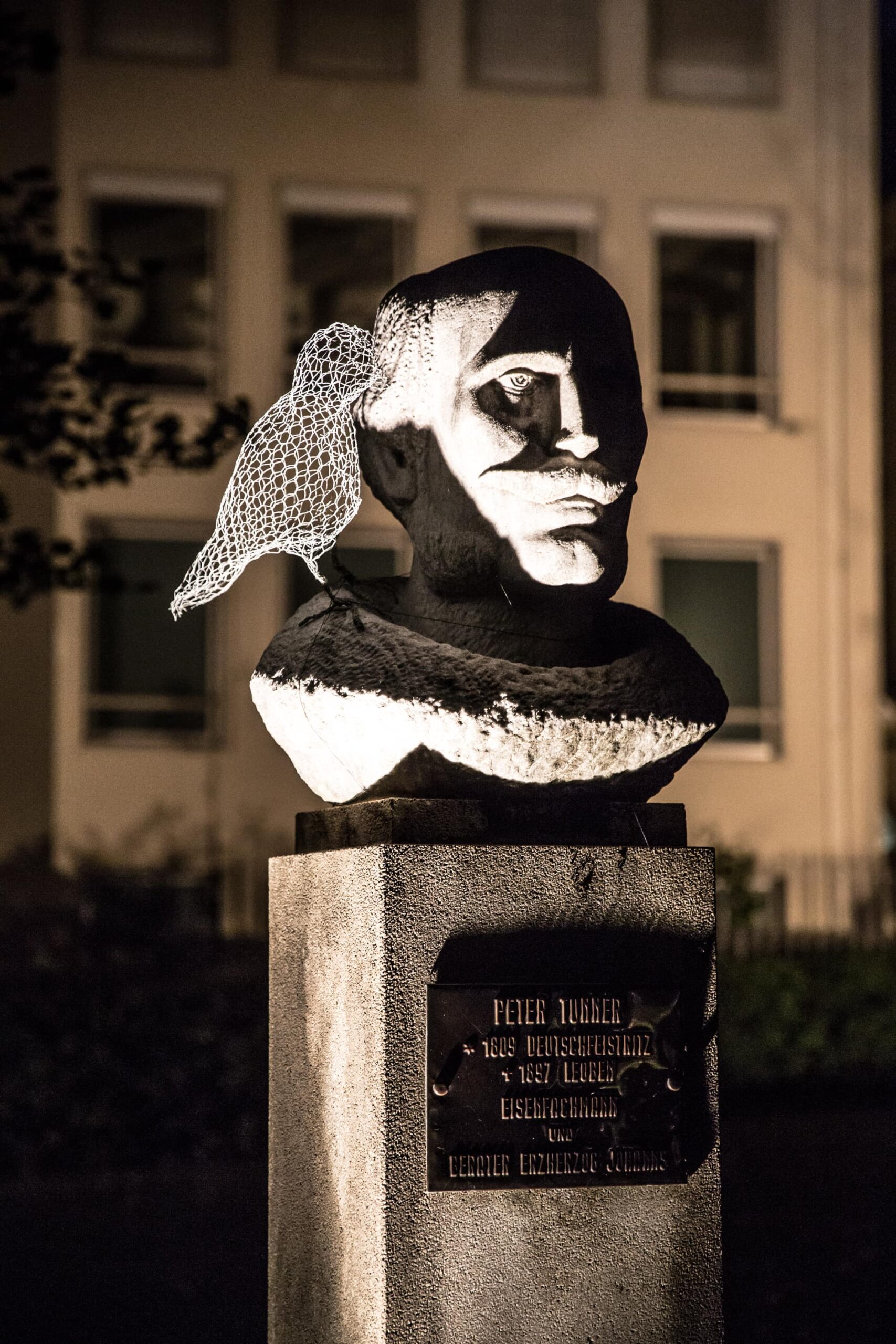
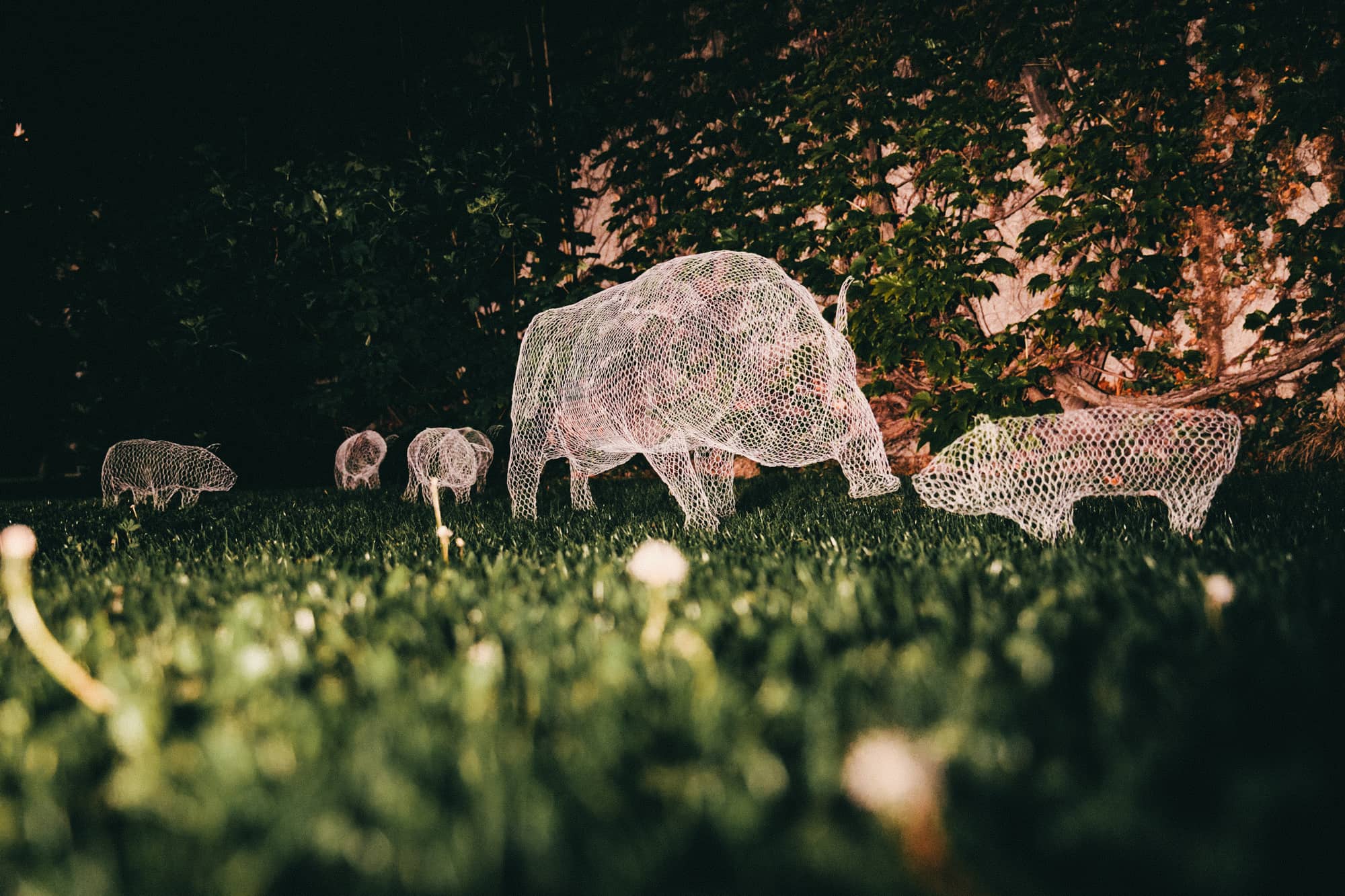
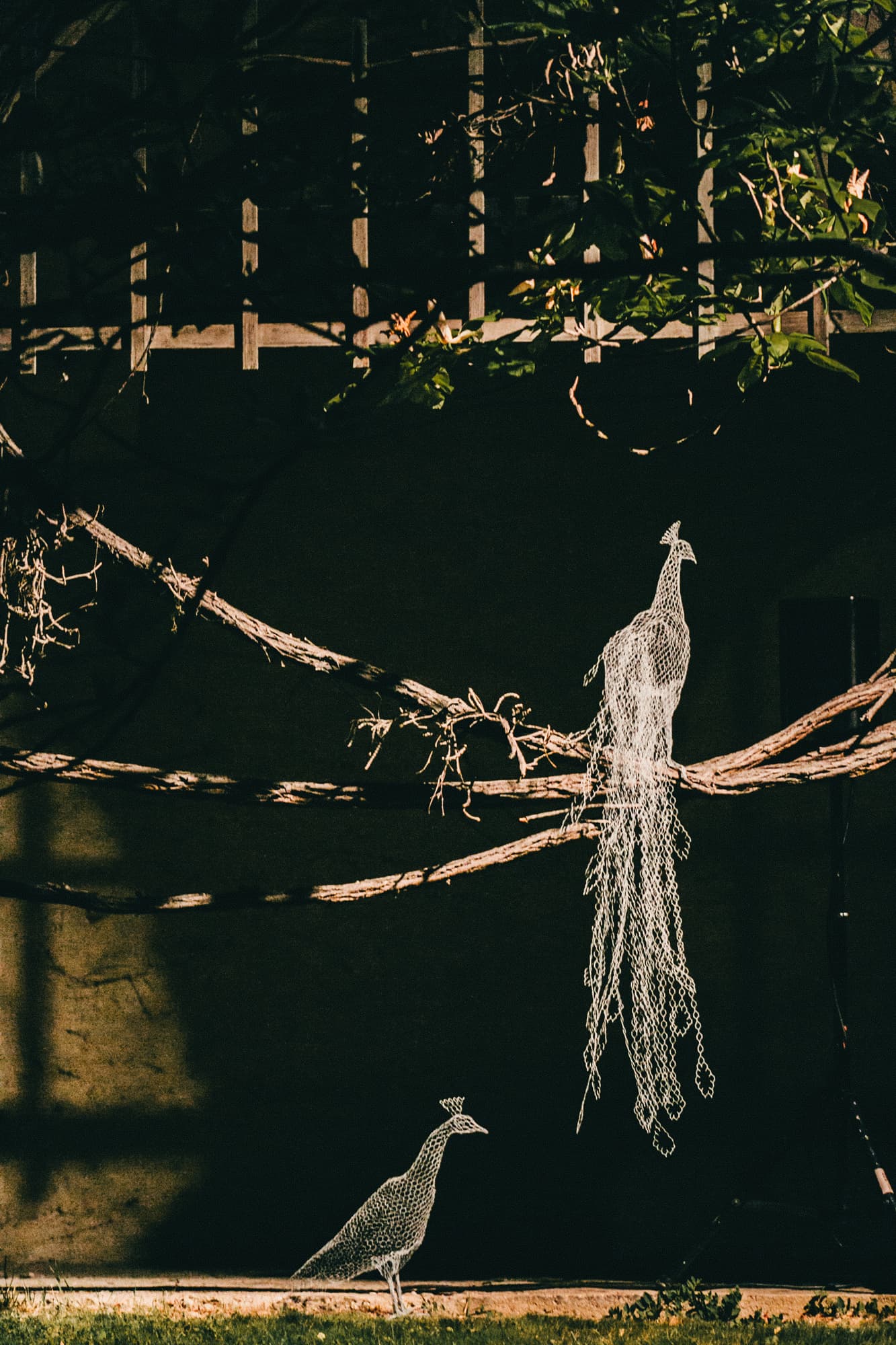
The sculptures by Slovenian architect Katja Paternoster describe the phenomenon of the coexistence of the most diverse creatures in a common habitat. The artist’s intention is to show the diversity of animals that live among us – and yet largely unnoticed. Paternoster’s sculptures are made of wire and are staged with light in the castle courtyard. For Katja Paternoster, light is the element that has the greatest influence on her work as an architect and on her life. It is only through the use of light that form becomes visible and colors and surfaces can be perceived.
Location: Castle courtyard
Biography
Katja Paternoster, born in 1981, is a graduate of the Faculty of Architecture in Ljubljana. She works as a freelance architect on various projects of her own and collaborates with offices. Her spectrum ranges from architecture to furniture design. She is also active in the field of lighting design. She is interested in highlighting current issues with the help of light installations. Her work has already been shown at various festivals, including the Lighting guerrilla in Ljubljana, Visualia in Pula, the Bellaskyway Festival in Torun and Lumina in Cascais. She has received several awards for her work.
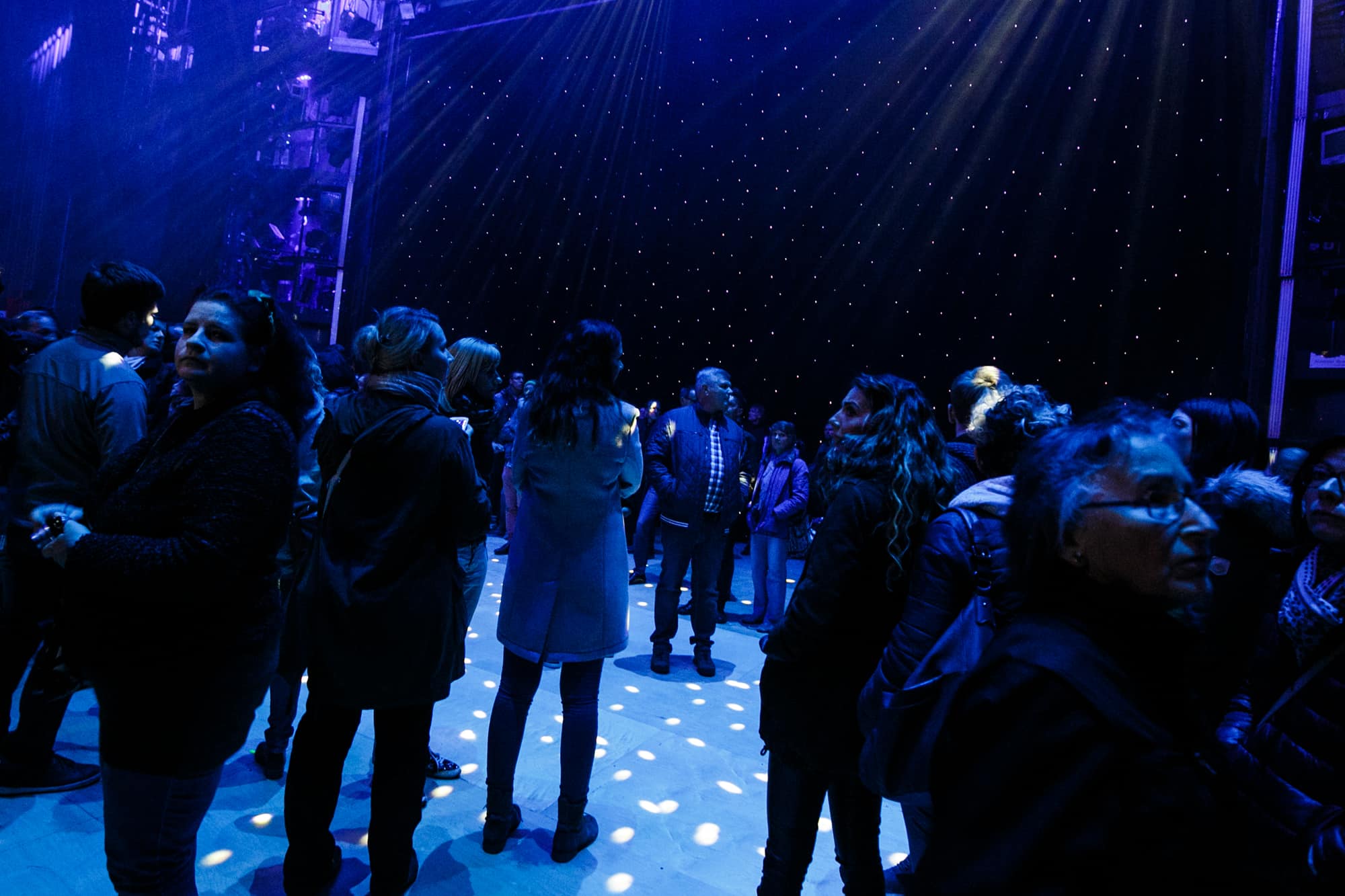
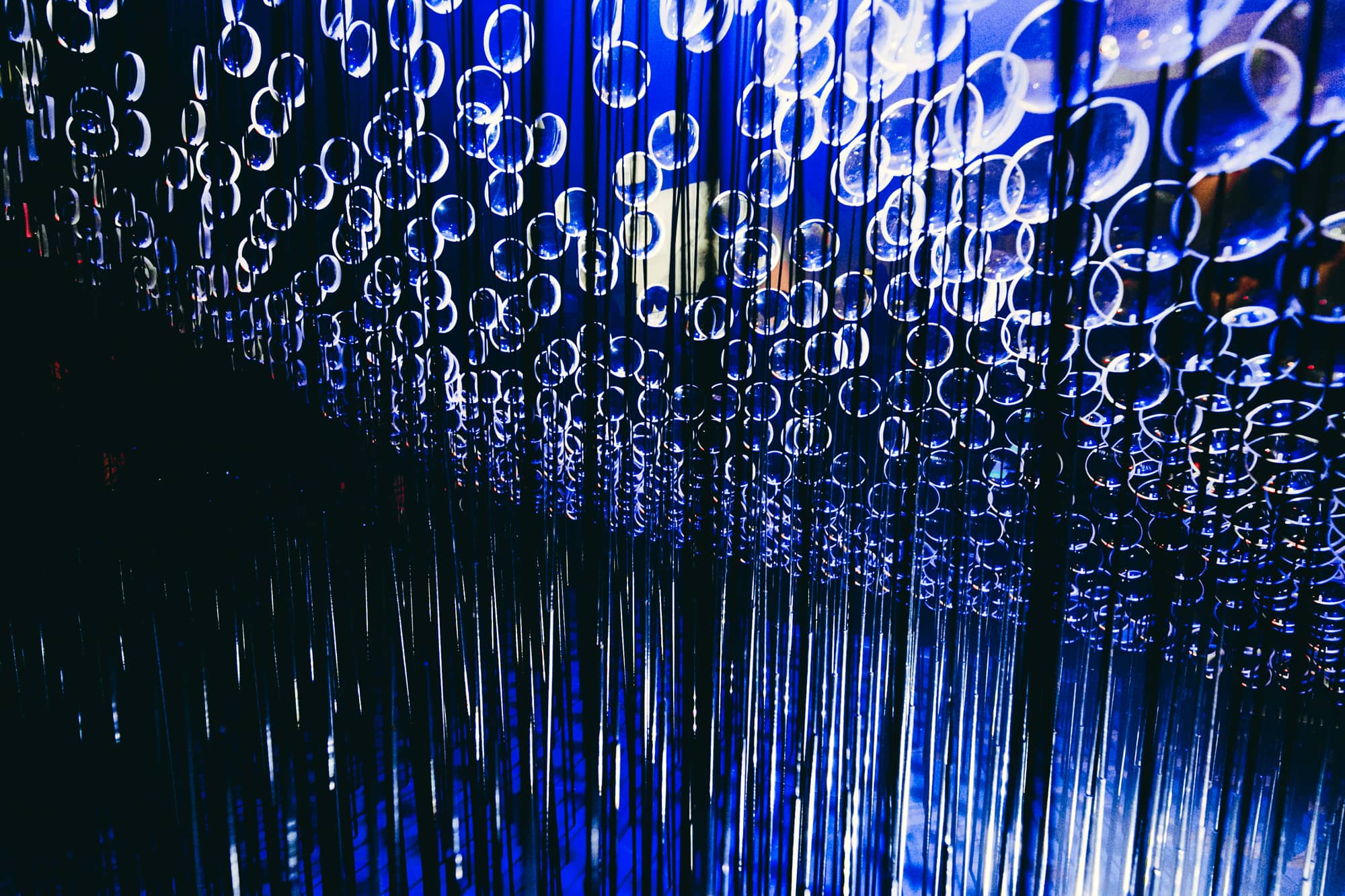
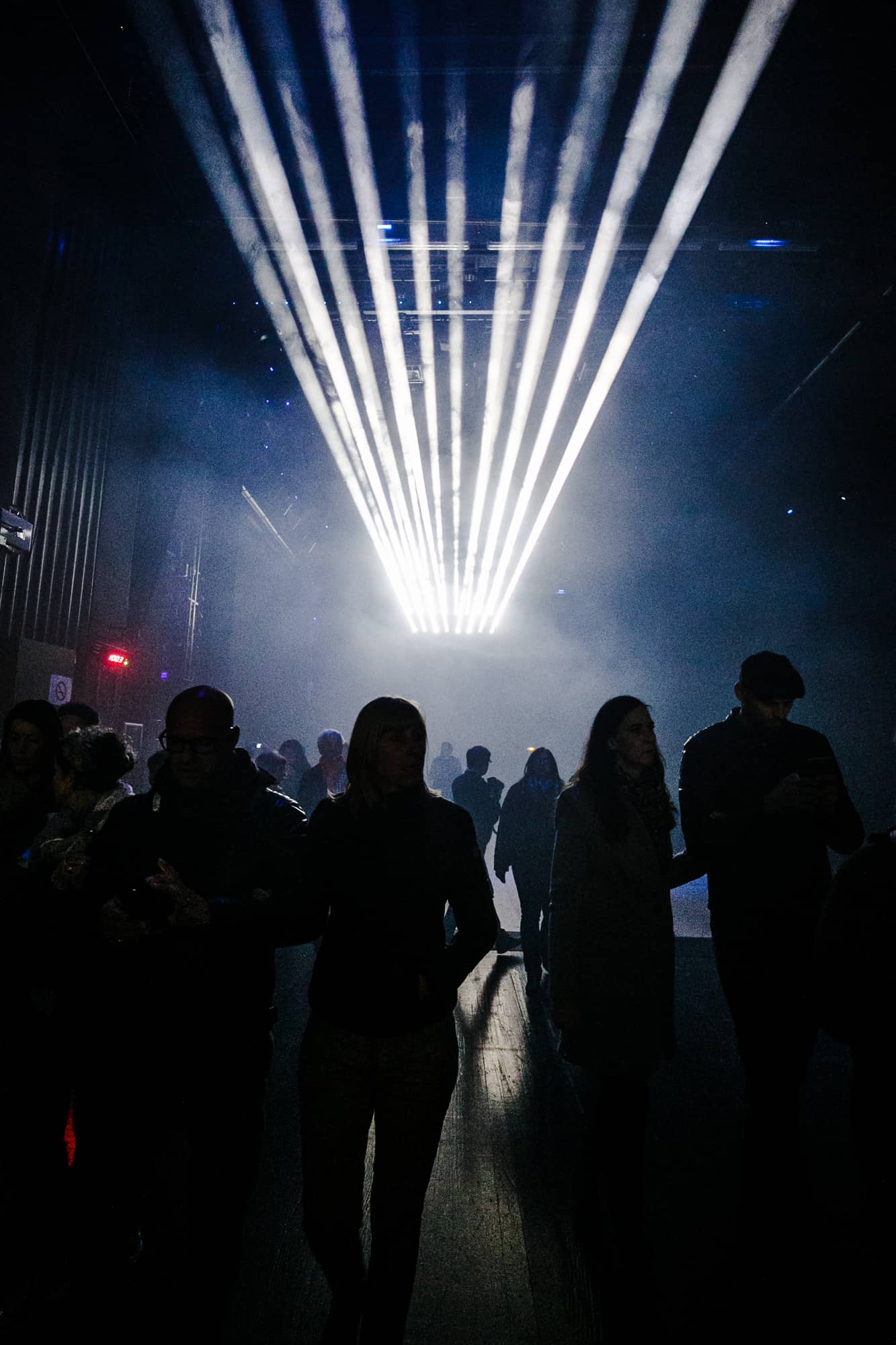
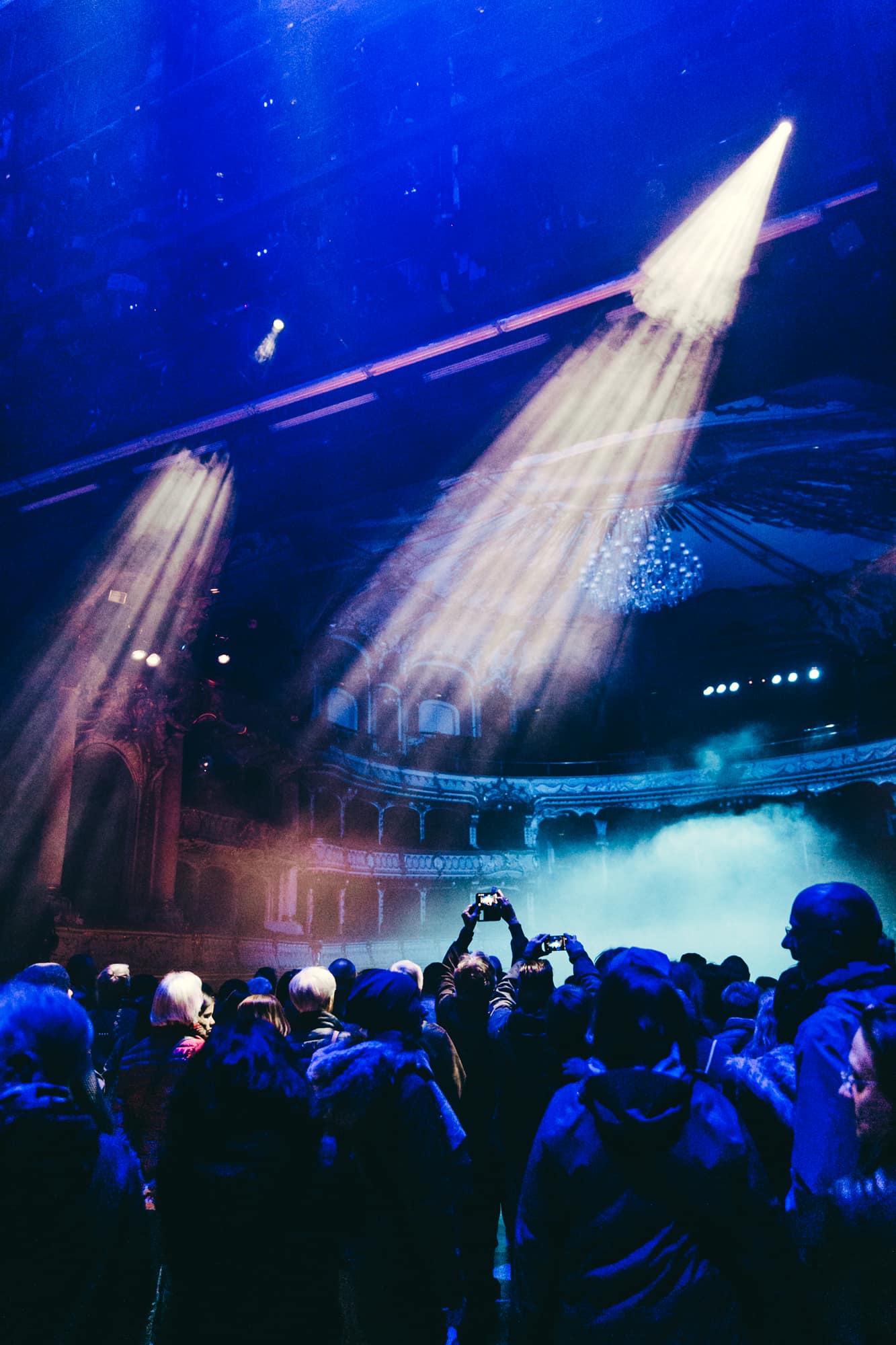
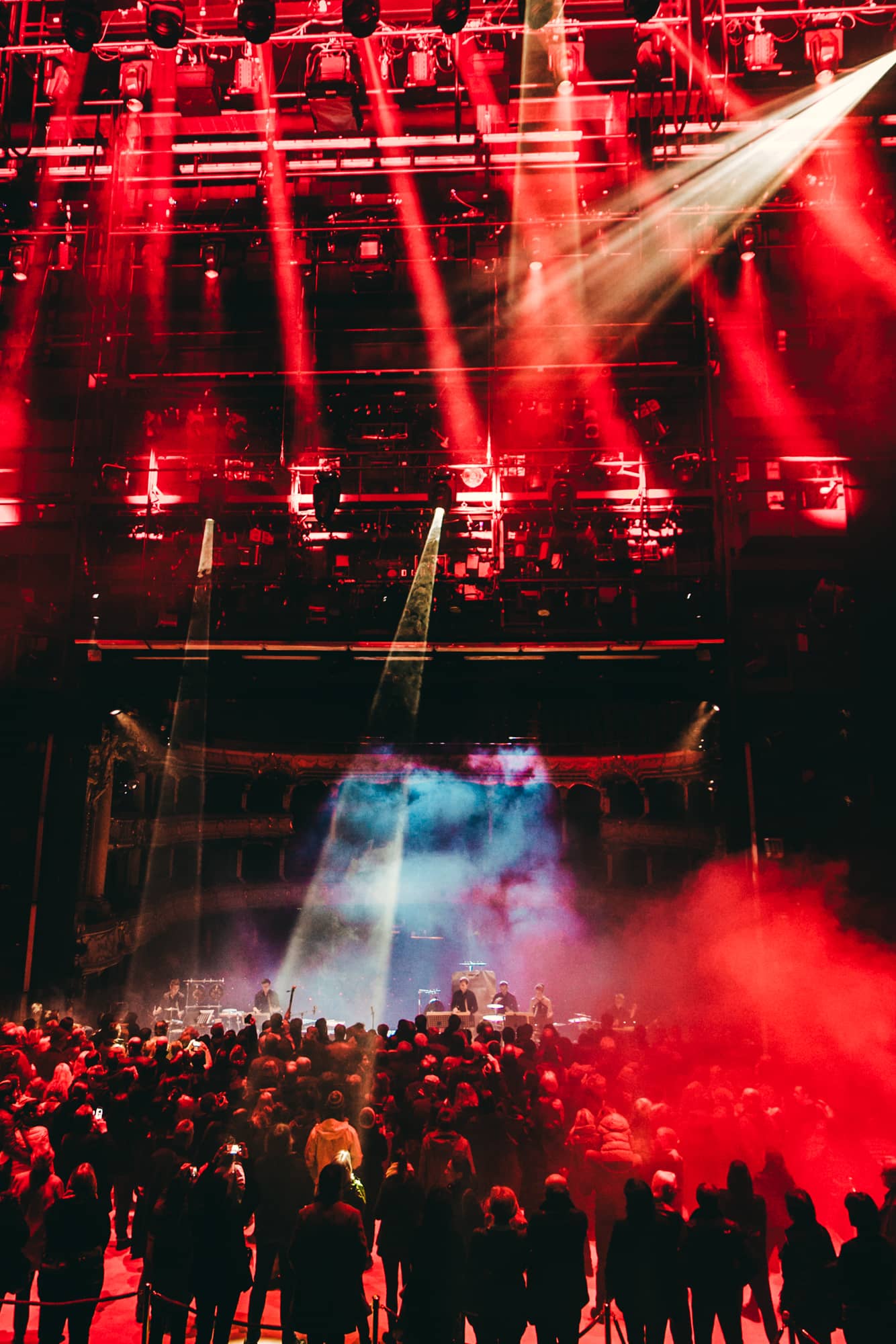
As part of KLANGLICHT, Graz Opera dedicated itself to the themes of sound and light in a variety of contexts. In the “Follow the Light” performance, which was repeated every 30 minutes, 300 visitors were invited to explore the opera house from a completely different perspective, namely from the stage. First, the percussionists of the Graz Philharmonic Orchestra took the audience on a sonic journey through the stage space of the opera house, after which the glass bridge, which is often admired from the outside, became the second setting: on these two evenings, nothing but radiant light could be seen where huge scenery pieces are usually transported, which the visitors followed to the third part of the program. A small showcase of works awaited the audience in the assembly hall, where “connoisseurs” may have discovered scenes from “Norma” or the musical “West Side Story”, but there were also completely unfamiliar things waiting for them. Music, lighting, backdrops and actors conjured up impressive images and allowed the audience to immerse themselves in the current productions for a brief excerpt. The viewers not only followed the light, but also the artistic range of the theater.
Location: Graz Opera
Credits
Artistic concept and project management: Juana Ines Cano Restrepo
Ensemble: Karin Meissl (vocals), Leonhard Königseder (cymbals, humpback gongs), Leonhard Waltersdorfer (vibraphone), Sebastian Riener (rainstick, windchimes, oceandrum), Dominic Feichtinger (keyboard/sounds), Simon Steidl (marimba)
Lamento/Danza Barbara: Karin Meissl (Perc. 2), Leonhard Königseder (Perc. 3), Leonhard Waltersdorfer (Perc. 3), Sebastian Riener (Perc. 1), Dominic Feichtinger (perc. 1), Simon Steidl (marimba/darabuka)
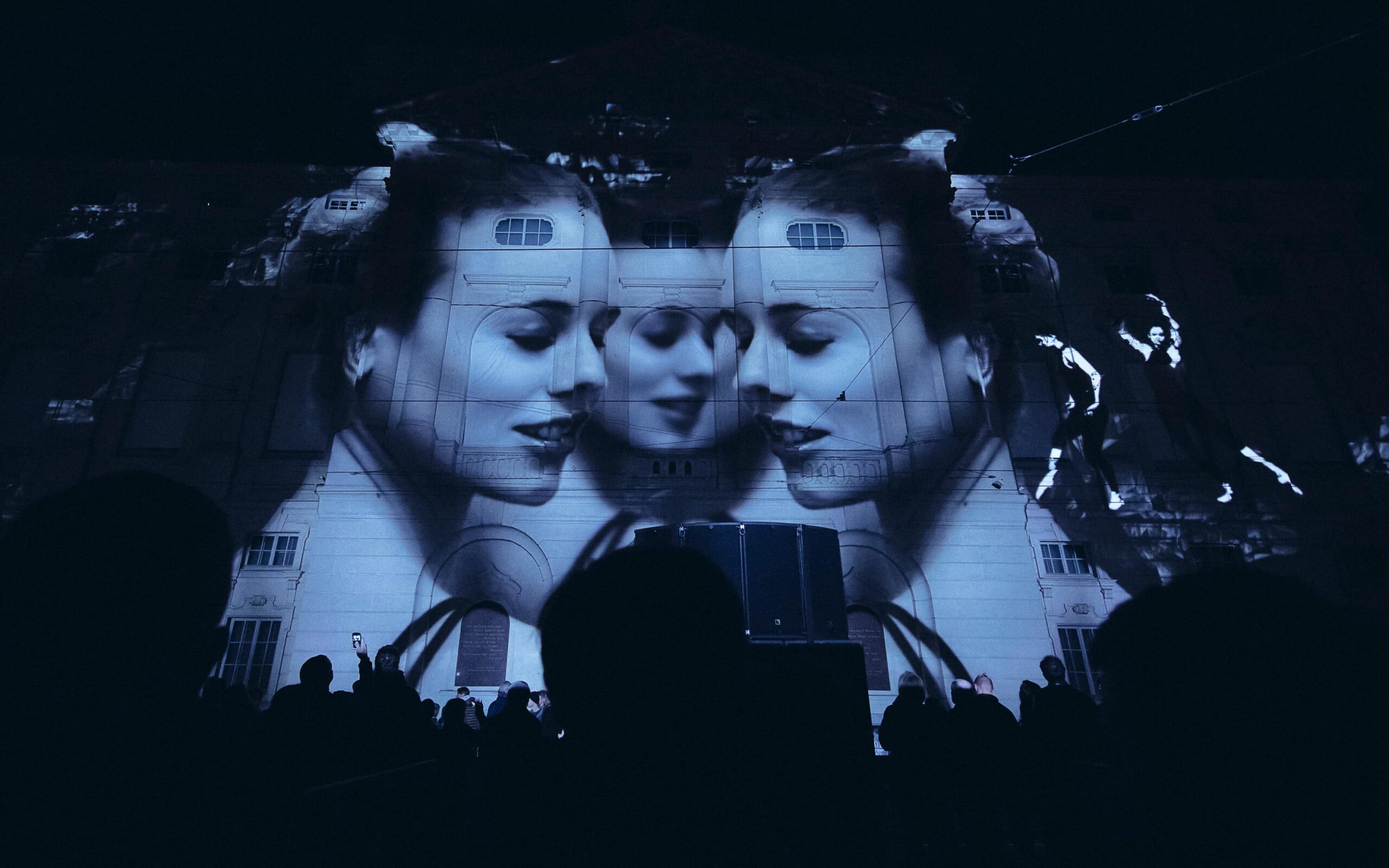
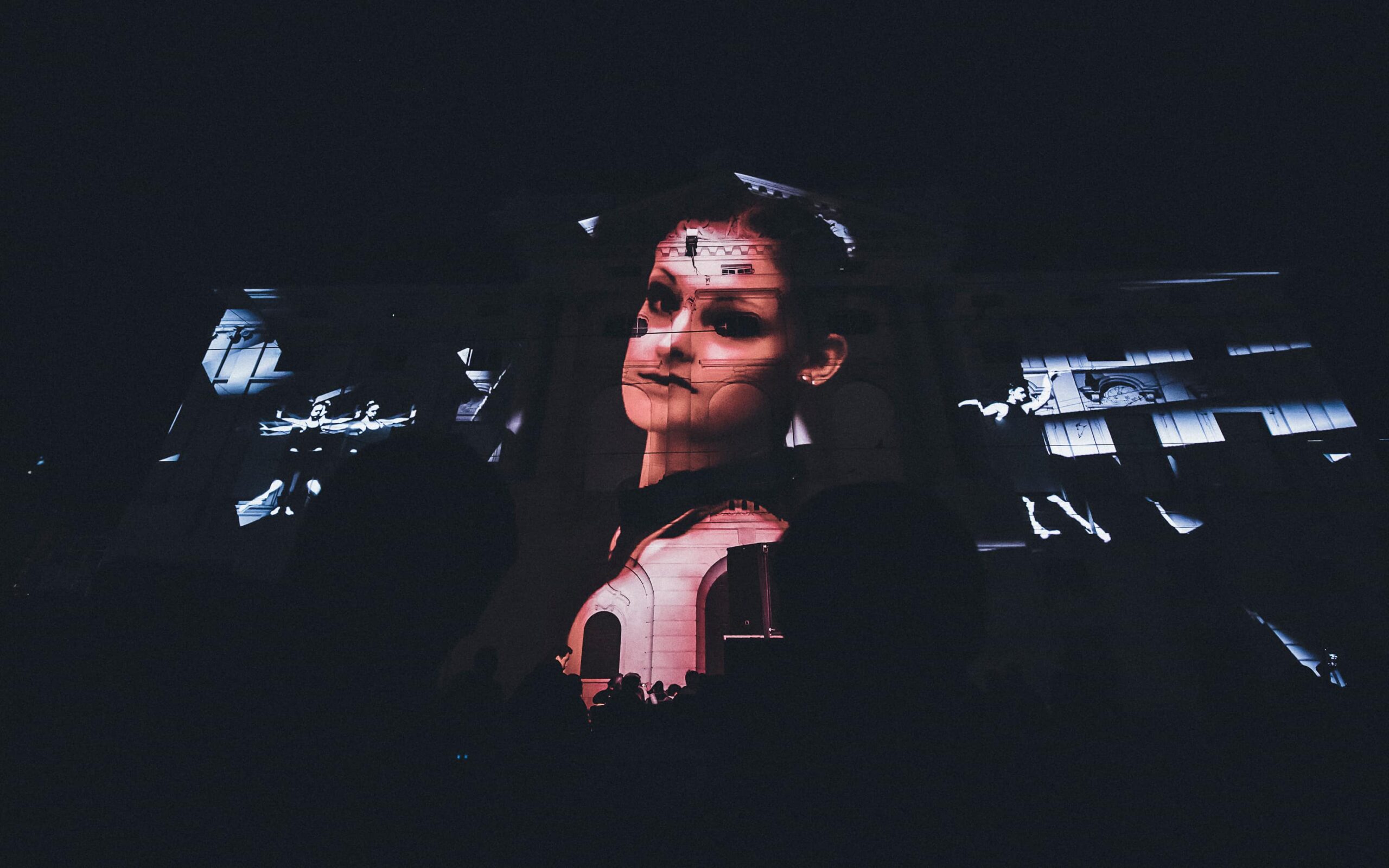
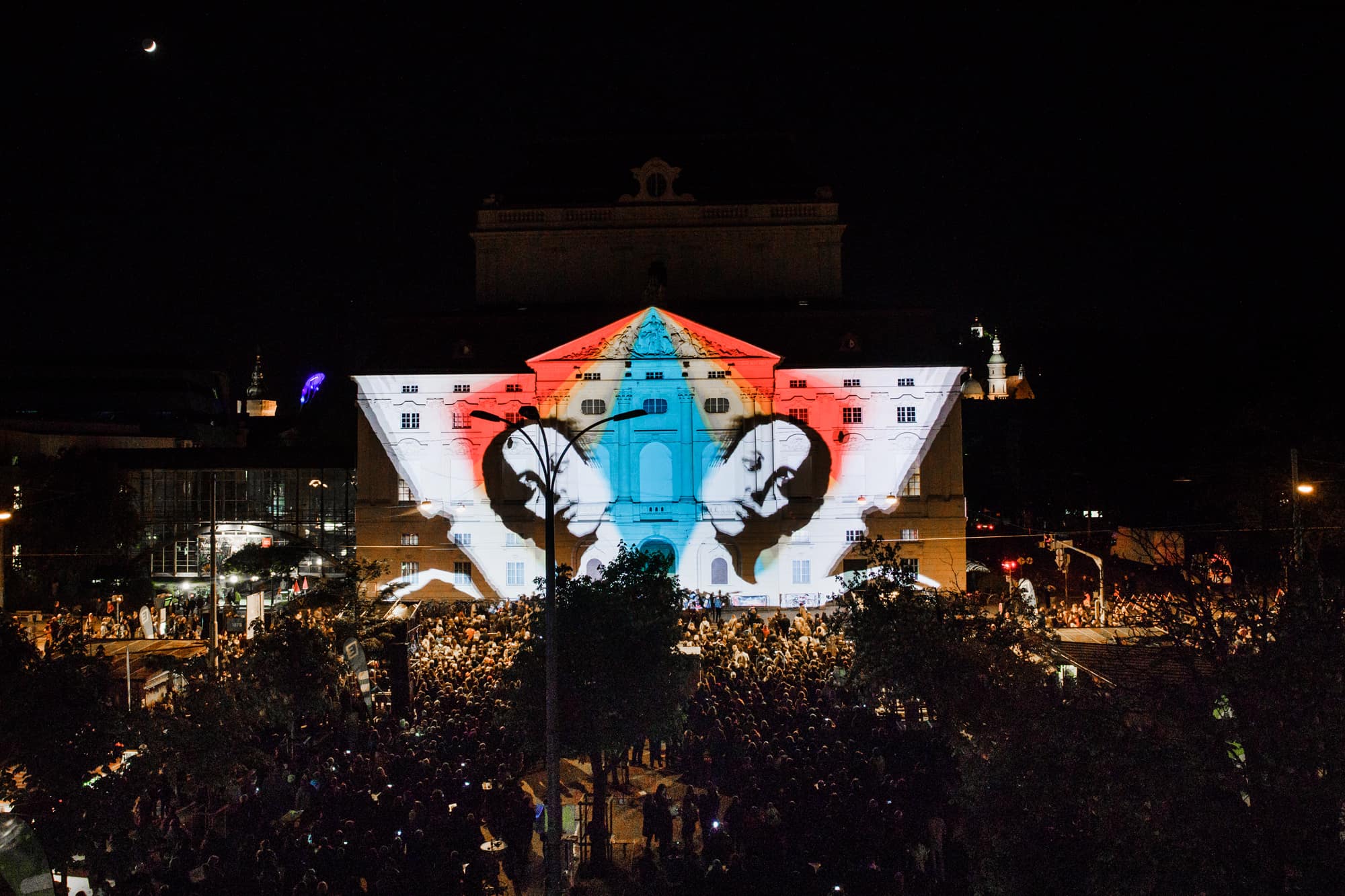
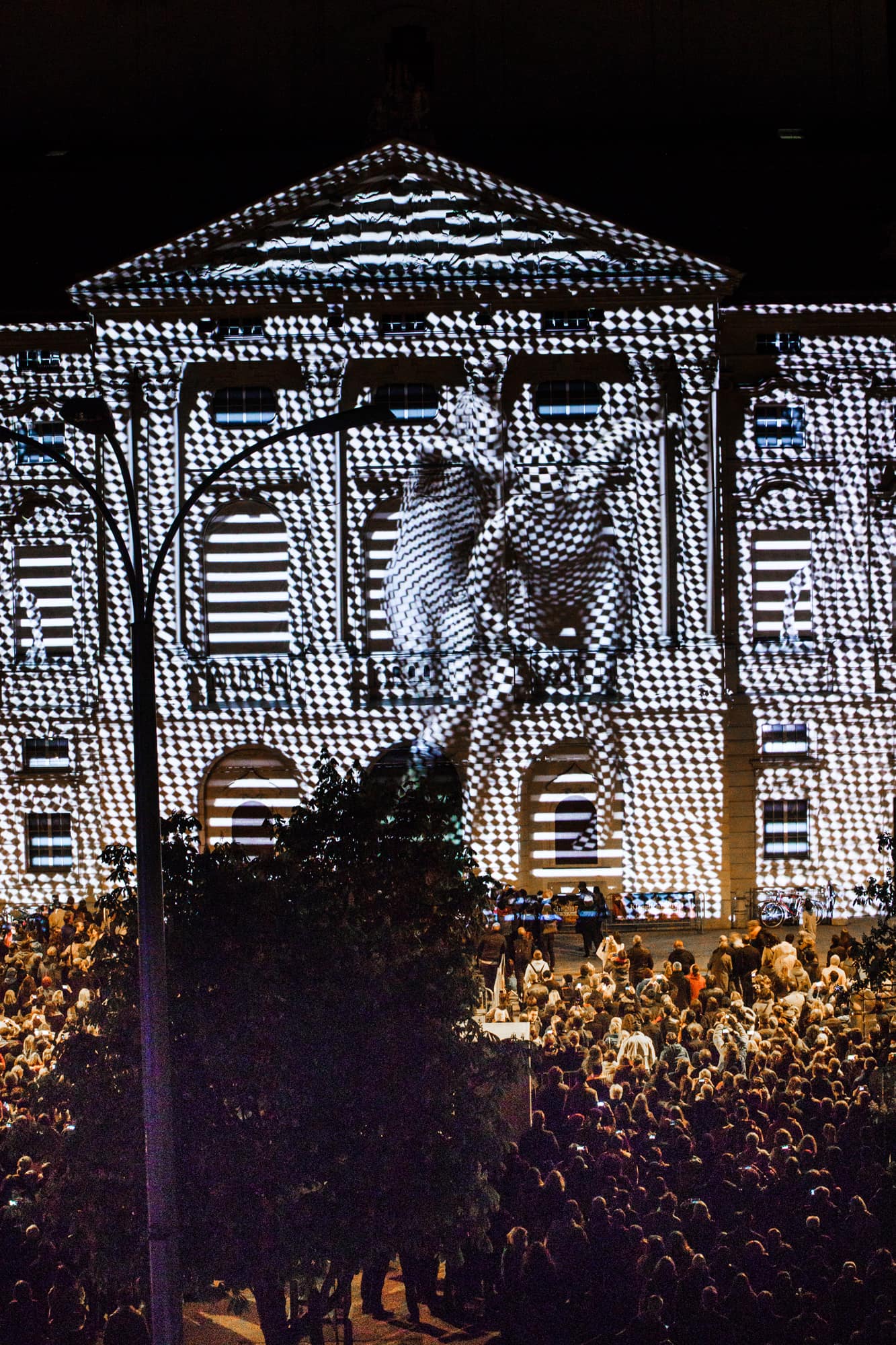
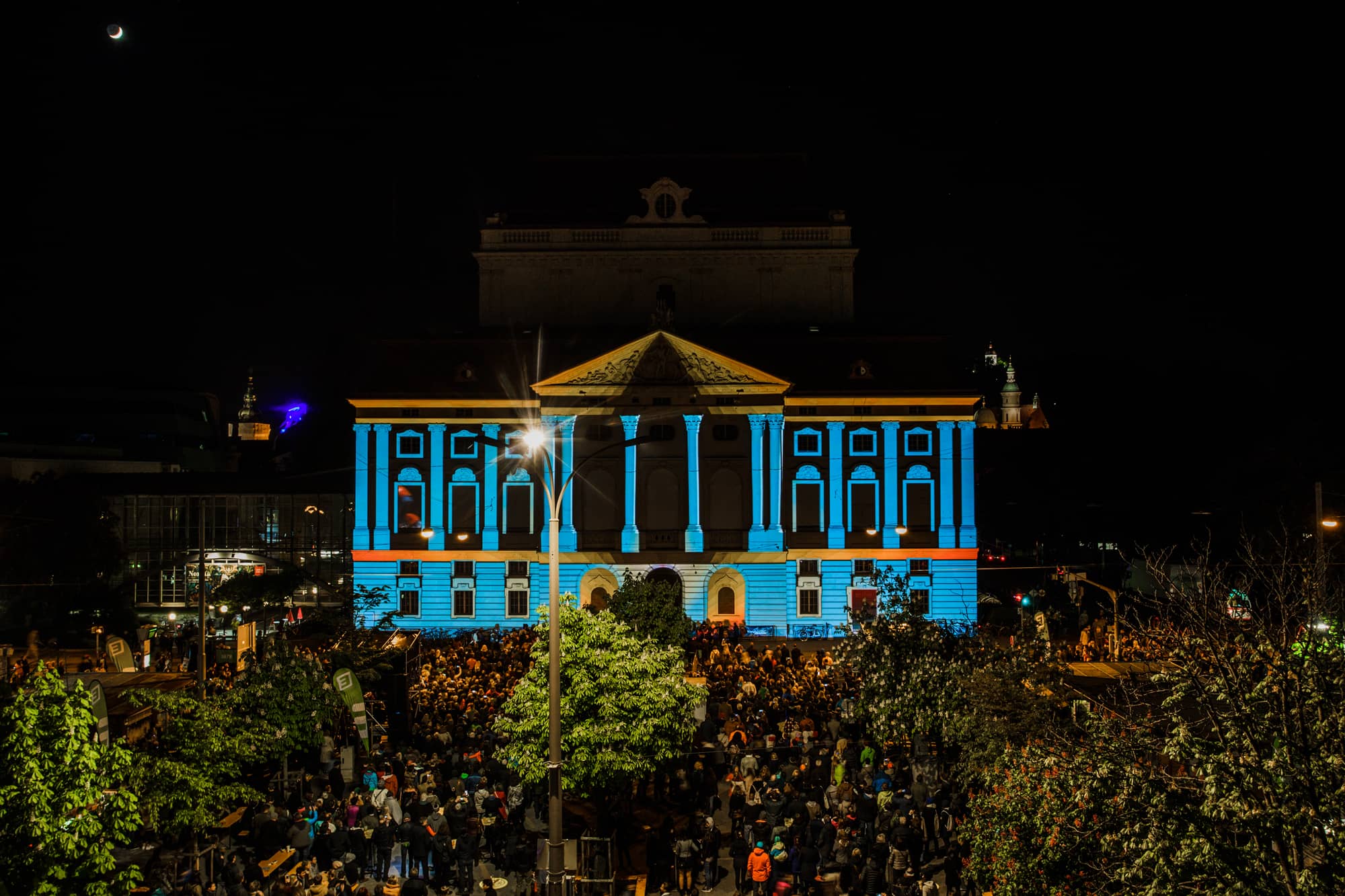
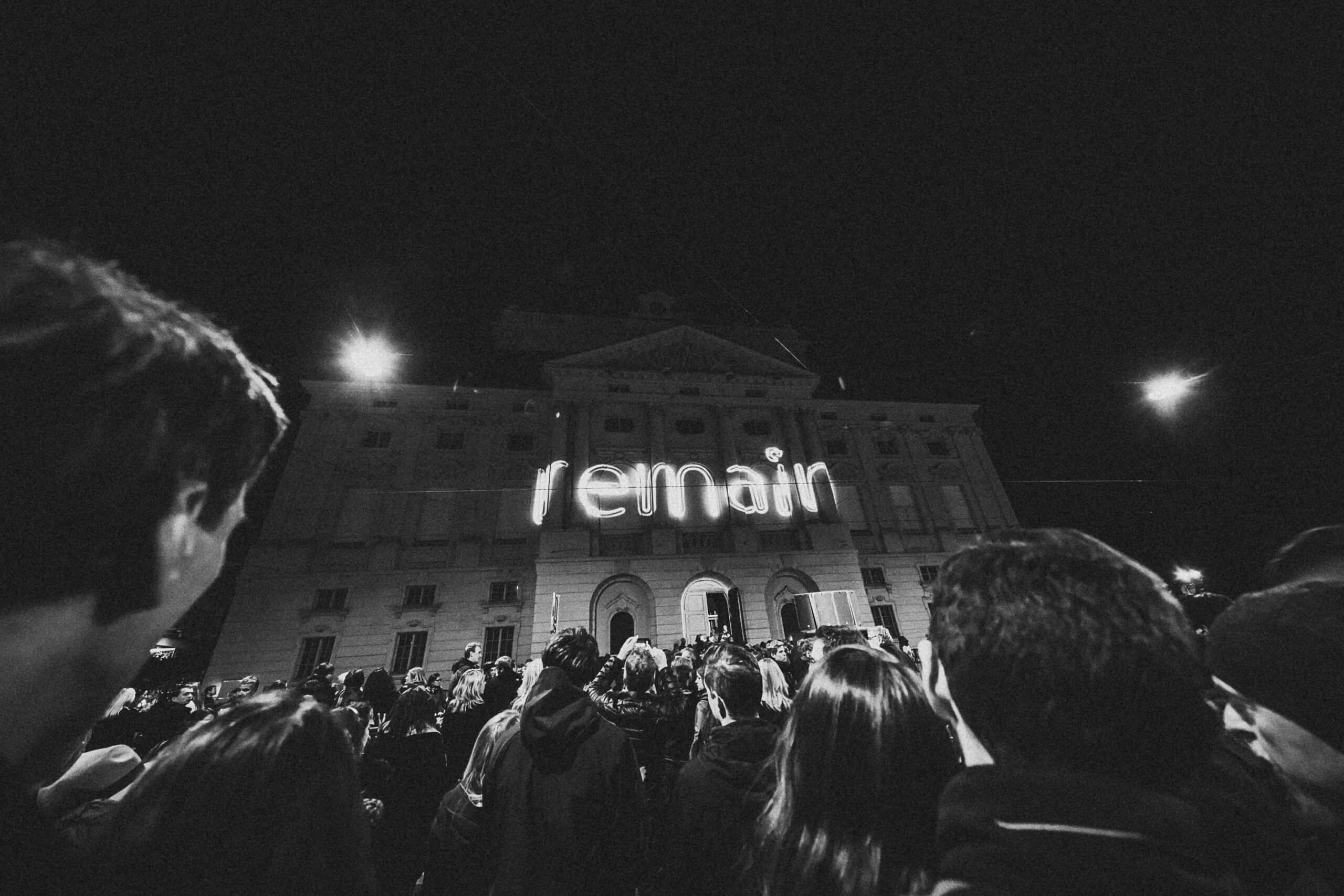
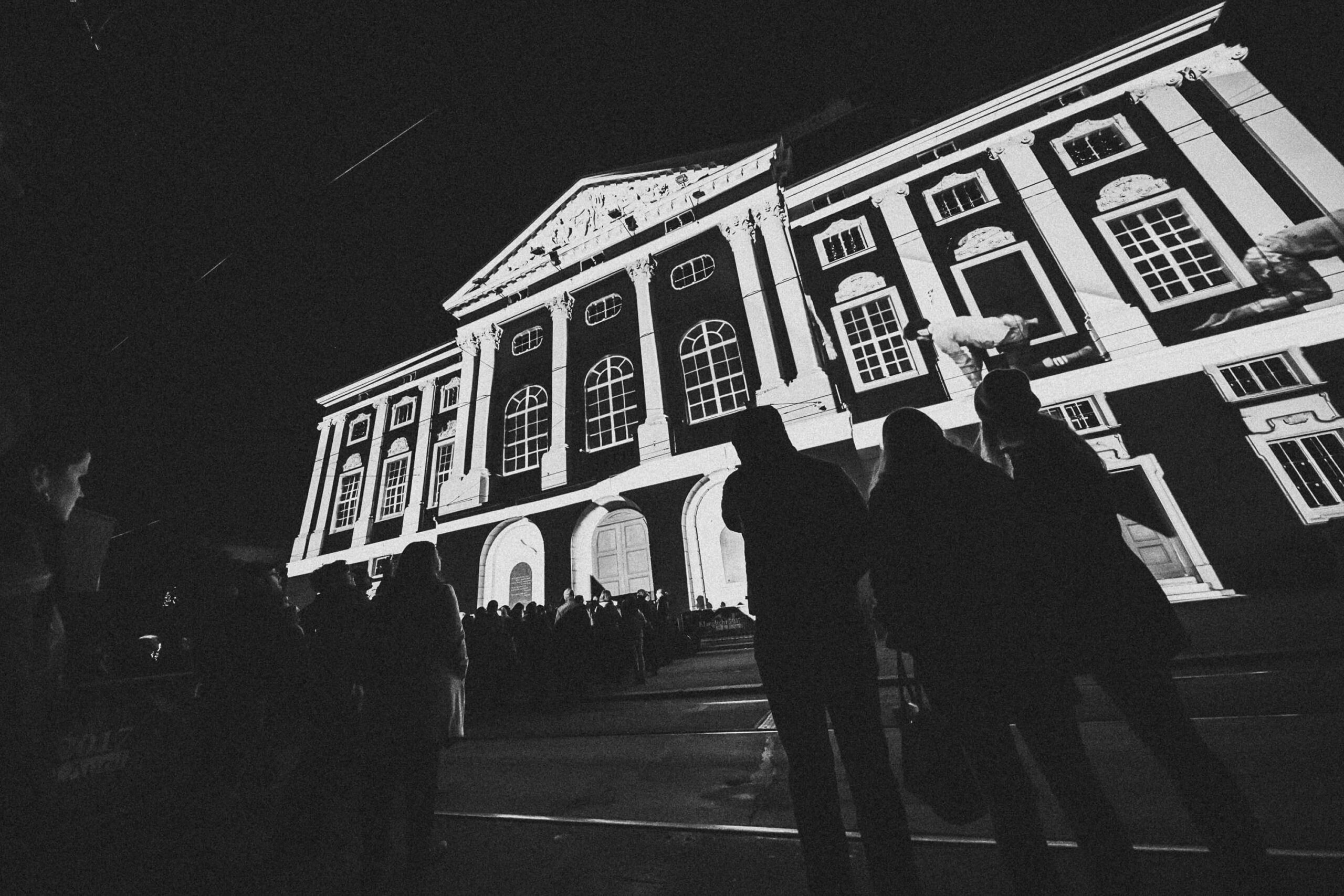
As with the previous events at Klanglicht, the film and projection artists OchoReSotto – Volker Sernetz, Stefan Sobotka-Grünewald and Lia Rädler – were responsible for the “display” of the opera house on the Kaiser-Josef-Platz side. Their orchestration of the light transformed the façade into a visual experience. The focus was on LIVING. Movements and elements were presented in a cascade and left a visual echo. The projection was completed with a composition by Daniel Riegler, music by Studio Dan and dance performances by the Graz Opera Ballet Ensemble.
Location: Kaiser-Josef-Platz
Biography
OchoReSotto are projection artists, spatial designers and experimental filmmakers from Graz. Their work has been performed in Germany, Italy and Japan. OchoReSotto specialize in combining analogue and digital media and presenting them as a total work of art. They are the founders of the “strictly analog studios” in Graz, Trieste, Ljubljana and Tokyo. In addition to exhibitions, work shows and an experimental laboratory, their “strictly analog” team is dedicated to the worldwide networking of analog art, design and crafts.
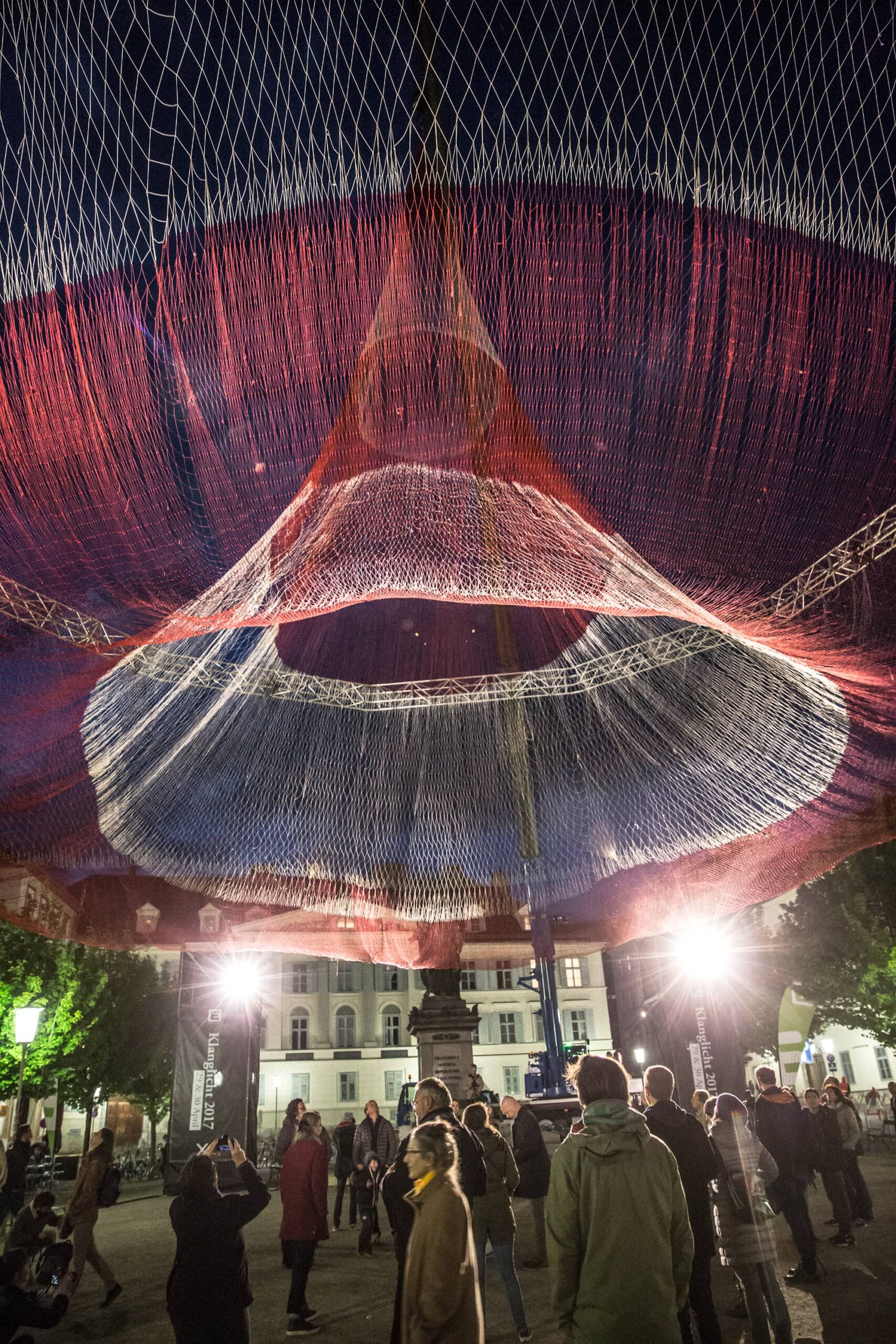
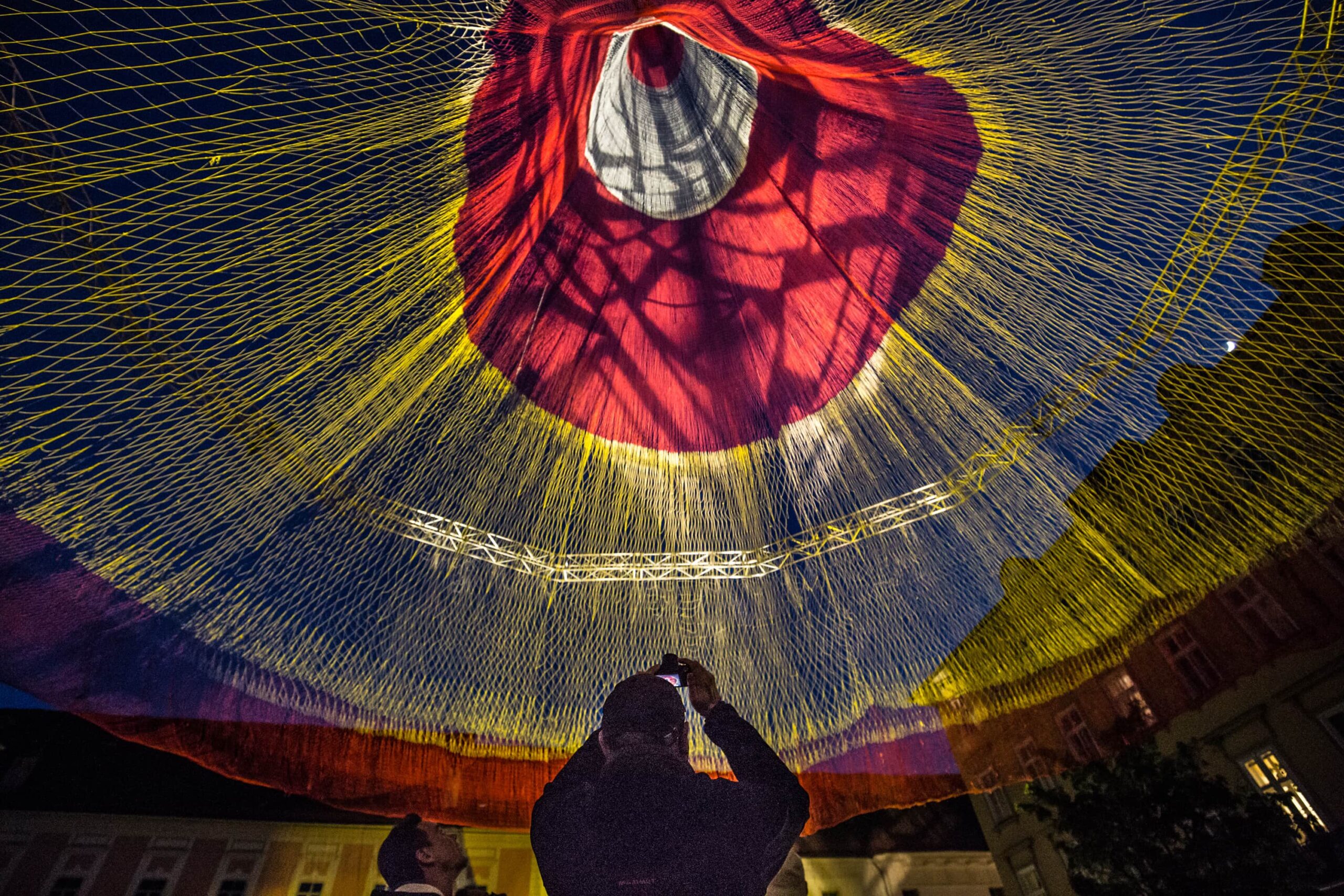
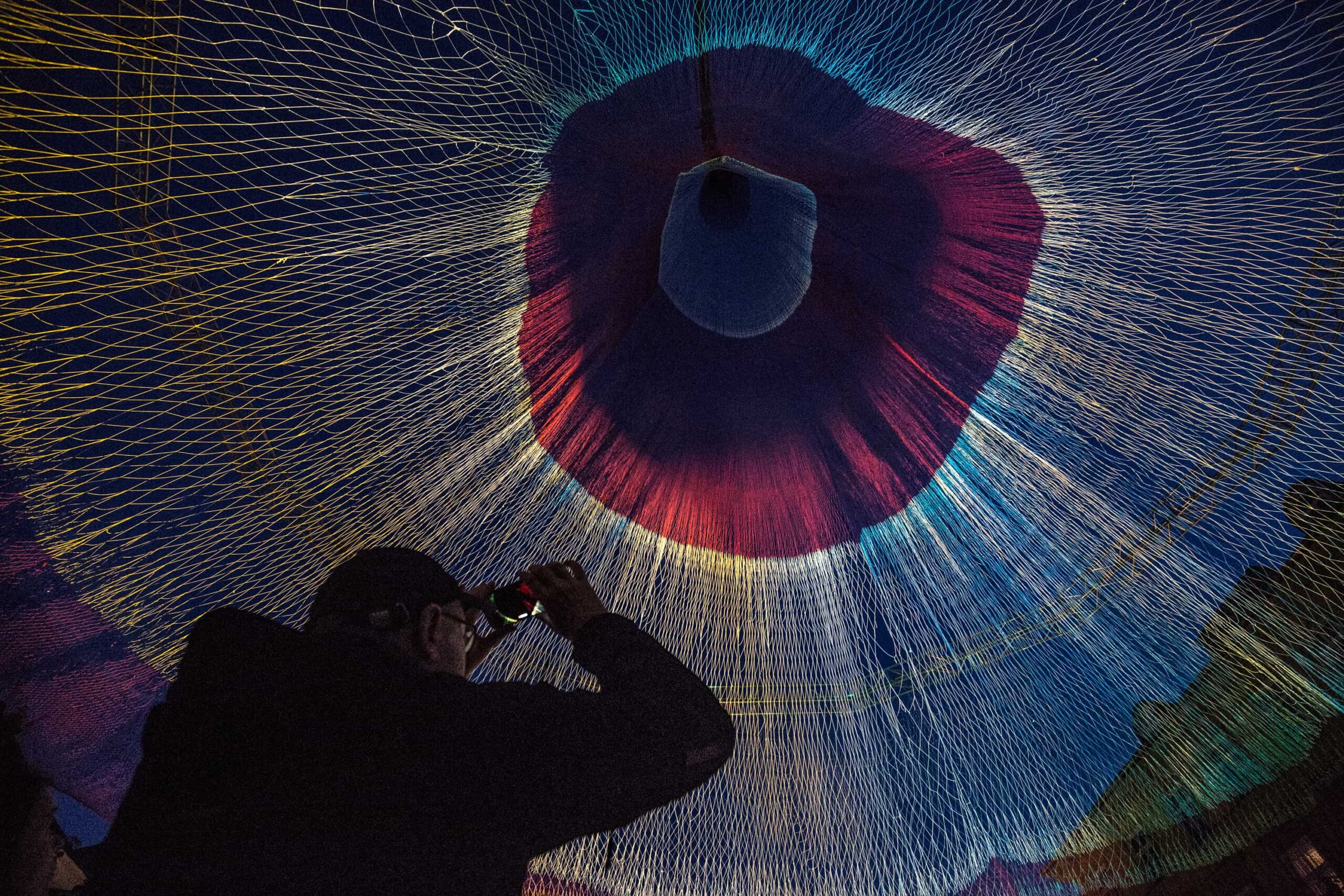
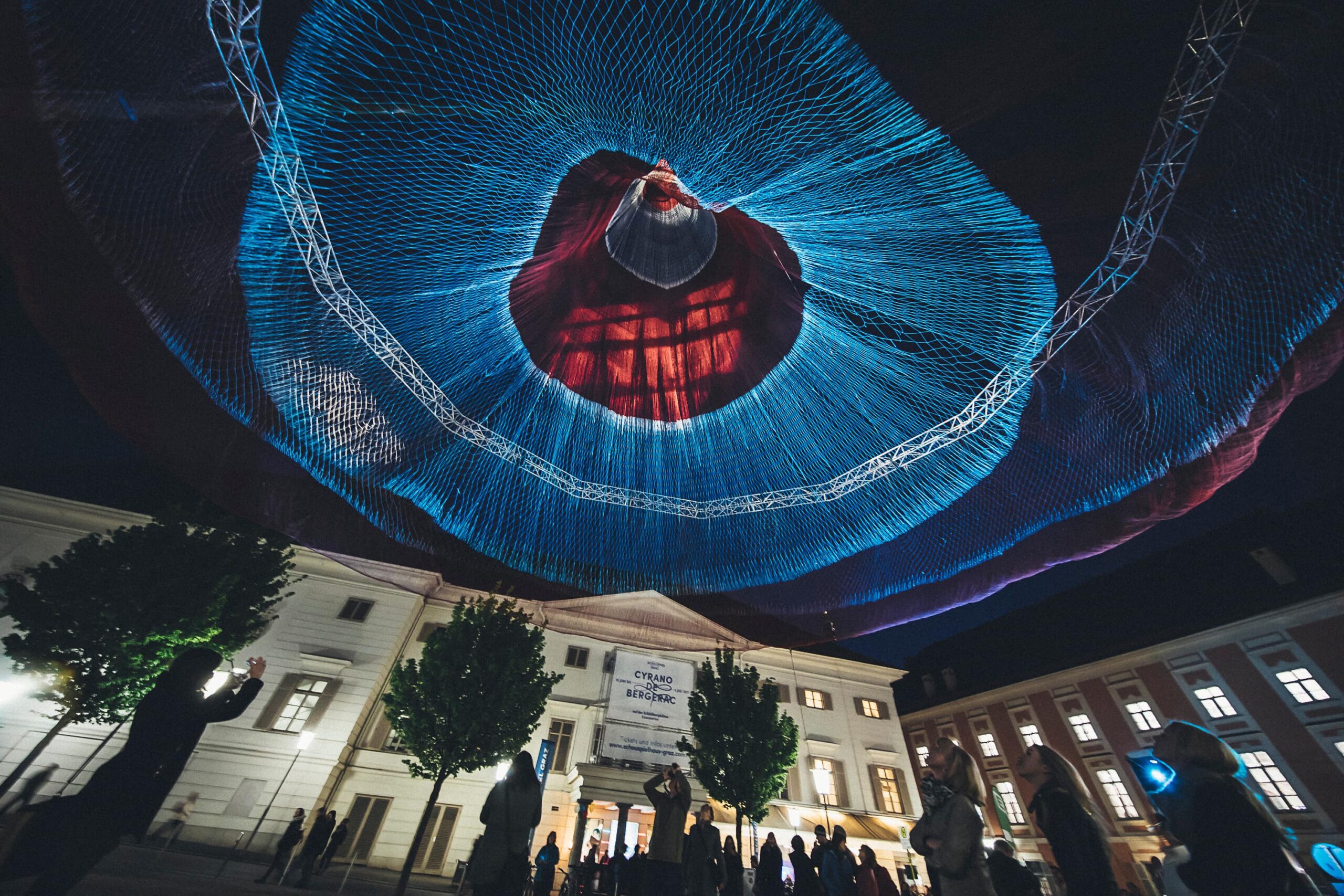
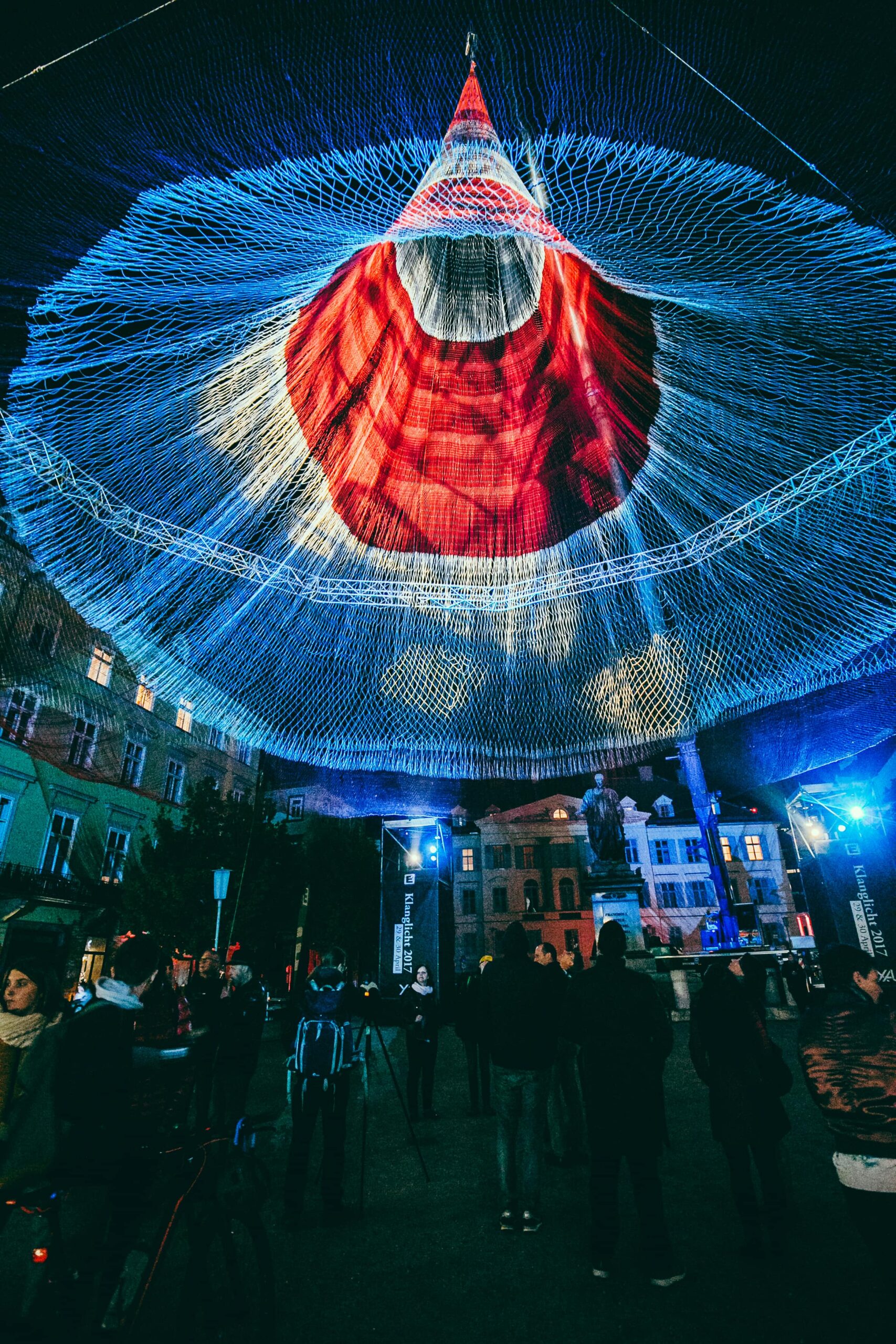
As life goes: Janet Echelman started out as a painter, but her material was lost on one of her trips. As a replacement, she began to work with increasingly large-scale nets. Janet Echelman’s sculptures reach heights of a good 70 meters and yet appear light as a feather. Her work “Target Swooping Austria” is made entirely by hand and consists of more than 1.6 million knots. The wind and light play with the object, which was shown to an audience of millions in a now legendary TED talk by Echelman. The fascinating work was on display for the first time in Austria at KLANGLICHT 2017.
Location: Freiheitsplatz
Biography
US artist Janet Echelman studied visual arts at New York’s Bard College. In 1987, she moved to Hong Kong to learn calligraphy. She later lived in Bali, where the crafts and art of the local population made a strong impression on her. After her house in Bali burned down, she returned to the USA and taught at Harvard University. After seven years, she returned to Asia, this time to India. Echelman observed the fishermen in her new adopted country and found their nets increasingly fascinating. She began experimenting to create large works of art from the fragile material, which have been on display in numerous cities around the world.
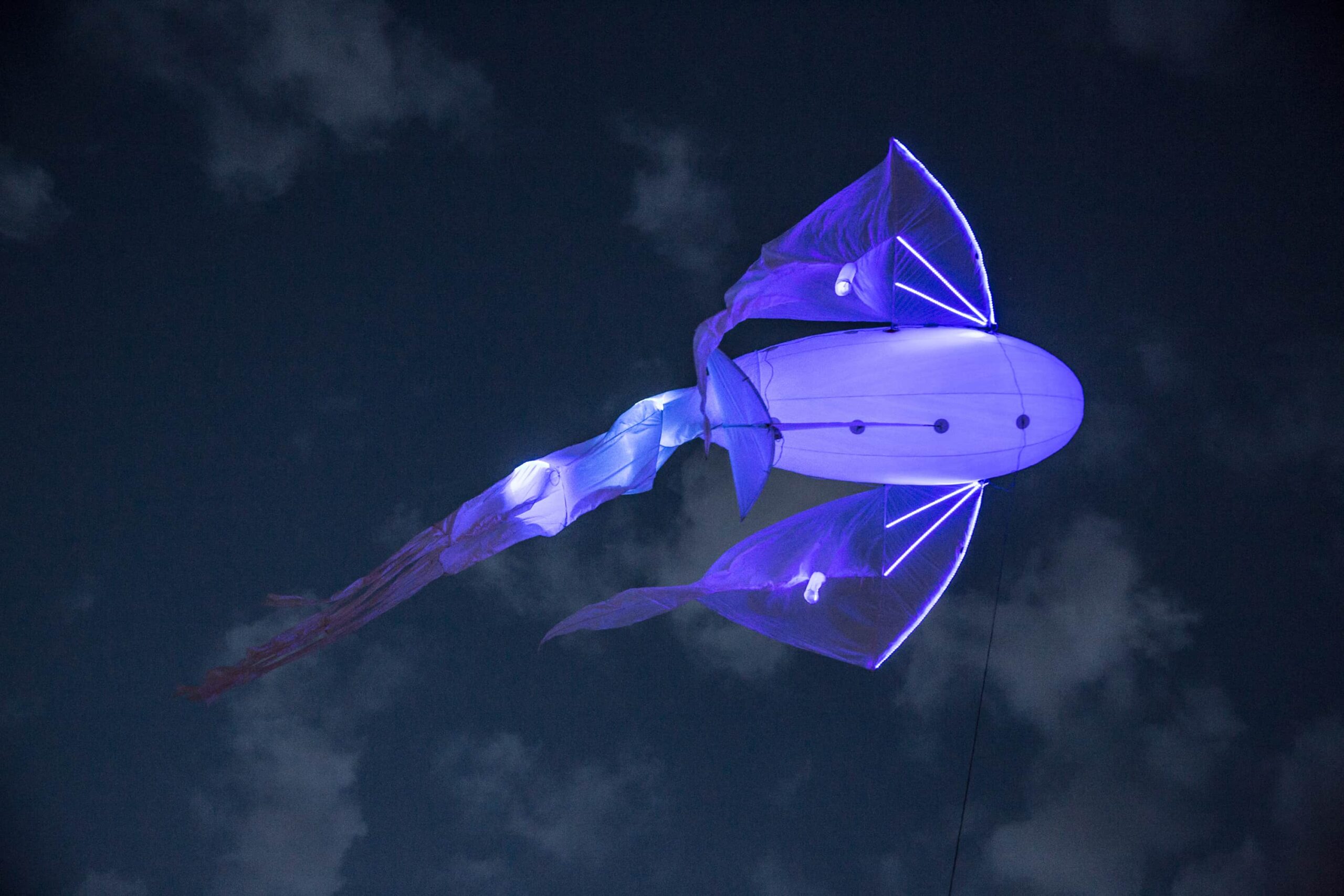
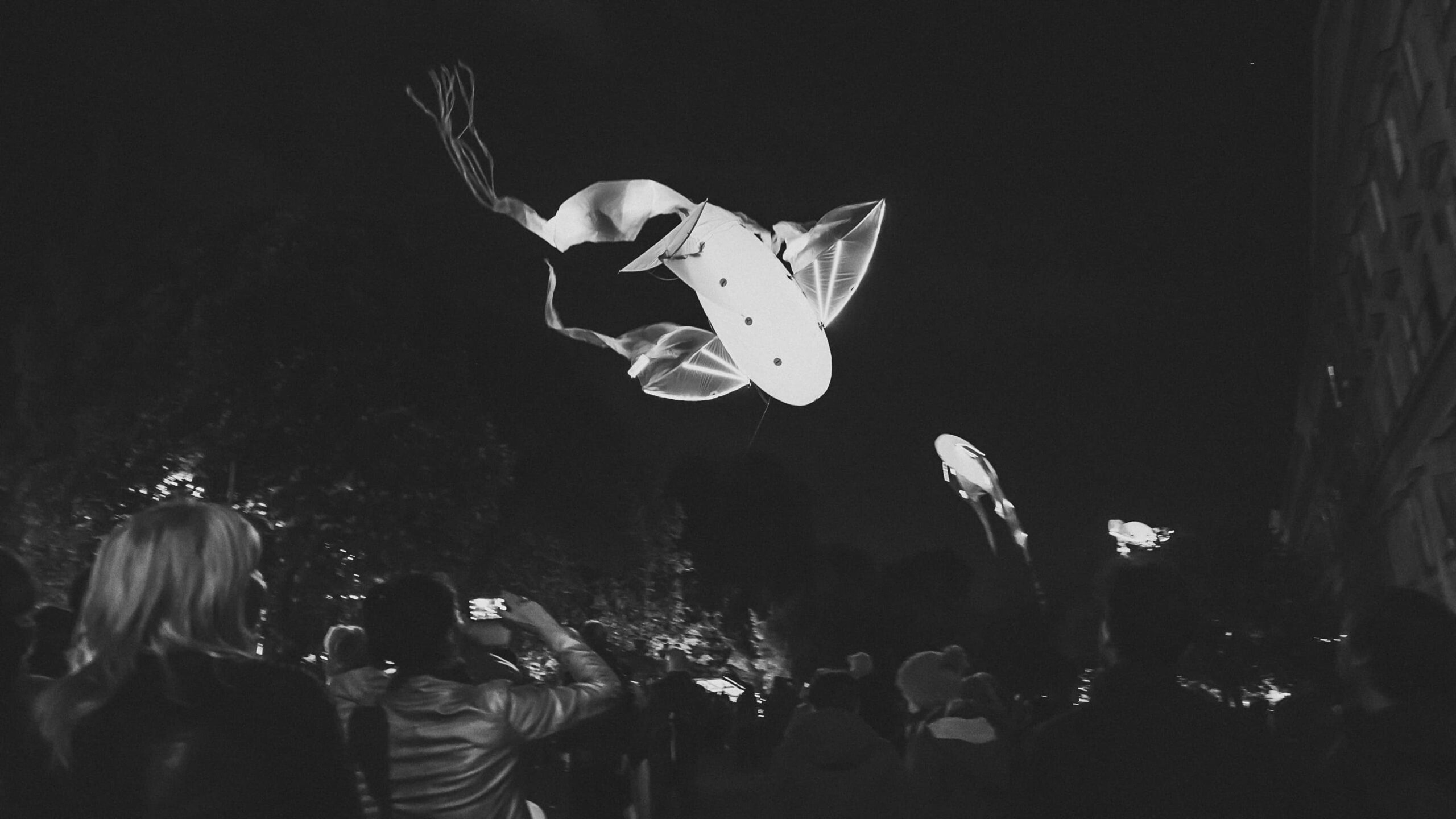
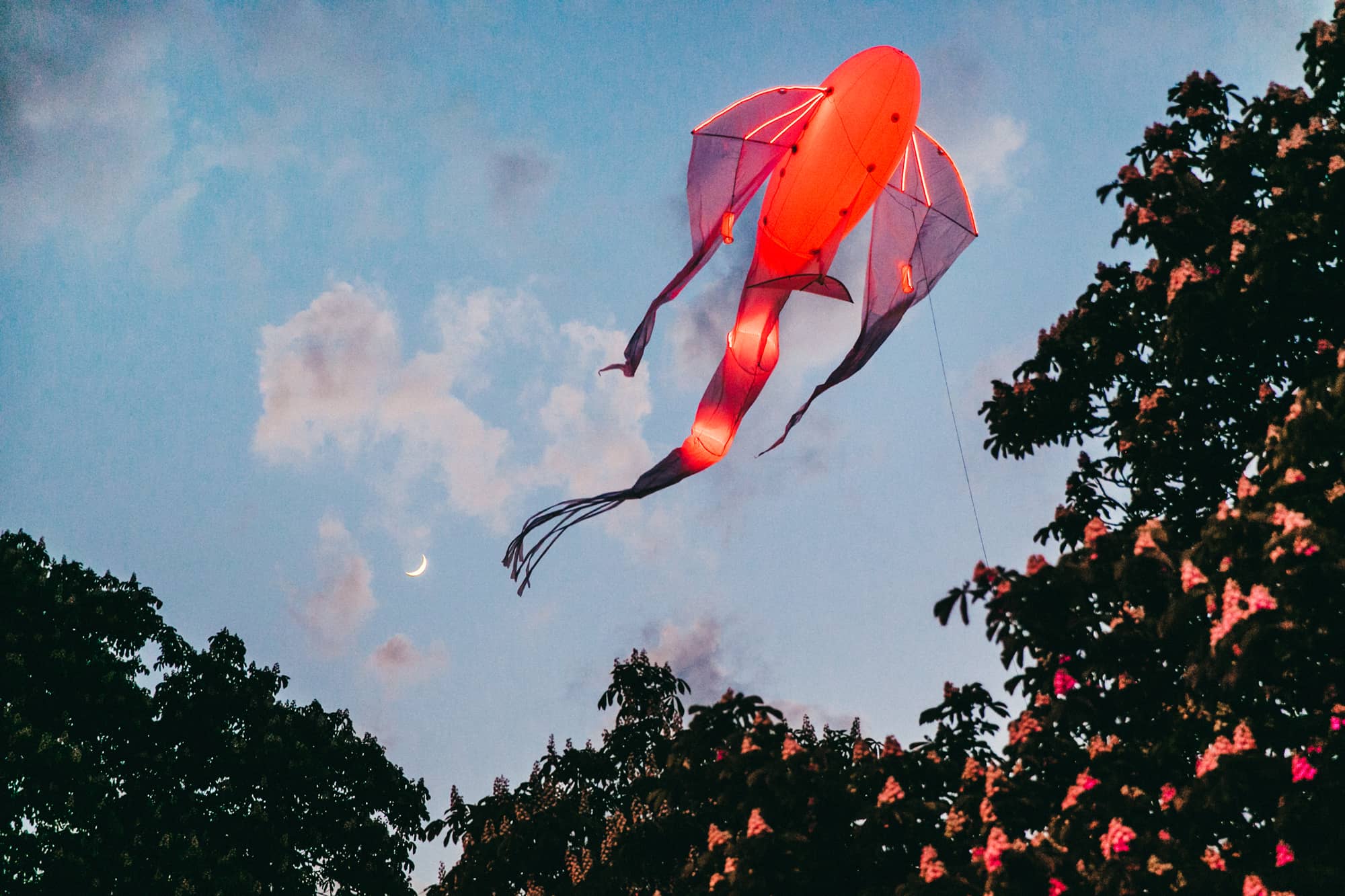
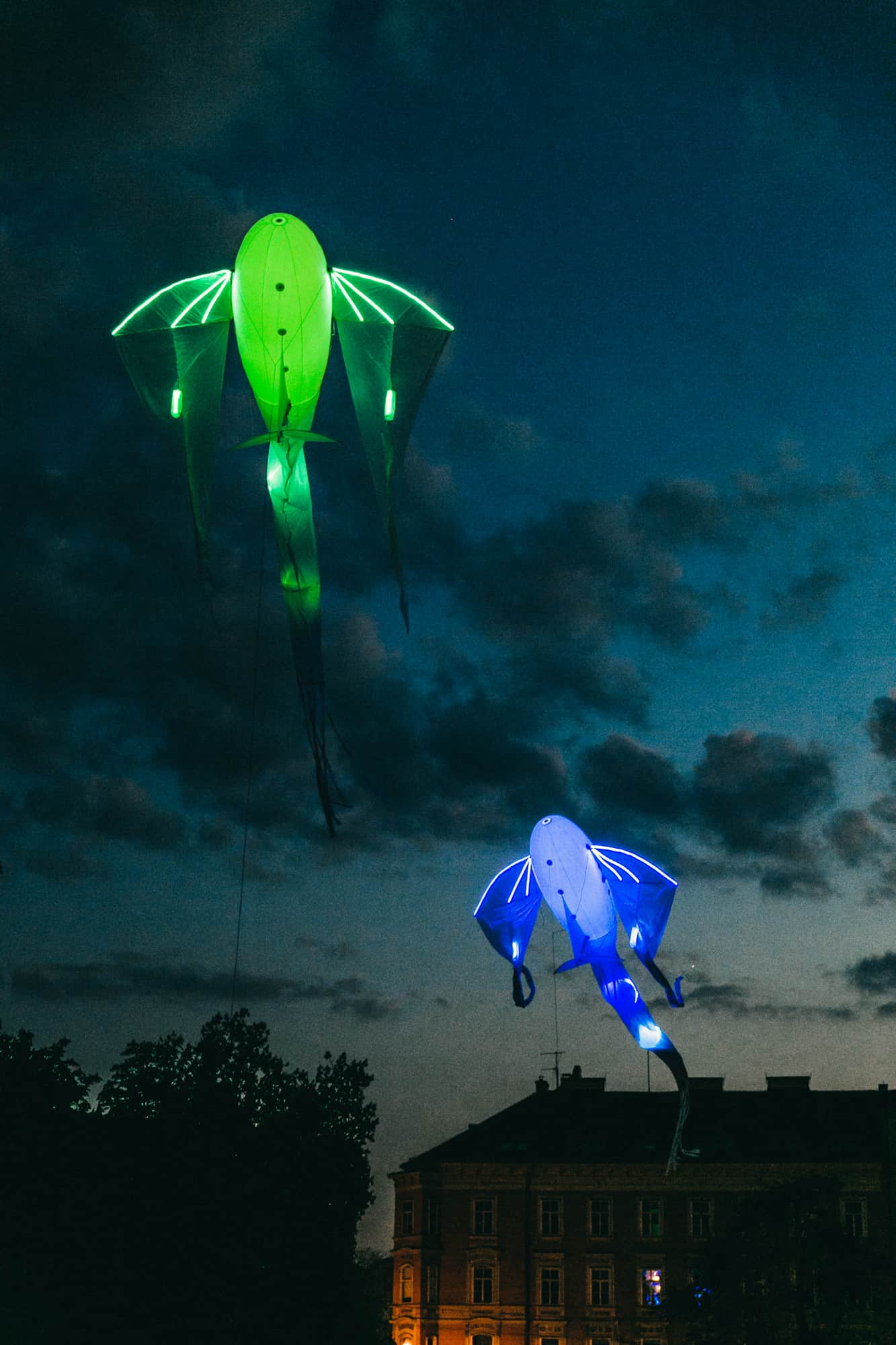
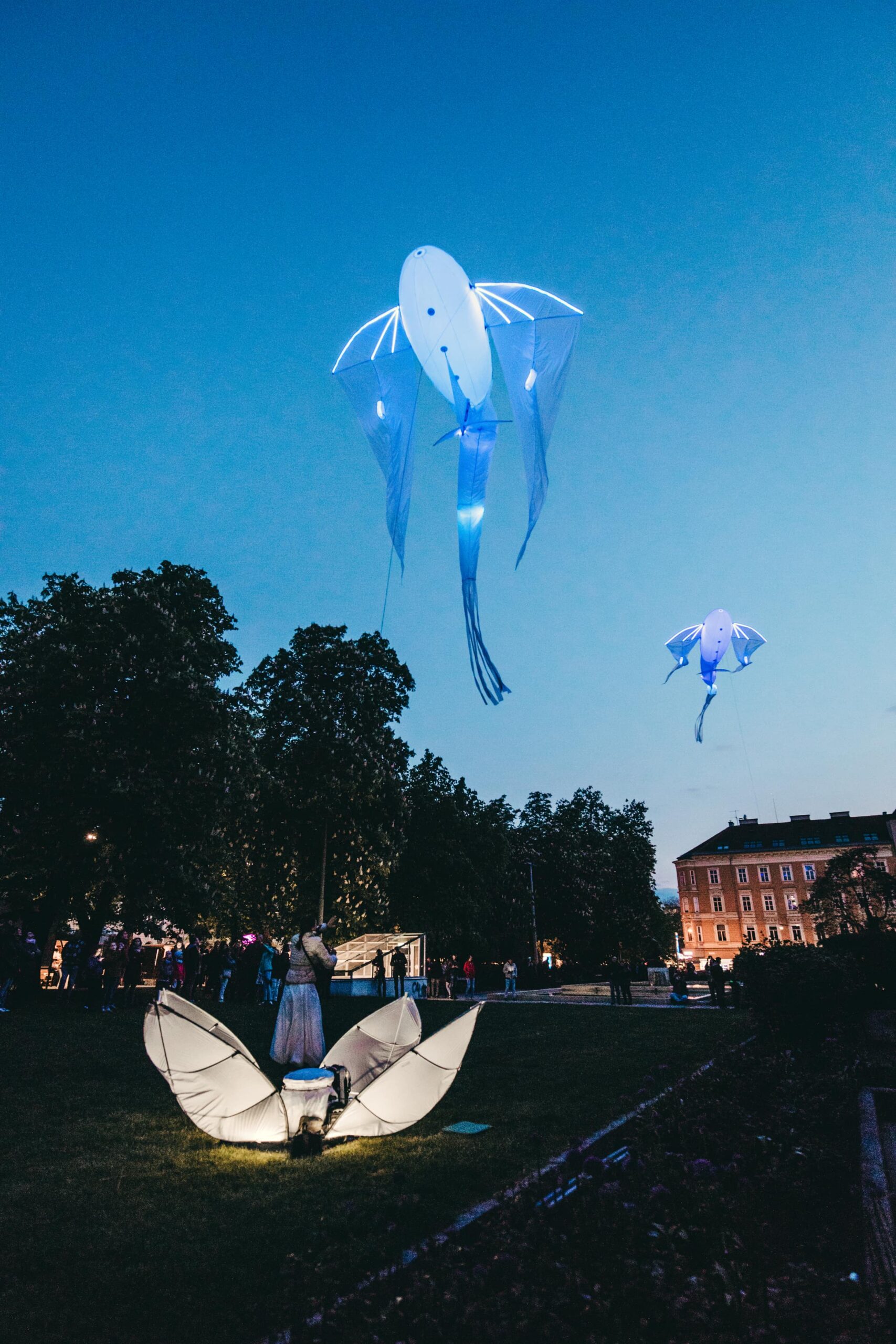
“Les Luminéoles” is the name of an installation by the French collective “Porté par le Vent”. “Carried by the wind” is also the program when the poetic creatures filled with helium and light take to the air and dance with the wind. The public space is redefined by the integration of these creations. The Luminéoles have already floated through various cities and in recent years have conquered London, Moscow, Singapore, Istanbul, Lyon and Mexico City, among others, in a delicate and fragile way.
Location: Next Liberty
Biography
Christophe Martine, the founder of the “Porté par le Vent” collective, discovered his passion for paragliding back in 1987 at the age of 14 and has perfected this passion over the years. He ultimately turned his hobby into his profession: as a sports teacher, he has been working with his students on the subject of hang gliding for almost twenty years. Based on the Luminéoles, Christophe Martine has since developed several programs with light art works that have resounding names such as “Le Bal des Luminéoles” or “Jardin d’hiver”. The Luminéoles were created in collaboration with Fête des Lumières Lyon.
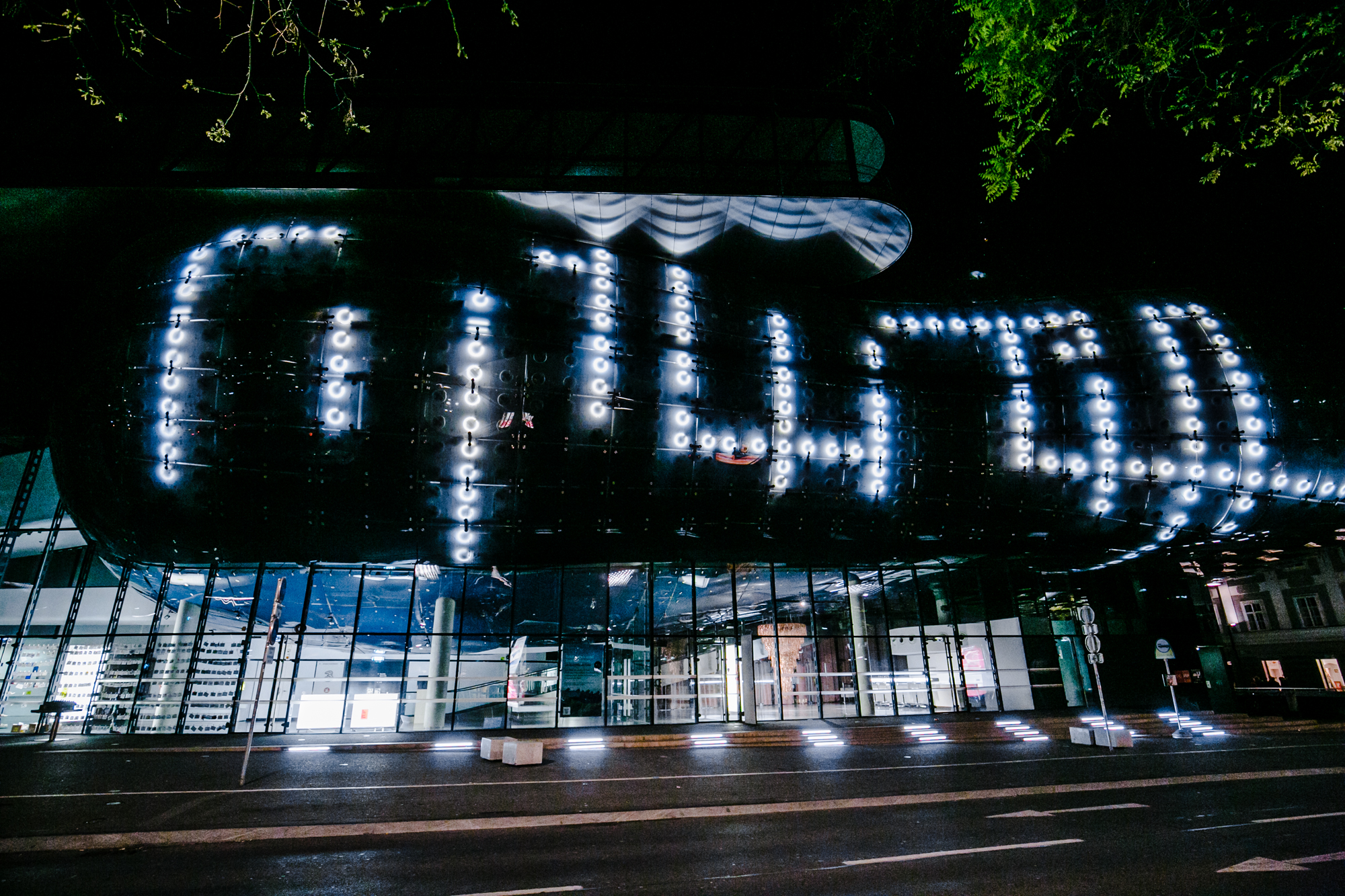
The Kunsthaus Graz can be read as a utopian building whose roots go back to the late 1960s and are based on concepts such as living architecture and an intelligent exhibition machine. In its organic-technical form, arteries became mobile roller conveyors; the once transparent façade, which was intended to make the life inside the exhibition machine visible, has become a pulsating light façade for the public. The latest work in a current series by Mischa Kuball was inscribed into this very façade on the KLANGLICHT weekend in 2017. Kuball, today one of the most important light artists in the world, showed public preposition / Utopia, a lettering that mutates from the term utopia to dystopia and back again, during the Month of Light 2017. As an endless repetition, it becomes a current reflection of changing perspectives on architectural and social developments here and everywhere.
In the light of the public – public prepositions
Questions about the significance of public space as socio-political material were discussed as part of Licht 2017. With Mischa Kuball, Barbara Steiner, Elisabeth Fiedler and Bernhard Rinner. Moderated by Katrin Bucher Trantow.
Location: Kunsthaus
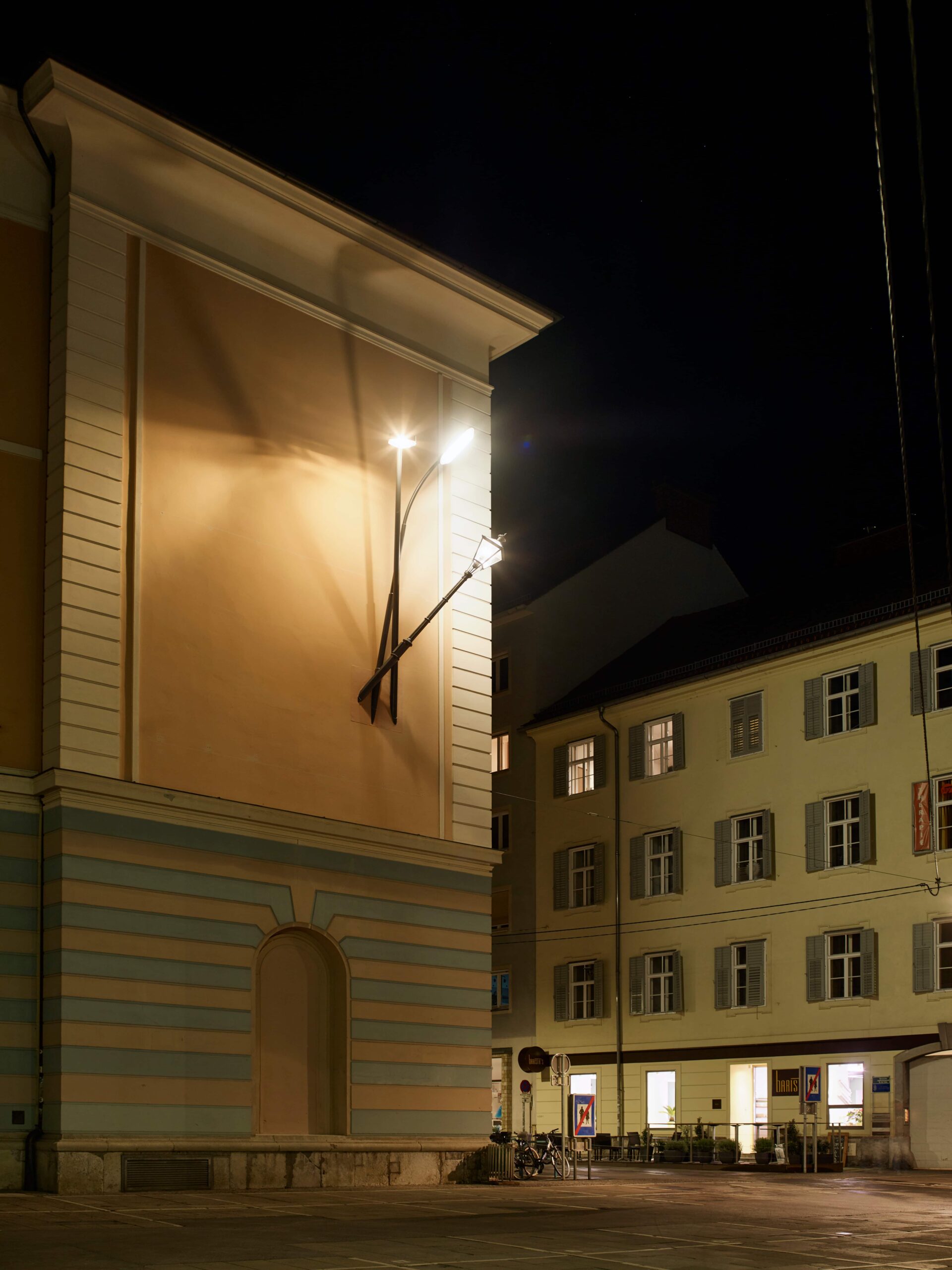
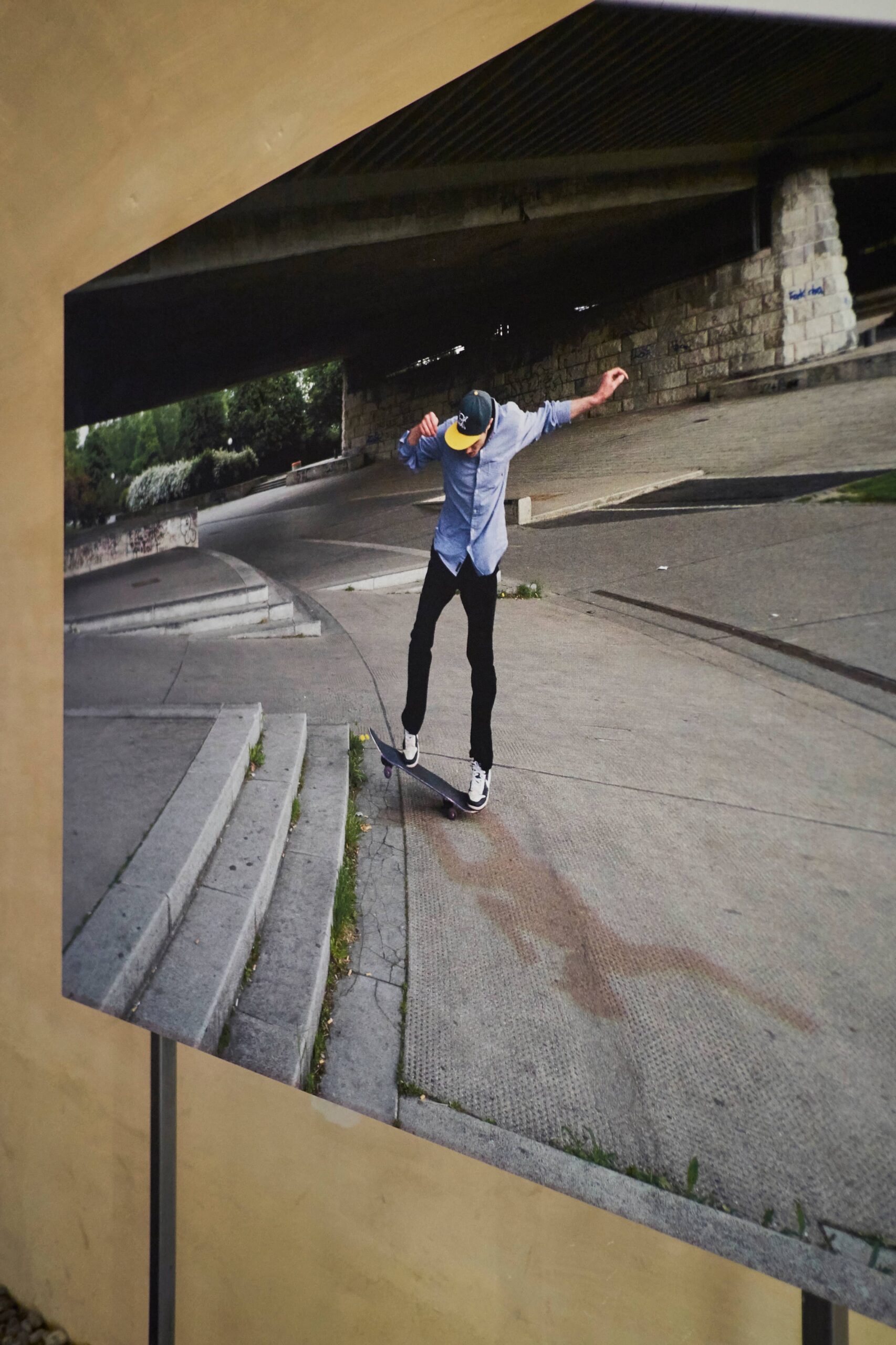
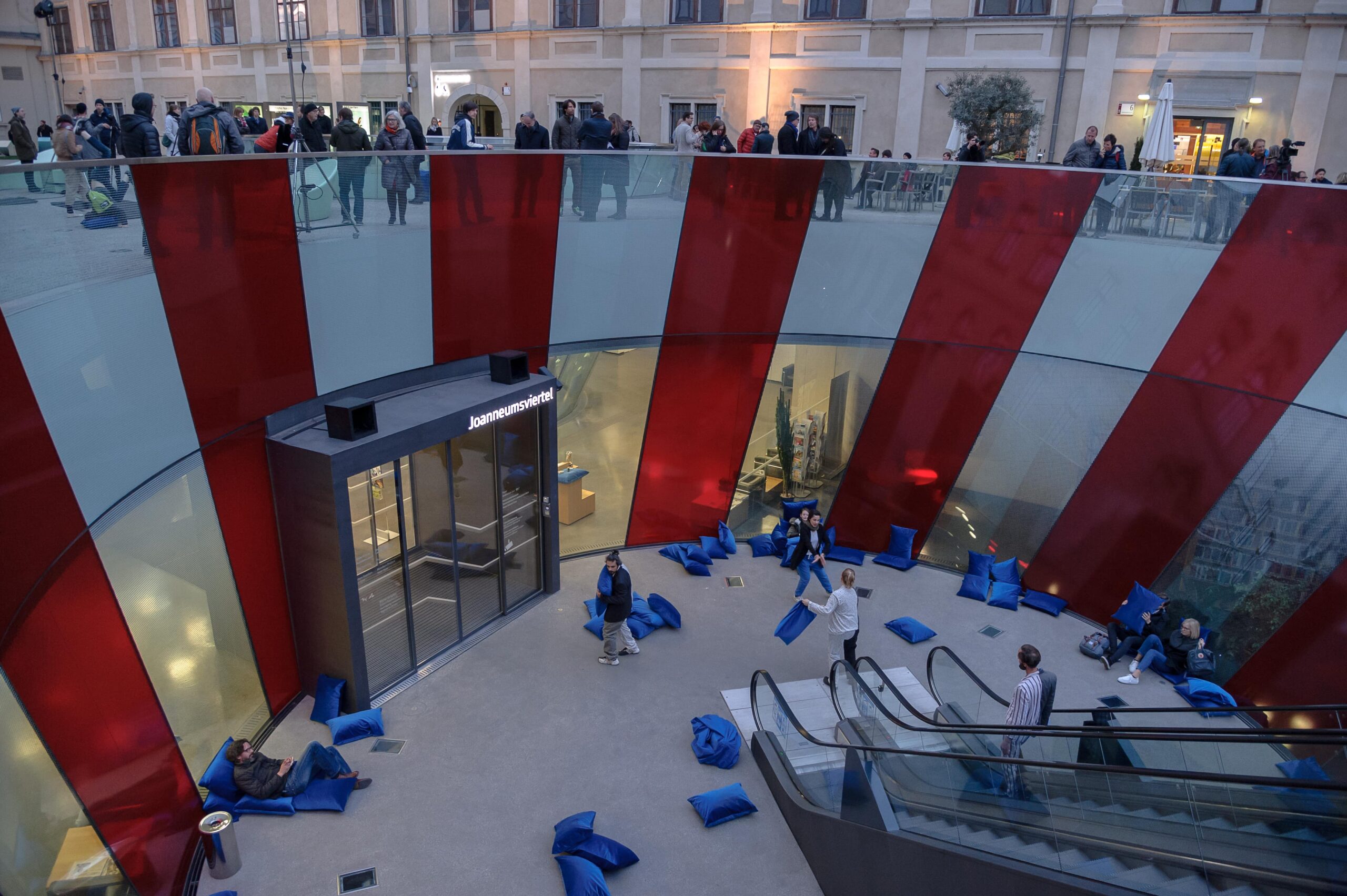
The Institute for Art in Public Space Styria also dedicated itself to the theme of light in April 2017 and presented eight artistic projects in the city center of Graz on the theme of “light”.
The artists’ collective Plex Noir (Germany) has created an interactive light and sound installation for the Joanneum Quarter, the intention of which is to explore the Joanneum courtyard as a place of urban life.
In the Inner City of Graz, several works by artists such as Atelier van Lieshout (NL), Atisuffix (IT), Manfred Erjautz (A), Werner Reiterer (A), Liddy Scheffknecht(A) and Johannes Vogl (D) were on display on the theme of “Light as a Resource”. Brigitte Kowanz (A) developed a specific permanent work for the entrance area of the museum in Palais Herberstein, which opens up the entrance visually and makes it tangible.
One evening is no longer enough – people’s enthusiasm is too great and the light and sound installations that are set to enchant the city center in 2017 are too diverse. Bühnen Graz is therefore extending the KLANGLICHT Festival to two evenings and, for the first time in collaboration with Murinsel and Universalmuseum Joanneum, will be staging a total of 22 projects in Graz city center: from Freiheitsplatz to Dom im Berg, from Opernring to Stadtpark and Grazer Burg to Schloßbergplatz. And sound and light also return to the place where it all began two years earlier – Kaiser-Josefplatz.
A sound collage of the Schauspielhaus, recorded by the theater’s artists and produced by Matthias Grübel, theater musician and sound designer, who also created the music for “Merlin der Das wüste Land” in autumn 2015, formed the framework for the light installation Njörd at Freiheitsplatz. This KLANGLICHT contribution was an artistically realized audio playbill preview that interwove text fragments from all the new plays premiering in the following season and carried them through the air…
Location: SCHAUSPIELHAUS // Freiheitsplatz
Berlin-based musician and sound designer Matthias Grübel created the music for the production “Merlin oder Das wüste Land” at Schauspielhaus Graz in 2015. He has been releasing music on various labels for several years, most recently the EP “The Longest Year In History” (Audiobulb Records) in 2014. He has produced theater music for the Schaubühne and the Maxim Gorki Theater in Berlin, the Théâtre National in Strasbourg, the Thalia Theater Hamburg and the Staatstheater Karlsruhe, Oldenburg and Mainz, among others. In 2013, he created the sound design for an opera production for the first time: Fidelio at Theater Aachen. More information at www.matthiasgruebel.de
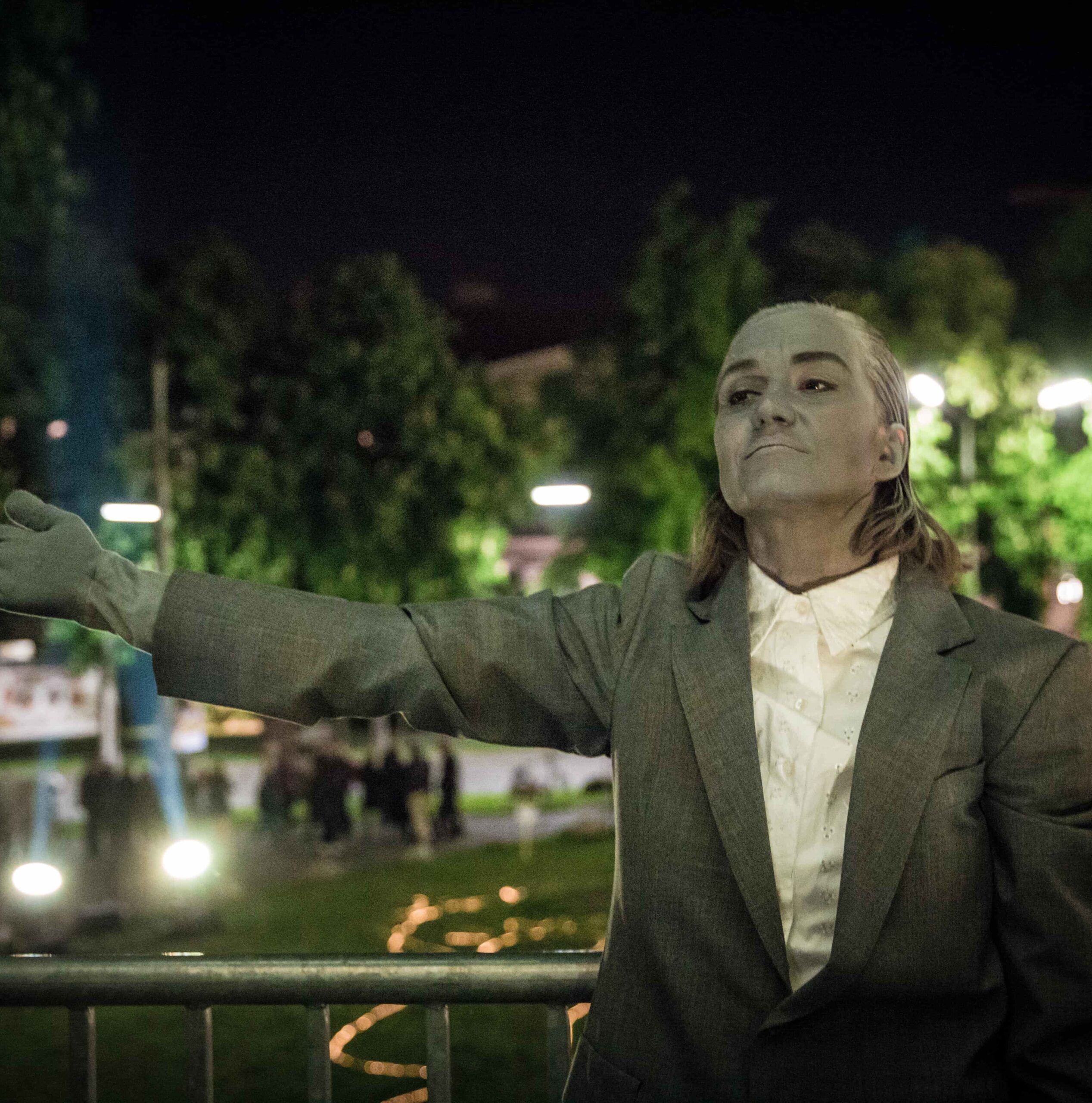
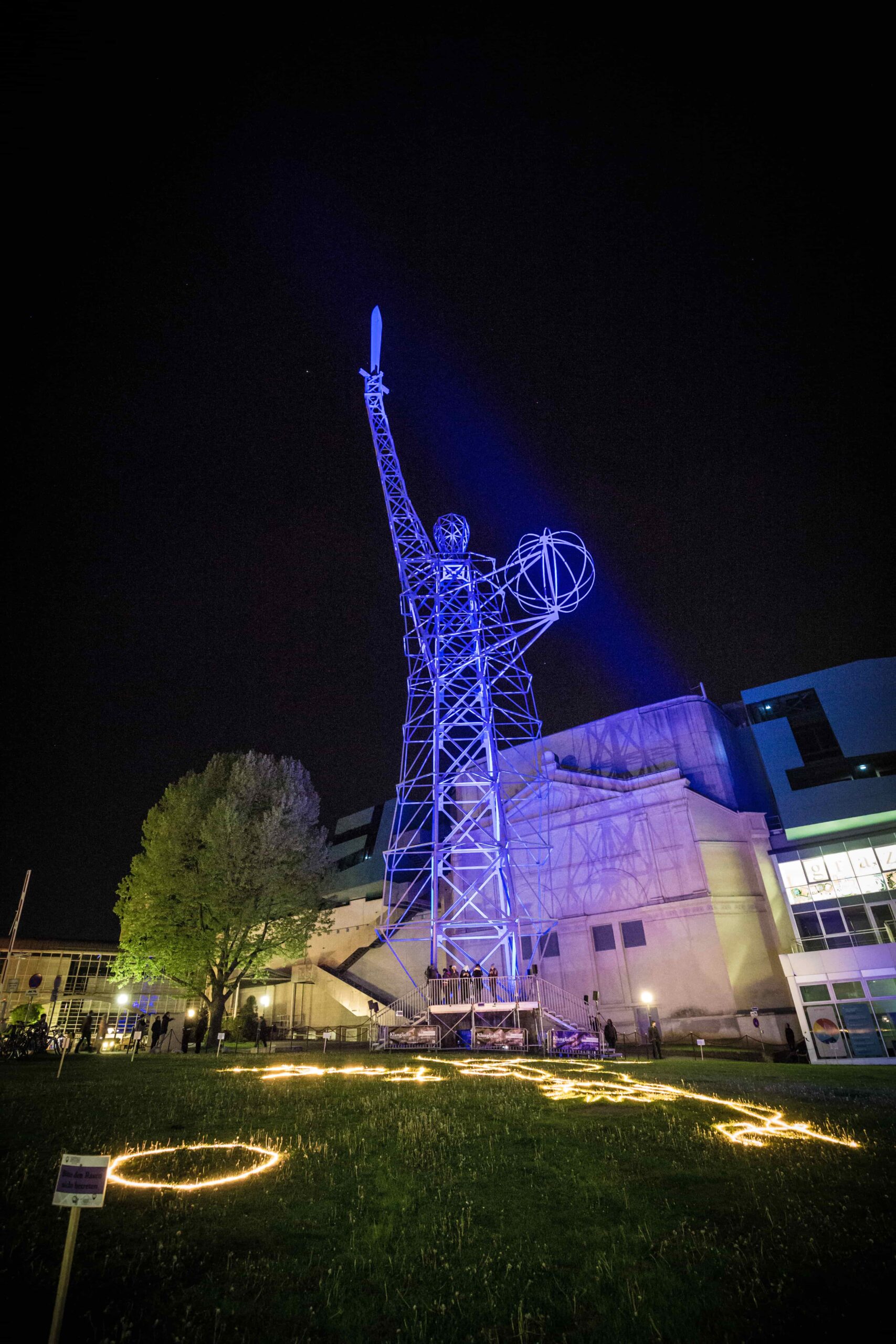
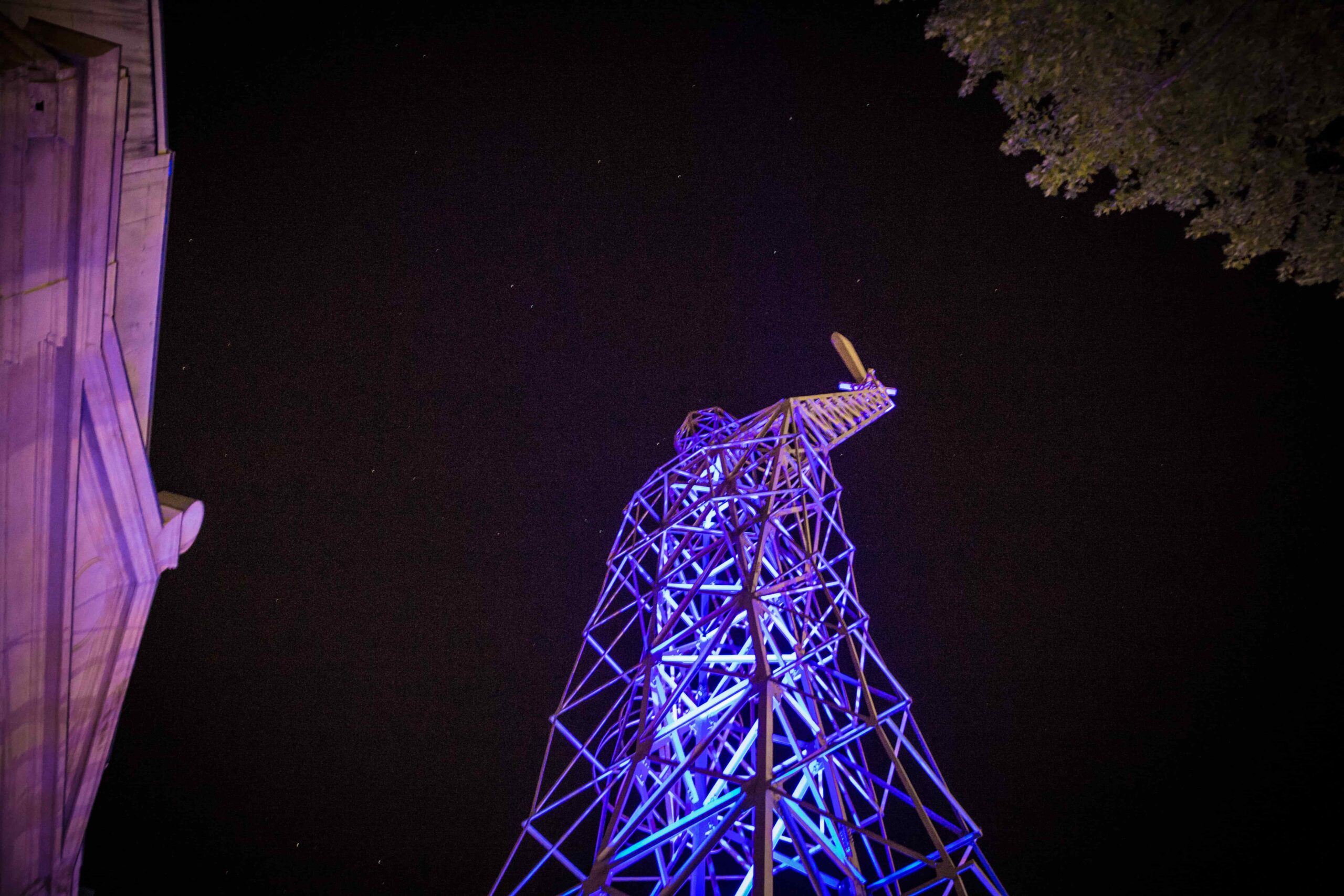
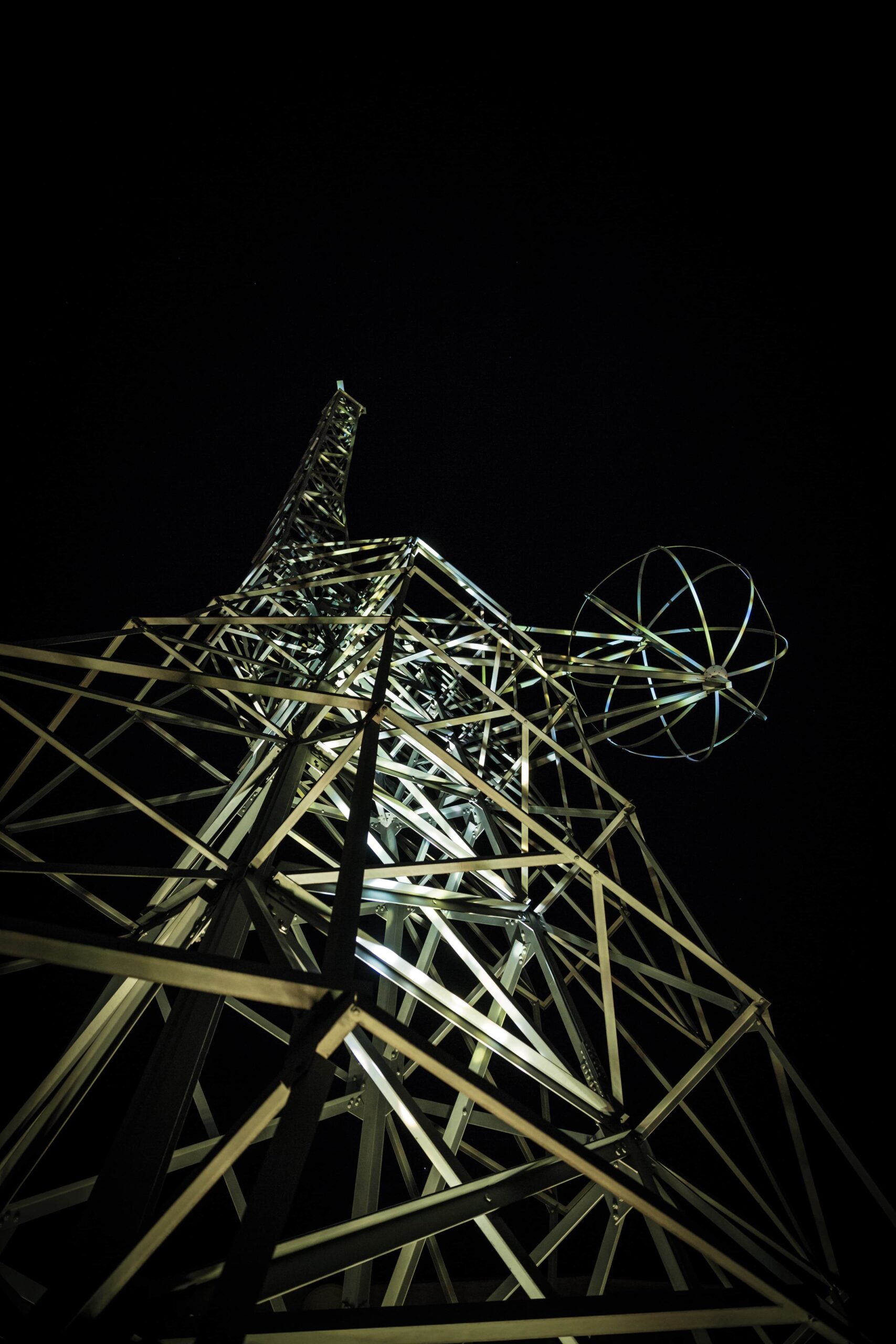
As part of KLANGLICHT 2016, the composer, sound artist and performer Tamara Friebel dedicated herself to Hartmut Skerbisch’s lightsaber, which was commissioned by ‘steirischer herbst’ in 1992 and helped the children’s and youth theater Next Liberty to its name. In her work for KLANGLICHT, Tamara Friebel set out in search of new perspectives on the lightsaber and used sound and light to allow the sculpture to take on different perspectives in three acts on a journey that ends with the victory of freedom.
Location: NEXT LIBERTY // Lightsaber
Tamara Friebel was born in Australia and studied architecture with Zaha Hadid at the University of Applied Arts in Vienna and composition with Chaya Czernowin, Karlheinz Essl (electro-acoustic composition) and Detlev Müller-Siemens at the University of Music. More information at www.tamarafriebel.com.
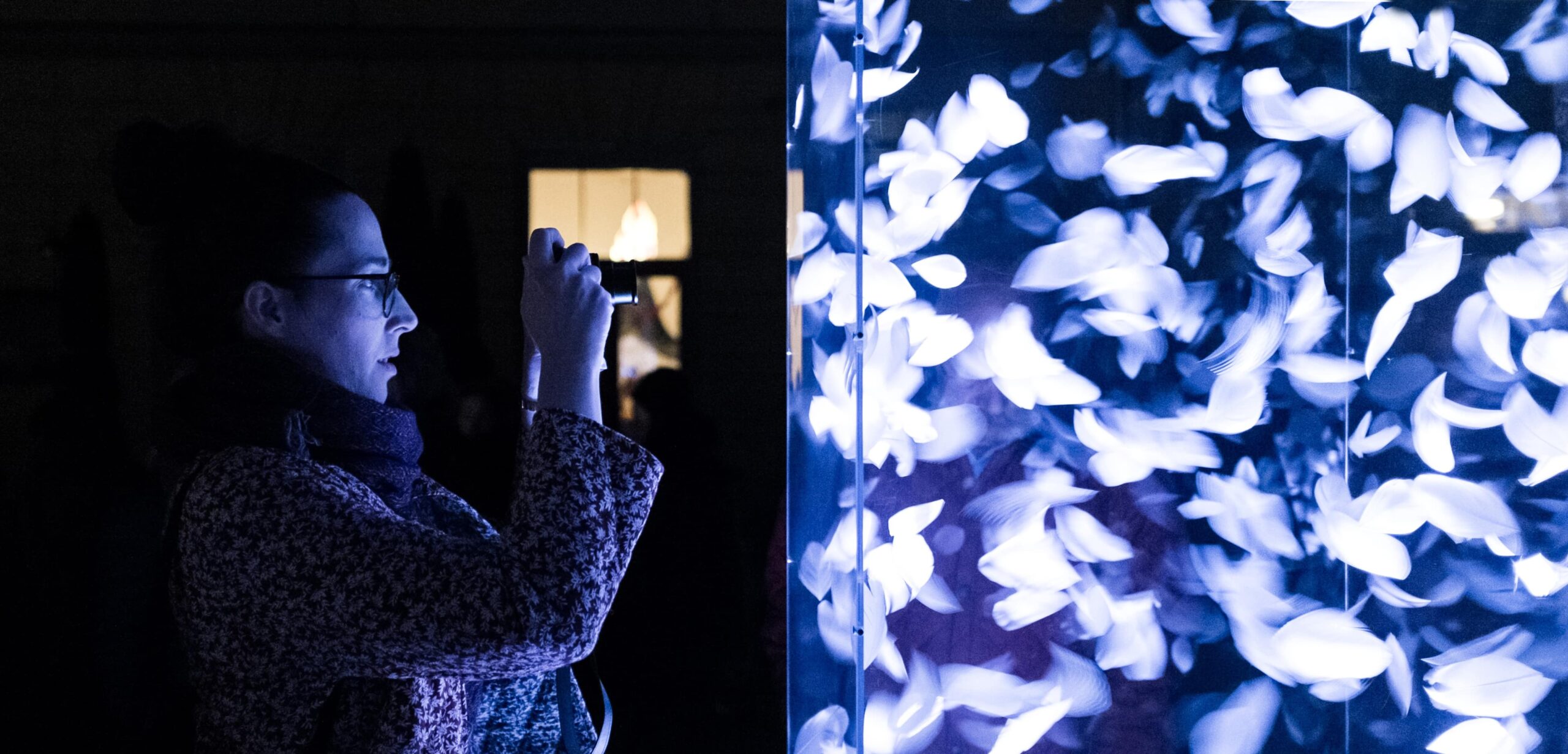
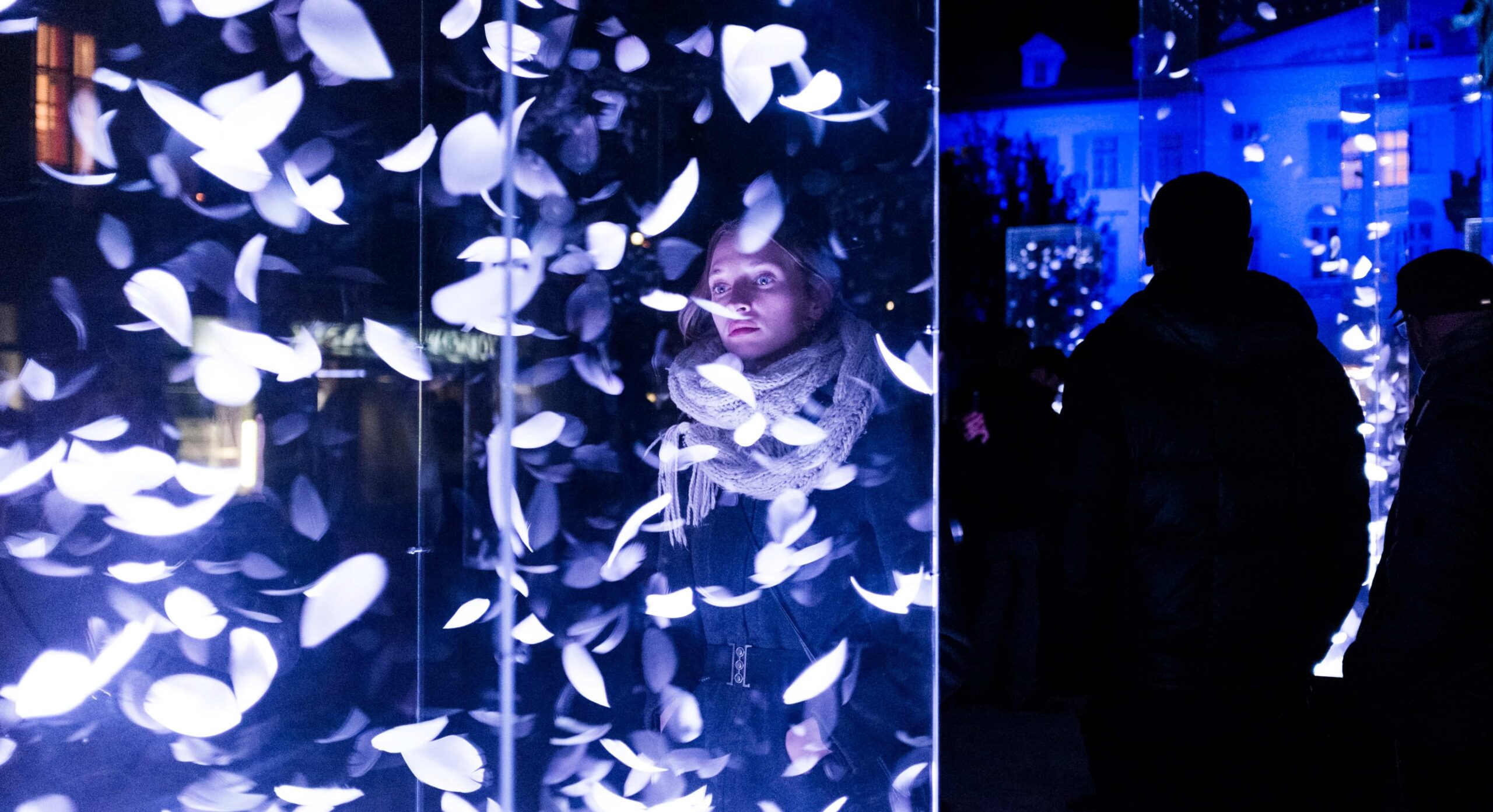
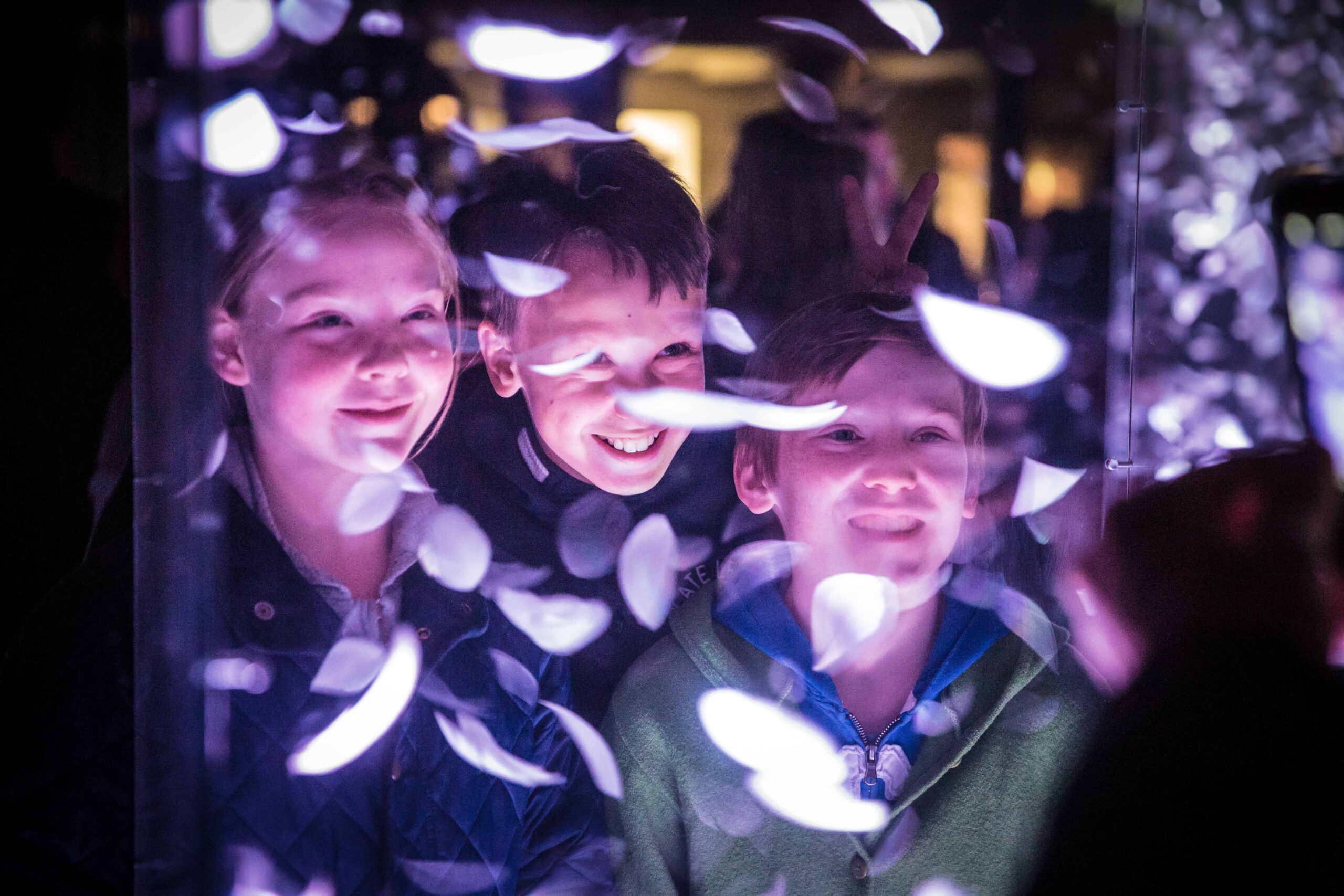
With their sound and light installation “Njörd – Spirit of the Wind”, the French artist collective “WeComeInPeace” won an award at the Lyon Light Festival in 2014 and has been represented internationally with their art project ever since. The light installation consists of 21 illuminated monoliths in which feathers dance an aerial ballet accompanied by specially composed sounds.
Njörd is a tribute to the Scandinavian god of wind, the installation itself in cool, Nordic design draws a space between mythology and modernity. The bottom line is that Njörd is above all a technical challenge that consists of uniting sound, light, the movement of the wind and the elements.
Location: SCHAUSPIELHAUS// Freiheitsplatz
Credits
Production: WECOMEINPEACE in co-production with Fête des Lumières de Lyon
Concept: Wilfried Della Rossa, Kimi Do, Thomas Mathieu
Artists. Management: Wilfried Della Rossa
Technical management: Thomas Mathieu
Sound Design: Squeaky Lobster
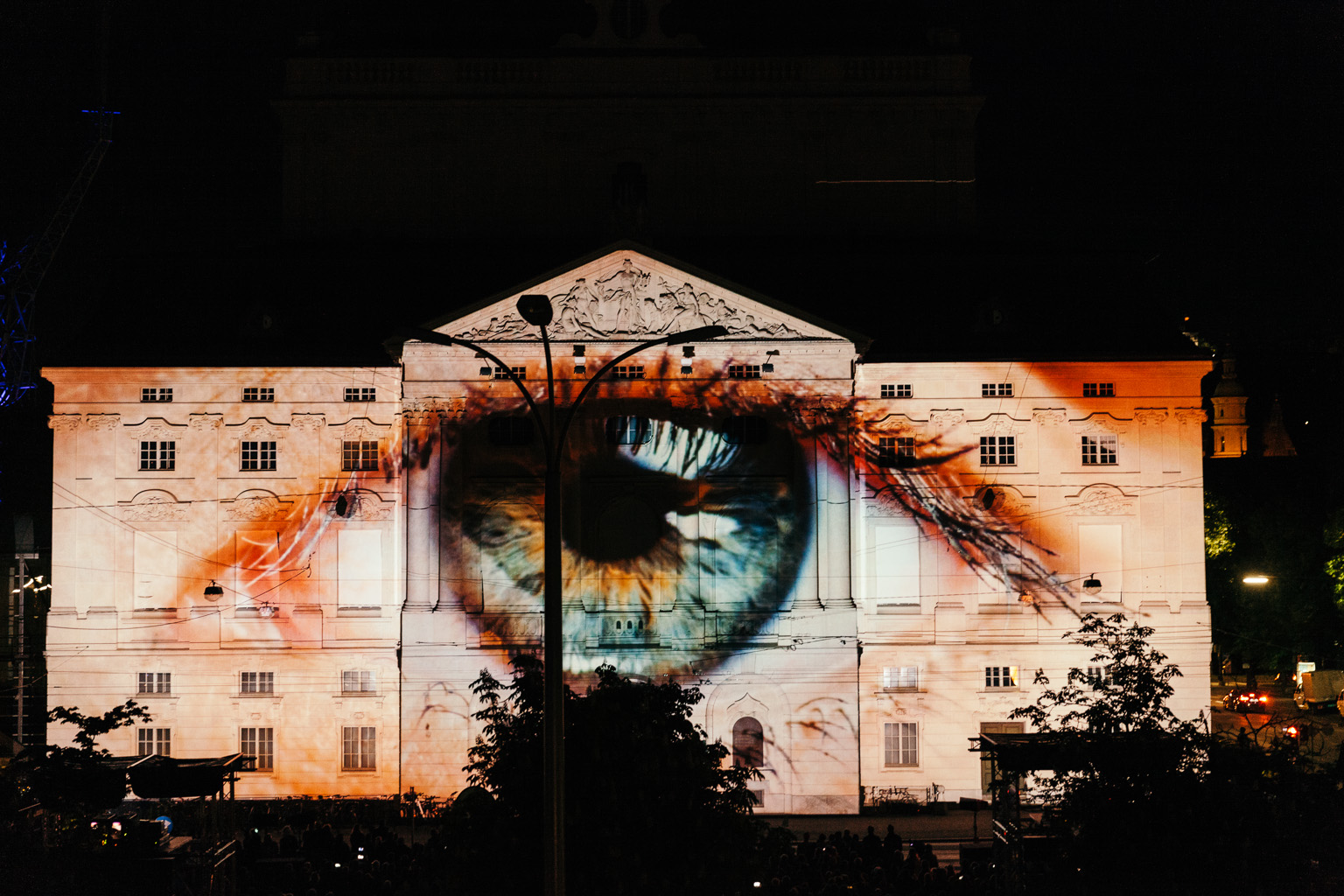
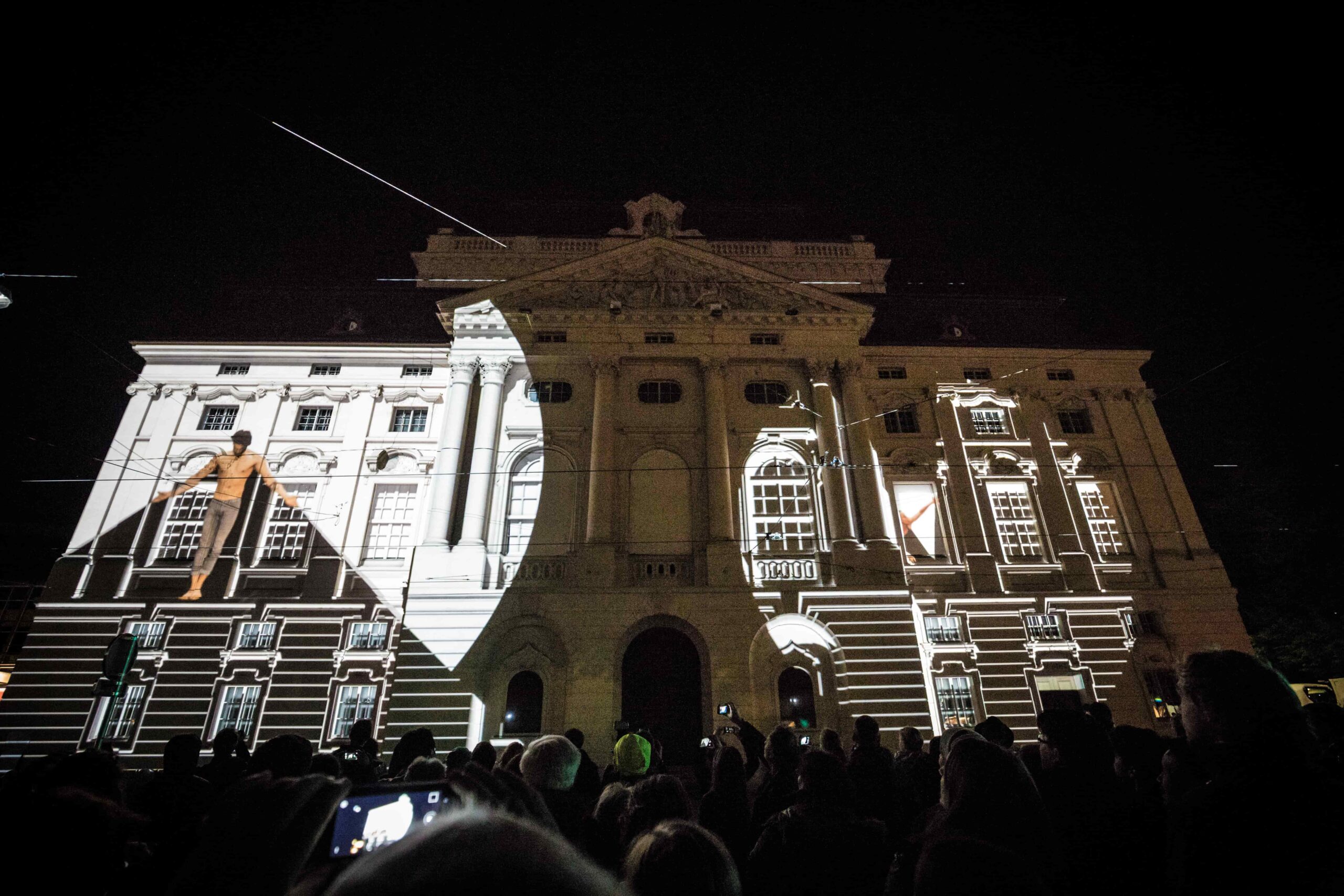
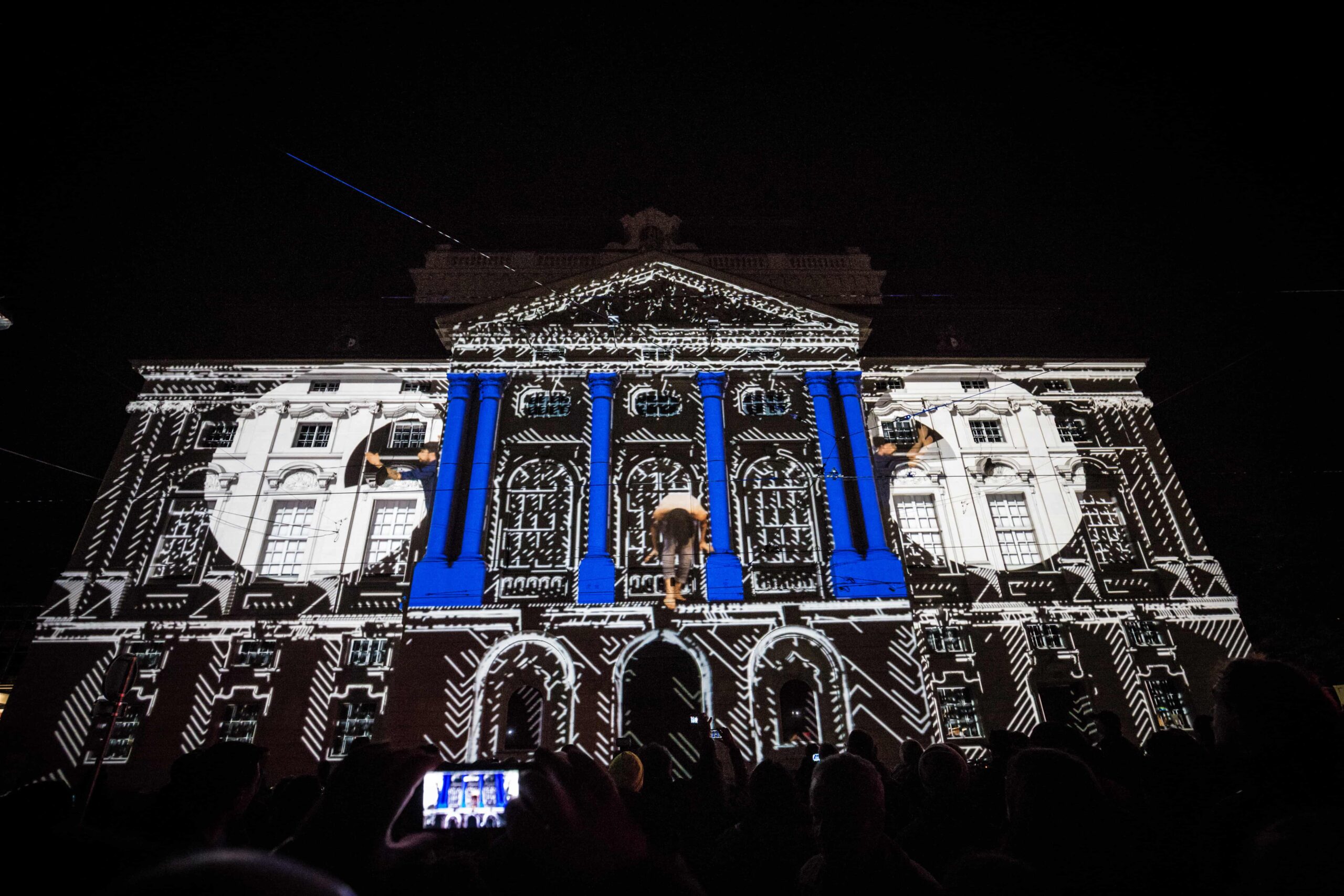
As with KLANGLICHT 2015, the well-known Graz-based film and projection artists OchoReSotto – Volker Sernetz, Stefan Sobotka-Grünewald and Lia Rädler – were responsible for the “redesign” of the opera house on the Kaiser-Josef-Platz side. Their “Arkestra of Light” transformed the façade into a visual and audio experience with the installation “Enternal Sea of Darkness”, accompanied by a live performance by jazz great David Jarh.
The surrounding restaurateurs once again took care of the gastronomic well-being during the event with delicacies from their “stalls”, while the Radio Soundportal DJ Skywlkr provided the atmosphere on the square.
Location: OPER GRAZ // Kaiser-Josef-Platz
Biography OchoReSotto
OchoReSotto are projection artists, spatial designers and experimental filmmakers. Their projections, music videos and installations range from Berlin and Trieste to Japan. OchoReSotto specialize in combining analogue and digital media for their large-scale projections, films and installations and presenting them as a total work of art. They are the founders of the “Strictly Analog Studios” in Graz, Trieste, Ljubljana and Tokyo. In addition to exhibitions, work shows and experimental labs, the “strictly analog” team is dedicated to the worldwide networking of analog art and design. More information at www.ochoresotto.com
Biography David Jarh
David Jarh (trumpet, flugelhorn) studied at the jazz department of the University of Music and Performing Arts Graz with Prof. Eduard Holnthaner and Bobby Shew. He is a member of the RTV Big Band Lubljana, teaches at the Ljubljana Music College and has played with international jazz greats such as Art Farmer, Chuck Israels, Bobby Shew, Andy Bey, Mark Murphy, Dick Oatts, Bob Mintzer, Dusko Goykovich, Bosko Petrovic, Don Menza, Michael Abene, Daniele D’Agaro, Quatebriga, Adriatics, Europlaneo, Cubismo, Rob McConnell, EBU Big Band Istambul 03, Caminoigra, Terafolk, Fake Orchestra, Bill Berry and many more.many more
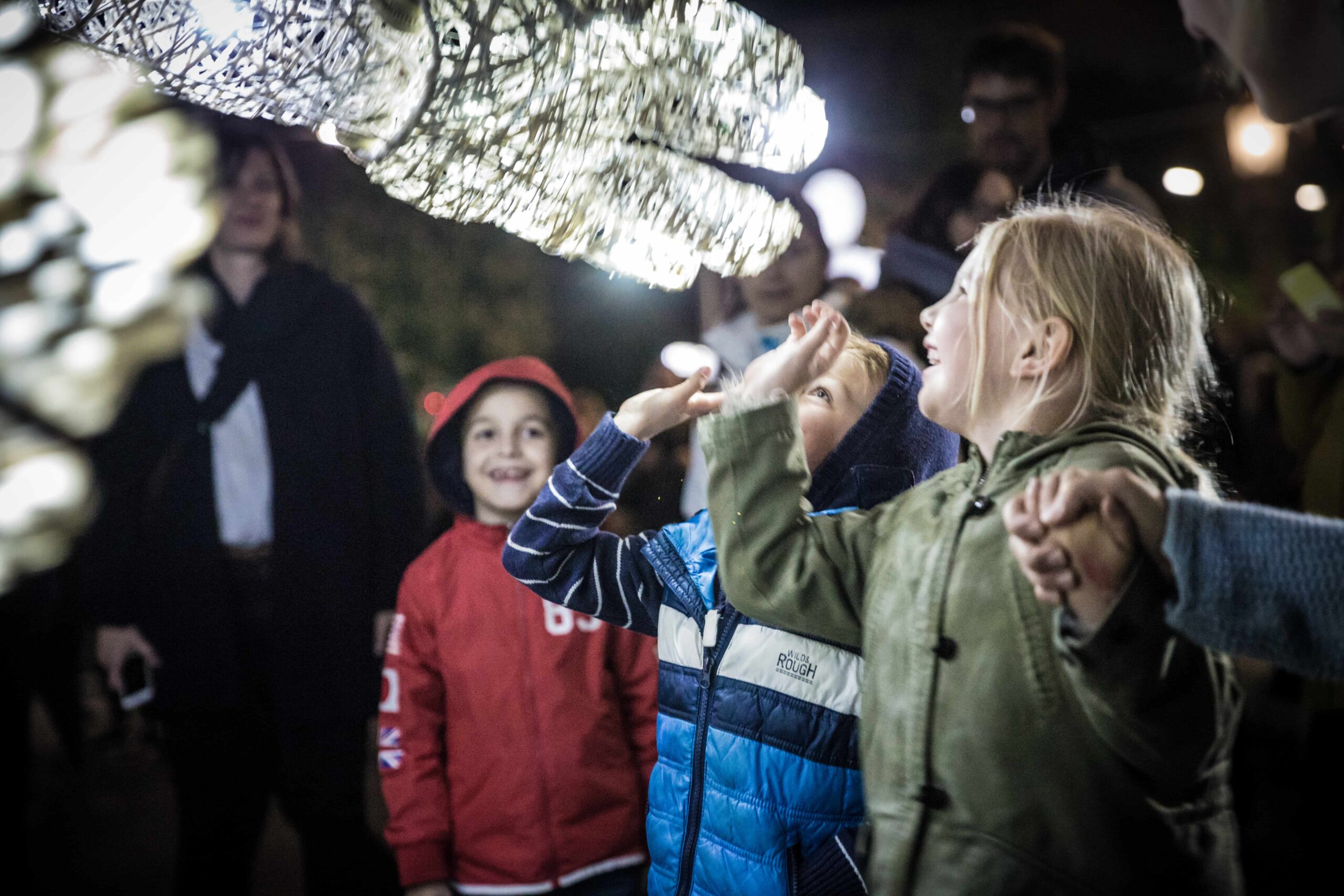
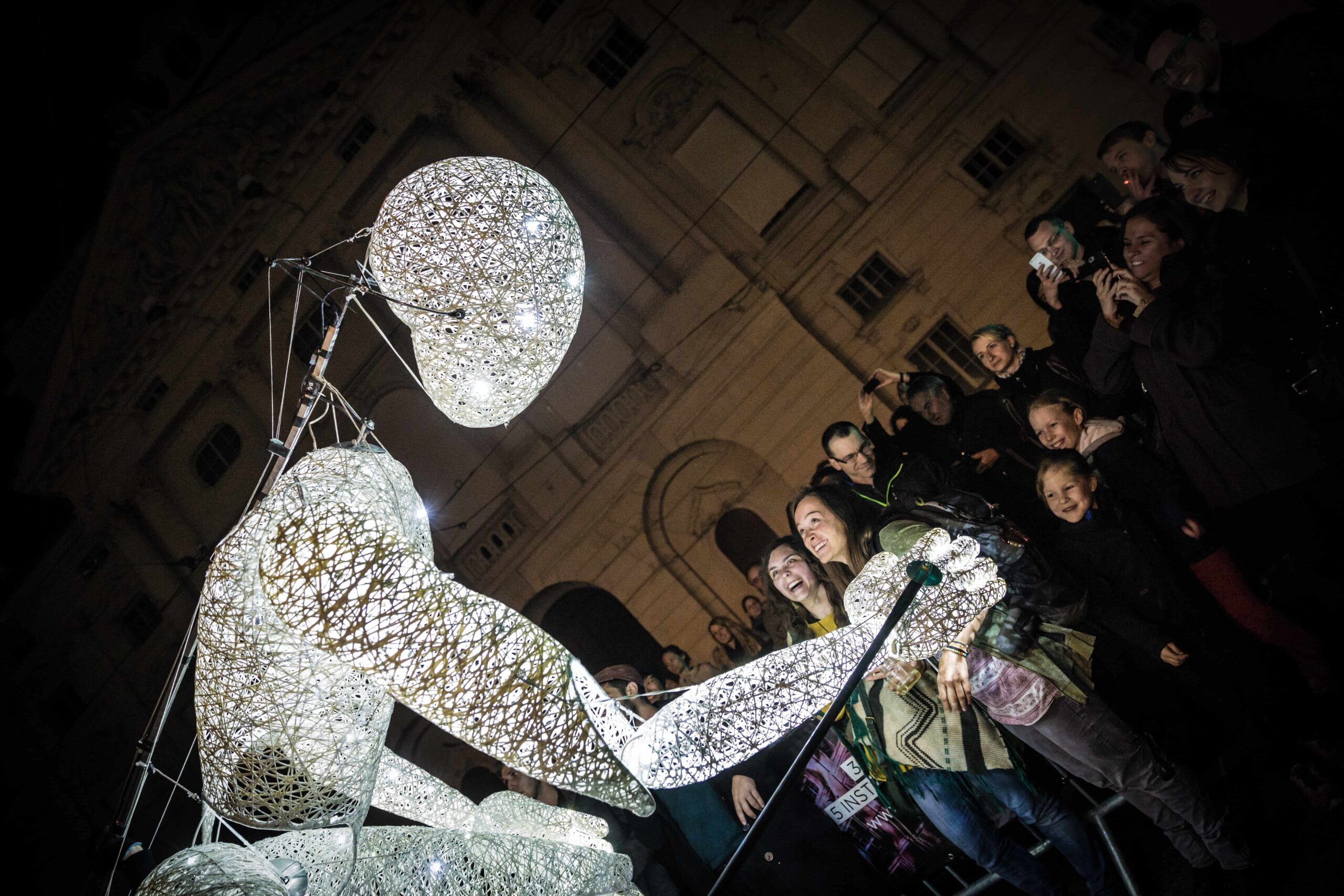
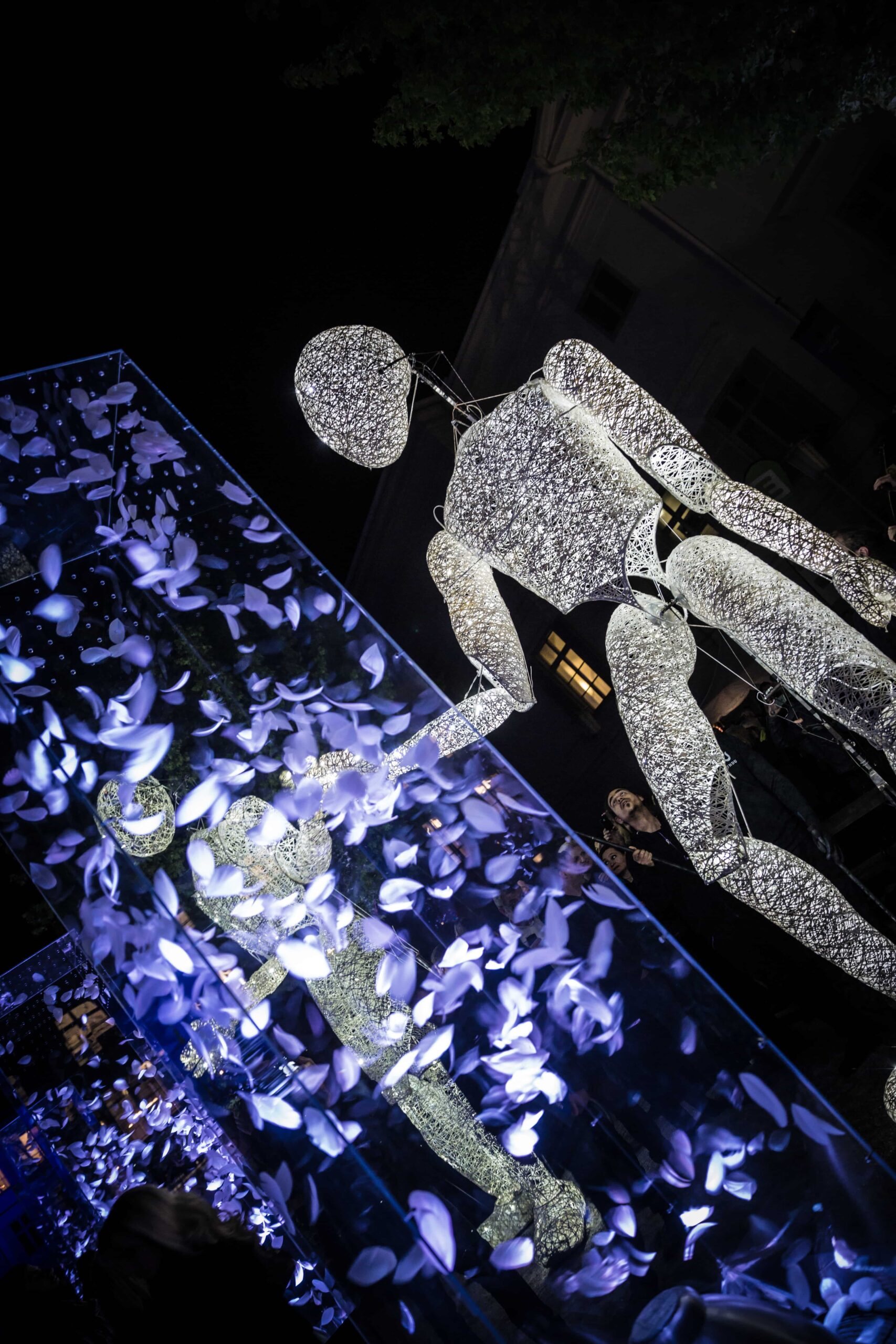
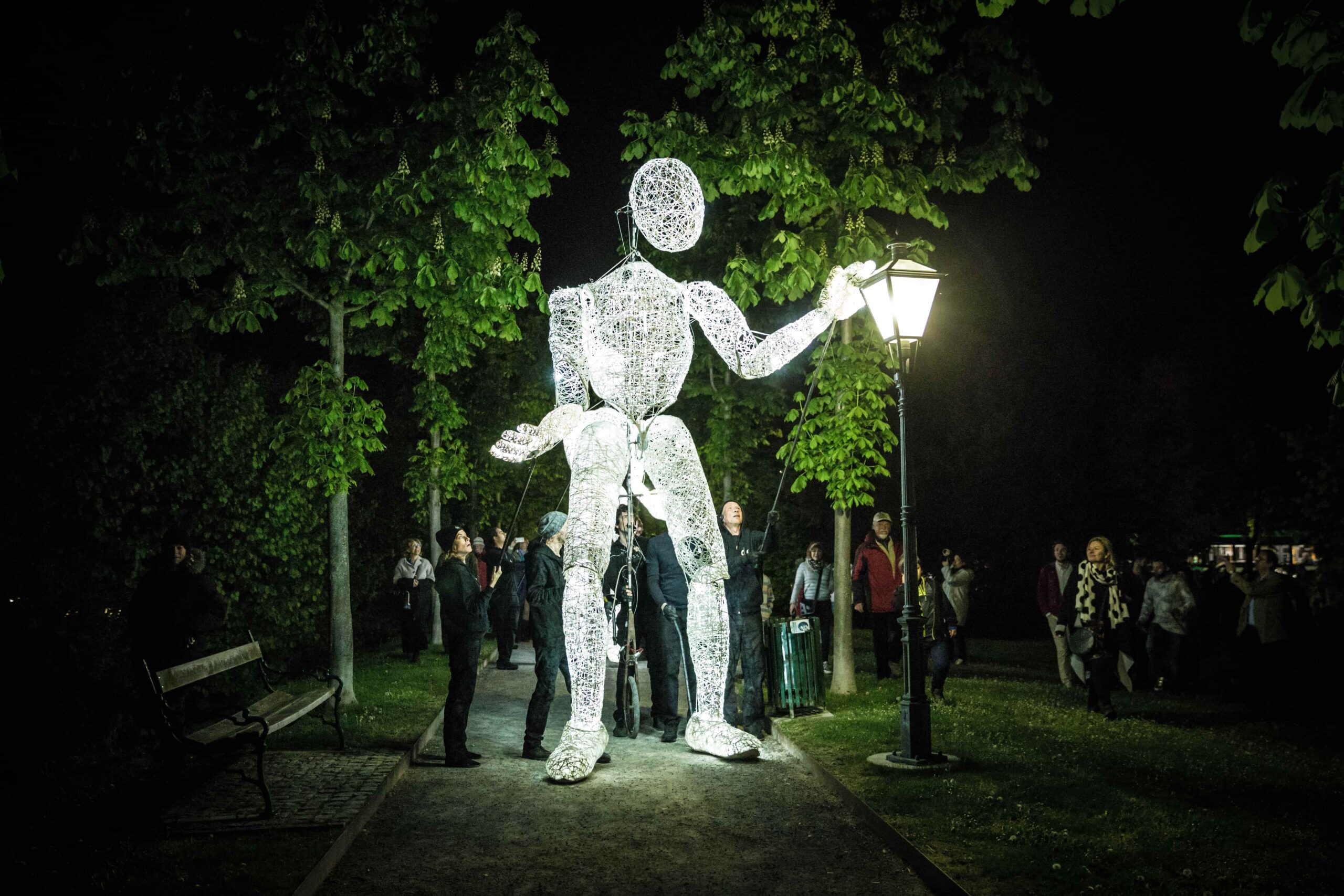
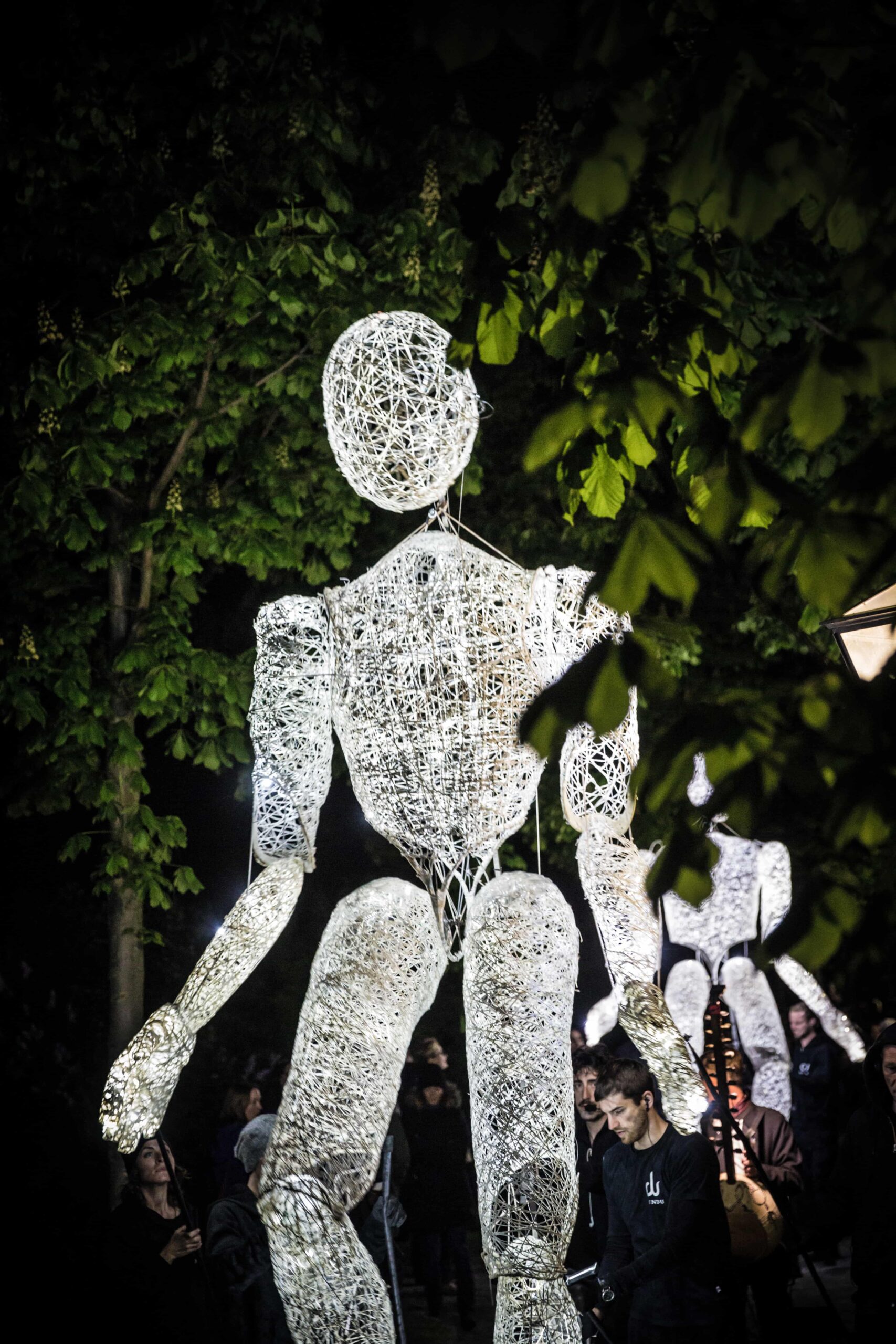
You and you make Dundu – breathtaking, magical and unique.
With Dundu, puppeteer Tobias Husemann, his partner Stefan Charisius and their team have succeeded in creating a mechanical articulated puppet that combines size and imposing appearance with natural grace and gracefulness. The perfect agility and astonishing humanity of his actions never cease to amaze and delight. Through the magic that Dundu exerts on the audience and the unique atmosphere he creates, he enters a new dimension of puppetry.
Location: OPER GRAZ // Kaiser-Josef-Platz and on the way…
3 locations | 5 installations. Already in its second edition, KLANGLICHT expands its rays and also brings the other two theaters – Schauspielhaus Graz and the children’s and youth theater Next Liberty – to shine and sound. The basic idea of KLANGLICHT is now taking shape: Light and sound as essential elements of theater find their way out of the buildings and into the public space. Local and international artists are turning their ideas into visual and auditory reality.
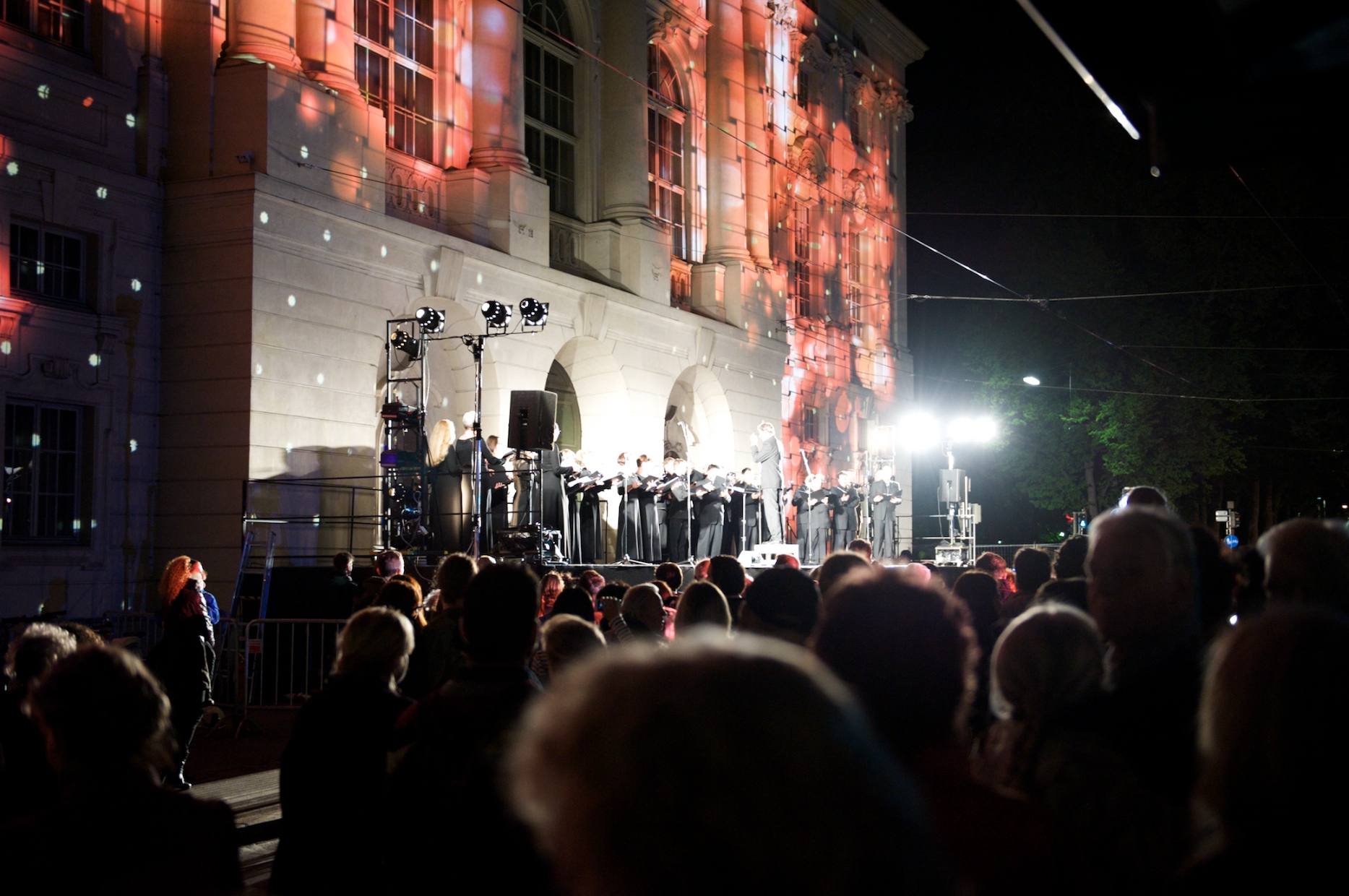
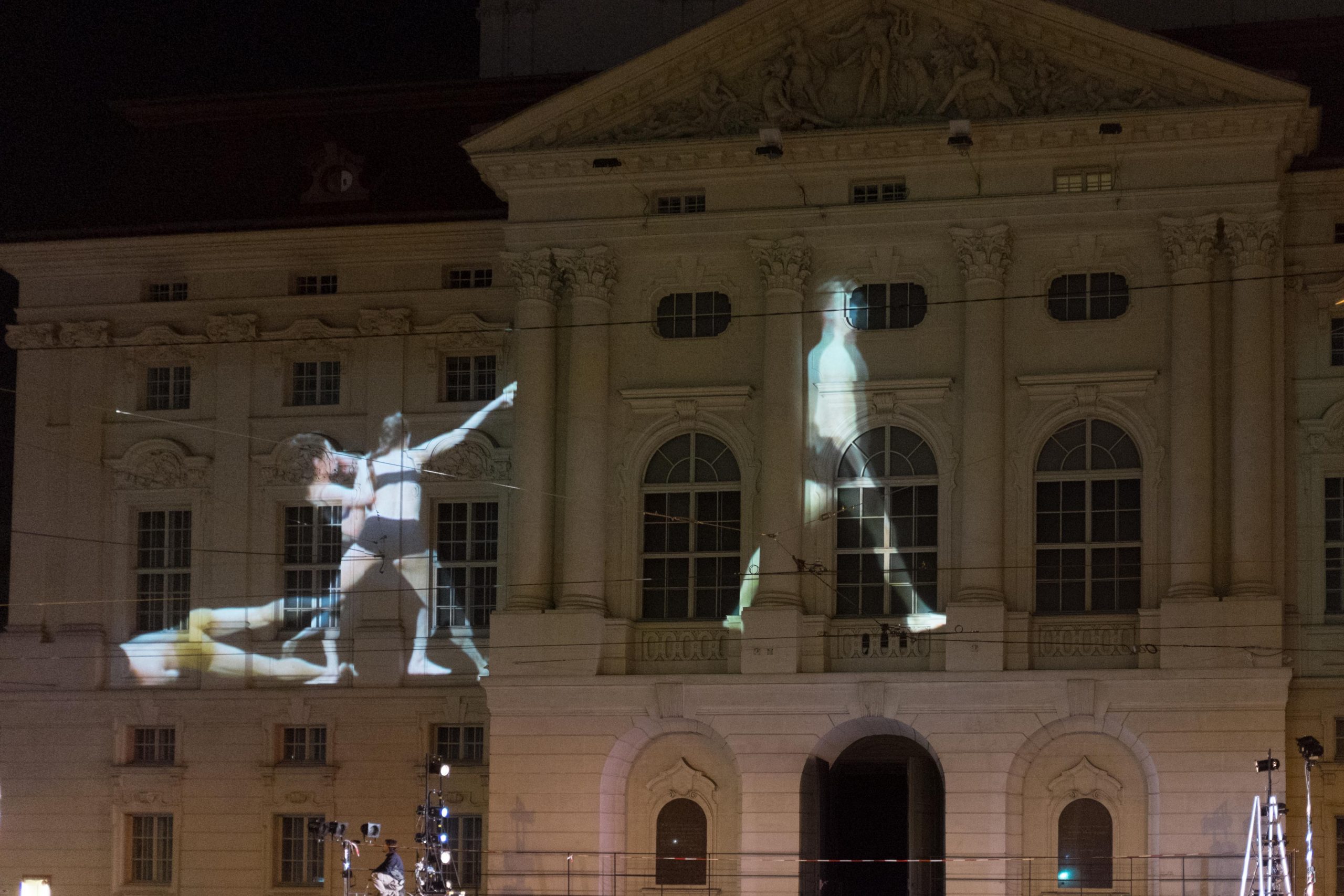
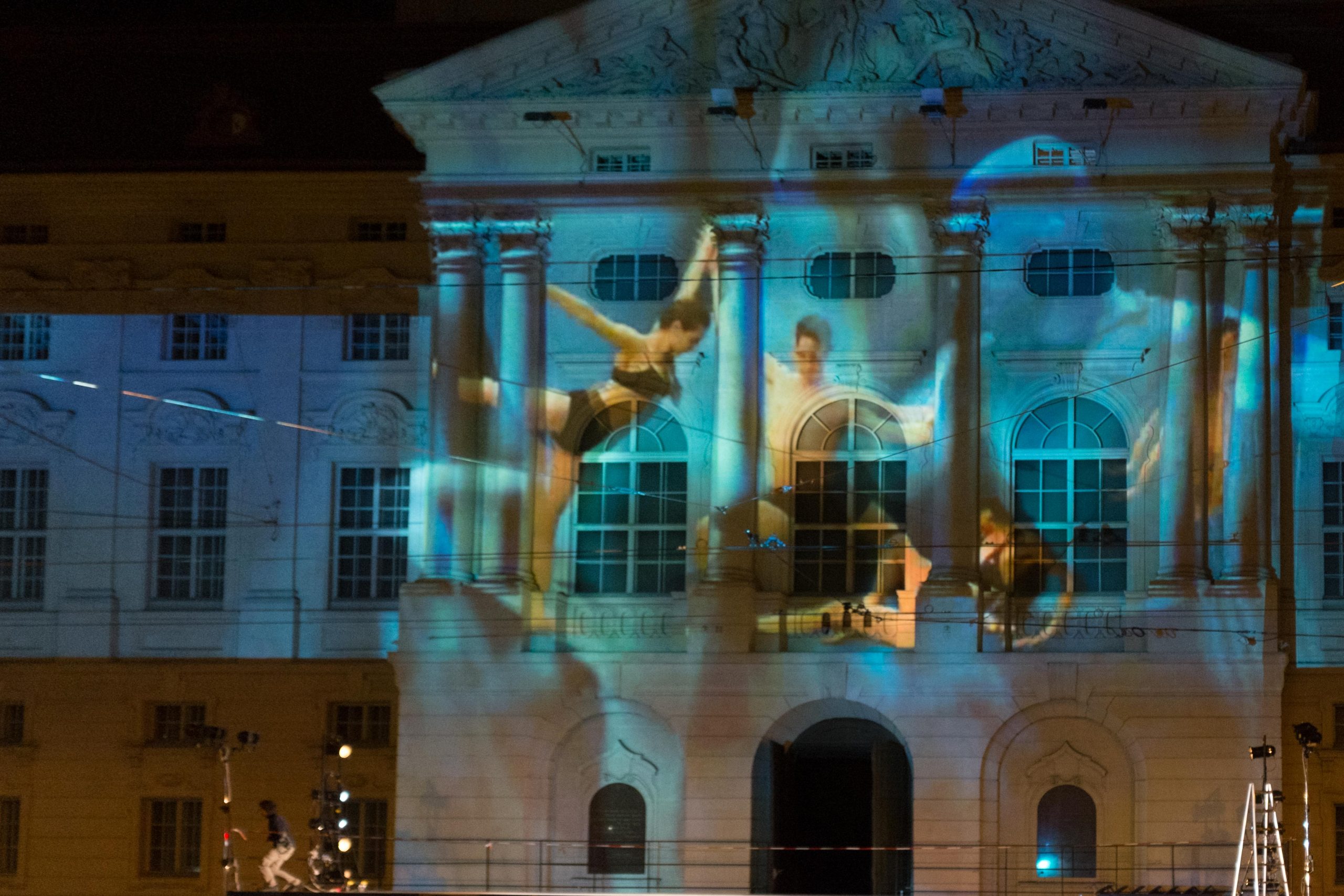
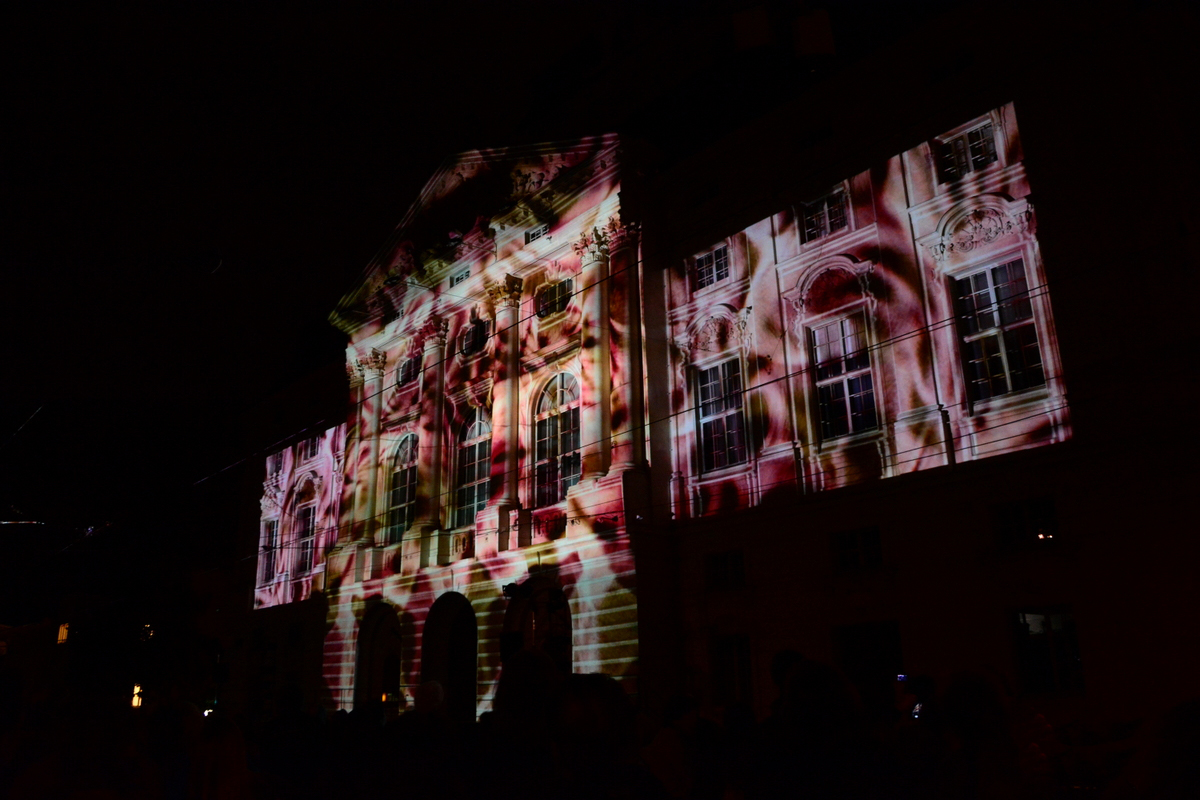
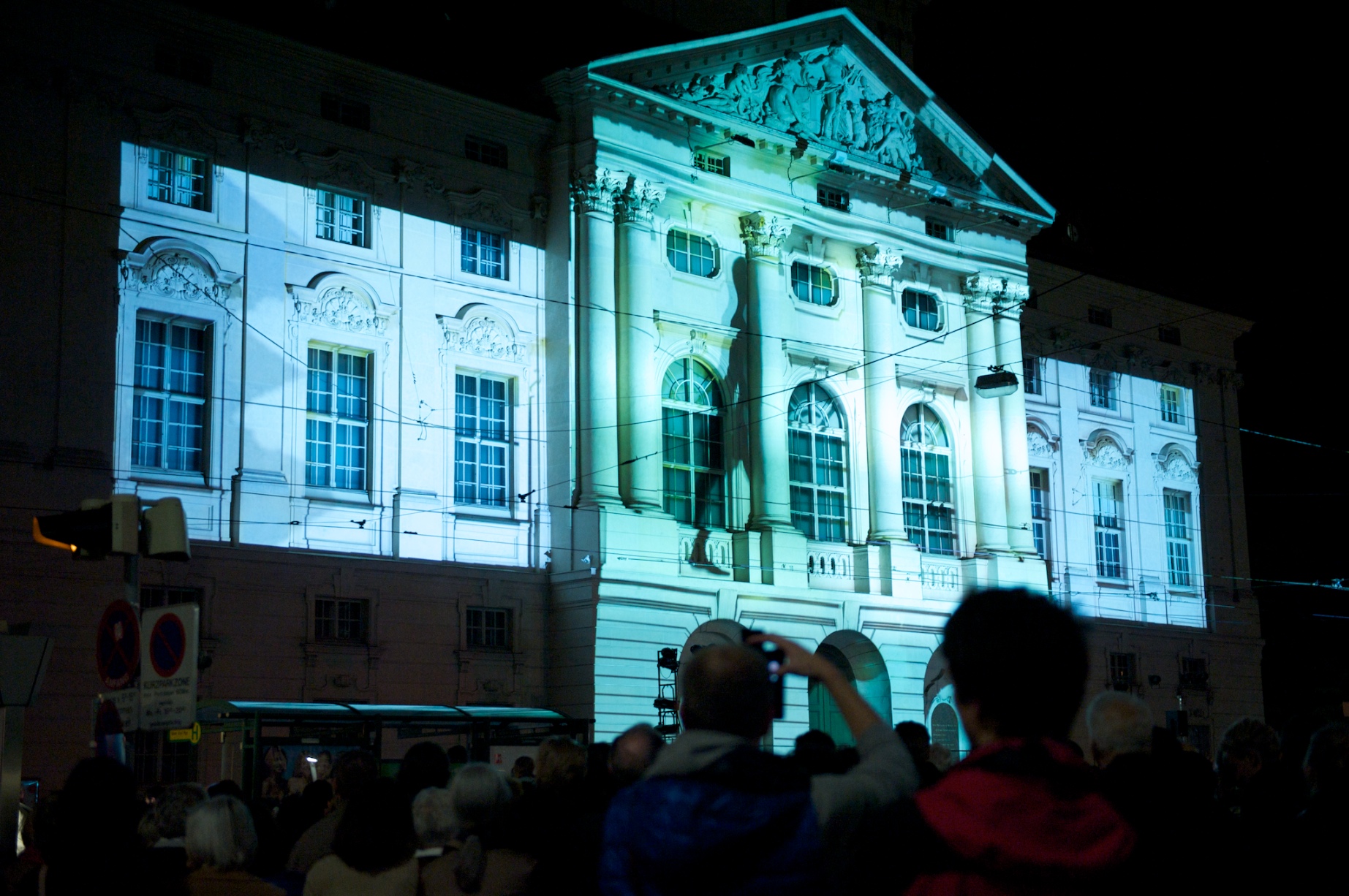
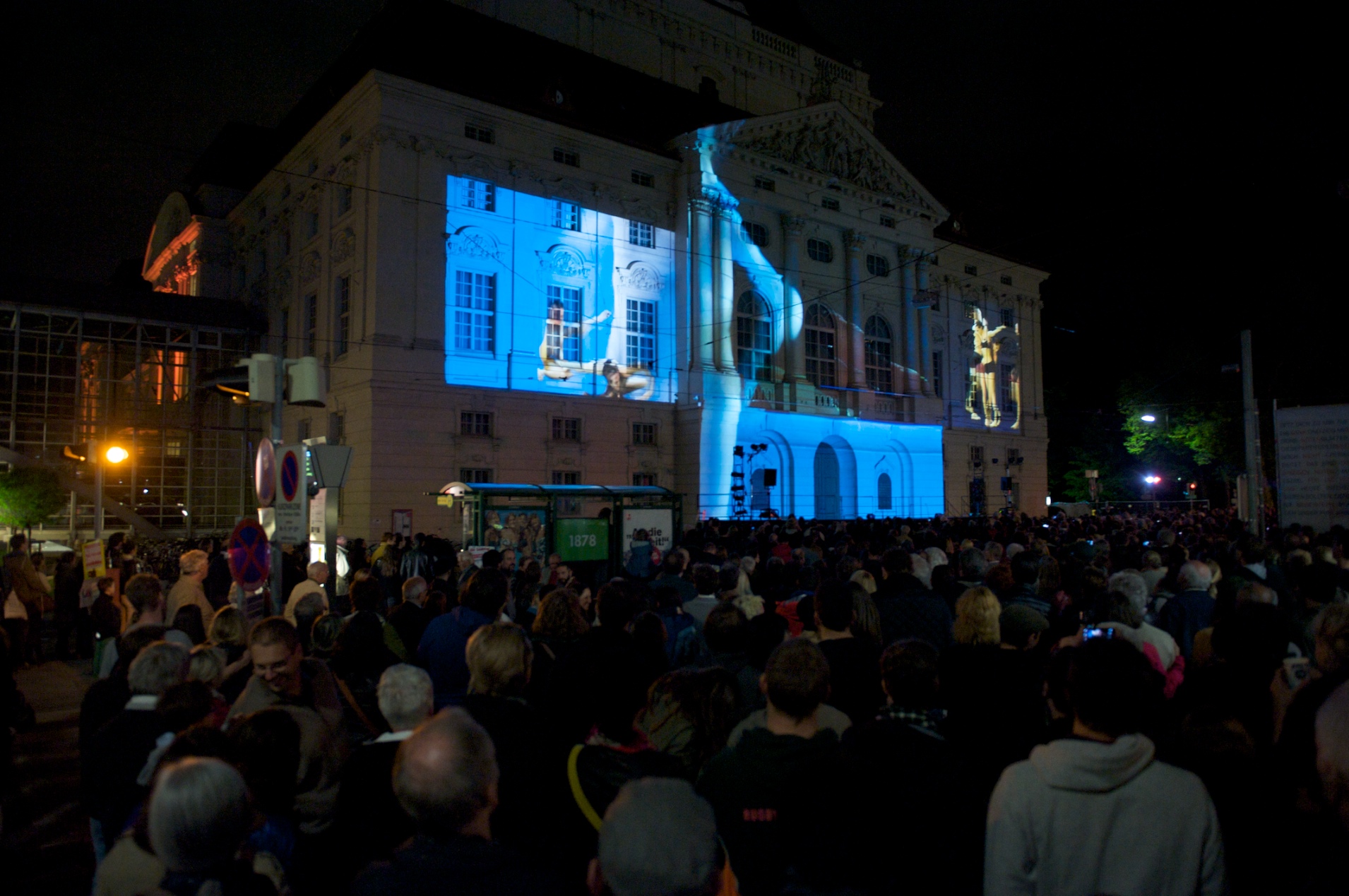
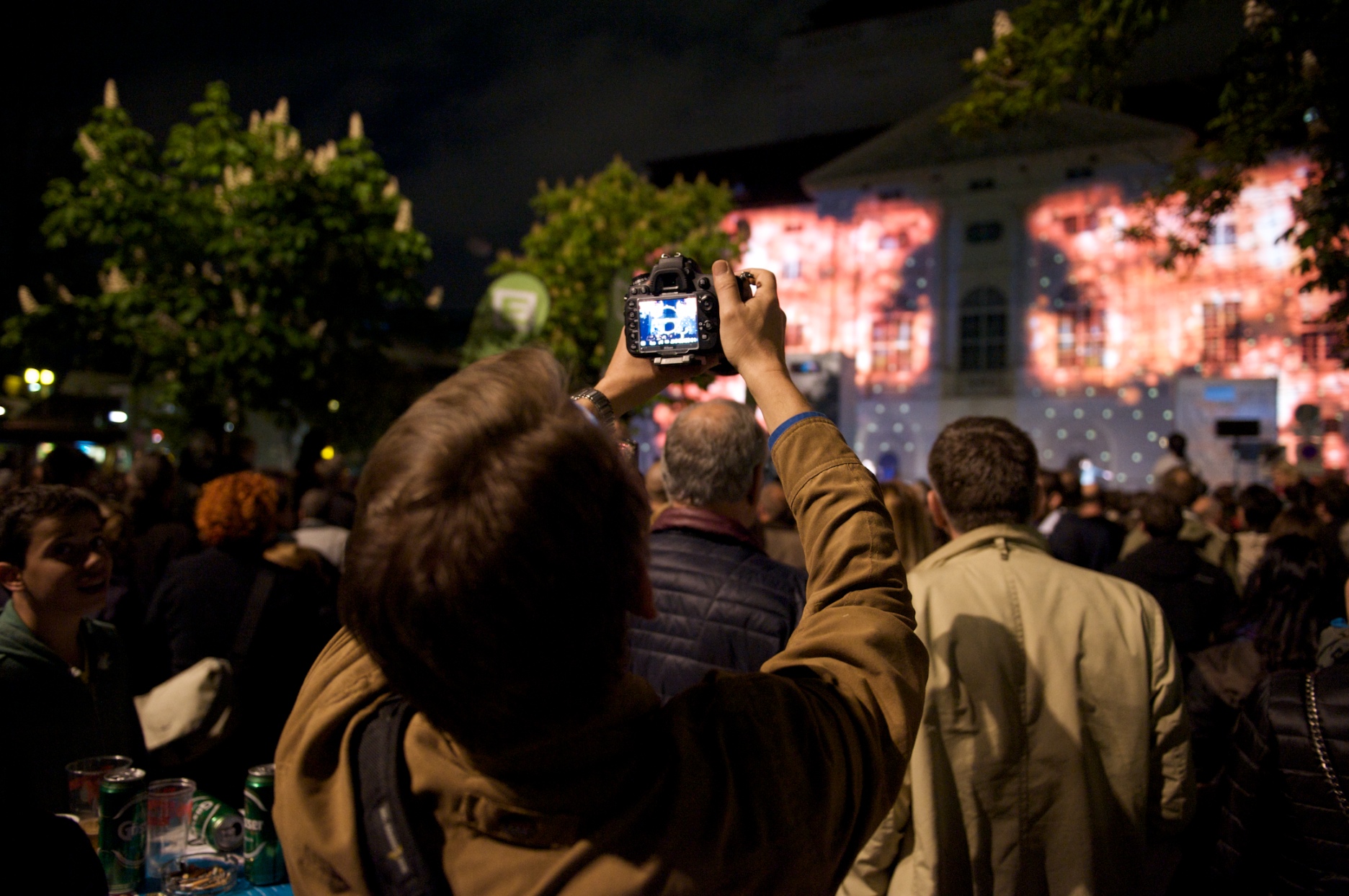
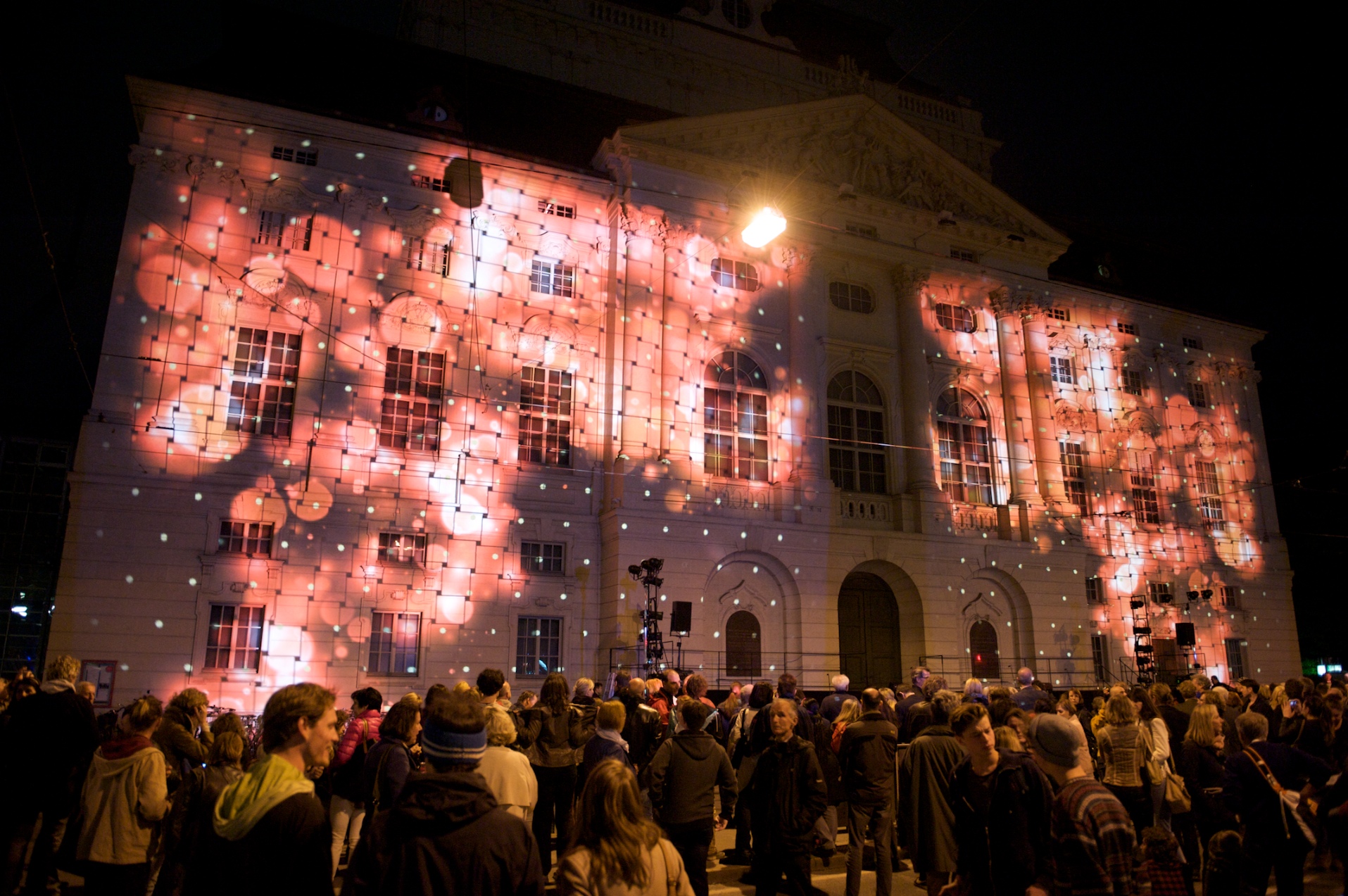
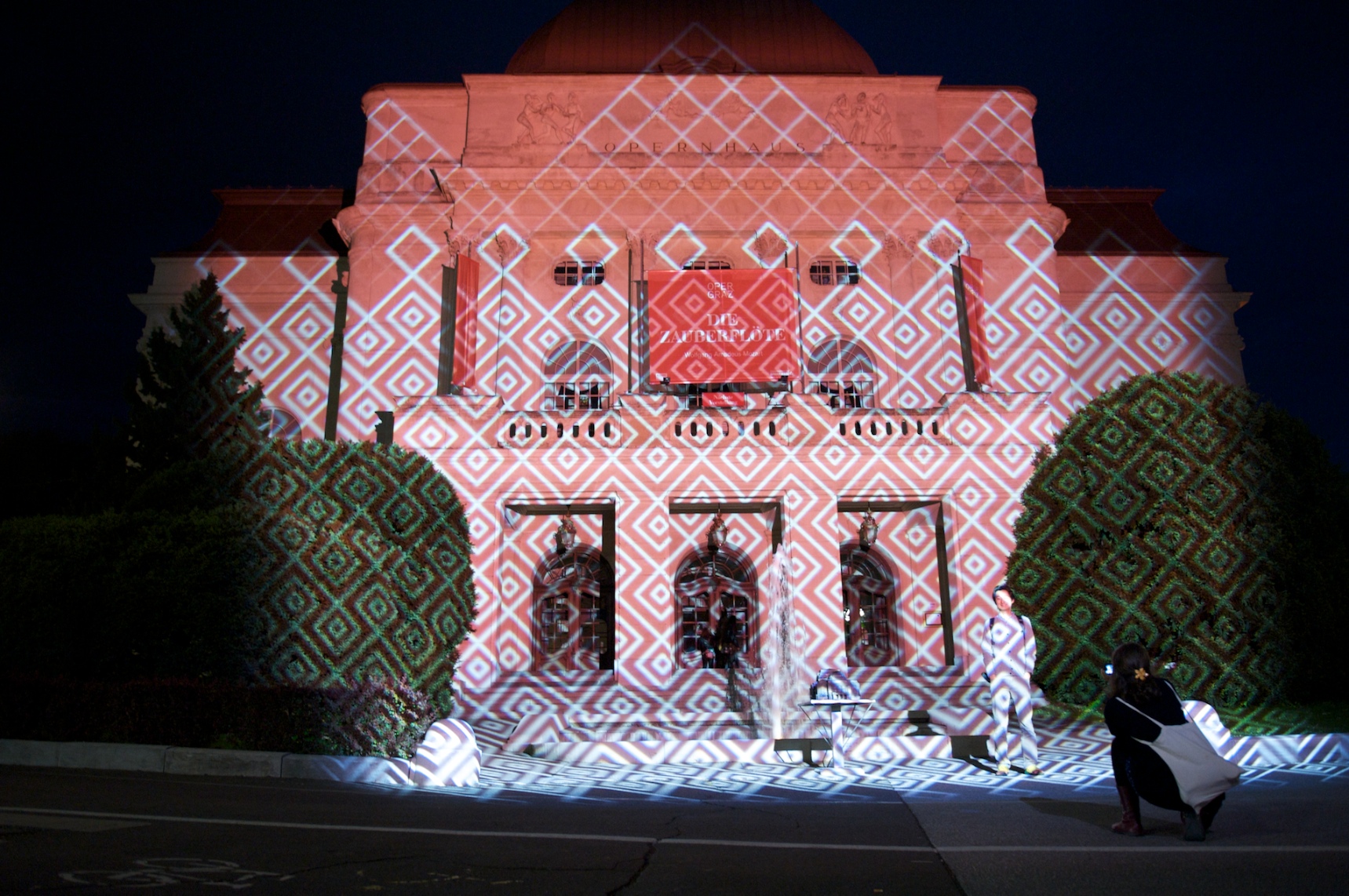
KLANGLICHT is taking place for the first time. The Graz-based artists’ collective OchoReSotto is casting the façade of the Graz Opera House in a new light with a moving projection. As the light continues to unfold, dancers from the Graz Opera’s dance company transform Kaiser-Josef-Platz into a dynamic stage. As the light installation reaches its full splendour, the Graz Opera Chorus opens the first KLANGLICHT with ‘Lux Aeterna’. OchoReSotto’s light installation ran for a full month at the Graz Opera House, offering artistic insights into the world of the stage(s). The foundation stone for a shining success story had been laid.